
Research article · 2020 · Full text
International Journal of Horticulture and Food ScienceAn innovative technology ensuring one stop service in the horticulture center of Bangladesh
Volume 2(1) · Pages 45–48 · DOI: 10.33545/26631067.2020.v2.i1a.37 ↗
Research areasSmart Parking Systems ResearchFood Waste Reduction and SustainabilityInnovation and Socioeconomic Development
Abstract
Author-writtenExisting desired plant collection system from Horticulture centre in Bangladesh is a time and energy wasting process of citizens. So the work was done to develop innovative non-commodity technology for saving time and energy of citizens for founding desired plant/plants with an authorized price as one stop service and to analyze its impacts on technology extension and revenue income. The developed innovative technology i.e, Display Center ensured one stop service to citizens with saving time & energy. The display center impact was highly positive mentioning the rising of 89.93% revenue income and increasing the extension of 68.40% fruit plants, 50.90% vegetable plants, 43.82% spice plants, 924.09% medicinal plants, 37.36% flower and ornamental plants from the last fiscal year 2017-18. Our research findings suggest that the establishment of a display center in a horticulture center could be assured time and energy-saving one stop service to citizens and increased revenue income and commodity technology extension at the desired level.
Summary
Source-checkedPlain-language reading of the full paper, prepared with AI and checked against the text. Each point links to the authors' own words.
Why it matters
- Horticulture centers in Bangladesh, managed by the Department of Agricultural Extension (DAE), serve as essential sources for transferring horticultural plant technologies to citizens. View evidence ↗
- The existing system for collecting plants is inefficient, as citizens must search multiple locations, leading to significant waste of time and energy. View evidence ↗
- Inefficiencies in the plant collection process limit the overall scope of technology transfer and reduce the center's ability to collect revenue. View evidence ↗
The question
- The study aimed to develop a 'one stop service' technology to save citizens' time and energy when finding plants and to analyze how this affects revenue and technology extension. View evidence ↗
What they did
- The research was conducted at the horticulture center in Shulakia, Kishoreganj, using secondary data on produced plant materials. View evidence ↗
- The 'display center' was established in a central 20m² area near the office, featuring a fence and an attractive board listing government-fixed prices. View evidence ↗
- To analyze the impact, the researchers collected revenue and technology transfer data from the 2014-15 base year through 2018-19. View evidence ↗
What they found
- Following the establishment of the display center, revenue income increased by 89.93% compared to the 2017-18 fiscal year and by 208.48% compared to the base year. View evidence ↗
- Vegetable plant extension reached its maximum in 2018-19, showing a 50.90% increase over the previous fiscal year. View evidence ↗
- Spice plant technology extension increased by 43.82% compared to the last fiscal year and by 194.69% compared to the base year. View evidence ↗
- Medicinal plant extension saw the most dramatic increase, rising 924.09% over the previous year and 645.61% over the base year. View evidence ↗
- Flower and ornamental plant extension peaked in 2018-19, which was 37.36% higher than the previous year and 230.66% higher than the base year. View evidence ↗
What it means
- The authors conclude that establishing display centers provides a reliable, time-saving one-stop service that increases both revenue and the extension of horticultural technologies. View evidence ↗
Visual summary
1 visualsIllustrations explain the paper; they do not show study data.
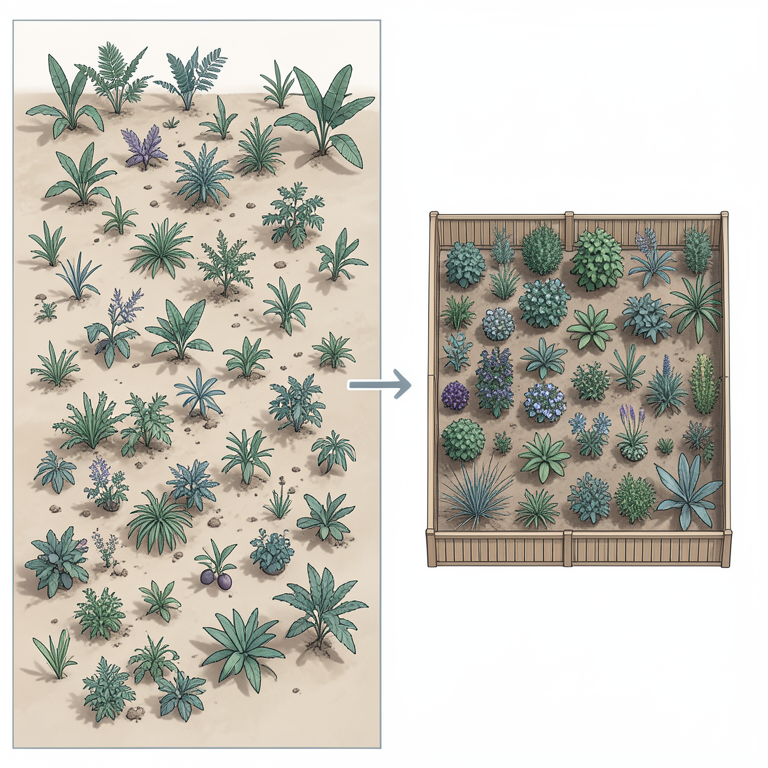
Conceptual Shift to One-Stop Service
AI-generated conceptual illustration (Horticultural plant nursery in Bangladesh). It explains the idea and does not show study data.
View source evidence ↗Figures & tables
From the original paper Figure 1
 Figure 1
 Figure 1
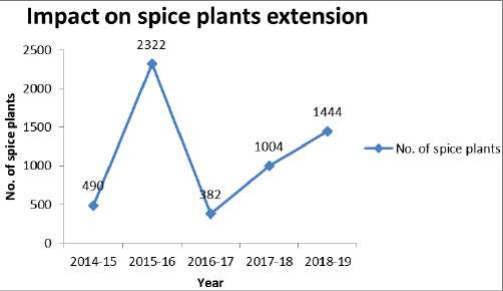 Figure 5
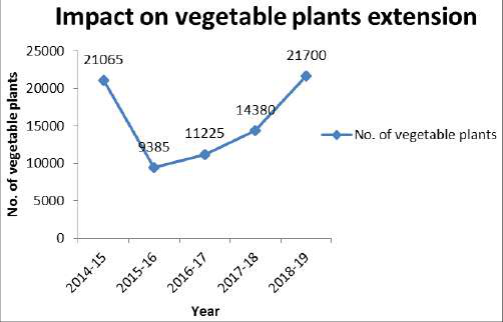 Figure 4
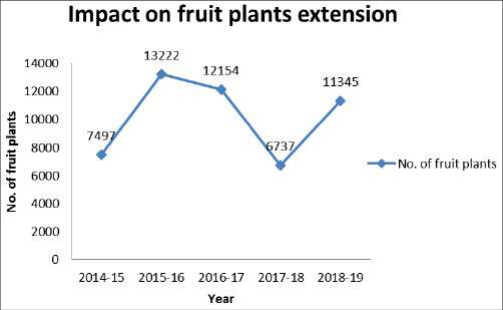 Figure 3
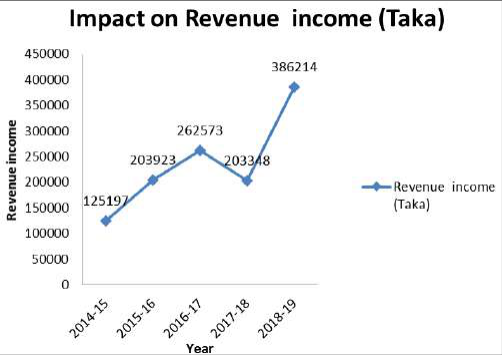 Figure 2
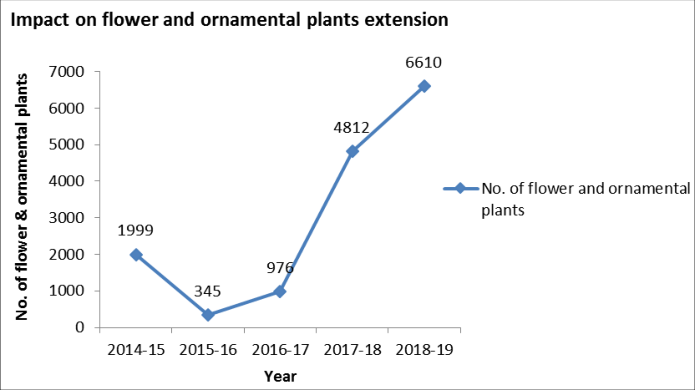 Figure 7
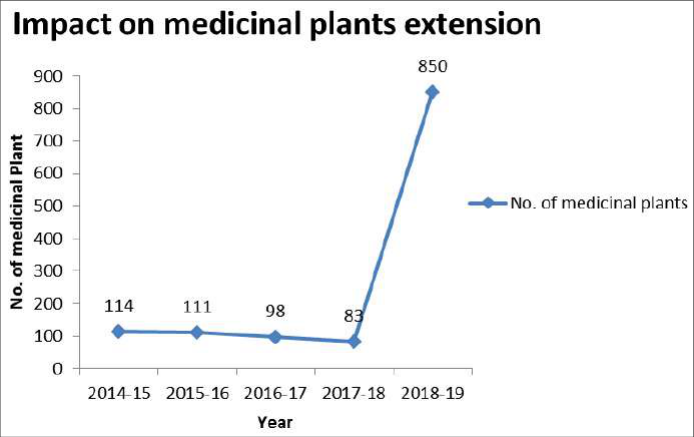 Figure 6
Introduction
Innovation in public service is time demand for ensuring qualitative new service (Simmonds k, 1986) [1] , improving the running activities (Khazanchi, Lewis & Boyer, 2007) [2] within the required minimum time to citizens. The government of Bangladesh is executing a2i program, allotting innovation funds for encouraging all public sectors to develop citizen-friendly innovative technology assuring easy, affordable and reliable access of citizens to quality public services (a2i, 2019) [3] . Horticulture center, the government organization under the department of agricultural extension (DAE) in Bangladesh, is the enriched Germplasm of fruit, flower, ornamental, spice, medicinal and vegetable plants using an as good source of commodity technology transferring to citizens. It is locally known as a government nursery serving as a non-profitable service provider. It serves the following services (DAE, 2019) [4] i.e. Seedlings/asexually propagated plants of high yielding modern varieties of horticultural crops are produced and extended to citizens by paying government fixed price. Fruit garden demonstrations of high-value horticultural crops are established for enhancing commercial fruit production in the locality. The provided suggestion about modern technology of horticultural crop production, harvest, and post-harvest management. Provided technical services to citizens for ensuring family nutrition through rooftop garden establishment and entrepreneurs for establishing private nursery. Extended the modern and safe horticultural crop production technologies to citizens. Germplasm of commodity technologies of research organization developed, foreign and uncommon horticultural crops are established for increasing variety extension and ensuring services. Training about high yielding modern technologies and integrated management of disease and insects is organized for raising the production of horticultural crops. Every center produces seedlings or asexually propagated plants of different fruit, flower, ornamental, spice, medicinal and vegetable plants based on annual performance agreement (APA) singing between the head of the respective center and director of horticulture wing. The produced commodity technologies are organized and placed in a different location in the horticulture center and transferred to citizens by paying government fixed money. After entering the horticulture center, people search for the desired plants in a different location.
If the customers find the desired plant(s), they come to the office room or sales center to know the authorized price. If the demanded plant(s) are not observed in the searching area, customers also come to the office room or sales center to know the availability of the desired plant(s) and authorized price. On the other hand, customers have sometimes left the center with bad experience reducing commodity technology extension opportunities and faith in the center. As a result, customers face the problem of a huge time and energy wastage due to finding the desired plant/plants. Finally, the center observes the following limitations as the scope of technology transfer becomes limited and the opportunity of revenue collection becomes shorten. Addressing the mentioned facts we worked to develop innovative non-commodity technology for saving time and energy of citizens for founding desired plant/plants with the authorized price as one stop service and to analyze its impacts on technology extension and revenue income.
Methodology
The list of produced plant materials of fruit, flower, ornamental, spice, medicinal and vegetable plants was collected from horticulture center, Shulakia, Kishoreganj as secondary data. For developing innovative non commodity technology ensuring one stop service i.e., display center, a visible and central near to office place was selected as a site place covering 20m 2 area. Then cleaned the selected site, protected the site with a fence and a government fixed price list placed in the selected site with a very attractive board. The produced plant materials of fruit, flower, ornamental, spice, medicinal and vegetable plants with nameplate were placed in selected site places of horticulture center, Shulakia, Kishoreganj on 29.04.2019. The revenue income and technology transfer data of the last five fiscal years i.e., 2014-15 considering as base year to 2018-19 was collected as secondary data from horticulture center, Shulakia, Kishoreganj for statistically impact analysis of display center.
Results and discussion
Results and discussion
Display center
The established innovative non-commodity technology, display center, in horticulture center, Shulakia, Kishoreganj exposed the sample plant of all produced plant materials of fruit, flower, ornamental, spice, medicinal and vegetable plants with a nameplate and authorized price inboard at selected site place. As a result, the citizens observed the sample plant of all produced plants of the respective center with the name and authorized price in a single location ensuring citizen-friendly service with minimum time and energy wastage. It may be assured a simple, affordable and reliable service of horticulture center for all citizens. The revenue income of the horticulture center, Shulakia, Kishoreganj in the base fiscal year 2014-15 was 125197/-. It was exponentially increased up to 2016-17 which was 262573/-. In the year 2017-18, the collected revenue was decreased which was 203348/-. After the establishment of the display center in this center, it was positively affected by revenue income. The revenue income was remarkably increased that was 89.93% higher than the 2017-18 year income and 208.48% higher than base year income.
Display center impact on commodity technology extension Impact on fruit plant extension
The maximum commodity technology of fruit plants was transferred to citizens in the 2015-16 fiscal years. It might be the other commodity technology transfer scenario in this year was not fair. Then it was continuously decreased up to 2017-18 and reached a minimum point. The extension of fruit plants was positively increased due to establishing a display center in the horticulture center in 2018-19. It was 68.40% higher than last year and 51.33% higher than the base year. It might be possible due to the proper presentation of all fruit plants of the assigned center in-display center ensuring easy and reliable access to public service. The extension of vegetable plants was declined in the 2014-15 fiscal year from base year and then gradually increased.
Impact on vegetable plants extension
In 2018-19, the maximum number of vegetable plants was extended to citizens because of the fruitful exhibition of commodity technology in the display center. It was 50.90% higher than in the last fiscal year. The extension of the commodity technology of spice plants was increased in the 2015-16 fiscal year and then decreased to a lower point. After showing off all commodity technology of spice plants in the display center, the extension of technology became 43.82% higher than the last fiscal year and 194.69% higher than the base year.
Impact on spice plants extension
Impact on spice plants extension
Impact on medicinal plants extension
The extension of medicinal plants to citizens was gradually decreased from base year to 2017-18 fiscal years and reached a lower point. Then it was tremendously increased and reached pick point. It was 924.09% higher than last year and 645.61% higher than the base year.
The flower and ornamental plant extension was declined in the 2015-16 year from base year and then exponentially increased. It reached a pick point in the 2018-19 fiscal year indicating 37.36% higher than the last fiscal year and 230.66% higher than the base year.
Impact on the flower and ornamental plants extension
Impact on the flower and ornamental plants extension
Conclusion
Public service simplification based innovation in Bangladesh is a crucial demand for ensuring citizen-friendly services. The extension of commodity technology of fruit, flower, ornamental, spice, medicinal and vegetable plants and revenue earning opportunity becomes limited due to complex public services in horticulture center in Bangladesh. Our research findings suggest that the establishment of a display center in a horticulture center could be assured easy, reliable, time and energy-saving one stop services to citizens. It could be positively affected by increasing revenue income and commodity technology extension at the desired level.
Acknowledgement
AcknowledgmentThe authors acknowledge all public service providers of horticulture center, Shulakia, Kishoreganj for assisting to establish a display center and providing secondary data of revenue income and technology extension.
Figures and tables from the paper
References
4 in the original paper- Simmonds K. Marketing as innovation; the eight paradigms, Journal of Management Studies. 1986; 5:23.
- Khazanchi S, Lewis MW, Boyer KK. Innovationsupportive culture: The impact of organizational values on process innovation. Journal of operations management, 2007; 25(4):871-884. http://dx.doi.org/10.1016/j.jom.2006.08.003.
- a2i. Primary goal of a2i in Bangladesh, 2019. https://a2i.gov.bd/about/ on 15.10.19, 01:15pm.
- DAE. Citizen Charter, Horticulture Center, Shulakia, Kishoreganj, 2019.