
Research article · 2020 · Full text
International Journal of Geography Geology and EnvironmentKnowledge system of natural resource management in Andhikhola Gaunpalika, Syangja, District, Nepal
Volume 2(2) · Pages 04–10
Research areasConservation, Biodiversity, and Resource Management
Abstract
Author-writtenThis paper attempts to analyze the local knowledge system of natural resource management in Andhikhola Gaunpalika Syangja district, western hill of Nepal. The knowledge system refers here is to institutional practices of forest resource management through community forest user groups. For this purpose, eight community forest user groups were purposively selected for detailed study. Data were collected from both primary and secondary sources. Primary data were collected through various methods and tools such as focus group discussion, key informant survey and Households survey. The application of locally produced knowledge system gives better solutions as well as governance system in forest management system in Nepal over decades. Nowadays, community forest user groups (CFUGs) have been playing dynamic role to develop institutional knowledge for profitable utilization of both timber and no timber forest products. Moreover, traditional knowledge system were more effective adopted practices. It is mainly due to traditional knowledge has been operated through institutional, structural and personal dimensions. However, these practices have been eroding due to the initiation of anticipated knowledge system. Thus, the paper argues that both local knowledge and modern knowledge system are equally important to manage community forest resource in the changing context. The traditional knowledge system which has different dimensions like institutional, structural and personal are not much in practice which ultimately erode the important indigenous knowledge that’s why it is important to document the knowledge system.
Summary
Source-checkedPlain-language reading of the full paper, prepared with AI and checked against the text. Each point links to the authors' own words.
Why it matters
- Forests are a primary resource supporting the livelihoods of people living in rural areas. View evidence ↗
- Locally produced knowledge systems have historically provided effective solutions and governance for forest management in Nepal. View evidence ↗
- Traditional forest management practices are currently eroding as new, anticipated knowledge systems are introduced. View evidence ↗
The question
- The study aims to examine the current state of community forest user groups and document the development of various knowledge systems in Andhikhola Gaunpalika, Nepal. View evidence ↗
What they did
- The researchers purposively selected eight community forest user groups (CFUGs) within the study area. View evidence ↗
- The analysis utilized a combination of primary field data and secondary information from reports and books. View evidence ↗
What they found
- Past forest management included the 'Ban Lauro parnali' (Forest stick system), where households took turns patrolling the forest to prevent theft. View evidence ↗
- Another traditional method was the 'Jhara system,' which relied on volunteer services from community members for resource management. View evidence ↗
- Labor migration to countries like the Middle East, Korea, Japan, and Malaysia has led to a scarcity of young people available for forest management. View evidence ↗
- The shift to LP gas for cooking has decreased the demand for firewood, contributing to an increase in forest area but a decrease in active utilization. View evidence ↗
- Approximately 22% of households in the study area do not participate in any community forest activities. View evidence ↗
- Among the younger generation, 24% prefer to participate in forest management based on new, scientific knowledge systems. View evidence ↗
- Over 21% of households participate in meetings and the implementation of decisions. View evidence ↗
What it means
- The authors conclude that blending local and modern knowledge systems is necessary to adapt forest management to the current changing context. View evidence ↗
- The authors recommend that the government form new policies to develop updated knowledge systems for the management and utilization of forest resources. View evidence ↗
- The erosion of traditional knowledge due to lack of practice makes the documentation of these systems an urgent necessity. View evidence ↗
Visual summary
2 visualsIllustrations explain the paper; charts are replotted from the paper's own table values.
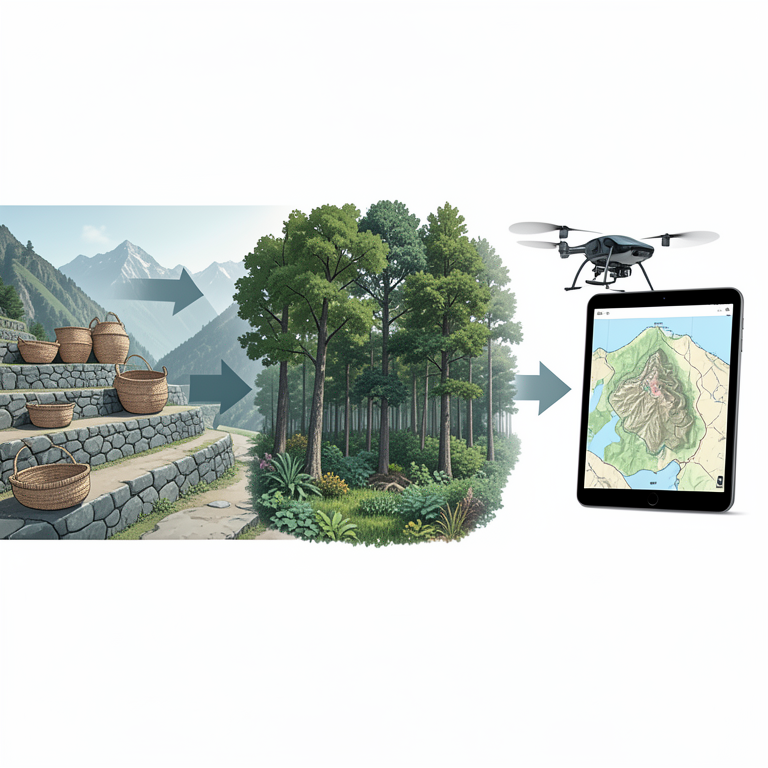
Integration of Knowledge Systems
AI-generated conceptual illustration (Mixed-species Himalayan forest landscape in Syangja, Nepal). It explains the idea and does not show study data.
View source evidence ↗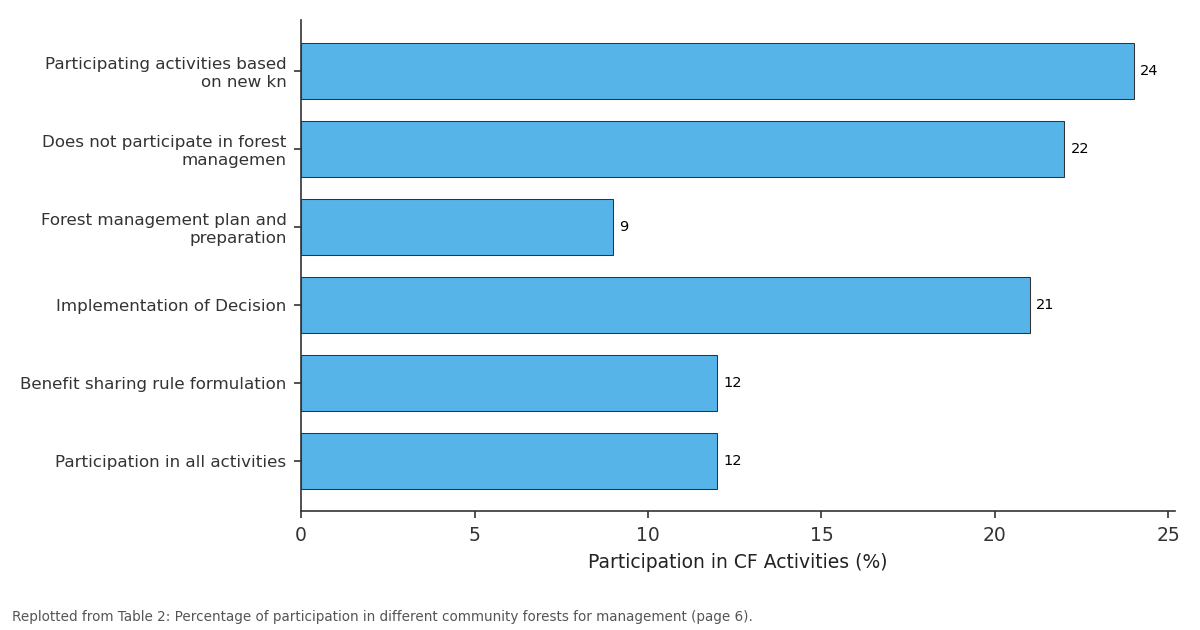
Participation in CF Activities (%): Participating... vs Does not participate in... vs Forest management plan... vs Implementation of... vs Benefit sharing rule...
Replotted from Table 2 (page 6) of the original paper. Every bar is the paper's own table value.
View source evidence ↗Figures & tables
From the original paper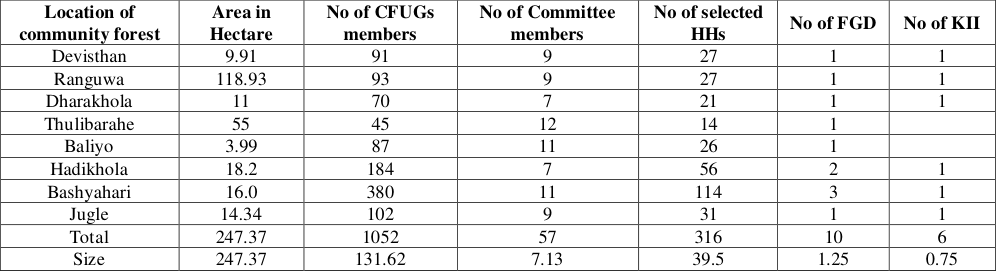 Table 1
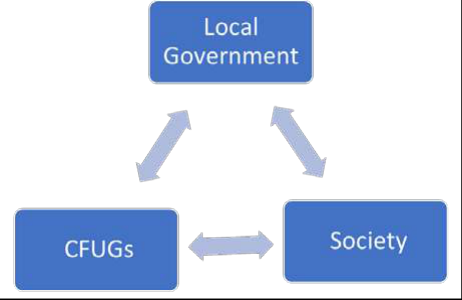 Figure 1
 Table 2
Introduction
Geographical interest in resource management and allocation issues has undoubtedly increased steadily since the mid-1970s. Resources of products of the physical system they are defined the human ability and need, not by nature. Resources are therefore dynamic cultural conception (Judith, 1989) [14] . Resources is a concept of applied to denote sources of human satisfaction, wealth or strength which fulfill the human wants with the application knowledge and attitude. Labour entrepreneurial skills, investment funds, fixed capital assets, technology and the cultural and physical attributes of an area may all be referred to as resources of a nation or region and company or household (Johnston et al., 1986) [13] . Geographers are interested to the study of resources in the field of economic geography. They cover all types of resources such as biotic (forests) or abiotic (nutrients) renewable (water) or non-renewable (fossil fuel) tangible (land) or intangible (talent) or natural (national park) human made (community forestry) in resource geography (Zimmermann, 1951) [25] rightly said that resources are not they become they are not static but expand and contract in response to human wants and human action. However, John et al., (1986) [13] include broader view in resources including both cultural and physical and physical attributes entrepreneurial skills, labour investment fund capital assets, technology of a household or a nation (Zimmermann, 1951) [25] concludes that resource is not merely a tangible object but also a functional relationship that exist between people's want their capabilities and their attitudes towards the worth of environment (Zimmermann, 1951) [25] . It requires both tangible (forest as a natural resources) and intangible (talent) as a local knowledge and indigenous knowledge) resources in the environment of the various types of natural resources, forest is considered as the major resources for the livelihoods of rural people. Perceived resources have changed and will continue to dramatically over time, not only in response to increase knowledge and technological innovation but also in line with economic, social and political developments (Judith,1989) [14] . In the past, knowledge system was based on Mela, Parma system in forest resource management and farming as a traditional and local knowledge in different Nepalese community. Then, this system replaced Talukdar, Mukhiya and Banpale for resource management since the ancient time. Till 1950s, the forest bureaucrats have overly relied on the technical and colonial knowledge of forest management. The forest bureaucrats could not protect the forest from encroachment, deforestation, and resources depletion. In such situation, community-based forest management (CBFM) approach was primarily adopted as a deforestation control measure together with the need of the local community (FAO, 2016) [8] . There are various types of forest management modality practiced in Nepal. In which, community forestry was introduced in the late 1970s in Nepal. Community forestry has existed in multidimensional forms and at different scales and intensities (Banjade 2003; Malla 1999; [1,15] . The conservation and management of forest resources by the people themselves have been effective in reserving the process of deforestation in many areas of Nepal (Gilmour & Fisher, 1992) [9] . Community forest management witnesses' tremendous shifts in forest policies and procedures in Nepal (Giri, 2008) [10] . Now, more than 35 percent of the population of Nepal is involved in community forest management programs. In the last three decades, community forestry is considered the best practice for forest management in the hilly region of Nepal. Forest management activities subsistence activities and IG (Income generating) activities, ecological interdependence complexity and uncertainty are part of the hill community forestry. Within this context, various types of resources users, having different economic and social status perspectives knowledge system, values, understanding and objectives are involved in community forestry. Major forest products directly affecting the livelihood of rural people are fodder fuelwood, timber, litters, medicinal and aromatic plants and other non-timber forest products (NTFPs). The forest management issues in general and those of the community forestry in particular are viewed in a different way by different people with the perspectives of different knowledge and power dynamics (Edumunde and Wollenberg, 2001) [6] . One of the major drivers for the implementation of community forestry program in Nepal were to reduce the effects of environmental degradation and to improve the condition of the forest and overall effects of the community forest program including the increase biodiversity from the result of rejuvenating and expanding the diversity species of trees and plants and wildlife. It is evident that the community's active participation on forest management had a positive contribution on increasing biodiversity and forest coverage on the once barren slope (Sheller, 2018 and Winder, 2004) [21,23] . Although, there are many studies community forest management system, comprehensive studies in changing knowledge system of community forestry are lacking. Different institutional knowledge and technical and managerial skills are developed in community forestry, it is important to document whose knowledge and whose stake in the policies organizing the knowledge develop around. Bottom up making systems of documenting the knowledge of different stakeholders involved in both communities and the supporting institutions can provide some space for knowledge boundary. Bourdieu (1997) [3] developed a theory of action around the concept of habitus, which referred to a considerable influence in the social sciences. This theory seeks to show that social agents develop strategies which are adopted to the need of the social world that they inhabit. 'Habitus constitutes a set of durable transposable dispositions' which regulates mental activity to the point where individuals are often unconsciously aware of their influence (Bourdieu, 1994 p.72) [2] . Bourdieu (1997) [3] has practiced the natural resource governance which are shaped by four categories. First, there is a large group of people commonly known as forest officials, foresters' agricultural scientists, engineers, overseers, technical specialist and so on who work in government, administrative and technical services. They all share a common technocratic habitus, which emphasises technical strategies of forest management at the expanse of creating accountable and deliberative institutions of resources governance and benefit sharing. In this connection, this study has focussed the forest resources management and knowledge system and which resources are to be found in intervention of human action in community forest management and utilization of Andhikhola Gaunpalika of Syangja district, Western Nepal.
Study area
Andhikhola Gaunpalika is located in the northern part of Syangja district. It lies between 28 0 13' 47'' to 28 0 06' 45'' latitude and 83 0 50' 38'' to 83 0 44' 37'' east longitude. It is about 2512 meters high from mean sea level and cover an area of 69.69 square kilometers. It is surrounded by Parvat district to the west, Putalibazar Municipality and Phedikhola Gaunpalika to the east and Kaski district to the north and Arjun Chaupari Gaunpalika and Putalibazar to the south. The famous river Andhikhola have been flowing from the central part of this Gaunpalika. According to Gaunpalika Records 2075 BS, the total population of this area is 25554 among which 13235 are male and 12319 are female and the total household is 4070 The agricultural land of this Gaunpalika occupies 56.98 percent of the total land. (GR, 2075) About 28.31 percent land is covered by forest area. There are different types of forest such as government protected forest, community forest and private forest. Forest resources is considered as major economic bases of this Gaunpalika. The Lekh of Panchase, the Lekh of Dahare and the Lekh of Pharsu are the famous forest resources area of this Gaunpalika. Natural resource specially the forest and water resources management and its proper utilization are the major bases of economic development for the habitants in the study area.
Methods and materials
The aim of this paper is to examine the current status of community forests user groups, analyse and document the how different knowledge system developed around Andhikhola Gaunpalika of Syangja district, Nepal. To explore the current status and changing knowledge system, eight community forest user group of the study area were selected for the study. Both primary data and secondary information were used to analyse the different knowledge system and its development. Review of widely published and unpublished documents, reports book along with the empirical field studies and knowledge based on practical ground have been used to bring this form.
There are 1052 members of community forest user groups in Andhikhola Gaunpalika of Syangja district and it was not possible to cover all those community forests user groups. So, attempt was made to select representative community forest for detailed study. For this, only thirty percent were selected for household's survey of the total community forest user groups member of the study area. This was done through interviewing key informants and participating in informal focus group discussion. For this, ten groups of focus group discussion and six key persons were selected.
The following Table 1 shows the average size of forest land, sample CFUGs with sample households and number of FGD and KII by sample CFUGs of the study area. After selecting 316 the size of household interview was determined keeping in view the central limit theorem. According to rule of thumb, if the size of sample is 30 or more, the distribution becomes normal of statistical test can be performed (Daniel and Terrell, 1995) [5] . Following this concept was used for household survey.
| Location of community forest | Area in Hectare | No of CFUGs members | No of Committee members | No of selected HHs | No of FGD | No of KII |
|---|---|---|---|---|---|---|
| Devisthan | 9.91 | 91 | 9 | 27 | 1 | 1 |
| Ranguwa | 118.93 | 93 | 9 | 27 | 1 | 1 |
| Dharakhola | 11 | 70 | 7 | 21 | 1 | 1 |
| Thulibarahe | 55 | 45 | 12 | 14 | 1 | |
| Baliyo | 3.99 | 87 | 11 | 26 | 1 | |
| Hadikhola | 18.2 | 184 | 7 | 56 | 2 | 1 |
| Bashyahari | 16.0 | 380 | 11 | 114 | 3 | 1 |
| Jugle | 14.34 | 102 | 9 | 31 | 1 | 1 |
| Total | 247.37 | 1052 | 57 | 316 | 10 | 6 |
| Size | 247.37 | 131.62 | 7.13 | 39.5 | 1.25 | 0.75 |
Table text extracted from the original PDF; superscript letters are shown inline. The original table image is below.
View original table image
Results and discussion
Results and discussion
Knowledge systems in community forestry
The knowledge system developed by different agents of the society. Natural resources management has been contributing to enhance the overall livelihoods of the people. Although, there are various types of natural resources management practice in the study area. This study concentrated only on document the developed knowledge system on various stages of community forest resource management. Knowledge system is the changing and dynamic concept of resources management, which are developed in more effective manner at local level and contributed in changing policies of the government. According to the local forest users, there were two types of forest management system in the past. The first one was based on Ban Lauro parnali (Forest stick system). This system was used in each house turn by turn for patrolling the forest to see whether forest are products are stolen from the forest area. A 'stick' called as 'Ban Lauro' was used to transfer form one household to another for inspection and patrolling the forest for one day. Turn system was developed based on the number of beneficiaries of the particular forest patches. And the second system was Jhara system (a volunteer or free services) for the resource management by the community member of the village. At least, one person from a household should be presented according to their rules. These rules and regulations had been made by the local community. All the community member had to accept customary rules and regulations, otherwise the violators has to be punished. During initial phases, before formation of CFUGs, this is the way of forest management system developed by locals. Indirectly it was an institution, but there was not any committee. At that time, automatically the institution was run for protection of the forests. The operation rules for forest management in the past were based on the 'oral tradition'. The local users would not follow this rule, he would be punished by local institutions which are not in formally active. This type of institutions was in existence in the past in the study area. Most of the local people would follow this rule. Later on, community forest user group was formed, registered and handed over the particular patches of forest land with use rights of forest products, formally. It is considered one of the best ideas for sustainable forest management in hilly regions of Nepal. Thus, forest management system has changed into formal knowledge system. Again, the situation became change. Labour migration is increasing in rural area and it creates new knowledge for the livelihood. Migrants are not depending on forest. There is no active manpower to well manage the forest. Now, in the rural area, two types of problems are created in community forest; first one is scarcity of young generation and the second is invasive plants is spreading all over the forest in the rural area.
Present status of community forest
Community forest user groups have been playing crucial role for the conservation and utilization of forest in the past, even though, it has not been in more practices now. Traditionally forest was considered as important for using fire wood, fodder, leaf litter, bedding materials for the livelihood of rural area. Now, more than 28 percent area is covered by forest in this Gaunpalika. Government forest, protected forest, community forest and private forest are existence in the Gaunpalika. Chilaune, Katush, Uttish, Sallo, Sal, Bakle etc. are the major species of forest. Wild boar, leopard, tiger, monkey, bear, dear, Dumsi are the major wild animals available in this area. Now a days, forest area is extended in previous agricultural lands which ultimately has increases problem of destroying the limited agriculture products. The average size of the community forest remains 30.92 hectare. The average household of the study has 132 and average size of community forest user group committee's member remains 7.13 in the study area. Devisthan Batashe CF, Handikhola CF, Basyahari CF, Baliyo Khoriya CF are located in upper part of Gaunpalika and Thulibarahe CF, Jugle CF, Dharkhola CF and Ranguwa Tarebhir CF are located in lower part of Gaunpalika. The lower part CF lies in the river side of Andhikhola. Economically, forest of lower part is more valuable in compare to the forests of upper part due to the forest species and plants available and nature of forest. Sal is the major hard wood forest in the lower part of forest whereas Chilaune, Bakle Sallo etc. are the major wood in the upper part of forest in the study area.
Conceptual frameworks
Community forest user groups, society (social organization) and local government are interconnected to each other in the development of forest resource management. Indigenous and local knowledge system, organizational knowledge system and Local government are the major component of forest resource management. These components have played a major role for development of knowledge system in different way. They have different role and responsibility in the management of forest resources. Uphoff (1984) [24] provides basic definitions, stating organizations are structures of recognized accepted roles, that may operate on a formal or informal basis. There are different types of organizations, which support to manage forest by using different types of knowledge system. Ostrom (1996) [17] is of the opinion that appropriation, provision, monitoring, enforcement, conflict resolution and governance activities in common are organised in multiple layers of nested enterprises' forest user group can be organized at three levels. In fact, the organizational structure of the forest user groups of the study area is three layered viz. local community forest user groups, civil Society (INGOs and NGOs) and local government entity, which are interrelated to each other in the development of local knowledge system. They have been working jointly or separately in forest management issues in the study area. All these organizations produce different knowledge system by practicing different activities in forest management. The following Figure 1 shows different knowledge system of forest resources management practices by conceptual frameworks for understanding the different knowledge system. CFUGs and Indigenous and local knowledge system Indigenous knowledge-based forest management practices are developed in remote and rural parts of the country from the long past. Which was based on ideas and skill developed by local community for forest management. Local forest management has been mediated by the traditional institutions, which have enabled the management forests for generation. Local people understand and respond to the ecological issues. Human perceptions, knowledge and actions linked with resource attribute (Ojha, 2002) [16] . Role of external knowledge is also evident in the context where local knowledge and information are valued less by the local people against external ones who hold power and transfer knowledge of group governance and forest management (Banjade, 2003) [1] . Indigenous knowledge of rural people knowledge includes beliefs rituals and perceptions way of learning, local technology stock of knowledge and practices of acquiring and transmitting it (Chamber, 1991 p.83) [4] . Indigenous knowledge (IK) is an integral part of the poor's strategies for survival. Rist and Dahdouh-Guebas (2006) [19] wrote different view on scientific knowledge and local knowledge. They identified the range of scenarios through which science and local knowledge can come interface: science simply ignores a practice based on local knowledge that can be scientifically understood. Generally, traditional knowledge and local knowledge are taken from local people and research institutions. Fisher (1991) [7] argues that the concept of indigenous management system is a heuristic device and does not mean a local community living in a vacuum but rather …… something which is largely community based to be distinguished from something which is deliberately introduced by a government or other agency beyond the community. Indigenous knowledge system (IKS) in emerging economics in general and rural Nepal in particular have historically been considered one of the most valuable assets people own and social capital but also the least mobilized for developing rural communities.
Traditionally, the local people would use from the leaf, bud, branch, shoot and vine of the different plant as medicine.
All types of plant were not use as medicine. The old people, who had indigenous knowledge of different plant, especially non timber forest products would be used as medicine. Now new generations have not serious how to protect and manage that types of plant or vegetation for the future. Indigenous knowledge is in crisis in the young local.
According to octogenarians two local people of the study area, we did not use any medicine in our long life, sometime we used Jadibuti (medicinal herbs) as a medicine and we worshiped the jungle as a Bandevi or Banjhakri for conservation of tree and sources of water. Now the young people negligence our view and idea. They don't have such type of knowledge about the Judibuti.
From the above saying it is clear that the young generation are not interested to the any activities of forest management. This is the major problem in the management of forest. It indicates that for conserving the forest it is essential to new innovative idea to manage the forest and economically benefitted widely local people by the forest resources.
Conclusion
The knowledge system discussed here is evolved during practices of forest resources management in the study area. This concludes that the knowledge and skills developed during local practice and its application help in adopting the changing process and build on knowledge which can give better solutions in the form of governance of the community forest groups. Community forest user groups have developed dynamic institutional knowledge system. They can be used to improve the management for utilization of valuable timber and non timber forest products in the changing context. Knowledge system developed during evolution of community forest management system is being loosed due to lack of proper interaction and transfer of the knowledge to the young generation. It is necessary to blend local knowledge system and modern knowledge to transform the forest management system in the changing context. Traditional knowledge system practiced was very effective in the past is not in practice in many contexts at present. The traditional knowledge system which has different dimensions like institutional, structural and personal are not much in practice which ultimately erode the important indigenous knowledge that's why it is important to document the knowledge system. It is needed to new concept for the development of forest management. Now, the community forest program is in impasse situation. The need of forest product is in decreasing condition in household consumption. In such circumstances, new policy should be formed by the government for the development of new knowledge system of forest resource management and utilization. Moreover, geography education should be linked to the management of forest resource in local and national level for the better development of the nation.
References
25 in the original paper- Banjade MR. Local perception and use of information for forest user groups a comparative case studies in Dhankuta District, Nepal: MSc Thesis. The Netherlands: Wageningen University and Research Centre (WUR), 2003.
- Bourdieu P. Structures habitus and practices in polity reader in social theory, Oxford: Black well, 1994.
- Bourdieu P. Outline of theory of practice, Cambridge and New York: Cambridge University Press, 1997.
- Chamber R. Rural development: Putting the last first, New York: John Willey and Sons, 1991.
- Daniel WW, Terrel JC. Business statistics for management and economics. Seventh Editions, Boston: Houshton Mittigon Company, 1995.
- Edmunds D, Wollenberg E. Historical perspective and forest policy change in Asia: An introduction Environtal History. 2001; 6(2):190-212.
- Fisher J. Indigenous system of common property forest management in Nepal, Honolulu: Environment and Policy Institute, 1991.
- Food & Agricultural Organization. Forty years of community-based forestry: A review of its extent and effectiveness. Food and agricultural organization (FAO) Rome: Forestry paper no.176, 2016.
- Gilmour DA, Fisher RJ. Villagers, forests and foresters, Kathmandu: Sahayogi Press, 1992.
- Giri K. Changing dimensions of community forestry in Nepal: From subsistence towards sustainability, Nepal. Journal of Forestry, 2008, 12(3). Retrieved from https//www.Nepjol.info/index.php(NJP)article/view/96 7.
- Government of Nepal. Ministry of Forests and Environment (MOFE), Babarmahal, Kathmandu: Government of Nepal, 2019.
- International development research centre. Knowledge system and natural resources: Management, policy and institutions in Nepal. In Hemanta R Ojha, Ram B Chhetri, Netra P Timsina and Krishna P Paudel (Eds.), Knowledge system and deliberative interface in natural resources governance: An Overview Cambridge University Press India Pvt. Ltd., 2008.
- Johnston RJ, Derek G, David MS. The dictionary of human geography (2 nd edition) Oxford: Basil Blackwell Ltd., 1986.
- Judith R. Natural resources, economy and society. In Derek Gregory & Rex Walford (Eds.), Horizon in human geography, London School of Economic: Macmillal Press Ltd., 1989.
- Malla YB. Tree management and household strategies in a changing rural economy: Beyond the use of directive. In DW Sanders, PC Huszar, S Sambatpanit and T Enters (Eds.), Incentives in Soil Consrvation: From Theory to Practice (pp. 85-99), New Delhi: Oxford and IBH Publishing Ltd., 1999.
- Ojha HR. A critical assessment of scientific and political dimension of the issues of community forestry inventory in Nepal. A policy discussion notes, Kathmandu: Forest Action, Nepal, 2002.
- Ostrom E. Governing the commons: The evolution of the institutions for collective action, Cambridge: Cambridge University, 1996.
- Poudel KP. Resources management: A geographical perspective, Department of Geography Education, Central Department of Education, Tribhuvan University, Nepal, The Third Pole Journal of Geography. 2012, 11-12.
- Rist, Dahdouh-Guebas. Ethnoscience-a step towards the integration of sciences and indigenous form of knowledge in the management of natural resources for the future environment, development and sustainability. 2006; 8:467-492.
- Andhikhola rural municipality profile. Syangja District: rural municipality profile Office of Andhikhola Rural Municpality, 2075.
- Sheller RM, Bluffstone RA, Luitel Harisharan. The effects of the Nepal community forestry program on biodiversity conservation and carbon storage PLOS ONE. 2018; 13(6):eo199526. Bibcode: 2018 Ploso DOI: 10.1311/ journal.
- Timsina NP. Promoting social justice and conserving montane forest environments: A case study of Nepal's community forestry program, Nepal: The Geographical Journal. 2003; 169(3):236-242.
- Winder N. Towards a theory of knowledge system for integrative socio-natural science. University of New Castle upon Tyne UK, Society for human ecology, Human Ecology Review. 2004; 11:2.
- Uphoff N. Analysing options for local institutional development, Rural Development Committee, Ithaca, USA: Cornell University, 1984.
- Zimmermann EW. World Resources and industries: A functional appraisal of the available agriculture and industrial materials (Revised edition), New York. Harper and Brother Publishers, 1951.
Cited by 7
From OpenAlex, OpenCitations and reference lists read by Scinovex
- The Himalayan natural resources: Challenges and conservation for sustainable development ↗
C.S. Singh, Neha Chauhan, Sushil Kumar Upadhyay, Raj Singh, Anju Rani · Journal of Pharmacognosy and Phytochemistry · 2021
The natural resources in attendance on the earth form an important part and have the capacity to fulfil demands. The Himalaya is dwelling to millions of populace, multitudinous inimitable species; verities of cultural and spiritual heritage, and cover almost 2,500km from east to west in Asia. There are about 10,000 types of plants, 750 species of aves and nearly 300
- Controlling of CO2 emission in buildings: An overview ↗
N Anuja, B Akalya, R Karthika, P Venkateshwari · International Journal of Civil Engineering and Construction · 2022
Normally buildings generate nearly 40% of annual global CO2 emissions throughout the world. Of the total emissions, building operations are responsible for 28% annually, while building materials and construction (typically referred to as embodied carbon) are responsible for an additional 11% annually. For every 1.0 Ton of cement produced, 0.8 Ton of CO2 was emitted. Also, depletion of natural resources
- Fishermen's perceptions of destructive fishing in the Pangkep regency, South Sulawesi, Indonesia ↗
I Gede Suarthawan, Gufran Darma Dirawan, M Akhsan S Mandra · International Journal of Fisheries and Aquatic Studies · 2022
To date, destructive fishing practices continue in the waters of South Sulawesi, particularly in the North Liukang Tuppabbiring District of the Pangkep Region. The fishermen's ability to reduce harmful fishing heavily depends on how they interpret destructive fishing and its impact on marine resources. The aim of this study is to examine fishermen's attitudes toward damaging fishing in the waters
- National innovations in climate resilient agriculture (NICRA): The reservoir of resilience enhancement
Manju Prem S., G Jayalekshmi, M. Mohanraj, Mohamed Aseemudheen M, K Manobharathi · International Journal of Agriculture Extension and Social Development · 2024
Climate change poses significant challenges for the agricultural sector, particularly in India, due to its large population, reliance on natural resources, and inadequate coping mechanisms. India has already experienced a temperature rise of 0.60°C in the past century, leading to negative impacts on crop yields and food security. To address this challenge, a scheme called Climate Resilient Agriculture (NICRA) has been introduced. NICRA aims to enhance the adaptability of Indian agriculture to climate change by creating and applying advanced technologies for production and the management of ris
- India’s agriculture: Issues and priorities
Nazeerudin, BM Rajani Kanth · International Journal of Agriculture and Food Science · 2023
Indian agriculture employs the largest share of the workforce – about 42 percent in 2019 – though its share in overall gross domestic product (GDP) is only 16.5 percent. India is still largely a rural economy with 66 percent of the country’s population living in rural areas (World Bank, 2019) and agriculture continues to be the mainstay of a large segment of this section of the population. Agriculture is also important for consumers, as an average Indian household spends about 45 percent of its expenditure on food. 1 Moreover, given that India is going to be the most populous country, surpassi
- Utilizing deep learning framework informed by physical principles for reservoir operations in Spain ↗
Jéssica Medina, Alberto Ribal · International Journal of Hydropower and Civil Engineering · 2023
Reservoir operation plays a critical role in water resource management, especially in regions like Spain facing complex hydrological variability. This paper proposes an innovative approach that integrates deep learning techniques with established physical mechanisms to optimize reservoir operation strategies. The study focuses on the unique hydrological challenges faced by reservoirs in Spain and investigates the potential of employing a hybrid
- Livelihood strategies policy intensification and diversification farming system in Gambella region agricultural investment of agro pastoral and pastoral areas of Ethiopia
Yalew Teshome, Nigatu Bogale, Belayeneh Nigussie · International Journal of Agriculture and Nutrition · 2021
Ethiopian government uses agricultural investment as one of the most important and effective strategies for economic growth, food security, and poverty reduction in the country. Since the mid-2000s, government has awarded millions of hectares of fertile land to foreign companies. This study explores the impact of large-scale. Agriculture investment and its consequences to local livelihoods in Gambella Region, Ethiopia. Gambella people survival and their identity are strongly tied to the land and the rivers that run through it. However, currently, foreign and local investors grab the farm area
Social organizational knowledge system
Social and institutional development, awareness and learning, skill development and forest management practices are the major indicators of institutional knowledge system.
The natural resource management practices are mediated by at least four different knowledge system i.e. technobureaucratic knowledge system, knowledge system of development agencies, knowledge system of politicians and knowledge system of civil society network. In the process of political interaction and deliberation over issue of natural resource governance, which have four system of knowledge underpin the constitution of the four categories of social and political agents. The Table 2 shows that percentage of household participating in different community forest in the study area. About 22 percentage of household do not participate in any activities. Nine percent of household forest users are active in forest management plan and preparation. More than 21 percent of household are attending meeting and participate in implementation of decision. About 12 percentage of household forest users are involving the benefit sharing rule formulation. Some participate household have remain in favour of indigenous knowledge, especially old people who have the membership of the committee. The household who have no old member of the house, young people of households were not interested to participate in forest activities. The new young people want to Participating forest management based on new knowledge system. They want to adopt the scientific knowledge for the management of forest. 24 percent young generation are in favour of participating activities based on new knowledge system.
Table text extracted from the original PDF; superscript letters are shown inline. The original table image is below.
View original table image