
Research article · 2018 · Full text
International Journal of Statistics and Applied MathematicsThe content analysis of the mathematics curricula and impedimenta in understanding the problem solving skills at middle school level
Volume 3(6) · Pages 51–55
Research areasMathematics Education and PedagogyEducational Assessment and PedagogyMathematics Education and Teaching Techniques
Abstract
Author-writtenGenerally mathematical problem solving is one of the challenges in primary level. But, at the elementary curriculum is based on the average level students mind power. This study mainly focuses on difficulties faced by the student at the middle school level. Lack of knowledge in Number theory, mathematical problem solving is most critical estimated to give effective guide lines in preparing diagnostic in order to develop mathematical problem solving ability. Apart from the curriculum, it has been depended on the primary syllabus, the hierarchy of learning methods are carried out. Most of the time students they aware the content synthesis but the skill does not develop the next level since the pattern of the syllabus varying from the fundamental concepts. If the possibility of the problem solve attitude is poor compare than curriculum development. Rectify the problem to analysis the depth area in the field at middle school level. In this discussion we should evaluate the middle school student problems to face in mathematics particularly the basic concepts. They seem to be struggling with their homework especially on mathematics problem solving. The understanding level of students it could afford a guide line for teachers and researchers to plan good approaches and effective mathematical teaching methods. The purpose of this study could understand middle school student’s difficulties in mathematics.
Summary
Source-checkedPlain-language reading of the full paper, prepared with AI and checked against the text. Each point links to the authors' own words.
Why it matters
- Mathematical problem solving is generally considered one of the primary challenges for students at the primary education level. View evidence ↗
- A lack of knowledge in number theory makes mathematical problem solving critical, necessitating diagnostic guidelines to improve student ability. View evidence ↗
- Students often understand content synthesis, but their skills fail to progress because the syllabus patterns diverge from fundamental concepts. View evidence ↗
The question
- The primary aim of this study is to understand the specific difficulties middle school students face in mathematics. View evidence ↗
What they did
- The researchers divided a group of students struggling with mathematics into two groups based on their visuo-spatial abilities. View evidence ↗
- Students were interviewed and asked to solve arithmetic word problems presented in three formats: orally, via a picture, and via a diagram. View evidence ↗
- The two groups showed no difference in performance on standard mathematical tests, despite one group possessing higher visuo-spatial skills. View evidence ↗
What they found
- Students with higher visuo-spatial skills performed significantly better on arithmetic word problems compared to those with lower skills. View evidence ↗
- Slow learners struggle with basic formulas like the Trinomial Square, factorization, and three-dimensional visualization at the middle school stage. View evidence ↗
- A majority of children experience a sense of fear and failure regarding mathematics. View evidence ↗
- The current curriculum is found to be disappointing for both the talented minority and the non-participating majority of students. View evidence ↗
- Assessment methods are often crude, leading students to perceive mathematics as merely mechanical computation. View evidence ↗
- There is a noted lack of teacher preparation and support in the instruction of mathematics. View evidence ↗
What it means
- The authors conclude that middle school students struggle with problem solving due to a lack of necessary mathematical skills and cognitive learning abilities. View evidence ↗
- The authors recommend that mathematics teaching become more visual, asserting that every mathematical concept can be illustrated visually. View evidence ↗
Visual summary
1 visualsIllustrations explain the paper; they do not show study data.
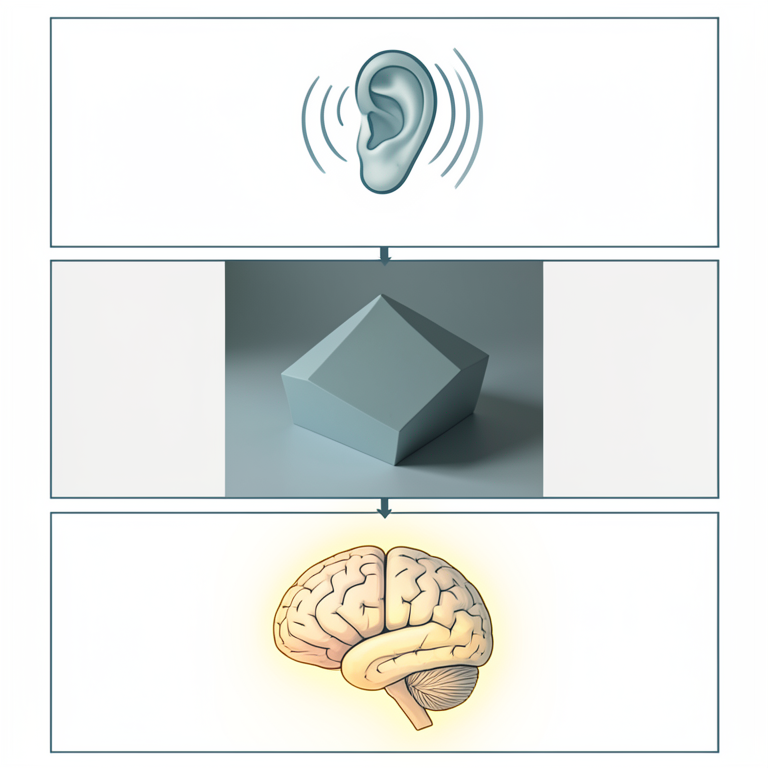
Impact of Presentation Format on Problem Solving
AI-generated conceptual illustration (middle school students' cognitive processing of mathematics problems). It explains the idea and does not show study data.
View source evidence ↗Introduction
The method of teaching mathematics has not challenged throughout the world, albeit there is an activity-oriented teaching. In this content particularly the middle school students in India they study NCERT syllabus. The role the visualization plays in mathematical learning is still unclear in spite of much research. In this paper, a group of students with mathematics difficulties was divided in two on the basis of their visuo-spatial abilities. There was no difference between mathematical performances of the two groups when assed on standard mathematical tests, but one group had higher visuo-spatial skills than the other. The individuals were then interviewed, during which, they were given arithmetic word problems to be solved in three different presentations: orally; with a picture; and with a diagram. The results show that the group with the higher visuo-spatial skills performed significantly better on these problems, and some possible reasons are discussed with implications of this finding for mathematics learning.
The content of the Middle School Syllabus
''The underlying philosophy of the course is to develop the child as being confident and competent in doing mathematics, having the foundations to learn more and developing an interest in doing mathematics. The focus is not on giving complicated arithmetic and numerical calculations, but to develop a sense of estimation and an understanding of mathematical ideas''.
Ratio and Proportion
Ratio and Proportion
Data handling Collection and organisation of dataexamples of organizing it in tally bars and a table
Data handling Collection and organisation of dataexamples of organizing it in tally bars and a table
Data handling
Consolidating and generalizing the notion of chance in events Like tossing coins, dice etc. Relating it to chance in life events. Visual representation of frequency outcomes of Repeated throws of the same kind of coins or dice.
Introduction to graphs
Plotting points for different kind of situations (perimeter vs length for squares, area as a function of side of a square, plotting of multiples of different numbers, simple interest vs number of years
Identification of students' problems and difficulties
We need to know exactly what kind of problems they are dealing with before they can defeat to tackle it. When did the problem begin? Is it a personal or more of understanding difficulties problem? Let us say for example a person has a problem of a "slow learner" then s/he is getting more difficulties in learning environment, but the problem was mainly focused on the understanding difficulty level and what is the fundamental problem the student's faced in middle school mathematics. For example what is the perimeter of square if its area is 16𝑥 2 + 56𝑥 + 49 where𝑥 > 0?. In this question, area of the square is given which is Trinomial square i.e. Area is (4𝑥 + 7) 2 therefore side = 4x+7 and perimeter of square is 4s A solution of the above problem is 4(4x+7) = 16x+28
The difficulty for above problem for slow learner faced the basic formula, Trinomial Square some time they don't know the factorization and three dimensional views in that particular middle school stage, so this are all the one of the skills caused difficulties in solving problems.
Problems in teaching and learning of Mathematics
1. A sense of fear and failure regarding mathematics among a majority of children, 2. A curriculum that disappoints both a talented minority as well as the non-participating Majority at the same time, 3. Crude methods of assessment that encourage perception of mathematics as mechanical Computation, and 4. Lack of teacher preparation and support in the teaching of mathematics.
Mathematics Skills
The ability to think mathematically and to use mathematical thinking to solve problems is an important goal of schooling. In this respect, mathematical thinking will support science, technology, economic life and development in an economy. I will illustrate five types of mathematics ability skills: i) Number fact skill (proficiency of number facts, tables and mathematics principal) ii) Arithmetic skill (accuracy and logarithm in computational and mathematical working-procedure) iii) Information skill (expertise to connect information to a concept, operational, and experience as well the (Expertise to transfer information and transform problems into mathematical sentence) iv) Language skill (proficiency of terms and relevance of mathematical information) v) Visual spatial skill (skill to visualize mathematical concepts, manipulate geometrical shape and space meaningfully).
Mathematics skills that could cause difficulties in mathematics especially in problem-solving might be due to interference in cognitive abilities.
Methods of teaching Mathematics
The effective teaching gives more benefits to get the learner which was held at the learning environment, there are a variety of ways to stimulate discussion. For example, some faculty begins a lesson with a whole group discussion to refresh student's memories about the assigned problem solving. Other faculty find it helpful to have students list critical points or emerging issues, or generate a set of questions stemming from the assigned readings. These strategies can also be used to help focus large and small group discussions.
Obviously, a successful class discussion involves planning on the part of the instructor and preparation on the part of the students. Instructors should communicate this commitment to the students on the first day of class by clearly articulating course expectations. Just as the instructor carefully plans the learning experience, the students must comprehend the assigned reading and show up for class on time, ready to learn.
Active Learning
Meyers and Jones (1993) define active learning as learning environments that allow "students to talk and listen, read, write, and reflect as they approach course content through problem-solving exercises, informal small groups, simulations, case studies, role playing, and other activities -all of which require students to apply what they are learning" (p. xi). Many studies show that learning is enhanced when students become actively involved in the learning process. Instructional strategies that engage students in the learning process stimulate critical thinking and a greater awareness of other perspectives. Although there are times when lecturing is the most appropriate method for disseminating information, current thinking in college teaching and learning suggests that the use of a variety of instructional strategies can positively enhance student learning. Obviously, teaching strategies should be carefully matched to the teaching objectives of a particular lesson. Assessing or grading students' contributions in active learning environments is somewhat problematic. It is extremely important that the course syllabus explicitly outlines the evaluation criteria for each assignment whether individual or group. Students need and want to know what is expected of them.
Case Method
Providing an opportunity for students to apply what they learn in the classroom to real-life experiences has proven to be an effective way of both disseminating and integrating knowledge. The case method is an instructional strategy that engages students in active discussion about issues and problems inherent in practical application. It can highlight fundamental dilemmas or critical issues and provide a format for role playing ambiguous or controversial scenarios.
Course content cases can come from a variety of sources. Many faculties have transformed current events or problems reported through print or broadcast media into critical learning experiences that illuminate the complexity of finding solutions to critical social problems. The case study approach works well in cooperative learning or role playing environments to stimulate critical thinking and awareness of multiple perspectives.
The following recommendations can help make the teach approach more effective (Cashin, 1990):
1. Fit the teach to the audience 2. Focus your topic -remember you cannot cover everything in one class hour 3. Prepare an outline that includes 5-9 major points you want to cover in one class hour 4. Organize your points for clarity 5. Select appropriate examples or illustrations 6. Present more than one side of an issue and be sensitive to other perspectives 7. Repeat points when necessary 8. Be aware of your audience -notice their feedback 9. Be enthusiastic -you don't have to be an entertainer but you should be excited by your topic.
The purpose of this guide is to help and assist those admirable and brave individuals who try to teach mathematics to young people with limited experience or who are just beginning their math teaching career. It might even be a useful reminder for the more experienced math teacher too! This guide aims to set out my own approach to how to teach mathematics in middle school and how to put together a programme of study for your classroom.
Implementation of effective teaching of mathematics
The following effective teaching methodology use to promote the students understanding level. Classroom assessment techniques are teacher-directed, content-specific, learner centered formative assessments that are ongoing the results which include more highly developed critical thinking and problem solving skills. Critical thinking is essential for problem solving techniques this also deductive and inductive reasoning. (Student learning to occur, the teacher uses assessment techniques to move the student to higher levels of analysis, synthesis, and evaluation. contended that critical thinking covers a variety of outcomes such as elements of reasoning, intellectual abilities, modes of reasoning, traits of mind, intellectual standards, reason in actions and beliefs, questioning assumptions, ability to generalize and invent new possibilities, and intellectual independence. Another important problem is that of curricular acceleration: a generation ago, calculus was first encountered by a student in college. Another generation earlier, analytical geometry was considered college mathematics. But these are all part of school curriculum now. Such acceleration has naturally meant pruning of some topics: there is far less solid geometry or spherical geometry now.
Teaching models prescribed tested steps and procedure to effectively generate desired outcomes Three-tiered taxonomy desired techniques are 1. Top-down, 2. Teacher delivered,
Direct instruction
Teaching with motivational approach was very important to improve their problem solving ability. The study describes naturally 6R's method has been followed 'success' it happen automatically this expansions are Reading, Remembering, Recapitalization, Reproduction, Rectification, Revision then study is over.
The Audio Tutorial Approach, The personalized system of instruction, In Goal-Based scenarios, Case Based Teaching, Guided Design Models this are all established mathematics goals to focus learning.
Support for Ambitious teaching in developing middle school Students ability
The following Criteria to determine the principle Actions: Implement tasks that promote reasoning and problem solving Use and connect mathematical representations Facilitates meaningful mathematical discourse pose purposeful questions Build procedural fluency from conceptual understanding Support productive struggle in learning mathematics Elicit and use evidence of student thinking
The necessary steps to take initiatively the teacher have some responsibilities and any other content discipline, mathematics education relies very heavily on the preparation that the teacher has, in her own understanding of mathematics, of the nature of mathematics, and in her bag of pedagogic techniques. Textbook-centered pedagogy dulls the teacher's own mathematics activity. At two ends of the spectrum, mathematics teaching poses special problems. At the primary level, most teachers assume that they know all the mathematics. Needed, and in the absence of any specific pedagogic training, simply try and uncritically reproduce the techniques they experienced in their school days. Often this ends up perpetuating problems across time and space. If learning approaches and teaching strategies applied did not fulfill the intellectual needs of the students, these could lead to students' difficulties in learning mathematics. Teachers need to understand students' potential, problems and learning difficulties in order to implement effective teaching strategy and to produce meaningful learning among students
Finding & Discussions
The problem of mathematics in schools is it has been presented, for decades, as a subject of numbers and symbols, ignoring the potential of visual mathematics for transforming students' mathematical experiences and developing important brain pathways. Mathematics can't be learnt directly from the everyday environment, but only indirectly from other mathematicians, in conjunction with one's own reflective intelligence. "..We always make mistakes in managing the facts in the questions…we don't know which fact to use first….we are not sure how to make connection… which fact and formula to use. What fact to look for….in fact we got so confused on how to solve the problem..." Educators fool themselves if they think well-meaning directives to "work together," "cooperate," and 'be a team" will be enough to create cooperative efforts among group members. Placing students in groups and telling them to work together does not in and of it result in cooperation. Mastering the essential components of cooperation allows teachers to: 1. Take existing lessons, curricula, and courses and structure them cooperatively. 2. Tailor cooperative learning lessons to meet the unique instructional circumstances and needs of the curricula, subject areas, and students. 3. Diagnose the problems some students may have in working together and intervene to increase the effectiveness of the student learning groups.
Therefore, find out the problems would not be the hindrance any more. They could not understand and make effective connection of the information in the problems. Diagnosis based on performance should also be carried out for a more comprehensive diagnosis.
Conclusion
This study concludes that students faced more difficulties in middle school level mathematical problem solving due to incompetency in acquiring many mathematics skills and lacking in cognitive abilities of learning. The content of the middle school mathematics syllabus which is hard, but intelligent choice based on best use of available information is a mathematical skill that can be taught. Encourage to celebrate students' visual approaches and replace the idea that strong mathematics learners are those who memorize and calculate well. Fast calculation is not what is needed in highlevel mathematics work. Strong mathematics learners are those who think deeply, make connections and visualize. This study implies that, students' difficulties in problem-solving might occur at any phases. Importantly, mathematics teaching and learning needs to become more visual -there is not a single idea or concept that cannot be illustrated or thought about visually. The identification of mathematics skills needed is essential to respond with the difficulties in mathematical problem-solving. These efforts could help students to be motivated managing and trying to improve their skills in mathematics problem solving. The understanding of the issue, knowledge, skills and commitment of teachers are keys in assisting this group of students' success presently as well as in future.
References
8 in the original paper- Aiken LR, Groth-Marnat G. Psychological testing and assessment. New York: Pearson, 2006.
- Andersson U, Lyxell B. Working Memory Deficit in Children with Mathematics Difficulties: A General or Specific Deficit. Journal of Exceptional Children Psychology. 2007; 96(3):197-228.
- Goldin GA. Representational System Learning and Problem Solving in Mathematics. Journal of Mathematical Behaviour. 1998; 17(2):137-165.
- Cottell P, Harwood E. Do classroom assessment techniques, 1998
- a. (CATs) improve student learning? New Directions for Teaching and Learning, 1998; 75:37-46.
- Krulik S, Rudnick JA. Reasoning and Problem Solving: A Handbook for Elementary School Teacher. Boston: Allyn & Bacon, 1993.
- Miranda F. How Can You Tell When Your Child Has Learning Problems? LD online. Retrieved on 4th Sep 2009, 2006. From http://www.ldonline/
- Tarzimah Tambychika, Thamby Subahan Mohd Meerahb. Students' Difficulties in Mathematics ProblemSolving: What do they Say? International Conference on Mathematics Education Research, 2010, (ICMER 2010).