
Research article · 2019 · Full text
International Journal of Veterinary Sciences and Animal HusbandryEffect of feeding probiotics with and without milk powder on incidence and severity of piglet diarrhoea
Volume 4(1) · Pages 24–28 · DOI: 10.22271/veterinary.2018.v4.i1a.06 ↗
Research areasAnimal Nutrition and PhysiologyViral gastroenteritis research and epidemiologyProbiotics and Fermented Foods
Abstract
Author-writtenA study was conducted to evaluate the effect of feeding Probiotics on the incidence and severity of diarrhoea in piglets under different feeding treatments viz., T0 (fed conventional creep feed), T1 (fed 5% milk powder supplemented creep feed), T2 (fed probiotics supplemented creep feed added at manufacturer's recommended rate) and T3 (fed creep feed supplemented with 5% milk powder and probiotics as per manufacturer's recommendation). The overall incidence rate (%) of piglet diarrhoea was highest in T0 group and then gradually decreased in T1, T2 and T3 group. The average values of diarrhoea scores indicated that the severity of diarrhoea was promptly by the supplementation of Probiotics in T2 and T3 groups and the piglets fully recovered by 14th day followed by T1 on 29th day while the control T0 group suffered up to 45th day and then recovered. The occurrence and severity of diarrhoea was reduced in the experiment indicating the effectiveness of the used Probiotics.
Summary
Source-checkedPlain-language reading of the full paper, prepared with AI and checked against the text. Each point links to the authors' own words.
Why it matters
- Pig farming is a critical part of animal husbandry in India because pigs are highly efficient feed converters and have significant potential for meat production to meet growing nutritional demands. View evidence ↗
- Gastrointestinal issues are among the most severe stressors that piglets face immediately after birth. View evidence ↗
- Due to antimicrobial resistance and bans on growth-promoting antibiotics in regions like the EU, there is increased interest in alternative health promoters for pigs. View evidence ↗
The question
- The study aimed to evaluate how feeding pre-weaned piglets creep feed supplemented with probiotics, with or without milk powder, affects the incidence and severity of diarrhoea. View evidence ↗
What they did
- Piglets were divided into four groups: T0 (conventional feed), T1 (feed + 5% milk powder), T2 (feed + probiotics), and T3 (feed + 5% milk powder + probiotics). View evidence ↗
- Diarrhoea severity was measured using a visual scoring system from 0 (pellet faeces) to 3 (watery faeces). View evidence ↗
What they found
- Peak diarrhoea incidence varied by group, reaching 12.24% in T0 (week 6), 9.52% in T1 (week 2), 14.00% in T2 (week 2), and 3.57% in T3 (week 3). View evidence ↗
- Piglets in the probiotic groups (T2 and T3) fully recovered from diarrhoea by day 14, whereas the milk powder group (T1) recovered by day 29 and the control group (T0) by day 45. View evidence ↗
- Statistical analysis showed that the treatment had a significant effect on diarrhoea scores specifically on the 7th and 29th days. View evidence ↗
What it means
- The authors concluded that probiotics suppress the occurrence of diarrhoea, and this effect is further enhanced when probiotics are combined with milk powder. View evidence ↗
- The authors state that a more comprehensive study with a larger number of litters per group is necessary for better sampling and more accurate results. View evidence ↗
Visual summary
2 visualsIllustrations explain the paper; charts are replotted from the paper's own table values.
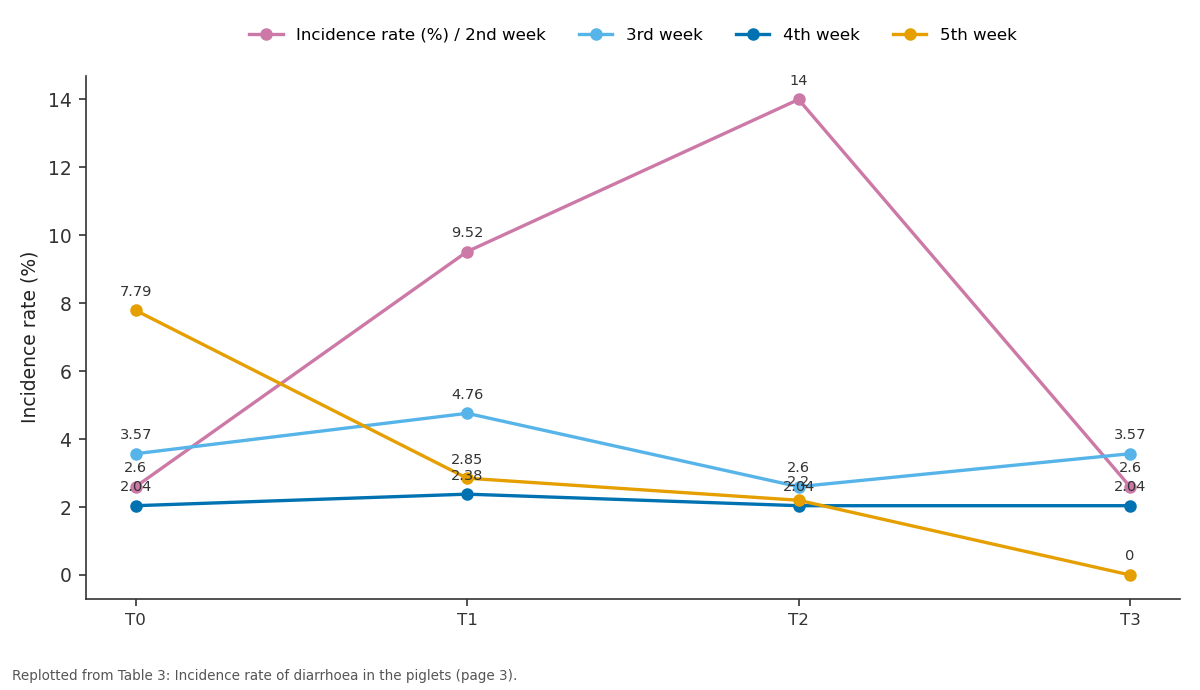
Incidence rate (%) / 2nd week and 3rd week and more: T0 vs T1 vs T2 vs T3
Replotted from Table 3 (page 3) of the original paper. Every bar is the paper's own table value.
View source evidence ↗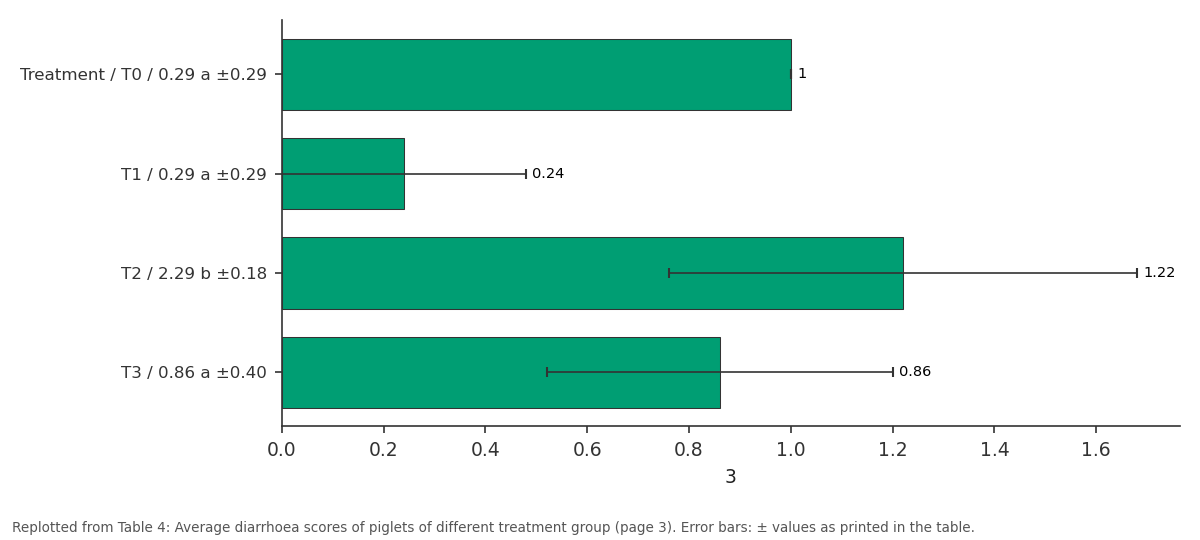
3: Treatment / T0 / 0.29 a... vs T1 / 0.29 a ±0.29 vs T2 / 2.29 b ±0.18 vs T3 / 0.86 a ±0.40
Replotted from Table 4 (page 3) of the original paper. Every bar is the paper's own table value.
View source evidence ↗Figures & tables
From the original paper Table 1
 Table 2
 Table 3
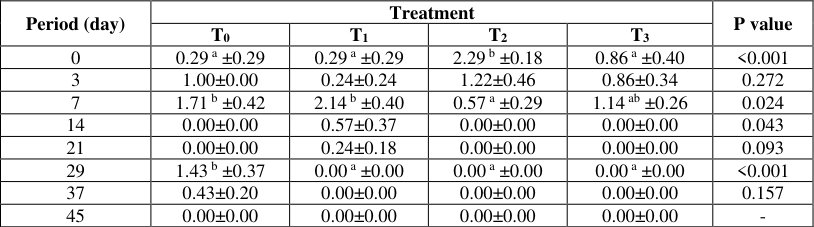 Table 4
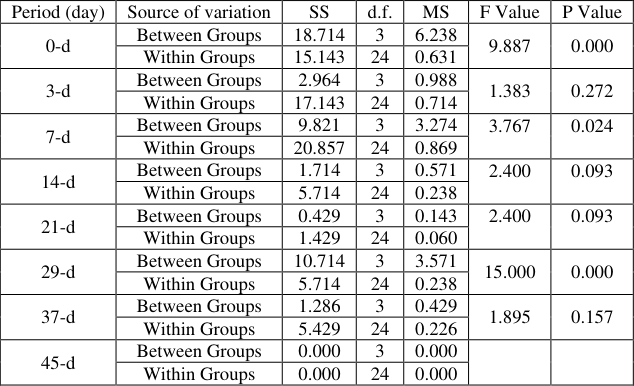 Table 5
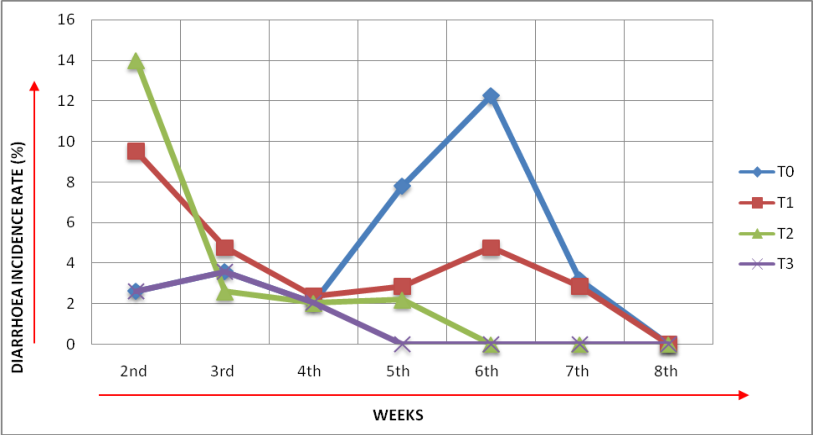 Figure 1
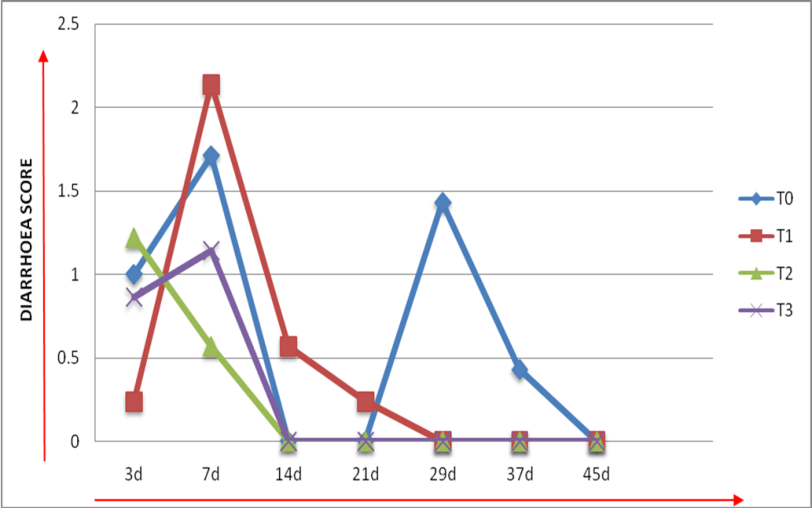 Figure 2
Introduction
Pig rearing forms a very important component of animal husbandry in India, holding the potential to meet the food and nutrition demand of the fast-growing population in the country as pig is the most potential livestock species for meat production and efficient feed converter after the broilers. Efficient piglet rearing right from their birth undoubtedly is an important aspect of overall successful pig farming. The post-weaning growth of pigs is closely related to their pre-weaning health status. While piglets are exposed to many stressors immediately after birth, gastrointestinal problems are among the most severe. When the basal liquid milk diet is reduced and the stage where-in the piglets are offered with solid creep feed from the 10 th day after birth, the digestive physiology changes where in the intervention of different feed additives is needed to have the maximum nutrient utilization [1] . For decades, sub-therapeutic levels of antibiotics have been used as growth promoters to combat the problems caused by GI infections [2] . However, the indiscriminate use of antimicrobials has been associated to the development of antimicrobial resistance and the ban of growth-promoting antibiotics throughout the EU since 1 st January 2006 have triggered increased interest in alternative ways to promote the health of production animals, including pigs [3,4] . Probiotics, sometimes used interchangeably with the term direct fed microbials (DFM), are gaining acceptance as potential alternatives to antibiotics to improve production efficiency [5] . A definition adopted by FAO/WHO (2001) [6] states that "Probiotics are mono or mixed cultures of live organisms which when administered in adequate amounts confer a health benefit to the host." Probiotics may contain one or more strains of microorganisms and may be given either alone or in combination with other additives in feed or water [7] . Probiotics have "GRAS" (generally regarded as safe) status [8] . The species commonly used in probiotics products for pigs include Lactobacillus acidophilus, L. reuteri, L. plantarum, L. casei, L. fermentum, L. brevis, L. delbreuckii subsp. bulgaricus, Lactococcus lactis, Streptococcus salivarius subsp. thermophilus, Enterococcus faecalis, E. faecium, Bacillus licheniformis, B. subtilis, Bifidobacterium bifidum, B. pseudolongum, B. thermophilus, Clostridium butyricum, and yeasts like Saccharomyces spp. [9] . Probiotics help establish a microenvironment in the gut that favours beneficial microorganisms and reduces the colonization of pathogenic bacteria by: (1) creating a hostile environment for harmful bacteria species (through production of lactic acid, SCFA, and reduction in pH); (2) competing for nutrients with undesired bacteria; (3) production and secretion of antibacterial substances (e.g. bacteriocins by Lactobacillus, Bacillus spp.); and (4) inhibition of bacterial adherence and translocation [1015] . Probiotics are most effective in animals during microflora development or when microflora stability is impaired [16] . Therefore, it is suggested that the effects of probiotics appear to be more consistent and positive in piglets rather than in growing finishing pigs [17] . On farms with a high incidence of diarrhoeal disease, it may be appropriate to introduce a probiotics strain as early as possible to colonize the digestive tract with probiotic strains that inhibit pathogens, reduce piglet diarrhoea and reduce pre-weaning mortality [18] . In the suckling piglets, acid secretion is low and the principal source of acidity is bacterial fermentation of lactose from sows' milk to lactic acid. A number of possible solutions have been tested with varying degrees of success such as addition of lactose in dry feeds or, in water [19] . The milk sugar lactose has been proposed to have prebiotic properties in certain situations [20,21] , and many gastrointestinal Lactobacillus spp. and Streptococcus spp. are known to utilize lactose by readily converting it to lactic acid [22] . Prebiotics are non-digestive food / feed ingredients that beneficially affect the host by selectively stimulating the growth and/or activity of one or a limited number of bacterial species already resident in the digestive tract and thus attempt to improve host health [23,24] . Nonfat dried skim milk (DSM) contains 50% lactose [25] .
Pollmann et al. (1980) [26] suggested that pigs receiving lactose in combination with the Lactobacillus inoculums had the best average daily gain in comparison with other groups. Considering the above facts and views, the present research work of feeding probiotics with or without milk powder supplemented creep feed in pre-weaned piglets was undertaken to study its effect in diarrhoea incidence and severity.
Materials and methods
The feeding trial of the piglets was carried out at the 30-sow Teaching Unit of the Department of Livestock Production and Management while laboratory analysis of feed and blood samples were done respectively in the Department of Animal Nutrition and Department of Animal Physiology as well as T.V.C.C., College of Veterinary Science, Assam Agricultural University, Khanapara, Guwahati, India. The animal experimental protocol was approved by the Institutional Animal Ethics Committee (IAEC) and carried out as per the guidelines of the Committee for the Purpose of Control and Supervision of Experiments in Animals (CPCSEA), Ministry of Environment, Forest and Climate Change, Government of India.
Selection of animal and treatment allocation
Four Hampshire litters from sows of similar parity were selected for the study. Seven healthy piglets of uniform size and body weight from each litter were finally selected for feeding trial and recording of experimental data. The seven piglets of particular litter constituted one group and thus four treatment groups were formed. Each group of the experimental piglets was randomly assigned to one of the four treatments as in the following treatment schedule.
Housing
The piglets together with their mothers were sheltered in conventional farrowing pens till weaning at 8 weeks of age. The floor of the pens was cement concrete and floor area was of 9 sq. meters with an equal floor area in the outdoor run.
Feeding and management
All the experimental piglets were raised entirely on their dams' milk from birth to 7 days of age. From day-8 onward, the piglets of T 0 , T 1 , T 2 and T 3 groups were offered respective experimental feed twice daily as per the feeding schedule up to weaning at 56 days of age. The piglets were separated from their sows daily in the morning and evening for a period of 1-2 hours following suckling and offered feed in the outdoor run and fed to appetite. The piglets were provided clean wholesome water ad libitum round the clock. Other day to day routine managemental tasks like cleaning of pens, disinfection of floors, washing of feeding and water troughs etc. were strictly followed. The compositions of the ration, milk powder and probiotics used for the piglets are as shown below in the Tables 2. The proximate analysis of the feed samples was done as per methods described in AOAC (Association of Official Analytical Chemists, 1990) [27] .
Recording the incidence rate of diarrhoea.
The weekly percent incidence rates of diarrhoea in each treatment group were calculated as:
Where, pigletsdays at risk = [(nos. of piglets at risk at the beginning of the time interval+ nos. of piglets at risk at the end of the time interval)/2] × (nos. of time unit in the time intervals).
Recording the severity of diarrhoea by scoring.
The number of piglets affected by diarrhoea in each group was recorded daily. Diarrhoea was assessed visually and scores were given from 0-3 based on the consistency of the faeces, according to the score: 0-pellet faeces; 1-semi pellet faeces; 2-soft faeces; and 3-watery faeces. This observation was followed using the method described by Loh et al. (2002) [28] and Dowarah et al. (2016) [29] .
Results and Discussion
The data for diarrhoea incidence rate (%) and diarrhoea score were depicted in Table 3 and 4 and further illustrated in Fig 1 . and2.
| Groups | Incidence rate (%) | — | — | — | — | — | — | — |
|---|---|---|---|---|---|---|---|---|
| 2nd week | 3rd week | 4th week | 5th week | 6th week | 7th week | 8th week | Average | |
| T0 | 2.60 | 3.57 | 2.04 | 7.79 | 12.24 | 3.17 | 0.00 | 4.49 |
| T1 | 9.52 | 4.76 | 2.38 | 2.85 | 4.76 | 2.86 | 0.00 | 3.87 |
| T2 | 14.00 | 2.60 | 2.04 | 2.20 | 0.00 | 0.00 | 0.00 | 2.97 |
| T3 | 2.60 | 3.57 | 2.04 | 0.00 | 0.00 | 0.00 | 0.00 | 1.17 |
Table text extracted from the original PDF; superscript letters are shown inline. The original table image is below.
View original table image
The average values of incidence rate (%) were 4.49, 3.87, 2.97 and1.17 percent in T 0 , T 1 , T 2 and T 3 group respectively. The highest incidence rate in different treatment groups were as 12.24 % at 6 th week in T 0 , 9.52% at 2 nd week in T 1 , 14.00% at 2 nd week in T 2 and 3.57% at 3 rd week in T 3 groups. Likewise, the lowest percentage of 0.00% which indicated nil or no diarrhoea in a particular group was found at 5 th week in T 3 , 6 th week in T 2 and 8 th week both in T 0 and T 1 groups. The average values of diarrhoea incidence (%) indicated that the incidence rate was lowest in probiotics cum milk powder supplemented group (T 3 ) followed by probiotics (T 2 ), milk powder (T 1 ) and control (T 0 ) without any supplement. The findings indicated the beneficial effect of probiotics which helped to stabilize the helpful intestinal microbiota, shedding of E. coli organisms in faeces resulting in efficient digestion and utilization of feed nutrients. Addition of milk powder containing lactose might further helped the existing Lactobacillus population or Lactobacillus contained in the probiotics to multiply and work in a better way (Wells et al., 2004) [30] . Higher incidence of diarrhoea rate in the beginning of the experiment in the treatment groups might be due to adaptive change to the supplements for a few days. However, it is found that probiotics helped to subside diarrhoea in the T 3 and T 2 groups early(5 th and 6 th week respectively) which lasted up to 8 th week in T 1 and T 0 groups receiving no probiotics.
The data of table 4 depicted that diarrhoeal scores were 0.29±0.29, 0.29±0.29, 2.29±0.18 and 0.86±0.40 at day-0 and 1.00±0.00,0.24+0.24, 1.22±0.46 and 0.86±0.34 at day-3 in T 0 ,T 1 ,T 2 and T 3 respectively. The highest score were as 1.71± 0.42 at 7 th day in T 0 , 2.14±0.04 at 7 th day in T 1 , 1.22±0.46 at 3 rd day in T 2 and 1.14±0.26 at 7 th day in T 3 groups. On the other hand, 0.00±0.00 score indicating nil or no diarrhoea were found at 14 th day both in T 2 and T 3 groups, at 29 th day in T 1 group and 45 th day in T 0 group. Analysis of variance of the data (Table 5) revealed significant effect of treatment on diarrhoeal score at 7 th and 29 th day. The findings were further illustrated in fig 1 . And 2.
| Period (day) | Source of variation | SS | d.f. | MS | F Value | P Value |
|---|---|---|---|---|---|---|
| 0-d | Between Groups | 18.714 | 3 | 6.238 | 9.887 | 0.000 |
| Within Groups | 15.143 | 24 | 0.631 | |||
| 3-d | Between Groups | 2.964 | 3 | 0.988 | 1.383 | 0.272 |
| Within Groups | 17.143 | 24 | 0.714 | |||
| 7-d | Between Groups | 9.821 | 3 | 3.274 | 3.767 | 0.024 |
| Within Groups | 20.857 | 24 | 0.869 | |||
| 14-d | Between Groups | 1.714 | 3 | 0.571 | 2.400 | 0.093 |
| Within Groups | 5.714 | 24 | 0.238 | |||
| 21-d | Between Groups | 0.429 | 3 | 0.143 | 2.400 | 0.093 |
| Within Groups | 1.429 | 24 | 0.060 | |||
| 29-d | Between Groups | 10.714 | 3 | 3.571 | 15.000 | 0.000 |
| Within Groups | 5.714 | 24 | 0.238 | |||
| 37-d | Between Groups | 1.286 | 3 | 0.429 | 1.895 | 0.157 |
| Within Groups | 5.429 | 24 | 0.226 | |||
| 45-d | Between Groups | 0.000 | 3 | 0.000 | ||
| Within Groups | 0.000 | 24 | 0.000 |
Table text extracted from the original PDF; superscript letters are shown inline. The original table image is below.
View original table image
| Period (day) | Treatment | — | — | — | P value |
|---|---|---|---|---|---|
| T0 | T1 | T2 | T3 | ||
| 0 | 0.29 a ±0.29 | 0.29 a ±0.29 | 2.29 b ±0.18 | 0.86 a ±0.40 | <0.001 |
| 3 | 1.00±0.00 | 0.24±0.24 | 1.22±0.46 | 0.86±0.34 | 0.272 |
| 7 | 1.71 b ±0.42 | 2.14 b ±0.40 | 0.57 a ±0.29 | 1.14 ab ±0.26 | 0.024 |
| 14 | 0.00±0.00 | 0.57±0.37 | 0.00±0.00 | 0.00±0.00 | 0.043 |
| 21 | 0.00±0.00 | 0.24±0.18 | 0.00±0.00 | 0.00±0.00 | 0.093 |
| 29 | 1.43 b ±0.37 | 0.00 a ±0.00 | 0.00 a ±0.00 | 0.00 a ±0.00 | <0.001 |
| 37 | 0.43±0.20 | 0.00±0.00 | 0.00±0.00 | 0.00±0.00 | 0.157 |
| 45 | 0.00±0.00 | 0.00±0.00 | 0.00±0.00 | 0.00±0.00 | - |
Table text extracted from the original PDF; superscript letters are shown inline. The original table image is below.
View original table image
From the findings it was evident that probiotics promptly dropped diarrhoea scores in the high incidence T 2 group (from 2.29±0.18 in day-0 to 1.22±0.46 in day 3), followed by T 1 and T 3 groups. Probiotics helped to arrest diarrhoea as early as 14 th day in T 2 and T 3, followed by milk powder at 29 th day in T 1 while control group piglets suffered from diarrhoea upto 45 days. This might be due anti-diarrhoeal property of probiotics by stabilizing intestinal micro biota, competitive expulsion of diarrhoea causing bacteria like E. coli etc. The lactose of milk powder might have helped the existing helpful bacterial micro flora by acting as a substrate resulting in slight arrest of diarrhoea in the respective groups. The present findings are in agreement with the findings of Wells et al.
(2004) [30] , Venkatachalapathy et al. (2013) [31] and Dowarah et al. (2016) [29] who found beneficial effect of different probiotics preparations in controlling diarrhoea in piglets. However, Lahteinen et al. (2015) [32] observed mild diarrhoea in the adaptation period in some piglets in his feeding trial of multispecies Lactobacillus in piglets. Pustal et al. (2015) [33] from his work reported no significant difference (P>0.05) in diarrhoea occurrence in milk supplemented piglets from the control. Treatment means having atleast one common superscript in a row do not differ significantly.
Conclusion
The Probiotics used in the study has shown its effect in suppressing the occurrence of diarrhoea and the effect was enhanced when combined with milk powder. Also the diarrhoea score showed that the severity was also reduced in piglets' groups' supplemented probiotics both with and without milk powder. The overall incidence rate of piglet diarrhoea was highest in T 0 group and then gradually decreased in T 1 , T 2 and T 3 group with corresponding values of 4.49, 3.87, 2.97 and 1.17 percent in the respective group. On the other hand, the average values of diarrhoea scores indicated that though there were incidence of diarrhoea in all the groups initially at 0-day, severity of diarrhoea was promptly reduced by the supplementation of probiotics in T 2 and T 3 groups and the piglets fully recovered by 14 th day followed by T 1 on 29 th day while the control T 0 group suffered up to 45 th day and then recovered. The present findings indicated that feeding of probiotics helps to control the occurrence and severity of diarrhoea in piglets. However more comprehensive study with more no. of litter in a group is needed for proper sampling and assessing more accurate results.
Figures and tables from the paper
| Treatment group | No. of piglet | Average initial body weight (kg) | Experimental feed for the treatment groups |
|---|---|---|---|
| T0 (Control) | 7 | 2.280 | Conventional farm feed |
| T1 (Treatment-1) | 7 | 2.314 | Conventional farm feed + 5% supplementation of milk powder (SAGAR BRAND) |
| T2 (Treatment-2) | 7 | 2.315 | Conventional farm feed+ probioticsa (PROBIOSR from VETS PLUS, Inc and CHR. Hansen) as per manufacturer’s recommendation |
| T3 (Treatment-3) | 7 | 2.300 | Conventional farm feed+ 5% milk powder% probiotics as per manufacturer’s recommendation |
Table text extracted from the original PDF; superscript letters are shown inline. The original table image is below.
View original table image
| Farm ration (%) | — | Milk powder(Per 100gm) | — | Probiotics(Viable lactic acid bacteria/ gm) | — |
|---|---|---|---|---|---|
| DM (basal feed) | 95 | Energy(Kcal) | 366 | Enterococcus faecium, Lactobacillus acidophilus, L. casei and L. plantarum | 10 million CFU |
| DM(left over feed) | 92 | Total fat(gm) | 1.5 | ||
| CP | 22.1 | Total carbohydrate (gm) | 52 | ||
| EE | 5.06 | Protein(gm) | 35 | ||
| CF | 4.75 | Sodium(mg) | 549 | ||
| Total ash | 7.75 | Calcium(mg) | 1200 | ||
| NFE | 60.34 |
Table text extracted from the original PDF; superscript letters are shown inline. The original table image is below.
View original table image
References
33 in the original paper- Suiryanrayna MV, Ramana JV. A review of the effects of dietary organic acids fed to swine. J Anim. Sci. Biotechnol. 2015; 6:45.
- Dibner JJ, Richards JD. Antibiotic growth promoters in agriculture: history and mode of action. Poult. Sci. 2005; 84:634-643.
- Stein HH, Kil DY. Reduced use of antibiotic growth promoters in diets fed to weanling pigs: dietary tools, Part 2. Anim. Biotecnol. 2006; 17:217-231.
- Thacker PA. Alternatives to antibiotics as growth promoters for use in swine production: a review. J Anim. Sci. Biotechnol. 2013; 4:35.
- Lee KW, Lillehoj HS, Siragusa GR. Direct-fed microbials and their impact on the intestinal microflora and immune system of chickens. Journal Poultry Science. 2010; 47:106-114.
- FAO/WHO. Health and nutritional properties of probiotics in food including powder milk with live lactic acid bacteria. Report of a Joint FAO/WHO Expert Consultation on Evaluation of Health and Nutritional Properties of Probiotics in Food including Powder Milk with Live Lactic Acid Bacteria; FAO/WHO: Córdoba, Argentina, 2001, 1-34.
- Thomke S, Elwinger K. Growth promotants in feeding pigs and poultry. II. Mode of action of antibiotic growth promotants. Annales De Zootechnie. 1998; 47:153-167.
- Anadon A, Martinez-Larranaga A, Martinez MA. Probiotics for animal nutrition in the European Union. Regulation and safety assessment. Regulatory Toxicology and Pharmacology. 2006; 45:91-95.
- Jonsson E, Conway P. Probiotics for pigs. In: Probiotics: The scientific basis, Fuller, R. (Ed.), Chapman & Hall, London, UK, 1992, 260-316.
- Nurmi E, Rantala M. New aspects of Salmonella infection in broiler production. Nature. 1973; 241:210-211.
- Fuller R. Probiotics in man and animals. Journal of Applied Bacteriology. 1989; 66:365-378.
- Nether wood T, Gilbert HJ, Parker DS, O'Donnell AG. Probiotics shown to change bacterial community structure in the avian gastrointestinal tract. Applied and Environmental Microbiology. 1999; 65:5134-5138.
- Schneitz C. Competitive exclusion in poultry-30 years of research. Food Control. 2005; 16:657-667.
- Ng SC, Hart AL, Kamm MA, Stagg AJ, Knight SC. Mechanisms of action of probiotics: recent advances. Inflammatory Bowel Diseases. 2009; 15:300-310.
- Brown M. Modes of action of probiotics: recent developments. Journal of Animal and Veterinary Advances. 2011; 10:1895-1900.
- Stavric S, Kornegay ET. Microbial Probiotic for Pigs and Poultry. In: Biotechnology in Animal Feeds and Animal Feeding, Wallace, R.J. and Chesson, A. (Eds.). WileyVCH Publisher, Weinheim, 1995, 205.
- William HC. Producing pigs without antibiotic growth promoters. Adv. Pork. Prod. 2000; 11: 47-56.
- Maré L. The use of prebiotics and probiotics in pigs: A review. Agricultural Research Council-Livestock Business Division: Animal Production, 2009.
- Vanbelle M, Teller E, Focant M. Probiotics in animal nutrition: a review. Archives of Animal Nutrition. 1990; 40(7):543-567.
- Szilagyi A. Review article: lactose -a potential prebiotic. Aliment Pharmacol. Ther. 2002; 16:1591-1602.
- Szilagyi A. Redefining lactose as a conditional prebiotic. Can. J Gastroenterol. 2004; 18:163-167.
- Kandler O, Weiss N. Regular, nonsporing gram-positive rods: Lactobacillus. In: Bergey's Manual of Systematic Bacteriology, Sneath, P.H.A., Mair, N.S., Sharpe, M.E. and Holt, J.G. (Eds.), Baltimore, MD: Williams and Wilkins. 1986; 2:1208-1234.
- Patterson JA, Burkholder KM. Application of prebiotics and probiotics in poultry production. Poultry Science. 2003; 82:627-631.
- Gadde U, Kim WH, Oh ST, Lillehoj HS. Alternatives to antibiotics for maximizing growth performance and feed efficiency in poultry: a review. Animal Health Research Reviews. 2017; 18(1):26-45.
- Mahan DC, Lepine AJ. Effect of piglet weaning weight and associated nursery feeding programs on subsequent performance to 105 kilograms body weight. J Anim. Sci. 1991; 69:1370-1378.
- Pollmann DS, Danielson DM, Peo ER. Effect of Lactobacillus acidophilus on Starter Pigs Fed a Diet Supplemented with Lactose. Journal of Animal Science. 1980; 51(3):638-644.
- AOAC. Official methods of analysis (15 th edition) Williams S. (Ed). Association of Official Analytical Chemists, Washington, D.C., 1990, 152-164.
- Loh TC, Choo PY, Cheong YH. Effects of organic acid and natural herbs on performance and incidence of diarrhoea in post weaning pigs. Mal. J Anim. Sci. 2002; 7(2):25-30.
- Dowarah R, Verma AK, Agarwal N, Patel BHM, Singh P. Effect of swine based probiotic on performance, diarrhoea scores, intestinal microbiota and gut health of growerfinisher crossbred pigs. Livestock Science. 2016; 195:74-79.
- Wells JE, Yen JT, Miller DN. Impact of dried skim milk in production diets on Lactobacillus and pathogenic bacterial shedding in growing-finishing swine. Journal of Applied Microbiology. 2005; 99:400-407.
- Venkatachalapathy RT, Gopalakrishnan SP, Usha AP. Effect of Probiotics Supplementation on the Performance of Preweaned Piglets. In: Probiotics in Sustainable Food Production: Current Status and Future Prospects "Probiotics in Food Production", Ramanathan, A. and Senthivel, T. (Eds.), 2013; 2:281.
- Lähteinen T, Rinttilä T, Koort JMK, Kant R, Levonen K, Viljanen MJ et al. Effects of a multispecies Lactobacillus formation as a feeding supplement on the performance and immune function of piglets. Livestock Science. 2015; 180:164-171.
- Pustal J, Traulsen I, Preißler R, Müller K, Grosse Beilage T, Börries U et al. Providing supplementary, artificial milk for large litters during lactation: effects on performance and health of sows and piglets: a case study. Porcine Health Management. 2015; 1(1):13.