
Research article · 2017 · Full text
International Journal of Veterinary Sciences and Animal HusbandryHow can the staff hygiene practices influence the milk healthy quality? Case of study from M’zab dairy
Volume 2(6) · Pages 25–28
Research areasAgriculture, Water, and HealthFood Waste Reduction and Sustainability
Abstract
Author-writtenThe consumption of low-quality dairy products can endanger consumers' health and even cause serious food poisoning. The implementation of the quality policy in dairy units is therefore a priority in terms of consumer protection. To assess the implementation of hygiene in dairies in the Ghardaia region, a field survey of 07 dairies and a literature research were conducted across the province. Members of staff play a vital role in determining food quality; being trained in hygiene practices remains a quality determinant. Conversely, if poorly trained or careless, staff can be a major source of contamination with their own health, their clothing or their work practices. Also, at the farm level, the incorrect maintenance of the milking equipment and the insufficient level of hygiene in the building proved to be a source of bacterial contamination. In this context, our work has focused on the evaluation of hygiene practices applied by dairies staff.
Summary
Source-checkedPlain-language reading of the full paper, prepared with AI and checked against the text. Each point links to the authors' own words.
Why it matters
- Low-quality dairy products pose a risk to consumer health and can lead to severe food poisoning. View evidence ↗
- Staff members are critical to food quality, and their training in hygiene practices is a key determinant of that quality. View evidence ↗
- In Algeria, UHT processing accounts for 95% of the total fluid milk consumed. View evidence ↗
The question
- The study aims to investigate how hygiene practices, specifically those of the staff, affect the microbiological quality of milk. View evidence ↗
What they did
- A field survey was conducted over three months starting in September 2016, involving 7 dairies in the M’zab region of Ghardaïa. View evidence ↗
- The survey assessed staff instruction levels, use of protective clothing (blouses, caps, boots, gloves), medical check-up frequency, and the presence of hygiene rules. View evidence ↗
- Milk samples were collected after packaging and analyzed for total aerobic mesophilic flora at the Algerian central of quality control and packaging in Ghardaia. View evidence ↗
What they found
- The education level of the personnel in the studied processing units was found to be medium or modest. View evidence ↗
- Approximately 80% of milk handlers failed to wear headgear, gloves, or bucco-nasal masks, and rarely wore blouses and boots. View evidence ↗
- While toilets were far from other premises in 90% of dairies, soap was missing at the entrance to sanitary facilities in 20% of cases. View evidence ↗
- All 100% of the surveyed dairies reported that workers were vaccinated and received medical visits once or twice a year. View evidence ↗
- Only 3 of the surveyed dairies had posted signs detailing safe and hygienic rules. View evidence ↗
What it means
- The authors conclude that hygiene training for food handlers is essential for ensuring food safety. View evidence ↗
- Adopting good hygienic practices is recommended as an operational way to address food safety challenges and produce healthy agri-food products. View evidence ↗
Visual summary
1 visualsIllustrations explain the paper; they do not show study data.
Conceptual Flow of the Study
AI-generated conceptual illustration (Dairy processing staff and raw milk). It explains the idea and does not show study data.
View source evidence ↗Figures & tables
From the original paper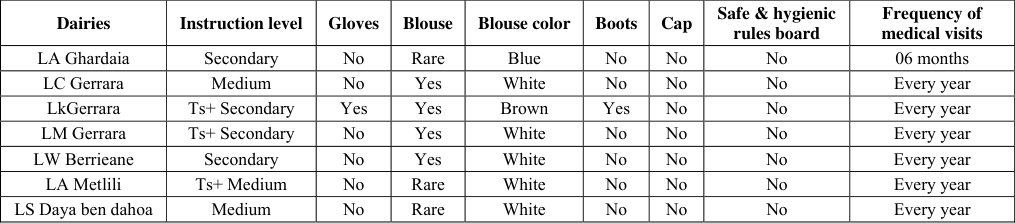 Table 1
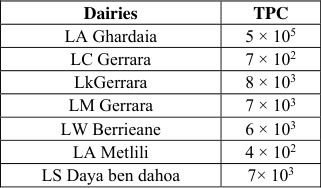 Table 2
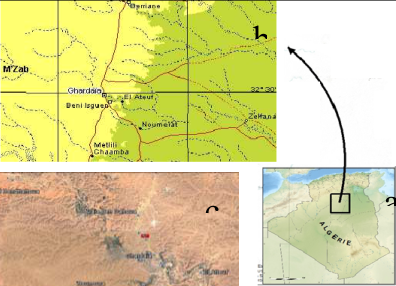 Figure 1
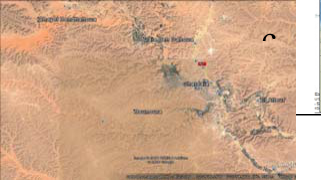 Figure 1
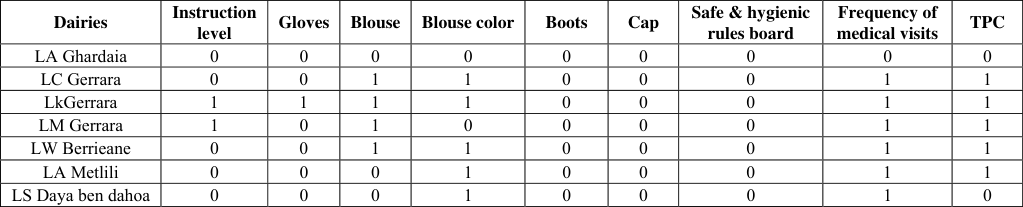 Table 3
Introduction
Micro-environments that promote the growth and proliferation of different microbial strains are created in different stages of milk processing lines. That affects the quality of milk; in other word affects the customer's health. This encourages the dairies managers to take all the necessary preventions for protect their products, such as the hygiene practices. The food safety should be compulsory in every phase of the production chain, and the primary level of production is the first step which means that the dairy quality is closely connected to the activities that take part in the production process that happens on the farm itself (Vilar et al., 2012). The purpose of our study is to investigate the effect of hygiene practices, especially the staff practices on the milk microbiological quality. By the use of a field survey of seven dairies in the province of Ghardaïa, which recently knows a revolution in milk and its derivatives industry and also by a literature research were conducted across the province. We have focused on staff in this work; because we thought that they are in directly contact with the product from the first step of preparation until the last stage of storage. We also believe that their conscience with their professionalism play a very important role in their hygiene practices as the respect of security rules, wearing the correct uniform (blouse, cap, boots and gloves) and their own personal hygiene. We found when these practices are not respected the dairy products are poor in the microbiological content. The implementation of hygiene practices by staff gave significant effect to milk quality. The population growth and the evolution of their standard of living assert the use of modern technology to need of the high level of consumption of food products. This can clearly be seen when we know "UHT milk is consumed extensively throughout the world" (Pujol et al., 2013) [16] . That's why many governments devoted their interest in food industry, which have one of the most important challenges which is the microbial quality and the upkeep of sanitary conditions as the high availability of nutrients and oxygen favor microbial growth (Cleto et al., 2012) [7] . UHT processing is responsible for 95% of total fluid milk consumed in Algeria (MADR, 2012) [12] . The dairy industry depends on proper disinfection by regular sanitization procedures because the milking procedure, shipping and storage of milk load faces risks of further contamination from man, the environment, or from growth of inherent pathogens (Pandey et al., 2011) [14] . One of the most important precautions is taking hygiene practices in consideration, specially the staff practices. Algeria, like other countries seeking self-sufficiency in milk production and its derivatives has created many dairies, and is the case in the Ghardaia region. The enthusiasm for milk production in the M'zab valley led to the creation of many cattle farms (Bensaha et al., 2014a) [4] . And because the number never substitute for quality, therefore, the implementation of monitoring the correct hygiene of milk and dairy products throughout the supply chain is essential to ensure the safety and suitability of these products for their intended use (Pandey et al., 2011) [14] . Sporulated bacteria pertaining to the genera Bacillus and Paenibacillus are the main micro-organisms identified as being limiting factors for fluid milk quality, due to inadequate hygienic condition (Huck et al., 2007; Ivy et al., 2012) [10,11] . It's the responsibility of the food producer (Dairy) to identify these points and implement control measures to protect the milk from contamination (Vignola, 2002) [18] . The objective of this study is to investigate the effects of staff hygiene practices on the quality of milk produced by the dairies in M'zab valley. To appreciate the implementation of hygiene in dairies in the Ghardaia region, a field survey on 07 dairies, based on the findings and bibliographical research was conducted across the province, followed by microbiological analyzes of the final product for each dairy concerning the total aerobic mesophilic flora. The notion of good hygiene practices in Algeria remains to be introduced (Plan national de salubrité des aliments, 2006) [15] .
Material and methods
Material and methods
Survey of dairies studied
Our study is based on a detailed survey of some dairies in region of M'zab in the province of Ghardaïa (located 600 Km south of Algiers) (Figure .1) the survey conducted during three month from September 2016. It is concerned 07 dairies. The approach of the study was focused on surveys and interviews with the processing units in order to characterize the daily staff hygiene practices of milk processing and dairy products. This survey was performed to determine within each dairy, the worker's instruction level, the clothes worn (blouse, cap, boots and gloves), the medical periodical survey and safe and hygienic measures (Table 1).
| Dairies | Instruction level | Gloves | Blouse | Blouse color | Boots | Cap | Safe & hygienic rules board | Frequency of medical visits |
|---|---|---|---|---|---|---|---|---|
| LA Ghardaia | Secondary | No | Rare | Blue | No | No | No | 06 months |
| LC Gerrara | Medium | No | Yes | White | No | No | No | Every year |
| LkGerrara | Ts+ Secondary | Yes | Yes | Brown | Yes | No | No | Every year |
| LM Gerrara | Ts+ Secondary | No | Yes | White | No | No | No | Every year |
| LW Berrieane | Secondary | No | Yes | White | No | No | No | Every year |
| LA Metlili | Ts+ Medium | No | Rare | White | No | No | No | Every year |
| LS Daya ben dahoa | Medium | No | Rare | White | No | No | No | Every year |
Table text extracted from the original PDF; superscript letters are shown inline. The original table image is below.
View original table image
Sampling procedure and laboratory analysis
Milk samples were collected immediately after the packaging (the final step of production), which were transported directly to the laboratory of Algerian central of quality control and packaging in Ghardaia for microbiological analyzes. Total aerobic mesophilic flora: dilutions (10 -1 to 10 -5 ) of each sample are made. The Petri dish is inoculated with one ml of each dilution which is added to the PCA agar (Table 2). After 72 hours of incubation, all the colonies are counted and the results expressed in units CFU per ml of milk (CFU / ml). (Federation Internationale de Laiterie, 1991) [9] .
| Dairies | TPC |
|---|---|
| LA Ghardaia | 5 × 10⁵ |
| LC Gerrara | 7 × 10² |
| LkGerrara | 8 × 10³ |
| LM Gerrara | 7 × 10³ |
| LW Berrieane | 6 × 10³ |
| LA Metlili | 4 × 10² |
| LS Daya ben dahoa | 7× 10³ |
Table text extracted from the original PDF; superscript letters are shown inline. The original table image is below.
View original table image
Data Analysis and Statistics
We have two types of studied parameters, qualitative parameters (parameters are studying by surveys) and quantitative parameters (microbiological analysis) and to analyze these parameters, we choose to go through two methods.
The first method is to quantify and standardize the values of these parameters in binary system, which represents the parameters values using two different symbols: typically 0 (zero) and 1 (one).
The second method is based on statistical multivariate tools such as Multiple Factorial Analyses (Factor analysis of mixed data), which were used to determine the main factors which describe the variability of milk hygienic quality The results of the study (Table 03) show that the level of education of the personnel of these processing units is medium or even modest.
Their low level of education is a handicap for the adoption of newly introduced practices in dairy processing and requiring technical mastery. According to (Bensaha, 2009) [2] the level of training of this staff, their skills in animation and their good knowledge of the specificities of their areas of intervention constitute a non-negligible capital in the development of the production unit. Indeed, we have recorded that these people are poorly recruited, poorly adapted to their jobs and, even worse they received little training on the tools, methods and practices that fall under their responsibility. The training and development of the dairy staff contributes significantly to improving the quality of intervention of these people (Bensaha et al., 2013) [3] . Nevertheless, with regard to the availability of labor power, we find that more than half of the dairies face difficulties for its availability in due time, because it is made up of a young workforce, without any experience and with a low professional qualification. This experience remains based on empirical knowledge with very little scientific knowledge. This situation is incompatible with good hygiene practice because the low-tech worker is often incapable of rapidly preventing situations that may affect the milk processing chain. The initiative should also encourage processors to play their full role and assume their responsibilities in the search for efficient recruitment systems. The uniform must conform to good hygiene practices, namely: a clean, short-sleeved blouse, clean rubber boots and short nails, no jewelry (wristwatches, gourmet, rings...), a bucco-nasal mask for Sensitive workstations, gloves, shoes and work boots (Vignola, 2002) [18] . The study shows that 80% of milk handlers do not wear headgear, gloves, or bucconasal mask and rarely blouses and boots. Therefore, the cleanliness of body and clothing is not satisfactory. The agents assigned to the various work stations all have a single work wear and boots. According to Bensaha et al (2012) [6] , cleanliness of staff is essential in the food industries especially for perishable foodstuffs such as milk (Bensaha et al., 2012) [6] . Nevertheless, 20% of the manipulators are dressed in a clean white coat and take care of their body and clothing cleanliness (Burbuddhe et al., 2008) [1] . Generally, staff must ensure a high degree of body cleanliness, a hair must be well maintained, nail cleanliness and it must have two to several work clothes, preferably light colored. All staff must have clean hands, wear clean clothes and perform clean practices (Pandey et al., 2011) [14] . A manipulator must be designated for each task, this reduces the risk of contamination of people coming from contaminated areas (Bensaha et al., 2014b) [5] . According to Olechnowics et al., (2012) [13] , at the farm level, microbial contamination of milk occurs via the surface of the milking equipment.
The study shows that in 90% of dairies, toilets are far from all other premises. In 20%, the soap is absent at the entrance to the sanitary facilities, which favors poorly washed hands. Cleanliness in the bathroom is not satisfactory (Bensaha et al., 2014a) [4] . Noted that bad design of buildings can generate health concerns with significant negative economic repercussions as well as the work of the manipulators. At 90% of the times, dairy equipment and rooms are manually cleaned at regular frequencies. Thus, adequate hand washing facilities and a hygienic hand drying method should be available in the vicinity of the handling area (DSP, 2012) [8] . A routine program to check the effectiveness of cleaning should be put in place (Varnam et al., 2001) [17] . Human diseases can be transmitted via milk. The Staff engaged in the handling of foodstuffs and milk in particular must undergo a health examination (Varnam et al., 2001) [17] . All dairies (100%) report receiving, once or twice a year, a visit from the working doctor and having their workers vaccinated. It is worth highlighting the positive character of the periodic (bi-annual) health action associated with epidemiological surveys initiated locally to maintain all the epidemiological indices at a satisfactory threshold. This is reflected in visits to the processing units carried out periodically to sensitize the dairy managers to the many aspects of their activity: hygiene, good practice (Bensaha et al., 2014b) [5] . It is recommended that people involved in the handling of food should be subjected to health regular checks (Burbuddhe et al., 2008) [1] . Only 03 of the dairies surveyed possess plates of safe and hygienic rules. Thus, it is understandable that it is almost impossible for these people to hold a reading of these distinctive emblems. Indeed, it is possible to operate the transformation units according to modern organizational methods. But there must be an agreement to start with on diagnoses and make proper investments as the economic profitability is already enormous (Plan national de salubrité des aliments, 2006) [15] .
Conclusion
Through the presentation of theoretical notions of good practice, the success of the dairy industry depends on the promotion of knowledge, examination, continuous study of the performances acquired and practices that have affected positively the safety of food hygiene. This confirms the importance of hygiene training for food handlers. The adoption of good hygienic practices is an operational approach to tackle the many challenges in food safety and safe and healthy agri-food products. This finding can have important economic consequences; as such contamination can increase the probability of consumers purchasing a product that may have problems related to appearance and flavor. In the end, the debate remains open and the concept of good hygienic practices deserves careful reflection and popularization, both in terms of management and the agricultural profession.
Acknowledgement
AcknowledgementOn the light of this study, I am grateful to: Dr. Doubangolo COULIBALY. Institut d'Economie Rurale (IER), Mali
Figures and tables from the paper
| Dairies | Instruction level | Gloves | Blouse | Blouse color | Boots | Cap | Safe & hygienic rules board | Frequency of medical visits | TPC |
|---|---|---|---|---|---|---|---|---|---|
| LA Ghardaia | 0 | 0 | 0 | 0 | 0 | 0 | 0 | 0 | 0 |
| LC Gerrara | 0 | 0 | 1 | 1 | 0 | 0 | 0 | 1 | 1 |
| LkGerrara | 1 | 1 | 1 | 1 | 0 | 0 | 0 | 1 | 1 |
| LM Gerrara | 1 | 0 | 1 | 0 | 0 | 0 | 0 | 1 | 1 |
| LW Berrieane | 0 | 0 | 1 | 1 | 0 | 0 | 0 | 1 | 1 |
| LA Metlili | 0 | 0 | 0 | 1 | 0 | 0 | 0 | 1 | 1 |
| LS Daya ben dahoa | 0 | 0 | 0 | 1 | 0 | 0 | 0 | 1 | 0 |
Table text extracted from the original PDF; superscript letters are shown inline. The original table image is below.
View original table image
References
16 in the original paper- Barbuddhe SB, Swain BK. Hygienic Production of Milk. Technical Bulletin No. 11, ICAR Research Complex for Goa, Ela, Old Goa, 2008, 17.
- Bensaha H. Gestion de périmètres de mise en valeur agricole, cas de la Chebka du M'zab, Thèse Magister, ITAS, UKM, Ouargla (Algérie), 2009, 125.
- Bensaha H, Arbouche F. Characterization of dairy cattle breeding in a saharan region (ghardaïa, algeria): socioprofessional profile of producing breeders Lucrări Ştiinţifice-Seria Zootehnie. 2013; 59:183-189.
- Bensaha H, Mayouf R, Bensaha L. Inventory and development perspective of milk production in Saharan area: the case of the Ghardaïa region (Algeria). Online J. Anim. Feed Res. 2012; 2(3):264-269.
- Cleto S, Matos S, Kluskens L, Vieira MJ. Characterization of contaminants from a sanitized milk processing plant. PLOS one 2012; 7(6): http://doi.org/10.1371/ journal. pone. 0040189.
- DSP. Direction de La sante et de la population. Evaluation des activités de médecine du travail Revue et perspectives. Imprimerie officielle. Mai 2012, 44. et Annexes.
- Federation internationale de laiterie (FIL). Lait, numération des cellules somatiques du lait. Norme 1991; 148:1-8.
- Huck JR, Hammond BH, Murphy SC, Woodcock NH, Boor KJ. Tracking spore-forming bacterial contaminants in fluid milk processing systems. Journal of Dairy Science. 2007; 90:4872-4883.
- Ivy RA, Ranieri ML, Martin NH, den Bakker HC, Xavier BM, Wiedmann M et al. Identification and characterization of psychrotolerant sporeformers associated with fluid milk production and processing. Applied Environmental Microbiology. 2012; 78:18531864.
- MADR. Ministère de l'Agriculture et du Développement Rural-MADR. Le renouveau agricole et rural en marche -Revue et perspectives. Imprimerie officielle. 2012, 44 et Annexes.
- Olechnowicz J, Jaskowski MJ. Somatic Cells Count in Cow's Bulk Tank Milk. Journal of Veterinary Medicine Science. 2012; 74(6):681-686.
- Pandey GS, Voskuil GCJ. Manual on milk safety, quality and hygiene. Golden valley agricultural research trust, Lusaka Zambia, 2011, 7-13.
- Plan national de salubrité des aliments. avant-projet, FAO/OMS, Alger, septembre, 2006, 111.
- Pujol L, Albert I, Johnson NB, Membré JM. Potential application of quantitative microbiological risk assessment techniques to an aseptic-UHT process in the food industry. International Journal of Food Microbiology. 2013; 162:283-296.
- Varnam AH, Sutherland P. Milk and Milk Products: Technology, Chemistry, and Microbiology. Food products series. An Aspen Publication. New York. 2001; 1:35-37.
- Vignola C. Science et Technologie du Lait Transformation du Lait. Edition Presses Internationales Polytechnique, Canada. 2002, 3-75.