
Research article · 2026 · Full text
International Journal of Geography Geology and EnvironmentPrevalence and severity of dental fluorosis among Grade 6 pupils in Gokwe North District, Zimbabwe: A cross-sectional study
Volume 8(10) · Pages 46–53 · DOI: 10.22271/27067483.2026.v8.i10a.890 ↗
Research areasFluoride Effects and RemovalDental Health and Care Utilizationdental development and anomalies
Abstract
Author-writtenOptimal fluoride concentrations in drinking water (0.5–1.5 mg/L) protect against dental caries, but excessive intake can lead to dental and skeletal fluorosis. This study assessed the prevalence and severity of dental fluorosis among Grade 6 pupils in Gokwe North District, Zimbabwe, a region affected by geogenic fluoride contamination. A cross-sectional survey was conducted among 1,883 pupils from 35 primary schools, with dental examinations carried out jointly by two trained dentists to ensure diagnostic consistency. Pupils were classified as unaffected, slightly affected, moderately affected, or severely affected using standard fluorosis criteria. Overall, 812 pupils (43.1%) exhibited dental fluorosis, including 17.1% severe, 11.3% moderate, and 14.8% slight cases. Fluorosis prevalence varied significantly across schools, ranging from 12.7% to 93.7% (p < 0.05), reflecting marked spatial heterogeneity in fluoride exposure. Although the data were collected in 2006, the findings provide valuable baseline evidence of the persistent burden of fluorosis in the district. The results highlight dental fluorosis as a major public health concern in Gokwe North and underscore the urgent need for targeted interventions, particularly the provision of safe water supplies through defluoridation technologies or alternative low-fluoride sources to reduce exposure among vulnerable populations.
Summary
Source-checkedPlain-language reading of the full paper, prepared with AI and checked against the text. Each point links to the authors' own words.
Why it matters
- The Gokwe North District in Zimbabwe is recognized as an area with high levels of fluoride in its groundwater. View evidence ↗
The question
- The study aimed to determine the overall prevalence of dental fluorosis among Grade 6 pupils across 35 primary schools in the Gokwe North District. View evidence ↗
- The researchers also sought to profile the severity of the condition and analyze how the disease burden varied between different schools. View evidence ↗
What they did
- The study examined a total of 1,883 Grade 6 pupils from primary schools in the region. View evidence ↗
- The research area was defined as a 60 km radius circle centered on Sesame, the southern entry point of the district. View evidence ↗
- Dental fluorosis severity was graded using an adapted version of the widely accepted Dean's Index. View evidence ↗
- To ensure consistency in diagnosis, two trained dentists performed the examinations jointly at each school. View evidence ↗
What they found
- Among the total pupil population, 17.1% (322) had severe fluorosis, 11.3% (212) had moderate fluorosis, and 14.8% (278) had slight fluorosis. View evidence ↗
- There was significant variation between schools, with prevalence ranging from a low of 12.7% at Katamba Primary School to a high of 93.7% at Mudondo Primary School. View evidence ↗
- Statistical analysis (ANOVA) confirmed that the differences in fluorosis prevalence between schools were significant (p = 0.048). View evidence ↗
- The number of pupils affected by fluorosis was not significantly correlated with the total size of the school population (r = 0.002, p = 0.990). View evidence ↗
- High overall prevalence did not always mean high severity; for example, Mudondo Primary had the highest prevalence (93.7%), but Umbe Primary (87.1% prevalence) had the highest proportion of severe cases. View evidence ↗
What it means
- The authors recommend providing safe water supplies via defluoridation technologies or alternative low-fluoride sources to reduce exposure. View evidence ↗
- The study documented the prevalence and severity of fluorosis but did not directly investigate the causal pathways or other confounding factors. View evidence ↗
Visual summary
1 visualsIllustrations explain the paper; charts are replotted from the paper's own table values.
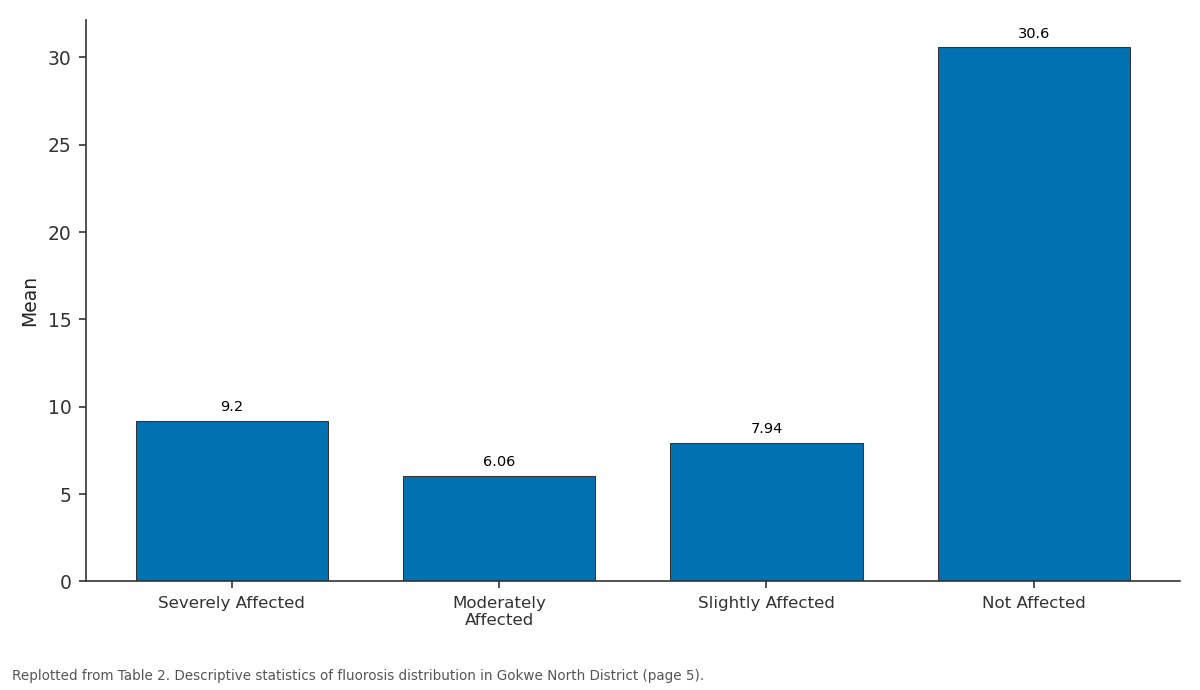
Mean: Severely Affected vs Moderately Affected vs Slightly Affected vs Not Affected
Replotted from Table 2 (page 5) of the original paper. Every bar is the paper's own table value.
View source evidence ↗Figures & tables
From the original paper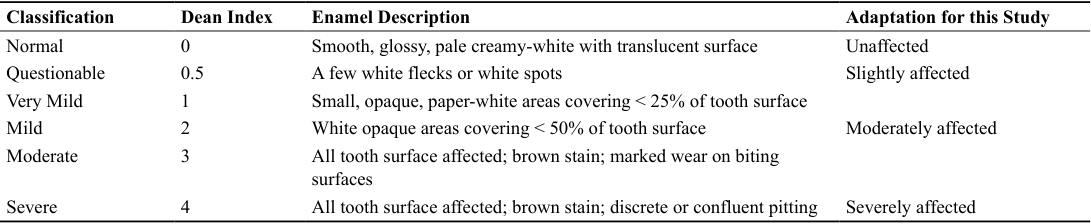 Table 1
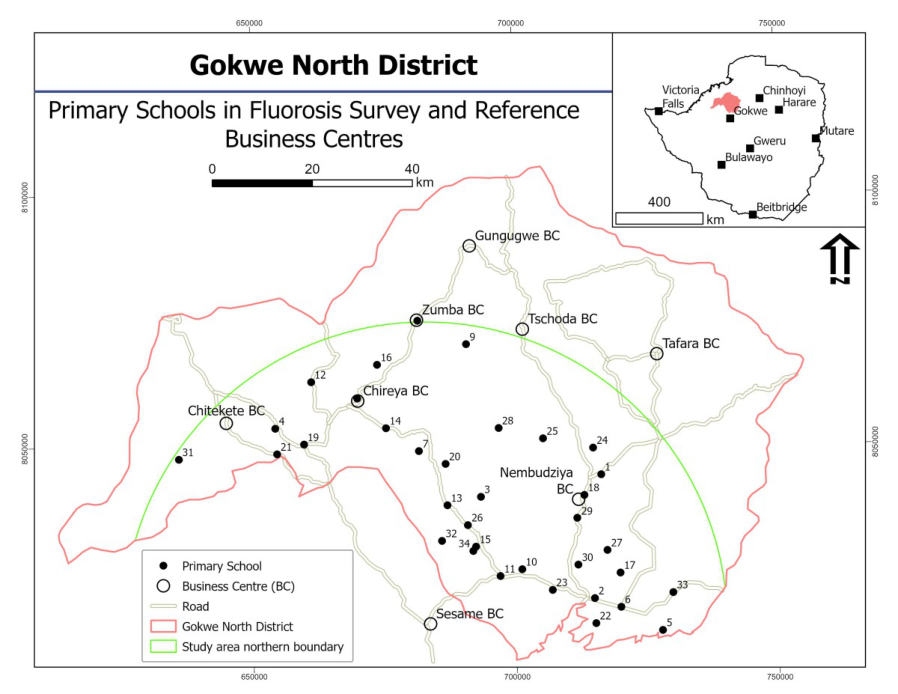 Figure 1
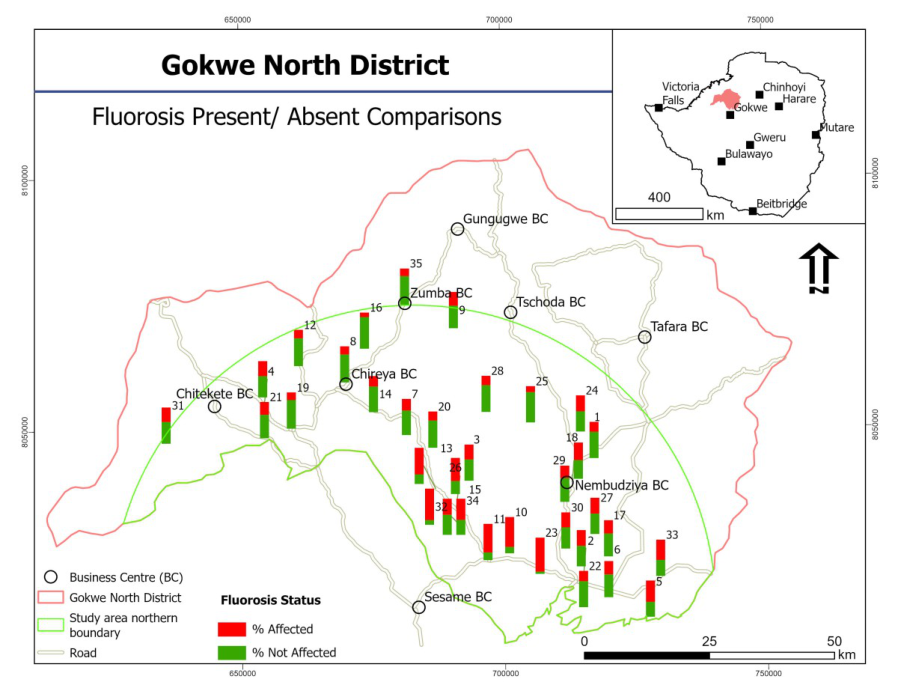 Figure 2
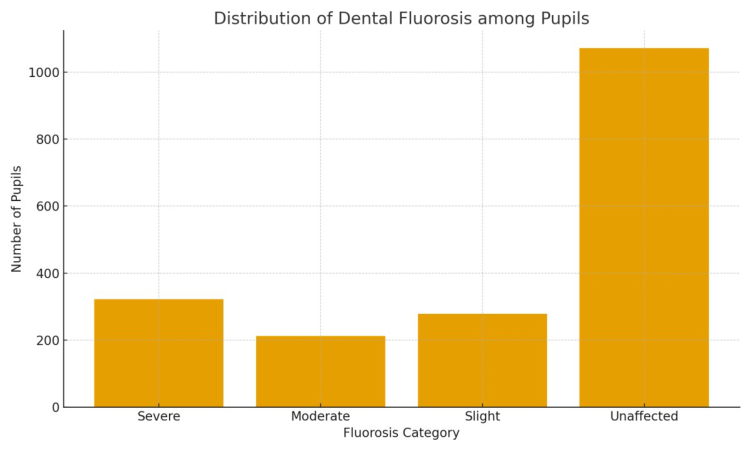 Figure 3
 Table 2
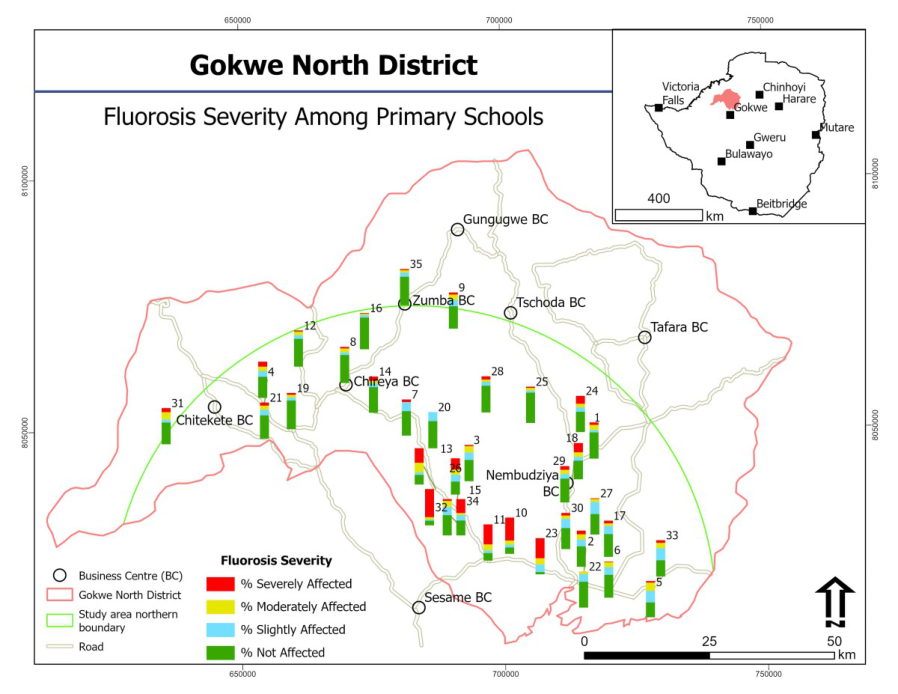 Figure 4
Introduction
Fluoride in drinking water, when present at optimal concentrations of approximately 0.5-1.5 mg/L, plays a protective role in the prevention of dental caries. However, chronic ingestion of fluoride above this range during tooth development can result in dental fluorosis, a condition characterized by hypomineralization of dental enamel. At higher concentrations and prolonged exposure, fluoride intake may also lead to skeletal fluorosis, with severe cases progressing to debilitating bone and joint deformities (WHO, 2022) [1] . As a result, excessive fluoride exposure through drinking water is recognized as a major public health concern in many parts of the world. Naturally elevated fluoride concentrations in groundwater have been documented in diverse geological settings globally, including India, China, the East African Rift Valley, parts of the Middle East, Europe, and Southern Africa (Fawell et al., 2006; WHO, 2022; Veneri et al., 2023) [2,1,3] . In these regions, fluoride contamination is predominantly geogenic, arising from the dissolution of fluoride-bearing minerals under specific lithostratigraphic and hydrogeological conditions (Podgorski et al., 2022; Ali et al., 2016) [5,4] . Communities that rely on untreated groundwater sources, particularly in rural settings where alternative water supplies are limited, are therefore at sustained risk of fluoride overexposure (Amini et al., 2008). In Zimbabwe, Gokwe North District is among the areas known to be affected by elevated fluoride levels in groundwater. Early investigations by Tobayiwa et al. (1991) [6] documented high fluoride concentrations in drinking water and reported evidence of dental fluorosis among schoolchildren. Subsequent hydrogeological studies by Mamuse (2003) [7] and Mamuse et al. (2016) [8] confirmed that fluoride contamination in the district is geogenic in origin and controlled by lithostratigraphy and groundwater flow patterns. Importantly, these studies indicate that the underlying geological conditions responsible for fluoride enrichment are persistent and unlikely to change without deliberate intervention, suggesting that exposure risks may remain over long time periods. Despite this evidence, systematic epidemiological assessments of dental fluorosis in Gokwe North have remained limited since the early 1990s. While groundwater fluoride levels have been characterized, districtwide data on the prevalence and severity of dental fluorosis among children have been sparse, and interschool variability in disease burden has not been comprehensively examined. In this context, the use of data collected in 2006 remains relevant, as it provides insight into the burden of disease in a setting where geogenic contamination persists and where large-scale mitigation measures have historically been limited. This study addresses these gaps by providing district-wide prevalence estimates of dental fluorosis among Grade 6 pupils across 35 primary schools in Gokwe North District. In addition to estimating overall prevalence, the study profiles the severity of fluorosis and examines inter-school variation in disease burden, offering evidence that was absent from earlier surveys. By generating baseline epidemiological data and highlighting spatial heterogeneity in fluorosis occurrence, the study provides information that is directly relevant for targeted public health interventions, water quality management, and future monitoring efforts in fluoride-affected regions.
Methodology
Methodology
Study design and study area
A cross-sectional school-based survey was conducted among Grade 6 pupils in Gokwe North District, located in western Zimbabwe (Figure 1). The study area was defined prior to fieldwork as a circle of radius 60 km centred on Sesame, the southern entry point into the district. This delineation was deliberately drawn on maps before commencement of the research to reduce travelling costs and ensure feasibility. All primary schools accessible from the road network within this radius were included, yielding 35 schools in total and providing broad spatial representation of fluoride exposure among school-aged children.
Study population and sample size
A total of 1,883 Grade 6 pupils from primary schools located within the defined study area were examined. Grade 6 pupils were targeted because they fall within an age range where dental fluorosis, resulting from fluoride exposure during early childhood, can be reliably assessed. All pupils present on the day of examination and whose guardians and school authorities had provided consent were included in the study.
Dental examination and fluorosis assessment
Dental examinations were conducted on site at each school by two trained dentists working jointly to ensure diagnostic consistency. Dental fluorosis was assessed using an adaptation of Dean's Index (Dean, 1942) [9] shown in Table 1. The index is, a widely accepted epidemiological tool for grading fluorosis severity. In the adaptation, each pupil was classified into one of four categories: unaffected, slightly affected, moderately affected, or severely affected, based on the most severe presentation observed on the permanent teeth. To minimize inter-examiner variability, examinations were performed collaboratively, with both dentists reaching consensus on each diagnosis. Standard examination conditions were maintained across schools, and pupils were examined under natural light.
| Classification | Dean Index | Enamel Description | Adaptation for this Study |
|---|---|---|---|
| Normal | 0 | Smooth, glossy, pale creamy-white with translucent surface | Unaffected |
| Questionable | 0.5 | A few white flecks or white spots | Slightly affected |
| Very Mild | 1 | Small, opaque, paper-white areas covering < 25% of tooth surface | |
| Mild | 2 | White opaque areas covering < 50% of tooth surface | Moderately affected |
| Moderate | 3 | All tooth surface affected; brown stain; marked wear on biting | |
| surfaces | |||
| Severe | 4 | All tooth surface affected; brown stain; discrete or confluent pitting | Severely affected |
Table text extracted from the original PDF; superscript letters are shown inline. The original table image is below.
View original table image
Data management and statistical analysis
Data were recorded at the school level and aggregated for analysis.
Fluorosis prevalence was calculated as the proportion of affected pupils relative to the total number examined per school and across the district. Descriptive statistics were used to summarize overall prevalence and severity distribution. Statistical analyses were conducted to assess variability and relationships within the data. Analysis of variance (ANOVA) was used to evaluate differences in fluorosis prevalence among schools. Pearson correlation analysis was performed to examine the relationship between school population size and the number of pupils affected by fluorosis. Distribution characteristics, including mean, standard deviation, skewness, and kurtosis, were computed for each fluorosis severity category to assess patterns of dispersion and concentration across schools. Statistical significance was evaluated at the 5% level.
Ethical considerations
Ethical approval for the study was obtained through the relevant educational and health authorities prior to data collection. Permission was granted by school administrators, and informed consent was obtained from parents or guardians of participating pupils. All examinations were non-invasive, and data were anonymized to ensure confidentiality.
Results
Results
Overall prevalence of dental fluorosis
Overall prevalence of dental fluorosis
Variation in fluorosis prevalence among schools
Marked variation in fluorosis prevalence was observed among schools. Prevalence ranged from 12.7% at Katamba Primary School to 93.7% at Mudondo Primary School. Analysis of variance (ANOVA) confirmed that differences in fluorosis prevalence across schools were statistically significant (p = 0.048), indicating heterogeneity in disease burden within the district.
Distribution characteristics of fluorosis severity categories
Descriptive statistics for fluorosis severity categories aggregated at the school level are summarized in Table 2. For each category, the mean number of affected pupils per school, standard deviation, skewness, and kurtosis were calculated to describe distribution patterns across the 35 schools.
| Category | Mean | Standard. Deviation. | Skewness | Kurtosis |
|---|---|---|---|---|
| Severely Affected | 9.20 | 12.36 | 1.99 | 3.16 |
| Moderately Affected | 6.06 | 3.88 | 0.67 | 0.25 |
| Slightly Affected | 7.94 | 5.19 | 1.52 | 2.97 |
| Not Affected | 30.60 | 19.33 | 0.82 | -0.01 |
Table text extracted from the original PDF; superscript letters are shown inline. The original table image is below.
View original table image
Relationship between fluorosis prevalence and school size
Pearson correlation analysis was conducted to assess the relationship between total school enrollment and the number of pupils affected by fluorosis. No significant correlation was observed (r = 0.002, p = 0.990), indicating that fluorosis prevalence was not associated with school population size.
Relationship between overall fluorosis prevalence and severity categories
Schools with high overall fluorosis prevalence did not necessarily exhibit the highest proportions of severe fluorosis. Mudondo Primary School, which recorded the highest overall prevalence (93.7%), did not have the highest proportion of severe cases. In contrast, Umbe Primary School, with an overall prevalence of 87.1%, recorded the highest proportion of pupils classified as severely affected. The distribution of severity categories across schools is shown in Figure 4.
Discussion
This study demonstrates that dental fluorosis is a substantial public health concern in Gokwe North District, with 43.1% of examined Grade 6 pupils exhibiting some degree of fluorosis. The wide variation in prevalence among schools, ranging from 12.7% to 93.7%, indicates pronounced spatial heterogeneity in exposure within the district. These findings are consistent with the established geogenic origin of fluoride contamination in the area and reflect uneven groundwater fluoride concentrations linked to local hydrogeological conditions.
The observed prevalence aligns with earlier evidence from Zimbabwe. Tobayiwa et al. (1991) [6] reported elevated fluoride levels in drinking water and documented dental fluorosis among schoolchildren in affected districts, providing early epidemiological confirmation of fluoride-related health impacts. Hydrogeological investigations by Mamuse (2003) [7] and Mamuse et al. (2016) [8] further demonstrated that fluoride contamination in Gokwe North is con trolled by lithostratigraphy and groundwater flow regimes. The present study extends this body of work by providing district-wide prevalence estimates and severity profiling across 35 schools, offering a more comprehensive picture of the burden of disease than was previously available. When placed in a broader African context, the prevalence observed in Gokwe North is comparable to, and in some cases exceeds, rates reported in other high-fluoride regions. Studies from the East African Rift Valley have documented fluorosis prevalence ranging from approximately 30% to over 70% among school-aged children in parts of Kenya, Tanzania, and Ethiopia, depending on local fluoride concentrations and water sources (Rango et al., 2017; Ayenew, 2022) [10] . Similarly high prevalence has been reported in fluoride-endemic areas of Ethiopia, with rates up to 80% in the Rift Valley (Tekle-Haimanot et al., 2006) [11] , and northern Tanzania, where reliance on untreated groundwater is common (Magonthi et al., 2017) [12] . The findings from Gokwe North therefore situate the district among the more severely affected fluoride-endemic regions on the continent (Yadav et al., 2019) [13] , underscoring the regional significance of the problem. An important finding of this study is the mismatch between overall fluorosis prevalence and the distribution of severity across schools. Schools with the highest prevalence did not necessarily exhibit the highest proportions of severe fluorosis, indicating that prevalence alone does not fully capture disease burden. This pattern may reflect differences in fluoride dose, duration of exposure, and timing of exposure during critical periods of enamel formation. Pupils exposed to moderately elevated fluoride concentrations over longer periods may develop widespread but less severe fluorosis, whereas shorter exposure to very high fluoride levels during early childhood could result in fewer affected individuals but a higher proportion of severe cases. Such patterns are consistent with a dose-response relationship and highlight the importance of considering severity, not only prevalence, in fluorosis assessments. The absence of a significant association between school size and fluorosis prevalence further supports the conclusion that environmental exposure, rather than demographic factors, is the primary driver of disease distribution. This finding reinforces the need for localized water quality assessments, as children attending schools in close geographic proximity may still experience markedly different exposure profiles depending on the specific water sources used by their communities.
Study limitations
The study has three main limitations. Temporal constraint: The data underpinning the analysis were collected in 2006, which introduces a time lag. Nevertheless, given the geogenic nature of fluoride contamination and its persistence in Gokwe North, the findings remain relevant as baseline evidence.
Spatial delineation: The study area was deliberately defined as a circle of radius 60 km centred on Sasame, the southern entry point into the district. This delineation was made prior to fieldwork to reduce travelling costs and ensure feasibility. As a result, the semi-circular outer rim spanning eastern, northern, and western wards was excluded by design. While this ensured exhaustive coverage within the defined study area, it limits the generalizability of findings to the entire district.
Scope restriction:
The study successfully documents prevalence and severity but does not directly investigate causal pathways. The analysis did not assess the contribution of high-fluoride drinking water or other confounding factors. Future research should therefore adopt a comprehensive causative framework that considers alternative fluoride sources (e.g., toothpaste, foodstuffs), nutritional status, calcium intake, and socioeconomic conditions.
Implications to public health
The findings of this study demonstrate that dental fluorosis remains a significant public health concern in Gokwe North District, with marked variation in prevalence and severity across schools. This het-erogeneity underscores the localized nature of fluoride exposure and highlights the need for site-specific approaches rather than uniform, district-wide interventions. Within the limits of the present data, the most relevant implication is the importance of ensuring access to safe drinking water as a preventive measure. Schools may serve as strategic platforms for awareness and monitoring, given the observed burden among pupils. Health education integrated into school curricula could further strengthen community understanding of fluoride risks and safe water practices. These implications are grounded in the prevalence and severity data collected. Broader policy measures, including the evaluation of specific defluoridation technologies or socioeconomic determinants, require further research before being recommended with confidence.
Conclusions
This study demonstrates that dental fluorosis is a significant public health problem in Gokwe North District, with 43.1% of Grade 6 pupils affected and substantial variation in both prevalence and severity across schools. The wide inter-school heterogeneity observed highlights the localized nature of fluoride exposure and confirms that environmental factors, particularly groundwater fluoride concentration, are central to fluorosis distribution. By providing district-wide prevalence estimates, severity profiling, and inter-school comparisons, this study addresses important gaps left by earlier investigations and offers baseline epidemiological evidence relevant for public health planning in fluoride-endemic areas. Although the data were collected in 2006, the findings remain pertinent given the geogenic persistence of fluoride contamination and the limited implementation of large-scale mitigation measures in the district. The results underscore the need for targeted, site-specific interventions that prioritize communities with both high prevalence and severe fluorosis burden. At the same time, they highlight the importance of further research to clarify causal pathways, account for confounding factors, and evaluate sustainable mitigation strategies. Together, these implications and research priorities provide a foundation for more effective public health responses to fluoride-related disease in Gokwe North and other affected regions of Zimbabwe.
Recommendations for further research
The persistence of dental fluorosis in Gokwe North District, as shown in earlier surveys and reaffirmed by this study, highlights the need for sustained and coordinated investigation. Building on previous work that has measured fluoride concentrations at individual boreholes, future research should expand and update these datasets to capture current exposure levels and strengthen the evidence base for intervention planning. In addition, studies that examine nutritional status, calcium intake, and socioeconomic conditions are needed to clarify how these factors influence the manifestation and severity of fluorosis, thereby informing more holistic prevention strategies. Spatial analysis that integrates prevalence data with water quality information would provide valuable tools for identifying high-risk communities and prioritising resources. Evaluations of the cost-effectiveness and sustainability of defluoridation technologies in rural settings are also essential to ensure that proposed solutions are practical and scalable. Finally, research into effective community education and mechanisms for collaboration among the health, water, and education sectors will be critical to supporting long-term mitigation efforts. and as a co-author of this paper, while Dr. Makwarimba worked alongside him in conducting the dental examinations. Although not listed as a co-author, his commitment and expertise in the field were indispensable to the success of this study. We gratefully acknowledge the late Fortune Gomo (née Nyatsanza), whose dedication as a member of the field team was invaluable. She worked closely with school teachers and guardians to prepare pupils for dental examinations, meticulously recorded results, and assisted in compiling an earlier, broader version of the manuscript that evolved into this paper. Her contribution remains deeply appreciated.
Appendix I.
Appendix I.
Prevalence of fluorosis among Gokwe North primary schools in this study
Prevalence of fluorosis among Gokwe North primary schools in this study
School
School
Acknowledgement
AcknowledgementsThis research was supported by financial assistance from the Water Research Fund for Southern Africa (WAFSA) and administered through the Institute of Environmental Studies at the University of Zimbabwe. Ethical approval was granted by the Medical Research Council of Zimbabwe. We are grateful to the Ministry of Health for seconding two senior dentists, Dr. F. Sibanda and Dr. F. W. Makwarimba, to the project. Dr. Sibanda contributed both in the field
Figures and tables from the paper
References
16 in the original paper- World Health Organization. Guidelines for drinking-water quality: fourth edition incorporating the first and second addenda. World Health Organization, Geneva; 2022.
- Fawell J, Bailey K, Chilton J, Dahi E, Fewtrell L, Magara Y. Fluoride in drinking-water. World Health Organization, Geneva; 2006.
- Veneri F, Iamandii I, Vinceti M, Birnbaum LS, Generali L, Consolo U, Filippini T. Fluoride exposure and skeletal fluorosis: a systematic review and dose-response meta-analysis. Current Environmental Health Reports. 2023;10(4):417-441.
- Ali S, Thakur SK, Sarkar A, Shekhar S. Worldwide contamination of water by fluoride. Environmental Chemistry Letters. 2016;14(3):291-315.
- Podgorski J, Berg M. Global analysis and prediction of fluoride in groundwater. Nature Communications. 2022;13(1):1-12.
- Tobayiwa C, Musiyambiri M, Chironga I, Mazorodze O, Sapahla S. Fluoride levels and dental fluorosis in two districts in Zimbabwe. Central African Journal of Medicine. 1991;37(11):353-361. International Journal of Geography, Geology and Environment https://www.geojournal.net 27067491, 2026, 8(10), Downloaded from https://www.doi.org/10.22271/27067483.2026.v8.i10a.890 by International Journal of Geography, Geology and Environment on [09/10/2026]. See the Terms and Conditions (https://www.geojournal.net) for rules of use; OA articles are governed by the applicable Creative Commons License
- Mamuse A. Fluoride contaminated drinking water in Gokwe District (NW Zimbabwe): spatial distribution, lithostratigraphic controls and implications for human health. MSc Thesis, Curtin University of Technology, Western Australia; 2003.
- Mamuse A, Watkins R. High fluoride drinking water in Gokwe, northwest Zimbabwe. Journal of Water, Sanitation and Hygiene for Development. 2016;6(1):55-64.
- Dean HT. The investigation of physiological effects by the epidemiological method. In: Moulton FR (ed). Fluorine and dental health. American Association for the Advancement of Science, Washington (DC); 1942:23-31.
- Rango T, Vengosh A, Jeuland M, Whitford GM, Tekle-Haimanot R. Biomarkers of chronic fluoride exposure in groundwater in a highly exposed population. Science of the Total Environment. 2017;595:99-106.
- Tekle-Haimanot R, Melaku Z, Kloos H, Reimann C, Fantaye W, Zerihun L, Bjorvatn K. The geographic distribution of fluoride in surface and groundwater in Ethiopia with an emphasis on the Rift Valley. Science of the Total Environment. 2006;367(1):182-190.
- Magonthi SJ, et al. Assessment of groundwater quality and dental fluorosis in Arusha Municipality, Tanzania. Journal of Water and Health. 2017;15(3):386-395.
- Yadav KK, Kumar S, Pham QB, et al. Fluoride contamination, health problems and remediation methods in Asian groundwater: a comprehensive review. Ecotoxicology and Environmental Safety. 2019;182:1-15.
- Johnson CA. Statistical modeling of global geogenic fluoride contamination in groundwaters. Environmental Science and Technology. 2008;42(10):3662-3668.
- Ayenew T. The distribution and hydrogeological controls of fluoride in the groundwater of central Ethiopian rift and adjacent highlands. Environmental Geology. 2008;54(7):1313-1324.
- How to cite this article: Mamuse A, Sibanda F, Mutakaya M. Prevalence and severity of dental fluorosis among Grade 6 pupils in Gokwe North District, Zimbabwe: A cross-sectional study. International Journal of Geography, Geology and Environment. 2026;8(10):46-53. doi: https://www.doi.org/10.22271/27067483. 2026.v8.i10a.890