
Research article · 2026 · Full text
International Journal of Advanced Chemistry ResearchDesign, synthesis and biological study of N-heterocyclic compounds derived from imidazole complexes
Volume 8(9) · Pages 62–69 · DOI: 10.33545/26646781.2026.v8.i9a.750 ↗
Research areasN-Heterocyclic Carbenes in Organic and Inorganic ChemistryMetal complexes synthesis and propertiesAntimicrobial agents and applications
Abstract
Author-writtenA homologous series of new dinuclear silver(I)–NHC compounds with long-chain alkyl substituents was designed and synthesized to examine how alkyl-chain length affects their structures and antibacterial properties. Their preparation followed a three-step route. Imidazole was first N-alkylated with decyl, dodecyl, tetradecyl, hexadecyl, and octadecyl bromides; the resulting products were then quaternized with 1,4-dibromobutane to produce the corresponding disubstituted imidazolium salts. Finally, in situ carbene formation mediated by Ag2O gave the dinuclear Ag(I)–NHC complexes (1s–5s). FT-IR, and NMR, spectroscopy was used to identified the chemical structure of the synthesized compounds. Together, the spectra showed the stepwise conversion of the N-substituted imidazoles into imidazolium salts and, ultimately, Ag(I)–NHC compounds. In particular, the imidazolium C-2 proton disappeared, while a characteristic Ag–C(NHC) resonance appeared at δ 181.47–182.78 ppm. The complexes were tested against the selected bacteria strain using MIC and IC50 assays. A clear and distinct relationship was observed between chemical structure and biological activity: antibacterial activity generally increased as the number of carbon atoms in the alkyl chain increased from C10 to C18. With its C18 chain, complex 5s showed the strongest overall activity, especially against the Gram-positive bacteria. Thus, systematically adjusting hydrophobic alkyl-chain length can significantly affect the antibacterial performance of end products dinuclear Ag(I)–NHC compounds and supports their potential as silver-based antibacterial agents.
Summary
Source-checkedPlain-language reading of the full paper, prepared with AI and checked against the text. Each point links to the authors' own words.
Why it matters
- Metal-based drugs are considered a promising tool for combating antimicrobial resistance, which is one of the most critical current global challenges. View evidence ↗
- N-heterocyclic carbenes (NHCs) are useful in drug design because they form thermodynamically strong and stable bonds with transition metals. View evidence ↗
What they did
- The chemical structures of the synthesized compounds were identified using FT-IR and NMR spectroscopy. View evidence ↗
What they found
- Antibacterial potency generally increased as the alkyl chain length increased from complex 1s (C10) to 5s (C18), evidenced by a general decline in MIC and IC50 values. View evidence ↗
- Against E. coli, increasing the chain length from 1s to 5s reduced the MIC from 1000 µM to 225 µM and the IC50 from 1150 µM to 196 µM. View evidence ↗
- Gram-negative bacteria were generally less susceptible to the complexes than Gram-positive strains, requiring higher concentrations for inhibition. View evidence ↗
What it means
- The authors suggest that the increased activity of longer-chain complexes is likely due to higher hydrophobicity, which promotes interaction with and disruption of bacterial lipid membranes. View evidence ↗
Visual summary
1 visualsIllustrations explain the paper; they do not show study data.
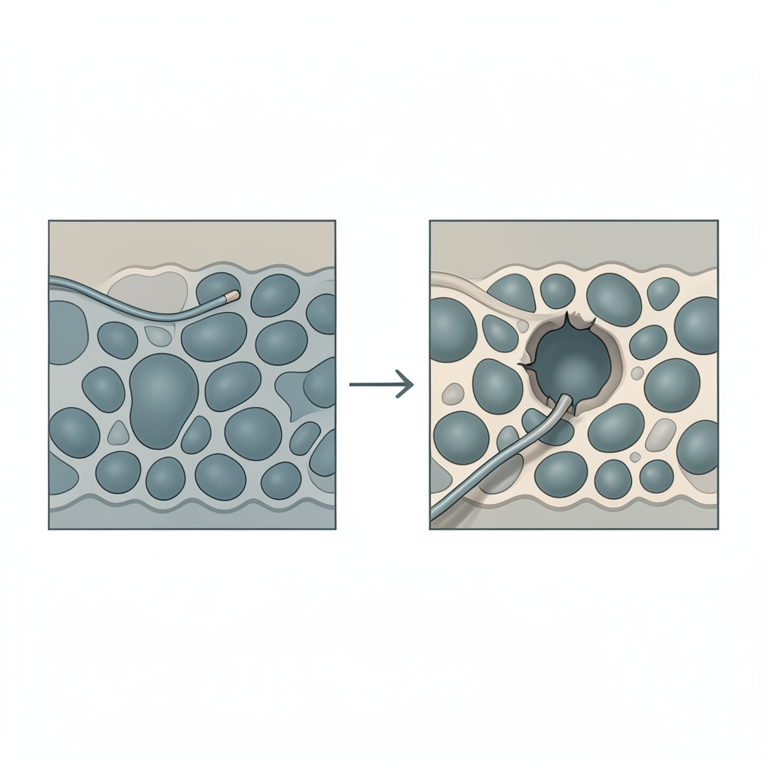
Effect of Alkyl Chain Length on Bacterial Membrane Interaction
AI-generated conceptual illustration (bacterial lipid bilayer membrane and imidazole-silver complexes). It explains the idea and does not show study data.
View source evidence ↗Figures & tables
From the original paper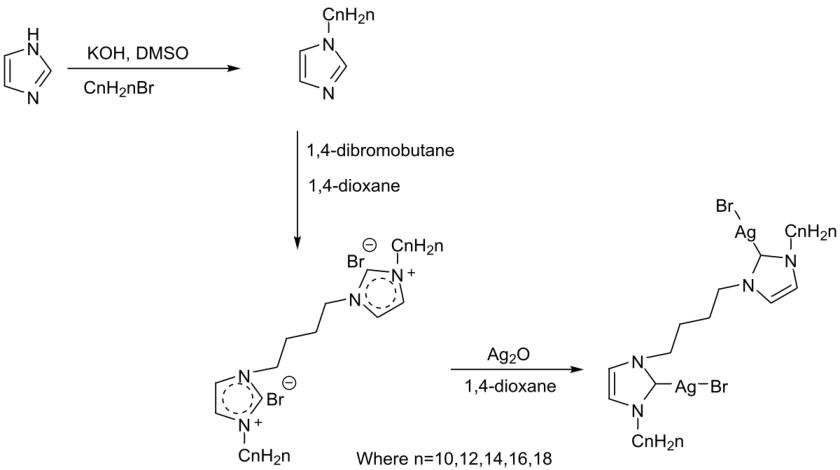 Figure 1
 Table 1
 Table 2
Introduction
Metal ions are involved in numerous biological processes, often by binding to particular biological components in therapeutic contexts (Warra, 2011; Thompson et al., 2003) [1,2] . Their value has been shown in diagnostic as well as therapeutic applications. Medicinal inorganic chemistry is considered one of the most important relatively modern scientific fields; however, metals have been used in medicine since ancient times (Magner, 2005) [3] . The vast diversity of potential interaction patterns and the multiple preparation methods for these metals have prompted researchers to synthesize and study a wide range of metallodrugs. In a relatively recent survey conducted by the CO-ADD (Community for Open Antimicrobial Drug Discovery) initiative-which examined 906 known and validated metal-based compounds researchers led by Frei found that these compounds achieved a higher success rate compared to their organic counterparts: 9.9% versus 0.87%, respectively. This is a significant difference that warrants further investigation and study (Frei et al., 2020) [4] . The result presented above highlights the significant and distinctive potential of metal-based drugs in addressing the widespread problem of antimicrobial resistance one of the most critical challenges of our time. These changes encompass chemical reactivity, properties such as solubility and lipophilicity, oxidation states, and biological activity all of which can influence the stability of the complex. Metal centers comprising metal ions and organic ligands within organometallic coordination complexes can significantly influence the potential toxicity, dynamic properties, and biological activity (such as antibacterial effects) of metalbased drugs (Frei et al., 2020) [4] . Silver has been a scientifically proven and effective antimicrobial agent since the 17th century; early antimicrobial applications including antibacterial uses relied on silver and its complexes and compounds, such as silver nitrate (Klasen, 2000) [5] . From the mid-17th century through the early 19th century, the use of silver nitrate increased markedly, and it gained widespread popularity across Europe as a treatment for ulcers and for minor to moderate acute burns (Silver et al., 2006; Rust, 1834) [6,7] . It has also frequently been used as an alternative to a cautery tool to treat and limit emerging or developed bony projections and deformities (styloid processes). After World War 2, research into silver-based antimicrobials stopped with the emergence of Penicillin (Klasen, 2000) [5] . In light of the foregoing, the emergence of drug-resistant bacterial strains specifically in 1965 renewed interest in this chemical compound (silver nitrate) (Moyer et al., 1965) [8] . After three years of research, Fox and his colleagues reported that silver sulfa diazine demonstrated exceptional efficacy in treating various types of burns as well as severe wounds (Fox, 1968) [9] ; it is widely marketed under the trade name "Silvadene®" at a standard concentration of 1% (Kascatan-Nebioglu et al., 2007) [10] . Subsequently, however, silverimpregnated medical dressings were introduced manufactured from materials such as polyurethane, collagen and nylon designed to provide a sustained release of silver ions (Ag + ) (Lansdown, 2004) [11] . More recently, researchers have focused on N-heterocyclic carbene (NHC) complexes because of their favorable properties. Since NHCs are strong electron donors, they form chemical bonds between the transition metal and the organic ligand that are relatively stable and thermodynamically strong (Crudden et al., 2004) [12] . Bulky organic groups attached to the NHC moiety confer additional stability; steric hindrance resulting from these groups restricts the rotation of substituents on the nitrogen atom and inhibits dimerization into the corresponding organic alkene (Hopkinson et al., 2014) [13] . This effect markedly slows the release of silver ions from the Ag-NHC complex at the target site, thereby effectively preserving its antimicrobial biological properties (Kascatan-Nebioglu et al., 2007) [10] . In 2004, Melaiye and colleagues reported the first Ag(I)-NHC complex exhibiting antimicrobial activity against S. aureus, P. aeruginosa and E. coli (Melaiye et al., 2004) [14] . Changing the N-substituents creates steric constraints and changes the environment around the metal centers. As a result, the chemical, physical, and electronic properties of these compounds can be tuned and predicted precisely for a wide range of applications (Choo, 2019) [15] . Since this report was published, numerous focused studies have examined the antimicrobial potential of Ag [16,17,18] . A recent study also found antiviral activity against SARS-CoV-2, a significant development in the field (Gil-Moles et al., 2023) [19] . In imidazolium and benzimidazolium salts, as well as in coordination complexes containing organic NHC ligands, antimicrobial activity is clearly associated with the length of the alkyl chain attached to the nitrogen atoms in the heterocyclic ring. Demberelnyamba and colleagues were the first to report, in 2004 [20] , that imidazolium salts could be used directly as antibacterial agents. The lowest Minimum Inhibitory Concentration (MIC) values came from alkyl chains containing a high number of carbon atoms, from C 10 to C 18 . Furthermore, significant results demonstrated that imidazolium salts bearing hydrophobic groups attached to the nitrogen atoms of the heterocyclic rings exhibited markedly lower MIC values (Demberelnyamba et al., 2004) [20] . This activity has been attributed to long alkyl chains at various positions on the imidazole ring, which may destabilize bacterial cell membranes and cause the leakage of cellular contents (Wang et al., 2015) [21] . However, a brief survey of the available scientific literature reveals a lack of consistently documented examples of antimicrobial activity in Ag(I)-NHC complexes bearing long alkyl chains (i.e., those with more than 10 carbon atoms), even though the influence of such chains on antimicrobial efficacy is well-established (Arcau et al., 2014) [22] . Researcher Kaloglu and his colleagues reported that silver(I) complexes featuring N-heterocyclic carbenes specifically those substituted with relatively long alkyl chains on the heterocyclic ring, which are bulkier and more electron-donating at the nitrogen atoms exhibited significant and potent antimicrobial activity. It was also noted that hydrophobic compounds those containing non-polar groups-are capable of penetrating cell membranes and releasing silver ions, which can interact with the nitrogenous bases in DNA (Kaloğlu et al., 2017) [23] . This class of dinuclear complexes based on the imidazole heterocycle and linked to NHCs offers an alternative pathway for the development and improvement of proposed therapeutic agents. Sakamoto et al. and Haq et al. investigated the antimicrobial properties of mononuclear and dinuclear silver(I)-NHC coordination complexes, although the reasons underlying the differences in activity remain not fully understood or clearly elucidated. Silver oxide is one of the metal oxides that can serve as a reagent in the synthesis of metal-NHC complexes; this method was first demonstrated by Wang and other researchers in 1998 (Haque et al., 2013) [24] . Since transmetallation from Ag 2 O typically produces good yields, it has remained widely used over the years (Selvarajoo et al., 2017) [25] . This work focuses on the design and synthesis of a class of monovalent silver (Ag(I)) complexes, the characterization of their chemical structures, and the evaluation of the antibacterial activity of a homologous series of dinuclear complexes based on N-heterocyclic carbene (NHC) ligands. These ligands originate from imidazolium salts bearing alkyl chains of different lengths-C 10 , C 12 , C 14 , C 16 , and C 18 -at the 1-and 3positions of the imidazole ring. The study focuses on how the chain length, specifically the number of carbon atoms, affects the structures of the silver complexes and their activity against representative Grampositive and Gram-negative bacterial strains. To establish the chemical structures of the synthesized imidazolium compounds and Ag-NHC complexes, several techniques were used, including FT-IR, 1 H NMR, and 13 C NMR. The biological findings were then considered alongside molecular structure and alkyl chain length, helping clarify the potential of long-chain Ag(I)-NHC complexes as antibacterial agents.
Experimental section
The bis-benzimidazole precursor was used to synthesize the bis-imidazolium ligands. N-alkylation employed alkyl bromide. Reactions were conducted in 1,4-dioxane, while silver(I) oxide (Ag 2 O) was used to prepare the corresponding silver(I)-NHCs. The compounds' biological activity, specifically their antibacterial activity, was evaluated against selected microorganism strains, using amoxicillin as the reference antibacterial agent. FTIR spectra were recorded over cm -1 . The 13 C and 1 H NMR spectra were measured at 75 and 300 MHz, respectively, in DMSO-d 6 . Chemical shifts are reported as δ (ppm) relative to the appropriate reference. Melting points were measured using a suitable melting-point apparatus and reported in °C. [26] The reaction took place in a dry round-bottom flask charged with imidazole (0.0253 mol) and powdered potassium hydroxide (KOH) (0.3809 mol). After dimethyl sulfoxide (DMSO) (40.0 mL) was added as the organic solvent, the mixture was stirred continuously at 90 °C for two hours. Subsequently, the appropriate alkyl bromide (0.0126 mol) was added gradually (dropwise) while stirring continued. Following the addition, the reaction mixture was stirred at 40 °C for an additional 1.5 hour. The reaction flask was removed from the heat source, and upon completion of the reaction, the product solution was poured into 250 mL of a mixture of cold water and crushed ice while stirring rapidly and continuously for half an hour. The mixture was allowed to settle for one hour after stirring ceased. Extraction was performed using the non-polar organic solvent petroleum ether. The organic layer was washed with distilled water (3 × 10 mL), and the petroleum ether layer was then separated and collected to obtain the desired product.
Synthesis N-substituted benzimidazole
Synthesis N-substituted benzimidazole
1-decyl-1
H-imidazole (1b): 83% yield of the reaction, The spectrum displayed an aromatic C-H stretching band at 3089 cm -1 . Bands at 2945 and 2878 cm -1 were characteristic of aliphatic C-H stretching. The band at 1589 cm -1 was assigned to C=N stretching, while that at 1259 cm -1 was associated with C-N stretching, 1 H NMR, δ 7.82 (1H, NCHN, s ), 7.09 ( 1 H, H-4, imidazole ring, d, J = 1.5 Hz), 6.94 (1H, H-5, imidazole ring, d, J = 1.4 Hz), 4.16 (2H, N-CH 2, t, J = 7.0 Hz), 1.79 (2H, in position 2 of alkyl chain, p, J = 6.9 Hz), 1.17-1.23 (14H, 7 x CH 2, m), 0.88 (3H, CH 3, t, J = 6.7 Hz), 13 C NMR, δ 139.47(NCHN), 126.54, 121.58 (C 4 and C 5 carbons in imidazole ring, 44.12(N-CH 2 ), 31.87, 29.81, 29.37, 29.20, 29.13, 29.01, 27.11, 22.26(8-CH 2 ), 14.16(CH 3 ).
1-dodecyl-1
H-imidazole (2b): 74% yield of the reaction, The FT-IR (cm -1
) An aromatic C-H stretching band was observed at 3078 cm -1 , while the bands at 2935 and 2875 cm -1 were assigned to aliphatic C-H stretching. The band at 1657 cm -1 corresponded to C=N stretching, and the absorption at 1264 cm -1 was attributed to C-N stretching, 1 H NMR, δ 7.93 (1H, NCHN, s), 7.07 (1H, H-4, imidazole, d, J = 1.4 Hz), 6.96 (1H, H-5, imidazole, d, J = 1.3 Hz), 4.19 (2H, N-CH 2 , t, J = 7.0 Hz), 1.78 (2H, CH 2 at C-2 of the alkyl chain, p, J = 6.8 Hz), 1.17-1.25 (16H, 9 × CH 2 , m), and 0.86 (3H, CH 3 , t, J = 6.6 Hz), 13 C NMR, δ 139.87(NCHN), 125.97, 121.24 (C 4 and C 5 carbons in imidazole ring, 43.78(N-CH 2 ), 31.89, 29.98, 29.67, 29.37, 29.14, 26.87, 21.74(10-CH 2 ), 14.24(CH 3 ).
1-tetradecyl-1
H-imidazole (3b): 79% yield of the reaction, The FT-IR (cm -1
) An aromatic C-H stretching band appeared at 3074 cm -1 . The bands at 2947 and 2890 cm -1 were attributed to aliphatic C-H stretching. The band at 1611 cm -1 was assigned to C=N stretching, whereas the band at 1247 cm -1 corresponded to C-N stretching, 1 H NMR, δ 7.97 (1H, NCHN, s), 7.08 (1H, H-4, imidazole, d, J = 1.4 Hz), 6.96 (1H, H-5, imidazole, d, J = 1.4 Hz), 4.23 (2H, N-CH 2 , t, J = 7.1 Hz), 1.79 (2H, CH 2 at C-2 of the alkyl chain, p, J = 7.0 Hz), 1.21-1.27 (22H, 11 × CH 2 , m), and 0.84 (3H, CH 3 , t, J = 6.4 Hz), 13 C NMR, δ 138. 97
1-hexadecyl-1
H-imidazole (4b): 78% yield of the reaction, The FT-IR (cm -1
) An aromatic C-H stretching band was detected at 3057 cm -1 . The bands at 2987 and 2852 cm -1 were associated with aliphatic C-H stretching. A band at 1614 cm -1 was assigned to C=N stretching, whereas the band observed at 1268 cm -1 was attributed to C-N stretching, 1 H NMR, δ 7.94 (1H, NCHN, s), 7.04 (1H, H-4, imidazole, d, J = 1.4 Hz), 6.93 (1H, H-5, imidazole, d, J = 1.4 Hz), 4.29 (2H, N-CH 2 , t, J = 7.1 Hz), 1.81-1.74 (2H, CH 2 at C-2 of the alkyl chain, p, J = 7.0 Hz), 1.20-1.28 (26H, 13 × CH 2 , m), and 0.88 (3H, CH 3 , t, J = 6.5 Hz), 13 C NMR, δ 140.
1-octadecyl-1
H-imidazole (5b): 80% yield of the reaction, The FT-IR (cm -1
) FT-IR (cm -1 ): An aromatic C-H stretching band was detected at 3107 cm -1 . The bands at 2987 and 2862 cm -1 were associated with aliphatic C-H stretching. The band at 1621 cm -1 was assigned to C=N stretching, whereas the band at 1259 cm -1 was attributed to C-N stretching, 1 H NMR, δ 7.92 (1H, NCHN, s), 7.05 (1H, H-4, imidazole, d, J = 1.4 Hz), 6.97 (1H, H-5, imidazole, d, J = 1.4 Hz), 4.27 (2H, N-CH 2 , t, J = 7.1 Hz), 1.83-1.77 (2H, CH 2 at C-2 of the alkyl chain, p, J = 7.0 Hz), 1.18-1.27 (30H, 15 × CH 2 , m), and 0.85 (3H, CH 3 , t, J = 6.5 Hz), 13 C NMR, δ 140.
Synthesis of 1,3-disubstituted imidazolium salts
The N-alkylated imidazole (0.002 mol) specifically alkylated at the N-1 position was transferred to a clean, dry round-bottom flask, and dry 1,4-dioxane (30.0 mL) was added as the organic solvent. Stirring was maintained at a constant temperature for 30 minutes to ensure the complete dissolution of the reactant; subsequently, 1,4-dibromobutane (0.01 mol) was added cautiously dropwise and at a steady rate while ensuring continuous stirring of the reaction mixture. The reaction mixture was heated at a constant temperature of 90 °C for 24 hours under continuous stirring. Upon completion of the reaction, the flask was removed from the heat source, and the organic solvent n-hexane (15 mL) was added to the mixture. After the mixture was gently and continuously shaken for several minutes, it was left undisturbed for one hour to allow the formed precipitate to settle. The resulting solid product was collected by filtration, washed twice with n-hexane to remove impurities, and then dried in a drying oven to yield the corresponding 1,3-disubstituted imidazolium salt (Hasan et al., 2026) [27] . Ligand (1m): 71% yield of the reaction, The FT-IR (cm -1
) An aromatic C-H stretching band was detected at 3081 cm -1 . The bands at 2921 and 2845 cm -1 were attributed to aliphatic C-H stretching, while the band at 1241 cm -1 was assigned to C-N stretching, 1 H NMR, 8.74 (1H, NCHN, s), 7.18 (1H, H-4, imidazole, d, J = 1.4 Hz), 7.07 (1H, H-5, imidazole, d, J = 1.4 Hz), 4.51 (4H, N-CH_2-butyl, t, J = 6.4 Hz), 4.30 (4H, N-CH 2 , t, J = 7.1 Hz), 1.85-1.76 (8H, N-CH 2 -CH 2 -, m), 1.21-1.28 (28H, 14 × CH 2 , m), and 0.83 (6H, 2 × CH 3 , t, J = 6.5 Hz), 13 C NMR, δ 149.54 (NCHN), 127. ) An aromatic C-H stretching band was detected at 3081 cm -1 . The bands at 2988 and 2841 cm -1 were attributed to aliphatic C-H stretching, while the band at 1271 cm -1 was assigned to C-N stretching, ) An aromatic C-H stretching band was detected at 3047 cm -1 . The bands at 2969 and 2847 cm -1 were attributed to aliphatic C-H stretching, while the band at 1268 cm -1 was assigned to C-N stretching, 1 H NMR, δ 8.75 (1H, NCHN, s), 7.23 (1H, H-4, imidazole, d, J = 1.4 Hz), 7.08 (1H, H-5, imidazole, d, J = 1.4 Hz), 4.48 (4H, N-CH 2butyl, t, J = 6.4 Hz), 4.33 (4H, N-CH 2 , t, J = 7.1 Hz), 1.87-1.77 (8H, N-CH 2 -CH 2 -, m), 1.23-1.32 (36H, 18 × CH 2 , m), and 0.87 (3H, CH 3 , t, J = 6.5 Hz), 13 C NMR, δ 148. ) An aromatic C-H stretching band was detected at 3098 cm -1 . The bands at 2987 and 2847 cm -1 were attributed to aliphatic C-H stretching, while the band at 1238 cm -1 was assigned to C-N stretching, 1 H NMR, δ 7.77 (1H, NCHN, s), 7.21 (1H, H-4, imidazole, d, J = 1.4 Hz), 7.07 (1H, H-5, imidazole, d, J = 1.4 Hz), 4.59 (4H, N-CH_2butyl, t, J = 6.4 Hz), 4.29 (4H, N-CH_2, t, J = 7.1 Hz), 1.73-1.84 (8H, N-CH 2 -CH 2 -, m), 1.24-1.34 (40H, 20 × CH 2 , m), and 0.89 (3H, CH_3, t, J = 6.5 Hz), 13 C NMR, δ 149. ) An aromatic C-H stretching band was detected at 3091 cm -1 . The bands at 2987 and 2862 cm -1 were attributed to aliphatic C-H stretching, while the band at 1252 cm -1 was assigned to C-N stretching, 1 H NMR, δ 8.78 (1H, NCHN, s), 7.22 (1H, H-4, imidazole, d, J = 1.4 Hz), 7.10 (1H, H-5, imidazole, d, J = 1.4 Hz), 4.53 (4H, N-CH 2butyl, t, J = 6.4 Hz), 4.35 (4H, N-CH 2 , t, J = 7.1 Hz), 1.77-1.88 (8H, N-CH 2 -CH 2 -, m), 1.20-1.33 (44H, 22 × CH 2 , m), and 0.91 (3H, CH 3 , t, J = 6.5 Hz), 13 C NMR, δ 148.
Syntheses of silver(I)-NHC complexes
The imidazolium salt obtained in the previous step (1.0 mmol) (1m-5m) and silver oxide (Ag 2 O) (1.5 mmol) were dissolved in 15 mL of 1,4-dioxane. The reaction vessel was kept away from light, and the mixture was stirred continuously at room temperature in the dark for 48 hours. After filtration through Celite, the organic solvent was completely removed from the reaction mixture under reduced pressure (Hasan et al., 2026) [27] .
Complex (1s): 69% yield of the reaction, The FT-IR (cm -1 ) An aromatic C-H stretching band was detected at 3108 cm -1 . The bands at 2987 and 2860 cm -1 were attributed to aliphatic C-H stretching, while the band at 1378 cm -1 was assigned to C-N stretching, 1 H NMR, δ 7.21 (1H, H-4, imidazole, d, J = 1.4 Hz), 7.05 (1H, H-5, imidazole, d, J = 1.4 Hz), 4.58 (4H, N-CH 2butyl, t, J = 6.4 Hz), 4.24 (4H, N-CH 2 , t, J = 7.1 Hz), 1.75-1.85 (8H, N-CH 2 -CH 2 -, m), 1.21-1.29 (28H, 14 × CH 2 , m), and 0.88 (3H, CH 3 , t, J = 6.5 Hz), 13 C NMR, δ 181. ) An aromatic C-H stretching band was detected at 3089 cm -1 . The bands at 2991 and 2875 cm -1 were attributed to aliphatic C-H stretching, while the band at 1358 cm -1 was assigned to C-N stretching, 1 H NMR, δ 7.25 (1H, H-4, imidazole, d, J = 1.4 Hz), 7.12 (1H, H-5, imidazole, d, J = 1.4 Hz), 4.58 (4H, N-CH 2butyl, t, J = 6.4 Hz), 4.35 (4H, N-CH 2 , t, J = 7.1 Hz), 1.76-1.87 (8H, N-CH 2 -CH 2 -, m), 1.22-1.31 (32H, 16 × CH 2 , m), and 0.89 (3H, CH 3 , t, J = 6.5 Hz), 13 C NMR, δ 181. Complex (3s): 71% yield of the reaction, The FT-IR (cm -1
) An aromatic C-H stretching band was detected at 3101 cm -1 . The bands at 2978 and 2868 cm -1 were attributed to aliphatic C-H stretching, while the band at 1358 cm -1 was assigned to C-N stretching, 1 H NMR, δ 7.27 (1H, H-4, imidazole, d, J = 1.4 Hz), 7.12 (1H, H-5, imidazole, d, J = 1.4 Hz), 4.61 (4H, N-CH 2butyl, t, J = 6.4 Hz), 4.37 (4H, N-CH 2 , t, J = 7.1 Hz), 1.74-1.85 (8H, N-CH 2 -CH 2 -, m), 1.21-1.32 (36H, 18 × CH 2 , m), and 0.91 (3H, CH 3 , t, J = 6.5 Hz), 13 C NMR, δ 182.78 (C-Ag), 127. 14
Complex (4s): 71% yield of the reaction, The FT-IR (cm -1
) An aromatic C-H stretching band was detected at 3122 cm -1 . The bands at 2995 and 2881 cm -1 were attributed to aliphatic C-H stretching, while the band at 1348 cm -1 was assigned to C-N stretching, 1 H NMR, δ 7.21 (1H, H-4, imidazole, d, J = 1.4 Hz), 7.12 (1H, H-5, imidazole, d, J = 1.4 Hz), 4.62 (4H, N-CH 2butyl, t, J = 6.4 Hz), 4.41 (4H, N-CH 2 , t, J = 7.1 Hz), 1.75-1.89 (8H, N-CH 2 -CH 2 -, m), 1.25-1.36 (40H, 20 × CH 2 , m), and 0.89 (3H, CH 3 , t, J = 6.5 Hz), 13 C NMR, δ 182.60 (C-Ag), 126. 21 ) An aromatic C-H stretching band was detected at 3108 cm -1 . The bands at 2989 and 2857 cm -1 were attributed to aliphatic C-H stretching, while the band at 1351 cm -1 was assigned to C-N stretching, 1 H NMR, δ 7.25 (1H, H-4, imidazole, d, J = 1.4 Hz), 7.14 (1H, H-5, imidazole, d, J = 1.4 Hz), 4.59 (4H, N-CH₂butyl, t, J = 6.4 Hz), 4.39 (4H, N-CH₂, t, J = 7.1 Hz), 1.77-1.90 (8H, N-CH₂-CH₂-, m), 1.24-1.35 (44H, 22 × CH₂, m), and 0.85 (3H, CH₃, t, J = 6.5 Hz), 13 C NMR, δ 182.
Bacterial strains and growth conditions
A fresh suspension of Escherichia coli DSM 1116 was prepared for the study by incubating a single colony overnight at 37 °C in MHB medium. MIC and EC 50 values were measured with standardized broth microdilution assays (Biemer, 1973) [28] . Concentrated stock solutions of the synthesized compounds were made in dimethyl sulfoxide (DMSO), then serially diluted in MHB medium to concentrations between 128 and 2.0 µM. The final DMSO concentration was kept at 1%, while the optical density at 600 nm (OD600) was adjusted to 0.0005. For each test compound, serial dilutions were prepared in duplicate. The plates were then incubated at 37 °C for 24 hours. After incubation, each sample's absorbance was measured at 600 nm with a microplate reader. Using the resulting dose-response data, the MIC and EC 50 values of the previously prepared and tested compounds were determined from three independent experiments.
Antibacterial screening
The antibacterial activity of the compounds obtained in the preceding steps was assessed by the standard agar well diffusion method (Biemer, 1973) [28] . Mueller-Hinton agar plates were prepared, with each plate measuring 100 mm in diameter and containing an agar layer approximately 4 mm thick. To inoculate the plates, 100 µL of a previously prepared bacterial suspension was mixed with molten agar maintained at approximately 40 °C. The mixture was distributed uniformly and homogeneously before the agar solidified, and 8 mm diameter wells were then made in the culture medium. Each prepared compound was fully dissolved in sterile water and dispensed into the wells at 150 µL per well, producing final concentrations of 0.125, 0.25, 0.50, 1.0, and 2.0 mM. Mupirocin (5.0 µg), clindamycin (2.0 µg), and ceftazidime (30 µg) served as positive controls for monitoring and verifying the susceptibility of the bacteria under study; sterile water was used as the negative control. Afterward, the plates were incubated at 37 °C for 24 hours in a bacteriological incubator (model DH4000 B II HILAB). Antibacterial biological activity was assessed for each sample by measuring, in millimeters, the diameter of the inhibition zone around each well.
Determination of (MIC)
All synthesized compounds underwent quantitative testing for potential antibacterial activity by means of a microdilution assay in 96-well plates, according to the procedure described by (Biemer) [28] . For the bacterial inocula, the relevant microorganisms were grown in Mueller-Hinton broth for 24 hours, after which the density was adjusted to a final concentration of 10 4 to 10 5 CFU/mL. The compounds were dissolved in sterile water and serially diluted to final concentrations of 0.01562, 0.03125, 0.0625, 0.125, 0.25, 0.50, 1.0, and 2.0 mM. Each 96-well plate also included appropriate controls for bacterial growth and the culture medium. After the bacteria were incubated at 37 °C for 12 hours, their viability was assessed with the colorimetric MTT assay. For this, 20 µL of MTT solution (0.5 mg/mL) was added to each well, followed by incubation of the plates at 37 °C for 3 to 4 hours. During this period, metabolically active bacterial cells produced characteristic formazan crystals.
The resulting crystals were then completely dissolved in a solvent solution based on dry, pure isopropanol containing 10% Triton X-100 and 0.1 N HCl in anhydrous isopropanol-and absorbance was measured at 570 nm using a microplate reader. Each experiment was conducted in three independent replicates. The MIC represented the lowest test-compound concentration that prevented detectable bacterial growth; the IC 50 was the concentration required to inhibit approximately 50% of bacterial growth under the experimental conditions.
Result and discussion
Result and discussion
Synthesis
The synthesis proceeded through three successive steps. First, imidazole was N-alkylated with long-chain alkyl bromides, yielding the Nsubstituted imidazole derivatives 1b-5b (Figure 1). These intermediates were then quaternized to form the corresponding 1,3-disubstituted imidazolium salts, 1m-5m. In the final step, Ag 2 O mediated carbene formation and produced the dinuclear Ag(I)-NHC complexes 1s-5s. The compounds carried alkyl groups of increasing length decyl, dodecyl, tetradecyl, hexadecyl, and octadecyl so the effect of chain length on their spectroscopic properties could be examined. Structural assignments were supported by FT-IR, 1 H NMR, and 13 C NMR spectroscopy.
FT-IR spectral analysis
The FT-IR spectra initially supported the successful synthesis of the N-substituted imidazole derivatives, imidazolium salts, and corresponding Ag(I)-NHC complexes. Derivatives 1b-5b, bearing decyl, dodecyl, tetradecyl, hexadecyl, and octadecyl chains, respectively, showed the characteristic absorption bands of both the imidazole ring and the long aliphatic chains. In the spectrum of 1-decyl1 H-imidazole (1b), the band at 3089 cm -1 was assigned to aromatic C-H stretching, while those at 2945 and 2878 cm -1 corresponded to aliphatic C-H stretching vibrations. The absorption at 1589 cm -1 was attributed to the imidazole ring's C=N vibration; the band at 1259 cm -1 was assigned to C-N stretching. The other N-substituted imidazoles gave comparable characteristic absorptions. For compound 2b, the bands appeared at 3078, 2935, 2875, 1657, and 1264 cm -1 ; 3b showed absorptions at 3074, 2947, 2890, 1611, and 1247 cm -1 . The corresponding bands for 4b were observed at 3057, 2987, 2852, 1614, and 1268 cm -1 , whereas 5b showed bands at 3107, 2987, 2862, 1621, and 1259 cm -1 . Together, the retained imidazolering absorptions and aliphatic C-H bands confirm both the heterocyclic ring and the progressively longer alkyl chains. After quaternization, the FT-IR spectra for the 1,3-disubstituted imidazolium salts (1m-5m) showed aromatic C-H absorptions from 3047 to 3098 cm -1 and aliphatic C-H stretching bands at approximately 2841-2988 cm -1 . C-N stretching absorptions appeared at 1238-1271 cm -1 . In ligand 1m, the bands occurred at 3081, 2921, 2845, and 1241 cm -1 ; ligand 5m showed corresponding absorptions at 3091, 2987, 2862, and 1252 cm⁻¹. The FT-IR spectra for the Ag(I)-NHC complexes 1s-5s displayed aromatic C-H stretching bands from 3089 to 3122 cm -1 , while aliphatic C-H stretching absorptions occurred between 2857 and 2995 cm -1 . C-N bands were observed across 1348-1378 cm -1 . In complex 1s, the C-N absorption appeared at 1378 cm -1 ; in 2s and 3s, it was found at 1358 cm -1 . Complexes 4s and 5s gave corresponding absorptions at 1348 and 1351 cm -1 , respectively. The shifts in this vibrational region are consistent with changes to the imidazole ring's electronic environment after NHC formation and coordination to Ag(I). Overall, the FT-IR results show that the characteristic functional groups of the imidazole ring and long alkyl chains remained intact throughout the synthesis. The changes observed in the C-N region accompanied the conversion of the imidazolium precursors into Ag(I)-NHC complexes.
Figure 1. Synthesis of Ag-NHC complexes
Figure 1. Synthesis of Ag-NHC complexes
H NMR spectral analysis
The 1 H NMR spectra provided further evidence for the successful synthesis of the N-substituted imidazole derivatives (1b-5b). For 1decyl1 H-imidazole (1b), the imidazole H-2 resonance appeared as a singlet at δ 7.82 ppm. The H-4 and H-5 resonances were doublets at δ 7.09 and 6.94 ppm, respectively. Their small coupling constants, J = 1.5 and 1.4 Hz, agree with the characteristic coupling between these two protons of the imidazole ring. The N-CH 2 protons gave a triplet at δ 4.16 ppm (J = 7.0 Hz), confirming that the decyl chain was attached to the imidazole nitrogen. Derivatives 2b-5b showed much the same pattern: the H-2 resonance occurred at δ 7.93, 7.97, 7.94, and 7.92 ppm, respectively, while H-4 and H-5 appeared within the ranges δ 7.04-7.08 and 6.93-6.97 ppm, respectively, with J ≈ 1.4 Hz. The N-CH 2 protons consistently appeared as triplets at δ 4.16-4.29 ppm (J = 7.0-7.1 Hz). Signals from the neighboring methylene groups were found at δ 1.74-1.83 ppm, while the other methylene protons formed multiplets at δ 1.17-1.34 ppm; the terminal methyl groups appeared as triplets at δ 0.84-0.88 ppm. As the alkyl chain length increased, the methylene resonances showed progressively larger integrations, supporting the successful preparation of the C 10 -C 18 homologous series. By contrast, the relatively minor changes in the chemical shifts of the imidazole protons suggest that extending the alkyl chain has only a limited effect on the electronic environment of the imidazole ring.
Conversion of the N-substituted imidazoles to the corresponding 1,3disubstituted imidazolium salts (1m-5m) produced a pronounced downfield shift of the H-2 resonance: from δ 7.82-7.97 ppm in the neutral imidazoles to δ 8.74-8.78 ppm in the imidazolium salts. H-2 shifted downfield, consistent with the increased electron-deficient character of the imidazolium ring following quaternization and the associated deshielding effect. In the 1 H NMR spectra of the Ag(I)-NHC complexes (1s-5s), the H-2 resonance had disappeared completely, consistent with deprotonation at C-2, formation of the N-heterocyclic carbene, and subsequent coordination to Ag(I). The H-4 and H-5 signals remained doublets with J = 1.4 Hz, appearing at approximately δ 7.21-7.27 and 7.05-7.14 ppm, respectively. Meanwhile, the N-CH₂butyl groups resonated at δ 4.58-4.62 ppm, and the long-chain N-CH₂ groups appeared at approximately δ 4.24-4.41 ppm (Habib et al., 2019) [30] . The characteristic aliphatic resonances remain, showing that the long alkyl chains survived metalation. Meanwhile, the disappearance of H-2 from the 1 H NMR spectrum supports the successful conversion of the imidazolium precursors to the corresponding Ag(I)-NHC complexes.
C NMR spectral analysis
The 13 C NMR spectra followed the conversion of the N-substituted imidazole derivatives (1b-5b) into the corresponding imidazolium salts (1m-5m), and then into the Ag(I)-NHC complexes (1s-5s). Each spectrum for compounds 1b-5b contained three characteristic imidazole-ring carbon resonances. In compound 1b, for example, signals at δ 139.47, 126.54, and 121.58 ppm were assigned to C-2, C -4 , and C-5, respectively. For compounds 2b-5b, the C-2 signals occurred at δ 139.87, 138.97, 140.19, and 140.14 ppm, respectively. The corresponding C-4 and C-5 resonances appeared in the ranges δ 125.97-127.17 and δ 121.24-122.38 ppm. N-CH 2 , the carbon directly bonded to nitrogen, resonated at approximately δ 43.78-44.92 ppm, while the remaining aliphatic carbons appeared in their expected upfield regions. After quaternization to form the imidazolium salts, the C-2 resonance moved substantially downfield, from approximately δ 139-140 ppm in the neutral imidazole derivatives to δ 148-150 ppm in the corresponding salts. For compounds 1m-5m, C-2 resonated at δ 149.54, 148.10, 148.37, 149.87, and 148.97 ppm, respectively. Its approximately 8-11 ppm shift reflects the marked alteration in the electronic environment of C-2 after the positively charged imidazolium ring formed, providing strong 13 C NMR evidence for quaternization. The remaining imidazolium ring carbons appeared in the δ 122-128 ppm range. Signals from the N-CH 2 carbons occurred at about δ 43-48 ppm, whereas the newly introduced N-CH 2 -butyl carbons appeared near δ 48 ppm. After the imidazolium salts were treated with Ag 2 O, the 13 C NMR spectra of the resulting Ag(I)-NHC complexes (1s-5s) showed one particularly notable change: the characteristic imidazolium C-2 resonance had disappeared. In its place was a new, highly downfield signal assigned to the Ag-bound carbene carbon (C-Ag). For complexes 1s-5s, these C-Ag resonances occurred at δ 181.47, 181.97, 182.78, 182.60, and 182.76 ppm, respectively. The signals in the δ 181-183 ppm region are markedly different from the corresponding imidazolium C-2 resonances, which occur at approximately δ 148-150 ppm. This change is consistent with conversion of C-2 into a metal-bound N-heterocyclic carbene carbon and offers strong evidence of Ag(I) coordination. By contrast, the remaining imidazole-ring carbon resonances stayed approximately within the δ 122-128 ppm range. Complex 1s, for example, showed signals at δ 127.91 and 123.91 ppm; in complexes 2s-5s, the corresponding signals fell within approximately δ 122.57-127.14 ppm. The N-CH₂ carbons of the long alkyl chains resonated at δ 45-47 ppm, while the N-CH₂-butyl carbons appeared around δ 49-51 ppm. Overall, the 13 C NMR data trace a clear, systematic spectroscopic progression from N-substituted imidazole through the imidazolium salt to the Ag(I)-NHC complex. The C-2 resonance initially appeared at approximately δ 139-140 ppm. After the imidazolium salt formed, its signal shifted downfield to δ 148-150 ppm. Once the carbene was generated, it was replaced by the characteristic Ag-C(NHC) resonance at δ 181.47-182.78 ppm (Karataş et al., 2016) [31] . The corresponding H-2 proton also disappeared from the 1 H NMR spectra. Taken together, these changes strongly support the proposed structures and confirm the successful formation of the Ag(I)-NHC complexes.
Anti-bacterial activity
The antibacterial data point to a clear structure-activity relationship (SAR) within the Ag(I)-NHC series. As the alkyl chains lengthened from 1s to 5s, MIC and IC 50 values generally declined, corresponding to increased antibacterial potency. The pattern was most evident among the Gram-positive strains, where complexes 4s and 5s were the most active. For 5s, the lowest MIC was measured against S. epidermidis (24.85 µM), followed by S. aureus (27.45 µM) and S. pyogenes (30.51 µM). The IC 50 values did not follow the same ranking: S. pyogenes had the lowest value (16.57 µM), whereas the values for S. aureus and S. epidermidis were 25.74 µM and 26.54 µM, respectively. By comparison, the Gram-negative bacteria generally needed higher concentrations to be inhibited, suggesting that they were less susceptible than the Gram-positive strains. Still, the increase in activity as the alkyl chain lengthened was unmistakable. For E. coli, the MIC fell from 1000 µM with 1s to 225 µM with 5s, and the IC 50 dropped from 1150 to 196 µM. The shift was more pronounced in P. aeruginosa, where the IC 50 declined from 1255 µM for 1s to 156 µM for 5s. A similar pattern appeared in A. baumannii, with the IC 50 decreasing across the series from 1625 µM to 171 µM. Overall, 5s was the most antibacterial complex; 4s and 3s generally followed, while 1s was the least active. This stronger activity may be associated with the longer alkyl chains, which increase hydrophobicity and promote interaction with bacterial lipid membranes. Membrane disruption could follow, along with improved biological availability of the Ag(I)-NHC moiety. The data also show that extending the alkyl chain can substantially strengthen the antibacterial performance of the complexes against both type of selected bacteria, though the size of the effect differs among bacterial species. The antibacterial findings from this study are compiled in Tables 1 and2, which present the (MIC) and half-maximal inhibitory concentration (IC 50 ) values, respectively, for the tested bacterial strains. Together, the tables show the activity of the synthesized Ag(I)-NHC complexes (1s-5s) and allow their efficacy to be compared across different alkylchain lengths and bacterial strains.
Structure activity relationship (SAR)
The antibacterial behavior of the synthesized dinuclear Ag(I)-NHC complexes is associated mainly with the length of the terminal alkyl chains attached to the two imidazole rings. Across this series, the two imidazole-derived NHC units are joined by a 1,4-butylene linker, whereas the other nitrogen atoms bear alkyl substituents containing C 10 , C 12 , C 14 , C 16 , and C 18 carbon atoms in complexes 1s-5s, respectively. Keeping the Ag(I)-NHC core and the butylene linker unchanged makes it possible to assess how increasing hydrophobic chain length affects antibacterial activity. The effect was clearest among the Gram-positive strains. Complex 5s (C 18 ) produced the lowest MIC values for S. aureus (27.45 µM), S. pyogenes (30.51 µM), and S. epidermidis (24.85 µM). Gram-negative organisms followed the same general pattern, but were less susceptible overall. Against E. coli, for instance, the MIC fell from 1000 µM for 1s (C 10 ) to 225 µM for 5s (C 18 ), and the corresponding IC₅₀ dropped from 1150 to 196 µM. This greater activity with longer alkyl chains may reasonably result from the progressive increase in the hydrophobic character of the complexes, which could promote association with the lipid components of bacterial cell envelopes and strengthen their interaction with, or disruption of, bacterial membranes. The Ag(I)-NHC center could also contribute to antibacterial activity by interacting with biologically important bacterial targets, but the available MIC and IC₅₀ data do not, by themselves, identify a specific molecular mechanism. Activity did not improve in a strictly linear manner across all bacterial strains. Instead, antibacterial potency appears to reflect the combined influence of alkyl-chain length, Ag(I)-NHC coordination, molecular architecture, and the structural characteristics of the bacterial envelope. Gram-positive bacteria were generally more susceptible than bacteria, perhaps because their cell-envelope architecture differs; in particular, bacteria possess an additional outer membrane that may limit the penetration of hydrophobic and metalcontaining compounds. Overall, the observed SAR suggests that lengthening the alkyl substituent from C 10 to C 18 generally improves the antibacterial activity of the Ag(I)-NHC complexes. Among the compounds examined, 5s (C 18 ) was the most active. The results indicate that adjusting alkyl-chain length can effectively tune the antibacterial properties of dinuclear Ag(I)-NHC complexes.
Conclusion
A homologous series of novel dinuclear Ag(I)-NHC complexes (1s-5s), carrying systematically varied long-chain alkyl substituents (C 10 , C 12 , C 14 , C 16 , and C 18 ), was synthesized from the corresponding disubstituted imidazolium salts. FT-IR, 1 H NMR, and 13 C NMR spectroscopy supported the structures of the resulting compounds. In particular, the disappearance of the imidazolium H-2 signals and the appearance of the characteristic Ag-C(NHC) resonance at δ 181.47-182.78 ppm provided important evidence of NHC formation and Ag(I) coordination. When tested against tested bacterial strains, the complexes showed antibacterial activity, with the organisms generally more susceptible. Increasing the alkyl-chain length from C 10 to C 18 generally lowered the MIC and IC₅₀ values, pointing to stronger antibacterial activity and a clear structure activity relationship across the series. Among the compounds tested, complex 5s, bearing the C 18 alkyl chain, had the strongest overall antibacterial activity. The effect was strongest against Staphylococcus aureus, Streptococcus pyogenes, and Staphylococcus epidermidis. These findings indicate that systematic modifications to the hydrophobic alkyl chain can change the antibacterial activity of dinuclear Ag(I)-NHC complexes and support further investigation of these compounds as silver-based antibacterial agents.
Figures and tables from the paper
| Bacterial strain | 1s | 2s | 3s | 4s | 5s |
|---|---|---|---|---|---|
| S. aureus | 200 | 120 | 55.65 | 33.52 | 27.45 |
| S. pyogenes | 120 | 60.5 | 57.5 | 38.25 | 30.51 |
| S. epidermidis | 175 | 115 | 52.75 | 32.5 | 24.85 |
| E. coli | 1000 | 500 | 500 | 250 | 225 |
| P. aeruginosa | > 1500 | > 1500 | > 1500 | 1000 | 1000 |
| A. baumannii | > 1500 | 1000 | 1000 | 500 | 500 |
Table text extracted from the original PDF; superscript letters are shown inline. The original table image is below.
View original table image
| Bacterial strain | 1s | 2s | 3s | 4s | 5s |
|---|---|---|---|---|---|
| S. aureus | 130 | 101 | 29.5 | 25.75 | 25.74 |
| S. pyogenes | 39.5 | 31.65 | 23.85 | 18.65 | 16.57 |
| S. epidermidis | 135 | 55.54 | 39.55 | 30.25 | 26.54 |
| E. coli | 1150 | 285 | 249 | 205 | 196 |
| P. aeruginosa | 1255 | 1121 | 875 | 300 | 156 |
| A. baumannii | 1625 | 751 | 354 | 225 | 171 |
Table text extracted from the original PDF; superscript letters are shown inline. The original table image is below.
View original table image
References
28 in the original paper- Warra AA. Transition metal complexes and their application in drugs and cosmetics. J. Chem. Pharm. Res. 2011;3:951-958.
- Thompson KH, Orvig C. Boon and bane of metal ions in medicine. Science. 2003;300:936-939.
- Magner LN. A History of Medicine, 2nd ed. Boca Raton: Taylor & Francis; 2005.
- Frei A, Zuegg J, Elliott AG, Baker M, Braese S, Brown C, Chen F, Dowson CG, Dujardin G, Jung N, King AP, Mansour AM, Massi M, Moat J, Mohamed HA, Renfrew AK, Rutledge PJ, Sadler PJ, Todd MH, Willans CE, Wilson JJ, Cooper MA, Blaskovich MAT. Metal complexes as a promising source for new antibiotics. Chem. Sci. 2020;11:2627-2639.
- Silver S, Phung L, Silver G. Silver as biocides in burn and wound dressings and bacterial resistance to silver compounds. Off. J. Soc. Ind. Microbiol. 2006;33:627-634.
- Fox CL. Silver sulfadiazine-a new topical therapy for pseudomonas in burns: therapy of pseudomonas infection in burns. Arch. Surg. 1968;96:184-188.
- Kascatan-Nebioglu A, Panzner MJ, Tessier CA, Cannon CL, Youngs WJ. N-Heterocyclic carbene-silver complexes: a new class of antibiotics. Coord. Chem. Rev. 2007;251:884-895.
- Lansdown ABG. A review of the use of silver in wound care: facts and fallacies. Br. J. Nurs. 2004;13:S6-S19.
- Crudden CM, Allen DP. Stability and reactivity of N-heterocyclic carbene complexes. Coord. Chem. Rev. 2004;248:2247-2273.
- Hopkinson MN, Richter C, Schedler M, Glorius F. An overview of N-heterocyclic carbenes. Nature. 2014;510:485-496.
- Melaiye A, Simons RS, Milsted A, Pingitore F, Wesdemiotis C, Tessier CA, Youngs WJ. Formation of water-soluble pincer silver(I)-carbene complexes: a novel antimicrobial agent. J. Med. Chem. 2004;47:973-977.
- Choo KB. Synthesis, characterisation and bioactivity evaluation of group 10 metal N-heterocyclic carbene (NHC) complexes. 2019.
- O'Beirne C, Alhamad NF, Ma Q, Müller-Bunz H, Kavanagh K, Butler G, Zhu X, Tacke M. Synthesis, structures and antimicrobial activity of novel NHC*-and Ph3P-Ag(I)-benzoate derivatives. Inorg. Chim. Acta. 2019;486:294-303.
- International Journal of Advanced Chemistry Research https://www.chemistryjournals.net 2664679X, 2026, 8(9), Downloaded from https://www.doi.org/10.33545/26646781.2026.v8.i9a.750 by International Journal of Advanced Chemistry Research on [30/09/2026]. See the Terms and Conditions (https://www.chemistryjournals.net) for rules of use; OA articles are governed by the applicable Creative Commons License
- Patil S, Deally A, Gleeson B, Müller-Bunz H, Paradisi F, Tacke M. Novel benzyl-substituted N-heterocyclic carbene-silver acetate complexes: synthesis, cytotoxicity and antibacterial studies. Metallomics. 2011;3:74-88.
- Piatek M, O'Beirne C, Beato Z, Tacke M, Kavanagh K. Pseudomonas aeruginosa and Staphylococcus aureus display differential proteomic responses to the silver(I) compound, SBC 3 . Antibiotics. 2023;12(2):348.
- Gil-Moles M, O'Beirne C, Esarev IV, Lippmann P, Tacke M, Cinatl J, Bojkova D, Ott I. Silver N-heterocyclic carbene complexes are potent uncompetitive inhibitors of the papain-like protease with antiviral activity against SARS-CoV-2. RSC Med. Chem. 2023;14:1260-1271.
- Demberelnyamba D, Kim KS, Choi S, Park SY, Lee H, Kim CJ, Yoo ID. Synthesis and antimicrobial properties of imidazolium and pyrrolidinonium salts. Bioorg. Med. Chem. 2004;12:853857.
- Wang D, Richter C, Rühling A, Drücker P, Siegmund D, MetzlerNolte N, Glorius F, Galla HJ. A remarkably simple class of imidazolium-based lipids and their biological properties. Chem. Eur. J. 2015;21:15123-15126.
- Arcau J, Andermark V, Rodrigues M, Giannicchi I, Pérez-García L, Ott I, Rodríguez L. Synthesis and biological activity of Gold(I) N-heterocyclic carbene complexes with long aliphatic side chains. Eur. J. Inorg. Chem. 2014;2014:6117-6125.
- Kaloğlu N, Özdemir İ, Günal S, Özdemir İ. Synthesis and antimicrobial activity of bulky 3,5-di-tert-butyl substituent-containing silver-N-heterocyclic carbene complexes. Appl. Organomet. Chem. 2017;31:e3803.
- Haque R, Salman A, Budagumpi S. Silver(I)-N-heterocyclic carbene complexes of bis-imidazol-2-ylidenes having different aromatic-spacers: synthesis, structure, and in vitro antimicrobial and anticancer studies. Appl. Organomet. Chem. 2013.
- Selvarajoo PD, Haque RA, Haziz UFM, Avicor SW, Wajidi MFF, Razali MR. Dinuclear silver(I)-N-heterocyclic carbene complexes: synthesis, characterization and larvicidal activity of bisimidazolium dinuclear silver(I)-N-heterocyclic carbene complexes. J. Inorg. Biochem. 2017;175:232-238.
- Radhi AJ, Obaid EK, Alaridhee ZAI, Ghadhyeb MZ. New platinum(II) N-heterocyclic carbene complexes: synthesis, identification, and antibacterial evaluation. AIP Conf. Proc. 2025.
- Hasan HA, Radhi AJ, Alaridhee ZAI. Design, synthesis, and anticancer potential of functionalized benzimidazolium salts and their silver(I)-NHC complexes. J. Mol. Struct. 2026;1365:145964.
- Kamal A, Iqbal MA, Bhatti HN. Therapeutic applications of selenium-derived compounds. Rev. Inorg. Chem. 2018;38:49-76.
- Habib A, Iqbal MA, Bhatti HN. Polynuclear Ag(I)-N-heterocyclic carbene complexes: synthesis, electrochemical and in vitro anticancer study against human breast cancer and colon cancer. J. Coord. Chem. 2019;72:2065-2079.
- Karataş MO, Olgundeniz B, Günal S, Özdemir İ, Alıcı B, Çetinkaya E. Synthesis, characterization and antimicrobial activities of novel silver(I) complexes with coumarin substituted N-heterocyclic carbene ligands. Bioorg. Med. Chem. 2016;24:643-650.