
Research article · 2026 · Full text
International Journal of Agriculture and NutritionSignificance of nutrient management to enhance wheat yields and quality in changing climatic environment
Volume 8(9) · Pages 177–183 · DOI: 10.33545/26646064.2026.v8.i9c.759 ↗
Research areasAgricultural Science and FertilizationCrop Yield and Soil FertilityClimate change impacts on agriculture
Abstract
Author-writtenWheat is one of the staple crops cultivated across the globe, which is currently facing challenges in terms of yield and grain quality due to the changing climatic environment. This change includes the occurrence of warmer temperatures, erratic rainfall, drought, and extreme weather conditions. Nutrient management becomes crucial for sustaining the yield and quality of the crop in such a climatic environment. The proper use of the essential nutrients like nitrogen, phosphorus, potassium, sulfur, and micronutrients in accordance with their requirement by plants can be beneficial for growth, nutrient use efficiency, and grain formation. Management of nitrogen becomes vital since the excessive and inappropriate use of nitrogen can adversely affect nutrient use efficiency and the environment. Nutrient management strategies like split application, foliar feeding, and the use of controlled-release or enhanced efficiency fertilizers could go a long way in synchronizing nutrient requirements of crops with the supply of nutrients and minimizing the nutrient loss under heat and drought conditions. Hence, integrated nutrient management becomes imperative in order to realize higher and sustainable yields of wheat, improve grain quality and minimize the environmental footprint of wheat cultivation.
Summary
Source-checkedPlain-language reading of the full paper, prepared with AI and checked against the text. Each point links to the authors' own words.
Why it matters
- Wheat is a global staple crop, but its yield and grain quality are currently threatened by a changing climatic environment. View evidence ↗
- Climatic stresses can negatively impact wheat by hindering nutrient uptake, crop growth, and the final production of grain yield and quality. View evidence ↗
What they did
- Integrated Nutrient Management (INM) is discussed as a method combining inorganic fertilizers with biofertilizers, compost, crop residues, and manures. View evidence ↗
- The review covers precision agriculture techniques, including the use of GIS and GPS technology to map crop performance and soil fertility. View evidence ↗
What they found
- Nitrogen is essential for wheat as it stimulates tillering, chlorophyll formation, the development of stems and leaves, and grain protein content. View evidence ↗
- Potassium helps wheat resist heat and drought by regulating water balance and stimulating photosynthesis and enzyme activity. View evidence ↗
- A deficiency in zinc can lead to lower grain yields and limited growth of shoots and roots. View evidence ↗
- Heat and drought stress can reduce total wheat yield, thousand-grain weight, and the number of grains. View evidence ↗
What it means
- The authors conclude that site-specific and sustainable nutrient management is essential for maintaining stable yields and improving grain quality under changing climates. View evidence ↗
Visual summary
1 visualsIllustrations explain the paper; they do not show study data.
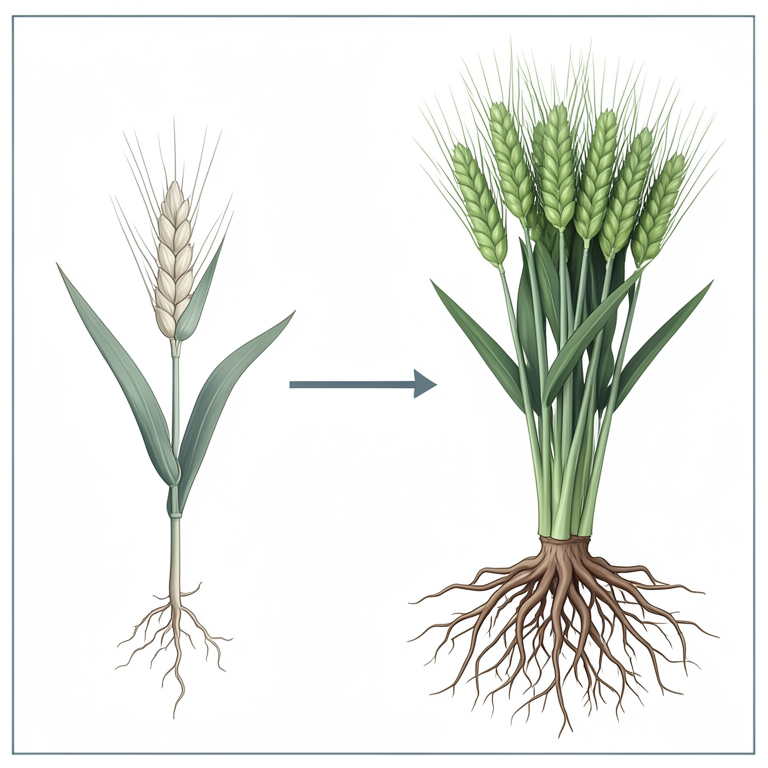
Essential Nutrients for Wheat
AI-generated conceptual illustration (wheat plants). It explains the idea and does not show study data.
View source evidence ↗Introduction
Wheat (Triticum aestivum L.) is one of the key cereals in the world and acts as the primary source of calories, proteins, and other nutritional contents for many people around the globe. The need for wheat owing to increased populations, changes in food habits, and food security is continuously necessitating improvements in crop productivity and grain quality. However, the cultivation of wheat is being faced by climate changes, including high temperature, uneven rainfall, drought, heatwaves, and other forms of extreme weather conditions. Such climatic stresses may cause adverse effects on crop growth, nutrient uptake, grain development, yield production, and ultimately grain quality. The proper management of nutrients is very crucial for the sustainable cultivation of wheat since the availability of adequate and balanced nutrients is very vital for optimal plant growth and yield formation. Out of all the essential nutrients, nitrogen (N), phosphorus (P), and potassium (K) are the ones that have very significant importance for the cultivation of wheat. Nitrogen enhances vegetative growth, chlorophyll synthesis, photosynthesis, and the accumulation of proteins in the grains of wheat. Heat and moisture stress may inhibit root activity and nutrient absorption, while too much precipitation may lead to nutrient leaching, runoff, and denitrification. Conventional fertilizer practices may not always ensure that enough nutrients are available when and in the amount they are needed. Unbalanced and uncontrolled application of fertilizers may lead to degradation of soil, poor nutrient use efficiency, pollution, and high greenhouse gases. Correct nitrogen and sulfur nutrition can help increase protein content and gluten qualities in grains, while proper management of micronutrients can increase their nutritional value. At the same time, too much nitrogen application can increase lodging and nutrient losses, but without proportional yield benefits. Thus, finding the proper nutrient sources, rates, time of application, and methods is important to ensure use efficiency, yield and nutritional quality. Changing climate may affect nutrient availability in soil and needs of wheat for nutrients. High temperature and moisture stress might reduce the root activity and nutrient absorption while excess rains might lead to loss of nutrients due to leaching, runoff, or denitrification. Thus, conventional fertilizer application may not always guarantee sufficient provision of nutrients at proper times in the correct amounts. Over or imbalanced fertilizer application may lead to soil degradation, inefficiency in the use of nutrients, contamination of the environment, and emissions of greenhouse gases. The above facts suggest that nutrient management should be climate adaptive and site specific. Integrated nutrient management using inorganic fertilizers along with manures, crop residue, compost, and biofertilizers is a useful technique to maintain soil fertility and provide sufficient nutrients. Innovative prac tices including soil testing, nutrient application through precision agriculture, split application of nitrogen, foliar nutrition, controlled release fertilizers, and decision support systems can facilitate synchronization between nutrient provision and crop nutrient demand. These practices will ensure efficient use of nutrients and make wheat plants tolerant to drought, high temperature, and other climatic stresses. Nutrient management plays a crucial role in enhancing the quality of wheat grains as well. Efficient use of nitrogen and sulfur can help in increasing the protein content and gluten properties of grains, whereas nutrient management of micronutrients can increase their nutritional content. However, excess application of nitrogen can lead to lodging problems and loss of nutrients without any proportional increase in yields. Thus, it becomes necessary to adopt proper nutrient management in terms of its source, rate, timing, and application technique to increase yields, quality, profitability, and sustainability. Under the circumstances, the importance of nutrient management in climate-smart wheat production cannot be underestimated. Nutrient management techniques that can adapt to variations in temperature and rainfall can help increase wheat yield, quality, resource efficiency, and sustainability of agriculture. Hence, it becomes necessary to understand the significance of nutrient management under changing climatic conditions.
Changing climate environment and effects on wheat yield
Wheat (Triticum aestivum L.) is one of the most significant cereal plants worldwide and a major contributor to calories and proteins intake for a considerable number of people around the world. Yet, wheat cultivation is increasingly vulnerable to the effects of changing climatic environment. Changing weather conditions such as increased temperatures, fluctuating amount of precipitation, droughts, heat waves and changes in atmospheric concentrations of carbon dioxide affect plant growth, development, productivity and grain quality.
a. Increased temperature and heat stress
-Temperature is one of the most significant factors affecting wheat phenology and productivity. Increase in temperature will accelerate the rate of development and shorten the grain-filling period of the plant. Moreover, high temperature can reduce the photosynthesis, increase the respiration process, impact negatively on pollen viability and lead to decreased grain weight. One of the main types of heat stress is terminal heat stress that affects wheat growing areas in which temperatures increase at late winter and early spring. Heat stress affects significantly wheat yield and quality characteristics
b. Rainfall and water variations
-The climate is also linked with increased variations in rainfall. Insufficient and too much rainfall can have a negative impact on wheat production. During the tillering, flowering, and grain-filling stage, water deficit can limit nutrient intake and plant growth. However, too much rain may lead to nutrient leaching, waterlogging, and lower root activity. Effective nutrient management in conjunction with proper irrigation and water conservation methods is thus very critical in ensuring efficient wheat production.
c. Drought and other climatic stresses
The drought stress condition limits the development of roots, photosynthesis, leaf area, and nutrient uptake. In cases where there is water deficiency, the use of nutrients by plants can be inefficient. Equally, climatic stresses such as heat waves, unexpected rainfall, and frost can disrupt the growth stages. The mentioned stresses indicate the importance of nutrient management to enhance plant vigour, root development, and nutrient use efficiency.
d. Elevated atmospheric CO 2
-Increase in the concentration of atmospheric CO 2 may enhance the process of photosynthesis and biomass productivity in C 3 crops like wheat. The benefits of elevated CO 2 under changing conditions may depend upon the temperature, availability of water, and nutrient supply. The shortage of nitrogen and other nutrients may restrict the process of conversion of carbon assimilation into grain production and quality. Therefore, proper availability of nutrients is necessary to get the benefit of changes in atmospheric CO 2 levels.
e. Effect on yield and grain quality of wheat
-Changing climatic condition may have a positive or negative impact on the production of wheat in terms of quantity and quality. Drought and heat may reduce the grain numbers, thousand-grain weight, and total yield. Other factors that may be affected are the protein content of the grain, gluten content, starch content, and micronutrient content of the grains. Therefore, adequate availability of nutrients is one of the key aspects of climate-responsive wheat production. Importance of Climate-Responsive Nutrient Management Under changing climatic conditions, the conventional fertilizer recommendations may not always lead to optimum nutrient availability
Importance of nutrient management in wheat cultivation
The efficient use of nutrients in wheat cultivation is one of the basic requirements of sustainable agriculture due to the direct effect of the availability of nutrients on the development of plants, their growth, yield formation, and the quality of grains. The proper provision of macro-and micronutrients in the course of cultivation of wheat is necessary for its successful growth and development.
a. Role of nutrients in wheat development
Among the main nutrients necessary for wheat cultivation are nitrogen (N), phosphorus (P), and potassium (K). Nitrogen is responsible for the stimulation of growth and development of leaves and stems, chlorophyll formation, tillering, and protein content of grains. Phosphorus provides the stimulation of root development and energy transfer, early establishment, and reproduction in the plants. Potassium regulates the water balance, stimulates enzyme activity, photosynthesis, and resistance to adverse environmental conditions such as drought and heat. Other secondary nutrients include sulfur, calcium, magnesium, and some other micronutrients such as zinc, iron, manganese, boron, and copper.
b. Increasing Wheat Yield
-Appropriate nutrient availability can result in more productive tillers, increase in spike length, grain per spike, and grain weight, thus leading to increased grain yield. Nitrogen use is very important since both deficiency and excess of nitrogen can have detrimental effects on the yield. Phosphorus is essential for good root growth and establishment of crops, whereas potassium is essential for improved physiological functioning and enhanced crop performance under stress conditions. Therefore, the nutrient management should be done according to the needs of the crops and the nutrient levels in the soil.
c. Improvement of grain quality
Nutrient management not only improves wheat yield but also its quality. Nitrogen has a significant role in influencing the grain protein content as well as the gluten proteins. Sulfur has an important role in protein synthesis and gluten quality, and the micronutrients zinc and iron are useful for enhancing the nutrition value of wheat grain.
d. Improving the efficiency of nutrient-use
Nutrient-efficient management involves maximizing the crop nutrient uptake and minimizing the loss of nutrients. Correct dosage of fertilizers, time of application, placement, and sources of fertilizer can increase the efficiency of nutrient use. The split application of nitrogen will optimize the application and prevent losses through leaching and volatilization. Site-specific nutrient management and precise fertilization are additional approaches to improving the efficiency of fertilizer use.
e. Nutrient management under changing climatic conditions
Under changing climate conditions, nutrient availability, nutrient uptake, and nutrient utilization by wheat crops can be affected. Heat stress, drought, erratic rainfall, and water logging can hinder root functions and nutrient uptake. Balanced nutrition is one way of maintaining physiological activities of plants and their ability to cope with stress. Potassium and micronutrient availability are particularly important for water balance, enzymatic activity, and stress mechanisms.
f. Maintaining soil fertility
-Continuous cultivation of wheat without replenishing the nutrient content of soil will deplete soil nutrients and decrease soil fertility. Nutrient management, consisting of appropriate use of inorganic fertilizers, organic manures, crop residues, and biofertilizers, will enhance nutrient availability and improve soil fertility.
Essential Nutrients and Their Importance in Wheat Production -It needs a proper balance of nutrients
throughout the crop growth cycle to get maximum yield potential from wheat plants. There are specific functions performed by different nutrients in the biological activities such as photosynthesis, respiration, protein synthesis, root development, enzymes activation, water regulation, and grain development. Among all the required nutrients, nitrogen (N), phosphorus (P), and potassium (K) are required in relatively higher amounts compared to the secondary nutrients and micronutrients. However, all nutrients are equally important for normal growth and productivity of crops. In fluctuating environmental conditions, balanced availability of nutrients is of more importance as environmental stresses limit nutrient availability and usage.
I.
I.
Integrated nutrient management for wheat
INM is a very important concept in promoting sustainable wheat production where the use of inorganic fertilizers is coupled with organic fertilizers such as manures, crop residues, compost, green manures, and bio-fertilizers. The aim of the INM approach is to provide the required nutrients in adequate amounts at suitable periods and increase the efficiency of use of the nutrients and conserve the soil fertility and loss of nutrients
a. Concept and importance of INM
-Wheat crops need the provision of nutrients in the right proportions throughout the growth period of the plants. While chemical fertilizers provide immediate provision of nutrients, there may be problems in nutrient imbalances, decreasing organic matter content of the soils, and losses to the environment. On the other hand, organic fertilizers provide nutrients slowly and enhance the properties of the soil. INM combines various sources of nutrition to benefit from the strengths of all of them. Organic matter improves the physical conditions of the soil such as its structure, microbial life, moisture retention, and nutritional capacity, whereas mineral fertilizers supply nutrients in accessible forms at the times of the crops' high nutrient demands.
b. Integration of chemical fertilizers and organic manures
Farmyard manure, compost, poultry manure, vermi compost, and other well-rotted organic matter can be used in wheat-based systems. These products supply nutrients to the soil and increase the amount of organic carbon in it. The process of their decomposition results in the supply of nutrients and improvement of soil aggregation and moisture retention. The combination of organic manures and recommended mineral fertilizers can lead to better nutrient availability in comparison with the use of one of them alone. However, it is worth mentioning that the nutrient content of organic matter varies greatly.
c. Role of crop residue management
Retention and incorporation of crop residues may lead to recycling of nutrients and maintenance of soil organic matter. Residues of wheat or preceding crops have nutrients that can be recycled into the soil by the process of decomposition. Residue management may also control soil erosion, soil moisture content, and soil temperature. Correct crop residue management is especially important during climate variability, since better maintenance of soil organic matter and moisture will help buffer the crops from periods of drought. Yet the method and the moment of the incorporation of residues should be managed well, since high carbon residues may immobilize available nitrogen.
d. Biofertilizers and microbial inoculants
-Biofertilizers are products containing microorganisms which help improve nutrient availability or stimulate plant growth. Inoculants that fix nitrogen, solubilize phosphorus, mobilize potassium or stimulate plant growth may supplement mineral fertilizers. Their effectiveness, though, is limited by the condition of the soil, compatibility of the microorganisms, environment, type of the crop and management practices. Thus biofertilizers should be considered as part of the nutrient management strategy not as its universal substitution of mineral fertiliz.
e. Nutrient management that is specific to the location
Nutrient availability in the soils differs spatially within an agricultural field. Site-specific nutrient management involves determining nutrient application rates based on soil testing results, crop needs, yield expectations, and other information about the field. Such practice helps to avoid under application or over application of nutrients. For wheat, nutrient management can be especially helpful with respect to nitrogen. Since wheat needs a variable amount of nitrogen at different stages of development, techniques such as chlorophyll meters, optical sensors, remote sensing, and decision support systems can help in establishing crop nitrogen needs.
f. Balanced and timely application of fertilizers
INM effectiveness does not depend exclusively on nutrient sources; the rate, time, placement, and application technique matter as well.
Nitrogen is usually applied using the split application technique to match nitrogen availability to crop need. Phosphorus and potassium fertilization should be based on soil tests and removal by crops. Foliar application of some chosen micronutrients could be effective when needed. Placement of fertilizers near the root zone is beneficial as well.
g. INM and nutrient use efficiency
One of the key benefits of INM technology is improved nutrient use efficiency due to increased nutrient retention and reduced loss for organic amendments and high bioavailability of nutrients for mineral fertilizers. Synchronization of nutrient supply and crop uptake could result in improved utilization of applied nutrients. The improvement of nutrient use efficiency would lower fertilizer costs and environmental losses. Thus, the use of INM technology would contribute significantly to the sustainable intensification of wheat cultivation
h. INM under changing climate conditions
Various climatic changes such as changing temperature regime, drought, uneven precipitation, etc., may affect the availability of nutrients and uptake by crops. The application of INM will improve the conditions of soil organic matter, water holding ability, and biological activity. The combined effect of organic and mineral fertilization allows maintaining the growth of crops in adverse environmental conditions. However, INM must be tailored to specific soil, climate, cropping system, and resources availability and not follow the same standard nutrient package.
Nutrient management in case of climate stress
Nutrient management in case of climate stress refers to keeping an adequate and balanced level of nutrients for crop plants under the changing climatic conditions like drought, high temperatures, heavy rainfall, flood and soil salinity. Climate stress may affect the supply and availability of nutrients to plants and their losses due to leaching and runoff and soil nutrient dynamics. Hence, effective methods of soil test-based fertilizer application, nitrogen splits, balanced NPK fertilization, application of organic manure/compost, mulching, fertigation and proper irrigation and drainage management are critical. Potassium is very much important for plant water regulation and stress tolerance, whereas the deficiency of micronutrients must be managed. Combining the organic and inorganic sources of nutrients would help in improving the soil properties including its fertility
Effect of nutrient management on wheat yield and yield components
Nutrient management becomes an indispensable part of enhancing the growth, yield, and yield components of wheat. Nutrients like N, P, K, S and micronutrients become a necessary part of the growth of the wheat (Triticum aestivum L.). Among all these nutrients, nitrogen is a prime component as it ensures vegetative growth, formation of chlorophyll, tillering and grain development. Usually, nitrogen application enhances the height of the plants, the number of productive tillers, spike length, number of grains per spike and thousand grains weight and ultimately increases the grain yield. Phosphorus is needed for the root development, energy transfer, early plant establishment and reproductive growth whereas potassium helps in improving the water use efficiency, nutrient translocation, disease resistance and grain filling. Sulphur is a component that helps in the protein synthesis and enhances the quality of wheat grain. Hence, nutrient management is better than the excessive application of any one nutrient. Integrated nutrient management involves both inorganic and organic sources of fertilizers including farmyard manure, compost, vermicompost or green manures. Nutrients derived from organic sources are released gradually, add to the soil organic matter, improve the soil structure, and increase microbial activity, while those derived from chemicals are easily available to plants, thus helping them to grow fast. Organic-inorganic combination is effective in improving the efficiency in nutrient uptake and the soil status. Management of nutrients also significantly influences the yield components. Availability of adequate nutrients at the tillering stage ensures the formation of productive tillers, one of the factors determining the wheat yield. Adequate nutrients during the stages of stem elongation and booting ensure proper development of spikes and increase the number of grains in each spike. During grain filling, adequate nitrogen and potassium will ensure proper photosynthesis and translocation of assimilates into developing grains, leading to heavier grain weight. On the other hand, the deficiency of nutrients may lead to poor growth, lack of tillering, small spikes, few numbers of grains, and low grain weight. Over-fertilization especially with high amounts of nitrogen might cause vigorous growth of vegetative parts and increases the risk of lodging, incidence of pests and diseases, and reduces nutrient-use efficiency. Nutrient split application, for instance, can help in aligning nutrient supply with crop demands and minimize nutrient losses. Site-specific nutrient management through soil testing and crop needs can enhance the efficiency of nutrient use and economic gains from this process. In general, nutrient management helps in enhancing yield of wheat by optimizing its yield components, which include productive tillers per unit area, length of spike, grains per spike, and thousand-grain weight. Thus, balanced nutrient management is necessary for increasing wheat production.
Effect of nutrient management on the quality of wheat grains
Effect of Nutrient Management on Wheat Grain Quality
The nutrient management significantly affects the quality of wheat grains since it directly influences the processes of development, protein accumulation, starch synthesis, and biochemical processes. The major nutrients influencing the wheat grain quality are nitrogen, phosphorus, potassium, and sulphur. Of them, nitrogen is the main nutrient affecting the protein content in wheat grains. The sufficient availability of nitrogen results in enhanced synthesis of amino acids and storage proteins, which provide the strength and elasticity of gluten.
Nevertheless, an increased amount of nitrogen does not necessarily lead to enhanced quality of wheat and leads to poor nutrient efficiency and loss of nutrients. Phosphorus is responsible for the normal development of roots, metabolism, and grain formation and thus positively affects grain development. Potassium is responsible for carbohydrate translocation, enzyme activity, water balance, and grain filling and thus improves the weight of the grain and its quality. In addition, sulphur is very important for the formation of sulphur-containing amino acids that affect gluten formation. Therefore, proper balance between the two is very necessary for producing good quality protein. Some micronutrients like zinc, iron, manganese, and boron play an important role in grain quality as well as in physiological processes of the plant. Zinc is one such micronutrient which plays an important role in enzymatic action and protein synthesis and is known to increase the zinc content of wheat grain by its proper application. In the case of integrated nutrient management, proper use of inorganic fertilizers along with organic nutrients like farmyard manure, compost or even vermicompost proves to be beneficial for nutrient availability and biological activities of the soil. Application methods and timing of the nutrients are also crucial factors. Proper nutrient management and proper split application of nitrogen will help in increasing the efficient utilization of nutrients as well as the accumulation of grain proteins during grain filling period. Leaf application of some nutrients may also help in overcoming deficiencies at important growth stages of the plant. Deficiencies of nutrients lead to small-sized grains, low protein content, low test weight and nutritional quality of grains. Thus, soil analysis and balanced nutrient advice are necessary to attain good yield and quality of grain. In summary, proper nutrient management helps to improve the quality of wheat grain through affecting the protein content, gluten properties, weight of grains, carbohydrate development, and the micronutrient content. Proper nutrient management that incorporates macronutrients and micronutrients in adequate quantities during proper stages of growth can result in better quality of wheat grain.
Precision and site-specific nutrient management
Precision and site-specific nutrient management (SSNM) represent a highly developed strategy of agriculture nutrient management, which strives to provide adequate amounts of nutrients to the crops in appropriate timing and in the specific location. In the conventional strategy of fertilizer management, uniform application of the same kind and amount of fertilizer is practiced in the whole field despite the fact that there may be considerable differences in terms of soil fertility, growth of crops and need for nutrients in different parts of the field. The main purpose of precision nutrient management is to increase efficiency of nutrient application, to boost crop productivity, to lower production costs and negative effects on environment caused by excessive use of fertilizers. Site-specific nutrient management entails an evaluation of nutrient-supplying ability of a specific field or management zone. Soil testing forms one of the critical elements in SSNM since it reveals the availability of the key nutrients such as nitrogen, phosphorus, potassium, sulphur and micronutrients. Other considerations include the soil texture, pH, organic matter content, moisture condition, previous crop grown, crop varieties, expected yield and climatic conditions. Thereafter, the nutrient requirement of the crop is matched with the supply of nutrients from the soil, organic material, biological processes and fertilizers. Through this, it is possible to establish the fertilizer requirement of the crop as opposed to following general recommendations. Precision agriculture techniques have made the practice of nutrient management more effective. The application of GPS and GIS technology makes it possible to produce detailed maps of soil fertility and crop performance. It is also possible to use remote sensing through satellite images, drones and agricultural sensors to observe the variations in crop growth and nutrient stress. The use of yield monitoring devices is possible to make yield maps which display the variability of production in a field. The variable-rate technology can be used for applying the fertilizer in varying amounts for different regions of a field according to the needs of its soils. Digital agriculture and decision-making systems allow for combining the information about soil, crops, weather, and yield to help the farmer to make fertilizer decisions. Management of nitrogen application is especially important for SSNM since nitrogen is a very mobile substance which can be lost through leaching, volatilization, denitrification, and runoff. Split application of nitrogen according to the needs of plant can increase the efficiency of nitrogen use. In the same manner, phosphorus and potassium fertilizers can be applied considering the results of soil testing and plant uptake. Also, organic fertilizers, organic residues, biofertilizers and compost can be applied along with mineral fertilizers. Major advantages of precision and site-specific nutrient management include increased efficiency of fertilizer use, better growth of plants, increased or stabilized yields, decreased waste of fertilizer, and increased economic performance. Such approach also allows to decrease the nutrient losses to surface and ground water bodies and reduce the threat of pollution.
Conclusion
Nutrient management is a critical aspect of sustainable wheat production and is essential in ensuring productivity, quality of the grains produced and soil health despite climatic change. The crops require a supply of balanced and timely nutrients including nitrogen, phosphorus, potassium, sulphur and micronutrients during growth and development. Climate change, which entails increased temperature, precipitation and CO 2 concentration, droughts and heat waves among others, can impact nutrient availability, uptake, utilization efficiency and grain formation. Thus, traditional methods of applying nutrients might not be sufficient in ensuring sustainability of wheat productivity in future climatic conditions. Integrated nutrient management (INM), which involves use of organic manures, crop residues, bio-fertilizers and mineral fertilizers, is a suitable solution to efficient nutrient utilization and maintenance of soil fertility. This involves a balance in nutrient supply taking into consideration crop demand and soil test. This will ensure that there is no nutrient loss and there is proper plant growth, yield components and quality of grains. Management of nutrients, especially nitrogen, is very crucial since high nitrogen supply increases cost of production, nutrient loss, greenhouse gas emission and environmental pollution. Precision nutrient management, split nitrogen fertilization, site-specific nutrient management, and better fertilizer placement technologies can facilitate synchronization between nutrient supply and nutrient demand of the crops. Change in climate also highlights the necessity of improving soil organic matter and biological activities. Organic material like farm yard manure, compost, residues of the crop and green manure can improve physical properties of soil, water retention capacity of the soil, biological activities, and nutrient availability. This will improve the ability of the wheat crop to withstand drought stress and temperature stress. Biofertilizer and beneficial microbes can play an important role for increasing nutrient availability. The nutrient management should also be integrated with climate smart agricultural practices like conservation agriculture, residue management, proper irrigation methods, appropriate sowing times, stress tolerant varieties, and water management practices. The combination of all these practices can increase the efficiency of resources used and reduce the vulnerability of wheat crop towards climatic stresses. All in all, nutrient management that is sustainable and site specific is very essential in ensuring stable yield and grain quality improvement for wheat under the changed climatic conditions. In the future, scientific attention should be paid to such aspects as climate-specific fertilization, precision farming, nutrient efficient wheat varieties, biological fertilization, and decision support systems. Special attention should also be devoted to decreasing greenhouse gases emission related to fertilization while keeping farmers' profits at the same time. Thus, scientifically based, balanced and integrated approach to nutrient management can be very effective in ensuring food security, soil sustainability and environmental protection.
References
25 in the original paper- Tilman D, Balzer C, Hill J, Befort BL. Global food demand and the sustainable intensication of agriculture. Proc. Natl. Acad. Sci. USA. 2011;50:20260-20264.
- Mueller ND, Gerber JS, Johnston M, Ray DK, Ramankutty N, Foley JA. Closing yield gaps through nutrient and water management. Nature. 2012;7419:254-257.
- Chen X, Cui Z, Fan M, Vitousek P, Zhao M, Ma W, Wang ZL, Zhang WJ, Yan XY, Yang JC, et al. Producing more grain with lower environmental costs. Nature. 2014;7523:486-489.
- National Bureau of Statistics of the People's Republic of China. China Statistical Yearbook. Beijing, China: Statistics Press; 2021.
- Yan L, Wang YY, Tumbalam P, Zhang TL, Gao Q, Zhang WJ, Wei DM, Yaa OK. Spatiotemporal distribution of chemical fertilizer application and manure application potential in China. Environ. Eng. Sci. 2019;10:1337-1348.
- Liu C, Zhu T, Xin L. Effectiveness of agricultural technology services on fertilizer reduction in wheat production in China. Sustainability. 2025;17:2840.
- Ejigu D, Pushpalatha R, Jayaprakash SK, Gangadharan B, Himanshu SK, Gopakumar S. Integrated fertilizers for sustainable wheat production to improve food security-A comprehensive review. J. Plant Nutr. Soil Sci. 2025;188:5-16.
- Sanyaolu M, Sadowski A. The role of precision agriculture technologies in enhancing sustainable agriculture. Sustainability. 2024;16:6668.
- Fernández-Ortega J, Álvaro-Fuentes J, Cantero-Martínez C. The use of double-cropping in combination with no-tillage and optimized nitrogen fertilization reduces soil N 2 O emissions under irrigation. Sci. Total Environ. 2023;857:159458.
- Adamopoulos T, Restuccia D. The size distribution of farms and international productivity differences. Am. Econ. Rev. 2014;6:1667-1697.
- Ju XT, Gu BJ, Wu YY, Galloway JN. Reducing China's fertilizer use by increasing farm size. Glob. Environ. Change. 2016;41:2632. International Journal of Agriculture and Nutrition https://www.agriculturejournal.net 26646072, 2026, 8(9), Downloaded from https://www.doi.org/10.33545/26646064.2026.v8.i9c.759 by International Journal of Agriculture and Nutrition on [30/09/2026]. See the Terms and Conditions (https://www.agriculturejournal.net) for rules of use; OA articles are governed by the applicable Creative Commons License
- Cui ZL, Zhang HY, Chen XP, Zhang CC, Ma WQ, Huang CD, Zhang WF, Mi GH, Miao YX, Li XL, et al. Pursuing sustainable productivity with millions of smallholder farmers. Nature. 2018;7696:363-366.
- Zhao CJ. Current situations and prospects of smart agriculture. J. South China Agric. Univ. 2021;6:1-7.
- Li S, Lei YD, Zhang YY, Liu JG, Shi XY, Jia H, Wang C, Chen F, Chu QQ. Rational trade-offs between yield increase and fertilizer inputs are essential for sustainable intensication: A case study in wheat-maize cropping systems in China. Sci.Total Environ. 2019;679:328-336.
- Zhang WF, Cao GX, Li XL, Zhang HY, Wang C, Liu QQ, Chen XP, Cui ZL, Shen JB, Jiang RF, et al. Closing yield gaps in China by empowering smallholder farmers. Nature. 2016;7622:671674.
- Li HJ, Wu QH, Zhao YN, Ye YL, Huang YF. Effects of different formula fertilizers on population dynamics, stress resistance and grain yield of winter wheat. Soil Fertil. Sci. China. 2021;3:300307.
- An Z, Yang Y, Yang X, Ma W, Li Y, Chen G, Zhang W, Zhuang M, Wang C, Zhang F. Promoting sustainable smallholderfarming via multistakeholder collaboration. Proc. Natl. Acad. Sci. USA. 2024;121:e2319519121.
- Jiao XQ, He G, Cui ZL, Shen JB, Zhang FS. Agri-environment policy for grain production in China: Toward sustainable intensication. China Agric. Econ. Rev. 2018;1:78-92.
- Cao GX. Study on the Restricting Factors and Countermeasures for Sustainable Intensied Grain Production Technology Application in Smallholder Farming System. Ph.D. Dissertation, China Agricultural University, Beijing, China; 2015.
- Mirosavljevi´c M, Miki´c S, Špika AK, Župunski V, Zhou R, Abdelhakim L, Ottosen CO. mid-grain lling stage. Plant Soil Environ. 2021;2:71-76.
- Dang G, Wang Z. Organic fertilizer application in wheat production of China: History, bottleneck, and strategy. J. Plant Nutr. Fertil. 2025;1:12-31.
- Faruque AS, Huang ZH, Karimanzira TTP. Investigating key factors inuencing farming decisions based on soil testing and fertilizer recommendation facilities (STFRF)-A case study on rural Bangladesh. Sustainability. 2018;10:4331.
- Yu WZ, Luo XF. Farming experience and farmers' adoption of low-carbon management practices: The case of soil testing and fertilizer recommendations in China. Environ. Sci. Pollut. Res. 2022;5:6755-6765.
- Hu J, Yang Y, Zhang H, Li Y, Zhang S, He X, Huang Y, Ye Y, Zhao Y, Yan J. Reduction in nitrogen rate and improvementof nitrogen . Plants. 2023;12:1326.
- Cerf M, Jeuffroy MH, Prost L, Meynard JM. Participatory design of agricultural decision support tools: Taking account of the use situations. Agron. Sustain. Dev. 2012;4:899-910.