
Research article · 2026 · Full text
International Journal of Horticulture and Food ScienceCost-returns analysis and marketing of Lijjat Papad: Acase study of Shri Mahila Griha Udyog Lijjat Papad,Amravati Branch
Volume 8(9S) · Pages 11–15 · DOI: 10.33545/26631067.2026.v8.i9sa.853 ↗
Research areasAgricultural Economics and PracticesAgriculture and Agroindustry StudiesBusiness, Education, Mathematics Research
Abstract
Author-writtenThe present study entitled“Cost-Returns Analysis and Marketing of Lijjat Papad”was conducted dur-ing 2025–26 to work out the cost and return of major papad products and to study the marketing ofLijjat Papad manufactured byShriMahila Griha Udyog Lijjat Papad, Amravati Branch, Maharashtra.The study covered four major products, viz., Udad Papad, Moong Papad, Punjabi Masala Special Papadand Garlic Papad was studied. Primary data were collected through field visits, personal interviews withthe branch head and supervisor, and observations, and were analysed by using Cost and Returns .Marketing of different products also studied by calculating total marketing cost, total marketing marginand producer’s share in consumer’s rupees. The results revealed that the total value of fixed assets of thebranch was estimated at Rs. 68.75 lakh, with an annual fixed cost of Rs. 17.38 lakh, of which interest onfixed capital accounted for the largest share (47.48%). Among the four products, Punjabi MasalaSpecial Papad recorded the highest net return of Rs. 87.48/kg and the best benefit-cost ratio of 1.31, fol-lowed by Moong Papad (Rs. 55.88/kg), Udad Papad (Rs. 41.49/kg) and Garlic Papad (Rs. 31.13/kg),with respective benefit-cost ratios of 1.21, 1.15 and 1.11; break-even quantities for all four products re-mained well below the assumed annual production of 12,000 kg, indicating a financially viable opera-tion. The marketing analysis identified two channels, viz., Producer–Distributor–Retailer–Consumer(Channel I) and Producer–Retailer–Consumer (Channel II); the producer's share in consumer's rupeeranged from 20.91 per cent for Garlic Papad to 30.64 per cent for Punjabi Masala Special Papad, andeliminating the distributor in Channel II raised the retailer's margin without altering the price paid bythe consumer. The study suggests that maintaining product-wise cost records and strengthening theshorter, distributor-free marketing channel could further improve the profitability of the enterprise.
Summary
Source-checkedPlain-language reading of the full paper, prepared with AI and checked against the text. Each point links to the authors' own words.
The question
- The study aimed to determine the costs and returns of major Lijjat Papad products and analyze their marketing systems. View evidence ↗
What they did
- The study analyzed two marketing channels: one involving a distributor (Channel I) and a shorter one bypassing the distributor (Channel II). View evidence ↗
What they found
- The total value of fixed assets for the Amravati branch was estimated at Rs. 68.75 lakh. View evidence ↗
- Production costs varied by product, ranging from a low of Rs. 264.12/kg for Moong Papad to a high of Rs. 288.87/kg for Garlic Papad. View evidence ↗
- Punjabi Masala Special Papad was the most profitable product with a net return of Rs. 87.48/kg and a B:C ratio of 1.31, while Garlic Papad was the least profitable (Rs. 31.13/kg; 1.11 B:C ratio). View evidence ↗
- All products were financially viable, as their break-even points (3,512 to 6,451 kg) were significantly lower than the annual production of 12,000 kg per product. View evidence ↗
- The producer's share of the consumer's price ranged from 20.91% for Garlic Papad to 30.64% for Punjabi Masala Special Papad. View evidence ↗
Visual summary
2 visualsIllustrations explain the paper; charts are replotted from the paper's own table values.
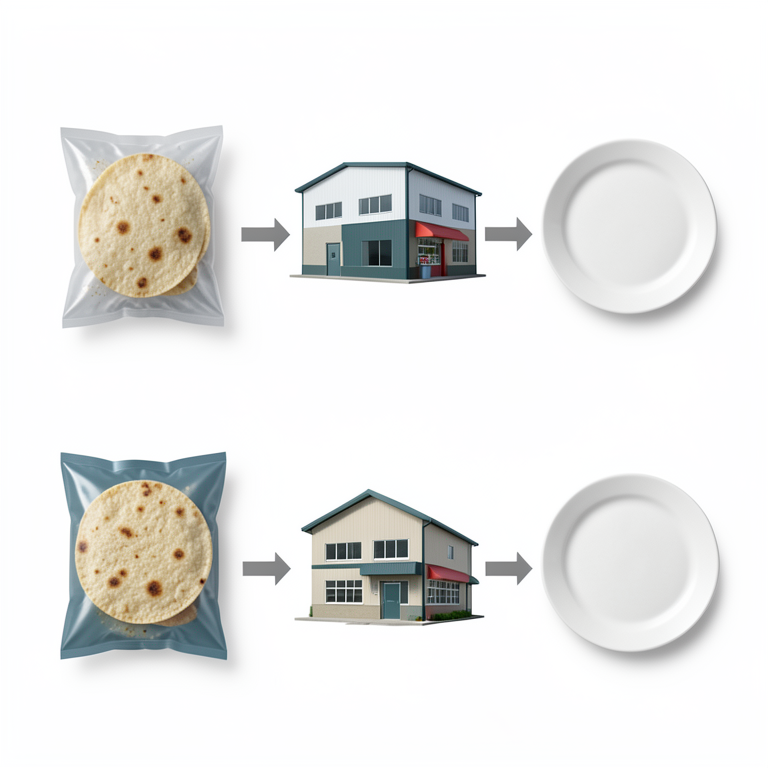
Marketing Channel Comparison
AI-generated conceptual illustration (packaged papadum crackers). It explains the idea and does not show study data.
View source evidence ↗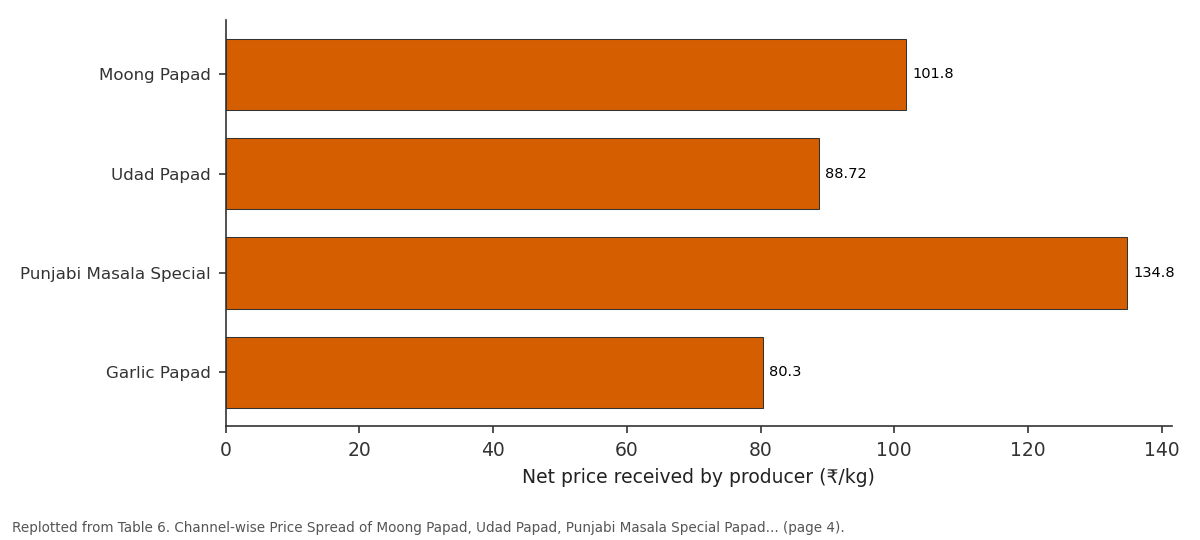
Channel I: Moong Papad vs Udad Papad vs Punjabi Masala Special vs Garlic Papad
Replotted from Table 6 (page 4) of the original paper. Every bar is the paper's own table value.
View source evidence ↗Figures & tables
From the original paper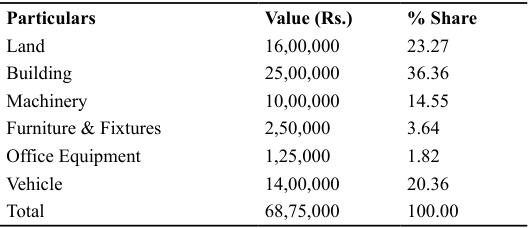 Table 1
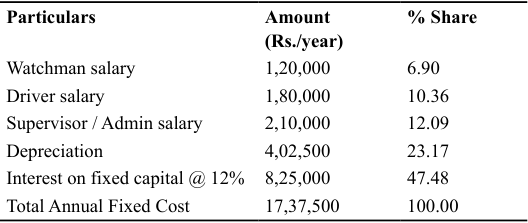 Table 2
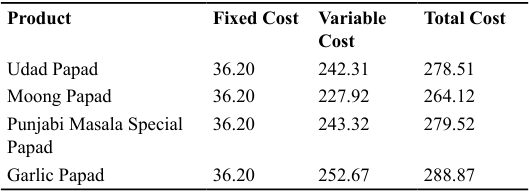 Table 3
 Table 4
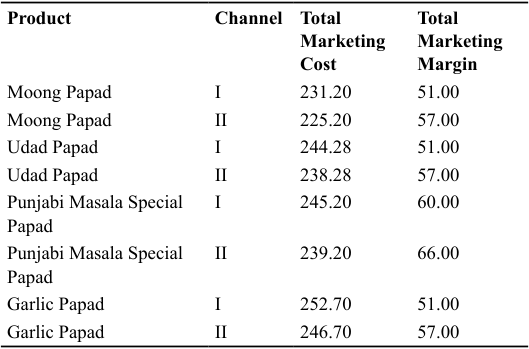 Table 5
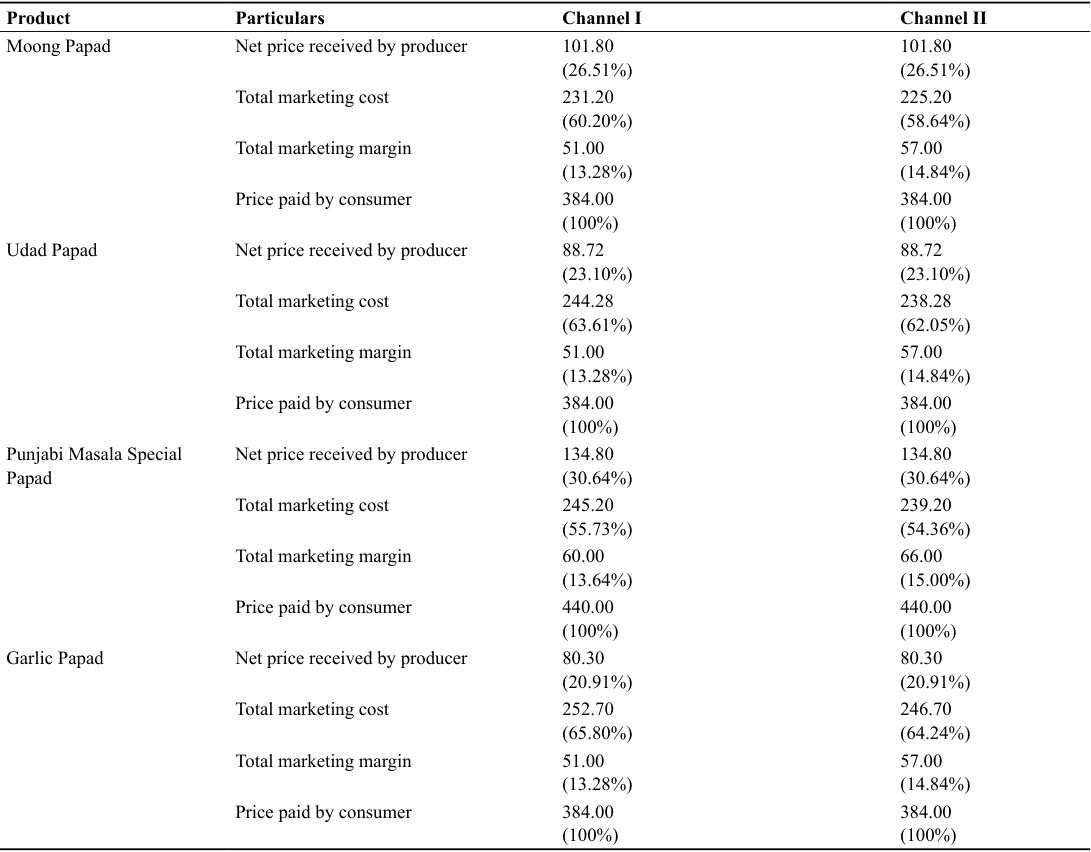 Table 6
Introduction
Agriculture forms the backbone of the Indian economy, and the economic value of agricultural produce is realised not only at the farm level but also through processing, grading, packaging, storage, transportation and marketing. Food processing therefore provides an important link between agricultural production and consumer markets and generates additional employment and income through value addition. Processing enterprises must coordinate procurement, labour, packaging, transportation and marketing, and their economic performance depends on the relationship between the resources used, the costs incurred and the returns generated. Changing consumer preferences, rising household income and growing expenditure on agro-processed food have further widened the demand for organised food-processing enterprises, making competitive pricing, consistent quality and effective marketing increasingly important. Papad is a traditional processed food product that has developed into an organised commercial product in the Indian market. Its production passes through procurement of pulses and other ingredients, dough preparation, rolling, drying, quality checking, packaging and distribution, with raw material, labour, packaging and transportation together determining the final cost. Efficient procurement and supply-chain management are therefore important for controlling production cost and improving profitability in papad manufacturing. Women-led food-processing enterprises are significant because they combine income-generating activity with women's participation in productive work, and the cooperative form of enterprise strengthens these opportunities through collective participation and shared responsibility. Shri Mahila Griha Udyog Lijjat Papad, established in Mumbai in 1959 by seven women, has grown into one of India's leading women-led cooperative enterprises, with branches across the country -including Amravati in Maharashtra -providing regular income and employment to its sister-members. Understanding the cost structure, profitability and market ing performance of such a branch can offer useful insights for the organisation, its members, fellow cooperatives and other women-led food-processing enterprises. The present study on cost-return analysis and marketing of Lijjat Papad at the Amravati branch was undertaken with the following objectives:
1. To work out cost and return of major products (Lijjat Papad).
2. To study the marketing of Lijjat Papad.
Methodology
Methodology
Study area and unit selection
The present study was conducted in Amravati district of Maharashtra, where Shri Mahila Griha Udyog Lijjat Papad has an operational production unit engaged in the production and marketing of papad and provides employment opportunities to women members. The Amravati branch was therefore purposively selected for the study. Four major products manufactured by the branch, viz., Udad Papad, Moong Papad, Punjabi Masala Special Papad and Garlic Papad, were selected for the cost, return and marketing analysis. The study pertains to the year 2025-26. Primary data were collected through field visits, personal interviews with the branch head and supervisor, discussions with staff members, direct observation of production activities and a pre-designed interview schedule.
Analytical methods
1. Cost and returns of major products (Lijjat Papad):
The cost and returns of the selected products were worked out using the following cost concepts and analytical measures.
Benefit-Cost Ratio (B:C) =
Benefit-Cost Ratio (B:C) =
Marketing of Lijjat Papad
The marketing system was analysed by identifying the marketing channels and estimating the marketing cost, marketing margin and price spread using the following measures.
Marketing
Marketing
Results and discussion
Results and discussion
Cost and returns of major products (Lijjat Papad)
The cost and returns of the four selected papad products were estimated by considering the value of fixed assets, depreciation and interest on fixed capital, variable cost and interest on working capital, and the resulting total cost, gross return, net return, benefit-cost ratio and break-even point.
Table 1 shows that the total value of fixed assets at the Amravati branch was estimated at Rs. 68.75 lakh. Building accounted for the highest share (36.36%), followed by land (23.27%) and vehicle (20.36%), with machinery, furniture and office equipment together making up the remaining share. Building and land together constituted about 59.63 per cent of the total fixed asset value, indicating their dominant position in the branch's asset structure. [1] , who identified raw material as the principal component driving variable cost differences among papad products, ahead of labour, packaging and transportation. Garlic Papad recorded the lowest profitability owing to its comparatively higher production cost. All benefit-cost ratios exceeded unity, indicating that every selected product was profitable. The break-even quantities of all four products -ranging from 3,512 kg for Punjabi Masala Special Papad to 6,451 kg for Garlic Papad -remained well below the assumed annual production of 12,000 kg, confirming that the branch's production levels were financially viable and comfortably covered the allocated fixed cost. This pattern of differing product-wise profitability under a common branch structure supports Roy et al. (2010) [2] , who observed that Lijjat branches operate as independent profit centres and that close monitoring of product-wise costs and returns is central to the organisation's financial management.
Marketing of Lijjat Papad
The marketing system of Lijjat Papad at the Amravati branch was examined through two channels: Channel I (Producer → Distributor → Retailer → Consumer) and Channel II (Producer → Retailer → Consumer). The marketing cost, marketing margin and price spread were worked out separately for each product and channel. Table 5 shows that the elimination of the distributor in Channel II reduced the total marketing cost and raised the total marketing margin for every product -for instance, the total marketing margin for Moong, Udad and Garlic Papad rose from Rs. 51.00/kg in Channel I to Rs. 57.00/kg in Channel II, and for Punjabi Masala Special Papad from Rs. 60.00/kg to Rs. 66.00/kg. Correspondingly, total marketing cost was lower in Channel II for all four products, since the distributor's cost component (Rs. 6.00/kg) was absent. Punjabi Masala Special Papad recorded the highest marketing cost and margin in both channels, reflecting its higher selling price, while Moong, Udad and Garlic Papad followed a similar cost-margin pattern. This confirms that a shorter marketing channel reduces intermediary cost while transferring a larger margin to the retailer, in line with Das Gupta (2014), who reported that Lijjat follows a cost-plus pricing approach in which raw-material cost, rolling charges, packaging, transportation and selling expenses are built into the branch price before the product moves through the dealer and distributor network [3] similarly analysed marketing cost, marketing margin, price spread and producer's share for evaluating marketing efficiency. The total marketing cost incurred by the producer and different intermediaries ranged from ₹225.20 per kg (58.64 per cent) in Channel II to ₹252.70 per kg (65.80 per cent) in Channel I across the four products, while total marketing margin ranged from ₹51.00 per kg (13.28 per cent) to ₹66.00 per kg (15.00 per cent).
Producer's share in consumer's rupee was highest for Punjabi Masala Special Papad (30.64 per cent) and lowest for Garlic Papad (20.91 per cent) in both channels.
Conclusion
The study revealed that Shri Mahila Griha Udyog Lijjat Papad, Amravati Branch has a financially viable business structure, with all four selected products -Udad Papad, Moong Papad, Punjabi Masala Special Papad and Garlic Papad -generating positive net returns and benefit-cost ratios above unity. Punjabi Masala Special Papad showed the most favourable cost-return performance, while Garlic Papad recorded the lowest net return due to its relatively higher production cost; break-even quantities for all products remained comfortably below the assumed annual production level. The marketing analysis showed that the shorter Producer-Retailer-Consumer channel reduces the number of intermediaries and increases the retailer's margin without changing the price paid by the consumer, while the distributorbased channel can provide wider market coverage, so both channels have a complementary role depending on market requirements. Maintaining product-wise cost records, closer monitoring of raw-material costs and strengthening the shorter, distributor-free marketing channel would help further improve the profitability and market performance of the branch.
Figures and tables from the paper
| Product | Particulars | Channel I | Channel II |
|---|---|---|---|
| Moong Papad | Net price received by producer | 101.80 | 101.80 |
| (26.51%) | (26.51%) | ||
| Total marketing cost | 231.20 | 225.20 | |
| (60.20%) | (58.64%) | ||
| Total marketing margin | 51.00 | 57.00 | |
| (13.28%) | (14.84%) | ||
| Price paid by consumer | 384.00 | 384.00 | |
| (100%) | (100%) | ||
| Udad Papad | Net price received by producer | 88.72 | 88.72 |
| (23.10%) | (23.10%) | ||
| Total marketing cost | 244.28 | 238.28 | |
| (63.61%) | (62.05%) | ||
| Total marketing margin | 51.00 | 57.00 | |
| (13.28%) | (14.84%) | ||
| Price paid by consumer | 384.00 | 384.00 | |
| (100%) | (100%) | ||
| Punjabi Masala Special | Net price received by producer | 134.80 | 134.80 |
| Papad | (30.64%) | (30.64%) | |
| Total marketing cost | 245.20 | 239.20 | |
| (55.73%) | (54.36%) | ||
| Total marketing margin | 60.00 | 66.00 | |
| (13.64%) | (15.00%) | ||
| Price paid by consumer | 440.00 | 440.00 | |
| (100%) | (100%) | ||
| Garlic Papad | Net price received by producer | 80.30 | 80.30 |
| (20.91%) | (20.91%) | ||
| Total marketing cost | 252.70 | 246.70 | |
| (65.80%) | (64.24%) | ||
| Total marketing margin | 51.00 | 57.00 | |
| (13.28%) | (14.84%) | ||
| Price paid by consumer | 384.00 | 384.00 | |
| (100%) | (100%) |
Table text extracted from the original PDF; superscript letters are shown inline. The original table image is below.
View original table image
References
9 in the original paper- Sharma D, Khatri A, Mathur YB. Implementation of backward integration of supply chain management in papad industry: A case study. Journal of the Gujarat Research Society. 2019;21(15):541549.
- Roy A, Lahiri-Roy R. The story of Lijjat: Women's entrepreneurship and empowerment in India. The International Journal of Knowledge, Culture and Change Management. 2010;9(12):3947.
- Kale et al. Vegetable production and marketing through self-help groups in Amravati District. 2017.
- Agrawal, Agrawal. Business performance analysis of a women's self-help group engaged in food processing, Dhamtari District, Chhattisgarh. 2025.
- Chengappa PG, Umanath M, Vijayasarathy K, Babu P, Devika CM. Demand for agro processed food products: An evidence from Indian households. Asian Journal of Agricultural Extension, Economics & Sociology. 2017;16(1):1-11.
- Kadu PR. Production and marketing of Shri Mahila Griha Udyog Lijjat Papad in Amravati District (branch-level study). 2004.
- Kalange ND. Preparation of papad from pearl millet for value addition. Mahatma Phule Krishi Vidyapeeth, Rahuri; 2021.
- Kaklotar R. Women in unorganized sectors with reference to Lijjat Papad in Amareli district. Research Horizons: International Peer-Reviewed Journal. 2014;4.
- Paul, Amin. Social capital and business performance among women entrepreneurs in India's food sector. 2024.