
Research article · 2026 · Full text
International Journal of Geography Geology and EnvironmentFloristic documentation and ethnobotanical utilization of plant diversity at the Bahadurpur site biodiversity park, Dayalbagh, Agra
Volume 8(9) · Pages 148–158 · DOI: 10.22271/27067483.2026.v8.i9b.875 ↗
Research areasEthnobotanical and Medicinal Plants StudiesBotany and Plant Ecology StudiesForest Ecology and Conservation
Abstract
Author-writtenRehabilitation of un-arable land, conservation of phytodiversity, and optimum utilization of land are essential for the sustainable development of natural resources. Since 2017, the Department of Botany, Dayalbagh Educational Institute (DEI), Agra, has run a Rehabilitation and Conservation of Phytodiversity programme on a 9-acre (36,857 m²) experimental site near Bahadurpur village, Dayalbagh, referred to here as the Bahadurpur Site Biodiversity Park. The site serves two purposes: rehabilitation of originally un-arable land through the plantation and commercial cultivation of fruit, timber, industrial, medicinal, and aromatic plant species, supported by a dedicated Herbal Extraction Facility producing rose water, aloe vera juice, rose petal powder, rose and aloe vera face packs, rose petal jam (gulkand), and bela attar; and in-situ conservation of naturally occurring wild medicinal flora described by the Department as “the wealth of Agra,” several species of which are reported to occur only at this site and its immediate vicinity. The present paper documents the complete floristic composition of the site, integrating the Department's own planting and conservation records with a systematic field checklist, and presents genuinely cited ethnobotanical and economic utilization for the recorded taxa. In total, 160 plant taxa are documented across fruit, timber, industrial, medicinal, and aromatic cultivation blocks; a set of under-screening trial medicinal accessions; seven site-specific conserved wild medicinal species; twenty planted avenue/orchard trees with recorded population counts; a further twenty ethnomedicinally significant wild herbs; grasses; and a cultivated vegetable micro-plot expanded during a COVID-19-era planting initiative (2020-21) that also introduced Prunus dulcis (almond), Pyrus communis (pear), and Pterocarpus santalinus (red sandalwood), with Ficus religiosa established as a keystone avenue species. Reported uses are cross-validated against the published ethnobotanical literature, including the Department's own research programme on Pedalium murex, Tribulus terrestris, and Andrographis paniculata. The site is additionally used as a “lab on land” for phytodiversity and ecology teaching for M.Sc. Botany students. The findings demonstrate the value of combining commercial phytodiversity rehabilitation with in-situ wild-flora conservation on a single institutional site, and the paper recommends continued digital documentation and expansion of herbal product development at Bahadurpur.
Summary
Source-checkedPlain-language reading of the full paper, prepared with AI and checked against the text. Each point links to the authors' own words.
Why it matters
- Rehabilitating un-arable land and conserving plant diversity are critical for the sustainable development of natural resources. View evidence ↗
- Terrestrial ecosystems around Indian cities have been degraded by pollution and urbanization, resulting in a loss of plant diversity. View evidence ↗
The question
- The study aimed to describe the zonation of the Bahadurpur site, create a complete floristic checklist, record tree population counts, and document the ethnobotanical uses of the plants. View evidence ↗
What they did
- The research was conducted at a 9-acre (36,857 m²) experimental site near Bahadurpur village, Agra, managed by the Department of Botany at Dayalbagh Educational Institute since 2017. View evidence ↗
- The floristic documentation was compiled using departmental planting records, a walkover field enumeration, and records of site-specific conserved wild medicinal species. View evidence ↗
- Ethnobotanical and economic uses were identified through targeted searches of PubMed, Scopus, and Google Scholar. View evidence ↗
What they found
- The study documented a total of 160 plant taxa across the Bahadurpur site. View evidence ↗
- The most species-rich plant families found at the site were Fabaceae, Poaceae, Asteraceae, Apocynaceae, Moraceae, and Rutaceae. View evidence ↗
- The site's conservation zone protects seven wild medicinal plant species described as 'the wealth of Agra'. View evidence ↗
- Among the planted avenue and orchard trees, Kaner (106) and Sheesham (74) were the most numerous, followed by Jamun (66), Babul (54), and Mango (52). View evidence ↗
- Site-linked research validated the antibacterial activity of Pedalium murex and the antifungal activity of Tribulus terrestris. View evidence ↗
- The site's Herbal Extraction Facility produces products including rose water, rose petal powder, rose petal jam, aloe vera juice, and bela attar. View evidence ↗
- An expansion during 2020-21 introduced almond, pear, and red sandalwood, and established Ficus religiosa as a keystone avenue species. View evidence ↗
What it means
- The authors conclude that productive land rehabilitation and the conservation of wild flora can be successfully implemented together on a single institutional site. View evidence ↗
- The authors recommend prioritizing digital documentation, further phytochemical validation of wild species, and the expansion of herbal product development. View evidence ↗
- The study is not a quantitative plot-based survey and does not provide data on plant density, cover, or yield. View evidence ↗
- The claim that certain wild medicinal species occur only at the site and nearby areas is based on departmental observations and has not been independently verified by a district-wide survey. View evidence ↗
Visual summary
3 visualsIllustrations explain the paper; charts are replotted from the paper's own table values.
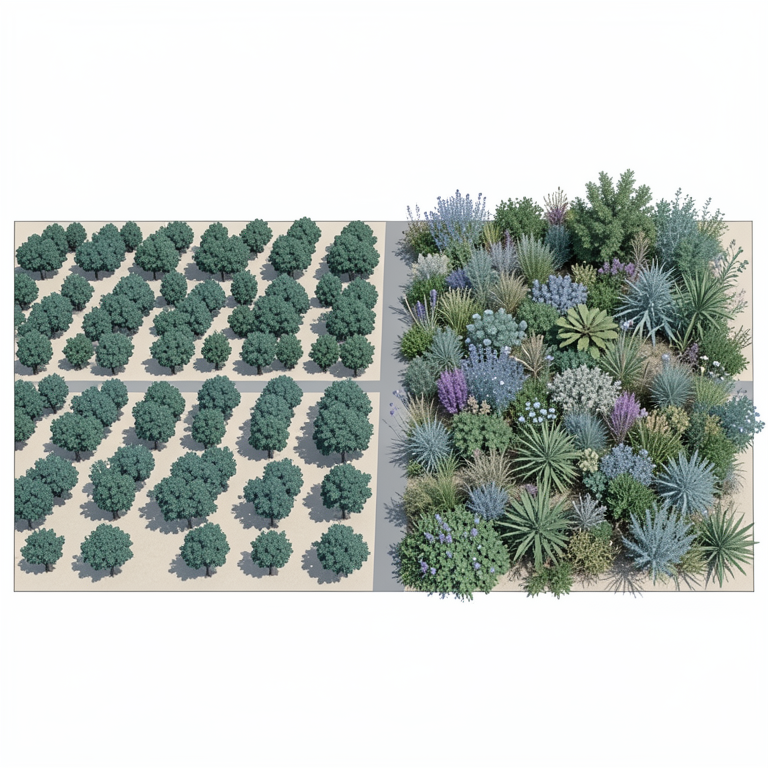
Site Zonation Concept
AI-generated conceptual illustration (A biodiversity park landscape with fruit orchards and wild medicinal plants). It explains the idea and does not show study data.
View source evidence ↗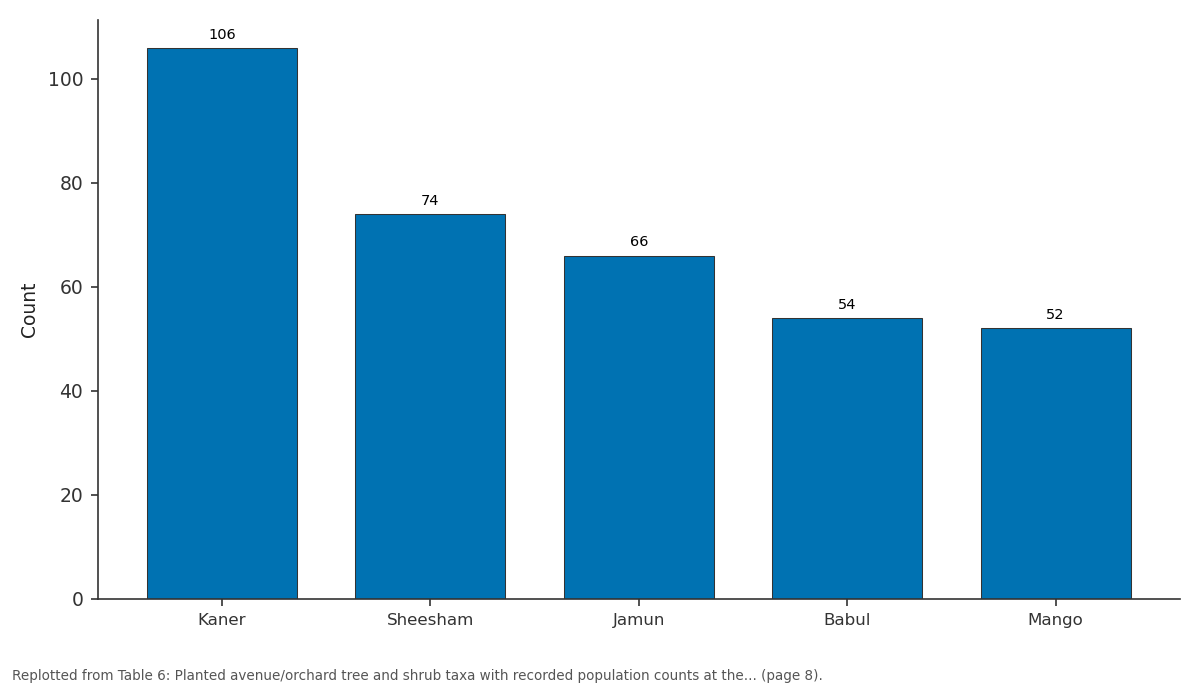
Count: Kaner vs Sheesham vs Jamun vs Babul vs Mango
Replotted from Table 6 (page 8) of the original paper. Every bar is the paper's own table value.
View source evidence ↗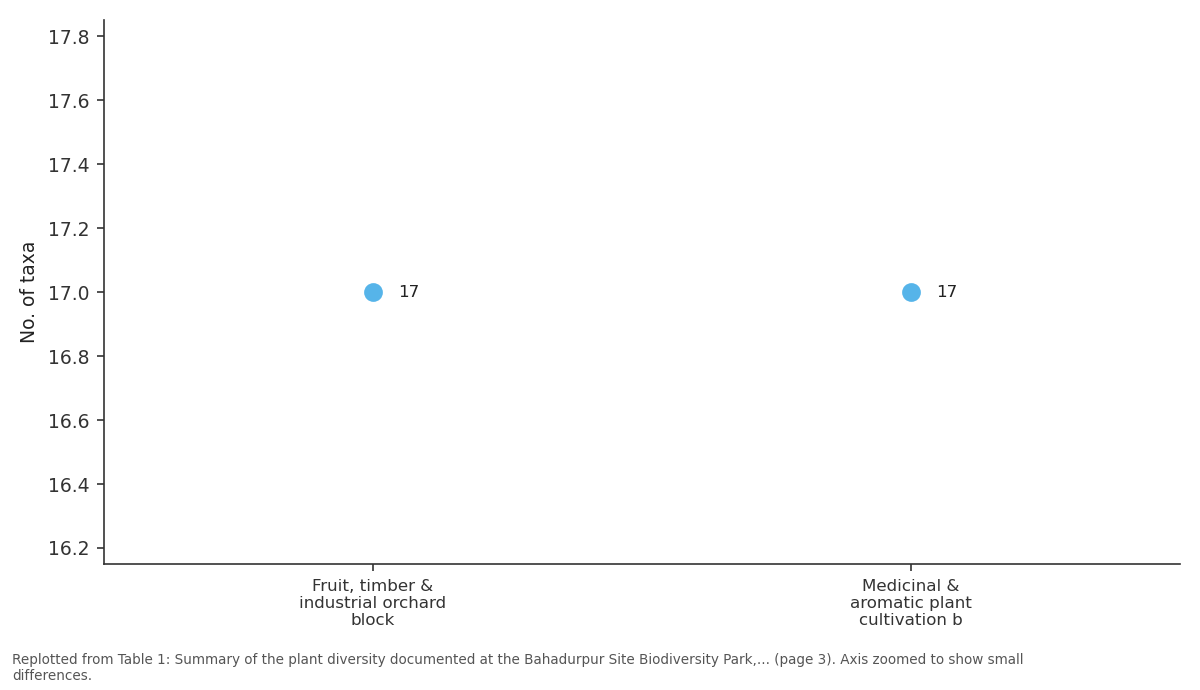
No. of taxa: Fruit, timber &... vs Medicinal & aromatic...
Replotted from Table 1 (page 3) of the original paper. Every bar is the paper's own table value.
View source evidence ↗Figures & tables
From the original paper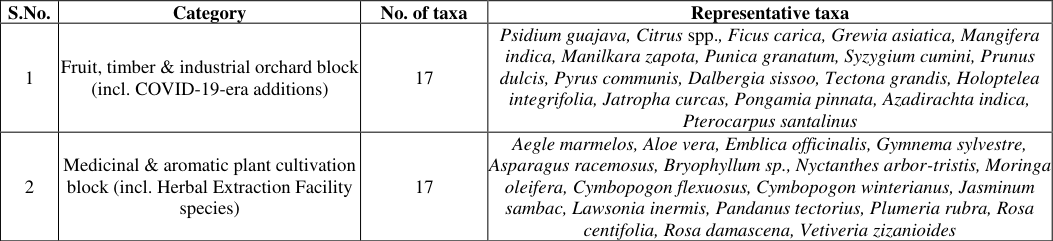 Table 1
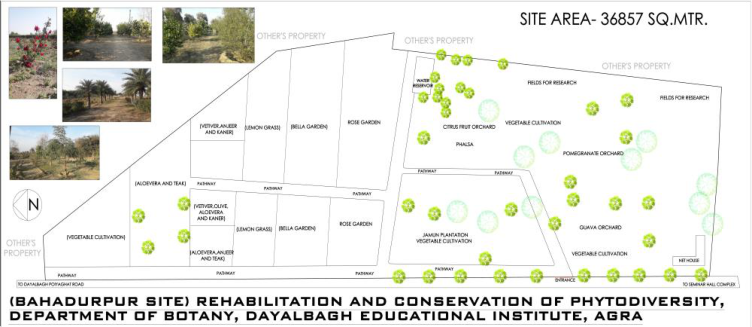 Figure 1
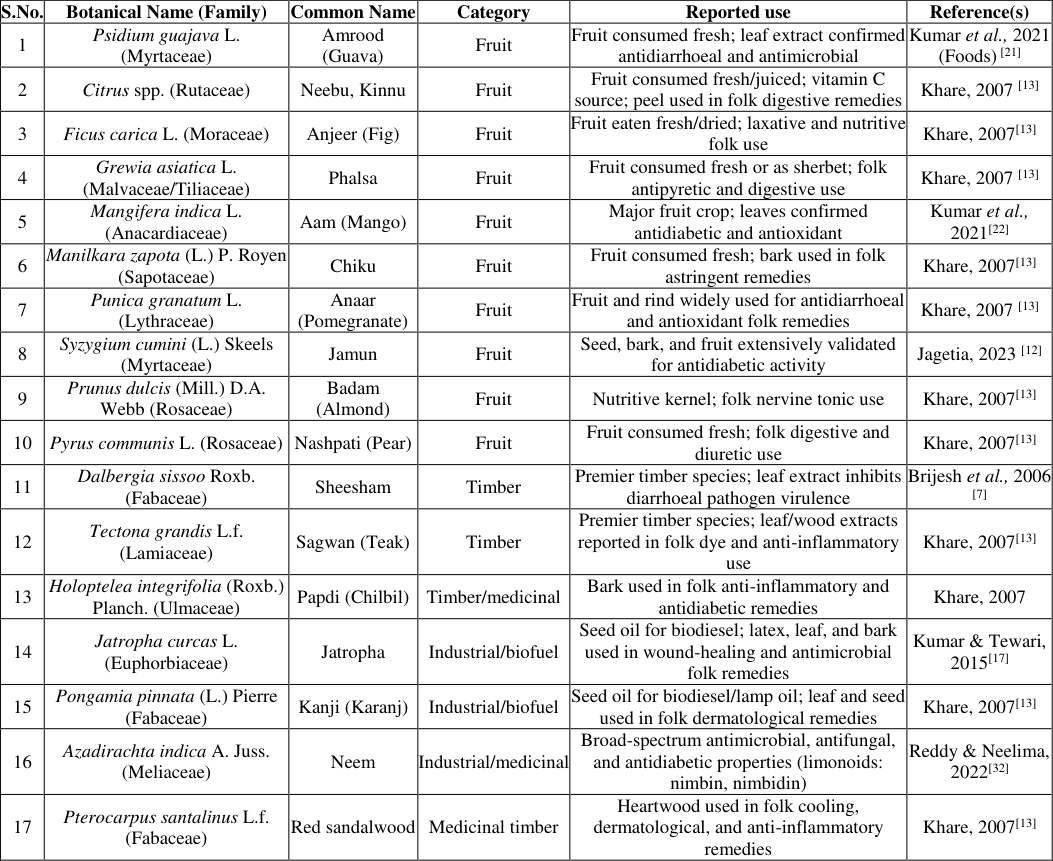 Table 2
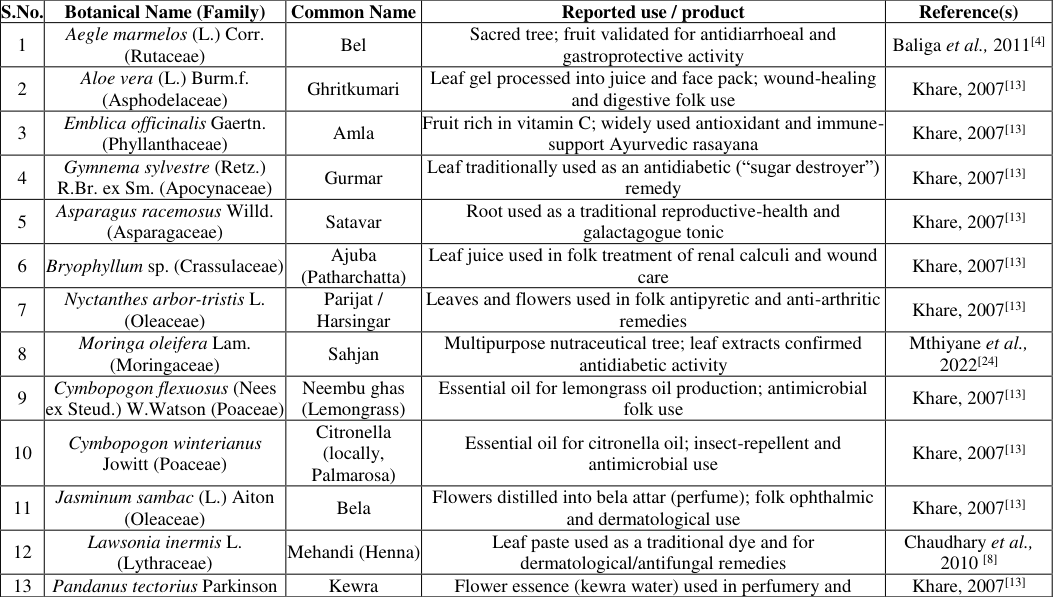 Table 3
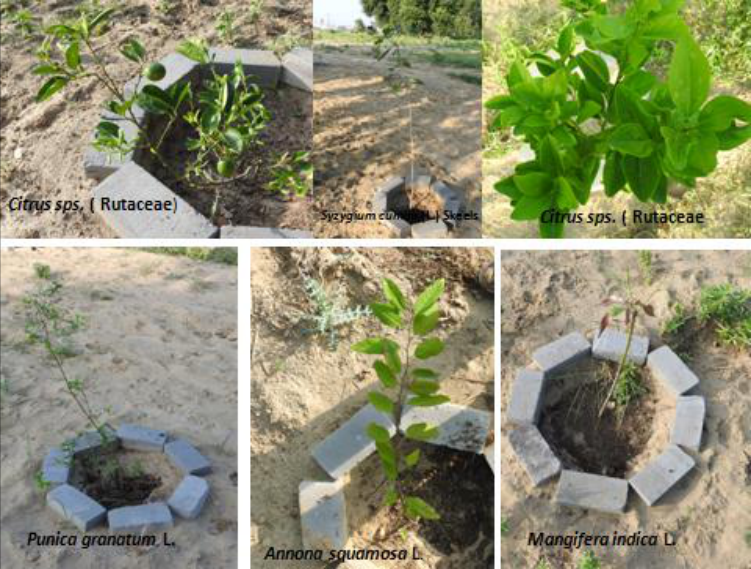 Figure 2
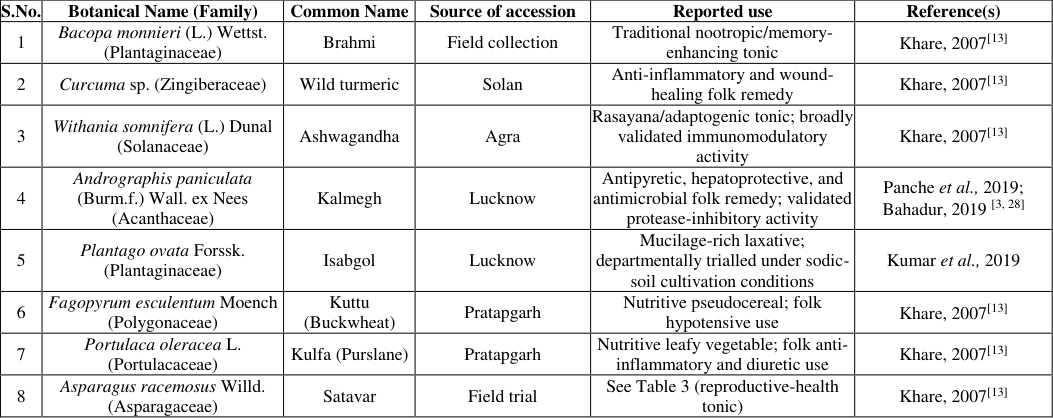 Table 4
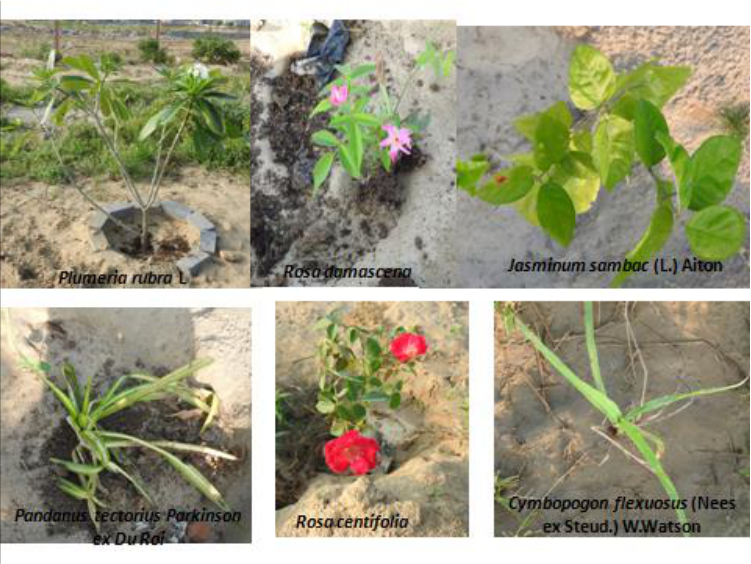 Figure 3
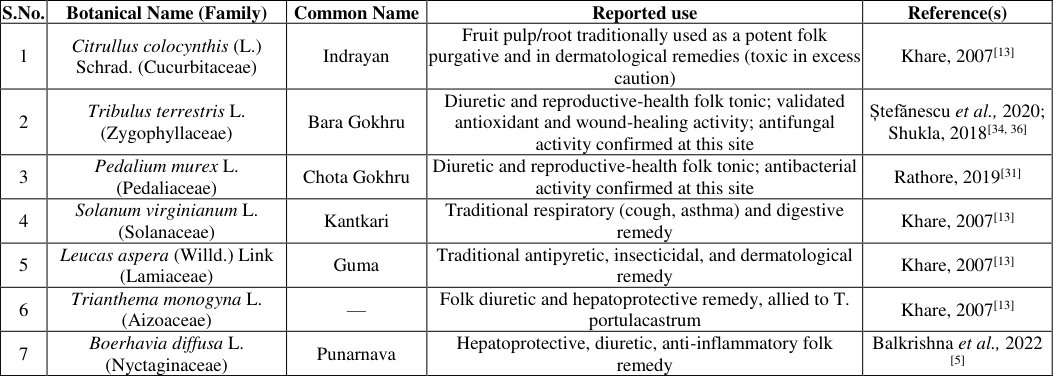 Table 5
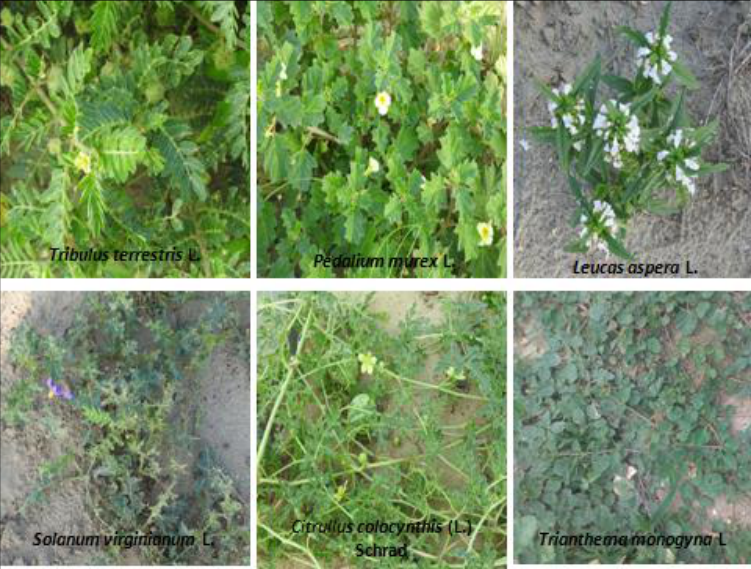 Figure 4
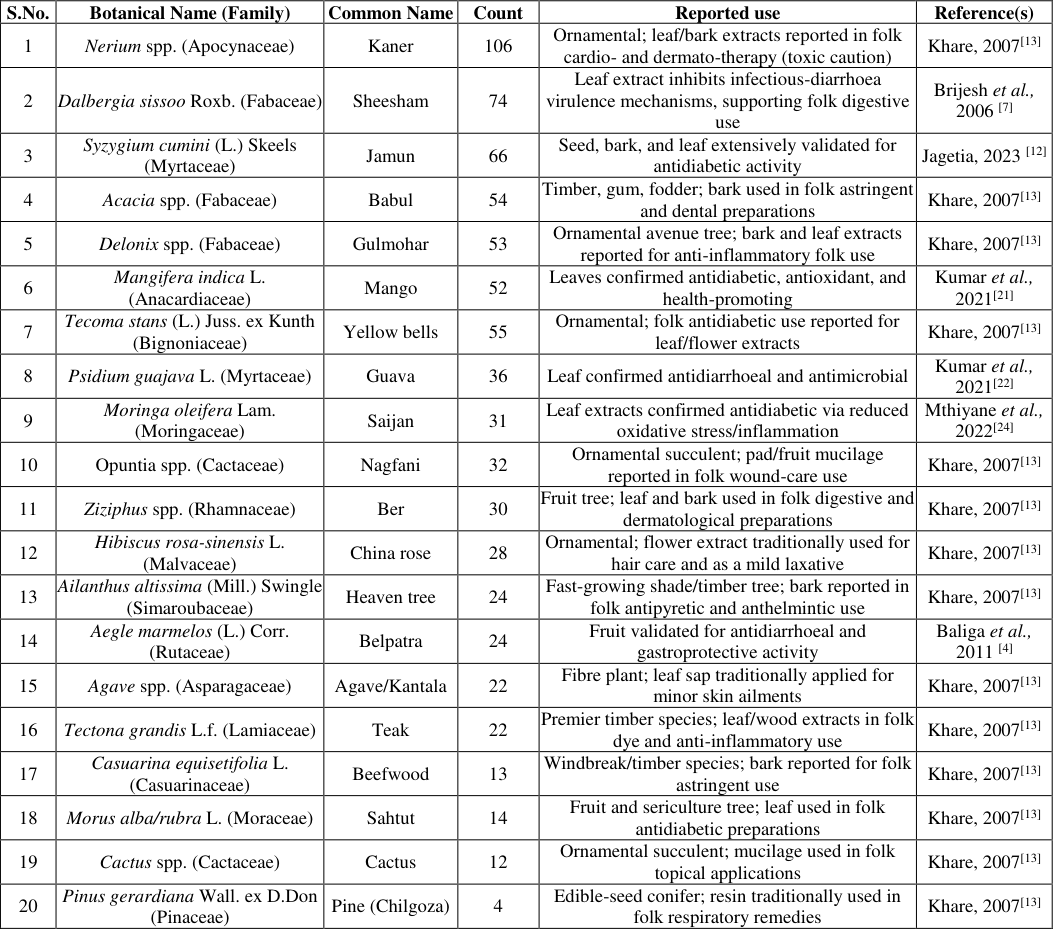 Table 6
 Table 7
Introduction
Rehabilitation of un-arable land, conservation of phytodiversity, and optimum utilization of land are essential for the sustainable development of natural resources and, ultimately, for human survival on the green planet Earth. Rapid urbanization, pollution, and other anthropogenic pressures have considerably degraded terrestrial ecosystems in and around Indian cities, leading to loss of phytodiversity and of the zoo-diversity dependent upon it; several once-common plant species representing important genetic and ethnobotanical wealth have been lost from the wider landscape in recent decades. With this concern in view, a team from the Department of Botany, Dayalbagh Educational Institute (DEI), Agra, initiated a Rehabilitation and Conservation of Phytodiversity programme near Bahadurpur village, Dayalbagh, in 2017. The experimental site, spread over approximately 9 acres (36,857 m²), has since been developed for two complementary purposes. The first is the rehabilitation of originally unarable land through the plantation and commercial cultivation of economically important fruit, timber, industrial, medicinal, and aromatic plant species, supported by a Herbal Extraction Facility in which undergraduate students of B.Sc. (Applied Botany Science) and B.Voc. (Agriculture Technology) learn the development of herbal products such as rose water, aloe vera juice, rose petal powder, ready-to-use rose and aloe vera face packs, rose petal jam (gulkand), and bela attar (perfume), from plants grown on site. The second is the insitu conservation of naturally occurring wild medicinal plant species described by the Department as "the wealth of Agra" several of which are now reported to occur only at this site and its immediate vicinity, and for which local herbalists are known to visit the site to collect material. The site additionally functions as a "lab on land" in which M.Sc. Botany students study local phytodiversity and ecology. A further, COVID-19-era (2020-21) phase of new plantation expanded the fruit, timber, industrial, medicinal, and aromatic collections at Bahadurpur, adding species such as Prunus dulcis (almond) and Pyrus communis (pear) to the orchard block, Pterocarpus santalinus (red sandalwood) to the medicinal collection, and Vetiveria zizanioides to the aromatic collection, while establishing Ficus religiosa as a keystone avenue species; micro-plots were also prepared for vegetable cultivation (sponge gourd, bitter gourd, bottle gourd, apple gourd/tinda, pumpkin, and lady's finger) as part of the drive for optimum land-resource utilization during a period of disrupted regular teaching activity. This institutional initiative builds on a long-standing departmental and individual research programme in regional ethnobotany. Earlier ethnobotanical surveys from the wider Agra region documented naturalised medicinal herbs and shrubs (Tiwari, 2016), phytochemical profiles of native herbaceous species of Agra city (Pandith, 2012) [29] , and locally important flora of another urban green space, Paliwal Park (Ojha, 2019) [27] , while related environmental studies examined Agra's pollen calendar (Chauhan, 2006), the phytoplanktonic diversity of Kitham Lake (Tiwari & Chauhan, 2005) [9,37,38] , invasive alien flora of the Soor Sarovar Bird Sanctuary (Wagh, 2016) [39] , and plant responses to roadside dust pollution (Rupnarayan, 2017) [33] . An established research record in Indian ethnobotany, including documentation of Tharu tribal ethnophytotherapeutic practices in the Terai belt of north-eastern Uttar Pradesh and across the Indo-Nepal border (Kumar, 2004; Kumar et al., 2003a, 2003b; Kumar & Tewari, 2005) [14] , ethnomedicinal surveys of the Ayodhya region of Faizabad district (Kumar, Tewari, & Tripathi, 2003), and a comprehensive review of the origin, distribution, ethnobotany, and pharmacology of Jatropha curcas (Kumar & Tewari, 2015) [17,18,19,20] , a species itself under commercial cultivation at the Bahadurpur site. Several M.Sc. dissertations supervised at the Department have additionally evaluated the antibacterial or antifungal activity of species conserved at this very site, including Pedalium murex (Rathore, 2019), Tribulus terrestris (Shukla, 2018), and Andrographis paniculata (Bahadur, 2019) [3,31,34] . Despite this substantial body of related work, the Bahadurpur site's own combined floristic composition spanning its commercial rehabilitation plantings, its conserved wild medicinal flora, and the wider spontaneous and cultivated flora recorded across the site had not previously been compiled into a single, systematically documented and genuinely cited checklist. The specific objectives of the present paper were therefore to: (i) describe the functional zonation of the Bahadurpur site and its rehabilitation and conservation design; (ii) compile a complete floristic checklist spanning the commercial (fruit, timber, industrial, medicinal, aromatic) cultivation blocks, the under-screening trial accessions, the site-specific conserved wild medicinal flora, and the wider avenue, ornamental, weed, grass, and vegetable-plot flora recorded across the site; (iii) record, where available, population counts of planted avenue and orchard trees; and (iv) compile and critically cite the ethnobotanical and economic utilization of the recorded taxa, cross-validated wherever possible against the Department's own published ethnobotanical research and site-linked dissertations.
Study Area
The Bahadurpur Site Biodiversity Park is located near Bahadurpur village, Dayalbagh, on the northern periphery of Agra city, Uttar Pradesh, India bounded by the Dayalbagh Poiyaghat road on one side and the Seminar Hall Complex of Dayalbagh Educational Institute on the other (Figure 1). The site covers a mapped area of 36,857 m² (approximately 9 acres) and is laid out in a series of rectangular cultivation blocks separated by internal pathways radiating from a single entrance. As shown in the departmental site plan (Figure 1), the site is organised into a rehabilitation zone, comprising vegetable-cultivation plots, Aloe vera-Teak and Aloe vera-Anjeer-Teak blocks, Vetiver-Olive-Aloe vera-Kaner blocks, lemongrass blocks, a Bela (Jasminum sambac) garden, rose gardens, a Jamun plantation/vegetable-cultivation block, a citrus fruit orchard, a Phalsa block, a guava orchard, and a pomegranate orchard, together with a water reservoir and a net house; and a conservation zone comprising fields reserved for research and the naturally occurring wild flora they support. The two zones directly correspond to the rehabilitation and conservation functions described in Section 1.
Materials and Methods
The present documentation combines three complementary data sources. First, the Department's own planting and management records for the commercial rehabilitation blocks (fruit, timber, industrial, medicinal, and aromatic plant cultivation, and the COVID-19-era expansion plantings) were compiled, including species identity, vernacular name, and cultivation block. Second, a complete walkover floristic enumeration of the wider site was carried out, recording every planted avenue/orchard tree (with an approximate population count obtained by direct counting where feasible), spontaneously occurring ("wild") herbaceous flora and grasses, and the cultivated vegetable micro-plots, following standard field identification against regional flora literature. Third, the site-specific conserved wild medicinal species explicitly documented by the Department as being of particular local rarity ("the wealth of Agra") were recorded separately, together with the Department's field observation that local herbalists visit the site to collect certain of these species. Reported ethnobotanical and economic uses for all recorded taxa were then compiled and cited from the published pharmacological and ethnobotanical literature, retrieved through targeted searches of PubMed, Scopus, and Google Scholar, with priority given to the Department's own published ethnobotanical research output and to site-linked M.Sc. dissertations where directly applicable; where no specific recent primary source could be identified for a taxon (chiefly ornamental species identified only to genus level), the reported use is drawn from Khare (2007) [13] , a standard peer-reviewed compendium of Indian medicinal plants.
Results and Discussion
Results and Discussion
Site zonation and the rehabilitation-conservation design:
The Bahadurpur site's layout (Figure 1) directly embodies its dual rehabilitation-conservation mandate.
Commercial cultivation blocks (orchards, medicinal and aromatic plant beds, vegetable plots) occupy the majority of the mapped area and are arranged along the internal pathway network for ease of access and irrigation from the central water reservoir, while fields explicitly reserved for research occupy the eastern margin of the site, adjoining the boundary with neighbouring properties, and support the spontaneous wild flora targeted for in-situ conservation. This spatial separation of intensively managed commercial blocks from lightly managed research/conservation fields is consistent with the Department's stated rationale of combining productive land rehabilitation with the protection of naturally occurring, locally rare medicinal flora on a single site.
Overall floristic composition:
A total of 160 plant taxa are documented at the Bahadurpur site (Table 1), spanning the commercial rehabilitation blocks (fruit, timber, industrial, medicinal, and aromatic cultivation, including the COVID-19-era expansion), a set of under-screening trial medicinal accessions, seven site-specific conserved wild medicinal species, twenty planted avenue/orchard trees with recorded population counts, a further twenty wild herbaceous taxa of ethnomedicinal significance, a broader set of other planted ornamentals and structural species, wild grasses, and a cultivated vegetable micro-plot. Fabaceae, Poaceae, Asteraceae, Apocynaceae, Moraceae, and Rutaceae emerged as the most species-rich families across the site as a whole. [21] 2 Citrus spp. (Rutaceae) Neebu, Kinnu Fruit Fruit consumed fresh/juiced; vitamin C source; peel used in folk digestive remedies Khare, 2007 [13] 3
Fruit eaten fresh/dried; laxative and nutritive folk use Khare, 2007 [13] 4 Grewia asiatica L. (Malvaceae/Tiliaceae) Phalsa Fruit Fruit consumed fresh or as sherbet; folk antipyretic and digestive use Khare, 2007 [13] 5 Mangifera indica L. (Anacardiaceae) Aam (Mango) Fruit Major fruit crop; leaves confirmed antidiabetic and antioxidant Kumar et al., 2021 [22] 6 Manilkara zapota (L.) P. Royen (Sapotaceae) Chiku Fruit Fruit consumed fresh; bark used in folk astringent remedies Khare, 2007 [13] 7 Punica granatum L. (Lythraceae) Anaar (Pomegranate) Fruit Fruit and rind widely used for antidiarrhoeal and antioxidant folk remedies Khare, 2007 [13] 8 Syzygium cumini (L.) Skeels (Myrtaceae) Jamun Fruit Seed, bark, and fruit extensively validated for antidiabetic activity Jagetia, 2023 [12] 9 Prunus dulcis (Mill.) D.A. Webb (Rosaceae) Badam (Almond) Fruit Nutritive kernel; folk nervine tonic use Khare, 2007 [13] 10 Pyrus communis L. (Rosaceae) Nashpati (Pear) Fruit Fruit consumed fresh; folk digestive and diuretic use Khare, 2007 [13] 11 Kumar & Tewari, 2015 [17] 15 Pongamia pinnata (L.) Pierre (Fabaceae) Kanji (Karanj) Industrial/biofuel Seed oil for biodiesel/lamp oil; leaf and seed used in folk dermatological remedies Khare, 2007 [13] 16 Azadirachta indica A. Juss. (Meliaceae) Neem Industrial/medicinal Broad-spectrum antimicrobial, antifungal, and antidiabetic properties (limonoids: nimbin, nimbidin)
Reddy & Neelima, 2022 [32] 17 Pterocarpus santalinus L.f. (Fabaceae) Red sandalwood Medicinal timber Heartwood used in folk cooling, dermatological, and anti-inflammatory remedies Khare, 2007 [13] 2 Aloe vera (L.) Burm.f. (Asphodelaceae) Ghritkumari Leaf gel processed into juice and face pack; wound-healing and digestive folk use Khare, 2007 [13] 3 Emblica officinalis Gaertn. (Phyllanthaceae) Amla Fruit rich in vitamin C; widely used antioxidant and immunesupport Ayurvedic rasayana Khare, 2007 [13] 4 Gymnema sylvestre (Retz.) R.Br. ex Sm. (Apocynaceae) Gurmar Leaf traditionally used as an antidiabetic ("sugar destroyer") remedy Khare, 2007 [13] 5 Asparagus racemosus Willd.
(Asparagaceae) Satavar Root used as a traditional reproductive-health and galactagogue tonic Khare, 2007 [13] 6 Bryophyllum sp. (Crassulaceae) Ajuba (Patharchatta) Leaf juice used in folk treatment of renal calculi and wound care Khare, 2007 [13] 7
Nyctanthes arbor-tristis L.
Parijat / Harsingar
Leaves and flowers used in folk antipyretic and anti-arthritic remedies Khare, 2007 [13] 8 Moringa oleifera Lam. (Moringaceae) Sahjan Multipurpose nutraceutical tree; leaf extracts confirmed antidiabetic activity Mthiyane et al., 2022 [24] 9 Cymbopogon flexuosus (Nees ex Steud.) W.Watson (Poaceae)
Neembu ghas (Lemongrass)
Essential oil for lemongrass oil production; antimicrobial folk use Khare, 2007 [13] 10 Cymbopogon winterianus Jowitt (Poaceae) Citronella (locally, Palmarosa) Essential oil for citronella oil; insect-repellent and antimicrobial use Khare, 2007 [13] 11 Jasminum sambac (L.) Aiton (Oleaceae) Bela Flowers distilled into bela attar (perfume); folk ophthalmic and dermatological use Khare, 2007 [13] 12 [13] 15 Rosa centifolia L. (Rosaceae) Gulab (Rose) Petals processed into rose water, rose drink, powder, face pack, and gulkand Khare, 2007 [13] 16 [13] 2 Curcuma sp. (Zingiberaceae) Wild turmeric Solan Anti-inflammatory and woundhealing folk remedy Khare, 2007 [13] 3 Withania somnifera (L.) Dunal (Solanaceae) Ashwagandha Agra Rasayana/adaptogenic tonic; broadly validated immunomodulatory activity Khare, 2007 [13] 4
Andrographis paniculata (Burm.f.) Wall. ex Nees (Acanthaceae) [13] 7 Portulaca oleracea L. (Portulacaceae) Kulfa (Purslane) Pratapgarh Nutritive leafy vegetable; folk antiinflammatory and diuretic use Khare, 2007 [13] 8 Asparagus racemosus Willd. (Asparagaceae) Satavar Field trial See Table 3 (reproductive-health tonic) Khare, 2007 [13] 4.6 Conservation of wild medicinal flora "the wealth of Agra"
The conservation zone of the Bahadurpur site protects seven wild medicinal plant species explicitly identified by the Department as constituting part of "the wealth of Agra" (Table 5), several of which are reported to occur, in the local area, only at this site and its immediate vicinity. Local herbalists are known to visit the site specifically to collect Pedalium murex, Citrullus colocynthis, and Leucas aspera.
Two of these species have been the direct subject of sitelinked M.Sc. dissertation research at the Department: the antibacterial activity of Pedalium murex was evaluated by Rathore (2019) [31] , and the antifungal activity of Tribulus terrestris against phytopathogenic fungi was evaluated by Shukla (2018) [34] , providing locally generated pharmacological corroboration of the traditional uses of species conserved on this exact site. Fruit pulp/root traditionally used as a potent folk purgative and in dermatological remedies (toxic in excess caution)
Khare, 2007 [13] 2 Tribulus terrestris L.
(Zygophyllaceae) Bara Gokhru
Diuretic and reproductive-health folk tonic; validated antioxidant and wound-healing activity; antifungal activity confirmed at this site Ștefănescu et al., 2020; Shukla, 2018 [34,36] 3 Pedalium murex L.
(Pedaliaceae) Chota Gokhru Diuretic and reproductive-health folk tonic; antibacterial activity confirmed at this site Rathore, 2019 [31] 4 Solanum virginianum L.
(Solanaceae) Kantkari Traditional respiratory (cough, asthma) and digestive remedy Khare, 2007 [13] 5
Leucas aspera (Willd.) Link (Lamiaceae) Guma Traditional antipyretic, insecticidal, and dermatological remedy Khare, 2007 [13] 6 Trianthema monogyna L.
(Aizoaceae) -Folk diuretic and hepatoprotective remedy, allied to T. portulacastrum Khare, 2007 [13] 7 Boerhavia diffusa L.
COVID-19-era expansion and keystone-species planting
During the disrupted teaching period of the COVID-19 pandemic (2020-21), the Department used the Bahadurpur site for a further round of plantation aimed at optimum landresource utilization. In addition to the new orchard, timber, industrial, and medicinal/aromatic species listed in Tables 2 and 3, Ficus religiosa (Peepal) was established as a keystone avenue species, reflecting both its ecological value as a long-lived shade and shelter tree and its cultural and ethnomedicinal significance (bark and leaf extracts validated for antidiabetic and antimicrobial activity; Murugesu, Selamat, & Perumal, 2021) [25] . Micro-plots were also prepared for vegetable cultivation, adding sponge gourd, bitter gourd, bottle gourd, apple gourd (tinda), pumpkin, and lady finger to the site's existing vegetablecultivation programme (Section 4.10), demonstrating the flexible re-purposing of the rehabilitation zone for food Psidium guajava L. (Myrtaceae) Guava 36 Leaf confirmed antidiarrhoeal and antimicrobial Kumar et al., 2021 [22] 9 Moringa oleifera Lam.
Leaf extracts confirmed antidiabetic via reduced oxidative stress/inflammation Mthiyane et al., 2022 [24] 10 Opuntia spp. (Cactaceae) Nagfani 32 Ornamental succulent; pad/fruit mucilage reported in folk wound-care use Khare, 2007 [13] 11 Ziziphus spp. (Rhamnaceae) Ber 30 Fruit tree; leaf and bark used in folk digestive and dermatological preparations Khare, 2007 [13] 12 Hibiscus rosa-sinensis L.
(Malvaceae) China rose 28 Ornamental; flower extract traditionally used for hair care and as a mild laxative Khare, 2007 [13] 13
Ailanthus altissima (Mill.) Swingle (Simaroubaceae) Heaven tree 24 Fast-growing shade/timber tree; bark reported in folk antipyretic and anthelmintic use Khare, 2007 [13] 14 [13] 16 Tectona grandis L.f. (Lamiaceae) Teak 22 Premier timber species; leaf/wood extracts in folk dye and anti-inflammatory use Khare, 2007 [13] 17 Casuarina equisetifolia L. (Casuarinaceae) Beefwood 13 Windbreak/timber species; bark reported for folk astringent use Khare, 2007 [13] 18 Morus alba/rubra L. (Moraceae) Sahtut 14 Fruit and sericulture tree; leaf used in folk antidiabetic preparations Khare, 2007 [13] 19 Cactus spp. (Cactaceae) Cactus 12 Ornamental succulent; mucilage used in folk topical applications Khare, 2007 [13] 20 Pinus gerardiana Wall. ex D.Don (Pinaceae) Pine (Chilgoza) 4 Edible-seed conifer; resin traditionally used in folk respiratory remedies Khare, 2007 [13] 4.9 Additional wild herbaceous flora of ethnomedicinal significance Beyond the seven species specifically flagged as sitedefining conserved rarities (Table 5), a further twenty spontaneously occurring herbaceous taxa of established ethnomedicinal significance were recorded across the wider site (Table 7), including Achyranthes aspera, Tribulus terrestris (also listed in Table 5), Calotropis procera, and Euphorbia hirta, each supported by dedicated recent pharmacological reviews. [5] 3 Achyranthes aspera L. (Amaranthaceae) Chirchita Diuretic, antimicrobial, and anti-inflammatory folk remedy; validated network-pharmacology profile Sinan et al., 2020 [35] 4 Calotropis procera (Aiton) Madar Latex traditionally used topically for skin conditions Pathania et al., 2020 [30] ~ [13] 7 Eclipta prostrata (L.) L.
| S.No. | Botanical Name (Family) | Common Name | Traditionally reported use | Reference(s) |
|---|---|---|---|---|
| 1 | Phyllanthus niruri L. (Phyllanthaceae) | Bhumi amla | Hepatoprotective; traditional treatment of jaundice and liver disorders | Balkrishna et al., 2022 [5] |
| 2 | Solanum nigrum L. (Solanaceae) | Makoi | Hepatoprotective and anti-inflammatory folk use | Balkrishna et al., 2022 [5] |
| 3 | Achyranthes aspera L. (Amaranthaceae) | Chirchita | Diuretic, antimicrobial, and anti-inflammatory folk remedy; validated network-pharmacology profile | Sinan et al., 2020[35] |
| 4 | Calotropis procera (Aiton) | Madar | Latex traditionally used topically for skin conditions | Pathania et al., 2020[30] |
Table text extracted from the original PDF; superscript letters are shown inline. The original table image is below.
View original table image
(Asteraceae) Safed bhangra Hepatoprotective and hair-tonic folk use; validated dermatological bioactivity Myo et al., 2023 [26] 8 Argemone mexicana L. (Papaveraceae) Pili kateri Folk dermatological and anthelmintic remedy (toxic sapcaution) Khare, 2007 [13] 9 Barleria prionitis L. (Acanthaceae) Vajradanti Traditional dental and oral-hygiene remedy Khare, 2007 [13] 10 Abutilon indicum (L.) Sweet (Malvaceae) Kangi Anti-inflammatory, antipyretic, and diuretic folk remedy Dharuman et al., 2023 [11] 11 Plumbago zeylanica L.
(Plumbaginaceae) Chitrak Digestive-stimulant folk remedy (root) Khare, 2007 [13] 12 Vitex negundo L.
(Lamiaceae) Nirgundi Analgesic and anti-inflammatory folk remedy; comprehensively validated genus-wide pharmacology Das et al., 2022 [10] 13 Cyperus rotundus L.
(Cyperaceae) Motha Digestive and antipyretic folk remedy (tuber) Khare, 2007 [13] 14 Sida cordifolia L.
(Malvaceae) Country mallow Anti-inflammatory folk tonic Khare, 2007 [13] 15
Senna occidentalis (L.) Link (Fabaceae) Kasunda Traditional laxative and dermatological remedy Khare, 2007 [13] 16 Datura spp. (Solanaceae) Dhatura Analgesic folk use (external onlyhighly toxic if ingested) Khare, 2007 [13] 17 Cannabis sativa L. (Cannabaceae) Marijuana (wild) Historically used in folk analgesic and digestive preparations (regulated substance) Khare, 2007 [13] 18 Jatropha curcas L.
Jatropha (wildgrowing individuals) Industrial/biofuel and wound-healing use Kumar & Tewari, 2015 [17] 19 Cassia fistula L. (Fabaceae) Amaltas Pod pulp used as a traditional mild laxative Khare, 2007 [13] 20 Tribulus terrestris L.
Chhota/Bara gokhru Diuretic and reproductive-health tonic; antifungal activity confirmed at this site Ștefănescu et al., 2020; Shukla, 2018 [34,36]
The cultivated vegetable micro-plot
The rehabilitation zone additionally maintains a cultivated vegetable micro-plot, expanded during the COVID-
Limitations
This documentation combines Departmental planting/management records (for the named commercial cultivation blocks) with a qualitative, photographic-voucher field enumeration (for the wider avenue, ornamental, weed, grass, and vegetable-plot flora); it is not a quantitative, plotbased vegetation survey and does not report density, cover, or yield data. Reported uses for taxa identified only to genus level in the field (e.g., Nerium spp., Acacia spp., Ficus virens complex, Ipomoea sp.) are drawn from the wider published literature on the genus, or from Khare (2007) [13] , rather than from species-specific confirmation at this exact site. The conserved wild medicinal species reported in Table 5 as occurring "only at this site and nearby areas" reflect the Department's own field observation and have not been independently verified against a district-wide distribution survey within the scope of the present paper. Finally, the herbal products described in Section 4.4 (rose water, aloe vera juice, gulkand, bela attar, etc.) are training/teaching outputs of the Herbal Extraction Facility and are not represented here as clinically validated pharmaceutical products.
Conclusion
Since 2017, the Department of Botany, Dayalbagh Educational Institute, has developed the 9-acre Bahadurpur site into a dual-purpose facility combining the rehabilitation of originally un-arable land, through commercial cultivation of fruit, timber, industrial, medicinal, and aromatic plant species and a functioning Herbal Extraction Facility, with the in-situ conservation of seven wild medicinal plant species constituting "the wealth of Agra," two of which (Pedalium murex and Tribulus terrestris) have been independently validated for antibacterial and antifungal activity through site-linked M.Sc. dissertation research. The present paper compiles, for the first time, a complete floristic checklist of 160 plant taxa across the site's commercial, conservation, and wider spontaneous/cultivated flora, including the COVID-19-era (2020-21) expansion that introduced almond, pear, and red sandalwood to the orchard and medicinal collections and established Ficus religiosa as a keystone avenue species. The Bahadurpur site thus demonstrates, at institutional scale, that productive land rehabilitation and in-situ wild-flora conservation can be pursued jointly on a single site, while simultaneously serving as a "lab on land" for student teaching and a source of genuine, locally generated ethnopharmacological research. Continued digital documentation of the site (a living, updatable checklist and digital herbarium), further phytochemical validation of the conserved wild species, and expansion of the herbal product development pipeline are recommended as priorities for the programme going forward.
Acknowledgement
AcknowledgementThe authors gratefully acknowledge the Director, Dayalbagh Educational Institute (Deemed to be University), Agra.
Figures and tables from the paper
| S.No. | Botanical Name (Family) | Common Name | Count | Reported use | Reference(s) |
|---|---|---|---|---|---|
| 1 | Nerium spp. (Apocynaceae) | Kaner | 106 | Ornamental; leaf/bark extracts reported in folk cardio- and dermato-therapy (toxic caution) | Khare, 2007[13] |
| 2 | Dalbergia sissoo Roxb. (Fabaceae) | Sheesham | 74 | Leaf extract inhibits infectious-diarrhoea virulence mechanisms, supporting folk digestive use | Brijesh et al., 2006 [7] |
| 3 | Syzygium cumini (L.) Skeels (Myrtaceae) | Jamun | 66 | Seed, bark, and leaf extensively validated for antidiabetic activity | Jagetia, 2023 [12] |
| 4 | Acacia spp. (Fabaceae) | Babul | 54 | Timber, gum, fodder; bark used in folk astringent and dental preparations | Khare, 2007[13] |
| 5 | Delonix spp. (Fabaceae) | Gulmohar | 53 | Ornamental avenue tree; bark and leaf extracts reported for anti-inflammatory folk use | Khare, 2007[13] |
| 6 | Mangifera indica L. (Anacardiaceae) | Mango | 52 | Leaves confirmed antidiabetic, antioxidant, and health-promoting | Kumar et al., 2021[21] |
| 7 | Tecoma stans (L.) Juss. ex Kunth (Bignoniaceae) | Yellow bells | 55 | Ornamental; folk antidiabetic use reported for leaf/flower extracts | Khare, 2007[13] |
| 8 | Psidium guajava L. (Myrtaceae) | Guava | 36 | Leaf confirmed antidiarrhoeal and antimicrobial | Kumar et al., 2021[22] |
| 9 | Moringa oleifera Lam. (Moringaceae) | Saijan | 31 | Leaf extracts confirmed antidiabetic via reduced oxidative stress/inflammation | Mthiyane et al., 2022[24] |
| 10 | Opuntia spp. (Cactaceae) | Nagfani | 32 | Ornamental succulent; pad/fruit mucilage reported in folk wound-care use | Khare, 2007[13] |
| 11 | Ziziphus spp. (Rhamnaceae) | Ber | 30 | Fruit tree; leaf and bark used in folk digestive and dermatological preparations | Khare, 2007[13] |
| 12 | Hibiscus rosa-sinensis L. (Malvaceae) | China rose | 28 | Ornamental; flower extract traditionally used for hair care and as a mild laxative | Khare, 2007[13] |
| 13 | Ailanthus altissima (Mill.) Swingle (Simaroubaceae) | Heaven tree | 24 | Fast-growing shade/timber tree; bark reported in folk antipyretic and anthelmintic use | Khare, 2007[13] |
| 14 | Aegle marmelos (L.) Corr. (Rutaceae) | Belpatra | 24 | Fruit validated for antidiarrhoeal and gastroprotective activity | Baliga et al., 2011 [4] |
| 15 | Agave spp. (Asparagaceae) | Agave/Kantala | 22 | Fibre plant; leaf sap traditionally applied for minor skin ailments | Khare, 2007[13] |
| 16 | Tectona grandis L.f. (Lamiaceae) | Teak | 22 | Premier timber species; leaf/wood extracts in folk dye and anti-inflammatory use | Khare, 2007[13] |
| 17 | Casuarina equisetifolia L. (Casuarinaceae) | Beefwood | 13 | Windbreak/timber species; bark reported for folk astringent use | Khare, 2007[13] |
| 18 | Morus alba/rubra L. (Moraceae) | Sahtut | 14 | Fruit and sericulture tree; leaf used in folk antidiabetic preparations | Khare, 2007[13] |
| 19 | Cactus spp. (Cactaceae) | Cactus | 12 | Ornamental succulent; mucilage used in folk topical applications | Khare, 2007[13] |
| 20 | Pinus gerardiana Wall. ex D.Don (Pinaceae) | Pine (Chilgoza) | 4 | Edible-seed conifer; resin traditionally used in folk respiratory remedies | Khare, 2007[13] |
Table text extracted from the original PDF; superscript letters are shown inline. The original table image is below.
View original table image
References
27 in the original paper- Dharuman A, Muthusamy P, Radha R, Rubikaa G. Review on Abutilon indicum An update. International Journal of Pharmacy & Pharmaceutical Research (IJPPR.Human). 2023;26(4):95-113.
- Jagetia GC. Antidiabetogenic action of jamun Syzygium cumini Skeels: A review. International Journal of Complementary & Alternative Medicine. 2023;16(2):88-97. DOI:10.15406/ijcam.2023.16.00636.
- Khare CP. Indian medicinal plants: An illustrated dictionary. Springer; 2007.
- Kumar A, Chaturvedy VK, Tewari SK, Tewari DD. Effect of fly ash and press mud on growth, yield and quality parameters of Plantago ovata cultivated in sodic soil. In: Local Environmental Change have Global Effect. Balrampur: MLK PG College; 2019. p. 315-331. ISBN:978-93-88838-38-2.
- Kumar A, Tewari DD. Folk botany of Achyranthes aspera in Terai belt of north eastern U.P. Vegetos. 2005;18:89-92.
- Kumar A, Tewari SK. Origin, distribution, ethnobotany and pharmacology of Jatropha curcas. Research Journal of Medicinal Plant. 2015;9:48-59. DOI:10.3923/rjmp.2015.48.59.
- Kumar A, Tewari DD, Pande YN. Ethnophytotherapeutics among Tharus of Beerpur-Semra forest range of Balrampur district (U.P.). Journal of Economic and Taxonomic Botany. 2003;27(4):839-844.
- Kumar A, Tewari DD, Pande YN. Indigenous and traditional herbal medicines from Gonda district of Terai belt of north eastern Uttar Pradesh. Journal of Nature Conservation. 2003;15(1):261-268.
- Kumar A, Tewari DD, Tripathi S. Herbal medicines from Ayodhya region of Faizabad district: An ethnophytopharmacological survey. Journal of Living World. 2003;10(1):26-32.
- Kumar M, Saurabh V, Tomar M, Hasan M, Changan S, Sasi M, et al. Mango (Mangifera indica L.) leaves: Nutritional composition, phytochemical profile, and health-promoting bioactivities. Antioxidants. 2021;10(2):299. DOI:10.3390/antiox10020299.
- Kumar M, Tomar M, Amarowicz R, Saurabh V, Nair MS, Maheshwari C, et al. Guava (Psidium guajava L.) leaves: Nutritional composition, phytochemical profile, and health-promoting bioactivities. Foods. 2021;10(4):752. DOI:10.3390/foods10040752.
- Lim XY, Chan JSW, Japri N, Lee JC, Tan TYC. Carica papaya L. leaf: A systematic scoping review on biological safety and herb-drug interactions. EvidenceBased Complementary and Alternative Medicine. 2021;2021:5511221. DOI:10.1155/2021/5511221.
- Mthiyane FT, Dludla PV, Ziqubu K, Mthembu SXH, Muvhulawa N, Hlengwa N, et al. A review on the antidiabetic properties of Moringa oleifera extracts: Focusing on oxidative stress and inflammation as main therapeutic targets. Frontiers in Pharmacology. 2022;13:940572. DOI:10.3389/fphar.2022.940572.
- Murugesu S, Selamat J, Perumal V. Phytochemistry, pharmacological properties, and recent applications of Ficus benghalensis and Ficus religiosa. Plants. 2021;10(12):2749. DOI:10.3390/plants10122749.
- Myo H, Liana D, Phanumartwiwath A. Unlocking therapeutic potential: Comprehensive extraction, profiling, and pharmacological evaluation of bioactive compounds from Eclipta alba (L.) Hassk. for dermatological applications. Plants. 2023;13(1):33. DOI:10.3390/plants13010033.
- Ojha J. Description of some important plant species at Paliwal Park. International Journal of Interdisciplinary Research. 2019;8:2348-6775.
- Panche AN, Chandra S, Diwan AD. Multi-target βprotease inhibitors from Andrographis paniculata: In silico and in vitro studies. Plants. 2019;8:E231.
- Pandith JI. Phytochemical screening of certain plant species of Agra city. Drug Delivery and Therapeutics. 2012;2:89-97.
- Pathania S, Bansal P, Gupta P, Rawal RK. Genus Calotropis: A hub of medicinally active phytoconstituents. Current Traditional Medicine. 2020;6(4):312-327. DOI:10.2174/2215083805666190619095933.
- Rathore R. Evaluation of antibacterial activity of Pedalium murex L. [M.Sc. dissertation]. Agra: Department of Botany, Dayalbagh Educational Institute; 2019.
- Reddy IVS, Neelima P. Neem (Azadirachta indica): A review on medicinal Kalpavriksha. International Journal of Economic Plants. 2022;9(1):59-63. DOI:10.23910/2/2021.0437d.
- Rupnarayan. Responses in plants exposed to dust pollution. Horticulture International Journal. 2017;1(2):53-56.
- Sinan KI, Zengin G, Zheleva-Dimitrova D, Etienne OK, Mahomoodally MF, Bouyahya A, et al. Qualitative phytochemical fingerprint and network pharmacology investigation of Achyranthes aspera Linn. extracts. Molecules. 2020;25(8):1973. DOI:10.3390/molecules25081973.
- Ștefănescu R, Tero-Vescan A, Negroiu A, Aurică E, Vari CE. A comprehensive review of the phytochemical, pharmacological, and toxicological properties of Tribulus terrestris L. Biomolecules. 2020;10(5):752. DOI:10.3390/biom10050752.
- Tiwari A. Ethnomedicinal study of some naturalized herbs and shrubs growing in Agra district in India. Biological Science. 2016;222:163-167.
- Tiwari A, Chauhan SVS. Seasonal phytoplanktonic diversity of Kitham Lake, Agra. Environmental Biology. 2005;27(1):35-38.
- Wagh VV. Diversity of invasive alien plants in Soor Sarovar Bird Sanctuary (SSBS), Keetham, Agra, India. International Journal of Current Research in Biosciences and Plant Biology. 2016;3:62-69.