
Research article · 2026 · Full text
International Journal of Agriculture and NutritionOptimization of sonication-assisted Agrobacterium-mediated transformation for enhanced explant recovery and regeneration in soybean (Glycine Max L.)
Volume 8(9) · Pages 91–94 · DOI: 10.33545/26646064.2026.v8.i9b.749 ↗
Research areasPlant tissue culture and regenerationTransgenic Plants and ApplicationsCRISPR and Genetic Engineering
Abstract
Author-writtenThis study optimizes a sonication-assisted Agrobacterium-mediated transformation protocol for the soybean genotype PDKV Amba. The research aimed to efficiently deliver the pDIRECT_22A vector, which targets the β-conglycinin allergen using CRISPR/Cas9 technology. Evaluated co-cultivation durations of 2, 4, and 6 days following a 30-second sonication treatment at 50Hz. While the 2 day period showed the highest initial germination (92%) and the 6 day period yielded maximum survival on selection media (90.47%), the 4 day co-cultivation proved optimal. It achieved the highest overall recovery rate (39.07%) and produced the most viable plants, successfully balancing Agrobacterium infection with explant viability.
Summary
Source-checkedPlain-language reading of the full paper, prepared with AI and checked against the text. Each point links to the authors' own words.
Why it matters
- Soybean is a globally significant crop used extensively for oil and plant-based proteins for human and animal consumption. View evidence ↗
- Genetic transformation in soybean is challenging because the crop is recalcitrant, often resulting in low efficiency and the formation of chimeric plants. View evidence ↗
- Agrobacterium-mediated transformation is preferred for delivering targeted genes due to its accuracy and efficiency. View evidence ↗
The question
- The study aimed to optimize a sonication-assisted Agrobacterium-mediated transformation protocol in soybean genotype PDKV Amba to deliver a CRISPR/Cas9 vector targeting the β-conglycinin allergen. View evidence ↗
What they did
- The researchers used the PDKV Amba (AMS-100-39) soybean genotype, which is characterized by high yield, high protein content, and resistance to charcoal rot. View evidence ↗
- The agro-infection process utilized sonication at a frequency of 50Hz for a duration of 30 seconds. View evidence ↗
- The study tested three different co-cultivation durations: 2, 4, and 6 days. View evidence ↗
- Explants were placed on a pre-selection medium consisting of MS basal medium with MES buffer, cefotaxime, 6BAP, and GA₃. View evidence ↗
What they found
- The 2-day co-cultivation period resulted in the highest initial germination rate at 92.0%. View evidence ↗
- The 6-day co-cultivation period yielded the highest survival rate on Selection I medium at 90.47%. View evidence ↗
- The 4-day co-cultivation treatment achieved the highest overall recovery rate of 39.07%, significantly outperforming the 2-day (11.70%) and 6-day (18.79%) treatments. View evidence ↗
What it means
- The authors concluded that a 4-day co-cultivation period is optimal for the PDKV Amba genotype as it balances Agrobacterium interaction with explant recovery. View evidence ↗
- The optimized protocol serves as a basis for delivering the pDIRECT_22A construct to target the β-conglycinin trait via CRISPR/Cas9. View evidence ↗
- The authors state that further optimization of sonication parameters and co-cultivation duration is needed to improve efficiency and reproducibility. View evidence ↗
Visual summary
3 visualsIllustrations explain the paper; charts are replotted from the paper's own table values.
Comparison of Co-cultivation Durations
AI-generated conceptual illustration (soybean (Glycine Max L.) cotyledon explants). It explains the idea and does not show study data.
View source evidence ↗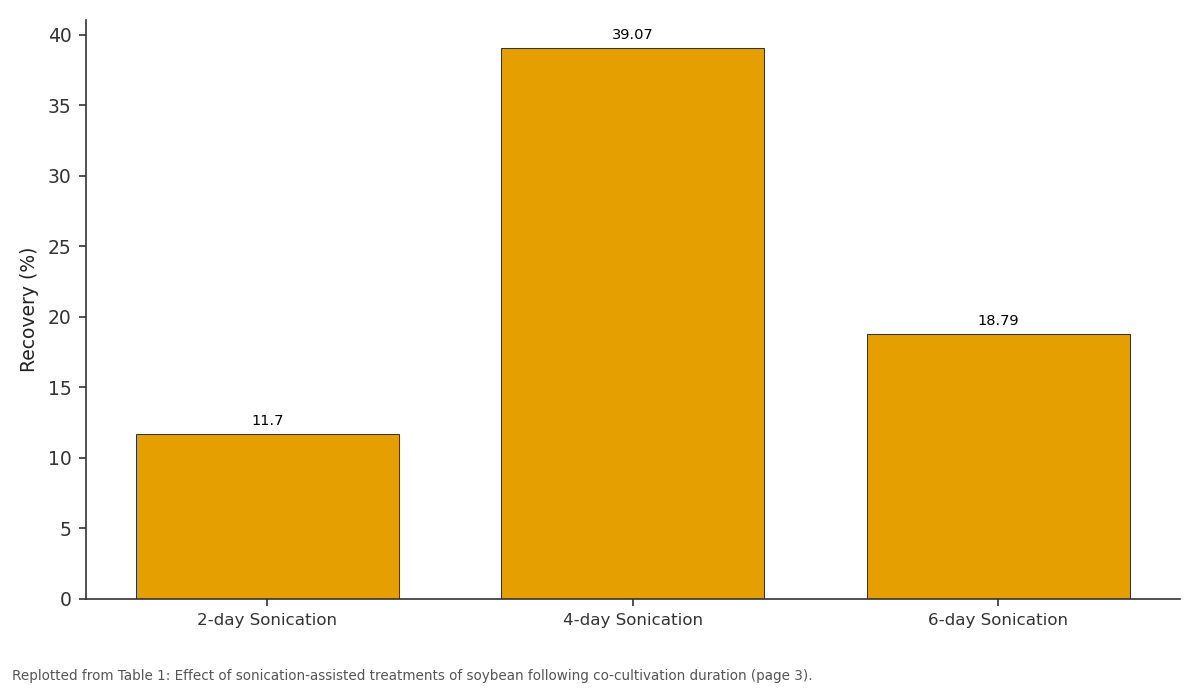
Recovery (%): 2-day Sonication vs 4-day Sonication vs 6-day Sonication
Replotted from Table 1 (page 3) of the original paper. Every bar is the paper's own table value.
View source evidence ↗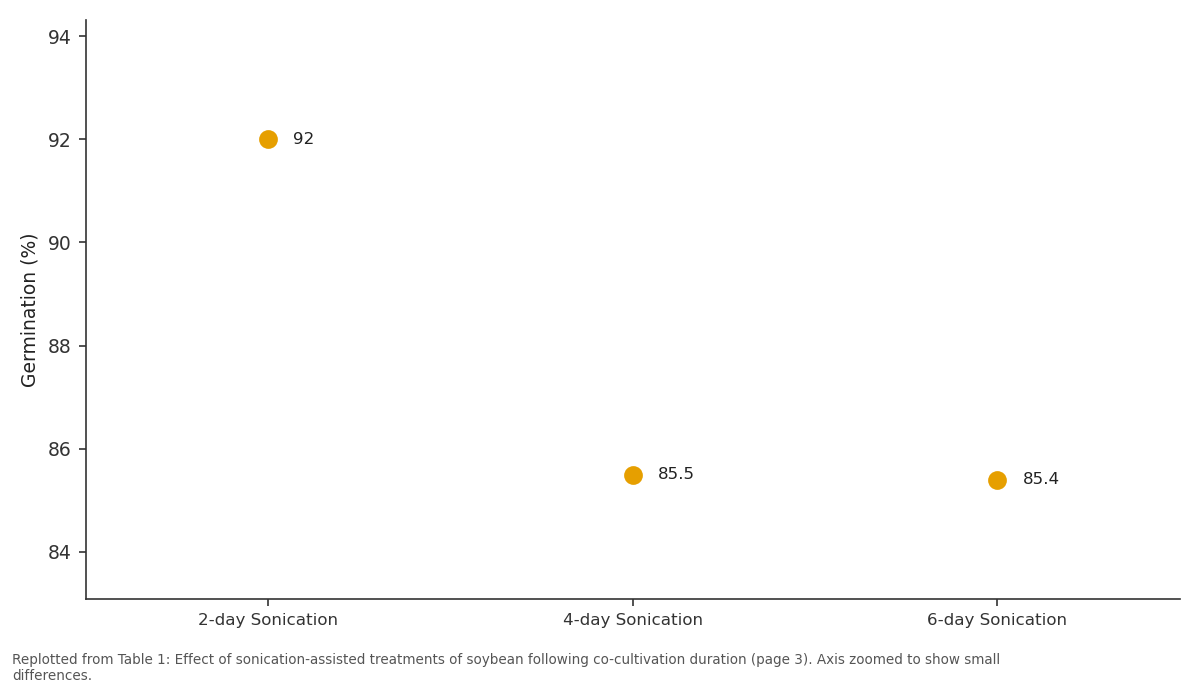
Germination (%): 2-day Sonication vs 4-day Sonication vs 6-day Sonication
Replotted from Table 1 (page 3) of the original paper. Every bar is the paper's own table value.
View source evidence ↗Figures & tables
From the original paper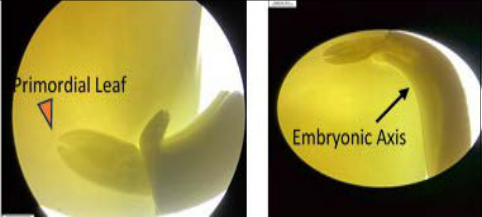 Figure 1
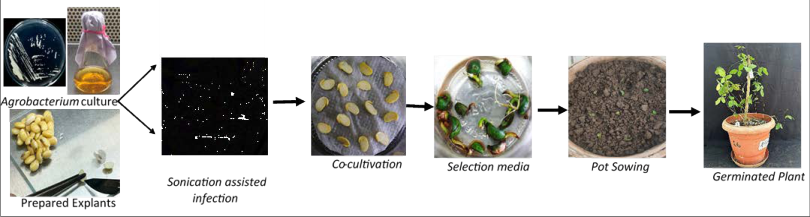 Figure 2
 Table 1
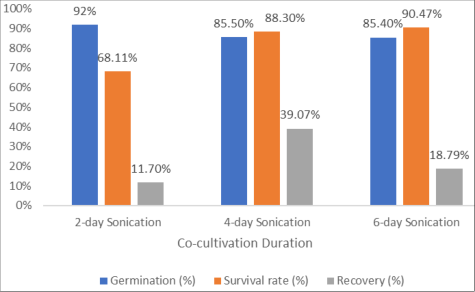 Figure 3
Introduction
Soybean (Glycine max L. Merr.) is one of the most important crop plants, accounting for a large share of the world market in oil crops and serving as an important source of plant-based proteins for both humans and as fodder. In 2025-26, more than 427.7 million metric tonnes of soybeans were produced on more than 146.8 million hectares worldwide. The seeds of soybean contain about 35-40% protein, 18-20% oil (Jadhav et al.,2025) [4] , and are therefore utilised in a wide range of products for multiple uses. Though soybean is one of the most important crop species, the narrow genetic base or narrow range of genetic diversity, available for certain desired traits and the extended duration required for traditional breeding present considerable challenges in conventional strategies in soybean improvement. Soybean transformation surpasses traditional soybean breeding. It plays an important role in addressing the key issues related to soybean; despite the developments and refinement of the soybean transformation system over the past years remains less efficient compared to other crops. Due to the recalcitrant nature of the crop, with low transformation efficiency, prolonged tissue culture requirements, and frequent chimeric plant formation (Homrich et al., 2012; Altpeter et al., 2016) [1,3] . An efficient and stable genetic transformation method is a prerequisite for successful transformation. In the current study, the emergence of genomeediting technologies has provided new opportunities for precise and targeted crop improvement. Agrobacterium-mediated transformation is very efficient for the delivery of targeted genes in plants because of its simplicity, efficiency, accuracy, and potential for multiplex gene editing.
Agrobacterium strain and vector
The Agrobacterium strain EHA 105 carries the pDIRECT_22A plasmid vector. The pDIRECT_22A contains kanamycin as a selectable marker gene and sgRNA targeting the subunits of the β-Conglycinin allergen.
Culture, explant preparation and agro-infection
Agrobacterium culture harbouring sgRNA targeting the subunits of the β-Conglycinin allergen was cultured on liquid LB medium with rifampicin (30 mg/l) and kanamycin (50 mg/l) at 28±2°C, at 150 rpm. Then the culture was transferred into 50 mL of MS medium supplemented with 50 μl of Acetosyringone (40 mg/ml), incubated at 28 °C for 30 min before use in explant infection. The inoculum density was adjusted to OD600nm=0.6. Soybean (Glycine max. (L.) Merr.) seeds from PDKV-Amba genotypes were imbibed in sterile water overnight. After soaking, the seeds were surface sterilized with Tween® 20, then with 70% ethanol for 30 sec, followed by 1% fungicide for 10 min, and finally with 0.1% HgCl₂ for 30 sec at each surface sterilization step washing with sterile water 2-3 times. Under the flow hood, the surface-sterilised seeds were transferred to a sterile glass plate and, using a scalpel blade, a longitudinal cut along the hilum was made to separate the cotyledons (Fig. 2). The seed coat was removed, and the embryonic axis found at the nodal end of the cotyledons was excised also; any remaining axial buds attached to the cotyledonary node were removed, and these half-seed explants were transferred to liquid agro-inoculation. The sonication-mediated agro-infection approach was employed at 50Hz frequency for 30 sec. After the Agrobacterium infection, the explants were placed with adaxial sides up on a liquid co-cultivation medium to initiate germination under controlled conditions for 2 days, 4 days and 6 days. This step is crucial to minimising bacterial overgrowth and reducing tissue damage caused by excess moisture. Following co-cultivation, the explants were transferred to a pre-selection medium to facilitate recovery and support their initial development. The pre-selection medium consisted of Murashige and Skoog (MS) basal medium supplemented with MES buffer (0.58 g/L), cefotaxime (100 mg/L), 6BAP (1.5mg/L), and GA₃ (0.25 mg/L). The medium was solidified with 0.6% (w/v) agar and adjusted to pH 5.8 prior to autoclaving. The cultures were incubated at 25 °C under a light intensity of 160-180 µmol m⁻² s⁻¹ with a 16 h light/8 h dark photoperiod for 5 days. Following pre-selection, the infected germinated seedlings were transplanted into soil for additional selection and growth of shoots (Fig. 3)
Fig 2: Agro-infection pipeline
Fig 2: Agro-infection pipeline
Result
The genetic transformation in soybean faces challenges. Like genotype-dependent regeneration, low transformation efficiency, stress from tissue culture and poor survival of regenerated plants. To address these issues, an optimised transformation and regeneration protocol was evaluated. Careful monitoring was done at each step: germination, seedling establishment and plant survival. Different cocultivation durations were tested with sonication-assisted treatments.
Effect of co-cultivation duration on explant regeneration and survival
The effect of co-cultivation duration on explant regeneration following sonication-assisted transformation was evaluated. The highest germination response was observed with a 2day co-cultivation period, during which 92.0% of the explants exhibited germination. Co-cultivation for 4 and 6 days resulted in germination rates of 85.50% and 85.40%, respectively. Although the germination percentages for the 4-and 6-day treatments were comparable, both were lower than that recorded after 2 days of co-cultivation. Thus, based on the initial germination response, the 2-day co-cultivation treatment exhibited the highest regeneration potential under the sonication-assisted liquid co-cultivation conditions (Table 1).
| Stage | 2-day Sonication | 4-day Sonication | 6-day Sonication | Total |
|---|---|---|---|---|
| No. of explants used for co-cultivation | 150 | 200 | 172 | 522 |
| No. of explants in Selection I | 138 | 171 | 147 | 456 |
| No. of shoots under sowing | 94 | 151 | 133 | 378 |
| No. of plants raised | 11 | 59 | 25 | 95 |
| Germination (%) | 92 % | 85.50 % | 85.40 % | 87.35% |
| Survival rate (%) | 68.11% | 88.30% | 90.47% | 82.89% |
| Recovery (%) | 11.70% | 39.07% | 18.79% | 25.13% |
Table text extracted from the original PDF; superscript letters are shown inline. The original table image is below.
View original table image
Survival of explants on selection i medium
Following co-cultivation, the explants were transferred to Selection I medium containing kanamycin to facilitate the selection of putatively transformed tissues. The survival of explants varied considerably with co-cultivation duration. Following 2 days of co-cultivation, 94 of 138 explants survived on Selection I medium, corresponding to a survival rate of 68.11%. In the 4-day co-cultivation treatment, 151 of 171 explants survived, resulting in a survival rate of 80.30%. The highest survival rate was recorded following 6 days of co-cultivation, with 90.47% of explants surviving on Selection I medium (Table 1). The lower survival observed following the shorter cocultivation treatment may be associated with the effects of sonication and subsequent selection stress. Sonication facilitates Agrobacterium-mediated transformation by generating transient micro-wounds that may enhance bacterial attachment and T-DNA delivery into plant tissues. However, excessive ultrasound exposure can result in cellular and tissue damage, potentially reducing explant viability. Santarém et al. (1998) [7] . reported that sonication enhanced Agrobacterium-mediated infection in soybean, while prolonged sonication increased tissue damage. Similarly, studies involving different soybean cultivars have demonstrated that appropriately optimized sonication conditions can enhance transformation efficiency, whereas excessive treatment intensity may adversely affect explant health. These observations indicate that the effectiveness of sonication is dependent on the balance between enhanced bacterial infection and preservation of explant viability.
Recovery and regeneration response
The recovery response of explants following selection differed among the co-cultivation treatments. The highest recovery rate was observed with the 4-day co-cultivation treatment (39.07%), whereas substantially lower recovery rates were recorded for the 2-day (11.70%) and 6-day (18.79%) treatments. Although the 2-day treatment resulted in the highest initial germination percentage and the 6-day treatment produced the highest survival on Selection I medium, the 4-day treatment demonstrated the highest recovery rate following selection. Considering the overall regeneration response and recovery percentage, the 4-day co-cultivation period was selected as the optimum duration for the subsequent optimization of the sonication-assisted transformation protocol in soybean explants. This treatment provided a comparatively favourable balance between explant survival and post-selection recovery and was therefore used for further optimization experiments.
Discussion
The response observed in the present study may be related to the physical effects associated with sonication-assisted treatment. Ultrasound treatment generates transient mechanical disturbances and micro-wounds in plant tissues, which can facilitate Agrobacterium attachment and T-DNA delivery. However, excessive physical stress may cause cellular damage and adversely affect subsequent tissue recovery and regeneration. Santarém et al. (1998) [8] reported that sonication could enhance Agrobacteriummediated infection in soybean while also demonstrating the potential for increased tissue damage with prolonged or excessive sonication. The present results are consistent with the concept underlying Sonication-Assisted Agrobacteriummediated Transformation (SAAT) described by Trick and Finer (1997) [8] , in which controlled wounding is used to enhance transformation while minimizing damage to the target tissue. The response observed in PDKV Amba also complements the cotyledonary-node transformation approaches reported by Paz et al. (2006) [6] , highlighting the importance of optimizing physical treatment conditions in soybean transformation systems. The relatively higher recovery obtained after 4 days of co-cultivation is consistent with reports indicating that extending the co-cultivation period beyond the commonly used 2-day period can enhance the interaction between Agrobacterium and soybean tissues under appropriate experimental conditions. However, the optimum duration is dependent on several factors, including explant type, soybean genotype, Agrobacterium strain, bacterial density, infection conditions, and composition of the culture medium. Li et al. (2017) reported efficient infection of soybean half-seed cotyledonary explants following a 5-day co-cultivation period, although their experimental conditions differed from those employed in the present study. Their findings also demonstrated that successful transformation depends not only on Agrobacterium infection but also on the subsequent ability of the transformed tissue to survive selection and regenerate into shoots and complete plants. The substantially lower recovery observed after 2 days of co-cultivation (11.70%) may indicate that the shorter interaction period was insufficient to achieve an optimal balance between Agrobacterium infection and subsequent tissue recovery under the conditions used in the present study. Conversely, although the 6-day treatment resulted in the highest survival rate on Selection I medium (90.47%), it did not produce the highest recovery or regeneration response. This observation demonstrates that explant survival alone cannot be considered a direct measure of transformation or regeneration efficiency. Explants may remain viable under selection conditions without subsequently developing shoots or regenerating into complete plants. Therefore, evaluation of transformation protocols should consider multiple parameters, including survival, recovery, shoot induction, regeneration, and ultimately the production of putatively transformed plants. Co-cultivation duration is therefore an important variable in Agrobacterium-mediated transformation. An adequate period is required to permit bacterial attachment, infection, and T-DNA transfer, whereas excessive co-cultivation may increase bacterial proliferation and impose additional stress on the explant. In the present study, the 4-day co-cultivation treatment produced the highest recovery response and the greatest number of plants raised among the treatments evaluated. These findings indicate that, for PDKV Amba under the experimental conditions used, a 4-day co-cultivation period provided a favourable balance between Agrobacterium interaction and explant recovery following sonicationassisted treatment. Further optimization of both cocultivation duration and sonication parameters may therefore improve the efficiency and reproducibility of Agrobacterium-mediated transformation in this soybean genotype.
Conclusion
The present study demonstrated that co-cultivation duration influenced explant recovery and regeneration in sonicationassisted Agrobacterium-mediated transformation of soybean genotype PDKV Amba. Among the treatments tested, 4-day co-cultivation resulted in the highest recovery (39.07%) and the highest number of plants raised. Although 6-day cocultivation showed higher explant survival, it did not improve overall recovery, highlighting the importance of balancing Agrobacterium interaction with explant viability. The optimized conditions provide a preliminary basis for developing an Agrobacterium-mediated delivery system for the pDIRECT_22A construct targeting the β-conglycinin trait and may support future CRISPR/Cas9-based improvement of soybean.
Acknowledgement
AcknowledgementThe authors gratefully acknowledge the financial support provided by the Department of Biotechnology (DBT), Ministry of Science and Technology, Government of India, under the research project (Sanction No. BT/PR38279/GET/119/351/2020; dated January 28, 2022), Department of Science and Technology (DST), Government of India, New Delhi (Sanction No. SUR/2022/003175; dated 11.01.2024).
Figures and tables from the paper
References
8 in the original paper- Altpeter F, Springer NM, Bartley LE, Blechl AE, Brunel TP, Citovsky V, et al. Advancing crop transformation in the era of genome editing. Plant Cell. 2016;28(7):1510-1520.
- Hartman GL, West ED, Herman TK. Crops that feed the world 2: Soybean worldwide production, use, and constraints caused by pathogens and pests. Food Secur. 2011; 3:5-17.
- Homrich MS, Wiebke-Strohm B, Weber RLS, Bodanese-Zanettini MH. Soybean genetic transformation: a valuable tool for crop improvement. Biotechnol Adv. 2012; 30:1582-1590.
- Jadhav P, Shinde U, Thakur P, Gawande B, Mahobia A, Moharil MP, et al. Genomic introgression and expression profiling of the KTI null allele in soybean through elite-by-elite backcrossing. Plant Physiol Biochem. 2025; 224:109912.
- Li S, Cong Y, Liu Y, Wang T, Shuai Q, Chen N, et al. Optimization of Agrobacterium-mediated transformation in soybean. Front Plant Sci. 2017;8:246. doi:10.3389/fpls.2017.00246.
- Paz MM, Martinez JC, Kalvig AB, Fonger TM, Wang K. Improved cotyledonary node method using Agrobacterium tumefaciens for soybean transformation. Plant Cell Rep. 2006; 25:206-213.
- Santarém ER, Trick HN, Essig JS, Finer JJ. Sonicationassisted Agrobacterium-mediated transformation of soybean immature cotyledons: optimisation of transient expression. Plant Cell Rep. 1998;17(10):752-759. doi:10.1007/s002990050478.
- Trick HN, Finer JJ. Sonication-assisted Agrobacteriummediated transformation of soybean (Glycine max L. Merrill). Plant Cell Rep. 1997;16(7):482-488.