
Research article · 2026 · Full text
International Journal of Agriculture and NutritionMarker-assisted breeding and vitro breeding in cucurbitaceous vegetable crops
Volume 8(9) · Pages 95–107 · DOI: 10.33545/26646064.2026.v8.i9b.750 ↗
Research areasAdvances in Cucurbitaceae ResearchGenetic Mapping and Diversity in Plants and AnimalsPlant Disease Management Techniques
Abstract
Author-writtenThis paper reviews the significant advancements in breeding techniques for members of the Cucurbitaceae family, economically important crops with medicinal and nutritional value. The review highlights marker-assisted selection (MAS) as a powerful tool in cucurbit breeding programs for developing disease-resistant cultivars with improved agronomic traits. MAS has revolutionized conventional breeding by enabling the identification and tracking of valuable alleles across generations through various molecular markers (SSR, SCAR, AFLP, CAPS, SNP). The paper extensively discusses the application of MAS in developing resistance against critical diseases affecting cucurbits, including powdery mildew, fusarium wilt, gummy stem blight, and downy mildew, as well as pest resistance against aphids and viruses such as ZYMV and WMV. Additionally, the review examines in vitro breeding techniques in cucurbits, including embryo rescue, somatic embryogenesis, soma-clonal variation, in vitro flowering, and in vitro pollination and fertilization. These methods have been instrumental in overcoming breeding barriers such as embryo abortion, seed dormancy, and incompatibility issues, thereby shortening breeding cycles and increasing genetic diversity. The integration of molecular markers with traditional and in vitro breeding approaches has significantly accelerated the development of cucurbit cultivars with enhanced disease resistance, yield potential, and quality traits to meet global production challenges.
Summary
Source-checkedPlain-language reading of the full paper, prepared with AI and checked against the text. Each point links to the authors' own words.
Why it matters
- The Cucurbitaceae family consists of over 800 species globally and is valued for both its nutritional and medicinal properties. View evidence ↗
- Cucurbits contain phytochemicals like carotenoids and saponins, which provide health benefits including antioxidant and anti-inflammatory effects. View evidence ↗
- Melon production is primarily limited by various biotic and abiotic stresses that negatively impact crop yield and quality. View evidence ↗
The question
- The paper aims to review significant advancements in breeding techniques for the economically important Cucurbitaceae family. View evidence ↗
What they did
- The review examines the use of marker-assisted selection (MAS) to develop disease-resistant cultivars with better agronomic traits. View evidence ↗
- The review evaluates several in vitro breeding methods, such as embryo rescue, somatic embryogenesis, and in vitro pollination. View evidence ↗
What they found
- In a study on chamoe melon, the T1ex marker showed a 99% association with flower genotypes and phenotypes across 106 cultivars. View evidence ↗
- Screening of 88 Iranian melon landraces using SCAR markers identified 43 genotypes that were resistant and heterozygotes for Fusarium wilt. View evidence ↗
- Among 87 melon accessions tested with SSR, SCAR, and CAPS markers, 23 genotypes were homozygous for resistance alleles against both Fom-1 and Fom-2 races. View evidence ↗
- The CMTA170a primer, identified by a 120 bp fragment, was linked to the Gsb-4 resistance gene for gummy stem blight at a genetic distance of 5.14 cM. View evidence ↗
- The use of irradiated pollen in melon achieved a 94% fruit set and a 96% germination rate. View evidence ↗
- A modified E20A medium (E20 H8) achieved an 83% conversion rate of embryos to plants in Cucumis melo. View evidence ↗
- In watermelon, a combination of 10 µM 2,4-D and 0.5 µM TDZ resulted in a 30% embryogenesis rate from 18-day-old immature embryos. View evidence ↗
What it means
- The authors recommend using MAS to accelerate the production of durable and resistant melon cultivars for the market. View evidence ↗
- Low marker density in melons currently hinders the ability to perform fine-mapping of important agronomic genes. View evidence ↗
- Plant regeneration efficiency remains low, and embryos are prone to developmental abnormalities, especially in protoplast-derived cultures. View evidence ↗
Visual summary
1 visualsIllustrations explain the paper; they do not show study data.
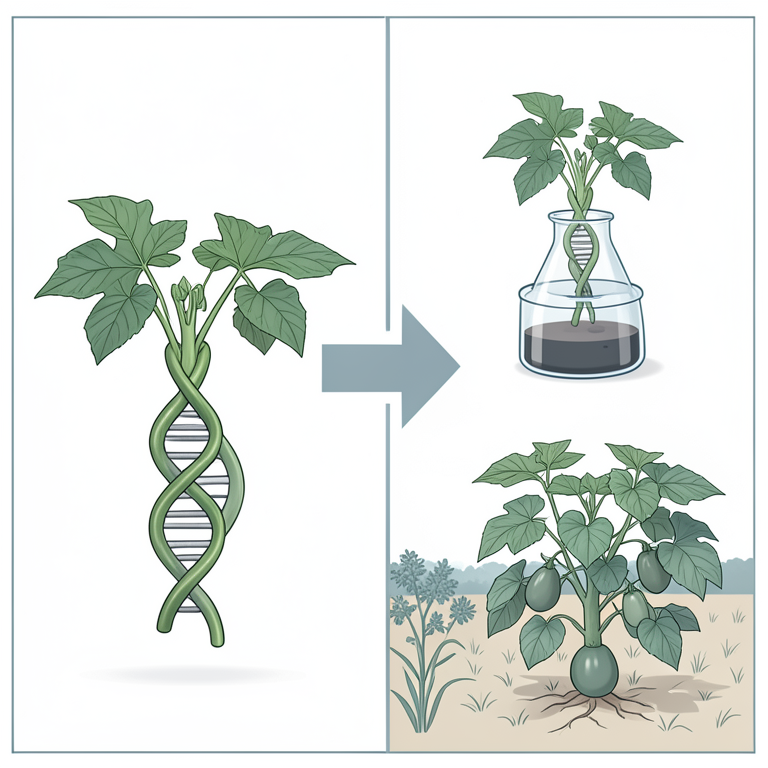
Study overview
AI-generated conceptual illustration (Cucumber and pumpkin plants). It explains the idea and does not show study data.
View source evidence ↗Introduction
The Cucurbitaceae family is a large group of crops comprising more than 800 species worldwide. Vegetables from this family have been used for centuries not only for consumption but also for their medicinal value. Among the most characteristic cucurbits are pumpkin and cucumber, which are widely cultivated and consumed across the globe. Seeds from cucurbits are also valued for their health benefits and are commonly consumed as a snack. Cucurbit plants are rich in carotenoids, terpenoids, saponins, and other phytochemicals. These vegetables positively influence human health, and various studies It is one of the most economically important and widely cultivated crops within the Cucurbitaceae family. Melon is a diploid species (2n = 24) with a genome size of approximately 450 Mbp, which is comparable to that of rice. Globally, melon is a high-value cucurbit cash crop known for its sweet, edible, and fleshy fruits rich in vitamins, antioxidants, and minerals (Garcia-Mas et al., 2012; Islam et al., 2020) [26,32] . The origin of melon genetics has been widely debated. Based on the distribution of wild melons, the biosystematics monograph by Kirkbride (1993) suggests that Africa is the principal center of melon diversity. Melons are broadly categorized into two groups: melo and agrestis (Pitrat, 2008; Kaçar et al., 2012; Mandoulakani et al., 2015; Natarajan et al., 2016) [34,50,53,59] . As an essential annual horticultural crop, melon is cultivated in tropical, temperate, and subtropical regions (Kavas et al., 2013) [38] . Marker-assisted selection (MAS) is a powerful and efficient tool in plant breeding, especially for manipulating and developing genotypes with desirable traits. MAS is particularly valuable when traits have low heritability, phenotypic selection is inefficient, or gene expression depends on specific environmental or biological factors. This review discusses the various molecular markers MAS uses for early selection in cucurbit breeding programs. The application of diverse molecular markers offers a more precise and efficient approach to screening melon accessions and facilitates the improvement of polygenic traits. MAS significantly reduces the time needed to develop melon cultivars with desirable traits. Despite significant progress, further research is needed to develop new melon varieties with durable and beneficial traits. Specifically, efforts should focus on generating genetic resistance to biotic and abiotic stresses, which are major factors affecting melon yield and quality. In recent years, notable advancements have been made in the in vitro induction of haploids, which has emerged as an important strategy in plant breeding. Haploid plants, possessing a gametophytic number of chromosomes, are valuable in mutation studies and the rapid development of homozygous lines. Traditional methods for haploid production are often time-consuming and inefficient. In contrast, in vitro techniques enhance efficiency and accelerate the breeding process. These modern approaches have successfully increased the frequency of androgenesis and have been applied to various crops, leading to the release of new cultivars. The three primary in vitro methods used for haploid induction include: 1. Culture of excised anthers or pollen 2. Culture of excised ovaries or ovules 3. Chromosome elimination through the bulbosum technique
These advanced techniques have become instrumental in developing high-yielding, disease-resistant, and stresstolerant crop varieties.
Marker-Assisted breeding Economic importance of cucurbits
Melon contains a distinct group of trailing vines, including cantaloupe, honeydew melon, mango melon, snake melon, snap melon, chamois or oriental melon, and pickling melon. The preference of consumers for melon varieties is primarily determined by shape or texture for good transportation and packaging logistics, as well as sweetness, flavor, aroma, and the presence of vitamins that are health-supporting and minerals (Hassan et al.,2018; Legendre et al.,2020) [30,45] . More than 27 million tonnes of melon were produced around the world and in the same year, China was ranked the first producer with more than 13 million tonnes of the total production, followed by Turkey, India, and Kazakhstan, each producing more than 1 million tonnes (FAOSTAT, 2019).
Development and breeding history of genetic markers in cucurbits
Plant breeding is the process that involves the purposeful modification of plant species to create certain features as genotypes and phenotypes for specific goals. This mechanism of manipulating those species requires genetic engineering, controlled pollinations, or both, followed by artificial selection of progeny. The development of synthetic methods of inoculation on plantlets has created a much more successful breeding of disease and pest/insect resistance (Dhall, 2015). Generally, the main factors limiting melon crop production are the multitude of biotic and abiotic stresses that reduce both quality and crop production (Kavas et al., 2013; Sousaraei et al.,2018) [38,72] . Application of pesticides, fungicides, and insecticides in the past time but their prolonged use was not recommended as the long-term solution due to their negative effects on the environment (Shimira et al., 2021) [69] , and the increase of pesticides and insecticides used has designated the rise of an idea to carry on interest in the plants' genetic disease resistance and the idea has become the main objective of breeding studies (Yuste-Lisbona et al.,2011) [78] . Melon breeding development programs are about to maintain the specifically targeted quality traits and market the crop production of melon cultivars in diverse markets (Assefa et al., 2019) [5] . Therefore, the utilization of genetically resistant varieties is presumably most potent to control and increase the melon production and quality from all hampered challenges, including abiotic and different biotic factors.
In addition, effectiveness of methods used in breeding programs as well as molecular markers are evaluating resistance/tolerance of plant to the maximum (Babu et al., 2004; Oumouloud et al., 2013) [6,55] . The MAS is the system that was developed to prevent and keep away from different problems that are connected with conventional breeding programs to change the selection criteria from phenotype to the genotype based on selection in direct or indirect manners (Francia et al., 2005) [22] . Plant breeding is a critical tool for farmers and agriculture as a whole. It helps to produce new and improved varieties of plants that are better suited to specific growing conditions and that have improved characteristics, such as higher yields, disease resistance, and pest resistance. Plant breeding also helps to ensure a more stable and secure food supply by diversifying the genetic pool of crops and making them less susceptible to disease and pests. Currently, molecular markers are known as powerful tools that applied to understand genetic diversity and relationship between species and varieties because most of these markers are highly polymorphic (Ansari et al., 2020) [4] . Molecular markers achieved various plant breeding objectives to reduce time consuming and effective costs that occurred during conventional breeding programs. Furthermore, via MAS, molecular markers have tremendous potential of improve precisely conventional plant breeding (Collard and Mackill, 2008) [19] . [12,68] . The use of the MAS method increases the efficient selection and not only for reducing size of plant population during breeding without phenotyped progenies, but also for allowing for early selection of required plants (Wolukau et al.,2009) [77] .
The primary goals of marker-assisted selection
The MAS is the most helpful technique with the three main goals for plant breeders such as the basic of the allelic composition of a genic region and the entire genome, MAS helps to select the most suited individuals for allocating progenies (Ranatunga et al.,1999) [62] , the tracing of appropriate dominant or recessive alleles across generations to get suitable alleles; and the breaking of the possible linkage of appropriate alleles with unwanted loci. Generally, MAS has greater importance during low heritability of traits, less efficiency of phenotypical selection, at gene expression also requires specific environmental or biological factors (Francia et al., 2005) [22] .
Improvement of quantitative traits marker assisted selection
Agricultural key traits, including quality, yield, flavor, several abiotic and biotic stress factors, resistance/tolerance, are complex and controlled by many various genes. Additionally, there are some different challenges in the modification of these traits that are derived from their genetic structural complexity, primarily the number of genes involved and interactions between genes with environmental factors, depending on gene expression. The MAS appears for examining the trait association and presence/or absence of polymorphisms in selected breeding populations (Francia et al., 2005; Foolad and Panthee, 2012) [21,22] .
Use of marker-assisted selection in cucurbits breeding
The MAS has great importance in various breeding strategies for early selection of main desirable traits, such as leaf and fruit non-bitterness melon cultivars from bitterness phenotyped melons (Shang et al., 2020) [67] . Additionally, molecular markers associated with appointed resistance/tolerance loci can be utilized for greater fruitful in melon breeding programs to improve various resistance cultivars (Assefa et al., 2019) [5] . Recently, Bang et al., (2016) [11] performed a study on chamoe known as oriental melon aiming to evaluate of the impact of T1ex DNA marker originated from melon monoecy for marker assisted selection for monoecious chamoe breeding study. The T 1 ex marker demonstrates the variation of size in monoecy melons. The application of T 1 ex marker was used to screen out the chamoe melon for study, 98 varieties were selected from 240 chamoe melon plants. Additionally, no deleterious size variation was obtained in monoecious chamoe. According to the results of this study T 1 ex marker was highly (99%) associated with flower genotypes and phenotypes for 106 of chamoe cultivars. The results have been shown that sex expression in chamoe lines between genotypes and phenotypes is 100% consistency. This review is focusing on the contribution of MAS method in melon breeding. The current review also highlights some challenges that have hampered the increase of melon production, and gives sight on the application of MAS techniques on various factors in melon breeding studies.
Contribution of Marker Assisted Selection in Cucurbits Breeding
Frequently, many infections cause a critical reduction of plant yield (Solmaz et al., 2011) [71] . The application of pesticides, fungicides and insecticides in the past time but their prolonged use was not recommended as the long-term solution due to their negative impacts on the environment. Therefore, MAS has been theoretically applied as an option for genotype-phenotype selection for breeding to produce disease-resistant/tolerance cultivars (Hassan, Rahim et al., 2018) [30] .
Marker-assisted selection in cucurbits breeding of disease resistance
The main principal and most known as dangerous diseases to damage the production of melon around the world are downy mildew, fusarium wilt, powdery mildew, potyvirus group [the greatest viral group including melon necrotic spot virus (MNSV), watermelon mosaic virus (WMV), zucchini yellow mosaic virus (ZYMV), and papaya ring spot virus (PRSV) and the major insects that affect melons are red pumpkin beetle, leaf miner, aphid fruit fly, , and mite (Anagnostou et al.,2000; Dhall, 2015) [3] . China is the first cultivator and producer of melon production in world, with high level of frequency of powdery mildew disease. Besides that, land areas under chemical pest control are increasing every year. High environmental pollution, toxicity of heavy metals accumulated in the soil and this is more severe condition which is leading to high excess of metal ions in the melon that affects safety quality of melon crops. Normally, all commercial cultivars of melons are very sensitive to pathogens. Several scholars have studied and employed different strategies to mitigate the damages of those diseases (Cheng et al., 2012; Mandoulakani et al., 2015) [15,50] . Nonetheless, melon germplasm indicates greater variability of response to biotic stresses and for fruit traits (Diaz et al., 2011) [20] . Melon fruits are mostly varying in size, shape, flavor, color, rind form and firmness (Harel-Beja et al., 2010) [29] .
Powdery Mildew
Globally, powdery mildew (PM) is disastrous fungal disease of melon production. Powdery mildew is the most devastating and decimating diseases of melon affecting plant foliage, yield and quality (Zhu et al.,2018) [80] . The PM, caused by the complex interaction of two pathogens: Podospaera xanthii (Px) (castagne) Braun and Shishkoff (former Sphaerotheca fuliginea) and Golovinomyces cichoracearum (Gc) (former Erysiphe cichoracearum) and probably it is very extensive disease in melon and other cucurbits (Dhall, 2015). Frequently, Px is occurring more in greenhouses, some subtropical and tropical regions, while Gc commonly occurs in temperate and cool areas under the field conditions. According to the lack of information about genes connected to the PM infection defense reactions in melon plants, the MAS of elite and resistant cultivars is an interesting major approach to explore PM disease defense mechanisms in different melon varieties (Kim et al., 2015) [39, 40] . The QTLs and resistant genes for PM in diverse crosses have been mapped into different chromosomes and linkage groups (LGs) of cucurbits as LGs 2, 5, and 12 such as Pm-1-6, PmR/W/X/Y, Pm-Edisto47-1/2, Pm-2F, Pm-x1,3,5, Pm-pxA/B, PmV.1, PmXII.1, Pm-An, BPm12.1). The Pm-x is designated as a single dominant gene which has a resistance to the Px race-1 and race-2 in PI414723 line. This gene was placed in the linkage group II that was linked to andromonoecious gene a, and to ZYMV resistance gene Zym. In other hand, another single Pm-w, dominant gene has been found in WMR29 cultivar, and it is serving resistance to the Px races-1, 2 and 3. This gene was closely linked to the Vat locus and associated with linkage group V (PmV.1 and PmXII.1) (Zhu et al.,2018) [80] , addition, to solve that issue was better to find and analyse suitable markers for a MAS method with the construction of genetic linkage map of melon to demonstrate quantitative trait loci (QTLs).
Fusarium Wilt
Melon is a susceptible plant to several root fungal pathogens and foliar which induce diseases and decrease fruit quality and yield as in many other cucurbit crops. Melon fusarium wilt (MFW) is the most well-known pathogen disease which is induced by soil-borne pathogens known as Fusarium oxysporum melonis (Fom). It is a fungus that continues living in the soil like chlamydospores. It is also commonly known as a vascular wilt soil-borne pathogen causing fusarium wilt (FW) (Oumouloud et al.,2013 [25,55,56,72] . Several resistance genes in melon have been cloned or mapped for resistance to FW as well as Fom-1, Fom-2 using molecular markers closely linked to genes of interest. They are can be pyramided genes via marker assisted selection method (Fukino et al., 2008) [24] . Based on a host resistance genes associated with variants of this pathogen, isolated Fom were divided into four physiological races assigned as 0, 1, 2, and 1,2. Two dominant resistance genes, Fom-2 and Fom-1, can control races such as 0 and 2; 0 and 1, respectively. Previous studies have shown that the combination of BSA strategy with amplified fragment length polymorphism (AFLP) methodology produced some results. And the AFLP marker links to the locus of Fom-2. It transforms them into codominant SCAR markers. Furthermore, the benefit of using the SCAR marker for indirect selection of Fom-2 is approved from inside of 24 melon accessions from various race 1 resistance and susceptible origins and released different haplotypes markers (Joobeur et al.,2004; Oumouloud et al.,2013; Fall et al.,2018; Sousaraei et al., 2018) [33,55,72] . Recently, in the study performed by (Oumouloud et al.,2015) [56] using four AFLP markers linked to Fom-1 resistant gene and applying BSA approach to map 125 F2 progenies obtained from the cross between (Fom race 2 resistant) MR-1 line and the P11 Japanese susceptible line. The AFLP was transformed to the SCAR marker which amplified a single segment of 347 bp. It was only for P11 and susceptible bulks. Several cultivars, including melon commercial F1 hybrids were utilized to detect the Fom-1 resistant genotype. According to the results the Fom-1 resistant genotypes have been obtained in var. reticulatus and cantalupensis but were not in var. chinensis, makuwa and conomon. According to the evaluation of molecular markers performed in various studies, this shows the greater importance of MAS in melon plant breeding improvement of biotic factors resistance production. Many studies mentioned that SSR marker is a suitable co-dominant marker in the MAS technique with a high polymorphic ratio and is very useful in constructing consensus maps, segregating and providing information on exchanging genetic information for melon breeding development. In general, molecular markers based on PCR (polymerase chain reaction) are very useful in MAS for FW resistant gene identification in various (Ahmad et al., 2014) [1] . Currently, Mahdavi Meighan et al., (2020) [49] carried out a study about some screened Iranian melon landraces using the MAS technique and artificial inoculation for identification of new resistance resources for the races Fom 0 and 1. The two SCAR functional and dominant markers (Fom2-R408 and Fom2-S342) each have produced one sharp and strong band of 408 and 342 bp size, respectively. All markers have been applied to 88 Iranian melon landraces, and 43 genotypes have shown that they were resistant and heterozygotes. Furthermore, homozygous resistant traits have been selected from heterozygote resistant genotypes, which can necessarily reduce timeconsuming in breeding studies. Çetin et al., (2021) [12] in their study determined the homogeneity and the resistant levels of Fusarium oxysporum melonis (Fom-1 and Fom-2 races) and Zymv in some melon in Turkey. In the study, SSR, SCAR and CAPS have been applied on 87 melon accessions, and 23 genotypes have been found to be homozygous with resistance alleles against Fom-1 and Fom2 races both. In in 46 remaining genotypes 30 had homozygous alleles resistance to Fom-1 and 16 lines had heterozygous alleles and for Fom-2 race the study shown that 75 alleles were resistant to the disease, 65 cultivars had homozygous alleles and 16 accessions had heterozygous allele. The 85-90% of all genotypes has been demonstrated the homogeneity levels in 29 accessions.
Gummy Stem Blight
Gummy stem blight (GSB) is one of the fungal diseases caused by Didymella bryoniae (Auersw.) Rehm, one of the primary soil-borne (Wolukau et al., 2009) [77] , and vigorous diseases that affect Cucurbitaceae crops, including Cucumis melo L. The GSB provokes a tremendous reduction in melon production around the world. Earlier in the 1980s, the GSB was found in Europe, the United States, China, Japan, and other subtropical and tropical countries. Breeding cultivars with major resistance genes has been developed with greater effectiveness and economic strategies to control and eradicate GSB disease from melon crops. The absence of successful molecular markers linked to GSB resistance inhibits transferring resistance genes to commercial cultivars of melon crops (Zhang et al., 2017; Hassan et al., 2018) [30,79] .
Wang et al., (2012) [77] conducted a study comprised with segragated population of BC1F1, BC2F1 and F2 that were provided by the cross of susceptible inbred line Baipicui (female parent) with resistant inbred line PI482398 (male parent, having Gsb-4 gene resistant to GSB). The study results have defined that a single dominant gene controls GSB disease in the PI482398 accession. In the study also DNA pools with 89 pairs of SSR markers were used to screen the resistant and susceptible. The CMTA170a primer have been found from unique amplified 120 bp fragments in resistant materials and CMTA170a was linked to Gsb-4 with genetic distance of 5.14 cM; whereas the E-AT/M-CTG90, E-TC/M-CAG60, E-TG/M-CTC200, and E-TG/MCTA70 AFLP markers have been reported to be in positions of 2.0, 6.0, 5.4, and 6.0 cM, respectively from the Gsb-6 locus. For early selection of melon breeding program, the above information is very important for the use of MAS for a good production of melon cultivars containing resistant genes on GBS and a quick production. Currently, the study carried out by Zhang et al., (2017) [79] based on the successful development of new muskmelon variety and to improve gene resistance to GBS and intrograssion of desired agronomic characters using gene pyramiding as MAS method. The AFLP, SCAR markers were used in two resistance melon accessions (PI482398 and PI420145) that contain two resistant genes (Gsb-4 and Gsb-6) and have been pyramided into one cultivar in the help of MAS technique. The population development to be used in MAS was selected from the 4598-variety donor parent that contains the Gsb-4 and Gsb-6 genes and it was hybridized to transfer these genes to Baipicui (highly susceptible to GBS, honeydew muskmelon) line and to produce F1 progeny, backcross method was used to produce BC1F1 and BC2F1. According to the field cultivation of cultivars containing Gsb-4 and Gsb-6 resistance genes, the results have been shown that the resistance to GSB had been increased and fruit quality of melon was very improved.
Downy mildew
Oomycete Pseudoperonospora cubensis known as P.cubensis is the most important water mould pathogen that causing downy mildew known as a detrimental foliar disease of cucurbits particularly in areas with rainfall and high humidity (Perchepied et al.,2005, Thakur et al.,2019) [57, 74] . The report about downy mildew resistance sources have been described by different studies in many Indian accessions. Two genes (Pc-1 and Pc-2) with partially dominant and complementary genes were obtained in PI 124111 and its derivative MR-1 or PI-124112 Indian accessions as polygenic control of downy mildew disease. The species-specific PCR assays have been demonstrated that P. cubensis pathogen takes place in ovaries, seed embryos and cucurbits crops' fruit seed cavity. And it has turn into the seed transmitted in cucurbits crops (Cohen et al., 2014, Kim et al.,2015) [18,39,40] . Marker Assisted Selection for Pests Resistances Zucchini Yellow Mosaic Virus (ZYMV) is the aphid borne that belongs to the Potyviridae family. According to its greater yield losses ZYMV is very important virus which affect melon crops and cause the highest level of yield reduction (Cho et al., 2019) [17] . Additionally, fruits produced on ZYMV infected plants expose colour alterations and severe deformation that provide unmarketable yield (fruits). And MAS provides a means for increasing the efficiency of incorporating aphid resistant gene in new melon cultivars (Klingler et al., 2001, Mandoulakani et al.,2015) [41,50] .
Watermelon Mosaic Virus
Watermelon mosaic virus (WMV) one of the Potyviridae family and potyvirus genus with plusstrand RNA virus and is transmitted by various species of aphid (at least 38 aphids). In several main production areas around the world, with temperate climates the WMV infects melon and cause greater losses of quality and yield in melon crops (Sousaraei et al., 2018) [72] . Currently, the resistance dominant gene Wmv1551 has been fine mapped using SNP markers in derived from African TGR-155 line. In addition, the identification of QTLs on chromosome 11 and chromosome 5 of resistance gene by using of SNPs closer link to the WMV-resistance have been useful in MAS for melon breeding programs, whereas the presence of QTL on chromosome 11, was appointing the position of wmv1551gene, this was confirmed that by sequencing the RILs subset were both genotyped and phenotyped for infection resistance (Pérez-de-Castro et al., 2019) [58] .
Cucumber green mottle mosaic virus (CGMMV) poses a severe risk to the cultivation of melons, watermelons, and cucumbers. CGMMV is a member of the Tobamovirus genus, family Virgaviridae, and affects cucurbitaceous plant leaves by causing systemic motting and mosaic-like symptoms (Karchi et al., 1975) [8] . Young melon leaves exhibit initial signs of mottling and mosaicism, which frequently disappear in the mature foliage. Ruiz et al., (2021) [9] conducted a study in which various germplasm samples of Cucumis melo were subjected to mechanical infections along with those of other species such as C. anguria, C. ficifolius, C. myriocarpus, and C. metuliferus. These strains were infected with European and Asian CGMMV strains. Resistance was gauged by observing symptom severity and analyzing viral accumulation by qRT-PCR. Results revealed that C. anguria and C. ficifolius remained symptom-free and did not accumulate CGGMV after inoculation. Conversely, C. metuliferus was markedly susceptible to isolates from both CGMMV strains. Although the virus was detected in C. myriocarpus, only the European isolate caused symptoms, whereas the Asian isolate did not. All 30 C. melo samples were vulnerable to CGMMV infection. Moreover, 16 melon samples displayed varying degrees of symptoms based on the isolate: milder symptoms with the European variant and more pronounced symptoms with the Asian strain at 14 and 21 d post-inoculation, respectively. Most germplasm samples exhibited significantly elevated viral concentrations, making them potential candidates for breeding initiatives.
Nematodes
Root-knot nematodes (RKNs) significantly constrain melon production in the southern United States and other semitropical and tropical regions worldwide. Meloidogyne incognita, M. javanica, and M. arenaria are the most common RKN species in the southeastern United States and are responsible for causing root gall disease in melons. Many crop species, including melons and cucumbers, are susceptible to severe yield loss caused by Meloidogyne incognita. Interspecific hybridization between the wild cucumber species Cucumis hystrix Chakr. (2n = 24, HH), and cucumbers produced the introgression line IL10-1, which exhibited resistance against roots, but not nematodes. Based on low-coverage sequences of the F2:6 recombinant inbred lines (RILs) generated by crossing the inbred line IL10-1 and cultivar 'Beijingjietou' CC3, an ultra-highdensity genetic linkage bin-map made up of high-quality SNPs was created and three QTLs qRKN1-1, qRKN5-1, and qRKN5-2 were identified. The possible RKN resistancerelated genes were proposed to be four genes with nonsynonymous SNPs on Chr. 5. RKN poses a significant threat to melon production. Recent studies have leveraged an interspecific hybridization approach, yielding the introgression line IL10-1, which has shown nematode resistance. With advanced genetic mapping using SNPs, three QTLs associated with RKN resistance were identified, highlighting the potential of genomic interventions to enhance crop resilience to RKNs in melons (Cheng et al., 2019) [16] .
Marker-Assisted Selection for Aphid Resistance
The melon aphid (Aphis gossypii Glover) the most powerful pest which affects direct the cucurbit plant crops with the critical damages and loses; and aphid is also a vector for diverse viruses (Thomas et al.,2008) [76] . The production of new melon varieties contain the vat gene which is resistant to the aphid was increased. For instance, two melon of germplasm sources containing distinct accessions, one from Korea (PI161375) and another of India (PI 414723) were identified as monogenic with Vat resistance gene to A. gossypii by using RAPD and RFLP molecular markers (Klingler et al.,2001) [41] . Furthermore, the study based on eight SSR markers, the melon aphid has been shown the two types of genetic clusters which include NM1 single genotype as well as it was only obtained in South-East France. The second group comprises a number of genotypes includes C9 genotype which is found displayed all over field of A. gossypii (Vanlerbergue-Masutti pers. comm.). The 265 markers were used to investigate the genetic background for different groups and the results have been shown that all groups located on Vat locus are estimated to be resistant to both aphids (Thomas et al., 2008) [76] .
Limitations and Challenges
Although molecular markers facilitate MAB in melons, they are characterized by several limitations and challenges. Marker density in melons is relatively low, which hampers the fine-mapping of crucial agronomic genes. In the realm of crop improvement through molecular techniques, several critical limitations arise. Firstly, there is the intricate challenge of dissecting traits using markers, especially when dealing with gene-environment (G × E) interactions. These interactions often complicate the clarity of results and make the identification of influential genes more arduous. Additionally, a constrained gene pool presents issues, as limited genetic diversity can impede the potential for groundbreaking advancements. From an operational perspective, the financial costs associated with genome analysis and the development of markers and genotyping procedures, particularly in MAS, can be substantial. Even when finances are available, the science itself is not always straightforward; there are inherent limitations in accurately identifying genes and in the subsequent development of gene-based markers. Finally, with the advancements in the field, new traits emerge that await thorough analysis, adding to the list of challenges to be addressed.
Quantitative traits are inherently complex owing to the involvement of multiple genes, making their improvement through molecular markers challenging. Accurate phenotyping is a major obstacle, as environmental factors can cause variations in phenotypic and genotypic traits. Furthermore, short-range linkage disequilibrium complicates marker-trait associations, and functional genomic resources are limited, impeding the precise identification of gene function. Finally, the cost and timeintensive nature of high-throughput genotyping restrict its widespread use, particularly in developing countries. Overcoming these challenges will necessitate concentrated efforts to increase marker density, improve our comprehension of the genetic basis of complex characteristics, enhance phenotyping capabilities, and develop cost-effective genotyping technologies.
In-Vitro Breeding in Cucurbits Embryo Rescue
The term embryo rescue is used to describe the in vitro techniques aiming to encourage the development of immature embryos into complete plants. This technique has been widely used to avoid embryo abortion in regenerated plants from hybridization. The technique of embryo rescue has become an important tool in plant breeding, allowing the formation of many interspecific and intergeneric crop species. Embryo rescue, also known as embryo culture, involves the excision of embryos and placing them onto sterile culture medium. The technique was first developed by Tukey in 1933, who successfully grew the embryo of a cherry on an artificial medium. Since then, the procedure has been applied in embryo rescue of many other crops. Melon (Cucumis melo) exhibits high fruit diversity, but many cultivars are disease-susceptible. Wild melon landraces carry disease resistance genes but cannot hybridize naturally with commercial types. Embryo rescue via in vitro techniques enables viable hybrids by overcoming these genetic barriers. the study achieved 94% fruit set and 96% germination using irradiated pollen in melon. Method M 3 (Inspecting seeds under a light box) was fastest (48.6 min) and cheapest (₹3.81/fruit). M 3 shows high potential for efficient dihaploidization in melon (Palenius et al.,2011). A reliable embryo rescue technique was developed for wild-type and transgenic 'Galia' muskmelon lines. Embryo rescue efficiency increased with fruit age, with 17-30 DPP showing the highest success. Embryos could still be rescued as early as 4 DPP, though with lower efficiency. E-21 medium with added supplements was more effective than the basic E-20A medium. Both WT and transgenic embryos had equal survival rates, validating the protocol's consistency (Palenius et al.,2006). Major application of embryo culture in plant breeding has been for interspecific or intergeneric hybridization, in which the endosperm develops poorly or does not develop at all due to hybridization barriers. Embryo culture can also be applied to shorten the breeding cycle by overcoming dormancy in seeds. Factors such as endogenous inhibitors, light, temperature, humidity, or embryo immaturity often cause seed dormancy to occur. By removing the embryos from the influences of these factors, they may germinate and grow quickly, and as a consequence, the breeding cycle is shortened.
Overcoming Embryo Abortion
Embryo abortion is a common phenomenon and has been a major problem in conventional plant breeding. This is primarily due to the failure of the endosperm to properly develop as nutritive tissue surrounding the embryo. For this reason, embryo rescue technology has been widely used to regenerate complete plants under in vitro conditions (Reed 2005). This method can also be used to rescue young embryos from intraspecific hybrids that normally produce unviable seeds. For instance, in seedless triploid embryos resulting from crosses between diploids and tetraploids of the same species. By in vitro culture on an aseptic nutrient medium, the embryos may develop and grow into complete plants, thus overcoming postzygotic barriers such as endosperm failure.
Shortening Breeding Cycle by Overcoming Seed Dormancy
The embryo rescue technique has also been used to shorten the breeding cycle in a number of fruit crops by overcoming seed dormancy. In species that require enough time for embryo maturity, seedlings cannot be raised just after fruit ripening. In addition, some species need a longer period to break their seed dormancy. For example, seeds of Brussels sprouts, roses, apples, oil palms, and Irises do not germinate after fruit ripening. Culturing immature embryos on proper growth medium will result in immediate germination and therefore shorten the breeding cycle. Seed viability is vital for Cucurbitaceae crops like squash and watermelon, but declines with age and poor storage. In vitro techniques such as embryo rescue can rejuvenate old seeds. A study by Moon et al. tested 20-year-old squash seeds using potting mix, hydrogen peroxide, and SR in vitro media. Hydrogen peroxide inhibited germination, while the potting mix showed low success. In contrast, the in vitro SR media significantly improved germination (28.5-36.3%), with no difference between the gel and liquid forms. The SR medium, containing essential salts, sucrose, IAA, and IBA, shows promise for conserving genetic resources in breeding programs (Moon et al., 2018) [52] .
Haploidization in Cucurbit Breeding
Plants the potential of haploid technology for plant breeding arose in 1964 with the first report by Guha and Maheshwari (1964) on haploid embryo production from in vitro culture of Datura anthers. This was followed by the successful effort of Nitsch and Nitsch (1969) on the regeneration of haploid plants from microspore culture of tobacco. Since then, many attempts have been made on over 250 plant species belonging to almost all families of the plant kingdom (Maluszynski et al., 2003). As with anther or microspore culture, in vitro pollination and fertilization may also be used to produce haploid plants through parthenogenesis. This has been achieved in Mimulus luteus when the ovule was pollinated with pollen from Torenia fournieri (both from the family Scrophulariaceae) (Taji et al., 2002). More recent achievements in the production of double haploid plants through ovule cultures resulted from the hybridization reported in cultivated species of Cucurbita pepo with three other Cucurbita species, i.e. C. moschata, C. ficifolia and C. martinezii (Rakha et al., 2012) [61] . Though ovules offer a possible alternative source for haploid or doubled-haploid production, the exploration of this tissue in producing haploid or doubled-haploids in breeding programs is still very limited. For more in-depth discussion on haploid plant production, the reader is referred to Chap. 5 in this volume. Further reading on haploid higher plant production via in vitro technique can be found in Jain et al., (1996a, b, c, d, e). Self-incompatibility is a physiological barrier preventing fusion of male and female gametes from the same individual (self-fertilization), thus preventing inbreeding and encouraging outcrossing. On the other hand, cross-incompatibility occurs when male and female gametes from different individuals fail to fuse, and as such, prevent outcrossing and encourage inbreeding to take place. In vitro pollination and fertilization can be used to overcome these physiological barriers. In this method, the entire ovule mass from an ovary, intact on the placenta, is cultured in vitro just after pollination and fertilization are completed. For example, Cucumis sativus, which is sexually incompatible with almost all Cucumis species due to different chromosome number, n = 7 in C. sativus versus n = 12 in C. melo and most wild Cucumis species. This obstacle can be overcome through the use of embryo rescue and/ or ovule culture (Skálová et al., 2008) [70] . Haploidization plays a vital role in cucurbit breeding, particularly as conventional breeding methods to obtain homozygous pure lines typically require 10-12 years due to the challenges posed by open pollination and genetic heterogeneity. In vitro haploidization techniques offer a significant advantage, reducing this time to just 1-2 years by producing haploid plants and subsequently doubling their chromosomes using colchicine treatment (Sauton 1987) [66] . Among various methods explored in the Cucurbitaceae family, the irradiated pollen technique has proven to be the most effective. This approach involves pollinating female flowers with gamma-ray-irradiated pollen, leading to the formation of gynogenic embryos, which are then rescued through in vitro culture (Sauton 1987) [66] . The technique was initially introduced in 1987, successfully producing haploid plants in melon and cucumber using heart-or globular-shaped embryos cultured on E20 medium enriched with IAA (0.01 mg/L), sucrose (20 g/L), and agar (10 g/L) [50]. Building on this work, Sauton successfully applied the method to muskmelon (Cucumis melo L.), analyzing seasonal and genotypic effects (Sauton 1988) [64] . In 1989, the technique was extended to cucumber (Cucumis sativus) using irradiation doses ranging from 300 to 900 Gy (Sauton 1989; Katarzyne et al., 1989) [35,65] . Lofti et al. evaluated the effect of gamma irradiation (100-400 Gy) on three cucumber cultivars and discovered that 100 Gy was optimal for producing viable haploid embryos on E20A medium, especially those with heart-shaped morphology (Lotfi et al., 1997) [47] . Further advancements came from Faris et al., who found that a low dose of 0.1 kGy was ideal for inducing haploid embryos in cucurbits, achieving a 7.7% plant regeneration rate using irradiated pollen on E20A medium, followed by culture on MS medium (Faris et al., 1991) [48] . Lofti et al. developed protocols for generating both haploid and doubled haploid melon plants from virus-resistant hybrids, involving post-pollination with irradiated pollen, a 10-day culture in liquid medium, and subsequent embryo culture in E20A (Lotfi et al., 2003) [46] . Sztangret et al. also contributed by successfully generating haploid plants from hybrid cucumber varieties, with about 45-48% of embryos differentiating into stable haploid plants (Stzangret et al., 2004) [73] . A notable advancement came from Claveria et al.,
who generated homozygous doubled haploid lines (DHLs) via in vitro rescue of parthenogenetic embryos induced by 500 Gy irradiated pollen. They achieved an 83% conversion rate of embryos to plants using a modified E20A medium called E20 H8, which contained 7.9 mM CaCl₂.2H₂O, 0.17 mM CoCl₂•6H₂O, 0.10 mM FeEDTA, 20 g/L sucrose, and 8 g/L Bac-to-agar. The pH was adjusted to 5.9 before autoclaving, and early subcultures were supplemented with 0.06 μM IAA and 15 μM silver thiosulfate (STS) to promote rooting and reduce vitrification (Claveria et al., 2005). The study demonstrated the high effectiveness of this technique in Cucumis melo, achieving a 94% fruit set and a 96% germination rate using E20A medium supplemented with 0.1 mg/L IAA (Ari et al., 2010). Kurtar et al. explored the role of embryo type in haploid plant regeneration in pumpkins, finding higher transformation rates in specific embryo types cultured on E20A medium (Kurtar et al., 2009) [43] . Their subsequent work on winter squash highlighted how factors like genotype and timing significantly influence the success of haploid induction using E20A with 0.01 mg/L IAA (). Godbole et al. validated the effectiveness of irradiation in inducing parthenogenesis in snapmelon, culturing cotyledonary embryos on E20A medium enriched with 2% sucrose and 0.06 µM IAA, which led to effective fruit development (Godbole et al., 2012) [27] . Another study in Cucumis melo var. inodorus compared five CP nutrient media supplemented with sucrose, agar, vitamin B 12 , and 0.02 mg/L IAA, concluding that E20A was superior for direct embryo sowing and emphasizing the importance of light inspection during culture (Baktemur et al., 2013) [10] . In bottle gourd, researchers found that both genotype and irradiation dose significantly affected haploid embryo induction. Lower doses (50-75 Gy) yielded higher fruit set ratios, and embryos with arrowhead or cotyledonary shapes had higher plant conversion rates. These embryos were cultured in E20A liquid medium, though some vitrification occurred during in vitro culture (Guler et al., 2015). In summer squash F1 hybrids, Kurtar et al. successfully used modified E20A medium to support dihaploidization, underscoring the adaptability of the approach (Kurtar et al., 2021) [44] . Bagheri et al., 2020 [7] investigated the effect of gamma radiation on inducing haploidy in Iranian melon cultivars using E20A medium with phytoagar. They compared three embryo culturing methods and highlighted the influence of genotype, embryo stage, and irradiation dose on the efficiency of haploid plant production (Bagheri et al., 2021) [7] . Lastly, doubled haploid lines of melon 'Piel de Sapo' were generated through in situ parthenogenesis using irradiated pollen. This study evaluated seven genotypes for agronomic performance and disease resistance, refining embryo recovery methods and confirming the utility of doubled haploids in breeding programs (Hooghvorst et al., 2020) [31] .
Interspecific/Intergeneric Hybridization
Interspecific hybridization within Cucurbita species offers significant potential to broaden the genetic base and incorporate valuable traits from wild species into cultivated lines. However, barriers such as failed double fertilization and early-stage embryo abortion frequently impede successful hybrid development. Embryo rescue has emerged as a critical tool to address these limitations, allowing for the recovery and growth of immature embryos under controlled conditions. The success of this technique is highly dependent on the specific composition of the culture media and the hormones applied, indicating that optimized in vitro protocols can effectively bypass interspecific crossing incompatibilities. A notable study by Metwally et al. demonstrated the viability of this approach by rescuing embryos from a cross between wild Cucurbita martinezii Bailey and cultivated Cucurbita pepo L., using MS medium enriched with 0.01 mg/L IAA and 0.1 mg/L kinetin. The resulting hybrids exhibited intermediate morphological traits and showed resistance to powdery mildew and cucumber mosaic virus (Metwally et al., 1996) [51] . Similarly, a cross between Chinese cucumber and the Japanese parental line Cucumis hystrix achieved a 37% regeneration rate with minimal hormonal supplementation (Chen et al., 1996) [13] .
To better understand the genetic framework of cultivated and wild cucurbit species, embryo rescue was successfully employed using MS medium supplemented with 1 mg/L nicotinic acid, 2 mg/L thiamine, 1 mg/L pyridoxine, 100 mg/L myo-inositol, 15 g/L sucrose, and 7 g/L agar, facilitating the development of interspecific hybrids (Šiško et al., 2003) [14] . In another study involving Cucumis anguria L. and C. zeyheri Sond., variations of MS media fortified with nutrients and regulators like ascorbic acid and coconut water supported embryo growth and improved germination rates, highlighting the importance of customized nutrient formulations (Skálová et al., 2008) [70] . Further research by Rakha et al. involved embryo rescue from crosses among Cucurbita ficifolia, C. moschata, and C. martinezii, where MS medium with 0.1 mg/L kinetin and 0.01 mg/L IAA was effective in recovering viable embryos (Rakha et al., 2012) [61] . Likewise, Fu et al. overcame parthenocarpic fruit development challenges in interspecific hybrids between C. pepo and C. moschata by applying MS medium supplemented with hormone combinations detailed in Table 1, thus enabling successful embryo regeneration (Fu et al., 2021) [23] .
Somatic Embryogenesis
The term somatic embryogenesis refers to the process of embryo development from cells other than gametes (somatic cells) without a normal fertilization process. Since the embryos developed by circumventing the normal fertilization process, they are genetically identical to their parent tissue, and as such, they are clones. Somatic embryogenesis has become an indispensable modern plant breeding component since this system provides an alternative platform in the development of new crops with many valuable agronomic properties. The phenomenon of somatic embryogenesis was first reported by Steward et al., (1958) on suspension culture of Daucus carota, and by Reinert (1959) on callus culture of the same species. It is worth noting that Krikorian and Simola (1999) commented on the pioneering work of Harry Waris on somatic embryogenesis of Oenanthe aquatica (Umbelliferae). They emphasized that Waris was one of the first researchers to observe and recognize somatic embryo production in aseptic culture (Simola 2000). In Cucumis sativus L. cv. 'Shimoshirazu', higher sucrose concentrations (0.25-0.50 M) improved somatic embryo formation at constant carbohydrate molarity. Sucrose and glucose effectively induced embryogenesis, whereas mannitol alone failed to do so. Supplementing 0.25 M sucrose with glucose or mannitol increased embryo yield and direct embryogenesis. Glucose was more effective than mannitol, particularly in producing bipolar embryos. The highest embryo yield was achieved with 0.25M sucrose + 0.15 M glucose. Glucose's specific carbon effect was more influential than its osmotic role in embryogenesis (Lou and Kako1995).
Somatic Embryogenesis for Mass Propagation
Somatic embryogenesis is the most attractive and practical way for the rapid mass multiplication of crops. Deo et al., (2010) suggested that this technology offers many advantages over conventional micropropagation, such as the opportunity of producing somatic embryos; the shoot and root of somatic embryos are formed simultaneously, avoiding the requirement of a rooting phase as in conventional micropropagation. Embryo formation and germination can be synchronized to maximize plantlet regeneration, the dormancy of somatic embryos can be induced to make long-term storage possible, and it is easy to scale up somatic embryos with fewer labour inputs. Cotyledon explants from five watermelon (Citrullus lanatus) genotypes were cultured in the dark on modified MS medium with B5 vitamins, 2,4-D (10, 20, or 40 µM), and 0.5 µM of either BA or TDZ. Somatic embryos appeared 3-4 weeks after transferring the explants to MS medium without PGRs under a 16-hour photoperiod. The best response was observed with 10 µM 2,4-D and 0.5 µM TDZ, yielding a 30% embryogenesis rate from 18-day-old immature embryos. These embryos were successfully germinated on hormone-free MS medium and acclimatized in Magenta boxes with Pro-Mix. The regenerated plants developed fertile male and female flowers and produced normal fruits in the field (Michael et al., 1993).
Somaclonal Variation
The existence of genetic variation is an important factor exploited in plant breeding. The desired variation, however, is often not available in the right combination or does not exist at all under in vitro conditions. Jain et al., (1998) suggested that such variation can be induced in vitro from somatic cells or tissue, resulting in somaclonal variation that could be used in combination with conventional breeding methods to create more genetic variability. Soma-clonal variation has been a valuable tool in plant breeding, wherein variation in tissue culture-regenerated plants from somatic cells can be used to develop crops with desirable traits. Characteristics for which somaclonal mutants can be improved during in vitro culture include resistance to disease, herbicides, and tolerance to environmental or chemical stress, as well as increased production of secondary metabolites. Selection is done by employing a stress-causing agent in tissue culture containing dividing cells. An efficient method for obtaining plants with desired characteristics is to add selective agents that will alter other aspects of the phenotype, as reviewed by Tapingkae et al., (2012). Somaclonal variation has been associated with changes in chromosome numbers (polyploidy and aneuploidy), chromosome structure (translocations, deletions, insertions and duplications), point mutations, and DNA methylation (Nwauzoma and Jaja 2013; Rodriguez-Enriquez et al., 2011). The molecular basis of soma-clonal variation is not precisely known; however, both genetic and epigenetic mechanisms are suggested to play a role (Jiang et al., 2011). Changes in DNA methylation often give rise to epigenetic effects, which can affect the expression of genes normally suppressed. Epigenetic variation is often unstable and can disappear either after plants are removed from culture or within a few clonal generations, whereas genetic variation is heritable (Biswas et al., 2009). Therefore, the success in applying somaclonal variation in plant breeding is dependent on the genetic stability of the selected somaclonal clones.
In Vitro Flowering
An in vitro plant production system is considered a convenient tool to study the flowering mechanism, as the conditions can be manipulated and so provide a controlled system. It is possible to use in vitro flowering in genetic studies, biochemistry and studies of environmental factors affecting flower formation. It can also be applied as a tool to shorten breeding programs or can be adjusted to commercial production of specific compounds (Lin et al., 2003). In vitro flowering has been reported from both monocotyledonous (Joshi and Nadgauda 1997; Lin et al., 2003). Unfertilized ovaries and ovules of the Halep karasi watermelon genotype were cultured on MS and CBM media with TDZ, SPM, or both, under controlled conditions. The highest ovule regeneration (2.5%) occurred in MS+TDZ and CBM+SPM from ovaries harvested one day after anthesis. Ovary explants showed the highest regeneration (10%) in MS+TDZ at the same stage. Four diploid plants were regenerated, propagated, and successfully acclimatized in the greenhouse (Gürsoy et al., 2009) [2] .
In Vitro Pollination and Fertilization
In angiosperms, pollination is defi ned as the transfer of pollen grains from an anther to the stigma of the same or different flowers on the same plant (self-pollination) or flowers of other plants (cross-pollination). When a pollen grain makes contact with the stigma, it adheres, hydrates, and germinates, resulting in the growth of a pollen tube which conveys the sperm cells to the embryo sac and egg in the ovule (Lord and Russell 2022). Following this, the plant undergoes fertilization through the fusion of sperm and egg cells. Pollination and fertilization are crucial events contributing to genetic diversity and providing a basis for the improvement of important crops. However, the possibilities for cross-combination are sometimes limited by sexual incompatibility and incongruity, restricting successful interspecific hybridization (Vervaeke et al., 2020; Zenkteler 2024). Incompatibility may occur in intraspecific crosses as a result of the activity of S-alleles, whereas incongruity operates in interspecific crosses due to a lack of genetic information to complete pre-and post-pollination processes (Hogenboom 2021).
Pollen Physiology and Fertilization
The technique of in vitro pollination and fertilization is an effective tool in studying pollen physiology and fertilization. This has been reported by Chapman and Goring (2010) who found that successful fertilization in the Brassicaceae was regulated by the cellular systems in the pistil that guide the post-pollination events, from pollen capture on the stigmatic papillae to pollen tube guidance to the ovule, with the final release of the sperm cells to effect fertilization. Study on in vitro pollination and fertilization would also reveal information about the requirement of different constituents on the germination of pollen grains as demonstrated in Solanum macranthum (Mondal and Ghanta 2012), Withania somnifera (Ghanta and Mondal 2013) and Cajanus cinereus, Rhyncosia rothii and R. aureus (Jayaprakash and Sabesan 2013). Specifi c temperature requirement for in vitro pollen germination and pollen tube growth of cotton has also been reported by Kakani et al., (2024).
Conclusion
Further studies are needed to develop and improve new varieties with desirable and durable traits in melon breeding programs. Early selection technique by MAS technique is one of the most useful tools for selecting genotypephenotype cultivars with genes and traits of interest. More research are necessary to elaborate new diverse genetic resources to combat against diseases and abiotic stress factors that are main cause of the melon quality and yield reduction. Depending on specific region or environment, plant abiotic stresses (salinity, drought, flood, thermal, and organic pollutant are major factors of negative impact on melon growth development that provokes the deterioration of melon production (Kavas et al., 2013) [38] . The use of molecular markers is a more precise and efficient way to screen melon cultivars, and still, take short of period of time (Ribaut and Ragot, 2007; Sousaraei et al., 2018) [63,72] for early selection of desired melon accessions with an accuracy resistance genes. We recommend the use of MAS in breeding techniques to reduce consuming of time taken in production of durable/resistance/tolerance melon cultivars which normally takes along to be available on markets or to the farmer. New various genetic resistance cultivars are needed to be developed and useful to combat against abiotic and biotic stress factors that are main cause of melon quality and yield reduction. Interest is especially being focused on transformation and somatic hybridization. However, as each of these requires reliable protocols for plant regeneration, particular attention has been paid to embryogenesis in recent years. Promising success has been reported with the major cultivated crops in the Cucurbitaceae, although only a limited number of genotypes have been studied. Plants can now be obtained from explants or protoplasts coming preferentially from seedling material, but regeneration efficiency is low and embryos are susceptible to developmental abnormalities. These problems are particularly acute for protoplast-derived cultures. Further possibilities for research include a systematic screening of genotypes for their ability to form somatic embryos. A judicious choice of explant source coupled with limited media refinement should increase the success rate with recalcitrant genotypes. If it is confirmed that the embryogenic trait is genetically determined and highly heritable, it would be possible to transmit it in recalcitrant but valuable material through sexual crossings, as was realized with Medicago (Bingham et al., 1975). The improvement of regeneration efficiency and control of soma-clonal variation appear to be key points for optimal exploitation of somatic embryogenesis in the framework of cucurbit improvement.
References
76 in the original paper- Ahmad Z, Mumtaz AS, Ghafoor A, Ali A, Nisar M. Marker assisted selection (MAS) for chickpea Fusarium oxysporum wilt resistant genotypes using PCR-based molecular markers. Mol Biol Rep. 2014;41(10):6755-6762.
- Anagnostou K, Jahn M, Perl-Treves RJE. Inheritance and linkage analysis of resistance to zucchini yellow mosaic virus, watermelon mosaic virus, papaya ringspot virus and powdery mildew in melon. Euphytica. 2000;116(3):265-270.
- Ansari WA, Atri N, Yang L, Singh B, Pandey S. Genetic diversity in muskmelon based on SSR markers and morphological traits under well-watered and water deficit condition. Biocatal Agric Biotechnol. 2020;101630.
- Assefa T, Mahama AA, Brown AV, Cannon EKS, Rubyogo JC, Rao IM, et al. A review of breeding objectives, genomic resources, and marker-assisted methods in common bean (Phaseolus vulgaris L.). Mol Breed. 2019;39(2).
- Babu R, Nair SK, Prasanna B, Gupta H. Integrating marker-assisted selection in crop breeding: prospects and challenges. Curr Sci. 2004:607-619.
- Bagheri L, Lotfi M, Nori M. Production of haploid embryos and plants in Iranian melon (Cucumis melo L.) through irradiated pollen-induced parthenogenesis. In: Mutation Breeding, Genetic Diversity and Crop Adaptation to Climate Change. Wallingford (UK): CABI; 2021. p. 127-133.
- Karchi Z. Inheritance of resistance to cucumber mosaic virus in melons. Phytopathology. 1975;65:479.
- Ruiz L, López C, Picó B, Janssen D. Resistance to cucumber green mottle mosaic virus in Cucumis melo. Plants. 2021;10:1077.
- Baktemur G, Taşkın H, Büyükalaca S. Comparison of different methods for separation of haploid embryo induced through irradiated pollen and their economic analysis in melon (Cucumis melo var. inodorus). Sci World J. 2013;2013:529502.
- Bang SW, Song K, Sim SC, Chung SM. Markerassisted selection for monoecy in chamoe (Cucumis melo L.). Korean J Hortic Sci Technol. 2016;34(1):134141.
- Çetin AN, Uncu AT, Şen F, Erdeğer ŞN, Türkmen Ö. Determination of resistance levels to Fusarium oxysporum f. sp. melonis and ZYMV and homogeneity in some melon genotypes. Alinteri J Agric Sci. 2021.
- Chen JF, Staub JE, Tashiro Y. Regeneration of interspecific hybrids of Cucumis sativus L. × C. hystrix Char by direct embryo culture. Cucurbit Genet Coop Rep. 1996;19:34-35.
- Šiško M, Ivančič A, Bohanec B. Genome size analysis in the genus Cucurbita and its use for determination of interspecific hybrids obtained using the embryo-rescue technique. Plant Sci. 2003;165:663-669.
- Cheng H, Kun W, Liu D, Su Y, He Q. Molecular cloning and expression analysis of CmMlo1 in melon. Mol Biol Rep. 2012;39(2):1903-1907.
- Cheng C, Wang X, Liu X, Yang S, Yu X, Qian C, et al. Candidate genes underlying the quantitative trait loci for root-knot nematode resistance in a Cucumis hystrix introgression line of cucumber based on population sequencing. J Plant Res. 2019;132:813-823.
- Cho IS, Chung BN, Kwon SJ, Yoon JY, Choi GS, Kim B, et al. First report of zucchini yellow mosaic virus in International Journal of Agriculture and Nutrition https://www.agriculturejournal.net muskmelon (Cucumis melo) in Korea. J Plant Pathol. 2019;101(3):771.
- Cohen Y, Rubin AE, Galperin M, Ploch S, Runge F, Thines M. Seed transmission of Pseudoperonospora cubensis. PLoS One. 2014;9(10).
- Collard BCY, Mackill DJ. Marker-assisted selection: an approach for precision plant breeding in the twenty-first century. Philos Trans R Soc B Biol Sci. 2008;363(1491):557-572.
- Diaz A, Fergany M, Formisano G, Ziarsolo P, Blanca J, Fei Z, et al. Assay development and marker validation for marker-assisted selection of Fusarium oxysporum f. sp. niveum race 1 in watermelon. Mol Breed. 2018;38(11):130.
- Foolad MR, Panthee DR. Marker-assisted selection in tomato breeding. Crit Rev Plant Sci. 2012;31(2):93123.
- Francia E, Tacconi G, Crosatti C, Barabaschi D, Bulgarelli D, Dall'Aglio E, et al. Marker-assisted selection in crop plants. Plant Cell Tissue Organ Cult. 2005;82(3):317-342.
- Fu Y, Shrestha S, Moon P, Meru G. Embryo rescue protocol for interspecific hybridization in squash. JoVE J Vis Exp. 2022;187.
- Fukino N, Ohara T, Monforte AJ, Sugiyama M, Sakata Y, Kunihisa M, et al. Identification of QTLs for resistance to powdery mildew and SSR markers diagnostic for powdery mildew resistance genes in melon (Cucumis melo L.). Theor Appl Genet. 2008;118(1):165-175.
- Gao P, Liu S, Zhu Q, Luan F. Marker-assisted selection of Fusarium wilt-resistant and gynoecious melon (Cucumis melo L.). Genet Mol Res. 2015;14(4):1625516264.
- Garcia-Mas J, Benjak A, Sanseverino W, Bourgeois M, Mir G, Gonzalez VM, et al. The genome of melon (Cucumis melo L.). Proc Natl Acad Sci U S A. 2012;109(29):11872-11877.
- Godbole M, Murthy HN. Parthenogenetic haploid plants using gamma irradiated pollen in snapmelon (Cucumis melo var. momordica). Plant Cell Tissue Organ Cult. 2012;109:167-170.
- Gok Guler P, Sari N, Yetisir H, Yegul M, Kantoglu Y, Kunter B. The effects of genotypes and irradiation doses on haploid embryo induction and plant production in bottle gourd [Lagenaria siceraria (Malign) Stanley]. In: Proceedings of the V International Symposium on Cucurbits; 2015 Jun 2226;
- Hassan MZ, Rahim MA, Natarajan S, Robin AHK, Kim HT, Park JI, et al. Gummy stem blight resistance in melon: inheritance pattern and development of molecular markers. Int J Mol Sci. 2018;19(10):14.
- Hooghvorst I, Torrico O, Hooghvorst S, Nogués S. In situ parthenogenetic doubled haploid production in melon "Piel de Sapo" for breeding purposes. Front Plant Sci. 2020;11:522628.
- Islam M, Hossain MR, Jesse DMI, Jung HJ, Kim HT, Park JI, et al. Development of molecular marker linked with bacterial fruit blotch resistance in melon (Cucumis melo L.). Genes. 2020;11(2):220.
- Joobeur T, King JJ, Nolin SJ, Thomas CE, Dean RA. The Fom-2 resistance locus of melon contains a single resistance gene with complex features. Plant J. 2004;39(3):283-297.
- Kaçar Y, Simsek O, Solmaz I, Sari N, Mendi YY. Genetic diversity among melon accessions (Cucumis melo) from Turkey based on SSR markers. Genet Mol Res. 2012;11(4):4622-4631.
- Katarzyne N-S, de Vaulx RD. Preliminary data on haploid cucumber (Cucumis sativus L.) induction. Cucurbit Genet Coop. 1989;12:24-25.
- Yetisir H, Sari N. A new method for haploid muskmelon (Cucumis melo L.) dihaploidization. Sci Hortic. 2003;98:277-283.
- Katzir N. A genetic map of melon highly enriched with fruit quality QTLs and EST markers, including sugar and carotenoid metabolism genes. Theor Appl Genet. 2010;121(3):511-533.
- Kavas M, Baloğlu MC, Akca O, Köse FS, Gökçay D. Effect of drought stress on oxidative damage and antioxidant enzyme activity in melon seedlings. Turk J Biol. 2013;37(4):491-498.
- Kim HT, Park JI, Ishikawa T, Kuzuya M, Horii M, Yashiro K, et al. Development of molecular marker to select resistant lines and to differentiate the races related to powdery mildew in melon (Cucumis melo L.). J Plant Biotechnol. 2015;42(4):284-289.
- Kim N, Oh J, Kim B, Choi EK, Hwang US, Staub JE, et al. The CmACS-7 gene provides sequence variation for development of DNA markers associated with monoecious sex expression in melon (Cucumis melo L.). Hortic Environ Biotechnol. 2015;56(4):535-545.
- Klingler J, Kovalski I, Silberstein L, Thompson GA, Perl-Treves R. Mapping of cottonmelon aphid resistance in melon. J Am Soc Hortic Sci. 2001;126(1):56-63.
- Kurtar ES, Balkaya A. Production of in vitro haploid plants from in situ induced haploid embryos in winter squash (Cucurbita maxima Duchesne ex Lam.) via irradiated pollen. Plant Cell Tissue Organ Cult. 2010;102:267-277.
- Kurtar ES, Balkaya A, Ozbakir M, Ofluoglu T. Induction of haploid embryo and plant regeneration via irradiated pollen technique in pumpkin (Cucurbita moschata Duchesne ex Poir). Afr J Biotechnol. 2009;8:5944-5951.
- Kurtar ES, Seymen M, Cetin AN, Türkmen O. Dihaploidization in promising summer squash genotypes (Cucurbita pepo L.) via irradiated pollen technique. Yuz Yıl Univ J Agric Sci. 2021;31:42-51.
- Legendre R, Kuzy J, McGregor C. Markers for selection of three alleles of ClSUN25-26-27a (Cla011257) associated with fruit shape in watermelon. Mol Breed. 2020;40(2):13.
- Lotfi M, Alan AR, Henning MJ, Jahn MM, Earle ED. Production of haploid and doubled haploid plants of melon (Cucumis melo L.) for use in breeding for multiple virus resistance. Plant Cell Rep. 2003;21:11211128.
- Lotfi M, Kashi A, Onsinejad R. Induction of parthenogenetic embryos by irradiated pollen in International Journal of Agriculture and Nutrition https://www.agriculturejournal.net cucumber. In: International Symposium on Cucurbits. 1997. Vol. 492. p. 323-328.
- Faris NM, Nikolova V, Niemirowicz-Szczytt K. The effect of gamma irradiation dose on cucumber (Cucumis sativus L.) haploid embryo production. Acta Physiol Plant. 1991;21:391-396.
- Mahdavi Meighan A, Rabiei B, Khodaparast SA. Identification of Fusarium wilt resistance sources in melon (Cucumis melo L.) landraces of Iran using marker-assisted selection technique. Australas Plant Pathol. 2020.
- Mandoulakani BA, Rahmanpour S, Shaaf S, Khoei SG, Rastgou M, Rafezi R. Towards the identification of retrotransposon-based and ISSR molecular markers associated with populations resistant to ZYMV in melon. S Afr J Bot. 2015;100:141-147.
- Metwally EI, Haroun SA, El-Fadly GA. Interspecific cross between Cucurbita pepo L. and Cucurbita martinezii through in vitro embryo culture. Euphytica. 1996;90:1-7.
- Moon P, Meru G. Embryo rescue of aged Cucurbita pepo seeds using squash rescue medium. J Hortic Sci Res. 2018;2:62-69.
- Natarajan S, Kim HT, Thamilarasan SK, Veerappan K, Park JI, Nou IS. Whole genome re-sequencing and characterization of powdery mildew disease-associated allelic variation in melon. PLoS One. 2016;11(6).
- Nunez-Palenius HG, Klee HJ, Cantliffe DJ. Embryorescue culture of the 'Galia' muskmelon (Cucumis melo L. var. reticulatus Ser.) male parental line. Plant Cell Tissue Organ Cult. 2006;85:345-352.
- Oumouloud A, El Otmani M, Alvarez JM. Molecular characterization of Fom-1 gene and development of functional markers for molecular breeding of resistance to Fusarium race 2 in melon. Euphytica. 2015;205(2):491-501.
- Oumouloud A, El-Otmani M, Chikh-Rouhou H, Claver AG, Torres RG, Perl-Treves R, et al. Breeding melon for resistance to Fusarium wilt: recent developments. Euphytica. 2013;192(2):155-169.
- Perchepied L, Bardin M, Dogimont C, Pitrat M. Relationship between loci conferring downy mildew and powdery mildew resistance in melon assessed by quantitative trait loci mapping. Phytopathology. 2005;95(5):556-565.
- Pérez-de-Castro A, Esteras C, Alfaro-Fernández A, Daròs JA, Monforte AJ, Picó B, et al. Fine mapping of wmv 1551, a resistance gene to watermelon mosaic virus in melon. Mol Breed. 2019;39(7):93.
- Pitrat M. Melon. In: Vegetables I. Springer; 2008. p. 283-315.
- R. J. C. S. T. Breeding for biotic stress resistance in vegetable crops. Crop Sci Technol. 2015;4:13-27.
- Rakha MT, Metwally EI, Moustafa SA, Etman AA, Dewir YH. Production of Cucurbita interspecific hybrids through cross pollination and embryo rescue technique. World Appl Sci J. 2012;20:1366-1370.
- Ranatunga C, Gardiner S, Bssett H, Rikkerink E, Bus V. Marker assisted selection for pest and disease resistance in the New Zealand apple breeding programme. In: Eucarpia Symposium on Fruit Breeding and Genetics. 1999. Vol. 538.
- Ribaut JM, Ragot MJ. Marker-assisted selection to improve drought adaptation in maize: the backcross approach, perspectives, limitations, and alternatives. J Exp Bot. 2007;58(2):351-360.
- Sauton A. Effect of season and genotype on gynogenetic haploid production in muskmelon, Cucumis melo L. Sci Hortic. 1988;35:71-75.
- Sauton A. Haploid gynogenesis in Cucumis sativus induced by irradiated pollen. Cucurbit Genet Coop. 1989;12:22-23.
- Sauton A, Vaulx RD. Obtention de plantes haploïdes chez le melon (Cucumis melo L.) par gynogenèse induite par du pollen irradié. Agronomie. 1987;7:141148.
- Shang J, Kong S, Li N, Wang J, Zhou D, Li N, et al. Genetic mapping and localization of major QTL for bitterness in melon (Cucumis melo L.). Sci Hortic. 2020;266:109286.
- Sharma S, Sharma A. Molecular markers based plant breeding. Adv Res. 2018:1-15.
- Shimira F, Uğur S, Özdemir ŞM, Mendi YY. Future and prospect use of pyrethrum (Chrysanthemum cinerariifolium) as part of the integrated pest and disease management (IPDM) tool in Turkey. Turk J Agric Food Sci Technol. 2021;9(1):150-158.
- Skálová D, Dziechciarková M, Lebeda A, Křístková E, Navrátilová B. Interspecific hybridization of Cucumis anguria and C. zeyheri via embryo-rescue. Biol Plant. 2008;52:775-778.
- Solmaz İ, Sari N, Dasgan Y, Aktas H, Yetisir H, Unlu H. The effect of salinity on stomata and leaf characteristics of dihaploid melon lines and their hybrids. J Food Agric Environ. 2011;9(3-4):172-176.
- Sousaraei N, Ramshini H, Lotfi M, Sharzei A. Marker assisted backcrossing for introgression of Fusarium wilt resistance gene into melon. Euphytica. 2018;214(1).
- Stzangret J, Wronka J, Galecka T, Korzeniewska A, Niemirowicz-Szczytt K. Cucumber (Cucumis sativus L.) haploids developed from parthenocarpic hybrids. In: Progress in Cucurbit Genetics and Breeding Research, Proceedings of Cucurbitaceae. Wageningen (The Netherlands): EUCARPIA; 2004. p. 411-414.
- Thakur H, Sharma S, Thakur M. Recent trends in muskmelon (Cucumis melo L.) research: an overview. J Hortic Sci Biotechnol. 2019;94(4):533-547.
- Thomas S, Mistral P, Chareyron V, Boissot N, Pitrat M. Marker assisted selection of genes and QTLs for resistance combinations to Aphis gossypii in melon. In: Pitrat M, editor. Cucurbitaceae 2008: Proceedings of the IXth EUCARPIA Meeting on Genetics and Breeding of Cucurbitaceae. 2008. [Page numbers not provided].
- Wang H, Qian C, Lou L, Lou Q, Zhang Y, Yi H, et al. A SSR marker linked to Gsb-4 loci resistance to gummy stem blight in melon. Acta Hortic Sin. 2012;39(3):574-580.
- Wolukau JN, Zhou X, Chen J. Identification of amplified fragment length polymorphism markers linked to gummy stem blight (Didymella bryoniae) resistance in melon (Cucumis melo L.) PI 420145. HortScience. 2009;44(1):32-34.
- Yuste-Lisbona FJ, Capel C, Sarria E, Torreblanca R, Gomez-Guillamon ML, Capel J, et al. Genetic linkage map of melon (Cucumis melo L.) and localization of a major QTL for powdery mildew resistance. Mol Breed. 2011;27(2):181-192.