
Research article · 2026 · Full text
International Journal of Biology SciencesDocumenting underexplored macrofungal diversity of Hazaribag amidst anthropogenic pressures: Year 2026 perspective
Volume 8(9) · Pages 54–63 · DOI: 10.33545/26649926.2026.v8.i9a.991 ↗
Research areasMycorrhizal Fungi and Plant InteractionsPlant and Fungal Species DescriptionsFungal Biology and Applications
Abstract
Author-writtenThe district of Hazaribag located in the Chotanagpur plateau in Jharkhand, is a cradle to a large number of diverse macrofungi amidst its sub-humid climate and dense tropical dry deciduous forests. This thriving ecological niche is a repository of vastly understudied wild mushrooms that supports an array of species across Basidiomycota and Ascomycota. However, due to lack of systematic taxonomical surveys the mushroom flora of this region remains largely unmapped. The Santhal, Munda, Oraon, Ho, Birhor and Sauria Paharia tribes possess profound traditional ecological knowledge, utilizing wild mushrooms as key non-timber forest products (NTFPs). Mushrooms are a symbol of pride and natural wealth for them, a source of cost-free seasonal nutrition, dietary supplement and also bring therapeutic remedies. Furthermore, gathering and selling these wild varieties offers sustainable seasonal livelihoods, making local mycology deeply intertwined with the region's cultural legacy. In our present survey, the total collection of twenty mushroom species belonged to thirteen families and one division Basidiomycota. Five mushrooms belonged to Polyporaceae; two mushrooms each from Stereaceae, Hymenochaetaceae, Pluteaceae; one mushroom each from Laetiporaceae, Mycenaceae, Ganodermataceae, Schizophyllaceae, Crepidotaceae, Clitocybaceae, Callistosporiaceae, Tremellaceae and Tricholomataceae.
Summary
Source-checkedPlain-language reading of the full paper, prepared with AI and checked against the text. Each point links to the authors' own words.
Why it matters
- Hazaribag, located on the Chotanagpur plateau in Jharkhand, possesses a sub-humid climate and dense tropical dry deciduous forests that support a high diversity of macrofungi. View evidence ↗
- Indigenous tribes in the region, including the Santhal, Munda, Oraon, Ho, Birhor, and Sauria Paharia, rely on wild mushrooms as important non-timber forest products. View evidence ↗
- Despite the vast traditional knowledge regarding mushroom phenology, edibility, and toxicity in Hazaribag, this information remains orally confined and scientifically unmapped. View evidence ↗
The question
- The study aims to document and present the diverse macrofungal species of Hazaribag to the scientific community to address existing gaps in taxonomic literature. View evidence ↗
What they did
- Field surveys were conducted during the peak monsoon of July to August 2026, when relative humidity was 80% - 95% and temperatures ranged from 24°C to 32°C. View evidence ↗
- Researchers performed detailed macro-morphological evaluations, measuring pileus diameter, stipe length, and lamellae spacing, while noting shape, color, texture, and the presence of a volva or veil. View evidence ↗
- Fleshy specimens were preserved using a Formalin-Aceto-Alcohol (FAA) solution consisting of 10% formaldehyde, 5% glacial acetic acid, and 50% alcohol. View evidence ↗
What they found
- The family Polyporaceae was the most represented with five species, followed by Stereaceae, Hymenochaetaceae, and Pluteaceae with two species each. View evidence ↗
- The majority of the collected mushrooms were found to be saprophytic and inedible. View evidence ↗
- Daedaleopsis confragosa was identified as a grayish, inedible fungus measuring 5 to 8 cm wide with a tough, corky texture. View evidence ↗
- Mycena leaiana features a pileus 1-4 cm wide and a hollow stipe 3-7 cm long; it is not commonly eaten by locals, though toxicity is unconfirmed. View evidence ↗
- Macrocybe sp is a large fungus with a fleshy pileus of 10-14 cm and a thick stipe measuring 12-15 cm, and is not popular as an edible species. View evidence ↗
- Tremella fuciformis is a highly valued edible mushroom characterized by a gelatinous, crunchy texture. View evidence ↗
What it means
- The authors conclude that prioritizing taxonomic classification, ethno-mycological surveys, and habitat conservation is essential to prevent the loss of fungal data. View evidence ↗
- The study highlights an urgent need for conservation frameworks to protect the region's fungal diversity from irreversible disappearance. View evidence ↗
Figures & tables
From the original paper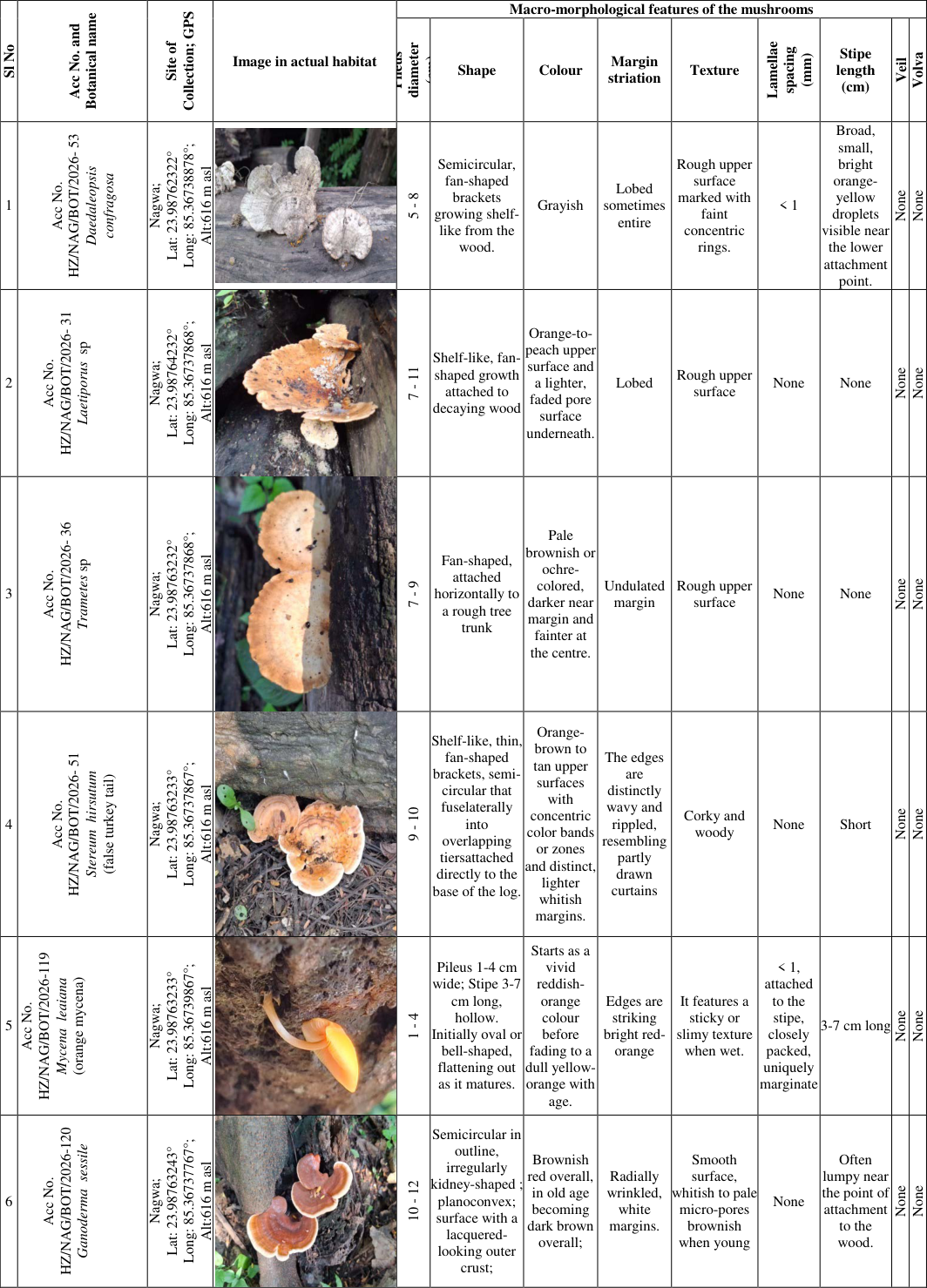 Table 1
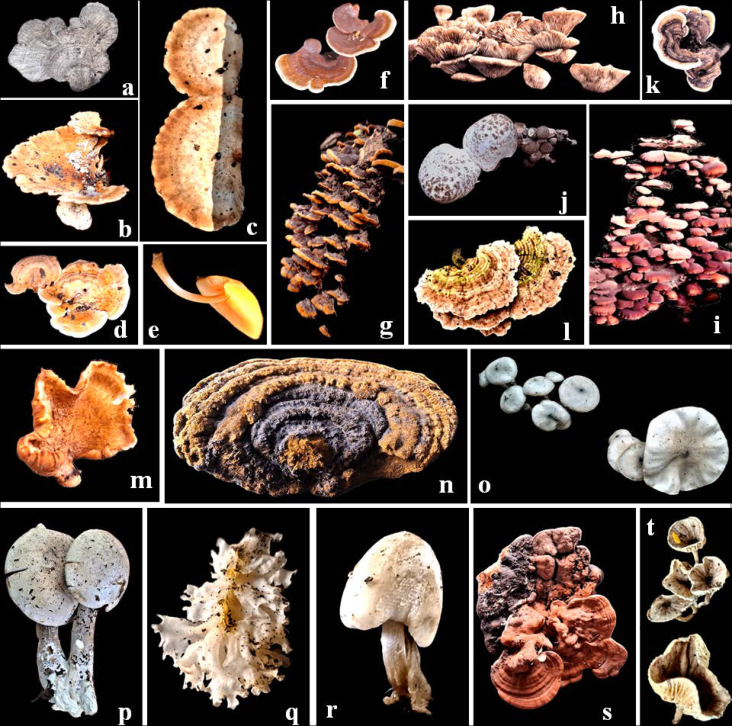 Figure 1
Introduction
The forests of Jharkhand including Hazaribag offer a unique habitat of canopy forming forests, dominated by Sal (Shorea robusta) and Asan (Terminalia tomentosa) (Mishra et al., 2025; Vishal et al., 2024) [11,13] . Along with several other species of trees, these together form an ideal microclimate and provide an abundant supply of organic matter in the forest ecosystem which significantly helps in the proliferation of a diverse range of mushrooms. These wild macrofungi in turn act as primary decomposers to propagate the nutrient cycle, soil formation and formation of symbiotic mycorrhizal networks that sustain dominant flora. For generation after generation, indigenous tribal communities of Hazaribag -the Santhal, Munda, Oraon, Ho, Birhor, Sauria Paharia and others (Premi, 2014; Singhal et al., 2021, Gautam & Singh, 2022; Dubey & Soy, 2021) [1,2,7,10] have preserved and passed on profound traditional knowhow of edible (Singh et al., 2025; Kumar et al., 2024) [6,9] , inedible (Greeshma et al., 2015) [5] and poisonous mushrooms (Gouvinhas et al., 2024; Wijesekara & Xu, 2025) [4,14] . These tribes forage on wild mushrooms as crucial non-timber forest products (NTFPs) of nutraceutical importance. Moreover, collection of wild edible mushrooms for local trade also offers an economic safety net, supporting sustainable livelihoods during peak monsoon (Sharma & Deogharia, 2009; Giri et al., 2025; Tiwari et al., 2018) [3,8,12] . Our active interaction during field visits opened new vistas for the traditional ecological knowledge (TEK) held by these tribes (Yadav et al., 2026) [15] . Knowledge about mushroom diversity of Hazaribag regarding the phenology, edibility and toxicity is vast, yet it remains completely unmapped and orally confined. Mushroom diversity of Hazaribag is critically overlooked through almost all aspects in baseline scientific literature even though they are collected, consumed or avoided without ever being documented in regional or national herbaria. In simple terms, lack of taxonomic identification primarily locks down the biochemical, ecological and nutritional potential of Hazaribag's mushrooms from regional, national as well as global scenario. To overcome these major scientific blind spots, our present study is gently focused to bring some spectacular diverse mushrooms before the scientific community.
Material and methods
Material and methods
Study area and field sampling
The district Hazaribag lies between 23.5° N to 24.4° N and 85.1° E to 85.9° E with an elevation of 613 -615 m above sea level (asl) having a total area 4302 sq. km. It is situated on the Chotanagpur Plateau of Jharkhand, India. A number of mushrooms were collected during field survey from the deciduous forest patches of the region. Strategically planned intensive and regular field surveys were conducted during the peak monsoon (July to August, 2026) corresponding with optimum relative humidity (80% -95%) and ambient temperatures (24°C -32°C) conducive to mushroom development.
Field collection protocol and in-situ documentation
Mature, fresh and undamaged sporocarps (mushrooms) were carefully collected using a sharp stainless-steel scalpel and a small hand trowel so as to extract total specimens along with their complete underground bases (volva i.e. mycelial attachments). These specimens were wrapped loosely in aluminium foil or wax paper and stored in dry partitioned baskets to prevent post harvest damage and water accumulation. Before preservation, structural details and special interesting traits were documented in field notebook. High-resolution digital photographs capturing the pileus, lamellae or pores, stipe, attachment types and substrate interaction were captured under natural lighting. Each specimen that was collected was assigned a unique field index number (e.g. HZ/NAG/BOT/2026-001, 002 etc) and details of the collection site, date of collection and microhabitat was also recorded. Spore prints were also initiated immediately upon arriving at the department laboratory on dual-colored index cards (half-white and half-black) under dust-free covers.
Laboratory processing and macro-morphological evaluation
To prevent autolysis and insect infestations, mushroom specimens were safely opened in the Botany Laboratory within 4-5 hours of collection. Superficially adhered dirt and dust, forest debris etc were removed carefully using fine camel-hair brushes. Detailed macro-morphological examinations were performed, like pileus diameter(cm), shape, colour, margin striation, texture, lamellae spacing(mm), stipe length(cm), veil remnants (annulus) and the presence of a volva.
Wet preservation techniques
For long-term archival storage and anatomical preservation in the departmental fungarium, the specimens of mushrooms designated for morphological reference were offered to wet preservation. Considering the differential pattern of water content and fragility of tissue structure of the collected mushrooms two specific chemical fixatives were deployed based on pigment stability of the taxa. Standard Fungal Preservation Solution (FAA):
The majority of the fleshy macrofungal specimens were fully submerged in a standard solution of Formalin-Aceto-Alcohol (FAA) mixed in the following volumetric ratio: 10% Formaldehyde (Fisher Scientific, 37-41% assay) 5% Glacial Acetic Acid (Qualigens, 99.9%) 50% Alcohol (99.9% Ethanol) Distilled Water Modified HESLER's Solution (for colour retention): For fragile or highly pigmented specimens prone to rapid bleaching in standard alcohol mixtures, a modified Hesler's fluid was prepared to fix natural tones. The formulation comprised: Formalin: 50 mL (Fisher Scientific, 37-41% assay) Zinc Chloride (ZnCl2): 25 g (Fisher Scientific) Glycerol: 50 mL (Fisher Scientific) Distilled Water: 900 mL Specimens were gently transferred into heavy-gauge, clean and transparent jars filled with the designated preservation fluid, ensuring complete immersion without crowding or crushing of the pileus. The lids of the jars were sealed hermetically using petroleum jelly layers to prevent evaporation and atmospheric oxidation.
Specimen labeling and archiving
External tags were externally attached to each mushroom specimen jar with a chemical-resistant label printed on archival paper. The label specified the assigned accession number, generic/specific epithet, precise collection locality (including GPS coordinates), forest type, date of collection, collector's name and the preservation fluid formulation used. The wet-preserved vouchers were cataloged and systematically stored within the dark specimen cabinets of the departmental fungarium for future micro-morphological and taxonomic referencing.
Result and Discussion
The field visits conducted during peak monsoon (July -August, 2026) in Hazaribag, has opened up significant information on macrofungal diversity of this region as well as its seasonal distribution and tribal socio-economic reliance. Some of the studied species and their features are discussed as following:
Mycena leaiana (Acc No. HZ/NAG/BOT/2026-119):
It is a small saprophytic fungus commonly called orange mycena belongs to Basidiomycota (family Mycenaceae) has a bright orange color and a sticky, gelatinous coating on the cap and stipe (Table 1, Fig 1e). Pileus 1-4 cm wide; Stipe 3-7 cm long, hollow. Edges are striking bright red-orange, gills are attached to the stipe, closely packed, uniquely marginate. It is neither popular as an edible mushroom among the locals, nor confirmed to be toxic.
Ganoderma sessile (Acc No.HZ/NAG/BOT/2026-120):
It is a saprophytic prominent wood decaying fungi of Basidiomycota (family Ganodermataceae). It is characterized by its shiny, varnished laccate upper surface and its distinct lack of a defined stipe (Table 1, Fig 1f). It is reported to be rich in bioactive molecules and polysaccharides. Semicircular in outline, irregularly kidneyshaped; planoconvex; surface with a lacquered-looking outer crust; edges are radially wrinkled having white margins. It is inedible due to its tough texture.
Fuscoporia gilva (Acc No. HZ/NAG/BOT/2026-48):
They form a cluster of small, shelf-like, saprophytic bracket fungi growing in overlapping tiers on a weathered wooden log (Table 1, Fig 1g). They are commonly called mustardyellow polypore and belong to Basidiomycota (family Hymenochaetaceae). The upper surfaces display warm yellowish-brown to orange-amber tones near the edges, with orange -red wavy margins. It is velvety, finely textured outer margin. The undersurface is packed with incredibly tiny, almost invisible pores. Stipe is completely absent; the brackets attach directly to the wood in overlapping shelves or small groups. Fruiting bodies are strong and persistent. It is inedible due to its tough texture.
Schizophyllum commune (Acc No. HZ/NAG/BOT/2026 -121):
It is a highly aggressive saprophytic fungus, commonly called split-gill mushroom, has small, fan-like or wavy fruiting body that are directly attached to wood without a distinct stipe (Table 1, Fig 1h). It is creamy yellow and grayish-white to grayish-brown, has a grayish-brown, wavy, scalloped, lobed, deeply incised margin. It is dense yet spongey body texture. Gills are pale, radiating gill-like folds that split lengthwise down the middle. It belongs to Basidiomycota (family Schizophyllaceae), the unique gills on its underside, split longitudinally down the center. It is generally considered inedible in an around Jharkhand, however, it is actively collected, properly cooked and consumed as a traditional food in some parts of Northeast India where it is appreciated for its chewy texture.
Crepidotus sp (Acc No. HZ/NAG/BOT/2026-49):
It is a saprophytic fungus that belongs to Basidiomycota (family Crepidotaceae). The fruiting body is small 0.5 to 5 cm in diameter, convex, semicircular, fan-shaped (Table 1, Fig 1i). Margins of the fruiting body are yellowish to brownish orange in colour which roll inward. Thin and delicate, rubbery caps attach directly to wood like small shelves, fans or semicircular brackets. Stipe absent. It is inedible being too small and fleshless to have any culinary value.
Volvariella bombycina (Acc No. HZ/NAG/BOT/ 2026 -118):
They are small, round, whitish fungal fruiting bodies in an early button stage with speckled brown caps sprouting from a decaying wood crack of a log (Table 1, Fig 1j). They are commonly called silky rosegill, silky sheath, tree mushroom. It starts as egg-shaped body, matures into a bell shape. It is pure white with brown spots on pileus. Volva having tan-to-brown colour at the base of the stem was observed. It is saprophytic fungi that belongs to Basidiomycota (family Pluteaceae). No clear confirmation regarding its palatability was recorded.
Trametes versicolor (Acc No. HZ/NAG/BOT/ 2026 -33):
It is a saprophytic species with distinct concentric rings showing alternating bands of dark brown and a pale white or cream margin (Table 1, Fig 1k). It has a wavy, lobed and smooth margin that belongs to Basidiomycota (family Polyporaceae). It is one of the common polypore fungi found in forests of Jharkhand. It is woody and has whitish to pale micro-pores on the underside. The fan-shaped or lobed brackets grow on decaying wood. It is too tough and woody to be eaten as a culinary mushroom.
Stereum sp (Acc No. HZ/NAG/BOT/2026 -46):
Fan-shaped or lobed brackets, soft fruiting body, growing on decaying wood that belongs to Basidiomycota (family Stereaceae). The fruiting body develops concentric bands of tan and beige to orange-brown, with patches near the bases with soft margins having wavy edges (Table 1, Fig 1l). The fruiting body can crack with pressure; undersurface is almost poreless, smooth. They are not known to be toxic or poisonous, unpalatable due to their texture.
Favolus grammocephalus (Acc No. HZ/NAG/ BOT/2026-52):
It is a saprophytic mushroom with a wavy, fan or cup shaped cap growing out of a decaying log ( . Big fleshy pileus 10-14 cm, convex, creamy white to light brown, fused at the thick base, broad, flat, no sharp umbo. The surface was smooth, dry and usually ranged from creamy white to pale tan. Entire margin, slightly cracked at some places. It had soft, rough pileus and stout stipe. Stipe very thick, 12-15 cm long and has no long tapering pseudorhiza. Joined at the base and lacks veil. Not a popular edible mushroom.
Tremella fuciformis (Acc No. HZ/NAG/BOT/ 2026 -45):
It is universally known as the snow fungus, white jelly mushroom, or silver ear (Table 1, Fig 1q). This highly prized jelly fungus belongs to Basidiomycota (family Tremellaceae). It is easily recognizable for its distinct translucent, gelatinous appearance and its massive popularity in dishes and skincare products.Local community finds it inedible as it is practically tasteless on its own but is highly valued, edible mushroom known for its delicate, crunchy and gelatinous texture. It easily absorbs the flavours of whatever it is cooked with.
Volvopluteus gloiocephalus (Acc No. HZ/NA /BOT/2026-50):
It is a saprophytic macrofungi belongs to Basidiomycota (family Pluteaceae) that grows on compost, garden soil or any other place rich in organic matter (Table 1, Fig 1r). Fruiting body appears whitish with a light grey-brown colour, slightly sticky, shiny centre. The gills are free from the stem. The margin is entire, regular, non-striate, slightly incurved, smooth, pileus viscid when moist, smooth, glabrous, stipe smooth, longitudinally fibrillose-silky, fragile-fleshy. Although it is non-toxic and safely edible, but locals do not recommend for foraging or consumption in Jharkhand due to its toxic look-alikes.
Ganoderma sp (Acc No.HZ/NA/BOT/2026-115):
It is a highly distinct group of wood-decaying polypores, commonly known as shelf fungi, bracket fungi, or varnished conks (Table 1, Fig 1s). They are useful in traditional medicine and belongs to Basidiomycota (family Polyporaceae). It is a saprophytic macrofungi, hard, woody, shelf-like bracket, sessile, growing on wood. Big and fused mass with reddish-brown to dark brown, with distinct concentric growth rings. Lobed surface is entire, wavy, lighter brown colour at the growing edge. It is rigid, woody, corky and impossible to bend or crush with bare hands. They are completely inedible due to their rock-hard, woody texture but are medicinally valuable.
Infundibulicybe gibba (Acc No.HZ/NA/BOT/ 2026-116):
It is a saprophytic macrofungi commonly called funnel cap that grow on moist, humus rich soil. It is a widespread, ground-dwelling gilled mushroom which is easily recognized by its classic, elegant funnel shape and light, pastel coloration (Table 1, Fig 1t). It belongs to Basidiomycota (family Tricholomataceae) has pileus 2-5 cm, deeply infundibuliform, hygrophanous, light brown with darker centre, margin wavy, uplifted, striate. Gills are decurrent, crowded, whitish-cream with central stipe, thin, pale, 2-4 cm. It is generally considered a mediocre or poorquality edible mushroom by the locals and they strongly advised against eating it because it looks nearly identical to several small, white, ground-dwelling mushrooms in the Clitocybe genus (like Clitocybe rivulosa), which are deadly poisonous and cause severe muscarine poisoning.
Conclusion
The diverse wild macrofungi of Hazaribag signify an essential intersection of ecological dynamics and indigenous cultural heritage. To prevent data loss, comprehensive taxonomic classification, ethno-mycological surveys and targeted habitat conservation initiatives must be prioritized.
Formally documenting this underxamined repository is crucial to preserve a major pillar of Jharkhand's natural biodiversity. In our present survey, the total collection of twenty mushroom species belonged to thirteen families and one division Basidiomycota. Five mushrooms belonged to Polyporaceae; two mushrooms each from Stereaceae, Hymenochaetaceae, Pluteaceae; one mushroom each from Laetiporaceae, Mycenaceae, Ganodermataceae, Schizophyllaceae, Crepidotaceae, Clitocybaceae, Callistosporiaceae, Tremellaceae and Tricholomataceae. Almost all mushrooms that were collected in the present study were saprophytic and inedible in nature. These results demonstrate a pressing need for specific conservation frameworks aimed at protecting this rich fungal diversity prior to its irreversible disappearance from the ecosystem.
Acknowledgement
I express my deepest gratitude to the Principal, Annada College, Vinoba Bhave University, Hazaribag, Jharkhand for providing the necessary support, encouragement and laboratory facilities to conduct this research on the macrofungi of Hazaribag. Special thanks are also due to the technical staff of the Department of Botany, Annada College for their assistance during the taxonomic identification process. I extend my heartfelt appreciation to the local and indigenous tribal communities of Hazaribag, this work would not have been possible without their generous sharing of traditional ethno-mycological knowledge and their vital assistance during field surveys and specimen collection.
Figures and tables from the paper
References
15 in the original paper- Dubey R, Soy S. HO' tribe of West Singhbhum Jharkhand. Voice Res. 2021;10(1):44-47.
- Gautam N, Singh A. A situational analysis of scheduled tribes of Jharkhand in relation to their spatial distribution, demographic composition and educational status. BJPA. 2022;19(2):101-101.
- Giri S, Paul P, Pradhan P. Ethno-mycological perception towards wood ear fungi (Auricularia spp.) in and around the Indian subcontinent. Asian J For. 2025; 9:82-96.
- Gouvinhas I, Silva J, Alves MJ, Garcia J. The most dreadful mushroom toxins: a review of their toxicological mechanisms, chemical structural characteristics, and treatment. EXCLI J. 2024; 23:833833.
- Greeshma AA, Sridhar KR, Pavithra M. Macrofungi in the lateritic scrub jungles of southwestern India. J Threat Taxa. 2015;7(11):7812-7820.
- Kumar J, Topno J, Mahto G. Knowledge and documentation of wild edible and non-edible mushrooms used by the local communities of Jharkhand. Biophilia Insights. 2024;2(1). doi:10.52679/bi.e202421005.
- Premi JK. Birhor: the inconsequential extraordinary primitive tribal group (PTG) of India. Res J Humanit Soc Sci. 2014;5(4):366-369.
- Sharma N, Deogharia PH. SHGs and bank linkage in Jharkhand. Jharkhand J Soc Dev. 2009; 2:1-1.
- Singh A, Singh G, Kapoor R, Dhasmana A, GhoshJerath S. Wild edible mushrooms of Jharkhand: nutrient-dense seasonal foods to improve dietary diversity among indigenous communities. Curr Res Nutr Food Sci. 2025;13(1):61-61.
- Singhal V, Ghosh J, Bhat SS. Role of religious beliefs of tribal communities from Jharkhand (India) in biodiversity conservation. J Environ Plan Manag. 2021;64(13):2277-2299.
- Mishra S, Marndi S, Devi RS, Rout S, Kumar S. The economy of sal tree: from traditional handcrafts to the health and construction sectors. Bionature. 2025;45(2):51-60. doi:10.56557/bn/2025/v45i22065.
- Tiwari N, Kumar S, Tiwari AB. Knowledge and adoption level in mushroom cultivation among rural women in Gumla district of Jharkhand. J Krishi Vigyan. 2018;6(2):150-152.
- Vishal V, Thongsuwan P, Thamvithayakorn P, Suwannasai N, Phosri C, Martín MP. Comprehensive morphological and phylogenetic inferences of starshaped fungus Astraeus (Diplocystidiaceae) from saldominant tropical and subtropical Pinus-Shorea forests in India: an integrative taxonomic analysis. 2024.
- Wijesekara T, Xu B. Insights into therapeutic potential and practical applications of natural toxins from poisonous mushrooms. Hum Exp Toxicol. 2025; 44:09603271251323134.
- Yadav SK, Sarkar S and Mina Shrivastava. The fungal wealth of Hazaribag amidst rapidly degrading ecosystem -Year 2026 perspective. J. Med. Plants. Stud., 2026; 14(5): Part A, 01-08 DOI:https://www.doi.org/10.22271/plants.2026.v14.i5a. 2216