
Research article · 2026 · Full text
International Journal of Geography Geology and EnvironmentMapping and ethnobotanical utilization of tree flora at selected urban sites of Agra city, Uttar Pradesh, India
Volume 8(9) · Pages 159–164 · DOI: 10.22271/27067483.2026.v8.i9b.876 ↗
Research areasUrban Arborization and Environmental StudiesEthnobotanical and Medicinal Plants StudiesBotany and Plant Ecology Studies
Abstract
Author-writtenAgra, a heritage city of Uttar Pradesh on the bank of the river Yamuna, is internationally known for its Mughal-era monuments, including the Taj Mahal, but its urban tree flora much of it associated with century-old garden plantings and roadside avenues remains poorly documented. The present research paper reports the field documentation, GPS-referenced mapping, and ethnobotanical utilization of tree flora at eight urban sites of Agra city, grouped into three site categories: railway stations (Raja Ki Mandi, Billochpura, and Idgah), heritage monuments (Sikandra, the Taj Mahal, and the Tomb of I'timad-ud-Daulah), and bus stands (Eidgah and the Inter-State Bus Terminal). Field excursions were used to prepare digital photographic voucher specimens, record GPS coordinates, and identify species with the help of standard flora literature. Six recurrent tree taxa Azadirachta indica (Neem), Ficus religiosa (Peepal), Ficus benghalensis (Bargad) and Saraca asoca (Ashoka) were documented across the surveyed sites, with heritage monuments showing the most consistent presence of the full assemblage, consistent with historical Mughal charbagh garden planting traditions, while railway stations and bus stands showed a narrower, hardier subset dominated by Neem and Peepal. Detailed taxonomic, phytochemical, and ethnomedicinal profiles, each anchored to GPS-referenced site coordinates, are presented for all six species: field-recorded coordinates are available for Azadirachta indica (Raja Ki Mandi Railway Station, 27.194585°N 77.997164°E, and Sikandra, 27.216753°N 77.951572°E), while representative site-level coordinates were assigned by the present authors, from the same site-location data underlying the study-area map, for Ficus religiosa, Ficus benghalensis and Saraca asoca. For Saraca asoca, local community-reported folk preparations for leucorrhoea, renal calculi, dermatological complaints, and respiratory ailments are documented and cross-checked against the published pharmacological literature. The findings are discussed in relation to comparable urban-tree-diversity studies from other Uttar Pradesh cities and a recent India-wide urban tree diversity database, and the paper recommends the systematic expansion of GPS-tagged digital-herbarium documentation as a low-cost tool for urban tree conservation planning in historic cities.
Summary
Source-checkedPlain-language reading of the full paper, prepared with AI and checked against the text. Each point links to the authors' own words.
Why it matters
- Trees are critical for urban environments because they provide air purification, shade, and habitat, and in historic cities, they serve as living records of historical planting traditions. View evidence ↗
- There is an urgent need for baseline documentation of urban trees in India because rapid urbanization and infrastructure growth are threatening older tree cover and heritage plantings. View evidence ↗
- Despite its international fame for Mughal-era monuments, the urban tree flora of Agra, much of which is linked to century-old roadside avenues and gardens, is poorly documented. View evidence ↗
The question
- The study aimed to identify, document, and GPS-map tree flora at selected railway stations, bus stands, and heritage monuments in Agra, while also recording their medicinal uses. View evidence ↗
What they did
- The researchers surveyed eight sites categorized into three groups: railway stations (Raja Ki Mandi, Billochpura, Idgah), heritage monuments (Sikandra, Taj Mahal, Tomb of I'timad-ud-Daulah), and bus stands (Eidgah, ISBT). View evidence ↗
- Field excursions to the eight selected sites were conducted periodically between 2017 and 2018. View evidence ↗
- Tree specimens were identified, digitally photographed for voucher records, and geo-tagged using handheld GPS or smartphones. View evidence ↗
- Medicinal use data were gathered from field notes and verified against published literature from databases including PubMed, Scopus, and Google Scholar. View evidence ↗
What they found
- Neem (Azadirachta indica) and Peepal (Ficus religiosa) were the most widespread species, found across all three site categories (railway stations, heritage monuments, and bus stands). View evidence ↗
- Bargad (Ficus benghalensis) and Ashoka (Saraca asoca) were found primarily at heritage monument sites. View evidence ↗
- Heritage monuments hosted all six recorded tree taxa, while railway stations and bus stands only hosted the two most disturbance-tolerant species: Neem and Peepal. View evidence ↗
- Local reports for Neem include using leaf paste for acne/skin disease, leaf and root decoctions for fever, twigs for dental hygiene, and resting on leaves for chickenpox. View evidence ↗
- Peepal bark and leaf decoctions are traditionally used locally for skin disorders, dental/gum complaints, and managing diabetes. View evidence ↗
- Bargad bark and aerial roots are used locally for wound care and as an astringent for dysentery and diarrhoea. View evidence ↗
- Ashoka preparations include powdered bark for leucorrhoea, seed powder for renal calculi and respiratory issues, and boiled bark with mustard oil for pimples. View evidence ↗
What it means
- The authors conclude that Agra's heritage grounds act as long-term repositories for historically significant tree diversity and that a low-cost GPS-tagged digital voucher approach is feasible for creating a city-wide digital herbarium. View evidence ↗
- The study is a qualitative documentation exercise and does not provide quantitative data on population structure, basal area, or tree density. View evidence ↗
- The reported folk preparations for Ashoka were based on informant reports and were not independently clinically or phytochemically validated by the authors. View evidence ↗
Visual summary
1 visualsIllustrations explain the paper; they do not show study data.
Urban Tree Distribution Comparison
AI-generated conceptual illustration (Urban tree flora in Agra city, India). It explains the idea and does not show study data.
View source evidence ↗Figures & tables
From the original paper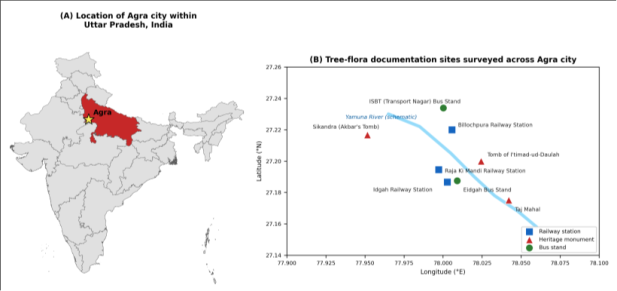 Figure 1
 Table 1
 Table 2
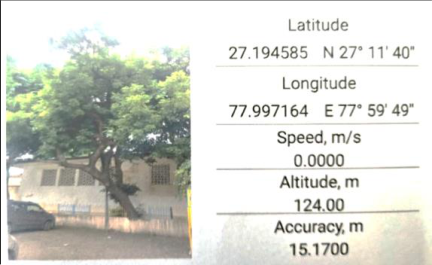 Figure 2
 Table 3
 Table 4
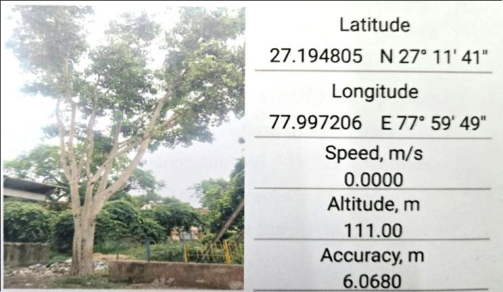 Figure 3
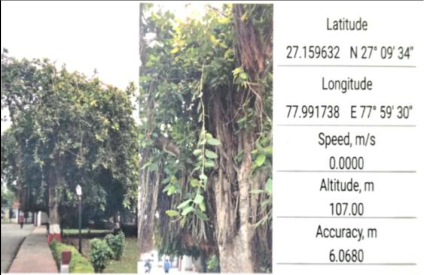 Figure 4
 Table 5
 Table 6
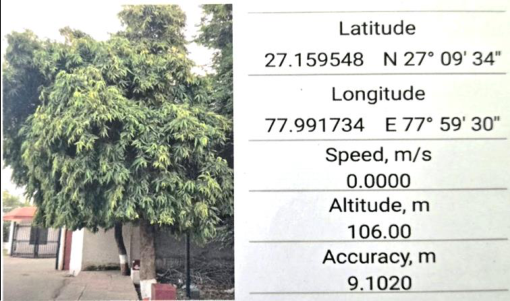 Figure 5
Introduction
Plants of diversified habit herbs, shrubs, and trees are distributed across virtually every terrestrial habitat and constitute a key source of livelihood, providing food, fibre, timber, and, since the earliest periods of human civilisation, medicine for humans, animals, and plants themselves. Among these growth forms, trees are perennial and disproportionately important for the local environment, offering shade, air purification, and habitat, and, in historic cities, often standing as living relics of past planting traditions. Agra, the headquarters of Agra district in Uttar Pradesh, lies on the bank of the river Yamuna and is internationally known as "the city of Taj" owing to the presence of the Taj Mahal, one of several Mughal-era, UNESCO World Heritage monuments in the city, alongside the Agra Fort (Red Fort) and Fatehpur Sikri. The city is first mentioned, as "Agrevana" (literally, the border of the forest), in the Mahabharata. Agra rose to particular prominence under the Mughals: Babur, founder of the Mughal dynasty, laid out the first Persian-style garden on the bank of the Yamuna (the Aram Bagh, meaning "garden of relaxation"); his grandson Akbar built the Red Fort and its gardens; and Akbar's son Jahangir, known for his love of flora and fauna, developed further gardens within the fort complex. This centuries-long tradition of formal garden-building in and around Agra's monuments provides the historical backdrop against which the present urban tree-flora documentation is set: many of the heritage sites of Agra are, in effect, long-maintained, semi-formal plantations that may still preserve tree taxa favoured in historical garden design. Systematic documentation of urban tree flora, and of its associated ethnomedicinal knowledge, is important for at least three reasons. First, rapid urbanisation and infrastructure development in Indian cities is placing increasing pressure on older tree cover, including heritage plantings, making baseline documentation urgent. Second, several regional studies have shown that Uttar Pradesh's urban centres retain a biologically and ethnobotanically significant tree flora: assessments of urban green spaces in Allahabad city recorded 64 tree species from 28 families with Fabaceae as the dominant family (Pandey & Kumar, 2018) [7] , while comparable urban forestry inventories from other central Indian cities such as Bilaspur, Chhattisgarh, have documented 60 tree species from 22 families with a similarly skewed dominance structure (Singh & Tiwari, 2022) [12] . A recently compiled India-wide urban tree diversity database, synthesising 39 city-level studies together with citizen-science records, has independently identified Azadirachta indica among the most frequently recorded urban tree species nationally, alongside Psidium guajava and Ricinus communis (Sirur, 2026) [14] , lending broader context to the dominance of Neem observed in the present study. Third, several plant species recorded in and around Agra carry substantial ethnomedicinal value that has been documented in earlier regional surveys: an ethnomedicinal study of naturalised herbs and shrubs of Agra district recorded numerous folk remedies (Tiwari, 2016) [16] , a phytochemical screening of six native herbaceous species of Agra city (Achyranthes aspera, Acalypha indica, Euphorbia hirta, Lindenbergia indica, Parthenium hysterophorus, and Peristrophe bicalyculata) confirmed the presence of alkaloids, tannins, saponins, glycosides, phenols, flavonoids, anthraquinones, terpenoids, and steroids, with the ethanolic extract of Achyranthes aspera showing the broadest phytochemical profile (Pandith, 2012), and a separate study described important plant species at Paliwal Park, Agra, an urban green space of local biodiversity significance (Ojha, 2019) [6,8] . A methodologically comparable, though geographically distinct, ethnobotanical survey of 64 herbaceous species was also conducted in Agra Valley, Parachinar (Upper Kurram Agency, Pakistan) a differently located region sharing only the name "Agra" with the present study area and is cited here for its complementary field methodology rather than as evidence specific to Agra, Uttar Pradesh (Zikrea & Siddiqui, 2014) [19] . Related environmental studies from Agra, including a pollen calendar with reference to allergenic significance (Chauhan, 2006), a two-year phytoplanktonic diversity survey of Kitham Lake (Sur Sarovar) (Tiwari & Chauhan, 2005) [16] , an inventory of invasive alien plants of the Soor Sarovar Bird Sanctuary (Wagh, 2016) [4,18] , and an assessment of plant responses to dust pollution relevant to urban roadside plantations (Rupnarayan, 2017) [10] , together establish that Agra's urban and peri-urban flora has been a recurrent subject of botanical study, even though its tree component specifically had not previously been geomapped at named heritage and transit sites. Building on this background, the specific objectives of the present research were to: (i) identify survey sites and sample the tree flora present at selected railway stations, heritage monuments, and bus stands of Agra city; (ii) identify and document the tree species recorded at these sites with reference to standard flora literature; (iii) GPS-map the identified flora and prepare digital photographic voucher specimens toward a digital herbarium; and (iv) document the ethnobotanical (medicinal) utilization of the tree flora recorded at the selected sites.
Study Area
Study Area
Materials and Methods
The study was based on extensive and intensive periodical field excursions to the eight selected sites across Agra city between 2017 and 2018. At each site, tree specimens were located, photographed in digital form to serve as voucher records, and geo-tagged using handheld GPS/smartphone positioning to record latitude and longitude. Species were identified with the help of standard regional flora literature and by comparison with authenticated reference images, and were recorded with their botanical name, family, vernacular (Hindi) name, habitat, and general morphological description. Ethnobotanical (medicinal) use information for the species selected for detailed profiling was compiled from field notes and cross-checked against the published phytochemical and ethnopharmacological literature identified through targeted searches of Google Scholar, PubMed, and Scopus, in order to verify the plausibility of the reported folk uses against independently documented pharmacological evidence. Digital voucher images and associated locality, GPS, and identification data were organised toward the preparation of a digital herbarium for the surveyed sites. The district-level location of each site was subsequently mapped onto the administrative boundary of Uttar Pradesh using open-source state-level GIS boundary data to construct the study-area map (Figure 1).
Results and Discussion
Results and Discussion
Tree flora recorded across the surveyed urban site categories
Five tree taxa were consistently recorded across the eight surveyed sites (Table 1). Azadirachta indica (Neem) and Ficus religiosa (Peepal) were the most widely distributed species, occurring at sites in all three categories railway stations, heritage monuments, and bus stands consistent with their well-documented tolerance of compacted urban soils, air pollution, and low maintenance, a pattern also reported for other Uttar Pradesh and central Indian cities (Pandey & Kumar, 2018; Singh & Tiwari, 2022) and for Indian urban areas nationally (Sirur, 2026) [7] . Ficus benghalensis (Bargad) and Saraca asoca (Ashoka) were recorded predominantly at the heritage monument sites. This distribution pattern suggests that Agra's heritage monument's function, in effect, as informal in-situ repositories of a wider and historically continuous tree assemblage than is maintained along the city's transit infrastructure [12,14] . Locally reported uses recorded during the present survey include the application of leaf paste for acne and skin disease, use of leaf and root decoctions to relieve fever, use of twigs for dental hygiene, and traditional advice for chickenpox patients to rest on Neem leaves uses that are broadly consistent with the wider Ayurvedic, Unani, and Siddha documentation of the species (Reddy & Neelima, 2022) [1,9] . 1) and mapped here at one representative site per category (Table 3). It is a large, fast-growing, semi-deciduous tree reaching 20-30 m, with a broad spreading crown, characteristic heartshaped leaves with a long drip-tip, and small axillary syconia (fig receptacles) that ripen purple and are dispersed by birds and bats. The species is revered in Hindu, Buddhist, and Jain tradition and is frequently planted or allowed to persist at temples, tombs, and transit infrastructure alike. Phytochemically, the bark, leaves, and latex contain flavonoids (notably quercetin and kaempferol derivatives), tannins, phytosterols, and triterpenoids, which underlie pharmacologically documented antidiabetic, antimicrobial, antioxidant, and wound-healing activity (Murugesu, Selamat, & Perumal, 2021). Locally, bark and leaf decoctions are traditionally used for diabetes management, dental and gum complaints, and skin disorders, consistent with the wider Ayurvedic use of the species. Ficus benghalensis (family Moraceae), the banyan or Bargad, was recorded exclusively at the heritage monument sites (Table 1; Table 4). It is a very large, evergreen, strangler-habit tree distinguished by extensive aerial (prop) roots that descend from the horizontally spreading branches and thicken into secondary trunks, allowing individual specimens to attain great canopy spread and considerable longevity; mature specimens bear small, sessile, red-ripening figs in axillary pairs. Like F. religiosa, the species is phytochemically characterised by flavonoids, tannins, and triterpenoids, and the two species are frequently reviewed together for their overlapping antidiabetic, antimicrobial, antioxidant, and wound-healing properties (Murugesu, Selamat, & Perumal, 2021). Locally, the bark and aerial roots are traditionally used as an astringent for diarrhoea and dysentery and topically for wound care, while the tree's characteristic form makes it a favoured shade and shelter species at heritage monument grounds. 5). It is a small, erect, evergreen tree with a smooth grey-brown bark and a compact, shapely crown, bearing dense, long-tubed orangeto-scarlet flower clusters, most profusely in January-February, and straight to scimitar-shaped pods. The bark is documented to be rich in tannins, catechins, glycosides, and ketosterols, and is the pharmacologically active plant part (present field data; Saluja & Gautam, 2023; Sulaiman et al., 2020) [11,15] . Four locally reported folk preparations were documented during the present survey (Table 6), all consistent with the wider Ayurvedic characterisation of Asoka bark as an astringent, uterine tonic used principally for gynaecological complaints, but also, as recorded here, for renal, dermatological, and respiratory conditions. Respiratory complications 'Big betel leaf' stuffed with Ashoka seed powder, taken twice daily (morning and evening) Note: These preparations were documented as reported by local informants during field visits to the heritage sites; they are recorded here as ethnobotanical data and have not been independently subjected to clinical validation by the present authors.
| S.No. | Ailment | Reported preparation |
|---|---|---|
| 1 | Leucorrhoea | Powdered bark taken with an equal quantity of candy (mishri); ½ teaspoon in the morning and ½ teaspoon in the evening |
| 2 | Renal calculi / excessive urination | 1-2 spoonfuls of ground seed powder (1-2 g) taken with water, twice daily |
| 3 | Pimples | Bark boiled in one cup of water and mixed with ½ cup of mustard oil, applied topically |
| 4 | Respiratory complications | ‘Big betel leaf’ stuffed with Ashoka seed powder, taken twice daily (morning and evening) |
Table text extracted from the original PDF; superscript letters are shown inline. The original table image is below.
View original table image
| S.No. | Site | Site category | Latitude | Longitude |
|---|---|---|---|---|
| 1 | Sikandra (Akbar's Tomb) | Heritage monument | 27.216753° N | 77.951572° E |
| 2 | Tomb of I'timad-ud-Daulah | Heritage monument | 27.2000° N | 78.0244° E |
Table text extracted from the original PDF; superscript letters are shown inline. The original table image is below.
View original table image
| S.No. | Site | Site category | Latitude | Longitude |
|---|---|---|---|---|
| 1 | Idgah Railway Station | Railway station | 27.1867° N | 78.0027° E |
| 2 | Taj Mahal | Heritage monument | 27.1751° N | 78.0421° E |
| 3 | Eidgah Bus Stand | Bus stand | 27.1875° N | 78.0090° E |
Table text extracted from the original PDF; superscript letters are shown inline. The original table image is below.
View original table image
| S.No. | Botanical Name (Family) | Vernacular Name | Railway stations | Heritage monuments | Bus stands |
|---|---|---|---|---|---|
| 1 | Azadirachta indica A. Juss. (Meliaceae) | Neem | ✓ | ✓ | ✓ |
| 2 | Ficus religiosa L. (Moraceae) | Peepal | ✓ | ✓ | ✓ |
| 3 | Ficus benghalensis L. (Moraceae) | Bargad | - | ✓ | - |
| 4 | Saraca asoca (Roxb.) Willd. (Fabaceae / Caesalpiniaceae) | Ashoka | - | ✓ | - |
Table text extracted from the original PDF; superscript letters are shown inline. The original table image is below.
View original table image
Heritage monuments as informal repositories of urban tree diversity
A clear pattern emerging from the site-category comparison (Table 1; Tables 23456) is that the three heritage monuments Sikandra, the Taj Mahal, and the Tomb of I'timad-ud-Daulah collectively hosted the full complement of six recorded tree taxa, whereas the railway stations and bus stands hosted only the two most disturbance-tolerant species, Azadirachta indica and Ficus religiosa. This is consistent with the historical charbagh (four-quartered) garden design tradition introduced to Agra under Babur and elaborated by his successors, in which fruit-bearing and flowering trees such as date palm, banyan, and Ashoka were deliberately incorporated alongside utilitarian and shade species such as Neem, and with the fact that these monument grounds have since been continuously maintained, first by the Mughal court and subsequently by the Archaeological Survey of India, largely insulating them from the disturbance regimes affecting roadside and transitinfrastructure plantings elsewhere in the city. A broadly similar dominance of a small number of hardy taxa along transit corridors and a wider assemblage in protected or garden-like green spaces has been reported from urban green-space assessments of other Uttar Pradesh cities (Pandey & Kumar, 2018) and from central Indian urban centres (Singh & Tiwari, 2022), and is consistent with the national pattern in which a handful of species including Azadirachta indica dominate India's urban tree cover irrespective of region (Sirur, 2026) [7,12,14,16] .
Limitations
This study is a qualitative, photographic-voucher and GPSpoint documentation exercise across eight named sites rather than a quantitative, plot-based inventory, and it therefore does not provide density, basal-area, or population-structure data of the kind reported in quota sampled urban forestry studies (Pandey & Kumar, 2018; Singh & Tiwari, 2022) [7,12,16] . Species specific GPS coordinates recorded directly in the field during the original survey exist only for Azadirachta indica (Table 2); for the remaining four species (Ficus religiosa, Ficus benghalensis and Saraca asoca), the present authors have assigned representative site-level coordinates, drawn from the same site-location data underlying Figure 1, to the specific site(s) within each category where the species was photographically documented in the source material. These assigned coordinates should be read as indicating the site, not as an independently re-surveyed GPS fix for the individual tree, and any future re-survey of the park/monument grounds should re-verify exact specimen locations with handheld GPS. Similarly, the ethnomedicinal context for Ficus religiosa and Ficus benghalensis is supplemented from the published pharmacological literature (Murugesu et [2, 3, 5, 13] rather than from site-specific local interviews, whereas the Azadirachta indica and Saraca asoca usereports were recorded directly from local informants during fieldwork. The reported folk preparations for Saraca asoca (Table 6) likewise reflect informant reports gathered during fieldwork and have not been subjected to independent clinical or phytochemical validation by the present authors; they should be read as ethnobotanical documentation rather than as verified therapeutic recommendations.
| S.No. | Site | Site category | Latitude | Longitude |
|---|---|---|---|---|
| 1 | Raja Ki Mandi Railway Station | Railway station | 27.194585° N | 77.997164° E |
| 2 | Sikandra (Akbar's Tomb) | Heritage monument | 27.216753° N | 77.951572° E |
Table text extracted from the original PDF; superscript letters are shown inline. The original table image is below.
View original table image
Conclusion
The present study documents, geo-references, and analyses the tree flora of eight urban sites in Agra city spanning three functional categories railway stations, heritage monuments, and bus stands. Six recurrent taxa were recorded, with Azadirachta indica and Ficus religiosa distributed across all site categories and a wider assemblage, including Ficus benghalensis and Saraca asoca largely confined to the continuously maintained grounds of Agra's Mughal-era heritage monuments. Detailed GPS-referenced, taxonomic, phytochemical, and ethnomedicinal profiling of Azadirachta indica and Saraca asoca demonstrates that both species carry substantial, literature-corroborated therapeutic value, from Neem's broad-spectrum antimicrobial and antiinflammatory constituents to Ashoka bark's traditional gynaecological, renal, dermatological, and respiratory applications. These findings support the value of Agra's heritage monument grounds as informal, long-term repositories of historically significant urban tree diversity, and demonstrate the feasibility of a low-cost, GPS-tagged, digital-photographic-voucher approach to building a citywide digital herbarium. Future work should extend this documentation to a larger, systematically sampled set of sites across Agra, integrate quantitative density and regeneration data, pursue phytochemical validation of the locally reported folk preparations, and contribute the resulting records to emerging national urban tree diversity databases (Sirur, 2026) to support conservation planning by civic and heritage authorities [14] .
Acknowledgement
AcknowledgementThe authors gratefully acknowledge Director, Dayalbagh Educational Institute (Deemed to be University), Agra, for institutional support during the preparation of this work.
Figures and tables from the paper
| S.No. | Site | Site category | Latitude | Longitude |
|---|---|---|---|---|
| 1 | Sikandra (Akbar's Tomb) | Heritage monument | 27.216753° N | 77.951572° E |
| 2 | Tomb of I'timad-ud-Daulah | Heritage monument | 27.2000° N | 78.0244° E |
Table text extracted from the original PDF; superscript letters are shown inline. The original table image is below.
View original table image
References
19 in the original paper- Batra N, Easwar Kumar V, Nambiar R, De Souza C, Yuen A, Le U, et al. Exploring the therapeutic potential of Neem (Azadirachta indica) for the treatment of prostate cancer: a literature review. Ann Transl Med. 2022;10(13):754. doi:10.21037/atm-22-94.
- Jain P, Jain S, Sharma S, Paliwal S. Diverse application of Phoenix sylvestris: a potential herb. Agric Nat Resour. 2018;52(2):107-115. doi:10.1016/j.anres.2018.06.010.
- Lim XY, Chan JSW, Japri N, Lee JC, Tan TYC. Carica papaya L. leaf: a systematic scoping review on biological safety and herb-drug interactions. Evid Based Complement Alternat Med. 2021;2021:5511221. doi:10.1155/2021/5511221.
- Chauhan SVS. Pollen calendar of Agra city with special reference to allergenic significance. Environ Biol. 2006;2:275-281.
- Murugesu S, Selamat J, Perumal V. Phytochemistry, pharmacological properties, and recent applications of Ficus benghalensis and Ficus religiosa. Plants. 2021;10(12):2749. doi:10.3390/plants10122749.
- Ojha J. Description of some important plant species at Paliwal Park. Int J Interdiscip Res. 2019;8:2348-6775.
- Pandey RK, Kumar H. Tree species diversity and composition in urban green spaces of Allahabad city (U.P.). Plant Arch. 2018;18(2):2687-2692.
- Pandith JI. Phytochemical screening of certain plant species of Agra city. Drug Deliv Ther. 2012;2:89-97.
- Reddy IVS, Neelima P. Neem (Azadirachta indica): a review on medicinal Kalpavriksha. Int J Econ Plants. 2022;9(1):59-63. doi:10.23910/2/2021.0437d.
- Rupnarayan. Responses in plants exposed to dust pollution. Hortic Int J. 2017;1(2):53-56.
- Saluja S, Gautam YK. Plant profile, phytochemistry, pharmacology and genetic diversity of Saraca asoca: a vulnerable medicinal tree of India. J Indian Bot Soc. 2023:109-118. doi:10.5958/2455-7218.2023.00018.9.
- Singh H, Tiwari SC. Trees diversity, distribution, and conservation in urban centers: a study of Bilaspur city of Chhattisgarh state, India. J Sci Res (BHU). 2022;66(1):238-246. doi:10.37398/JSR.2022.660126.
- Shajib MS, Islam S, Alam S, Rashid RB, Afroze M, Khan M, et al. GC-MS analysis and pharmacological evaluations of Phoenix sylvestris (Roxb.) seeds provide new insights into the management of oxidative stress and hyperglycemia. Food Sci Nutr. 2023;11(2):927938. doi:10.1002/fsn3.3196.
- Sirur S. New database captures urban tree diversity. Mongabay India. 2026.
- Sulaiman CT, Jyothi CK, Jinu Krishnan UG, Prabhukumar KM, Balachandran I. Identification of validated substitute for Asoka (Saraca asoca (Roxb.) Willd.) by phytochemical and pharmacological evaluations. Future J Pharm Sci. 2020;6:47. doi:10.1186/s43094-020-00024-2.
- Tiwari A. Ethnomedicinal study of some naturalized herbs and shrubs growing in Agra district in India. Biol Sci. 2016;222:163-167.
- Tiwari A, Chauhan SVS. Seasonal phytoplanktonic diversity of Kitham Lake, Agra. Environ Biol. 2005;27(1):35-38.
- Wagh VV. Diversity of invasive alien plants in Soor Sarovar Bird Sanctuary (SSBS), Keetham, Agra, India. Int J Curr Res Biosci Plant Biol. 2016;3:62-69.
- Zikrea A, Siddiqui MF. Ethnobotanical studies of herbs of Agra Valley, Parachinar, Upper Kurram Agency, Pakistan. Int J Biol Biotechnol. 2014;11(1):71-83.