
Research article · 2026 · Full text
International Journal of Biology SciencesAbundance and species diversity of waterbirds at Nangal Wetland, Punjab, India
Volume 8(9) · Pages 45–53 · DOI: 10.33545/26649926.2026.v8.i9a.990 ↗
Research areasAvian ecology and behaviorWildlife Ecology and ConservationSpecies Distribution and Climate Change
Abstract
Author-writtenObservations were made on the occurrence, abundance, species richness and diversity of waterbirds of Nangal wetland during February, 2013 to January, 2015. 45 waterbird species were reported and they belonged to 10 families under 5 orders. Data was collected every month for 5 days per month and twice a day. The number of waterbird species was highest in winter season due to the arrival of migratory birds as compared to the other seasons. Among various waterbird species, Common Coot, Gadwall, Common Pochard, Red-crested Pochard, Northern Pintail, Bar-headed Goose, Ruddy-shelduck, Northern Shoveller were frequently encountered in the study area. Two waterbird species i.e. Common Shelduck and Lesser-white Fronted Goose (migratory species) were spotted first time from Nangal wetland. Highest number of birds was recorded in the month of January, 2014 (10508.51) during the study period of 2013-14 and in the months of February, 2014 (9996.84) and January, 2015 (7466.02) during the study period of 2014-15. The Shannon-Wiener’s diversity of waterbirds was higher during year 2013-14 (i.e. 2.683) than 2014-15 (i.e. 2.606). Abundance of waterfowls declined in the second year of study as compared to previous year. The occurrence and determination of bird species will help in the evaluation of status of this wetland from availability of food, habitat and suitable environment of an area.
Summary
Source-checkedPlain-language reading of the full paper, prepared with AI and checked against the text. Each point links to the authors' own words.
Why it matters
- Wetlands are described as 'biological supermarkets' due to their rich biodiversity and the extensive food chains they support for various aquatic life forms. View evidence ↗
- Waterbirds are valuable biological indicators used to assess the biodiversity of aquatic ecosystems and the quality of the water. View evidence ↗
- Studying wetlands is critical because migratory birds are threatened by pollution, poaching, habitat loss, and inadequate conservation efforts. View evidence ↗
The question
- The study aims to better understand wetland ecosystems to support the conservation of migratory bird species. View evidence ↗
What they did
- The research was conducted at the Nangal Wetland along the Sutlej River in Punjab, India, from February 2013 to January 2015. View evidence ↗
- Researchers used the Line Transect method, collecting data twice daily for five days every month. View evidence ↗
- Species diversity, richness, and evenness were estimated using the Shannon-Wiener, Simpson, Margalef, Menhinick, and Pielou indices. View evidence ↗
What they found
- A total of 152 bird species were recorded, of which 45 were waterbird species belonging to 10 families and 5 orders. View evidence ↗
- Bird populations peaked in January 2014 (10,508.51) and February 2014 (9,996.84), while the lowest counts occurred in May 2014 (473.33) and June 2014 (607.83). View evidence ↗
- Waterbird species diversity peaked during the winter season due to the arrival of migratory birds. View evidence ↗
- The Common Coot was the most abundant species, with relative abundance values of 24% in 2013-14 and 28% in 2014-15. View evidence ↗
- Diversity indices were higher in the first year (2013-14) than the second (2014-15), with Shannon-Wiener values of 2.683 vs 2.606 and Simpson values of 0.8917 vs 0.8748. View evidence ↗
- The Common Shelduck and Lesser-white Fronted Goose were recorded at the Nangal wetland for the first time in February 2015. View evidence ↗
- According to the IUCN Red List, the waterbirds included 2 Vulnerable species, 5 Near Threatened species, and 38 Least Concern species. View evidence ↗
What it means
- The authors conclude that the high diversity of birds indicates the wetland is in a healthy condition with sufficient food and habitat. View evidence ↗
- The authors recommend enhancing migratory bird populations through afforestation, catchment treatment, and the creation of shallow roosting zones. View evidence ↗
Visual summary
3 visualsIllustrations explain the paper; charts are replotted from the paper's own table values.
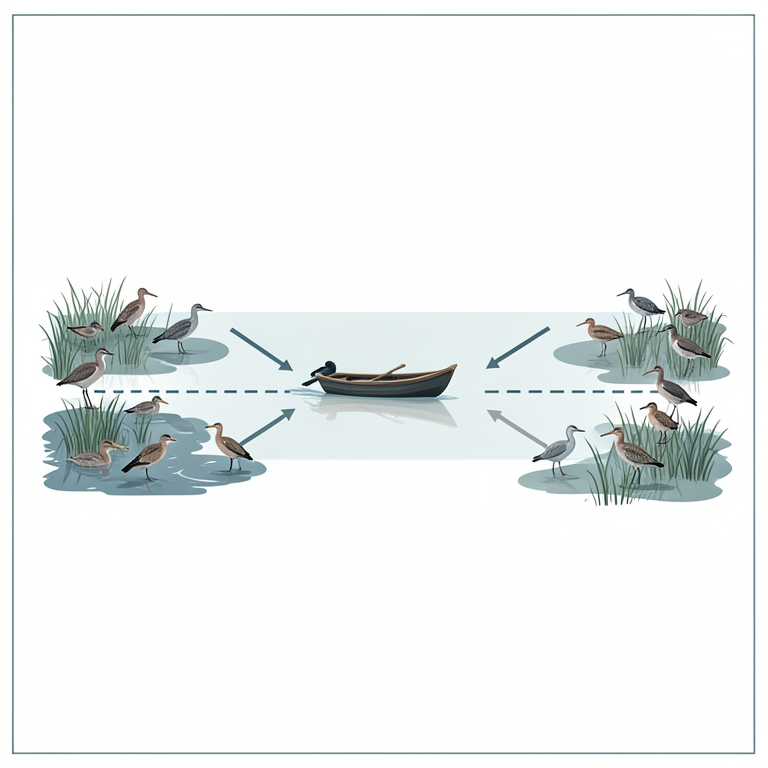
Line Transect Survey Method
AI-generated conceptual illustration (waterbirds in a wetland with a small boat). It explains the idea and does not show study data.
View source evidence ↗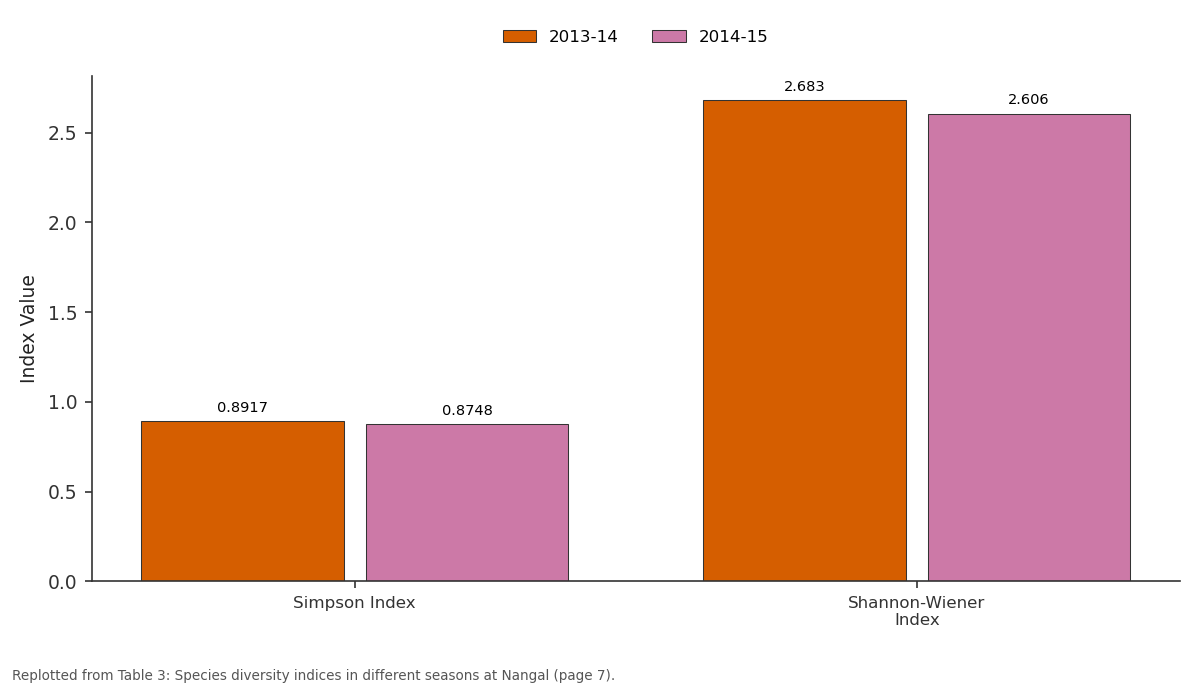
2013-14 and 2014-15: Simpson Index vs Shannon-Wiener Index
Replotted from Table 3 (page 7) of the original paper. Every bar is the paper's own table value.
View source evidence ↗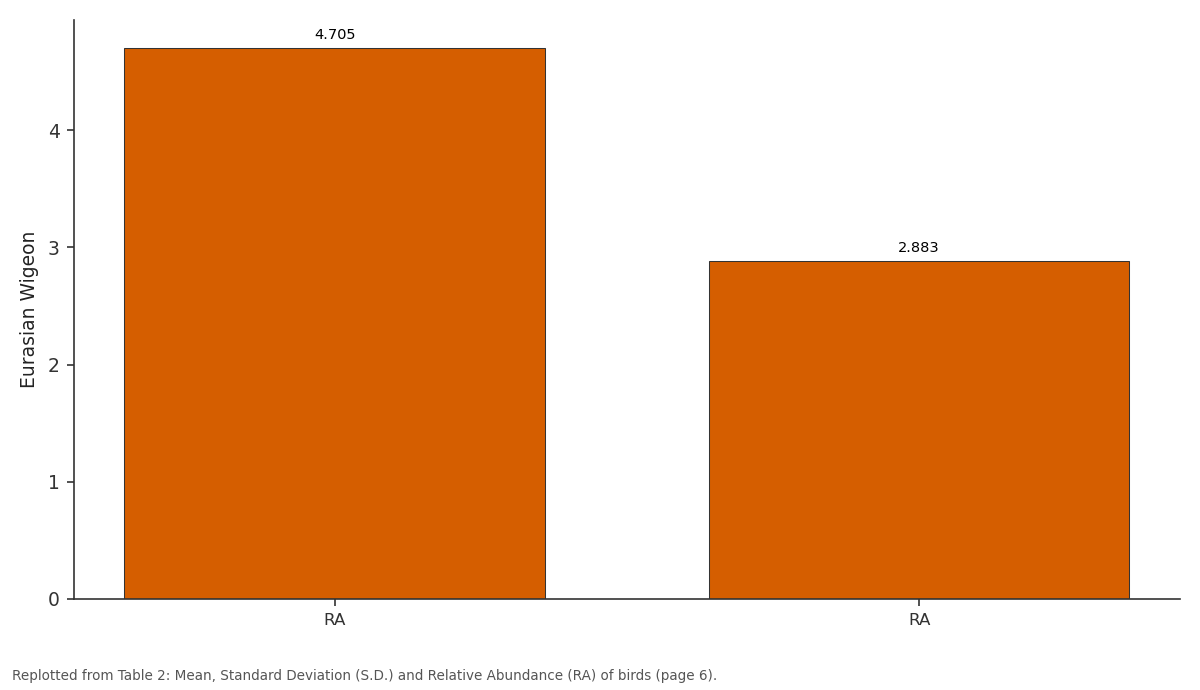
Eurasian Wigeon: RA vs RA
Replotted from Table 2 (page 6) of the original paper. Every bar is the paper's own table value.
View source evidence ↗Figures & tables
From the original paper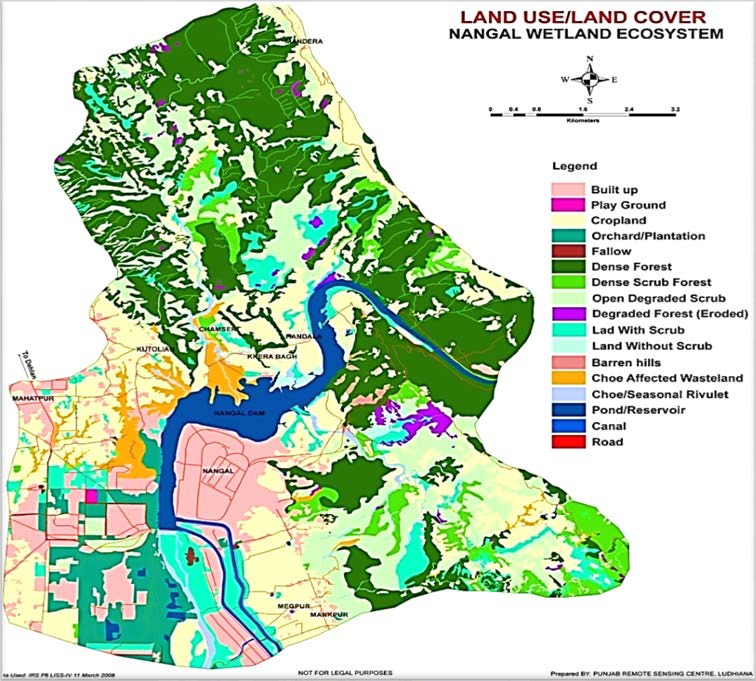 Figure 1
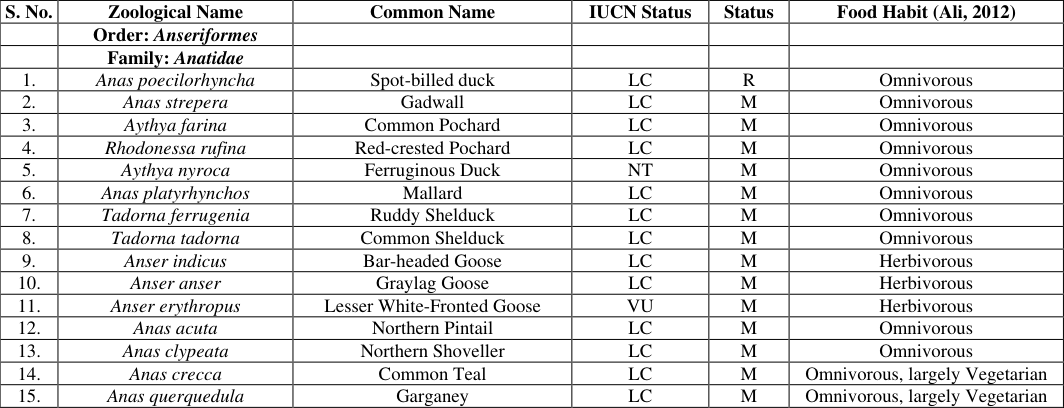 Table 1
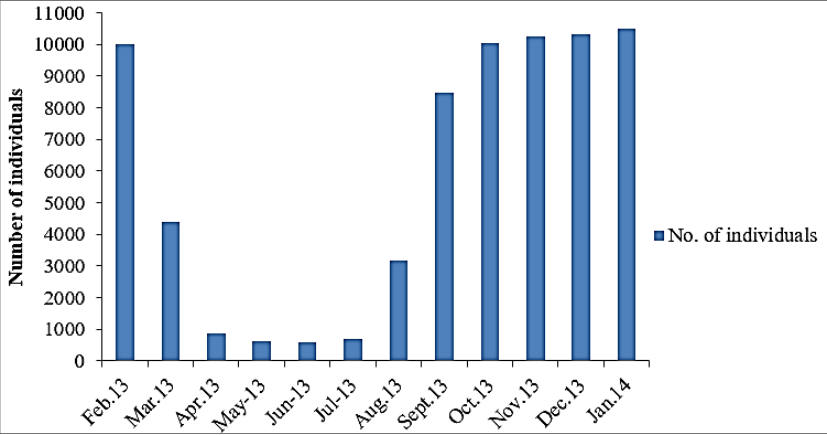 Figure 2
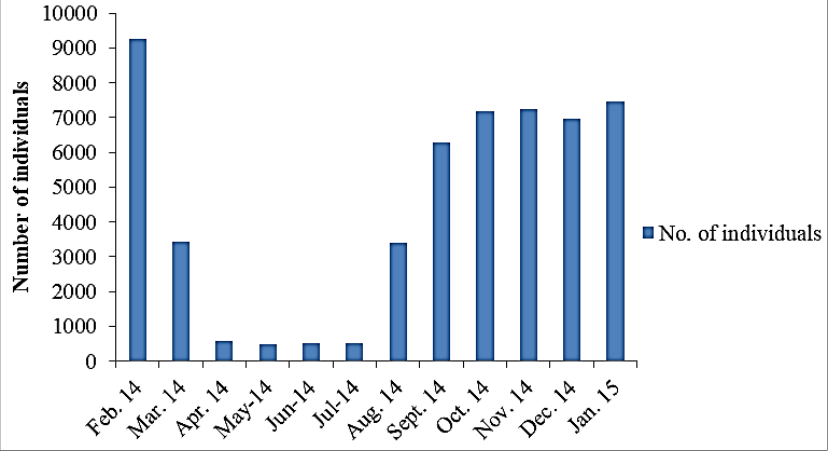 Figure 3
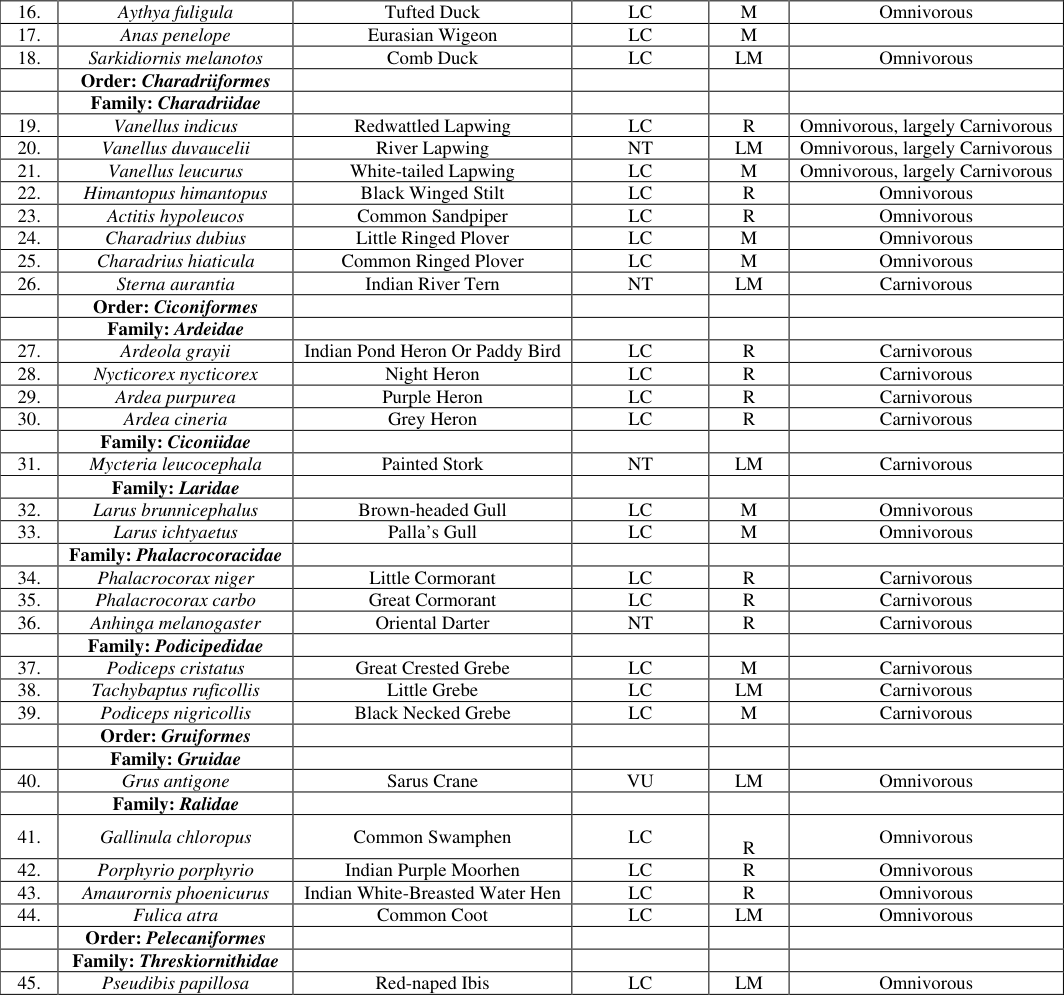 Table 2
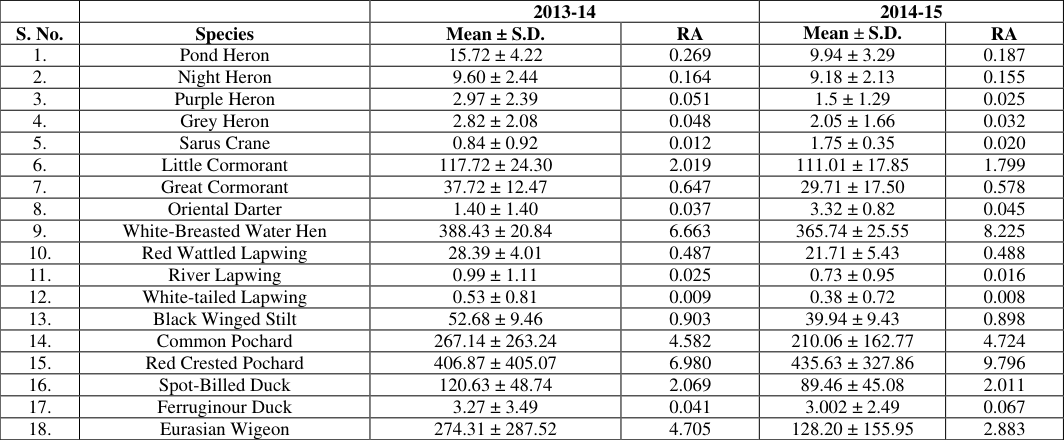 Table 2
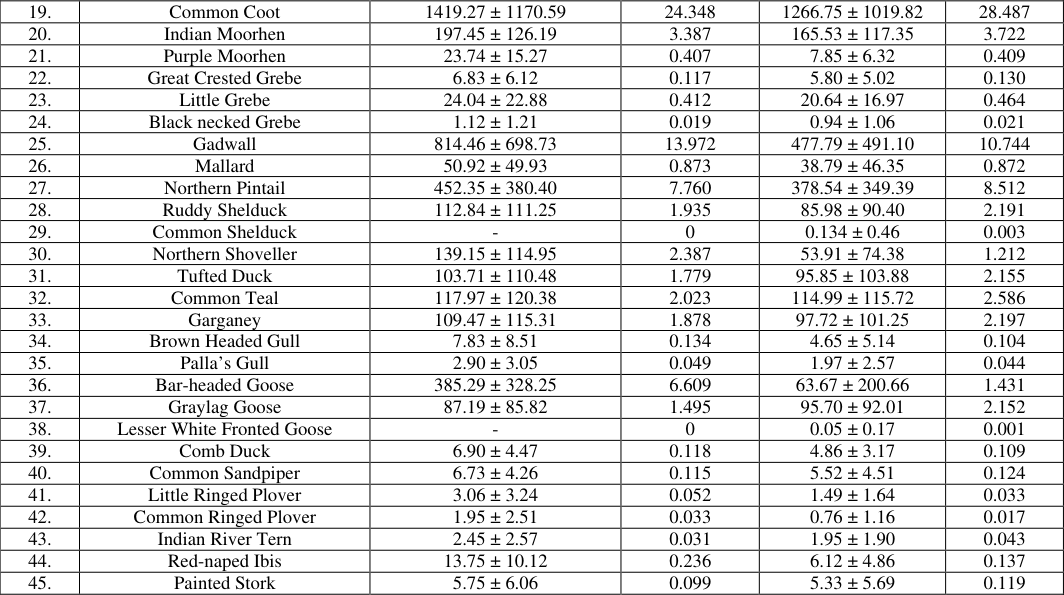 Table 3
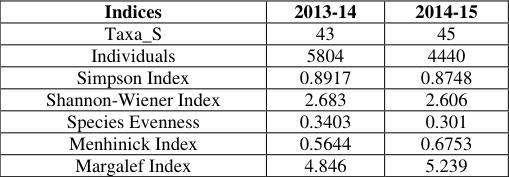 Table 3
Introduction
Wetlands are known as "biological supermarkets" because of the extensive food chains and rich biodiversity they support, providing unique habitats for a wide range of flora and fauna viz., birds, fishes and a variety of other aquatic life forms, including microorganisms (Mitsch & Gosselink, 2000) [45] . Wetlands also offer a range of ecosystem services, from preserving ecological balance to supporting human livelihoods (Sisodia & Moundiotiya, 2006) [54] . Wetlands are among the most important habitats for birds, providing them with places for feeding, resting, nesting, breeding, raising their young, seeking shelter, and socializing (Stewart, 2007) [57] . Wetlands provide food for birds which include plants, invertebrates, and other animals (Jaikrishna, 2008; Lameed, 2011) [28,37] . At present, bird biodiversity is better understood than that of most other major groups of organisms. This is because birds attract greater human interest, are often visually striking, relatively easy to observe, and generally easy to identify (Bruford, 2002) [8] . Birds are very sensitive indicators of any kind of pollution in both terrestrial and aquatic ecosystems (Gaston, 1975; Hardy et al., 1987; Gregory et al., 2008) [22,27,24] . Water birds serve as important indicators of water quality and help assess the biodiversity of aquatic ecosystems (Weller, 1999; Jayson & Mathew, 2002) [64,29] . Water birds can be classified into two categories: wetland specialists and generalists. Wetland specialists build their nests, feed, and roost primarily in aquatic habitats. They are highly dependent on wetlands and generally cannot survive in other types of habitats (Airinatwe, 1999) [5] . Generalists are birds that commonly visit wetlands but can also be found in a variety of other habitats. Cranes, for instance, are generally considered terrestrial birds, yet they breed exclusively in wetlands, with a particular preference for seasonal grass swamps (Mengistu, 2003) [43] . Birds that use wetlands for nesting, feeding, or roosting are generally referred to as 'Water birds'. This category comprises bird groups commonly recognized as waterfowl and waders.
Besides these, various other groups, including kingfishers, raptors, and certain passerines, rely ecologically on wetlands and are therefore described as wetland-dependent and associated birds. Collectively, these water birds, wetlanddependent birds, and associated birds are referred to as 'wetland birds'. Thus, the term 'wetland birds' encompasses diverse species that utilize wetland habitats for essential activities such as breeding, feeding, resting, and survival throughout their life cycles (Kumar et al., 2005) [34] . Waterbirds play a vital role in wetland ecosystems, occupying various trophic levels and contributing significantly to wetland food webs and nutrient cycling (Kushlan, 1992) [35] . The migratory behaviour, distribution, and population dynamics of these birds offer valuable insights into the health and status of the wetland (Kushlan, 1993) [36] . Bird migration is among the most remarkable phenomena observed in ornithology. These birds undertake yearly journeys through various flyways, frequently covering vast distances between their breeding and wintering grounds. During these extensive migrations, waterbirds routinely cross both national and international borders (Wetlands International, 2002) [65] . Ducks and geese (Anatidae) are the most abundant and notable winter migrants to the Indian subcontinent, accounting for nearly 85% of the approximately 3 million migratory birds (Scott, 1989; Alfred et al., 2001) [52,1] . The essential needs of migratory waterbirds at their wintering grounds include sufficient food availability and protection from threats (Bharatha Lakshmi, 2006) [7] . The study of wetlands is essential because migratory birds currently face numerous threats, including habitat loss, destruction of breeding and nesting sites, unsustainable tourism, poaching, air and water pollution, and inadequate transboundary conservation efforts. The decline of valuable bird species due to anthropogenic activities is occurring at an alarming rate and requires immediate attention through systematic research on wetland ecosystems. Therefore, the present study is an effort in this direction, aimed at contributing to a better understanding of wetland ecosystems and supporting the conservation of migratory bird species.
Materials and Methods
Study Area: Nangal Wetland (Fig. 1), situated in District Rupnagar (Ropar), Punjab, northern India, is located along the Sutlej River, a major tributary of the Indus River system. The wetland lies at approximately 31°24′13.52″N latitude and 76°22′03.05″E longitude, at an elevation of about 1,172 feet above mean sea level. It covers an area of approximately 700 acres, extending across land belonging to six adjoining villages. The wetland supports a rich diversity of flora and fauna and possesses significant hydrological importance. Its water resources are also utilized for drinking and irrigation by the surrounding population. Nangal Wetland holds considerable socio-economic, ecological, hydrological, and recreational significance. The unique wetland ecosystem provides suitable feeding, nesting, and breeding habitats for a variety of aquatic organisms and avifauna. Consequently, thousands of migratory birds visit the wetland annually during the winter season, making it an important habitat for both resident and migratory bird species. Geographically, the wetland is situated in the Shivalik foothills, where the Sutlej River emerges from the hills and enters the plains of Punjab. The wetland was developed downstream of the Bhakra Reservoir and serves an important strategic function as a balancing reservoir, further enhancing its hydrological significance (PSCST, 1994) [48] . The Line Transect method was employed to survey waterbirds during the present study, as it is considered an efficient technique for assessing waterbird populations. The method involves an observer travelling along a predetermined route by boat and recording all birds detected on either side of the transect. The length of each transect may vary depending on the nature and objectives of the survey and is often influenced by site accessibility; therefore, transects may not always be of a fixed length. During the survey, birds were recorded based on visual and auditory detections, including individuals observed in flight (Buckland et al., 1993, 2001, 2004) [9,10,11] . Data was collected on monthly basis for five days per month and twice in a day. During winter season data was collected from 7.00am -10.00am in the morning and 4.00pm -6:30pm in the evening and during the summer season from 6.00am -9.00am in the morning and 5:00pm -7:30pm in the evening. Identification has been done with the help of various field guides (Ali & Ripley, 1987; Grewal et al., 1995; Ali, 1996; Grimmett et al., 2001; Kazmierczak, 2002) [3, 25, 2, 26, 32] . Number of individuals of the bird species counted for five days and an average was calculated.
Diversity Indices
Three indices were used to obtain estimation of species diversity, species richness and species evenness. 1. Diversity index values were obtained by using Shannon-Wiener's (1949) [56] and Simpson (1949) [53] diversity indices:
Where, Pi = Proportion of the first species.
The proportions are given Pi = ni/n 2. Species richness (R1 and R2) obtained using Margalef (1958) [40] and Menhinick (1964) [44] indices:
• R = Index of species richness • S = Total number of species • n = Total number of individuals 3. Species evenness (E) (Pielou, 1966) [47] was determined by using the following expression. Shannon's equitability (E) can be calculated by dividing H by Hmax (here Hmax= lnS). Equitability assumes a value between 0 and 1 with 1 being complete evenness.
Results and Discussion
Wetlands are important habitat for avian populations throughout the world. It is greatly significant for being one of the few winter abodes for migratory bird species. Nangal Wetland also treasures a rich diversity of wetland avifauna, including several migratory birds that make the place their winter abode. Survey and counting of bird population at Nangal Wetland was carried out every month from February, 2013 to January, 2015. In all 152 species of birds (resident and migratory) belonging to 46 families under 17 orders, where 29 were migratory (M), 41 were local migratory (LM) and 82 were resident (R) species have been recorded from the wetland during the entire study period.
Out of total 152 bird species, 45 were waterbird species belonged to 10 families under 5 orders. Similarly, out of 45 waterbird species, 23 were migratory (M), 8 were local migratory (LM) and 14 were resident (R) species. These birds were also divided on the basis of their food and feeding habits, 3 were herbivorous (H), 12 carnivorous (C) and 30 were omnivorous (O) (Table 1). Teneson & Ravichandran (2015) [58] reported 43 waterbirds species in Koothapar Periyakulam Wetland in Tiruchirappalli District, Tamil Nadu, India. These waterbird species belonged to 7 orders and 14 families, which accomodate various ecological, residential and feeding groups. Dayananda (2009) [16] reported 218 species of birds at Gudavi Bird Sanctuary, Karnataka. Among these bird species, 99 were insectivorous, 27 piscivorous, 26 omnivorous, 21 carnivorous and 8 nectarivorous birds. Among various waterbird species, Common Coot (Fulica atra), Gadwall (Anas strepera), Common Pochard (Aythya farina), Redcrested Pochard (Rhodonessa rufina), Northern Pintail (Anas acuta), Ruddy-shelduck (Tadorna ferrugenia), Northern Shoveller (Anas clypeata) were frequently encountered in the present study area. Among these, family Anatidae remained dominant in water bird population followed by family Charadriidae. Giri & Chalise (2008) [23] reported a total of 39 species of waterbirds belonging to 17 families and 5 orders in their study of seasonal diversity and population status of waterbirds in Phewa lake, Pokhara, Nepal. Out of 39 species, 11 species which were winter visitors belonging to the family Anatidae only. Ekhande et al. (2012) [19] (2014) [15] carried out similar studies at Kapla wetland of Barpeta district, Assam and reported a total of 30 waterbird species under 14 families. As per IUCN status, one species was categorised in the Vulnerable (VU) category, 3 species in the Near Threatened category (NT) and 26 bird species were in the Least Concern (LC) category. Veerwal et al.
| S. No. | Zoological Name | Common Name | IUCN Status | Status | Food Habit (Ali, 2012) |
|---|---|---|---|---|---|
| Order: Anseriformes | |||||
| Family: Anatidae | |||||
| 1. | Anas poecilorhyncha | Spot-billed duck | LC | R | Omnivorous |
| 2. | Anas strepera | Gadwall | LC | M | Omnivorous |
| 3. | Aythya farina | Common Pochard | LC | M | Omnivorous |
| 4. | Rhodonessa rufina | Red-crested Pochard | LC | M | Omnivorous |
| 5. | Aythya nyroca | Ferruginous Duck | NT | M | Omnivorous |
| 6. | Anas platyrhynchos | Mallard | LC | M | Omnivorous |
| 7. | Tadorna ferrugenia | Ruddy Shelduck | LC | M | Omnivorous |
| 8. | Tadorna tadorna | Common Shelduck | LC | M | Omnivorous |
| 9. | Anser indicus | Bar-headed Goose | LC | M | Herbivorous |
| 10. | Anser anser | Graylag Goose | LC | M | Herbivorous |
| 11. | Anser erythropus | Lesser White-Fronted Goose | VU | M | Herbivorous |
| 12. | Anas acuta | Northern Pintail | LC | M | Omnivorous |
| 13. | Anas clypeata | Northern Shoveller | LC | M | Omnivorous |
| 14. | Anas crecca | Common Teal | LC | M | Omnivorous, largely Vegetarian |
| 15. | Anas querquedula | Garganey | LC | M | Omnivorous, largely Vegetarian |
Table text extracted from the original PDF; superscript letters are shown inline. The original table image is below.
View original table image
(2014) [62] reported a total of 68 species of waterbirds belonging to 14 families were reported with Anatidae as the most dominating family with 16 species. They further enlisted, 11 important species in terms of their conservation status. Of these, one species of endangered status, 2 species of vulnerable status and 8 species of Near Threatened status were reported. Mengesha et al. (2015) [42] carried out study on abundance and temporal patterns in wetland birds in and around Lake Zeway, Ethiopia and reported a total of 129 waterbird species from 23 families including 2 globally Vulnerable and 6 Near Threatened bird species. Seasonal fluctuations in the population of waterfowl were highly evident from the findings (Tables 2; Fig. 2 &3). The diversity of waterbird species was highest during winter compared with other seasons, mainly because of the arrival of migratory birds. A greater number of resident waterbirds were observed when the lakes were filled with water during the monsoon, followed by an influx of migratory waterbirds during winter. In summer, as the water level of the lakes receded, the abundance of waterbirds declined considerably, as many birds moved locally to other suitable habitats. Thus, seasonal changes in water availability strongly influenced the abundance and composition of waterbird communities, with peak populations occurring during periods when suitable aquatic habitats and resources were readily available. Colwell & Taft (2000) [14] reported similar observations indicated that water level and bird abundance were inter-related. Towards the end of winter, most migratory birds began moving, while water levels also started declining in the wetlands. These factors could have contributed to the lower sighting frequency recorded during the summer season across the study wetlands. Maheswaran & Rahmani (2001) [39] also reported that waterbird population fluctuates in relation to changing water level and season from lakes of Dudwa National Park, India. Shanbhag et al. (2001) [55] recorded highest abundance of waterbirds in winter months because of arrival of migratory waterbirds in the Carambolim lake of Goa and Raghavaiah & Davidar (2006) [49] from Pulicat lake of Andhra Pradesh in India. Further, fluctuation in water level might alter the habitat characteristics that could cause prompt changes in communities of fishes, amphibians, invertebrates and water birds (Johnson et al., 2007) [30] . Bar-headed Geese were reported in very less number during the second year of study and number of other waterfowls also declined in the second year as compared to previous year. Bird species richness showing an increase from October to January but showing a sharp decrease in the months of February and March. Two waterbird species i.e. [63] reported that winter-migratory species utilize wetlands as resting and feeding habitats while awaiting favourable conditions in their breeding ranges. [61,12,13,33] . Increasing anthropogenic pressure, along with climatic and edaphic factors, has led to the degradation of wetland resources, resulting in a significant decline in wetland fauna, particularly waterbirds, across the globe (Greenwood et al., 1995; Laurence, 1999) [38] . Majority of migratory birds comes from Europe and Siberia to plains of India (Ali, 2005) [4] . Accurate monitoring of bird population size and temporal changes in wetland bird populations is essential for assessing their population status, understanding community structure, and evaluating the ecological condition and quality of wetlands within a given area (Thompson, 2002 [60,17,31] . The high avian diversity in this wetland indicates its healthy condition, offering diverse habitats, sufficient food resources, and suitable nesting and roosting sites. This wetland faces relatively lower anthropogenic pressure as it has been designated as a wildlife sanctuary. The rules and regulations governing sanctuaries under the Wildlife Act are stringent; therefore, they provide greater safety compared to other water bodies.
Breeding is a crucial aspect of the life cycle of birds, requiring suitable habitats for successful reproduction.
Resident waterfowl also gather at favourable locations that provide appropriate conditions for the completion of their breeding activities (Thomas, 1980) [59] . In the present investigation, among waders, Black-winged Stilts and Redwattled Lapwings were frequently observed during summer and monsoon. Common Coot and Gadwall were found to be predominant, exhibiting higher populations throughout the winter season. The resident bird species, namely Redwattled Lapwing (Vanellus indicus), Indian Pond Heron (Ardeola grayii), Night Heron (Nycticorex nycticorex), Common Swamphen (Gallinula chloropus), Indian Whitebreasted Waterhen (Amaurornis phoenicurus), Grey Heron (Ardea cineria), Purple Heron (Ardea purpurea), and Spotbilled Duck (Anas poecilorhyncha), were identified as important breeding species within the study area. It was noted that all resident birds established breeding sites at Nangal wetland.
Relative abundance (RA)
Common Coot had the highest relative abundance value during both the years i.e. 24% during 2013-14 and 28% during 2014-15 followed by Gadwall (Table 2). Similar results were also observed by Rais et al. (2011) [50] in their study of bird diversity and conservation at Kallar Kahar Lake with special reference to waterbirds.
| — | — | 2013-14 | — | 2014-15 | — |
|---|---|---|---|---|---|
| S. No. | Species | Mean ± S.D. | RA | Mean ± S.D. | RA |
| 1. | Pond Heron | 15.72 ± 4.22 | 0.269 | 9.94 ± 3.29 | 0.187 |
| 2. | Night Heron | 9.60 ± 2.44 | 0.164 | 9.18 ± 2.13 | 0.155 |
| 3. | Purple Heron | 2.97 ± 2.39 | 0.051 | 1.5 ± 1.29 | 0.025 |
| 4. | Grey Heron | 2.82 ± 2.08 | 0.048 | 2.05 ± 1.66 | 0.032 |
| 5. | Sarus Crane | 0.84 ± 0.92 | 0.012 | 1.75 ± 0.35 | 0.020 |
| 6. | Little Cormorant | 117.72 ± 24.30 | 2.019 | 111.01 ± 17.85 | 1.799 |
| 7. | Great Cormorant | 37.72 ± 12.47 | 0.647 | 29.71 ± 17.50 | 0.578 |
| 8. | Oriental Darter | 1.40 ± 1.40 | 0.037 | 3.32 ± 0.82 | 0.045 |
| 9. | White-Breasted Water Hen | 388.43 ± 20.84 | 6.663 | 365.74 ± 25.55 | 8.225 |
| 10. | Red Wattled Lapwing | 28.39 ± 4.01 | 0.487 | 21.71 ± 5.43 | 0.488 |
| 11. | River Lapwing | 0.99 ± 1.11 | 0.025 | 0.73 ± 0.95 | 0.016 |
| 12. | White-tailed Lapwing | 0.53 ± 0.81 | 0.009 | 0.38 ± 0.72 | 0.008 |
| 13. | Black Winged Stilt | 52.68 ± 9.46 | 0.903 | 39.94 ± 9.43 | 0.898 |
| 14. | Common Pochard | 267.14 ± 263.24 | 4.582 | 210.06 ± 162.77 | 4.724 |
| 15. | Red Crested Pochard | 406.87 ± 405.07 | 6.980 | 435.63 ± 327.86 | 9.796 |
| 16. | Spot-Billed Duck | 120.63 ± 48.74 | 2.069 | 89.46 ± 45.08 | 2.011 |
| 17. | Ferruginour Duck | 3.27 ± 3.49 | 0.041 | 3.002 ± 2.49 | 0.067 |
| 18. | Eurasian Wigeon | 274.31 ± 287.52 | 4.705 | 128.20 ± 155.95 | 2.883 |
Table text extracted from the original PDF; superscript letters are shown inline. The original table image is below.
View original table image
| 16. | Aythya fuligula | Tufted Duck | LC | M | Omnivorous |
|---|---|---|---|---|---|
| 17. | Anas penelope | Eurasian Wigeon | LC | M | |
| 18. | Sarkidiornis melanotos | Comb Duck | LC | LM | Omnivorous |
| Order: Charadriiformes | |||||
| Family: Charadriidae | |||||
| 19. | Vanellus indicus | Redwattled Lapwing | LC | R | Omnivorous, largely Carnivorous |
| 20. | Vanellus duvaucelii | River Lapwing | NT | LM | Omnivorous, largely Carnivorous |
| 21. | Vanellus leucurus | White-tailed Lapwing | LC | M | Omnivorous, largely Carnivorous |
| 22. | Himantopus himantopus | Black Winged Stilt | LC | R | Omnivorous |
| 23. | Actitis hypoleucos | Common Sandpiper | LC | R | Omnivorous |
| 24. | Charadrius dubius | Little Ringed Plover | LC | M | Omnivorous |
| 25. | Charadrius hiaticula | Common Ringed Plover | LC | M | Omnivorous |
| 26. | Sterna aurantia | Indian River Tern | NT | LM | Carnivorous |
| Order: Ciconiformes | |||||
| Family: Ardeidae | |||||
| 27. | Ardeola grayii | Indian Pond Heron Or Paddy Bird | LC | R | Carnivorous |
| 28. | Nycticorex nycticorex | Night Heron | LC | R | Carnivorous |
| 29. | Ardea purpurea | Purple Heron | LC | R | Carnivorous |
| 30. | Ardea cineria | Grey Heron | LC | R | Carnivorous |
| Family: Ciconiidae | |||||
| 31. | Mycteria leucocephala | Painted Stork | NT | LM | Carnivorous |
| Family: Laridae | |||||
| 32. | Larus brunnicephalus | Brown-headed Gull | LC | M | Omnivorous |
| 33. | Larus ichtyaetus | Palla’s Gull | LC | M | Omnivorous |
| Family: Phalacrocoracidae | |||||
| 34. | Phalacrocorax niger | Little Cormorant | LC | R | Carnivorous |
| 35. | Phalacrocorax carbo | Great Cormorant | LC | R | Carnivorous |
| 36. | Anhinga melanogaster | Oriental Darter | NT | R | Carnivorous |
| Family: Podicipedidae | |||||
| 37. | Podiceps cristatus | Great Crested Grebe | LC | M | Carnivorous |
| 38. | Tachybaptus ruficollis | Little Grebe | LC | LM | Carnivorous |
| 39. | Podiceps nigricollis | Black Necked Grebe | LC | M | Carnivorous |
| Order: Gruiformes | |||||
| Family: Gruidae | |||||
| 40. | Grus antigone | Sarus Crane | VU | LM | Omnivorous |
| Family: Ralidae | |||||
| 41. | Gallinula chloropus | Common Swamphen | LC | R | Omnivorous |
| 42. | Porphyrio porphyrio | Indian Purple Moorhen | LC | R | Omnivorous |
| 43. | Amaurornis phoenicurus | Indian White-Breasted Water Hen | LC | R | Omnivorous |
| 44. | Fulica atra | Common Coot | LC | LM | Omnivorous |
| Order: Pelecaniformes | |||||
| Family: Threskiornithidae | |||||
| 45. | Pseudibis papillosa | Red-naped Ibis | LC | LM | Omnivorous |
Table text extracted from the original PDF; superscript letters are shown inline. The original table image is below.
View original table image
Species diversity and richness of waterbird
The Shannon-Wiener's diversity of waterbirds was higher during year 2013-14 (i.e. 2.683) than 2014-15 (i.e. 2.606). This could be due to higher species evenness during the year 2013-14. The Simpson diversity index of waterbirds was also higher during year 2013-14 (i.e. 0.8917) than 2014-15 (i.e. 0.8748). The species evenness index was higher during 2013-14 (0.3403) as compared to year 2014-15 (0.301). The Margalef's species richness of waterbirds was higher during the year 2014-15 (i.e. 5.239) than 2013-14 (i.e. 4.846). The Menhinick species richness was also higher during year 2014-15 (i.e. 0.6753) than 2013-14 (i.e. 0.5644) (Table 3).
| 19. | Common Coot | 1419.27 ± 1170.59 | 24.348 | 1266.75 ± 1019.82 | 28.487 |
|---|---|---|---|---|---|
| 20. | Indian Moorhen | 197.45 ± 126.19 | 3.387 | 165.53 ± 117.35 | 3.722 |
| 21. | Purple Moorhen | 23.74 ± 15.27 | 0.407 | 7.85 ± 6.32 | 0.409 |
| 22. | Great Crested Grebe | 6.83 ± 6.12 | 0.117 | 5.80 ± 5.02 | 0.130 |
| 23. | Little Grebe | 24.04 ± 22.88 | 0.412 | 20.64 ± 16.97 | 0.464 |
| 24. | Black necked Grebe | 1.12 ± 1.21 | 0.019 | 0.94 ± 1.06 | 0.021 |
| 25. | Gadwall | 814.46 ± 698.73 | 13.972 | 477.79 ± 491.10 | 10.744 |
| 26. | Mallard | 50.92 ± 49.93 | 0.873 | 38.79 ± 46.35 | 0.872 |
| 27. | Northern Pintail | 452.35 ± 380.40 | 7.760 | 378.54 ± 349.39 | 8.512 |
| 28. | Ruddy Shelduck | 112.84 ± 111.25 | 1.935 | 85.98 ± 90.40 | 2.191 |
| 29. | Common Shelduck | - | 0 | 0.134 ± 0.46 | 0.003 |
| 30. | Northern Shoveller | 139.15 ± 114.95 | 2.387 | 53.91 ± 74.38 | 1.212 |
| 31. | Tufted Duck | 103.71 ± 110.48 | 1.779 | 95.85 ± 103.88 | 2.155 |
| 32. | Common Teal | 117.97 ± 120.38 | 2.023 | 114.99 ± 115.72 | 2.586 |
| 33. | Garganey | 109.47 ± 115.31 | 1.878 | 97.72 ± 101.25 | 2.197 |
| 34. | Brown Headed Gull | 7.83 ± 8.51 | 0.134 | 4.65 ± 5.14 | 0.104 |
| 35. | Palla’s Gull | 2.90 ± 3.05 | 0.049 | 1.97 ± 2.57 | 0.044 |
| 36. | Bar-headed Goose | 385.29 ± 328.25 | 6.609 | 63.67 ± 200.66 | 1.431 |
| 37. | Graylag Goose | 87.19 ± 85.82 | 1.495 | 95.70 ± 92.01 | 2.152 |
| 38. | Lesser White Fronted Goose | - | 0 | 0.05 ± 0.17 | 0.001 |
| 39. | Comb Duck | 6.90 ± 4.47 | 0.118 | 4.86 ± 3.17 | 0.109 |
| 40. | Common Sandpiper | 6.73 ± 4.26 | 0.115 | 5.52 ± 4.51 | 0.124 |
| 41. | Little Ringed Plover | 3.06 ± 3.24 | 0.052 | 1.49 ± 1.64 | 0.033 |
| 42. | Common Ringed Plover | 1.95 ± 2.51 | 0.033 | 0.76 ± 1.16 | 0.017 |
| 43. | Indian River Tern | 2.45 ± 2.57 | 0.031 | 1.95 ± 1.90 | 0.043 |
| 44. | Red-naped Ibis | 13.75 ± 10.12 | 0.236 | 6.12 ± 4.86 | 0.137 |
| 45. | Painted Stork | 5.75 ± 6.06 | 0.099 | 5.33 ± 5.69 | 0.119 |
Table text extracted from the original PDF; superscript letters are shown inline. The original table image is below.
View original table image
Similar study is carried out by Rajashekara and Venkatesha (2014) [51] in their study of eco-spatial and temporal variation in waterbirds composition and their relationship with habitat characteristics of Urban lakes of Bengaluru city, India. [39,46,21] . Several investigations have demonstrated that efficient management is essential for improving habitat quality in wetlands used by waterbirds (Erwin, 2002; Balcombe et al., 2005) [20,6] . To conserve the lake ecosystem and its diverse biodiversity, a management strategy should be developed, providing opportunities for sustainable resource use while safeguarding its ecological values and functions (Ma et [41, 18, 21] . The initial measure towards conserving Nangal wetland was its designation as a Wildlife Sanctuary. Owing to strict sanctuary regulations, it can be safeguarded against different external pressures. This initiative can encourage greater migratory bird populations through catchment treatment, afforestation, habitat enhancement, water-depth regulation, and creation of shallow zones to establish roosting habitats for different bird species.
Acknowledgement
AcknowledgementAuthors are very thankful to the Head, Department of Zoology & Environmental Sciences, Punjabi University, Patiala for providing necessary laboratory facilities.
Figures and tables from the paper
References
63 in the original paper- Alfred JRB, Kumar A, Tak PC, Sati JP. Waterbirds of Northern India. Kolkata: Zoological Survey of India; 2001.
- Ali S. The book of Indian birds. 11th ed. Bombay: Bombay Natural History Society and Oxford University Press; 1996.
- Ali S, Ripley SD. Compact handbook of the birds of India and Pakistan together with those of Bangladesh, Nepal, Bhutan and Sri Lanka. Delhi: Oxford University Press; 1987.
- Ali Z. Ecology, distribution, and conservation of migratory birds at Uchalli Wetlands Complex, Punjab, Pakistan [Ph.D. dissertation]. Lahore: University of the Punjab; 2005.
- Airinatwe J. Wetlands and Water Bird Conservation in East Africa: Strategies for Conserving Migratory Water Birds. Wetlands International Publication No. 55. Wageningen; 1999.
- Balcombe CK, Anderson JT, Fortney RH, Kordek WS. Aquatic macroinvertebrate assemblages in mitigated and natural wetlands. Hydrobiologia. 2005;541:175188.
- Bharatha Lakshmi B. Avifauna of Gosthani estuary near Visakhapatnam, Andhra Pradesh. J Natcon. 2006;18(2):291-304.
- Bruford MW. Biodiversity-evolution, species, genes. In: Norris K, Pain DJ, editors. Conserving Birds Biodiversity-General Principles and Their Application. Cambridge: Cambridge University Press; 2002. p. 1-19.
- Buckland ST, Anderson DR, Burnham KP, Laaka JL. Distance Sampling: Estimating Abundance of Biological Populations. London: Chapman and Hall; 1993. 446 p.
- Buckland ST, Anderson DR, Burnham KP, Laaka JL, Borchers DL, Thomas L. Introduction to Distance Sampling. Oxford: Oxford University Press; 2001. 432 p. International Journal of Biology Sciences https://www.biologyjournal.net
- Buckland ST, Anderson DR, Burnham KP, Laaka JL, Borchers DL, Thomas L. Advanced Distance Sampling. Oxford: Oxford University Press; 2004. 414 p.
- Burger J. The effect of human activity on birds at a coastal bay. Biol Conserv. 1981;21:231-241.
- Burger J, Gochfild M. Human activity influence and diurnal and nocturnal foraging of Sanderlings (Calidris alba). Condor. 1991;93:259-265.
- Colwell MA, Taft OW. Waterbird communities in managed wetlands of varying water depth. Waterbirds. 2000;23:1121-1133.
- Das J, Pathak S, Kalita SN, Talukdar K. Present status of aquatic avifaunal diversity in Kapla wetland of Barpeta district, Assam. J Res Biol. 2014;4(6):14511457.
- Dayananda GY. Avifaunal diversity of Gudavi Bird Sanctuary, Sorab, Shimoga, Karnataka. Our Nature. 2009;7:100-109.
- De Sanete DF, Nott MP, Kaschube DR. Monitoring, modeling and management: why base avian monitoring on vital rates and how should it be done. In: Ralph CJ, Rich TD, editors. Birds Conservation Implementation and Integration in the Americas. Albany, California: U.S. Forest Service; 2005. p. 295-308.
- D'Souza R, Nagendra H. Changes in public commons as a consequence of urbanization: the Agara Lake in Bangalore, India. Environ Manage. 2011;47:840-850.
- Ekhande AP, Patil JV, Padate GS. Study of birds of Yashwant Lake with respect to densities, species richness and Shannon Wiener indices and its correlation with lake dynamics. Eur J Zool Res. 2012;1(1):6-15.
- Erwin RM. Integrated management of waterbirds: beyond the conventional. Waterbirds. 2002;25(Suppl 2):5-12.
- Farago S, Hangya K. Effects of water level on waterbird abundance and diversity along the middle section of the Danube River. Hydrobiologia. 2012;697:15-21.
- Gaston AJ. Methods for estimating bird populations. J Bombay Nat Hist Soc. 1975;72:271-283.
- Giri B, Chalise MK. Seasonal diversity and population status of waterbirds in Phewa Lake, Pokhara, Nepal. J Wetlands Ecol. 2008;1(1/2):3-7.
- Gregory RD, Vorisek P, Noble DG, Van Strien A, Klvaova A, Eaton M, et al. The generation and use of bird population indicators in Europe. Bird Conserv Int. 2008;18:S223-S244.
- Grewal B, Monga S, Wright G. Birds of the Indian Subcontinent. Hong Kong: Guidebook Company Limited; 1995.
- Grimmett R, Inskipp C, Inskipp T. Pocket Guide of the Birds of the Indian Subcontinent. Mumbai: Oxford University Press; 2001.
- Hardy AR, Stanley PI, Greeing SPW. Birds as indicators of the intensity of use of agricultural pesticide in UK. In: Diamond AW, Fallon FN, editors. The Value of Birds. Technical Publication No. 6; 1987. p. 119-121.
- Jaikrishna R. Legislative framework for the protection of wetlands. J Environ Res Dev. 2008;2(3):498-501.
- Jayson EA, Mathew DN. Structure and composition of two bird communities in the southern Western Ghats. J Bombay Nat Hist Soc. 2002;99(1):8-25.
- Johnson KG, Allen MS, Havens KE. A review of littoral vegetation, fisheries, and wildlife responses to hydrologic variation at Lake Okeechobee. Wetlands. 2007;27(1):110-126.
- Kaminski MR, Baldassarre GA, Pearse AT. Waterbird responses to hydrological management of wetlands reserve habitats in New York. Wildl Soc Bull. 2006;34:921-926.
- Kazmierczak K. A Field Guide to the Birds of India, Sri Lanka, Pakistan, Nepal, Bhutan, Bangladesh and the Maldives. New Delhi: Om Book Service; 2002. 352 p.
- Klein ML, Humphrey SR, Percival HF. Effects of ecotourism on distribution of waterbirds in a wildlife refuge. Conserv Biol. 1995;9(6):1454-1465.
- Kumar A, Sati JP, Tak PC, Alfred JRB. Handbook of Indian Wetland Birds and Their Conservation. Kolkata: Zoological Survey of India; 2005. 472 p.
- Kushlan JA. Population biology and conservation of colonial waterbirds. Waterbirds. 1992;15:1-7.
- Kushlan JA. Waterbirds as bioindicators of wetland change: are they a valuable tool? In: Moser M, Prentice RC, van Vessem J, editors. Waterfowl and Wetland Conservation in the 1990s-A Global Perspective. IWRB Special Publication No. 26. Slimbridge, UK: International Waterfowl and Wetlands Research Bureau; 1993. p. 48-55.
- Lameed GA. Species diversity and abundance of wild birds in Dagona-Waterfowl Sanctuary, Borno State, Nigeria. Afr J Environ Sci Technol. 2011;5(10):855866.
- Laurence WF. Reflection on the tropical deforestation crisis. Biol Conserv. 1999;91:109-117.
- Maheswaran G, Rahmani AR. Effects of water level changes and wading bird abundance on the foraging behaviour of black-necked storks, Ephippiorhynchus asiaticus, in Dudwa National Park, India. J Biosci. 2001;26:373-382.
- Margalef R. Information theory in ecology. Gen Syst. 1958;3:36-71.
- Ma Z, Cai Y, Li B, Chen J. Managing wetland habitats for waterbirds: an international perspective. Wetlands. 2010;30:15-27.
- Mengesha G, Elphick CS, Field CR, Bekele A, Mamo Y. Abundance and temporal patterns in wetland birds in and around Lake Zeway, Ethiopia. J Biodivers Manag Forestry. 2015;4(1):1-9.
- Mengistu W. Wetlands, birds and important bird area in Ethiopia. In: Abebe DY, Geheb K, editors. Wetlands of Ethiopia: Proceedings of a Seminar on the Resource and Status of Ethiopia's Wetlands. Gland: International Union for Conservation of Nature and Natural Resources; 2003. p. 25-36.
- Menhinick EP. A comparison of some speciesindividuals diversity indices applied to samples of field insects. Ecology. 1964;45:859-881.
- Mitsch WJ, Gosselink JG. Wetlands. United States: John Wiley & Sons Inc; 2000. 356 p.
- Mukherjee A, Borad CK, Parasharya BM. A study of the ecological requirements of waterfowl at man-made reservoirs in Kheda District, Gujarat, India, with a view towards conservation, management and planning. Zoos' Print J. 2002;17:775-785.
- Pielou EC. The measurement of the diversity in different types of biological collection. J Theor Biol. 1966;13:131-144.
- Raghavaiah PS, Davidar P. Seasonal patterns of abundances of some wetland birds in Pulicat Lake, Andhra Pradesh, India. Indian Forester. 2006;132:182186.
- Rais M, Anwar M, Mehmood T, Hussain I. Bird diversity and conservation at Kallar Kahar Lake with special reference to water birds. Pak J Zool. 2011;43:673-681.
- Rajashekara S, Venkatesha MG. Eco-spatial and temporal variation in waterbirds composition and their relationship with habitat characteristics of urban lakes of Bengaluru city, India. Int J Adv Res. 2014;2(7):6080.
- Scott DA. A Directory of Asian Wetlands. Gland, Switzerland; Cambridge, UK: IUCN; 1989.
- Simpson EH. Measurement of diversity. Nature. 1949;163:688.
- Sisodia R, Moundiotiya C. Assessment of the water quality index of wetland Kalakho Lake, Rajasthan, India. J Environ Hydrol. 2006;14:1-11.
- Shanbhag AB, Walia R, Borges SD. The impact of Konkan Railway Project on the avifauna of Carambolim Lake in Goa. Zoos' Print J. 2001;16:503508.
- Shannon CE, Weaver W. The Mathematical Theory of Communication. Urbana: University of Illinois Press; 1949.
- Stewart RE. Technical aspects of wetlands: wetlands as bird habitat. United States Geological Survey Water Supply Paper. 2007. p. 24-25.
- Teneson R, Ravichandran C. Diversity of water birds in Koothapar Periyakulam Wetland in Tiruchirappalli District, Tamil Nadu, India. Int Res J Environ Sci. 2015;4(11):32-41.
- Thomas GJ. The ecology of breeding waterfowl at the Ouse Washes, England. Wildfowl. 1980;31:73-88.
- Thompson WL. Towards reliable bird surveys: accounting for individual present but not detected. Auk. 2002;119:18-25.
- Van der Zande AN, ter Keurs WJ, Van der Weijden WJ. The impact of roads on the densities of four bird species in an open field habitat: evidence of a longdistance effect. Biol Conserv. 1980;18:299-321.
- Veerwal H, Balapure S, Vyas V. Diversity and conservation status of waterbirds at Upper Lake, Bhopal-a Ramsar site in central India. J Res Biol. 2014;4(8):1534-1542.
- Walwert M, Mardiastuti A, Muhlenberg M. Effects of land use on bird species richness in Sulawesi, Indonesia. Conserv Biol. 2004;18:1339-1346.
- Weller MW. Wetland Birds: Habitat Resources and Conservation Implications. Cambridge: Cambridge University Press; 1999. 271 p.