
Research article · 2026 · Full text
International Journal of Geography Geology and EnvironmentWomen-led informal enterprises in rural economies and the transformative role of self-help groups in West Bengal
Volume 8(9) · Pages 122–129 · DOI: 10.22271/27067483.2026.v8.i9b.872 ↗
Research areasMicrofinance and Financial InclusionSocial and Economic Development in IndiaInnovation and Socioeconomic Development
Abstract
Author-writtenWomen-led informal enterprises constitute a vital component of rural livelihoods in India, particularly in West Bengal, where agriculture, home-based production, handicrafts, livestock rearing, food processing, and petty trade provide employment to a significant proportion of women. Despite their substantial contribution to household income and local economic development, these enterprises often operate under conditions of informality characterized by limited access to formal credit, markets, technology, social protection, and institutional support. Over the past three decades, the Self-Help Group (SHG) movement has emerged as an effective grassroots strategy for promoting women's economic empowerment, financial inclusion, and community participation. Through initiatives such as the SHG-Bank Linkage Programme and the National Rural Livelihoods Mission (NRLM), millions of rural women have gained access to savings, credit, entrepreneurial training, and collective decision-making platforms. In West Bengal, the implementation of Anandadhara under the Deendayal Antyodaya Yojana-National Rural Livelihoods Mission (DAY-NRLM) has significantly expanded women's participation in informal enterprises, enhancing income generation and strengthening local economies. This paper examines the contribution of women-led informal enterprises to rural development in West Bengal and critically analyses the transformative role played by Self-Help Groups in fostering entrepreneurship, livelihood diversification, and socio-economic empowerment. Drawing upon secondary data from government reports, NABARD publications, census statistics, policy documents, and scholarly literature, the study explores the opportunities created by SHGs alongside persistent challenges, including market constraints, digital exclusion, limited value addition, climate vulnerability, and inadequate institutional support. The paper argues that while SHGs have substantially improved women's access to financial resources and collective agency, sustainable rural development requires a comprehensive policy approach integrating digital technologies, skill development, market linkages, social security, and climate-resilient livelihood strategies. Strengthening women-led informal enterprises through inclusive institutions and supportive public policies can significantly contribute to achieving gender equality, rural prosperity, and the Sustainable Development Goals (SDGs), particularly SDGs 1, 5, 8, and 10.
Summary
Source-checkedPlain-language reading of the full paper, prepared with AI and checked against the text. Each point links to the authors' own words.
Why it matters
- Women-led informal enterprises are essential for rural livelihoods in West Bengal, providing employment through activities like agriculture, handicrafts, and food processing. View evidence ↗
- Although these enterprises contribute significantly to local economies, they suffer from a lack of formal credit, technology, and institutional support. View evidence ↗
- Self-Help Groups (SHGs) have served as a key grassroots strategy for three decades to improve financial inclusion and economic empowerment for women. View evidence ↗
The question
- The study aims to examine how women-led informal enterprises contribute to rural development in West Bengal and analyze the role of SHGs in fostering entrepreneurship and empowerment. View evidence ↗
What they did
- The research uses a qualitative and descriptive design based entirely on secondary data. View evidence ↗
- Data was gathered from diverse sources, including the ILO, NABARD, NITI Aayog, and various Indian government reports and peer-reviewed journals. View evidence ↗
- The study employed a thematic approach to analyze the collected information. View evidence ↗
What they found
- In 2025, 74.1% of rural female workers in West Bengal were self-employed, far exceeding those in regular wage employment (10.3%) or casual labor (15.5%). View evidence ↗
- The WBSRLM reports a massive network of 11.79 lakh SHGs covering over 1.18 crore households, with more than 52.75 lakh people participating in training. View evidence ↗
- SHG distribution is widespread, with Murshidabad having the highest number (95,215), followed by South 24 Parganas (93,756). View evidence ↗
- SHGs have improved financial inclusion by promoting savings and linking women to commercial banks, reducing reliance on high-interest informal moneylenders. View evidence ↗
- Collective action through SHGs allows women to standardize quality and access larger markets via exhibitions like Saras Mela. View evidence ↗
- SHG participation has led to social empowerment, with members taking leadership roles in Gram Panchayats and school management committees. View evidence ↗
- A significant digital divide persists, particularly for women in remote areas or economically weaker households, hindering their use of e-commerce. View evidence ↗
- Climate hazards like floods and cyclones frequently disrupt production and supply chains for women-led enterprises in West Bengal. View evidence ↗
What it means
- The authors conclude that women-led informal enterprises are catalysts for sustainable rural transformation rather than just survival strategies. View evidence ↗
- The authors recommend a comprehensive policy framework that integrates financial inclusion, skill development, and technological advancement to ensure enterprise sustainability. View evidence ↗
- The authors note that there is a relative lack of empirical studies specifically focused on how SHGs transform informal enterprises in rural West Bengal. View evidence ↗
Visual summary
1 visualsIllustrations explain the paper; they do not show study data.
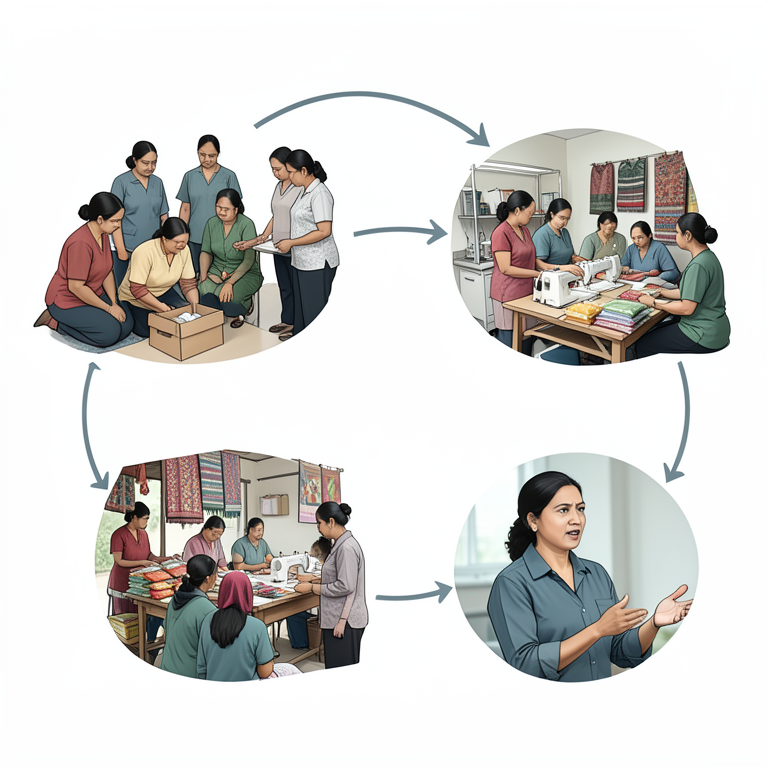
The SHG Empowerment Cycle
AI-generated conceptual illustration (Rural women in West Bengal, India, engaged in small-scale handicraft and food production). It explains the idea and does not show study data.
View source evidence ↗Figures & tables
From the original paper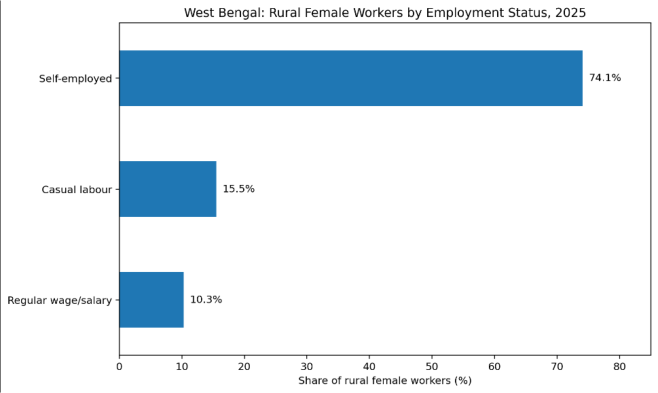 Figure 1
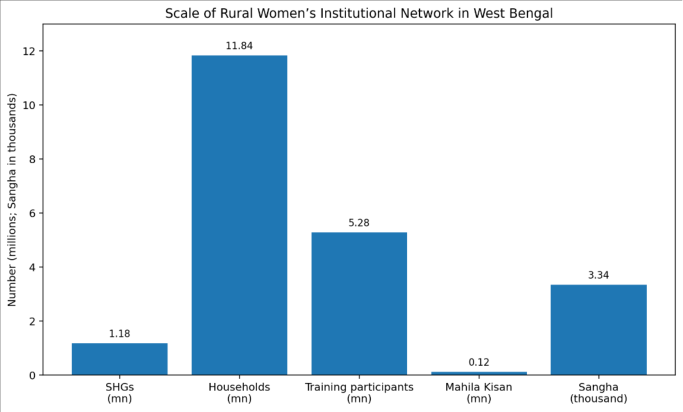 Figure 2
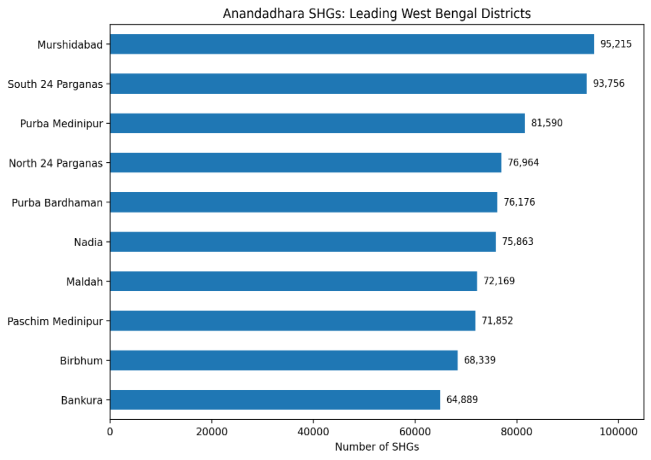 Figure 3
Introduction
The informal economy constitutes one of the most significant sources of employment and livelihood across the developing world, accounting for a substantial share of economic activity and workforce participation. According to the International Labour Organization (ILO, 2023) [5] , nearly 61 percent of the global employed population works in the informal economy, with developing countries exhibiting particularly high levels of informal employment. In India, the informal sector remains the backbone of the economy, contributing significantly to employment generation despite its relatively lower productivity and limited institutional recognition. Women represent a considerable proportion of this workforce, engaging in diverse livelihood activities such as agriculture, livestock rearing, food processing, weaving, handicrafts, tailoring, petty trade, domestic work, and other homebased enterprises. These activities not only supplement household incomes but also play a crucial role in ensuring food security, poverty reduction, and rural economic resilience (ILO, 2023; NITI Aayog, 2022) [10] . In rural India, women-led informal enterprises have emerged as important drivers of local economic development. These enterprises are typically characterized by low capital investment, family labour, flexible production systems, and limited access to formal markets and institutional finance. Despite operating outside formal regulatory frameworks, they contribute substantially to employment creation, income diversification, and the preservation of traditional skills and indigenous knowledge. Women entrepreneurs in the informal economy often combine productive work with unpaid domestic and care responsibilities, making their economic contributions largely invisible in national income accounting and labour market statistics (Chen, 2012; Bonnet et al., 2019) [1,2] . Consequently, their enterprises frequently encounter structural barriers, including restricted access to credit, inadequate infrastructure, technological limitations, weak market linkages, and limited social protection. West Bengal presents a distinctive context for examining the intersection of women's entrepreneurship, informality, and rural development. The state has a predominantly rural population, with agriculture and allied activities continuing to support millions of households. Alongside farming, a wide range of informal enterprises including handloom weaving, terracotta production, jute handicrafts, embroidery, food processing, dairy farming, fisheries, floriculture, and petty retailing provide critical livelihood opportunities, particularly for rural women. Districts such as Nadia, Murshidabad, Birbhum, Bankura, Purulia, Cooch Behar, and North and South 24 Parganas have witnessed significant participation of women in small-scale income-generating activities that strengthen household resilience and local economic systems. However, these enterprises continue to face challenges related to limited market access, inadequate business skills, climate-induced livelihood vulnerabilities, and dependence on informal sources of finance (Government of West Bengal, 2023) [3] . Recognizing these challenges, the Government of India and the Government of West Bengal have increasingly emphasized community-based approaches to women's economic empowerment through the promotion of Self-Help Groups (SHGs). Since the introduction of the Self-Help Group-Bank Linkage Programme (SHG-BLP) by NABARD in 1992, SHGs have evolved from savings and credit collectives into comprehensive institutions that facilitate entrepreneurship, financial inclusion, capacity building, and social empowerment (NABARD, 2024). The launch of the Deendayal Antyodaya Yojana-National Rural Livelihoods Mission (DAY-NRLM) further strengthened this movement by integrating skill development, enterprise promotion, market access, and institutional support within a broader rural development framework. In West Bengal, the implementation of Anandadhara, the state's rural livelihoods mission under DAY-NRLM, has significantly expanded the outreach of SHGs, mobilizing millions of rural women into federated community institutions that promote savings, credit, livelihood diversification, and collective enterprise development (Ministry of Rural Development, 2023) [8] . The significance of SHGs extends beyond financial inclusion. By fostering collective action, mutual support, and participatory decision-making, SHGs have enabled rural women to acquire entrepreneurial skills, negotiate with financial institutions, access government welfare schemes, and participate more actively in local governance. Membership in SHGs has been associated with increased household income, improved financial literacy, greater mobility, enhanced bargaining power within families, and higher levels of social and political participation (Kabeer, 1999; NABARD, 2024) [6] . Furthermore, SHGs have become instrumental in promoting women-led informal enterprises by facilitating access to microfinance, business training, digital financial services, and marketing networks. These interventions have contributed not only to individual economic advancement but also to broader processes of rural transformation through employment generation, poverty alleviation, and community development. Nevertheless, the sustainability and growth of women-led informal enterprises remain constrained by persistent structural and institutional challenges. Many enterprises continue to operate at subsistence levels due to inadequate access to formal credit, technological innovation, quality certification, digital platforms, and organized value chains. Climate variability, fluctuating market demand, and genderbased social norms further restrict women's entrepreneurial potential. Although SHGs have created important pathways for economic inclusion, questions remain regarding their long-term effectiveness in enabling enterprise graduation from informal survival activities to sustainable and competitive rural businesses. Addressing these concerns requires a comprehensive understanding of the evolving relationship between SHGs, women's entrepreneurship, and rural development within specific regional contexts such as West Bengal. Against this backdrop, the present study examines the role of women-led informal enterprises in promoting rural development in West Bengal and critically analyses how Self-Help Groups have facilitated women's economic empowerment, livelihood diversification, and entrepreneurial growth. Drawing upon secondary data from government reports, NABARD publications, policy documents, and scholarly literature, the study evaluates the achievements of SHG-led enterprise development while identifying the structural barriers that continue to impede sustainable growth. The paper further explores policy measures that can strengthen women-led informal enterprises through improved financial inclusion, digital transformation, market integration, skill enhancement, and institutional support, thereby contributing to inclusive rural development and the achievement of the Sustainable Development Goals (SDGs), particularly SDGs 1 (No Poverty), 5 (Gender Equality), 8 (Decent Work and Economic Growth), and 10 (Reduced Inequalities).
Literature Review
The informal economy has long been recognized as a crucial source of employment and livelihood, particularly in developing countries where formal employment opportunities remain limited. The International Labour Organization (ILO, 2023) [5] estimates that more than 60% of the global workforce is engaged in informal employment, with women constituting a significant share. Although informal enterprises provide flexibility and incomegenerating opportunities, they are often characterized by low productivity, inadequate social protection, and limited access to institutional support (Chen, 2012) [2] . Women engaged in informal enterprises face additional constraints arising from gender discrimination, restricted ownership of productive assets, and the unequal burden of unpaid care work (Bonnet et al., 2019) [1] . The emergence of Self-Help Groups (SHGs) has been widely acknowledged as an effective strategy for promoting women's economic empowerment and financial inclusion in rural India. Since the introduction of the SHG-Bank Linkage Programme by NABARD in 1992, SHGs have evolved beyond savings and credit associations into communitybased institutions that facilitate entrepreneurship, skill development, and social participation (NABARD, 2024). Studies by Kabeer (1999) [6] and Mayoux (2001) [7] argue that access to microfinance through SHGs enhances women's decision-making capacity, strengthens their bargaining power within households, and increases their participation in local governance. However, microfinance alone is insufficient unless accompanied by market access, enterprise development, and institutional support. Several studies have examined the contribution of SHGs to rural development in India. Swain and Varghese (2009) [13] found that SHGs significantly improve household income, savings, and women's participation in economic activities. Similarly, the Ministry of Rural Development (2023) [8] reports that the Deendayal Antyodaya Yojana-National Rural Livelihoods Mission (DAY-NRLM) has enhanced livelihood diversification by supporting women-led microenterprises through financial assistance, capacity building, and market linkages. In West Bengal, the Anandadhara programme has strengthened SHG networks, enabling rural women to engage in activities such as food processing, handloom weaving, dairy farming, fisheries, handicrafts, and small-scale retailing (Government of West Bengal, 2023) [3] . Despite these achievements, existing literature highlights several persistent challenges. Women-led informal enterprises continue to face constraints related to limited access to technology, digital finance, value chains, quality certification, and organized markets. Moreover, empirical studies focusing specifically on the role of SHGs in transforming women-led informal enterprises in rural West Bengal remain relatively limited. Most research emphasizes microfinance and poverty alleviation rather than enterprise sustainability, innovation, and long-term rural development outcomes. Therefore, this study seeks to bridge this gap by examining how SHGs contribute to strengthening womenled informal enterprises and promoting inclusive rural development in West Bengal.
Objectives of the Study
The primary objective of this study is to examine the role of women-led informal enterprises in promoting rural development in West Bengal, with particular emphasis on the contribution of Self-Help Groups (SHGs). The specific objectives are: 1. To examine the significance of women-led informal enterprises in the rural economy of West Bengal. 2. To analyse the role of Self-Help Groups (SHGs) in promoting women's entrepreneurship, financial inclusion, and livelihood diversification. 3. To identify the socio-economic challenges faced by women-led informal enterprises despite SHG interventions. 4. To suggest policy measures for strengthening womenled informal enterprises and enhancing their contribution to sustainable rural development.
Methodology
The study is based on a qualitative and descriptive research design, relying exclusively on secondary data. Information has been collected from a wide range of authentic sources, including publications of the International Labour Organization (ILO), NABARD, the Ministry of Rural Development (Government of India), the Government of West Bengal, NITI Aayog, Census reports, and peerreviewed journal articles. Relevant books, policy documents, reports, and official statistics have also been reviewed to understand the relationship between women-led informal enterprises, Self-Help Groups, and rural development.
The collected information has been analysed using a thematic approach. The discussion focuses on the contribution of SHGs to women's economic empowerment, access to financial services, enterprise development, employment generation, and community participation in rural West Bengal. At the same time, the study critically examines the structural challenges that continue to affect the sustainability and growth of women-led informal enterprises, including limited market access, technological constraints, digital exclusion, and climate-related livelihood risks. Since the study is based entirely on secondary sources, it does not involve primary surveys or interviews. Nevertheless, the use of diverse and credible literature provides a comprehensive understanding of the evolving role of SHGs in fostering women-led informal enterprises and supporting inclusive rural development in West Bengal.
Result & Discussion
Result & Discussion
Women-Led Informal Enterprises in Rural West
Bengal: The informal economy has historically served as the backbone of rural livelihoods in West Bengal, where a substantial proportion of women depend on small-scale, home-based, and family-operated enterprises for their economic survival. Although these enterprises generally remain outside the formal regulatory and taxation systems, they make a significant contribution to employment generation, household income, and local economic activity. For many rural women, informal entrepreneurship is not merely a livelihood option but a practical response to limited access to formal employment, restricted ownership of productive assets, and persistent socio-economic inequalities.
~ Nevertheless, the sustainability of women-led informal enterprises increasingly depends on their ability to transition from low-productivity survival activities to competitive micro-enterprises capable of generating stable incomes and participating in broader value chains. Achieving this transition requires stronger institutional support, technological modernization, digital integration, and improved market connectivity. Thus, women-led informal enterprises should be viewed not merely as instruments of poverty alleviation but as strategic drivers of rural transformation. Their continued growth has the potential to strengthen local economies, enhance women's economic agency, preserve traditional livelihoods, and contribute to more inclusive and sustainable patterns of rural development in West Bengal. Understanding the mechanisms that enable this transformation, particularly the role of Self-Help Groups, is therefore essential for designing effective rural development policies.
The Transformative Role of Self-Help Groups and Rural Development:
The emergence of Self-Help Groups (SHGs) has transformed the landscape of rural development in India by creating institutional mechanisms through which economically marginalized women can access financial resources, develop entrepreneurial capabilities, and participate more actively in local economic activities. In West Bengal, where a large proportion of rural women are engaged in informal enterprises, SHGs have evolved beyond savings and credit associations into community-based institutions that facilitate livelihood promotion, enterprise development, and social empowerment. Their contribution has become particularly significant under the Deendayal Antyodaya Yojana-National Rural Livelihoods Mission (DAY-NRLM), implemented in the state through Anandadhara, which seeks to organize rural women into sustainable community institutions capable of driving inclusive economic growth (Ministry of Rural Development, 2023) [8] . One of the most important contributions of SHGs is the expansion of financial inclusion. Historically, women operating informal enterprises faced considerable difficulties in accessing institutional finance due to the absence of collateral, low asset ownership, and limited interaction with formal banking institutions. SHGs have addressed this gap by promoting regular savings, facilitating internal lending, and linking members with commercial banks through the SHG-Bank Linkage Programme. Access to affordable credit enables women to invest in productive assets, purchase raw materials, diversify production, and reduce dependence on informal moneylenders charging exorbitant interest rates (NABARD, 2024 SHGs have further strengthened women-led informal enterprises by improving market access and collective entrepreneurship. Individual entrepreneurs often struggle to negotiate with buyers, procure raw materials at competitive prices, or market their products beyond local villages. Through collective action, SHGs enable women to aggregate production, standardize product quality, participate in exhibitions and rural fairs, and establish linkages with government-supported marketing initiatives such as Saras Mela and state-level handicraft exhibitions. In recent years, several SHGs have also adopted digital payment systems and online marketing platforms, enabling producers to reach wider consumer markets. Although digital integration remains uneven across rural areas, these developments represent an important shift from subsistenceoriented production towards commercially viable enterprise development. The contribution of SHGs extends beyond economic outcomes to broader dimensions of women's empowerment and social transformation. Participation in SHGs enhances women's financial decision-making, leadership abilities, and collective bargaining power within households and communities. Regular group meetings encourage social interaction, knowledge sharing, and awareness regarding health, education, sanitation, legal rights, and government welfare programmes. Many SHG members have subsequently assumed leadership positions in Gram Panchayats, school management committees, and village development institutions, thereby strengthening participatory rural governance. The collective identity fostered through SHGs has also enabled women to challenge discriminatory social norms and increase their visibility within local development processes (Kabeer, 1999) [6] . From a rural development perspective, SHGs contribute to employment generation, poverty reduction, and local economic resilience. Women-led enterprises supported by SHGs create self-employment opportunities not only for group members but also for other rural workers engaged in production, processing, packaging, transportation, and marketing. Income generated through these enterprises stimulates local demand, encourages the circulation of goods and services within village economies, and contributes to the development of rural markets. Moreover, because women generally allocate a substantial proportion of their earnings to household welfare, improvements in enterprise income often translate into better educational attainment, nutritional outcomes, healthcare expenditure, and overall quality of life for rural families. Nevertheless, the transformative potential of SHGs should not be viewed without critical reflection. While access to microcredit has expanded considerably, the long-term sustainability of many enterprises remains constrained by limited technological upgrading, inadequate value addition, weak market integration, and fluctuating consumer demand. In several cases, enterprises remain concentrated in lowincome activities with limited scope for scaling up into competitive businesses. Furthermore, disparities in infrastructure, digital connectivity, and institutional support across districts influence the effectiveness of SHG interventions. These challenges suggest that credit alone cannot ensure sustainable enterprise development unless accompanied by continuous capacity building, marketoriented training, technological innovation, and stronger producer networks. Overall, the experience of West Bengal demonstrates that SHGs have emerged as effective institutions for promoting women-led informal enterprises and advancing rural development. Their strength lies not merely in providing financial assistance but in creating a supportive ecosystem that combines social capital, collective action, entrepreneurship, and community participation. Strengthening this ecosystem through better policy coordination, digital inclusion, market integration, and climate-resilient livelihood strategies will be essential for enabling women-led informal enterprises to contribute more effectively to inclusive and sustainable rural development in the state.
Challenges Faced by Women-Led Informal
Enterprises and Self-Help Groups: Despite the significant progress made through Self-Help Groups (SHGs), womenled informal enterprises in rural West Bengal continue to encounter numerous structural, financial, and institutional challenges that limit their long-term sustainability and growth. While SHGs have improved access to credit and enhanced women's participation in economic activities, many enterprises remain small, vulnerable, and largely confined to local markets. Addressing these challenges is essential for transforming informal businesses into sustainable and competitive rural enterprises. One of the foremost challenges is limited access to finance beyond microcredit. Although SHGs have expanded financial inclusion, the loans available to many members are often adequate only for meeting short-term working capital requirements. Scaling up enterprises requires larger investments for purchasing modern equipment, adopting improved technologies, expanding production, and meeting quality standards. However, many women entrepreneurs continue to face difficulties in accessing formal business loans due to insufficient collateral, limited credit history, and procedural complexities within financial institutions. Consequently, enterprise growth often remains restricted to subsistence or micro-level operations. Another major constraint is poor market integration and inadequate value addition. Most women-led enterprises sell their products within nearby villages or local markets, where competition is high and profit margins are relatively low.
Dependence on intermediaries frequently reduces producers' bargaining power and limits their share of the final market value. In addition, inadequate branding, packaging, quality certification, and product standardization restrict access to regional, national, and international markets. Without effective market linkages and organized value chains, many enterprises struggle to achieve sustainable profitability. Technological and digital exclusion further hinders enterprise development. Although digital technologies have transformed marketing, financial transactions, and business management, many rural women lack adequate digital literacy, internet connectivity, and access to smartphones or computers. Limited familiarity with e-commerce platforms, digital payment systems, and online marketing prevents entrepreneurs from reaching wider consumer markets and responding to changing market demands. The digital divide remains particularly pronounced among women from economically weaker households and remote rural areas. The sustainability of women-led informal enterprises is also affected by inadequate infrastructure and climate vulnerability. Poor transportation networks, irregular electricity supply, insufficient storage facilities, and limited access to common production centres increase operational costs and reduce business efficiency. Furthermore, several districts of West Bengal are highly susceptible to floods, cyclones, riverbank erosion, and irregular rainfall. Such climate-related hazards frequently disrupt agricultural production, damage raw materials and infrastructure, interrupt supply chains, and reduce market access. Since most informal enterprises operate without insurance or disaster risk management mechanisms, recovery from such shocks is often slow and financially burdensome. Social and gender-based barriers continue to influence women's entrepreneurial opportunities. Traditional gender norms assign women primary responsibility for household chores, childcare, and elder care, leaving limited time for enterprise expansion and business networking. Restrictions on mobility, unequal access to property and productive assets, and lower participation in business decision-making further constrain entrepreneurial growth. Although SHGs have strengthened women's confidence and collective agency, deeply rooted social attitudes continue to limit their economic independence in many rural communities. Institutional challenges also deserve attention. In some cases, SHGs experience irregular training, inadequate professional mentoring, limited post-credit support, and weak coordination with government departments and financial institutions. Enterprise promotion programmes often focus primarily on credit disbursement, while comparatively less emphasis is placed on innovation, product diversification, digital entrepreneurship, business incubation, and long-term market development. As a result, many enterprises remain concentrated in traditional lowincome activities with limited opportunities for expansion and value addition. These challenges indicate that while SHGs have laid a strong foundation for women's economic empowerment, sustainable rural development requires a broader ecosystem of support. Financial assistance must be complemented by skill development, technology adoption, market integration, climate resilience, infrastructure development, and continuous institutional guidance. Only through such a comprehensive approach can women-led informal enterprises evolve from survival-oriented activities into dynamic contributors to rural economic transformation in West Bengal.
Policy Recommendations
Strengthening women-led informal enterprises in West Bengal requires policy interventions that go beyond microfinance and focus on creating a supportive ecosystem for sustainable enterprise development. While Self-Help Groups (SHGs) have significantly enhanced women's financial inclusion and livelihood opportunities, greater emphasis is needed on improving enterprise productivity, market access, and resilience. Access to affordable and adequate institutional finance should be expanded by introducing higher-value enterprise loans, flexible repayment mechanisms, and insurance coverage for small businesses. Simultaneously, regular training programmes on entrepreneurship, financial management, digital literacy, product development, and marketing should be provided to enhance women's business capabilities and competitiveness. Improving market linkages is equally important. Government agencies should facilitate branding, packaging, quality certification, and participation in exhibitions, producer collectives, and digital marketplaces. Strengthening rural infrastructure, including storage facilities, transportation, and common production centres, would further reduce operational constraints and improve business efficiency. Given the increasing impacts of climate change, policies should promote climate-resilient livelihood practices, disaster preparedness, and sustainable resource management, particularly for enterprises dependent on agriculture and allied activities. Expanding digital infrastructure and encouraging the adoption of e-commerce and digital payment systems would also enable rural women to access broader markets and reduce dependence on intermediaries. Finally, stronger coordination among government departments, financial institutions, NABARD, Panchayati Raj Institutions, NGOs, and the private sector is essential to ensure effective implementation of enterprise development programmes. A comprehensive policy framework integrating financial inclusion, skill development, technological advancement, and market support can significantly enhance the sustainability of women-led informal enterprises and contribute to inclusive rural development in West Bengal.
Conclusion
Women-led informal enterprises have emerged as an important pillar of rural development in West Bengal by generating employment, diversifying household incomes, and strengthening local economies. Operating across agriculture, allied activities, handicrafts, food processing, and small-scale trade, these enterprises have enhanced women's economic participation while contributing to poverty reduction and community well-being. Their role extends beyond income generation, fostering financial independence, social inclusion, and greater participation in household and community decision-making. The study highlights that Self-Help Groups (SHGs) have been instrumental in transforming the entrepreneurial landscape for rural women. Through access to savings, institutional credit, capacity-building programmes, and collective action, SHGs have enabled women to establish and sustain informal enterprises that contribute to livelihood security and rural economic growth. Programmes such as DAY-NRLM and Anandadhara have further strengthened this process by promoting financial inclusion, entrepreneurship, and community-based development. Despite these achievements, women-led informal enterprises continue to face challenges related to limited access to finance, inadequate market linkages, technological constraints, climate vulnerability, and persistent gender inequalities. Addressing these issues requires a holistic policy approach that integrates financial support, digital inclusion, infrastructure development, skill enhancement, and market-oriented interventions.
In conclusion, women-led informal enterprises should be recognized not merely as survival strategies but as catalysts of inclusive and sustainable rural transformation. Strengthening SHGs and creating an enabling entrepreneurial ecosystem will not only improve women's livelihoods but also accelerate rural development, reduce socio-economic inequalities, and contribute to the achievement of the Sustainable Development Goals (SDGs), particularly those related to poverty reduction, gender equality, decent work, and inclusive economic growth.
Figures and tables from the paper
References
18 in the original paper- Bonnet F, Vanek J, Chen MA. Women and men in the informal economy: a statistical brief. Women in Informal Employment: Globalizing and Organizing (WIEGO); 2019.
- Chen MA. The informal economy: definitions, theories and policies. WIEGO Working Paper No. 1. Women in Informal Employment: Globalizing and Organizing (WIEGO); 2012.
- Government of West Bengal. Anandadhara: State Rural Livelihoods Mission. Department of Panchayats and Rural Development, Government of West Bengal; 2023.
- International Labour Organization. Women and men in the informal economy: a statistical picture. 3rd ed. International Labour Office; 2018.
- International Labour Organization. World Employment and Social Outlook: Trends 2023. International Labour Organization; 2023.
- Kabeer N. Resources, agency, achievements: reflections on the measurement of women's empowerment. Development and Change. 1999;30(3):435-464. DOI:10.1111/1467-7660.00125.
- Mayoux L. Tackling the down side: social capital, women's empowerment and micro-finance in Cameroon. Development and Change. 2001;32(3):435464.
- Ministry of Rural Development. Deendayal Antyodaya Yojana-National Rural Livelihoods Mission (DAYNRLM): Annual Report 2022-23. Government of India; 2023.
- National Bank for Agriculture and Rural Development. Status of Microfinance in India 2023-24. National Bank for Agriculture and Rural Development; 2024.
- NITI Aayog. National Multidimensional Poverty Index: a progress review 2023. Government of India; 2022.
- Reserve Bank of India. Report on Trend and Progress of Banking in India 2022-23. Reserve Bank of India; 2023.
- Sen A. Development as freedom. Oxford University Press; 1999.
- Swain RB, Varghese A. Does self-help group participation lead to asset creation? World Development. 2009;37(10):1674-1682.
- United Nations. Transforming our world: the 2030 Agenda for Sustainable Development. United Nations; 2015.
- United Nations Development Programme. Human Development Report 2021/2022. United Nations Development Programme; 2022.
- United Nations Entity for Gender Equality and the Empowerment of Women. Progress of the world's women 2019-2020: families in a changing world. UN Women; 2021.
- World Bank. Women, Business and the Law 2022. World Bank; 2022.
- Ministry of Statistics and Programme Implementation (MoSPI), Government of India. Periodic Labour Force Survey (PLFS): Annual Report 2025. Table 19. Government of India; 2025.