
Research article · 2026 · Full text
International Journal of Biology SciencesIsolation and characterization of nitrogen fixing bacteria from the rhizospheric soil of Custard apple (Annona squamosa L.)
Volume 8(9) · Pages 31–36 · DOI: 10.33545/26649926.2026.v8.i9a.987 ↗
Research areasPlant-Microbe Interactions and ImmunityLegume Nitrogen Fixing SymbiosisAgriculture, Plant Science, Crop Management
Abstract
Author-writtenA study was conducted to evaluate the nitrogen-fixing efficiency of free-living Azotobacter bacteria in the rhizospheric soil of custard apple (Annona squamosa L.) across Purandar Tehsil, Pune. Chemical profiling of 21 soil samples revealed neutral pH, low salinity and systemic deficiency in available nitrogen below 280 kg/ha . Isolation on Jensen’s agar obtained 18 distinct bacterial isolates, all confirmed as Gram-negative, motile, cyst-forming, and positive for standard morphological and cultural tests. Based on colony pigmentation, the strains were identified as Azotobacter spp., Azotobacter chroococcum, and Azotobacter vinelandii. Micro-Kjeldahl quantification showed nitrogen fixation capacities ranging from 1.12 mg N/ml to 3.50 mg N/ml . The superior isolate obtained NFB-PA from Pangare (3.50 mg N/ml) followed by NFB-AM from Ambodi (3.08 mg N/ml ) significantly at par with standard reference strains. Further, effective PGPR isolates were tested biochemically viz Strach hydrolysis test, Catalase test, Indole formation test, Nitrate reduction test and Oxidase test.
Summary
Source-checkedPlain-language reading of the full paper, prepared with AI and checked against the text. Each point links to the authors' own words.
Why it matters
- Custard apple (Annona squamosa L.) is an important minor fruit crop from the Annonaceae family. View evidence ↗
- Plant growth promoting rhizobacteria (PGPR) colonize the root zone and provide various benefits to plant growth and health. View evidence ↗
- Azotobacter is a non-symbiotic bacterium capable of nitrogen fixation and producing growth hormones like auxin, cytokinin, and gibberellin to increase crop production. View evidence ↗
The question
- The study aimed to isolate, characterize, and analyze the capabilities of Azotobacter species found in the rhizosphere of custard apple plants. View evidence ↗
What they did
- Researchers collected 21 rhizosphere soil samples from depths of 10-15 cm across various locations in Purandar tehsil, Pune District. View evidence ↗
- Bacteria were isolated using a serial dilution method (10^-1 to 10^-8) with 1g of soil in 10ml of sterile water, followed by culturing on selective media. View evidence ↗
- The isolates were biochemically characterized using starch hydrolysis, catalase, indole production, oxidase, and nitrate reduction tests. View evidence ↗
- Nitrogen fixation capacity was measured using the Micro-Kjeldahl method by quantifying total nitrogen fixed in 25 ml of broth culture over 7 days. View evidence ↗
What they found
- Chemical analysis of the 21 soil samples showed neutral pH, low salinity, and a systemic deficiency of available nitrogen (below 280 kg/ha). View evidence ↗
- All isolated nitrogen-fixing bacteria were characterized as Gram-negative, motile, cyst-forming, and pellicle-forming. View evidence ↗
- Isolates NFB-SO, NFB-AD, and NFB-KW produced creamy yellow colonies, identifying them as probable Azotobacter vinelandii. View evidence ↗
- Isolates NFB-B, NFB-KM, NFB-AM, and NFB-V produced creamy black colonies, identifying them as probable Azotobacter chroococcum. View evidence ↗
- The nitrogen fixation potential of the isolates ranged from a minimum of 0.98 mg N/ml to a maximum of 3.50 mg N/ml. View evidence ↗
- Isolate NFB-PA from Pangare showed the highest nitrogen fixation capacity at 3.50 mg N/ml, followed by NFB-AM from Amboli at 3.08 mg N/ml. View evidence ↗
- The Azotobacter isolates generally tested positive for all five biochemical tests (starch hydrolysis, catalase, indole, nitrate reduction, and oxidase). View evidence ↗
What it means
- The authors concluded that NFB-PA and NFB-AM are superior isolates with the potential to be used as microbial nitrogen-fixing fertilizers. View evidence ↗
Visual summary
2 visualsIllustrations explain the paper; charts are replotted from the paper's own table values.
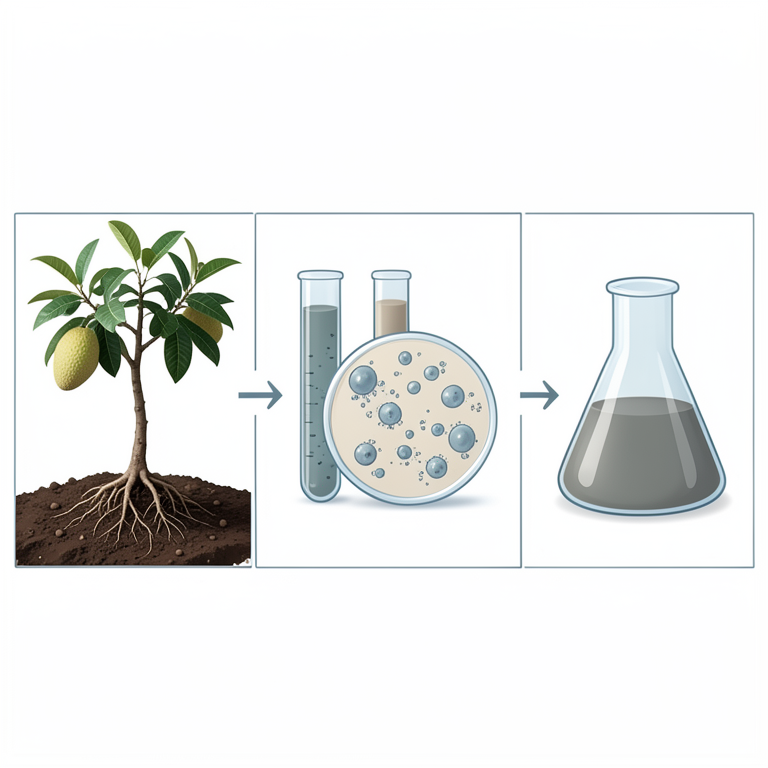
Experimental Workflow
AI-generated conceptual illustration (Custard apple (Annona squamosa L.) plants and rhizospheric soil). It explains the idea and does not show study data.
View source evidence ↗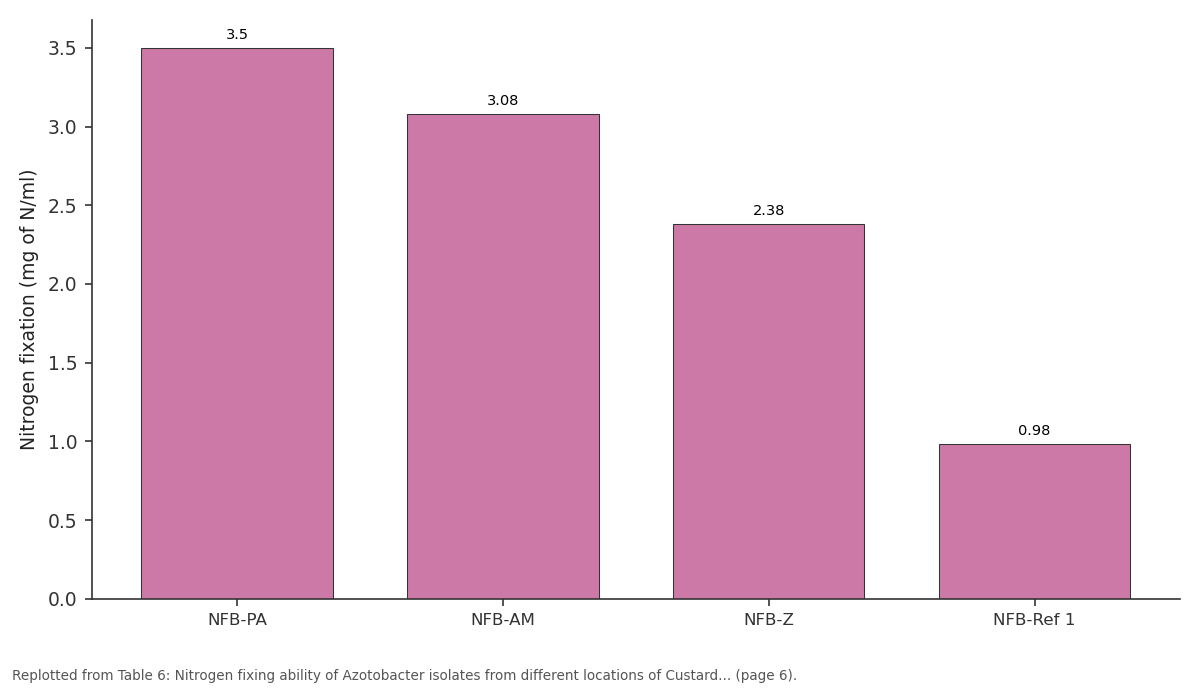
Nitrogen fixation (mg of N/ml): NFB-PA vs NFB-AM vs NFB-Z vs NFB-Ref 1
Replotted from Table 6 (page 6) of the original paper. Every bar is the paper's own table value.
View source evidence ↗Figures & tables
From the original paper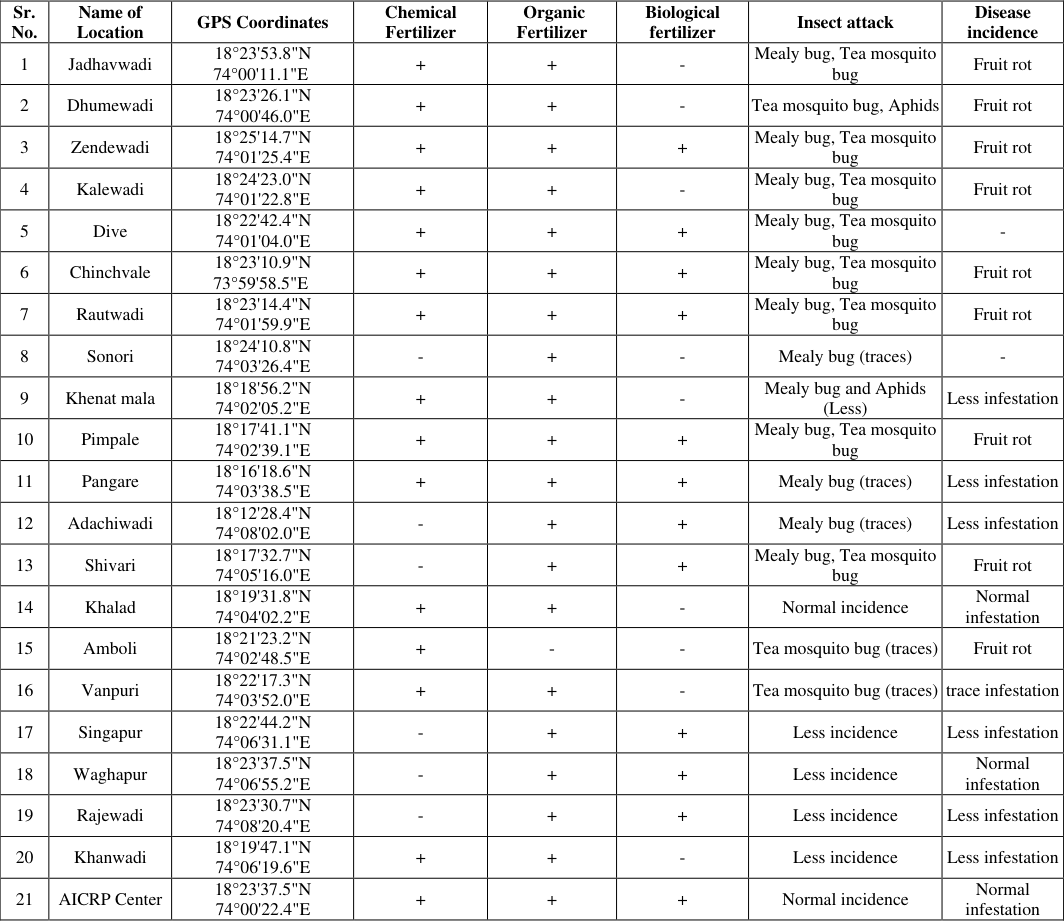 Table 1
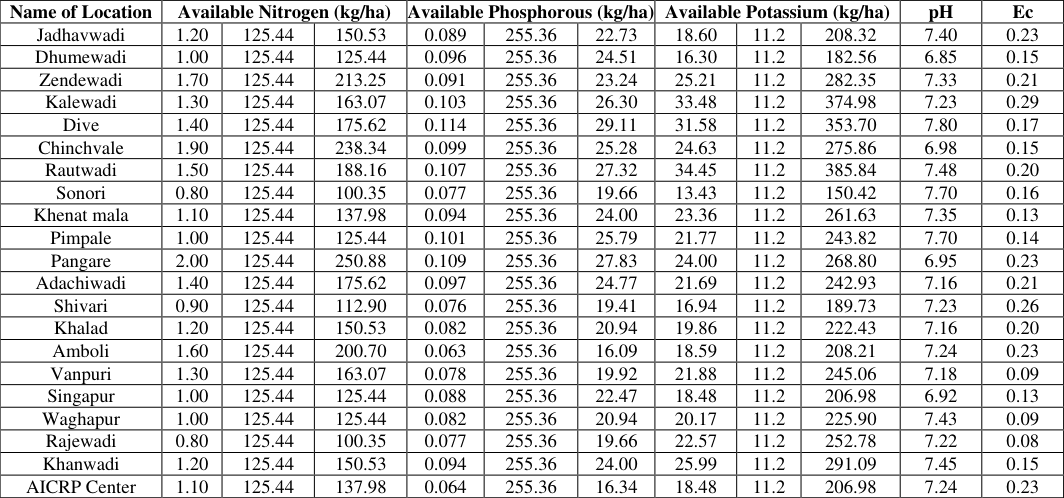 Table 2
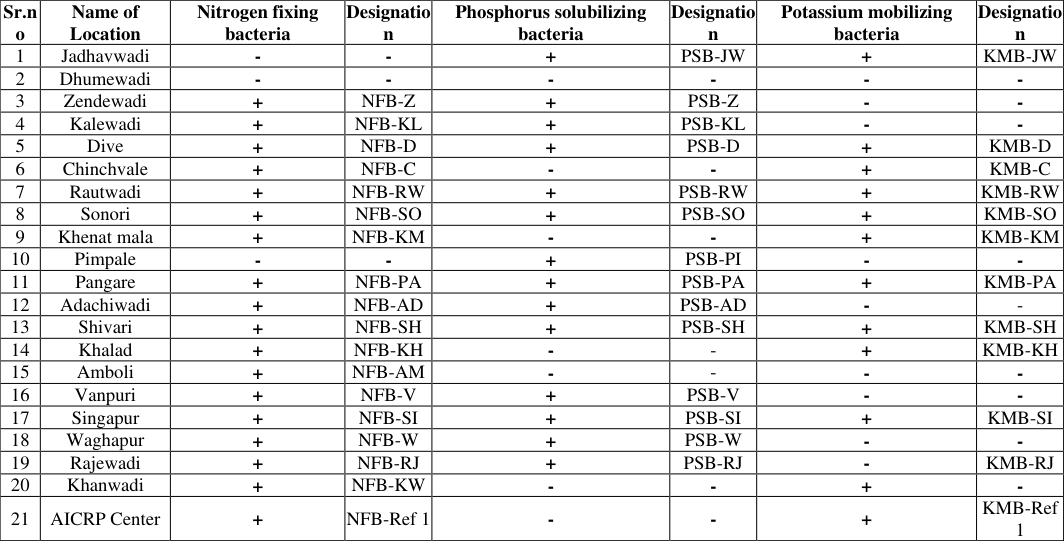 Table 3
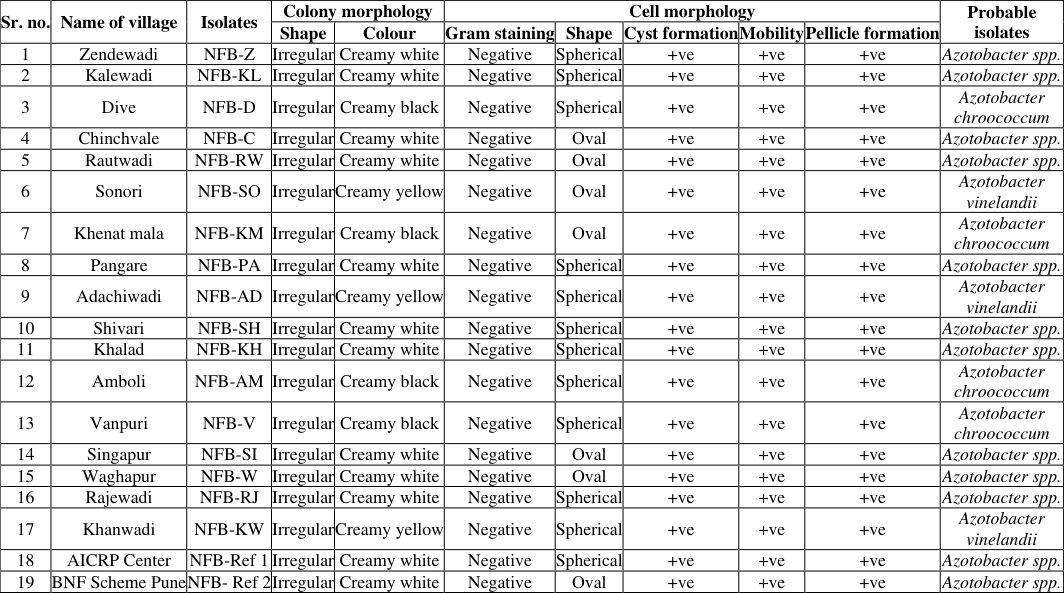 Table 4
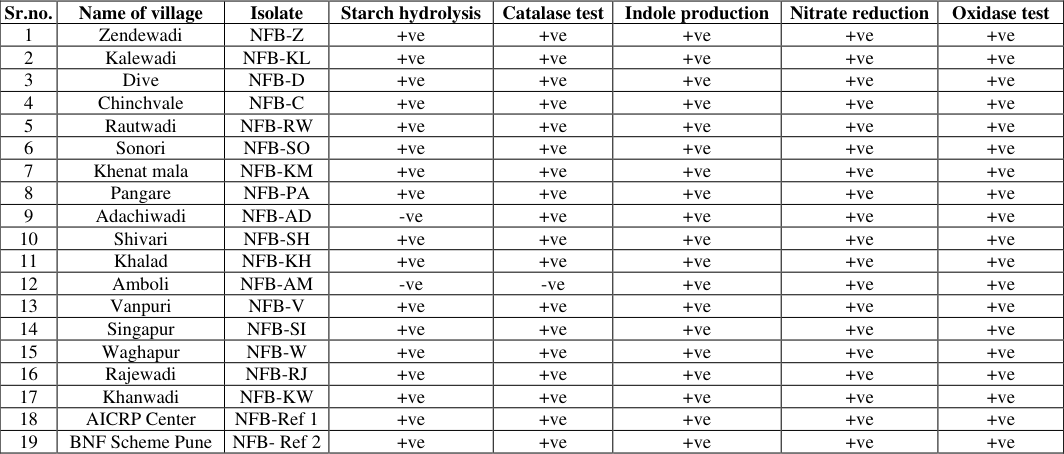 Table 5
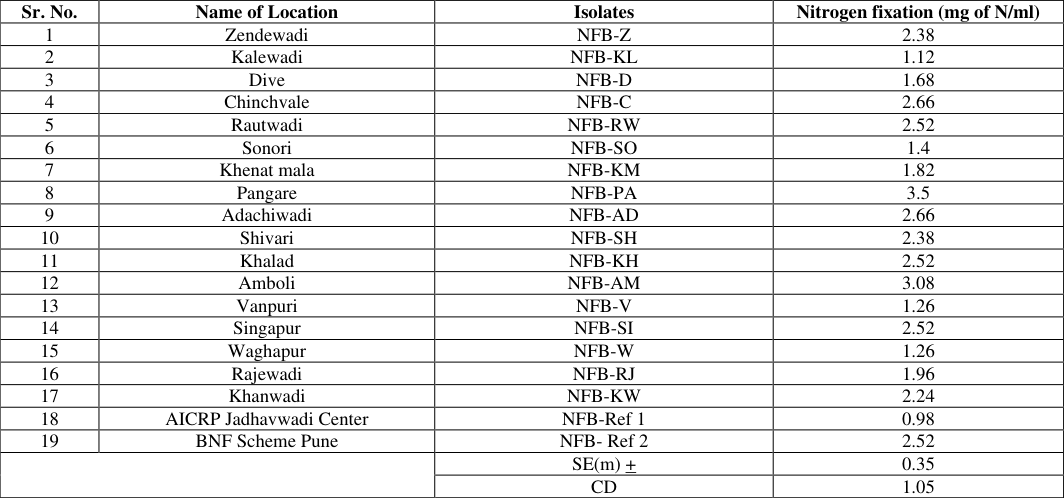 Table 6
Introduction
Custard apple (Annona squamosa L.), is a delectable and significant minor fruit crop belonging to the Annonaceae family. It can be called as delicacy of dry region due to its very sweet delicate flesh, Originally introduced from Tropical America, it has adapted remarkably well to Indian conditions and can now be found growing wild across many regions of the country, Only five of the 100 Annona species custard apple, cherimoya, sour sop, bullock's heart and atemoya are commercially significant (Jain et al. 2019) [6] . Plant growth promoting rhizobacteria (PGPR) are the group diverse bacteria that colonize the plant roots and surrounding root zone (rhizosphere), offering a multiple of benefits to plant health and growth. It plays a key role in promoting organic and sustainable agriculture, offering small and marginal farmers to enhance crop yields (Moorthy and Malliga, 2012) [11] . PGPR belong to various genera including Agrobacterium, Azotobacter, Azospirillum, Bacillus, Flavobacterium, Pseudomonas and Rhizobium etc. Azotobacter is a non-symbiotic bacterium that has the ability to fixation of nitrogen and active colonizes to increasing growth and crop production because of the ability to produce growth hormones such as auxin, cytokinin, and gibberellin (Leveau and Lindow, 2005) [9] . The purpose of this research was to isolate, characterize and analyze the capability of rhizosphere Azotobacter spp. isolate origin from Custard apple root zone.
Then the soil samples were analysed for their chemical properties viz available nitrogen, phosphorus and potassium along with pH and electrical conductivity (Table 2) (Jackson, 1973) [5] .
| Name of Location | Available Nitrogen (kg/ha) | — | — | Available Phosphorous (kg/ha) | — | — | Available Potassium (kg/ha) | — | — | pH | Ec |
|---|---|---|---|---|---|---|---|---|---|---|---|
| Jadhavwadi | 1.20 | 125.44 | 150.53 | 0.089 | 255.36 | 22.73 | 18.60 | 11.2 | 208.32 | 7.40 | 0.23 |
| Dhumewadi | 1.00 | 125.44 | 125.44 | 0.096 | 255.36 | 24.51 | 16.30 | 11.2 | 182.56 | 6.85 | 0.15 |
| Zendewadi | 1.70 | 125.44 | 213.25 | 0.091 | 255.36 | 23.24 | 25.21 | 11.2 | 282.35 | 7.33 | 0.21 |
| Kalewadi | 1.30 | 125.44 | 163.07 | 0.103 | 255.36 | 26.30 | 33.48 | 11.2 | 374.98 | 7.23 | 0.29 |
| Dive | 1.40 | 125.44 | 175.62 | 0.114 | 255.36 | 29.11 | 31.58 | 11.2 | 353.70 | 7.80 | 0.17 |
| Chinchvale | 1.90 | 125.44 | 238.34 | 0.099 | 255.36 | 25.28 | 24.63 | 11.2 | 275.86 | 6.98 | 0.15 |
| Rautwadi | 1.50 | 125.44 | 188.16 | 0.107 | 255.36 | 27.32 | 34.45 | 11.2 | 385.84 | 7.48 | 0.20 |
| Sonori | 0.80 | 125.44 | 100.35 | 0.077 | 255.36 | 19.66 | 13.43 | 11.2 | 150.42 | 7.70 | 0.16 |
| Khenat mala | 1.10 | 125.44 | 137.98 | 0.094 | 255.36 | 24.00 | 23.36 | 11.2 | 261.63 | 7.35 | 0.13 |
| Pimpale | 1.00 | 125.44 | 125.44 | 0.101 | 255.36 | 25.79 | 21.77 | 11.2 | 243.82 | 7.70 | 0.14 |
| Pangare | 2.00 | 125.44 | 250.88 | 0.109 | 255.36 | 27.83 | 24.00 | 11.2 | 268.80 | 6.95 | 0.23 |
| Adachiwadi | 1.40 | 125.44 | 175.62 | 0.097 | 255.36 | 24.77 | 21.69 | 11.2 | 242.93 | 7.16 | 0.21 |
| Shivari | 0.90 | 125.44 | 112.90 | 0.076 | 255.36 | 19.41 | 16.94 | 11.2 | 189.73 | 7.23 | 0.26 |
| Khalad | 1.20 | 125.44 | 150.53 | 0.082 | 255.36 | 20.94 | 19.86 | 11.2 | 222.43 | 7.16 | 0.20 |
| Amboli | 1.60 | 125.44 | 200.70 | 0.063 | 255.36 | 16.09 | 18.59 | 11.2 | 208.21 | 7.24 | 0.23 |
| Vanpuri | 1.30 | 125.44 | 163.07 | 0.078 | 255.36 | 19.92 | 21.88 | 11.2 | 245.06 | 7.18 | 0.09 |
| Singapur | 1.00 | 125.44 | 125.44 | 0.088 | 255.36 | 22.47 | 18.48 | 11.2 | 206.98 | 6.92 | 0.13 |
| Waghapur | 1.00 | 125.44 | 125.44 | 0.082 | 255.36 | 20.94 | 20.17 | 11.2 | 225.90 | 7.43 | 0.09 |
| Rajewadi | 0.80 | 125.44 | 100.35 | 0.077 | 255.36 | 19.66 | 22.57 | 11.2 | 252.78 | 7.22 | 0.08 |
| Khanwadi | 1.20 | 125.44 | 150.53 | 0.094 | 255.36 | 24.00 | 25.99 | 11.2 | 291.09 | 7.45 | 0.15 |
| AICRP Center | 1.10 | 125.44 | 137.98 | 0.064 | 255.36 | 16.34 | 18.48 | 11.2 | 206.98 | 7.24 | 0.23 |
Table text extracted from the original PDF; superscript letters are shown inline. The original table image is below.
View original table image
Isolation of nitrogen fixing bacteria
Isolation of bacteria was done using serial dilution method. Soil samples were weighed as much as 1gm and added into10 ml of sterile water, then dilution was carried out from10 -1 to 10 -8 . 0.1 ml of the suspension of each dilution was cultured on selective media. Colonies that grew on selective media indicated as a colony isolate of Azotobacter spp. Visually after 2-3 days of incubation white colonies were obtained.
Characterization of PGPR Morphological and cultural characterization
All the isolates were checked for their purity and then studied for the colony morphology, The cell shape and gram reaction were also recorded as per the standard procedures.
Biochemical characterization of PGPR
Different biochemical tests were performed as per the procedure described by Aneja (2001) [1] and Cappuccino and Sherman (1992) [2] . The protocols followed are briefly outlined below. The tests were conducted Starch hydrolysis, Catalase test, Indole production, Oxidase test and Nitrate reduction.
Catalase test (Rangaswami and Bhagyaraj 1993) [15] About 1 ml of 3% hydrogen peroxide (H 2 O 2 ) will be poured over bacterial culture on microscopic slide or in broth. Intensive bubbling will be noted as catalase positive, slight bubbling as weak positive and no gas production as catalase negative Oxidase test (Collins and Lyne, 1970) [3] Small pieces of filter papers soaked in 1% aqueous tetramethyl-p-phenylenediamine will be placed in Petri plate. Fresh young cultures to be tested will be scraped with a glass rod and will be rubbed on the moistened filter paper. Development of a deep violet colour after 10 seconds will be treated as oxidase positive test, whereas development of a light violet or no colour will be treated as oxidase negative test. [13] Nitrate broth was inoculated with a loopful of selected bacterial isolate and incubated at 28ºC for 7 days. Uninoculated nitrate broth was kept as a control. Control was also run without inoculation. After incubation, two drops of sulfanilic acid followed by two drops of napthylamine solution were added. The presence of nitrate was indicated by a pink, red or orange colour and the absence of colour change was considered nitrite negative.
Nitrate reduction test (Prathyush et al. 2022)
Indole formation test (Gordon and Weber, 1951) [4] The indole test will be performed by inoculating the bacterial isolates into Tryptone broth. The indole production during the growth will be detected by adding Kovac's reagent (P-dimethyl amino benzaldehyde), which will produce cherry red colour for positive reaction. [16] The isolates will be streaked on nutrient agar plates containing 2 per cent insoluble starch and will be incubated at room temperature for 48 h. Hydrolysis of starch will be tested by flooding with Gram's iodine solution and the plates will be observed for the presence a clear zones surrounding the colonies, which is a positive indicator for starch hydrolysis.
Starch hydrolysis test (Seeley and Van Demark, 1981)
Starch hydrolysis test (Seeley and Van Demark, 1981)
Evaluation of rhizobacteria isolates for their 'Nitrogen' fixing ability
The nitrogen fixing ability of Azotobacter isolates were estimated by Micro-Kjeldhal method in terms of the amount of total nitrogen fixed in 25 ml broth culture in 7 days under controlled condition. For that purpose, nitrogen free broth of Jensen's broth was used. After pouring 25 ml broth in 150 ml conical flask and plugged with cotton plugs then flask was autoclaved. After cooling, each flak was inoculated by 0.1 ml broth culture of each strain and the flask were kept on rotary shaker for continuous shaking of culture for 7 days at 28°C±2°C. From each flask 10 ml culture was taken for estimation of total nitrogen by Micro-Kjeldhal method as described.
Estimation of Phosphate Solubilizing Ability of PSB isolates 100 ml of Pikovaskaya's broth was dispensed in 250 ml conical flasks 100 mg P 2 O 5 as tri-calcium phosphate (TCP) was added separately to each flask and the contents were sterilized at 121°C for 15 min. The flasks were inoculated with 100 ml suspension of overnight grown culture and incubated at 28±2°C for 15 days. Presence of yellow colour after addition of ammonium molybdate and ammonium vandate in equal ratio to culture supernatant confirmed phosphate solubilizing activity. The yellow colour intensity of the solution was measured at 420 nm after 25 minutes incubation for quantitative estimation of phosphate solubilisation (Jackson, 1973) [5] .
Estimation of Potassium mobilizing ability of KMB isolates
Potassium solubilization of the bacterial isolate was studied on GYC agar media by a standard spot Plate assay inoculated with a loop-full overnight grown culture and incubated at 28°C. Clear zones around the colonies confirm positive potassium solubilization. The diameter of clear zones deduced using Khandeparkar's selection ratio (Prajapati, 2012) [12] .
Results and Discussion
Collection of rhizospheric soil samples from selected Custard apple orchard Total 21 rhizospheric soil samples were collected from selected custard apple orchard for the isolation of Plant Growth Promoting Rhizobacteria and The primary data on GPS location, use of chemical fertilizers, organic manures and bio-fertilizers and pest and diseases status of same orchard is present in (Table [10] , the field site's position (latitude, longitude, and altitude) was recorded during collection of soil samples.
Chemical analysis of collected soil samples
The present study evaluated the chemical soil properties across 21 distinct locations within the custard apple (Annona squamosa) growing belt of the Purandar tehsil viz. available nitrogen, phosphorus, potassium, pH and Ec as per standard procedure. (Table 2).
Isolation and characterization of Nitrogen fixing bacteria Azotobacter spp.
Out of twenty-one rhizospheric soil samples of custard apple, 18 isolates of NFB (Azotobacter) were obtained by The isolation was carried out by serial dilution and pour plate method using Jensen's, media and designated as per their location initial (Table 3) . All the nitrogen fixing bacterial isolates were Gram negative, cyst former, motile and pellicle forming. Colony colour of NFB isolates were creamy white in case of NFB-Z NFB-KL NFB-C, NFB-RW, NFB-PA, NFB-SH, NFB-KH, NFB-SI, NFB-W, NFB-RJ, NFB-Ref 1 and 2 where as it was creamy black NFB-B, NFB-KM, NFB-AM and NFB-V showing probable isolate might be Azotobacter chroococcum. Three NFB isolates viz, NFB-SO, NFB-AD and NFB-KW showed creamy yellow colour colony similar to Azotobacter vinelandii. The shape of NFB isolate was oval to spherical. Remaining NFB isolates were Azotobacter spp. (Table . 4) isolates were similar with the results of Upadhyay et al. (2015) [17] . All of the isolates of NFB were subjected to the biochemical tests for starch hydrolysis, catalase test, indole synthesis, oxidase test, and nitrate reduction. Results of these tests are presented in (Table.5) Nitrogen fixing bacterial isolates (Azotobacter) showed positive results for all five tests. As per isolates findings were reported by Rashmi et al. (2017).
| Sr.n o | Name of Location | Nitrogen fixing bacteria | Designatio n | Phosphorus solubilizing bacteria | Designatio n | Potassium mobilizing bacteria | Designatio n |
|---|---|---|---|---|---|---|---|
| 1 | Jadhavwadi | - | - | + | PSB-JW | + | KMB-JW |
| 2 | Dhumewadi | - | - | - | - | - | - |
| 3 | Zendewadi | + | NFB-Z | + | PSB-Z | - | - |
| 4 | Kalewadi | + | NFB-KL | + | PSB-KL | - | - |
| 5 | Dive | + | NFB-D | + | PSB-D | + | KMB-D |
| 6 | Chinchvale | + | NFB-C | - | - | + | KMB-C |
| 7 | Rautwadi | + | NFB-RW | + | PSB-RW | + | KMB-RW |
| 8 | Sonori | + | NFB-SO | + | PSB-SO | + | KMB-SO |
| 9 | Khenat mala | + | NFB-KM | - | - | + | KMB-KM |
| 10 | Pimpale | - | - | + | PSB-PI | - | - |
| 11 | Pangare | + | NFB-PA | + | PSB-PA | + | KMB-PA |
| 12 | Adachiwadi | + | NFB-AD | + | PSB-AD | - | - |
| 13 | Shivari | + | NFB-SH | + | PSB-SH | + | KMB-SH |
| 14 | Khalad | + | NFB-KH | - | - | + | KMB-KH |
| 15 | Amboli | + | NFB-AM | - | - | - | - |
| 16 | Vanpuri | + | NFB-V | + | PSB-V | - | - |
| 17 | Singapur | + | NFB-SI | + | PSB-SI | + | KMB-SI |
| 18 | Waghapur | + | NFB-W | + | PSB-W | - | - |
| 19 | Rajewadi | + | NFB-RJ | + | PSB-RJ | - | KMB-RJ |
| 20 | Khanwadi | + | NFB-KW | - | - | + | - |
| 21 | AICRP Center | + | NFB-Ref 1 | - | - | + | KMB-Ref 1 |
Table text extracted from the original PDF; superscript letters are shown inline. The original table image is below.
View original table image
Evalution of Nitrogen fixing ability of NFB isolates
Overall, the nitrogen fixation potential varied from minimum of 0.98 mg N/ml to a maximum of 3.50 mg N/ml (Table. 6) Isolate NFB-PA from Pangare recorded significantly the highest overall nitrogen fixation capacity (3.50 mg N/ml). However, it was at par with isolates NFB-AM from Amboli (3.08 mg N/ml), NFB-C from Chinchvale (2.66 mg N/ml), NFB-AD from Adachiwadi (2.66 mg N/ml), NFB-RW from Rautwadi (2.52 mg N/ml), NFB-Ref 2 from BNF Pune scheme (2.52 mg N/ml), NFB-KH from Khalad (2.52 mg N/ml), and NFB-SI from Singapur (2.52 mg N/ml). These results were align with findings of Kaviyarasan et al. (2020) [7] . isolated seven isolates of Azotobacter from the ten soil samples collected from agricultural fields and reported that the NR2R fixation was ranged from 6.58 mg N/ml to 14.86 mg N/ml.
Sr.n o
Sr.n o
Name of Location
Name of Location
Nitrogen fixing bacteria
Nitrogen fixing bacteria
Phosphorus solubilizing bacteria
Phosphorus solubilizing bacteria
Potassium mobilizing bacteria
Designatio (+ve) = Positive, (-ve) = Negative, NFB = Nitrogen fixing bacteria.
Conclusion
Out of 17 obtained NFB isolates NFB-PA and NFB-AM are superior isolates with characters morphology of creamy black colony, shape oval to spherical, Gram negative and positive for all biochemical analysis respected isolates which have the potential to be used as nitrogen fixing bacteria as a microbial fertilizer.
Acknowledgement
AcknowledgementsAuthors are highly thankful to the Mahatma Phule Krishi Vidyapeeth Rahuri and ICAR-CIAH Bikaner for providing support during experiment.
Figures and tables from the paper
| Sr. No. | Name of Location | GPS Coordinates | Chemical Fertilizer | Organic Fertilizer | Biological fertilizer | Insect attack | Disease incidence |
|---|---|---|---|---|---|---|---|
| 1 | Jadhavwadi | 18°23'53.8"N 74°00'11.1"E | + | + | - | Mealy bug, Tea mosquito bug | Fruit rot |
| 2 | Dhumewadi | 18°23'26.1"N 74°00'46.0"E | + | + | - | Tea mosquito bug, Aphids | Fruit rot |
| 3 | Zendewadi | 18°25'14.7"N 74°01'25.4"E | + | + | + | Mealy bug, Tea mosquito bug | Fruit rot |
| 4 | Kalewadi | 18°24'23.0"N 74°01'22.8"E | + | + | - | Mealy bug, Tea mosquito bug | Fruit rot |
| 5 | Dive | 18°22'42.4"N 74°01'04.0"E | + | + | + | Mealy bug, Tea mosquito bug | - |
| 6 | Chinchvale | 18°23'10.9"N 73°59'58.5"E | + | + | + | Mealy bug, Tea mosquito bug | Fruit rot |
| 7 | Rautwadi | 18°23'14.4"N 74°01'59.9"E | + | + | + | Mealy bug, Tea mosquito bug | Fruit rot |
| 8 | Sonori | 18°24'10.8"N 74°03'26.4"E | - | + | - | Mealy bug (traces) | - |
| 9 | Khenat mala | 18°18'56.2"N 74°02'05.2"E | + | + | - | Mealy bug and Aphids (Less) | Less infestation |
| 10 | Pimpale | 18°17'41.1"N 74°02'39.1"E | + | + | + | Mealy bug, Tea mosquito bug | Fruit rot |
| 11 | Pangare | 18°16'18.6"N 74°03'38.5"E | + | + | + | Mealy bug (traces) | Less infestation |
| 12 | Adachiwadi | 18°12'28.4"N 74°08'02.0"E | - | + | + | Mealy bug (traces) | Less infestation |
| 13 | Shivari | 18°17'32.7"N 74°05'16.0"E | - | + | + | Mealy bug, Tea mosquito bug | Fruit rot |
| 14 | Khalad | 18°19'31.8"N 74°04'02.2"E | + | + | - | Normal incidence | Normal infestation |
| 15 | Amboli | 18°21'23.2"N 74°02'48.5"E | + | - | - | Tea mosquito bug (traces) | Fruit rot |
| 16 | Vanpuri | 18°22'17.3"N 74°03'52.0"E | + | + | - | Tea mosquito bug (traces) | trace infestation |
| 17 | Singapur | 18°22'44.2"N 74°06'31.1"E | - | + | + | Less incidence | Less infestation |
| 18 | Waghapur | 18°23'37.5"N 74°06'55.2"E | - | + | + | Less incidence | Normal infestation |
| 19 | Rajewadi | 18°23'30.7"N 74°08'20.4"E | - | + | + | Less incidence | Less infestation |
| 20 | Khanwadi | 18°19'47.1"N 74°06'19.6"E | + | + | - | Less incidence | Less infestation |
| 21 | AICRP Center | 18°23'37.5"N 74°00'22.4"E | + | + | + | Normal incidence | Normal infestation |
Table text extracted from the original PDF; superscript letters are shown inline. The original table image is below.
View original table image
| Sr. no. | Name of village | Isolates | Colony morphology | — | Cell morphology | — | — | — | — | Probable isolates |
|---|---|---|---|---|---|---|---|---|---|---|
| Shape | Colour | Gram staining | Shape | Cyst formation | Mobility | Pellicle formation | ||||
| 1 | Zendewadi | NFB-Z | Irregular | Creamy white | Negative | Spherical | +ve | +ve | +ve | Azotobacter spp. |
| 2 | Kalewadi | NFB-KL | Irregular | Creamy white | Negative | Spherical | +ve | +ve | +ve | Azotobacter spp. |
| 3 | Dive | NFB-D | Irregular | Creamy black | Negative | Spherical | +ve | +ve | +ve | Azotobacter chroococcum |
| 4 | Chinchvale | NFB-C | Irregular | Creamy white | Negative | Oval | +ve | +ve | +ve | Azotobacter spp. |
| 5 | Rautwadi | NFB-RW | Irregular | Creamy white | Negative | Oval | +ve | +ve | +ve | Azotobacter spp. |
| 6 | Sonori | NFB-SO | Irregular | Creamy yellow | Negative | Oval | +ve | +ve | +ve | Azotobacter vinelandii |
| 7 | Khenat mala | NFB-KM | Irregular | Creamy black | Negative | Oval | +ve | +ve | +ve | Azotobacter chroococcum |
| 8 | Pangare | NFB-PA | Irregular | Creamy white | Negative | Spherical | +ve | +ve | +ve | Azotobacter spp. |
| 9 | Adachiwadi | NFB-AD | Irregular | Creamy yellow | Negative | Spherical | +ve | +ve | +ve | Azotobacter vinelandii |
| 10 | Shivari | NFB-SH | Irregular | Creamy white | Negative | Spherical | +ve | +ve | +ve | Azotobacter spp. |
| 11 | Khalad | NFB-KH | Irregular | Creamy white | Negative | Spherical | +ve | +ve | +ve | Azotobacter spp. |
| 12 | Amboli | NFB-AM | Irregular | Creamy black | Negative | Spherical | +ve | +ve | +ve | Azotobacter chroococcum |
| 13 | Vanpuri | NFB-V | Irregular | Creamy black | Negative | Spherical | +ve | +ve | +ve | Azotobacter chroococcum |
| 14 | Singapur | NFB-SI | Irregular | Creamy white | Negative | Oval | +ve | +ve | +ve | Azotobacter spp. |
| 15 | Waghapur | NFB-W | Irregular | Creamy white | Negative | Oval | +ve | +ve | +ve | Azotobacter spp. |
| 16 | Rajewadi | NFB-RJ | Irregular | Creamy white | Negative | Spherical | +ve | +ve | +ve | Azotobacter spp. |
| 17 | Khanwadi | NFB-KW | Irregular | Creamy yellow | Negative | Spherical | +ve | +ve | +ve | Azotobacter vinelandii |
| 18 | AICRP Center | NFB-Ref 1 | Irregular | Creamy white | Negative | Spherical | +ve | +ve | +ve | Azotobacter spp. |
| 19 | BNF Scheme Pune | NFB- Ref 2 | Irregular | Creamy white | Negative | Oval | +ve | +ve | +ve | Azotobacter spp. |
Table text extracted from the original PDF; superscript letters are shown inline. The original table image is below.
View original table image
| Sr.no. | Name of village | Isolate | Starch hydrolysis | Catalase test | Indole production | Nitrate reduction | Oxidase test |
|---|---|---|---|---|---|---|---|
| 1 | Zendewadi | NFB-Z | +ve | +ve | +ve | +ve | +ve |
| 2 | Kalewadi | NFB-KL | +ve | +ve | +ve | +ve | +ve |
| 3 | Dive | NFB-D | +ve | +ve | +ve | +ve | +ve |
| 4 | Chinchvale | NFB-C | +ve | +ve | +ve | +ve | +ve |
| 5 | Rautwadi | NFB-RW | +ve | +ve | +ve | +ve | +ve |
| 6 | Sonori | NFB-SO | +ve | +ve | +ve | +ve | +ve |
| 7 | Khenat mala | NFB-KM | +ve | +ve | +ve | +ve | +ve |
| 8 | Pangare | NFB-PA | +ve | +ve | +ve | +ve | +ve |
| 9 | Adachiwadi | NFB-AD | -ve | +ve | +ve | +ve | +ve |
| 10 | Shivari | NFB-SH | +ve | +ve | +ve | +ve | +ve |
| 11 | Khalad | NFB-KH | +ve | +ve | +ve | +ve | +ve |
| 12 | Amboli | NFB-AM | -ve | -ve | +ve | +ve | +ve |
| 13 | Vanpuri | NFB-V | +ve | +ve | +ve | +ve | +ve |
| 14 | Singapur | NFB-SI | +ve | +ve | +ve | +ve | +ve |
| 15 | Waghapur | NFB-W | +ve | +ve | +ve | +ve | +ve |
| 16 | Rajewadi | NFB-RJ | +ve | +ve | +ve | +ve | +ve |
| 17 | Khanwadi | NFB-KW | +ve | +ve | +ve | +ve | +ve |
| 18 | AICRP Center | NFB-Ref 1 | +ve | +ve | +ve | +ve | +ve |
| 19 | BNF Scheme Pune | NFB- Ref 2 | +ve | +ve | +ve | +ve | +ve |
Table text extracted from the original PDF; superscript letters are shown inline. The original table image is below.
View original table image
| Sr. No. | Name of Location | Isolates | Nitrogen fixation (mg of N/ml) |
|---|---|---|---|
| 1 | Zendewadi | NFB-Z | 2.38 |
| 2 | Kalewadi | NFB-KL | 1.12 |
| 3 | Dive | NFB-D | 1.68 |
| 4 | Chinchvale | NFB-C | 2.66 |
| 5 | Rautwadi | NFB-RW | 2.52 |
| 6 | Sonori | NFB-SO | 1.4 |
| 7 | Khenat mala | NFB-KM | 1.82 |
| 8 | Pangare | NFB-PA | 3.5 |
| 9 | Adachiwadi | NFB-AD | 2.66 |
| 10 | Shivari | NFB-SH | 2.38 |
| 11 | Khalad | NFB-KH | 2.52 |
| 12 | Amboli | NFB-AM | 3.08 |
| 13 | Vanpuri | NFB-V | 1.26 |
| 14 | Singapur | NFB-SI | 2.52 |
| 15 | Waghapur | NFB-W | 1.26 |
| 16 | Rajewadi | NFB-RJ | 1.96 |
| 17 | Khanwadi | NFB-KW | 2.24 |
| 18 | AICRP Jadhavwadi Center | NFB-Ref 1 | 0.98 |
| 19 | BNF Scheme Pune | NFB- Ref 2 | 2.52 |
| SE(m) + | 0.35 | ||
| CD | 1.05 |
Table text extracted from the original PDF; superscript letters are shown inline. The original table image is below.
View original table image
References
16 in the original paper- Aneja KR. Experiments in microbiology, plant pathology and tissue culture. New Delhi: Viswaprakasham; 2001. p. 471.
- Cappuccino JC, Sherman N. Microbiology: a laboratory manual. New York; 1992. p. 125-179.
- Collins CH, Lyne PM. Microbiological methods. London: Butterworths; 1970. p. 463-468.
- Gordon SA, Weber RP. Colorimetric estimation of indoleacetic acid. Plant Physiol. 1951;26(1):192-195.
- Jackson ML. Soil chemical analysis. New Delhi: Prentice Hall of India Pvt Ltd; 1967. p. 263-293.
- Jain C, Chapawat PS, Madhu B, Jain SK. Post-harvest processing of custard apple (Annona squamosa L.): a review. Int J Chem Stud. 2019;7(3):1632-1637.
- Kaviyarasan G, Shricharan S, Kathiravan R. Studies on isolation, biochemical characterization and nitrogen fixing ability of Azotobacter sp. isolated from agricultural soils. Int J Sci Eng Appl Sci. 2020;6(11):2395-3470.
- Kjeldahl J. A new method for the determination of nitrogen in organic matter. Z Anal Chem. 1883;22:366382.
- Leveau JHJ, Lindow SE. Utilization of the plant hormone indole-3-acetic acid for growth by Pseudomonas putida strain 1290. Appl Environ Microbiol. 2005;71:2365-2371.
- McPherson MR, Wang P, Marsh EL, Mitchell RB, Schachtman DP. Isolation and analysis of microbial communities in soil, rhizosphere and roots in perennial grass experiments. J Vis Exp. 2018;(137):1-11.
- Moorthy S, Malliga P. Plant characteristics, growth and leaf gel yield of Aloe barbadensis Miller as affected by cyanopith biofertilizer in pot culture. 2012;2(3):884892.
- Prajapati KB, Modi HA. Isolation and characterization of potassium solubilising bacteria from ceramic industry soil. CIBTech J Microbiol. 2012;1:8-14.
- Prathyusha D, Patibanda AK, Kumari VP, Madhusudan P, Jayalalitha K, Rao VS. Biochemical characterization of plant growth promoting rhizobacteria colonizing rhizoplane soil of rice. Andhra Agric J. 2022;69(3):392400. 14. Rahmi, Baharudin, Nasaruddin, Burhanuddin. Morphological characteristics and ability of isolates of Azotobacter sp. to produce IAA originating from cocoa rhizosphere. Int J Curr Microbiol Appl Sci. 2015;4(7):593-598.
- Rangaswami G, Bagyaraj DJ. Microbial biotechnology. In: Agricultural microbiology. New Delhi: Prentice Hall of India Private Limited; 1993. p. 389-405.
- Seeley HW, Vandemark PJ. Microbes in action: a laboratory manual of microbiology. San Francisco: W.H. Freeman and Company; 1981. p. 388.
- Upadhyay S, Narendra K, Singh VK, Singh A. Isolation, characterization and morphology of Azotobacter isolates. J Appl Nat Sci. 2015;7(2):984990.