
Research article · 2026 · Full text
International Journal of Horticulture and Food ScienceInfluence of intraspecific and interspecific grafting on phenology, harvesting behaviour and fruit quality of tomato under salinity stress
Volume 8(9) · Pages 24–28 · DOI: 10.33545/26631067.2026.v8.i9a.849 ↗
Research areasPlant Disease Management TechniquesPlant Stress Responses and ToleranceGenetics and Plant Breeding
Abstract
Author-writtenAn experiment was conducted during 2020-21 and 2021-22 at the Vegetable Research Farm, RHRS, Navsari Agricultural University, Navsari, Gujarat, to evaluate the effects of intraspecific and interspecific grafting on phenological, harvesting and fruit-quality traits of tomato under five salinity levels (0.5, 2.0, 4.0, 6.0 and 8.0 dS m⁻¹). Six graft combinations were tested: GT-7 (non-grafted), GT-7/Arka Vikas, GT-7/Abhinav, GT-7/GNRB-1, GT-7/Surati Ravaiya and GT-7/Solanum torvum. Salinity had no significant effect on days to 50% flowering, first picking and last picking. However, increasing salinity significantly reduced the number of pickings and lycopene content, while increasing titratable acidity. The maximum pooled number of pickings (13.65) and lycopene content (4.19 mg 100 g⁻¹) were recorded at 0.5 dS m⁻¹. Among graft combinations, GT-7/S. torvum recorded the numerically highest pooled values for number of pickings (14.44), TSS (5.27 °Brix), ascorbic acid (14.11 mg 100 g⁻¹), lycopene (4.20 mg 100 g⁻¹) and titratable acidity (0.28%). Interaction effects were non-significant, indicating consistent graft performance across salinity levels. GT-7 grafted onto S. torvum improved harvesting duration and fruit quality under saline conditions.
Summary
Source-checkedPlain-language reading of the full paper, prepared with AI and checked against the text. Each point links to the authors' own words.
Why it matters
- Tomato is a significant vegetable crop known for its economic value and nutritional properties, including antioxidants. View evidence ↗
- Soil and irrigation water salinity act as major constraints that limit the productivity of tomato crops. View evidence ↗
- Grafting is used as an effective method to increase the tolerance of vegetable crops to abiotic stresses like salinity. View evidence ↗
The question
- The study aimed to evaluate how intraspecific and interspecific grafting of the GT-7 tomato scion affects reproductive phenology, harvesting behavior, and fruit quality across five salinity levels. View evidence ↗
What they did
- The research was conducted over two cropping cycles (2020-21 and 2021-22) at the Vegetable Research Farm in Navsari, Gujarat, India. View evidence ↗
What they found
- Neither salinity levels nor graft combinations had a significant effect on the days to 50% flowering, first picking, or last picking. View evidence ↗
- The interspecific graft GT-7/S. torvum significantly increased the number of pickings (pooled value of 14.44) compared to the non-grafted control (11.52). View evidence ↗
- Titratable acidity in the fruit increased as salinity levels rose, reaching a maximum pooled value of 0.26% at 8.0 dS m⁻¹. View evidence ↗
- The GT-7/S. torvum graft produced the highest pooled total soluble solids (5.27 °Brix) and titratable acidity (0.28%), while non-grafted plants had the lowest (4.31 °Brix and 0.19% respectively). View evidence ↗
- Salinity negatively impacted lycopene content, which dropped from 4.19 mg 100 g⁻¹ at the lowest salinity to 3.84 mg 100 g⁻¹ at the highest salinity. View evidence ↗
- The GT-7/S. torvum (4.20 mg 100 g⁻¹) and GT-7/GNRB-1 (4.19 mg 100 g⁻¹) grafts had significantly higher pooled lycopene levels than the non-grafted control (3.61 mg 100 g⁻¹). View evidence ↗
What it means
- The authors concluded that GT-7 grafted onto Solanum torvum is the superior combination for maximizing harvest duration and fruit quality. View evidence ↗
Visual summary
3 visualsIllustrations explain the paper; charts are replotted from the paper's own table values.
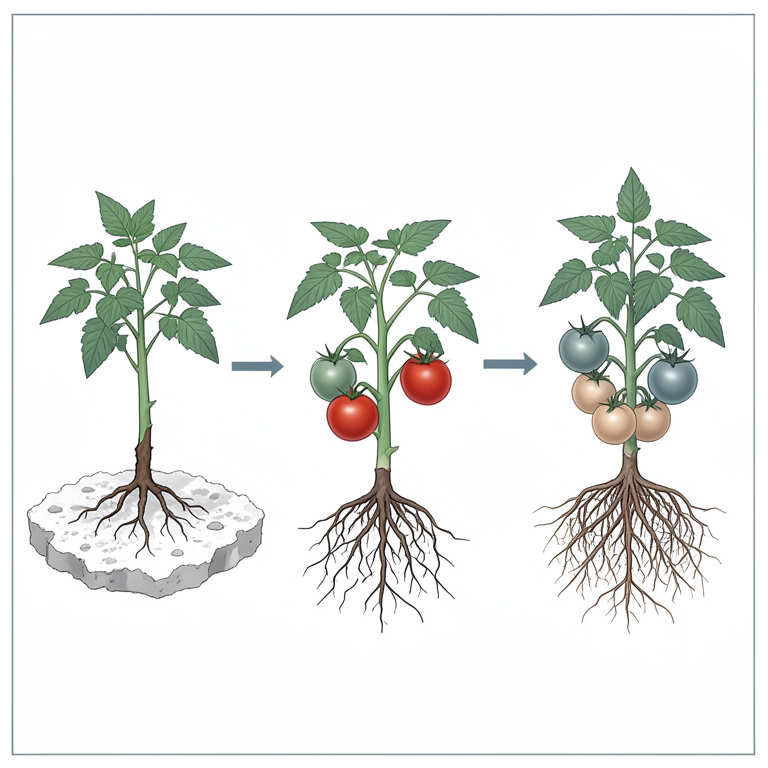
Grafting Strategy for Salinity Tolerance
AI-generated conceptual illustration (tomato plants (Solanum lycopersicum and Solanum torvum)). It explains the idea and does not show study data.
View source evidence ↗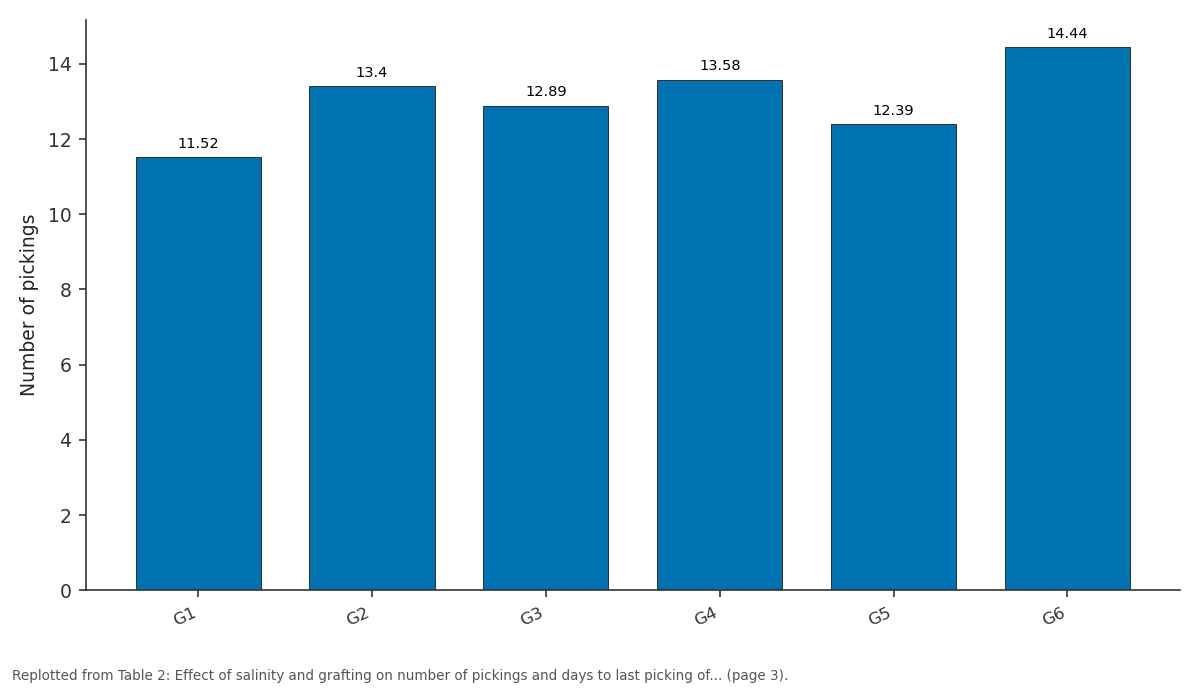
Pooled: G1 vs G2 vs G3 vs G4 vs G5
Replotted from Table 2 (page 3) of the original paper. Every bar is the paper's own table value.
View source evidence ↗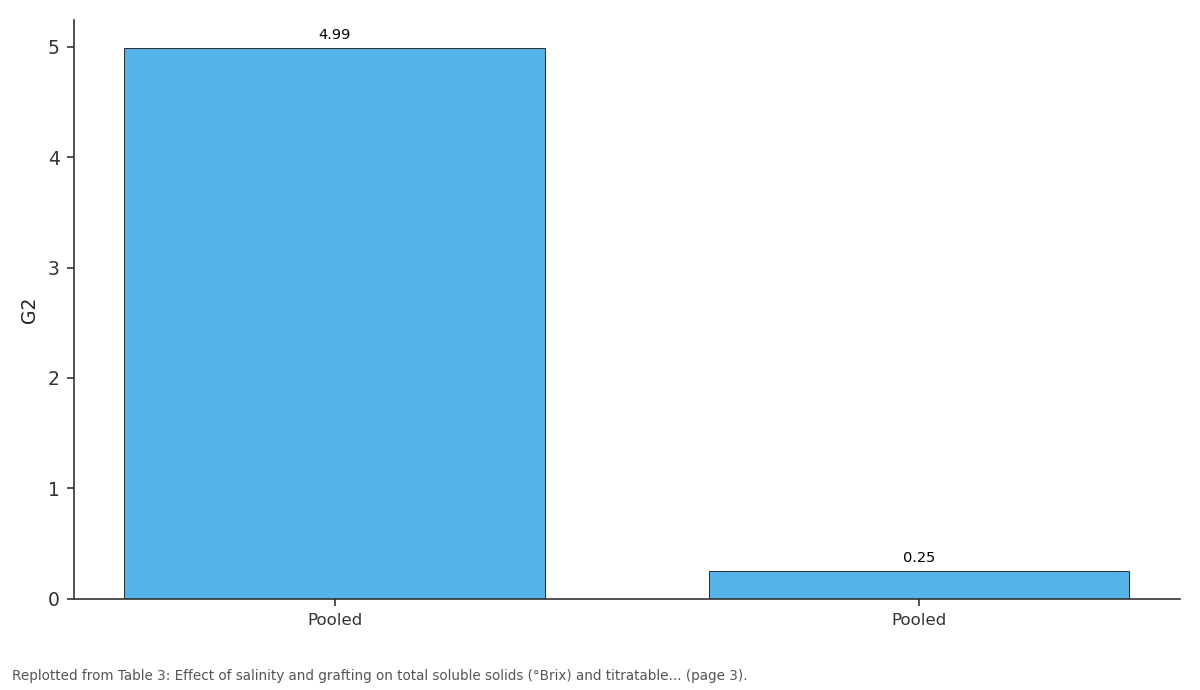
G2: Pooled vs Pooled
Replotted from Table 3 (page 3) of the original paper. Every bar is the paper's own table value.
View source evidence ↗Figures & tables
From the original paper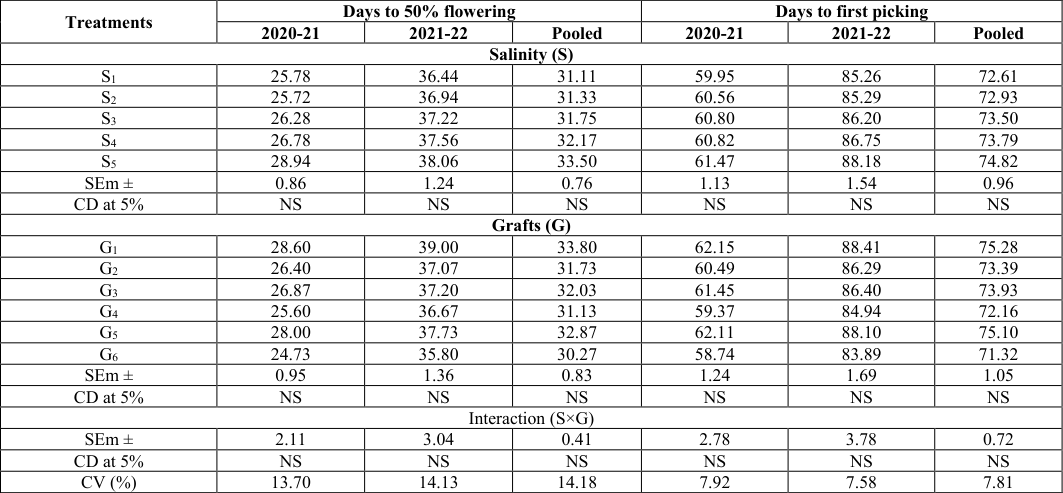 Table 1
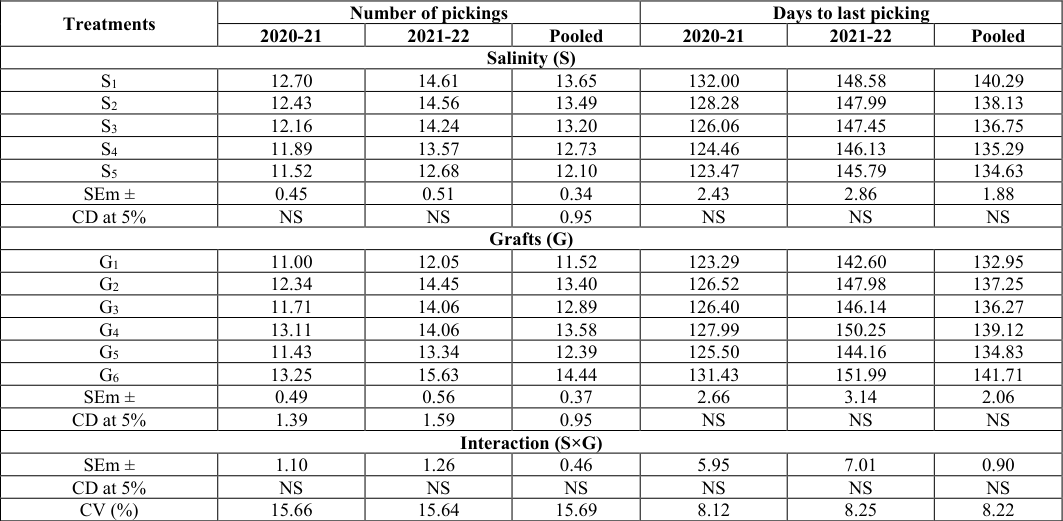 Table 2
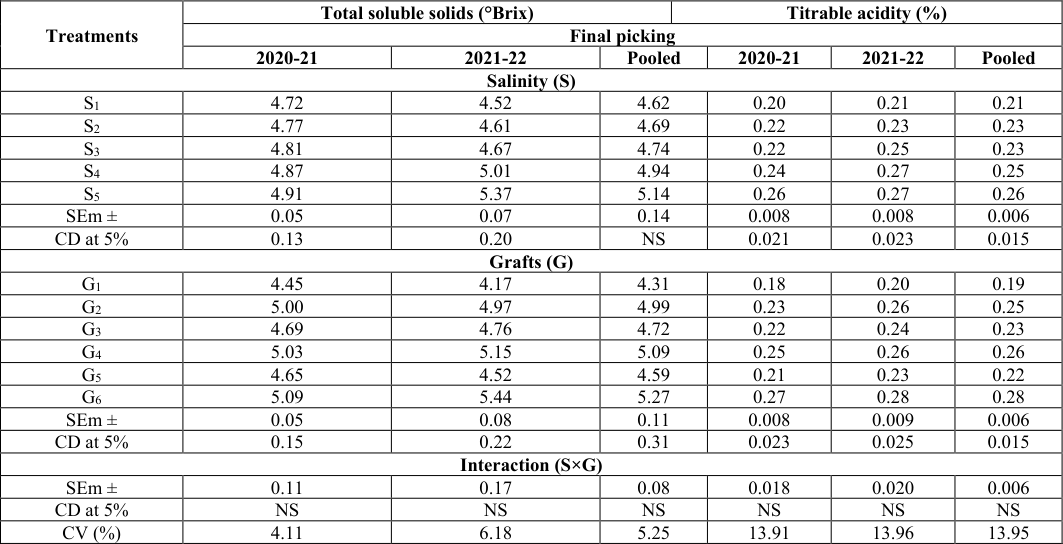 Table 3
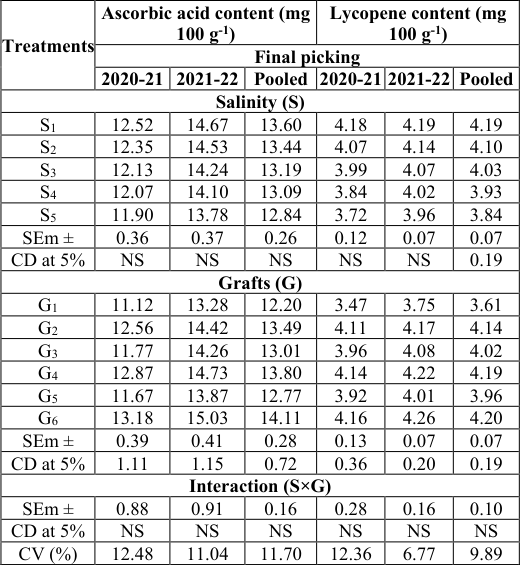 Table 4
Introduction
Tomato (Solanum lycopersicum L.) is an important vegetable crop valued for its nutritional, economic and antioxidant properties. Tomato fruits are rich in lycopene, ascorbic acid, carotenoids and soluble solids, which contribute to their nutritional and commercial quality (Palop et al., 2010) [15] . However, salinity is a major constraint to tomato production, particularly in areas where saline soil and irrigation water limit crop productivity. Salt stress causes osmotic and ionic imbalance, restricts water and nutrient uptake, and adversely affects physiological processes and crop performance (Munns and Tester, 2008) [13] . Grafting is an effective approach for improving the tolerance of vegetable crops to abiotic stresses. The use of suitable rootstocks can enhance root vigour, improve water and nutrient uptake and regulate the accumulation of toxic ions under saline conditions (Colla et [5,1,11] . In tomato, both intraspecific and interspecific rootstocks have shown potential for improving plant performance under salinity. In particular, Solanum torvum has been reported as a vigorous rootstock capable of improving tomato performance under stressful conditions (Di Gioia et al., 2013; Giuffrida et al., 2014) [17,10] . Although several studies have examined the response of grafted tomato to salinity, comparative information on the performance of intraspecific and interspecific rootstocks across a graded salinity regime, particularly with respect to harvesting behaviour and fruitquality attributes, remains limited. Moreover, rootstock performance can vary with scion genotype, salinity level and growing conditions. Therefore, identifying rootstock-scion combinations that maintain fruit quality and harvesting performance under increasing salinity is important for sustainable tomato production in salt-affected areas. Hence, the present study was undertaken to evaluate the influence of intraspecific and interspecific grafting of tomato scion GT-7 on reproductive phenology, harvesting behaviour and fruit quality attributes under five levels of salinity. The study specifically assessed days to flowering, picking behaviour, total soluble solids, titratable acidity, ascorbic acid and lycopene content to identify promising graft combinations for tomato production under saline conditions.
Materials and Methods
Materials and Methods
Experimental Site and Plant Material
The investigation was conducted at the Vegetable Research Farm, Regional Horticultural Research Station, ASPEE College of Horticulture and Forestry, Navsari Agricultural University, Navsari, Gujarat, India, during two consecutive cropping cycles: Summer/Late Kharif 2020-21 and 2021-22. The experiment was conducted in a factorial completely randomized design (CRD) consisting thirty treatment combinations with three repetitions. The treatments comprised five levels of salinity, viz., S 1 : 0.5 dS m -1 (Normal), S 2 : 2.0 dS m -1 , S 3 : 4.0 dS m -1 , S 4 : 6.0 dS m -1 , S 5 : 8.0 dS m -1 and six graft combinations namely G 1 : GT-7/GT-7 (Non-graft), G 2 : GT-7/Arka Vikas, G 3 : GT-7/Abhinav, G 4 : GT-7/GNRB-1, G 5 : GT-7/Surati Ravaiya (pink) and G 6 : GT-7/Solanum torvum. The experiment was conducted using grow bags filled with soil, leaf mould and biocompost in a 2:1:1 (v/v) ratio. Salinity was imposed through irrigation water after establishment of the grafted seedlings and irrigation was managed to maintain the required soil moisture condition. The grafted seedlings were prepared using the cleft grafting method.
Observations Recorded
Phenological and harvesting traits included days to 50% flowering, days to first picking, days to last picking and total number of pickings. Fruit quality attributes were evaluated at the final picking and included:
• Total soluble solids (TSS): TSS was determined using a digital hand refractometer and expressed as °Brix. • Ascorbic acid content: Ascorbic acid content was estimated by the 2,6-dichlorophenol indophenol dye titration method described by Ranganna (1999) [17] and expressed as mg 100 g⁻¹ fresh weight. • Lycopene content: Lycopene content was estimated spectrophotometrically following the method of Nagata and Yamashita (1992) [14] and expressed as mg 100 g⁻¹ fresh weight. • Titratable acidity: Titratable acidity was determined by titration of fruit juice against 0.1 N NaOH, using phenolphthalein as an indicator and expressed as percentage citric acid equivalent.
Statistical Analysis
Data from individual years were subjected to analysis of variance (ANOVA). The standard error of the mean [SE(m)] and critical difference (CD) at P = 0.05 were calculated. Homogeneity of error variances was tested before conducting pooled analysis of the data across the two experimental seasons.
Results and Discussion
Results and Discussion
Reproductive Phenology and Harvesting Duration
Salinity levels (S) and graft combinations (G) did not significantly affect days to 50% flowering, days to first picking and days to last picking during either individual year or the pooled analysis (P > 0.05; Table 1 andTable 2). Across all treatments, days to 50% flowering ranged from 30.27 days at G 6 to 33.80 days at G 1 in pooled analysis, while days to first picking ranged from 71.32 days at G 6 to 75.28 days at G 1 . However, the total number of pickings was significantly influenced by both salinity levels and graft combinations (Table 2). Increased salinity led to a progressive reduction in picking numbers. The control treatment (S₁: 0.5 dS m⁻¹) recorded the maximum pooled number of pickings (13.65), which was significantly higher than those recorded under S₄ (12.73) and S₅ (12.10), but did not differ significantly from S₂ and S₃. The reduction in harvest count under elevated salinity (S 5 ) stems from salt-induced osmotic stress, inhibited water and nutrient uptake, lower net photosynthetic capacity and premature crop senescence (Mitchell et al., 1991) [12] . Among graft combinations, inter-specific graft G 6 (GT-7/S. torvum) recorded the highest number of pickings in both individual years (13.25 in 2020-21; 15.63 in 2021-22) and in the pooled analysis (14.44), significantly outperforming the non-grafted control G 1 (11.52). The robust root structure of S. torvum maintains water transport and mineral supply under stress conditions, delaying plant decline and extending the cropping period (Di Gioia et al., 2013) [7] .
| Treatments | Number of pickings | — | — | Days to last picking | — | — |
|---|---|---|---|---|---|---|
| 2020-21 | 2021-22 | Pooled | 2020-21 | 2021-22 | Pooled | |
| Salinity (S) | ||||||
| S1 | 12.70 | 14.61 | 13.65 | 132.00 | 148.58 | 140.29 |
| S2 | 12.43 | 14.56 | 13.49 | 128.28 | 147.99 | 138.13 |
| S3 | 12.16 | 14.24 | 13.20 | 126.06 | 147.45 | 136.75 |
| S4 | 11.89 | 13.57 | 12.73 | 124.46 | 146.13 | 135.29 |
| S5 | 11.52 | 12.68 | 12.10 | 123.47 | 145.79 | 134.63 |
| SEm ± | 0.45 | 0.51 | 0.34 | 2.43 | 2.86 | 1.88 |
| CD at 5% | NS | NS | 0.95 | NS | NS | NS |
| Grafts (G) | ||||||
| G1 | 11.00 | 12.05 | 11.52 | 123.29 | 142.60 | 132.95 |
| G2 | 12.34 | 14.45 | 13.40 | 126.52 | 147.98 | 137.25 |
| G3 | 11.71 | 14.06 | 12.89 | 126.40 | 146.14 | 136.27 |
| G4 | 13.11 | 14.06 | 13.58 | 127.99 | 150.25 | 139.12 |
| G5 | 11.43 | 13.34 | 12.39 | 125.50 | 144.16 | 134.83 |
| G6 | 13.25 | 15.63 | 14.44 | 131.43 | 151.99 | 141.71 |
| SEm ± | 0.49 | 0.56 | 0.37 | 2.66 | 3.14 | 2.06 |
| CD at 5% | 1.39 | 1.59 | 0.95 | NS | NS | NS |
| Interaction (S×G) | ||||||
| SEm ± | 1.10 | 1.26 | 0.46 | 5.95 | 7.01 | 0.90 |
| CD at 5% | NS | NS | NS | NS | NS | NS |
| CV (%) | 15.66 | 15.64 | 15.69 | 8.12 | 8.25 | 8.22 |
Table text extracted from the original PDF; superscript letters are shown inline. The original table image is below.
View original table image
| Treatments | Days to 50% flowering | — | — | Days to first picking | — | — |
|---|---|---|---|---|---|---|
| 2020-21 | 2021-22 | Pooled | 2020-21 | 2021-22 | Pooled | |
| Salinity (S) | ||||||
| S1 | 25.78 | 36.44 | 31.11 | 59.95 | 85.26 | 72.61 |
| S2 | 25.72 | 36.94 | 31.33 | 60.56 | 85.29 | 72.93 |
| S3 | 26.28 | 37.22 | 31.75 | 60.80 | 86.20 | 73.50 |
| S4 | 26.78 | 37.56 | 32.17 | 60.82 | 86.75 | 73.79 |
| S5 | 28.94 | 38.06 | 33.50 | 61.47 | 88.18 | 74.82 |
| SEm ± | 0.86 | 1.24 | 0.76 | 1.13 | 1.54 | 0.96 |
| CD at 5% | NS | NS | NS | NS | NS | NS |
| Grafts (G) | ||||||
| G1 | 28.60 | 39.00 | 33.80 | 62.15 | 88.41 | 75.28 |
| G2 | 26.40 | 37.07 | 31.73 | 60.49 | 86.29 | 73.39 |
| G3 | 26.87 | 37.20 | 32.03 | 61.45 | 86.40 | 73.93 |
| G4 | 25.60 | 36.67 | 31.13 | 59.37 | 84.94 | 72.16 |
| G5 | 28.00 | 37.73 | 32.87 | 62.11 | 88.10 | 75.10 |
| G6 | 24.73 | 35.80 | 30.27 | 58.74 | 83.89 | 71.32 |
| SEm ± | 0.95 | 1.36 | 0.83 | 1.24 | 1.69 | 1.05 |
| CD at 5% | NS | NS | NS | NS | NS | NS |
| Interaction (S×G) | ||||||
| SEm ± | 2.11 | 3.04 | 0.41 | 2.78 | 3.78 | 0.72 |
| CD at 5% | NS | NS | NS | NS | NS | NS |
| CV (%) | 13.70 | 14.13 | 14.18 | 7.92 | 7.58 | 7.81 |
Table text extracted from the original PDF; superscript letters are shown inline. The original table image is below.
View original table image
Fruit Quality Traits Total Soluble Solids (TSS) and Titratable Acidity
Total soluble solids showed a numerical increasing trend with increasing salinity; however, the differences among salinity levels were non-significant in the pooled analysis (Table 3 and Table 4). The maximum pooled TSS (5. [16,3,7] . Graft combinations significantly influenced TSS and titratable acidity across both years and pooled data. Among graft combinations, G₆ (GT-7/S. torvum) recorded the highest pooled TSS (5.27 °Brix) and titratable acidity (0.28%), followed by G₄ and G₂ for TSS, while the nongrafted (G 1 ) produced the lowest TSS (4.31 °Brix) and titratable acidity (0.19%). Enhanced leaf photosynthetic activity and sugar loading driven by vigorous rootstocks account for elevated fruit TSS in grafted plants (Colla et al., 2006, 2013; Zaki et al., 2015) [4,20] .
| Treatments | Ascorbic acid content (mg 100 g-1) | — | — | Lycopene content (mg 100 g-1) | — | — |
|---|---|---|---|---|---|---|
| Final picking | ||||||
| 2020-21 | 2021-22 | Pooled | 2020-21 | 2021-22 | Pooled | |
| Salinity (S) | ||||||
| S1 | 12.52 | 14.67 | 13.60 | 4.18 | 4.19 | 4.19 |
| S2 | 12.35 | 14.53 | 13.44 | 4.07 | 4.14 | 4.10 |
| S3 | 12.13 | 14.24 | 13.19 | 3.99 | 4.07 | 4.03 |
| S4 | 12.07 | 14.10 | 13.09 | 3.84 | 4.02 | 3.93 |
| S5 | 11.90 | 13.78 | 12.84 | 3.72 | 3.96 | 3.84 |
| SEm ± | 0.36 | 0.37 | 0.26 | 0.12 | 0.07 | 0.07 |
| CD at 5% | NS | NS | NS | NS | NS | 0.19 |
| Grafts (G) | ||||||
| G1 | 11.12 | 13.28 | 12.20 | 3.47 | 3.75 | 3.61 |
| G2 | 12.56 | 14.42 | 13.49 | 4.11 | 4.17 | 4.14 |
| G3 | 11.77 | 14.26 | 13.01 | 3.96 | 4.08 | 4.02 |
| G4 | 12.87 | 14.73 | 13.80 | 4.14 | 4.22 | 4.19 |
| G5 | 11.67 | 13.87 | 12.77 | 3.92 | 4.01 | 3.96 |
| G6 | 13.18 | 15.03 | 14.11 | 4.16 | 4.26 | 4.20 |
| SEm ± | 0.39 | 0.41 | 0.28 | 0.13 | 0.07 | 0.07 |
| CD at 5% | 1.11 | 1.15 | 0.72 | 0.36 | 0.20 | 0.19 |
| Interaction (S×G) | ||||||
| SEm ± | 0.88 | 0.91 | 0.16 | 0.28 | 0.16 | 0.10 |
| CD at 5% | NS | NS | NS | NS | NS | NS |
| CV (%) | 12.48 | 11.04 | 11.70 | 12.36 | 6.77 | 9.89 |
Table text extracted from the original PDF; superscript letters are shown inline. The original table image is below.
View original table image
| Treatments | Total soluble solids (°Brix) | — | — | Titrable acidity (%) | — | — | — |
|---|---|---|---|---|---|---|---|
| Final picking | |||||||
| 2020-21 | 2021-22 | Pooled | 2020-21 | 2021-22 | Pooled | ||
| Salinity (S) | |||||||
| S1 | 4.72 | 4.52 | 4.62 | 0.20 | 0.21 | 0.21 | |
| S2 | 4.77 | 4.61 | 4.69 | 0.22 | 0.23 | 0.23 | |
| S3 | 4.81 | 4.67 | 4.74 | 0.22 | 0.25 | 0.23 | |
| S4 | 4.87 | 5.01 | 4.94 | 0.24 | 0.27 | 0.25 | |
| S5 | 4.91 | 5.37 | 5.14 | 0.26 | 0.27 | 0.26 | |
| SEm ± | 0.05 | 0.07 | 0.14 | 0.008 | 0.008 | 0.006 | |
| CD at 5% | 0.13 | 0.20 | NS | 0.021 | 0.023 | 0.015 | |
| Grafts (G) | |||||||
| G1 | 4.45 | 4.17 | 4.31 | 0.18 | 0.20 | 0.19 | |
| G2 | 5.00 | 4.97 | 4.99 | 0.23 | 0.26 | 0.25 | |
| G3 | 4.69 | 4.76 | 4.72 | 0.22 | 0.24 | 0.23 | |
| G4 | 5.03 | 5.15 | 5.09 | 0.25 | 0.26 | 0.26 | |
| G5 | 4.65 | 4.52 | 4.59 | 0.21 | 0.23 | 0.22 | |
| G6 | 5.09 | 5.44 | 5.27 | 0.27 | 0.28 | 0.28 | |
| SEm ± | 0.05 | 0.08 | 0.11 | 0.008 | 0.009 | 0.006 | |
| CD at 5% | 0.15 | 0.22 | 0.31 | 0.023 | 0.025 | 0.015 | |
| Interaction (S×G) | |||||||
| SEm ± | 0.11 | 0.17 | 0.08 | 0.018 | 0.020 | 0.006 | |
| CD at 5% | NS | NS | NS | NS | NS | NS | |
| CV (%) | 4.11 | 6.18 | 5.25 | 13.91 | 13.96 | 13.95 |
Table text extracted from the original PDF; superscript letters are shown inline. The original table image is below.
View original table image
Ascorbic Acid and Lycopene Content
Ascorbic acid content exhibited a declining trend with increased salinity (ranging from 13.60 mg 100 g -1 at S 1 to 12.84 mg 100 g -1 at S 5 in pooled analysis), though differences among salinity regimes were statistically nonsignificant (P > 0.05; Table 3). Accumulation of Cl -under high salinity interferes with organic acid metabolic pathways, lowering vitamin C levels (Cucci et al., 2000; Amor et al., 2001; Serio et al., 2004) [6,2,19] . In contrast, rootstock choices showed significant differences (p < 0.05): graft G 6 retained the highest ascorbic acid content (14.11 mg 100 g -1 pooled), outperforming G 1 (12.20 mg 100 g -1 ). The higher ascorbic acid content observed in grafted plants may be associated with improved plant physiological status under salinity, as reported previously for salt-tolerant rootstocks (Flores et al., 2010; Savvas et al., 2011) [9,18] . Salinity significantly lowered fruit lycopene content at final picking (Table 4). The highest pooled lycopene content was recorded under S₁ (4.19 mg 100 g⁻¹), whereas S₅ reduced it to 3.84 mg 100 g⁻¹. High salt concentrations impair chromoplast differentiation and carotenoid enzymatic pathways (Fernandez-Garcia et al., 2004) [8] . Among graft combinations, G₆ (4.20 mg 100 g⁻¹) and G₄ (4.19 mg 100 g⁻¹) recorded the highest pooled lycopene contents and were significantly higher than the non-grafted control G₁ (3.61 mg 100 g⁻¹). Improved nutrient uptake and higher photosynthetically active radiation utilization efficiency in vigorous rootstocks support carotenoid biosynthesis under abiotic stress (Fernandez-Garcia et al., 2004) [8] .
Conclusion
Increasing salinity significantly reduced the number of pickings and lycopene content, whereas titratable acidity increased with increasing salinity. Grafting significantly influenced harvesting performance and several fruit-quality attributes compared with the non-grafted control. Among the graft combinations, GT-7/Solanum torvum recorded the highest pooled values for number of pickings, TSS, ascorbic acid, lycopene and titratable acidity. Although the salinity × graft interaction was non-significant, the superior overall performance of GT-7/S. torvum across the tested salinity levels suggests its potential as a suitable rootstock for maintaining tomato harvesting performance and fruit quality under saline conditions.
References
20 in the original paper- Albacete A, Martinez-Andujar C, Martinez-Perez A, Thompson AJ, Dodd IC, Alfocea FP. Unravelling rootstock × scion interactions to improve food security. J Exp Bot. 2015;66(8):2211-2226.
- Amor FM, Martinez V, Cerda A. Salt tolerance of tomato plants as affected by stage of plant development. HortScience. 2001;36(7):1260-1263.
- Balliu A, Vuksani G, Nasto T, Haxhinasto L, Kaciu SG. Grafting effects on tomato growth rate, yield and fruit quality under saline irrigation water. Acta Hortic. 2008;801:1161-1166.
- Colla G, Rouphael Y, Cardarelli M, Massa D, Salerno A, Rea E. Effect of salinity on yield, fruit quality, leaf gas exchange and mineral composition of grafted watermelon plants. HortScience. 2006;41(3):622-627.
- Colla G, Rouphael Y, Leonardi C, Bie Z. Role of grafting in vegetable crops grown under saline conditions. Sci Hortic. 2010;127:147-155.
- Cucci G, Canfore Y, Boan F, Caro A, Ferreria MI, Jones HG. Water salinity influence of SAR on yield and quality parameters in tomato. Acta Hortic. 2000;2:663670.
- Di Gioia F, Signore A, Serio F, Santamaria P. Grafting improves tomato salinity tolerance through sodium partitioning within the shoot. HortScience. 2013;48(7):855-862.
- Fernandez-Garcia N, Martinez V, Carvajal M. Effect of salinity on growth, mineral composition and water relations of grafted tomato plants. J Plant Nutr Soil Sci. 2004;167:616-622.
- Flores FB, Sanchez-Bel P, Estan MT, MartinezRodriguez MM, Moyano E, Morales B, et al. The effectiveness of grafting to improve tomato fruit quality. Sci Hortic. 2010;125:211-217.
- Giuffrida F, Graziani G, Fogliano V, Scuderi D, Romano D, Leonardi C. Effects of nutrient and NaCl salinity on growth, yield, quality and composition of pepper grown in soilless closed system. J Plant Nutr. 2014;37(9):1455-1474.
- Kumar S, Nikki B, Saravaiya SN. Vegetable grafting: a surgical approach to combat biotic and abiotic stresses-a review. Agric Res Commun Centre. 2018;39(1):1-11.
- Mitchell JP, Shennan C, Grattan SR, May DM. Tomato fruit yields and quality under water deficit and salinity. J Am Soc Hortic Sci. 1991;116(2):215-221.
- Munns R, Tester M. Mechanisms of salinity tolerance. Annu Rev Plant Biol. 2008;59:651-681.
- Nagata M, Yamashita I. Simple method for simultaneous determination of chlorophyll and carotenoids in tomato fruit. Nippon Shokuhin Kogyo Gakkaish. 1992;39(10):925-928.
- Palop S, Ozdikicierler O, Kostekli M, Escriva M, Esteve MJ, Frigola A. Ascorbic acid in tomatoes during refrigeration storage with absorbing sheet of ethylene. In: International Conference on Food Innovation. Valencia: University of Polytechnic; 2010. p. 1-4.
- Parmar VK. Salt tolerance studies in tomato (Lycopersicum esculantum Mill). [PhD thesis]. Anand: Anand Agricultural University; 2007. 112 p.
- Ranganna S. Handbook of analysis and quality control for fruit and vegetable products. New Delhi: Tata McGraw Hill Publishing Company Limited; 1999. p. 1103.
- Savvas D, Savva A, Ntatsi G, Ropokis A, Karapanos I, Krumbein A, et al. Effects of three commercial rootstocks on mineral nutrition, fruit yield and quality of salinized tomato. J Plant Nutr Soil Sci. 2011;174(1):154-162.
- Serio F, Gara L, Caretto S, Leo L, Santamaria P. Influence of an increased NaCl concentration on yield and quality of cherry tomato grown in posidonia (Posidonia oceanica). J Sci Food Agric. 2004;84(14):1885-1890.
- Zaki ME, Salem AA, Eid SM, Glala AA, Saleh SA. Improving production and quality of tomato yield under saline conditions by using grafting technology. Int J ChemTech Res. 2015;8(12):111-120.