
Research article · 2026 · Full text
International Journal of Horticulture and Food ScienceRe-inventing crop nutrition: Integrated impact of nano-fertilizers, organics and recommended dose of fertilizers on growth and physiology of red Amaranthus
Volume 8(9) · Pages 29–32 · DOI: 10.33545/26631067.2026.v8.i9a.850 ↗
Research areasAgricultural Science and FertilizationPlant Growth and Agriculture TechniquesAgriculture, Plant Science, Crop Management
Abstract
Author-writtenRed amaranthus (Amaranthus tricolor L.) is a nutritionally important leafy vegetable requiring efficient nutrient management for sustainable productivity. An experiment was conducted at APHC Farm, Kalavai, Tamil Nadu, to evaluate the effects of inorganic and nano-fertilizers on growth, yield, and attributes of Red amaranthus cv. Arka Arunima. The experiment was arranged in a randomized block design with seven treatments replicated thrice. Treatments comprised 100% recommended dose of fertilizers (RDF), 100% farmyard manure (FYM), 100% vermicompost, 100% nano-fertilizer, and combinations of 50% RDF with 50% FYM, vermicompost, or nano-fertilizer. Growth, yield attributes and chlorophyll content index (CCI) were assessed, and data were analysed using ANOVA. The combined application of 50% RDF and 50% nano-fertilizer (T7) produced the greatest plant height, stem circumference, shoot length, number of leaves, leaf length, leaf width, fresh weight, dry weight, yield, and CCI. T7 recorded 13.15 leaves per plant, 73.50 g fresh weight, 19.11 g dry weight, 6.25 kg yield per plot, and a CCI of 33.03. However, maximum root length (8.05 cm) occurred with 50% RDF plus 50% FYM. These findings demonstrate that integrating RDF with nano-fertilizer improves nutrient-use efficiency and productivity while reducing dependence on fertilizers.
Summary
Source-checkedPlain-language reading of the full paper, prepared with AI and checked against the text. Each point links to the authors' own words.
Why it matters
- Red amaranthus is a nutritionally significant leafy vegetable, providing essential proteins, vitamins, and minerals, especially in developing nations. View evidence ↗
- The long-term over-reliance on synthetic fertilizers has led to environmental pollution, soil degradation, and potential human health risks. View evidence ↗
- Nano-fertilizers are an innovative tool for improving nutrient uptake and reducing environmental loss due to their small size and controlled release properties. View evidence ↗
The question
- The study aimed to evaluate how organic manures, inorganic fertilizers, and nano-fertilizers affect the growth, physiology, and yield of red amaranthus. View evidence ↗
What they did
- The research was conducted at APHC Farm in Tamil Nadu using the 'Arka Arunima' variety of red amaranthus. View evidence ↗
- The study used a Randomized Block Design with seven treatments and three replications across 21 plots of 1.5 m × 1.2 m. View evidence ↗
- Treatments compared full doses of RDF, FYM, vermicompost, and nano-fertilizers, as well as combinations of 50% RDF with 50% of the organic or nano options. View evidence ↗
- Researchers measured various growth parameters (height, circumference, length, weight), total plot yield, and the Chlorophyll Content Index (CCI). View evidence ↗
What they found
- The combination of 50% RDF and 50% nano-fertilizers (T7) resulted in the maximum plant height of 46.87 cm at 30 days after sowing (DAS). View evidence ↗
- The longest root length of 8.05 cm was achieved using 50% RDF combined with 50% farmyard manure (T6). View evidence ↗
- Treatment T7 (50% RDF + 50% nano-fertilizers) produced the best leaf metrics: 13.15 leaves per plant, 11.50 cm length, 8.30 cm width, 73.50 g fresh weight, and 19.11 g dry weight. View evidence ↗
- The highest total yield per plot was 6.25 kg, achieved with the 50% RDF and 50% nano-fertilizer treatment. View evidence ↗
- The maximum Chlorophyll Content Index (CCI) of 33.03 was recorded in treatment T7. View evidence ↗
What it means
- The authors conclude that combining 50% RDF with 50% nano-fertilizers is the optimal strategy, as it outperforms sole chemical fertilization in growth, yield, and chlorophyll. View evidence ↗
- Replacing 50% of conventional fertilizers with nano-fertilizers is recommended as a sustainable path to improve crop performance while reducing synthetic inputs. View evidence ↗
Visual summary
3 visualsIllustrations explain the paper; charts are replotted from the paper's own table values.
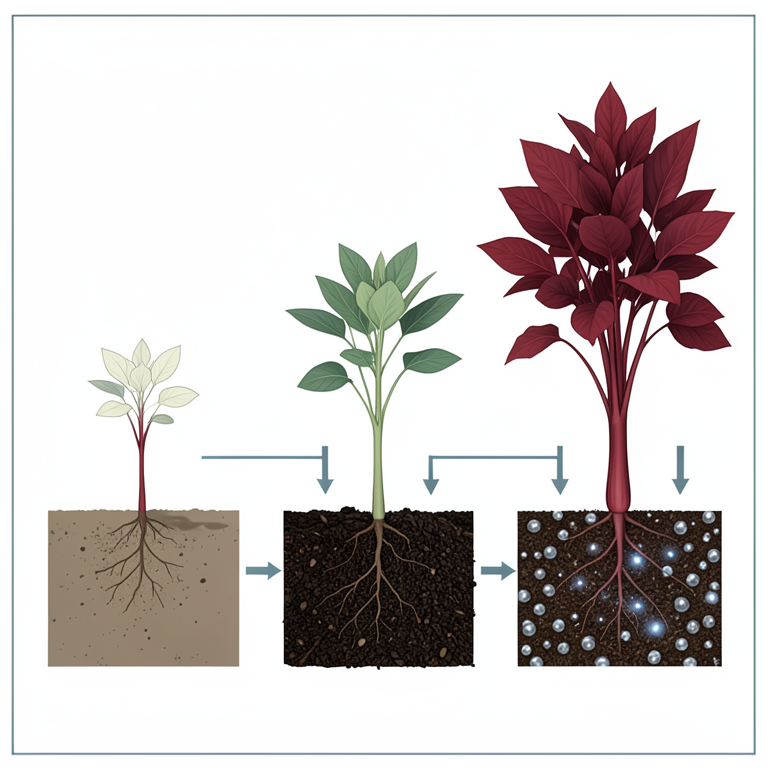
Integrated Nutrient Management Comparison
AI-generated conceptual illustration (red Amaranthus plants). It explains the idea and does not show study data.
View source evidence ↗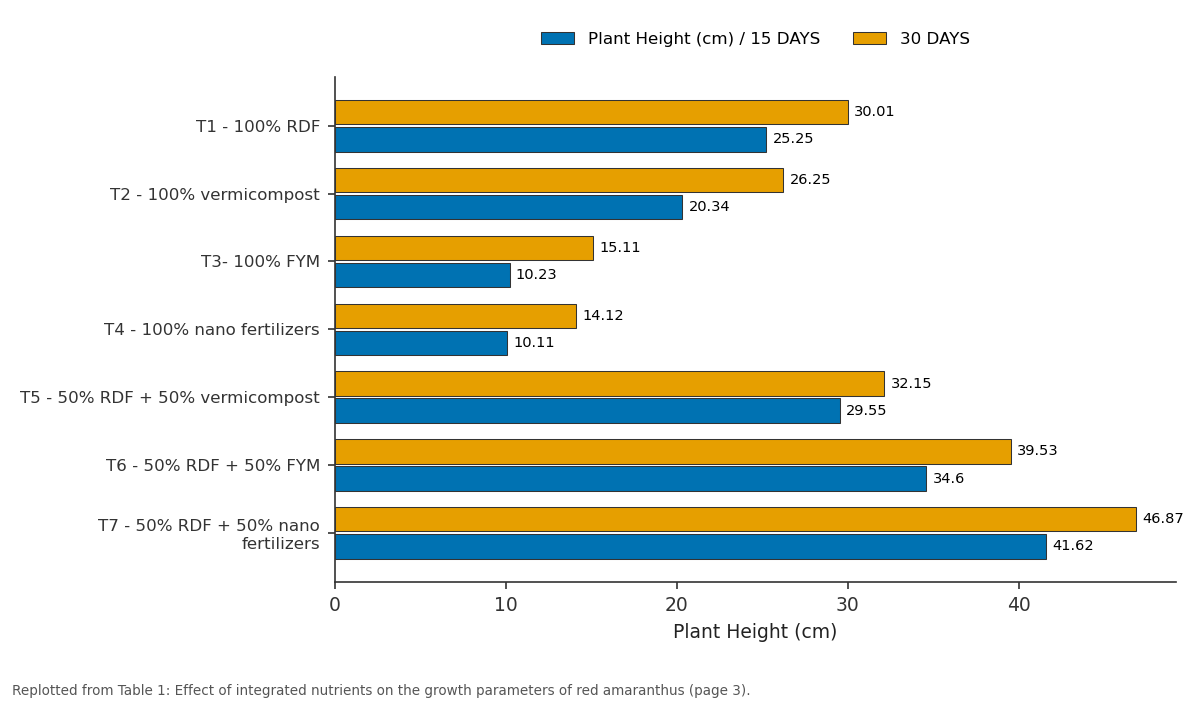
Plant Height (cm) / 15 DAYS and 30 DAYS: T1 - 100% RDF vs T2 - 100% vermicompost vs T3- 100% FYM vs T4 - 100% nano... vs T5 - 50% RDF + 50%...
Replotted from Table 1 (page 3) of the original paper. Every bar is the paper's own table value.
View source evidence ↗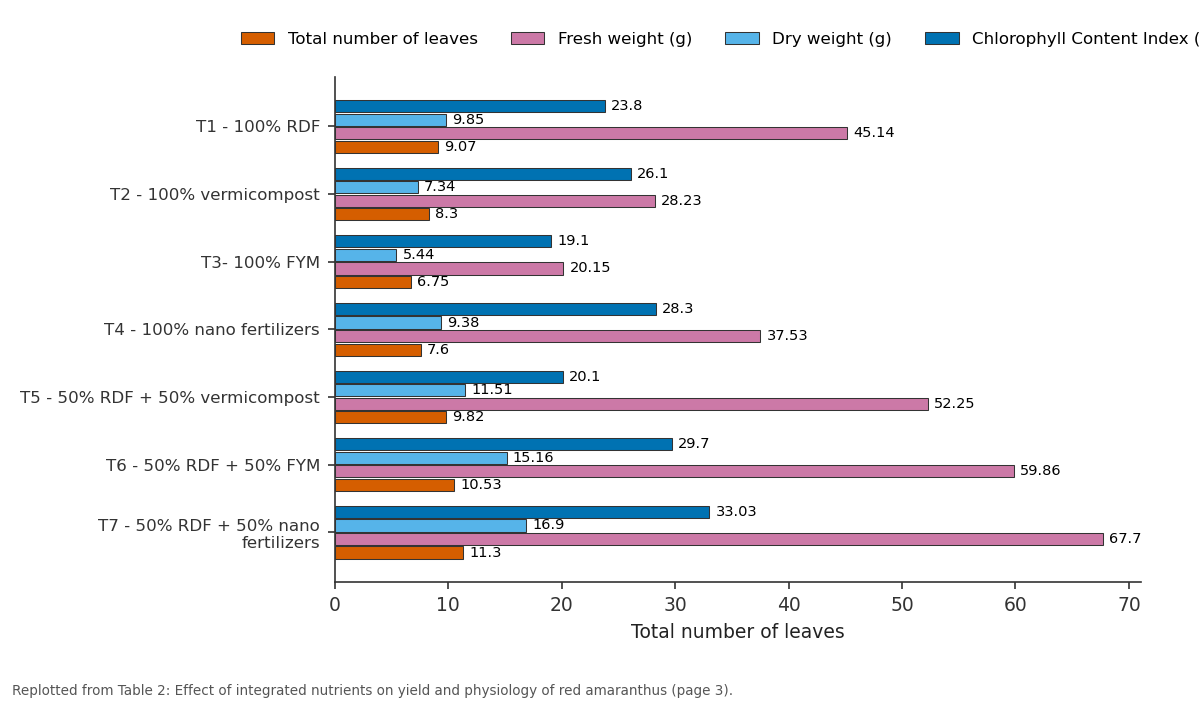
Total number of leaves and Fresh weight (g) and more: T1 - 100% RDF vs T2 - 100% vermicompost vs T3- 100% FYM vs T4 - 100% nano... vs T5 - 50% RDF + 50%...
Replotted from Table 2 (page 3) of the original paper. Every bar is the paper's own table value.
View source evidence ↗Figures & tables
From the original paper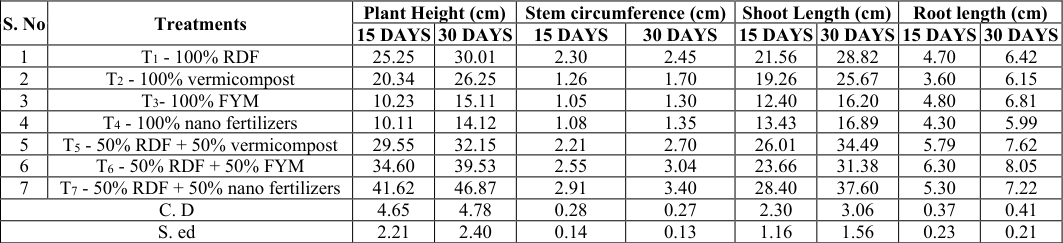 Table 1
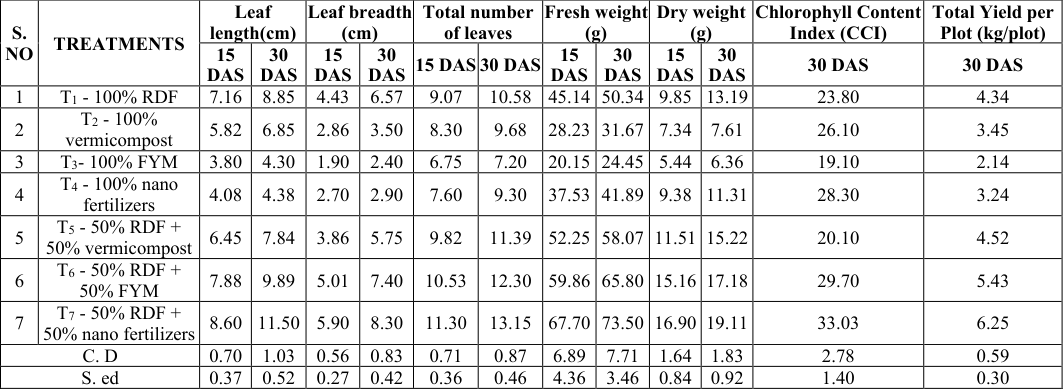 Table 2
Introduction
Vegetables play a vital role in human nutrition by supplying essential vitamins, minerals, dietary fibre, and bioactive compounds necessary for maintaining health. India is the secondlargest producer of vegetables in the world after China, and leafy vegetables constitute an important component of daily dietary requirements. Among leafy vegetables, red amaranthus (Amaranthus tricolor L.) is widely cultivated and consumed due to its high nutritional value. The crop is rich in proteins, carotenoids, iron, vitamin C, folic acid, and vitamin K, making it an important source of micronutrients, particularly in developing countries. Besides its nutritional significance, red amaranthus possesses medicinal properties such as antioxidant, anti-inflammatory, anticancer, and cholesterol-lowering activities, which enhance its importance in human diets. The global population, estimated at over 9.1 billion people, continues to increase, intensifying the demand for food and nutritional security. Although the Green Revolution substantially improved food grain production and helped alleviate hunger, the excessive and continuous use of synthetic fertilizers and pesticides has resulted in soil degradation, nutrient imbalance, environmental pollution, and concerns regarding human health. Consequently, modern agriculture faces the challenge of sustaining high crop productivity while preserving natural resources and environmental quality. Integrated Nutrient Management (INM) has emerged as a sustainable strategy that combines organic, inorganic, and advanced nutrient sources to optimize crop growth and maintain soil fertility. Recent studies have highlighted that INM improves nutrient-use efficiency, enhances soil biological activity, increases crop productivity, and promotes long-term sustainability in agricultural systems [1] . Organic manures such as vermicompost and farmyard manure (FYM) are important components of INM. Vermicompost is a nutrient-rich organic amendment containing essential macro-and micronutrients that improve soil structure, microbial activity, nutrient availability, and plant growth. Similarly, FYM contributes to soil organic matter accumulation, enhances water-holding capacity, and supports sustainable crop production. In recent years, nano-fertilizers have gained considerable attention as an innovative approach to improving nutrientuse efficiency. Due to their small particle size, large surface area, and controlled nutrient release characteristics, nanofertilizers facilitate efficient nutrient uptake and translocation within plants, thereby reducing nutrient losses and environmental contamination. Several studies have reported positive effects of nano-fertilizers on crop growth, yield, and quality, although their performance may vary depending on crop species, environmental conditions, and management practices [3] . Considering the nutritional, economic, and medicinal importance of red amaranthus and the growing need for sustainable nutrient management practices, the present investigation was undertaken to evaluate the effects of organic manures, inorganic fertilizers, and nano-fertilizers on the morphological, physiological, and yield attributes of red amaranthus. The study aims to identify an effective integrated nutrient management strategy that can enhance crop productivity while maintaining soil health and environmental sustainability.
Materials and Methods
The experiment was conducted at APHC Farm, Kalavai, Tamil Nadu, located at 12°93′ N latitude and 79°33′ E longitude. The region experiences a tropical climate with an average annual temperature of 30 °C, ranging from 25 °C during winter to 35 °C during summer, and receives an average annual rainfall of 953.4 mm. Red amaranthus (Amaranthus tricolor L.) variety 'Arka Arunima' was selected for the study, and the seeds were procured from Puduvai Agro Service, Puducherry. Farmyard manure (FYM) and vermicompost were obtained from APHC Farm, Kalavai, while nano-fertilizers were sourced from Tropical Agro System (India) Pvt. Ltd. These nutrient sources were applied according to the treatment schedule. The experiment was laid out in a Randomized Block Design (RBD) comprising seven treatments and three replications with a total of 21 plots, each measuring 1.5 m × 1.2 m. The treatments included 100% Recommended Dose of Fertilizers (RDF), 100% FYM, 100% vermicompost, 100% nano-fertilizer, 50% RDF + 50% FYM, 50% RDF + 50% vermicompost, and 50% RDF + 50% nano-fertilizer. The field was ploughed thoroughly to obtain a fine tilth, levelled, and divided into plots. Pre-sowing irrigation was provided to ensure uniform germination. Seeds were broadcast uniformly in the plots, and standard agronomic practices such as irrigation, thinning, and hand weeding were carried out as required. Organic manures and fertilizers were applied as per the treatment schedule, and the crop was harvested at 45 days after sowing. Observations on growth, yield, and physiological parameters were recorded from randomly selected plants in each treatment. The growth parameters included plant height, stem circumference, shoot length, root length, leaf length, leaf breadth, number of leaves per plant, fresh weight, and dry weight of plants. Yield was assessed based on total yield per plot, while physiological performance was evaluated through Chlorophyll Content Index (CCI). The collected data were subjected to statistical analysis using DSAASTAT software. Analysis of variance (ANOVA) was performed, and treatment means were compared using the Critical Difference (C.D) test at the 5 per cent level of significance.
Results and Discussion
Results and Discussion
Growth parameters
The data revealed that plant height at 15 DAS was recorded the highest in treatment T 7 with 47.62 cm which received granular application of 50% RDF and 50% nano fertilizers. At final observation, during 30 DAS, the maximum plant height 46.87 cm was observed in T 7 with application of 50% RDF + 50% nano fertilizers. The data revealed that stem circumference at 15 DAS was 2.91 cm and during 30 DAS was 3.40 cm in treatment T 7. Similarly, T 7 recorded a maximum shoot length of 37.60 cm. The maximum length of the root 8.05 cm was found in treatment T 6 were 50% RDF was given along with 50% FYM. Nano fertilizers, which utilize nanotechnology to deliver nutrients more efficiently, have been shown to positively impact plant growth, including the height of red amaranthus. Nano fertilizers can improve the availability and uptake of essential nutrients by the plant. Their small particle size allows for better penetration into the soil and easier absorption by plant roots. This can lead to improved growth and increased plant height [2] . This steady supply ensures that red amaranthus plants receive a continuous supply of essential nutrients, which supports consistent growth and can contribute to taller plants [3] . The nano-sized particles can enhance soil properties and create a more favourable environment for root development. Better root systems can support taller plant growth by providing improved anchorage and nutrient uptake. A healthier plant often results in a thicker stem circumference due to more robust growth. Nano fertilizers enable more precise and efficient utilization of nutrients. This can lead to increased cellular growth and development, which contributes to thicker, stronger stems. As plants grow faster and more vigorously, they often develop thicker stems to support their increased biomass. By enhancing the efficiency of photosynthesis through better nutrient supply, nano fertilizers enable plants to produce more energy for growth. This additional energy contributes to increased shoot length. Reduced stress as a result of application of nano fertilizer allows plants to allocate more resources to growth, including the extension of shoot length. Similar studies were revealed by [4,5] . The maximum length of the root 8.05 cm was found in treatment T 6 were 50% RDF was given along with 50% FYM. The availability of essential nutrients support healthy root development and promote the growth of longer and more robust roots. Vermicompost helps the soil retain moisture which is crucial for root development, and wellhydrated soil supports the growth of longer and healthier roots. The results were in concordance with the findings of [6] in red amaranthus.
Yield and physiological attributes:
The treatment, T 7 (50% RDF + 50% nano fertilizers) recorded highest number of leaves (13.15), maximum leaf length of 11.50 cm, leaf width of 8.30 cm, fresh weight with 73.50 g and dry weight with 19.11 g. Nano fertilizers often provide a controlled and sustained release of essential nutrients. This steady supply supports continuous and balanced growth, which can result in longer leaves. The delivery of nutrients more efficiently at the cellular level results in better plant growth and larger leaves, including increased leaf breadth. Better photosynthesis, uniformity and robustness in leaf growth potentially increases the breadth of the leaves. The morphological changes in leaves, such as increased leaf area and breadth, can be influenced by the optimized delivery of essential elements. This was also reported by [7] in lettuce. The presence of essential micro and macronutrients tends to produce healthier plants thereby producing higher vegetative growth. The influence of nano-fertilizers on the hormonal balance of the plants, particularly those of auxins and cytokinins boost hormonal production increasing the number of leaves. Similar findings were previously reported by [8] in green amaranthus. Increased photosynthesis and efficient nutrient use allow for more robust leaf growth which promotes an increase in biomass production. The delivery of nutrients at nanoscale enhances the absorption of nutrients by plants, which when dried results in higher dry weight. By improving the photosynthetic capacity of the plant, nano fertilizers can boost carbon assimilation, leading to more dry matter accumulation [9] . The consistent nutrient supply from nano-fertilizers helps in the overall growth and development of the plant, including root, stem, and leaf biomass. The total yield per plot was maximum in the treatment receiving 50% recommended dose of fertilizer along with 50% nano-fertilizers with 6.25 kg per plot. The increase in biomass, directly contributes to higher total yields per plot, as plants develop larger leaves and stems. This increased leaf production enhances the total yield per plot, as red amaranthus is harvested primarily for its leaves. By enhancing the nutrient status of the plant, nano-fertilizers improve photosynthetic rates, leading to more efficient energy conversion and growth. Increased photosynthesis supports greater biomass and higher yields. Similar results were reported by [10][11][12] . The highest values on total chlorophyll content index with 33.03 was observed in T 7 . Higher nutrient efficiency supports the production of more chlorophyll molecules, thus improving the CCI. Nano fertilizers often include essential micronutrients that are directly involved in chlorophyll biosynthesis. For example, iron and magnesium are vital components of the chlorophyll molecule, and their enhanced uptake through nano-fertilizers can directly increase chlorophyll levels. Similar findings were previously reported by [13,14] .
Conclusion
The integrated application of 50% Recommended Dose of Fertilizers and 50% nano-fertilizers proved to be the optimal nutrient management strategy for red amaranthus, outperforming sole chemical fertilization across growth, yield and chlorophyll indicators. By halving conventional chemical fertilizer requirements through nano-enabled precision delivery, this approach improves plant physiological activity while reducing environmental nutrient losses. Integrating nano-fertilizers at a 50% replacement level presents a viable path towards sustainable leafy vegetable production, offering farmers improved crop performance with reduced synthetic imputs.
Figures and tables from the paper
| S. No | Treatments | Plant Height (cm) | — | Stem circumference (cm) | — | Shoot Length (cm) | — | Root length (cm) | — |
|---|---|---|---|---|---|---|---|---|---|
| 15 DAYS | 30 DAYS | 15 DAYS | 30 DAYS | 15 DAYS | 30 DAYS | 15 DAYS | 30 DAYS | ||
| 1 | T1 - 100% RDF | 25.25 | 30.01 | 2.30 | 2.45 | 21.56 | 28.82 | 4.70 | 6.42 |
| 2 | T2 - 100% vermicompost | 20.34 | 26.25 | 1.26 | 1.70 | 19.26 | 25.67 | 3.60 | 6.15 |
| 3 | T3- 100% FYM | 10.23 | 15.11 | 1.05 | 1.30 | 12.40 | 16.20 | 4.80 | 6.81 |
| 4 | T4 - 100% nano fertilizers | 10.11 | 14.12 | 1.08 | 1.35 | 13.43 | 16.89 | 4.30 | 5.99 |
| 5 | T5 - 50% RDF + 50% vermicompost | 29.55 | 32.15 | 2.21 | 2.70 | 26.01 | 34.49 | 5.79 | 7.62 |
| 6 | T6 - 50% RDF + 50% FYM | 34.60 | 39.53 | 2.55 | 3.04 | 23.66 | 31.38 | 6.30 | 8.05 |
| 7 | T7 - 50% RDF + 50% nano fertilizers | 41.62 | 46.87 | 2.91 | 3.40 | 28.40 | 37.60 | 5.30 | 7.22 |
| C. D | 4.65 | 4.78 | 0.28 | 0.27 | 2.30 | 3.06 | 0.37 | 0.41 | |
| S. ed | 2.21 | 2.40 | 0.14 | 0.13 | 1.16 | 1.56 | 0.23 | 0.21 |
Table text extracted from the original PDF; superscript letters are shown inline. The original table image is below.
View original table image
| S. NO | TREATMENTS | Leaf length(cm) | — | Leaf breadth (cm) | — | Total number of leaves | — | Fresh weight (g) | — | Dry weight (g) | — | Chlorophyll Content Index (CCI) | Total Yield per Plot (kg/plot) |
|---|---|---|---|---|---|---|---|---|---|---|---|---|---|
| 15 DAS | 30 DAS | 15 DAS | 30 DAS | 15 DAS | 30 DAS | 15 DAS | 30 DAS | 15 DAS | 30 DAS | 30 DAS | 30 DAS | ||
| 1 | T1 - 100% RDF | 7.16 | 8.85 | 4.43 | 6.57 | 9.07 | 10.58 | 45.14 | 50.34 | 9.85 | 13.19 | 23.80 | 4.34 |
| 2 | T2 - 100% vermicompost | 5.82 | 6.85 | 2.86 | 3.50 | 8.30 | 9.68 | 28.23 | 31.67 | 7.34 | 7.61 | 26.10 | 3.45 |
| 3 | T3- 100% FYM | 3.80 | 4.30 | 1.90 | 2.40 | 6.75 | 7.20 | 20.15 | 24.45 | 5.44 | 6.36 | 19.10 | 2.14 |
| 4 | T4 - 100% nano fertilizers | 4.08 | 4.38 | 2.70 | 2.90 | 7.60 | 9.30 | 37.53 | 41.89 | 9.38 | 11.31 | 28.30 | 3.24 |
| 5 | T5 - 50% RDF + 50% vermicompost | 6.45 | 7.84 | 3.86 | 5.75 | 9.82 | 11.39 | 52.25 | 58.07 | 11.51 | 15.22 | 20.10 | 4.52 |
| 6 | T6 - 50% RDF + 50% FYM | 7.88 | 9.89 | 5.01 | 7.40 | 10.53 | 12.30 | 59.86 | 65.80 | 15.16 | 17.18 | 29.70 | 5.43 |
| 7 | T7 - 50% RDF + 50% nano fertilizers | 8.60 | 11.50 | 5.90 | 8.30 | 11.30 | 13.15 | 67.70 | 73.50 | 16.90 | 19.11 | 33.03 | 6.25 |
| C. D | 0.70 | 1.03 | 0.56 | 0.83 | 0.71 | 0.87 | 6.89 | 7.71 | 1.64 | 1.83 | 2.78 | 0.59 | |
| S. ed | 0.37 | 0.52 | 0.27 | 0.42 | 0.36 | 0.46 | 4.36 | 3.46 | 0.84 | 0.92 | 1.40 | 0.30 |
Table text extracted from the original PDF; superscript letters are shown inline. The original table image is below.
View original table image
References
14 in the original paper- Kalwani M, Chakdar H, Srivastava A, Pabbi S, Shukla P. Effects of nanofertilizers on soil and plant-associated microbial communities: Emerging trends and perspectives. Chemosphere. 2022;287:132107.
- Putri FS, Fevria R, Putri IL. The effect of nanotechnology liquid organic fertilizer on the growth of red spinach (Amaranthus tricolor L.) cultivated hydroponically. Jurnal Biologi Tropis. 2023;23(2):491497.
- Channab BE, El Idrissi A, Ammar A, Dardari O, Marrane SE, El Gharrak A, et al. Recent advances in nano-fertilizers: synthesis, crop yield impact, and economic analysis. Nanoscale. 2024;16(9):4484-4513.
- Ghazaryan K, Pandey D, Singh S, Varagyan V, Alexiou A, Petropoulos D, et al. Enhancing crop production: unveiling the role of nanofertilizers in sustainable agriculture and precision nutrient management. Egyptian Journal of Soil Science. 2024;64(3):9811007.
- Kale SS, Chauhan R, Nigam B, Gosavi S, Chaudhary IJ. Effectiveness of nanoparticles in improving soil fertility and eco-friendly crop resistance: A comprehensive review. Biocatalysis and Agricultural Biotechnology. 2024;56:103066.
- Saha M, Mousomi KN, Maukeeb AR, Mondal S. Vermicompost enhances the yield and quality of red amaranth subjected to acidic soil. American Journal of Agricultural Science, Engineering, and Technology. 2022;6(2):74-81.
- Semenova NA, Burmistrov DE, Shumeyko SA, Gudkov SV. Fertilizers based on nanoparticles as sources of macro-and microelements for plant crop growth: A review. Agronomy. 2024;14(8):1646.
- Sultanova Z, Mambetova N, Utambetov D, Toderich K, Sultanova H. Technology cultivating of amaranth at different rates of organic fertilizers in the conditions of the Southern Aral Sea region. E3S Web of Conferences. 2024;537:10021.
- Singh VI, Nariya JN. Effect of phosphorus and sulphur on dry matter accumulation and nutrient uptake in chickpea. Forage Research. 2017;43(1):31-34.
- Alnaddaf LM, Al-Khayri JM, Jain SM. Role of nanomaterials in improving crop productivity. In: Nanomaterial interactions with plant cellular mechanisms and macromolecules and agricultural implications. Cham: Springer International Publishing; 2023. p. 341-357.
- Jakhar B, Singh SP, Prakash V. Response of integrated nitrogen management on growth, yield and economics of winter baby corn (Zea mays L.). Journal of Applied Horticulture. 2022;24(3):345-348.
- Kumar S, Sharma SK, Thakral SK, Bhardwaj KK, Jhariya MK, Meena RS, et al. Integrated nutrient management improves the productivity and nutrient use efficiency of Lens culinaris Medik. Sustainability. 2022;14(3):1284.
- Ain Q, Hussain HA, Zhang Q, Rasheed A, Imran A, Hussain S, et al. Use of nano-fertilizers to improve the nutrient use efficiencies in plants. In: Sustainable Plant Nutrition. Academic Press; 2023. p. 299-321.
- Sebastian A, Devika PS, Nair PP, Devadas VS. Green synthesis of potassium-infused nitrogenous nanofertilizer for enhanced plant growth. Chemical Papers. 2024;78(3):1481-1492.