
Research article · 2026 · Full text
International Journal of Horticulture and Food ScienceEffect of different organic nutrient sources (FYM, Vermicompost, poultry manure, neem cake) on growth, yield, and quality of beetroot (Beta vulgris L.)
Volume 8(9) · Pages 01–08 · DOI: 10.33545/26631067.2026.v8.i9a.845 ↗
Research areasAgricultural Science and FertilizationAgriculture, Plant Science, Crop ManagementPlant Growth and Agriculture Techniques
Abstract
Author-writtenThe experiment was conducted in the Karguaji Organic Research Farm, Department of Horticulture, Institute of Agricultural Sciences, Bundelkhand University, Jhansi, to study the effect of different organic sources (FYM, vermicompost, poultry manure, and neem cake) on growth, yield, yield-attributing traits, and overall performance of beetroot. The study included nine treatments, viz., T1 : Control (No external organic input- baseline ), T2 : Farmyard manure (FYM) @ 20t/ha (100% recommended dose), T3 : Vermicompost @ 5 t/ha (100% recommended dose), T4 : Poultry manure @ 8 t/ha (100% recommended dose), T5 : Neem cake @ 2 t/ha (100% recommended dose), T6 : FYM @ 10 t/ha Vermicompost @ 2.5 t/ha (50%+50%), T7 : Vermicompost @ 2.5 t/ha + Poultry manure @ 4 t/ha (50%+50%), T8 : FYM @ 10 t/ha + Neem cake @ 1 t/ha (50%+50%), T9 : FYM @ 6.67 t/ha + vermicompost @ 1.67 t/ha + poultry manure @ 2.67 t/ha (33% each) arranged in a Randomized Block Design with three replications. Results indicated that growth, yield, yield-attributing parameters. Among all treatments, Poultry Manure and FYM + Neem cake was found most effective in enhancing plant height, number of leaves per plant, leaf length, leaf width, root length, root diameter (cm), root weight (g) and harvest index.
Summary
Source-checkedPlain-language reading of the full paper, prepared with AI and checked against the text. Each point links to the authors' own words.
Why it matters
- Beetroot is a globally cultivated root vegetable of significant importance. View evidence ↗
- The edible roots of beetroot are highly nutritious, containing minerals, vitamins, carbohydrates, and betalain pigments. View evidence ↗
- Achieving high yields and quality in beetroot requires appropriate agronomic practices and nutrient management. View evidence ↗
The question
- The study aimed to evaluate how different organic nutrient sources, specifically farmyard manure (FYM), vermicompost, poultry manure, and neem cake, affect the growth and yield of beetroot. View evidence ↗
What they did
- The research was conducted at the Karguaji Organic Research Farm in Jhansi using a Randomized Block Design with three replications. View evidence ↗
- Nine treatments were tested, including a control, four single-source organic inputs at 100% recommended doses, and three combinations of these sources. View evidence ↗
- The researchers measured several growth and yield parameters, including plant height, leaf count and dimensions, root length, diameter, weight, and the harvest index. View evidence ↗
What they found
- Poultry manure (T4) produced the highest plant height at 25, 50 days after sowing (DAS), and harvest (18.57, 33.36, and 34.82 cm respectively), while treatment T9 resulted in the minimum height. View evidence ↗
- The highest number of leaves per plant was achieved with poultry manure (T4) at 25 DAS, 50 DAS, and harvest (12.74, 16.80, and 20.75), with T9 showing the lowest count. View evidence ↗
- Poultry manure (T4) led to the maximum leaf length at 25 DAS, 50 DAS, and harvest (12.35, 18.31, and 28.45 cm), while T9 had the minimum. View evidence ↗
- The greatest leaf width was observed under poultry manure (T4) at 25 DAS, 50 DAS, and harvest (6.79, 13.56, and 19.09 cm), with T9 being the lowest. View evidence ↗
- Poultry manure (T4) resulted in the maximum root length of 13.24 cm, while T9 resulted in the minimum. View evidence ↗
- The maximum root diameter was 6.91 cm under poultry manure (T4), with the minimum observed in T9. View evidence ↗
- Poultry manure (T4) produced the highest root weight at 141.0 g, while T9 produced the lowest. View evidence ↗
- The highest harvest index was 79.32% under poultry manure (T4), while the lowest was observed in treatment T9. View evidence ↗
What it means
- The authors concluded that poultry manure at 8 t/ha was the most effective organic nutrient source for improving beetroot growth and yield, followed by a combination of FYM and neem cake. View evidence ↗
Visual summary
3 visualsIllustrations explain the paper; charts are replotted from the paper's own table values.
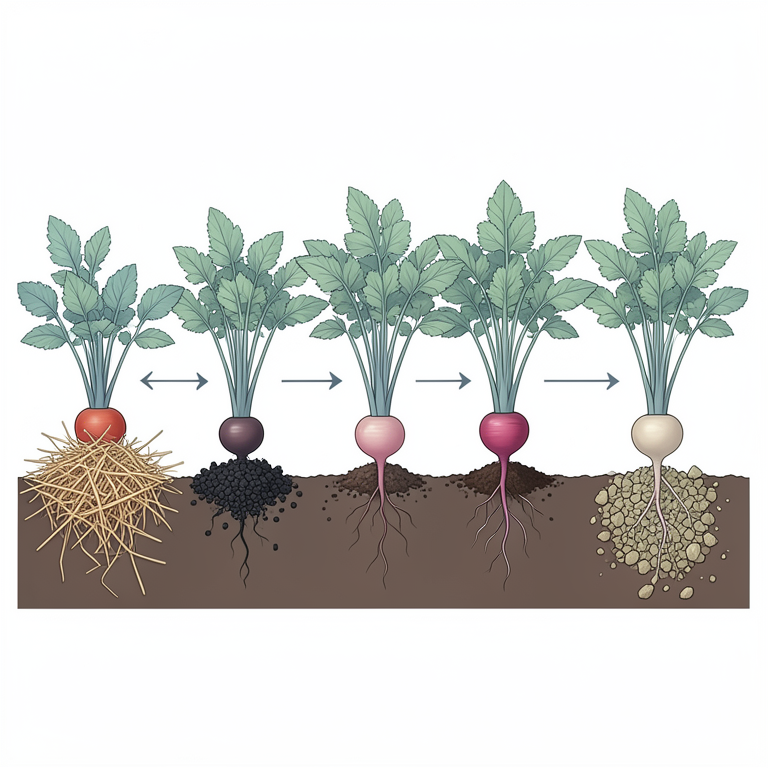
Organic Nutrient Treatment Comparison
AI-generated conceptual illustration (beetroot plants (Beta vulgaris L.)). It explains the idea and does not show study data.
View source evidence ↗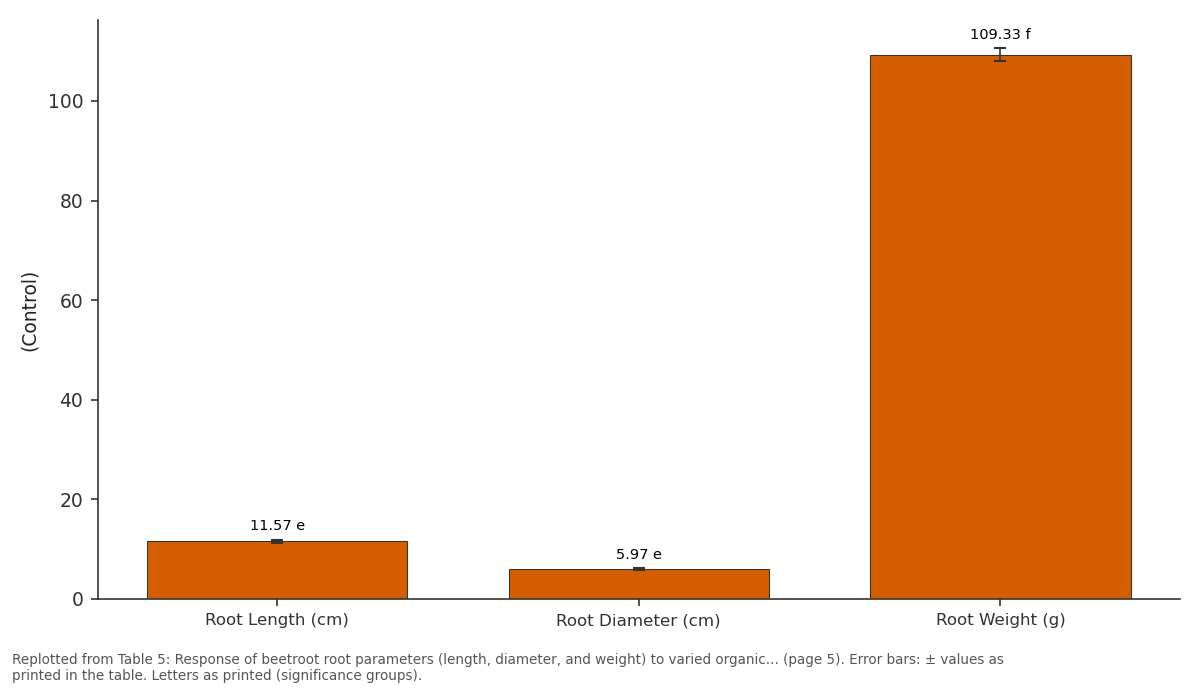
(Control): Root Length (cm) vs Root Diameter (cm) vs Root Weight (g)
Replotted from Table 5 (page 5) of the original paper. Every bar is the paper's own table value.
View source evidence ↗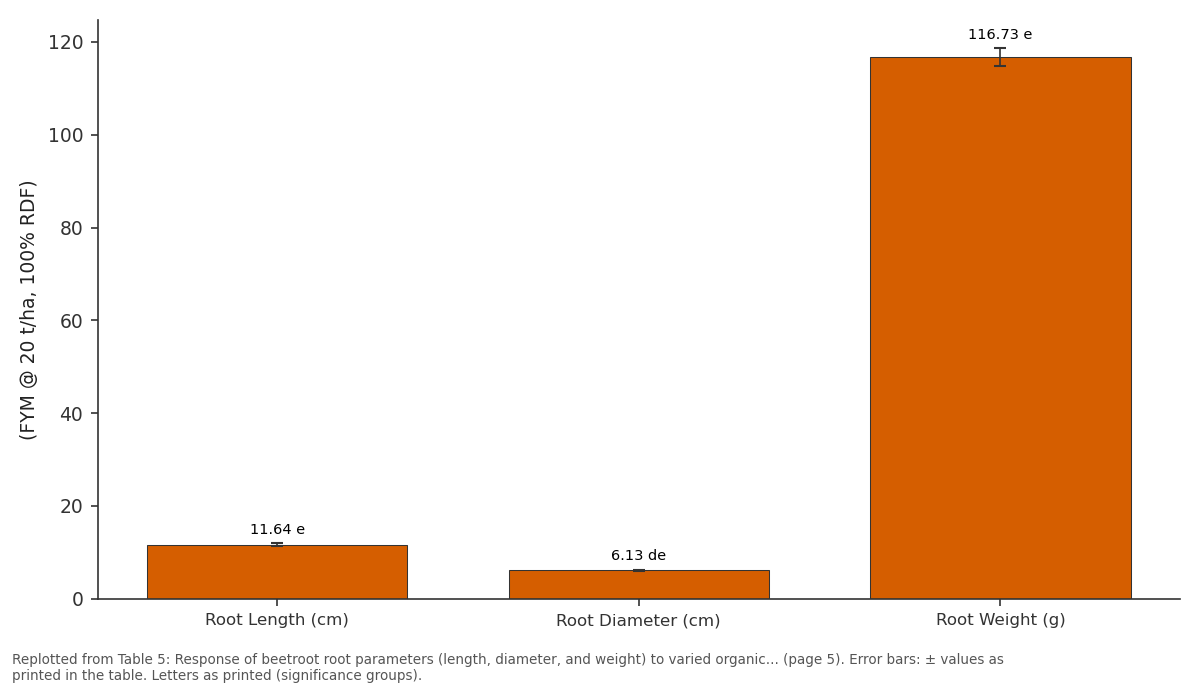
(FYM @ 20 t/ha, 100% RDF): Root Length (cm) vs Root Diameter (cm) vs Root Weight (g)
Replotted from Table 5 (page 5) of the original paper. Every bar is the paper's own table value.
View source evidence ↗Figures & tables
From the original paper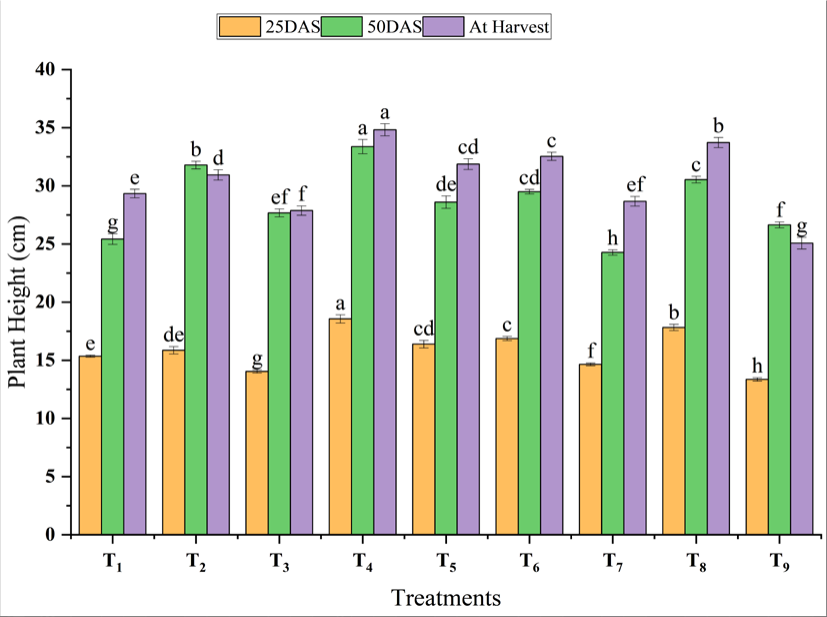 Figure 1
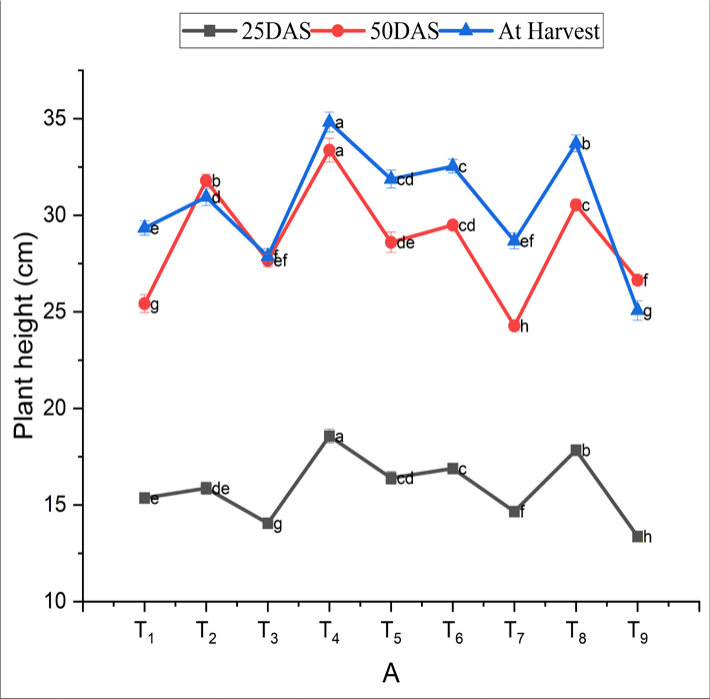 Figure 2
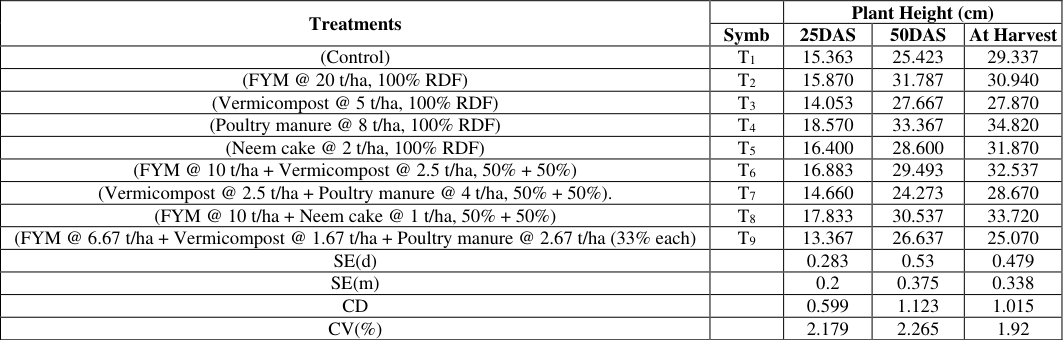 Table 1
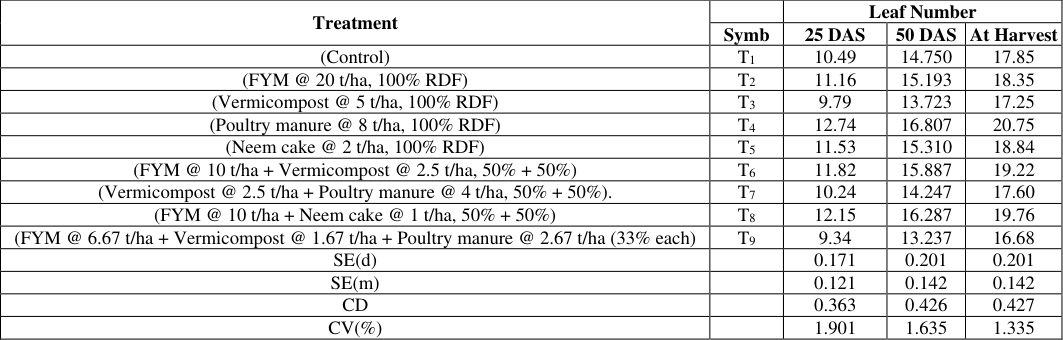 Table 2
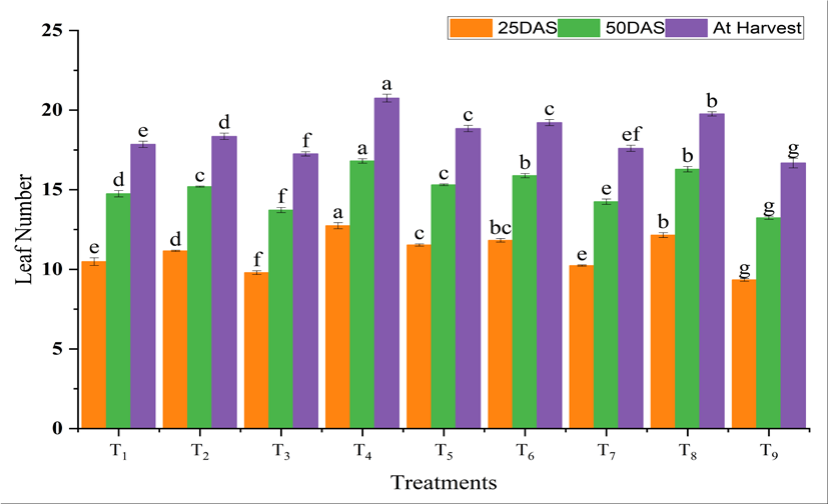 Figure 3
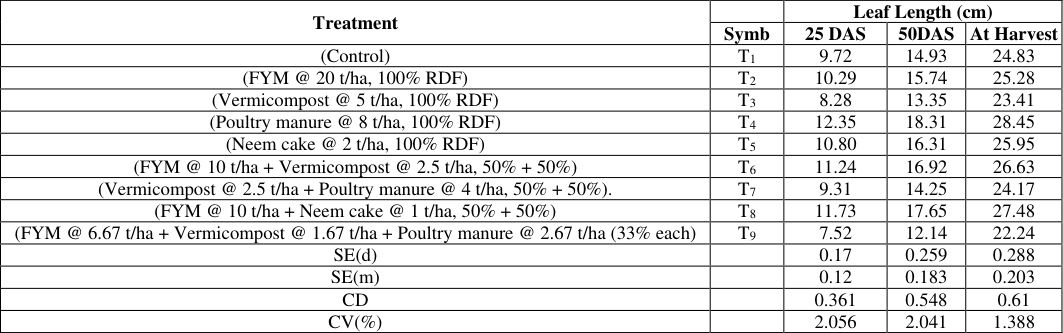 Table 3
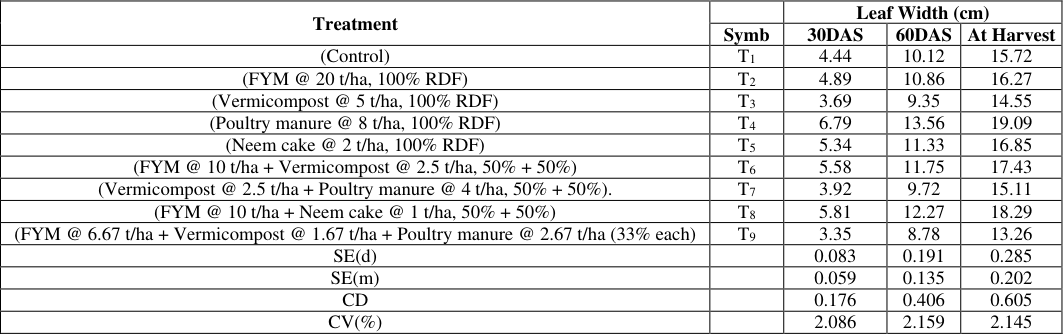 Table 4
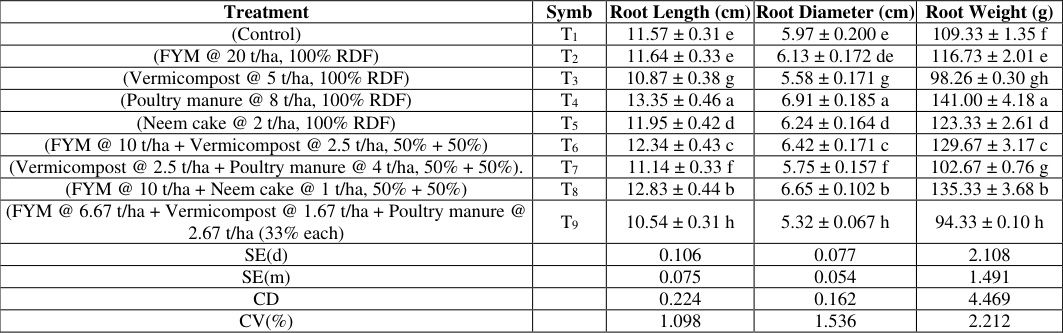 Table 5
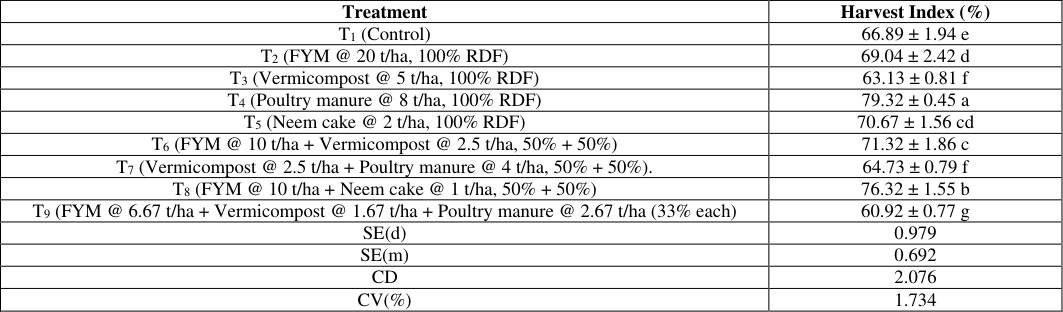 Table 6
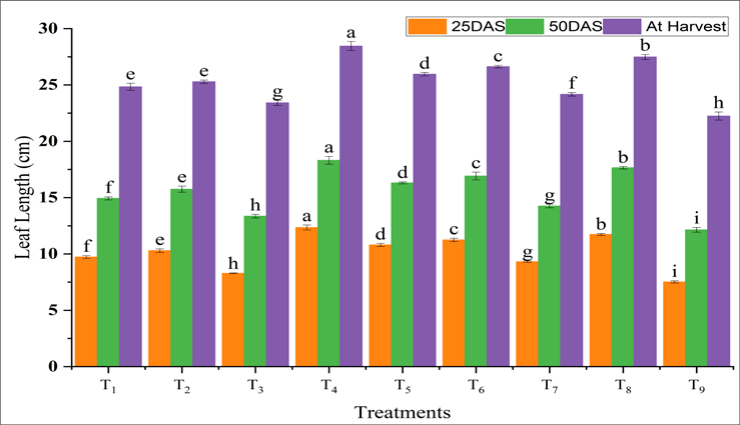 Figure 5
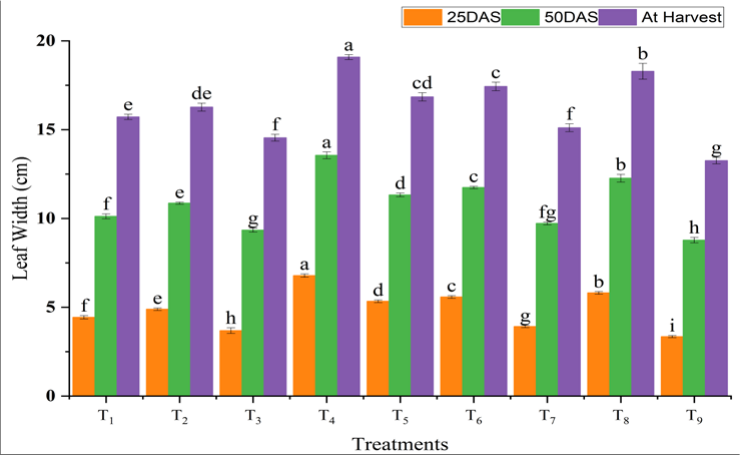 Figure 6
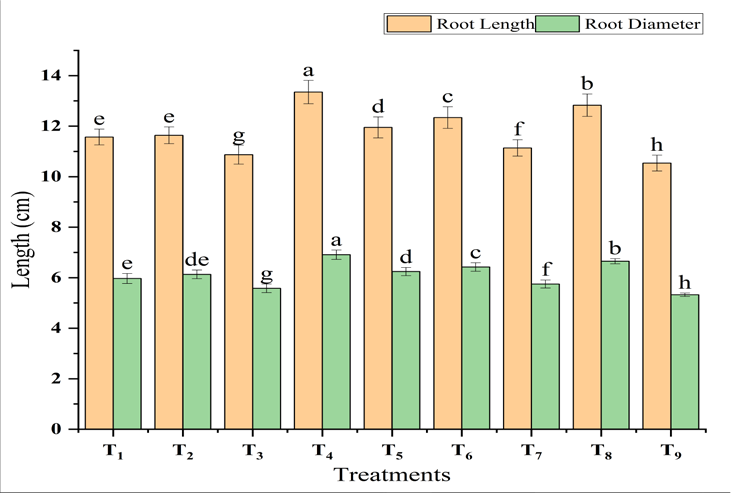 Figure 7
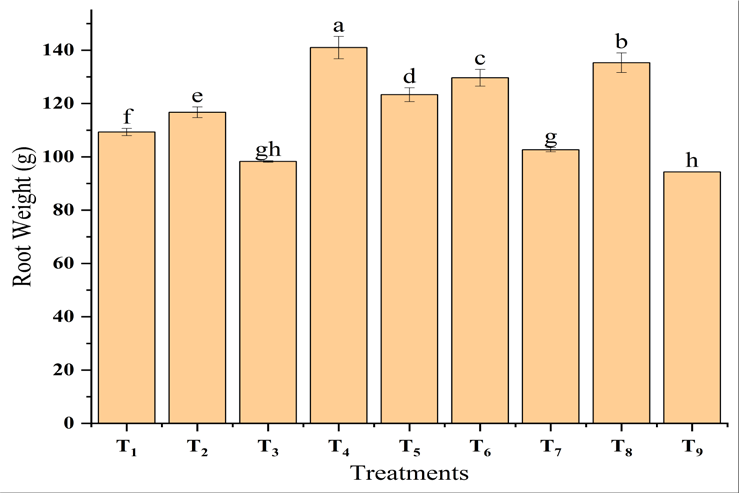 Figure 8
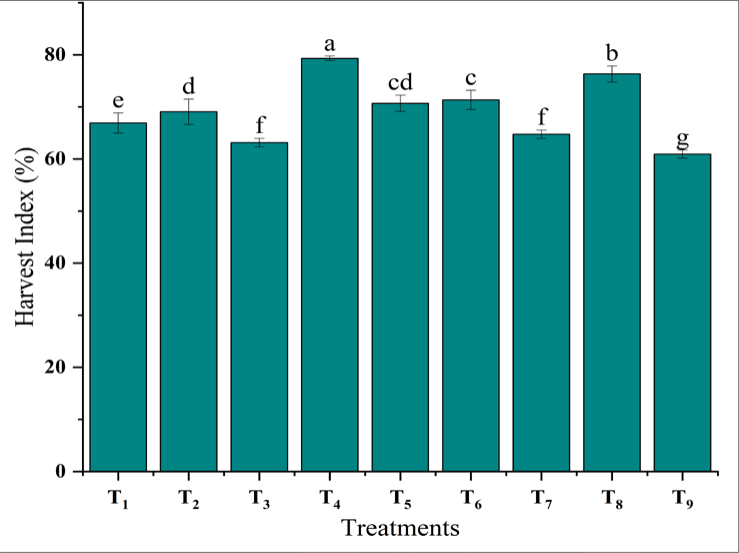 Figure 9
Introduction
Beetroot (Beta vulgaris L.) belongs to the family Chenopodiaceae (Amaranthaceae) and is an important root vegetable crop cultivated throughout the world. Its edible swollen roots are rich in vitamins, minerals, carbohydrates, and natural pigments like betalains. Beetroot is widely used in salads, juices, pickles, and processed food products due to its high nutritional and medicinal value. The crop is known for its antioxidant properties and health benefits, including improvement of blood circulation and reduction of blood pressure. Proper nutrient management and suitable agronomic practices are essential for obtaining higher yield and better quality roots. Beetroot is an important root vegetable crop cultivated widely across the world for its nutritional and medicinal value. Countries such as Russia, the United States, France, Germany, Turkey, and Poland are among the major producers of beetroot. In India, beetroot is mainly cultivated in Uttar Pradesh, Maharashtra, Karnataka, Tamil Nadu, West Bengal, and Punjab. According to the First Advance Estimates of 2025-26, India's total horticultural production is estimated at about 370.85 million tonnes, showing continuous growth in vegetable cultivation and production (Ministry of Agriculture & Farmers Welfare, Government of India). This crop exhibits rapid growth, high productivity, and generally remains unscathed by pests and diseases. Although it is traditionally considered a cool-season crop, beetroot thrives in warmer climates, allowing for winter cultivation in the plains of Nepal. Nevertheless, the growth, development, and yield of beetroot are heavily influenced by soil conditions (Sapkota et al., 2021) [5] .
Material and Methods
The present investigation was conducted during rabi season 2025-26 at the Organic Research Farm, Karguaji, Department of horticulture, Institute of Agricultural Sciences, Bundelkhand University, Jhansi, Uttar Pradesh (26°44′ N latitude, 79°25′ E longitude; 284 m above mean sea level), situated under Agro-climatic Zone VIII (Central Plateau and Hill Region). The treatments used under different organic nutrient management practices were, T₁: Control (No external organic inputbaseline), T₂: Farmyard manure (FYM) @ 20 t/ha (100% recommended dose), T₃: Vermicompost @ 5 t/ha (100% recommended dose), T₄: Poultry manure @ 8 t/ha (100% recommended dose), T₅: Neem cake @ 2 t/ha (100% recommended dose), T₆: FYM @ 10 t/ha + Vermicompost @ 2.5 t/ha (50% + 50%), T₇: Vermicompost @ 2.5 t/ha + Poultry manure @ 4 t/ha (50% + 50%), T₈: FYM @ 10 t/ha + Neem cake @ 1 t/ha (50% + 50%), and T₉: FYM @ 6.67 t/ha + Vermicompost @ 1.67 t/ha + Poultry manure @ 2.67 t/ha (33% each). The organic manures were applied as per the treatment combinations before sowing and thoroughly mixed into the soil to ensure proper nutrient availability for the beetroot crop. Field observations were recorded on plant height (cm), number of leaves per plant, leaf length (cm), leaf width (cm), root length (cm), root diameter (cm), root weight (g), and harvest index (%). Observations were taken at appropriate growth stages and at harvest to evaluate the effect of different organic nutrient management treatments on growth and yield parameters of beetroot. The experimental data obtained from various observations were subjected to statistical analysis using analysis of variance (ANOVA) following the procedure suggested by Cochran and Cox (1950). The significance of treatment differences was tested by using Critical Difference (CD) at 5% level of significance.
Results and Discussion
Organic nutrient management treatments significantly influenced the growth and yield parameters of beetroot variety "Rosy Red-555" under Jhansi conditions. Analysis of variance revealed significant differ-ences among the treatments for all the characters studied. Among the nine treatments, T₄: Poultry manure @ 8 t/ha recorded the highest performance for most of the growth and yield parameters, followed by T₈: FYM @ 10 t/ha + Neem cake @ 1 t/ha, whereas the treatment T9 showed the lowest values for most of the observations recorded.
Growth Parameters
Plant height was significantly affected by different organic nutrient management treatments in beetroot variety "Rosy Red-555". The maxi-mum plant height was recorded At 25 DAS, 50 DAS and Harvest under T₄: Poultry manure (18.57, 33.36, 34.82), followed by T₈: FYM + Neem cake (17.83, 30.53, 33.72), whereas the minimum plant height was observed in the treatment T9. The increased plant height under poultry manure application may be attributed to the continuous supply of essential nutrients, improved soil physical properties, and enhanced microbial activity, which promoted better vegetative growth and plant development. Similar results were also reported by (Okokoh and Bisong 2011) [3] , (Katel et al. 2021) [1] . The maximum number of leaf per plant was recorded At 25 DAS, 50 DAS and Harvest under T₄: Poultry manure (12.74, 16.80, 20.75), followed by T₈: FYM + Neem cake (12.15, 16.28, 19.76), whereas the minimum number of leaves per plant was observed in the treatment T 9 . The results were in conformity with findings of Tiamiyu et al., 2012 [6] in okra. Okokoh and Bisong (2011). Application of organic manures to the soil, physical condition of the soil will be improved by the better aggregation of soil particles (Samanda singh et al., 1988) [4] . The maximum leaf length was recorded At 25 DAS, 50 DAS and harvest under T₄: Poultry manure (12.35, 18.31, 28.45), followed by T₈: FYM + Neem cake (11.73, 17.65, 27.48), whereas the minimum leaf length was observed in the treatment T 9 . The increased leaf length under poultry manure treatment may be attributed to improved nutrient availability, enhanced soil structure, and better uptake of essential nutrients, which promoted vigorous vegetative growth. Similar results were also reported by Sapkota et al. (2019) [5] . Leaf width was significantly influenced by different organic nutrient management treatments in beetroot variety "Rosy Red-555". The maximum leaf width was recorded At 25 DAS, 50 DAS and harvest under T₄: Poultry manure (6.79, 13.56, 19.09), followed by T₈: FYM + Neem cake (5.81, 12.27, 18.29), whereas the minimum leaf width was observed in the treatment T9. The improvement in leaf width under poultry manure treatment may be due to balanced nutrient supply and improved soil health, which enhanced cell expansion and overall vegetative growth of the plants.
Yield and Quality Parameters
Root length was significantly influenced by different organic nutrient management treatments in beetroot variety "Rosy Red-555". The maximum root length was recorded under T₄: Poultry manure (13.24), followed by T₈: FYM + Neem cake (12.83), whereas the minimum root length was observed in the treatment T9. The increased root length under poultry manure treatment may be attributed to improved soil aeration, better nutrient availability, and enhanced root development resulting from favorable soil physical and biological conditions. Similar results were also reported by (Zhang et al. 2020, Ghildyal and Gupta, 1991 and Arulmozhian, 1996) [7] . Root diameter was significantly influenced by different organic nutrient management treat-ments in beetroot variety "Rosy Red-555". The maximum root diameter was recorded under T₄: Poultry manure (6.91), followed by T₈: FYM + Neem cake (6.65), whereas the minimum root diameter was observed in the treatment T 9 . Similar results were also reported by (Okokoh and Bisong 2011) [3] . Root weight (g) was significantly influenced by different organic nutrient management treatments in beetroot variety "Rosy Red-555". The maximum root weight was recorded under T₄: Poultry manure (141.0), followed by T₈: FYM + Neem cake (135.33), whereas the minimum root weight was observed in the treatment T 9 . The highest harvest index was recorded under T₄: Poultry manure (79.32), followed by T₈: FYM + Neem cake (76.32), whereas the lowest harvest index was observed in the control treatment T 9 . The increase in harvest index under poultry manure treatment may be attributed to efficient partitioning of photosynth-ates towards root development and better utilization of nutrients, resulting in higher economic yield. 63.13 ± 0.81 f T4 (Poultry manure @ 8 t/ha, 100% RDF) 79.32 ± 0.45 a T5 (Neem cake @ 2 t/ha, 100% RDF) 70.67 ± 1.56 cd T6 (FYM @ 10 t/ha + Vermicompost @ 2.5 t/ha, 50% + 50%) 71.32 ± 1.86 c T7 (Vermicompost @ 2.5 t/ha + Poultry manure @ 4 t/ha, 50% + 50%).
64.73 ± 0.79 f T8 (FYM @ 10 t/ha + Neem cake @ 1 t/ha, 50% + 50%) 76.32 ± 1.55 b T9 (FYM @ 6.67 t/ha + Vermicompost @ 1.67 t/ha + Poultry manure @ 2. 67
Conclusion
Based on the results of the present investigation, it may be concluded that organic nutrient management treatments significantly improved growth and yield parameters in beetroot variety "Rosy Red-555". Among the nine treatments evaluated, T₄: Poultry manure @ 8 t/ha proved to be the most effective treatment, followed by T₈: FYM @ 10 t/ha + Neem cake @ 1 t/ha. These treatments significantly enhanced plant height, number of leaves per plant, leaf length, leaf width, root length, root diameter, root weight, and harvest index compared to the control treatment. The superior performance under poultry manure application may be attributed to improved nutrient availability, enhanced soil fertility, better microbial activity, and efficient utilization of nutrients by the crop. Therefore, application of poultry manure @ 8 t/ha can be recommended as an effective organic nutrient management practice for improving growth, yield, and productivity under the agro-climatic conditions of Jhansi.
Figures and tables from the paper
| Treatments | — | Plant Height (cm) | — | — |
|---|---|---|---|---|
| Symb | 25DAS | 50DAS | At Harvest | |
| (Control) | T1 | 15.363 | 25.423 | 29.337 |
| (FYM @ 20 t/ha, 100% RDF) | T2 | 15.870 | 31.787 | 30.940 |
| (Vermicompost @ 5 t/ha, 100% RDF) | T3 | 14.053 | 27.667 | 27.870 |
| (Poultry manure @ 8 t/ha, 100% RDF) | T4 | 18.570 | 33.367 | 34.820 |
| (Neem cake @ 2 t/ha, 100% RDF) | T5 | 16.400 | 28.600 | 31.870 |
| (FYM @ 10 t/ha + Vermicompost @ 2.5 t/ha, 50% + 50%) | T6 | 16.883 | 29.493 | 32.537 |
| (Vermicompost @ 2.5 t/ha + Poultry manure @ 4 t/ha, 50% + 50%). | T7 | 14.660 | 24.273 | 28.670 |
| (FYM @ 10 t/ha + Neem cake @ 1 t/ha, 50% + 50%) | T8 | 17.833 | 30.537 | 33.720 |
| (FYM @ 6.67 t/ha + Vermicompost @ 1.67 t/ha + Poultry manure @ 2.67 t/ha (33% each) | T9 | 13.367 | 26.637 | 25.070 |
| SE(d) | 0.283 | 0.53 | 0.479 | |
| SE(m) | 0.2 | 0.375 | 0.338 | |
| CD | 0.599 | 1.123 | 1.015 | |
| CV(%) | 2.179 | 2.265 | 1.92 |
Table text extracted from the original PDF; superscript letters are shown inline. The original table image is below.
View original table image
| Treatment | — | Leaf Number | — | — |
|---|---|---|---|---|
| Symb | 25 DAS | 50 DAS | At Harvest | |
| (Control) | T1 | 10.49 | 14.750 | 17.85 |
| (FYM @ 20 t/ha, 100% RDF) | T2 | 11.16 | 15.193 | 18.35 |
| (Vermicompost @ 5 t/ha, 100% RDF) | T3 | 9.79 | 13.723 | 17.25 |
| (Poultry manure @ 8 t/ha, 100% RDF) | T4 | 12.74 | 16.807 | 20.75 |
| (Neem cake @ 2 t/ha, 100% RDF) | T5 | 11.53 | 15.310 | 18.84 |
| (FYM @ 10 t/ha + Vermicompost @ 2.5 t/ha, 50% + 50%) | T6 | 11.82 | 15.887 | 19.22 |
| (Vermicompost @ 2.5 t/ha + Poultry manure @ 4 t/ha, 50% + 50%). | T7 | 10.24 | 14.247 | 17.60 |
| (FYM @ 10 t/ha + Neem cake @ 1 t/ha, 50% + 50%) | T8 | 12.15 | 16.287 | 19.76 |
| (FYM @ 6.67 t/ha + Vermicompost @ 1.67 t/ha + Poultry manure @ 2.67 t/ha (33% each) | T9 | 9.34 | 13.237 | 16.68 |
| SE(d) | 0.171 | 0.201 | 0.201 | |
| SE(m) | 0.121 | 0.142 | 0.142 | |
| CD | 0.363 | 0.426 | 0.427 | |
| CV(%) | 1.901 | 1.635 | 1.335 |
Table text extracted from the original PDF; superscript letters are shown inline. The original table image is below.
View original table image
| Treatment | — | Leaf Length (cm) | — | — |
|---|---|---|---|---|
| Symb | 25 DAS | 50DAS | At Harvest | |
| (Control) | T1 | 9.72 | 14.93 | 24.83 |
| (FYM @ 20 t/ha, 100% RDF) | T2 | 10.29 | 15.74 | 25.28 |
| (Vermicompost @ 5 t/ha, 100% RDF) | T3 | 8.28 | 13.35 | 23.41 |
| (Poultry manure @ 8 t/ha, 100% RDF) | T4 | 12.35 | 18.31 | 28.45 |
| (Neem cake @ 2 t/ha, 100% RDF) | T5 | 10.80 | 16.31 | 25.95 |
| (FYM @ 10 t/ha + Vermicompost @ 2.5 t/ha, 50% + 50%) | T6 | 11.24 | 16.92 | 26.63 |
| (Vermicompost @ 2.5 t/ha + Poultry manure @ 4 t/ha, 50% + 50%). | T7 | 9.31 | 14.25 | 24.17 |
| (FYM @ 10 t/ha + Neem cake @ 1 t/ha, 50% + 50%) | T8 | 11.73 | 17.65 | 27.48 |
| (FYM @ 6.67 t/ha + Vermicompost @ 1.67 t/ha + Poultry manure @ 2.67 t/ha (33% each) | T9 | 7.52 | 12.14 | 22.24 |
| SE(d) | 0.17 | 0.259 | 0.288 | |
| SE(m) | 0.12 | 0.183 | 0.203 | |
| CD | 0.361 | 0.548 | 0.61 | |
| CV(%) | 2.056 | 2.041 | 1.388 |
Table text extracted from the original PDF; superscript letters are shown inline. The original table image is below.
View original table image
| Treatment | — | Leaf Width (cm) | — | — |
|---|---|---|---|---|
| Symb | 30DAS | 60DAS | At Harvest | |
| (Control) | T1 | 4.44 | 10.12 | 15.72 |
| (FYM @ 20 t/ha, 100% RDF) | T2 | 4.89 | 10.86 | 16.27 |
| (Vermicompost @ 5 t/ha, 100% RDF) | T3 | 3.69 | 9.35 | 14.55 |
| (Poultry manure @ 8 t/ha, 100% RDF) | T4 | 6.79 | 13.56 | 19.09 |
| (Neem cake @ 2 t/ha, 100% RDF) | T5 | 5.34 | 11.33 | 16.85 |
| (FYM @ 10 t/ha + Vermicompost @ 2.5 t/ha, 50% + 50%) | T6 | 5.58 | 11.75 | 17.43 |
| (Vermicompost @ 2.5 t/ha + Poultry manure @ 4 t/ha, 50% + 50%). | T7 | 3.92 | 9.72 | 15.11 |
| (FYM @ 10 t/ha + Neem cake @ 1 t/ha, 50% + 50%) | T8 | 5.81 | 12.27 | 18.29 |
| (FYM @ 6.67 t/ha + Vermicompost @ 1.67 t/ha + Poultry manure @ 2.67 t/ha (33% each) | T9 | 3.35 | 8.78 | 13.26 |
| SE(d) | 0.083 | 0.191 | 0.285 | |
| SE(m) | 0.059 | 0.135 | 0.202 | |
| CD | 0.176 | 0.406 | 0.605 | |
| CV(%) | 2.086 | 2.159 | 2.145 |
Table text extracted from the original PDF; superscript letters are shown inline. The original table image is below.
View original table image
| Treatment | Symb | Root Length (cm) | Root Diameter (cm) | Root Weight (g) |
|---|---|---|---|---|
| (Control) | T1 | 11.57 ± 0.31 e | 5.97 ± 0.200 e | 109.33 ± 1.35 f |
| (FYM @ 20 t/ha, 100% RDF) | T2 | 11.64 ± 0.33 e | 6.13 ± 0.172 de | 116.73 ± 2.01 e |
| (Vermicompost @ 5 t/ha, 100% RDF) | T3 | 10.87 ± 0.38 g | 5.58 ± 0.171 g | 98.26 ± 0.30 gh |
| (Poultry manure @ 8 t/ha, 100% RDF) | T4 | 13.35 ± 0.46 a | 6.91 ± 0.185 a | 141.00 ± 4.18 a |
| (Neem cake @ 2 t/ha, 100% RDF) | T5 | 11.95 ± 0.42 d | 6.24 ± 0.164 d | 123.33 ± 2.61 d |
| (FYM @ 10 t/ha + Vermicompost @ 2.5 t/ha, 50% + 50%) | T6 | 12.34 ± 0.43 c | 6.42 ± 0.171 c | 129.67 ± 3.17 c |
| (Vermicompost @ 2.5 t/ha + Poultry manure @ 4 t/ha, 50% + 50%). | T7 | 11.14 ± 0.33 f | 5.75 ± 0.157 f | 102.67 ± 0.76 g |
| (FYM @ 10 t/ha + Neem cake @ 1 t/ha, 50% + 50%) | T8 | 12.83 ± 0.44 b | 6.65 ± 0.102 b | 135.33 ± 3.68 b |
| (FYM @ 6.67 t/ha + Vermicompost @ 1.67 t/ha + Poultry manure @ 2.67 t/ha (33% each) | T9 | 10.54 ± 0.31 h | 5.32 ± 0.067 h | 94.33 ± 0.10 h |
| SE(d) | 0.106 | 0.077 | 2.108 | |
| SE(m) | 0.075 | 0.054 | 1.491 | |
| CD | 0.224 | 0.162 | 4.469 | |
| CV(%) | 1.098 | 1.536 | 2.212 |
Table text extracted from the original PDF; superscript letters are shown inline. The original table image is below.
View original table image
| Treatment | Harvest Index (%) |
|---|---|
| T1 (Control) | 66.89 ± 1.94 e |
| T2 (FYM @ 20 t/ha, 100% RDF) | 69.04 ± 2.42 d |
| T3 (Vermicompost @ 5 t/ha, 100% RDF) | 63.13 ± 0.81 f |
| T4 (Poultry manure @ 8 t/ha, 100% RDF) | 79.32 ± 0.45 a |
| T5 (Neem cake @ 2 t/ha, 100% RDF) | 70.67 ± 1.56 cd |
| T6 (FYM @ 10 t/ha + Vermicompost @ 2.5 t/ha, 50% + 50%) | 71.32 ± 1.86 c |
| T7 (Vermicompost @ 2.5 t/ha + Poultry manure @ 4 t/ha, 50% + 50%). | 64.73 ± 0.79 f |
| T8 (FYM @ 10 t/ha + Neem cake @ 1 t/ha, 50% + 50%) | 76.32 ± 1.55 b |
| T9 (FYM @ 6.67 t/ha + Vermicompost @ 1.67 t/ha + Poultry manure @ 2.67 t/ha (33% each) | 60.92 ± 0.77 g |
| SE(d) | 0.979 |
| SE(m) | 0.692 |
| CD | 2.076 |
| CV(%) | 1.734 |
Table text extracted from the original PDF; superscript letters are shown inline. The original table image is below.
View original table image
References
6 in the original paper- Katel S, Upadhyay K, Mandal HR, Yadav SPS, Kharel A, Rijan R. Nanotechnology for agricultural transformation: a review. Fundamental and Applied Agriculture. 2021;6(4):403-414. doi:10.5455/faa.127296.
- Okokoh SJ, Bisong BW. Effect of poultry manure and urea-N on flowering occurrence and leaf productivity of Amaranthus cruentus in Calabar. Journal of Applied Sciences and Environmental Management. 2011;15(1):13-15.
- Samandasingh, Virendrakumar, Singh Y. Organic manures: the only cure for better crop and soil health. Farmer and Parliament. 1988:23-29.
- Sapkota A, Sharma MD, Giri HN, Shrestha B, Panday D. Effect of organic and inorganic sources of nitrogen on growth, yield, and quality of beetroot varieties in Nepal. Nitrogen. 2021;2:378-391. doi:10.3390/nitrogen2030026.
- Tiamiyu A, et al. Effect of sources of organic manure on growth and yields of okra (Abelmoschus esculentus L.). Sokoto, Nigeria: Usmanu Danfodiyo University; 2012.
- Zhang P, Yang F, Zhang H, Liu L, Liu X, Chen J, Wang X, Wang Y, Li C. Beneficial effects of biocharbased organic fertilizer on nitrogen assimilation, antioxidant capacities, and photosynthesis of sugar beet (Beta vulgaris L.) under saline-alkaline stress. Agronomy. 2020;10:1562. doi:10.3390/agronomy10101562.