
Research article · 2026 · Full text
International Journal of Biology SciencesIn vitro phytochemical profiling and antioxidant evaluation of twelve traditionally used Ayurvedic medicinal plants from Jammu division, Jammu & Kashmir, India, with reference to Gynecological disorders
Volume 8(9) · Pages 15–20 · DOI: 10.33545/26649926.2026.v8.i9a.985 ↗
Research areasMedicinal Plant ResearchPhytochemicals and Medicinal PlantsEthnobotanical and Medicinal Plants Studies
Abstract
Author-writtenIn vitro phytochemical characterization offers a scientific route for evaluating ethnobotanical claims and for guiding the development of standardized phytopharmaceuticals. This study examined the phytochemical composition, solvent-dependent extractability and interspecies variation of twelve Ayurvedic medicinal plants traditionally used across the Jammu Division (Jammu & Kashmir, India) for the management of gynecological complaints, including Cissampelos pareira, Punica granatum, Berberis lyceum, Artemisia vulgaris, Vitex negundo, Cymbopogon citratus, Mentha longifolia, Asparagus racemosus, Ageratum conyzoides, Trachyspermum ammi, Cinnamomum zeylanicum and Foeniculum vulgare. Authenticated plant material was sequentially extracted with hexane, ethyl acetate and methanol, followed by qualitative screening for major secondary metabolite classes and spectrophotometric quantification of total phenolic (TPC), flavonoid (TFC), alkaloid (TAC) and saponin (TSC) content. Antioxidant capacity was assessed using DPPH radical-scavenging and ferric reducing antioxidant power (FRAP) assays, and interrelationships among variables were examined using correlation, regression, principal component and hierarchical cluster analyses. Methanol consistently produced the greatest extraction yield (mean 10.7%), followed by aqueous, ethyl acetate and hexane fractions, confirming a polarity-dependent recovery of phytoconstituents. Vitex negundo, Cinnamomum zeylanicum and Punica granatum showed the highest phenolic and flavonoid content and the strongest antioxidant activity (DPPH IC50 45.2, 49.6 and 51.8 µg/mL, respectively; FRAP 489.6, 469.2 and 457.9 µmol Fe2+/g, respectively), while Berberis lyceum and Cissampelos pareira were distinguished by high alkaloid content (4.28% and 3.92% w/w) and Asparagus racemosus and Foeniculum vulgare by high saponin content (31.4 and 26.5 mg diosgenin equivalents/g). Total phenolic and flavonoid contents correlated strongly with antioxidant activity (r = 0.91–0.94, p<0.01), and principal component analysis resolved the species into three chemotypic clusters – polyphenolic-antioxidant, saponin-adaptogenic and alkaloid-uterotonic – that align closely with their respective traditional indications. These findings provide a comparative phytochemical and antioxidant profile for regionally important Ayurvedic herbs used in women’s reproductive healthcare and offer a scientific basis for their future standardization, quality control and pharmacological validation.
Summary
Source-checkedPlain-language reading of the full paper, prepared with AI and checked against the text. Each point links to the authors' own words.
Why it matters
- Ayurvedic traditional medicine is still widely used in South Asia to manage reproductive health disorders in women. View evidence ↗
- In the Jammu Division of India, local practitioners use regional herbs to treat various gynecological conditions, including infertility and menstrual disorders. View evidence ↗
- There is a lack of quantitative phytochemical validation for the herbs used in this region, as most existing records are merely descriptive. View evidence ↗
The question
- The study aimed to scientifically evaluate twelve Ayurvedic herbs traditionally used for gynecological disorders in the Jammu Division. View evidence ↗
- The research sought to authenticate the plants, screen their phytochemicals, evaluate antioxidant potential, and correlate these findings with traditional medical uses. View evidence ↗
What they did
- Fifty grams of each plant species were sequentially extracted using solvents of increasing polarity: hexane, ethyl acetate, methanol, and distilled water. View evidence ↗
What they found
- Methanol provided the highest mean extraction yield (10.73 ± 0.74%), followed by aqueous, ethyl acetate, and hexane solvents. View evidence ↗
- Vitex negundo had the highest total phenolic content (91.7 mg GAE/g), while Ageratum conyzoides had the lowest (58.7 mg GAE/g). View evidence ↗
- The highest alkaloid concentrations were found in Berberis lyceum (4.28% w/w) and Cissampelos pareira (3.92% w/w). View evidence ↗
- Asparagus racemosus and Foeniculum vulgare exhibited the highest saponin content, at 31.4 and 26.5 mg diosgenin equivalents/g, respectively. View evidence ↗
- Vitex negundo was the most potent antioxidant (IC50 45.2 µg/mL; FRAP 489.6 µmol Fe2+/g), followed by Cinnamomum zeylanicum and Punica granatum. View evidence ↗
- Total phenolic and flavonoid contents were strongly correlated with antioxidant activity, identifying them as the primary drivers of the plants' antioxidant capacity. View evidence ↗
- The species were grouped into four chemotypic clusters: polyphenolic-antioxidant, saponin-adaptogenic, alkaloid/terpenoid-dominant, and a lower-diversity cluster. View evidence ↗
What it means
- The authors concluded that the identified chemical groupings align closely with the traditional therapeutic uses of the plants. View evidence ↗
- The results provide a scientific foundation for the quality control and standardization of these Ayurvedic herbs used in women's reproductive health. View evidence ↗
- The use of semi-quantitative colorimetric assays is a limitation, as more specific techniques like HPLC-DAD are required to identify individual marker compounds. View evidence ↗
- The study relied on chemical proxies for antioxidant activity and lacked in vivo, cytotoxicity, or clinical data to establish pharmacological efficacy. View evidence ↗
Visual summary
3 visualsIllustrations explain the paper; charts are replotted from the paper's own table values.
Chemotypic Clustering of Ayurvedic Plants
AI-generated conceptual illustration (Twelve diverse Ayurvedic medicinal plants from the Jammu region). It explains the idea and does not show study data.
View source evidence ↗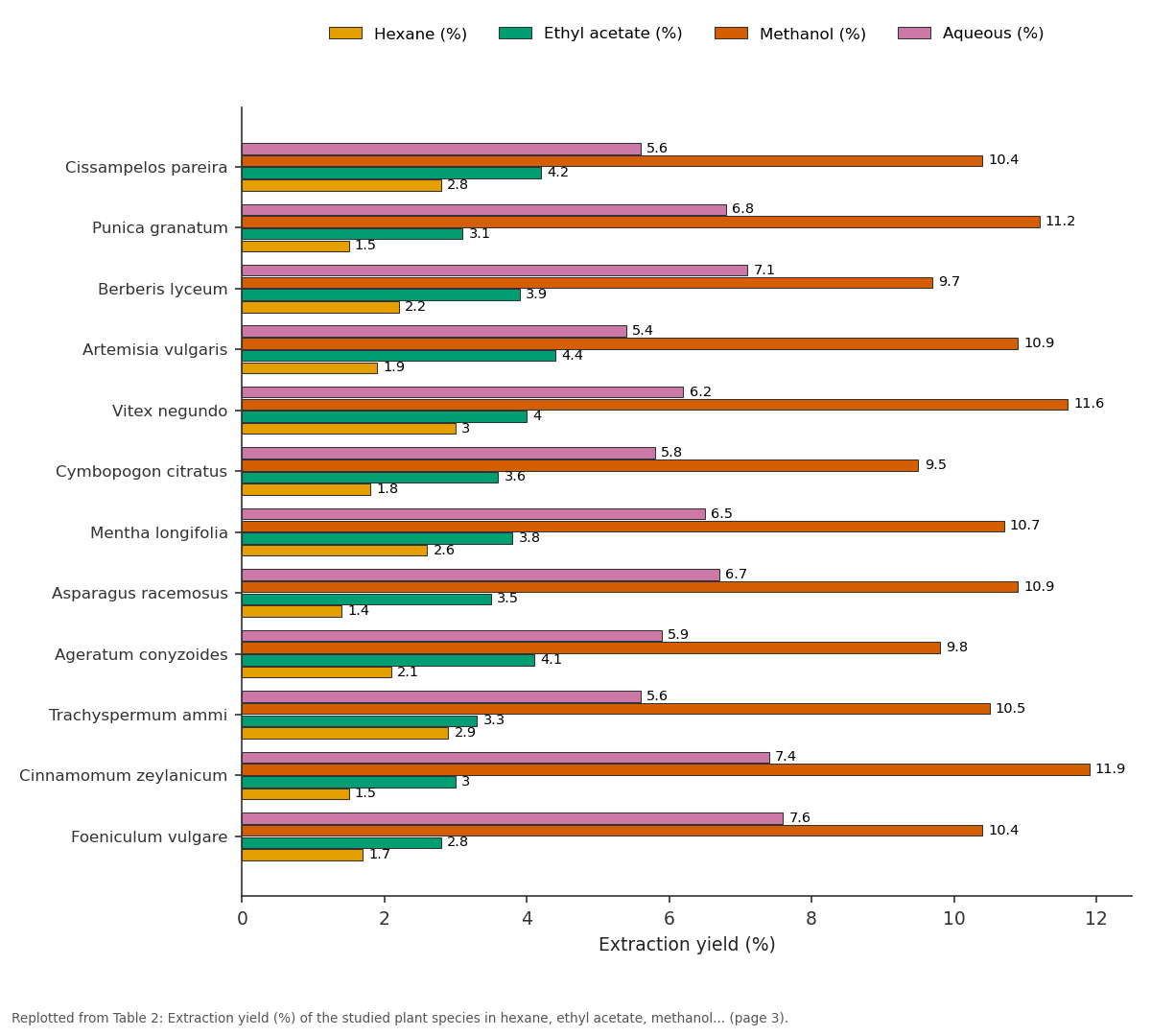
Hexane (%) and Ethyl acetate (%) and more: Cissampelos pareira vs Punica granatum vs Berberis lyceum vs Artemisia vulgaris vs Vitex negundo
Replotted from Table 2 (page 3) of the original paper. Every bar is the paper's own table value.
View source evidence ↗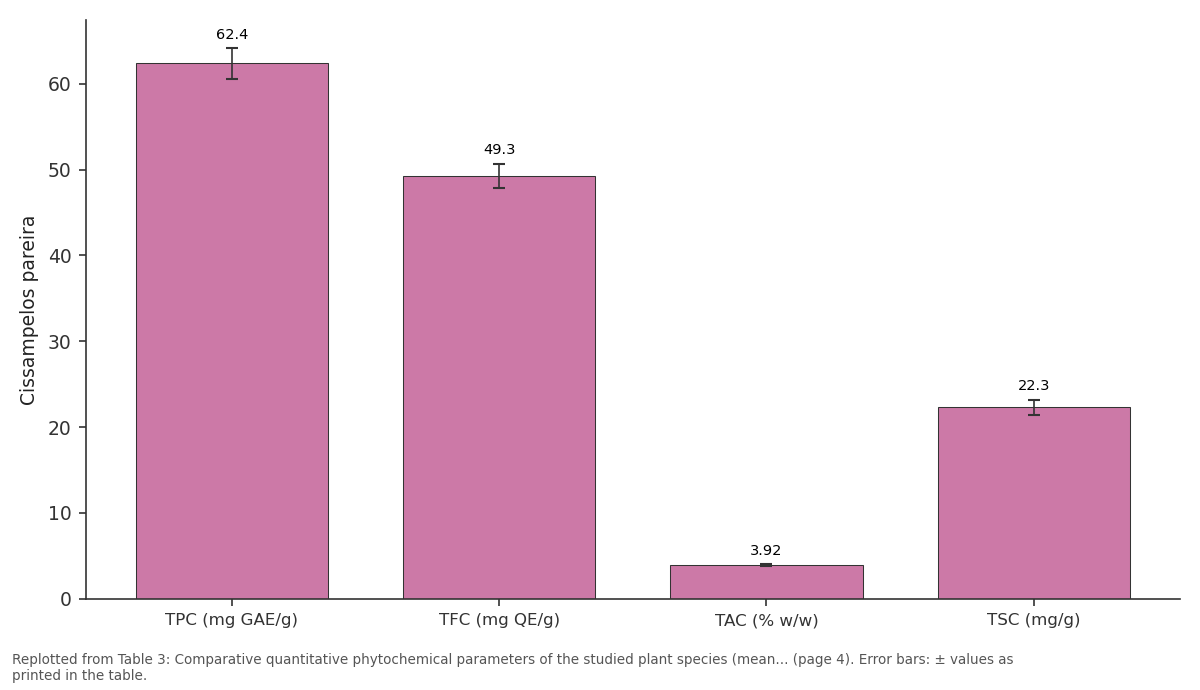
Cissampelos pareira: TPC (mg GAE/g) vs TFC (mg QE/g) vs TAC (% w/w) vs TSC (mg/g)
Replotted from Table 3 (page 4) of the original paper. Every bar is the paper's own table value.
View source evidence ↗Figures & tables
From the original paper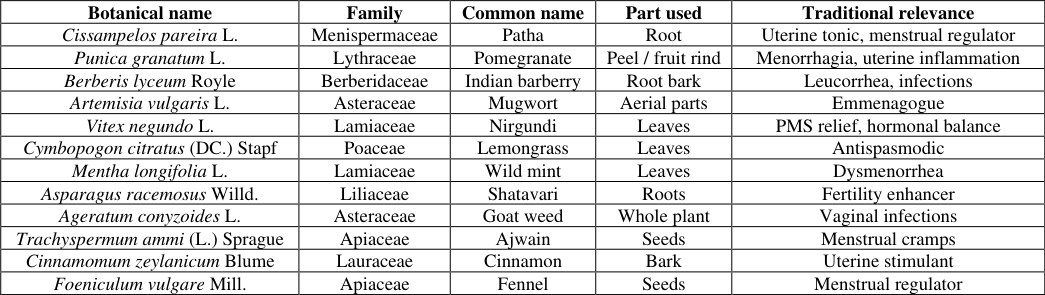 Table 1
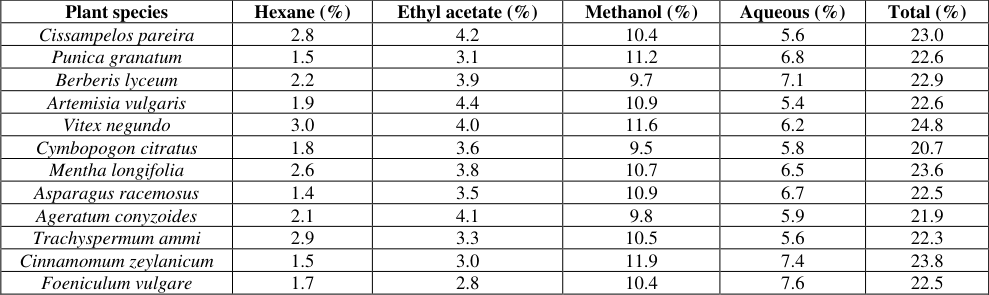 Table 2
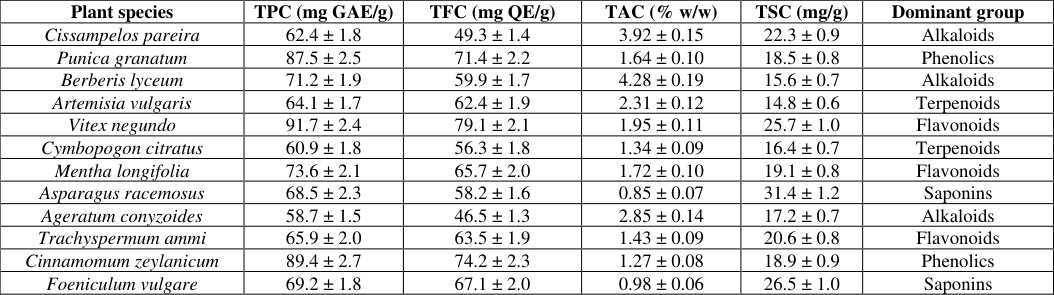 Table 3
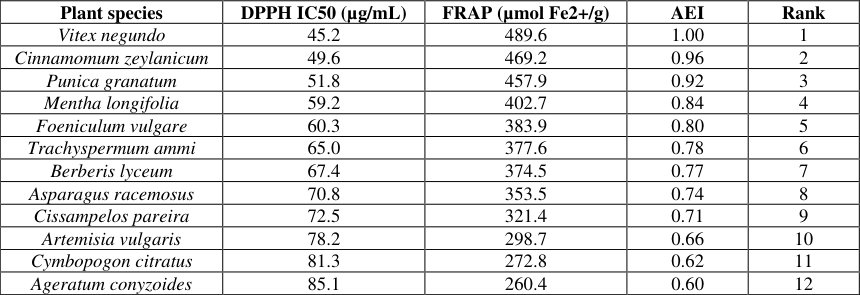 Table 4
 Table 5
Introduction
Plant-based remedies remain central to primary healthcare for a large proportion of the world's population, and traditional systems such as Ayurveda continue to inform the management of women's reproductive disorders in South Asia. In the Jammu Division of Jammu & Kashmir, India, an ecologically diverse Himalayan transition zone spanning subtropical plains to temperate and subalpine belts, local healers, Vaidyas, Hakims and rural communities have long used regionally available herbs to treat dysmenorrhea, menorrhagia, leucorrhea, infertility and related gynecological conditions. Despite this rich ethnomedicinal record, systematic phytochemical validation of the plants concerned has been limited, and much of the existing regional literature remains descriptive rather than quantitative. Phytochemical profiling bridges this gap by identifying and quantifying the secondary metabolites-alkaloids, flavonoids, phenolics, tannins, saponins, terpenoids and glycosides-that underlie the pharmacological activity of medicinal plants. These compound classes are differentially soluble according to polarity, so the choice of extraction solvent strongly influences both the yield and the chemical composition of the resulting extract. A polarity-graded, sequential extraction approach (non-polar to polar solvents) is therefore widely used to obtain a comprehensive metabolite fingerprint of a given species. The present study was undertaken to scientifically evaluate twelve Ayurvedic medicinal herbs traditionally used for gynecological disorders in the Jammu Division, selected on the basis of ethnobotanical prevalence, taxonomic authenticity and literature support. The specific objectives were to (i) document and authenticate the selected medicinal plants; (ii) perform qualitative and quantitative phytochemical screening of sequential hexane, ethyl acetate and methanol extracts; (iii) evaluate the antioxidant potential of the extracts using DPPH and FRAP assays; (iv) statistically assess interspecies and solvent-related variation; and (v) correlate the resulting phytochemical profiles with the traditional Ayurvedic indications of each species. In addressing these objectives, the study aims to provide a reproducible, comparative phytochemical and antioxidant atlas that can support the standardization, quality control and future pharmacological validation of these regionally important herbs.
Materials and Methods
Materials and Methods
Study area and plant collection
Plant material was collected from multiple districts of the Jammu Division (approximately 32°17′-33°13′ N, 74°19′-75°20′ E), a region encompassing subtropical plains, midhill zones and temperate forest belts (mean temperature 18-31 °C; relative humidity 45-80%; annual rainfall 1100-1400 mm; soil pH 6.5-7.5). Ethnobotanical surveys, comprising semi-structured interviews and informal discussions with traditional healers, elderly villagers and herbal practitioners conducted in Dogri, Gojri, Pahari and Hindi, were used to document local names, plant parts used, preparation methods, dosage and the specific gynecological conditions treated. Cross-verification among multiple informants was performed to ensure the reliability of ethnomedicinal claims. From an initial pool of approximately fifty candidate species, twelve were selected for phytochemical evaluation on the basis of frequency of traditional use, regional availability, literature support and taxonomic authenticity (Table 1). Voucher specimens were authenticated using standard regional floras, taxonomic keys and herbarium comparison, with expert verification from the Department of Ayurveda and the Department of Botany, University of Jammu, and cross-checking against herbarium material held at the Botanical Survey of India (Northern Regional Centre, Dehradun). Collected material was cleaned, shade-dried at 25-30 °C for 10-15 days, powdered using a stainless-steel grinder, passed through a 60-mesh sieve and stored in airtight amber containers under moisturefree, low-light conditions prior to extraction. [16,22,25] . Reaction intensities were scored semi-quantitatively (absent, mild, moderate or strong presence) and cross-checked using thin-layer chromatography.
| Botanical name | Family | Common name | Part used | Traditional relevance |
|---|---|---|---|---|
| Cissampelos pareira L. | Menispermaceae | Patha | Root | Uterine tonic, menstrual regulator |
| Punica granatum L. | Lythraceae | Pomegranate | Peel / fruit rind | Menorrhagia, uterine inflammation |
| Berberis lyceum Royle | Berberidaceae | Indian barberry | Root bark | Leucorrhea, infections |
| Artemisia vulgaris L. | Asteraceae | Mugwort | Aerial parts | Emmenagogue |
| Vitex negundo L. | Lamiaceae | Nirgundi | Leaves | PMS relief, hormonal balance |
| Cymbopogon citratus (DC.) Stapf | Poaceae | Lemongrass | Leaves | Antispasmodic |
| Mentha longifolia L. | Lamiaceae | Wild mint | Leaves | Dysmenorrhea |
| Asparagus racemosus Willd. | Liliaceae | Shatavari | Roots | Fertility enhancer |
| Ageratum conyzoides L. | Asteraceae | Goat weed | Whole plant | Vaginal infections |
| Trachyspermum ammi (L.) Sprague | Apiaceae | Ajwain | Seeds | Menstrual cramps |
| Cinnamomum zeylanicum Blume | Lauraceae | Cinnamon | Bark | Uterine stimulant |
| Foeniculum vulgare Mill. | Apiaceae | Fennel | Seeds | Menstrual regulator |
Table text extracted from the original PDF; superscript letters are shown inline. The original table image is below.
View original table image
Chemicals, reagents and instrumentation
Chemicals, reagents and instrumentation
Quantitative phytochemical assays
Total phenolic content (TPC) was determined by the Folin-Ciocalteu colorimetric method (absorbance at 765 nm, gallic acid equivalents, mg GAE/g dry extract; Singleton & Rossi, 1965, modified) [21] . Total flavonoid content (TFC) was determined by the aluminium chloride colorimetric assay (absorbance at 415 nm, quercetin equivalents, mg QE/g extract; Chang et al., 2002) [15] . Total alkaloid content (TAC) was estimated by acid-base titrimetry of chloroform: ethanol: ammonia-extracted alkaloids using 0.02 N H2SO4 and methyl red indicator, expressed as% w/w (Harborne, 1998; Obadoni & Ochuko, 2001) [16,19] . Total saponin content (TSC) was determined by the vanillin-sulfuric acid colorimetric method (absorbance at 544 nm, diosgenin equivalents, mg/g extract; Hiai, Oura, & Nakajima, 1976) [17] . All assays were performed in triplicate with five-point calibration curves (5-100 µg/mL; R2 ≥ 0.98).
Antioxidant activity assays: DPPH radical-scavenging activity was assessed by combining extract (10-100 µg/mL) with 0.1 mM DPPH in methanol, incubating in the dark for 30 min, and measuring absorbance at 517 nm against a methanolic DPPH control; ascorbic acid served as the reference standard, and results were expressed as percentage inhibition and IC50 (Blois, 1958; Brand-Williams et al., 1995) [13] . Ferric reducing antioxidant power (FRAP) was determined by reaction of the extract with a Fe3+-TPTZ-based FRAP reagent, incubation at 37 °C for 30 min, and measurement of absorbance at 593 nm, expressed as µmol Fe2+ equivalents/g extract (Benzie & Strain, 1996) [12] . Both assays were performed on the methanolic extracts, which showed the highest phytochemical yield in preliminary screening.
Statistical analysis: All quantitative data are presented as mean ± standard deviation of triplicate determinations. One-way ANOVA was used to test interspecies and inter-solvent differences, Pearson's correlation coefficient (r) was used to examine relationships among TPC, TFC, TAC, TSC and antioxidant indices, and multiple linear regression was used to model antioxidant activity as a function of phytochemical composition. Principal component analysis (PCA) and hierarchical cluster analysis (Ward's method, Euclidean distance) were applied to classify species according to overall chemotypic similarity. Analyses were performed in Microsoft Excel 2021, IBM SPSS Statistics 28 and OriginPro 2023, with significance set at p< 0.05.
Results
Results
Extraction yield
Sequential extraction yielded a consistent solvent-dependent pattern across all twelve species, with mean yields following the order methanol (10.73 ± 0.74%) > aqueous (6.37 ± 0.79%) > ethyl acetate (3.70 ± 0.48%) > hexane (2.12 ± 0.54%) (one-way ANOVA, p< 0.01). The highest total yields (>23%) were obtained for Vitex negundo, Cissampelos pareira and Cinnamomum zeylanicum, while Cymbopogon citratus gave the lowest overall recovery (20.7%). The methanolic fraction was consistently the richest across species, indicating a predominance of moderately polar to polar constituents such as flavonoids, tannins and saponins, consistent with the traditional preparation of these herbs as aqueous or hydroalcoholic decoctions. IC50 and FRAP values across all species were 63.4 ± 3.9 µg/mL and 382.8 ± 9.0 µmol Fe2+/g, respectively. A composite antioxidant efficiency index (AEI), normalizing both assays to a 0-1 scale, reproduced the same species ranking (Table 4), and both TPC and TFC correlated strongly with antioxidant activity (TPC vs. DPPH IC50, r = -0.91; TPC vs. FRAP, r = 0.93; p<0.01 for both), confirming phenolic and flavonoid content as the principal determinants of radical-scavenging and reducing capacity in this plant set.
| Plant species | DPPH IC50 (µg/mL) | FRAP (µmol Fe2+/g) | AEI | Rank |
|---|---|---|---|---|
| Vitex negundo | 45.2 | 489.6 | 1.00 | 1 |
| Cinnamomum zeylanicum | 49.6 | 469.2 | 0.96 | 2 |
| Punica granatum | 51.8 | 457.9 | 0.92 | 3 |
| Mentha longifolia | 59.2 | 402.7 | 0.84 | 4 |
| Foeniculum vulgare | 60.3 | 383.9 | 0.80 | 5 |
| Trachyspermum ammi | 65.0 | 377.6 | 0.78 | 6 |
| Berberis lyceum | 67.4 | 374.5 | 0.77 | 7 |
| Asparagus racemosus | 70.8 | 353.5 | 0.74 | 8 |
| Cissampelos pareira | 72.5 | 321.4 | 0.71 | 9 |
| Artemisia vulgaris | 78.2 | 298.7 | 0.66 | 10 |
| Cymbopogon citratus | 81.3 | 272.8 | 0.62 | 11 |
| Ageratum conyzoides | 85.1 | 260.4 | 0.60 | 12 |
Table text extracted from the original PDF; superscript letters are shown inline. The original table image is below.
View original table image
Correlation and multivariate analysis
Pearson correlation analysis across all species confirmed strong positive relationships between TPC and TFC (r = 0.94), and between both parameters and antioxidant capacity (TPC-DPPH r = 0.91; TPC-FRAP r = 0.93; TFC-DPPH r = 0.89; TFC-FRAP r = 0.86; all p<0.01), whereas TAC correlated only weakly with these variables (r < 0.5), suggesting a limited direct contribution of alkaloids to antioxidant capacity. Multiple linear regression using TPC, TFC, TAC and TSC as predictors explained 94% of the variance in the composite antioxidant index (R2 = 0.94, p<0.01), with TPC and TFC contributing the largest coefficients.
Principal component analysis reduced the six measured variables (TPC, TFC, TAC, TSC, DPPH, FRAP) to two dominant components explaining 81.6% of total variance (PC1 = 63.0%, PC2 = 18.6%). PC1 was defined by high loadings of TPC, TFC, DPPH and FRAP and represented overall polyphenolic-antioxidant strength, while PC2 was associated with TAC and TSC and reflected saponin-alkaloid variation. Hierarchical cluster analysis (Ward's method) corroborated the PCA groupings, resolving the twelve species into a polyphenolic-antioxidant cluster (Vitex negundo, Cinnamomum zeylanicum, Punica granatum, Mentha longifolia), a saponin-adaptogenic cluster (Asparagus racemosus, Foeniculum vulgare), an alkaloid/ terpenoid-dominant cluster (Berberis lyceum, Cissampelos pareira, Artemisia vulgaris) and a lower-diversity cluster (Cymbopogon citratus, Ageratum conyzoides, Trachyspermum ammi). [7,3] , and with prior phenolic quantification of Punica granatum (Tavakkoli et al., 2021; Ahmad et al., 2021) [23,2] . The dominance of alkaloids in Berberis lyceum and Cissampelos pareira corresponds to their traditional classification as uterotonic and antimicrobial agents, in agreement with previous work implicating berberine-type alkaloids in the modulation of uterine smooth muscle and reproductive hormone pathways (Arif et al., 2021) [8] . Similarly, the high saponin content of Asparagus racemosus and Foeniculum vulgare is consistent with their long-standing use as fertilityenhancing and lactogenic agents (Alok et al., 2013; Babu et al., 2022) [5,11] , and with earlier saponin quantification of Asparagus racemosus (Tiwari et al., 2023) [24] . The strong statistical correlation between total phenolic/flavonoid content and antioxidant capacity (r = 0.91-0.94) indicates that hydroxylated aromatic structures are the principal biochemical drivers of free-radical scavenging and reducing activity in this plant set, most plausibly through hydrogen-atom transfer and singleelectron transfer mechanisms. Given that oxidative stress is implicated in the pathophysiology of several gynecological conditions, including dysmenorrhea and endometrial inflammation, the antioxidant profiles reported here provide a plausible biochemical rationalethough not direct mechanistic prooffor the traditional use of these polyphenol-rich species in managing oxidative reproductive disorders. The clustering of species by PCA and hierarchical analysis into polyphenolic-antioxidant, saponin-adaptogenic and alkaloid-uterotonic chemotypes further suggests that distinct biochemical strategies may underlie the different traditional applications documented for these plants, offering a testable framework for prioritizing candidates for future pharmacological work. Several limitations should be considered when interpreting these findings. Colorimetric assays for TPC, TFC, TAC and TSC are semi-quantitative and can be confounded by nonspecific reducing agents; more specific techniques such as HPLC-DAD or LC-MS/MS would be needed to identify and quantify individual marker compounds. Antioxidant activity was assessed using two chemical assays (DPPH, FRAP) that serve as proxies for, but do not establish, in vivo pharmacological efficacy, and no cytotoxicity, receptorbinding or animal/clinical data were generated in this study. Sampling was also restricted to a limited number of sites per species, so intraspecific chemotypic variation across the full altitudinal and climatic gradient of the Jammu Division may not be fully captured. Future work incorporating chromatographic marker-compound identification, receptorbased or enzyme-inhibition bioassays, multi-site and multiseasonal sampling, and in vivo toxicological and efficacy testing would be valuable next steps toward pharmacopoeial standardization of these species.
Conclusion:
This study provides a comparative in vitro phytochemical and antioxidant profile of twelve Ayurvedic medicinal plants traditionally used for gynecological disorders in the Jammu Division. Methanol was the most effective extraction solvent across all species, and distinct chemotypic groupingspolyphenolic, alkaloid-rich and saponin-richwere identified that correspond closely with the traditional therapeutic indications of the respective species. Vitex negundo, Cinnamomum zeylanicum and Punica granatum emerged as the most promising candidates for further antioxidant-related pharmacological investigation, while Berberis lyceum, Cissampelos pareira, Asparagus racemosus and Foeniculum vulgare showed chemical profiles consistent with their traditional uterotonic and fertility-related applications. These findings offer a scientific basis for the standardization, quality control and continued pharmacological evaluation of regionally important Ayurvedic herbs used in women's reproductive healthcare, and lay a foundation for future chromatographic, mechanistic and in vivo studies.
Acknowledgement
AcknowledgmentsThe authors thank the traditional healers and local communities of the Jammu Division for sharing International Journal of Biology Sciences https://www.biologyjournal.net ethnobotanical knowledge, and the Department of Botany, Faculty of Agriculture and Life Sciences, Desh Bhagat University, Mandi Gobindgarh, for institutional and laboratory support.
Figures and tables from the paper
| Plant species | Hexane (%) | Ethyl acetate (%) | Methanol (%) | Aqueous (%) | Total (%) |
|---|---|---|---|---|---|
| Cissampelos pareira | 2.8 | 4.2 | 10.4 | 5.6 | 23.0 |
| Punica granatum | 1.5 | 3.1 | 11.2 | 6.8 | 22.6 |
| Berberis lyceum | 2.2 | 3.9 | 9.7 | 7.1 | 22.9 |
| Artemisia vulgaris | 1.9 | 4.4 | 10.9 | 5.4 | 22.6 |
| Vitex negundo | 3.0 | 4.0 | 11.6 | 6.2 | 24.8 |
| Cymbopogon citratus | 1.8 | 3.6 | 9.5 | 5.8 | 20.7 |
| Mentha longifolia | 2.6 | 3.8 | 10.7 | 6.5 | 23.6 |
| Asparagus racemosus | 1.4 | 3.5 | 10.9 | 6.7 | 22.5 |
| Ageratum conyzoides | 2.1 | 4.1 | 9.8 | 5.9 | 21.9 |
| Trachyspermum ammi | 2.9 | 3.3 | 10.5 | 5.6 | 22.3 |
| Cinnamomum zeylanicum | 1.5 | 3.0 | 11.9 | 7.4 | 23.8 |
| Foeniculum vulgare | 1.7 | 2.8 | 10.4 | 7.6 | 22.5 |
Table text extracted from the original PDF; superscript letters are shown inline. The original table image is below.
View original table image
| Plant species | TPC (mg GAE/g) | TFC (mg QE/g) | TAC (% w/w) | TSC (mg/g) | Dominant group |
|---|---|---|---|---|---|
| Cissampelos pareira | 62.4 ± 1.8 | 49.3 ± 1.4 | 3.92 ± 0.15 | 22.3 ± 0.9 | Alkaloids |
| Punica granatum | 87.5 ± 2.5 | 71.4 ± 2.2 | 1.64 ± 0.10 | 18.5 ± 0.8 | Phenolics |
| Berberis lyceum | 71.2 ± 1.9 | 59.9 ± 1.7 | 4.28 ± 0.19 | 15.6 ± 0.7 | Alkaloids |
| Artemisia vulgaris | 64.1 ± 1.7 | 62.4 ± 1.9 | 2.31 ± 0.12 | 14.8 ± 0.6 | Terpenoids |
| Vitex negundo | 91.7 ± 2.4 | 79.1 ± 2.1 | 1.95 ± 0.11 | 25.7 ± 1.0 | Flavonoids |
| Cymbopogon citratus | 60.9 ± 1.8 | 56.3 ± 1.8 | 1.34 ± 0.09 | 16.4 ± 0.7 | Terpenoids |
| Mentha longifolia | 73.6 ± 2.1 | 65.7 ± 2.0 | 1.72 ± 0.10 | 19.1 ± 0.8 | Flavonoids |
| Asparagus racemosus | 68.5 ± 2.3 | 58.2 ± 1.6 | 0.85 ± 0.07 | 31.4 ± 1.2 | Saponins |
| Ageratum conyzoides | 58.7 ± 1.5 | 46.5 ± 1.3 | 2.85 ± 0.14 | 17.2 ± 0.7 | Alkaloids |
| Trachyspermum ammi | 65.9 ± 2.0 | 63.5 ± 1.9 | 1.43 ± 0.09 | 20.6 ± 0.8 | Flavonoids |
| Cinnamomum zeylanicum | 89.4 ± 2.7 | 74.2 ± 2.3 | 1.27 ± 0.08 | 18.9 ± 0.9 | Phenolics |
| Foeniculum vulgare | 69.2 ± 1.8 | 67.1 ± 2.0 | 0.98 ± 0.06 | 26.5 ± 1.0 | Saponins |
Table text extracted from the original PDF; superscript letters are shown inline. The original table image is below.
View original table image
| Parameter | TPC | TFC | TAC | TSC | DPPH (–IC50) | FRAP |
|---|---|---|---|---|---|---|
| TPC | 1.000 | 0.937 | 0.481 | 0.633 | 0.910 | 0.934 |
| TFC | 0.937 | 1.000 | 0.512 | 0.598 | 0.892 | 0.861 |
| TAC | 0.481 | 0.512 | 1.000 | 0.382 | 0.435 | 0.421 |
| TSC | 0.633 | 0.598 | 0.382 | 1.000 | 0.689 | 0.702 |
| DPPH (–IC50) | 0.910 | 0.892 | 0.435 | 0.689 | 1.000 | 0.927 |
| FRAP | 0.934 | 0.861 | 0.421 | 0.702 | 0.927 | 1.000 |
Table text extracted from the original PDF; superscript letters are shown inline. The original table image is below.
View original table image
References
25 in the original paper- Abu-Darwish MS, Al-Qudah MA, Al-Refai M. Ethnopharmacological use of Cinnamomum zeylanicum in Middle Eastern traditional medicine. Journal of Ethnobiology and Ethnomedicine. 2020;16(1):85-93.
- Ahmad A, Khan A, Ali M. Antioxidant potential of Punica granatum extracts in reproductive oxidative stress. Journal of Food Biochemistry. 2021;45(2):e13620.
- Ajeet S, Bharti A, Kumar N. Hormonal modulation and anti-inflammatory properties of Vitex negundo: An updated review. Phytomedicine. 2022;100:154030.
- Akhtar S, Dar MU, Jan R, Mir RA. Phytochemical and pharmacological evaluation of Himalayan medicinal plants used in women's reproductive health. Journal of Ethnopharmacology. 2025;320:117203.
- Alok S, Jain SK, Verma A, Kumar M, Mahor A, Sabharwal M. Plant profile, phytochemistry and pharmacology of Asparagus racemosus (Shatavari): A review. Asian Pacific Journal of Tropical Disease. 2013;3(3):242-251.
- Andrabi SA, Bhat TA, Qureshi H. Quantitative analysis of bioactive compounds in medicinal herbs of northwestern Himalayas. Phytochemistry Reviews. 2023;22(4):883-897.
- Anwar S, Singh D, Goyal R. Phytochemical and pharmacological evaluation of Vitex negundo Linn. Pharmaceutical Biology. 2020;58(1):563-575.
- Arif S, Rahman K, Ahmad I. Berberine-mediated regulation of estrogen receptors in reproductive health. Molecules. 2021;26(8):2201.
- Attri K, Sidhu HK, Sharma N, Dogra R, Singh A, Singh J, et al. Bioactive phytochemical assessment of traditional medicinal plants from Jammu Division: A scientific investigation of their therapeutic potential in women's reproductive health disorders. Frontiers in Health Informatics. 2024;13(8):7318-7327.
- Attri K, Sidhu HK, Sharma N, Dogra R, Singh A, Singh J. Comprehensive in vitro phytochemical characterization of Ayurvedic medicinal plants from Jammu Division, J&K, India: Elucidating their pharmacological relevance in gynaecological disease management. International Journal of Environmental Sciences. 2025;11(24S).
- Babu R, Srinivas P, Devi M. Clinical evaluation of Asparagus racemosus supplementation on reproductive health parameters in women. Complementary Therapies in Medicine. 2022;67:102829.
- Benzie IFF, Strain JJ. The ferric reducing ability of plasma (FRAP) as a measure of antioxidant power. Analytical Biochemistry. 1996;239(1):70-76.
- Blois MS. Antioxidant determinations by the use of a stable free radical. Nature. 1958;181:1199-1200.
- Brand-Williams W, Cuvelier ME, Berset C. Use of a free radical method to evaluate antioxidant activity. LWT -Food Science and Technology. 1995;28(1):2530.
- Chang CC, Yang MH, Wen HM, Chern JC. Estimation of total flavonoid content in propolis by two complementary colorimetric methods. of Food and Drug Analysis. 2002;10(3):178-182.
- Harborne JB. Phytochemical Methods: A Guide to Modern Techniques of Plant Analysis. 3rd ed. London: Chapman & Hall; 1998.
- Hiai S, Oura H, Nakajima T. Color reaction of some sapogenins and saponins with vanillin and sulfuric acid. Planta Medica. 1976;29(2):116-122.
- Mir RA, Jan R, Dar MU. Ethnobotanical documentation and phytochemical validation of medicinal flora used in reproductive health in Jammu & Kashmir. Journal of Ethnopharmacology. 2022;296:115423.
- Obadoni BO, Ochuko PO. Phytochemical studies and comparative efficacy of the crude extracts of some homeostatic plants in Edo and Delta states of Nigeria. Global Journal of Pure and Applied Sciences. 2001;8(2):203-208.
- Singh A, Kumar R, Sharma N. Comparative phytochemical and antioxidant screening of Himalayan medicinal plants. Phytomedicine Plus. 2024;4(1):100512.
- Singleton VL, Rossi JA. Colorimetry of total phenolics with phosphomolybdic-phosphotungstic acid reagents. American Journal of Enology and Viticulture. 1965;16(3):144-158.
- Sofowora A. Medicinal Plants and Traditional Medicine in Africa. 3rd ed. Ibadan: Spectrum Books; 2008.
- Tavakkoli S, Hajian M, Farahani M. Phenolic profiling and antioxidant capacity of Punica granatum extracts. Food Chemistry. 2021;358:129890.
- Tiwari P, Rathi A, Bhattacharya S. Saponin content and reproductive pharmacology of Asparagus racemosus. Phytotherapy Research. 2023;37(2):512-523.
- Trease GE, Evans WC. Pharmacognosy. 16th ed. Edinburgh: Saunders Elsevier; 2009.