
Research article · 2026 · Full text
International Journal of Biology SciencesThe adoption gap of scientific fish farming practice among fish farmers of Malwa Madhya Pradesh
Volume 8(8) · Pages 80–84 · DOI: 10.33545/26649926.2026.v8.i8a.981 ↗
Research areasFisheries and Aquaculture StudiesAgricultural Development and ManagementAgricultural Innovations and Practices
Abstract
Author-writtenFish farming is a way to improve fish production and help people make a living in India.. Many fish farmers in Madhya Pradesh are not using the best scientific methods to farm fish. This is especially true for Indian Major Carps. We did a study in the Malwa region of Madhya Pradesh to see how many fish farmers are using these methods and what is stopping them from doing so. We talked to 240 fish farmers from Indore, Ujjain and Dhar. We asked them about how they prepare their ponds, stock fish feed them manage water quality, control disease and harvest fish. What we found out is that 58% of the fish farmers are using these scientific methods. This means that 42% are not. The main reasons for this are that fish farmers do not have the training they do not have enough money and they are used to doing things the traditional way. They also do not have access to quality fish and food for the fish. The fish farmers think that if they get training, good quality fish and food and help from the government they can do a better job. We think that if we can help the fish farmers learn more about scientific fish farming and get them the support they need they can produce fish and make a better living.
Summary
Source-checkedPlain-language reading of the full paper, prepared with AI and checked against the text. Each point links to the authors' own words.
Why it matters
- Fish farming is a critical industry in India for increasing fish production and providing livelihoods. View evidence ↗
- In Madhya Pradesh, many farmers of Indian Major Carps fail to implement optimal scientific farming methods. View evidence ↗
- Scientific fish farming involves a comprehensive approach including pond preparation, precise stocking, proper feeding, water quality maintenance, and disease prevention. View evidence ↗
The question
- The study aimed to determine the adoption rate of scientific fish farming methods in the Malwa region of Madhya Pradesh and identify the barriers to their use. View evidence ↗
What they did
- The researchers used simple random sampling to select 240 medium- and large-scale Indian Major Carp (IMC) farmers. View evidence ↗
- The study focused on three purposively selected high-production districts: Indore, Ujjain, and Dhar. View evidence ↗
- Data were gathered via structured face-to-face interviews conducted between October and December 2025. View evidence ↗
What they found
- The overall adoption index was 58%, indicating an adoption gap of 42% in the use of recommended scientific practices. View evidence ↗
- Regarding adoption levels, 60% of farmers used practices moderately, 25% used them extensively, and 15% used them minimally. View evidence ↗
- Financial constraints affected 62% of farmers, who cited high costs of materials and lack of institutional banking support. View evidence ↗
- Traditional methods persist because 57% of farmers prefer them due to habit or perceived safety. View evidence ↗
- Farmers were more likely to adopt pond preparation and feed management than water quality maintenance, disease prevention, and record keeping. View evidence ↗
What it means
- The authors conclude that strengthening support systems through technical training, improved access to quality materials, and affordable loans is essential to reduce the adoption gap. View evidence ↗
- The authors recommend targeted interventions in technical training, standardized stocking, and cooperative development to maximize efficiency. View evidence ↗
Visual summary
3 visualsIllustrations explain the paper; charts are replotted from the paper's own table values.
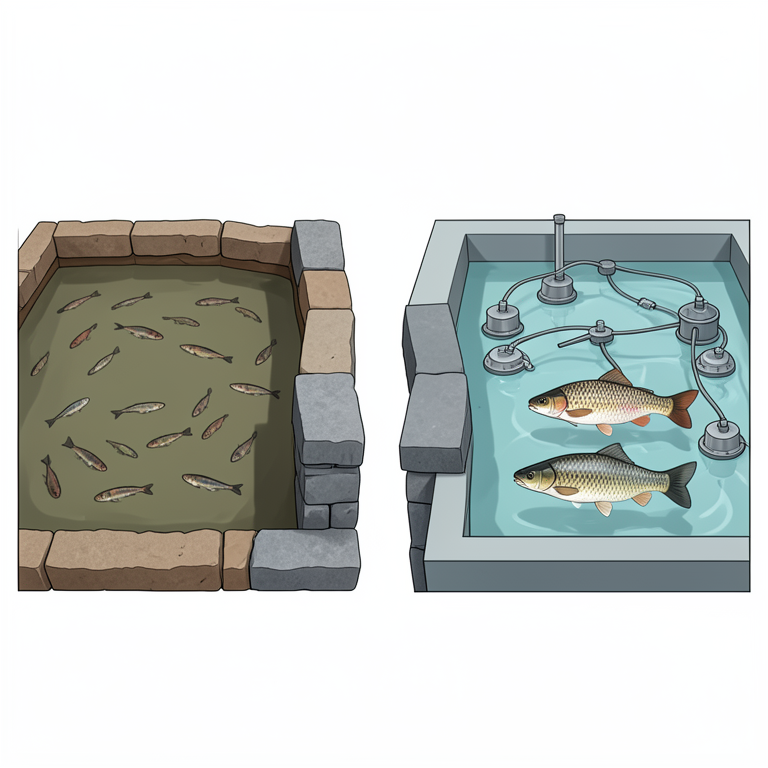
Barriers to Scientific Fish Farming Adoption
AI-generated conceptual illustration (Indian Major Carp in aquaculture ponds). It explains the idea and does not show study data.
View source evidence ↗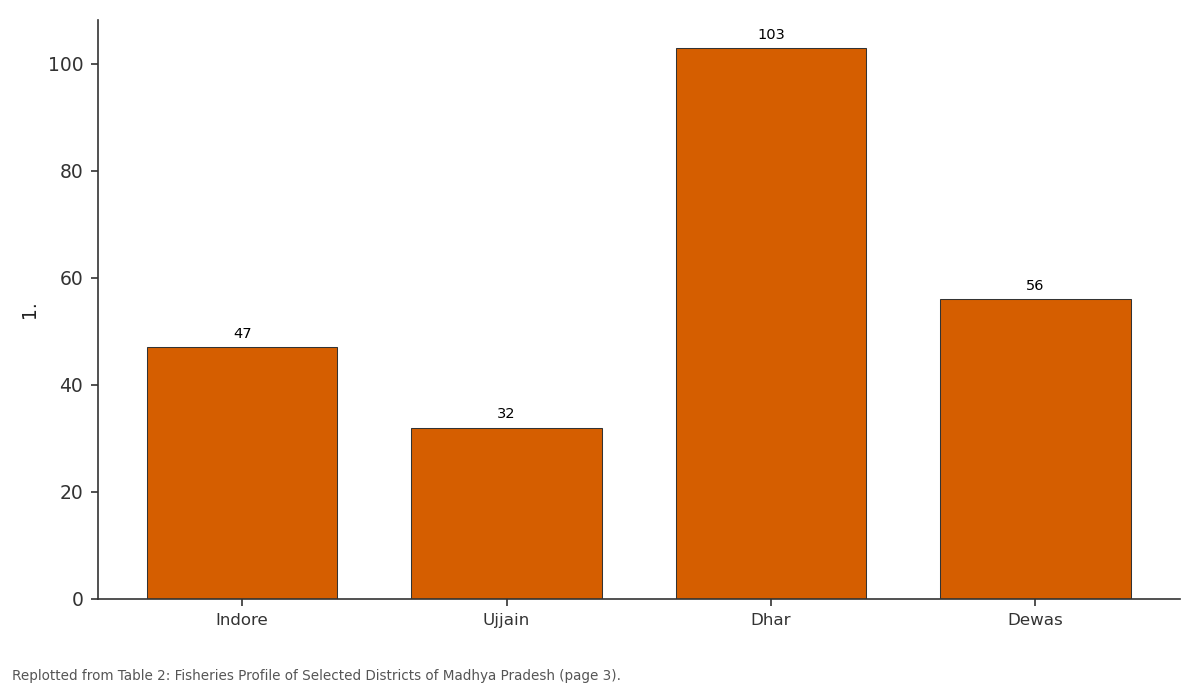
1.: Indore vs Ujjain vs Dhar vs Dewas
Replotted from Table 2 (page 3) of the original paper. Every bar is the paper's own table value.
View source evidence ↗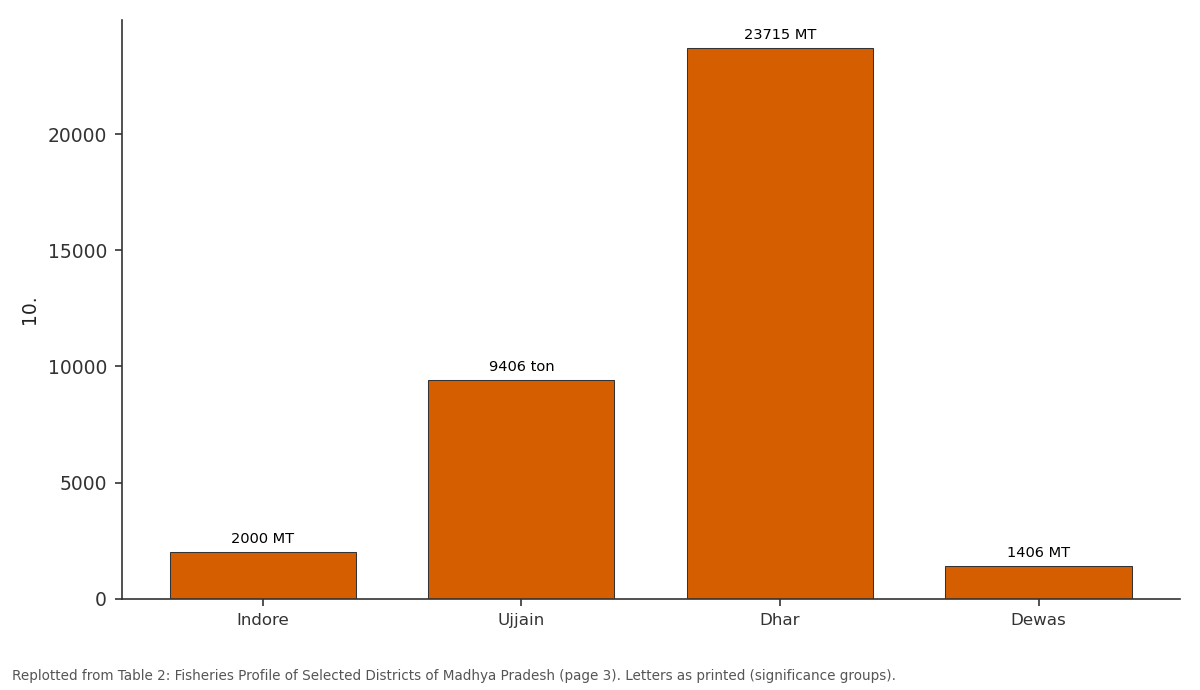
10.: Indore vs Ujjain vs Dhar vs Dewas
Replotted from Table 2 (page 3) of the original paper. Every bar is the paper's own table value.
View source evidence ↗Figures & tables
From the original paper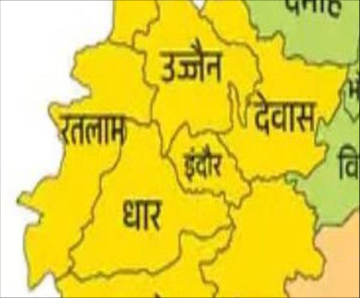 Figure 1
 Table 1
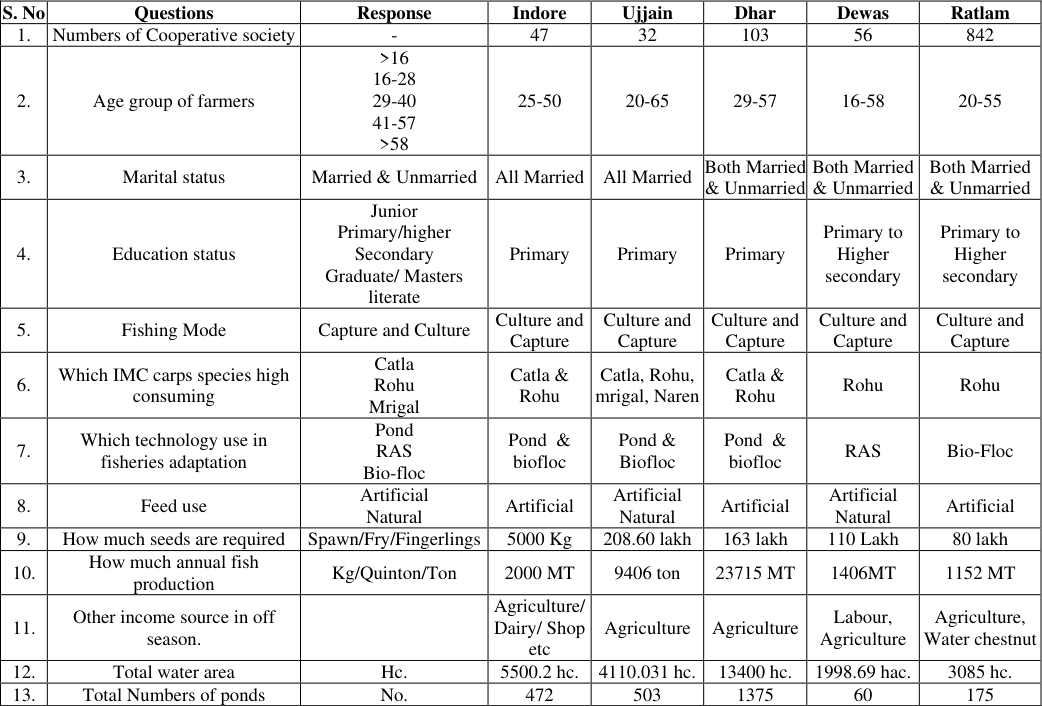 Table 2
Introduction
Fish farming is an industry all over the world and it helps people have enough food to eat. In India many people make a living from fishing. Indian Major Carps are very popular are grown in many ponds and lakes. Madhya Pradesh has a lot of water is one of the biggest producers of fish in India according to Gupta (2015) [3,8] . The Malwa region is a place to grow fish using scientific methods. Even with the help of the government many fish farmers are still using old methods. Scientific fish farming is a way to grow fish. It involves preparing the pond in a way putting the right number of fish in the pond feeding them the right food keeping the water clean and preventing disease. If fish farmers use these methods they can grow fish and make more money. There are many reasons why they do not use these methods. We need to understand why fish farmers are not using these methods so we can help them. That is why we did this study. We wanted to see how many fish farmers are using methods and what is stopping them from doing so Kumar (2024) [6,7] and Laxmi, Gupta et al., (2015) [3,8] . We also wanted to suggest ways to help them use these methods.
Materials and Methods
Materials and Methods
Study Area
The study took place in the Malwa region of Madhya Pradesh, India. This region includes the districts of Indore, Ujjain, Dewas, Ratlam and Dhar. These districts are important for fish production and for growing Indian Major Carps. The Malwa region has ponds, reservoirs and irrigation tanks that are good for freshwater aquaculture.
Experimental setup
In this study, authors analysed the how many fish farmers use scientific fish farming practices this design known as ex-post facto. The reason of selection of this design was what types of fish farming perform by fish farmers according to Debbarma et al., (2024) [1] .
Sampling Procedure
A multistage purposive and random sampling technique was employed to select the study respondents. In the first stage, three prominent fish-producing districts of Madhya Pradesh, Indore, Ujjain, and Dhar were purposively selected based on their high volume of aquaculture production. In the second stage, key development blocks and corresponding villages actively engaged in the cultivation of Indian Major Carps (IMCs) were selected. Finally, a sample of 240 fish farmers, comprising medium-scale and large-scale IMC practitioners, was drawn using a simple random sampling method, Dutta et al., (2020) [9] and Mondal et al., (2021) [10] .
Data Collection
Primary data were collected through face-to-face personal interviews with the selected fish farmers using a pre-tested, structured interview schedule. The field survey was executed between October and December 2025. The primary tool captured comprehensive data regarding the respondents' socio-economic profiles, their levels of knowledge and adoption regarding scientific aquaculture practices, and the critical constraints encountered in fish farming management. To supplement the field insights, secondary data were gathered from the Department of Fisheries, Government of Madhya Pradesh, alongside relevant published literature and official reports.
Measurement of Adoption
To quantify the extent to which fish farmers implement scientific management practices for Indian Major Carp (IMC) cultivation, an Adoption Index (AI) was developed. The assessment focused on eight core dimensions of scientific aquaculture according to Ojha (2014) [12] ; Pounraj and Rathakrishnan (2022) [14] .
Scoring Matrix and Index Calculation
For each respondent, individual practices were evaluated using a standardized 4-point Like-type scale to reflect the degree of implementation: 0 (Non-adoption): The practice is entirely absent.
(Low adoption):
The practice is implemented superficially or inconsistently.
(Moderate adoption):
The practice is implemented partially, meeting baseline criteria.
(Full adoption):
The practice is executed completely in strict accordance with scientific recommendations. The cumulative adoption behavior of each farmer was mathematically operationalized through the Adoption Index (AI), calculated using the following formula:
Statistical Analysis
The quantitative data collected from the field survey were coded, tabulated, and analyzed using statistical software to derive meaningful inferences. The analytical framework comprised both descriptive and inferential statistical methods to evaluate the adoption behaviour of fish farmers.
Results and Discussion
Results and Discussion
Adoption Level of Scientific Fish Farming Practices
We found that most fish farmers are using practices at a moderate level. 60% of the farmers are using the practices moderately 25% are using them a lot and 15% are not using them much. The overall adoption index is 58%. This means that the fish farmers are not using about half of the recommended practices. The adoption gap is 42%.The fish farmers are using some practices like getting the pond ready and managing the food for the fish. However they are not using some practices like keeping the water clean preventing diseases and keeping records. This is because they do not have technical knowledge and they do not get enough support. Our findings suggest that even though the fish farmers know about aquaculture they are not using all the practices. This is because of some socio-institutional problems. Our results are similar to studies that have looked at the adoption of scientific fish farming practices, in India.
Factors Influencing the Adoption Gap in Indian Major Carp Culture
The study found out that there are reasons why Indian Major Carp farmers in the Malwa region of Madhya Pradesh are not using the best farming methods. These reasons are related to the farmers' social and economic situation the techniques they use and the support they get from institutions. The main reason for this is that the farmers do not have knowledge about the best farming methods they do not get enough help from experts they do not have enough money and they cannot get good quality materials. A lot of farmers 68% said that they did not get enough guidance on how to farm fish using the best methods. This is because they do not get to talk to the people who can help them with farming so they are not confident about using methods. Financial problems are also an issue. 62% of farmers said that it is too expensive to buy the things they need to farm fish and they cannot get help from banks or other institutions. The price of quality fish, food for the fish, medicine and other things they need to take care of the fish is too high so farmers are not willing to spend money on the best farming methods. Some farmers still use methods because they are used to them and think they are safer. 57%
of farmers said they do this. They are also afraid to try things because they might lose money.
The study also found out that farmers do not have access to quality materials and they do not know enough about the best farming methods. Farmers who did not have education did not have much experience and did not get to attend training programs were less likely to use the best Indian Major Carp farming methods. If the people who are supposed to help the farmers do not do a job it makes it even harder for the farmers to use the best methods.
Institutional and Demographic Profile of Fish Farmers
The institutional framework and demographic characteristics varied significantly across the surveyed districts. Cooperative Infrastructure: Ratlam demonstrated an exceptionally high institutional density with 842 cooperative societies, followed by Dewas (103) and Ujjain (47). Dhar possessed 32 societies, while data for Indore was unavailable. The age profile of the fish farmers spanned across a wide productive spectrum. Dewas exhibited the widest age distribution (16-58 years), capturing younger participants. The remaining districts predominantly engaged middle-aged cohorts, with age brackets ranging from 25-50 years in Indore, 20-65 years in Ujjain, 29-57 years in Dhar, and 20-55 years in Ratlam. The participant demographic was entirely married in Ujjain and Dhar, whereas Indore Dewas, and Ratlam reported a mix of both married and unmarried individuals. Education levels were relatively basic; farmers in Indore, Ujjain, and Dhar had attained primary school education, while those in Dewas and Ratlam showed slightly higher educational attainment, ranging from primary to higher secondary levels. Due to the seasonal nature of fisheries, diversification was highly prevalent. Agriculture served as the primary off-season livelihood across all five districts. Additionally, farmers in Indore
Discussion
The study shows that Indian Major Carp farmers will only use the farming methods if they know about them if they have enough money if they get help from institutions and if they can get the materials they need. Farmers who talk to the people who can help them and attend training programs are more likely to use the methods. So it is very important to make the support system stronger to make it easier for farmers to get quality materials to teach farmers more about the best methods and to give them access to affordable loans Pandey et al., (2014) [13] ; Singh et al., (2017) [16] . This will help reduce the gap, between the farmers who use the methods and those who do not and it will help increase the production of fish in the Malwa region of Madhya Pradesh. Indian Major Carp farmers need all this help to do their job well. The active participation of the middle-to-mature age cohort (20-65 years) across the studied districts aligns with the national trends documented by Ekka et al. (2012) [2] , who reported that inland capture and culture fisheries in Central India are heavily dominated by the 36-55 age bracket due to the physically demanding nature of harvesting operations. The mixed marital status observed in Indore, Dewas, and Ratlam, contrasted against the exclusively married baseline in Dhar and Ujjain, supports the assertions of Reza et al. (2015) [15] that family stability acts as an informal social insurance system in rural aquaculture setups. However, the lower educational attainment (restricted primarily to higher secondary levels) remains a critical bottleneck. As highlighted in regional reviews, low literacy rates heavily constrain a farmer's capacity to interpret complex technical instructions regarding water quality parameters, dosage formulations, and disease diagnoses. "The structural density of 842 cooperative societies in Ratlam points to an advanced model of community-based natural resource management.
According to institutional reports on Aquaculture Development in Madhya Pradesh, cluster-based institutional approaches and strong cooperative frameworks significantly lower the transactional barriers for smallholders looking to adopt modern technologies. This institutional backup explains why Ratlam has successfully transitioned exclusively toward modern intensive setups like Biofloc. Concurrently, the adoption of Recirculating Aquaculture Systems (RAS) in Dewas and Biofloc configurations in Indore, Ujjain, and Dhar indicates a progressive paradigm shift from traditional extensive culture to high-density, horizontal space-saving aquaculture. This technological transition matches findings by Khuman and Singh (2022) [5] , who observe that sub-surface water vulnerabilities and unpredictable weather conditions increasingly push progressive inland farmers to opt for controlled-environment systems like RAS and Biofloc over traditional open earthen ponds. urthermore, the universal reliance on off-season occupational diversification across all districts highlights the vulnerability of relying solely on seasonal fisheries. The deployment of alternative strategies-ranging from traditional crop cultivation and dairy farming to casual labor and niche agro-ventures like water chestnut farming in Ratlam-confirms the multi-layered livelihood frameworks outlined by Niangti et al. (2020) [11] . Cultivating water chestnuts (Trapa natans) in the off-season is a highly effective dual-use strategy for local water bodies, allowing fish farmers to generate continuous returns even when primary aquaculture activities are paused due to seasonal fry shortages or winter growth delays.
Conclusion
This study underlines the varying socio-economic dynamics, technological choices, and production metrics across the five key aquaculture districts of Madhya Pradesh. While traditional pond aquaculture remains the baseline, a significant transition toward modern, high-density systems like Biofloc and Recirculating Aquaculture Systems (RAS) is evident, particularly in Ratlam and Dewas. Dhar functions as the regional production hub due to its vast water footprint, whereas Ujjain demonstrates a highly intensive stocking strategy. The institutional strength observed through Ratlam's massive cooperative network highlights the value of community-driven infrastructure in accelerating tech adoption. Furthermore, the universal reliance on offseason activities like agriculture and water chestnut farming stresses the importance of livelihood diversification for seasonal security. Ultimately, targeted interventions focusing on technical training, standardized stocking protocols, and cooperative development are essential to maximize aquaculture efficiency across these districts.
Acknowledgement
AcknowledgementsThe authors gratefully acknowledge the Department of International Journal of Biology Sciences https://www.biologyjournal.net Aquaculture, School of School, Sanjeev Agrawal Global Educational (SAGE) University Bhopal, India for providing the necessary facilities for conducting this research.
Figures and tables from the paper
| S. No | Parameter | Optimum Range | Indore/Dewas | Dhar | Ujjain/Ratlam |
|---|---|---|---|---|---|
| 1. | Temperature (°C) | 20-30 | 15.3-35.6 | 22-34 | Suitable variation |
| 2. | pH | 6.5-9.0 | 6.8-8.9 | 7.2-8.6 | Often >7 |
| 3. | DO mg/L | >4 | 4.5-12.4 | 5.2-10.8 | Adequate in ponds |
| 4. | Free CO2 mg/l | >10 | 0-19 | 1-12 | Variable |
| 5. | Total Hardness (mg/L) | 100-600 | 200 | 150-500 | Elevated some areas |
Table text extracted from the original PDF; superscript letters are shown inline. The original table image is below.
View original table image
| S. No | Questions | Response | Indore | Ujjain | Dhar | Dewas | Ratlam |
|---|---|---|---|---|---|---|---|
| 1. | Numbers of Cooperative society | - | 47 | 32 | 103 | 56 | 842 |
| 2. | Age group of farmers | >16 16-28 29-40 41-57 >58 | 25-50 | 20-65 | 29-57 | 16-58 | 20-55 |
| 3. | Marital status | Married & Unmarried | All Married | All Married | Both Married & Unmarried | Both Married & Unmarried | Both Married & Unmarried |
| 4. | Education status | Junior Primary/higher Secondary Graduate/ Masters literate | Primary | Primary | Primary | Primary to Higher secondary | Primary to Higher secondary |
| 5. | Fishing Mode | Capture and Culture | Culture and Capture | Culture and Capture | Culture and Capture | Culture and Capture | Culture and Capture |
| 6. | Which IMC carps species high consuming | Catla Rohu Mrigal | Catla & Rohu | Catla, Rohu, mrigal, Naren | Catla & Rohu | Rohu | Rohu |
| 7. | Which technology use in fisheries adaptation | Pond RAS Bio-floc | Pond & biofloc | Pond & Biofloc | Pond & biofloc | RAS | Bio-Floc |
| 8. | Feed use | Artificial Natural | Artificial | Artificial Natural | Artificial | Artificial Natural | Artificial |
| 9. | How much seeds are required | Spawn/Fry/Fingerlings | 5000 Kg | 208.60 lakh | 163 lakh | 110 Lakh | 80 lakh |
| 10. | How much annual fish production | Kg/Quinton/Ton | 2000 MT | 9406 ton | 23715 MT | 1406MT | 1152 MT |
| 11. | Other income source in off season. | Agriculture/ Dairy/ Shop etc | Agriculture | Agriculture | Labour, Agriculture | Agriculture, Water chestnut | |
| 12. | Total water area | Hc. | 5500.2 hc. | 4110.031 hc. | 13400 hc. | 1998.69 hac. | 3085 hc. |
| 13. | Total Numbers of ponds | No. | 472 | 503 | 1375 | 60 | 175 |
Table text extracted from the original PDF; superscript letters are shown inline. The original table image is below.
View original table image
References
16 in the original paper- Debbarma D, Yadav MK, Saxsena S, Kher D. The adoption gap of scientific fish farming practice among fish farmers of Tripura in relation to Pabda (Ompok bimaculatus, Bloch 1794). Int J Adv Biochem Res. 2024;8(8S):465-471. doi:10.33545/26174693.2024.v8.i8Sg.1848
- Ekka A, Katiha PK, Pandit A, Barik N, Shyam SS, Ganesh Kumar B. Socio-economic status of fishers of reservoirs of India. J Inland Fish Soc India. 2012;44(2):79-87.
- Gupta N, Laxmi, Singh M, Sharma RP. Evaluation of integrated horticulture-cum-fish farming in Malwa region of Madhya Pradesh, India. Curr World Environ. 2015;10(2):445-452. doi:10.20546/ijcmas.2019.802.290
- Khuman ON, Singh YJ. Fish farmers' perceived constraints and suggestions towards the adoption of scientific fish farming of Pengba (Osteobrama belangeri) in the valleys of Manipur, India. Int J Curr Microbiol App Sci. 2019;8(2):2489-2494.
- Khuman ON, Singh YJ. Technical limitations and training constraints in the adoption of intensive freshwater aquaculture systems. J Community Mobilization Sustain Dev. 2022;17(2):415-422.
- Kumar A. Extent of adoption of scientific fish farming practices among fish farmers. Bhartiya Krishi Anusandhan Patrika. 2024;39(1):55-61.
- Kumar A. Knowledge and extent of adoption of scientific fish farming practices among fish farmers. Bhartiya Krishi Anusandhan Patrika. 2024;39(1):55-61.
- Laxmi, Gupta N, Singh M, Sharma RP. Assessment of fish culture in some water ponds of Dhar district, Madhya Pradesh. Int J Biol Sci. 2015;6(1):21-27.
- Manas Pratim Dutta B, Das P, Nath S. Fish farmers. Adoption of sustainable aquaculture practices in India. Aquac Stud. 2020;20(3):135-144.
- Mondal S, Ghosh A, Das R. Socio-economic determinants of scientific fish farming adoption in India. Indian J Fish. 2021;68(3):124-131.
- Niangti O, Pasweth A, Tariang R. Constraints in fish farming activities as perceived by the fish farmers of Ri Bhoi and West Garo Hills districts of Meghalaya. J Community Mobilization Sustain Dev. 2020;15(3):612617.
- Ojha SN. Adoption behaviour of fish farmers towards improved aquaculture technologies. J Community Mobilization Sustain Dev. 2014;9(2):162-166.
- Pandey G, Shrivastav AB, Sharma M. Fishes of Madhya Pradesh with special reference to freshwater resources and production dynamics. Int Res J Pharm. 2014;5(12):895-901.
- Pounraj A, Rathakrishnan T. Effect of training and extension communication on adoption of fish culture practices. Indian J Ext Educ. 2022;58(4):112-118.
- Reza AH, Islam MS, Rahman MM. Socio-economic status metrics and livelihood security frameworks in small-scale inland fisheries. Indian J Ext Educ. 2015;51(3):112-119.
- Singh AK, Chouhan VS; Directorate of Fisheries Madhya Pradesh. Small Holder Livelihood Opportunities in Freshwater Aquaculture in Madhya Pradesh: Strategic Roadmap for Inland Blue Growth. Department of Fisheries, Government of Madhya Pradesh; 2017.