
Research article · 2026 · Full text
International Journal of Advanced Chemistry ResearchSustainable Knoevenagel Condensation through L-Phenylalanine Sodium Acetate Catalysis under Solvent Free Grinding Conditions
Volume 8(8) · Pages 107–110 · DOI: 10.33545/26646781.2026.v8.i8b.737 ↗
Research areasMulticomponent Synthesis of HeterocyclesChemical Synthesis and ReactionsSynthesis of heterocyclic compounds
Abstract
Author-writtenA convenient and environmentally compatible protocol has been developed for the synthesis of α,β-unsaturated compounds through Knoevenagel condensation under solvent-free mechanochemical conditions. The reaction employs a combination of L-phenylalanine and sodium acetate as an efficient catalytic system and is performed by simple grinding at room temperature. A range of aromatic aldehydes was reacted with active methylene compounds including dimethyl malonate and malononitrile. The transformations proceeded rapidly, generally requiring only 10-15 min, and afforded the corresponding condensation products in 88-96% yields. The protocol avoids hazardous organic solvents and does not require complicated reaction equipment or elevated temperatures. Product isolation was accomplished through a simple aqueous work-up followed by recrystallization from ethanol. Spectroscopic and analytical investigations using FT-IR, ^1H NMR, mass spectrometry and elemental analysis confirmed the structures of the synthesized compounds. The combination of an inexpensive salt, a biocompatible amino acid and mechanochemical activation provides a practical approach for greener Knoevenagel condensation.
Summary
Source-checkedPlain-language reading of the full paper, prepared with AI and checked against the text. Each point links to the authors' own words.
Why it matters
- Knoevenagel condensation is a key process for creating carbon-carbon bonds, producing α,β-unsaturated products used in pharmaceuticals, agrochemicals, and fine chemicals. View evidence ↗
- Traditional catalysts like piperidine and pyridine are effective but are being replaced due to their toxicity, volatility, and negative environmental impact. View evidence ↗
- Mechanochemical synthesis, specifically grinding, is a sustainable strategy that can eliminate the need for organic solvents in chemical reactions. View evidence ↗
The question
- The study aimed to use a combination of L-phenylalanine and sodium acetate as a catalytic system for the one-pot grinding synthesis of Knoevenagel condensation products. View evidence ↗
What they did
- The reaction used 0.01 mol of aromatic aldehyde and 0.01 mol of either dimethyl malonate or malononitrile, with 0.02 mol of sodium acetate and 0.001 mol of L-phenylalanine. View evidence ↗
- The reactants were manually ground using a mortar and pestle at room temperature for 10 to 15 minutes. View evidence ↗
- Products were isolated by stirring the mixture in 50 mL of ice-cold water, followed by filtration and recrystallization from ethanol. View evidence ↗
- The synthesized compounds were characterized using FT-IR, 1H NMR, mass spectrometry, and elemental analysis. View evidence ↗
What they found
- The reactions were rapid, typically completing in 10-15 minutes with product yields ranging from 88% to 96%. View evidence ↗
- The method is compatible with various aromatic substituents, including hydroxy, nitro, chloro, methoxy, and fluoro groups. View evidence ↗
- The highest yield observed was 96% for compound 3I (4-NO₂ substituent with CN), achieved in 10 minutes. View evidence ↗
- The lowest yield reported was 88% for compound 3B (3-OH substituent with COOCH₃), which took 14 minutes. View evidence ↗
- FT-IR analysis confirmed the formation of the desired products by showing C=C absorptions between 1620 and 1625 cm⁻¹. View evidence ↗
What it means
- The combination of biocompatible L-phenylalanine and inexpensive sodium acetate is recommended as an attractive catalytic system for sustainable synthesis. View evidence ↗
Visual summary
3 visualsIllustrations explain the paper; charts are replotted from the paper's own table values.
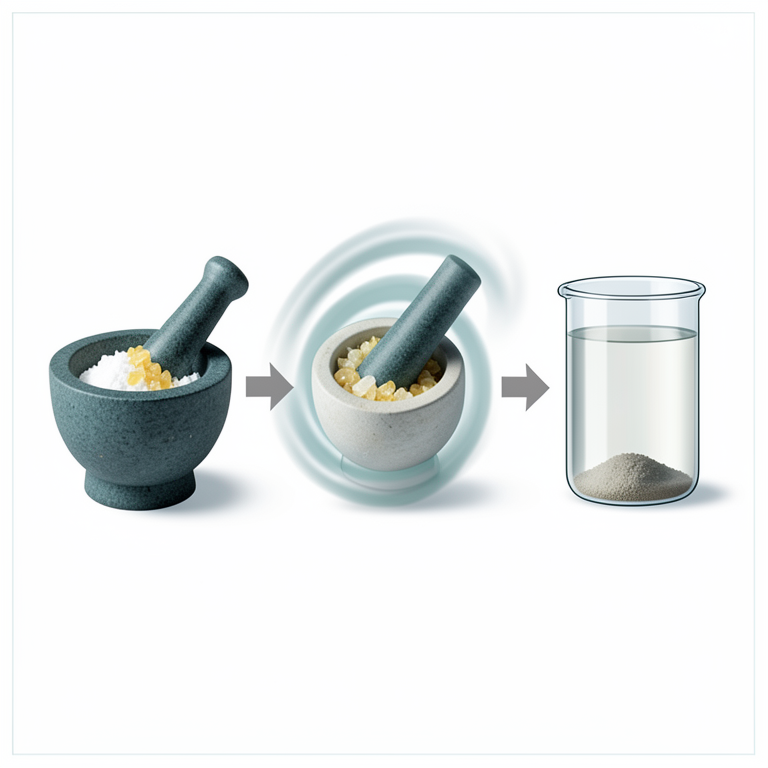
Mechanochemical Process Flow
AI-generated conceptual illustration (A ceramic mortar and pestle containing chemical powders). It explains the idea and does not show study data.
View source evidence ↗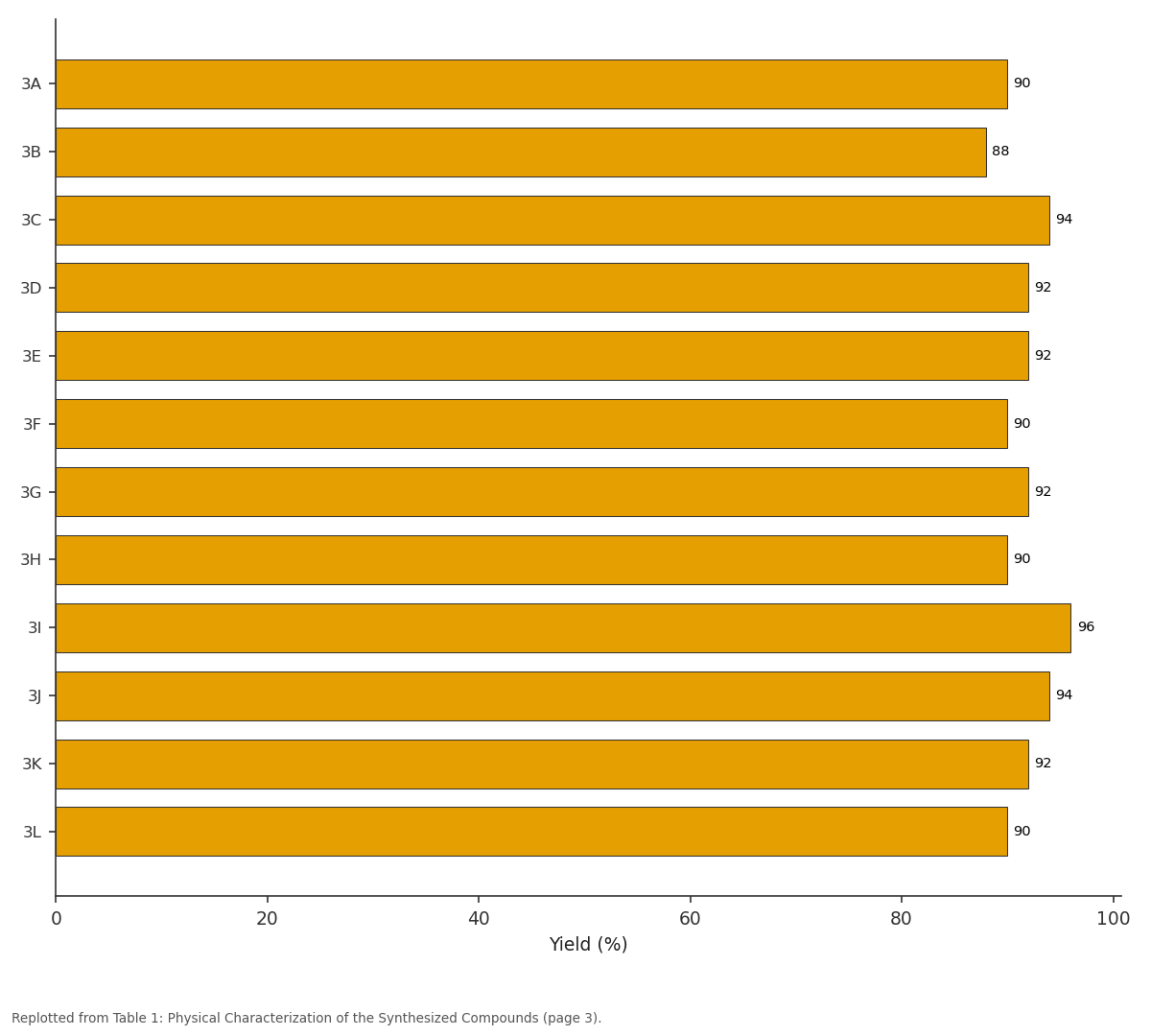
Yield (%): 3A vs 3B vs 3C vs 3D vs 3E
Replotted from Table 1 (page 3) of the original paper. Every bar is the paper's own table value.
View source evidence ↗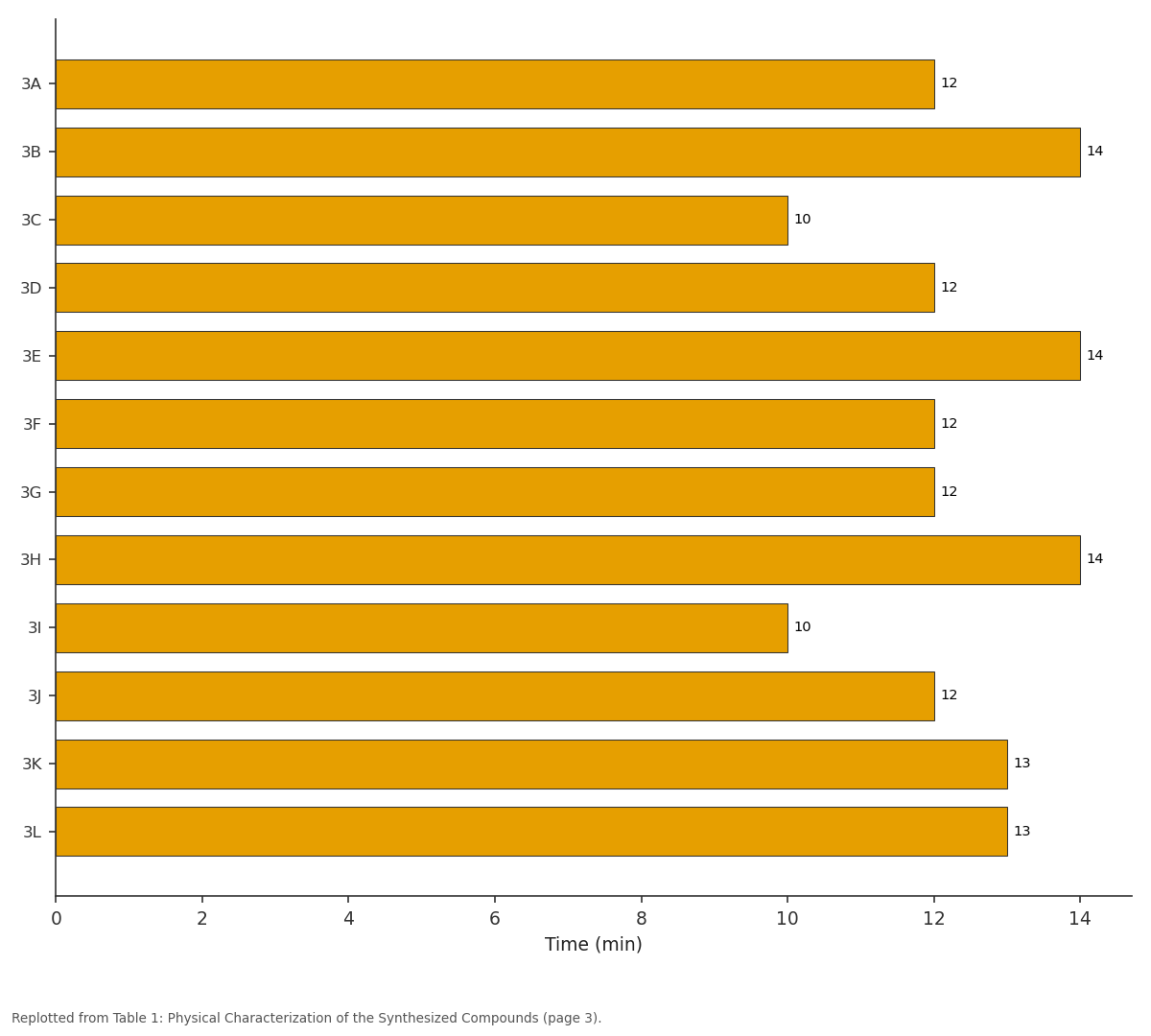
Time (min): 3A vs 3B vs 3C vs 3D vs 3E
Replotted from Table 1 (page 3) of the original paper. Every bar is the paper's own table value.
View source evidence ↗Figures & tables
From the original paper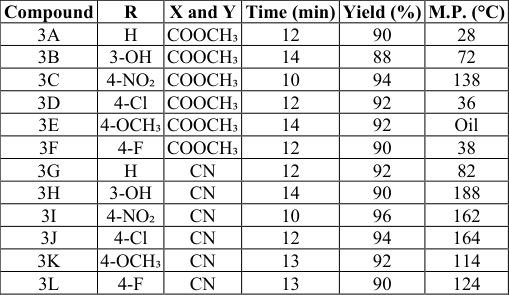 Table 1
Introduction
The Knoevenagel condensation represents an important carbon-carbon bond-forming transformation in organic chemistry. The reaction generally involves the condensation of aldehydes or ketones with active methylene compounds in the presence of a suitable acidic or basic catalyst, producing α,β-unsaturated products that are important intermediates in pharmaceutical, agrochemical and fine-chemical synthesis [1] . A wide variety of catalytic systems have been explored for this transformation. Reported examples include lithium hydroxide [2] , zinc chloride [3] , copper surfaces [4] , lithium bromide [5] , biomass-derived carbon dots [6] , and chitosan in aqueous media [7] . Although conventional organic bases such as piperidine, pyridine and related amines can efficiently promote the reaction, their volatility, toxicity and environmental impact have encouraged the development of more sustainable alternatives [8] . Green catalytic approaches have subsequently attracted considerable attention. Metal-organic frameworks [9] , ionic liquids [10] , zeolitic materials [11] , and metal oxide catalysts such as CeO₂ [12] have all demonstrated useful catalytic activity in Knoevenagel-type transformations. At the same time, amino acids have emerged as attractive catalytic materials because of their comparatively benign nature, availability and compatibility with environmentally responsible synthetic approaches. L-Proline and related amino-acid-based systems have, for example, been employed under relatively mild reaction conditions [13] . Amino acids combined with salts or other solid materials can also exhibit synergistic catalytic behavior [14] . Mechanochemical synthesis provides another important strategy for improving the environmental profile of organic reactions. Grinding-based reactions can substantially reduce or eliminate the requirement for organic solvents, while intimate physical contact between reactants can promote efficient reaction and energy transfer [15] . Such processes can also shorten reaction times and simplify product isolation. The combination of amino-acid catalysis with mechanochemical activation is therefore particularly attractive for developing simple and sustainable synthetic methodologies. In the present study, an Lphenylalanine-sodium acetate catalytic system was employed for the one-pot grinding synthesis of Knoevenagel condensation products. L-Phenylalanine provides a biocompatible catalytic component, while sodium acetate assists the deprotonation of the active methylene substrate. The resulting system enables efficient C=C bond formation under solvent-free conditions at room temperature.
Materials and Methods
Materials and Methods
Materials and Instrumentation
All chemicals employed in the synthesis were commercially available and of analytical reagent grade. Melting points were measured by the open-capillary method and are reported without correction. Infrared spectra were obtained using a SHIMADZU FT-IR spectrophotometer. Mass spectra were recorded using a TOF MS ES+ instrument. ^1H NMR spectra were acquired on a BRUKER AVANCE NEO 500 MHz spectrometer using DMSO-d₆ as the solvent. Chemical shifts are reported in ppm (δ) with tetramethylsilane (TMS) used as the internal standard.
General Synthetic Procedure
Equimolar quantities of the selected aromatic aldehyde (0.01 mol) and either dimethyl malonate or malononitrile (0.01 mol) were combined with sodium acetate (0.02 mol) and Lphenylalanine (0.001 mol). The mixture was subjected to manual grinding in a mortar and pestle at room temperature for approximately 10-15 min. Reaction progress was monitored by thin-layer chromatography. Following completion of the reaction, the reaction mixture was transferred into 50 mL of ice-cold water with stirring. The solid product was separated by filtration, dried and subsequently purified by recrystallization from ethanol.
Characterization of
Characterization of
Results and Discussion
The Knoevenagel condensation was investigated under solvent-free mechanochemical conditions by combining aromatic aldehydes with either dimethyl malonate or malononitrile in the presence of sodium acetate and Lphenylalanine. The reaction mixtures were manually ground using a mortar and pestle at room temperature. Under these conditions, the condensation proceeded efficiently, with reaction completion generally occurring within 10-15 min. The experimental results demonstrate that the catalytic system provides consistently high product yields. The synthesized compounds were obtained in the range of 88-96%, indicating that the L-phenylalanine-sodium acetate combination is effective for promoting condensation between aromatic aldehydes and active methylene compounds. The results also demonstrate the compatibility of the procedure with different aromatic substituents. Aldehydes containing hydroxy, nitro, chloro, methoxy and fluoro substituents participated successfully in the reaction. Both electron-withdrawing and electron-donating substituents were therefore accommodated under the reaction conditions. Spectroscopic investigations supported the formation of the desired α,β-unsaturated products. The FT-IR spectra showed characteristic alkene C=C absorptions in the 1620-1625 cm⁻¹ region. For products derived from dimethyl malonate, the ester carbonyl absorption occurred around 1733-1740 cm⁻¹, whereas the malononitrile derivatives displayed the characteristic nitrile absorption near 2225-2233 cm⁻¹. Nitrosubstituted products exhibited additional characteristic NO₂ absorptions. The 1H NMR spectra provided further evidence for product formation. The vinylic proton signals occurred in the δ 7.85-9.69 region, consistent with formation of the benzylidene products.
Additional signals associated with methoxycarbonyl, hydroxy and aromatic groups were also observed according to the structure of each product. Mass spectral data were consistent with the expected molecular masses, while elemental analysis values were in close agreement with the calculated compositions. The physical characteristics and yields of the synthesized compounds are summarized in Table 1.
| Compound | R | X and Y | Time (min) | Yield (%) | M.P. (°C) |
|---|---|---|---|---|---|
| 3A | H | COOCH₃ | 12 | 90 | 28 |
| 3B | 3-OH | COOCH₃ | 14 | 88 | 72 |
| 3C | 4-NO₂ | COOCH₃ | 10 | 94 | 138 |
| 3D | 4-Cl | COOCH₃ | 12 | 92 | 36 |
| 3E | 4-OCH₃ | COOCH₃ | 14 | 92 | Oil |
| 3F | 4-F | COOCH₃ | 12 | 90 | 38 |
| 3G | H | CN | 12 | 92 | 82 |
| 3H | 3-OH | CN | 14 | 90 | 188 |
| 3I | 4-NO₂ | CN | 10 | 96 | 162 |
| 3J | 4-Cl | CN | 12 | 94 | 164 |
| 3K | 4-OCH₃ | CN | 13 | 92 | 114 |
| 3L | 4-F | CN | 13 | 90 | 124 |
Table text extracted from the original PDF; superscript letters are shown inline. The original table image is below.
View original table image
Effect of the Reaction Conditions
The mechanochemical approach offers several practical advantages. The reaction takes place without the addition of an organic solvent, and mechanical grinding facilitates intimate contact among the reactants and catalytic components. The use of room temperature conditions further reduces the energy requirements of the synthesis. The relatively short reaction times, ranging from 10 to 15 min, together with yields of 88-96%, demonstrate the efficiency of the protocol. The procedure also avoids complicated reaction apparatus and provides a straightforward method for isolating the products.
Structural Confirmation of the Products
The formation of the α,β-unsaturated products was established using complementary analytical techniques. FT-IR spectroscopy confirmed the characteristic functional groups, particularly the C=C stretching vibration in the 1620-1625 cm⁻¹ range. The ^1H NMR spectra showed the expected vinylic proton resonances between δ 7.85 and 9.69. Mass spectral measurements provided molecular-ion signals consistent with the assigned structures. The observed melting points were also compared with reported literature values, providing additional support for the identity of the synthesized compounds. Simple recrystallization from ethanol was sufficient for purification, contributing to the practical simplicity of the overall procedure.
Green Chemistry Features of the Protocol
The present methodology incorporates several features desirable in sustainable organic synthesis. It operates under solvent-free conditions, uses room-temperature mechanical activation, employs an amino acid as a biocompatible catalytic component and utilizes inexpensive sodium acetate as an additive. The short reaction time and simple isolation procedure further reduce the operational requirements. The successful condensation of several substituted aromatic aldehydes demonstrates useful substrate compatibility. The combination of mechanochemistry and amino-acid-based catalysis consequently provides a promising alternative to conventional solvent-dependent Knoevenagel procedures.
Conclusion
An efficient and environmentally preferable protocol has been established for Knoevenagel condensation using an Lphenylalanine-sodium acetate catalytic system under solvent-free grinding conditions. The method enables the reaction of aromatic aldehydes with dimethyl malonate and malononitrile at room temperature, providing the corresponding α,β-unsaturated products in good to excellent yields. The principal advantages of the procedure include short reaction times, mild conditions, high yields, avoidance of hazardous organic solvents and a simple purification procedure. The successful conversion of aromatic aldehydes bearing hydroxy, nitro, chloro, methoxy and fluoro substituents demonstrates the broad applicability of the approach within the investigated substrate series. The use of L-phenylalanine, a biocompatible amino acid, together with inexpensive sodium acetate provides an attractive catalytic combination for sustainable organic synthesis. The mechanochemical mode of operation additionally minimizes solvent consumption and simplifies the experimental setup.
Overall, this procedure represents a practical and greener approach to the preparation of α,β-unsaturated carbonyl and dicyano compounds.
Acknowledgement
The authors acknowledge the necessary support from L. N. Mithila University Darbhanga, Bihar. Conflict of InterestThe authors declare that there is no conflict of interest.
References
15 in the original paper- Jones G. Knoevenagel condensations catalyzed by amines. Org React. 1967;15:204-599.
- Pasha MA, Manjula K. Lithium hydroxide as a simple and efficient catalyst for Knoevenagel condensation under solvent-free grindstone conditions. J Saudi Chem Soc. 2011;15:283-286.
- Shanthan Rao P, Venkataratnam RV. Zinc chloride as a new catalyst for Knoevenagel condensation. Tetrahedron Lett. 1991;32:5821-5822.
- Schneider EM, Zeltner M, Kränzlin N, Grass RN, Stark WJ. Base-free Knoevenagel condensation catalyzed by copper metal surfaces. Chem Commun. 2015;51:1069510698.
- Sylla M, Joseph D, Chevallier E, Camara C, Dumas F. A simple and direct access to ethylidene malonates. Synthesis. 2006;6:1045-1049.
- Michenzi C, Salvitti C, Espro C, Chiarotto I, Bressi V, Celesti C, et al. Electrochemical bottom-up synthesis of biomass-derived carbon dots for promoting Knoevenagel condensation. Mol Catal. 2023;544:113182.
- Rani D, Singla P, Agarwal J. Chitosan in water as an eco-friendly and efficient catalytic system for Knoevenagel condensation reaction. Carbohydr Polym. 2018;202:355-364.
- Kidwai M, Bhatnagar D, Mishra NK. Solvent-free synthesis of Knoevenagel condensation products using dry media technique. Green Chem. 2000;2:133-135.
- Dhakshinamoorthy A, Garcia H. Metal-organic frameworks as solid catalysts for the synthesis of nitrogen-containing heterocycles. Chem Soc Rev. 2014;43:5750-5765.
- Ranu BC, Jana R. Ionic liquid as catalyst and reaction medium for Knoevenagel condensation of aliphatic and aromatic carbonyl compounds using a task-specific basic ionic liquid. Eur J Org Chem. 2006;16:37673770.
- Clark JH, Macquarrie DJ. Catalysis of liquid phase organic reactions using chemically modified mesoporous inorganic solids. Chem Commun. 1998;8:853-860.
- Viswanadham B, Jonnalagadda SB. Synthesis, characterization, and novel reactivity of nano CeO₂ catalyst for solvent-free Knoevenagel condensation. J Indian Chem Soc. 2024;101:101442.
- Wang Y, Yao QX, He JR, Liang ZH, Li X, Cheng H, et al. L-Proline-catalyzed Knoevenagel reaction promoted by choline chloride-based deep eutectic solvents. Biomass Convers Biorefin. 2022;12:87-93.
- Ossowicz P, Rozwadowski Z, Gano M, Janus E. Efficient method for Knoevenagel condensation in aqueous solution of amino acid ionic liquids. Pol J Chem Technol. 2016;18:90-95.
- Kaupp G. Solid-state molecular syntheses complete reactions without auxiliaries based on the new solidstate mechanism. Cryst Eng Commun. 2003;5:117-133.