
Research article · 2026 · Full text
International Journal of Advanced Chemistry ResearchCopper(II)Hydroxy phenyl phthalocyanine as an organic semiconductor: Synthesis, characterization, and iodine-doping effect
Volume 8(8) · Pages 64–69 · DOI: 10.33545/26646781.2026.v8.i8a.734 ↗
Research areasPorphyrin and Phthalocyanine ChemistryOrganic Electronics and PhotovoltaicsOrganic and Molecular Conductors Research
Abstract
Author-writtenCopper(II) hydroxyphenyl phthalocyanine analogues function as organic semiconductors due to their extensive π-conjugated systems, which facilitate charge transport, and their electrical characteristics can be altered through chemical doping. 2,3-dicyano-5,6-bis(4-hydroxyphenyl)pyrazine (PHPN) was synthesized by refluxing 4,4′-dihydroxybenzil with diaminomaleonitrile in absolute ethanol. The resulting precursor was subsequently cyclotetramerized with copper(II) nitrate in quinoline-containing urea to yield the copper complex PHPZCu. The synthesized compounds were characterized using elemental analysis, FTIR, UV-Visible spectroscopy, 1H-NMR, X-ray diffraction, and scanning electron microscopy. Elemental analysis was generally compatible with both the calculated and experimental data, corroborating the postulated molecular compositions. FTIR spectra validated the characteristic vibrations of active groups, such as C=C, C=N, C-N, aromatic C-H, and O-H, together with the absence of the nitrile band in the complex, thereby substantiating the development of macrocycles. The electronic spectra of PHPZCu exhibited the B band at 356 nm and the Q band at 661 nm, signifying an extended phthalocyanine-type conjugated system. The determination of a crystal structure via X-ray diffraction yielded interplanar spacing measures of 6.04, 5.34, 4.54, and 3.30 Å, while the SEM pictures revealed aggregated nanoscale particles exhibiting porous surface characteristics. Direct-current conductivity was measured between 303 and 403 K prior to and subsequent to iodine doping. The conductivity of 2.3 × 10⁻⁴ was augmented by iodine treatment as 7.40 × 10⁻⁴ Ω-1 cm-1, 0.44 eV activation energy, whereas the activation energy was reduced from 0.47 eV as a result of the treatment. The consistency of these analytical results indicates the successful preparation of the target complex. The results demonstrate that iodine doping enhances charge transport and the viability of PHPZCu for organic semiconductor applications.
Summary
Source-checkedPlain-language reading of the full paper, prepared with AI and checked against the text. Each point links to the authors' own words.
Why it matters
- Copper(II) hydroxyphenyl phthalocyanine analogues are useful as organic semiconductors because their extensive π-conjugated systems allow for charge transport. View evidence ↗
- Phthalocyanine copper (PcCu) films have practical applications in high-technology fields, including laser printers, copy machines, and the merox process. View evidence ↗
The question
- The researchers aimed to synthesize and characterize a copper(II) hydroxyphenyl phthalocyanine complex (PHPZCu) to evaluate its potential as an organic semiconductor. View evidence ↗
- The study specifically investigated how temperature and iodine doping affect the complex's activation energy and direct-current electrical conductivity. View evidence ↗
What they did
- The PHPZCu complex was produced by refluxing a mixture of copper nitrate, PHPN, urea, and quinoline for 4 hours. View evidence ↗
- The researchers used a suite of characterization tools, including FTIR, UV-Visible spectroscopy, 1H-NMR, XRD, and SEM, to verify the synthesized compounds. View evidence ↗
- Iodine doping was performed by stirring the complex in CCl4 at 79 °C for 72 hours. View evidence ↗
What they found
- UV-Visible spectroscopy of PHPZCu showed a B band at 356 nm and a Q band at 661 nm, confirming the extended conjugated system. View evidence ↗
- X-ray diffraction analysis of the complex revealed interplanar spacing measurements of 6.04, 5.34, 4.54, and 3.30 Å. View evidence ↗
- SEM imaging showed that PHPZCu consists of smooth, regular particles sized between 24 and 35 nm with large pores. View evidence ↗
- Iodine treatment reduced the activation energy of the complex from 0.47 eV to 0.44 eV. View evidence ↗
What it means
- The authors conclude that iodine-doped PHPZCu serves as a tunable organic semiconductor. View evidence ↗
- The authors state that future research is needed to examine carrier mobility, stability, film homogeneity, and actual device performance in optoelectronic systems. View evidence ↗
Visual summary
1 visualsIllustrations explain the paper; they do not show study data.
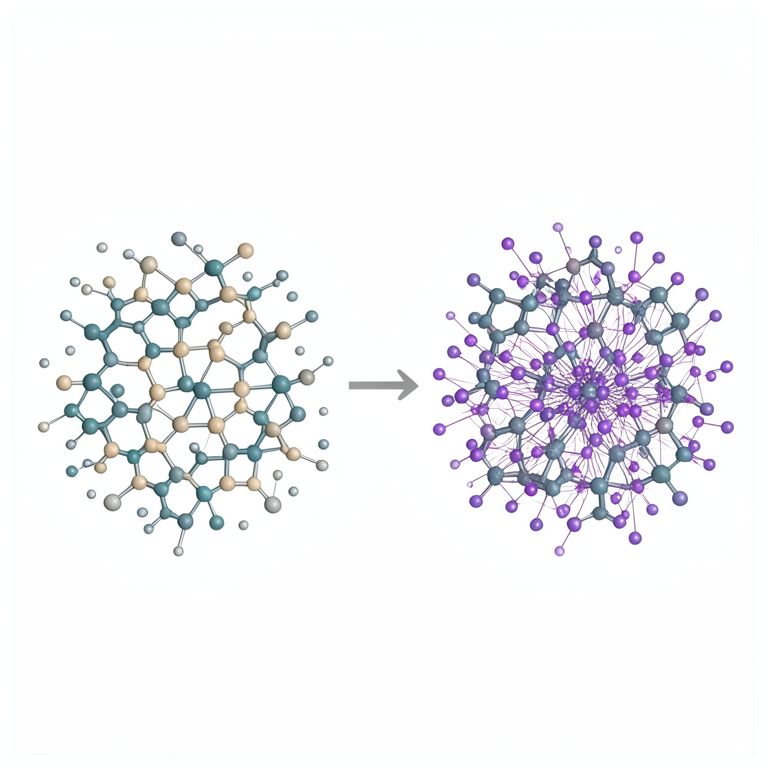
Effect of Iodine Doping on Conductivity
AI-generated conceptual illustration (Copper(II)hydroxy phenyl phthalocyanine crystals and iodine molecules). It explains the idea and does not show study data.
View source evidence ↗Figures & tables
From the original paper Table 1
 Table 2
 Table 3
 Table 4
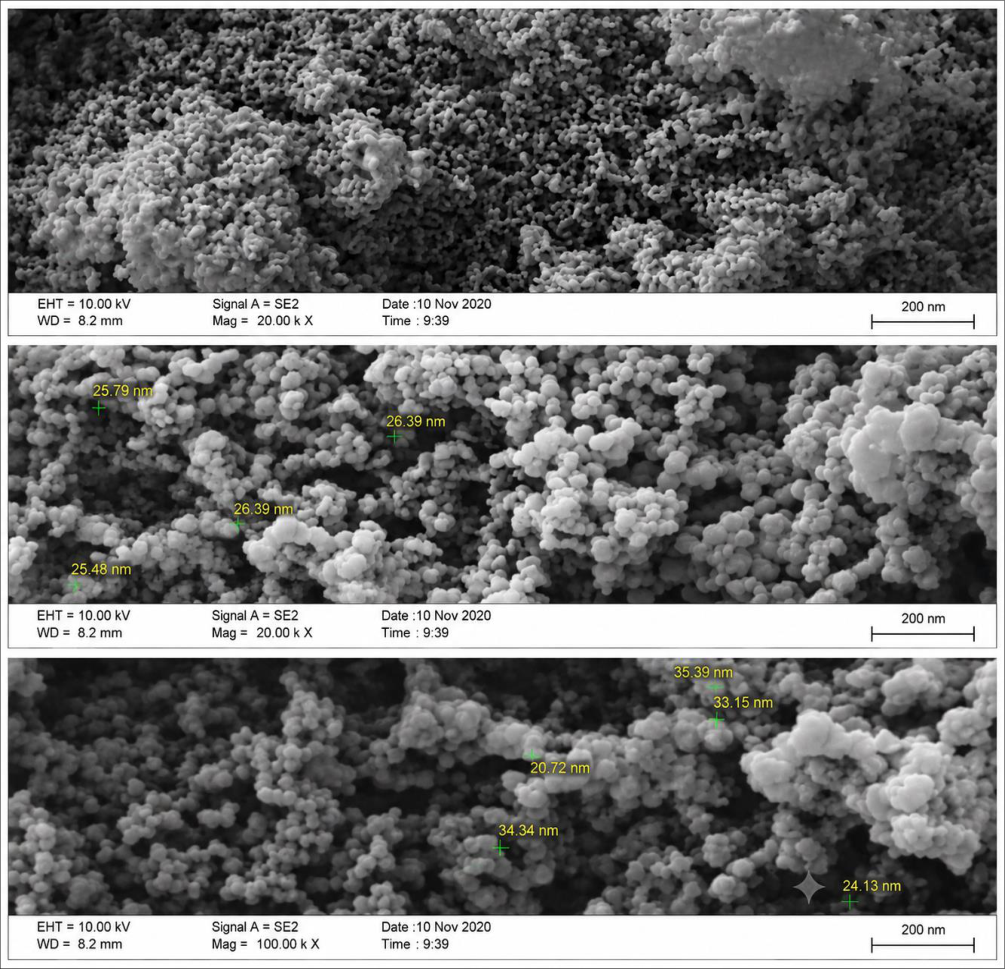 Figure 1
 Table 5
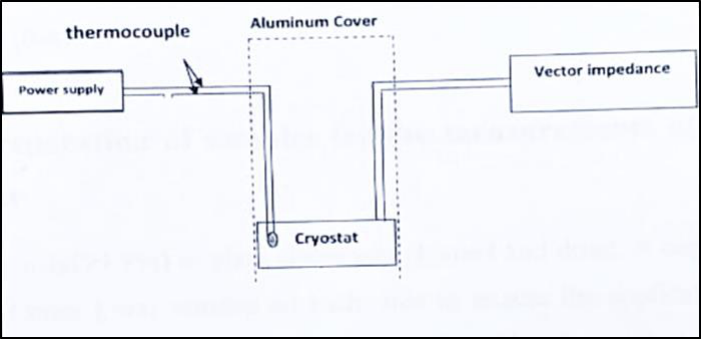 Figure 2
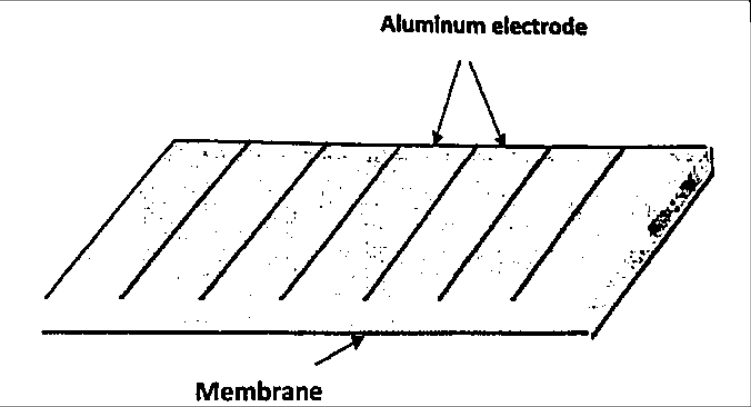 Figure 3
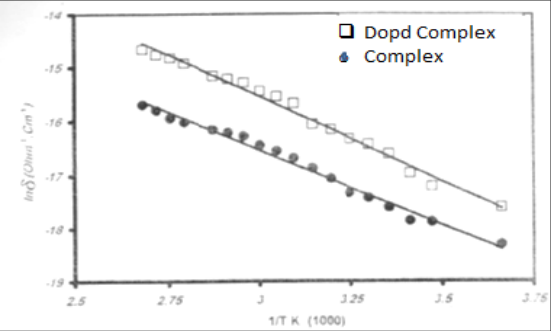 Figure 4
Introduction
Porphyrazines and porphyrines are considered as two main divisions from tetrapyrrolic macro cycles compounds which have a large cycle, but they differ essentially. Porphyrazine is of a large tetrapyrrolic cycle which differs from porphyrine [1] . porphyrazin have been widely used gas sensors, data storage and displyers solar cells,evaporated films of PcCu were used as organic semiconductors high technologies [2] for intence they are used as catalyst in the merox process and photoconductor xerographic doubic layers of laser printers and copy machines. The metallophthalocyanines and porphyrazines were prepared by many methods.The synthesis of Phthalocyanine is usually at a high temperature, cyclotetramerization of phthalonitrile or phthalic anhydride [3,4] . The cyclotetramerization of phthalocyanines is a clear reaction and using phthalic anhydride or phthalonitrile is favored method in industry. Both reactions are assisted by temperature and with a suitable metal ion, such as Fe, Al, Cu, Ni, Co and Mn. It is known that Pc marcocyclic can be derived from more than 70 elements. However, metal-free phthalocyanine (Pc H2) can be prepared by the removal of metal ions such as Li ± or Mg +2 after cyclotetramerization. Metallophthalocyanine compounds containing different peripheral substituents on the aromatic rings, such as substituted phthalonitrile, phthalic acid, or phthalic anhydride, were prepared [5,6] . For example, a metallophthalocyanine polymer is prepared as dihydroxy silicon phthalocyanine tetrasulfonic acid, as shown in structure (1), and converted to oligo-µ-oxo silicon phthalocyanine tetrasulfonic acid by methods. Also, some infrared-absorbing porphyrazins are suitable for printing and used as colorants high technical application including the porphyrazin therapy for cancer [7] , non-linear optical data storage and conducting films, catalysts, and industrial, also porphyrazin are found to have a commercial application of photocopying, laser printing, and computer disc writing and storable absorbs [8] porphyrazin rings may either be separate units, such as metal free or copper porphyrazin, or linked with other porphyrazin rings in the form of dimer, oligomers or polymers [9] . This study aimed to synthesize and characterize PHPZCu, a copper(II) hydroxyphenyl phthalocyanine complex, and evaluate its organic semiconductor potential. Elemental analysis, FTIR, UV-Visible spectroscopy, 1 H-NMR, X-ray diffraction, and scanning electron microscopy were used to characterize the synthesized precursor and copper complex. This research also examined the complex's temperaturedependent direct-current electrical conductivity and the influence of iodine doping on its conductivity and activation energy.
Materials and Methodology
Materials: All chemical materials that were used in this research, such as 4,4′-Dihydroxybenzil, diaminomaleonitrile (DAMN), copper nitrate, urea, iodine, and quinoline, were obtained from CDH (India). Absolute ethanol, glacial acetic acid, acetone, and n-hexanol were obtained from Sigma Aldrich (Germany).
Methodology Synthesis of 2,3-dicyano-5,6-bis (4-hydroxy phenyl) pyrazine (PHPN)
A (1 g, 4.13×10 -3 mol) of 4, 4 -dihydroxy benzyl was dissolved in 25 ml ethanol and 28 drops of acetic acid, then added to a conical flask containing (0.5 g, 4.6×10 -3 mol) of diamino malonetrile (DAMN) dissolved in 25 ml ethanol and refluxed for 4 h. The reaction product was then left for 48 h and filtered, and the solid product was recrystallized from a mixture of hexanol and acetone (1:1). The product is red microcrystals, and the yield is (0.96 g, 74%) m.p (253-255) [10,11] .
The synthesis of octa (4-hydroxy phenyl) azo phthalocyanitocopper (II) (PHPZCU)
A mixture of (0.148 g, 7.96×10 -4 mol) of cupper nitrate, (1.12g, 4×10 -3 mol) of PHPN, (1.5g, 2.5× 10 -2 mol) of urea, and 8 ml quinoline was refluxed for 4 h, and the reaction mixture was then cooled .The crude reaction products were purified by dissolving them in chloroform, then adding the solution to a beaker containing ethanol. The solid product was then filtered and dried at 110 ℃. The product is a dark red powder, and the yield is 0.8 g, 70.2% [12] .
Scheme 1: Routes of synthesis of PHPZCU
Scheme 1: Routes of synthesis of PHPZCU
Result and Dissection
The C.H.N analysis is shown in Table 1, which shows that the calculated values are nearly similar. The little difference may be attributed to the general difficulty of the phthalocyanine purification and Tetea Pyrazino porphrazino (T.P porphyrazino) compounds, which is due to the difficult solubility. Table 2 shows the main IR absorption frequencies for the prepared compounds, and the FTIR spectra show a strong sharp band in the range (1508-1544) cm -1 due to (C=C) stretching, while (C=N) peak appears in the range of (1614-1620) cm -1 , and the (C-N) peak appears in the range of (1382-1384) cm -1 .
| Compounds | Calculated | — | — | Found% | — | — |
|---|---|---|---|---|---|---|
| C | H | N | C | H | N | |
| PHPN C18H10N4O2 | 48.40 | 1.34 | 37.64 | 48.90 | 1.68 | 37.08 |
| PHPzCu C72H40N16O8Cu | 65.47 | 3.05 | 16.97 | 64.60 | 2.8 | 16.53 |
Table text extracted from the original PDF; superscript letters are shown inline. The original table image is below.
View original table image
The aromatic C-H stretching peak appeared in the range (3080-3085) cm -1 , and all spectra of the prepared complexes show several bands in the range (700-1230) cm -1 assigned to the compounds skeletal vibrations, and the appearance in the range of (2235-2240) cm -1 , which is the peak of the stretching of the (C≡N) band. The (O-H) peak appears in the range of (3309-3421) cm -1 [13] .
Table 2:
The IR absorption data for compounds. The UV-Visible prepared complex was measured in the range of (200-800nm), using DMSO as the solvent, showing electronic spectra, and the data taken from the spectra for compounds.
All spectra show the general features of Schiff Base complexes, with two main peaks [14] . The first transition was observed in the range of (425-661nm), which can be attributed to a Q-band to (π-π * ). The second band observed in the range (350-356nm) can be attributed to the B-band, assigned to the (π-π*) transition. The 1 H-NMR spectra of the prepared complex, Schiff Base complexes, are shown in Figure 5. The spectra are similar and consist of aromatic proton signals within the range (7.35-7.38) ppm, which peak the Meta, para, and ortho protons. The spectra showed a signal at 2.4-2.5 ppm for the DMSO solvent and showed a sharp signal at 3.1 ppm for water in DMSO [15] , and peaks at (7.35, 7.38, 7.93), which could be related to aromatic protons.
X-ray diffraction
X-ray diffraction can be used to determine the degree of crystallization of the complex. The samples for XRD were prepared by impregnation. Table 4 shows that the interplanar spacing ranges are 3.30 and 6.04 Å. The before-and-after activation was examined by scanning electron microscopy. The PHPZCu image shows regular particle shapes and a size of about 24-35 nm, with large pores, and the surface was smooth. After activation, the surface area of PHPZCu was wide and had no sharp edges and a size of about 37.96 nm, as shown in Figure 1.
The DC and AC conductivity measurements of the sample were carried out by the casting method, with a thickness of 0.5mm measured by a Vime micrometer. A copper constantan thermocouple was positioned close to the sample and connected to a voltmeter, which measured the voltage, which was then converted to the corresponding temperature.
The side arm tube allows the sample holder to be connected to a vacuum of pressure of (0.133 Nm -2 ). The resistance wire was held to the outer wall of the glass tube to heat the sample inside the tube by using a DC power supply type (Liktiktar kub), as shown in Figure 2.
The external measurement circuits are shown in Figure 2, digital voltmeter type multimeter (15B&178, Fluka) was used to measure the voltage and A meter for measuring the current passing in the circuit was also connected to the DC power supply type (Maroni)which controls the voltage passing across the circuit. The resistance and the conversion to electrical conductivity of the sample were obtained by the following equations: R=V/I……… (ohm) ϱ=1/R *L/A………(ohm -1 cm -1 ) R=Sample resistance (ohm) V=Sample voltage (volt) L=Sample thickness (cm) A=the painted area of the sample surface (cm 2 ) ϱ= the specific electrical conductivity (ohm -1 cm -1 ) Preparation of samples for the measurement of electrical conductivity A high-purity (99.9%) glass slide was cleaned and dried, and copper wire of diameter (0.15mm) was winded on each slide to ensure the applicability of the metal wire on the surface of the glass slide, an Aluminum electrode is then evaporated by an evaporating system. After the completion of the process of evaporation, the metal wire was lifted to get a thin membrane of aluminum deposited on the glass slide, except for the areas that were covered with metal wire, with dimensions equal to the membrane of aluminum, making the spaces and lengths of the space all equal. The model prepared in this manner is shown in Figure 3.
Then, a thick solution of the samples was carefully spread on the slides between the electrodes and dried. The concentrated solution of porphyrazines was prepared using DMSO as solvent, and then dried for 24 hours in the air, and placed in the oven at a temperature of 100 ℃ for 16 hours.
There should be no contact between the two electrodes to guarantee the accuracy of the electrical measurements. To take the measurements, we can choose any pair of electrode poles between the two membranes on the glass slide and connect the electrical circuit (6). The DC electrical conductivity for surface film was measured for the studied Porphyrazines with central metal Cu at a temperature range (303-403 K). Doping of the complex Iodine was achieved by dissolving the complex in CCl4 and stirring at 79 °C for 72 h. After that, the complex doping was filtered and dried in a vacuum oven at 50 °C. The maximum conductivity of the doped complex samples is 3-52 × 10 -4 1/ohm. It increases conductivity by the overlap of the Ʌ Porphyrazines orbitals of rings. A high electrical conductivity has been reported by Wohrle ( 16) for iodine-doped Complex, which was explained by assuming that the eclipsed ring structure persists in the partially oxidized Material, as shown in Table 5 and Figure 4.
| Sample | ΔE ev | σº (ohm-1(cm-1) |
|---|---|---|
| PHPZCu | 0.47 | 2.3x10⁻⁴ |
| Iodine-doped PHPZCu | 0.44 | 7.40x10⁻⁴ |
Table text extracted from the original PDF; superscript letters are shown inline. The original table image is below.
View original table image
Conclusion
The copper(II) hydroxyphenyl phthalocyanine complex, PHPZCu, was cyclotetramerized from the pyrazine dicarbonitrile precursor, synthesized using copper(II) nitrate in quinoline and urea as a promoter. The suggested macrocyclic copper complex was validated by elemental and spectroscopic studies. The extended conjugated phthalocyanine-type system was verified by the disappearance of the C≡N absorption band after cyclization and the presence of the characteristic Q band at 661 nm. Xray diffraction, aggregated nanoscale particles, and SEM investigation indicated the solid's crystalline character and porous surface. The electrical experiments demonstrated semiconducting action and temperature-dependent conductivity. Additionally, iodine doping improved electrical performance greatly, and conductivity rose from 2.3 × 10 -4 to 7.40 × 10 -4 Ω -1 cm -1 , whereas activation energy reduced from 0.47 to 0.44 eV. Components with improved charge-carrier conduction in the overlapping πelectron system are a result of partial oxidation of the conjugated macrocycle. Iodine-doped PHPZCu is a tunable organic semiconductor. Research should also examine film homogeneity, stability, carrier mobility, and device performance in sensors, optoelectronic systems, and other organic electronics.
Figures and tables from the paper
| compounds | B band (λmax nm) | Q band (λmax nm) |
|---|---|---|
| PHPN | 250,300 | 425 |
| PHPZCu | 356 | 661 |
Table text extracted from the original PDF; superscript letters are shown inline. The original table image is below.
View original table image
References
16 in the original paper- Qi C, Chen J, Qu Y, Luo X, Wang W, Zheng X. Recent advances in porphyrin-based covalent organic frameworks for synergistic photodynamic and photothermal therapy. Pharmaceutics. 2024;16(12):1625.
- Ağgün N, Gonca E. Synthesis and characterization of novel polyfluorinated porphyrazines. Journal of Fluorine Chemistry. 2012;140:54-58.
- Zanotti G, Palmeri F, Raglione V. Phthalocyanines synthesis: a state-of-the-art review of sustainable approaches through green chemistry metrics. Chemistry-A European Journal. 2024;30(44):e202400908.
- Puttaningaiah KPCH, Hur J. Opportunities and challenges of metal phthalocyanines composites in photodynamic therapy as photosensitizers: a comprehensive review. Inorganic Chemistry Communications. 2024;170:113491.
- Gounden D, Pillay MN, Raab T, Nombona N, SchmidtMende L, van Zyl WE. Metallophthalocyanines in a ternary photoactive layer (P3HT:MPc:PC70BM) for bulk heterojunction solar cells. Materials Advances. 2020;1(8):3058-3072.
- Gonca E. Highly symmetrical polyfluorinated porphyrazines. Journal of Fluorine Chemistry. 2013;149:65-71.
- Youngblood WJ. Synthesis of phthalocyanines for use in electronic materials [dissertation]. North Carolina State University; 2005.
- Musil Z, Zimcik P, Miletin M, Kopecky K, Petrik P, Lenco J. J Photochem Photobiol A Chem. 2007;186:316.
- Kim HJ. De novo synthesis of stable bacteriochlorins [dissertation]. North Carolina State University; 2005.
- Kulkarni SS, Zou MF, Cao J, Deschamps JR, Rodriguez AL, Conn PJ, et al. Structure-activity relationships comparing N-(6-methylpyridin-yl)- substituted aryl amides to 2-methyl-6-(substitutedarylethynyl) pyridines or 2-methyl-4-(substitutedarylethynyl) thiazoles as novel metabotropic glutamate receptor subtype 5 antagonists. Journal of Medicinal Chemistry. 2009;52(11):3563-3575.
- Jabur HS. Synthesis characterization and study of some electrical properties of compound of octaphenylporphyrazin cobalt (III) complexes. Research Journal of Pharmacy and Technology. 2019;12(2):495498.
- Heravi MM, Feiz A, Bazgir A. Recent advances in the chemistry and synthesis of thienopyrazine, pyrrolopyrazine and furopyrazine derivatives. Current Organic Chemistry. 2019;23(24):2635-2663.
- Donzello MP, Ercolani C, Stuzhin PA. Coordination Chemistry Reviews. 2006;250:1530.
- Choudhary D, Garg S, Kaur M, Sohal HS, Malhi DS, Kaur L, et al. Advances in the synthesis and bioapplications of pyrazine derivatives: a review. Polycyclic Aromatic Compounds. 2023;43(5):45124578.
- Ameta C. Silver: a versatile heterogeneous catalyst for heterocyclic synthesis. In: A Versatile Tool for the Synthesis of Bioactive Heterocycles. 2014.
- Babel M, Raj J, Yadav MK, Fahmi N, Kumari A. Synthesis and characterization of innovative tetraazamacrocyclic complexes of La (III) and their antibacterial, antifungal, antioxidant and antidiabetic activity. Journal of Fluorescence. 2025.