
Research article · 2026 · Full text
International Journal of Agriculture and NutritionVermicomposting of dairy effluent sludges by different protocols and their importance in soil reclamation
Volume 8(8) · Pages 66–69 · DOI: 10.33545/26646064.2026.v8.i8a.737 ↗
Research areasComposting and Vermicomposting TechniquesAgricultural Science and FertilizationAgriculture, Plant Science, Crop Management
Abstract
Author-writtenVermicomposting is an eco-friendly technology which is used in treatment of wastes into compost, black gold for farmers, restoring the land at the same time. In the current experiment, sediments of Timul dairy effluent sludges were subjected to vermicomposting by bed method and heap method with the epigeic earthworm species Eisenia fetida in winter, summer and rainy season and their physiochemical analysis were done after 60 days. The quality of vermicompost produced by the above mentioned two protocols have been assessed by analysing their physical and chemical characteristics. The parameters such as pH, EC, Total organic Carbon, Nitrogen, Phosphorus and Potassium were analysed. The physiochemical parameters of Timul effluent Sediments by bed method after 60 days showed high pH (alkaline), Total organic Carbon, Nitrogen, Potassium and Phosphorus than heap method in winter and summer seasons but it was acidic in rainy. The pH of vermicompost Timul effluent sediments was acidic by heap method in comparison to bed method.
Summary
Source-checkedPlain-language reading of the full paper, prepared with AI and checked against the text. Each point links to the authors' own words.
Why it matters
- The increasing demand for dairy products has led to the growth of industries like Timul dairy in Muzaffarpur, but their effluents are a significant source of water pollution. View evidence ↗
- While treated dairy effluent water can be used for irrigation, the remaining sludges contribute to soil and air pollution. View evidence ↗
- Vermicomposting is considered a cost-effective and eco-friendly method to treat waste into nutrient-rich compost that can restore land. View evidence ↗
The question
- The study aimed to analyze the physiochemical characteristics of vermicompost produced from Timul dairy effluent sludges using two different protocols (bed and heap methods) across three seasons. View evidence ↗
What they did
- The research was conducted between 2023 and 2024 using dairy industry sludge collected from Timul dairy. View evidence ↗
- Two protocols were used: the bed method (on a pucca floor, 5x2x3 feet) and the heap method (on a kaccha floor, 5x3x2 feet dome-shaped heap). View evidence ↗
- Materials were turned every 15 days and harvested after 60 days once they reached a granular structure. View evidence ↗
What they found
- The bed method consistently produced higher pH values than the heap method, peaking at 8.52 in summer, while the heap method's lowest pH was 5.89 in winter. View evidence ↗
- Electrical conductivity (EC) ranged from 0.562 to 0.648 dSm-1, with the heap method showing slightly higher EC than the bed method in all seasons. View evidence ↗
- Total Organic Carbon (TOC) was higher in the bed method, reaching a maximum of 17.56% in summer, compared to a minimum of 14.78% in the heap method during the same season. View evidence ↗
- Nitrogen levels ranged from 1.32% to 1.58%, with the highest concentration (1.58%) found in the heap method during the rainy season. View evidence ↗
- Phosphorus was significantly higher in the bed method (0.578-0.609%) than in the heap method (0.438-0.447%), peaking at 0.609% in summer. View evidence ↗
- Potassium levels ranged from 0.69% to 1.03%, with the highest concentration occurring in the bed method during the summer. View evidence ↗
What it means
- The authors conclude that the bed method is more efficient for producing nutrient-rich vermicompost and recommend it for agricultural use and waste management. View evidence ↗
- The study suggests that the bed method is best for summer and winter, whereas the heap method is more suitable during the rainy season. View evidence ↗
- The authors note that high moisture levels during the rainy season may negatively impact the survival of Eisenia fetida, as they prefer moisture between 65-70%. View evidence ↗
Visual summary
3 visualsIllustrations explain the paper; charts are replotted from the paper's own table values.
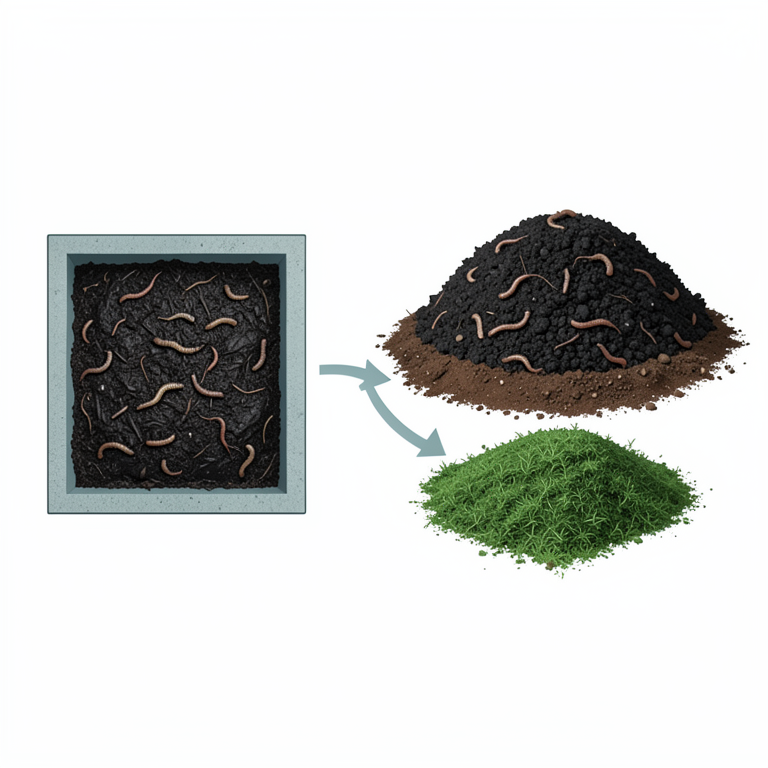
Comparison of Vermicomposting Protocols
AI-generated conceptual illustration (dairy effluent sludge and earthworms). It explains the idea and does not show study data.
View source evidence ↗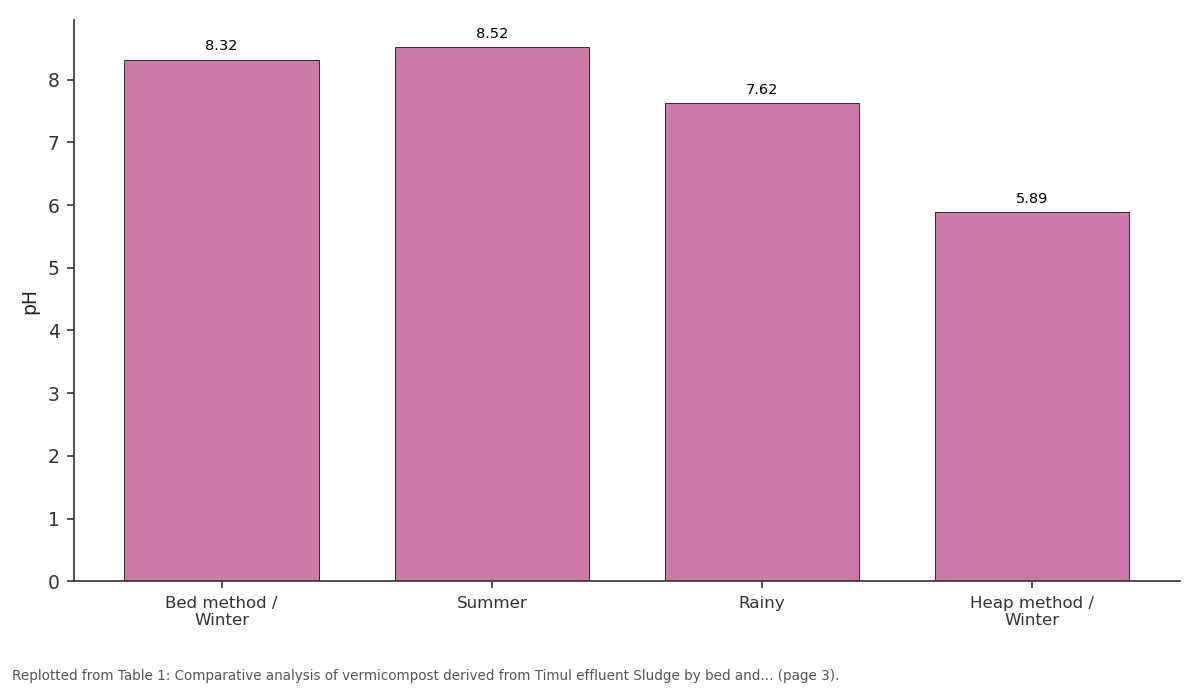
pH: Bed method / Winter vs Summer vs Rainy vs Heap method / Winter
Replotted from Table 1 (page 3) of the original paper. Every bar is the paper's own table value.
View source evidence ↗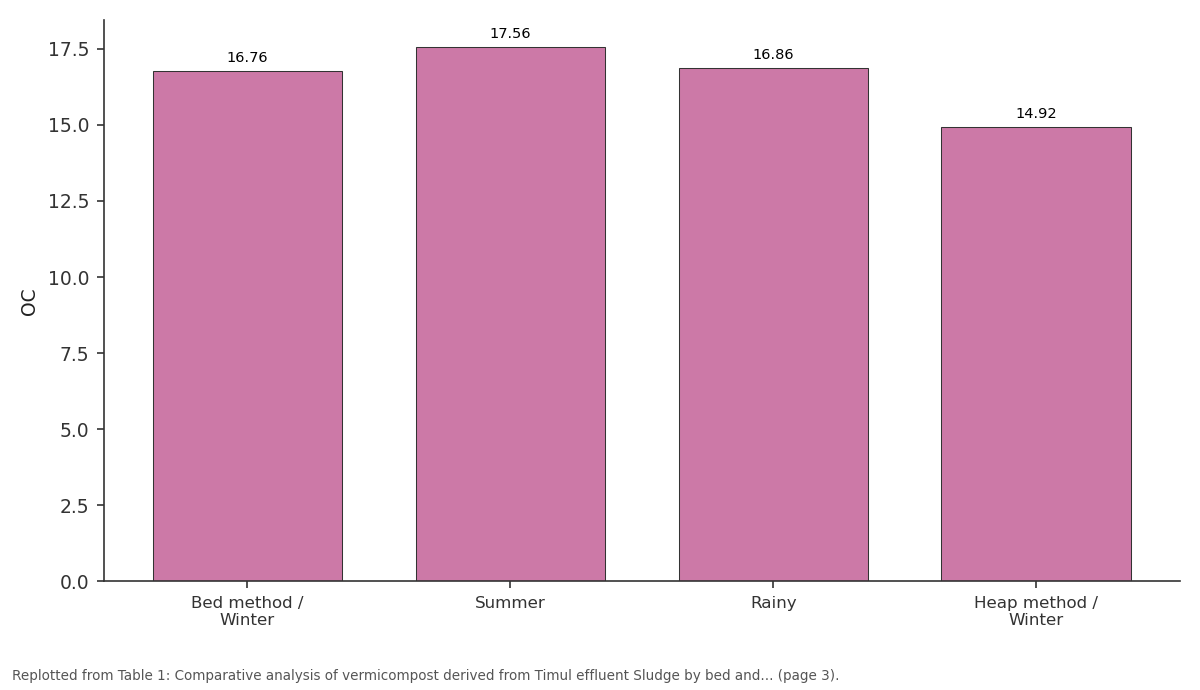
OC: Bed method / Winter vs Summer vs Rainy vs Heap method / Winter
Replotted from Table 1 (page 3) of the original paper. Every bar is the paper's own table value.
View source evidence ↗Figures & tables
From the original paper Table 1
Introduction
Increase in urbanization and per capita income lead to massive generation of municipal wastes (Ahangar et al.2021) [1] . Muzaffarpur generates 170 metric tons of waste on a daily basis with a daily per capita waste generation being approximately 300 gm (MMC, report, 2016). Due to rapid growth of urban population of Muzaffarpur city, a famous town of North Bihar also facing big challenges and problems regarding solid waste management. Changes in lifestyle and food habits of people with increasing income levels has changed the consumption pattern with "use and throw" products becoming an important source of waste generation. So, waste management is mandatory and need urgent action for the persistence and appropriate functioning of societies (Bui et al., 2020) [4] . Demand of milk and milk products are also increasing day by day which leads to dairy industries. In Muzaffarpur Timul dairy is the source to fulfil the demand of milk and milk products. The dairy effluents are also major source of water pollution. Effluents water after treatment can be used for irrigation but their sludges cause soil pollution and air pollution. Landfilling (after stabilization) and Reuse in land reclamation (through composting or vermicomposting) are the two options for treatment of dairy effluent sludges. To deal with these problems the safe and environment sustainable strategies which leads to plant nutrient recovery are composting and vermicomposting (Shrivastava et al.2018, 2020) [15, 16] . Composting process uses microbial decomposition while vermicomposting technology uses combined action of earthworms and microbes for waste stabilization (Suthar et al., 2015; Shrivastava et al., 2020) [24,16] . Earthworms can produce vermicompost through the ingestion of complex organic wastes and excreting simpler forms called as vermicast (Datar, 2006-07; Van Groenigen et al., 2019) [6] . It can accelerate the mineralization of soil. Composting fails to deliver the required amount of macro and micronutrients including the NPK to plants and shorter time while vermicompost retains the macro and micro nutrients for long time (Cardosa Vigueros and Ramírez Camperos, 2002; Sinha et al.2012; Kumar et al. 2018; Sakthika and Sornalaksmi 2019) [13] and have significant population of microbes which are effective plant growth regulator (Tara crescent, 2003) [25] . vermicomposting technology is an eco-friendly and cost-effective technology which is used in treatment of wastes into compost, black gold for farmers, restoring the land at the same time (Suthar, [22] . Vermicompost can enhance soil fertility physically, chemically and microbially (Chatterjee et al., 2023). Physically vermicompost treated soil has better aeration, porosity, bulk density and water holding capacity (Atiyeh et al.2001; Dominguez, 2004) [7] .
Materials and Methods
The current study was conducted in between 2023 to 2024 considering different seasons. The vermicompost bed from different municipal organic solid wastes were prepared at my house in Gobarsahi, Muzaffarpur, Bihar by culturing earthworm, Eisenia fetida species which was procured from the Krishi Vigyan Kendra, Saraiya block, Muzaffarpur, Bihar, is located in India country in the district place category with the gps coordinates of 26.1197 0 N and 85.3910° E. In the current experiment vermicompost was produced by following two protocols such as bed and heap methods based on the findings of Giraddi (2000). The temperature, moisture content, aeration should be maintained for a good quality of vermicompost. The vermicompost produced by these two protocols differ in their physio-chemical characteristics such as pH, EC, total organic Carbon, Nitrogen, Phosphorus and Potassium. And thus, their usefulness as organic fertilizers also differ.
Collection of wastes and pre composting
The Organic municipal wastes (Vegetable wastes, hotel wastes, Fruit wastes, Plant wastes, Temple wastes, saw dust) were collected from Chandwara dumping site in Muzaffarpur. The Sludge of dairy industry was collected from Timul dairy. The different municipal wastes were cut into small pieces and dried in shade for 3 days. The Timul effluent sludge was collected from sludge drying bed of Timul dairy industry. Then, both dried wastes were subjected for pre composting process by making a pile for 15 days. This pile was turned after 7 days to provide aeration and oxidation of organic wastes.
Methods
In the current experiment, Vermicompost was produced by following two protocols such as bed and heap methods. Vermicomposting of wastes by bed method technique, vermicomposting is performed on pucca floor by making a bed of size 5 feet length×2 feet width×3 feet depth (Giraddi, 2000). This method is easy to maintain and to practice. Vermicomposting of wastes on Ground Heaps method, vermicomposting can be done by making heaps on the ground (kaccha floor). The organic wastes are arranged in a Dome shaped heap. The ground heap size may be of 5 feet length x 3 feet width x 2 feet height (Giraddi, 2000).
Experimental set up
This experiment was performed in winter (5 December, 2023-5 February, 2024), summer (5 April, 2024-5 June, 2024), and rainy season (5 July, 2024-5 September, 2024). The experimental set up was placed in a cool, moist and shady place to prevent from direct sunlight, made up of thatch on my residence garden. Vermicomposting was conducted in bed purchased from market. The pre composted wastes and cow dung in a ratio of 60:40 was mixed weighed and an amount of 80-80 kg were put into beds and also made a dome shaped pile on kaccha floor of garden. One Kg healthy and adult epigeic earthworm species Eisenia fetida which was procured from Krishi Vigyan Kendra, Saraiya block, Muzaffarpur, Bihar were released on the upper layer of bed and piles of the wastes.
Water had sprinkled immediately after the release of worms. Beds/ heaps were kept moist by sprinkling of water daily, except on rainy days and by covering with gunny bags. At a regular interval of 15, 30, 45 and 60 days the bed/heap material was turned upside down for proper digestion of organic waste materials and sludges. Sprinkling of water was stopped four days before harvesting. After 60days, when the organic waste turned into granular structure was harvested and sieved gently for further use. Each method was replicated thrice. The finished product is 3/4 th of the raw materials used. The samples were collected and analysed to determine physio-chemical characteristics.
Physio-chemical analysis
To evaluate the possible physiochemical changes that had taken place during vermicomposting by different methods, the sample of harvested vermicompost was examined at Rasayan Bhawan, quality control laboratory, Patna. The pH, electrical conductivity (EC), total organic carbon (TOC) Nitrogen, Phosphorus and Potassium were taken as important parameters required in agricultural process. Before analysis, the vermicompost samples were air-dried and stored in plastic bags. The pH and EC were determined using a double-distilled water suspension of samples by a pH meter and conductivity meter respectively. The total organic matter was determined by calcination 50g of vermicompost at 105 0 c for 6 hours. Again, the sample was taken in clean crucible and kept in muffle furnesh at 650 0 -700 0 c for 6 hours. The TOC was calculated by dividing the TOM by the factor 1.724 following Walkley and Black method. The total Nitrogen was determined by the Kjeldahl technique. The total Phosphorus was by Gravimetric quinoline molybdate method. Potassium was determined by Flame photometric method.
The nutrient content of vermicompost varies with type of Methodology and organic wastes. Mineralization of Nitrogen, Phosphorous and Potassium is taken place in the earthworm's gut after egestion.
Results
The physiochemical parameters of vermicompost prepared from Timul Effluent sludges were analysed under winter, summer and rainy seasons using bed and heap methods of vermicomposting are presented in Table 1. The parameters analysed included pH, Electrical Conductivity (EC), Total Organic Carbon (TOC), Nitrogen(N), Phosphorus(P) and Potassium(K).
| — | Bed method | — | — | Heap method | — | — |
|---|---|---|---|---|---|---|
| Parameters | Winter | Summer | Rainy | Winter | Summer | Rainy |
| pH | 8.32 | 8.52 | 7.62 | 5.89 | 6.03 | 6.01 |
| EC | 0.563 | 0.569 | 0.562 | 0.623 | 0.648 | 0.626 |
| OC | 16.76 | 17.56 | 16.86 | 14.92 | 14.78 | 14.88 |
| Nitrogen | 1.32 | 1.53 | 1.43 | 1.43 | 1.48 | 1.58 |
| Phosphorus | 0.578 | 0.609 | 0.587 | 0.438 | 0.447 | 0.446 |
| Potassium | 0.86 | 1.03 | 1.02 | 0.72 | 0.69 | 0.71 |
Table text extracted from the original PDF; superscript letters are shown inline. The original table image is below.
View original table image
pH
The bed method recorded higher pH values than heap method in all the seasons. The pH was highest (8.52) during Summer season in the bed method of vermicomposting, while it was lowest (5.89) during winter season in heap method. The alkaline nature of vermicompost during summer may be due to enhanced microbial degradation and mineralization of organic matter whereas, the heap method produced slightly acidic vermicompost which may be due to accumulation of organic acids. Similar findings were reported by Suthar (2009) [21] whose observation was neutral to slightly alkaline pH due to earthworm mediated mineralization.
Electrical Conductivity (EC)
The Electrical conductivity varied between 0.562 and 0.648dSm -1 . The heap method recorded slightly higher EC than bed methods across all seasons, which indicates that there was greater accumulation of soluble salts during decomposition. Similar findings were reported by Edwards and Arancon (2004) [8] , who suggested that increased EC is due to release of mineral nutrients during vermicomposting.
Total Organic Carbon (TOC)
The TOC was higher in bed method than in heap method.
The highest organic carbon (17.56%) was observed during Summer season in bed method, whereas the lowest value (14.78%) was recorded in heap method during Summer season. These findings were found similarity with those of Garg et al. (2006) [9] .
Nitrogen (N)
The Nitrogen content ranged from 1.32% to 1.58%. The highest nitrogen percentage (1.58%) was observed in the heap method during Rainy season, while the lowest (1.32%) was recorded in the bed method during winter. The nitrogen concentration was increased due to microbial enrichment and concentration effects caused due to carbon loss during decomposition. Tripathi and Bhardwaj (2004) [26] had reported similar findings.
Phosphorus (P)
Phosphorus concentration was considerably higher in the bed method (0.578-0.609%) as compared to the heap method (0.438-0.447%). The highest phosphorus percentage (0.609%) was observed during summer season in the bed method which may be due to Earthworm activity which enhances phosphorus concentration through microbial action and phosphatase enzyme activity, converting insoluble phosphorus into plant-available forms. Lazcano et al. (2008) [12] had reported similar results.
Potassium (K)
Potassium content ranged from 0.69% to 1.03%, with the highest value recorded during summer season in the bed method. Increased potassium availability may result from microbial decomposition and the release of potassium from organic residues. These findings confirmed with the observations of Sinha et al. (2010) [19] , who reported significant enrichment of potassium in Vermicompost produced from organic wastes. Overall, we can say that, the bed method produced vermicompost with higher organic carbon, phosphorus, and potassium contents across all seasons, while the heap method exhibited slightly higher electrical conductivity and nitrogen content in some cases. Among the seasons studied, summer season found to be the most favourable for vermicomposting, yielding the highest nutrient concentrations. The results suggest that the bed method is more efficient for producing nutrient-rich vermicompost from Timul effluent sludge and can be recommended for sustainable waste management and agricultural applications. [8] , Tripathi and Bhardwaj (2004) [26] , Garg et al. (2006) [9] , Lazcano et al.
(2008) [12] , Suthar (2009) [21] and Sinha et al. (2010) [19] , who reported that below ground structures prepared for the above ground structures prepared for vermicomposting are superior to those prepared for vermicomposting are superior to those prepared for the above ground structures. The reason behind this may be, in outdoor conditions, the bed retain moisture to an optimum level constantly, whereas, heap lose moisture Fastly. As India has sub-tropical climatic conditions in which temperature fluctuations in winter and summer seasons are wide. In the bed method of Vermicomposting temperature conditions were more favourable because of better insulation against alteration in the atmospheric temperature. This property favours better growth and reproduction of earthworm Eisenia fetida in comparison to heap method. Our observations in rainy season do not correlate with above authors. This may be due to higher moisture level during rainy season. In rainy season higher moisture level may cause death of Eisenia fetida because the worm prefers a moisture level between 65-70%. But, heap method of vermicomposting provides better result in rainy season than winter and summer as heaps were more congenial than bed method.
Conclusion
The nutrient profiling of vermicompost obtained from two different methods of vermicomposting reveals that Summer and winter are better for bed method of vermicomposting, while the rainy season is more suitable for heap method using Eisenia fetida. The one produced through heap method had more Nitrogen than that obtained through bed method but, the pH was acidic in case of heap method. Since acidic pH may lead to soil degradation, though having lesser Nitrogen content in case of bed method, appears more useful.
Financial support
This research was self-funded.
References
27 in the original paper- Ahangar SS, Sadati A, Rabbani M. Sustainable design of a municipal solid waste management system in an integrated closed loop supply chain network using a fuzzy approach: a case study. Journal of Industrial and Production Engineering. 2021;38(6):1-18.
- Anderson JM, Ingram JS. Soil organic matter and organic carbon. In: Tropical Soil Biology and Fertility: A Handbook of Methods. 2nd ed. Oxford: CAB International; 1993. p. 62-80.
- Arancon NQ, Edwards CA, Babenko A, Cannon J, Galvis P, Metzger JD. Influences of vermicompost, produced by earthworms and microorganisms from cattle manure, food waste and paper waste, on the germination, growth and flowering of petunias in the greenhouse. Applied Soil Ecology. 2008;39:91-99.
- Bui TD, et al. Identifying sustainable solid waste management barriers in practice using the fuzzy Delphi method. Resources, Conservation and Recycling. 2020.
- Chatterjee R, Mishra S. Vermicompost and soil health. In: Soil Health. 2020. p. 69-88.
- Datar MT, More AB. Vermicomposting: a technological option for solid waste management. 2007. p. 3.
- Dominguez J. State of the art and new perspectives on vermicomposting research. In: Edwards CA, editor. Earthworm Ecology. Boca Raton: CRC Press; 2004. p. 401-424.
- Edwards CA, Arancon NQ. The Use of Earthworms in the Breakdown and Management of Organic Wastes. Boca Raton: CRC Press; 2004.
- Garg P, Gupta A, Satya S. Vermicomposting of different types of waste using Eisenia foetida. Bioresource Technology. 2006;97(3):391-395.
- Ismail SA. Vermicology: The Biology of Earthworms. Chennai: Orient Longman; 1997. p. 92.
- Jackson M. Soil Chemical Analysis. London: Constable; 1982.
- Lazcano C, Gómez-Brandón M, Domínguez J. Comparison of the effectiveness of composting and vermicomposting for stabilization of organic matter. Chemosphere. 2008;72(7):1013-1019.
- Cardosa Vigueros L, Ramírez Camperos E. Vermicomposting of sewage sludge: a new technology for Mexico. Water Science and Technology. 2002;46(10):153-158.
- Stokkermans L, Vos HMJ, Lubbers IM. How fertile are earthworm casts? A meta-analysis. 2019.
- Srivastava V, Gupta SK, Singh P, Sharma B, Singh RP. Biochemical, physiological, and yield responses of lady's finger (Abelmoschus esculentus L.) grown on varying ratios of municipal solid waste vermicompost. International Journal of Recycling of Organic Waste in Agriculture. 2018;7(3):241-250.
- Srivastava V, Goel G, Thakur VK, Singh RP, de Araujo ASF, Singh P. Analysis and advanced characterization of municipal solid waste vermicompost maturity for a green environment. Journal of Environmental Management. 2020;255:109914.
- Sinha RK, Herat S, Agarwal S, Asadi R, Carretero E. Vermiculture technology for environmental management: study of action of earthworms Eisenia fetida, Eudrilus eugeniae and Perionyx excavatus on biodegradation of some community wastes in India and Australia. Environmentalist. 2002;22:261-268.
- Sinha RK, Herat S, Valani DB. Earthworms: the unheralded soldiers of mankind and farmer's friend working day and night under the soil: reviving the dreams of Sir Charles Darwin for promoting sustainable agriculture. American-Eurasian Journal of Agricultural and Environmental Sciences. 2009;5(Suppl):1-55.
- Sinha RK, Herat S, Bharambe G, Patil K. Vermiculture and sustainable agriculture. American-Eurasian Journal of Agricultural and Environmental Sciences. 2010;5(1):1-55.
- Sinha RK, Agarwal S, Chauhan K, Valani D. The wonders of earthworms and its vermicompost in farm production: Charles Darwin's friends of farmers, with potential to replace destructive chemical fertilizers from agriculture. 2010;(2):76-94.
- Suthar S. Vermicomposting of vegetable-market solid waste using Eisenia fetida: impact on nutrient quality of compost. Bioresource Technology. 2009;100(20):53055310.
- Suthar S. Recycling of agroindustrial sludge through vermitechnology. Ecological Engineering. 2010;36(8):1028-1036.
- Suthar S, Mutiyar PK, Singh S. Vermicomposting of milk processing industry sludge spiked with plant wastes. Bioresource Technology. 2012;116:214-219.
- Suthar S, Kumar K, Mutiyar PK. Nutrient recovery from compostable fractions of municipal solid wastes using vermitechnology. Journal of Material Cycles and Waste Management. 2015;17(1):174-184.
- Tara Crescent. Vermicomposting. Development Alternatives Sustainable Livelihoods; 2003.
- Tripathi G, Bhardwaj P. Comparative studies on biomass production, life cycles and composting efficiency of earthworms. Bioresource Technology. 2004;92(3):275-283.
- Walkley A, Black IA. Determination of organic carbon in soil. Soil Science. 1934;37:29-31.