
Research article · 2026 · Full text
International Journal of Advanced Chemistry ResearchGreen-synthesized metal and metal oxide nanoparticles for environmental remediation: Applications, challenges and future perspectives
Volume 8(8) · Pages 58–63 · DOI: 10.33545/26646781.2026.v8.i8a.733 ↗
Research areasNanoparticles: synthesis and applicationsEnvironmental remediation with nanomaterialsAdsorption and biosorption for pollutant removal
Abstract
Author-writtenEnvironmental pollution caused by industrialization, urbanization, intensive agriculture and increasing consumption of synthetic chemicals has created serious challenges for the protection of water, soil and ecosystems. Heavy metals, synthetic dyes, pesticides, pharmaceuticals, antibiotics, phenolic compounds and other emerging contaminants can persist in environmental matrices and may adversely affect aquatic organisms, terrestrial ecosystems and human health. Conventional remediation technologies such as coagulation, precipitation, adsorption, membrane filtration and advanced oxidation processes can be effective, but their performance may be limited by high energy or chemical requirements, secondary waste generation, operational costs and difficulties in treating complex contaminant mixtures. Green nanotechnology has emerged as an interdisciplinary approach for developing more sustainable remediation materials. In particular, green synthesis of metal and metal-oxide nanoparticles using plant extracts, microorganisms, enzymes, biomolecules and agricultural or food-processing wastes offers an alternative to conventional physical and chemical synthesis routes. Biological compounds such as polyphenols, flavonoids, terpenoids, proteins, sugars and organic acids can participate in the reduction of metal ions and stabilization of the resulting nanoparticles. The resulting nanomaterials may exhibit high surface area, tunable surface chemistry, adsorption capacity, catalytic activity, antimicrobial properties and photocatalytic performance. This paper provides a comprehensive overview of the principles of green synthesis, biological sources, synthesis mechanisms, for environmentally relevant nanoparticles. The environmental applications of silver, gold, copper/copper oxide, iron/iron oxide, zinc oxide and titanium dioxide nanoparticles are discussed with emphasis on adsorption, heavy-metal removal, pesticide transformation, pharmaceutical degradation and microbial control. Green-synthesized nanoparticles have considerable potential to contribute to sustainable environmental remediation, but their successful translation from laboratory studies to practical applications requires simultaneous consideration of performance, safety, recoverability, cost and life-cycle environmental impacts.
Summary
Source-checkedPlain-language reading of the full paper, prepared with AI and checked against the text. Each point links to the authors' own words.
Why it matters
- Industrialization, urbanization, and intensive agriculture have led to environmental pollution that threatens water, soil, and ecosystems. View evidence ↗
- Traditional remediation methods, while effective, often suffer from high costs, high energy needs, and the production of secondary waste. View evidence ↗
- Standard nanoparticle synthesis is often problematic because it relies on hazardous chemicals or high energy consumption. View evidence ↗
The question
- The paper aims to provide a comprehensive overview of the principles, biological sources, and mechanisms of green synthesis for nanoparticles used in environmental remediation. View evidence ↗
What they did
- Green synthesis utilizes biological resources, including plant extracts, microorganisms, enzymes, and food-processing wastes, as alternatives to chemical synthesis. View evidence ↗
- The general procedure for plant-mediated synthesis involves preparing a plant extract and mixing it with a metal salt solution to reduce metal ions into nanoparticles. View evidence ↗
What they found
- Green-synthesized silver nanoparticles (AgNPs) are effective for sensing pollutants, treating microbes, and degrading dyes via photocatalysis. View evidence ↗
- Magnetic iron oxide nanoparticles allow for easier recovery from treated water using external magnetic fields. View evidence ↗
- Zinc oxide (ZnO) nanoparticles act as photocatalysts to break down antibiotics, pesticides, and phenolic compounds. View evidence ↗
- Titanium dioxide (TiO₂) is a stable semiconductor photocatalyst used to degrade organic pollutants like pharmaceuticals and dyes. View evidence ↗
- Green-synthesized nanomaterials provide high surface areas and tunable chemistry, which enhances their adsorption and catalytic capabilities. View evidence ↗
- Silver, copper, and certain metal-oxide nanoparticles can control harmful microorganisms by damaging cell membranes and creating oxidative stress. View evidence ↗
What it means
- The authors conclude that green nanotechnology is a key part of a broader transition toward circular chemistry and sustainable environmental remediation. View evidence ↗
- A significant limitation is the potential for nanotoxicity and ecological risk, which requires a 'safe-by-design' approach. View evidence ↗
- The authors note that batch variability in biological extracts can lead to poor reproducibility of the nanoparticles. View evidence ↗
Visual summary
2 visualsIllustrations explain the paper; they do not show study data.
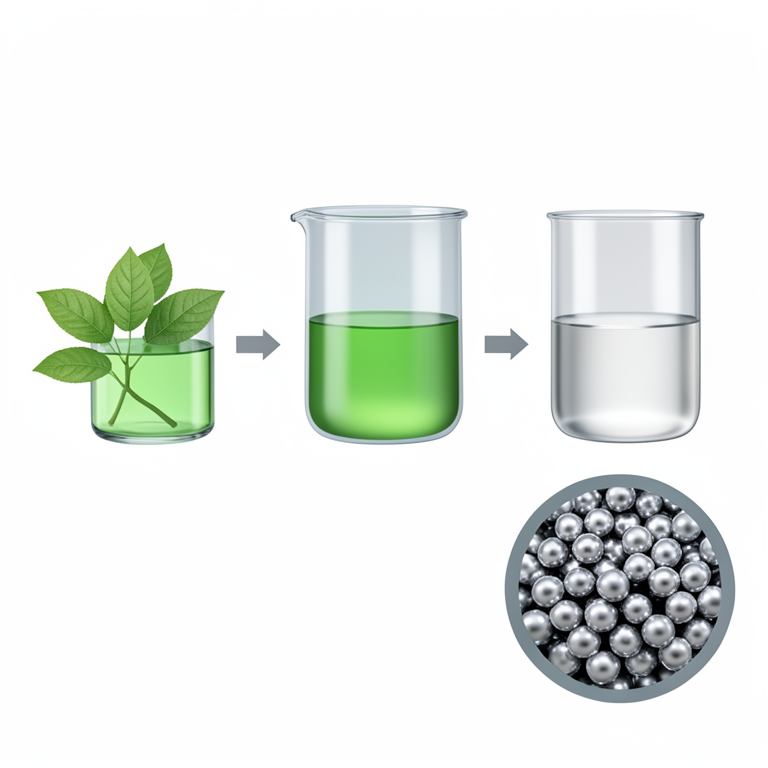
Plant-Mediated Synthesis Workflow
AI-generated conceptual illustration (green leaves, a glass beaker, and metallic nanoparticles). It explains the idea and does not show study data.
View source evidence ↗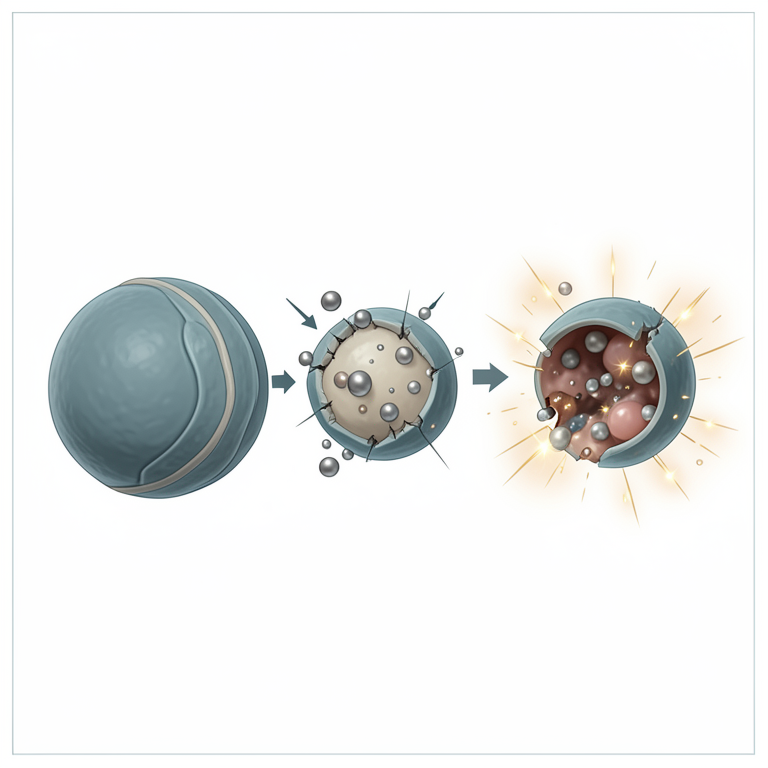
Antimicrobial Mechanism
AI-generated conceptual illustration (metal oxide nanoparticles and a bacterial cell). It explains the idea and does not show study data.
View source evidence ↗Introduction
Environmental contamination is one of the major challenges confronting modern societies. Industrial wastewater, agricultural runoff, municipal sewage, mining operations, pharmaceutical manufacturing, textile industries and improper waste disposal introduce diverse contaminants into water and soil. Conventional contaminants such as heavy metals, dyes, pesticides and petroleum-derived compounds are now accompanied by emerging contaminants including pharmaceuticals, antibiotics, personal-care products, endocrinedisrupting chemicals, antibiotic-resistance determinants and microplastics. The increasing occurrence of pharmaceuticals and other trace contaminants in water has stimulated interest in advanced treatment technologies. The World Health Organization has recognized pharmaceuticals in water as an issue requiring attention within broader water-safety management, while microplastics have also become an important research and monitoring concern.
Conventional remediation technologies include adsorption, coagulation-flocculation, chemical precipitation, biological treatment, membrane filtration, ion exchange and advanced oxidation processes. Although these approaches remain important, no single technology is universally effective against all pollutant classes. In particular, highly persistent or chemically complex contaminants can require additional treatment steps. Nanotechnology offers new opportunities because nanomaterials possess high surface-to-volume ratios and tunable surface chemistry. These properties can improve adsorption, catalytic transformation, photocatalysis, sensing and microbial inactivation. Recent reviews have emphasized the growing role of nanoparticles in wastewater treatment and environmental remediation. However, conventional nanoparticle synthesis frequently uses reducing agents, solvents and stabilizers that may themselves be hazardous or environmentally undesirable. Physical methods may also require substantial energy. Green synthesis seeks to address these limitations by incorporating biological resources and relatively mild reaction conditions. Recent reviews identify plants, microorganisms and agricultural wastes as important resources for green nanomaterial synthesis. Therefore, green synthesis of metal nanoparticles represents an important convergence of green chemistry, nanotechnology, environmental science and biotechnology.
Green Nanotechnology and Environmental Sustainability
Green nanotechnology aims to develop nanomaterials and nanomanufacturing processes that minimize hazardous substances, energy consumption and environmental impacts while maintaining useful functionality. In nanoparticle synthesis, the term "green" may refer to:
• Use of renewable biological materials.
• Reduction or elimination of hazardous reducing agents.
• Use of water or other relatively benign solvents.
• Lower reaction temperatures and pressures.
• Reduced energy consumption.
• Utilization of agricultural and food-processing wastes.
• Reduction of synthesis by-products.
• Development of reusable remediation materials.
• Integration with circular-economy principles.
Plant-mediated nanoparticle synthesis has received substantial attention because phytochemicals can perform multiple roles during nanoparticle formation. Recent studies and reviews indicate that plant extracts containing phenolics, flavonoids, terpenoids and other compounds can act as reducing and stabilizing systems. However, green synthesis should not automatically be equated with complete environmental safety. The nanoparticle itself may exhibit biological activity or toxicity after release into an ecosystem. Consequently, sustainable nanotechnology requires evaluation of the entire life cycle, including rawmaterial sourcing, synthesis, application, recovery, regeneration and disposal.
3.
Environmental Pollutants Targeted by Nanotechnology Green-synthesized nanoparticles have been widely investigated for the treatment and removal of different types of environmental pollutants. Synthetic dyes are common contaminants released from textile, printing, paper, leather, and other industries. Examples include methylene blue, crystal violet, rhodamine B, methyl orange, Congo red, and malachite green. These dyes can persist in water, reduce light penetration, and negatively affect aquatic ecosystems. Heavy metals such as Pb (II), Cd (II), Hg (II), Cr (VI), As (III)/As(V), Cu (II), and Ni (II) are also important environmental contaminants. Unlike organic pollutants, heavy metals cannot be destroyed by degradation; therefore, their removal generally depends on processes such as adsorption, precipitation, immobilization, separation, or chemical transformation. Pesticides from agricultural activities can enter surface water and groundwater through runoff and leaching, and their persistence depends on their chemical structure and environmental conditions. Pharmaceutical contaminants, including antibiotics, analgesics, anti-inflammatory drugs, and hormones, may occur in water at low concentrations and can still affect aquatic organisms because of their biological activity. Phenolic and aromatic compounds released from industrial activities can also contaminate water and may be toxic even at low concentrations. In addition, nanoparticles with antimicrobial properties can be used to control bacteria and other harmful microorganisms in water-treatment systems. Microplastics are another important emerging contaminant because they are persistent and can also carry or interact with other pollutants. Therefore, green-synthesized nanoparticles have considerable potential for addressing a wide range of conventional and emerging environmental contaminants.
Metal Nanoparticles for Environmental Remediation 4.1 Silver Nanoparticles
Silver nanoparticles (AgNPs) are among the most widely studied green-synthesized nanomaterials because of their unique optical, catalytic, and antimicrobial properties. Their high surface area and surface plasmon resonance make them useful for various environmental applications. Plantmediated AgNPs have been investigated for photocatalytic degradation of dyes, antimicrobial treatment, pollutant detection, and environmental sensing. The properties of AgNPs can be influenced by factors such as the type of plant extract, extract concentration, pH, temperature, and reaction time. However, the release of silver nanoparticles or silver ions into the environment may affect aquatic organisms and beneficial microorganisms. Therefore, proper recovery, immobilization, and safe handling of AgNPs are important for their sustainable environmental use.
Gold Nanoparticles
Gold nanoparticles (AuNPs) have unique optical and catalytic properties that make them useful for environmental applications. They can be used for heavy-metal detection, pesticide sensing, catalytic reduction, biosensing, and pollutant monitoring. Their excellent surface properties and ability to interact with different chemical species make them particularly useful for environmental sensing and catalytic applications. However, the relatively high cost of gold may limit the large-scale use of AuNPs for direct pollutant removal. Therefore, their major potential lies in sensitive detection, monitoring, and specialized catalytic applications.
Copper and Copper Oxide Nanoparticles
Copper (Cu) and copper oxide (CuO) nanoparticles are attractive materials for environmental applications because copper is relatively abundant and less expensive than precious metals such as gold and silver. Green-synthesized Cu and CuO nanoparticles have been investigated for photocatalytic degradation, antimicrobial treatment, catalytic reduction, adsorption, and wastewater treatment. Their surface properties and catalytic activity allow them to interact with and remove different pollutants from water. However, further studies are needed to understand their long-term stability, toxicity, treatment mechanisms, and performance under real environmental conditions.
Iron and Iron Oxide Nanoparticles
Iron-based nanoparticles are particularly important in environmental remediation because of their adsorption, catalytic, redox, and magnetic properties. Zero-valent iron nanoparticles can participate in reduction reactions, while iron oxide nanoparticles provide active surface sites for adsorption and catalytic reactions. They have been investigated for the removal of Cr(VI), arsenic, heavy metals, organic pollutants, petroleum contaminants, and groundwater pollutants. Some iron oxide nanoparticles can also be made magnetic, allowing them to be easily separated from treated water using an external magnetic field. These properties make iron-based nanomaterials promising candidates for developing recoverable and reusable remediation systems.
Zinc Oxide Nanoparticles
Zinc oxide (ZnO) nanoparticles are semiconductor materials with useful photocatalytic and antimicrobial properties. They have been investigated for the degradation of various environmental pollutants, including dyes, antibiotics, pharmaceutical compounds, pesticides, and phenolic compounds. When ZnO absorbs suitable light energy, electron-hole pairs are generated. These charge carriers participate in oxidation and reduction reactions and produce reactive species that can attack and break down organic pollutants. Thus, ZnO nanoparticles are promising photocatalysts for wastewater treatment.
Titanium Dioxide Nanoparticles
Titanium dioxide (TiO₂) is one of the most widely studied semiconductor photocatalysts because of its chemical stability, relatively low toxicity, and strong photocatalytic activity. It can be used for the degradation of dyes, pharmaceuticals, pesticides, and other organic pollutants. When TiO₂ absorbs suitable light, electron-hole pairs are generated:
The generated electrons and holes participate in reactions that produce reactive oxygen species. For example:
O₂ + e⁻ → O₂•⁻ H₂O + h⁺ → •OH + H⁺
The resulting reactive species, particularly hydroxyl radicals and superoxide radicals, can attack organic pollutants and convert them into smaller and less harmful compounds. Ideally, complete degradation results in CO₂, H₂O, and inorganic ions:
Organic pollutant + ROS → degradation intermediates → CO₂ + H₂O + inorganic ions
The actual degradation pathway depends on the chemical structure of the pollutant, light source, pH, catalyst concentration, and other experimental conditions. Green synthesis of TiO₂ nanoparticles using plant extracts and other biological materials can further improve the sustainability of their preparation and environmental applications.
Biological Sources for Green Synthesis
Biological sources play an important role in the green synthesis of metal and metal oxide nanoparticles because they provide naturally occurring biomolecules that can act as reducing, stabilizing, and capping agents. Among the various biological resources, plant extracts are particularly attractive due to their rich diversity of phytochemicals, including polyphenols, flavonoids, terpenoids, alkaloids, proteins, sugars, tannins, and organic acids. A wide variety of plant materials have been investigated for nanoparticle synthesis, including neem, tulsi, turmeric, tea, eucalyptus, Aloe vera, citrus species, banana peel, pomegranate peel, and other plant-derived materials. These phytochemicals can facilitate the reduction of metal ions and stabilize the newly formed nanoparticles, thereby influencing their size, morphology, surface chemistry, and stability. Plantmediated synthesis is relatively simple, economical, and environmentally friendly, making it particularly suitable for the preparation of nanoparticles for environmental remediation and other applications. Bacteria represent another important biological source for nanoparticle synthesis. Bacterial cells can produce nanoparticles either intracellularly or extracellularly through enzymatic and metabolic processes. Microbial enzymes, proteins, peptides, and other metabolites can participate in the reduction of metal ions and stabilization of the resulting nanoparticles. Extracellular synthesis is particularly advantageous because nanoparticles can be recovered more easily from the reaction medium. However, maintaining controlled microbial growth conditions and achieving consistent nanoparticle characteristics can be challenging during large-scale production. Fungi are also effective biological systems for nanoparticle synthesis because they produce a wide range of extracellular enzymes, proteins, organic acids, and secondary metabolites. These biomolecules can reduce metal ions and stabilize the nanoparticles, while extracellular synthesis facilitates nanoparticle recovery. Fungal-mediated synthesis has been investigated for the production of several metal and metal oxide nanoparticles and offers potential advantages in terms of scalability and biological activity. Algae constitute another promising biological resource because algal biomass contains polysaccharides, proteins, pigments, polyphenols, amino acids, and other bioactive compounds. These biomolecules can participate in the reduction and stabilization of metal nanoparticles. Algae are particularly attractive from a sustainability perspective because many species grow rapidly and can be cultivated using relatively limited resources. Algal biomass and algalderived materials therefore have potential for developing environmentally compatible nanoparticle synthesis processes.
Agricultural and food wastes have recently gained considerable attention as sustainable precursors for nanoparticle synthesis. Fruit peels, tea waste, coffee residues, vegetable waste, rice husk, crop residues, and other biomass wastes contain valuable phytochemicals and functional groups that can act as reducing and capping agents. Their utilization provides a dual environmental benefit by combining waste reduction with nanoparticle production. Instead of treating agricultural and food residues as unwanted waste, they can be converted into value-added nanomaterials for environmental applications such as wastewater treatment, pollutant degradation, heavy-metal removal, and antimicrobial treatment. This approach is particularly relevant to the principles of circular economy and green chemistry, as it promotes resource recovery and minimizes waste generation. Consequently, plant biomass, microorganisms, algae, and waste-derived biological resources provide versatile and sustainable platforms for the production of functional nanoparticles with potential applications in environmental remediation.
Mechanism of Plant-Mediated Nanoparticle Synthesis
Plant-mediated nanoparticle synthesis mainly occurs through reduction, nucleation, growth, and stabilization processes. First, the phytochemicals present in the plant extract reduce metal ions to their elemental form. For example, in the synthesis of silver nanoparticles, silver ions are reduced according to the reaction Ag⁺ + e⁻ → Ag⁰. The reduced metal atoms then come together to form small clusters called nuclei. These nuclei gradually grow to form nanoparticles. At the same time, phytochemicals such as phenolics, flavonoids, proteins, and other biomolecules attach to the nanoparticle surface and act as capping and stabilizing agents, preventing excessive aggregation. Thus, the overall process can be simply represented as metal precursor + plant biomolecules → reduced metal atoms → nucleation → nanoparticle growth → stabilized nanoparticles. The exact mechanism depends on the type and concentration of phytochemicals present in the selected plant extract and the reaction conditions.
General Procedure for Plant-Mediated Green Synthesis
Plant-mediated green synthesis of nanoparticles is a simple and environmentally friendly process. First, the selected plant material or biomass is collected, cleaned, and washed properly to remove dust and impurities. The plant material is then used to prepare an extract, usually with water or another suitable solvent. A suitable metal salt solution is prepared at the required concentration and mixed with the plant extract under controlled conditions. The phytochemicals present in the extract reduce the metal ions and help in the formation and stabilization of nanoparticles. Nanoparticle formation can often be observed through a change in colour or optical properties. The formed nanoparticles are then separated by centrifugation, filtration, or magnetic separation, depending on their properties. The separated nanoparticles are washed several times to remove unwanted or unbound plant compounds. Finally, the nanoparticles are dried to obtain a powder or dispersed in a suitable medium for further characterization and environmental applications. The nanoparticles can be dried for solid-state characterization or dispersed for application studies.
Environmental Remediation Mechanisms
Green-synthesized nanoparticles can remove environmental pollutants through several mechanisms. Adsorption is one of the most common mechanisms, in which pollutants attach to the nanoparticle surface through electrostatic attraction, hydrogen bonding, π-π interactions, van der Waals forces, and surface complexation. In catalytic reduction, nanoparticles facilitate electron-transfer reactions and convert pollutants into less harmful forms. Oxidation occurs when reactive oxygen species (ROS), such as hydroxyl radicals and superoxide radicals, react with and break down organic pollutants. In photocatalysis, semiconductor nanoparticles absorb light and generate electron-hole pairs, which produce reactive species capable of degrading organic contaminants. Some metal nanoparticles also show antimicrobial activity by damaging microbial cell membranes and generating oxidative stress, thereby helping to control harmful microorganisms in contaminated water. Magnetic separation is another useful mechanism in which magnetic nanoparticles can be easily recovered from treated water using an external magnetic field. In many cases, two or more of these mechanisms may occur simultaneously, resulting in improved pollutant removal and overall remediation efficiency.
Applications of Nano Particles
Green-synthesized nanoparticles can remove contaminants through several mechanisms.
Removal of Synthetic Dyes
Dyes are commonly used as model pollutants to evaluate the environmental remediation ability of nanoparticles. Greensynthesized nanoparticles can remove dyes through different processes such as adsorption, electron transfer, oxidation, reduction, and further degradation. In photocatalytic treatment, the photocatalyst absorbs light and produces reactive species that break down dye molecules into smaller compounds and, ideally, into harmless products such as carbon dioxide and water. A decrease in the UV-Visible absorption peak indicates that the dye concentration has decreased, but it does not always prove complete degradation. Therefore, techniques such as total organic carbon (TOC) analysis and chromatographic methods can be used to confirm mineralization and identify degradation products. Dye degradation through photocatalysis remains an important environmental application of greensynthesized nanoparticles.
Heavy-Metal Removal
Heavy metals require special treatment because they cannot be destroyed by ordinary chemical degradation. Greensynthesized nanoparticles can help remove heavy metals through different mechanisms such as adsorption, reduction, surface precipitation, and complexation. In adsorption, metal ions attach to the surface of nanoparticles, while in reduction, toxic metal ions may be converted into less toxic or less mobile forms. For example, Cr(VI) can be reduced to Cr(III) under suitable conditions. Surface precipitation occurs when metal-containing compounds form on the nanoparticle surface, whereas complexation involves the binding of metal ions with functional groups present on the nanoparticle surface. Iron and iron-oxide nanoparticles are particularly useful for heavy-metal remediation because of their strong adsorption and redox properties.
Pesticide Degradation
Green-synthesized semiconductor nanoparticles can help remove pesticides from contaminated water through photocatalytic oxidation. When the photocatalyst absorbs light, it produces reactive species that break down pesticide molecules into smaller compounds and, ideally, finally into harmless products such as carbon dioxide and water. The process can be represented as Pesticide + light + photocatalyst → reactive intermediates → smaller products → mineralization. To confirm effective pesticide treatment, it is important to identify the degradation products, evaluate their toxicity, measure the extent of mineralization, and test the process using real water samples. The recovery and reuse of the photocatalyst should also be studied to improve the sustainability of the treatment process. Simply observing a decrease in the original pesticide concentration does not necessarily mean that the pesticide has been completely detoxified.
Pharmaceutical and Antibiotic Removal
Pharmaceutical contaminants are often difficult to remove from water because of their complex chemical structures and biological activity. Green-synthesized nanoparticles can help remove these pollutants through adsorption, photocatalysis, catalytic oxidation, reduction, and combined treatment processes. Antibiotics require special attention because incomplete degradation may produce transformation products that can still have biological effects and may contribute to antimicrobial-resistance-related concerns. Therefore, effective treatment should include not only the removal of the original pharmaceutical compound but also the identification and evaluation of its degradation products. Proper management of both chemical and microbial contaminants is important for ensuring the safety and quality of water.
Antimicrobial Applications
Silver (Ag), copper (Cu), and some metal-oxide nanoparticles possess strong antimicrobial properties and can be used to control harmful microorganisms in contaminated water. They can act by attaching to microbial cell surfaces, damaging cell membranes, producing reactive oxygen species, releasing metal ions, and interacting with proteins and other cellular components. These effects can disturb normal cellular metabolism and may also damage genetic material, leading to the inhibition or death of microorganisms. However, nanoparticles that are effective against harmful microorganisms may also affect beneficial microorganisms present in the environment. Therefore, their environmental application should involve careful control of nanoparticle concentration, evaluation of toxicity, and proper ecotoxicological assessment to ensure safe and effective treatment. 9.6. Nanoparticles for Microplastic-Related Remediation Microplastics are different from soluble organic pollutants because they are small solid particles made of polymeric materials. Conventional water-treatment methods such as coagulation, sedimentation, and filtration can remove a significant amount of microplastics from water. Nanotechnology can further improve their removal through surface modification, enhanced membranes, adsorption of pollutants attached to microplastics, photocatalytic treatment, and nanocomposite filtration materials. However, it is important to distinguish between the physical removal of microplastics from water and their actual degradation into smaller molecules or complete mineralization. Therefore, future research should focus on developing efficient, safe, and recoverable nanomaterials that can not only remove microplastics but also minimize the formation of harmful degradation products.
Nanocomposites for Enhanced Remediation
Combining nanoparticles with suitable supporting materials can improve their stability, efficiency, and recovery during environmental remediation. Common supporting materials include biochar, activated carbon, cellulose, silica, clay, graphene-based materials, chitosan, and polymeric membranes.
For example, combining magnetic nanoparticles with biochar can produce a recoverable adsorptive nanocomposite that can be easily separated from treated water using a magnetic field. These nanocomposites can also reduce nanoparticle aggregation and provide more active sites for pollutant removal. Therefore, supported nanoparticles are promising materials for developing efficient and reusable environmental remediation systems.
Recovery and Reusability
Recovery and reuse of nanoparticles are important for making environmental remediation processes more economical and sustainable. Nanoparticles can be recovered using methods such as magnetic separation, membrane filtration, sedimentation, centrifugation, and immobilization. After recovery, their performance should be tested over several treatment cycles. Important parameters include pollutant-removal efficiency, structural stability, surface properties, metal leaching, particle size, and catalytic activity. A nanoparticle that provides high pollutant removal but cannot be recovered or reused may have limited practical value. Therefore, the development of stable, recoverable, and reusable nanomaterials is essential for sustainable environmental applications.
Future Perspectives
The future of green nanoparticle-based environmental remediation is expected to focus on multifunctional, sustainable, and integrated treatment systems. Greater use of food, agricultural, and industrial wastes for nanoparticle production can help reduce waste and improve resource utilization. Magnetic nanocomposites can make nanoparticle recovery easier, while immobilized catalysts can reduce nanoparticle release and improve their reusability. Solardriven photocatalysis can provide an energy-efficient approach for pollutant degradation. Artificial intelligence and data-driven methods can help optimize nanoparticle synthesis and treatment conditions. Future remediation systems may combine adsorption, photocatalysis, membrane filtration, and biological treatment to achieve better pollutant removal. The development of safe-by-design nanoparticles should consider environmental safety and toxicity from the early stages of material development. In addition, integrating nanoparticles with sensors may enable pollutant detection, treatment, and monitoring in a single system. Finally, circular nanotechnology should focus on recovering, regenerating, and reusing nanoparticles and valuable metals, thereby reducing waste and promoting sustainable environmental remediation.
Conclusion
Green synthesis of metal nanoparticles represents a promising interdisciplinary strategy for addressing contemporary environmental pollution. Biological resources such as plant extracts, microorganisms and waste biomass can provide reducing and stabilizing molecules for nanoparticle synthesis, potentially reducing reliance on conventional hazardous reagents. The resulting nanoparticles possess distinctive physicochemical properties that can be exploited for adsorption, photocatalysis, catalytic reduction, microbial control and sensing. Silver, gold, copper/copper oxide, iron/iron oxide, zinc oxide and titanium dioxide nanoparticles have demonstrated significant potential for treating dyes, heavy metals, pesticides, pharmaceuticals, petroleum-derived contaminants and microbial pollutants. Recent literature confirms the growing importance of green nanoparticles in wastewater treatment, photocatalysis and environmental remediation. Green nanotechnology should therefore be viewed not simply as an alternative synthesis route, but as part of a broader transition toward sustainable environmental remediation, circular chemistry and responsible nanotechnology.
References
17 in the original paper- Osman AI, Zhang Y, Farghali M, Rashwan AK, Eltaweil AS, et al. Synthesis of green nanoparticles for energy, biomedical, environmental, agricultural, and food applications: A review. Environ Chem Lett. 2024;22:841-887.
- Shahzadi S, Fatima S, Ul Ain Q, Shafiq Z, Janjua MRSA. A review on green synthesis of silver nanoparticles using plant extracts: A multifaceted approach in photocatalysis, environmental remediation, and biomedicine. RSC Adv. 2025;15:3858-3903.
- Roopa MC, Thirumala S, Kallimani S, Manohara BM, Basavarajaiah SM. Green synthesis of nanoparticles for enhanced wastewater treatment and other applications: A review and future perspectives. Next Mater. 2025;8:100664.
- Zulfiqar Z, Khan RRM, Summer M, et al. Plantmediated green synthesis of silver nanoparticles: Synthesis, characterization, biological applications, and toxicological considerations: A review. Biocatal Agric Biotechnol. 2024;57:103121.
- Thomas S, Gonsalves RA, Jose J, et al. Plant-based synthesis, characterization approaches, applications and toxicity of silver nanoparticles: A comprehensive review. J Biotechnol. 2024;394:135-149.
- Papolu P, Bhogi A. Green synthesis of various metal oxide nanoparticles for the environmental remediation-An overview. Mater Today Proc. 2024.
- Gupta D, Boora A, Thakur A, Gupta TK. Green and sustainable synthesis of nanomaterials: Recent advancements and limitations. Environ Res. 2023;231:116316.
- Green synthesis of nanoparticles for remediation of organic pollutants in wastewater by adsorption. Adv Chem Pollut Environ Manage Prot. 2024;10:305-345.
- Garg VK, Kumar N, Anand A. Green synthesis of nanomaterials for the removal of emerging water pollutants. In: Role of Green Chemistry in Ecosystem Restoration to Achieve Environmental Sustainability. 2024. p. 105-114.
- Krishna PG, Mishra PC, Naika MM, Gadewar M, Ananthaswamy PP, Rao S, et al. Photocatalytic activity induced by metal nanoparticles synthesized by sustainable approaches: A comprehensive review. Front Chem. 2022;10:917831.
- Rajput P, Singh A, Agrawal S, Ghazaryan K, Rajput VD, Movsesyan H, et al. Effects of environmental metal and metalloid pollutants on plants and human health: Exploring nano-remediation approach. Stress Biol. 2024;4(1):27.
- Green synthesis of manganese ferrite nanoparticles: A sustainable pathway for wastewater treatment and beyond. J Water Process Eng. 2025;71:107329.
- Green synthesis of metal oxide nanoparticles, and their various applications. J Hazard Mater Adv. 2024;13:100401.
- Environmental remediation and sustainable design of iron oxide nanoparticles for removal of petroleumderived pollutants from water: A critical review. Environ Res. 2024;263:120009. 15. Applications of green synthesized metal nanoparticles-A review. Biol Trace Elem Res. 2024;202:360-386.
- World Health Organization. Microplastics in drinkingwater. Geneva: World Health Organization; 2019.
- World Health Organization. Pharmaceuticals in drinking-water. Geneva: World Health Organization; 2012.
- Green synthesis of nanocatalysts and nanomaterials for effluent treatment. ACS Symp Ser. 2025;1517.