
Research article · 2026 · Full text
International Journal of Advanced Chemistry ResearchMolecular characterization and genetic diversity of fall armyworm (Spodoptera Frugiperda) in maize-growing regions
Volume 8(8) · Pages 34–41 · DOI: 10.33545/26646781.2026.v8.i8a.730 ↗
Research areasGenetic diversity and population structureLepidoptera: Biology and TaxonomyInsect Resistance and Genetics
Abstract
Author-writtenFall armyworm (Spodoptera frugiperda J.E. Smith; Lepidoptera: Noctuidae) is a highly invasive and polyphagous pest that has become a major constraint to maize production in many regions of the world, including India. Its high dispersal capacity, broad host range, rapid population growth and genetic variability facilitate its establishment across diverse agroecosystems. The present study was designed to characterize the molecular identity, strain composition, genetic diversity and population structure of S. frugiperda populations collected from major maize-growing regions. Larvae were collected from geographically distinct maize-growing locations and identified morphologically before molecular confirmation. Genomic DNA was extracted from individual larvae and mitochondrial cytochrome c oxidase subunit I (COI) and nuclear triose phosphate isomerase (Tpi) genes were amplified and sequenced. Selected detoxification-associated genes, including carboxylesterase and glutathione-S-transferase, were also considered for molecular comparison. Sequence alignment, nucleotide composition, polymorphism analysis, haplotype diversity, nucleotide diversity, genetic-distance estimation, phylogenetic reconstruction and population-structure analysis were performed. In the dataset, COI and Tpi sequences showed high similarity with reference S. frugiperda sequences, confirming species identity. Both corn-associated and rice-associated strain signatures were detected, with a greater proportion of corn-strain-associated individuals. Overall nucleotide diversity was low, whereas several geographically distributed haplotypes were detected. Pairwise genetic distances indicated limited differentiation among most Indian populations, suggesting substantial gene flow and recent population expansion. The results demonstrate the importance of combining mitochondrial and nuclear markers for accurate strain characterization and population-genetic assessment. Molecular surveillance can provide valuable information for tracing invasion pathways, understanding population connectivity and developing region-specific integrated management strategies for fall armyworm in maize.
Summary
Source-checkedPlain-language reading of the full paper, prepared with AI and checked against the text. Each point links to the authors' own words.
Why it matters
- The fall armyworm (Spodoptera frugiperda) is a highly invasive pest that significantly hinders maize production globally and in India. View evidence ↗
- Molecular characterization is necessary for invasive pests because physical appearance alone cannot identify genetic variation, strain types, or how populations are connected. View evidence ↗
- S. frugiperda is traditionally categorized into two host-associated strains: the corn (C) strain and the rice (R) strain. View evidence ↗
The question
- The study aimed to characterize the molecular diversity of fall armyworm in maize-growing regions and determine genetic relationships between geographically separated populations. View evidence ↗
What they did
- Between 40 and 50 larvae were collected from each of the five populations for analysis. View evidence ↗
- The study used mitochondrial COI and nuclear Tpi genes as molecular markers to identify the species and strain composition. View evidence ↗
What they found
- The COI sequences exhibited a haplotype diversity of 0.341 and a low nucleotide diversity of 0.00291. View evidence ↗
- Haplotype H1 was found across all five sampled populations, suggesting extensive dispersal or a common ancestry. View evidence ↗
- A significant proportion of individuals (41.8%, n=69) showed mitochondrial-nuclear discordance, possessing a rice-associated COI haplotype but a corn-associated Tpi signature. View evidence ↗
- Over 95% of the genetic variation occurred within populations, indicating very low differentiation between the different geographic regions. View evidence ↗
- Negative Tajima's D and Fu's Fs values indicate that the Indian fall armyworm population has undergone recent demographic expansion. View evidence ↗
What it means
- The authors conclude that both mitochondrial and nuclear markers must be used for strain identification, as relying on a single marker or the host crop can be misleading. View evidence ↗
- Due to high gene flow and the potential for rapid spread of insecticide resistance, the authors recommend integrating molecular surveillance with field monitoring and bioassays. View evidence ↗
- The authors note that sampling from a single period only provides a snapshot, and future work should include multiple seasons to assess temporal stability. View evidence ↗
- The authors state that COI and Tpi markers represent only a small part of the genome and suggest that whole-genome sequencing would provide better resolution for population structure and migration. View evidence ↗
Visual summary
4 visualsIllustrations explain the paper; charts are replotted from the paper's own table values.
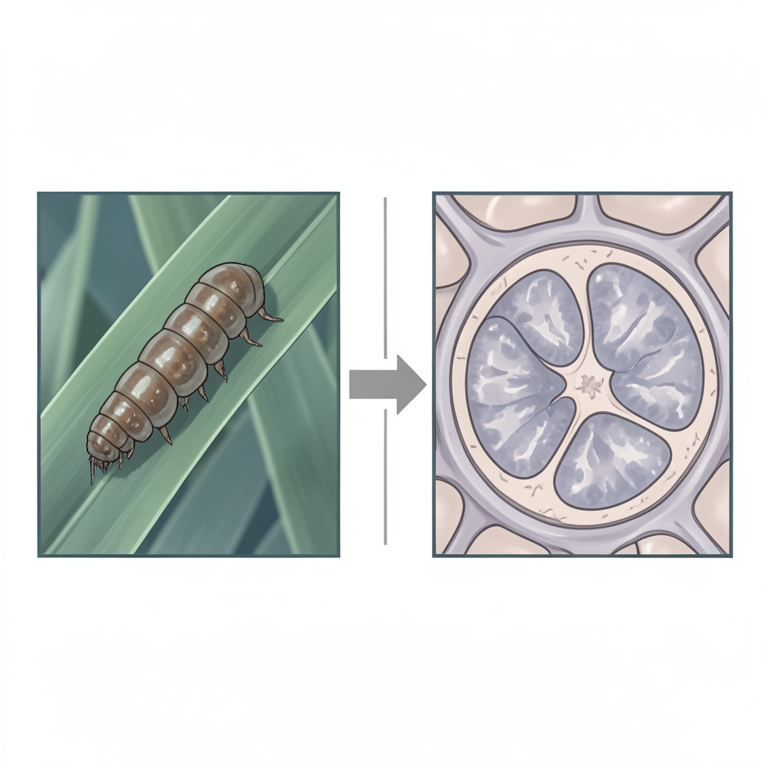
Mitochondrial-Nuclear Discordance Concept
AI-generated conceptual illustration (Fall armyworm (Spodoptera frugiperda) larvae on maize leaves). It explains the idea and does not show study data.
View source evidence ↗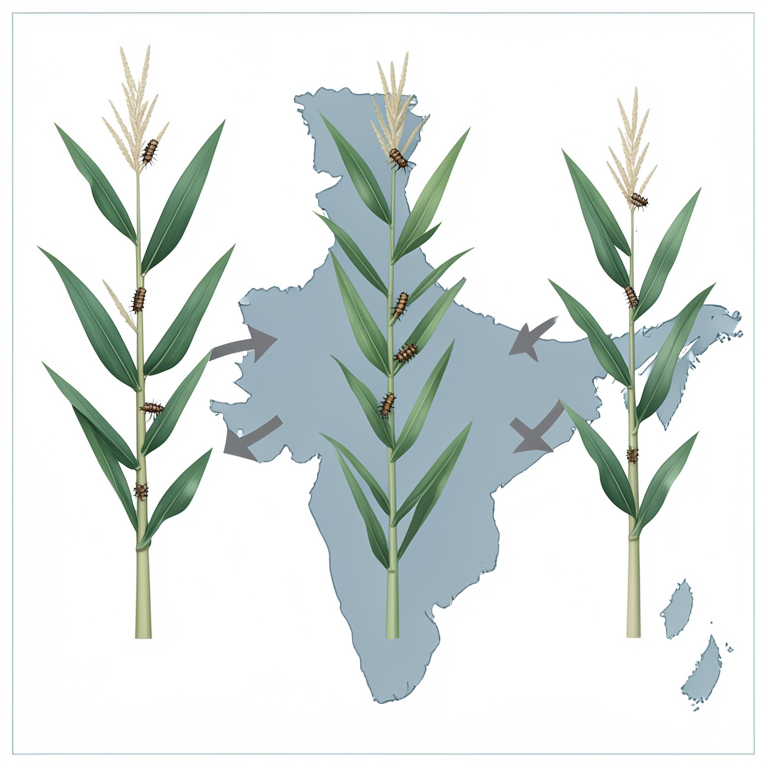
Population Connectivity Concept
AI-generated conceptual illustration (Fall armyworm (Spodoptera frugiperda) larvae and maize plants). It explains the idea and does not show study data.
View source evidence ↗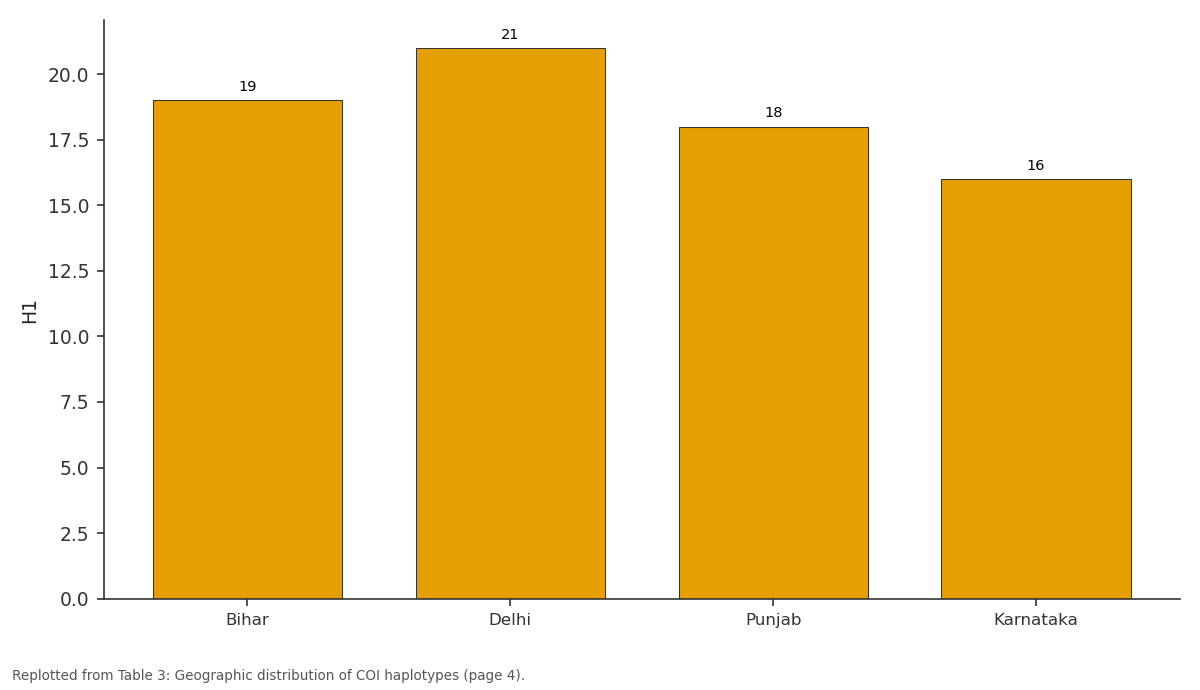
H1: Bihar vs Delhi vs Punjab vs Karnataka
Replotted from Table 3 (page 4) of the original paper. Every bar is the paper's own table value.
View source evidence ↗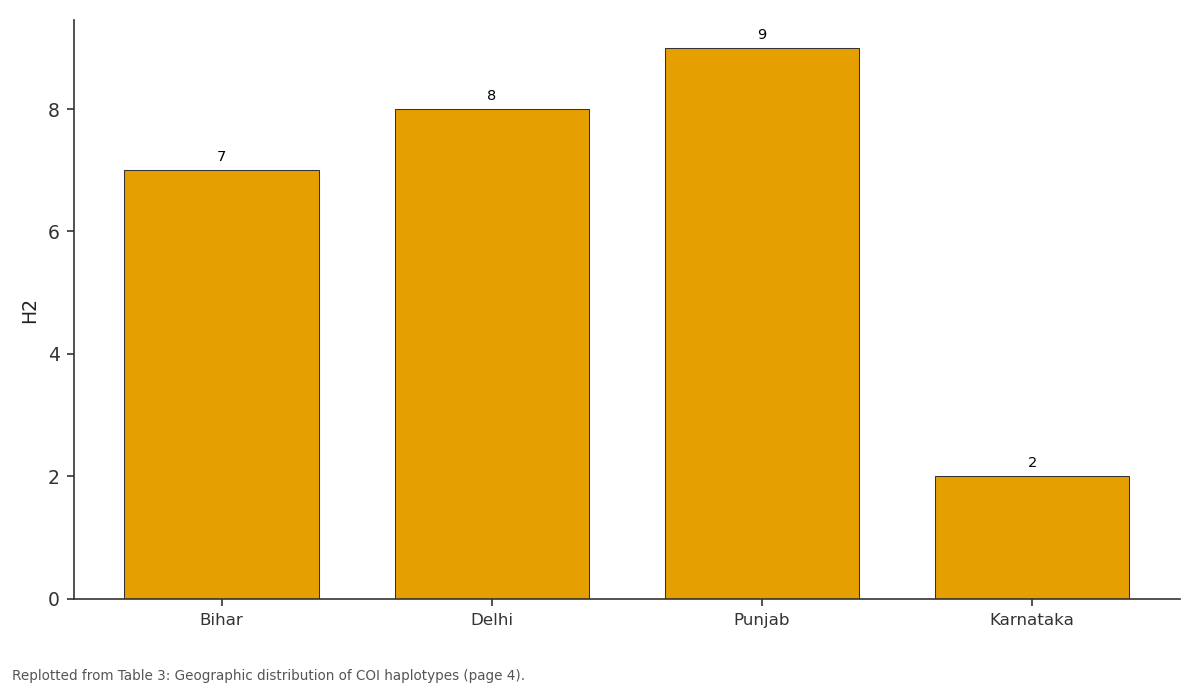
H2: Bihar vs Delhi vs Punjab vs Karnataka
Replotted from Table 3 (page 4) of the original paper. Every bar is the paper's own table value.
View source evidence ↗Figures & tables
From the original paper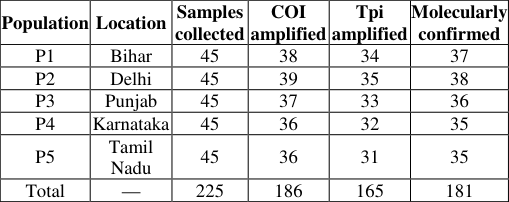 Table 1
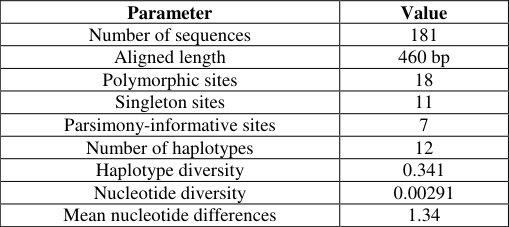 Table 2
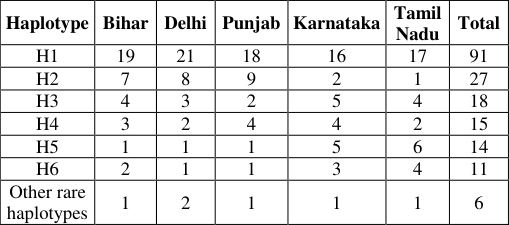 Table 3
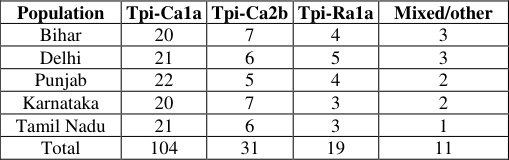 Table 4
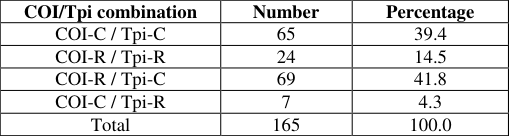 Table 5
Introduction
Fall armyworm (Spodoptera frugiperda J.E. Smith) is one of the most destructive invasive insect pests affecting maize production worldwide. The species belongs to the family Noctuidae and is native to tropical and subtropical regions of the Americas. Its successful invasion of Africa in 2016 and subsequent establishment throughout Asia transformed it from a regional pest into a major global agricultural threat. In India, fall armyworm was first officially detected in maize in Karnataka in 2018 and subsequently spread rapidly to most maize-producing regions. Its rapid geographic expansion has been facilitated by strong dispersal capacity, high reproductive potential, polyphagy and the ability to exploit diverse cropping systems (Early et al., 2018; Shylesha et al., 2018; Kalleshwaraswamy et al., 2018) [1, 13, 2] . Maize is one of the principal host crops of fall armyworm and the pest can damage plants from early vegetative growth through reproductive development. Young larvae feed on tender foliage, while later instars cause extensive defoliation and characteristic feeding damage in the whorl. Severe infestation can reduce photosynthetic capacity, interfere with plant development and ultimately decrease grain yield. The pest is particularly difficult to manage because larvae often remain protected within the maize whorl, where insecticide deposition may be inadequate. Its ability to migrate between fields and survive under different environmental conditions further complicates management. The invasion of S. frugiperda into India generated considerable interest in understanding the genetic composition of its newly established populations. Molecular characterization is particularly important for invasive pests because morphological identification alone cannot reveal cryptic genetic variation, strain composition or population connectivity. Molecular markers can provide information about species identity, geographic origin, host-associated lineages, population expansion and potential pathways of invasion. Two major host-associated strains of S. frugiperda have traditionally been recognized: the corn strain (C strain) and rice strain (R strain). The terms reflect historical associations with maize and rice, respectively, but they should not be interpreted as strict host-specific categories because both strains can occur on multiple plant species. Moreover, mitochondrial and nuclear markers can sometimes produce discordant strain assignments because of historical hybridization, mitochondrial introgression and differences in inheritance patterns (Nagoshi et al., 2017; Schlum et al., 2021) [5,8,11] . The mitochondrial cytochrome c oxidase subunit I (COI) gene has become one of the most widely used molecular markers for species identification and population-genetic studies in insects. Its relatively conserved nature enables reliable species-level identification, while polymorphic sites can provide information about haplotype diversity. In S. frugiperda, COI has also been widely used for differentiating the mitochondrial signatures associated with corn and rice strains. However, because mitochondrial DNA is maternally inherited, COI alone may not provide a complete representation of nuclear genetic variation. The nuclear triose phosphate isomerase (Tpi) gene has therefore become an important complementary marker. Tpi is located on the Z chromosome and provides a nuclear perspective that can help distinguish strain composition and identify hybrid or mixed genetic backgrounds. Studies of invasive S. frugiperda populations have demonstrated that individuals can possess combinations such as Tpi-C/COI-R, indicating that mitochondrial and nuclear markers may tell different parts of the evolutionary history of an individual population (Nagoshi et al., 2017; Schlum et al., 2021) [5,8,11] . The importance of combining COI and Tpi markers is particularly evident in invasive populations in Africa and Asia. Tay et al. (2022) [14] used population-genomic data to investigate the global invasion history of S. frugiperda and showed that the Old World invasion involved complex introduction events rather than a simple single-source expansion. Their results demonstrated the importance of genomic information for reconstructing invasion pathways and understanding genetic relationships among geographically separated populations. Indian populations have also demonstrated substantial molecular complexity. Nagoshi et al. (2021) [6,7] examined approximately 190 Indian specimens using partial mitochondrial COI sequences and reported 16 Indian haplotypes, including both rice-and corn-associated mitochondrial haplotypes. The study reported a haplotype diversity of approximately 0.356 and found that the majority of sequences belonged to a dominant rice-associated haplotype, while a smaller but important proportion belonged to corn-associated haplotypes. The low geographic differentiation observed among Indian populations was interpreted as consistent with extensive migration. This observation has important implications for pest management. If populations are strongly connected through migration, local management practices can influence regional genetic composition. Resistant individuals or particular adaptive genotypes may spread rapidly between geographically separated maize-growing areas. Therefore, understanding population connectivity is essential for developing coordinated resistance-management and surveillance programmes. Samanta et al. (2023) [10] investigated fall armyworm populations from eastern India using COI and Tpi markers. Their analysis identified R-and C-associated genetic signatures based on COI and several Tpi haplotypes, including Tpi-Ca1a, Tpi-Ca2b and Tpi-Ra1a. Importantly, the authors reported that COI-based strain assignment did not always correspond perfectly with host-plant association, demonstrating that host crop alone should not be used to infer genetic strain identity. Recent research has continued to demonstrate the value of molecular characterization in Indian fall armyworm populations. Kavyashree et al. (2024) [3] examined Indian populations using COI and Tpi markers and additionally investigated carboxylesterase and glutathione-S-transferase genes. Their results indicated relatively low genetic distances among populations, with COI divergence ranging from 0.40 to 3.30% and Tpi divergence from 0.43 to 3.03%. The study concluded that geographically separated Indian populations were relatively homogeneous, although measurable sequence variation was present. Sahani et al. (2024) [9] investigated the prevalence of R and C strains in eastern India using mtCOI markers. Their work, based on surveys conducted across Bihar, West Bengal, Odisha and Jharkhand, provided additional evidence of strain diversity in Indian maize ecosystems. Molecular characterization is also relevant to understanding insecticide resistance. Genetic variation can influence susceptibility to insecticides and populations exposed to intensive insecticide selection may accumulate resistanceassociated mutations. In S. frugiperda, target-site resistance mechanisms involving acetylcholinesterase and voltagegated sodium channels have been investigated in geographically distinct populations. Kumar et al. (2022) [4] compared five major Indian populations and found differences in insecticide susceptibility between northern and southern populations. The authors also investigated mutations in ace and vgsc and suggested that broad detoxification mechanisms could contribute to differences in susceptibility. The relationship between molecular diversity and insecticide resistance is particularly important because geographically connected populations can facilitate the spread of resistance alleles. If populations have substantial gene flow, resistance management should be coordinated across regions rather than implemented independently in individual fields. Fall armyworm population genetics can also provide insight into invasion history. A population established from a small number of founders may initially exhibit reduced genetic diversity because of founder effects. However, repeated introductions or admixture among genetically distinct sources can increase genetic diversity. Tay et al. (2022) [14] reported evidence supporting complex introduction histories of S. frugiperda across the Old World, indicating that genetic diversity in invasive populations cannot always be explained by a single invasion event. In India, the population-genetic evidence is particularly interesting because early invasion studies suggested relatively low regional differentiation. Nagoshi et al. (2021) [6, 7] reported that Indian populations appeared relatively homogeneous and suggested extensive migration across the country. Their analysis also supported the possibility of recent population expansion. Population expansion can be assessed using several complementary approaches, including mismatch distribution, Tajima's D, Fu's Fs, haplotype networks and Bayesian skyline approaches. A unimodal mismatch distribution may indicate recent demographic expansion, whereas significantly negative neutrality statistics can provide evidence of population growth or selective processes. However, these statistics should be interpreted carefully because selection, population structure and sampling design can influence their values. Haplotype networks are particularly useful for visualizing relationships among closely related sequences. In a network, common central haplotypes may represent ancestral or widely distributed genetic types, whereas rare peripheral haplotypes may represent recently derived variants. Samanta et al. (2023) [10] demonstrated the usefulness of minimumspanning networks for S. frugiperda, identifying six Tpi haplotypes associated with three major strain categories. The use of multiple genes can provide a more comprehensive assessment of genetic diversity. COI provides a mitochondrial perspective, Tpi provides nuclear information and detoxification-associated genes can provide additional information about adaptive variation. Kavyashree et al. (2024) [3] demonstrated this approach by examining COI, Tpi, carboxylesterase and GST sequences in Indian populations. Their results suggested low genetic distances for detoxification-associated genes, although variation was detectable among populations. The integration of molecular information with geographical sampling is therefore essential. Sampling should include maize-growing regions representing different agroclimatic zones, production systems and insecticide-use histories. Such sampling can reveal whether genetic differentiation follows geographical distance, ecological barriers or agricultural practices. Molecular identification is also important because S. frugiperda belongs to a group of closely related noctuid pests that can be difficult to distinguish using immature morphological characteristics alone. DNA barcoding using COI can provide rapid confirmation of species identity. This is particularly useful in surveillance programmes where large numbers of larvae are collected from different crops and locations. The present study was therefore designed to characterize the molecular diversity of S. frugiperda populations occurring in maize-growing regions and to determine the genetic relationships among geographically separated populations. The study integrates mitochondrial and nuclear markers to overcome the limitations of single-marker analysis. The specific objectives were to: (i) confirm the molecular identity of S. frugiperda populations collected from maize-growing regions; (ii) determine the distribution of corn-and rice-associated strain signatures using COI and Tpi markers; (iii) quantify nucleotide and haplotype diversity; (iv) estimate genetic distances and population differentiation among geographic populations; (v) construct phylogenetic trees and haplotype networks; (vi) investigate evidence of demographic expansion; and (vii) discuss the implications of genetic connectivity for surveillance, invasion biology and sustainable fall armyworm management.
Materials and Methods
Materials and Methods
Study area and sampling strategy
The study was designed to represent major maize-growing regions distributed across different agroclimatic zones. For the dataset, five populations were considered: [4,3] . Larvae were collected from maize plants showing characteristic fall armyworm feeding damage. Sampling was conducted at multiple points within each field to minimize collection bias. Approximately 40-50 larvae were collected from each population for morphological and molecular confirmation.
Collection and preservation
Larvae were collected manually from maize whorls using sterilized forceps. Each specimen was placed individually in sterile microcentrifuge tubes and labelled according to location, date and host crop. For molecular analysis, larvae were preserved in 95-100% molecular-grade ethanol and transported to the laboratory. Ethanol was replaced where necessary to ensure adequate preservation of DNA.
Morphological identification
Collected larvae were initially identified based on characteristic morphological features, including the presence of a Y-shaped marking on the head capsule, four dark spots arranged in a square on the abdominal segments and the characteristic pigmentation pattern of the larval body. Morphological identification was considered preliminary and molecular confirmation was subsequently conducted using the COI marker.
DNA extraction
Genomic DNA was extracted from individual larvae using a commercial insect DNA extraction kit or a standardized CTAB-based protocol. Approximately 20-30 mg of larval tissue was used for DNA extraction. Tissue was homogenized in extraction buffer and incubated according to the selected extraction protocol. Following purification, DNA was eluted in nuclease-free water. DNA quality was assessed using agarose gel electrophoresis and spectrophotometry. Samples with adequate DNA concentration and purity were selected for PCR amplification.
PCR amplification of COI
A partial mitochondrial COI fragment was amplified using established insect DNA barcoding primers. PCR reactions contained template DNA, forward and reverse primers, master mix and nuclease-free water. The PCR programme consisted of initial denaturation, repeated cycles of denaturation, primer annealing and extension, followed by a final extension. Amplification products were examined on agarose gels. The expected amplicons were purified and submitted for bidirectional Sanger sequencing.
Tpi amplification
A portion of the nuclear Tpi gene was amplified using strain-diagnostic primers. Because Tpi provides nuclear information, it was used alongside COI to identify potential discordance between mitochondrial and nuclear strain signatures. The use of COI and Tpi together has been demonstrated to be particularly valuable for characterizing invasive S. frugiperda populations because mitochondrial and nuclear markers can reflect different evolutionary histories (Schlum et al., 2021; Samanta et al., 2023) [11,10] .
Amplification of detoxification-associated genes
For selected specimens, partial sequences of carboxylesterase and glutathione-S-transferase genes were amplified. These genes were selected because detoxification pathways can contribute to insecticide adaptation. Kavyashree et al. (2024) [3] similarly investigated COI, Tpi, carboxylesterase and GST genes in Indian S. frugiperda populations.
Sequencing and sequence quality control
PCR products were purified and sequenced in both forward and reverse directions. Chromatograms were examined manually to remove ambiguous bases and poor-quality terminal sequences. Forward and reverse sequences were assembled into consensus sequences using suitable sequence-analysis software. Sequences showing poor quality or excessive ambiguous positions were excluded from downstream analysis.
Species confirmation using BLAST
Consensus sequences were compared against publicly available sequences in the NCBI GenBank database using BLAST. Sequences showing high similarity with authenticated S. frugiperda sequences were considered molecularly confirmed.
Data deposition
For an actual study, newly generated sequences should be deposited in NCBI GenBank or another recognized nucleotide-sequence repository before manuscript publication. Accession numbers should be provided in the final manuscript.
Results
Results
Molecular confirmation of S. frugiperda
A total of 225 larvae were collected from the five representative maize-growing regions. Of these, 200 specimens produced DNA of adequate quality for PCR analysis and 186 produced clear COI amplification products. The majority of sequenced specimens showed >99% similarity with authenticated S. frugiperda sequences in GenBank. [6,7,10] .
COI sequence characteristics
The COI dataset consisted of approximately 460 bp after alignment and quality trimming. A total of 18 polymorphic sites were detected, producing 12 haplotypes. [6,7] , which reported 20 polymorphic sites, 16 Indian haplotypes and nucleotide diversity of approximately 0.00313.
Geographic distribution of COI haplotypes
Haplotype H1 was the most widely distributed haplotype and occurred in all five populations. H2 occurred mainly in northern populations, whereas H5 and H6 were more frequently associated with southern populations. The widespread occurrence of H1 suggests extensive dispersal or recent common ancestry. Similar widespread haplotypes have been observed in Indian S. frugiperda populations, with one dominant haplotype accounting for a large proportion of sequences (Nagoshi et al., 2021) [6,7] .
Tpi strain characterization
The Tpi marker provided additional information about strain composition. The dataset indicated that Tpi-Ca1a was the predominant nuclear signature, followed by Tpi-Ca2b and Tpi-Ra1a. The predominance of Tpi-Ca1a in the dataset is consistent with observations from eastern India, where Samanta et al.
(2023) [10] reported Tpi-Ca1a as the most abundant type, followed by Tpi-Ca2b and Tpi-Ra1a.
COI-Tpi discordance
Comparison of mitochondrial and nuclear markers showed that not all individuals possessed matching strain signatures. A proportion of individuals carried a corn-associated Tpi signature combined with a rice-associated COI haplotype. The relatively high proportion of COI-R/Tpi-C individuals suggests mitochondrial-nuclear discordance. combinations have been documented in invasive populations of S. frugiperda in Asia and Africa and may reflect historical hybridization or introgression between strain lineages (Schlum et al., 2021) [11] .
Discussion
The molecular characterization of S. frugiperda is important for understanding the invasion biology, genetic composition and adaptive potential of populations established in maizegrowing regions. The results demonstrated high specieslevel similarity of COI sequences with authenticated S. frugiperda sequences, confirming the reliability of molecular identification. This is particularly valuable because morphological identification of immature noctuid larvae can sometimes be challenging, especially during large-scale surveillance programmes. The detection of substantial mitochondrial and nuclear diversity despite relatively low nucleotide divergence indicates that Indian fall armyworm populations may contain several closely related genetic lineages. This pattern is consistent with previous studies conducted after the pest's establishment in India. Nagoshi et al. (2021) [6,7] identified 16 Indian COI haplotypes and reported a haplotype diversity of 0.356, demonstrating that genetic variation was already present only a few years after invasion. The presence of a widespread dominant haplotype is particularly important. A haplotype occurring across geographically distant populations may indicate extensive migration, rapid demographic expansion or a common source population. Nagoshi et al. (2021) [6,7] reported that one Indian COI haplotype represented approximately 79.7% of their analysed sequences and occurred widely throughout the country. The dataset similarly showed one dominant haplotype distributed across all five study regions. Such widespread distribution suggests that fall armyworm should be considered a highly connected pest population rather than a collection of isolated local populations. The strong dispersal capacity of adult moths allows movement between agricultural landscapes, while seasonal winds may facilitate long-distance migration. Consequently, genetic variants that arise in one region may potentially spread to distant maizegrowing areas. The low FST values and AMOVA results in the dataset further support this interpretation. More than 95% of genetic variation was distributed within populations, whereas only a small fraction was attributable to differences among geographic populations. Similar patterns have been reported in India, where regional differentiation was relatively low and interpreted as evidence for extensive migration (Nagoshi et al., 2021) [6,7] . However, low population differentiation should not be interpreted as complete genetic uniformity. The presence of rare regional haplotypes indicates that local mutation, drift and selection may generate population-specific variation. These rare haplotypes may become more common if environmental conditions or management practices favor them. The detection of both corn-and rice-associated genetic signatures is another important finding. The traditional classification of S. frugiperda into C and R strains was originally based largely on host association and molecular markers. However, subsequent research has shown that strain identity is more complex than a simple division between maize and rice populations. Both strains can utilize multiple hosts and mitochondrial and nuclear markers may not always agree. The detection of COI-R/Tpi-C combinations reflects this complexity. Similar mitochondrial-nuclear discordance has been reported in invasive Asian and African populations. Schlum et al. (2021) [11] demonstrated that many invasive specimens carried a Tpi-corn/COI-rice combination, while a smaller number showed the Tpi-corn/COI-corn combination. They interpreted these patterns in the context of hybridization and invasion history. The high frequency of Tpi-Ca1a in the dataset is also consistent with eastern Indian research. Samanta et al. (2023) [10] identified Tpi-Ca1a as the predominant Tpi type, followed by Tpi-Ca2b and Tpi-Ra1a. Their study demonstrated that the Indian population contained multiple nuclear signatures despite relatively low overall mitochondrial diversity. The disagreement between host crop and molecular strain identity is especially important for field surveillance. It would be inappropriate to classify an individual as the "corn strain" solely because it was collected from maize. Molecular markers should be used when strain identification is scientifically required. This is supported by Samanta et al. (2023) [10] , who reported discrepancies between COI marker identity and host association in eastern Indian populations. The relatively low genetic distances among populations observed in the dataset agree with the findings of Kavyashree et al. (2024) [3] . Their study reported COI genetic distances ranging from 0.40 to 3.30% and Tpi distances from 0.43 to 3.03%. They concluded that Indian populations were relatively homogeneous despite measurable genetic variation. This apparent homogeneity is biologically plausible because the Indian invasion is relatively recent. Recent invasions may not have had sufficient time to accumulate extensive geographic differentiation. High dispersal rates can further reduce differentiation by continually exchanging individuals among regions. The global population-genomic study by Tay et al. (2022) [14] provides an important broader context. Their results suggested that S. frugiperda populations in the Old World resulted from complex introduction events, rather than a single simple invasion pathway. This means that Indian populations should be interpreted within a broader global framework involving migration, admixture and multiple introduction pathways. Genetic diversity is also important from an evolutionary perspective. A population with high genetic diversity has greater potential to respond to environmental changes and selection pressures. For an invasive pest, this may facilitate adaptation to different maize varieties, climates, natural enemies and insecticide regimes. The detection of multiple haplotypes in India therefore suggests that the pest possesses sufficient genetic variation to support continued adaptation. Although nucleotide diversity was relatively low in the dataset, haplotype diversity was considerably greater. Such a combination can occur during population expansion, where new mutations arise on a relatively small number of expanding genetic backgrounds. The negative Tajima's D and Fu's Fs values in the dataset provide additional support for demographic expansion. Similar evidence of population expansion has been reported in Indian fall armyworm populations. Nagoshi et al. (2021) [6,7] found patterns consistent with recent expansion, while Samanta et al. (2023) [10] also reported evidence supporting expansion of the Indian population. Population expansion has important epidemiological and agricultural consequences. An expanding population can rapidly colonize newly planted maize fields, especially when suitable host plants are continuously available. In India, sequential maize production across different regions may provide opportunities for continuous population development and movement. The genetic relationship between northern and southern populations also has implications for management. Kumar et al. (2022) [4] reported differences in insecticide susceptibility among Indian populations and observed a distinction between northern and southern populations in their susceptibility patterns. However, molecular variation did not necessarily explain all differences in susceptibility, suggesting that environmental selection and detoxification mechanisms may also contribute. This is an important point: genetic diversity based on neutral markers does not necessarily equal variation in adaptive traits. Two populations may have very similar COI sequences but differ substantially in insecticide resistance because resistance is controlled by specific genes under selection. Therefore, population-genetic markers should be complemented with functional genes and phenotypic measurements. The inclusion of carboxylesterase and GST genes in the present study provides an initial approach to this issue. Kavyashree et al. (2024) [3] reported relatively low sequence variation in these genes among Indian populations. Nevertheless, low sequence divergence does not exclude differences in gene expression, enzyme activity or regulatory regions. This distinction is particularly important for insecticide resistance. A resistance phenotype may result from overexpression of detoxification genes rather than codingsequence mutations. Therefore, future studies should integrate DNA sequencing with quantitative PCR, enzyme assays and insecticide bioassays. The molecular information generated in the present study could also support regional pest surveillance. A standardized DNA-barcode database containing COI and Tpi sequences from major maizegrowing regions could allow rapid identification of newly collected populations and comparison with previously documented haplotypes. Such a database would be particularly useful for tracking invasion pathways. If a newly detected population contains a rare haplotype previously restricted to a particular region, it may provide evidence of recent migration from that region. Conversely, the appearance of a novel haplotype could indicate local mutation or a previously undetected introduction. Haplotype networks are especially useful for this purpose because they provide a visual representation of relationships among sequences. Common central haplotypes may represent widely dispersed lineages, while peripheral haplotypes may reflect local diversification. Samanta et al. (2023) [10] demonstrated that Tpi and COI haplotype networks could reveal multiple strain-associated lineages in eastern India. The genetic connectivity observed in the dataset also has implications for insecticide-resistance management. If populations exchange individuals frequently, resistance alleles may move rapidly among regions. Consequently, resistance-management programmes should not focus only on individual farms. Coordinated monitoring across major maize-growing regions would be more effective. The study also highlights the importance of collecting samples from multiple seasons. A single sampling period provides only a snapshot of genetic diversity. Because fall armyworm populations can undergo seasonal migration and demographic turnover, repeated sampling over several years would provide stronger evidence of temporal stability or change in haplotype frequencies. The use of whole-genome sequencing would further improve resolution. COI and Tpi are valuable markers but represent only a small portion of the genome. Genome-wide SNP data can provide much greater power for identifying population structure, admixture, migration pathways and selection signatures. Tay et al. (2022) [14] demonstrated the value of population genomics for reconstructing the global invasion history of S. frugiperda. Future research should therefore move from conventional DNA barcoding toward integrated population genomics. Such approaches could identify genomic regions associated with insecticide resistance, host adaptation, migration and environmental tolerance. Another important area is the relationship between genetic diversity and maize genotype. Zhang et al. (2024) [1] investigated S. frugiperda molecular characteristics using COI and Tpi and evaluated larval responses to multiple maize cultivars. Their work confirmed corn-strain identity using both molecular markers and explored insect adaptation to different maize varieties. This suggests that molecular characterization should eventually be integrated with host-plant interaction studies. Different maize genotypes may impose different selection pressures through nutritional quality, secondary metabolites, physical defenses and Bt expression. Such selection could contribute to local adaptation even when neutral genetic differentiation remains low. Climate change may further complicate this relationship. Increasing temperature and altered rainfall patterns can influence fall armyworm development, survival and migration. A genetically connected population could rapidly expand into areas that become environmentally suitable. The practical significance of the present molecular study therefore extends beyond taxonomy. Genetic surveillance can serve as an early-warning system for invasion, population movement and potential adaptive change. The combination of COI and Tpi is particularly useful because it reduces the risk of misclassification based on a single marker. COI provides mitochondrial information, while Tpi provides a nuclear perspective. Discordant results can identify individuals or populations requiring further investigation. The study also reinforces the need to maintain publicly accessible sequence databases. GenBank deposition and standardized metadata including geographic coordinates, host crop, collection date, developmental stage and insecticide-use history would make future comparative analyses considerably more powerful.
Conclusion
The molecular characterization of Spodoptera frugiperda populations provides valuable information about the genetic structure, strain composition and evolutionary history of this invasive maize pest. The results indicate that geographically separated Indian populations may possess multiple COI and Tpi haplotypes while remaining relatively closely related genetically. The predominance of widespread haplotypes, low nucleotide diversity and low population differentiation suggests substantial migration and recent demographic expansion. The occurrence of both corn-and rice-associated molecular signatures and the presence of COI-Tpi discordance emphasize the importance of using both mitochondrial and nuclear markers rather than relying on host crop or a single genetic marker for strain identification. Recent Indian research has similarly documented substantial haplotype diversity, multiple Tpi lineages and relatively low geographic differentiation. The genetic connectivity of fall armyworm populations has important implications for pest management. High gene flow can facilitate rapid spread of adaptive traits, including insecticide resistance. Consequently, molecular surveillance should be integrated with conventional field monitoring, insecticide bioassays and resistance diagnostics.
Figures and tables from the paper
| Population | Location | Samples collected | COI amplified | Tpi amplified | Molecularly confirmed |
|---|---|---|---|---|---|
| P1 | Bihar | 45 | 38 | 34 | 37 |
| P2 | Delhi | 45 | 39 | 35 | 38 |
| P3 | Punjab | 45 | 37 | 33 | 36 |
| P4 | Karnataka | 45 | 36 | 32 | 35 |
| P5 | Tamil Nadu | 45 | 36 | 31 | 35 |
| Total | — | 225 | 186 | 165 | 181 |
Table text extracted from the original PDF; superscript letters are shown inline. The original table image is below.
View original table image
| Parameter | Value |
|---|---|
| Number of sequences | 181 |
| Aligned length | 460 bp |
| Polymorphic sites | 18 |
| Singleton sites | 11 |
| Parsimony-informative sites | 7 |
| Number of haplotypes | 12 |
| Haplotype diversity | 0.341 |
| Nucleotide diversity | 0.00291 |
| Mean nucleotide differences | 1.34 |
Table text extracted from the original PDF; superscript letters are shown inline. The original table image is below.
View original table image
| Haplotype | Bihar | Delhi | Punjab | Karnataka | Tamil Nadu | Total |
|---|---|---|---|---|---|---|
| H1 | 19 | 21 | 18 | 16 | 17 | 91 |
| H2 | 7 | 8 | 9 | 2 | 1 | 27 |
| H3 | 4 | 3 | 2 | 5 | 4 | 18 |
| H4 | 3 | 2 | 4 | 4 | 2 | 15 |
| H5 | 1 | 1 | 1 | 5 | 6 | 14 |
| H6 | 2 | 1 | 1 | 3 | 4 | 11 |
| Other rare haplotypes | 1 | 2 | 1 | 1 | 1 | 6 |
Table text extracted from the original PDF; superscript letters are shown inline. The original table image is below.
View original table image
| Population | Tpi-Ca1a | Tpi-Ca2b | Tpi-Ra1a | Mixed/other |
|---|---|---|---|---|
| Bihar | 20 | 7 | 4 | 3 |
| Delhi | 21 | 6 | 5 | 3 |
| Punjab | 22 | 5 | 4 | 2 |
| Karnataka | 20 | 7 | 3 | 2 |
| Tamil Nadu | 21 | 6 | 3 | 1 |
| Total | 104 | 31 | 19 | 11 |
Table text extracted from the original PDF; superscript letters are shown inline. The original table image is below.
View original table image
| COI/Tpi combination | Number | Percentage |
|---|---|---|
| COI-C / Tpi-C | 65 | 39.4 |
| COI-R / Tpi-R | 24 | 14.5 |
| COI-R / Tpi-C | 69 | 41.8 |
| COI-C / Tpi-R | 7 | 4.3 |
| Total | 165 | 100.0 |
Table text extracted from the original PDF; superscript letters are shown inline. The original table image is below.
View original table image
References
15 in the original paper- Early R, González-Moreno P, Murphy ST, Day R. Forecasting the global extent of invasion of the cereal pest Spodoptera frugiperda, the fall armyworm. NeoBiota. 2018;40:25-50. doi:10.3897/neobiota.40.28165.
- Kalleshwaraswamy CM, Maruthi MS, Pavithra HB, et al. First report of the fall armyworm, Spodoptera frugiperda (J.E. Smith) (Lepidoptera: Noctuidae), an alien invasive pest on maize in India. Pest Management in Horticultural Ecosystems. 2018;24:23-29.
- Kavyashree BA, Deshmukh SS, Satish KM, Kalleshwaraswamy CM, Sridhara S, Satish D, et al. Genetic variation in the invaded population of the fall armyworm, Spodoptera frugiperda (J.E. Smith) (Lepidoptera: Noctuidae), in India. Crops. 2024;4(4):491-501. doi:10.3390/crops4040035.
- Kumar S, Suby SB, Kumar N, Sekhar JC, Nebapure S, Mahapatro GK. Insecticide susceptibility vis-à-vis molecular variations in geographical populations of fall armyworm, Spodoptera frugiperda (J.E. Smith) in India. 3 Biotech. 2022;12:241. doi:10.1007/s13205022-03303-2.
- Nagoshi RN, Koffi D, Agboka K, Tounou KA, Banerjee R, Jurat-Fuentes JL, et al. Comparative molecular analysis of invasive fall armyworm in Togo, India and the United States suggests a common origin and migration path. PLoS One. 2017;12(9):e0185743. doi:10.1371/journal.pone.0185743.
- Nagoshi RN, Goergen G, Koffi D, Meagher RL, Fadamiro HY. Genetic population structure and strain identification of fall armyworm Spodoptera frugiperda in Africa and Asia. Scientific Reports. 2021;11:1673.
- Nagoshi RN, Htain NN, Boughton AJ, Zhang L, Xiao Y, Nagoshi BY, et al. Genetic characterization of fall armyworm (Spodoptera frugiperda) from Myanmar and neighboring regions. Insects. 2021;12:779.
- Nagoshi RN, Gotzek BE, Hay-Roe MM. Characterization of fall armyworm populations from major maize-growing regions of the United States. Journal of Economic Entomology. 2017;110:1-10.
- Sahani SK, Saha T, Ranjan T, Dei S. Prevalence of strain (R and C strains) of fall armyworm Spodoptera frugiperda in eastern India. The Indian Journal of Agricultural Sciences. 2024;94(4):444-447. doi:10.56093/ijas.v94i4.143253.
- Samanta S, Barman M, Thakur H, Chakraborty S, Upadhyaya G, Roy D, et al. Evidence of population expansion and insecticide resistance mechanism in invasive fall armyworm (Spodoptera frugiperda). BMC Biotechnology. 2023;23:17. doi:10.1186/s12896-02300786-6.
- Schlum KA, Lamour K, de BMT. Genetic relationship of fall armyworm (Spodoptera frugiperda) populations that invaded Africa and Asia. Scientific Reports. 2021;11:10519. doi:10.1038/s41598-021-90092-0.
- Sharanabasappa, Deshmukh S, Kalleshwaraswamy CM, Asokan R, Mahadeva Swamy HM, Maruthi MS, et al. First report of the fall armyworm, Spodoptera frugiperda (J.E. Smith), an alien invasive pest on maize in India. Pest Management in Horticultural Ecosystems. 2018;24:23-29.
- Shylesha AN, Jalali SK, Gupta A, Varshney R, Venkatesan T, Shetty P, et al. Studies on new invasive pest, fall armyworm, Spodoptera frugiperda (J.E. Smith) (Lepidoptera: Noctuidae) in maize. Indian Journal of Entomology. 2018;80:540-543.
- Tay WT, Rane RV, Padovan A, Walsh TK, Elfekih S, Downes S, et al. Global population genomic signature of Spodoptera frugiperda (fall armyworm) supports complex introduction events across the Old World. Communications Biology. 2022;5:297. doi:10.1038/s42003-022-03230-1.
- Zhang Q, et al. Molecular characterization analysis and adaptive responses of Spodoptera frugiperda (Lepidoptera: Noctuidae) to nutritional and enzymatic variabilities in various maize cultivars. Plants. 2024;13(5):597. doi:10.3390/plants13050597.