
Research article · 2026 · Full text
International Journal of Geography Geology and EnvironmentPost-Traumatic Stress Disorder (PTSD) among women after a severe cyclonic storm: A psychometric analysis in Sagar Island, India
Volume 8(8) · Pages 25–32 · DOI: 10.22271/27067483.2026.v8.i8a.845 ↗
Research areasPosttraumatic Stress Disorder ResearchMaternal Mental Health During Pregnancy and PostpartumCOVID-19 and Mental Health
Abstract
Author-writtenPresent study examined the Post-Traumatic Stress Disorder (PTSD) among women of reproductive age-group after ‘Remal’ cyclonic storm in Sagar Island, West Bengal, India 2024. In India, there is a dearth of studies that focused on investigating the psychometric properties of Post-Traumatic Stress checklist (PCL)-5 in women after cyclonic storm. Primary data regarding mental stress were collected between June and July, 2024 from a sample of=420 women from Sagar Island which experiences the ‘Remal’ cyclonic storm in May 2024.. The study used PCL-5 that examines the Diagnostic and Statistical Manual of Mental Disorders (DSM-5) symptoms of PTSD. Internal reliability were assessed by computing two indices, i.e., Cronbach’s α (.98) and Guttman’s split-half (.97), revealing high reliability. The sample data were symmetrical, suggesting moderate level of PTSD among study participants. Results of current study sample demonstrated acceptable factor structure of PCL-5 and indicated good convergent scale validity (CSV) while comparing with other measures. The findings suggest that PCL-5 is evidently applicable in studies on natural disaster caused by climatic storm. Cognitive based interventions (including stress inoculation training, cognitive based therapy), Stepped-care approach, climate change resilience planning, proper monitoring, and surveillance through epidemiological surveys after the cyclonic storm would be useful for addressing PTSD among women
Summary
Source-checkedPlain-language reading of the full paper, prepared with AI and checked against the text. Each point links to the authors' own words.
Why it matters
- Natural disasters cause significant economic and psychological distress, often leading to anxiety and stress for affected populations. View evidence ↗
- Sagar Island in India is highly vulnerable to environmental threats, including sea level rise, shoreline changes, and severe storm surges. View evidence ↗
The question
- The study aimed to investigate mental health issues in married women of reproductive age on Sagar Island following the severe cyclonic storm 'Remal' using the PCL-5 questionnaire. View evidence ↗
- The researchers specifically sought to evaluate the reliability, consistency, and construct validity of the PCL-5 tool in this specific population. View evidence ↗
What they did
- Data were collected in June and July 2024 from 420 married women of reproductive age (mean age 33.09 ± 7.30 years) on Sagar Island using Kobo toolbox software. View evidence ↗
- The study used purposive sampling, limiting the selection to one woman per household. View evidence ↗
- The PCL-5, a 20-item instrument based on DSM-5 symptoms, was used with a 5-point Likert scale (0-4) to measure PTSD symptoms. View evidence ↗
- The analysis included Exploratory Factor Analysis (EFA) to inspect factor loadings and Confirmatory Factor Analysis (CFA) to examine the latent structure of the symptoms. View evidence ↗
What they found
- The study found that the women in the sample experienced moderate levels of PTSD. View evidence ↗
- Exploratory factor analysis identified four factors that together accounted for 84.56% of the total variance. View evidence ↗
What it means
- The authors conclude that the PCL-5 is an applicable and valid screening tool for estimating PTSD symptoms following climatic storms. View evidence ↗
- The authors recommend using cognitive-based interventions, stepped-care approaches, and resilience planning to address PTSD in women after cyclonic storms. View evidence ↗
- The authors state that future research should use gold-standard measures for validation, determine optimal cut-off scores, and investigate the primary causes of PTSD symptoms. View evidence ↗
Visual summary
1 visualsIllustrations explain the paper; charts are replotted from the paper's own table values.
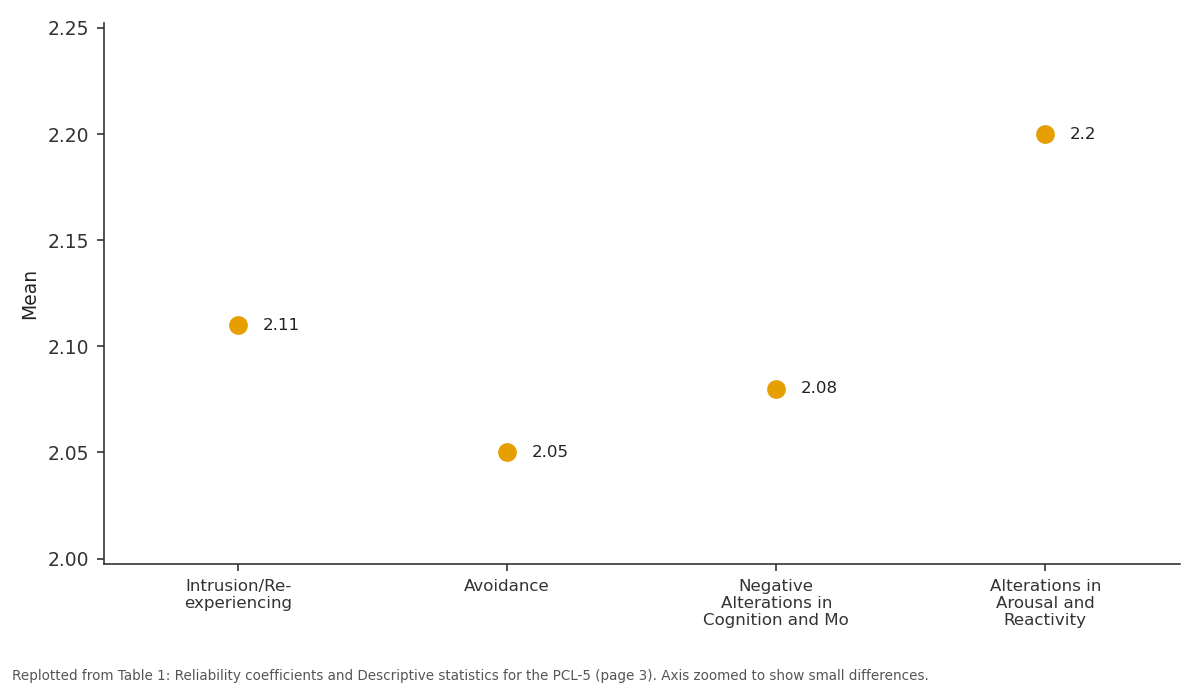
Mean: Intrusion/Re-experiencin... vs Avoidance vs Negative Alterations in... vs Alterations in Arousal...
Replotted from Table 1 (page 3) of the original paper. Every bar is the paper's own table value.
View source evidence ↗Figures & tables
From the original paper Table 1
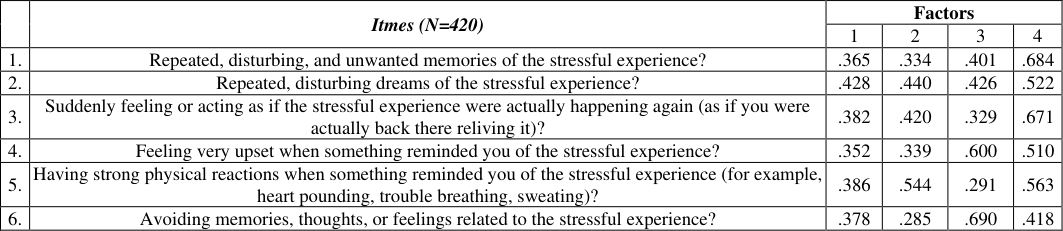 Table 2
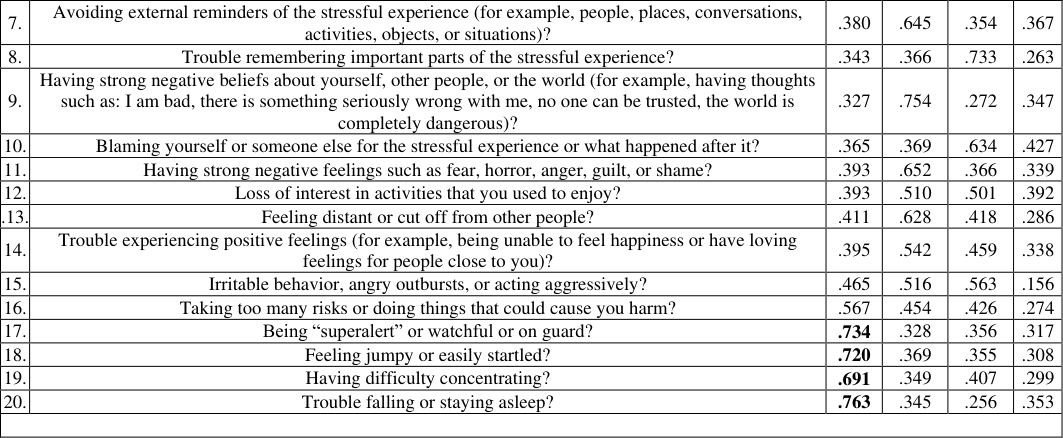 Table 3
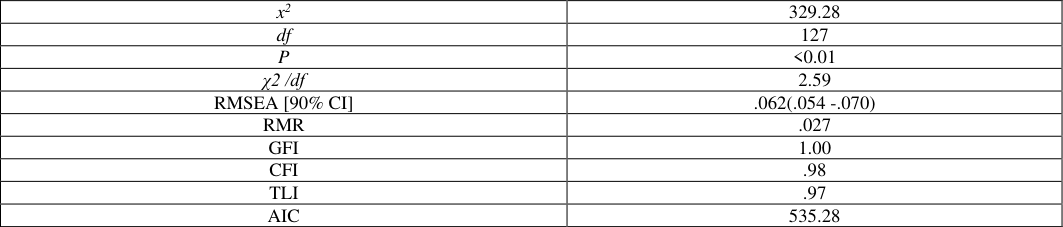 Table 3
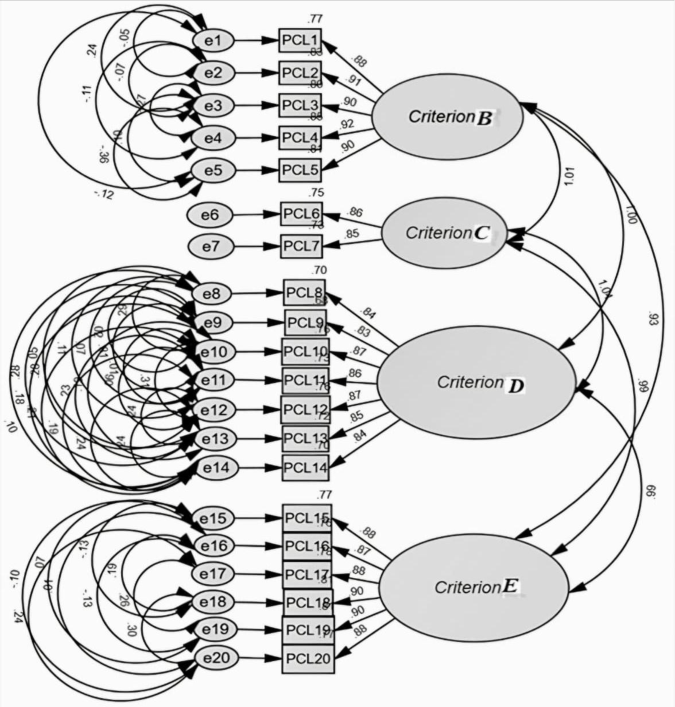 Figure 2
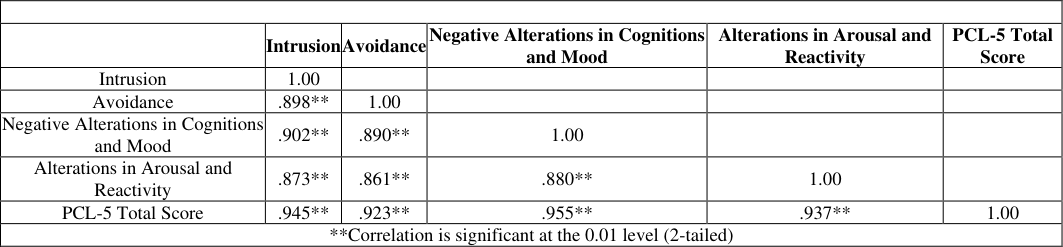 Table 4
Introduction
The Diagnostic and Statistical Manual of Mental Disorders (DSM-5) defines Post-Traumatic Stress Disorder (PTSD)that are exposed to serious injury, sexual violence, or exposure to death, whether threatened or actual, in one or more of the mentioned ways: being in the direct presence of the event(s) occurred to others or direct experience of the traumatic event(s) [1]. Currently, the most commonly used PTSD tool is the Post-Traumatic Stress Disorder Checklist for DSM-5 (PCL)fifth edition of DSM-5, expressed by Weathers et al [2]. The PTSD symptoms are intertwined into four-factor structure: Criterion B (Intrusion/reexperiencing), Criterion C (avoidance), Criterion D (negative alterations in cognition and mood), and Criterion E (alteration in arousal and reactivity) [3] The prevalence of PTSD is more among women than in men due to various reasons, such as: hormone abnormality and distressed life events i.e., sexual abuse [4], childbirth experiences [5,6] , the traumatic situations while providing care to vulnerable populations such as nursing personnel [1] and also among opioid use disorder treatment with insomnia [7]. Due to the emerging climate change crisis and the phenomena of natural disaster on humans, recently these methods on stress and anxiety have been used to understand the trauma caused by natural disaster situations such as floods and earthquakes [8,9,10] as natural disasters largely affects people both economically and psychologically resulting in anxiety and stress [11]. Disasters are classified as: Natural (floods, droughts, volcanic eruptions, earthquakes, heavy rains, snow, frost, and storms) and Man-made(radiological, biological, wars, migrations, chemical, and nuclear accidents, fires, and terrorist incidents) [12], globally occurring 400 times annually, negatively affecting 800million people to property loss, infrastructure damage, and resource destruction, while, 3 million deaths in last two decades [13].
The prevalence of traumatic stress symptoms post-disaster is around 3.8% in the world, according to World Mental Health Survey [14]. A long-term disaster impact on human is acute, chronic and the cumulative stress has a huge impact on as mental illness and post-traumatic stress disorders [15]. The Conference of Parties of the United Nations Framework Convention on Climate Change (UNFCCC COP) in 2005 reported that a greater number of women die than men during natural disasters due to their incapability to swim or leave the house alone, as well as due to less warned [16]. In low and middle-income countries, women were found to be more vulnerable to disaster-related health outcomes than men [17,18]. During disaster, women experienced higher risk for abuse, recorded higher mortality rates, mood disorders (e.g. depression and anxiety), childbirth-related complications (e.g. Bleeding), and post-disaster they face poor economic and mental health recovery [17,19]. In coastal areas, women's vulnerability in terms of health, economic livelihood, marriage, and nutrition is common due to climatic instability [20]. Some studies reported that the effects on women's livelihood during cyclones are because of destruction of houses, crop failure, and loss of livestock [21]. In addition, reproductive health services of women i.e., ANC, care of newborn babies, pregnant mothers in labor [22,23,24], abortion, and treatment [25], also disrupted by disaster.Overall, climatic instability and vulnerability in women, both are interlinked [26,20]. Sagar Island of India, which is the present study area, is also experiencing high storm surges, sea level rise, shoreline changes, regular land loss, embankment breaching, and changing land use [27,28]. Furthermore, coastal flooding is also threatening in this region due to its impact on the loss of agricultural production, property damage, and loss of livelihood [29]. Almost all the villages of the island are prone to both coastal flooding and severe to very severe cyclones (e.g., Sidr, Aila, Fani, Bulbul and Amphan) which expose the inhabitant's livelihood at stake [2020]. No such studies have been conducted in assessing the psychometric properties of the PCL-5 in aftermath of disaster in India and specifically in Sagar Island of West Bengal. Therefore, considering the increasing rate of vulnerability due to these threats in Sagar Island, the study is an attempt to investigate on mental health issues using a standard questionnaire of PCL-5 among currently married women of reproductive age-group after the severe cyclonic storm 'Remal'. The specific aim was to examine the reliability and consistency of PCL-5, and construct validity through factor analysis and CSV employing correlations between PCL-5 and other measures of PTSD.
Material and methods 2.1 Profile of the Participants and sampling techniques
Primary data regarding mental stress were collected from Sagar Island of West Bengal, India, during June and July, 2024 using Kobo toolbox software for data collection. The target respondents were the currently married women in the reproductive age-group (N=420), with a mean age 33.09± 7.30 (SD) years. These women were engaged in all kinds of economic activities apart from Government and private Jobs, and experienced the impact of 'Remal' cyclone at their place of residence. For selection of the respondents, purposive sampling was employed with the criteria of selecting only one woman from each household. Overall, 16% (N=67) of the women had completed higher secondary or/and undergraduate or/and post-graduate studies, with 37.4% (N=157) of them who finished a secondary education; 46.7 % (N=196) participants finished primary school or/and junior high. About 93.3% (N=392) of the women were Hindus and the rest 6.4% (N=27) were Muslims. About 50.5% (N=212) of them resides in Kaccha house; 37.9% (N=159) in semi-pucca house; only 11.7% (N=49) resides in pucca house. All the women were properly made aware about the study purpose, risks, and benefits. Verbal consent has taken before the initiation of face-to-face interaction process. Some of the respondents were excluded from survey during interaction who had cognitive level difficulties related to the understanding of psychometric tools. Additionally, the women taking drugs, or any psychotropic substances were excluded from our study according to DSM-5 rules to meet the PTSD criterion E.
Data collection procedures
The data was collected from the currently married women in the reproductive age. The respondents were informed about the possible impact of post-traumatic life events due to cyclonic storms and they were made well aware of the questions regarding PTSD check-list (PCL). Finally, PCL-5 was administered to the women who experienced the threat of 'Remal' cyclone after the occurrence of devastating severe cyclonic storm Remal [31]. The PTSD checklist is generally applied in adult populations ages 18+ according to DSM-5 rules, therefore, all the women included in our study are above 18 years of age.
Measures of PTSD
PCL-5 is a 20-item psychometric instruments that was initiated to determine all DSM-5 PTSD symptoms [2]. Responses were rated on a 5-point Likert scale of 0-4, with 0 signifying no experience of a symptom (not at all), 2 (a little bit), 3 (moderately), 4 (quite a bit) and 4 indicating severe experience(extremely)about traumatic life experiences [6,32]. The PTSD scale is a cluster of four factors (intrusion/re-experiencing or B-item, avoidance or C-item, negative alterations in cognition and mood or D-item, and Alterations in arousal and reactivity or E-item), consisting of 20 items. Summing the scores of these items, the score of total symptom severity (range: 0 to 80) was obtained [2,6,32]. The provisional PTSD diagnosis was compiled by treating the score of each item as2 or above as a symptom uphold, when there is a score of 1 or more in the categories of criteria-B (items 1-5) and criteria-C (items 6-7), and 2 or more in criteria-D (items 8-14) and criteria-E (items 15-20). Many studies on PCL-5 scale found that Cronbach's alpha ranged from.76 to.97 [6,33,34,35,36], and our study found the alpha values of.98.
Data Analysis
Reliability, multicollinearity, extreme skewness and large measurement errors for PCL-5 scale were examined first. KMO measure of Sampling adequacy and Bartlett's Test of Sphericity were also examined. Following these, reliability indices were performed. EFA was employed in order to inspect the factor's loadings, and a series of CFA models were performed to look at the latent structure as it is the best fit PTSD symptoms as calculated by the PCL-5 [6]. Raw score of each of the four criteria was examined to verify whether the criteria were meeting DSM-5 or not. SPSS v21.0 and SPSS AMOS v26.0, two statistical data processing packages were used for data analysis.
Results
Results
Reliability coefficients and Descriptive statistics
Reliability and descriptive statistics of PCL-5 are exhibited in table 1. Internal reliability was examined by computing two different indices (i.e., Cronbach's α coefficients& Guttman's split-half) of internal consistency, while the item-to-scale homogeneity was evaluated by mean inter-item correlations. Present study followed a standard value [37] more than.70 for both forms of internal consistency coefficients. Cronbach's α coefficients for four latent factors along with the total PCL-5, were found to be very good (from.85 to.98). Similarly, Guttman's split-half coefficients (from.85 to.97) were showing great internal consistency. The levels of PTSD among the women were moderate (see Appendix table 1), as the data were almost symmetrical.
| Scales (N = 420) | Mean | SD | Alpha | Split-half | N |
|---|---|---|---|---|---|
| Intrusion/Re-experiencing | 2.11 | 1.22 | 0.95 | 0.91 | 5 |
| Avoidance | 2.05 | 1.19 | 0.85 | 0.85 | 2 |
| Negative Alterations in Cognition and Mood | 2.08 | 1.17 | 0.96 | 0.95 | 7 |
| Alterations in Arousal and Reactivity | 2.20 | 1.26 | 0.96 | 0.96 | 6 |
| Total PCL Score | 10.59 | 5.86 | 0.98 | 0.97 | 20 |
Table text extracted from the original PDF; superscript letters are shown inline. The original table image is below.
View original table image
Factors validity
PCL-5 items were examined to confirm whether the items are satisfactorily reliable, and whether the four factors were observed in the sample studied (table 2). Factors those had given values greater than one, been extracted, following Kaiser-Guttman criterion.PCA, with varimax axis rotation [38], and Kaiser Normalization were performed. Initially, EFA was conducted in order to control the presence of weak items with unsatisfactory loadings, and PAF method was applied in order to produce initial values. KMO (.98) suggests that the sample was acceptable for further analysis. BTS (χ2 =10977.949, df=190, p<.001) suggests that the relationships of 20-items were ideal for factor analysis. Four factors were appeared to which 84.56% of the variance is attributed. The first factor (criteria-B), 'intrusion', explains 23.35% of total variance and, involving the current study sample, consists of 5 items (5 out of 6 of alterations in arousal and reactivity). The second factor (criteria-C), 'Avoidance', explains 22.79% of the total variance, consists of 6 items in this study sample (1 item of avoidance, 5items of negative alterations in cognition and mood) differing from originally expected 2items. The third factor (criteria-D), 'negative alterations in cognition and mood', explains 21.31% of the total variance, consists of 5items (1 item of intrusion, 1 item of avoidance, 2 items of negative alterations in cognitions and mood, and 1 item of alterations in arousal and reactivity) in sample varying from originally expected 7 items. The fourth factor (criteria-E), 'alterations in arousal and reactivity', originally expected 6 items, explains 17.11% of the total variance and, consists of 4 items of intrusion. Analysis shows all items being satisfactorily loaded, however, intrusion, consisting of 5 items, not being recognized at all from this studied sample. Additionally, it is found that item 2-"Repeated, disturbing dreams of the stressful experience?" loads in the fourth factors with a higher value by.09 in the third. Subsequently, item 4-"Feeling very upset when something reminded you of the stressful experience?" has a higher value by.09 in the third, comparing to the fourth factor. Next, item 12-"Loss of interest in activities that you used to enjoy?" loads in the second factor with a higher value of.009, comparing to the third, while item 14-"Trouble experiencing positive feelings (for example, being unable to feel happiness or have loving feelings for people close to you)?" has a higher value by.08 in the second, comparing to the third factor. However, item 15-"Irritable behavior, angry outbursts, or acting aggressively?" a load in third factor has a higher value by.04, comparing to the second factor. Finally, item 16 "Taking too many risks or doing things that could cause you harm?" loads with a higher value by.11 in the first factor, comparing to the second factor. After removing the items loaded in two/three/four factors, it is found that the percentage of variance explained does not found to be significantly changed (the difference is 0.30%), hence, the structure of the factor remained as presented in table 2. Subsequently, CFA was performed, and indices such as: χ2 (chi-square), χ2/df (chi-square over degrees of freedom), GFI, RMSEA, CFI, TLI, AIC, and RMR (Table 3). Values over.90 indicate good model fit for TLI, CFI, and GFI [39].
| x2 | 329.28 |
|---|---|
| df | 127 |
| P | <0.01 |
| χ2 /df | 2.59 |
| RMSEA [90% CI] | .062(.054 -.070) |
| RMR | .027 |
| GFI | 1.00 |
| CFI | .98 |
| TLI | .97 |
| AIC | 535.28 |
Table text extracted from the original PDF; superscript letters are shown inline. The original table image is below.
View original table image
| — | Itmes (N=420) | Factors | — | — | — |
|---|---|---|---|---|---|
| 1 | 2 | 3 | 4 | ||
| 1. | Repeated, disturbing, and unwanted memories of the stressful experience? | .365 | .334 | .401 | .684 |
| 2. | Repeated, disturbing dreams of the stressful experience? | .428 | .440 | .426 | .522 |
| 3. | Suddenly feeling or acting as if the stressful experience were actually happening again (as if you were actually back there reliving it)? | .382 | .420 | .329 | .671 |
| 4. | Feeling very upset when something reminded you of the stressful experience? | .352 | .339 | .600 | .510 |
| 5. | Having strong physical reactions when something reminded you of the stressful experience (for example, heart pounding, trouble breathing, sweating)? | .386 | .544 | .291 | .563 |
| 6. | Avoiding memories, thoughts, or feelings related to the stressful experience? | .378 | .285 | .690 | .418 |
Table text extracted from the original PDF; superscript letters are shown inline. The original table image is below.
View original table image
As CFA can include error covariance [40], present analysis allowed those error covariances to differ, for best-fitting model.
It is observed that the PCL-5 model with 20 questions, χ2=329.28, df=127, p<.001, RMSEA =.062 (confidence intervals.054 -.070), RMR =.027, GFI = 1.00, CFI=.98, TLI =.97, AIC = 535.
Convergent Scale Validity
Although, the data were almost symmetrical, convergent scale validity (CSV) were assessed by performing the Spearman's correlations (Table 4). Correlations between scores of B, C, D, E criterions and total PCL-5 scores were examined to assess the associations of PCL-5 with PTSD criterions. Study suggests strong significant correlations ranging from.861** to.955**, depicts that different kinds of traumatic events correlated very strongly positive (p<.001) with PCL-5, which ascertained very good CSV of the present research sample.
| — | — | — | — | — | — |
|---|---|---|---|---|---|
| Intrusion | Avoidance | Negative Alterations in Cognitions and Mood | Alterations in Arousal and Reactivity | PCL-5 Total Score | |
| Intrusion | 1.00 | ||||
| Avoidance | .898** | 1.00 | |||
| Negative Alterations in Cognitions and Mood | .902** | .890** | 1.00 | ||
| Alterations in Arousal and Reactivity | .873** | .861** | .880** | 1.00 | |
| PCL-5 Total Score | .945** | .923** | .955** | .937** | 1.00 |
| **Correlation is significant at the 0.01 level (2-tailed) |
Table text extracted from the original PDF; superscript letters are shown inline. The original table image is below.
View original table image
Discussion
The primary focus of the present study was to deconstruct the psychometric properties of PCL-5 after a cyclonic storm. This study will fill a significant research gap in the literature as there is no reliable and valid study done on PTSD among reproductive age-group married women caused by cyclonic storms. Globally, many studies have focused upon various issues such as: gender-based post-disaster risk of posttraumatic stress symptoms (PTSS) among older people [41], PTSD risk among students after Hurricane Katrina [42], PTSD symptoms experienced by flood [43,44,45] , PTSD among firefighters and police officers [46] after natural disaster. But in our understanding, this is the first study in India that has focused on using the PCL-5 as a screening tool for estimating PTSD among reproductive age-group women, relating to any cyclonic storm. This study used several indices such as: Cronbach's alpha (α) as well as Guttman's split-half coefficients, factors and item total correlations to find out the homogeneity and internal consistency of PCL-5 scale. Construct validity through exploratory factor analysis as well as CFA were performed for four-factor scale specified by DSM-5, preeminently, to evaluate the best fitting of four-factor model. In addition, spearman's correlation coefficient between the PCL-5 scores and PTSD criterions was examined for assessing the convergent scale validity (CSV).
Our study shows very high acceptable results for homogeneity and reliability of PCL-5. Current study indicates a very reasonable factor framework of PCL-5, and demonstrated good CSV. Cronbach's alpha (α) coefficient for total score of PCL-5 was found to be excellent (.98), comparing to other studies concerned with PTSD in other target population [6,33,34,35,36,37]. Furthermore, our study found sufficient construct validity of PCL-5 with four-factor model by highlighting a number of differentiations in loadings of factors in EFA. The optimal cut-off score should be weighed carefully in practical appliance [6], therefore, our analysis avoids cut-off scores, because, a women with positive screening may need further inquiry to prove PTSD diagnosis. The manifolds of PCL-5 was confirmed by applying EFA and CFA model, where the findings were found to be consistent with most of the general population-based research studies [47,48] .The CSV also suggests strongly positive and significant correlations with different kind of traumatic events and PCL-5, ranging from.861** to.955**. Our findings align with the reliability and convergent validity of some prior studies on other populations, such as studies on trauma-exposed US veterans [49], and college students [50], that eradicated good reliability and internal consistency; studies among female Filipino domestic workers [51], where, Cronbach's alpha observed very good convergent validity, very good scale reliability and high correlation with depression and direct trauma exposure; and studies on postpartum women in Greek during post-cesarean section [6], that demonstrated reasonable internal consistency, acceptable reliability and significant correlations among PCL-5 factors and PTSD criterions.
Strengths and limitations of the study
Present study has numerous strengths. The first and most important strength lies in the contribution to literature by including the analysis of PTSD for DSM-5 among women of reproductive age (15-49 years) after any Cyclonic Storm. Such evidence-based research is tremendously effective, particularly in providing a prospective framework for further investigations on PTSD symptoms after any cyclonic storm. Second, this study provides an ample scope to understand that PCL-5 is a suitable and valid screening tool for estimating PTSD symptoms, after any cyclonic storm. Furthermore, this study will play an exceptional role in formulating a future scope of analysis on household level specific causes and possible remedies of mental stress. Despite these strengths, some limitations of the study were also identified. Symmetrical skewness of the data indicated moderate levels of PTSD among the women. Although, acceptable results were achieved by the current analysis, but, further micro-level studies that scrutinize gold standard measures for convergent validation, determination of optimal cut-off score, as well as the major reasons behind PTSD symptoms after cyclonic storm, can provide more evidence and detailed explanation.
Conclusion
Present study has deconstructed the psychometric properties of the PTSD among currently married women in the reproductive age after the severe cyclone 'Remal'. Study found a moderate level of PTSD among the study women.
The government of West Bengal has taken various short, mid and long-term measures involving emergency medical care, disease surveillance and mental health, upgrading capacity building for health care and improved access to essential medicine, shelter house building, strengthening primary healthcare and sustainable power solutions for health facilities, which are collectively making an effort to cut down the level of trauma among study participants. But, there is definitely a need for proper surveillance, supplies of food and essential medicine as well as proper inspection from ground zero level especially during any cyclonic storm. There is also a lack of adaptive measures such as: cognitive based interventions (including stress inoculation training, cognitive based therapy), crisis counseling, and primary care interventions that would be beneficial for community-based behavioral interventions s. Stepped-care approach, climate change resilience planning, proper monitoring, and surveillance through epidemiological surveys after a cyclonic storm is most needed for addressing psychological wellbeing of the women.
Declarations
Declarations
Acknowledgement
AcknowledgementWe sincerely acknowledge all the faculties of the Department of Population Studies, Fakir Mohan University, Odisha for their concomitant support, and we also acknowledge the study participants for their voluntary participation in this study.
Figures and tables from the paper
References
50 in the original paper- Jiménez-Fernández R, Herraiz Soria ME, Peña Granger M, Losa-Iglesias ME, Becerro de Bengoa-Vallejo R, Corral-Liria I. Reliability and validity of the Posttraumatic Stress Disorder Checklist for DSM-5 (PCL-5) test for post-traumatic stress disorder in mental health nurses in Spain. Arch Psychiatr Nurs. 2024;50:122-128. doi:10.1016/j.apnu.2024.02.006.
- Weathers FW, Litz BT, Keane TM, Palmieri PA, Marx BP, Schnurr PP. The PTSD Checklist for DSM-5 (PCL5). 2013.
- American Psychiatric Association. DSM-5 diagnostic classification. In: Diagnostic and Statistical Manual of Mental Disorders [Internet]. Washington (DC): American Psychiatric Association; 2013.
- Olff M. Sex and gender differences in post-traumatic stress disorder: an update. Eur J Psychotraumatol. 2017.
- Rodríguez-Almagro J, Hernández-Martínez A, Rodríguez-Almagro D, Quirós-García JM, MartínezGaliano JM, Gómez-Salgado J. Women's perceptions of living a traumatic childbirth experience and factors related to a birth experience. Int J Environ Res Public Health. 2019;16(9):1654. doi:10.3390/ijerph16091654.
- Orovou E, Theodoropoulou IM, Antoniou E. Psychometric properties of the Post Traumatic Stress Disorder Checklist for DSM-5 (PCL-5) in Greek women after cesarean section. PLoS One. 2021;16(8):e0255689. doi:10.1371/journal.pone.0255689.
- Stadtler H, Turkson S, Eglovitch M, Svikis DS, Neigh G, Martin CE. Post-traumatic stress disorder symptomatology is associated with insomnia among women engaged in opioid use disorder treatment with buprenorphine. Arch Womens Ment Health. 2024. doi:10.1007/s00737-024-01487-5.
- Zhang Z, Wang W, Shi Z, Wang L, Zhang J. Mental health problems among the survivors in the hard-hit areas of the Yushu earthquake. PLoS One. 2012;7(10):e46449.
- Doocy S, Daniels A, Packer C, Dick A, Kirsch TD. The human impact of earthquakes: a historical review of events 1980-2009 and systematic literature review. PLoS Curr. 2013;5:ecurrents.dis.67bd14fe457f1db0b5433a8ee20fb 833.
- Yorulmaz DS, Karadeniz H. Effects of disasters on mental health. Doğ Afet Çev Derg. 2021;7(2):392-398. doi:10.21324/dacd.786048.
- Yeo J, Comfort LK. An expected event, but unprecedented damage: structure and gaps of largescale response coordination of the 2011 Thailand floods. Disaster Prev Manag. 2017;26(4):458-470. doi:10.1108/DPM-02-2017-0048.
- Agyapong B, Shalaby R, Eboreime E, Obuobi-Donkor G, Owusu E, Adu MK, et al. Cumulative trauma from multiple natural disasters increases mental health burden on residents of Fort McMurray. Eur J Psychotraumatol. 2022;13(1):2059999. doi:10.1080/20008198.2022.2059999.
- Bromet EJ, Atwoli L, Kawakami N, Navarro-Mateu F, Piotrowski P, King AJ, et al. Post-traumatic stress disorder associated with natural and human-made disasters in the World Mental Health Surveys. Psychol Med. 2017;47(2):227-241. doi:10.1017/S0033291716002026.
- Sandifer PA, Walker AH. Enhancing disaster resilience by reducing stress-associated health impacts. Front Public Health. 2018;6:373. doi:10.3389/fpubh.2018.00373.
- United Nations Framework Convention on Climate Change. Global warning: women matter. UNFCCC COP Women's Statement; 2005.
- Sorensen C, Murray V, Lemery J, Balbus J. Climate change and women's health: impacts and policy directions. PLoS Med. 2018;15(7):e1002603. doi:10.1371/journal.pmed.1002603.
- Alam K, Rahman MH. Women in natural disasters: a case study from southern coastal region of Bangladesh. Int J Disaster Risk Reduct. 2014;8:68-82. doi:10.1016/j.ijdrr.2014.01.003.
- Alam E, Collins AE. Cyclone disaster vulnerability and response experiences in coastal Bangladesh. Disasters. 2010;34(4):931-954. doi:10.1111/j.14677717.2010.01176.x.
- Hasan SM, Shovon MdBNS. Women's vulnerability due to climate change in the coastal area of Bangladesh. In: Proceedings on International Conference on Disaster Risk Management. Dhaka: BUET-Japan Institute of Disaster Prevention and Urban Safety; 2019. p.349354.
- Manata S, Papazu I. Gendering climate change: a perspective on the overlooked gender dimension of climate change in the developing world. 2019.
- Ministry of Health of the Republic of Indonesia. Technical guidelines for managing health crisis due to disasters. Jakarta: Ministry of Health of the Republic of Indonesia; 2007.
- Suryati. Description of the needs and behavior of young women during menstruation in disaster emergency situations in West Sumatra. J Public Health. 2013;7(2):60-65.
- Azrimaidaliza. Socio-economic and nutritional status of mothers in disaster prone areas. Andalas J Public Health. 2014;9(1).
- Ray-Bennett NS, Corsel DMJ, Goswami N, Ghosh A. Understanding reproductive health challenges during a flood: insights from Belkuchi Upazila, Bangladesh. Gates Open Res. 2019;3:788. doi:10.12688/gatesopenres.12920.2.
- Mandal MSH. Women's vulnerabilities due to the impact of climate change: case from Satkhira region of Bangladesh. Glob J Human-Soc Sci B Geogr Geo-Sci Environ Disaster Manag. 2014;14(5).
- Mukherjee N, Siddique G, Basak A, Roy A, Mandal MH. Climate change and livelihood vulnerability of the local population on Sagar Island, India. Chin Geogr Sci. 2019;29:417-436.
- Bera A, Taloor AK, Meraj G, Kanga S, Singh SK, Đurin B, et al. Climate vulnerability and economic determinants: linkages and risk reduction in Sagar Island, India: a geospatial approach. Quat Sci Adv. 2021. doi:10.1016/j.qsa.2021.100038.
- Banerjee R, Guha I, Roy C, Roy J, Bhattacharya S. Adaptation in case of inundation of islands: an exploratory study from Indian Sundarbans, a World Heritage Site. In: Climate Security: Perceptions, Challenges and Beyond. 2012. p.345-360.
- Mondal M, Paul S, Bhattacharya S, Biswas A. Microlevel assessment of rural societal vulnerability of coastal regions: an insight into Sagar Island, West Bengal, India. Asia Pac J Rural Dev. 2020;30(1-2):5588. doi:10.1177/1018529120946230.
- Cyclone Remal JRNA Report. Cyclone Remal -West Bengal: Joint Rapid Needs Assessment. 2024.
- Lopez U, Meyer M, Loures V, Iselin-Chaves I, Epiney M, Kern C, et al. Post-traumatic stress disorder in parturients delivering by caesarean section and the implication of anaesthesia: a prospective cohort study. Health Qual Life Outcomes. 2017;15. doi:10.1186/s12955-017-0692-y.
- Armour C, Tsai J, Durham TA, Charak R, Biehn TL, Elhai JD, et al. Dimensional structure of DSM-5 posttraumatic stress symptoms: support for a hybrid Anhedonia and Externalizing Behaviors model. J Psychiatr Res. 2015;61:106-113. doi:10.1016/j.jpsychires.2014.10.012.
- Frewen PA, Brown MFD, Steuwe C, Lanius RA. Latent profile analysis and principal axis factoring of the DSM-5 dissociative subtype. Eur J Psychotraumatol. 2015;6. doi:10.3402/ejpt.v6.26406.
- Hoge CW, Riviere LA, Wilk JE, Herrell RK, Weathers FW. The prevalence of post-traumatic stress disorder (PTSD) in US combat soldiers: a head-to-head comparison of DSM-5 versus DSM-IV-TR symptom criteria with the PTSD checklist. Lancet Psychiatry. 2014;1(4):269-277. doi:10.1016/S22150366(14)70235-4.
- Keane TM, Rubin A, Lachowicz M, Brief D, Enggasser JL, Roy M, et al. Temporal stability of DSM-5 posttraumatic stress disorder criteria in a problemdrinking sample. Psychol Assess. 2014;26(4):11381145. doi:10.1037/a0037133.
- Thorndike RM. Book review: Psychometric Theory (3rd ed.) by Jum Nunnally and Ira Bernstein. New York: McGraw-Hill, 1994, xxiv + 752 pp. Appl Psychol Meas. 1995;19(3):303-305. doi:10.1177/014662169501900308.
- Osborne JW. Best practices in exploratory factor analysis. Louisville, KY: CreateSpace Independent Publishing Platform; 2014.
- Hu L, Bentler PM. Cutoff criteria for fit indexes in covariance structure analysis: conventional criteria versus new alternatives. Struct Equ Model. 1999;6(1):1-55. doi:10.1080/10705519909540118.
- Galanaki EP, Mylonas K, Vogiatzoglou PS. Evaluating voluntary aloneness in childhood: initial validation of the Children's Solitude Scale. Eur J Dev Psychol. 2015;12(6):688-700. doi:10.1080/17405629.2015.1071253.
- Yazawa A, Aida J, Kondo K, Kawachi I. Gender differences in risk of posttraumatic stress symptoms after disaster among older people: differential exposure or differential vulnerability? J Affect Disord. 2022;297:447-454. doi:10.1016/j.jad.2021.10.094.
- Salloum A, Overstreet S. Evaluation of individual and group grief and trauma interventions for children post disaster. J Clin Child Adolesc Psychol. 2008;37(3):495-507.
- Huang P, Tan H, Liu A, Feng S, Chen M. Prediction of posttraumatic stress disorder among adults in flood district. BMC Public Health. 2010;10:207.
- Chen L, Liu A. The incidence of posttraumatic stress disorder after floods: a meta-analysis. Disaster Med Public Health Prep. 2015;9(3):329-333.
- Nasri RI, Seniwati T, Erfina E. Screening of posttraumatic stress disorder (PTSD) among flood victims in Indonesia. Enferm Clin. 2020;30(Suppl 2):345-349.
- Armagan E, Engindeniz Z, Devay AO, Erdur B, Ozcakir A. Frequency of post-traumatic stress disorder among relief force workers after the tsunami in Asia: do rescuers become victims? Prehosp Disaster Med. 2006;21(3):168-172.
- Schinka JA, Brown LM, Borenstein AR, Mortimer JA. Confirmatory factor analysis of the PTSD checklist in the elderly. J Trauma Stress. 2007;20(3):281-289. doi:10.1002/jts.20202.
- Vera-Villarroel P, Celis-Atenas K, Córdova-Rubio N, Zych I, Buela-Casal G. Chilean validation of the Posttraumatic Stress Disorder Checklist-Civilian Version (PCL-C) after the earthquake on February 27, 2010. Psychol Rep. 2011;109(1):47-58. doi:10.2466/02.13.15.17.PR0.109.4.47-58.
- Bovin MJ, Marx BP, Weathers FW, Gallagher MW, Rodriguez P, Schnurr PP, et al. Psychometric properties of the PTSD Checklist for Diagnostic and Statistical Manual of Mental Disorders-Fifth Edition (PCL-5) in veterans. Psychol Assess. 2016;28(11):1379-1391. doi:10.1037/pas0000254.
- Blevins CA, Weathers FW, Davis MT, Witte TK, Domino JL. The Posttraumatic Stress Disorder Checklist for DSM-5 (PCL-5): development and initial psychometric evaluation. J Trauma Stress. 2015;28(6):489-498. doi:10.1002/jts.22059.
- Hall BJ, Yip PSY, Garabiles MR, Lao CK, Chan EWW, Marx BP. Psychometric validation of the PTSD Checklist-5 among female Filipino migrant workers. Eur J Psychotraumatol. 2019;10(1). doi:10.1080/20008198.2019.1571378.