
Research article · 2026 · Full text
International Journal of Geography Geology and EnvironmentThe green transition and environmental justice: Understanding unequal community impacts
Volume 8(8) · Pages 12–24 · DOI: 10.22271/27067483.2026.v8.i8a.844 ↗
Research areasEnvironmental Justice and Health DisparitiesSustainable Development and PoliciesSustainability and Climate Change Governance
Abstract
Author-writtenThe global transition towards low-carbon economies has accelerated investments in renewable energy, clean technologies, sustainable transportation, and climate mitigation policies designed to reduce greenhouse gas emissions and support long-term environmental sustainability. Although these initiatives create opportunities for economic transformation and environmental improvement, they also produce uneven social, economic, and spatial outcomes across different communities. Historically disadvantaged populations often bear disproportionate burdens related to land acquisition, resource extraction, rising energy costs, employment displacement, and unequal access to the benefits of green investment. Consequently, environmental justice has emerged as a critical consideration in assessing the equity and inclusiveness of decarbonisation strategies. This study employs a secondary research approach, critically reviewing and synthesising evidence from peer-reviewed literature, policy reports, international institutional publications, and documented case studies to evaluate how decarbonisation policies affect communities. The analysis investigates the influence of governance arrangements, socioeconomic inequalities, stakeholder participation, and policy implementation on the distribution of environmental benefits and burdens. Drawing on insights from environmental justice and sustainability scholarship, the study develops a conceptual framework that integrates green transition policies, distributive and procedural justice, community resilience, and inclusive governance. The findings indicate that embedding environmental justice considerations throughout policy development and implementation can reduce social disparities, improve public acceptance, strengthen institutional accountability, and support more equitable and resilient pathways towards long-term decarbonisation and sustainable development.
Summary
Source-checkedPlain-language reading of the full paper, prepared with AI and checked against the text. Each point links to the authors' own words.
Why it matters
- The global shift toward low-carbon economies involves increased investment in clean technologies and renewable energy to lower greenhouse gas emissions. View evidence ↗
- Green transitions can create unequal outcomes, where disadvantaged groups often face higher burdens from resource extraction and land acquisition while lacking equal access to benefits. View evidence ↗
- Environmental justice focuses on ensuring all communities, regardless of status or location, are protected from harm and participate fairly in decision-making. View evidence ↗
The question
- The study aims to create an AI-driven framework to evaluate how green transition policies impact communities and to support more equitable decision-making. View evidence ↗
What they did
- The researchers used a secondary research design, reviewing existing scholarship on AI applications in environmental justice. View evidence ↗
- Evidence was gathered from a variety of sources, including peer-reviewed literature, government reports, and international institutional publications. View evidence ↗
- The study performed a comparative analysis across five sectors: mining, renewable energy, urban infrastructure, manufacturing, and transportation. View evidence ↗
What they found
- Environmental justice outcomes depend on governance quality, stakeholder participation, and socioeconomic conditions, not just the environmental goals of the policies. View evidence ↗
- Mining is identified as a sector with particularly high environmental justice concerns due to pollution, land conflicts, and ecosystem degradation. View evidence ↗
- While renewable energy reduces emissions, its social acceptance is tied to procedural fairness, community engagement, and land-use decisions. View evidence ↗
- Electric vehicle transitions improve air quality but introduce justice challenges regarding battery supply chains and critical mineral extraction. View evidence ↗
What it means
- The authors conclude that integrating social, environmental, and governance factors into policy evaluation can lead to a fairer distribution of benefits. View evidence ↗
- The authors recommend that public institutions increase transparency and stakeholder participation while embedding justice principles into sustainability planning. View evidence ↗
- The proposed framework is a conceptual guide and not a validated operational system, as empirical evidence from real-world datasets is still needed. View evidence ↗
Visual summary
1 visualsIllustrations explain the paper; they do not show study data.
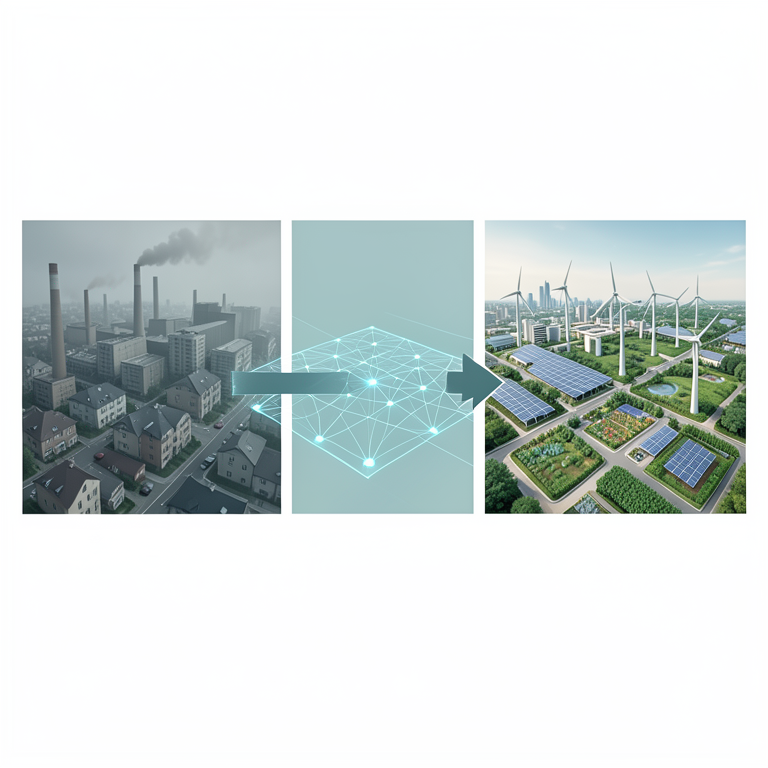
Conceptual AI-Environmental Justice Integration
AI-generated conceptual illustration (A diverse urban landscape featuring a mix of industrial zones and residential neighborhoods with green energy parks). It explains the idea and does not show study data.
View source evidence ↗Figures & tables
From the original paper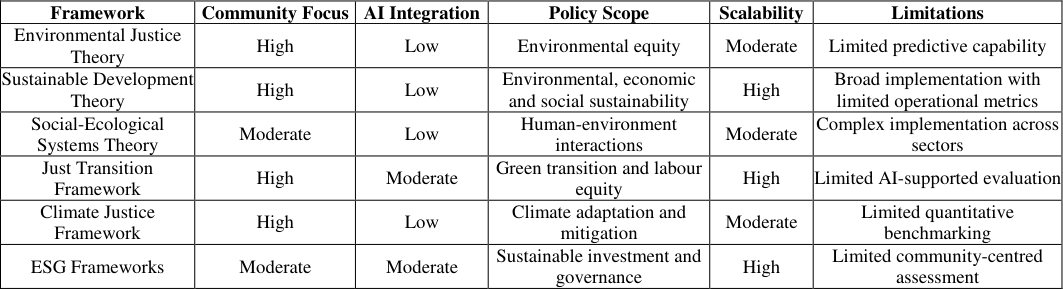 Table 1
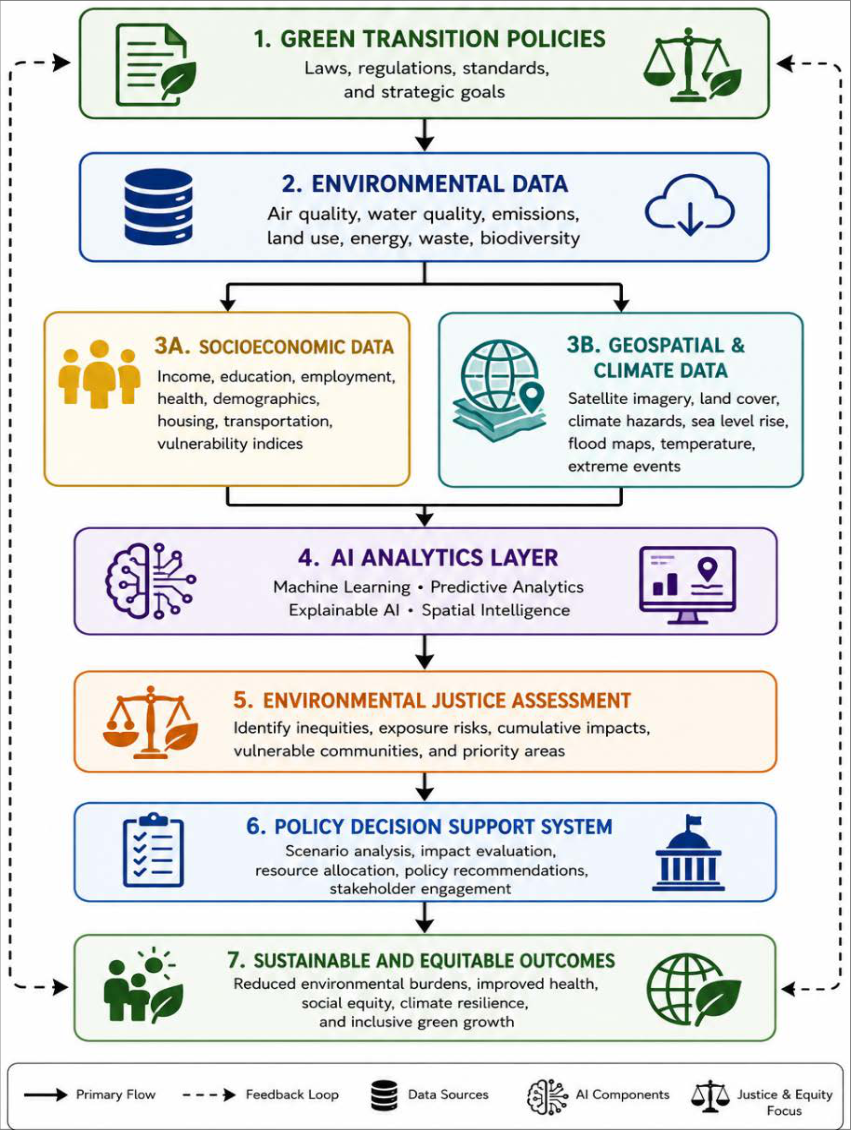 Figure 1
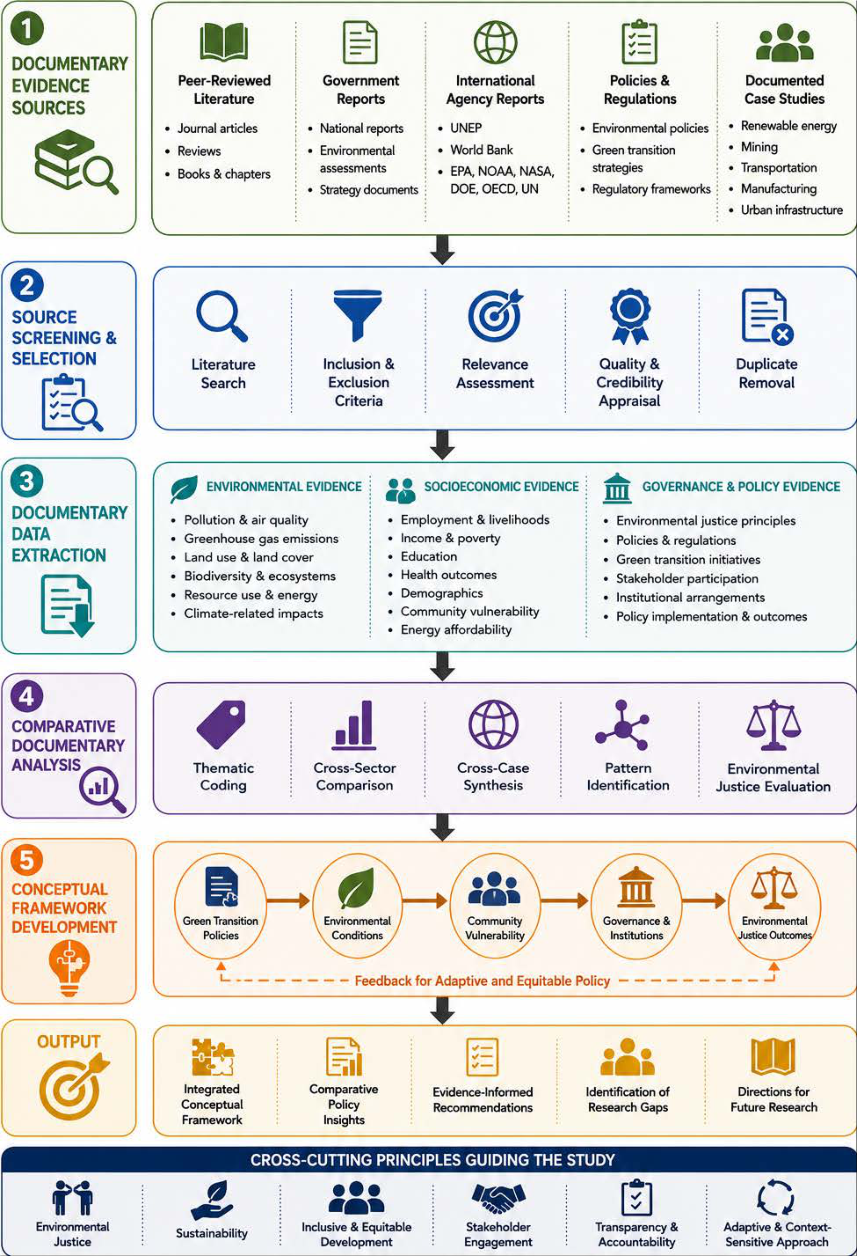 Figure 2
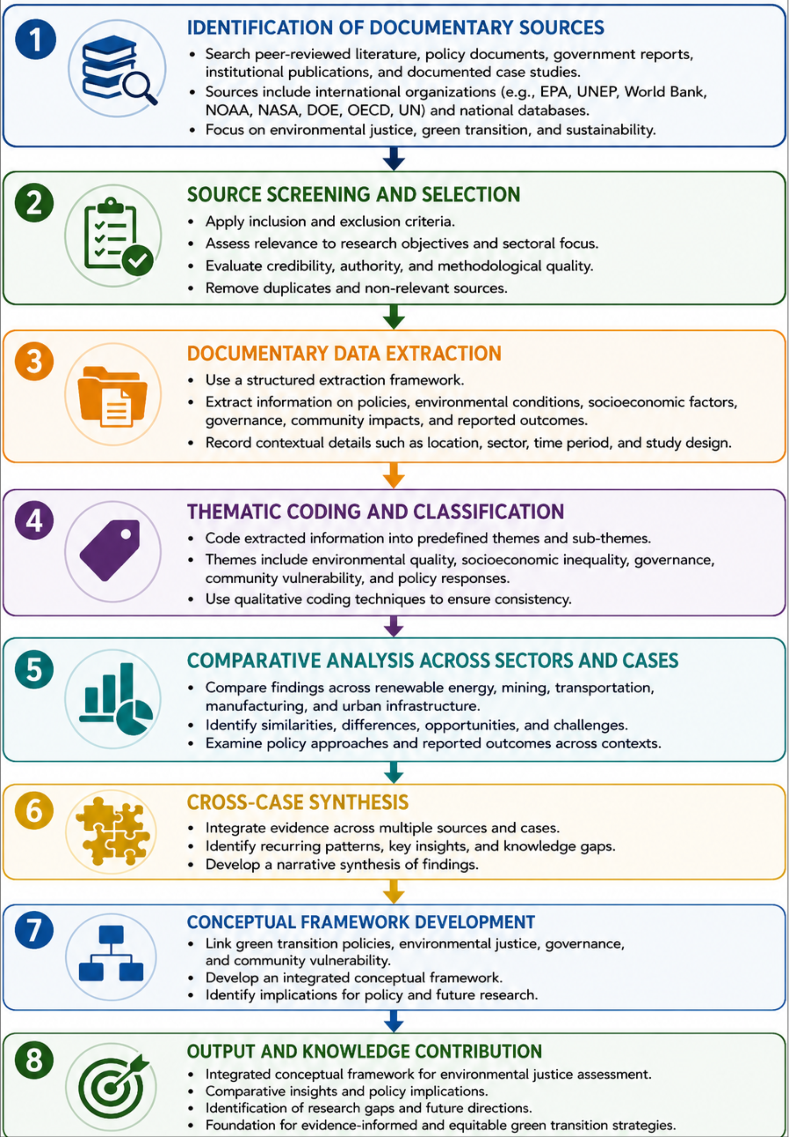 Figure 3
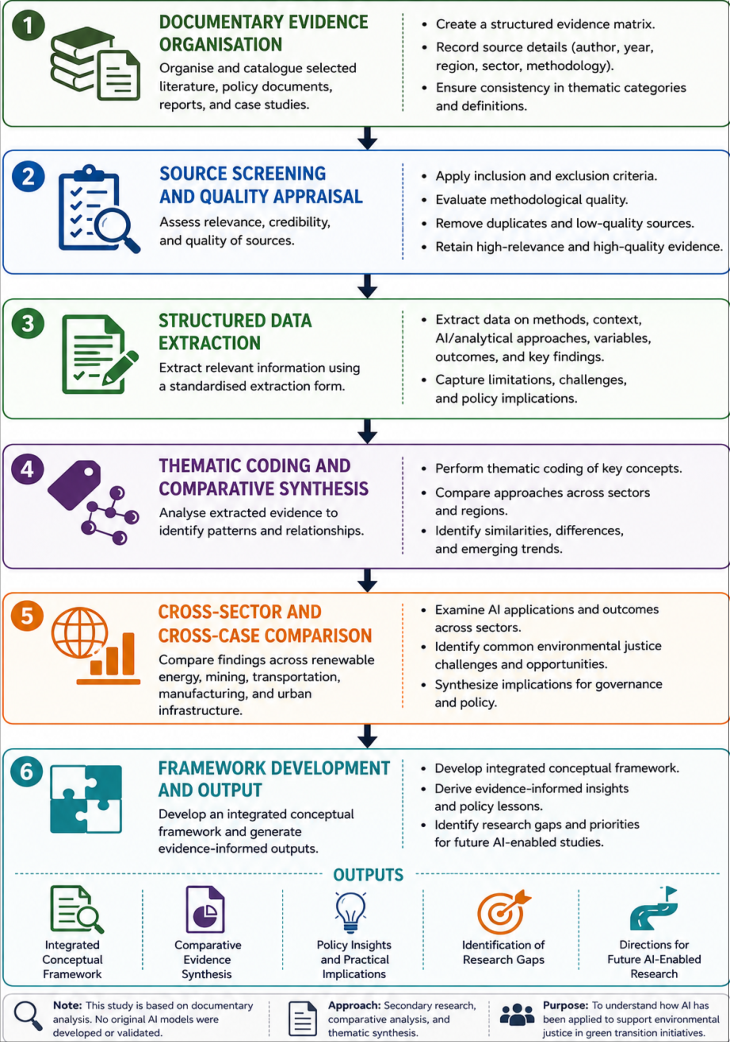 Figure 4
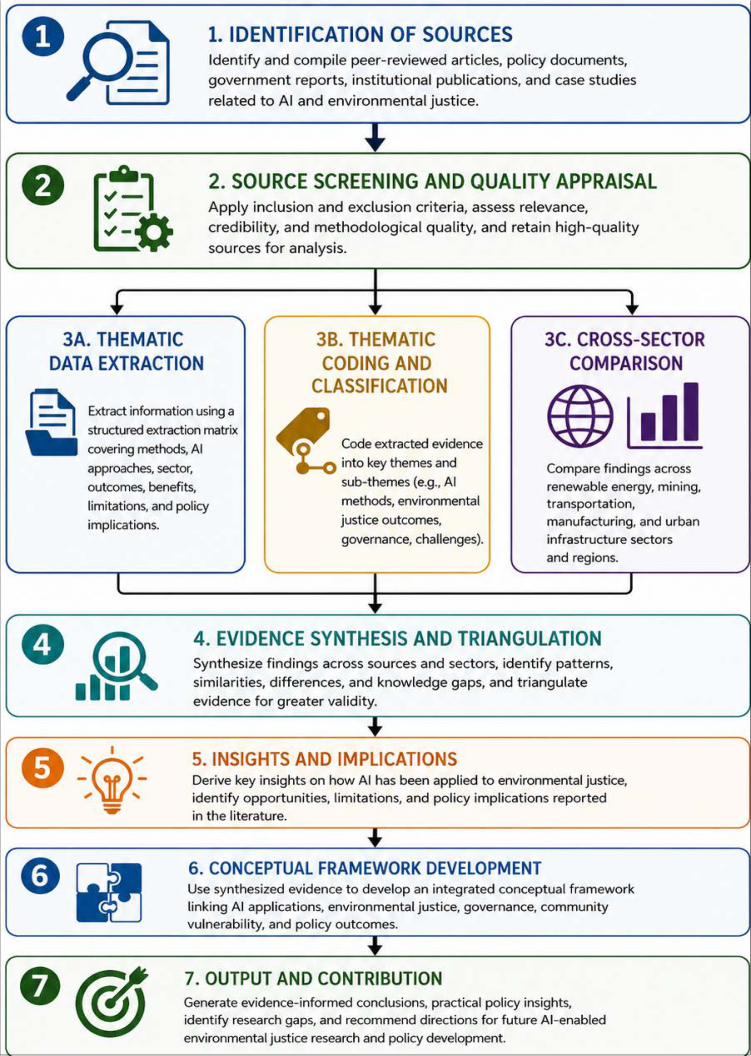 Figure 5
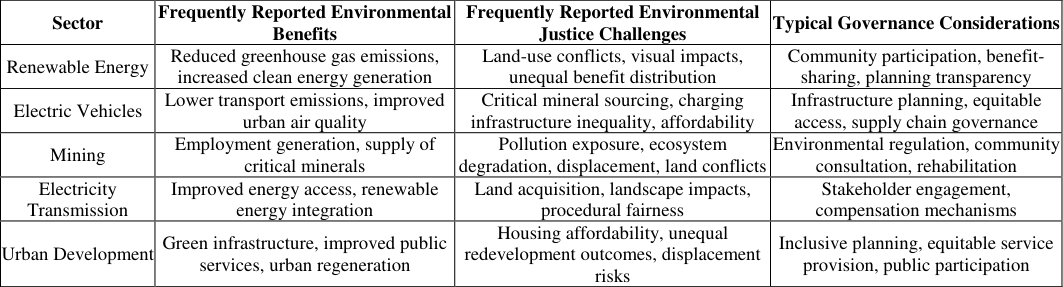 Table 2
Introduction 1.1 Evolution of the green transition
The global transition towards environmentally sustainable development has accelerated as governments, industries, and international organisations seek to address the long-term environmental and socioeconomic consequences of climate change through coordinated policy and investment initiatives [1] . Rising greenhouse gas emissions, increasing climaterelated disasters, and growing resource constraints have strengthened international commitment to reducing carbon intensity while promoting sustainable patterns of economic growth and environmental stewardship [2] . The Paris Agreement established a common international framework for limiting global temperature increases, encouraging countries to adopt ambitious decarbonisation strategies and long-term net-zero commitments through nationally determined contributions and climate action plans [3] . These commitments have accelerated investments in renewable energy technologies, low-carbon industrial development, circular economy practices, sustainable finance, and resource-efficient production systems designed to reduce dependence on fossil fuels while supporting economic resilience [4] . Climate neutrality has consequently emerged as a strategic objective linking environmental protection with technological innovation, industrial competitiveness, and sustainable development [5] . This transformation represents a gradual transition from fossil-fuel dependency towards renewable energy deployment, sustainable economic development, and ultimately the establishment of resilient low-carbon societies capable of balancing environmental sustainability with long-term socioeconomic prosperity [6] .
Environmental justice and unequal community impacts
Although the green transition offers significant environmental and economic opportunities, its benefits and associated burdens remain unevenly distributed across different communities, creating important environmental justice concerns that increasingly influence climate policy and sustainable development planning [7] . Environmental justice advocates equitable protection from environmental harm while ensuring that all communities participate fairly in environmental decision-making regardless of socioeconomic status, ethnicity, or geographical location [8] . Distributional justice examines how environmental benefits, investment opportunities, and climate adaptation resources are allocated, whereas procedural justice focuses on inclusive participation and transparency throughout environmental governance processes [9] . Recognition justice further emphasises the need to acknowledge the unique cultural values, historical experiences, and development priorities of affected populations when designing sustainability policies [2] . These principles collectively support broader concepts of energy justice and climate justice that seek equitable access to affordable clean energy while reducing disproportionate environmental risks [5] . Rural communities, Indigenous populations, minority groups, and economically disadvantaged urban neighbourhoods frequently experience unequal access to investment, employment opportunities, infrastructure development, and environmental improvements, demonstrating that the social outcomes of green transition policies remain uneven despite broader sustainability ambitions [1] .
Artificial intelligence for environmental policy analysis
Artificial intelligence has emerged as an important analytical capability for supporting evidence-based environmental policy through advanced data processing, predictive modelling, and intelligent decision-support across complex environmental systems [3] . Machine learning algorithms analyse diverse environmental, socioeconomic, and spatial datasets to identify relationships that improve understanding of environmental change and community vulnerability [6] . Predictive analytics enables policymakers to evaluate future environmental scenarios, while explainable artificial intelligence enhances transparency by providing interpretable justification for analytical recommendations and policy decisions [8] . Spatial analytics and geospatial intelligence further strengthen environmental assessment through satellite observations, geographic information systems, and remote sensing technologies that support environmental monitoring across large geographical regions [4] . These capabilities improve policy formulation by transforming reactive environmental management into evidence-based planning, predictive policy analysis, and adaptive governance that continuously responds to emerging environmental conditions while supporting equitable and sustainable decision-making across diverse communities [7] .
Research aim, objectives and contributions
This study aims to develop an artificial intelligence-driven environmental justice framework for evaluating the community-level impacts of green transition policies while supporting equitable and evidence-based environmental decision-making across diverse socioeconomic and geographical contexts [9] . The research investigates how intelligent analytical techniques can improve assessment of environmental equity, identify disparities in policy outcomes, and strengthen the integration of justice considerations within sustainability planning and climate governance [2] . Specifically, the study develops an AI-driven environmental justice framework, proposes a community impact evaluation methodology, and introduces an Environmental Equity Index for measuring disparities associated with green transition initiatives across different population groups [5] . The research further establishes a policy benchmarking model and decision-support architecture capable of comparing alternative environmental strategies using multidimensional social, environmental, and economic indicators to improve policy transparency and implementation effectiveness [1] . Collectively, these contributions provide policymakers, environmental agencies, researchers, and community stakeholders with an integrated analytical framework for advancing environmentally sustainable, socially equitable, and datainformed governance that supports inclusive green transition outcomes [4] .
Literature Review and Conceptual Foundation 2.1 Evolution of environmental justice research
Environmental justice research has expanded considerably as environmental degradation, climate change, and socioeconomic inequality increasingly intersect within contemporary sustainability discourse [11] . Initial investigations primarily concentrated on pollution justice by examining the disproportionate location of hazardous waste facilities, industrial emissions, and toxic contaminants within economically disadvantaged and minority communities [7] . As understanding of environmental inequality matured, scholarly attention shifted towards environmental equity, emphasising fair access to environmental resources, public health protection, and equitable participation in environmental governance processes [14] . The emergence of climate justice further broadened this perspective by recognising that communities contribute differently to greenhouse gas emissions while experiencing unequal vulnerability to climate-related risks and adaptation challenges [9] . Parallel advances in energy justice reinforced the importance of equitable access to affordable, reliable, and sustainable energy systems throughout the global transition towards cleaner energy sources [13] . More recently, environmental justice scholarship has incorporated artificial intelligence into sustainability research, supporting intelligent assessment of renewable energy deployment, electric vehicle infrastructure, green hydrogen development, smart city planning, and carbon market performance through datadriven environmental decision-making and policy evaluation [8] . These developments demonstrate the multidisciplinary evolution of environmental justice as an increasingly evidence-based field supporting equitable green transition policies [15] .
Existing environmental justice frameworks
A diverse range of theoretical and policy frameworks has guided environmental justice research by providing complementary perspectives for evaluating environmental equity, sustainable development, and inclusive governance across different socioeconomic contexts [10] . Environmental Justice Theory establishes the normative foundation by advocating equitable distribution of environmental benefits and burdens while promoting meaningful participation of affected communities throughout environmental decisionmaking processes [15] . Sustainable Development Theory broadens this perspective by integrating environmental protection with economic prosperity and social wellbeing to achieve balanced long-term development outcomes [7] . Social-Ecological Systems Theory further recognises the dynamic interactions between ecological processes and human systems, highlighting the need for adaptive governance capable of responding to environmental uncertainty and institutional complexity [12] . The Just Transition Framework extends these principles by supporting socially inclusive pathways towards low-carbon economies that minimise adverse impacts on workers, industries, and vulnerable communities during structural transformation [9] . Climate Justice Frameworks similarly address equity in climate mitigation and adaptation policies, whereas Environmental, Social, and Governance frameworks increasingly influence sustainable investment and organisational accountability [14] . Although these approaches strengthen community participation and policy effectiveness, their scalability, artificial intelligence integration, predictive capability, and decision-support functionality remain uneven across environmental governance applications [8] . The comparative assessment indicates that current environmental justice frameworks provide valuable theoretical and policy guidance but remain largely descriptive, offering limited support for dynamic AI-enabled environmental assessment, predictive policy evaluation, and integrated decision optimisation across diverse green transition initiatives [11] .
Research gaps
Despite substantial advances in environmental justice scholarship, several conceptual and methodological challenges continue to limit comprehensive evaluation of green transition policies and their socioeconomic impacts across diverse communities [13] . First, although artificial intelligence is increasingly applied in environmental monitoring, energy systems, and sustainability research, its integration into environmental justice evaluation remains fragmented, with relatively few studies combining AIenabled analytical capabilities with distributive, procedural, and recognitional justice perspectives to support policy assessment [8] . Second, predictive modelling is widely employed in climate and energy research; however, comparatively fewer studies incorporate environmental justice considerations into scenario-based modelling frameworks capable of evaluating the distributional consequences of alternative decarbonisation pathways and policy interventions [15] . Third, numerous environmental and sustainability indicators have been developed, yet differences in evaluation criteria, data availability, and governance contexts continue to hinder consistent benchmarking of environmental justice performance across regions, industrial sectors, and green transition programmes [9] . Furthermore, while quantitative assessment models have become increasingly sophisticated, greater integration of environmental, economic, social, and governance dimensions within unified analytical frameworks remains necessary to support comprehensive policy evaluation [11] .
Similarly, the application of explainable artificial intelligence to environmental justice decision-making remains an emerging area, with opportunities to strengthen transparency, interpretability, and accountability in AIassisted policy analysis [7] . Finally, although sector-specific investigations have expanded considerably, relatively few studies provide integrated comparative analyses spanning renewable energy, sustainable transportation, industrial decarbonisation, urban development, and circular economy initiatives, limiting understanding of the cumulative environmental justice implications of the broader green transition [14] . These research challenges highlight the need for an integrated conceptual framework that synthesises environmental justice theory, green transition policy, artificial intelligence, community resilience, and multisector governance within a coherent analytical perspective. Such a framework can support more consistent policy evaluation, facilitate cross-sector comparison, and strengthen evidence-informed decision-making for equitable and inclusive low-carbon transitions [10] .
Proposed conceptual framework
This study develops an integrated conceptual framework that synthesises insights from environmental justice, sustainability transitions, and environmental governance literature to examine how green transition policies influence communities across different socioeconomic and environmental contexts [10] . The framework emphasises the interconnected roles of policy design, governance arrangements, environmental conditions, and community characteristics in shaping the distribution of environmental benefits and burdens associated with decarbonisation initiatives [15] . By bringing together evidence from documented studies, policy reports, and institutional publications, the framework highlights the interactions among renewable energy development, land-use change, biodiversity conservation, employment, public health, income distribution, and community vulnerability within a single analytical perspective [12] . Rather than implementing computational or predictive techniques, the framework identifies emerging analytical approaches including artificial intelligence, spatial analysis, and decision-support technologies as promising directions for future research that may enhance environmental justice assessment as suitable data and evaluation frameworks become available [8] . The framework therefore serves primarily as a conceptual guide for interpreting existing evidence, identifying relationships across diverse policy settings, and supporting the development of more equitable, transparent, and contextsensitive green transition strategies [14] . By integrating environmental, social, economic, and governance perspectives, it provides a foundation for future empirical investigations while informing policymakers seeking to promote inclusive and sustainable low-carbon development [9] .
Fig 1:
Conceptual AI Framework for Environmental Justice Assessment
Research Methodology 3.1 Overall research framework
This study adopts a secondary research design to examine how artificial intelligence has been conceptualised and applied within environmental justice scholarship relating to the green transition [21] . The research is based on a structured review and comparative synthesis of peerreviewed literature, policy documents, government reports, international institutional publications, and documented case studies addressing environmental justice, sustainable development, and emerging digital technologies [17] . A documentary analysis approach is employed to examine how existing studies describe the potential contributions of artificial intelligence to environmental monitoring, policy evaluation, environmental risk assessment, and decision support, while also identifying conceptual gaps, methodological challenges, and opportunities for future research [24] . Comparative analysis is used to synthesise evidence across multiple sectors including renewable energy, mining, transportation, manufacturing, and urban infrastructure to explore how environmental justice concerns are addressed within different green transition contexts [19] . Rather than developing or testing artificial intelligence models, the study critically evaluates existing evidence to identify recurring themes, differences in policy implementation, and common governance challenges reported in the literature [22] . The resulting synthesis informs the development of an integrated conceptual framework that illustrates the relationships among green transition policies, environmental justice, governance, socioeconomic conditions, and the potential future role of artificial intelligence in supporting evidence-informed decisionmaking [18] . Examining these sectors collectively provides a comprehensive understanding of the diverse environmental justice challenges associated with decarbonisation while highlighting priorities for future empirical and computational research [23] .
Environmental data collection and integration
This study draws upon a broad range of secondary sources to examine the role of artificial intelligence in supporting environmental justice assessment within the green transition [20] . The documentary evidence includes peer-reviewed academic literature, government reports, policy documents, and publications from international organisations addressing environmental quality, socioeconomic inequality, sustainability, and environmental governance [17] . Authoritative institutional sources, including the United States Environmental Protection Agency, Department of Energy, National Oceanic and Atmospheric Administration, National Aeronautics and Space Administration, United States Census Bureau, World Bank, United Nations Environment Programme, and EPA EJScreen, are reviewed to provide contextual information on environmental conditions, demographic characteristics, climate risks, pollution exposure, and policy initiatives relevant to environmental justice [24] . The study also draws upon published case studies and documented applications of environmental monitoring, geospatial analysis, and sustainability assessment to examine how environmental and socioeconomic evidence has been used in previous research to evaluate community vulnerability and policy outcomes across different sectors [19] . Rather than integrating or modelling these datasets directly, the study synthesises the evidence reported within the reviewed literature to identify recurring themes, methodological approaches, and policy implications concerning environmental justice and the potential contribution of artificial intelligence to future assessment frameworks [22] . This documentary synthesis provides the foundation for the development of the proposed conceptual framework and supports a comparative understanding of environmental justice challenges across renewable energy, mining, transportation, manufacturing, and urban infrastructure sectors [18] .
Data preparation and environmental feature construction
Following the identification and selection of relevant sources, the documentary evidence was systematically organised to ensure consistency, transparency, and comparability throughout the review process [22] . Selected publications, policy documents, government reports, and institutional reports were examined using a structured data extraction framework designed to capture information relating to environmental justice, green transition policies, governance arrangements, community vulnerability, socioeconomic conditions, and reported environmental outcomes [18] . Information extracted from each source was organised into predefined thematic categories to facilitate comparison across different sectors and geographical contexts while preserving the original context and interpretation presented in the reviewed literature [24] . The documentary evidence was subsequently analysed through an iterative thematic coding process to identify recurring concepts, implementation approaches, reported outcomes, and policy challenges associated with environmental justice during the green transition [17] . Comparative synthesis was undertaken across renewable energy, mining, transportation, manufacturing, and urban infrastructure sectors to examine similarities, differences, and emerging patterns reported in the literature [20] . Particular attention was given to environmental quality, socioeconomic inequality, community vulnerability, governance effectiveness, stakeholder participation, and policy implementation as recurring analytical dimensions identified across the reviewed studies [23] . Cross-case synthesis was then used to integrate findings from diverse documentary sources, enabling the identification of common environmental justice challenges and transferable policy lessons while informing the development of the study's integrated conceptual framework [19] .
Fig 3: Documentary Evidence Preparation and Analytical Process
Fig 3: Documentary Evidence Preparation and Analytical Process
AI Model Development, Optimisation and Validation
Following the preparation of the documentary evidence, the selected literature and policy documents were examined through a structured comparative analysis to identify how artificial intelligence has been applied to support environmental justice assessment within green transition initiatives [20] . The review considered documented applications of machine learning, predictive analytics, geospatial analysis, and decision-support systems reported across renewable energy, mining, transportation, manufacturing, and urban infrastructure sectors [24] . Particular attention was given to the environmental challenges addressed, analytical approaches adopted, reported benefits, implementation limitations, and governance implications described in the reviewed studies [18] . Comparative synthesis was subsequently undertaken to identify recurring patterns in the use of artificial intelligence for environmental monitoring, environmental risk assessment, pollution management, resource allocation, and policy evaluation across different environmental and socioeconomic contexts [22] . Rather than developing or validating new computational models, the study critically evaluates existing evidence to examine how artificial intelligence has been incorporated into environmental justice research and where important methodological and practical gaps remain [17] . The findings from this documentary synthesis informed the development of the proposed conceptual framework, highlighting opportunities through which future empirical research may integrate artificial intelligence with environmental justice assessment, participatory governance, and evidence-informed policy development [21] . This approach provides a structured synthesis of the current state of knowledge while identifying priorities for future computational and empirical investigations that can strengthen equitable and sustainable green transition strategies [19] .
Fig 4: Documentary Analysis and Comparative Synthesis Workflow
Fig 4: Documentary Analysis and Comparative Synthesis Workflow
Evidence Evaluation and Analytical Rigour
The credibility of the study was strengthened through a systematic evaluation of the documentary evidence included in the review [22] . Evidence from peer-reviewed publications, government reports, policy documents, and international institutional reports was critically examined to assess its relevance, methodological quality, geographical coverage, and contribution to understanding environmental justice within the context of the green transition [17] . Documentary sources were compared across renewable energy, mining, transportation, manufacturing, and urban infrastructure sectors to identify recurring themes, differences in policy implementation, and reported environmental justice outcomes [21] . Analytical rigour was further enhanced through comparative synthesis and evidence triangulation, whereby findings from multiple documentary sources were examined collectively to identify areas of convergence, divergence, and emerging knowledge gaps [19] . Rather than generating new statistical estimates or validating predictive models, the study synthesises existing evidence to evaluate how artificial intelligence has been applied within environmental justice research and to identify the opportunities and limitations reported in the literature [24] . This approach supports the development of an integrated conceptual framework while ensuring that the study's conclusions are grounded in transparent documentary analysis, comparative evaluation, and evidence-based interpretation.
Experimental results and performance evaluation 4.1 Experimental environment 4.1 Analytical environment
The study was conducted as a desk-based secondary investigation using documentary analysis and comparative literature synthesis rather than computational model development [28] . Relevant evidence was obtained from peer-reviewed journal articles, government reports, policy documents, and publications from international organisations addressing environmental justice, green transition policies, sustainability, and artificial intelligence applications [24] . Documentary sources were systematically reviewed, organised, and synthesised to identify current applications of artificial intelligence, methodological approaches, reported environmental justice outcomes, and policy implications across renewable energy, mining, transportation, manufacturing, and urban infrastructure sectors [30] . Comparative analysis and cross-case synthesis were employed to identify recurring themes, common implementation challenges, and emerging opportunities reported in the literature, thereby informing the development of the study's integrated conceptual framework while maintaining methodological transparency and consistency [26] .
Comparative synthesis of artificial intelligence applications
Rather than developing or optimising artificial intelligence models, this study critically synthesises evidence from published research to examine how artificial intelligence has been applied to support environmental justice assessment within green transition initiatives [25] . The comparative review considers documented applications of machine learning, geospatial analysis, decision-support systems, predictive analytics, and explainable artificial intelligence as reported in the existing literature [29] . Particular attention is given to the environmental challenges addressed, methodological approaches adopted, reported advantages, implementation constraints, and governance implications associated with these technologies across different sustainability sectors [24] . Cross-sector comparison enables the identification of recurring patterns, methodological differences, and research gaps while highlighting opportunities for integrating artificial intelligence into future environmental justice assessment and evidence-informed policymaking [27] . The resulting synthesis provides the analytical foundation for the proposed conceptual framework and identifies priorities for subsequent empirical and computational investigations aimed at supporting equitable and sustainable green transition strategies [30] .
Comparative synthesis of environmental justice across green transition sectors
The documentary evidence indicates that environmental justice challenges differ considerably across green transition sectors because each involves distinct environmental, social, and governance contexts [30] . The reviewed literature consistently reports that renewable energy initiatives contribute to reducing greenhouse gas emissions and improving long-term energy sustainability; however, their social acceptability often depends on land-use decisions, community engagement, benefit-sharing arrangements, and procedural fairness during project development [24] . Similarly, studies examining electric vehicle transitions associate these initiatives with reduced transport-related emissions and improved urban air quality, while also highlighting challenges relating to critical mineral extraction, battery supply chains, infrastructure accessibility, and equitable distribution of economic benefits [27] . The reviewed evidence further suggests that mining activities present some of the most significant environmental justice concerns because resource extraction is frequently associated with pollution, ecosystem degradation, land-use conflicts, and disproportionate impacts on nearby communities, despite contributing to employment opportunities and economic development [29] . Across the literature, electricity transmission projects are recognised as supporting renewable energy integration and improving energy accessibility, although concerns regarding land acquisition, landscape impacts, and stakeholder participation remain common during infrastructure development [26] . Urban development initiatives similarly demonstrate varied environmental justice outcomes, with reported benefits depending upon the effectiveness of planning processes, investment in green infrastructure, housing affordability, public service accessibility, and inclusive governance arrangements [25] .
Overall, the comparative documentary analysis suggests that environmental justice outcomes are shaped not only by the environmental objectives of green transition policies but also by governance quality, stakeholder participation, socioeconomic conditions, and the distribution of costs and benefits among affected communities [28] . The reviewed literature also identifies artificial intelligence as an emerging tool that may support future environmental justice assessment through improved environmental monitoring, spatial analysis, and decision support. However, the present study does not evaluate or validate artificial intelligence models directly; rather, it synthesises existing evidence to inform the development of the proposed conceptual framework and identify priorities for future empirical research.
Discussion
Discussion
Interpretation of findings
The documentary evidence reviewed in this study suggests that environmental justice outcomes associated with green transition initiatives are shaped by the interaction of environmental, socioeconomic, institutional, and governance factors rather than by environmental conditions alone [31] . Across the reviewed literature, renewable energy and electric mobility initiatives are generally associated with reduced greenhouse gas emissions and improved environmental sustainability; however, their social and economic benefits vary depending on governance arrangements, community participation, land-use decisions, and the equitable distribution of project benefits [29] . Conversely, mining activities and large-scale infrastructure developments are more frequently associated with environmental degradation, land-use conflicts, and disproportionate impacts on vulnerable communities, highlighting the importance of effective environmental governance and inclusive decision-making processes [34] . The comparative synthesis further indicates that community resilience and environmental justice are strengthened when policy implementation is supported by transparent governance, meaningful stakeholder engagement, and consideration of local socioeconomic conditions [30] . Although the reviewed literature identifies artificial intelligence as a promising tool for improving environmental monitoring, spatial analysis, and policy decision support, the present study synthesises existing evidence rather than evaluating or validating artificial intelligence models directly [35] .
Policy implications
The findings highlight several policy implications for organisations responsible for planning, financing, regulating, and implementing green transition initiatives [32] . Policymakers should strengthen environmental justice by embedding equity considerations within environmental planning, infrastructure development, and sustainability programmes while ensuring that vulnerable communities participate meaningfully in decision-making processes [35] .
Greater integration of environmental, social, and governance considerations within policy evaluation can improve the distribution of environmental benefits and reduce unintended socioeconomic burdens associated with decarbonisation initiatives [29] . Public agencies should also strengthen environmental monitoring, data transparency, and stakeholder engagement to support more inclusive and accountable governance [33] . Although emerging digital technologies, including artificial intelligence, offer opportunities to improve environmental assessment and policy analysis, their application should be accompanied by transparent governance, ethical safeguards, and inclusive implementation practices to ensure that technological innovation contributes to equitable sustainability outcomes [30] . Collectively, these measures can strengthen environmental governance while supporting socially inclusive and environmentally sustainable green transition strategies [34] .
Future research
Future research should examine how emerging analytical technologies can complement environmental justice assessment while remaining responsive to local governance contexts and community priorities [31] . Empirical studies applying artificial intelligence, geospatial analysis, and decision-support systems to real-world environmental justice challenges would help evaluate their practical effectiveness and limitations across different policy settings [35] . Comparative investigations spanning multiple countries and sectors would further improve understanding of how institutional arrangements, governance quality, and socioeconomic conditions influence environmental justice outcomes during the green transition [30] . Additional research should also explore the integration of community knowledge, participatory governance, and environmental monitoring within digital decision-support frameworks to strengthen transparency, accountability, and policy effectiveness [33] . Longitudinal studies examining environmental justice outcomes over time would provide valuable evidence regarding the sustainability and equity of green transition policies while complementing the documentary synthesis presented in this study [29] .
Conclusion 6.1 Summary of findings
This study synthesised current evidence on the role of artificial intelligence in advancing environmental justice within the context of the green transition through a secondary research design based on documentary analysis and comparative literature synthesis. The review examined how environmental, socioeconomic, governance, and policy dimensions have been integrated within existing environmental justice research across sectors including renewable energy, mining, transportation, electricity infrastructure, and urban development. The documentary evidence indicates that environmental justice outcomes are shaped by the interaction of governance quality, community participation, socioeconomic conditions, and environmental policy implementation rather than by environmental performance alone. The review further highlights the growing interest in artificial intelligence as a potential tool for supporting environmental monitoring, spatial analysis, policy evaluation, and evidence-informed decision-making. Drawing on these findings, the study proposes an integrated conceptual framework that illustrates how artificial intelligence could complement environmental justice assessment by bringing together environmental, social, economic, and governance considerations within a coherent analytical perspective. Rather than presenting the results of an empirical modelling exercise, the framework provides a conceptual foundation for future research and contributes to a broader understanding of how emerging digital technologies may support more equitable and sustainable green transition policies.
Practical implications and policy recommendations
The conceptual framework developed in this study provides policymakers, environmental regulators, researchers, investors, and community organisations with a structured perspective for considering environmental justice throughout the planning and implementation of green transition initiatives. The documentary evidence emphasises the importance of integrating environmental, socioeconomic, and governance considerations into policy development to ensure that the benefits and burdens of decarbonisation are distributed more equitably across communities. Public institutions should strengthen stakeholder participation, improve transparency in environmental decision-making, and incorporate environmental justice principles into sustainability planning and infrastructure investment. Although artificial intelligence offers promising opportunities for enhancing environmental monitoring, policy analysis, and decision support, its application should be accompanied by robust governance arrangements, ethical safeguards, transparency, and meaningful public engagement. Future empirical research is needed to evaluate the practical performance of AI-enabled environmental justice assessment tools using real-world datasets and documented policy outcomes. Until such evidence is available, the framework presented in this study should be regarded as a conceptual guide that supports evidence-informed policymaking and identifies priorities for future investigation rather than as a validated operational decision-support system.
Figures and tables from the paper
| Framework | Community Focus | AI Integration | Policy Scope | Scalability | Limitations |
|---|---|---|---|---|---|
| Environmental Justice Theory | High | Low | Environmental equity | Moderate | Limited predictive capability |
| Sustainable Development Theory | High | Low | Environmental, economic and social sustainability | High | Broad implementation with limited operational metrics |
| Social-Ecological Systems Theory | Moderate | Low | Human-environment interactions | Moderate | Complex implementation across sectors |
| Just Transition Framework | High | Moderate | Green transition and labour equity | High | Limited AI-supported evaluation |
| Climate Justice Framework | High | Low | Climate adaptation and mitigation | Moderate | Limited quantitative benchmarking |
| ESG Frameworks | Moderate | Moderate | Sustainable investment and governance | High | Limited community-centred assessment |
Table text extracted from the original PDF; superscript letters are shown inline. The original table image is below.
View original table image
References
35 in the original paper- Vaishnav P. Implications of green technologies for environmental justice. Annu Rev Environ Resour. 2023;48(1):505-530.
- Anguelovski I, Brand AL, Ranganathan M, Hyra D. Decolonizing the green city: From environmental privilege to emancipatory green justice. Environ Justice. 2022;15(1):1-1.
- Blaikie P, Brookfield H. Land degradation and society. London: Methuen; 1987.
- Garg A, Raut RD, Kumar M, Zhang C, Gokhale RS. Does the circular economy transition aid to carbon neutrality? Examining net-zero policy and stakeholder impact from the environmental justice viewpoint. J Clean Prod. 2025; 491:144851.
- Dwarkasing C. Inequality determined social outcomes of low-carbon transition policies: A conceptual metareview of justice impacts. Energy Res Soc Sci. 2023; 97:102974.
- Brulle RJ, Pellow DN. Environmental justice: Human health and environmental inequalities. Annu Rev Public Health. 2006; 27:103-124.
- Cha JM, Stevis D, Vachon TE, Price V, Brescia-Weiler M. A Green New Deal for all: The centrality of a worker and community-led just transition in the US. Polit Geogr. 2022; 95:102594.
- Okoli CF, Olewu J. Artificial intelligence and the future of inventorship: Comparative perspectives from the E.U. and emerging economies. Int J Comput Program Database Manag. 2024;5(2):81-86. DOI: 10.33545/27076636.2024.v5.i2a.171.
- Bullard RD. Dumping in Dixie: Race, class, and environmental quality. 3rd ed. Boulder: Westview Press; 2000.
- Oluwafemi I. Molecular surveillance frameworks advancing infection prevention practices within early childhood settings through environmental pathogen detection technologies. Int J Mol Biol Biochem. 2022;4(2):16-30. DOI: 10.33545/26646501.2022.v4.i2a.151.
- Guedes WP, Branchi BA, de Oliveira D'Antona Á. How is environmental justice being operationalized and measured? Challenges and emerging topics. J Environ Stud Sci. 2025:1-24.
- Checker M. The sustainability myth: Environmental gentrification and the politics of justice. New York: New York University Press; 2020.
- Chowkwanyun M. Environmental justice: Where it has been, and where it might be going. Annu Rev Public Health. 2023; 44:93-111.
- Cole LW, Foster SR. From the ground up: Environmental racism and the rise of the environmental justice movement. New York: New York University Press; 2001.
- Adanma UM, Ogunbiyi EO. A comparative review of global environmental policies for promoting sustainable development and economic growth. Int J Appl Res Soc Sci. 2024;6(5):954-977.
- Rhodes E, Scott WA, Jaccard M. Designing flexible regulations to mitigate climate change: A cross-country comparative policy analysis. Energy Policy. 2021; 156:112419.
- Fitzgerald LM. Winning coalitions for just transitions: Insights from the environmental justice movement. Energy Res Soc Sci. 2022; 92:102780.
- Kojola E, Pellow DN. New directions in environmental justice studies: Examining the state and violence. Environ Polit. 2021;30(1-2):100-118.
- Oluwafemi I. Integrated PCR diagnostics and environmental monitoring for enhancing food security, soil health, and agricultural sustainability nationwide. Int J Plant Pathol Microbiol. 2021;1(2 Pt A):62-76.
- Peet R, Watts M, editors. Liberation ecologies: Environment, development, social movements. London: Routledge; 1996.
- Pellow DN. Garbage wars: The struggle for environmental justice in Chicago. Cambridge (MA): MIT Press; 2002.
- Arogundade B. Supervision experiences of Black counselors-in-training with multiple minoritized identities. Couns Educ Superv. 2026. DOI:10.1002/ceas.70028.
- Perez AC, Grafton B, Mohai P, Hardin R, Hintzen K, Orvis S. Evolution of the environmental justice movement: Activism, formalization and differentiation. Environ Res Lett. 2015;10(10):105002.
- Govindarajan HK, Ganesh LS. Integrating energy governance and environmental justice: Role of renewable energy. Renew Energy Focus. 2022; 43:2436.
- Pulido L. Flint, environmental racism, and racial capitalism. Capital Nat Social. 2016;27(3):1-16.
- Ogunsipe B. Architecting privacy by design frameworks for critical infrastructure: A governance model for regulatory resilience. Int J Innov Sci Res Technol. 2026;11(6). DOI:10.38124/IJISRT/26JUN1456.
- Dall-Orsoletta A, Ferreira P, Dranka GG. Low-carbon technologies and just energy transition: Prospects for electric vehicles. Energy Convers Manag X. 2022; 16:100271.
- Robbins P. Political ecology: A critical introduction. 3rd ed. Oxford: Wiley-Blackwell; 2019.
- Crespy A, Munta M. Lost in transition? Social justice and the politics of the EU green transition. Transfer. 2023;29(2):235-251.
- Allam Z, Bibri SE, Sharpe SA. The rising impacts of the COVID-19 pandemic and the Russia-Ukraine war: Energy transition, climate justice, global inequality, and supply chain disruption. Resources. 2022;11(11):99.
- Schlosberg D. Defining environmental justice: Theories, movements, and nature. Oxford: Oxford University Press; 2007.
- Pinyi EO. Engineering resilient AI-enabled real-time digital infrastructure: A reference architecture for critical systems. Int J Eng Technol Res Manag. 2023;7(12):745.
- Adebiyi MK. Affordable housing development challenges: Contractual risk allocation, productivity improvement, and sustainable construction delivery in United States communities. Int J Multidiscip Trends. 2026;8(7):16-27. DOI: 10.22271/multi.2026.v8.i7a.1117.
- Sze J, London JK. Environmental justice at the crossroads. Sociol Compass. 2008;2(4):1331-1354.
- Ogunsipe B. Building national data governance ecosystems: Interoperable compliance frameworks for federally regulated industries. Int J Res Publ Rev. 2024;5(12):6208-6215. DOI:10.55248/gengpi.07.