
Research article · 2026 · Full text
International Journal of Advanced Chemistry ResearchComparative Structural Evolution and Surface Characteristics of Solid-State Synthesized Pr₂NiO₄ and PrCoO₃ Oxides
Volume 8(8) · Pages 14–20 · DOI: 10.33545/26646781.2026.v8.i8a.727 ↗
Research areasAdvancements in Solid Oxide Fuel CellsCatalytic Processes in Materials ScienceMagnetic and transport properties of perovskites and related materials
Abstract
Author-writtenRare-earth mixed oxides have attracted considerable attention because of their structural adaptability, oxygen transport capability, and promising catalytic characteristics. In the present investigation, Pr₂NiO₄ and PrCoO₃ oxide materials were synthesized through a conventional solid-state ceramic route followed by calcination at different temperatures. Their crystal structures and surface characteristics were systematically examined using powder X-ray diffraction (PXRD) and Brunauer–Emmett–Teller (BET) surface area measurements. PXRD analysis confirmed the successful formation of orthorhombic crystalline phases for both oxide systems. The Pr₂NiO₄ sample exhibited lattice parameters of a = 5.380 Å, b = 7.626 Å, and c = 5.419 Å, whereas PrCoO₃ possessed lattice constants of a = 5.344 Å, b = 7.578 Å, and c = 5.377 Å. Comparative crystallographic analysis indicated a higher degree of structural ordering for PrCoO₃, with crystallinity reaching 67.40%, compared with 51.73% for Pr₂NiO₄. Nitrogen adsorption–desorption measurements demonstrated mesoporous characteristics for both materials, with average pore diameters between 5 and 9 nm. The maximum BET surface area of Pr₂NiO₄ was 2.646 m² g⁻¹ at 800 °C, whereas PrCoO₃ exhibited its highest surface area of 3.357 m² g⁻¹ at 1000 °C. These findings indicate that transition-metal substitution significantly affects crystal growth, pore development, and accessible surface area. The combined structural and surface analyses demonstrate that PrCoO₃ exhibits superior physicochemical characteristics under the investigated synthesis conditions, suggesting its greater potential for catalytic and adsorption-related applications.
Summary
Source-checkedPlain-language reading of the full paper, prepared with AI and checked against the text. Each point links to the authors' own words.
Why it matters
- Rare-earth transition-metal oxides are valuable functional materials due to their structural stability and adjustable properties related to catalysis and oxygen transport. View evidence ↗
- Praseodymium-based compounds are specifically useful because the element's ability to change oxidation states facilitates oxygen mobility and defect formation. View evidence ↗
- The temperature used during calcination is a critical factor that affects how the crystal grows, how phases form, and how pores evolve in these materials. View evidence ↗
The question
- The study aims to compare the properties of Pr₂NiO₄ and Pr₂CoO₄ oxides produced via a standard solid-state ceramic synthesis method. View evidence ↗
- The researchers specifically focused on how the choice of transition metal (nickel vs. cobalt) affects the resulting crystal structure, crystallinity, and surface properties. View evidence ↗
What they did
- The materials were synthesized using a solid-state ceramic route with calcination temperatures tested at 800, 900, 1000, and 1100 °C. View evidence ↗
- Powder X-ray diffraction (PXRD) using Cu Kα radiation was used to identify the phases and characterize the crystallography of the powders. View evidence ↗
- The Brunauer-Emmett-Teller (BET) method, utilizing nitrogen adsorption-desorption, was employed to analyze the surface characteristics of the materials. View evidence ↗
What they found
- Both the Pr₂NiO₄ and Pr₂CoO₄ oxide systems successfully formed orthorhombic crystalline phases. View evidence ↗
- The surface area of Pr₂NiO₄ declined as calcination temperature increased, dropping from 2.646 m² g⁻¹ at 800 °C to 2.119 m² g⁻¹ at 1100 °C. View evidence ↗
- Both materials are classified as mesoporous, with average pore diameters ranging between 5 and 9 nm. View evidence ↗
What it means
- The authors conclude that Pr₂CoO₄ is likely to perform better in catalytic, electrochemical, and adsorption applications due to its superior structural ordering and surface properties. View evidence ↗
- The study provides a better understanding of how substituting different transition metals affects the structural development of rare-earth mixed oxides. View evidence ↗
Visual summary
1 visualsIllustrations explain the paper; charts are replotted from the paper's own table values.
Crystallinity (%): Pr₂NiO₄ / Orthorhombic... vs Pr₂CoO₄ / Orthorhombic...
Replotted from Table 3 (page 4) of the original paper. Every bar is the paper's own table value.
View source evidence ↗Figures & tables
From the original paper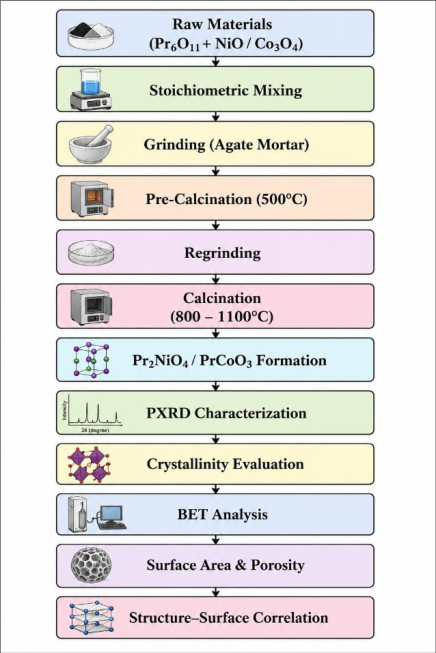 Figure 1
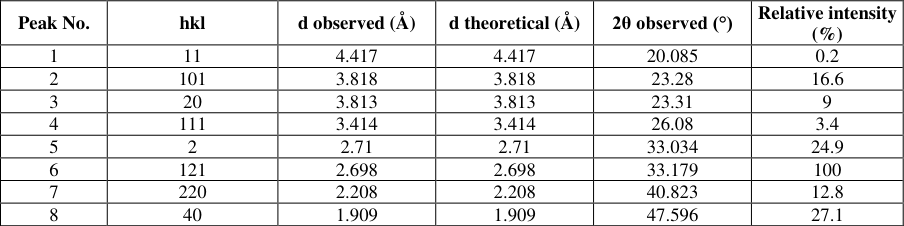 Table 1
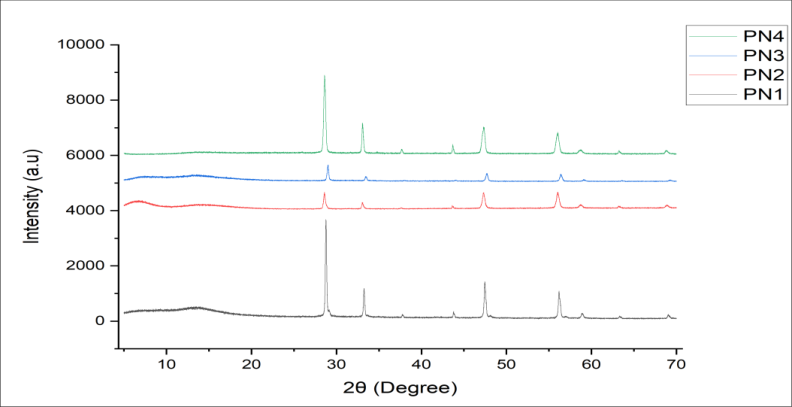 Figure 2
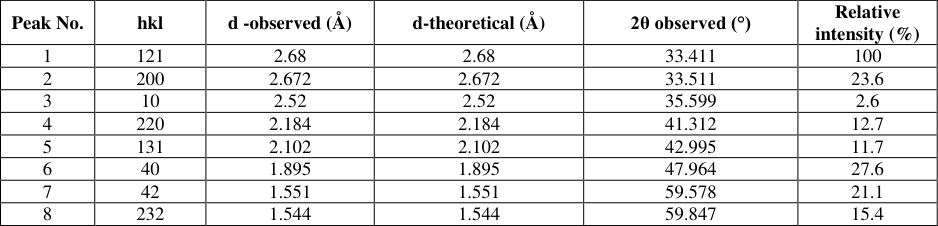 Table 2
 Table 3
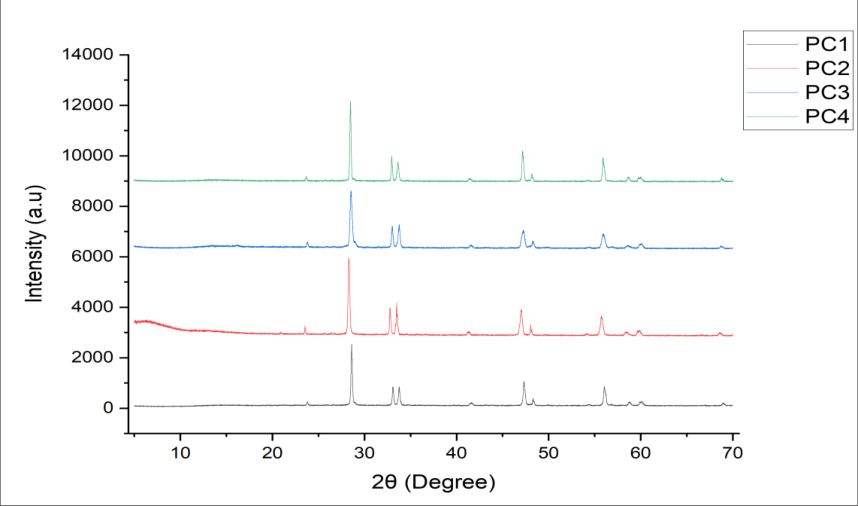 Figure 3
 Table 4
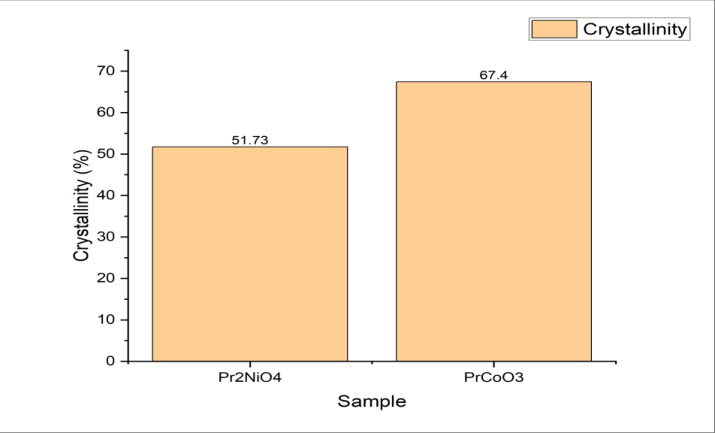 Figure 4
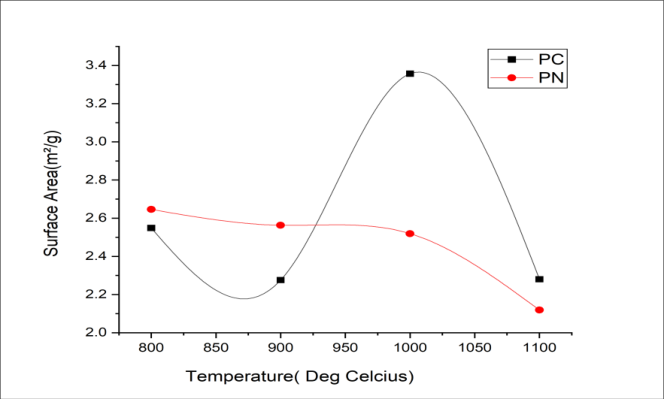 Figure 5
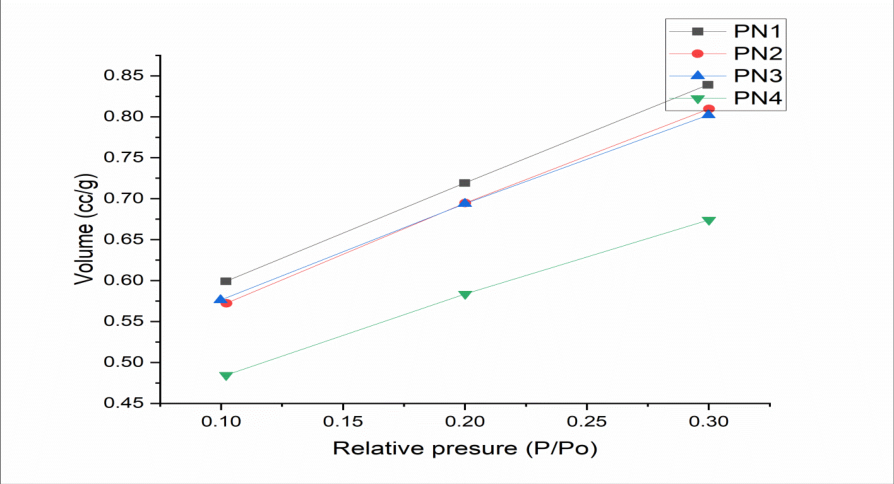 Figure 6
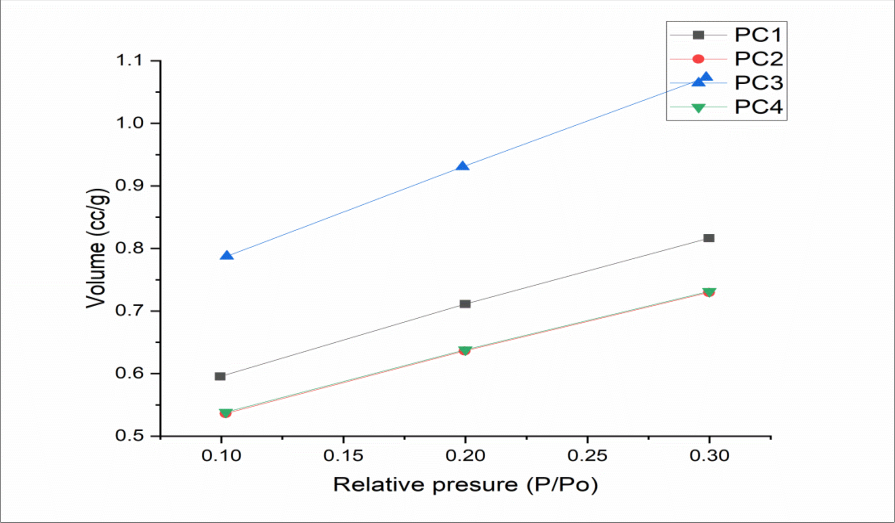 Figure 7
Introduction
Rare-earth transition-metal oxides constitute an important class of inorganic functional materials because they combine structural stability with tunable electronic, catalytic, and oxygen-transport properties. Their ability to accommodate different oxidation states and oxygen non-stoichiometry makes these compounds attractive for applications in heterogeneous catalysis, electrochemical energy conversion, oxygen-permeable membranes, gas sensors, and environmental remediation technologies. Continuous advances in oxide chemistry have demonstrated that the functional performance of these materials strongly depends on crystal structure, microstructural evolution, and surface characteristics developed during synthesis.Among rare-earth oxides, praseodymium-based compounds have received particular attention because praseodymium can readily undergo reversible oxidation-state changes, thereby facilitating oxygen defect formation and lattice oxygen mobility. These characteristics improve redox behaviour and contribute significantly to catalytic activity and electrochemical performance. When praseodymium is combined with transition metals such as nickel or cobalt, distinct oxide phases with different crystal architectures and physicochemical characteristics are produced. Pr₂NiO₄ belongs to the Ruddlesden-Popper family and possesses a layered K₂NiF₄-type crystal framework. The alternate stacking of perovskite-like and rock-salt layers provides efficient pathways for oxygen diffusion, making this compound attractive for solid oxide fuel cells, catalytic oxidation, and oxygen transport applications. In contrast, Pr₂CoO₄ crystallizes in an orthorhombic perovskite structure that exhibits excellent structural stability, high oxygen mobility, and favourable redox properties. These characteristics have made cobaltcontaining rare-earth oxides promising candidates for oxidation catalysis, environmental applications, and electrochemical devices. The preparation route plays a decisive role in determining the final properties of oxide materials. Among various synthesis techniques, the conventional solid-state ceramic method remains one of the most reliable approaches because of its simplicity, reproducibility, and suitability for producing thermally stable crystalline oxides. Calcination temperature directly influences diffusion kinetics, phase formation, crystallite growth, pore evolution, and particle agglomeration. Consequently, understanding the relationship between synthesis temperature, crystal structure, and surface properties is essential for optimizing material performance. Powder X-ray diffraction (PXRD) is widely employed to determine phase composition, crystal symmetry, lattice parameters, and crystallinity, whereas nitrogen adsorptiondesorption measurements based on the Brunauer-Emmett-Teller (BET) theory provide valuable information regarding specific surface area, pore volume, and pore diameter. The combined interpretation of these techniques offers a comprehensive understanding of the structure-surface relationship governing oxide behaviour. The objective of the present work is to perform a comparative investigation of Pr₂NiO₄ and Pr₂CoO₄ synthesized by the conventional solid-state ceramic route. Particular emphasis is placed on evaluating crystallographic characteristics, crystallinity, surface area, pore structure, and the influence of transition-metal chemistry on the structural evolution of both oxide systems. The results contribute to a better understanding of how compositional variation affects the physicochemical properties of rare-earth mixed oxides and may provide useful guidance for their utilization in catalytic and adsorption-related applications.
Experimental 2.1 Materials
All starting chemicals employed in this investigation were of analytical reagent (AR) grade and were used without further purification. Praseodymium oxide (Pr₆O₁₁, ≥99.9%), nickel(II) oxide (NiO, ≥99.9%), and cobalt precursor (used for Pr₂CoO₄ synthesis according to the experimental design) were selected as the raw materials. High-purity reagents were chosen to minimize impurity-induced phase formation during high-temperature calcination. Stoichiometric quantities of each precursor were accurately weighed before the synthesis procedure.
Synthesis Procedure
The oxide materials were synthesized using a conventional solid-state ceramic method. Appropriate stoichiometric amounts of precursor oxides were weighed and thoroughly mixed using an agate mortar and pestle to achieve homogeneous mixing. The powder mixtures were subjected to repeated grinding and calcination in air. Calcination was carried out at 800, 900, 1000 and 1100 °C to investigate the effect of temperature on phase formation and surface development.
Powder X-ray Diffraction (PXRD)
Phase identification and crystallographic characterization of the synthesized oxide powders were carried out using powder X-ray diffraction (PXRD) with Cu Kα radiation (λ = 1.5406 Å). Diffraction patterns were recorded over an appropriate 2θ range using a constant scanning rate to obtain well-resolved diffraction peaks. The diffraction data were indexed using standard crystallographic databases and analysed to determine lattice parameters, crystal symmetry, unit-cell dimensions, and crystallinity. Structural refinement was performed by comparing the experimental diffraction profiles with reference crystallographic data available in the COD database. The diffraction results were further utilized to evaluate the influence of calcination temperature on phase evolution and crystal growth.
BET Surface Area Analysis
Surface characteristics of the synthesized materials were investigated through nitrogen adsorption-desorption measurements based on the Brunauer-Emmett-Teller (BET) method. Before analysis, each powder sample was degassed under vacuum at an elevated temperature to eliminate adsorbed moisture and atmospheric contaminants. The adsorption isotherms were used to calculate the specific surface area, while pore volume and average pore diameter were determined using standard adsorption models. The obtained parameters were employed to examine the influence of calcination temperature on pore development and surface evolution. Comparative evaluation of BET results was performed to establish correlations between structural ordering observed from PXRD and the corresponding surface properties of both oxide systems.
Results and Discussion
Results and Discussion
Structural Evolution of Pr₂NiO₄
The phase formation and crystallographic characteristics of the synthesized Pr₂NiO₄ samples were investigated using powder X-ray diffraction analysis. The diffraction patterns obtained for samples calcined at different temperatures exhibited sharp and well-defined reflections, indicating successful formation of a crystalline oxide phase. As the calcination temperature increased, the diffraction peaks became progressively sharper and more intense, suggesting enhanced crystal growth and improved long-range structural ordering. The diffraction peaks were indexed using HighScore Plus software and compared with the corresponding COD reference data. The obtained diffraction pattern was successfully assigned to an orthorhombic crystal structure belonging to the Pnma space group. The calculated lattice parameters were a = 5.380 Å, b = 7.626 Å and c = 5.419 Å, with a unit-cell volume of 222.33 ų. These values are in good agreement with those reported for Pr₂NiO₄-type layered nickelates in previous investigations [5] . The strongest reflection was observed near 2θ ≈ 33.18°, corresponding to a highly ordered crystalline plane. Additional reflections were indexed to the characteristic planes of orthorhombic Pr₂NiO₄, confirming phase purity and successful synthesis through the solid-state route. No significant secondary phases were detected within the detection limit of the instrument. The progressive increase in peak intensity and reduction in peak broadening indicate that higher calcination temperatures promote atomic diffusion and facilitate the formation of a more ordered crystal lattice. Similar observations have been reported by Takeda et al. [5] , who demonstrated that thermal treatment significantly influences structural ordering in rareearth nickelate systems.
Structural Evolution of Pr₂CoO₄
The PXRD patterns of the cobalt-containing samples exhibited sharp diffraction peaks characteristic of a highly crystalline oxide phase. Phase identification and indexing using COD reference data indicated that the diffraction pattern corresponds to orthorhombic Pr₂CoO₄ with Pnma symmetry.
The refined lattice parameters were determined as a = 5.344 Å, b = 7.578 Å and c = 5.377 Å, with a unit-cell volume of 217.75 ų. These values are consistent with previously reported structural parameters for rare-earth cobaltite perovskites [26] . The strongest diffraction peak was observed near 2θ ≈ 33.41°, accompanied by several intense reflections in the higher-angle region. Compared with Pr₂NiO₄, the diffraction peaks of Pr₂CoO₄ appeared sharper and more intense, indicating superior crystallinity and improved longrange structural ordering The cobalt-containing oxide was synthesized with the intended composition of Pr₂CoO₄ using the conventional solid-state ceramic route. PXRD analysis and comparison with the corresponding COD reference data confirmed the formation of the Pr₂CoO₄ phase under the employed calcination conditions. The observed diffraction peaks were consistent with the characteristic crystalline structure of Pr₂CoO₄, confirming the successful formation of the desired cobalt-containing oxide. The progressive sharpening and intensification of the diffraction peaks with increasing calcination temperature indicate enhanced crystallization and structural ordering of the Pr₂CoO₄ phase during thermal treatment. Similar phase stabilization has been reported by Alonso et al. [26] .
Comparative Crystallographic Analysis:
A comparison of crystallographic parameters reveals significant differences between the nickel-containing and cobaltcontaining oxide systems. Both materials crystallized in orthorhombic symmetry; however, Pr₂CoO₄ exhibited slightly smaller lattice parameters and lower unit-cell volume compared with Pr₂NiO₄. The reduction in unit-cell volume may be attributed to differences in metal-oxygen bond lengths and crystal packing efficiency. Such structural variations directly influence defect concentration, oxygen mobility and physicochemical properties.
Crystallinity Analysis
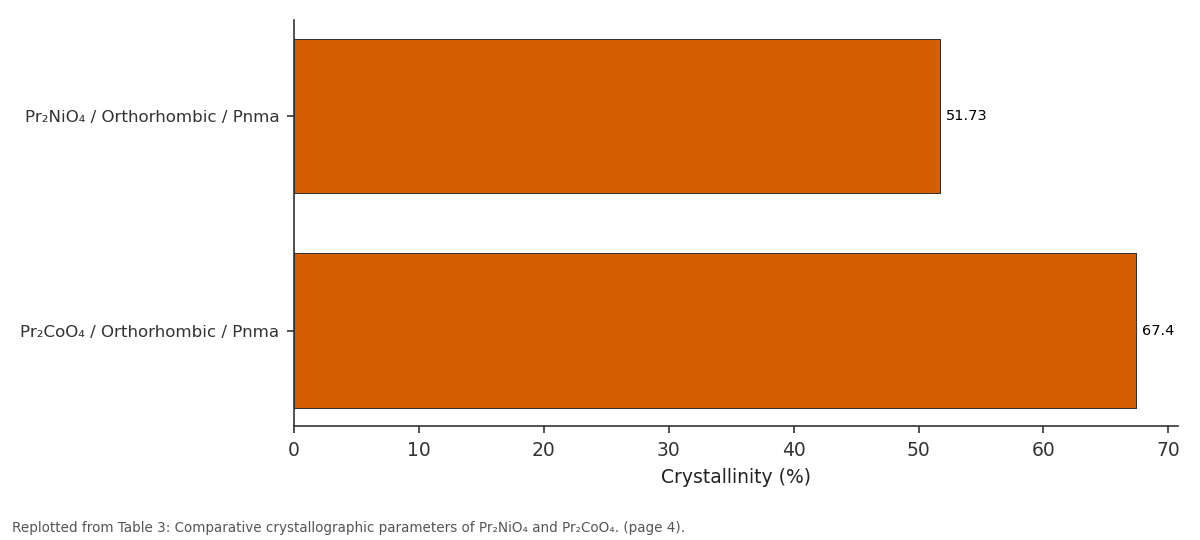
Crystallinity calculations were performed using integrated peak-area analysis. The crystalline peak area and total diffraction area were used to estimate the degree of crystallinity of both oxide systems. The calculated crystallinity values were 51.73% for Pr₂NiO₄ and 67.40% for Pr₂CoO₄. These results clearly indicate that the cobaltcontaining oxide possesses a significantly higher degree of structural ordering. The enhanced crystallinity of Pr₂CoO₄ suggests improved crystal growth kinetics and reduced amorphous content during calcination. Higher crystallinity is generally associated with improved thermal stability, lower defect concentration and enhanced structural durability [5] . The present findings are consistent with the observations of Zhang et al. [10] , who reported that improved crystallinity in mixed oxide systems often leads to superior physicochemical performance.
BET Surface Area Development
The BET surface area measurements were carried out to investigate the influence of calcination temperature on surface development. The obtained values indicate that both materials possess relatively low but measurable specific surface areas characteristic of solid-state synthesized ceramic oxides. For Pr₂NiO₄, the specific surface area decreased gradually from 2.646 m² g⁻¹ at 800 °C to 2.119 m² g⁻¹ at 1100 °C. This reduction is attributed to grain growth, particle agglomeration and thermal densification during high-temperature calcination. In contrast, Pr₂CoO₄ exhibited a maximum surface area of 3.357 m² g⁻¹ at 1000 °C before decreasing at 1100 °C. This behaviour suggests that 1000 °C provides an optimum balance between crystallization and pore preservation. Similar temperature-dependent trends have been reported for rare-earth mixed oxides by Li et al. [7] and Kumar et al. [8] .
Adsorption-Desorption Behaviour and Pore Structure
Nitrogen adsorption-desorption analysis was used to evaluate pore characteristics and adsorption behaviour. Both oxide systems exhibited adsorption profiles typical of mesoporous materials. The average pore diameter values ranged approximately from 5 to 9 nm, placing both materials within the mesoporous region according to IUPAC classification [8,9] . Consequently, these materials may be suitable for adsorption and catalytic applications.
Structure-Surface Property Correlation
One of the most significant outcomes of the present investigation is the clear relationship between crystallinity and surface development.Pr₂CoO₄ exhibited both higher crystallinity (67.40%) and higher BET surface area (3.357 m² g⁻¹) compared with Pr₂NiO₄, which showed crystallinity of 51.73% and maximum surface area of 2.646 m² g⁻¹. This observation suggests that cobalt incorporation promotes both crystal growth and favourable pore evolution during calcination. The improved structural ordering of Pr₂CoO₄ appears to be accompanied by enhanced surface accessibility and pore preservation. Wang et al. [10] reported that structural ordering and surface development are closely interconnected in rare-earth oxide systems. The present findings strongly support this conclusion. The combined PXRD and BET results demonstrate that transition-metal chemistry plays a decisive role in controlling crystallinity, pore architecture and surface characteristics. Under identical synthesis conditions, the cobalt-containing oxide exhibited superior physicochemical properties compared with the nickelcontaining oxide.
Conclusion
Pr₂NiO₄ and Pr₂CoO₄ oxide materials were successfully synthesized using a conventional solid-state ceramic route followed by high-temperature calcination. Powder X-ray diffraction confirmed the formation of well-crystallized orthorhombic phases without significant secondary impurities under the selected synthesis conditions. Comparative crystallographic analysis showed that Pr₂CoO₄ possesses a higher degree of crystallinity (67.40%) than Pr₂NiO₄ (51.73%), indicating superior structural ordering. BET measurements further demonstrated that both oxides exhibit mesoporous characteristics, although their surface evolution differs because of the influence of the transitionmetal cation on crystal growth and pore development. The integration of PXRD and BET results establishes a clear relationship between crystal structure, crystallinity, and surface properties. The improved structural ordering and favourable surface characteristics of Pr₂CoO₄ suggest that this material may provide enhanced performance in catalytic, electrochemical, and adsorption-related applications. The present investigation contributes to a better understanding of the influence of transition-metal substitution on the structural evolution of rare-earth mixed oxides synthesized by the conventional ceramic route and provides a useful basis for the future design of advanced functional oxide materials.
Acknowledgement
AcknowledgementsThe authors gratefully acknowledge the Department of Chemistry, Tilka Manjhi Bhagalpur University, Bhagalpur, India, for providing laboratory facilities to carry out the synthesis work. The authors also thank the Central Instrumentation Facility for PXRD and BET characterization support.
Figures and tables from the paper
| Peak No. | hkl | d observed (Å) | d theoretical (Å) | 2θ observed (°) | Relative intensity (%) |
|---|---|---|---|---|---|
| 1 | 11 | 4.417 | 4.417 | 20.085 | 0.2 |
| 2 | 101 | 3.818 | 3.818 | 23.28 | 16.6 |
| 3 | 20 | 3.813 | 3.813 | 23.31 | 9 |
| 4 | 111 | 3.414 | 3.414 | 26.08 | 3.4 |
| 5 | 2 | 2.71 | 2.71 | 33.034 | 24.9 |
| 6 | 121 | 2.698 | 2.698 | 33.179 | 100 |
| 7 | 220 | 2.208 | 2.208 | 40.823 | 12.8 |
| 8 | 40 | 1.909 | 1.909 | 47.596 | 27.1 |
Table text extracted from the original PDF; superscript letters are shown inline. The original table image is below.
View original table image
| Peak No. | hkl | d -observed (Å) | d-theoretical (Å) | 2θ observed (°) | Relative intensity (%) |
|---|---|---|---|---|---|
| 1 | 121 | 2.68 | 2.68 | 33.411 | 100 |
| 2 | 200 | 2.672 | 2.672 | 33.511 | 23.6 |
| 3 | 10 | 2.52 | 2.52 | 35.599 | 2.6 |
| 4 | 220 | 2.184 | 2.184 | 41.312 | 12.7 |
| 5 | 131 | 2.102 | 2.102 | 42.995 | 11.7 |
| 6 | 40 | 1.895 | 1.895 | 47.964 | 27.6 |
| 7 | 42 | 1.551 | 1.551 | 59.578 | 21.1 |
| 8 | 232 | 1.544 | 1.544 | 59.847 | 15.4 |
Table text extracted from the original PDF; superscript letters are shown inline. The original table image is below.
View original table image
| Parameter | Pr₂NiO₄ | Pr₂CoO₄ |
|---|---|---|
| Crystal system | Orthorhombic | Orthorhombic |
| Space group | Pnma | Pnma |
| a (Å) | 5.38 | 5.344 |
| b (Å) | 7.626 | 7.578 |
| c (Å) | 5.419 | 5.377 |
| Unit cell volume (ų) | 222.33 | 217.75 |
| Crystallinity (%) | 51.73 | 67.4 |
Table text extracted from the original PDF; superscript letters are shown inline. The original table image is below.
View original table image
| Calcination Temperature | Total Pore volume | — | Average pore Diameter | — | Surface area | — | — |
|---|---|---|---|---|---|---|---|
| PC (Pr2CoO4) | PN(Pr2NiO4) | PC (Pr2CoO4) | PN(Pr2NiO4) | PC(Pr2CoO4) | PN(Pr2NiO4) | ||
| 800 | 4.464e-03 cc/g | 5.810e-03 cc/g | 7.00360e+00 nm | 8.78184e+00 nm | 2.549 | 2.646 | |
| 900 | 3.429e-03 cc/g | 4.689e-03 cc/g | 6.02694e+00 nm | 7.31923e+00 nm | 2.276 | 2.563 | |
| 1000 | 6.241e-03 cc/g | 5.766e-03 cc/g | 7.43552e+00 nm | 9.15723e+00 nm | 3.357 | 2.519 | |
| 1100 | 3.141e-03 cc/g | 3.593e-03 cc/g | 5.51111e+00 nm | 6.78021e+00 nm | 2.280 | 2.119 |
Table text extracted from the original PDF; superscript letters are shown inline. The original table image is below.
View original table image
References
23 in the original paper- Koksal E, Afsin B, Tabak A, Caglar B. Spectrosc Lett. 2011;44:77-82.
- Xu T, Wang C, Lv Y, Zhu B, Zhang X. Nanomaterials. 2023;13:685.
- Inyama G, de la Presa P, Alonso JM, Multigner M, Ita BI, Cortés-Gil R, Ruiz-González ML, Hernando A, González-Calbet JM. J Appl Phys. 2014;116:113901.
- Kumari S, Kumar R, Kumar, Satyendra. J Chem Chem Sci. 2015;5(5):191-196.
- Cullity BD, Stock SR. Elements of X-ray diffraction. 3rd ed. New Jersey: Prentice Hall; 2001.
- Zhang J, Liu H. Relationship between crystallinity and surface area in functional oxides. Mater Chem Phys. 2021;270:124766.
- Li X, Wang Y. Surface evolution of rare-earth mixed oxides under thermal treatment. Ceram Int. 2022;48:14530-14538.
- Kumar R, Singh P. Effect of calcination temperature on surface properties of mixed metal oxides. J Alloys Compd. 2023;936:168234.
- Chen Y, Zhao L. Mesoporous oxide materials for catalytic applications. Catalysts. 2023;13:1256.
- Wang T, Li H. Structure-property correlation in rareearth transition metal oxides. Mater Today Chem. 2024;34:101845.
- Murthy AS, Sherma TP, Rao BSVR. Z Anal Chem. 1955;418:142.
- Vagina NS. Separation of yttrium group into sub-groups on the basis of complex formation. Zh Neorg Khim. 1957:1522-1527.
- Arora BK, Banerji RK, Mandal NK, Ganguli NC, Sen SP. Technol. 1972;8:9.
- Tewari JN. [PhD thesis]. Bhagalpur: Bhagalpur University; 1982.
- Figgis BN, Lewis J. Modern coordination chemistry. New York: Interscience Publishers; 1960. p. 403.
- Keattch CJ, Dollimore D. An introduction to thermogravimetry. London: Heyden; 1975.
- Blaock A. Thermal analysis. London: Van Nostrand Reinhold Co.; 1973.
- Daniels T. Thermal analysis. London: Kogan Page; 1973.
- Paulik F, Paulik J, Erdey LG. Anal Chem. 1958;241:160.
- Wilburn FW, Hesjord JR. J Sci Instrum. 1963;40:91.
- Wilburn FW, Thomasson CV. J Soc Glass Technol. 1958;42:158.
- Saha M. [PhD thesis]. Bhagalpur: Bhagalpur University; 1989.
- Alonso JA, Martínez-Lope MJ, Casais MT, FernándezDíaz MT. Structural study of rare-earth cobaltites. J Mater Chem. 2006;16:1555-1560.