
Research article · 2026 · Full text
International Journal of Agriculture and NutritionEffect of source of nitrogen on yield and nutrient uptake in wheat
Volume 8(8) · Pages 01–06 · DOI: 10.33545/26646064.2026.v8.i8a.728 ↗
Research areasAgricultural Science and FertilizationCrop Yield and Soil FertilityRice Cultivation and Yield Improvement
Abstract
Author-writtenA field experiment was conducted during the rabi season of 2020-21 at the Research Farm, BSP FC, Jawaharlal Nehru Krishi Vishwa Vidyalaya, Jabalpur, Madhya Pradesh, to evaluate the effect of different nitrogen sources on growth, yield, nutrient uptake and economics of wheat (Triticum aestivum L.). The experiment was laid out in a randomized block design comprising 11 nitrogen management treatments with three replications. Treatments included recommended fertilizer dose (120:60:40 kg NPK ha⁻¹) alone and in combination with different concentrations of Nutriventia liquid urea and nano urea. Application of nitrogen sources significantly influenced dry matter accumulation, yield attributes, grain yield, biomass production and nutrient uptake. The highest dry matter accumulation, grain yield (61.29 q ha⁻¹), biomass yield (95.53 q ha⁻¹), nutrient uptake and economic returns were recorded with recommended NPK combined with nano urea at 10 ml ha⁻¹. This treatment also recorded the highest net monetary return (₹111,509 ha⁻¹) and benefit-cost ratio (3.33). Thus, nano urea integrated with recommended NPK improved wheat productivity, nutrient utilization and profitability.
Summary
Source-checkedPlain-language reading of the full paper, prepared with AI and checked against the text. Each point links to the authors' own words.
Why it matters
- Wheat is a critical crop for food security in India, providing over 50% of calories for those who rely on it. View evidence ↗
- Nitrogen is the primary limiting nutrient for wheat yield and quality, but its use efficiency is currently low, at approximately 40%. View evidence ↗
- Increasing nitrogen rates to improve quality can lead to lodging, which may reduce or decline overall yields. View evidence ↗
The question
- The study aimed to evaluate how different nitrogen sources affect the growth, yield, nutrient uptake, and economic returns of wheat. View evidence ↗
What they did
- The field experiment took place during the 2020-21 rabi season at the Research Farm, BSP FC, in Jabalpur, Madhya Pradesh. View evidence ↗
- The researchers used a randomized block design with 11 different nitrogen management treatments, each replicated three times. View evidence ↗
- The recommended fertilizer dose used across treatments was 120:60:40 kg NPK per hectare. View evidence ↗
- Treatments compared the recommended NPK dose alone against combinations of NPK with various concentrations of nano urea and Nutriventia liquid urea. View evidence ↗
What they found
- Combining recommended NPK with nano urea at 10 ml/ha resulted in the highest grain yield (61.29 q/ha) and biomass yield (95.53 q/ha). View evidence ↗
- The maximum uptake of nitrogen, phosphorus, and potassium in both grain and straw was observed in treatments using recommended NPK with either nano urea (10 ml/ha) or liquid urea (10 ml/ha), with the lowest uptake in the control. View evidence ↗
- The control treatment performed the worst economically, with the lowest net return of ₹59,436/ha and a benefit-cost ratio of 2.27. View evidence ↗
What it means
- The authors conclude that integrating nano urea with recommended NPK doses improves the productivity, nutrient utilization, and profitability of wheat. View evidence ↗
Visual summary
2 visualsIllustrations explain the paper; charts are replotted from the paper's own table values.
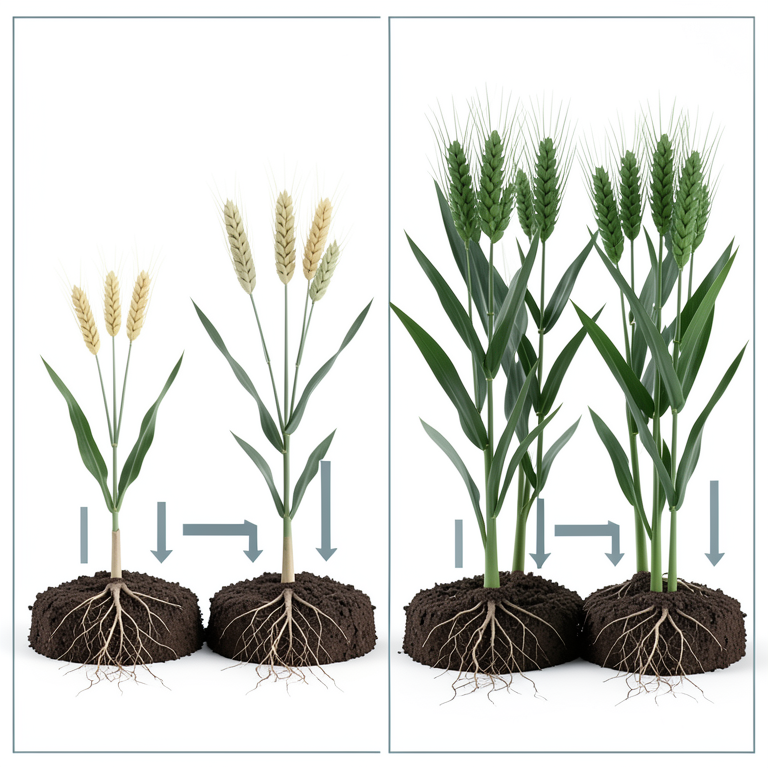
Experimental Treatment Layout
AI-generated conceptual illustration (wheat plants in a field). It explains the idea and does not show study data.
View source evidence ↗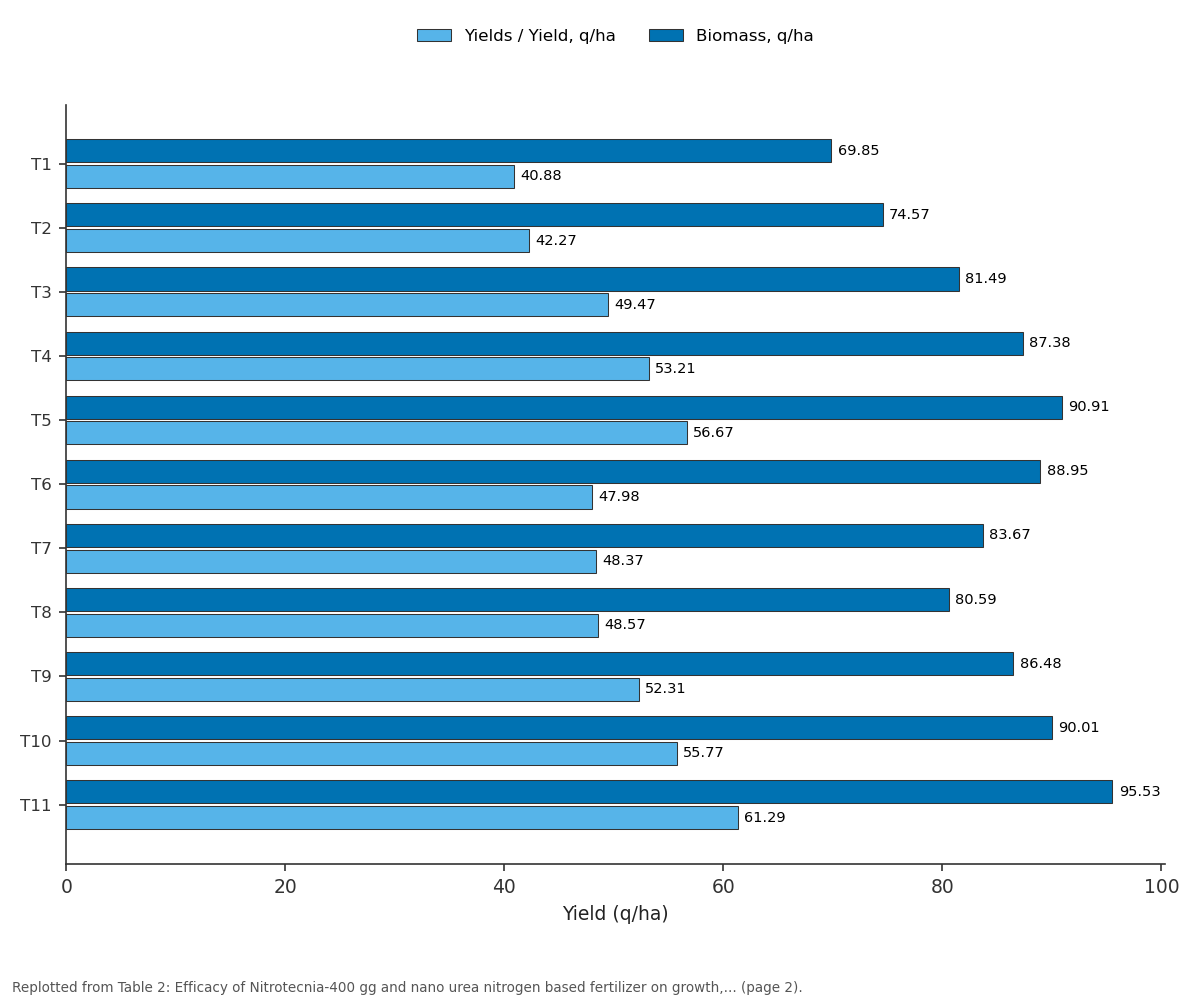
Yields / Yield, q/ha and Biomass, q/ha: T1 vs T2 vs T3 vs T4 vs T5
Replotted from Table 2 (page 2) of the original paper. Every bar is the paper's own table value.
View source evidence ↗Figures & tables
From the original paper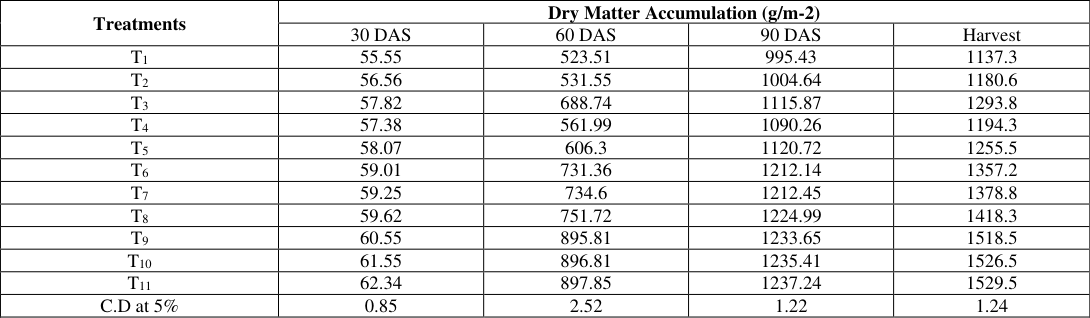 Table 1
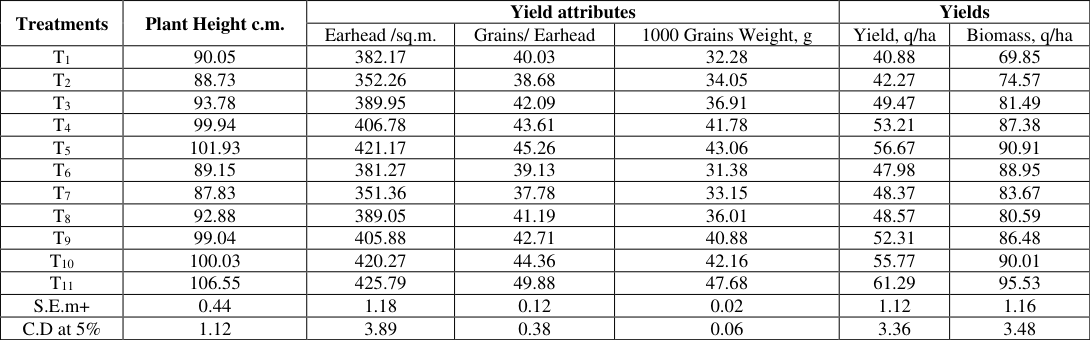 Table 2
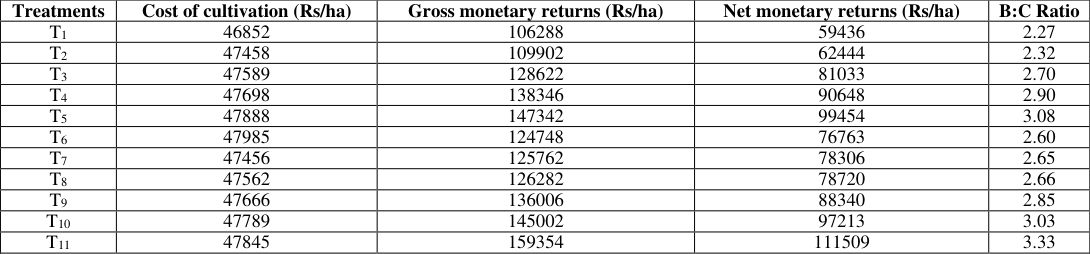 Table 3
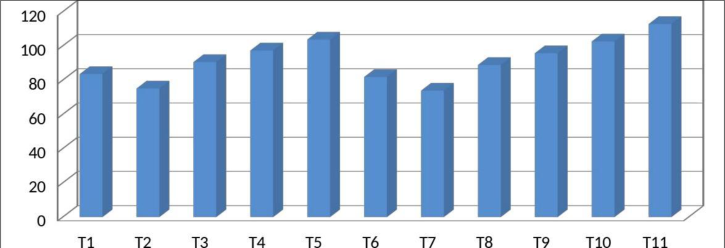 Figure 1
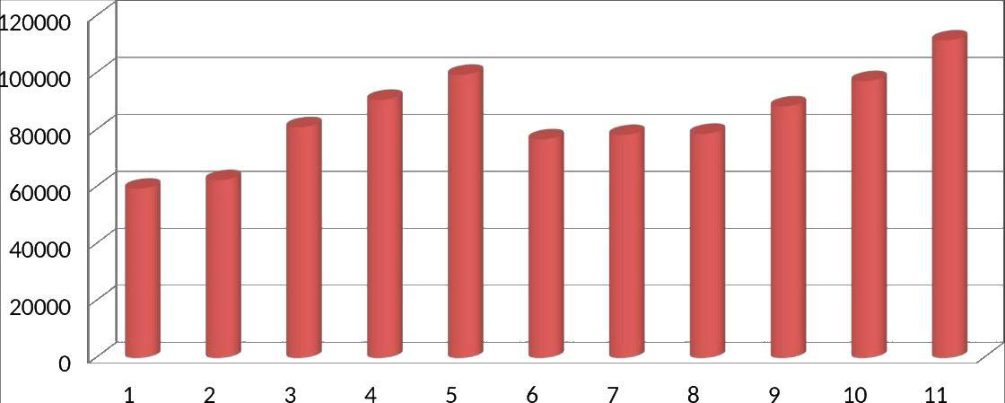 Figure 2
Introduction
Wheat (Triticum aestivum L.) is the second most significant cereal in India following rice, contributing substantially to the national food security by providing more than 50% of the calories to the people who mainly depend on it. For the last several years, India is the 2nd largest producer of wheat in the world next to China. According to USDA, wheat production of India was estimated 80.71million tones. Crop responses to N fertility are well documented and, for crops such as wheat where high protein is desirable, it is important to use adequate fertilizer rates or grain quality can decline. Unfortunately, one of the challenges with higher N rates is that the potential for lodging also increases, and, when lodging occurs, yield benefits are often reduced or yields can even decline. Wheat is the principal food grain produced in the United States. Nitrogen (N) is the nutrient that most commonly limits wheat yield and quality. Nitrogen use efficiency is currently only about 40 percent. A considerable increase from the previously estimated 33 percent NUE in the late 1990s is primarily due to advance in nutrient management strategies and cutting edge technologies. Development of efficient N management and improving N recommendations are fundamental issues that must be addressed to maintain or increase the sustainability of wheat production in the future. While spring wheat's primary value is its quality, represented by high grain protein content, N is vital to both yield and protein production. When evaluating NUE in spring wheat, combining yield and protein into protein yield parameter (calculated as a product of grain yield and percent grain protein) makes sense Kumbhare et al 2023a [1,2] and Sharma et al 2025 [3] . Protein yield enables us to calculate the efficacy of a particular treatment (such as fertilizer product or application method) [1, 3] from the perspective of producing a better return on the investment via optimizing grain yield and quality simultaneously. Foliar application of fluid fertilizer to wheat is not a new concept. The renewed interest of wheat producers in foliar fertilization is partially due to active promotion of fluid products as more efficient when compared to the more traditionally dry granular fertilizers.
Methodology
An field experiment was conducted at Research Farm, BSP FC, Jawaharlal Nehru Krishi Vishwa Vidyalaya, Jabalpur (M.P.) during rabi 2020-21. The experiment was laid in randomized block design consisting of 11 different treatments of nitrogen management having three replications.
The treatment T 1 -control, T 2 -RDF, T 3 -RDF + Nutriventia Liquid Urea ml, TRDF + Nutriventia Liquid Urea 4 ml, T 4 -RDF + Nutriventia Liquid Urea 6 ml, T 5 -RDF + Nutriventia Liquid Urea 8 ml/ha, T 6 -RDF + Nutriventia Liquid Urea 10 ml/ha T 7 -RDF + Nano urea 2 ml, T 8 RDF + Nano urea ml, T 9 -RDF + Nano urea 6 ml, T 10 -RDF + Nano urea 8 ml/ha, T 11 -RDF + Nano urea 10 ml/ha. Recommended dose of fertilizer i.e., 120:60:40kg NPK ha⁻¹ was applied as per treatment. Half dose of nitrogen was supplied through Di-ammonium phosphate (DAP) and urea with full dose of phosphorus (P2O5) as DAP and potash (K2O) as murate of potash were applied before sowing of seeds as basal application. The remaining half dose of nitrogen was applied in two equal splits as top-dressing during CRI (crown root initiation) and jointing stage as per treatment. Spray of growth regulators was done as per the treatments. Commercially liquid urea were used at the desired concentrations. In control treatment where no growth regulators were to be applied only water was sprayed @ 400 l/ha. Two sprays of each liquid urea treatments were done at first node stage and at flag leaf stage.
Total uptake
Total uptake of N, P and K was calculated for each treatment separately by using the following formula.
Total nitrogen uptake (kgha⁻¹)=N uptake by grain + N uptake by straw Uptake of N, P and K by wheat plants was expressed in kg ha⁻¹
Dry matter accumulation
The dry matter accumulation by wheat was significantly influenced by different fertilizer levels and growth regulators at 60, 90 and at harvest. All the treatments varied significantly from one another on their effect on dry matter accumulation with higher values recorded with the application of recommended doses of NPK with nano urea followed by while significantly lower values were recorded in control plot Tripathi et al 2025 [4] . The dry matter accumulation by wheat crop was not influenced by liquid and nano urea during the initial one recording dates of 30 DAS while the effects were significant at later stages of 60,90 and at harvest. This was because of the fact that the first spray of growth regulators was done only at about 45 DAS and the effect of growth regulators applied at that time was not visible at 30 DAS and hence no treatment differences were visible. However, the effect of their applications done at about 60,90 DAS and all the later stages of crop growth same.
Grain yield
The perusal of data revealed that grain yield significantly influenced due to the application of different fertilizers levels and plant growth regulators Under the nutrient management and growth regulators practices, application of recommended doses of NPK with RDF + liquid produced maximum grain yield which was significantly higher grain yield than the absolute control and RDF (120:60:40) and it was at par with the application of Trecommended doses of NPK with RDF + liquid urea produced significantly higher grain yield than all rest of the treatments. However, minimum grain yield was recorded in absolute control. A close perusal of data revealed that the different fertilizer doses and growth regulators had a significant influence on the straw yield of wheat. With the application of recommended doses of RDF + liquid urea and nano urea producing significantly highest yield. This was due to the significantly highest number of tillers/m2 recorded in this treatment (Nirala et al 2022, Tomar et 2023b, Tiwari et al 2011) [5, 8, 7, 6] . This treatment was followed by application of Tand 100% recommended doses of NPK with liquid urea 10ml in that order, each treatment differing significantly from one another. The lowest straw yield recorded in the control was due to the inability of the soil to provide adequate amount of nutrients to the plants in absence of applied fertilizers (Singh et [9,10,5,8,7,6] .
Biomass yield
A close perusal of data revealed that the different fertilizer doses and growth regulators had a significant influence on the straw yield of wheat. With the application of RDF + with Nano urea 10 ml /ha producing significantly highest yield (95.53q /ha). This was due to the significantly highest number of tillers / m² recorded in this treatment. This treatment was followed by application of TRDF + Nutriventia Liquid Urea 10 ml/ha and RDF + with Nano urea 8 ml /ha in that order, each treatment differing significantly from one another. The lowest straw yield recorded in the control was due to the inability of the soil to provide adequate amount of nutrients to the plants in absence of applied fertilizers Jha et al 2024 [11] , Tripathi et al 2025 [4] and Sharma et al 2025) [3,4,11] .
Nutrient uptake
Nitrogen, phosphorus and potassium content in grain and straw increased with increasing nutrient levels fig 1. Maximum N, P, K content in grain and straw were observed in with RDF + nano urea 10 ml /ha fertilizer recommended doses of NPK with growth RDF + liquid urea 10 ml /ha and minimum in control Patel et al 2023 [12] , Sahu et al 2023 [13] Raghuwanshi et al 2023 [14,15] , Shri et al 2015, Shrivastava,et al 2014, Verma et al 2016a [16,17] . This may be due to adequate nutrients availability to the plants which increased the nitrogen content and also have positive effect on growth, similarly, on the phosphorus and potassium content in grain and straw. Different sprays did not have any significant effect on nitrogen, phosphorus and potassium content in grain and straw. These results are in contradiction to those of Singh et al. (2008) [12,13,14,18,16] . Grain and straw analysis show that uptake of NPK increased with different nutrient levels (fig1). Singh et al. (2008) [19] reported that the increment in N uptake was probably due to improvement in soil conditions, which promoted the proliferation of roots and plant demand, which in turn drew more nutrients from larger area and greater depth Tiwari et al 2013 [20] ,Singh et al 2013 [10,9] , Bhalse et al 2023, Bhayal et al 2022 [57,21] Jha et al 2022 [23] , Jha et al 2020 [24] ,Tiwari et al 2011b) [7,20,21,23,24] . Under various spray treatments, maximum NPK uptake was recorded in recommended doses of NPK with RDF + liquid. Effect of liquid urea on growth, biochemical, yield and yield components of wheat crop recorded higher root growth due to maximum nutrient uptake, and protein content compared to control( [25,8,26,27,28,6] .
Economics
The higher gross return under recommended doses of NPK with RDF with nano urea 10 ml fallowed by RDF + Nutriventia Liquid Urea 10 ml fallowed by recommended doses of RDF with nano urea 8 ml was due to higher grain and straw yields obtained with higher nutrient levels. These results are in conformity with those of MGFEY Tiwari et al 2013 [20] , Tomar et al 2023a [6,8] , Bhalse et al 2024 [58] , Chauhan et al 2017 [29] , Dubey et al 2022 [30] a Kumhar et al 2025.. Whereas maximum net return was obtained in recommended doses of NPK with Nano urea 10 ml and lowest was found in control treatment (59436 rs /ha) [20,6] . whereas lowest B:C 2.27) was obtained in control due to lower yields. The [31,25,33,34,32,35] .
Figures and tables from the paper
| Treatments | Dry Matter Accumulation (g/m-2) | — | — | — |
|---|---|---|---|---|
| 30 DAS | 60 DAS | 90 DAS | Harvest | |
| T1 | 55.55 | 523.51 | 995.43 | 1137.3 |
| T2 | 56.56 | 531.55 | 1004.64 | 1180.6 |
| T3 | 57.82 | 688.74 | 1115.87 | 1293.8 |
| T4 | 57.38 | 561.99 | 1090.26 | 1194.3 |
| T5 | 58.07 | 606.3 | 1120.72 | 1255.5 |
| T6 | 59.01 | 731.36 | 1212.14 | 1357.2 |
| T7 | 59.25 | 734.6 | 1212.45 | 1378.8 |
| T8 | 59.62 | 751.72 | 1224.99 | 1418.3 |
| T9 | 60.55 | 895.81 | 1233.65 | 1518.5 |
| T10 | 61.55 | 896.81 | 1235.41 | 1526.5 |
| T11 | 62.34 | 897.85 | 1237.24 | 1529.5 |
| C.D at 5% | 0.85 | 2.52 | 1.22 | 1.24 |
Table text extracted from the original PDF; superscript letters are shown inline. The original table image is below.
View original table image
| Treatments | Plant Height c.m. | Yield attributes | — | — | Yields | — |
|---|---|---|---|---|---|---|
| Earhead /sq.m. | Grains/ Earhead | 1000 Grains Weight, g | Yield, q/ha | Biomass, q/ha | ||
| T1 | 90.05 | 382.17 | 40.03 | 32.28 | 40.88 | 69.85 |
| T2 | 88.73 | 352.26 | 38.68 | 34.05 | 42.27 | 74.57 |
| T3 | 93.78 | 389.95 | 42.09 | 36.91 | 49.47 | 81.49 |
| T4 | 99.94 | 406.78 | 43.61 | 41.78 | 53.21 | 87.38 |
| T5 | 101.93 | 421.17 | 45.26 | 43.06 | 56.67 | 90.91 |
| T6 | 89.15 | 381.27 | 39.13 | 31.38 | 47.98 | 88.95 |
| T7 | 87.83 | 351.36 | 37.78 | 33.15 | 48.37 | 83.67 |
| T8 | 92.88 | 389.05 | 41.19 | 36.01 | 48.57 | 80.59 |
| T9 | 99.04 | 405.88 | 42.71 | 40.88 | 52.31 | 86.48 |
| T10 | 100.03 | 420.27 | 44.36 | 42.16 | 55.77 | 90.01 |
| T11 | 106.55 | 425.79 | 49.88 | 47.68 | 61.29 | 95.53 |
| S.E.m+ | 0.44 | 1.18 | 0.12 | 0.02 | 1.12 | 1.16 |
| C.D at 5% | 1.12 | 3.89 | 0.38 | 0.06 | 3.36 | 3.48 |
Table text extracted from the original PDF; superscript letters are shown inline. The original table image is below.
View original table image
| Treatments | Cost of cultivation (Rs/ha) | Gross monetary returns (Rs/ha) | Net monetary returns (Rs/ha) | B:C Ratio |
|---|---|---|---|---|
| T1 | 46852 | 106288 | 59436 | 2.27 |
| T2 | 47458 | 109902 | 62444 | 2.32 |
| T3 | 47589 | 128622 | 81033 | 2.70 |
| T4 | 47698 | 138346 | 90648 | 2.90 |
| T5 | 47888 | 147342 | 99454 | 3.08 |
| T6 | 47985 | 124748 | 76763 | 2.60 |
| T7 | 47456 | 125762 | 78306 | 2.65 |
| T8 | 47562 | 126282 | 78720 | 2.66 |
| T9 | 47666 | 136006 | 88340 | 2.85 |
| T10 | 47789 | 145002 | 97213 | 3.03 |
| T11 | 47845 | 159354 | 111509 | 3.33 |
Table text extracted from the original PDF; superscript letters are shown inline. The original table image is below.
View original table image
References
57 in the original paper- Kumbhare R, Jha AK, Patel R, Jaiswal A, Gupta V, Kumar P, et al. Optimum dose of fertilizer with growth regulators for higher yield of wheat (Triticum aestivum L.). The Pharma Innovation Journal. 2023;12(11):1117-1123.
- Kumbhare R, Jha AK, Anjana G, Patel R, Tekam Y. Combination of Fertilizer and Growth Regulators Impact on Nutrient Balance in Wheat Crop (Triticum aestivum L.). International Journal of Plant & Soil Science. 2023;35(22):823-832.
- Sharma A, Agarwal SB, Jha AK, Sahu RK, Jatav SS, Singh PP, et al. Changes in root growth nodulation behavior, plant survivability of chickpea under organic source of nutrients and bio agent. Plant Archives. 2025;25(2):1525-1529.
- Tripathi K, Mishra PK, Singh S, Singh A, Thakur S, Jha AK. Effect of phosphorus levels and phosphatesolubilizing bacteria on growth and yield of rice (Oryza sativa L.). International Journal of Research in Agronomy. 2025;8(10):32-37.
- Tanisha N, Jha AK, Badal V, Pushpendra Singh Yadav, Mahendra A, Lakhan B. Bio efficacy of pinoxaden on weed flora and yield of wheat (Triticum aestivum L.). Biological Forum -An International Journal. 2022;14(4):558-561.
- Tomar DS, Jha AK, Porwal M, Verma B, Tirkey S, Khare Y, et al. Efficacy of Halauxifen-methyl+ Florasulam against Complex Weeds in Wheat under Kymore Plateau and Satpura Hill Zone of Madhya Pradesh, India. International Journal of Plant & Soil Science. 2023;35(15):161-171.
- Tiwari RK, Dwived BS, Deshmukh G, Pandey AK, Jha A. Effect of weed control treatments on growth of little seed cannary grass and productivity of wheat. Indian Journal of Weed Science. 2011;43(3 & 4):239-240.
- Tomar DS, Jha AK, Verma B, Meshram RK, Porwal M, Chouhan M, et al. Comparative Efficacy of Different Herbicidal Combinations on Weed Growth and Yield Attributes of Wheat. International Journal of Environment and Climate Change. 2023;13(8):889-898.
- Singh H, Jha G, Babu S, Jha AK. Effect of seed rate and sowing depth on growth, yield attributes and yield of irrigated wheat (Triticum aestivaum) in Madhya Pradesh. Indian Journal of Agronomy. 2013;58(2):57-59.
- Singh H, Jha G, Rawat A, Babu S, Jha AK. Low seed rate at surface sowing enhance resilience of physiological parameters and economics of wheat Indian Journal of Agricultural Sciences. 2013;83(8):881-4.
- Jha AK, Yadav PS, Shrivastva A, Dubey A, Jaiswal A. Influence of tillage and nutrient management on fodder productivity and economics of Oat in rice-oat cropping system. International Journal of Research in Agronomy. 2024;7(4):607-614.
- Patel R, Jha AK, Badal V, Rahul K, Richa S. Bioefficacy of pinoxaden as post-emergence herbicide against weeds in wheat crop. Pollution research. 2023;42(1):115-117.
- Sahu V, Kewat ML, Verma B, Singh R, Jha AK, Sahu MP, et al. Effect of carfentrazone-ethyl on weed flora, growth and productivity in wheat. The Pharma Innovation Journal. 2023;12(3):3621-3624.
- Raghuwanshi M, Jha AK, Verma B, Yadav PS, Shrivastava A. Weed dynamics of fodder maize as influenced by different herbicides. International Journal of Environment and Climate Change. 2023;13(7):245-251.
- Raghuwanshi M, Jha AK, Verma B, Sahu MP, Dubey A. Assessing the effect of weed management practices on weed flora, growth and yield of fodder maize (Zea mays L.). International Journal of Plant & Soil Science. 2023;35(11):112-120.
- Verma D, Gontia AS, Jha A, Anita D. Study of cutting management on proximate analysis in wheat, oat and barley crops. International Journal of Agriculture, Environment and Biotechnology. 2016;9(4):593-597.
- Verma D, Gontia AS, Amit J, Anita D. Study on leaf area index and leaf area duration of growth analytical parameters in Wheat, Barley, and Oat. International Journal of Agriculture, Environment and Biotechnology. 2016;9(5):827-831.
- Shrivastava A, Jha AK, Jha G. Productivity and nutrient uptake influenced by different food -forage based cropping system. Ann. Agric. Res. New Series. 2014;35(3):286-91.
- Singh R, Behl R, Jain P, Singh K, Narula N. Gene effects and mean performance of nitrogen and phosphorus use in wheat after inoculation with arbuscular mycorrhiza fungi and Azotobacter chroococcum under low input conditions. Acta Agronomica Hungarica. 2008;56(4):455461.https://doi.org/10.1556/aagr.56.2008.4.12
- Tiwari RK, Jha A, Tripathi SK, Khan IM, Rao SK. Rice based cropping system and climate change. JNKVV Res Journal. 2013;47(1):239-247.
- Bhayal L, Kewat ML, Aakash, Bhayal D, Jha AK, Badkul AJ. Influence of different sowing dates and nutrient management on yield attributes and yield of wheat (Triticum sestivum L.). International Journal of Plant & Soil Science. 2022;34(22):362-367.
- Bhayal L, Kewat ML, Aakash, Jha AK, Bhayal, Badkul AJ. Effect of sowing Time and nutrient management on physiological parameters of wheat. Internationals Journal of Economic Plants. 2022;9(4):271-275.
- Jha AK, Pandey S, Pandey D, Meshram RK. Effect of fertilizer management with growth regulator on growth and yield of wheat. The Pharma Innovation Journal. 2022;11(2):2999-3000.
- Jha AK, Pandey S, Shukla RS. Effect of Seed Rate and Dibbling on Growth, Yield Attributes and Yield of Different Varieties of Wheat (Triticum aestivum) in Madhya Pradesh, India. Int.J.Curr.Microbiol.App.Sci. 2020;9(6):707-711.
- Jha AK, Shrivastava A, Mehta AK, Billaiya SK, Raghuvanshi NS. Effect of Different Concentration of Seaweed Saps on Quality, Green Fodder and Seed Yields of Berseem (Trifolium alexandrium). International Journal of Bio-resource and Stress Management. 2016;27(5):10081011.
- Jha AK, Sharma RS, Vishwakarma SK. Development of resource conservation techniques for tillage and sowing management in rice-wheat cropping system under irrigated production system of Kymore Plateau and Satpura hill zone of Madhya Pradesh. JNKVV Research Journal. 2007;41(1):26-31.
- Malviya P, Jha AK, Upadhyay VB. Effect of different proportions of vermicompost and fertilizers on growth and yield of scented rice and soil properties. Annals of Agricultural Research New Series. 2012;33(4):228-234.
- Kumhar BL, Agrwal KK, Jha AK, Rai HK, Kumar V, Choudhary M, et al. Productivity and economical viability of grass-based cropping systems. Range Management and Agroforestry. 2022;43(1):167-171.
- Chauhan A, Jha G, Chourasiya A, Jha A, Joshi J. Effect of tillage and weed management practices and growth productivity and energy analysis of late sown chickpea. International Journal of Agriculture Sciences. 2017;9(5):3779-3781.
- Dubey JK, Kushwaha HS, Jha AK. Growth and biomass productivity of maize as influenced by maize cultivars and maize based cropping system. The Pharma Innovation Journal. 2022;11(7):749-751.
- Chand S, Kumar S, Roy AK, Vijay D, Choudhary BB, Indu, Kumar P, Agrawal RK, Yadav VK, Kaushal P, Yadava DK, Kumar RV, Singh AK, Ahmed S, Malaviya DR, Singhal RK, Prasad B, Kapoor R, Jha AK, Panchta R. Analyzing trends and future projections in fodder oats (Avena sativa L.) for quality seed production in India. Frontier Plant Science. 2025;16:1525422.https://doi.org/10.3389/fpls.2025.15254 22
- Gangwar S, Naik KR, Jha A, Bajpai A. Soil properties as influenced by organic nutrient management practices under rice based cropping systems. Res. on Crops. 2011;17(1):812.
- Gajbhiye M, Agrawal KK, Jha AK, Kumar N. Correlation Studies of Growth and Yield Attributes with Grain Yield of Scented Rice as Influenced by Nano Urea in Combination with Inorganic Fertilizer and Organic Manure. International Journal of Environment and Climate Change. 2024;14(3):703-708.
- Dwivedi BS, Pandey AK, Tiwari RK, Jha AK, Khamparia NK. Performance of Integrated Nutrient Management on Yield and N uptake of Direct Seeded Rice. Progressive Agriculture an International Journal. 2012;12(2):381-385.
- Jha AK, Shrivastva A, Raghuvansi NS, Kantwa SR. Effect of weed control practices on fodder and seed productivity of Berseem in Kymore plateau and Satpura hill zone of Madhya Pradesh. Range Management and Agroforestry. 2014;35(1):61-65.
- Dubey JK, Kushwaha HS, Jha AK. Yield and economics of maize under maize-based cropping system in Kymore Plateau of Madhya Pradesh. Ann. Agric. Res. New Series. 2022;43(4):409-412.
- Jha AK, Shri S, Shrivstava A. Influence of physiological parameters and yield by different maize based cropping system. The Bioscan. 2015;10(1):203-205.
- Jha AK, Shrivastava A, Raghuvanshi NS. Effect of different phosphorus levels on growth, fodder yield and economics of various cowpea (Vigna unguiculata (L) genotypes. International Journal of Agricultural Science. 2014;10:409-411.
- Jha AK, Shrivastava A, Nayak S. Integrated Nutrient Management in Forage Based Cropping System (Jowar + Cowpea -Berseem). Int. J. Pure App. Bioscience. 2018;6(5):1206-1211.
- Jha AK, Yadav PS, Shrivastava A, Upadhyay AK, Sekhawat LS, Verma B, et al. Effect of nutrient management practices on productivity of perennial grasses under high moisture condition. AMA, Agricultural Mechanization in Asia, Africa and Latin America. 2023;54(3):12283-12288.
- Jha AK, Shrivastava A, Raghuvanshi NS. Effect of different phosphorus levels on growth, fodder yield and economics of various cowpea genotypes under Kymore plateau and Satpura hills zone of Madhya Pradesh. Inter. J. Agric. Sci. 2014;10:409-411.
- Jha AK, Kewat ML, Upadhyay VB, Vishwakarma SK. Effect of tillage and sowing management on productivity, economics and energetics of rice-wheat cropping system for Kamore Plataue and Satpura hill zone of Madhya Pradesh. Indian Journal of Agronomy. 2011;56(1):35-50.
- Kumar B, Shaloo, Bisht H, Meena MC, Dey A, Dass A, Paramesh V, Babu S, Upadhyay PK, Prajapati VK, Chandanshive A, Suna T, Yadav SK, Saini AK, Dwivedi N, Brahmanand PS, Jha AK. Nitrogen management sensor optimization, yield, economics, and nitrogen use efficiency of different wheat cultivars under varying nitrogen levels. Front. Sustain. Food Syst. 2023;7:1228221.https://doi.org/10.3389/fsufs.2023.12282 21
- Kumhar BL, Agrawal KK, Jha AK, Rai HK. Variability of soil infiltration rate in different grass based cropping system in Kymore Plateau Satpura Hills region. Forage Res. 2021;47(3):325-328.
- Pahade S, Jha AK, Verma B, Meshram RK, Toppo O, Shrivastava A. Efficacy of sulfentrazone 39.6% and pendimethalin as a pre emergence application against weed spectrum of soybean (Glycine max L. Merrill). International Journal of Plant & Soil Science. 2023;35(12):51-58.
- Rashid M, Iqbal M. Response of sorghum (Sorghum bicolor L.) fodder to phosphorus fertilizer on torripsamment soil. Journal of Animal and Plant Sciences. 2011;21(2):220-225.
- Sairam G, Jha AK, Verma B, Porwal M, Sahu MP, Meshram RK. Effect of pre and post-emergence herbicides on weed flora of maize. International Journal of Plant & Soil Science. 2023;35(11):68-76.
- Shekara BG, Sowmyalatha BS, Baratkumar C. Effect of phosphorus levels on forage yield of fodder cowpea. Journal of Horticulture Letters. 2012;2(1):325.
- Shri Sonam, Jha AK, Shrivastava A. Evaluation of different intercropping system for maximum productivityand economics in maize. Ann. Agric. Res. New Series. 2014;35(2):201-205.
- Tanwar SPS, Sharma GL, Charar MS. Effect of phosphorus and biofertilizers on growth and productivity of black gram. Annals of Agricultural Research New Series. 2002;23(3):491-492.
- Tiwari RK, Khan IM, Singh N, Amit Jha. Chemical weed control in wheat through on form demonstration in Rewa district of Madhya Pradesh. Indian Journal of Weed Science. 2011;43(3&4):215-216.
- Verma B, Jha AK, Ramakrishnan RS, Singh N, Dubey R, Patel R, et al. Assessment of foliar-applied stress regulators to sustain the growth and yield of wheat varieties under various irrigation levels. Plant Science Today. 2024;12(3):1-10.
- Yadav PS, Jha AK, Kewat ML, Sahu MP, Verma B. Effect of sowing management and herbicides application on weeds and yield of berseem (Trifolium alexandrinum). Indian Journal of Agronomy. 2024;69(1):71-77.
- Yadav PS, Kewat ML, Jha AK, Hemalatha K, Verma B. Effect of sowing management and herbicides on the weed dynamics of berseem (Trifolium alexandrinum). The Pharma Innovation Journal. 2023;12(2):2845-2848.
- Agrawal KK, Bhadauria UPS, Jha A, Jain S. Crop weather relationship studies on chickpea for improving crop adaptation to climate change. Indian J Trop Agri. 2010;28:239-242.
- Bhalse L, Jha AK, Verma B, Raghuvanshi S, Porwal M, Sahu MP. Efficacy of pyroxasulfone and its combination against weeds in wheat (Triticum aestivum). Indian J Agron. 2023;68:443-446.
- Bhalse L, Jha AK, Verma B, Dubey A, Surendra. Efficacy of pyroxasulfone against weeds and their impact on yield and economic analysis of wheat. Int J Econ Plants. 2024;11(4):405-411.