
Research article · 2026 · Full text
International Journal of Agriculture and NutritionMy plate for the day: A visual tool for balanced diets and nutritional equity
Volume 8(7) · Pages 147–151 · DOI: 10.33545/26646064.2026.v8.i7b.726 ↗
Research areasNutrition, Health, and Society StudiesNutrition, Health and Food BehaviorPublic Health and Nutrition
Abstract
Author-writtenThe concept of "My Plate for the Day" is being promoted by national nutrition initiatives in India, including ICMR(2024), which introduced this model to encourage people to eat a balanced diet that consists of 8-10 food groups each day, the utmost objective of the concept is promoting diversity in food and to reduce the risk of developing micronutrient deficiencies, NCDs, and hidden hunger. It aligns with the POSHAN Abhiyaan’s (National Nutrition Mission) guidance on dietary diversification through daily consumption of whole grains, fruits, and vegetables and with other programs (e.g. mid-day meals) that provide support for gut health, immune function, and equity to safeguard vulnerable population groups. The "Eat Right" campaign launched by FSSAI across the country through schools and communities provides the visual representation of a healthy plate and encourages citizens to follow healthy practices to eat right. However, the promotion drives need wider streaming to reach larger sectors of our population.
Summary
Source-checkedPlain-language reading of the full paper, prepared with AI and checked against the text. Each point links to the authors' own words.
Why it matters
- Many people in India lack knowledge about healthy eating habits and how to choose healthy options within their traditional diets. View evidence ↗
- Current dietary patterns in India often involve only 4 to 5 food groups daily, which is below the 8 to 10 groups required for healthy living, increasing the risk of nutrient deficiencies. View evidence ↗
- Promoting dietary diversity is essential to reduce the risk of non-communicable diseases (NCDs), hidden hunger, and micronutrient deficiencies. View evidence ↗
The question
- The National Institute of Nutrition (NIN) developed the 'My Plate for the Day' concept to promote healthy food varieties using scientific evidence and cultural practices. View evidence ↗
What they did
- The tool recommends eight specific food groups: grains, legumes, cereals, vegetables, fruits, dairy products, nuts/seeds/staples, and healthy fats/oils. View evidence ↗
- For an average 2,000 Kcal daily diet, the model recommends 250g cereals (min 50% whole grains), 400g vegetables, 100g fruits, 85g pulses/eggs/meat, 35g nuts, and 27g fats/oils. View evidence ↗
- The guidelines specifically suggest that 30-40% of cereal intake should consist of whole grains and millets. View evidence ↗
What they found
- The nutrient composition for a 2,000 Kcal day totals 72g of protein (15% energy), 66g of fat (30% energy), and 55% energy from carbohydrates. View evidence ↗
- Systematic reviews indicate that the tool increases nutritional knowledge and improves dietary habits, specifically increasing the consumption of fruits and vegetables. View evidence ↗
- Visual reinforcement using the plate model has been found to improve the attitudes, knowledge, and dietary behaviors of adolescents in India. View evidence ↗
- The visual aids are low-cost and effective for reaching large audiences over long periods, particularly in nutrition programs for slum populations. View evidence ↗
What it means
- The authors conclude that the model's success can be enhanced by integrating it into State Nutrition Programs and adapting it for different ages and regional diets. View evidence ↗
- A limitation of the tool is that the standardized plate does not account for the specific nutrient needs of children, seniors, or athletes. View evidence ↗
- Economic barriers exist, as a nutritious diet following these guidelines can cost 50% to 90% of daily rural wage incomes, making it unaffordable for some poor families. View evidence ↗
Visual summary
3 visualsIllustrations explain the paper; charts are replotted from the paper's own table values.
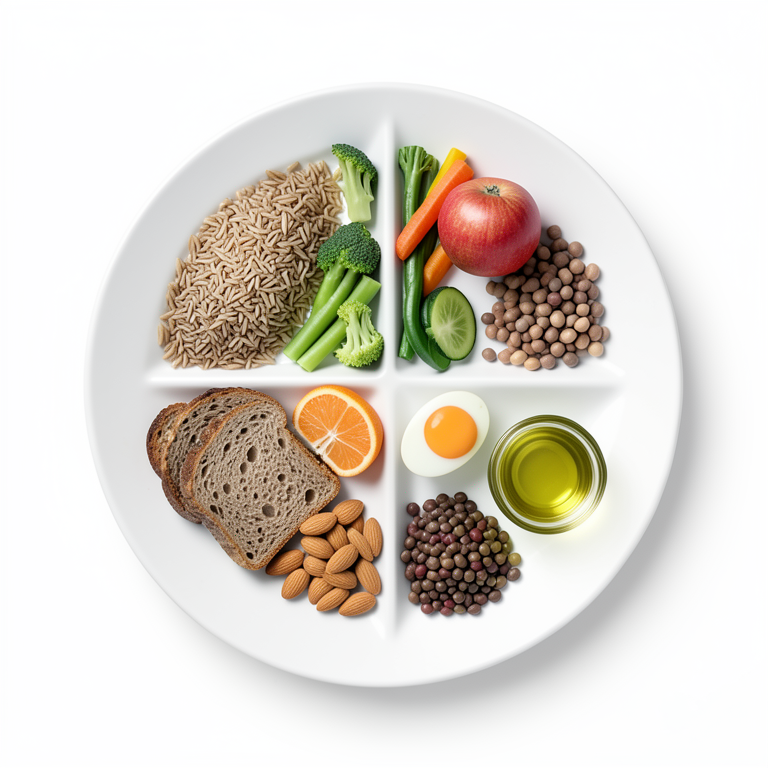
Conceptual Balanced Plate
AI-generated conceptual illustration (A ceramic dinner plate with various whole foods). It explains the idea and does not show study data.
View source evidence ↗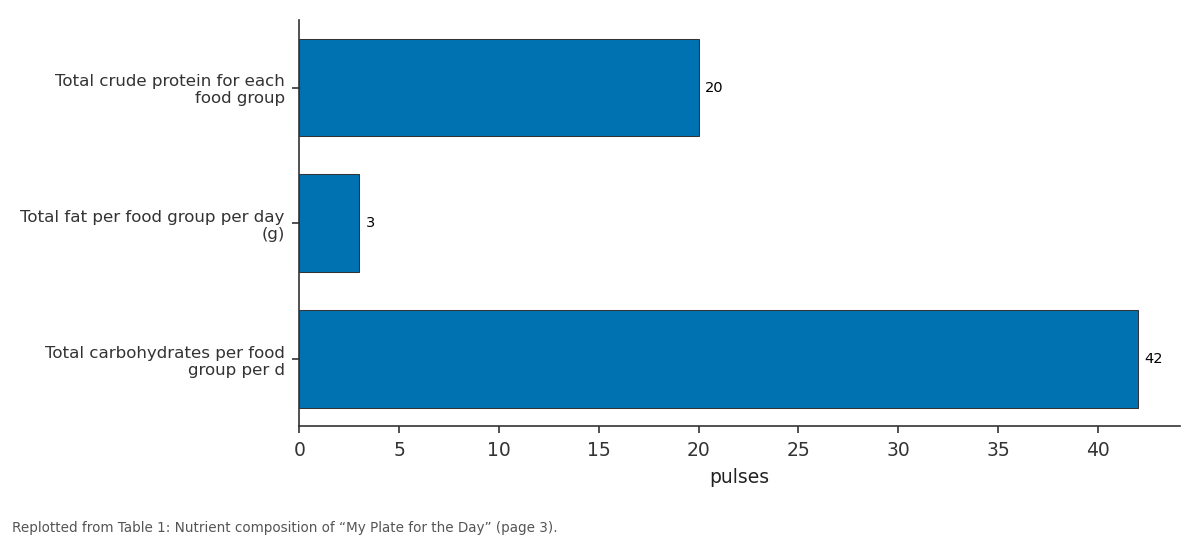
pulses: Total crude protein for... vs Total fat per food... vs Total carbohydrates per...
Replotted from Table 1 (page 3) of the original paper. Every bar is the paper's own table value.
View source evidence ↗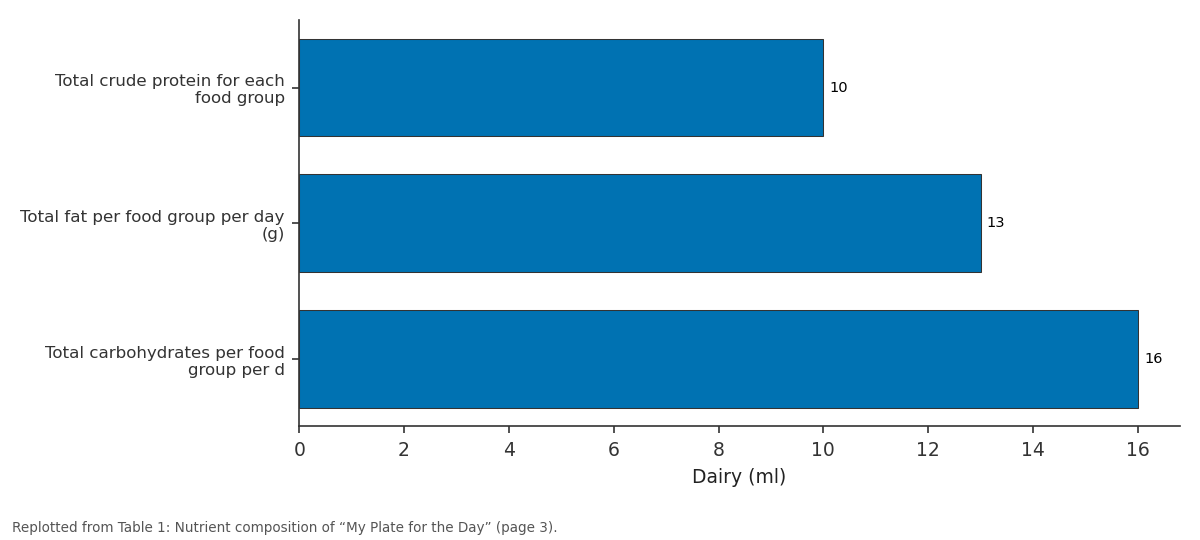
Dairy (ml): Total crude protein for... vs Total fat per food... vs Total carbohydrates per...
Replotted from Table 1 (page 3) of the original paper. Every bar is the paper's own table value.
View source evidence ↗Figures & tables
From the original paper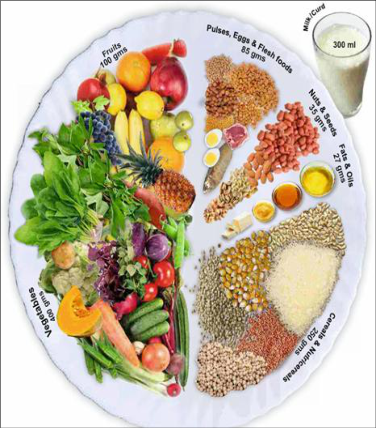 Plate 1
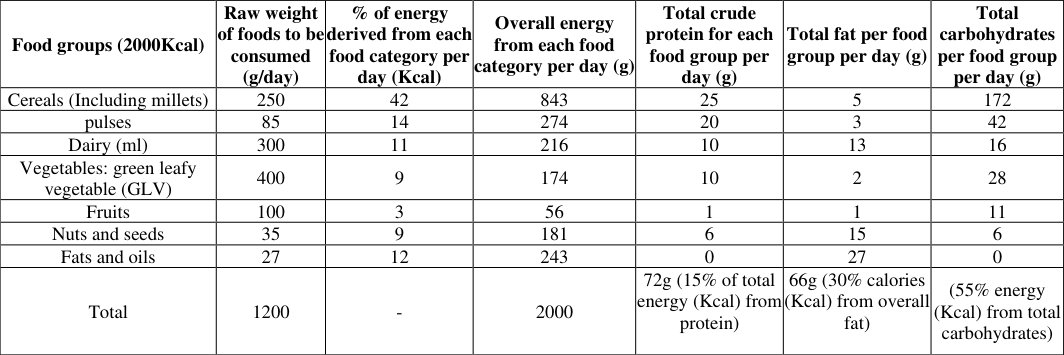 Table 1
Introduction
In India, it is found that the majority of people have very little or no idea regarding healthy food habits and the ways in which they can select healthy food items from their traditional food habits. Most of the population depend on unhealthy traditional consumption patterns. There is a perceived gap between dietary awareness and practice. NIN developed the idea of 'My Plate for the Day' concept for the promotion of healthy food varieties, which is based on scientific evidence and cultural dietary practices. In this way, they have been able to communicate the information in an understandable manner by including the recommendations for the food groups, namely grains, legumes, cereals, vegetables, fruits, dairy products, nuts/seeds/staples, and healthy fats/oils. By promoting the eight food groups, they have been able to address the issue of deficiencies, fight against hidden hunger, and ultimately fight against non-communicable diseases like diabetes, obesity, heart disease, etc. "My Plate" also aims at portion control. This pictorial representation can help to translate dietary theories into practice through its image clarity and accessibility. Studies show that brightly coloured images of food and the sections, raise awareness among people with less reading ability, and also caters to all ages, including children and seniors. It is a scientific tool focused on behavioural change that will encourage individuals to eat mindfully and have control of their portion sizes.
"My Plate for the Day" thus offered a practical and successful incentive for encouraging beneficial changes in people's meals by combining traditional Indian dishes with scientific suggestions (Iqbal, 2024) [5] . This shift from text or pyramid-based models to the plate method has resulted in a greater understanding of nutrition communication, that is, simple for the general public to understand. (NIN, 2020) [12] .
Need for the development of the "My Plate" concept
This changing dietary scenario, marked by low dietary diversity and the preponderance of staple foods like cereals, has led to micronutrient deficiencies and diet-related NCD risk. The dietary scenario of the Indian people, marked by the presence of diverse food habits in season-specific dietary practices, is now giving way to regulated food intake practices. Studies report that the present population of India derives nutrients from merely 4 to 5 food groups in a day, risking deficiencies, as the minimum required for healthy living is between 8 to 10 food groups. This lack of diversity in food intake has resulted in an increase in the occurrence of non-communicable diseases among the younger population as well as the farming population (Hemalatha, 2024) [4] . A study of Indian women found moderate dietary diversity scores, and emphasized the importance of adequate micronutrient intake, especially iodine, in the prevention of endocrine disorders such as hypothyroidism, and the need for practical balanced diet models such as "My Plate for the Day" (Budhalakoti and Kulshrestha, 2017) [1] . There is thus an immediate need to advocate the "My Plate for the Day" policy at the household and community levels to restore dietary balance and prevent disease This model advocates sourcing micronutrients and macronutrients from a wider array of food groups to address health concerns. In addition to addressing contemporary health issues by raising awareness and giving priority to "My Plate", the concept will enable people to make better food choices that are more in line with India's rich nutritional legacy (Rahman et al., 2024) [17] .
Scientific basis and nutritional recommendations
The food plate graphic shows how much we should eat in proportion to our daily intake of core food groups: cereals, pulses, vegetables, fruits, milk, nuts/seeds, fats/oils, and animal products or substitutes. The aim is to encourage people to consume at least eight food groups each day to get the nutrition they require (NIN, 2024) [13] .
The Model provides a framework to help individuals and communities reduce the effects of 'hidden hunger' and longlasting or chronic disease by discouraging the use of supplements or highly processed foods. The Model promotes the consumption of unprocessed or whole foods (including a diverse range of food types) as well as traditional Indian diets that support optimal nutrition and nutrient absorption. The Model was designed to be practical, which means that the materials can be utilised daily for individuals within a community to assist them with making healthy food selections to promote health across all stages of life (Passi, 2024) [14] . On the plate, there are a variety of food groups representing each group of foods required to meet an individual's daily nutrient needs as specified in the new recommended daily allowance (RDA) by the National Institute of Nutrition in India. The recommended amounts for a 2,000 Kcals per day average diet would include 250 g of cereals (with a minimum of 50% whole grains), 400 g Vegetables, 100 g of Fruits, 85 g of Pulses/Eggs/Meat, 35 g Nuts, and 27 g of fats/oils, with a limitation on highly refined sugar and processed foods (Times of India, 2024) [18] . The use of millets, various types of legumes, and Plant Proteins represents the Agricultural diversity in India and provides a large number of health benefits when it comes to Sustainable diets. Specifically, Millets are known to have very high micronutrient density, antioxidant characteristics, Antioxidant characteristics and positive effects on gut health. The plate recommends that 30-40% of the amount of cereals be made of Millets & Whole Grains (NIN, 2024) [13] . The intention of this approach is both to achieve maximum adequacy and bioavailability of nutrients as well as strengthen culturally accepted traditional food practices that are specific to the geographic area in which they are made. Together, these recommendations are based on scientific evidence from multiple sources, including expert panels that have evaluated the evidence, and are based on results of national nutrition surveys and national and international health and nutrition records (Passi, 2024) [14] .
Plate 1: "My Plate" for an adult man (NIN, 2024) [13] .
• For non-vegetarians, eggs, fish, or meat can be used as substitutes for a portion of pulses in the diet. (NIN, 2024) [13] .
Educational applications of "My Plate"
The "My Plate for the Day" model provides an excellent resource for educating Indian citizens about proper nutrition and helps them to make healthier food choices through numerous outreach efforts. Schools use this model as part of their health promotion programs for children. The model is also being used in the classrooms of the schools, and the schools are also encouraging the formation of nutrition clubs and using the model in the midday meal programs to educate the children about the importance of eating a balanced diet. The importance of eating a variety of foods to reduce the risk factors of non-communicable diseases is also a part of the school health programs, and this is a strategy developed in response to the increasing number of children suffering from obesity, as per the Indian Council of Medical Research and the National Institute of Nutrition, and is a part of the strategy developed by Hemalatha (2024) [4] . Integrated Child Development Services (ICDS) and Anganwadi Centres utilise 'My Plate' graphics to provide information to pregnant and breastfeeding women and the parents of young children about the balanced diets that are appropriate for each age category, as well as the types of foods included within each category, based on their local culture or tradition. Additionally, through food demonstrations and the provision of supplementary nutrition, the concept of 'My Plate' is extended to the community level, allowing individuals to apply 'My Plate' during their daily lives (Praveen et al., 2025) [15] . Nutrition/hygiene educators also use 'My Plate' educational materials-for example, posters and flipcharts-to educate rural and urban residents about understanding proportions of various Food Groups; encouraging individuals to grow vegetables and herbs in their home gardens; and increasing dietary/lifestyle awareness among various segments of society, including the farming community (Ubbes et al., 2024) [19] . India's efforts to improve nutrition are represented by the National POSHAN Abhiyaan (Prime Minister's Overarching Scheme for Holistic Nutritional Improvement).
The POSHAN Abhiyaan includes 'My Plate' and incorporates it into their e-learning materials, community mobilization initiatives, as well as training of its front-line workers to help young women and children deal with malnourishment, hidden hunger and lack of dietary diversity (GOI, 2024) [3] .
Impact of the tool
Today "MyPlate" model is recognised worldwide as an effective tool for nutrition education and is used to visually show proper ratios of food groups to develop and maintain healthy dietary behaviours. Studies suggests that the application of the research-based "My Plate" approach in educational interventions may have a beneficial impact on nutritional knowledge and foster positive changes in nutritional behaviours, such as fruit and vegetable intake and the overall quality of the adult and child diet (Zakerkish et al., 2022) [21] . A randomised clinical trial conducted on adults diagnosed with type 2 diabetes and lasting 12 weeks found that the application of the "My Plate" approach in the delivery of nutritional education had a beneficial impact on the glycemic control, lipid, and inflammatory profiles. This revealed that "My Plate" is effective in the long-term treatment of individuals with diabetes and that its use may be beneficial for patients with chronic diseases. Moreover, the results of another systematic review determined that "My Plate" has been well-received across all populations due to its user-friendly nature (provided by its simple, pictorial representation of portion sizes). Its positive impact on the increased level of nutrition knowledge, and an improvement in dietary habits, particularly in terms of increased consumption of fruits and vegetables have been reported (Jia et al., 2022) [6] . Regular, plate-based visual reinforcement (such as My Plate) has improved the dietary behaviours, knowledge and attitudes of adolescents in India using Behavioural Change Models through School and Community-Based Interventions (Moitra et al., 2021) [10] . The plate-based visual aids are inexpensive and continues to be used by the same population for an extended period of time, reaching much larger audiences at a relatively low investment in the Slum Population's Nutrition Programs and Health Education Studies (Kumar and Joe, 2020) [8] than those who have not been exposed to these sources of education and resources in general. In particular, when nutrition clubs, digital resources, and interactive teaching methods have been used as a community-based intervention, there has been a significant Benefit-Cost Ratio when compared to also utilization of previous community-based programs to create the same outcome. Visual dietary education models like "My Plate" may be particularly useful for hostel residents and college students, who generally have
International Journal of Agriculture and Nutrition https://www.agriculturejournal.net fast food and irregular eating habits (Monika et al., 2015) [11] . In summary, research literature consistently supports "My Plate" as a clear, practical, and effective nutrition education tool to promote healthy eating habits, dietary knowledge, and support positive health outcomes.
Outcome of the popularisation
When multiple agencies like education, health, social welfare, and agriculture work together in this regard, it will bring about multiple benefits. The first benefit will be that households and communities will be able to eat a more diverse range of foods and will become more aware of the benefits of healthy eating (WHO, 2025) [20] . Another benefit is that the number of overweight and obese people in society will reduce due to the measures being put in place to improve their diet and increase their level of exercise. There will also be a reduction in diet-related non-communicable diseases like diabetes, heart disease, and hypertension due to better diet and exercise. Increased engagement of communities in nutrition and physical activity programs, as a result of improved communication and collaboration among multiple ministries and government agencies, will create an environment that supports sustainable healthpromoting behaviours for people of all ages (Madhu et al., 2025) [9] .
Challenges in implementing
While "My Plate" is a standard approach to healthy eating, the standardised plate does not cater to the varying needs of different individuals and groups, including children, seniors and athletes. Recent research has shown that the recommendations of "My Plate" do not take into account variations in nutrient needs associated with a person's age, health status, levels of physical activity and metabolic rates, particularly for older adults and those who have unique dietary needs (for example, seniors, athletes or children) (Khandelwal et al., 2020-2025) [7] . The economic evidence presented regarding the diet in India indicates that the most common food groups of "My Plate" (e.g., Fruits and Dairy/Nuts) are very expensive for lowincome families. In fact, research shows that a nutritious diet may cost between 50%-90% of daily rural wage incomes, making it difficult for poorer families to consistently meet "My Plate" dietary guidelines (Raghunathan et al., 2021) [16] . Besides, health workers/nutrition educators need structured training on nutrition science and nutrition communication in order to effectively utilise and promote the plate-based dietary models.
The way ahead
In order that 'My Plate for the Day' concept be implemented, it must be more intensely implemented through multivariate convergence amongst governmental and multiplestakeholder agencies, thus providing for complete health promotion at all levels of society. With respect to the Ministry of Human Resources and Education, this means that schools will be required to introduce the "My Plate For The Day" in their policy. This will benefit students by increasing their knowledge of nutrition, and at the same time provide them with additional Playgrounds and physical activity spaces, which also need to be encouraged for physical activity and fitness, in an effort to reduce the incidence of overweight and obesity in school-aged children, through the promotion of active lifestyles and healthy meals in school settings. For example, the "Active Schools" program and Nutrition Clubs, including the Oorja Club initiative, can be additional means to reinforce healthy eating and active living for Children. (Hemalatha, 2024) [4] . The active adoption of the "My Plate for the Day" policy in India, along with the development of infrastructure for physical activity and the "Eat Right" (Health, Nutrition, and Physical Activity) movement can provide a strong foundation for improving nutritional status and reducing malnutrition and lifestyle-related diseases through the alignment of multiple ministries and agencies (GOI, 2024) [3] .
Conclusion
The success of this model can be strengthened even more by using it in State Nutrition Programs (SNAPs), as well as by adapting the model for different ages, physical development stages, and regional eating patterns. The creation of a structured program of training for trainers, health professionals and caregivers, as well as collaboration between multiple sectors of society, will assist in implementation, adherence to the model, and creating sustainable changes in eating habits. This ability to connect research on diets with education and outreach, and through the creation of policy initiatives, will create a significant opportunity to change dietary behaviour, improve health and nutrition outcomes and promote health and food security in India.
Acknowledgement
AcknowledgementsThe researcher acknowledges the library resources, facilities and services of Kerala Agricultural University.
Figures and tables from the paper
References
19 in the original paper- Budhalakoti N, Kulshrestha K. Hypothyroidism among females and differences in their dietary patterns and urinary iodine concentrations compared to normal subjects. Asian Journal of Dairy and Food Research. 2017;36(3):206-213.
- Rome: FAO; 2023 [cited 2026 Jul 14]. Available from: https://www.fao.org/nutrition/education/food-dietaryguidelines/regions/countries/india/en/
- Government of India. Poshan Abhiyaan 2024 [Internet]. New Delhi: Government of India; 2024 [cited 2026 Jul 14]. Available from: https://www.mygov.in/campaigns/poshan-abhiyaan2024/
- Hemalatha R. Promotion of 'My Plate for the Day' and physical activity among the population to prevent all forms of malnutrition and NCDs in the country [Internet]. Hyderabad: ICMR-National Institute of Nutrition; 2024 [cited 2026 Jul 14]. Available from: https://www.nin.res.in/brief/Policy%20Brief%20My%2 0Plate%20J18%2024.pdf
- Iqbal N. National Institute of Nutrition and ICMR issue 17-point dietary guideline for Indians: Details inside [Internet]. The Times of India; 2024 [cited 2026 Jul 14]. Available from: https://timesofindia.indiatimes.com/life-style/healthfitness/diet/national-institute-of-nutrition-and-icmrInternational Journal of Agriculture and Nutrition https://www.agriculturejournal.net issue-17-point-dietary-guideline-for-indians-detailsinside/photostory/122906350.cms
- Jia SS, Liu Q, Allman-Farinelli M, Partridge SR, Pratten A, Yates L, et al. The use of portion control plates to promote healthy eating and diet-related outcomes: A scoping review. Nutrients. 2022;14(4):892. doi:10.3390/nu14040892.
- Khandelwal S, Dayal R, Jha M, Zodpey S, Reddy KS. Mapping of nutrition teaching and training initiatives in India: The need for public health nutrition. Public Health Nutrition. 2020;23(15):1-6.
- Madhu SV. Adolescent obesity in India: Need for urgent policy action and multi-sectoral reform. Indian Journal of Endocrinology and Metabolism. 2025;29(2):131-132.
- Moitra P, Madan J, Verma P. Impact of a behaviourally focused nutrition education intervention on attitudes and practices related to eating habits and activity levels in Indian adolescents. Public Health Nutrition. 2021;24(9):2715-2726. doi:10.1017/S1368980020005167.
- Monika, Chishty S, Verma K. Fast food consumption pattern among female students living in hostel of University of Rajasthan, India. Asian Journal of Dairy and Food Research. 2015;34(4):324-327.
- National Institute of Nutrition. My Plate for the Day promotes health, prevents hidden hunger and protects from diseases [Internet]. Hyderabad: National Institute of Nutrition; 2024 [cited 2026 Jul 14]. Available from: https://www.nin.res.in/downloads/My_Plate_for_the_da y_J24.pdf
- Passi SJ. Dietary guidelines for Indians-2024: A critical appraisal. Journal of Epidemiology Foundation of India. 2024;2(4):200-204.
- Praveen KR, Selvamani Y, Singh H. Integrated Child Development Services (ICDS) and their contribution to improving complementary feeding practices among children aged 6-23 months in India: Insights from a nationally representative survey. BMC Public Health. 2025;26(1):1-12.
- Raghunathan K, Headey D, Herforth A. Affordability of nutritious diets in rural India. Food Policy. 2021;99:101982. doi:10.1016/j.foodpol.2020.101982.
- Rahman MM, Roy S, Paul A, Akter S, Ferdous J, Rahman MM. Dietary patterns, nutritional status and associated factors among adolescent girls and women in rural Bangladesh: A community-based cross-sectional study. PLOS Global Public Health. 2024;4:e0001775. doi:10.1371/journal.pgph.0001775.
- The Times of India. India's apex medical research body releases diet plan for all age groups [Internet]. 2024 [cited 2026 Jul 14]. Available from: https://timesofindia.indiatimes.com/life-style/healthfitness/health-news/indias-apex-medical-research-bodyreleases-diet-plan-for-all-agegroups/articleshow/109969353.cms
- Ubbes VA, Whitesel S, Parkinson NS. MyPlate food model and family grocery shopping with second and third graders are significant interventions for the development of interactive health literacy skills. International Electronic Journal of Elementary Education. 2024;16(5):1-10.
- Geneva: World Health Organization; 2025 [cited 2026 Jul 14]. Available from: https://iris.who.int/handle/10665/384322
- Zakerkish M, Shahmoradi S, Haidari F, Latifi SM, Mohammadshahi M. The effect of nutrition education using MyPlate on lipid profiles, glycemic indices and inflammatory markers in diabetic patients. Clinical Nutrition Research. 2022;11(3):171-182. doi:10.7762/cnr.2022.11.3.171.