
Research article · 2026 · Full text
International Journal of Geography Geology and EnvironmentEcological significance of wetland grasses
Volume 8(7) · Pages 255–262 · DOI: 10.22271/27067483.2026.v8.i7c.840 ↗
Research areasWetland Management and ConservationCoastal wetland ecosystem dynamicsPeatlands and Wetlands Ecology
Abstract
Author-writtenWetlands are dynamic ecosystems situated at the interface of terrestrial and aquatic environments, characterized by periodic or permanent inundation and water-saturated soils that support hydrophytic vegetation. Among wetland flora, grasses (Poaceae) are important primary producers that contribute significantly to ecosystem stability and functioning through soil stabilization, erosion control, nutrient cycling, carbon sequestration, and habitat provision. The present study documented 16 common wetland grass species through field surveys conducted between 2022 and 2025 in Odisha, Bihar, Chhattisgarh, West Bengal and Manipur states of India. The ecological roles of these grasses were evaluated with respect to soil stabilization, water regulation, nutrient cycling, carbon storage, habitat formation, and wildlife support. The study revealed that species such as Chrysopogon zizanioides and Cymbopogon citratus play important roles in soil conservation and fodder production. Leersia hexandra, Isachne globosa, Polypogon monspeliensis, Phragmites karka, Phragmites australis and Saccharum spontaneum provide habitats for waterbirds and other wetland species. The findings demonstrated that wetland grasses are key drivers of ecosystem resilience and biodiversity conservation and have considerable potential for wetland restoration, ecological engineering, and sustainable ecosystem management.
Summary
Source-checkedPlain-language reading of the full paper, prepared with AI and checked against the text. Each point links to the authors' own words.
Why it matters
- Wetlands are dynamic ecosystems located between land and water, defined by water-saturated soils and periodic or permanent flooding that support specialized hydrophytic plants. View evidence ↗
- Grasses in the Poaceae family are critical primary producers in wetlands, supporting ecosystem stability via carbon sequestration, nutrient cycling, erosion control, and soil stabilization. View evidence ↗
- Wetland ecosystems are under threat from human-driven disturbances, including pollution, urban expansion, invasive species, and climate-induced changes to hydrology. View evidence ↗
The question
- The study aims to document common wetland grass species across five Indian states (Odisha, Bihar, Chhattisgarh, West Bengal, and Manipur) and evaluate their ecological roles. View evidence ↗
What they did
- Researchers conducted field surveys from 2022 to 2025 across five Indian states to document 16 common species of wetland grasses. View evidence ↗
- The authors identified the grass species present in selected habitats and recorded their ecological significance through direct field observations. View evidence ↗
What they found
- Tall and robust species, specifically Saccharum spontaneum, Phragmites australis, and Phragmites karka, exhibited dense growth patterns. View evidence ↗
- Saccharum spontaneum provides critical nesting cover for the threatened Indian Skimmer (Rynchops albicollis) on water-surrounded sandbars. View evidence ↗
- Chrysopogon zizanioides, a medium-sized perennial grass, proved effective for roadside soil restoration and slope stabilization along National Highway 27. View evidence ↗
- Several species, including Urochloa mutica, Saccharum spontaneum, Phragmites karka, Oryza rufipogon, and Cymbopogon citratus, serve as important fodder for mega herbivores. View evidence ↗
- Isachne globosa assists in soil binding and shelters aquatic invertebrates, while Leersia hexandra provides shelter for small birds and aquatic invertebrates. View evidence ↗
- The soft, small grass Polypogon monspeliensis contributes to the improvement of water quality. View evidence ↗
- Zizania latifolia is a significant fodder plant for the Sangai deer (Cervus eldi eldi) found on floating vegetation. View evidence ↗
- Themeda triandra provides food for wildlife while simultaneously improving water quality and preventing soil erosion. View evidence ↗
What it means
- The authors conclude that wetland grasses are active drivers of productivity and stability, making their conservation and strategic use essential for wetland restoration and management. View evidence ↗
- The authors state that future research is needed to quantify species-specific carbon storage capacity, restoration potential, and responses to environmental changes. View evidence ↗
Visual summary
1 visualsIllustrations explain the paper; they do not show study data.
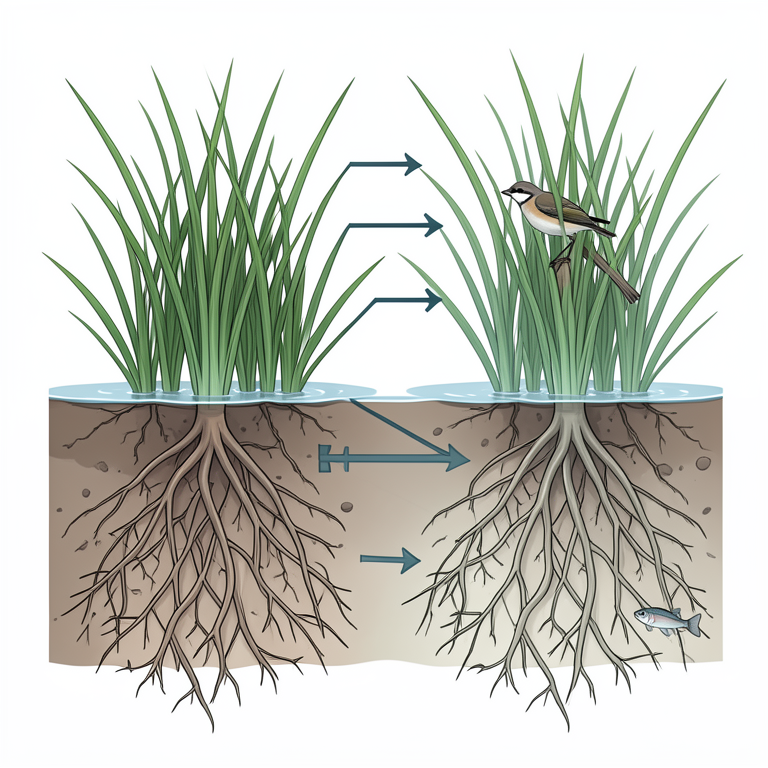
Ecological Functions of Wetland Grasses
AI-generated conceptual illustration (Wetland grasses (Poaceae family) in a saturated soil environment). It explains the idea and does not show study data.
View source evidence ↗Figures & tables
From the original paper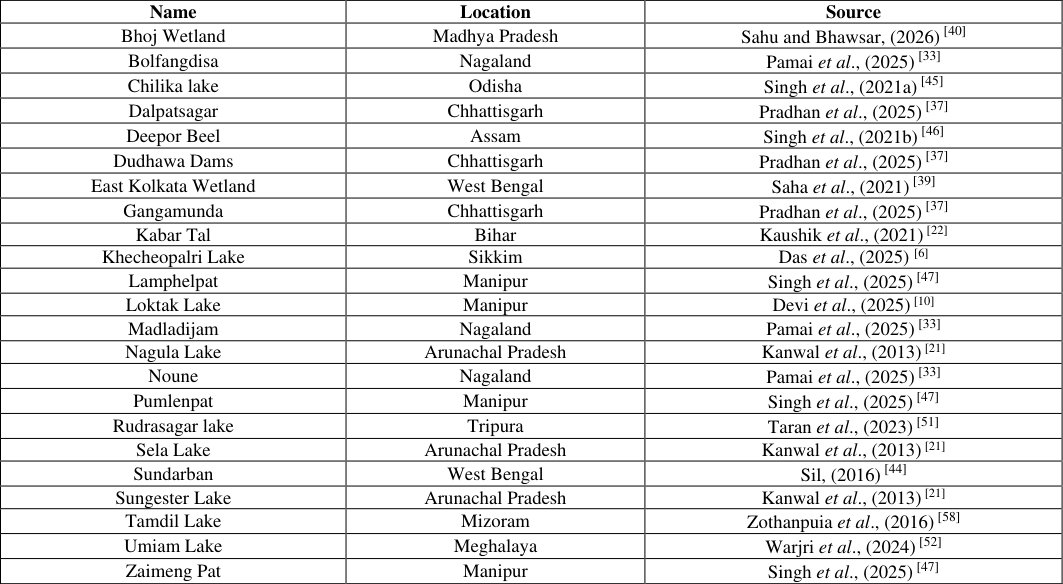 Table 1
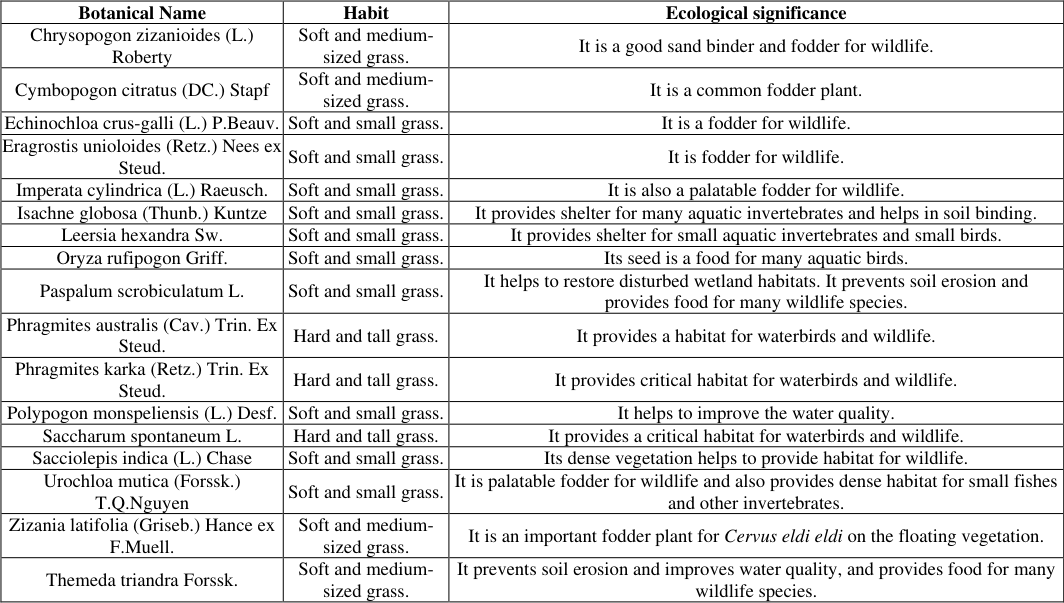 Table 2
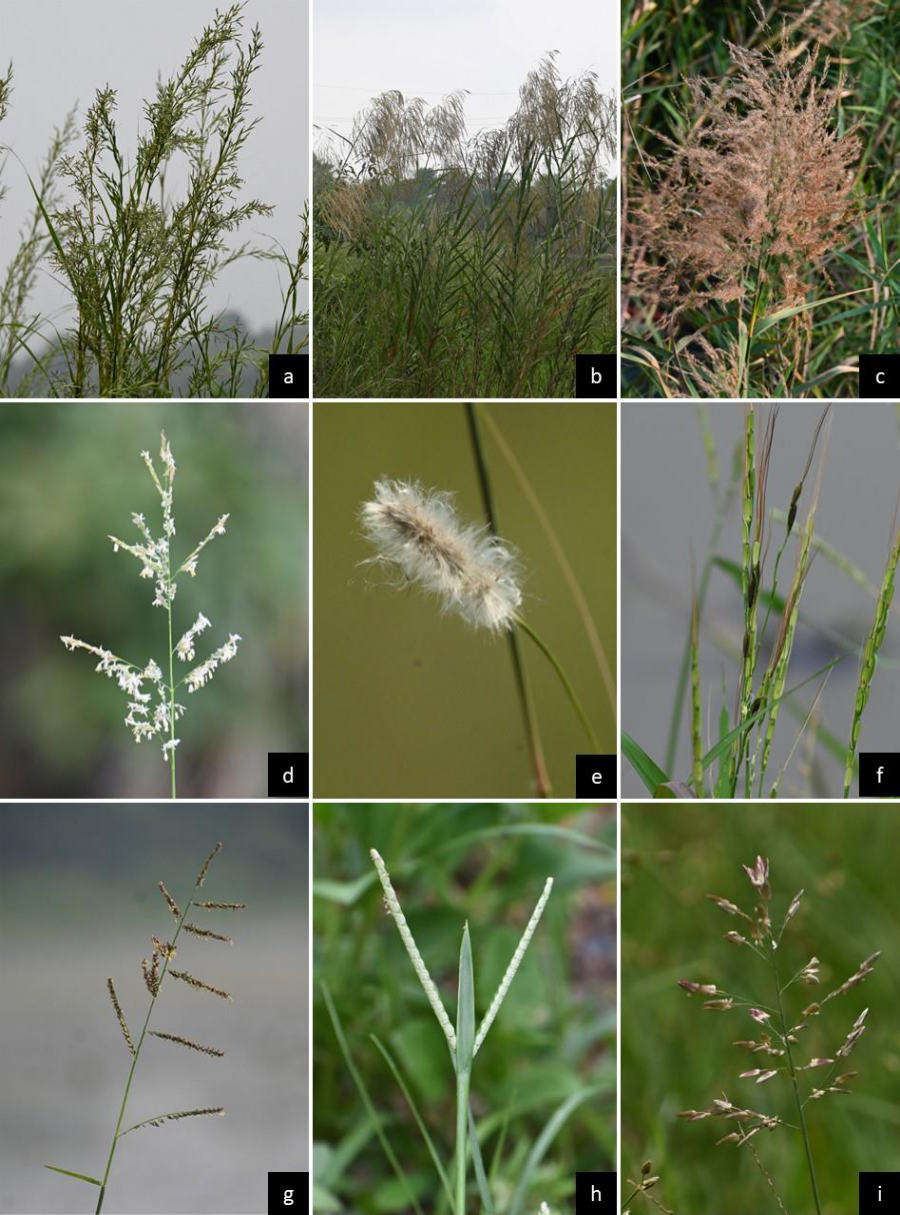 Figure 1
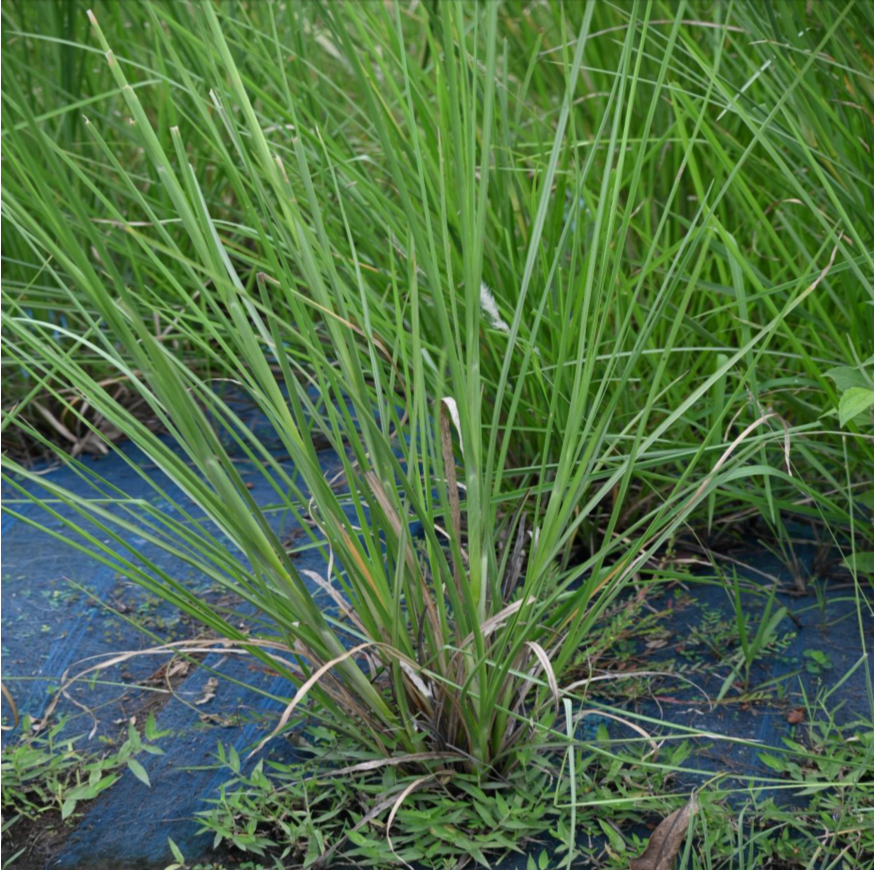 Figure 2
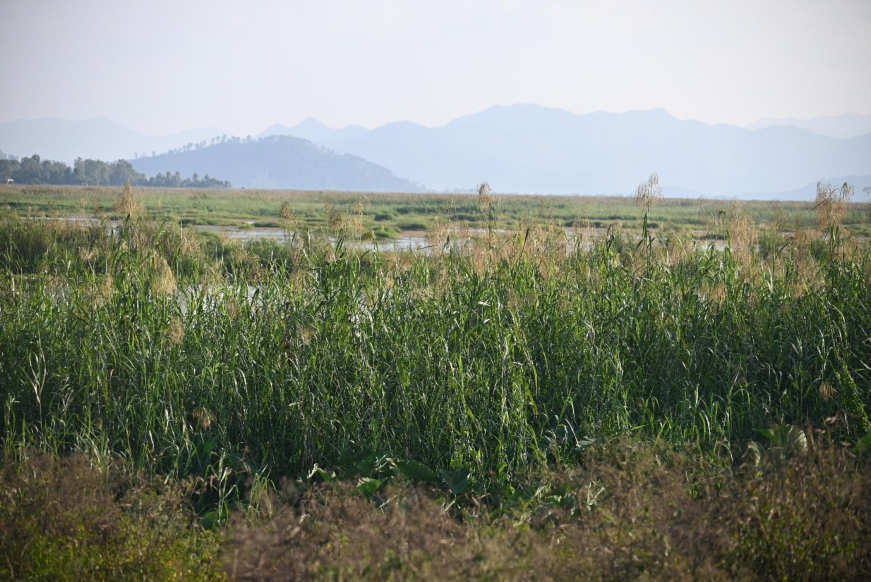 Figure 3
Introduction
Wetlands represent ecologically dynamic ecosystems that exist at the interface between terrestrial and aquatic environments, characterized by areas that are periodically or permanently inundated and contain water-saturated soils (Grenfell et al., 2022; Liu et al., 2025) [14,26] . These environments support specialized plants known as hydrophytes. Wetlands are known for their high levels of primary productivity and biogeochemical activity (Devi et al., 2025; Patel and Sahoo, 2021) [10,36] . Functionally, wetlands play vital ecological roles such as water purification, flood regulation, groundwater recharge and carbon sequestration (Song et al., 2024) [48] . They naturally filter water by trapping sediments, absorbing nutrients and breaking down organic matter through microbial processes (Gosh et al., 2021; Maranho and Gomes, 2024) [27] . With their hydric soils and dense vegetation, wetlands can buffer against hydrological extremes by absorbing excess rainfall and gradually releasing stored water, thus mitigating floods and maintaining flow during dry-season flows (Hockaday et al., 2024) [18] . Furthermore, wetlands act as significant global carbon sinks. Their anaerobic conditions that slow down the decomposition of organic matter, allowing carbon to be stored for long-term in sediments (Devi et al., 2022) [\11] . Additionally, they aid in nutrient cycling and soil stabilization (Oester et al., 2025) [31] . Hence, wetlands are essential for maintaining biodiversity, regulating climatic processes, and preserving the functional integrity of landscapes (Rai and Singh 2020; Yang et al., 2023) [38,56] . The wetlands of Central, Eastern, and Northeastern India represent a remarkable diversity of freshwater ecosystems that vary in hydrology, altitude, climatic conditions and ecological functions (Table 1). These wetlands include natural lakes, floodplain wetlands, marshes, Ramsar sites, riverine systems and man-made reservoirs. Important wetlands such as Chilika Lake in Odisha, Loktak Lake in Manipur, Deepor Beel in Assam, East Kolkata Wetlands in West Bengal, Bhoj Wetland in Madhya Pradesh, and Rudrasagar Lake in Tripura. Similarly, high-altitude wetlands such as Sela Lake and Nagula Lake in Arunachal Pradesh, along with sacred and culturally important wetlands like Khecheopalri Lake in Sikkim and Tamdil Lake in Mizoram contribute Significantly to Regional hydrological stability and biodiversity conservation. A list of representative wetlands from these regions is presented in Table 1. Despite their ecological importance, wetlands across these regions are increasingly threatened by anthropogenic disturbances such as urban expansion, pollution, eutrophication, agricultural intensification, invasive species and climate change-induced hydrological alterations (Xu et al., 2019) [55] . In this context, wetland vegetation, particularly grasses belonging to the family Poaceae, plays a crucial role in maintaining ecosystem stability and resilience. Wetland grasses are highly adaptable to fluctuating water levels, nutrient-rich sediments and oxygen-deficient conditions. Their ecological functions include shoreline stabilization, sediment trapping, nutrient retention, carbon sequestration and the provision of food and shelter for wildlife. Therefore, documenting the diversity and ecological significance of wetland grasses is essential for understanding wetland ecosystem functioning and developing sustainable conservation and restoration (Table 1). Grasses are one of the most ecologically and functionally important groups of plants, serving as the structural and nutritional foundation of numerous terrestrial and wetland ecosystems (Guo et al., 2023; He et al., 2023) [16] . They display remarkable morphological and physiological adaptations that allow them to thrive in diverse climatic and edaphic conditions (Spitzer et al., 2024) [49] . Ecologically, they function as primary producers, converting solar energy into organic matter through photosynthesis and thus supporting complex food webs (Dimri et al., 2024) [12] . Their extensive fibrous root systems enhance soil cohesion, reduce erosion, and promote soil formation and nutrient cycling through the continuous deposition of organic material (Griffiths et al., 2022) [15] . Additionally, they play a crucial role in hydrological regulation by facilitating water infiltration, minimizing surface runoff, and contributing to groundwater recharge (Shiferaw et al., 2025) [43] . They are also effective carbon sinks, assimilating atmospheric carbon dioxide and storing it in both their biomass and rhizosphere (Megan et al., 2024; Behera et al., 2025) [2,28] . Grasses also maintain ecosystem resilience by stabilizing landscapes, supporting diverse pollinator and herbivore populations, and promoting regeneration following disturbances (Charoenlertthanakit et al., 2025) [3] . Globally, approximately 780 genera and 12,000 species of grasses have been documented (Palit et al., 2017) [32] . In India, around 1,506 species of grasses are recorded, reflecting the country's significant ecological diversity (Kellogg et al., 2020) [23] . Regionally, studies have identified 65 grass species in the wetland regions of Birbhum district in West Bengal, 51 species from the Chandaka-Dampara Wildlife Sanctuary in Bhubaneswar, Odisha (Behera et al., 2025) [2] , 23 species from the wetlands of Mizoram (Pathak, 2023) [36] and 44 [8,9,41] . Madhya Pradesh Sahu and Bhawsar, (2026) [40] Bolfangdisa Nagaland Pamai et al., (2025) [33] Chilika lake Odisha Singh et al., (2021a) [45] Dalpatsagar Chhattisgarh Pradhan et al., (2025) [37] Deepor Beel Assam Singh et al., (2021b) [46] Dudhawa Dams Chhattisgarh Pradhan et al., (2025) [37] East Kolkata Wetland West Bengal Saha et al., (2021) [39] Gangamunda Chhattisgarh Pradhan et al., (2025) [37] Kabar Tal Bihar Kaushik et al., (2021) [22] Khecheopalri Lake Sikkim Das et al., (2025) [6] Lamphelpat Manipur Singh et al., (2025) [47] Loktak Lake Manipur Devi et al., (2025) [10] Madladijam Nagaland Pamai et al., (2025) [33] Nagula Lake Arunachal Pradesh Kanwal et al., (2013) [21] Noune Nagaland Pamai et al., (2025) [33] Pumlenpat Manipur Singh et al., (2025) [47] Rudrasagar lake Tripura Taran et al., (2023) [51] Sela Lake Arunachal Pradesh Kanwal et al., (2013) [21]
| Name | Location | Source |
|---|---|---|
| Bhoj Wetland | Madhya Pradesh | Sahu and Bhawsar, (2026) [40] |
| Bolfangdisa | Nagaland | Pamai et al., (2025) [33] |
| Chilika lake | Odisha | Singh et al., (2021a) [45] |
| Dalpatsagar | Chhattisgarh | Pradhan et al., (2025) [37] |
| Deepor Beel | Assam | Singh et al., (2021b) [46] |
| Dudhawa Dams | Chhattisgarh | Pradhan et al., (2025) [37] |
| East Kolkata Wetland | West Bengal | Saha et al., (2021) [39] |
| Gangamunda | Chhattisgarh | Pradhan et al., (2025) [37] |
| Kabar Tal | Bihar | Kaushik et al., (2021) [22] |
| Khecheopalri Lake | Sikkim | Das et al., (2025) [6] |
| Lamphelpat | Manipur | Singh et al., (2025) [47] |
| Loktak Lake | Manipur | Devi et al., (2025) [10] |
| Madladijam | Nagaland | Pamai et al., (2025) [33] |
| Nagula Lake | Arunachal Pradesh | Kanwal et al., (2013) [21] |
| Noune | Nagaland | Pamai et al., (2025) [33] |
| Pumlenpat | Manipur | Singh et al., (2025) [47] |
| Rudrasagar lake | Tripura | Taran et al., (2023) [51] |
| Sela Lake | Arunachal Pradesh | Kanwal et al., (2013) [21] |
| Sundarban | West Bengal | Sil, (2016) [44] |
| Sungester Lake | Arunachal Pradesh | Kanwal et al., (2013) [21] |
| Tamdil Lake | Mizoram | Zothanpuia et al., (2016) [58] |
| Umiam Lake | Meghalaya | Warjri et al., (2024) [52] |
| Zaimeng Pat | Manipur | Singh et al., (2025) [47] |
Table text extracted from the original PDF; superscript letters are shown inline. The original table image is below.
View original table image
Sundarban
West Bengal Sil, (2016) [44] Sungester Lake Arunachal Pradesh Kanwal et al., (2013) [21] Tamdil Lake Mizoram Zothanpuia et al., (2016) [58] Umiam Lake Meghalaya Warjri et al., (2024) [52] Zaimeng Pat Manipur Singh et al., (2025) [47] Keeping the importance of wetlands and grass species, the present study aims to document important common wetland grass species from Odisha, Bihar, Chhattisgarh, West Bengal and Manipur and evaluate their ecological significance in wetland ecosystems.
Methodology
The present study was conducted to document common wetland grasses and evaluate their ecological significance in selected wetlands of Odisha, Bihar, West Bengal, Chhattisgarh, and Manipur, India. Field surveys were carried out during 2022 -2024. Grass species occurring within the selected habitats were recorded and identified by authors. The ecological significance of each species was noted in field.
Results and Discussion
Present study examined sixteen species of wetland grass, highlighting their morphological characteristics and ecological roles within study areas. Notably, tall and robust species such as Phragmites karka, Phragmites australis and Saccharum spontaneum demonstrated dense growth.
Phragmites karka is frequently found as a characteristic and dominant species in Ramsar sites, including Loktak Lake in Manipur (Figure 3) and Chilika Lake in Odisha. S. spontaneum is widely distributed across moist, marshy and riparian zones. The threatened Indian Skimmer (Rynchops albicollis) has been observed nesting on triangular sandbars surrounded by water, often within dense stands of S. spontaneum, highlighting the species' importance as nesting cover. Chrysopogon zizanioides is a medium-sized perennial grass known for its remarkable ability to tolerate various soil conditions. Field observations showed its effectiveness in slope stabilization and roadside soil restoration projects along National Highway 27 (Figure 2), where it helps reduce surface runoff and sediment loss. Several recorded plant species serve as important forage resources for large herbivores, including the Asian elephant (Elephas maximus), spotted deer (Axis axis), barking deer (Muntiacus muntjak), and the endangered Sangai deer (Cervus eldi eldi). Cymbopogon citratus, Oryza rufipogon, Phragmites karka, Saccharum spontaneum and Urochloa mutica are important fodder species for mega herbivores. Paspalum scrobiculatum produces grains that are consumed by granivorous birds. The ecological characteristics of these studied species are presented in Table 2 and Figure 1. It is palatable fodder for wildlife and also provides dense habitat for small fishes and other invertebrates. Zizania latifolia (Griseb.) Hance ex F.Muell.
Soft and mediumsized grass.
It is an important fodder plant for Cervus eldi eldi on the floating vegetation.
Themeda triandra Forssk. Soft and mediumsized grass.
It prevents soil erosion and improves water quality, and provides food for many wildlife species.
Ecological importance of wetland grasses
Wetland grasses play a fundamental role in maintaining the structure, functioning, and resilience of wetland ecosystems (Zhang et al., 2025) [57] . One of the most important ecological functions of wetland grasses is soil stabilization and erosion control (Meli et al., 2014) [29] . Wetland grasses possess dense fibrous root systems and rhizomatous growth habits that effectively bind soil particles and stabilize sediments (Bansal et al., 2023) [1] . Wetland grasses also play a crucial role in hydrological regulation and water conservation. Their dense vegetation slows water movement, enhances infiltration, and promotes groundwater recharge (Shi et al., 2026) [42] . Another major ecological importance of wetland grasses lies in nutrient cycling and water purification (Stagg et al., 2021) [50] . Through their roots and associated microbial communities, these grasses participate actively in biogeochemical cycling processes (Wu et al., 2025) [54] . Wetlands are recognized globally as important carbon sinks because their waterlogged conditions slow the decomposition of organic matter (Huang et al., 2024) [19] . Their ability to colonize disturbed habitats and improve soil quality makes them highly valuable for restoring degraded wetlands and rehabilitating polluted aquatic ecosystems (Wu et al., 2023) [55] . Despite their immense ecological significance, wetland grasses are increasingly threatened by habitat destruction, urbanization, invasive species, pollution, hydrological modifications, and climate change (Demnati et al., 2012) [7] . Future research should focus on understanding species-specific ecological functions, restoration potential, carbon storage capacity, and responses to environmental change (Huang et al., 2026) [20] . Therefore, wetland grasses are indispensable ecological components of wetland ecosystems.
Future aspects
The study of wetland grasses in study areas highlights their immense ecological and functional importance; however, the scope for future research and application remains vast. Future research should focus on expanding both the scientific understanding and practical utilization of these species in a rapidly changing environmental landscape (Mir et al., 2025) [30] . One of the most important future aspects lies in the ecological restoration of degraded wetlands. Wetlands across India are experiencing degradation due to encroachment, eutrophication, and hydrological alterations (Kundu et al., 2026) [25] . Future research should focus on quantifying the efficiency of these grasses in removing specific pollutants such as nitrogen, phosphorus, arsenic, and industrial effluents (Khan et al., 2022) [24] . Wetland grasses provide habitat, food, and breeding grounds for a wide range of fauna, including birds, fish, invertebrates, and large herbivores (Pant et al., 2024) [34] . Many grass species serve as fodder, thatching material, and raw material for handicrafts, while some possess medicinal or aromatic properties (Chen et al., 2024) [4] . Remote sensing and geographic information systems (GIS) can be used to map wetland vegetation, monitor changes in grass distribution, and assess ecosystem health over large spatial scales (Cheng and Dang, 2022) [5] .
Conclusion
Wetland grasses are a vital part of India's wetland ecosystems. They are playing a key role in their structural integrity, ecological functioning and resilience. The present study highlighted the diversity and ecological significance of 16 grass species. These grasses contribute in various ways, including soil stabilization, water purification, nutrient cycling, and carbon sequestration and providing habitats for a wide range of wildlife. Both tall emergent species and smaller, softer grasses collectively support trophic dynamics, enhance biodiversity and help to maintain hydrological balance. Notably, several species show great potential for ecological restoration. These grasses serve as valuable fodder for wildlife, contributing to the support of various faunal populations. Overall, wetland grasses are not just passive elements, they are active drivers of ecosystem stability and productivity. Thus, it is crucial to prioritize their conservation and strategic utilization in wetland management and restoration programs to ensure long-term ecological sustainability and biodiversity conservation in India's wetland landscapes.
References
58 in the original paper- Bansal S, Creed IF, Tangen BA, Bridgham SD, Desai AR, Krauss KW, et al. Practical guide to measuring wetland carbon pools and fluxes. Wetlands. 2023;43(8):105. doi:10.1007/s13157-023-01722-2.
- Behera SC, Mishra S, Mishra AK, Kumar S. Grasses of Chandaka-Dampara Wildlife Sanctuary. Odisha (India): Chandaka-Dampara Wildlife Sanctuary and Ambika Prasad Research Foundation; 2025.
- Charoenlertthanakit N, Inta A, Shannon DP, Boonsuk B, Tiansawat P. Greens in the gaps: diversity and the ecological potential of urban spontaneous vegetation in sidewalk ecosystems. Plants (Basel). 2025;14(16):2542. doi:10.3390/plants14162542.
- Chen X, Hein PP, Shi M, Yang F, Yang J, Fu Y, et al. Diversity and traditional knowledge concerning fodder plants are invaluable assets for enhancing the sustainable management of crop-livestock system of Zhaotong City in the mountainous southwest China. Plant Divers. 2025;47(2):311-322. doi:10.1016/j.pld.2024.09.011.
- Cheng Q, Dang CN. Using GIS remote sensing image data for wetland monitoring and environmental simulation. Comput Intell Neurosci. 2022;2022:7886358. doi:10.1155/2022/7886358.
- Das R, Thatal B, Thakur N, Kumar R, Tamang B. Metagenomic report of element-microbe synergy and xenobiotic detoxification in the sacred waters of Khecheopalri Lake, Eastern Himalaya. BMC Microbiol. 2025;25(1):704. doi:10.1186/s12866-025-04450-1.
- Demnati F, Allache F, Ernoul L, Samraoui B. Socioeconomic stakes and perceptions of wetland management in an arid region: a case study from Chott Merouane, Algeria. Ambio. 2012;41(5):504-512. doi:10.1007/s13280-012-0285-2.
- Devi KT, Singh PK, Bhattacharyya D. Digitaria radicosa (J. Presl) Miq. and Pennisetum purpureum Schumach.: additions to the grass (Poaceae) flora of Manipur, India. J Bombay Nat Hist Soc. 2014;111(2):153-154.
- Devi KT, Singh PK, Bhattacharyya D. Three new additions to the grass (Poaceae) flora of Manipur, India. Plant Sci Today. 2016;3(3):272-281.
- Devi RS, Lal S, Maggirwar R, Jadhao AB, Kumar S. Floral diversity of Loktak Lake, Manipur, India. Indian For. 2025;151(5):430-435.
- Devi RS, Satapathy KB, Kumar S. Ethnobotanical plants of Phumdi, Loktak Lake, Manipur, India. Asian Pac J Health Sci. 2022;9(4):77-80.
- Dimri R, Das K, Devi RS, Kumar S, Kumar N, Das A. Ecological, socioeconomic and nutraceutical values of Zizania latifolia (Kambong): a wetland grass for Sangai deer and human population. Indian For. 2024;150(10):956-961.
- Ghosh R, Ozaslan C, Ray P. Invasive alien freshwater hydrophytes: co-facilitating factors with emphasis on Indian scenario. Indian J Weed Sci. 2021;53(3):216219.
- Grenfell S, Grenfell M, Tooth S, Mehl A, O'Gorman E, Ralph T, et al. Wetlands in drylands: diverse perspectives for dynamic landscapes. Wetl Ecol Manag. 2022;30(4):607-622. doi:10.1007/s11273-022-09887-z.
- Griffiths M, Delory BM, Jawahir V, Wong KM, Bagnall GC, Dowd TG, et al. Optimisation of root traits to provide enhanced ecosystem services in agricultural systems: a focus on cover crops. Plant Cell Environ. 2022;45(3):751-770. doi:10.1111/pce.14247.
- Guo Y, Boughton EH, Bohlman S, Bernacchi C, Bohlen PJ, Boughton R, et al. Grassland intensification effects cascade to alter multifunctionality of wetlands within metaecosystems. Nat Commun. 2023;14(1):8267. doi:10.1038/s41467-023-44104-2.
- He S, Xiong K, Song S, Chi Y, Fang J, He C. Research progress of grassland ecosystem structure and stability and inspiration for improving its service capacity in the karst desertification control. Plants (Basel). 2023;12(4):770. doi:10.3390/plants12040770.
- Hockaday AC, Leon AS, Patterson K, Pennings SC. Freshwater wetlands for flood control: how manipulating the hydroperiod affects plant and invertebrate communities. PLoS One. 2024;19(7):e0306578. doi:10.1371/journal.pone.0306578.
- Huang W, Liu X, Tian L, Cui G, Liu Y. Vegetation and carbon sink response to water level changes in a seasonal lake wetland. Front Plant Sci. 2024;15:1445906. doi:10.3389/fpls.2024.1445906.
- Huang Y, Zhang M, Mao Z, Li X, Xu L, Nie J, et al. Effect of wetland degradation on plant community characteristic and aboveground biomass in the lower reaches of the Yellow River. Front Plant Sci. 2026;16:1719185. doi:10.3389/fpls.2025.1719185.
- Kanwal KS, Samal PK, Lodhi MS, Kuniyal JC. Climate change and high-altitude wetlands of Arunachal Pradesh. Curr Sci. 2013;105(8):1037-1038.
- Kaushik H, Ranjan R, Ahmad R, Kumar A, Prashant, Kumar N, et al. Assessment of trace metal contamination in the core sediment of Ramsar wetland (Kabar Tal), Begusarai, Bihar, India. Environ Sci Pollut Res Int. 2021;28(15):18686-18701.
- Kellogg EA, Abbott JR, Bawa KS, Gandhi KN, Kailash BR, Ganeshaiah KN, et al. Checklist of the grasses of India. PhytoKeys. 2020;163:1-560.
- Khan AU, Khan AN, Waris A, Ilyas M, Zamel D. Phytoremediation of pollutants from wastewater: a concise review. Open Life Sci. 2022;17(1):488-496.
- Kundu S, Rana NK, Kundu B. Measuring hydrological alterations and landscape patterns for sustainable development through ecosystem connectivity in Hastinapur Wildlife Sanctuary, India. J Environ Sci (China). 2026;159:322-338.
- Liu H, Xu J, Qi X, Xu X, Wu J, Li B, et al. Wetland productivity and stability increase more with average plant size than with plant functional diversity. Nat Commun. 2025;16(1):10778. doi:10.1038/s41467-02565822-9.
- Maranho LT, Gomes MP. Morphophysiological adaptations of aquatic macrophytes in wetland-based sewage treatment systems: strategies for resilience and efficiency under environmental stress. Plants (Basel). 2024;13(20):2870. doi:10.3390/plants13202870.
- Megan Woller-Skar M, Locher A, Audia EM. Carbon storage in rare ecosystems relative to their encroaching forests in western Lower Michigan. PLoS One. 2024;19(6):e0305394. doi:10.1371/journal.pone.0305394.
- Meli P, Rey Benayas JM, Balvanera P, Martínez Ramos M. Restoration enhances wetland biodiversity and ecosystem service supply, but results are contextdependent: a meta-analysis. PLoS One. 2014;9(4):e93507. doi:10.1371/journal.pone.0093507.
- Mir UA, Bano H, Attar MI, Bhat MA, Khan ZA, Alsubih M. Demystifying the impacts of anthropogenic activities on physicochemical characteristics of soil in four wetlands of Kashmir Valley, India. Sci Rep. 2025;15(1):36694. doi:10.1038/s41598-025-20632-3.
- Oester R, Keck F, Moretti MS, Altermatt F, Bruder A, Ferreira V. A global synthesis on land-cover changes in watersheds shaping freshwater detrital food webs. Glob Change Biol. 2025;31(8):e70380. doi:10.1111/gcb.70380.
- Palit D, Kar D, Mukherjee A. Studies on grass flora in the wetland of Birbhum District, West Bengal, India. J Plant Sci. 2017;12:59-67.
- Pamai K, Noroh N, Keyho L. Zooplankton communities of three wetlands of Nagaland, NE India: richness, ecology and abundance. Rec Zool Surv India. 2025;124(1 Suppl):463-480.
- Pant SR, Bhattarai BP, Baral HS, Thapa TB. Diversity, species richness, and community composition of wetland birds in the lowlands of western Nepal. Ecol Evol. 2024;14(12):e70538. doi:10.1002/ece3.70538.
- Patel HA, Sahoo S. A floristic account of macrophytes in the selected wetlands of Valsad District, Gujarat, India. Int J Lakes Rivers. 2021;14(1):113-121.
- Pathak S. An evaluation of the wetland grass flora of Mizoram, India. J Threat Taxa. 2023;15(5):2324023247.
- Pradhan A, Sao A, Thakur TK, Anderson JT, Chandel G, Kumar A, et al. Wetlands as climate-sensitive hotspots: evaluating greenhouse gas emissions in Southern Chhattisgarh. Water. 2025;17(10):1553. doi:10.3390/w17101553.
- Rai PK, Singh MM. Wetland plants' chemical ecology for iron of a Ramsar site in an Indo-Burma hotspot: insitu bioaccumulation and phytoremediation implications. Nat Environ Pollut Technol. 2020;19(4):1607-1615.
- Saha M, Sarkar A, Bandyopadhyay B. Water quality assessment of East Kolkata Wetland with a special focus on bioremediation by nitrifying bacteria. Water Sci Technol. 2021;84(10-11):2718-2736.
- Sahu R, Bhawsar A. First evidence of microplastics' presence in surface water and fishes of Bhoj Wetland (Ramsar Site). Water Environ Res. 2026;98(3):e70270. doi:10.1002/wer.70270.
- Sharma HM, Sharma BM, Devi AR. Macrophytes of the Loktak Lake (Manipur). I. Monocotyledons, gymnosperms, pteridophytes and bryophytes. J Freshw Biol. 1998;10(1-2):15-23.
- Shi K, Hu B, Xiao Q, Tan S. Multifractal analysis of vegetation regulation on ecohydrological processes in a small watershed. PeerJ. 2026;14:e20496. doi:10.7717/peerj.20496.
- Shiferaw N, Habte L, Waleed M. Land use dynamics and their impact on hydrology and water quality of a river catchment: a comprehensive analysis and future scenario. Environ Sci Pollut Res Int. 2025;32(7):41244136. doi:10.1007/s11356-025-35946-y.
- Sil A. Reaching the unreached in Sunderbans. Community Eye Health. 2016;29(95):S10-S12.
- Singh A, Gogoi A, Saikia P, Karunanidhi D, Kumar M. Integrated use of inverse and biotic ligand modelling for lake water quality resilience estimation: a case of Ramsar wetland (Deepor Beel), Assam, India. Environ Res. 2021;200:111397. doi:10.1016/j.envres.2021.111397.
- Singh R, Mishra SK, Gurao A, Niranjan SK, Vohra V, Dash SK, et al. Current status and unique attributes of Indian Chilika buffalo for adaptation to brackish water ecology. Trop Anim Health Prod. 2021;53(6):544. doi:10.1007/s11250-021-02973-z.
- Singh SG, Das SK, Bharti VS, Devi CB, Nag SK, Sharma PM, et al. Comparative analysis of carbon sequestration potential in different wetland ecosystems: insights from phumdi-dominated wetlands of Northeast India. Environ Monit Assess. 2025;197(7):775. doi:10.1007/s10661-025-14203-2.
- Song A, Liang S, Li H, Yan B. Effects of biodiversity on functional stability of freshwater wetlands: a systematic review. Front Microbiol. 2024;15:1397683. doi:10.3389/fmicb.2024.1397683.
- Spitzer DB, Ocheltree TW, Gleason SM. Some unique anatomical scaling relationships among genera in the grass subfamily Pooideae. AoB Plants. 2024;16(6):plae059. doi:10.1093/aobpla/plae059.
- Stagg CL, Osland MJ, Moon JA, Feher LC, Laurenzano C, Lane TC, et al. Extreme precipitation and flooding contribute to sudden vegetation dieback in a coastal salt marsh. Plants (Basel). 2021;10(9):1841. doi:10.3390/plants10091841.
- Taran M, Ahirwal J, Deb S, Sahoo UK. Variability of carbon stored in inland freshwater wetland in Northeast India. Sci Total Environ. 2023;859(Pt 2):160384. doi:10.1016/j.scitotenv.2022.160384.
- Warjri CD, Kshetriya D, Ghosh S. Seasonal variation of heavy metals in water and Cyprinus carpio L. from Umiam Lake Reservoir of Meghalaya, India: potential health risk assessment for human consumption. Environ Sci Pollut Res Int. 2024;31(27):39782-39793. doi:10.1007/s11356-024-33778-w.
- Wu K, Chen L, Wang Q, Li Y, Zheng Y, Ma Q, et al. Seasonal dynamics of nitrogen and phosphorus in wetland plants: implications for efficient eutrophication control. Sustainability. 2025;17(8):3443. doi:10.3390/su17083443.
- Wu X, Lü Y, Zhang J, Lu N, Jiang W, Fu B. Adapting ecosystem restoration for sustainable development in a changing world. Innovation (Camb). 2023;4(1):100375. doi:10.1016/j.xinn.2023.100375.
- Xu T, Weng B, Yan D, et al. Wetlands of international importance: status, threats, and future protection. Int J Environ Res Public Health. 2019;16(10):1818. doi:10.3390/ijerph16101818.
- Yang L, Zhang Z, Zhang W, Zhang T, Meng H, Yan H, et al. Wetland park planning and management based on the valuation of ecosystem services: a case study of the Tieling Lotus Lake National Wetland Park, China. Int J Environ Res Public Health. 2023;20(4):2939. doi:10.3390/ijerph20042939.
- Zhang X, Chen S, Yao P, Han J, Jin R. Knowledge structure and evolution of wetland plant diversity research: visual exploration based on CiteSpace. Biology (Basel). 2025;14(7):781. doi:10.3390/biology14070781.
- Zothanpuia, Passari AK, Gupta VK, Singh BP. Detection of antibiotic-resistant bacteria endowed with antimicrobial activity from a freshwater lake and their phylogenetic affiliation. PeerJ. 2016;4:e2103. doi:10.7717/peerj.2103.