
Research article · 2026 · Full text
International Journal of Geography Geology and EnvironmentClimate-resilient agriculture in Haryana: Ensuring food security for a growing population
Volume 8(1) · Pages 90–98 · DOI: 10.22271/27067483.2026.v8.i7c.839 ↗
Research areasClimate change impacts on agricultureAgricultural Economics and PracticesAgriculture and Biological Studies
Abstract
Author-writtenClimate change poses one of the major threats to agricultural sustainability and food security, especially in areas with intensive farming systems and a high dependence on natural resources. Haryana is one of the leading agricultural states in India and plays a vital role in national food security. However, the sustainability of its agricultural sector is threatened by rising temperatures, erratic rainfall, more frequent extreme weather events, and rapid groundwater depletion. This review paper synthesizes recent scientific literature, government reports, and institutional publications to assess the impacts of climate variability on agriculture in Haryana and evaluate the effectiveness of climate-resilient agricultural practices in strengthening food security. The study employed a narrative review approach, synthesising evidence from peer-reviewed journal articles, ICAR reports, government publications, and IPCC assessment reports. The review includes major climatic challenges such as rising temperatures, rainfall variability, groundwater depletion, and their impacts on crop productivity across the state's Agro-Ecological Regions. It also evaluates adaptation measures such as water-efficient irrigation technologies, conservation agriculture, crop diversification, climate-resilient crop varieties, and interventions under the National Innovations on Climate Resilient Agriculture (NICRA) programme. The results indicate that climate-resilient agricultural practices have significant potential to improve resource-use efficiency, increase yield stability, enhance farmers' adaptive capacity, and promote long-term agricultural sustainability. However, widespread adoption remains constrained by groundwater over-exploitation, fragmented landholdings, inadequate institutional support, and policy-related barriers. The paper concludes that the integration of climate-resilient technologies with effective policy reforms, improved extension services, and sustainable water resource management is essential for achieving resilient agricultural development and long-term food security in Haryana.
Summary
Source-checkedPlain-language reading of the full paper, prepared with AI and checked against the text. Each point links to the authors' own words.
Why it matters
- Haryana is a key agricultural state in India and is essential for the country's national food security. View evidence ↗
- The sustainability of Haryana's agriculture is under threat from climate factors including rising temperatures, erratic rainfall, extreme weather, and groundwater depletion. View evidence ↗
- While the rice-wheat system and modern technology increased productivity, they also caused environmental degradation, such as soil fertility decline and groundwater depletion. View evidence ↗
The question
- The study aims to synthesize knowledge on how climate variability affects agriculture in Haryana and evaluate the effectiveness of climate-resilient methods for food security. View evidence ↗
What they did
- The researchers used a narrative review approach, synthesizing data from peer-reviewed journals, government publications, ICAR reports, and IPCC assessment reports. View evidence ↗
- The analysis considers Haryana's 22 districts across three distinct Agro-Ecological Regions (AERs) defined by the ICAR. View evidence ↗
What they found
- Projections indicate that by the end of the century, summer temperatures may rise by 1 to 3 degrees Celsius, while winter temperatures could increase by up to 5 degrees Celsius. View evidence ↗
- Between 2002 and 2021, north India experienced a net groundwater loss of approximately 450 cubic kilometers, with a depletion rate of about 1.5 centimeters per year. View evidence ↗
- Climate-smart practices, such as zero-tillage and precision nutrient management, reduced global warming potential by 33 to 40 percent compared to conventional rice-wheat systems. View evidence ↗
- In years with extreme weather, wheat yields using climate-smart practices were 0.84 Mg/ha higher than those under conventional management. View evidence ↗
- Among 120 farmers in Karnal, adoption rates for climate-smart technologies were 77 percent for laser land levelers and 52 percent for happy seeders. View evidence ↗
- Switching from rice to millets, pulses, or less water-intensive crops has the potential to reduce water use by 32% and increase calorie production by 39%. View evidence ↗
- Water management interventions, including drip irrigation and laser land leveling, result in 30-50% water savings and lower cultivation costs. View evidence ↗
What it means
- The authors conclude that achieving long-term food security in Haryana requires integrating climate-resilient technologies with policy reforms, better extension services, and sustainable water management. View evidence ↗
- The authors recommend reforming electricity pricing for tubewells, adjusting procurement policies to favor diversification, and restructuring crop insurance to reward adaptive practices. View evidence ↗
- The available evidence is geographically uneven, with a disproportionate amount of research focused on the Karnal district compared to other areas of Haryana. View evidence ↗
- Most evidence regarding the effectiveness of NICRA interventions comes from pilot settings, leaving a gap in knowledge about their performance in non-pilot areas. View evidence ↗
Visual summary
1 visualsIllustrations explain the paper; they do not show study data.
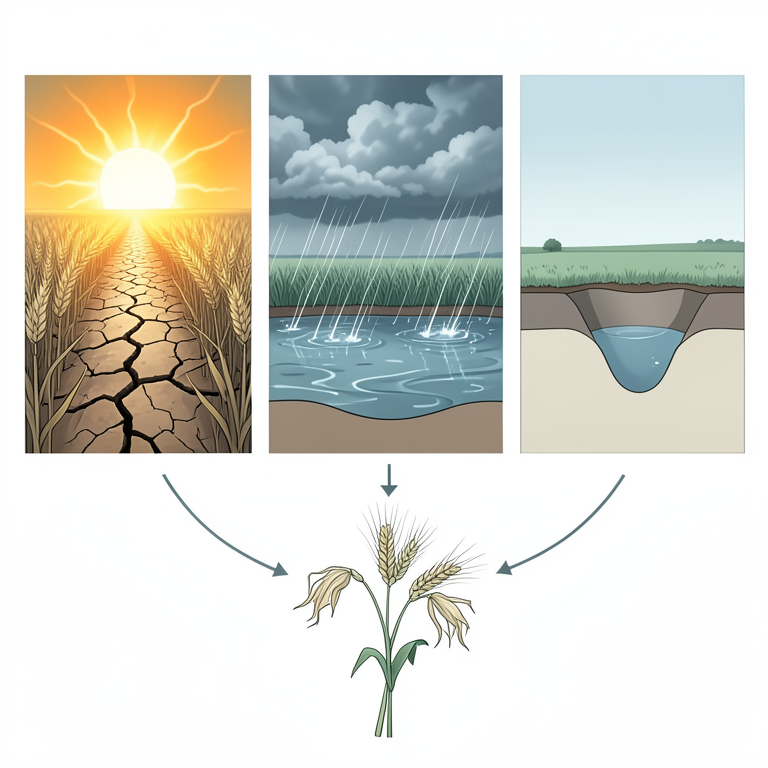
Compounding Climate Risks
AI-generated conceptual illustration (wheat fields in Haryana, India). It explains the idea and does not show study data.
View source evidence ↗Figures & tables
From the original paper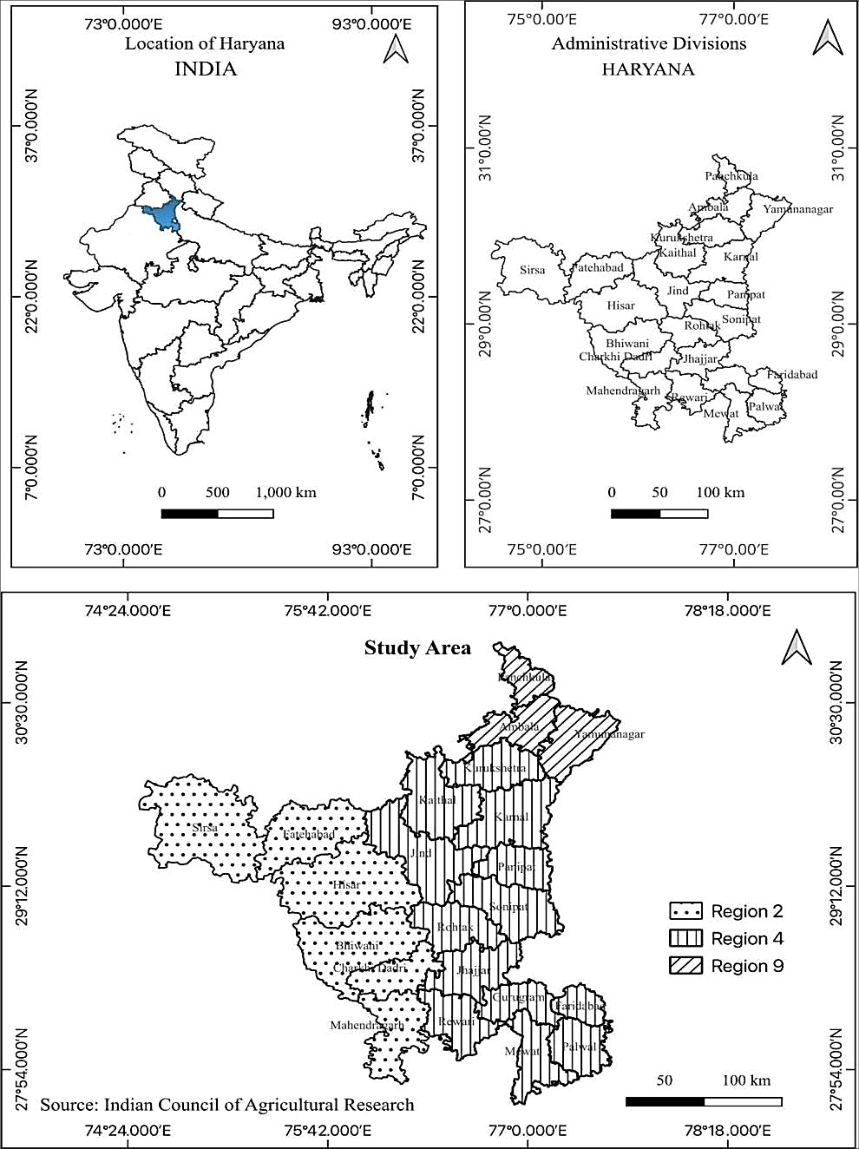 Figure 1
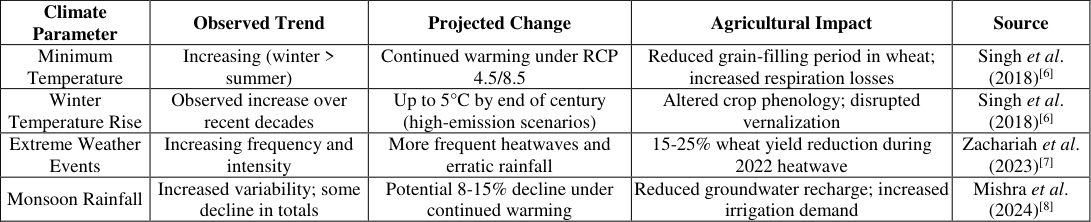 Table 1
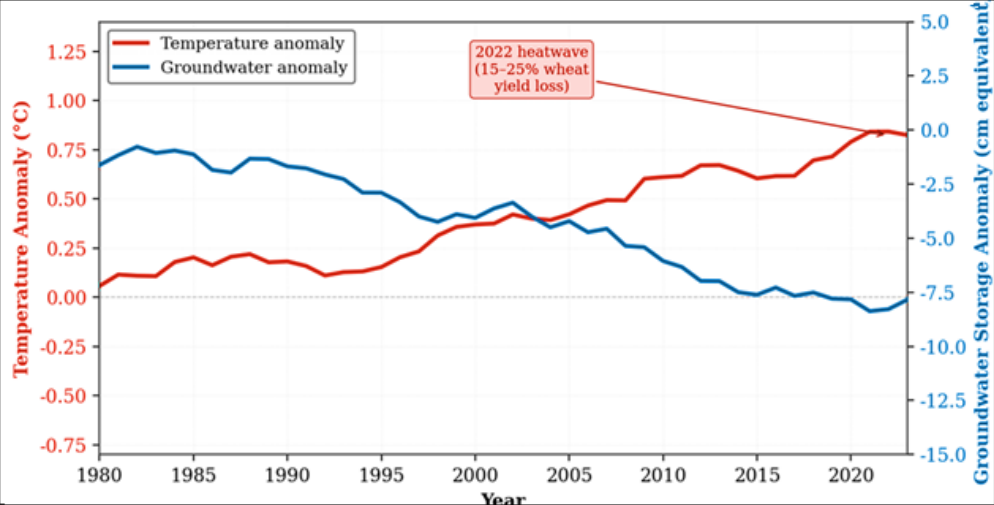 Figure 2
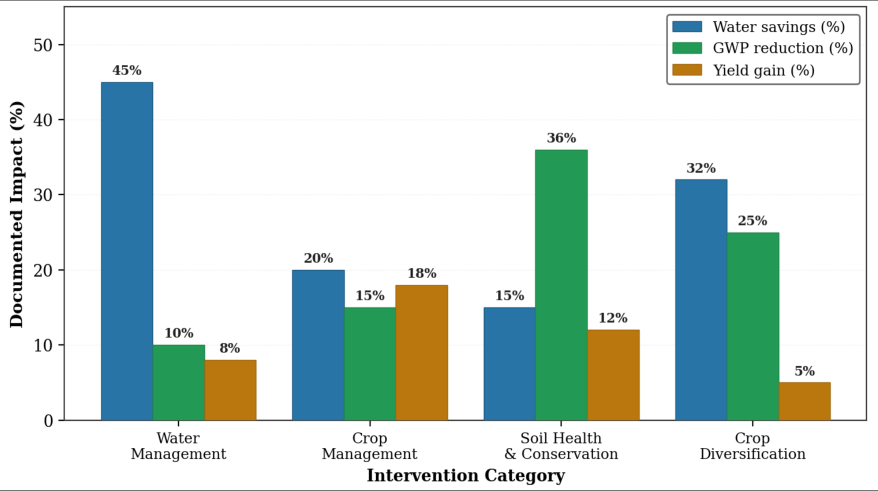 Figure 3
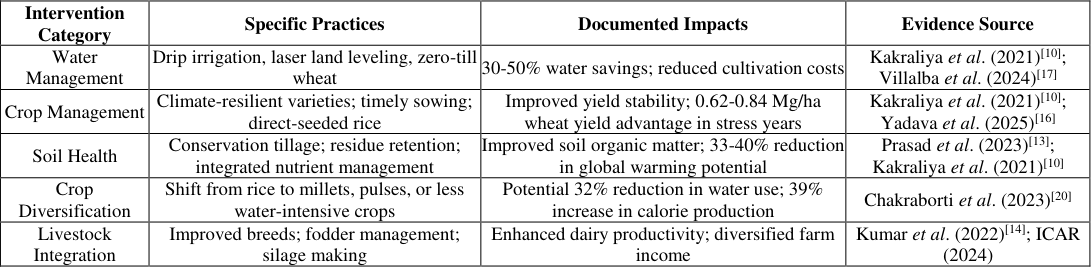 Table 2
Introduction
Agriculture is one of the most climate-sensitive sectors of the global economy and plays a key role in maintaining food security, rural livelihoods, and sustainable economic development (Datta et al., 2022; Praveen and Sharma, 2020) [1,2] . A large share of India's population is engaged in agriculture, which remains highly vulnerable to climate variability. Rising temperatures, unpredictable rainfall, prolonged droughts, recurrent heatwaves, and severe weather events linked to climate change have emerged as significant threats to agricultural productivity and sustainability (Singh et al., 2022) [3] . These climate fluctuations affect crop growth and yields and put pressure on land, water resources, and farming systems, particularly in regions with intensive agriculture. Haryana, which covers only about 1.3% of the country's geographical area, occupies a strategically important position in Indian agriculture (ICAR, 2024) [4] . The state has been a major supplier to the Central Pool of food grains and has played a crucial role in enhancing food security in India since the Green Revolution. The widespread adoption of the rice-wheat cropping system, considerable irrigation infrastructure, and use of modern agricultural technologies have substantially raised agricultural productivity. However, these achievements have also created serious environmental problems, including depletion of groundwater, declining soil fertility, loss of biodiversity, and increased stress on natural resources (Joseph et al., 2022) [5] .
The effects of climate variability are becoming increasingly apparent across Haryana (Singh et al., 2018) [6] . Rising temperatures, erratic monsoon rainfall, depleting groundwater levels, and increasing incidence of extreme weather events are adversely affecting crop productivity, water availability, and the livelihoods of farming communities (Zachariah et al., 2023; Mishra et al., 2024) [7,8] . The impacts vary considerably across the state's Agro-Ecological Regions (AERs) due to differences in climate, soils, topography, and resource availability. Therefore, understanding climatic impacts within the agroecological context is essential for developing region-specific adaptation strategies and ensuring sustainable agricultural development. Climate-resilient agriculture has emerged as a promising strategy to enhance the adaptive capacity of farming systems and ensure long-term food security (Prem et al., 2024) [9] . It encompasses sustainable agricultural practices including efficient water management, conservation agriculture, climateresilient crop varieties, crop diversification, integrated nutrient management, and improved climate information services (Kakraliya et al., 2021) [10] . These interventions have demonstrated potential to improve agricultural resilience under changing climatic conditions, as evidenced by the National Innovations on Climate Resilient Agriculture (NICRA) programme in India (PIB, 2024) [11] . While various studies have addressed climate change, groundwater depletion, agricultural production, and climateresilient technologies in India (Baraj et al., 2024) [12] , most have focused on individual components or have been conducted at the national or regional level (Prasad et al., 2023) [13] . There remains an inadequate synthesis of comprehensive knowledge on climate variability, agricultural impacts, climate-resilient solutions, and food security within the context of Haryana's Agro-Ecological Regions. This gap inhibits the development of integrated, region-specific policy recommendations for sustainable agricultural planning. Thus, the present study attempts to synthesize existing scientific knowledge about the consequences of climate variability on agriculture in Haryana and critically evaluate the effectiveness of climate-resilient agricultural methods in promoting food security. The study also identifies major policy challenges, research gaps, and future directions to strengthen sustainable agricultural development across the different Agro-Ecological Regions of the state.
Research Objectives Objective 1:
To synthesize published evidence on the impacts of climate variability, including temperature rise, rainfall irregularity, and groundwater depletion, on Haryana's agricultural sector and food security. Objective 2: To evaluate the effectiveness of climate-resilient interventions, particularly those under the NICRA programme, and to identify policy and institutional measures for scaling these interventions across the state.
Research Gap
Climate change, groundwater depletion, agricultural productivity, and climate-resilient technologies have been studied previously in Haryana, but most studies have addressed individual components rather than conducting an integrated assessment. To date, very little attention has been paid to synthesizing the evidence on climate variability, agricultural sustainability, food security, and climate resilience interventions within the framework of Haryana's Agro-Ecological Regions. This review attempts to bridge this gap by synthesizing recent scientific literature and policy evidence to develop a comprehensive understanding of climate-resilient agriculture in Haryana and its implications for sustainable food security.
Literature Review
The literature relevant to this review spans four interconnected thematic areas: the broad relationship between climate change and Indian agriculture, regional climate trends in Northwest India, groundwater sustainability in the Indo-Gangetic Plains, and climate-resilient agriculture initiatives, particularly the NICRA programme.
Climate Change and Indian Agriculture
The relationship between climate change and Indian agriculture has received substantial scholarly attention. Datta, Behera, and Rahut (2022) [1] conducted a systematic review of farmers' perceptions and adaptation strategies across India, reporting that climate change adversely affects Indian agriculture through multiple pathways, including temperature increases, altered precipitation patterns, and increased frequency of extreme weather events. The majority of Indian farmers perceived rising temperatures and erratic rainfall consistent with meteorological data, and adopted a range of adaptation measures that were predominantly incremental rather than transformative in nature. Praveen and Sharma (2020) [2] confirmed these findings, reporting that rising temperatures and changing precipitation patterns have direct negative impacts on crop yields, water availability, and soil health in India. Their review highlighted that climate change represents a major threat to agricultural production, particularly in developing countries where adaptive capacity remains limited and farming communities lack access to modern technologies and financial resources. Singh, Kumar, and Jyoti (2022) [3,14] further demonstrated through state-level panel data analysis that maximum temperature has a significant negative influence on agricultural sustainability across Indian states, while economic efficiency, social equity, and ecological security positively influence sustainable outcomes.
Climate Trends in Northwest India
Regional climate studies specific to Haryana provide critical insights into observed and projected climate trends. Singh, Singh, Kumar, and Sihag (2018) [6] conducted future prediction and trend analysis of temperature in Haryana using general circulation models. Their study predicted that winter temperature rise will exceed summer temperature increase, with monthly maximum and minimum temperatures projected to increase by 1 to 3 degrees Celsius during summer, and by up to 5 degrees Celsius during winter by the end of the century. These projections align with IPCC estimates that global average temperatures may rise by 1.4 to 5.8 degrees Celsius during this century, depending on emission scenarios. Zachariah et al. (2023) [7] provided empirical confirmation of these projections by attributing the 2022 early-spring heatwave across the Indo-Gangetic Plains to anthropogenic climate change. Their event attribution analysis found that humancaused climate change made the heatwave approximately 1 degree Celsius hotter and 30 times more likely compared to preindustrial conditions. The heatwave coincided with the critical grain-filling stage of wheat, causing estimated yield reductions of 15 to 25 percent across Punjab, Haryana, and Rajasthan, underscoring the realworld consequences of the warming trends projected by climate models.
Groundwater Depletion and Agricultural Sustainability
Groundwater depletion represents one of the most critical sustainability challenges for Haryana's agricultural sector. The rice-wheat cropping system, which dominates the state's agriculture, requires substantial irrigation inputs that have historically been extracted from groundwater resources. Prasad et al. (2023) [13] examined whether adoption of climate-resilient management practices can achieve carbon neutrality in the traditional Green Revolution states of Punjab and Haryana. Their study highlighted that decreasing greenhouse gas emissions and enhancing soil carbon sequestration in cropland are necessary to achieve carbon neutrality, and that the intensively cultivated areas of these states face significant challenges related to groundwater depletion and environmental degradation. Mishra et al. (2024) [8] quantified the scale of the groundwater crisis in north India, documenting a net groundwater loss of approximately 450 cubic kilometers during 2002 to 2021, with a depletion rate of approximately 1.5 centimeters per year. Their analysis identified summer monsoon drying, which reduces aquifer recharge, and winter warming, which increases irrigation demand, as the two principal drivers. These findings have direct implications for Haryana, where the combination of declining monsoon recharge and rising winter temperatures creates a compounding threat to groundwater sustainability and, by extension, to food security. Joseph et al. (2022) [5] used hydrological modeling to demonstrate that widespread flood irrigation and the cultivation of water-intensive paddy are the critical drivers of groundwater decline in the northwest Indo-Gangetic Plain. Their numerical experiments further suggested that while drip irrigation can slow the rate of groundwater depletion, it does not reverse the declining trend on its own, reinforcing the need for broader systemic changes in cropping patterns and water management practices.
Climate-Resilient Agriculture Initiatives
The National Innovations on Climate Resilient Agriculture (NICRA), launched by the Indian Council of Agricultural Research (ICAR) in 2011, represents India's flagship programme for building agricultural climate resilience. The programme focuses on four major components: Strategic Research, Technology Demonstration, Capacity Building, and Sponsored/Competitive Grants (PIB, 2024) [11] . Prem et al. (2024) [9] provided a comprehensive overview of the NICRA programme, noting that its strategic research component involves collaboration with 21 institutes to establish research infrastructure across thematic areas, while the technology demonstration component presents proven technologies in vulnerable villages to help farming communities adapt to climate variability. Aryal et al. (2020) [15] examined learning adaptation to climate change from past climate extremes in Haryana, finding that farmers who had applied conservation agriculture-based wheat production systems continued to practice them and increased the proportion of land area allocated to these systems over time. The study demonstrated that farmers learn from their past experiences of exposure to climate extremes and use this knowledge to better adapt to future climate events, suggesting a positive feedback mechanism between climate experience and adaptive behaviour.
Yadava et al. (2025) [16] documented the development of 109 climate-resilient crop varieties released by ICAR, representing cereals, pulses, oilseeds, and horticultural crops. These varieties possess unique attributes for withstanding abiotic stresses such as drought, moisture stress, flood, alkalinity, and salinity, as well as biotic stresses including insect pests and diseases. The study emphasized the importance of collaboration among central and state institutions for promoting and sustaining the diversity of climate-resilient crop varieties. Kakraliya et al. (2021) [10] provided some of the most sitespecific and methodologically rigorous evidence available for Haryana, conducting on-farm trials at Karnal over three years (2014 to 2017). Their study found that a portfolio of climatesmart agriculture practices, including zerotillage with residue retention and precision nutrient management, reduced global warming potential by 33 to 40 percent compared to conventional rice-wheat management. During extreme weather years, wheat yields under climate-smart practices were 0.84 Mg/ha higher than under conventional management, confirming that these interventions provide effective buffering against climate extremes. Villalba et al. (2024) [17] assessed the adoption and financing of climate-smart technologies among 120 farmers in Karnal, Haryana, finding adoption rates of 77 percent for laser land levelers and 52 percent for happy seeders. Notably, only 7 percent and 21 percent of farmers owned these technologies respectively, with the majority accessing them through customhiring centres. The study identified that farmers prefer informal credit sources over institutional lending due to bureaucratic barriers, suggesting that financial and institutional innovations are as important as technological ones for scaling adoption.
Study Area and Methodology 3.1 Study Area
Haryana is located in Northwest India between 27° 39′ to 30° 55′ North latitude and 74° 28′ to 77° 36′ East longitude, covering a geographical area of 44,212 square kilometres. The state is characterized by a semi-arid to arid climate, with annual rainfall ranging from approximately 300 mm in the southwestern regions to 1,200 mm in the northeastern parts. Haryana is divided into 22 districts and, according to the Indian Council of Agricultural Research (ICAR) classification, encompasses three distinct Agro-Ecological Regions (AERs), each defined by unique combinations of climate, soils, topography, and cropping suitability (Figure 1). Region 2 (Western Plain and Arid Zone) covers the southwestern and western districts, including Sirsa, Fatehabad, Hisar, Bhiwani, Charkhi Dadri, and Mahendragarh. This region is characterised by arid to semi-arid conditions, sandy to sandyloam soils, low and highly variable rainfall, and a high dependence on groundwater for irrigation. Region 4 (Northern Plain and Central Alluvial Zone) covers the central and eastern districts, including Jind, Rohtak, Sonipat, Panipat, Karnal, Kaithal, Kurukshetra, Jhajjar, Rewari, Palwal, Gurugram, and Faridabad. This region constitutes the heartland of the ricewheat cropping system and is the most agriculturally productive but also the most groundwater-stressed part of the state. Region 9 (Siwalik and Foothill Zone) covers the northern districts of Panchkula, Ambala, and Yamunanagar, characterised by foothill topography, relatively higher rainfall, and diverse cropping patterns including sugarcane and horticultural crops alongside rice and wheat. The agricultural sector supports approximately 65 percent of the state's population and contributes significantly to the state's economy. The predominant cropping system is the ricewheat rotation, which occupies more than 80 percent of the cultivated area during the kharif (monsoon) and rabi (winter) seasons. Wheat occupies approximately 2.5 million hectares during the rabi season, making it the most important winter crop. The intensive cultivation of these two crops has supported high productivity levels but has also contributed to natural resource degradation, particularly groundwater depletion and soil health decline. The spatial distribution of these regions and their associated districts is illustrated in Figure 1, which also indicates the location of Haryana within India and the administrative divisions of the state.
Review Methodology
This review employs a narrative review approach to synthesize published evidence on climate-resilient agriculture in Haryana.
A narrative review was selected because the research objectives require an interpretive synthesis that integrates diverse evidence
Results and Analysis 4.1 Climate Trends and Impacts on Agriculture
The synthesized evidence reveals significant warming trends across Haryana, with implications for crop phenology, productivity, and water resources. Singh et al. (2018) [6] demonstrated, using general circulation model projections, that minimum temperatures in Haryana have been rising, with more pronounced warming in winter than in summer. Higher minimum temperatures shorten the grain-filling period in wheat and increase respiration losses, ultimately affecting yields.
Projected winter temperature increases of up to 5 degrees Celsius by the end of the century pose a particular threat to rabi crop production.
The severity of heat-related yield losses was demonstrated during the 2022 heatwave, which Zachariah et al. (2023) [7] attributed to anthropogenic climate change. The event was approximately 1 degree Celsius hotter and 30 times more likely than in pre-industrial conditions, coinciding with the critical grain-filling stage of wheat and resulting in estimated yield reductions of 15 to 25 percent across Punjab, Haryana, and Rajasthan. Kumar et al. (2022) [14] documented that dairy farmers in arid and semi-arid regions of Haryana have perceived significant environmental changes over the preceding decade and have adopted various adaptation strategies in breeding, feeding, healthcare, and crop production to cope with climate variability.
In parallel, groundwater storage has declined steadily across the state. Figure 2 illustrates the long-term trends in temperature anomaly and groundwater storage anomaly in Haryana from 1980 to 2023, synthesised from multiple sources. The warming trajectory and the simultaneous decline in groundwater storage represent compounding climate risks that threaten the long-term viability of the rice-wheat system. Table 1 summarises the key climate trends observed in Haryana, their projected changes, and the associated agricultural impacts based on the reviewed literature.
Source: Compiled and synthesized by the authors from Singh et al. (2018) [6] , Mishra et al. (2024) [8] , and Zachariah et al. (2023) [7] . (2023) [7] Monsoon Rainfall Increased variability; some decline in totals (2024) [8] Source: Compiled from cited literature.
Agricultural Production Trends
Haryana's agricultural production has shown substantial growth over recent decades, though productivity gains have shown signs of plateauing in recent years. According to ICAR (2024) [4] , wheat production in Haryana has demonstrated significant increases, reflecting the success of Green Revolution technologies and expanded irrigation coverage. However, yield growth rates have slowed, with annual wheat yields showing fluctuations over recent periods. The plateauing of yields under current management practices is consistent with findings from the broader Indo-Gangetic Plains.
McDonald et al. (2022) [18] , through dense on-farm surveys across eastern India, demonstrated that contemporary wheat sowing dates have a central influence on achieved and attainable yields, superseding all other crop management, soil, and varietal factors. They estimated that untapped wheat production potential would increase by 69 percent with achievable adjustments to sowing dates alone. While their study focused on eastern India, the principle of calendar management is equally relevant to Haryana, where timely sowing is frequently delayed by the preceding rice harvest, compressing the wheat growing season and reducing yield potential.
Groundwater Resource Status
Groundwater depletion represents one of the most critical sustainability challenges facing Haryana's agricultural sector. The rice-wheat cropping system requires substantial irrigation inputs that have historically been met through groundwater extraction. Studies indicate that a significant number of Haryana's block-level administrative units have been classified as overexploited with respect to groundwater resources, meaning that annual groundwater extraction exceeds annual recharge. Mishra et al. (2024) [8] documented a net groundwater loss of approximately 450 cubic kilometers across north India during 2002 to 2021, with a depletion rate of approximately 1.5 centimeters per year. Their analysis identified summer monsoon drying, which reduces aquifer recharge, and winter warming, which increases irrigation demand, as the two principal drivers. This finding has direct implications for Haryana, where the combination of declining monsoon recharge and rising winter temperatures creates a compounding threat to groundwater sustainability. Devineni et al. (2022) [19] demonstrated through optimization modeling that shifting the geographies of government crop procurement could reduce groundwater depletion while simultaneously maintaining procurement targets and increasing net farm income. However, Prasad et al. (2023) [13] underscored that the transition to lower-water-consuming cropping systems will require significant policy shifts, particularly in electricity pricing and procurement incentives, to overcome the structural barriers that lock farmers into water-intensive practices.
Effectiveness of Climate-Resilient Interventions
The NICRA programme has demonstrated positive outcomes in pilot villages across Haryana. Aryal et al. (2020) [15] found that conservation agriculture-based wheat production systems served as an effective measure to minimize losses due to climate risks, especially extreme rainfall during the wheat production season. Key interventions documented in the literature include water-saving technologies, integrated nutrient management, and improved crop varieties. Adoption of climateresilient practices has played a pivotal role in averting crop failures during stress years, enabling timely agricultural operations, and positively influencing farmers' economic well-being through reduced input costs and improved yields. Kakraliya et al. (2021) [10] provided the strongest site-specific evidence for Haryana, showing that a portfolio of climate-smart agriculture practices reduced global warming potential by 33 to 40 percent compared to conventional rice-wheat management. During extreme weather years, wheat yields under climatesmart practices were 0.62 to 0.84 Mg/ha higher than under conventional management, confirming that these interventions buffer against climate extremes. Villalba et al. (2024) [17] found that custom-hiring centres are the primary mechanism through which farmers access climate-smart machinery in Karnal, highlighting the importance of institutional innovations alongside technological ones. Figure 3 summarises the documented effectiveness of major climate-resilient intervention categories in Haryana and the broader Indo-Gangetic Plains, drawing on quantitative evidence from the reviewed studies. The comparative synthesis highlights that no single intervention delivers simultaneous gains across water, climate, and yield dimensions; rather, an integrated portfolio combining water management, conservation agriculture, and crop diversification offers the most promising pathway. Table 2 summarises the key climateresilient interventions documented in the reviewed literature and their impacts on agricultural performance in Haryana.
Source: Compiled and synthesized by the authors from Kakraliya et al. (2021) [10] , Villalba et al. (2024) [17] , Yadava et al. (2025) [16] , Chakraborti et al. (2023) [20] , and other cited literature. [10] ; Villalba et al. (2024) [17] Crop Management Climate-resilient varieties; timely sowing; direct-seeded rice Improved yield stability; 0.62-0.84 Mg/ha wheat yield advantage in stress years Kakraliya et al. (2021) [10] ; Yadava et al. (2025) [16] Soil Health Conservation tillage; residue retention; integrated nutrient management Improved soil organic matter; 33-40% reduction in global warming potential Prasad et al. (2023) [13] ; Kakraliya et al. (2021) [10] Crop Diversification Shift from rice to millets, pulses, or less water-intensive crops Potential 32% reduction in water use; 39% increase in calorie production Chakraborti et al. (2023) [20] Livestock Integration Improved breeds; fodder management; silage making Enhanced dairy productivity; diversified farm income Kumar et al. (2022) [14] ; ICAR (2024) Source: Compiled from cited literature.
Discussion
Discussion
Synthesis of Climate Risks to Haryana's Agriculture
The evidence synthesized in this review reveals a pattern of compounding climate risks that threaten Haryana's agricultural system from multiple directions simultaneously. Temperature increases, particularly during the winter season, are shortening the grain-filling period in wheat, the state's most important rabi crop. Rainfall variability is undermining the reliability of monsoon recharge that sustains groundwater levels. Extreme weather events, exemplified by the 2022 heatwave, are causing acute yield losses that ripple through the food supply chain and affect farmer livelihoods. These individual stresses do not operate in isolation; rather, they interact in ways that amplify their combined impact. For instance, rising winter temperatures increase the irrigation demand for wheat precisely when groundwater levels are at their lowest following the monsoon recharge season. The findings of this review align with, but also extend beyond, national-level analyses. While Datta et al. (2022) [1] and Praveen and Sharma (2020) [2] documented climate risks to Indian agriculture broadly, the present synthesis reveals that Haryana faces a particularly acute manifestation of these risks due to three state-specific factors: [15] the extreme dominance of the water-intensive ricewheat system, [12] the advanced state of groundwater depletion, and [20] the state's outsized role in national food procurement, which creates policy lock-in that resists cropping pattern changes. These factors distinguish Haryana's challenge from that of other climate-vulnerable states and underscore why state-specific evidence synthesis is necessary.
Comparative Effectiveness of Climate-Resilient Interventions
A critical evaluation of the evidence on climate-resilient interventions reveals both achievements and significant gaps. The NICRA programme has demonstrated that proven technologies, including zero-till wheat, laser land leveling, and improved varieties, deliver measurable benefits when adopted. Kakraliya et al. (2021) [10] provided quantitative evidence of yield advantages during stress years alongside greenhouse gas reductions. Aryal et al. (2020) [15] demonstrated that farmers learn from climate extremes and increase adoption of conservation practices afterward, suggesting a positive feedback mechanism. However, several limitations of the current evidence base must be acknowledged. First, most documented outcomes derive from NICRA pilot villages, which represent favourable conditions with active institutional support. The extent to which these benefits transfer to non-pilot settings, where extension support is limited and farmers face greater resource constraints, remains insufficiently documented. Villalba et al. (2024) [17] found that while adoption rates for climate-smart machinery were relatively high in Karnal, the primary barriers were financial rather than technical, with farmers preferring informal credit sources over institutional lending. This suggests that technology availability alone is insufficient; financial and institutional innovations are equally necessary for scaling. Second, the evidence on crop diversification as a climate adaptation strategy remains largely theoretical for Haryana. While Chakraborti et al. (2023) [20] modeled substantial benefits from switching from rice to millets and sorghum in the kharif season, actual adoption of alternative crops in Haryana remains limited due to minimum support price structures and procurement infrastructure that favour rice and wheat. This disconnect between modeled potential and actual adoption highlights the importance of the policy dimension of climate adaptation.
Policy and Institutional Gaps
Analysis of policy frameworks reveals several gaps that constrain the effectiveness of climate-resilient agriculture initiatives. While Haryana has developed a State Action Plan on Climate Change and the Climate Change Cell serves as a coordinating body, integration of climate considerations into sectoral planning remains incomplete. Agricultural policies including procurement prices, input subsidies, and crop insurance often create incentives that conflict with climate adaptation objectives. For example, electricity subsidies for tubewell pumping encourage groundwater overexploitation, while procurement policies favouring rice and wheat create barriers to crop diversification. This tension between climate adaptation objectives and existing policy incentives represents a fundamental policy paradox in Haryana's agricultural governance. The state simultaneously promotes water conservation through NICRA while subsidizing the electricity that enables unlimited groundwater extraction. It encourages crop diversification through climate-resilient agriculture programmes while maintaining procurement infrastructure and minimum support prices exclusively for rice and wheat. Resolving this paradox requires not merely adding climate programmes to the existing policy architecture, but fundamentally realigning the incentive structures within which farmers make their production decisions. Devineni et al. (2022) [19] demonstrated that shifting procurement geographies could reconcile food security goals with groundwater sustainability, but such reforms face significant political economy barriers. The challenge for policymakers is to design transition pathways that maintain farmer incomes and national food security while gradually shifting the incentive landscape toward sustainable practices.
Conclusion and Recommendations 6.1 Key Conclusions
This review demonstrates that climate change poses significant challenges to agricultural sustainability and food security in Haryana, but also that effective adaptation strategies exist and can be scaled to meet these challenges.
Future Research Directions
Several priority areas for future research emerge from this synthesis. First, there is a need for district-level vulnerability assessments that integrate climate projections, groundwater data, and socioeconomic indicators across all 22 districts of Haryana. Second, the long-term effectiveness of NICRA interventions beyond the pilot phase requires rigorous evaluation using quasiexperimental or difference-in-differences designs. Third, the political economy of cropping pattern transitions, particularly the role of procurement policies and electricity subsidies in constraining farmer choices, warrants detailed investigation. Fourth, the potential of emerging technologies, including direct-seeded rice, precision agriculture, and digital agricultural advisory services, for Haryana's specific conditions should be systematically assessed.
References
19 in the original paper- Datta P, Behera B, Rahut DB. Climate change and Indian agriculture: A systematic review of farmers' perception, adaptation, and transformation. Environmental Challenges. 2022;8:100543.https://doi.org/10.1016/j.envc.2022.10054 3
- Praveen B, Sharma P. A review of literature on climate change and its impacts on agriculture productivity. Journal of Public Affairs. 2020;20(1):e1960. https://doi.org/10.1002/pa.1960
- Singh AK, Kumar S, Jyoti B. Influence of climate change on agricultural sustainability in India: A state-wise panel data analysis. Asian Journal of Agriculture. 2022;6:1527.https://doi.org/10.13057/asianjagric/g060103
- ICAR. Annual Report 2023-24. Indian Council of Agricultural Research, New Delhi; 2024.
- Joseph J, Scheidegger J, Jackson C, Barik B, Ghosh S. Is flood to drip irrigation a solution to groundwater depletion in the Indo-Gangetic plain? Environmental Research Letters. 2022;17:094026. https://doi.org/10.1088/1748-9326/ac8f5d
- Singh B, Singh K, Kumar R, Sihag P. Future prediction and trend analysis of temperature of Haryana. Journal of Indian Water Resources Society. 2018;38(2):24-27.
- Zachariah M, Arulalan T, AchutaRao K, Saeed F, Jha RK, Dhasmana MK, et al. Attribution of 2022 early-spring heatwave in India and Pakistan to climate change: Lessons in assessing vulnerability and preparedness in reducing impacts. Environmental Research Climate. 2023;2:025001. https://doi.org/10.1088/2752-5295/acf4b6
- Mishra V, Dangar S, Tiwari VM, Lall U, Wada Y. Summer monsoon drying accelerates India's groundwater depletion under climate change. Earth's Future. 2024;12:e2024EF004516. https://doi.org/10.1029/2024EF004516
- Prem SM, Jayalekshmi G, Mohanraj M, Aseemudheen M, Manobharathi K. National Innovations in Climate Resilient Agriculture (NICRA): The reservoir of resilience enhancement. International Journal of Agriculture Extension and Social Development. 2024;7(2):344356.https://doi.org/10.33545/26180723.2024.v7.i2e.344
- Kakraliya SK, Jat HS, Sapkota TB, Singh I, Kakraliya M, Gora MK, et al. Effect of climate-smart agriculture practices on climate change adaptation, greenhouse gas mitigation and economic efficiency of rice-wheat system in India. Agriculture. 2021;11(12):1269. https://doi.org/10.3390/agriculture11121269
- Baraj B, Mishra M, Sudarsan D, da Silva RM, Santos CAG. Climate change and resilience, adaptation, and sustainability of agriculture in India: A bibliometric review. Heliyon. 2024;10(7):e29586. https://doi.org/10.1016/j.heliyon.2024.e29586
- Prasad JVNS, Veni VG, Srinivasarao Ch, Kundu S, Ramakrishna B, Reddy KS, Singh R, Singh SK, Murai A, Rohalla PP, Makkar GS, Rampal VK, Grover J, Brar JS, Goyal NK, Jakhar DS, Kiran BVS, Singh VK, Bhaskar S. Can adoption of climate resilient management practices achieve carbon neutrality in traditional green revolution states of Punjab and Haryana? SSRN. 2023. https://ssrn.com/abstract=4286243
- Kumar RS, Meena BS, Chakravarty R, Kadian KS, Mooventhan P. Differential perception and logit analysis of climate change adaptation strategies among dairy farmers in arid and semi-arid regions of Haryana. Asian Journal of Dairy and Food Research. 2022;41(1):15-21. https://doi.org/10.18805/ajdfr.DR-1712
- Aryal JP, Jat ML, Sapkota TB, Rahut DB, Rai M, Jat HS, et al. Learning adaptation to climate change from past climate extremes: Evidence from recent climate extremes in Haryana, India. International Journal of Climate Change Strategies and Management. 2020;12(1):128-146. https://doi.org/10.1108/IJCCSM-09-2018-0065
- Yadava DK, Singh RK, Patel VB, Sharma TR, Singh SK, Pandey S, et al. Climate Resilient Crop Varieties: Mainstreaming to Improve Yield and Moderate Farmers' Risk. Anthropocene Science. 2025;4:295-328. https://doi.org/10.1007/s44177-025-00103-0
- Villalba R, Joshi G, Daum T, Venus TE. Financing Climate-Smart Agriculture: A case study from the IndoGangetic Plains. Mitigation and Adaptation Strategies for Global Change. 2024;29:32. https://doi.org/10.1007/s11027-024-10127-3
- McDonald AJ, Singh B, Keil A, Srivastava AK, Craufurd P, Kishore A, et al. Time management governs climate resilience and productivity in the coupled rice-wheat cropping systems of eastern India. Nature Food. 2022;3:611-621. https://doi.org/10.1038/s43016-022-00549-0
- Devineni N, Perveen S, Lall U. Solving groundwater depletion in India while achieving food security. Nature Communications. 2022;13:3000.https://doi.org/10.1038/s4146720.
- Chakraborti R, Davis KF, DeFries R, Rao ND, Joseph J, Ghosh S. Crop switching for water sustainability in India's food bowl yields co-benefits for food security and farmers' profits. Nature Water. 2023;1:1048-1058. https://doi.org/10.1038/s44221-023-00135-z