
Research article · 2026 · Full text
International Journal of Horticulture and Food ScienceIn vitro evaluation of botanicals against Sclerotium rolfsii causing collar rot in brinjal.
Volume 8(7) · Pages 186–190 · DOI: 10.33545/26631067.2026.v8.i7c.823 ↗
Research areasPlant Disease Management TechniquesFungal Plant Pathogen ControlEssential Oils and Antimicrobial Activity
Abstract
Author-writtenBrinjal (Solanum melongena L.) is an important vegetable crop widely cultivated in India; however, its productivity is significantly constrained by collar rot disease caused by Sclerotium rolfsii Sacc., a destructive soil-borne pathogen. Considering the economic importance of the crop and the severe yield losses caused by this disease, the present investigation was undertaken to evaluate the efficacy of bioagents against S. rolfsii under in vitro conditions. Infected brinjal plants exhibiting typical collar rot symptoms were collected from field conditions, and the pathogen was isolated on Potato Dextrose Agar (PDA). The pathogenicity of the fungus was confirmed using the sick soil method under screen house conditions Under the in vitro study, A total of eight botanicals as Parthenium leaves extract, Neem leaves extract, Custard Apple leaves extract Bougainvillea leaves extract, Ghaneri leaves extract, Ekdandi leaves extract, Tulsi leaves extract, Karanj leaves extract evaluated at two different concentrations (10% and 20%) using the poisoned food technique in a Completely Randomized Design and each concentration was replicated three times. The purpose of the study was to assess their efficacy against the mycelial growth of S. rolfsii. Data on pathogen mycelial growth were collected after 24, 48, and 72 hours of incubation. Among the tested botanicals, Azadirachta indica recorded the maximum inhibition of mycelial growth, showing colony diameter of 31.00 mm and 18.00 mm at 10 and 20 per cent concentration, respectively.
Summary
Source-checkedPlain-language reading of the full paper, prepared with AI and checked against the text. Each point links to the authors' own words.
Why it matters
- Brinjal is a key vegetable crop in India, but its productivity is hindered by collar rot, a disease caused by the destructive soil-borne fungus Sclerotium rolfsii. View evidence ↗
- The pathogen Sclerotium rolfsii is necrotrophic and highly versatile, affecting over 500 different horticultural and agronomic plant species. View evidence ↗
- Collar rot and related diseases typically cause yield losses exceeding 25%, with extreme cases reaching up to 80%. View evidence ↗
The question
- The study aimed to evaluate the effectiveness of various bioagents against Sclerotium rolfsii in a laboratory (in vitro) setting to mitigate economic losses in brinjal. View evidence ↗
What they did
- The pathogen was isolated from field-collected infected brinjal plants using tissue isolation and surface sterilization with 1% sodium hypochlorite. View evidence ↗
- Pathogenicity was confirmed using the sick soil inoculation technique on the susceptible brinjal variety 'Manjari Gota' in a greenhouse. View evidence ↗
- Eight botanical leaf extracts (Parthenium, Neem, Custard Apple, Bougainvillea, Ghaneri, Ekdandi, Tulsi, and Karanj) were tested at 10% and 20% concentrations using a poisoned food technique in a Completely Randomized Design with three replicates. View evidence ↗
- Mycelial growth and inhibition percentages were measured at 24-hour intervals at 24 ± 2°C until the control plates were fully covered. View evidence ↗
What they found
- Neem (Azadirachta indica) was the most effective botanical, inhibiting mycelial growth by 65.60% (31.00 mm colony diameter) at 10% concentration and 80.00% (18.00 mm colony diameter) at 20% concentration. View evidence ↗
- Tulsi (Ocimum sanctum) showed the second highest efficacy, with inhibition rates of 63.30% and 77.80% at 10% and 20% concentrations, respectively. View evidence ↗
- Bougainvillea glabra was the least effective botanical, providing only 36.70% and 50.00% inhibition at 10% and 20% concentrations. View evidence ↗
- The untreated control group showed the maximum colony growth of 90.00 mm, confirming the absence of inhibition. View evidence ↗
- The study found that all tested botanicals significantly inhibited the growth of S. rolfsii, with effectiveness varying by both plant species and extract concentration. View evidence ↗
What it means
- The authors conclude that these botanical extracts are promising, eco-friendly alternatives for managing collar rot disease. View evidence ↗
Visual summary
1 visualsIllustrations explain the paper; they do not show study data.
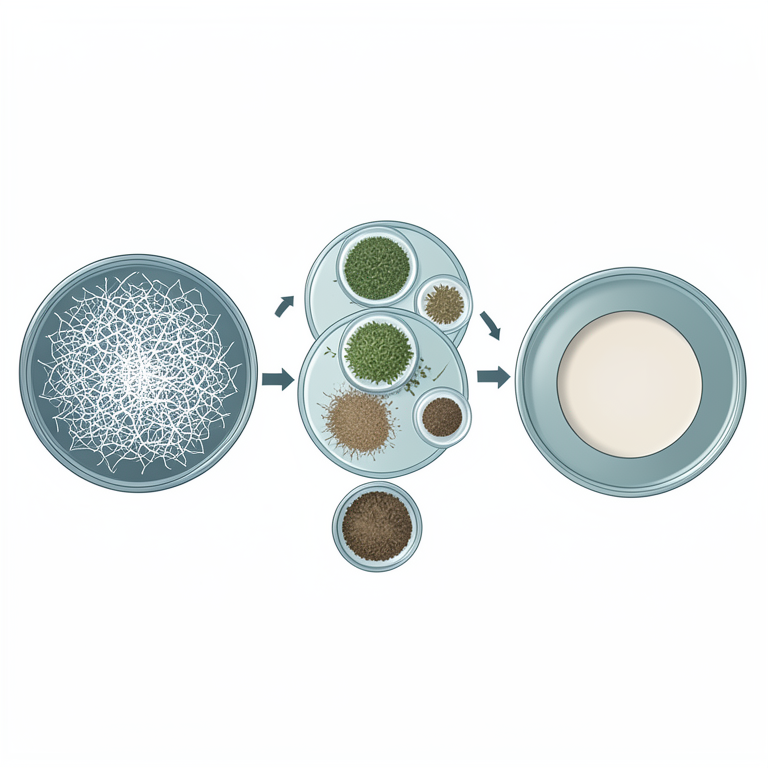
Botanical Efficacy Comparison
AI-generated conceptual illustration (Sclerotium rolfsii fungal mycelium and botanical leaf extracts on agar plates). It explains the idea and does not show study data.
View source evidence ↗Figures & tables
From the original paper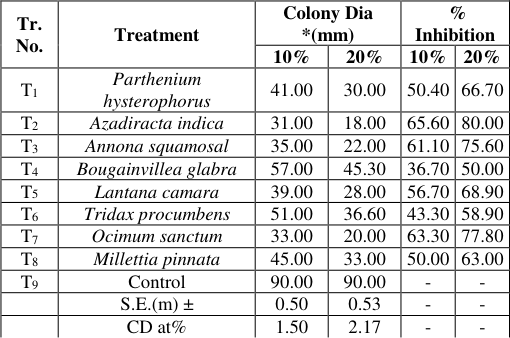 Table 1
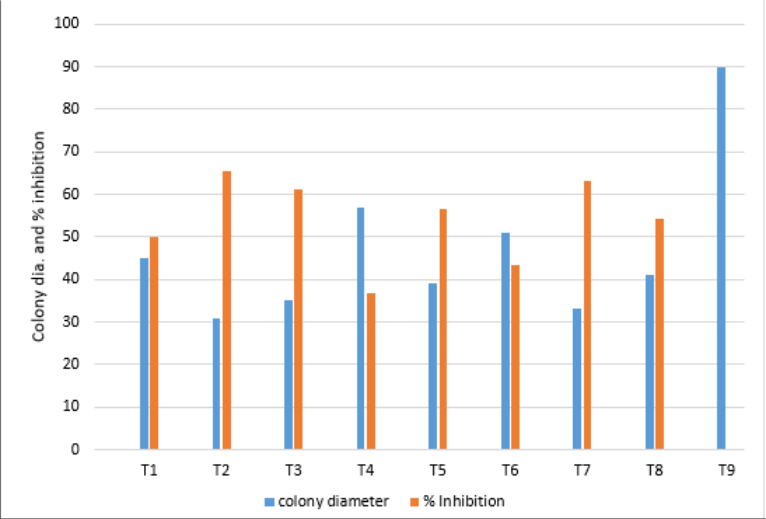 Figure 1
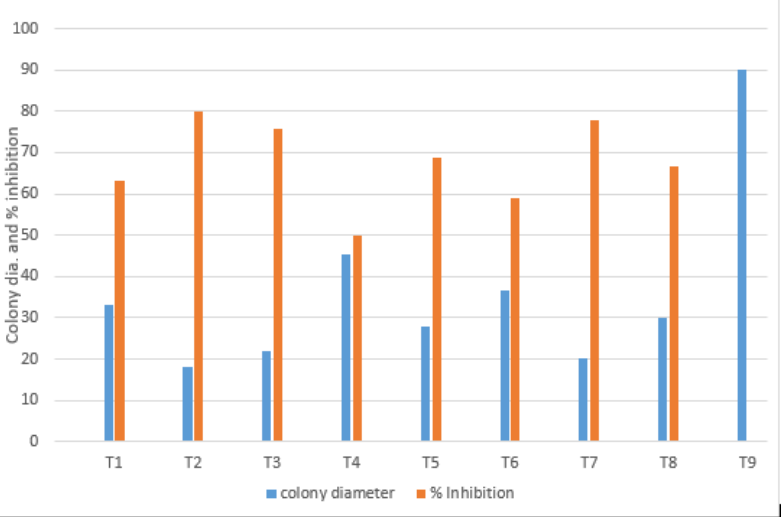 Figure 2
Introduction
Brinjal (Solanum melongena L.) is an important vegetable crop grown in India and other parts of the world. It can be grown in almost all parts of the country except at higher altitudes all the year around. Brinjal is said to be the native of India (Thompson and Kelly, 1957) [8] . It belongs to the economically important family Solanaceae. This solanaceous crop is India's contribution to the global palate. Regarding nutritional value per 100 g, brinjal has a very low caloric value (24 Kcal), protein (2%) and vitamin C (2.2 mg) but is a very good source of dietary fibre (3.4 g), potassium (230 mg), manganese (14 mg), calcium (9 mg), copper (0.082 mg) and thiamin (0.039 mg) (Naeem and Ozgen, 2019). The disease was first reported in India by P. Madhava Rao (1969) in Vijayawada district of Andhra Pradesh and the fungus Sclerotium rolfsii sacc was first time seen in Florida on tomato plants by Peter Henry Rolfs (1892) but the name was coined by Saccardo (1911). In recent years, collar rot caused by Sclerotium rolfsii Sacc. has emerged as one of the serious soil-borne diseases of brinjal in western Maharashtra, causing heavy losses particularly under warm and humid conditions. Sclerotium rolfsii is a destructive soil-borne fungal pathogen with a necrotrophic lifestyle that, under conducive conditions, develops profuse white mycelium on infected plants and in culture (Mullen, 2000) [3] . It has a wide host range that includes more than 500 plant species of horticulture and agronomic crops (Okabe & Matsumoto, 2000) [5] . This pathogen is globally distributed, particularly in tropical, subtropical, and other warm-temperate re-gions (Aycock, 1966) [1] . Numerous symptoms, including seed rot, seedling blight, collar rot, damping-off, stem rot, wilt, crown and root rot, stem canker, and sclerotium blight, are brought on by the fungus in diverse host plants (Mullen, 2001; Arunasri, 2011) [4] . This disease causes significant economic losses due to its wide host range, prolific proliferation, and ability to create chronic sclerotia (Kokub et al.
2007) [2] . Mayee and Datar (1988) stated that these diseases usually result in yield losses of over 25%, and in extreme cases, this can be as high as 80%. Plant extracts can be employed as environmentally friendly substitutes, costeffective, and crucial elements inintegrated pathogen management (Perello et al., 2013). The reasonable integration of all these methods can provide the economic and sustainable management of S. rolfsii. The antifungal properties of botanical extracts have been demonstrated against a variety of plant pathogenic fungi. They are biodegradable and free from environmental contamination and health hazards (Rahman, 2020) [6] . Different botanicals' antifungal potency varies due to variations in the active chemical makeup of the extracts (Shrestha & Tiwari, 2009) [7] . Numerous studies have highlighted the antifungal potential of botanical extracts against various fungal pathogens, including S. rolfsii. These botanical extracts were selected due to their diverse therapeutic value and potential anti-microbial properties.
Materials and Methodology Isolation, Identification and Pathogenicity
The fungi associated collar rot of brinjal was isolated by applying tissue isolation technique (Tuite, 1969). Naturally infected brinjal plants showing typical collar rot symptoms were collected from the fields, thoroughly washed with distilled water, blot dried and cut with sharp sterilized blade into small bits (5 mm) and then surface sterilized with 1 per cent aqueous solution of Sodium hypochlorite (NaOCl) for two minutes. Subsequently, these bits were washed thoroughly by giving three sequential changes with sterile distilled water to remove traces of Sodium hypochlorite if any, blot dried and aseptically transferred on to autoclaved and cooled Potato dextrose agar PDA medium in sterile glass Petri plates (90 mm), under Laminar air-flow cabinet and incubated in BOD incubator at 27 ± 2 0C temperature. These inoculated PDA plates were observed at regular interval for growth of the pathogenic fungi. After a weak of incubation, typical fungal growths developed on PDA plates were transferred into fresh PDA plates and incubated further. By applying hyphal tip isolation technique (Tuite, 1969), purified, and sub-cultured the cultures and their pure cultures on Agar slant tubes were maintained in refrigerator, for further studies.
Pathogenicity
The pathogenicity of pathogens was tested by sick soil inoculation technique in the earthen pot under greenhouse condition by using susceptible brinjal variety Manjari Gota. To prove the pathogenicity of the fungus by soil inoculation techniques, the inoculum of the fungus was prepared as per the method given by Biswas Sen (2000). Sterilized sand maize meal medium was prepared in 250 ml conical flask (10 g maize meal + 90 g washed sand + 15 ml distilled water) was inoculated with two discs of 5 mm diameter mycelial plug of three days old culture grown on PDA plates. Inoculated flasks were incubated at room temperature (27± 2 ºC). After 7th days of incubation, the inoculum was mixed with sterilized soil in 1:1 ratio. Each earthen pot was filled with 3 kg of sterilized soil and the inoculum mixture was applied @ 60 g/kg soil. The next steps of soil inoculation were carried out according to the procedure described by Agrwal and Kotasthane (1971).
Surface sterilized seeds were sown in each pot on 6th days of soil inoculation. Three replications of each treatment were maintained. Uninoculated soil in earthen pot served as control. Observation on pre emergence mortality was taken on 7th day of sowing while post mergence mortality on 21st days of sowing. The infected seeds and seedling were subjected to re-isolation to confirm Koch´s postulates In vitro evaluation of botanicals each at 10 and 20 per cent against Sclerotium rolfsii Different botanicals were tested each at 10 and 20 per cent for efficacy against the causal fungus by using the poisened food technique.(Nene and Thapliyal 1993) and using Potato dextrose agar as basal medium. The test pathogens were grown on PDA medium in Petriplates for fifteen days prior to setting the experiment. Plant extracts suspension was prepared in PDA by adding required quantity of plant extracts along with Twin-80 to obtain the desired concentration of extract. Twenty ml of poisoned medium was poured in each of the sterilized Petriplates. For this 20 ml of sterilized and cooled medium (PDA) was poured in each Petriplate (90 mm diameter) and was allowed to solidify. A 5 mm disc of test pathogen was placed aseptically at centre of the medium with the help of sterilized corn borer. For this a week old culture of test pathogens in petridishes on sterilized PDA medium were used. Petriplates were incubated at 24 ± 2°C temperature in inverted position. Observations on radial mycelial growth and per cent inhibition of the test fungus were recorded at 24 hrs interval and continued till growth of the test pathogen in untreated control plate is fully covered. Per cent inhibition of the test pathogen was calculated by applying formula given by Vincent (1947) [9] as follow. [10] reported that neem extracts exhibited strong antifungal activity against several plant pathogenic fungi due to the presence of limonoids and other secondary metabolites.
Similarly, Rakholiya and Jadeja (2011) evaluated different plant extracts against S. rolfsii and observed significant inhibition of fungal growth under in vitro conditions, highlighting the potential of botanicals in disease management. Thus, the inhibitory effect of these botanicals observed in the present study supports their potential use as eco-friendly alternatives for the management of collar rot disease.
Conclusion
Among the botanicals tested, Azadirachta indica (neem) was found to be most effective, recording 65.60 per cent inhibition at 10 per cent concentration and 80.00 per cent at 20 per cent concentration, followed by Ocimum sanctum (63.30 and 77.80%) and Annona squamosa (61.10 and 75.60%). Moderate inhibition was observed with Lantana camara and Millettia pinnata, while Bougainvillea glabra was least effective.
Figures and tables from the paper
| Tr. No. | Treatment | Colony Dia *(mm) | — | % Inhibition | — |
|---|---|---|---|---|---|
| 10% | 20% | 10% | 20% | ||
| T1 | Parthenium hysterophorus | 41.00 | 30.00 | 50.40 | 66.70 |
| T2 | Azadiracta indica | 31.00 | 18.00 | 65.60 | 80.00 |
| T3 | Annona squamosal | 35.00 | 22.00 | 61.10 | 75.60 |
| T4 | Bougainvillea glabra | 57.00 | 45.30 | 36.70 | 50.00 |
| T5 | Lantana camara | 39.00 | 28.00 | 56.70 | 68.90 |
| T6 | Tridax procumbens | 51.00 | 36.60 | 43.30 | 58.90 |
| T7 | Ocimum sanctum | 33.00 | 20.00 | 63.30 | 77.80 |
| T8 | Millettia pinnata | 45.00 | 33.00 | 50.00 | 63.00 |
| T9 | Control | 90.00 | 90.00 | - | - |
| S.E.(m) ± | 0.50 | 0.53 | - | - | |
| CD at% | 1.50 | 2.17 | - | - |
Table text extracted from the original PDF; superscript letters are shown inline. The original table image is below.
View original table image
References
10 in the original paper- Aycock R. Stem rot and other diseases caused by Sclerotium rolfsii or the status of Rolf's fungus after 70 years. North Carolina Agricultural Experiment Station Technical Bulletin. 1966;174:1-202.
- Kokub D, Hassan A, Ansar M, Asad MJ, Khanum A. Comparative growth, morphological and molecular characterization of indigenous Sclerotium rolfsii strains isolated from different locations of Pakistan. Pak J Bot. 2007;39:1849-1866.
- Mullen J. Southern blight, southern stem blight, white mold. Plant Health Instr. 2000. doi:10.1094/PHI-I2001-0104-01.
- Mullen J. Southern blight, southern stem blight. Plant Health Instr. 2001.
- Okabe I, Matsumoto N. Population structure of Sclerotium rolfsii in peanut fields. Mycoscience. 2000;41(2):145-148. doi:10.1007/BF02464323.
- Rahman MH, Islam MR, Aminuzzaman FM, Latif A, Rahman H. In vitro evaluation of plant extracts and fungicides against mycelial growth of Sclerotium rolfsii causing foot and root rot of betelvine. Bangladesh J Agric Res. 2020;45(1).
- Shrestha AK, Tiwari RD. Antifungal activity of crude extracts of some medicinal plants against Fusarium solani (Mart.) Sacc. Ecoprint. 2009;16:75-78. doi:10.3126/ECO.V16I0.3476.
- Thompson CH, Kelly CM. Vegetable Crops. New York: McGraw-Hill Book Co.; 1957. p. 611.
- Vincent JM. The esters of 4-hydroxybenzoic acid and related compounds. Part I. Method for the study of their fungistatic properties. J Soc Chem Ind. 1947;66(5):149155.
- Prakash V, Rao J, Nandagopal V. Antifungal activity of neem (Azadirachta indica) extracts against plant pathogens. J Food Sci Technol. 2002;39(2):192-195.