
Research article · 2026 · Full text
International Journal of Geography Geology and EnvironmentClimate change and food security in India: A systematic review of social vulnerability, agricultural risk, and policy responses
Volume 8(7) · Pages 247–254 · DOI: 10.22271/27067483.2026.v8.i7c.837 ↗
Research areasClimate change impacts on agricultureAgricultural risk and resilienceFood Security and Socioeconomic Dynamics
Abstract
Author-writtenClimate change has emerged as one of the most significant threats to global food systems, particularly in developing economies where agriculture remains highly climate-sensitive and socio-economically critical (Intergovernmental Panel on Climate Change, 2023; Wheeler & von Braun, 2013) [1, 2]. India represents a crucial case in understanding the climate–food security nexus due to its large population, dependence on monsoon-based agriculture, and persistent socio-economic inequalities (Aggarwal, 2008; Birthal et al., 2014) [3, 4]. This review systematically examines the literature on the impact of climate change on food security in India, with particular emphasis on social vulnerability, agricultural risk, and policy responses. Using a PRISMA-based systematic review framework, 231 studies published between 2000 and 2026 were analyzed from major academic databases, including Scopus, Web of Science, and ScienceDirect (Moher et al., 2009) [5]. The review synthesizes evidence across the four dimensions of food security: availability, accessibility, utilization, and stability (Food and Agriculture Organization, 1996) [6]. Findings indicate that rising temperatures, erratic rainfall, groundwater depletion, and extreme climatic events are significantly affecting agricultural productivity, food prices, livelihood security, and nutritional outcomes in India (Lobell et al., 2011; Mishra et al., 2020; Rosenzweig et al., 2014) [7, 8, 9]. The review further demonstrates that climate change acts as a risk multiplier by intensifying existing structural vulnerabilities related to poverty, inequality, gender, and regional disparities (Adger, 2006; Morton, 2007) [10, 11]. Smallholder farmers, women, and marginalized communities face disproportionate risks due to limited adaptive capacity (Morton, 2007; Vermeulen et al., 2012) [12]. The study identifies critical research gaps, including inadequate attention to food utilization, weak interdisciplinary integration, and limited regional analysis. The paper argues that ensuring food security in India under climate change requires a transition from production-centric approaches toward integrated food systems resilience (Ericksen, 2008; Fanzo et al., 2018) [13, 14]. Policy priorities include climate-resilient agriculture, social protection, technological innovation, and institutional strengthening.
Summary
Source-checkedPlain-language reading of the full paper, prepared with AI and checked against the text. Each point links to the authors' own words.
Why it matters
- Climate change is a major threat to global food systems, especially in developing nations where agriculture is critical and sensitive to climate shifts. View evidence ↗
- India is a critical case for studying food security because it must support over 1.4 billion people amidst significant socio-economic and environmental challenges. View evidence ↗
- Agriculture is central to India's economy and livelihoods, with nearly half of the workforce depending on it. View evidence ↗
The question
- The study aims to systematically review literature on how climate change impacts food security in India, focusing on agricultural risk, social vulnerability, and policy responses. View evidence ↗
What they did
- The authors used a PRISMA-based framework to analyze 231 studies published between 2000 and 2026 from databases such as Scopus, Web of Science, and ScienceDirect. View evidence ↗
What they found
- Evidence suggests that a 1 °C increase in temperature can lead to a 4–6% reduction in wheat productivity. View evidence ↗
- The literature is heavily skewed toward agricultural productivity (31.2%) and food availability (20.8%), while food utilization is the least studied dimension at 9.1%. View evidence ↗
- Climate change functions as a risk multiplier, worsening existing structural vulnerabilities such as gender inequality, poverty, and regional disparities. View evidence ↗
- Vulnerability is regional: Northwestern India faces heat stress in wheat, Central India is drought-prone, Eastern India is flood-vulnerable, and Coastal India faces cyclones and salinity. View evidence ↗
What it means
- The authors conclude that India must move from a production-centric approach to one focused on integrated food systems resilience to ensure food security. View evidence ↗
- Recommended policy priorities include institutional strengthening, technological innovation, social protection, and climate-resilient agriculture. View evidence ↗
- A significant research gap exists regarding food utilization and nutrition security, as most studies focus on calories and productivity rather than dietary diversity and micronutrients. View evidence ↗
- Current literature lacks high-resolution district-level studies, often relying on broad national analyses that obscure localized vulnerabilities. View evidence ↗
Visual summary
2 visualsIllustrations explain the paper; charts are replotted from the paper's own table values.
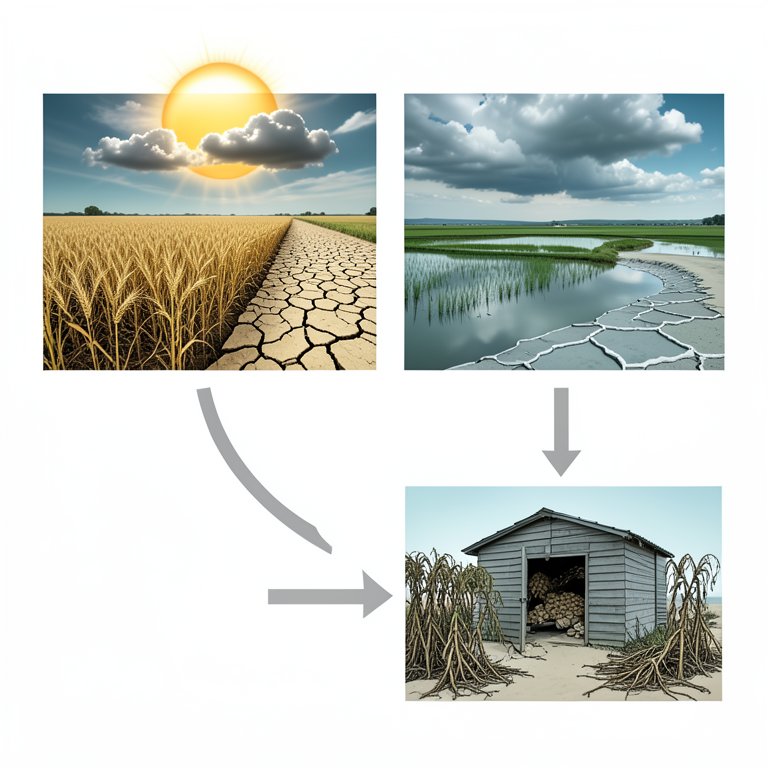
Climate Change as a Risk Multiplier
AI-generated conceptual illustration (Indian agricultural landscapes including wheat fields, drought-stricken soil, flooded plains, and coastal mangroves). It explains the idea and does not show study data.
View source evidence ↗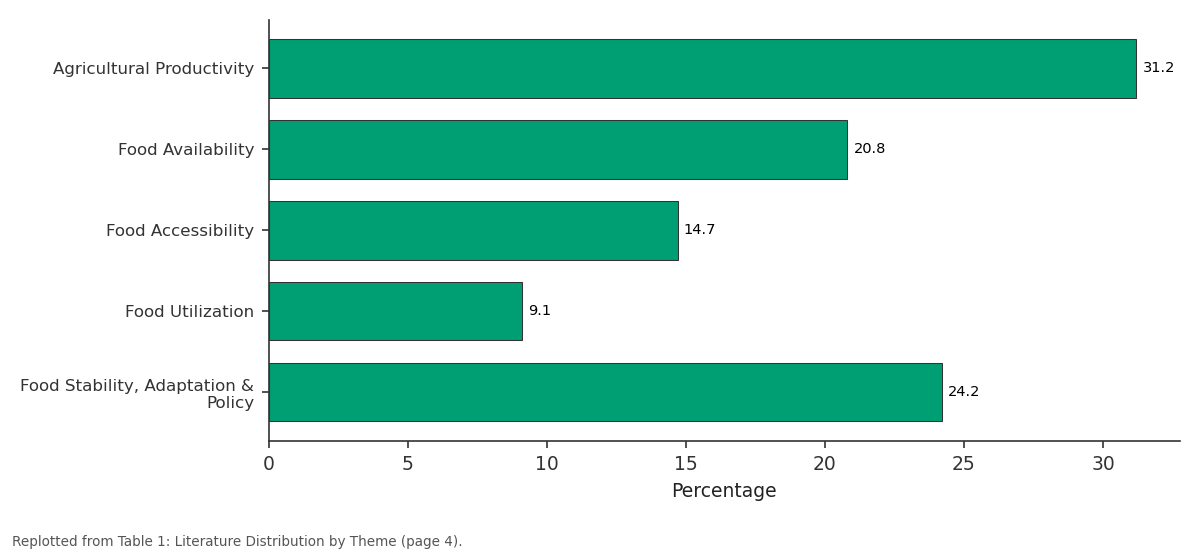
Percentage: Agricultural... vs Food Availability vs Food Accessibility vs Food Utilization vs Food Stability...
Replotted from Table 1 (page 4) of the original paper. Every bar is the paper's own table value.
View source evidence ↗Figures & tables
From the original paper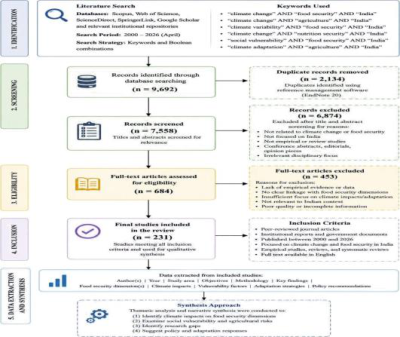 Figure 1
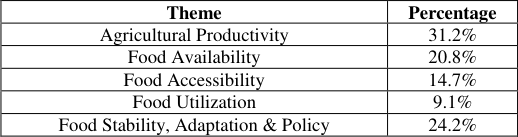 Table 1
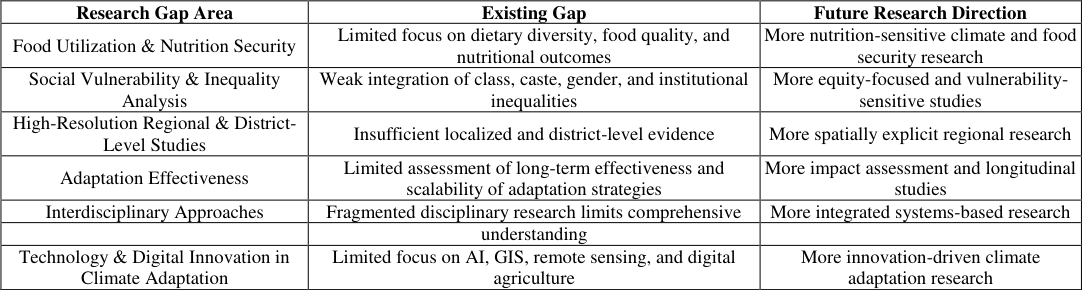 Table 2
Introduction
Climate change is increasingly recognized as one of the most significant threats to human development, environmental sustainability, and global food systems in the twenty-first century (Intergovernmental Panel on Climate Change, 2023; Brown & Funk, 2008) [1,15] . Anthropogenic greenhouse gas emissions have accelerated global warming, producing major changes in climatic systems, including rising temperatures, changing precipitation patterns, and increased frequency of extreme weather events such as droughts, floods, cyclones, and heatwaves (IPCC, 2023; Rosenzweig et al., 2014) [9,1] . The implications of climate change extend far beyond environmental degradation. They are deeply intertwined with issues of livelihoods, poverty, inequality, and social vulnerability (Adger, 2006; Vermeulen et al., 2012) [10,12] . Nowhere is this relationship more evident than in food security, where climate change is reshaping food systems through multiple direct and indirect pathways (Gregory et al., 2005; Wheeler & von Braun, 2013) [16,2] . Food security exists when all people, at all times, have physical, social, and economic access to sufficient, safe, and nutritious food that meets dietary requirements and food preferences for an active and healthy life (Food and Agriculture Organization, 1996) [6] . Food security comprises four interrelated dimensions: Food Availability Food Accessibility Food Utilization Food Stability Climate change threatens all four dimensions simultaneously (FAO, 2008; Gregory et al., 2005) [16,17] . India presents a particularly important case for understanding the climate-food security nexus. As the world's most populous country, India must ensure food security for over 1.4 billion people while navigating significant environmental and socio-economic challenges (World Bank, 2022) [18] . Agriculture remains central to India's economy, rural livelihoods, and food systems. Nearly half of India's workforce depends directly or indirectly on agriculture (Birthal et al., 2014; Kumar, 2011) [4,19] . Indian agriculture is characterized by multiple structural vulnerabilities, including high dependence on monsoon rainfall, fragmented landholdings, groundwater dependence, ecological degradation, and the predominance of smallholder farming systems (Aggarwal, 2008; Mishra et al., 2020) [3,8] . These vulnerabilities make India highly sensitive to climatic disruptions. Recent years have witnessed increasing climaterelated disruptions across India, including severe heatwaves in northwestern India, recurrent droughts in central India, floods in eastern India, and cyclonic disturbances in coastal regions (IPCC, 2023; World Bank, 2022) [18,1] . These events have direct implications for agricultural productivity and food systems. However, the impacts of climate change on food security in India cannot be understood solely through agricultural production losses. Climate change acts as a risk multiplier, exacerbating existing socio-economic inequalities and deepening food insecurity among vulnerable populations (Adger, 2006; Morton, 2007) [10,11] . Smallholder farmers, women farmers, landless laborers, tribal populations, and low-income households face disproportionate climate risks due to limited adaptive capacity and institutional access (Morton, 2007; Vermeulen et al., 2012) [11,12] . Despite growing scholarly interest, the literature on climate change and food security in India remains fragmented. Existing studies largely focus on agricultural productivity and crop yield impacts, while relatively limited attention has been paid to broader food system resilience, social vulnerability, and policy effectiveness (Ericksen, 2008; Fanzo et al., 2018) [13,14] . This paper addresses this gap by systematically reviewing the literature on climate change and food security in India through a social science lens. The study places particular emphasis on social vulnerability, agricultural risk, and policy responses.
Objectives of the Study
This study is designed to systematically evaluate the growing body of literature on climate change and food security in India. The review is guided by major debates in food systems research, climate vulnerability, and socio-economic resilience (Gregory et al., 2005; Ericksen, 2008; Vermeulen et al., 2012) [16,13,12] These objectives align with contemporary scholarship emphasizing integrated food systems analysis rather than production-centric approaches (Fanzo et al., 2018; Ingram, 2011) [14,20] .
Theoretical Framework
This review draws on four complementary theoretical perspectives to understand the complex relationship between climate change and food security in India: Food Security Framework Entitlement Theory Vulnerability Framework Political Ecology Together, these frameworks provide a multidimensional analytical lens for understanding food insecurity as an environmental, social, economic, and political phenomenon (Adger, 2006; Ericksen, 2008) [10,13] .
Food Security Framework
The Food Security Framework provides the foundational lens for understanding the multidimensional nature of food insecurity. According to the Food and Agriculture Organization, food security consists of four dimensions: availability, accessibility, utilization, and stability (FAO, 1996; FAO, 2008) [17,6] . Climate change influences these dimensions in different ways: Availability via production losses Accessibility via income and price shocks Utilization via nutritional decline Stability via long-term uncertainty This framework has become central to climate-food security studies globally (Gregory et al., 2005; Wheeler & von Braun, 2013) [16,2] .
Entitlement Theory
Entitlement Theory, developed by Amartya Sen, argues that hunger often results not from lack of food availability but from failures in access and entitlement systems (Sen, 1981) [21] . This perspective is highly relevant in the context of climate change. Climate shocks reduce: Production-based entitlements Income-based entitlements Labor-based entitlements Thus, food insecurity emerges from weakened access mechanisms rather than absolute food shortages alone (Sen, 1981; Devereux, 2007) [21,22] . This framework is especially relevant in India, where food insecurity often reflects socioeconomic inequality rather than aggregate food scarcity.
Vulnerability Framework
The Vulnerability Framework is central to understanding climate-related food insecurity. According to the Intergovernmental Panel on Climate Change, vulnerability depends on three major components: Exposure Sensitivity Adaptive capacity (IPCC, 2014; IPCC, 2023) [1,23] This framework helps explain why similar climate events produce unequal food security outcomes across regions and communities. For example, two farming households exposed to the same drought may experience very different food security outcomes depending on irrigation access, income, institutional support, and social capital (Adger, 2006; Morton, 2007) [10,11] .
Political Ecology Perspective
Political ecology emphasizes that environmental risks are shaped by power relations, inequality, and institutional structures. Climate vulnerability is therefore not purely climatic but socially produced (Adger, 2006) [10] . This perspective is critical for understanding why marginalized groups including women, tribal populations, and smallholder farmers face disproportionate food insecurity under climate change (Vermeulen et al., 2012) [12] . Political ecology strengthens this review by situating climate-food insecurity within broader questions of social justice and governance.
Methodology
This study employs a Systematic Literature Review (SLR) methodology to critically examine the literature on climate change and food security in India. The systematic review approach was chosen because it enables rigorous identification, screening, evaluation, and synthesis of relevant scholarly work while minimizing selection bias (Tranfield et al., 2003) [24] . The review follows the PRISMA (Preferred Reporting Items for Systematic Reviews and Meta-Analyses) framework, widely recognized in interdisciplinary research for ensuring transparency and replicability (Moher et al., 2009) [5] .
Search Strategy
Relevant literature was collected from leading academic databases to ensure comprehensive coverage of peer-reviewed research. Databases searched included:
Climate Change AND Food Security AND India Climate Variability AND Agriculture AND India Climate Change AND Nutrition Security AND India Climate Risk AND Indian Agriculture These databases were selected because they provide broad coverage of climate science, food systems, geography, and social science research.
Inclusion and Exclusion Criteria
Studies were selected using predefined criteria. The systematic screening ensures inclusion of high-quality and relevant literature for robust synthesis (Moher et al., 2009) [5] .
Inclusion Criteria
Inclusion Criteria
Literature Review
The literature on climate change and food security in India has expanded considerably over the past two decades. Earlier studies focused primarily on agricultural productivity and climate sensitivity of crops. However, recent literature increasingly adopts broader food systems and vulnerability perspectives (Gregory et al., 2005; Ericksen, 2008; Fanzo et al., 2018) [16,13,14] . The review identifies five dominant themes: Climate impacts on agricultural productivity Food availability challenges Food accessibility and affordability Nutrition and food utilization Food system stability and adaptation A major finding is that the literature remains heavily skewed toward agricultural productivity and food availability, while food utilization and social vulnerability remain comparatively underexplored (Ingram, 2011; Vermeulen et al., 2012) [20,12] . [3,4] . [7,25] . Even moderate warming may substantially reduce crop yields in India, particularly for staple crops (Aggarwal, 2008; Kumar, 2011) [3,19] .
Wheat Productivity
Wheat is one of India's most climate-sensitive crops.
Major wheat-growing states include:
Wheat is highly vulnerable to terminal heat stress during grain filling (Lobell et al., 2011) [7] .
Research indicates that a 1 °C rise in temperature may reduce wheat productivity by 4-6% (Aggarwal, 2008; Lobell et al., 2011) [3,7] . [4,26] .
Rice Productivity
Rice Productivity
Pulses and Horticulture
Pulses, oilseeds, and horticultural crops are increasingly vulnerable to climate variability (Paltasingh & Goyari, 2018) [27] .
Major climate risks include: Drought Water stress Temperature extremes These impacts affect both productivity and farm income.
Climate Change and Food Availability
Food availability refers to sufficient quantities of food produced or supplied through domestic production, imports, storage, and distribution (FAO, 1996) [6] .Climate change affects food availability primarily through agricultural production losses (Gregory et al., 2005; Wheeler & von Braun, 2013) [16,2] .Key drivers include: [3,9] .Water stress further intensifies food availability risks.Groundwater depletion, reduced reservoir storage, and increased evapotranspiration create major agricultural vulnerabilities (Mishra et al., 2020; World Bank, 2022) [8,18] .
Climate Change and Food Accessibility
Food accessibility refers to physical and economic access to food.This dimension depends on:
Climate change affects food accessibility through multiple pathways (Sen, 1981; Devereux, 2007) [21,22] . Primary pathway: Climate Shock → Crop Failure → Income Loss → Food Inflation → Reduced Access Climate-related agricultural stress negatively affects farm income, labor opportunities, and rural purchasing power (Morton, 2007; Nelson et al., 2009) [11,28] .Smallholders and landless laborers are highly vulnerable.This supports the entitlement perspective, where food insecurity often emerges from weakened economic access rather than absolute scarcity (Sen, 1981) [21] .
Climate Change and Food Utilization
Food utilization concerns: Nutrition quality Dietary diversity Food safety Health outcomes This remains among the least studied dimensions in India (Fanzo et al., 2018) [14] . Climate change affects utilization through: Reduced food diversity Lower dietary quality Micronutrient decline Disease burden Rising atmospheric CO may reduce nutrient concentrations in staple crops (Tirado et al.,₂ 2010) [29] .Affected nutrients include:
This increases risks of: Hidden hunger Child malnutrition Maternal undernutrition Food utilization deserves substantially more scholarly attention in India.
Climate Change and Food Stability
Food stability refers to reliable access to food over time (FAO, 1996) [6] .This dimension is increasingly threatened by extreme climatic events (IPCC, 2023) [1] .Major disruptions include: Heatwaves Droughts Floods Cyclones
Extreme heat is emerging as one of the largest threats to food stability in India (Rosenzweig et al., 2014) [9] .
Smallholder Farmers
Smallholder farmers constitute the backbone of Indian agriculture.However, they face severe vulnerability due to:
Climate change intensifies these vulnerabilities (Morton, 2007; Birthal et al., 2014) [11,4] . [12] .
Gender Vulnerability
Gender Vulnerability
Regional Vulnerability
Climate vulnerability varies significantly across India.Highly vulnerable regions include: Northwestern India-Heat stress affecting wheat systems (Aggarwal, 2008) [3] Central India-Drought-prone agriculture (Mishra et al., 2020) [8] Eastern India-Flood vulnerability (World Bank, 2022) [18] Coastal India-Cyclones and salinity intrusion (IPCC, 2023) [1] Regional disparities strongly influence food security outcomes.
Research Gaps in Existing Literature
Despite significant growth in the literature on climate change and food security in India, several important research gaps remain. This review identifies major conceptual, methodological, and empirical limitations that constrain current understanding of the climate-food security nexus. A central finding of this review is that existing scholarship remains heavily skewed toward agricultural productivity and food availability, with comparatively limited attention to food accessibility, food utilization, and food stability (Ingram, 2011; Fanzo et al., 2018) [20,14] . Much of the literature continues to adopt a production-centric perspective, often equating food security with crop yield outcomes. While agricultural productivity is an important component, such a narrow approach fails to capture the multidimensional nature of food insecurity. The first major gap concerns the limited focus on food utilization and nutrition security. Existing studies largely emphasize calorie availability and crop productivity, while relatively few examine dietary diversity, micronutrient sufficiency, food safety, and nutritional outcomes under climate change (Tirado et al., 2010; Fanzo et al., 2018) [29,14] . Given India's persistent burden of child malnutrition, maternal undernutrition, and hidden hunger, this represents a critical area requiring greater scholarly attention. A second major gap relates to the insufficient integration of social vulnerability and inequality analysis. Climate change impacts are not uniform across populations, yet many studies inadequately address how class, caste, gender, land ownership, and institutional access shape food insecurity outcomes (Adger, 2006; Vermeulen et al., 2012) [10,12] . Vulnerabilitysensitive research is essential for understanding differential impacts across social groups. Third, there is a significant lack of high-resolution regional and district-level studies. India exhibits considerable agroecological diversity, and climate impacts vary substantially across regions. However, much of the existing literature relies on national or broad regional analyses, which often obscure localized vulnerabilities and adaptation needs (Aggarwal, 2008; Mishra et al., 2020) [3,8] . Greater district-level and state-level studies are necessary to support targeted policy interventions. Fourth, the literature shows limited assessment of adaptation effectiveness. Although numerous studies recommend adaptation strategies such as climate-smart agriculture, irrigation expansion, and crop diversification, relatively few empirically evaluate their longterm effectiveness, scalability, and socio-economic feasibility (Campbell et al., 2014; Zougmoré et al., 2016) [30,31] . This weakens evidence-based policymaking. Another important gap concerns the weak incorporation of interdisciplinary approaches. Climate change and food security are inherently multidisciplinary issues involving environmental science, geography, economics, sociology, public policy, and nutrition science. However, existing studies often remain confined within disciplinary boundaries, limiting comprehensive understanding (Ericksen, 2008; Gregory et al., 2005) [13,16] . Finally, there is inadequate attention to the role of technology and digital innovation in climate adaptation. Emerging tools such as artificial intelligence, remote sensing, GIS-based risk mapping, precision agriculture, and digital advisory systems offer substantial potential for improving food system resilience. Yet these themes remain underexplored in the Indian context (Jat et al., 2016) [32] . Addressing these research gaps is essential for advancing both academic scholarship and policy design. Future research should prioritize integrated food systems approaches that incorporate social vulnerability, regional diversity, nutritional outcomes, and adaptation effectiveness. Such an approach will provide a more comprehensive understanding of food security under climate change in India.
Discussion
This systematic review reveals that climate change poses multidimensional threats to food security in India through complex interactions among environmental stress, agricultural vulnerability, and socio-economic inequality (IPCC, 2023; Wheeler & von Braun, 2013) [2,1] . The literature demonstrates that climate change affects not only agricultural productivity but also household livelihoods, food affordability, nutrition security, and long-term food system resilience (Gregory et al., 2005; Fanzo et al., 2018) [16,14] . A major finding is that existing scholarship remains heavily production-centric. Most studies focus on crop yields, agricultural productivity, and food availability, while comparatively less attention is given to food accessibility, food utilization, and food stability (Aggarwal, 2008; Ingram, 2011) [3, 20] . This imbalance reflects a longstanding tendency to equate food security with food production. From a social science perspective, food insecurity under climate change cannot be understood solely as a production problem. Rather, it must be conceptualized as a multidimensional socio-ecological challenge shaped by inequalities in access, entitlements, institutional support, and adaptive capacity (Sen, 1981; Ericksen, 2008) [21,13] .
The review also demonstrates that climate change acts as a risk multiplier, intensifying existing structural vulnerabilities (Adger, 2006) [10] . Climate-related shocks such as droughts, floods, and heatwaves have unequal impacts because they interact with pre-existing socioeconomic inequalities (Morton, 2007; Vermeulen et al., 2012) [11,12] . Regional disparities emerge as a major theme. Climate risks vary significantly across India's agro-ecological zones. Northwestern India faces increasing heat stress affecting wheat production, central India experiences recurrent drought stress, eastern India remains highly vulnerable to flooding, and coastal regions face cyclones and salinity intrusion (Aggarwal, 2008; Mishra et al., 2020; World Bank, 2022) [3,8,18] . The review further identifies a major gap in nutrition-focused research. Food utilization remains among the least studied dimensions despite its growing significance (Fanzo et al., 2018; Tirado et al., 2010) [14,29] . Overall, the literature suggests that India's climate-food security challenge requires a shift from agricultural productivity-centered thinking toward integrated food systems resilience (Ericksen, 2008; Vermeulen et al., 2012) [13,12] .
Policy Implications
The findings of this review have important implications for policy and governance. Addressing climate-related food insecurity in India requires integrated and multi-level interventions that address both environmental risks and socio-economic vulnerabilities (World Bank, 2022; IPCC, 2023) [18,1] . [30,31] . [8,18] . (Sen, 1981; Devereux, 2007) [21,22] .
Water Security and Irrigation Reform
Water Security and Irrigation Reform
Nutrition-Sensitive Food Policy
Future food security policies must move beyond calorie security.Greater focus is needed on: Dietary diversity Micronutrient sufficiency Child nutrition Maternal nutrition This is essential for addressing hidden hunger (Fanzo et al., 2018) [14] . [32] .
Technology and
Technology and
Region-Specific Policy Design
Climate vulnerability differs significantly across India.Policies must therefore be regionspecific and context-sensitive rather than uniform (Adger, 2006; IPCC, 2023) [10,1] . Localized adaptation planning is essential.
Conclusion
This study systematically reviewed the literature on climate change and food security in India with specific focus on social vulnerability, agricultural risk, and policy responses. The review demonstrates that climate change has emerged as one of the most significant threats to India's food systems (IPCC, 2023; Wheeler & von Braun, 2013) [2,1] . Rising temperatures, rainfall variability, groundwater depletion, and extreme weather events are increasingly affecting Climate-resilient agriculture Strong social protection Institutional strengthening Inclusive governance Technological innovation
Figures and tables from the paper
| Theme | Percentage |
|---|---|
| Agricultural Productivity | 31.2% |
| Food Availability | 20.8% |
| Food Accessibility | 14.7% |
| Food Utilization | 9.1% |
| Food Stability, Adaptation & Policy | 24.2% |
Table text extracted from the original PDF; superscript letters are shown inline. The original table image is below.
View original table image
References
49 in the original paper- Intergovernmental Panel on Climate Change. Climate change 2023: Synthesis report. IPCC; 2023.
- Wheeler T, von Braun J. Climate change impacts on global food security. Science. 2013;341(6145):508513.https://doi.org/10.1126/science.1239402
- Aggarwal PK. Global climate change and Indian agriculture: Impacts, adaptation and mitigation. Indian Journal of Agricultural Sciences. 2008;78(11):911-919.
- Birthal PS, Khan MT, Negi DS, Agarwal S. Impact of climate change on yields of major food crops in India. Agricultural Economics Research Review. 2014;27(2):145-155.
- Moher D, Liberati A, Tetzlaff J, Altman DG. Preferred reporting items for systematic reviews and meta-analyses: The PRISMA statement. PLoS Medicine. 2009;6(7):e1000097.https://doi.org/10.1371/journal.pmed. 1000097
- Food and Agriculture Organization. Rome declaration on world food security and world food summit plan of action. FAO; 1996.
- Lobell DB, Schlenker W, Costa-Roberts J. Climate trends and global crop production since 1980. Science. 2011;333(6042):616620.https://doi.org/10.1126/science.1204531
- Mishra V, Aadhar S, Shah H, Kumar R, Pattanaik DR, Tiwari AD. Climate change will intensify the water crisis in India. Science Advances. 2020;6(43):eabd2845.
- Rosenzweig C, Elliott J, Deryng D, Ruane AC, Müller C, Arneth A, et al. Assessing agricultural risks of climate change in the 21st century. Nature Climate Change. 2014;4(5):287-291.
- Adger WN. Vulnerability. Global Environmental Change. 2006;16(3):268281.https://doi.org/10.1016/j.gloenvcha.2006.02.006
- Morton JF. The impact of climate change on smallholder and subsistence agriculture. Proceedings of the National Academy of Sciences. 2007;104(50):1968019685.https://doi.org/10.1073/pnas.0701855104
- Vermeulen SJ, Campbell BM, Ingram JSI. Climate change and food systems. Annual Review of Environment and Resources. 2012;37:195-
- Ericksen PJ. Conceptualizing food systems for global environmental change research. Global Environmental Change. 2008;18(1):234245.https://doi.org/10.1016/j.gloenvcha.2007.09.002
- Fanzo J, Davis C, McLaren R, Choufani J. The effect of climate change across food systems. Global Food Security. 2018;18:12-19.https://doi.org/10.1016/j.gfs.2018.02.001
- Brown ME, Funk CC. Food security under climate change. Science. 2008;319(5863):580581.https://doi.org/10.1126/science.1154102
- Gregory PJ, Ingram JSI, Brklacich M. Climate change and food security. Philosophical Transactions of the Royal Society B: Biological Sciences. 2005;360(1463):21392148.https://doi.org/10.1098/rstb.2005.1745
- Food and Agriculture Organization. Climate change and food security: A framework document. FAO; 2008.
- World Bank. Climate and development: An agenda for action-India country report. World Bank; 2022.
- Kumar KSK. Climate sensitivity of Indian agriculture. Economic and Political Weekly. 2011;46(26-27):61-78.
- Ingram J. A food systems approach to researching food security and its interactions with global environmental change. Food Security. 2011;3(4):417431.https://doi.org/10.1007/s12571-011-0149-9
- Sen A. Poverty and famines: An essay on entitlement and deprivation. Oxford University Press. 1981.
- Devereux S. The impact of droughts and floods on food security and policy options to alleviate negative effects. Agricultural Economics. 2007;37(s1):47-58.
- Intergovernmental Panel on Climate Change. Climate change 2014: Impacts, adaptation and vulnerability. Cambridge University Press; 2014.
- Tranfield D, Denyer D, Smart P. Towards a methodology for developing evidence-informed management knowledge by means of systematic review. British Journal of Management. 2003;14(3):207-222.
- Challinor AJ, Watson J, Lobell DB, Howden SM, Smith DR, Chhetri N. A meta-analysis of crop yield under climate change and adaptation. Nature Climate Change. 2014;4(4):287-291.https://doi.org/10.1038/nclimate2153
- Sahu N, Behera SK, Yamashiki Y, Takara K. Floods in Indian subcontinent from 1985 to 2009. Global and Planetary Change. 2013;100:132-142.
- Paltasingh T, Goyari P. Impact of farmer education on farm productivity under varying technologies. Theoretical and Applied Climatology. 2018;133(1-2):393-401.
- Nelson GC, Rosegrant MW, Koo J, Robertson R, Sulser T, Zhu T, et al. Climate change: Impact on agriculture and costs of adaptation. International Food Policy Research Institute. 2009.
- Tirado MC, Cohen MJ, Aberman N, Meerman J, Thompson B. Addressing the challenges of climate change and biofuel production for food and nutrition security. Food Research International. 2010;43(7):1729-1744.
- Campbell BM, Thornton P, Zougmoré R, van Asten P, Lipper L. Sustainable intensification: What is its role in climate smart agriculture? Current Opinion in Environmental Sustainability. 2014;8:3943.https://doi.org/10.1016/j.cosust.2014.07.002
- Zougmoré R, Partey S, Ouédraogo M, Torquebiau E, Campbell BM. Facing climate variability in sub-Saharan Africa through climate-smart agriculture. Agriculture & Food Security. 2016;5(1):1-11.
- Jat ML, Chakraborty D, Ladha JK, Rana DS, Gathala MK, McDonald A, et al. Conservation agriculture for sustainable intensification in South Asia. Field Crops Research. 2016;187:170-182.
- Adger WN, Arnell NW, Tompkins EL. Successful adaptation to climate change across scales. Global Environmental Change. 2005;15(2):7786.https://doi.org/10.1016/j.gloenvcha.2004.12.005
- Birthal PS, Roy D, Negi DS. Assessing the impact of crop diversification on farm poverty in India. World Development. 2015;72:70-92.
- Das A, Murthy C, Bhandari G, et al. Effects of climate change on food security and nutrition in India: A systematic review. Current Research in Environmental Sustainability. 2025;9:100312.
- Fan S, Brzeska J, Keyzer M, Halsema A. From subsistence to profit: Transforming smallholder farms. Agricultural Economics. 2013;44(s1):1-12.
- Foley JA, Ramankutty N, Brauman KA, et al. Solutions for a cultivated planet. Nature. 2011;478:337342.https://doi.org/10.1038/nature10452
- Godfray HCJ, Beddington JR, Crute IR, Haddad L, Lawrence D, Muir JF, et al. Food security: The challenge of feeding 9 billion people. Science. 2010;327(5967):812818.https://doi.org/10.1126/science.1185383
- Headey D, Ecker O. Rethinking the measurement of food security. Food Security. 2013;5(3):327-343.
- Hertel TW, Rosch SD. Climate change, agriculture, and poverty. Applied Economic Perspectives and Policy. 2010;32(3):355-385.
- Mirzabaev A, Bezner Kerr R, Hasegawa T, et al. Severe climate change risks to food security and nutrition. Global Food Security. 2023;36:100674.
- Mbow C, Rosenzweig C, Barioni L, et al. Food security. In IPCC Special Report on Climate Change and Land. 2019.
- Pingali P. Green Revolution: Impacts, limits, and the path ahead. PNAS. 2012;109(31):12302-12308.
- Porter JR, Xie L, Challinor AJ, et al. Food security and food production systems. In IPCC AR5. 2014.
- Pretty J. Agricultural sustainability. Philosophical Transactions of the Royal Society B. 2008;363(1491):447465.
- Seppelt R, et al. Climate change impacts on food systems. Global Food Security. 2022;34:100648.
- Thornton PK, Jones PG, Ericksen PJ, Challinor AJ. Agriculture and food systems in sub-Saharan Africa in a changing climate. Global Food Security. 2011;1(1):19-28.
- Wheeler T. Climate change and food systems. Annual Review of Environment and Resources. 2015;40:261-286.
- World Food Programme. Climate risks and food security in South Asia. WFP; 2024.
Social Vulnerability and Agricultural Risk
A major finding of this review is that climate change acts as a risk multiplier (Adger, 2006) [10] . Climate change does not affect all communities equally.Instead, impacts vary based on:
This makes social vulnerability central to food security analysis (Morton, 2007; Vermeulen et al., 2012) [11,12] .