
Research article · 2026 · Full text
International Journal of Biology SciencesBiochemical composition and protein accumulation dynamics in dipteran larvae reared on heterogeneous organic waste substrates
Volume 8(5) · Pages 227–231 · DOI: 10.33545/26649926.2026.v8.i5c.954 ↗
Research areasInsect Utilization and EffectsAquaculture Nutrition and GrowthComposting and Vermicomposting Techniques
Abstract
Author-writtenDipteran larvae of the family Chironomidae accumulate substantial quantities of protein over their short developmental cycle, yet the way substrate composition governs the rate and ceiling of that accumulation has received limited biochemical scrutiny. This research tracked the proximate and amino acid composition of Chironomus plumosus larvae reared on four organic waste substrates municipal sewage sludge, abatoir waste, mixed vegetable waste, and paper mill sludge at the Dresden Institute of Applied Biosciences, Germany, from February to July 2024. Larvae were sampled every three days over a 24-day rearing period, freeze-dried, and subjected to Kjeldahl nitrogen analysis, Soxhlet lipid extraction, amino acid hydrolysis, and faty acid profiling by GC-MS. Crude protein rose from an initial 26.1–30.7% (day 3) to a plateau of 48.9–64.7% of dry mass by day 21, with the mixed vegetable waste substrate producing the highest terminal protein value (64.7±1.9%). Protein accumulation followed a logistic curve rather than a linear trajectory, reaching half-maximal content between days 10 and 14 depending on substrate. Essential amino acid indices exceeded 0.80 on all substrates except paper mill sludge (0.71). Lipid content ranged from 6.8% to 11.2% of dry mass at harvest, and oleic acid was the dominant faty acid across all treatments. These results position mixed organic vegetable waste as an especially efective rearing medium for chironomid protein biomass intended for animal feed applications.
Summary
Source-checkedPlain-language reading of the full paper, prepared with AI and checked against the text. Each point links to the authors' own words.
Why it matters
- Finding alternative protein sources to replace fishmeal in aquaculture and livestock feeds is critical for global food security. View evidence ↗
- Chironomid larvae are promising protein sources because they grow quickly on organic waste and reach high protein levels, though their growth biochemistry is not well-studied. View evidence ↗
- Understanding the specific trajectory of protein accumulation helps determine the optimal harvest time to maximize yield. View evidence ↗
The question
- The study aimed to track how crude protein accumulates over time in C. plumosus larvae across four different organic waste substrates and to characterize their amino and fatty acid profiles. View evidence ↗
What they did
- C. plumosus larvae were reared on four substrates, municipal sewage sludge, abatoir waste, mixed vegetable waste, and paper mill sludge, in Germany between February and July 2024. View evidence ↗
- The experiment used 12 replicate trays per substrate, with sampling occurring every three days from day 3 to day 24. View evidence ↗
- Researchers used the Kjeldahl method for protein, Soxhlet extraction for lipids, and acid hydrolysis with a Biochrom 30+ analyzer for amino acids. View evidence ↗
What they found
- Protein accumulation across all substrates followed a sigmoidal (logistic) growth pattern rather than a linear one. View evidence ↗
- The growth rate constant (k) was highest for mixed vegetable waste (0.31 day⁻¹) and lowest for paper mill sludge (0.19 day⁻¹). View evidence ↗
- The essential amino acid index (EAAI) peaked at 0.87 for mixed vegetable waste and was lowest at 0.71 for paper mill sludge. View evidence ↗
- At harvest, lipid content varied from 6.8% dry mass in paper mill sludge to 11.2% dry mass in abatoir waste. View evidence ↗
- Oleic acid was the primary fatty acid across all treatments, comprising 28.4–35.6% of total fatty acids. View evidence ↗
What it means
- Mixed vegetable waste is the most effective medium, producing protein levels and amino acid indices (64.7% DM and 0.87 EAAI) comparable to commercial fish meal. View evidence ↗
- The authors recommend using substrates with a C:N ratio below 15:1 and harvesting between days 18 and 21 to maximize protein yield and quality. View evidence ↗
- The study is limited by its use of only one species (C. plumosus) and its reliance on controlled laboratory conditions rather than field environments. View evidence ↗
- Future work is needed to conduct in-vivo digestibility trials to ensure the measured protein values provide actual nutritional benefits to animals. View evidence ↗
Visual summary
3 visualsIllustrations explain the paper; charts are replotted from the paper's own table values.
Protein Accumulation Trajectory
AI-generated conceptual illustration (Black soldier fly larvae (Hermetia illucens)). It explains the idea and does not show study data.
View source evidence ↗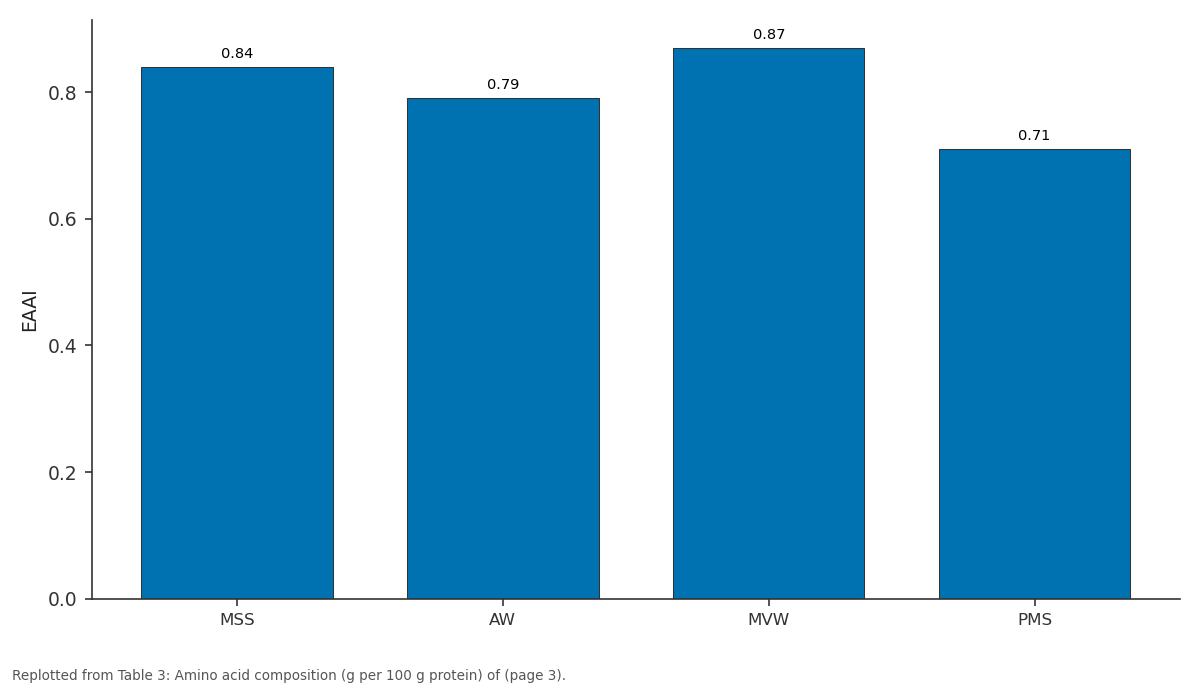
EAAI: MSS vs AW vs MVW vs PMS
Replotted from Table 3 (page 3) of the original paper. Every bar is the paper's own table value.
View source evidence ↗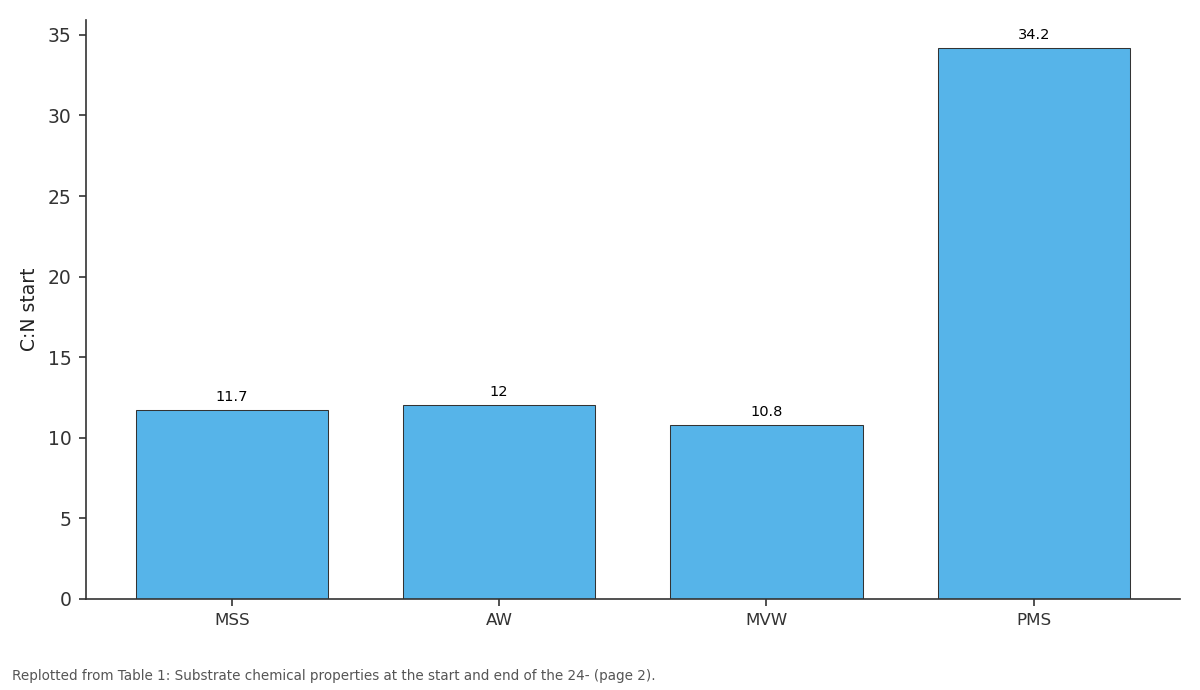
C:N start: MSS vs AW vs MVW vs PMS
Replotted from Table 1 (page 2) of the original paper. Every bar is the paper's own table value.
View source evidence ↗Figures & tables
From the original paper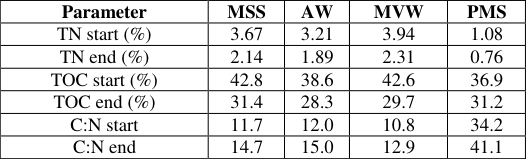 Table 1
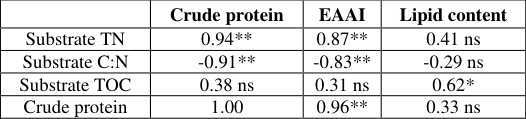 Table 2
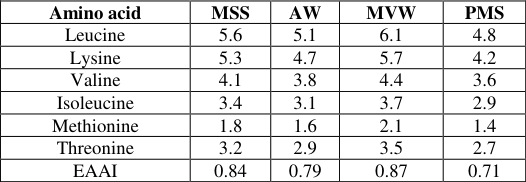 Table 3
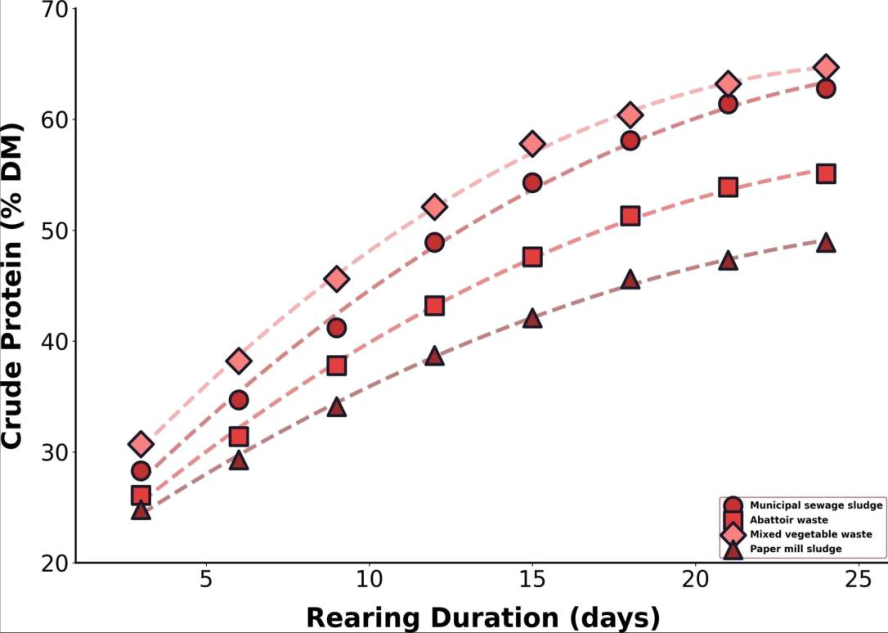 Figure 1
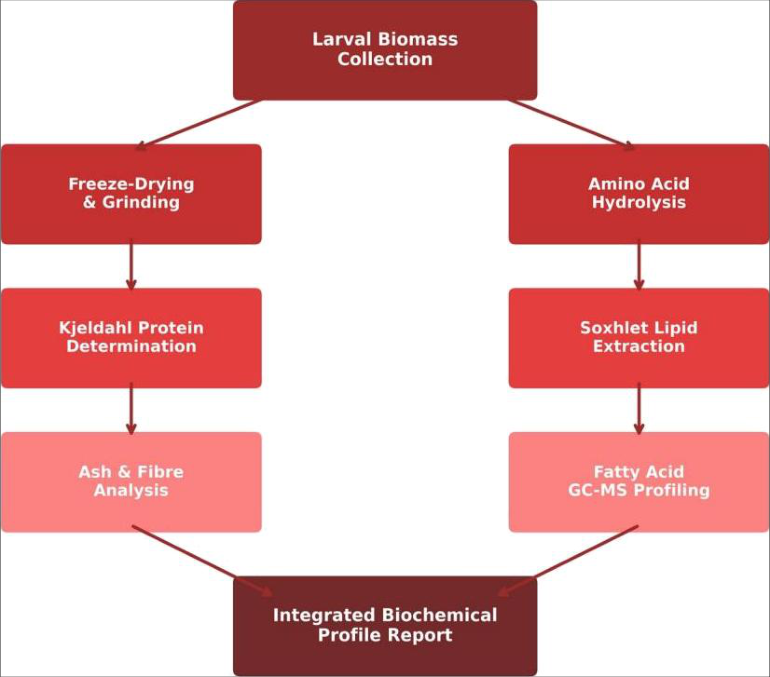 Figure 2
Introduction
The search for alternative protein sources to replace fishmeal in livestock and aquaculture feeds is no longer a fringe research interest it sits at the centre of global food security planning [1] . Insect larvae, particularly those of black soldier fly (Hermetia illucens) and mealworm (Tenebrio molitor), have received the most commercial atention, but the family Chironomidae ofers a parallel track that is ecologically distinct and potentially complementary [2] . Chironomid larvae colonise organic waste spontaneously, grow rapidly under warm conditions, and accumulate protein levels competitive with the best-performing insect species, yet their biochemistry during growth has been explored less systematically [3] . What makes the protein accumulation patern of chironomid larvae diferent from that of other insects? Unlike holometabolous beetles (Coleoptera) that store protein gradually over weeks of larval life, chironomid larvae complete their entire growth cycle in roughly three to four weeks, during which crude protein content can more than double on a dry-weight basis [4] . Whether this accumulation follows a linear, exponential, or sigmoidal trajectory and how the inflection point shifts with substrate quality has practical value for timing harvest to maximise protein yield per rearing batch. Organic waste streams vary enormously in their nitrogen, carbon, and micronutrient profiles, and these diferences propagate through the microbial biofilms that chironomid larvae actually consume [5] . Substrates rich in readily mineralisable nitrogen (such as abatoir waste and sewage sludge) are expected to support faster microbial turnover and, consequently, faster larval protein gain. Carbon-rich, nitrogen-poor substrates (such as paper mill sludge) may constrain microbial protein availability and slow larval development [6] . But direct biochemical time-series comparing multiple substrates under identical conditions are rare.
This research therefore had three aim
To chart the temporal trajectory of crude protein accumulation in C. plumosus larvae across four chemically distinct organic waste substrates; to characterize the amino acid and faty acid Profiles of the resulting larval biomass at harvest maturity; and to identify which substrate yields the biochemically most suitable product for downstream animal feed formulation.
Material and Methods
Material and Methods
Reagents and Chemicals
All chemicals used in proximate and amino acid analyses were of analytical reagent grade. Concentrated sulphuric acid (H₂SO₄ , 98 %) , sodium hydroxide (NaOH), boric acid (H₃BO₃) petroleum ether (40-60°mathsfC fraction), and hydrochloric acid (HCl, 6 M) were purchased from Merck KGaA (Darmstadt, Germany). The Kjeldahl catalyst tablets (copper sulphatepotassium sulphate mixture) were sourced from Fisher Scientific (Schwerte, Germany). Amino acid standard solution (Sigma A-9906, 17 amino acids) and norleucine internal standard were obtained from Sigma-Aldrich (Taufkirchen, Germany). FAME standard mix (Supelco 37-Component, CRM47885) for faty acid GC-MS calibration was purchased from Supelco (Bellefonte, USA). Boron trifluoride-methanol (14% w/v) for faty acid methylation was from Sigma-Aldrich. All solvents (methanol, hexane, diethyl ether) were HPLC grade from VWR International (Darmstadt, Germany). Deionised water (18.2 MΩ•cm) was produced in-house using a Milli-Q system (Millipore, Germany).
Extraction Protocol and Sample Preparation
Larval samples collected at each three-day interval were immediately flash-frozen in liquid nitrogen and stored at -80 °C until analysis. For each time point and substrate, three pooled replicate samples (each comprising approximately 200 larvae, ~2.5 g wet weight) were prepared. Samples were freeze-dried (Christ Alpha 1-2 LDplus, Martin Christ GmbH, Osterode, Germany) for 48 hours at -55 °C and 0.05 mbar, then ground to a fine powder using a ball mill (Retsch MM 400, Haan, Germany) at 30 Hz for 2 minutes. Crude protein was determined by the Kjeldahl method (AOAC 2001.11) using a Büchi K-446 digestion unit and a B-324 distillation unit (Büchi Labortechnik, Flawil, Switzerland), with nitrogen-to-protein conversion factor 6.25. Crude lipid was measured by Soxhlet extraction with petroleum ether for 8 hours using a Büchi E-816 extraction system. Moisture was determined by drying at 105 °C for 24 hours, and ash by incineration at 550°mathsfC for 6 hours in a mufle furnace (Nabertherm L9/11, Lilienthal, Germany). Amino acid composition was analysed after acid hydrolysis (6 M HCl, 110°mathsfC , 24 hours under nitrogen) using a Biochrom 30+ amino acid analyser (Biochrom Ltd, Cambridge, UK) with postcolumn ninhydrin derivatisation. Tryptophan was determined separately by alkaline hydrolysis with lithium hydroxide [7] .
Quality Control and Calibration
Analytical quality was maintained through a series of internal and external checks. Each batch of Kjeldahl analyses included a certified reference material (BCR-274, single-cell protein, Community Bureau of Reference, Brussels) with an accepted nitrogen content of 8.36±0.13 % Recovery of nitrogen from the CRM averaged 99.1±0.7 % (n = 12 batches). Amino acid analyser calibration was verified before each run using a standard amino acid mixture (Sigma A-9906) at five concentration levels; correlation coeficients for all 17 amino acids exceeded r²=0.998 . GC-MS faty acid identification was confirmed by retention time matching against the Supelco 37-Component FAME standard and spectral library matching (NIST 2020). Method detection limits for individual faty acids ranged from 0.02 to 0.05 mg ± bg⁻¹ dry mass. All analyses were performed in triplicate on independent sample pools, and results are reported as mean ± standard deviation.
Material
Four organic waste substrates were sourced from facilities within 50 km of the Dresden Institute of Applied Biosciences, Saxony, Germany. Municipal sewage sludge (MSS) was collected from the dewatering stage of a secondary wastewater treatment plant. Abatoir waste (AW) consisted of rumen content and blood meal residue from a catle processing facility. Mixed vegetable waste (MVW) was obtained from a wholesale produce market and comprised unsold leafy greens, root vegetables, and fruit remnants in approximately equal proportions. Paper mill sludge (PMS) was sourced from the primary clarifier of a recycled-paper manufacturing plant. Each substrate was homogenised, adjusted to 75% moisture content, and distributed into 48 plastic rearing trays (40cm×30cm×10cm) at a loading rate of 1.0 kg wet weight per tray. Trays were placed in a climate-controlled rearing room maintained at 25±1 °C 70±5% relative humidity, and a 16:8 h light:dark photoperiod. Chironomus plumosus egg masses were obtained from the institute's established laboratory colony and distributed at a standardised density of approximately 500 eggs per tray. Each substrate treatment had 12 replicate trays, with three trays designated for destructive sampling at each of eight time points (days 3, 6, 9, 12, 15, 18, 21, and 24 post-hatch).
Methods
Larval sampling was carried out every three days beginning on day 3 post-hatch and ending on day 24, by which time the majority of larvae had reached the fourth instar and were approaching pupation. At each sampling point, all larvae from three designated trays per substrate were harvested by sieving the substrate through a 250 µm mesh, rinsing with deionised water, and transferring to labelled sample bags. Larvae were counted, weighed (wet), and immediately frozen as described in the extraction protocol above. Substrate chemical properties total nitrogen (Kjeldahl), total organic carbon (dry combustion, Elementar Vario EL III), and C:N ratio were measured at the start and end of the rearing period. Protein accumulation curves were fited to a three-parameter logistic model: P(t) = Pmax / (1 + exp(-k(t -(t₅₀))) , where P(t) is crude protein at time t, Pmax is the asymptotic maximum, k is the growth rate constant, and t₅₀ is the time at which protein reaches half its maximum. The essential amino acid index (EAAI) was calculated using the method of Oser [8] , with whole-egg protein as the reference. Statistical diferences among substrates at each time point were assessed by one-way ANOVA with Tukey's HSD post-hoc test (α = 0.05) in R v4.3.2 [9] . Substrate chemical analysis at the start of the rearing period showed marked diferences in nutrient content. Mixed vegetable waste had the lowest C:N ratio (10.8:1) and highest total nitrogen (3.94%), while paper mill sludge had the highest C:N (34.2:1) and lowest nitrogen (1.08%). These substrate properties correlated directly with the rate and ceiling of protein accumulation observed in the larvae over the 24-day rearing period. Protein accumulation in larvae reared on all four substrates followed a sigmoidal (logistic) trajectory rather than a linear one. On mixed vegetable waste, crude protein rose steeply between days 6 and 15, reaching its half-maximum (t₅₀) at day 10.3, and plateaued near 64.7% DM by day 21. Municipal sewage sludge produced a similar curve shape but with a lower asymptote (62.8% DM) and a slightly later inflection (t₅₀=11.7 days). Abatoir waste larvae peaked at 55.1% DM, while paper mill sludge supported the slowest protein gain, reaching only 48.9% DM by day 24 a value still well above the 40% threshold considered adequate for fish feed formulation [10] . The logistic growth rate constant (k) was highest for mixed vegetable waste (0.31 day⁻¹) and lowest for paper mill sludge (0.19 day⁻¹). Amino acid profiling at harvest (day 21) revealed that larvae from all substrates contained a full complement of essential amino acids. Leucine was the most abundant essential amino acid across all treatments (4.8-6.1 g per 100 g protein), followed by lysine (4.2-5.7 g) and valine (3.6-4.4 g). The essential amino acid index (EAAI) was highest for mixed vegetable waste larvae (0.87) and municipal sewage sludge larvae (0.84), and lowest for paper mill sludge (0.71). This positions MVW-reared chironomid larvae close to the EAAI of fish meal (0.89), making them a competitive protein ingredient [11] . Lipid content at harvest ranged from 6.8% DM (paper mill sludge) to 11.2% DM (abatoir waste). Faty acid GC-MS profiling identified oleic acid (C18:1n-9) as the dominant faty acid in all treatments (28.4-35.6% of total faty acids), followed by palmitic acid (C16:0, 19.3-24.1%) and linoleic acid (C18:2n-6, 11.7-16.8%). Omega-3 faty acids primarily αlinolenic acid (C18:3n-3) comprised 2.1-4.3% of total faty acids, with the highest proportion in municipal sewage sludge larvae. The omega-6:omega-3 ratio ranged from 3.9:1 (MSS) to 7.1:1 (PMS), values that fall within acceptable ranges for animal feed but are higher than those typical of marine-origin feed ingredients [12] .
Results
Results
Discussion
The sigmoidal protein accumulation patern observed here with a clear lag phase, exponential gain, and plateau has not been explicitly reported for chironomid larvae before, though it parallels growth models well established for black soldier fly larvae and mealworms [2] . The biological basis is straightforward: young instar I and II larvae invest heavily in structural growth (chitin, cuticle) before redirecting metabolic efort toward protein and lipid storage in the later instars that precede pupation [3] . The practical takeaway is that harvesting before day 18-21 sacrifices a substantial fraction of the achievable protein yield, while delaying beyond day 24 risks pupation losses and diminishing returns. Substrate C:N ratio proved to be a reliable predictor of both the rate constant (k) and the asymptotic protein ceiling (Pmax) in the logistic model. This aligns with the findings of Sulistiyarto and Bakrie [4] , who documented faster chironomid growth on chicken manure a low-C:N substrate compared with fish waste. The mechanistic link runs through microbial mediation: low-C:N substrates release ammonium nitrogen that fuels bacterial biofilm proliferation, and it is this biofilm, rich in bacterial protein, that chironomid larvae actually ingest [5] . Paper mill sludge, with a C:N of 34.2, promotes cellulose-degrading fungi rather than protein-rich bacteria, and this microbial community shift appears to cap the protein available to the larvae. The amino acid profiles at harvest confirmed that chironomid larvae are not merely proteindense but protein-complete containing all essential amino acids at levels adequate for monogastric animal nutrition [11] . The EAAI of 0.87 recorded for MVW-reared larvae is nearequivalent to that of commercial fish meal and well above soybean meal (typically 0.72-0.75), reinforcing the potential of chironomid biomass as a fishmeal replacement ingredient [6] . The relatively high leucine and lysine concentrations are especially valuable, as these are the firstlimiting amino acids in many cereal-based livestock diets. A limitation of this research is the use of a single species (C. plumosus) under controlled laboratory conditions. Field-reared larvae encounter variable temperatures, predation, and mixedspecies competition that may alter biochemical outcomes. And the present work did not track tryptophan dynamics across the full time series only at harvest which leaves a gap in understanding how this heat-labile amino acid accumulates relative to other essentials. Future research should incorporate in-vivo digestibility trials to confirm that the high in-vitro protein values translate to real nutritional benefit in target animal species [13] .
Conclusion
Organic waste composition directly and measurably governs the rate, timing, and ceiling of protein accumulation in chironomid larvae a relationship that this research quantified through replicated biochemical time-series across four substrates under controlled conditions. Mixed vegetable waste emerged as the most efective rearing medium, supporting a peak crude protein content of 64.7% DM and an essential amino acid index of 0.87, values that approach those of commercial fish meal. Municipal sewage sludge performed comparably in protein terms (62.8% DM) but raises regulatory considerations for downstream feed use that were beyond the scope of this work. Paper mill sludge, while the least productive substrate (48.9% DM protein), still generated biomass above the 40% protein threshold for basic feed formulations.
For practitioners aiming to produce chironomid protein biomass from organic waste, the key recommendation is to select or blend substrates targeting a C:N ratio below 15:1 and to time harvest between days 18 and 21, when the logistic accumulation curve has plateaued but pupation has not yet begun. Doing so maximises both protein yield and amino acid quality per rearing cycle.
Looking ahead, scaling these findings to pilot-level continuous rearing systems and conducting in-vivo digestibility trials with poultry and fish will be necessary to bridge the gap between laboratory biochemistry and commercial feed ingredient production.
Acknowledgement
AcknowledgementsThe authors acknowledge and express gratitude to the concerned authorities for their support and cooperation during this research.
Figures and tables from the paper
| Parameter | MSS | AW | MVW | PMS |
|---|---|---|---|---|
| TN start (%) | 3.67 | 3.21 | 3.94 | 1.08 |
| TN end (%) | 2.14 | 1.89 | 2.31 | 0.76 |
| TOC start (%) | 42.8 | 38.6 | 42.6 | 36.9 |
| TOC end (%) | 31.4 | 28.3 | 29.7 | 31.2 |
| C:N start | 11.7 | 12.0 | 10.8 | 34.2 |
| C:N end | 14.7 | 15.0 | 12.9 | 41.1 |
Table text extracted from the original PDF; superscript letters are shown inline. The original table image is below.
View original table image
| — | Crude protein | EAAI | Lipid content |
|---|---|---|---|
| Substrate TN | 0.94** | 0.87** | 0.41 ns |
| Substrate C:N | -0.91** | -0.83** | -0.29 ns |
| Substrate TOC | 0.38 ns | 0.31 ns | 0.62* |
| Crude protein | 1.00 | 0.96** | 0.33 ns |
Table text extracted from the original PDF; superscript letters are shown inline. The original table image is below.
View original table image
| Amino acid | MSS | AW | MVW | PMS |
|---|---|---|---|---|
| Leucine | 5.6 | 5.1 | 6.1 | 4.8 |
| Lysine | 5.3 | 4.7 | 5.7 | 4.2 |
| Valine | 4.1 | 3.8 | 4.4 | 3.6 |
| Isoleucine | 3.4 | 3.1 | 3.7 | 2.9 |
| Methionine | 1.8 | 1.6 | 2.1 | 1.4 |
| Threonine | 3.2 | 2.9 | 3.5 | 2.7 |
| EAAI | 0.84 | 0.79 | 0.87 | 0.71 |
Table text extracted from the original PDF; superscript letters are shown inline. The original table image is below.
View original table image
References
13 in the original paper- van Huis A, Oonincx DGAB. The environmental sustainability of insects as food and feed. A review. Agronomy for Sustainable Development. 2017;37(5):43.
- Makkar HPS, Tran G, Heuzé V, Ankers P. State-of-the-art on use of insects as animal feed. Animal Feed Science and Technology. 2014;197:1-33.
- Armitage PD, Pinder LC, Cranston PS. The Chironomidae: Biology and ecology of non-biting midges. London: Chapman & Hall; 2012.
- Sulistiyarto B, Bakrie R. The growth of bloodworm, Chironomidae larvae (Diptera) fed with fish waste and chicken manure. Acta Entomol Zool. 2023;4(2):01-05.
- Barroso FG, Sánchez-Muros MJ, Segura M, Morote E, Torres A, Ramos R, et al. Insects as food: Enrichment of larvae of Hermetia illucens with omega 3 faty acids by means of dietary modifications. Journal of Food Composition and Analysis. 2017;62:8-13.
- AOAC International. Oficial methods of analysis of AOAC International. 21st ed. Rockville, MD: AOAC International; 2019.
- Oser BL. An integrated essential amino acid index for predicting the biological value of proteins. In: Albanese AA (ed). Protein and amino acid nutrition. New York: Academic Press; 2013. p. 281-295.
- R Core Team. R: A language and environment for statistical computing. Vienna: R Foundation for Statistical Computing; 2023.
- NRC (National Research Council). Nutrient requirements of fish and shrimp. Washington, DC: National Academies Press; 2011.
- Sánchez-Muros MJ, Barroso FG, Manzano-Agugliaro F. Insect meal as renewable source of food for animal feeding: A review. Journal of Cleaner Production. 2014;65:16-27.
- Rumpold BA, Schlüter OK. Nutritional composition and safety aspects of edible insects. Molecular Nutrition & Food Research. 2013;57(5):802-823.
- Henry M, Gasco L, Piccolo G, Fountoulaki E. Review on the use of insects in the diet of farmed fish: Past and future. Animal Feed Science and Technology. 2015;203:1-22.
- Nogales-Mérida S, Gobbi P, Józefiak D, Mazurkiewicz J, Dudek K, Rawski M, et al. Insect meals in fish nutrition. Reviews in Aquaculture. 2019;11(4):1080-1103.