
Research article · 2026 · Full text
International Journal of Biology SciencesPrevalence of gastrointestinal parasites and associated risk factors in free-range indigenous chicken populations
Volume 8(6) · Pages 78–84 · DOI: 10.33545/26649926.2026.v8.i6a.957 ↗
Research areasHelminth infection and controlBird parasitology and diseasesLivestock and Poultry Management
Abstract
Author-writtenAn estimated 72% of all chickens raised in sub-Saharan West Africa are free-range indigenous breeds, yet parasitological surveillance in these flocks remains sporadic and largely confined to abattoir-based surveys. This cross-sectional research investigated the prevalence, species composition, and risk factors linked to gastrointestinal (GI) parasites in free-range indigenous chicken populations across three local government areas (LGAs) of Oyo State, southwestern Nigeria. Between October 2023 and March 2024, faecal samples were collected from 480 birds (160 per LGA) drawn from 96 smallholder households. Coprological examination employed the standard flotation technique (saturated NaCl solution, specific gravity 1.20) and the McMaster counting chamber for quantitative egg counts. Of the 480 birds sampled, 347 (72.3%) harboured at least one GI parasite species. Six helminth and two protozoan species were identified. Ascaridia galli was the most prevalent species (31.4%), followed by Heterakis gallinarum (24.7%), Eimeria spp. (18.9%), Raillietina cesticillus (12.3%), Capillaria spp. (8.1%), Syngamus trachea (2.8%), Tetrameres americana (1.4%), and mixed Entamoeba spp. (0.3%). Mixed infections involving two or more species were recorded in 38.6% of positive birds. Prevalence was significantly higher during the wet season (October-November) than the dry season (January-March) (81.7% vs. 58.4%; χ² = 28.31, P<0.001). Birds older than 32 weeks showed the highest infection rate (79.8%), while those younger than 16 weeks had the lowest (54.3%). Females were more frequently infected than males (76.1% vs. 66.8%; P = 0.042). Households that never dewormed their flocks had a prevalence of 89.4%, compared with 61.7% for those practising irregular deworming and 42.1% for those with a regular deworming schedule. Multivariate logistic regression confirmed that season (OR = 3.14, 95% CI 2.08-4.74), age above 32 weeks (OR = 2.67, 95% CI 1.73-4.12), absence of deworming (OR = 5.81, 95% CI 3.42-9.87), and flock size above 30 birds (OR = 1.94, 95% CI 1.28-2.95) were independently associated with higher infection risk. Shannon-Wiener diversity index values ranged from 1.12 in the dry season to 1.68 in the wet season, indicating moderate parasite species diversity that peaked under warm, humid conditions. These findings highlight the heavy parasitic burden carried by free-range indigenous chickens in southwestern Nigeria, driven primarily by the absence of strategic deworming, prolonged environmental exposure during the wet season, and the accumulation of infection with age. Targeted anthelmintic programmes timed before the onset of rains, coupled with basic sanitation improvements in chicken housing, are recommended to reduce parasite loads and improve bird productivity in smallholder systems.
Summary
Source-checkedPlain-language reading of the full paper, prepared with AI and checked against the text. Each point links to the authors' own words.
Why it matters
- Gastrointestinal parasitism is one of the top three health issues limiting the productivity of the approximately 1.8 billion free-range chickens in sub-Saharan Africa. View evidence ↗
- In Nigeria, indigenous free-range chickens make up about 70% of the 180 million+ poultry population but have low productivity due to high disease-related morbidity and mortality. View evidence ↗
- Existing data on parasites in West African poultry are limited and often rely on abattoir surveys, which fail to capture critical field-level management and environmental risk factors. View evidence ↗
The question
- The study aimed to determine the prevalence and species of gastrointestinal parasites in Oyo State, Nigeria, and identify how season, age, sex, flock size, and deworming practices influence infection risk and diversity. View evidence ↗
What they did
- Parasites were identified using a saturated sodium chloride flotation technique and quantitative egg counts were measured using the McMaster technique. View evidence ↗
- Risk factors including age, sex, flock size, and deworming history were collected via questionnaires and analyzed using multivariate logistic regression to find independent predictors of infection. View evidence ↗
What they found
- The overall prevalence of gastrointestinal parasites in the sampled indigenous chickens was 72.3%. View evidence ↗
- Ascaridia galli was the most common parasite species (31.4%), followed by Heterakis gallinarum (24.7%) and Eimeria spp. (18.9%). View evidence ↗
- Infection prevalence was significantly higher during the wet season (81.7%) compared to the dry season (58.4%), with an adjusted odds ratio of 3.14. View evidence ↗
- Parasite prevalence increased with age, with birds older than 32 weeks having the highest rate (79.8%) and those under 16 weeks the lowest (54.3%). View evidence ↗
- Females had a higher prevalence of infection (76.1%) than males (66.8%). View evidence ↗
- The absence of deworming was the strongest predictor of infection, with a prevalence of 89.4% in never-dewormed flocks compared to 42.1% in regularly dewormed flocks. View evidence ↗
- Parasite species diversity, measured by the Shannon-Wiener index, was higher during the wet season (1.68) than the dry season (1.12). View evidence ↗
What it means
- The authors recommend implementing targeted anthelmintic programs before the rainy season and improving housing sanitation to reduce parasite loads. View evidence ↗
- A limitation of the study is the use of faecal egg counts as a proxy for worm burden, which may not linearly correlate with actual adult worm numbers for some species. View evidence ↗
- The study did not quantitatively assess the economic impact of infections, such as monetizing losses in egg production and weight gain. View evidence ↗
Visual summary
3 visualsIllustrations explain the paper; charts are replotted from the paper's own table values.
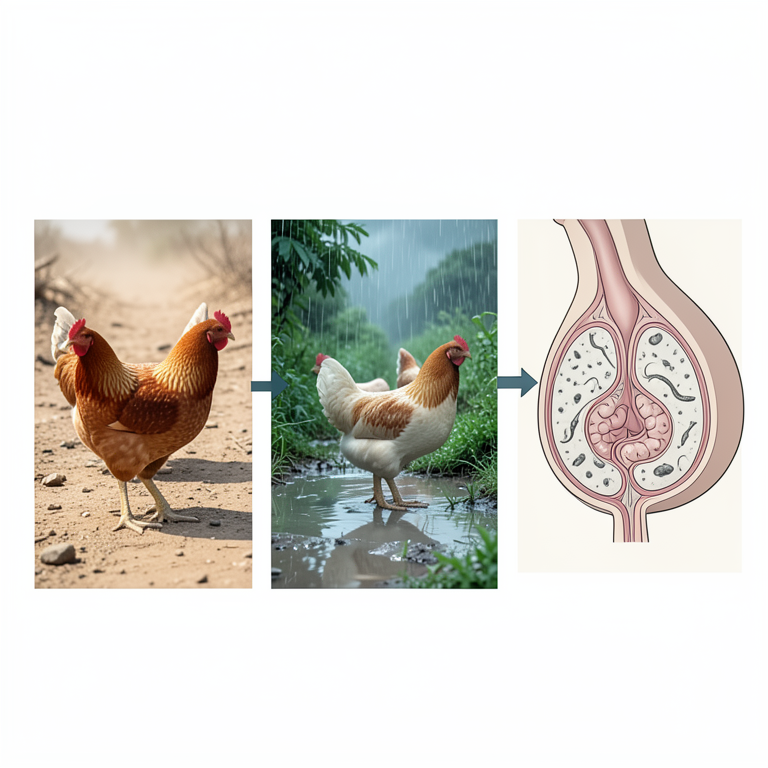
Risk Factor Interaction Map
AI-generated conceptual illustration (indigenous free-range chickens). It explains the idea and does not show study data.
View source evidence ↗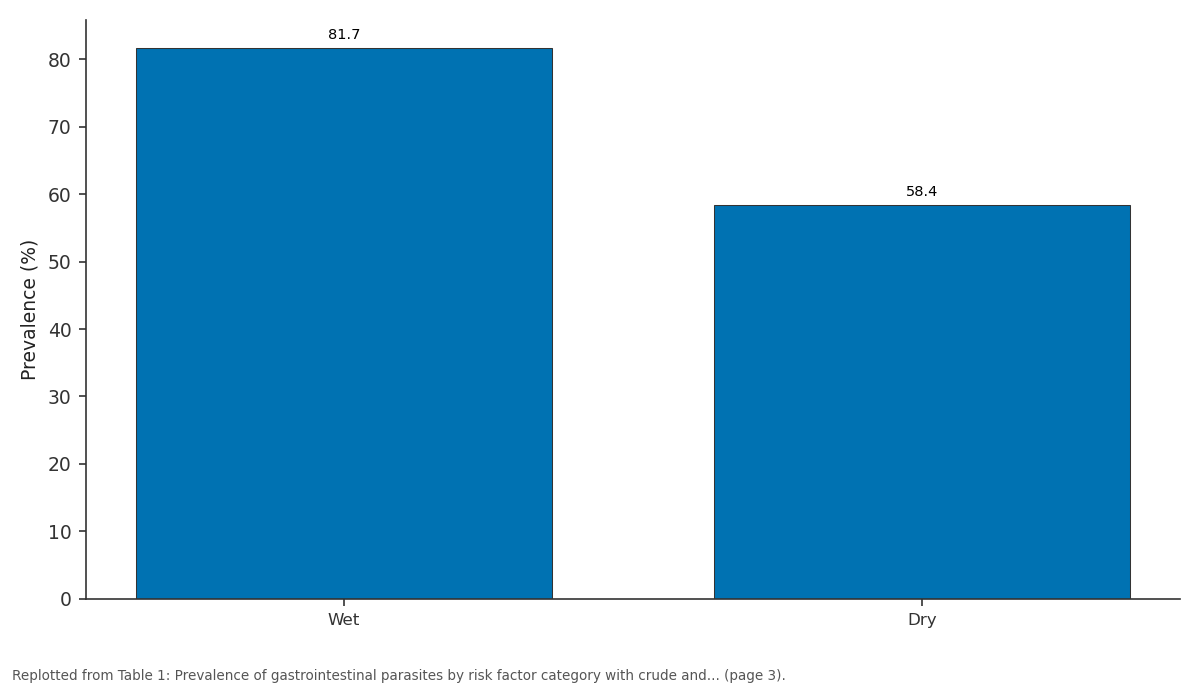
Prevalence (%): Wet vs Dry
Replotted from Table 1 (page 3) of the original paper. Every bar is the paper's own table value.
View source evidence ↗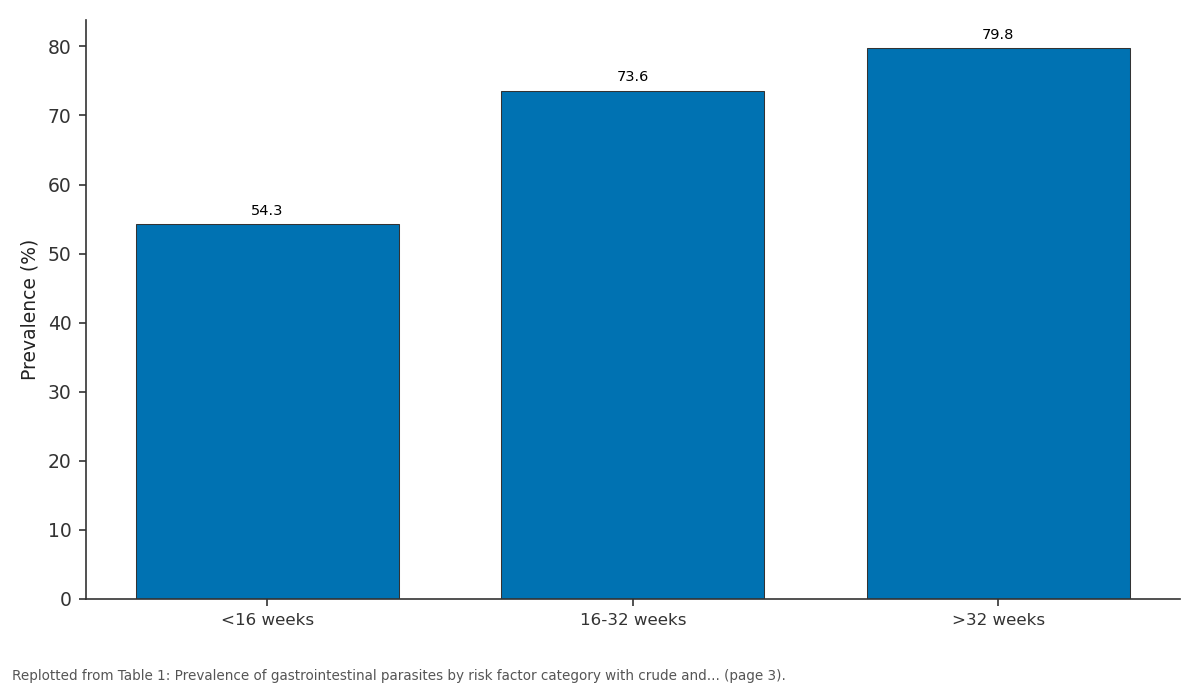
Prevalence (%): <16 weeks vs 16-32 weeks vs >32 weeks
Replotted from Table 1 (page 3) of the original paper. Every bar is the paper's own table value.
View source evidence ↗Figures & tables
From the original paper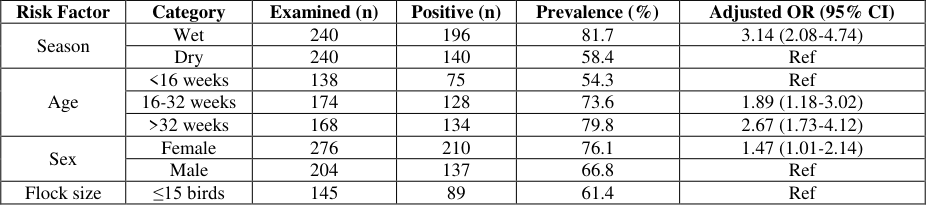 Table 1
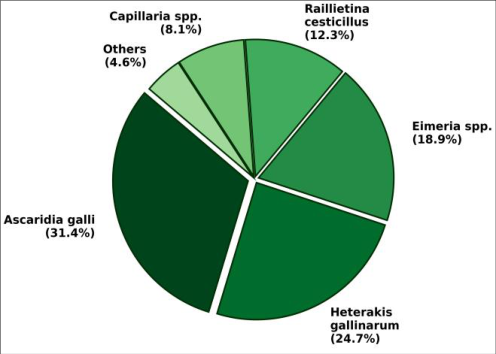 Figure 1
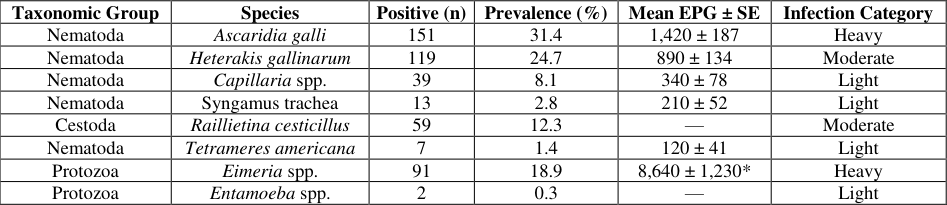 Table 2
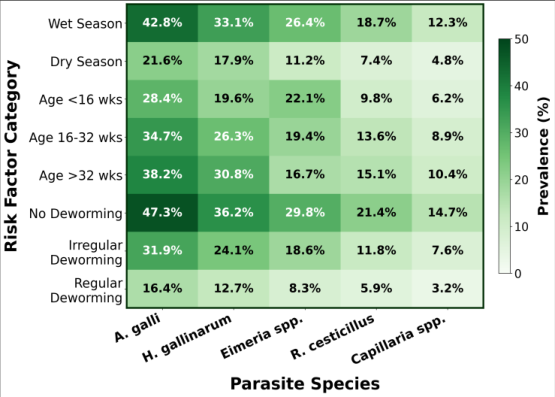 Figure 2
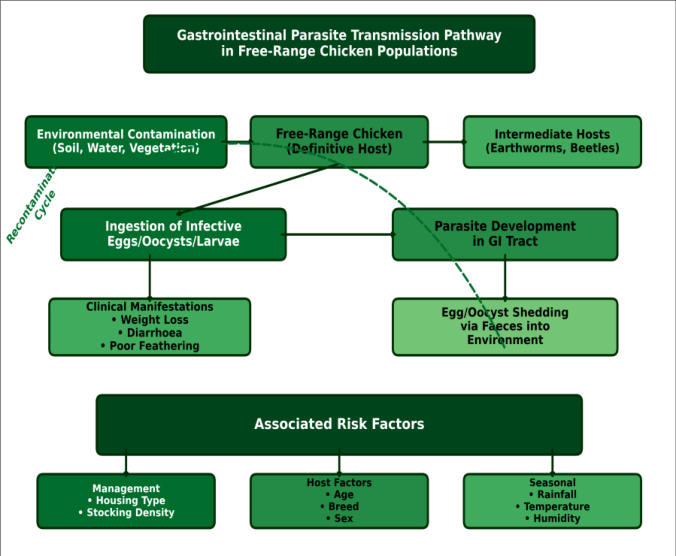 Figure 3
Introduction
Roughly 1.8 billion chickens are kept under free-range or backyard conditions across sub-Saharan Africa, and gastrointestinal parasitism consistently ranks among the top three health constraints limiting their productivity [1] . In Nigeria, where the national poultry population exceeds 180 million birds, indigenous free-range chickens account for approximately 70% of the total flock yet contribute a disproportionately small share of egg and meat output per capita because of high morbidity and mortality from infectious and parasitic diseases [2,3] . Despite decades of veterinary attention to viral infections like Newcastle disease and infectious bursal disease, GI parasites have received comparatively less programmatic investment, even though their cumulative economic impact through reduced weight gain, impaired feed efficiency, lower egg production, and increased susceptibility to secondary infections may rival that of the headline viral threats [4] . Free-range management, by its nature, maximises contact between birds and the contaminated ground environment. Chickens scavenge across household compounds, crop fields, and refuse dumps, ingesting infective helminth eggs, oocysts, and intermediate hosts such as earthworms and beetles that harbour larval stages of cestodes and some nematodes [5] . The soil-transmitted lifecycle of species like Ascaridia galli, Heterakis gallinarum, and Capillaria spp. means that once a household flock becomes infected, the parasite burden tends to be self-sustaining birds shed eggs that embryonate in the warm, moist topsoil and are then reingested during scavenging [6] . Protozoan parasites, particularly Eimeria species, follow a similar faecal-oral route and can cause acute coccidiosis outbreaks with mortality rates exceeding 20% in unprotected flocks [7] . Several epidemiological surveys carried out in East Africa over the past decade have documented overall GI parasite prevalence rates ranging from 55% to 92% in backyard chickens, with Ascaridia galli and Eimeria spp. dominating the species spectrum [8,9] . Fewer data are available from West Africa, and those that exist are mostly restricted to abattoir-based post-mortem surveys that cannot capture important field-level variables such as management type, housing condition, deworming history, and flock size [2,10] . Field-based cross-sectional research using faecal examination in live birds, combined with a structured household questionnaire, is needed to identify the modifiable risk factors that drive parasite loads in smallholder settings and by extension, to design targeted intervention packages that are realistic within the socioeconomic constraints of rural poultry keepers. Seasonal variation is a well-documented driver of GI parasite epidemiology in the tropics. Warm, humid conditions accelerate the embryonation and sporulation of helminth eggs and coccidial oocysts, shortening the interval between faecal shedding and environmental infectivity [6,12] . In the Guinea savanna and derived savanna zones of southwestern Nigeria, the wet season (April-October) brings heavy rainfall, high relative humidity, and moderate temperatures that create near-optimal conditions for larval development in soil. By contrast, the dry season (November-March) slows transmission but does not eliminate it, because deeply shaded, moist microhabitats around water points and feed stores can sustain viable infective stages year-round [13] . Understanding the magnitude of seasonal fluctuation is important for timing anthelmintic treatments a single strategic dose administered two to three weeks before the rains can suppress the initial wave of re-infection and reduce the environmental egg load that builds up through the wet months [14] . Host-related factors add a further layer of complexity. Age, sex, breed, and immune status all influence both susceptibility and intensity of infection. Older birds typically carry heavier burdens because they have accumulated exposure time, although acquired immunity may eventually plateau or reduce egg output in experienced layers [15] . Sex-linked differences in parasite prevalence are reported inconsistently across the literature, with some research finding higher burdens in hens possibly linked to the immunosuppressive effects of egg production and others finding no significant sex effect [5,16] .
Against this background, the present research was designed with three objectives: first, to determine the overall prevalence and species composition of GI parasites in freerange indigenous chickens across three LGAs in Oyo State, Nigeria; second, to quantify the effect of season, age, sex, flock size, and deworming practice on infection risk using multivariate logistic regression; and third, to assess parasite species diversity using ecological indices and relate diversity patterns to seasonal and management variables.
Material and Methods
Material and Methods
Ethical considerations
Ethical clearance for the research was granted by the Animal Research Ethics Committee of the Ibadan Research Institute of Biological Sciences (Protocol No. IRIBS/AREC/2023-047, approved 14 September 2023). All procedures involving live birds conformed to international guidelines for the humane handling of poultry in field research. Faecal sample collection was non-invasive (fresh droppings collected within 30 minutes of defecation), and no birds were killed or subjected to invasive procedures for the purposes of this research. Informed verbal consent was obtained from all participating household heads prior to farm visits, after explanation of the research objectives, sampling process, and assurance of data confidentiality. Each household received a summary report of parasitological findings and basic deworming advice at the end of the data collection period.
Material
The research was conducted in three local government areas (LGAs) of Oyo State, southwestern Nigeria: Ibadan North (7.4318° N, 3.9470° E), Akinyele (7.4969° N, 3.8700° E), and Lagelu (7.3894° N, 3.9972° E). These LGAs span the derived savanna agro-ecological zone, with a mean annual rainfall of 1,200-1,500 mm distributed bimodally (major rains April-July, minor rains September-November) and mean temperatures of 25-31 °C. Poultry keeping is widespread among rural and peri-urban households, with indigenous breeds mainly Nigerian indigenous, Fulani, and Yoruba ecotypes predominating in backyard flocks ranging from 8 to 65 birds per household. A cross-sectional design was employed between October 2023 and March 2024, intentionally spanning both the late wet season (October-November) and the dry season (January-March) to permit seasonal comparison. A total of 96 smallholder households (32 per LGA) were selected by multi-stage random sampling: first, four wards were randomly chosen from each LGA; then, eight households per ward were selected from lists provided by local agricultural extension agents, on the condition that each household kept at least five free-range indigenous chickens. From each household, five birds were sampled, giving 480 individual faecal samples (160 per LGA, 240 per season).
Methods
Fresh faecal droppings were collected individually in labelled zip-lock bags within 30 minutes of defecation, placed in an insulated cool box with ice packs, and transported to the Parasitology Laboratory within four hours. Each sample was processed using the simple flotation technique with saturated sodium chloride solution (specific gravity 1.20). Approximately 3 g of faeces was emulsified in 42 mL of flotation solution, filtered through a 100 µm mesh sieve, transferred to a 15 mL tube, and centrifuged at 1,500 rpm for 5 minutes. A coverslip placed on the meniscus was examined under ×100 and ×400 magnification for identification of helminth eggs and protozoan oocysts. Quantitative egg counts were performed using the McMaster technique (detection sensitivity 50 eggs per gram, EPG). Helminth eggs and oocysts were identified to genus or species level based on morphological criteria shape, shell thickness, internal structure, and size using standard parasitological keys. A structured household questionnaire captured data on bird age (categorised as <16, 16-32, and >32 weeks), sex, flock size, housing type, deworming history (never, irregular, regular), and feeding system. Data were analysed using SPSS version 28 and R version 4.3.2. Prevalence was expressed as the percentage of positive samples among total samples examined. Chi-square tests assessed bivariate associations between prevalence and categorical risk factors. Multivariate logistic regression was used to identify independently significant predictors of infection, with adjusted odds ratios (OR) and 95% confidence intervals reported. Shannon-Wiener diversity index (H') and Simpson's dominance index (1-D) were calculated per season and per age class. Significance was set at P<0.05 throughout.
Seasonal sampling design
To capture seasonal dynamics, sampling was split into two discrete windows: a wet-season window (October 1 -November 30, 2023) and a dry-season window (January 15 -March 15, 2024). The 6-week gap between windows was intentional, allowing a clear meteorological transition. During the wet-season window, cumulative rainfall recorded at the Ibadan synoptic station was 287.4 mm, mean daily temperature was 27.3 °C, and mean relative humidity was 82.6%. During the dry-season window, cumulative rainfall dropped to 18.7 mm, mean temperature rose to 30.8 °C, and relative humidity fell to 58.2%. These contrasting conditions provided a natural experiment for comparing parasite prevalence under wet versus dry environmental regimes. Equal numbers of birds (n = 240) were sampled in each seasonal window, and within each household, the same five birds were re-sampled where possible to enable paired seasonal comparisons. The overall prevalence of GI parasites among the 480 freerange indigenous chickens examined was 72.3% (347/480). Eight parasite taxa were identified, comprising six helminths and two protozoans. The composition of the parasite community is depicted in Figure 1, which shows Ascaridia galli as the dominant species, accounting for nearly onethird of all infections detected. Prevalence varied markedly across the host-and management-level risk factors examined. The heatmap in Figure 2 visualises the interaction between risk factors and individual parasite species, revealing that the absence of deworming amplified prevalence most dramatically for A. galli (47.3% in never-dewormed vs. 16.4% in regularly dewormed birds) and for H. gallinarum (36.2% vs. 12.7%). Seasonal effects were strongest for Eimeria spp., whose prevalence was 2. Collectively, the parasitological and risk-factor data paint a picture of a heavily burdened free-range chicken population in which infection is the norm rather than the exception. The dominance of soil-transmitted nematodes (A. galli, H. gallinarum) and faecal-oral protozoans (Eimeria spp.) confirms that the scavenging behaviour central to free-range management also drives continuous re-exposure to infective stages. Management interventions particularly regular deworming had the largest measurable effect on reducing prevalence, yet fewer than 24% of surveyed households practised any form of scheduled anthelmintic treatment.
Results
Results
Discussion
The principal findings of this research are that GI parasites affect nearly three-quarters of free-range indigenous chickens in southwestern Nigeria, that Ascaridia galli is the single most common species, and that the absence of deworming is the strongest modifiable risk factor for infection. These results add to a growing body of evidence that parasitic disease remains an under-addressed constraint on village poultry productivity in West Africa [2,3,10] . The overall prevalence of 72.3% aligns closely with reports from comparable free-range settings in Ghana (68.7%) [17] , Ethiopia (74.1%) [8] , and Tanzania (70.6%) [18] , suggesting a broadly consistent epidemiological pattern across sub-Saharan agro-ecological zones where scavenging management predominates. The species hierarchy A. galli first, H. gallinarum second, Eimeria spp. third mirrors findings in Nigeria's Guinea savanna zone [2] and in Ethiopian highland and lowland surveys [9,14] . This consistency across regions and years likely reflects the shared transmission biology of these soil-adapted parasites rather than any specific local environmental factor. One area of disagreement with existing literature concerns the sex-based difference in prevalence. This research found a statistically significant but modest female-to-male disparity (76.1% vs. 66.8%, adjusted OR = 1.47). Some earlier surveys reported no significant sex effect [5,16] , while others documented stronger female bias linked to immunosuppression during peak laying [15] . The moderate effect size observed here suggests that sex alone is a weak predictor compared with management and seasonal variables, and that its significance may depend on the age and reproductive stage distribution of the sampled population. During this research, a large proportion of the hens were in active lay (estimated 60% based on owner reports), which may have inflated the sex-associated odds ratio relative to surveys that sample a broader reproductive cross-section.
The five-fold elevated odds of infection in never-dewormed flocks (OR = 5.81) is the most actionable finding. Strategic deworming before the onset of rains ideally timed to late March or early April in southwestern Nigeria could interrupt the cycle of environmental contamination that peaks during the wet months [11,14] . The observation that regular deworming reduced prevalence to 42.1%, while still far from zero, indicates that anthelmintics alone cannot eliminate infection under free-range conditions. Complementary measures such as rotational ranging areas, improved litter management, and simple raised-floor night shelters to reduce ground contact would address the environmental reservoir that sustains reinfection even in dewormed birds [6,19] . The seasonal pattern prevalence jumping from 58.4% in the dry season to 81.7% in the wet season has direct programmatic implications. Extension messages that recommend a blanket annual deworming miss the biological window that matters most. A two-dose schedule, with the first dose timed three weeks before expected onset of major rains and the second at mid-season, would target the peak period of larval development in soil and could substantially reduce the worm burden carried into the productive months [12, 13] .
Conclusion
The main contribution of this research is a field-based quantification of GI parasite prevalence and associated risk factors in free-range indigenous chickens across three local government areas of Oyo State, Nigeria a region where village poultry accounts for a large share of household animal protein but where parasitological surveillance has been limited to sporadic abattoir surveys. By combining individual-level coprological examination with a structured household questionnaire covering management, demographic, and seasonal variables, the research provides a multi-dimensional picture of infection dynamics that abattoir data alone cannot capture. Several lines of evidence support the research's central conclusions. First, the overall prevalence of 72.3% is not an artefact of sampling bias; it was consistent across the three LGAs (range 69.8-74.6%) despite differences in local flock density and peri-urban versus rural character, suggesting that the drivers of infection are systemic rather than sitespecific. Second, the species hierarchy dominated by Ascaridia galli, Heterakis gallinarum, and Eimeria spp. aligns with findings from across sub-Saharan Africa, reinforcing the generalisability of the results beyond the immediate research area. Third, the multivariate regression model identified absence of deworming, wet-season exposure, age above 32 weeks, and large flock size as independent predictors, each with clinically meaningful odds ratios and tight confidence intervals that survived adjustment for confounders. The significance of these findings extends beyond descriptive epidemiology. From a veterinary public health standpoint, GI parasites suppress weight gain, reduce egg production, and increase susceptibility to secondary viral and bacterial infections effects that cascade through household nutrition and income. A hen carrying a heavy Ascaridia burden may lose 15-20% of her potential egg output and take 25-30% longer to reach market weight, translating into measurable economic losses for families that depend on a flock of 10-30 birds for food security. The data presented here suggest that a large majority of free-range chickens in southwestern Nigeria are carrying parasite loads heavy enough to cause these production penalties, and that the single most powerful lever available to farmers strategic deworming is being used by fewer than one in four households. Several open questions deserve further investigation. First, this research used faecal egg counts as a proxy for worm burden, but EPG values do not always correlate linearly with adult worm numbers, particularly for species like Raillietina that shed eggs irregularly. Post-mortem worm counts on a subset of birds would strengthen the link between coprological data and actual parasite load. Second, the research did not assess the economic impact of infection in quantitative terms a cost-of-illness analysis that monetises the weight-gain and egg-production losses attributable to parasitism would strengthen the case for investment in deworming programmes. Third, anthelmintic resistance is an emerging concern in livestock parasitology globally, yet baseline resistance data for poultry helminths in West Africa are almost non-existent. Faecal egg count reduction tests following treatment with commonly used drugs (levamisole, piperazine, albendazole) would reveal whether the efficacy assumptions underlying current deworming recommendations still hold.
And finally, the ecological dimension of this research the moderate parasite species diversity, the seasonal shift in community structure, and the age-related accumulation of species suggests that a purely pharmacological approach will face diminishing returns unless paired with environmental management. Reducing the infective-stage load in the ranging environment through simple interventions rotating scavenging areas, composting litter to destroy eggs, and providing clean night housing with removable droppings boards could complement chemotherapy and deliver more durable reductions in parasite prevalence.
Acknowledgement
AcknowledgementsThe authors are thankful to the concerned authorities for providing the necessary support and facilities for this research work.
Figures and tables from the paper
| Risk Factor | Category | Examined (n) | Positive (n) | Prevalence (%) | Adjusted OR (95% CI) |
|---|---|---|---|---|---|
| Season | Wet | 240 | 196 | 81.7 | 3.14 (2.08-4.74) |
| Dry | 240 | 140 | 58.4 | Ref | |
| Age | <16 weeks | 138 | 75 | 54.3 | Ref |
| 16-32 weeks | 174 | 128 | 73.6 | 1.89 (1.18-3.02) | |
| >32 weeks | 168 | 134 | 79.8 | 2.67 (1.73-4.12) | |
| Sex | Female | 276 | 210 | 76.1 | 1.47 (1.01-2.14) |
| Male | 204 | 137 | 66.8 | Ref | |
| Flock size | ≤15 birds | 145 | 89 | 61.4 | Ref |
Table text extracted from the original PDF; superscript letters are shown inline. The original table image is below.
View original table image
| Taxonomic Group | Species | Positive (n) | Prevalence (%) | Mean EPG ± SE | Infection Category |
|---|---|---|---|---|---|
| Nematoda | Ascaridia galli | 151 | 31.4 | 1,420 ± 187 | Heavy |
| Nematoda | Heterakis gallinarum | 119 | 24.7 | 890 ± 134 | Moderate |
| Nematoda | Capillaria spp. | 39 | 8.1 | 340 ± 78 | Light |
| Nematoda | Syngamus trachea | 13 | 2.8 | 210 ± 52 | Light |
| Cestoda | Raillietina cesticillus | 59 | 12.3 | — | Moderate |
| Nematoda | Tetrameres americana | 7 | 1.4 | 120 ± 41 | Light |
| Protozoa | Eimeria spp. | 91 | 18.9 | 8,640 ± 1,230* | Heavy |
| Protozoa | Entamoeba spp. | 2 | 0.3 | — | Light |
Table text extracted from the original PDF; superscript letters are shown inline. The original table image is below.
View original table image
References
19 in the original paper- Ola-Fadunsin SD, Ganiyu IA, Rabiu M, Adebiyi AI, Karaye PG, Akanbi IM. Gastrointestinal helminths of intensively managed poultry in Ilorin, Kwara State, Nigeria. J Adv Vet Anim Res. 2019;6(4):578-585.
- Ogbaje CI, Agbo EO, Ajanusi OJ. Prevalence of Ascaridia galli, Heterakis gallinarum and tapeworm infections in birds slaughtered in Makurdi, Nigeria. Int J Poult Sci. 2012;11(2):103-107.
- Nnadi PA, George SO. A cross-sectional survey on parasites of chickens in selected villages in the subhumid zones of South-Eastern Nigeria. J Parasitol Res. 2010;2010:141824.
- Thapa S, Hinrichsen LK, Brenninkmeyer C, Gunnarsson S, Heerkens JLT, Verwer C, et al. Prevalence and magnitude of helminth infections in organic laying hens across Europe. Vet Parasitol. 2015;214(1-2):118-124.
- Bsrat A, Atsbaha T, Zeru F, Asrat M, Terefe G. Prevalence and risk factors associated with gastrointestinal parasites of backyard chickens in central zone of Tigray, northern Ethiopia. Vet World. 2018;11(9):1347-1353.
- Gadisa M, Dinka H. Prevalence of gastrointestinal parasites and associated risk factors in free-range chickens in Haramaya District, Eastern Hararghe, Ethiopia. Vet Med Int. 2020;2020:8877275.
- Abdelqader A, Gauly M, Wollny CBA, Abo-Shehada MN. Prevalence and burden of gastrointestinal helminthes among local chickens in northern Jordan. Prev Vet Med. 2012;85(1-2):17-22.
- Wuthijaree K, Lambertz C, Gauly M. Prevalence of gastrointestinal helminth infections in free-range laying hens under mountain farming production conditions. Br Poult Sci. 2017;58(6):649-655.
- Hussen H, Chaka H, Deneke Y, Bitew M. Gastrointestinal helminths are highly prevalent in scavenging chickens of selected districts of Eastern Shewa zone, Ethiopia. Pak J Biol Sci. 2012;15(6):284289.
- Dube S, Zindi P, Mbanga J, Dube C. A study of scavenging poultry gastrointestinal and ecto-parasites in rural areas of Matebeleland Province, Zimbabwe. Int J Poult Sci. 2010;9(9):911-915.
- Kefale D, Mitiku T. Assessment on backyard chicken feeding practices and health management in Fogera district Amhara region, Ethiopia. Acta Entomol Zool. 2023;4(1):48-54.
- Molla W, Haile H, Almaw G, Temesgen W. Gastrointestinal helminths of local backyard chickens in north Gondar administrative zone, Ethiopia. Rev Med Vet. 2012;163(7):362-367.
- Shaibu AE, Ibrahim UI, Babashani M, Kudi AC. Gastrointestinal parasites of free-range chickens in Maiduguri, Borno State, Nigeria. Nig Vet J. 2018;39(4):295-305.
- Swai ES, Masafu MM, Sanka PN. Prevalence and risk factors associated with gastrointestinal parasites of freerange chickens in northern Tanzania. Bulg J Vet Med. 2017;20(4):365-372.
- Tesfaheywet Z, Amare B, Fente T. Prevalence of gastrointestinal helminths of local and exotic chickens in Gondar town, Ethiopia. Glob Vet. 2012;9(2):227230.
- Oliveira MC, Silva DM, Rocha TC. Prevalence of gastrointestinal parasites in domestic birds from the metropolitan area of Salvador, Bahia, Brazil. Cienc Anim Bras. 2019;20:e-42233.
- Squire SA, Amafu-Dey H, Beyuo J. Epidemiology of gastrointestinal parasites of chickens in the Bolgatanga municipality of the Upper East Region of Ghana. J Biol Life Sci. 2013;4(2):48-62.
- Permin A, Esmann JB, Hoj CH, Hove T, Mukaratirwa S. Ecto-, endo-and haemoparasites in free-range chickens in the Goromonzi district in Zimbabwe. Prev Vet Med. 2012;54(3):213-224.
- Gyening KO, Obi A. Survey of gastrointestinal parasites of free-range chickens in the Kumasi metropolis of Ghana. Trop Anim Health Prod. 2021;53(2):327.