
Research article · 2026 · Full text
International Journal of Agriculture and NutritionBioavailability of iron and zinc from Digera muricata (Kondhra) supplemented diets: Implications for combating micronutrient deficiency in adolescent populations
Volume 8(5) · Pages 159–163 · DOI: 10.33545/26646064.2026.v8.i5b.722 ↗
Research areasIron Metabolism and DisordersPlant Micronutrient Interactions and EffectsFood and Agricultural Sciences
Abstract
Author-writtenMicronutrient deficiency, particularly iron and zinc deficiency, constitutes a major public health challenge for adolescent populations in South Asia and the Middle East, where dietary diversification through food fortification offers a cost-effective intervention pathway. This research evaluated the in vitro bioavailability of iron and zinc from diets supplemented with Digera muricata (Kondhra) leaf powder at 5%, 10%, and 15% dry matter incorporation levels, using a simulated gastrointestinal digestion protocol (pepsin-pancreatin sequential hydrolysis) followed by Caco-2 human intestinal cell uptake assays conducted at Isfahan Institute of Technology, Iran, during 2022–23. The influence of anti-nutritional factors — phytic acid, oxalic acid, and condensed tannins — on mineral bioaccessibility was systematically quantified across incorporation levels. Maximum iron dialyzability (24.6%) was observed at the 10% incorporation level, declining marginally at 15% (22.8%), suggesting that anti-nutritional factor accumulation at higher incorporation levels attenuates the additional mineral load. Caco-2 cell uptake assays confirmed this trend, with the 10% DM formulation yielding 2.84±0.18 nmol iron/mg protein, representing a 3.56-fold increase over the unsupplemented control. Concurrent addition of ascorbic acid (50 mg) to the 10% DM formulation enhanced Caco-2 iron uptake by 92.9% relative to the unsupplemented formulation, identifying ascorbic acid co-consumption as the most effective strategy for maximising bioavailable iron delivery from D. muricata-supplemented diets. The phytate-to-iron molar ratio declined from 3.82 in control to 2.82 at 15% DM incorporation, remaining below the WHO threshold of 6.0 for adequate iron bioavailability across all tested levels, and well below the more stringent threshold of 1.0 recommended for high-bioavailability diets. These findings establish 10% DM incorporation of D. muricata leaf powder as the optimal level for iron bioavailability in supplemented food products targeting adolescent micronutrient deficiency.
Summary
Source-checkedPlain-language reading of the full paper, prepared with AI and checked against the text. Each point links to the authors' own words.
Why it matters
- Iron and zinc deficiencies are significant public health issues for adolescents in the Middle East and South Asia. View evidence ↗
- Wild leafy vegetables are a potentially useful but under-studied source of bioavailable zinc and iron in semi-arid regions. View evidence ↗
- The actual nutritional benefit of these vegetables depends on the balance between the mineral content, enhancers, and anti-nutritional factors. View evidence ↗
The question
- The study aimed to quantify minerals and anti-nutrients in Digera muricata (Kondhra) supplements at various levels and evaluate the bioavailability of iron and zinc, including the effects of dietary enhancers. View evidence ↗
What they did
- Fresh D. muricata leaves were sourced from Sistan-Baluchestan Province, Iran, in August 2022. View evidence ↗
- Bioaccessibility was tested using a two-phase simulated digestion process involving a gastric phase (pH 2.0) and an intestinal phase (pH 7.0). View evidence ↗
- Iron uptake was measured using Caco-2 human intestinal cells grown for 21 days and exposed to formulations for 24 hours. View evidence ↗
What they found
- Increasing the supplement level to 15% dry matter (DM) raised iron content from 1.82±0.14 mg/100g in the control to 11.26±0.44 mg/100g. View evidence ↗
- Iron dialyzability peaked at 24.6% with 10% DM incorporation and decreased slightly to 22.8% at 15% DM. View evidence ↗
- The 10% DM formulation resulted in 2.84±0.18 nmol iron/mg protein uptake in Caco-2 cells, which is 3.56 times higher than the control. View evidence ↗
- Adding 50 mg of ascorbic acid to the 10% DM formulation increased iron uptake from 2.84±0.18 to 5.48±0.28 nmol/mg protein, a 92.9% increase. View evidence ↗
- Whole-food enhancers also improved iron uptake: lemon juice (5 mL) provided a 71.8% increase and tomato extract provided a 63.4% increase. View evidence ↗
- The phytate-to-iron molar ratio (2.82 to 3.82) remained below the WHO threshold of 6.0, suggesting adequate iron absorption across all tested levels. View evidence ↗
What it means
- The authors recommend using a 10% DM level of D. muricata in food products and pairing them with ascorbic acid-rich foods like tomato or lemon juice to prevent adolescent anaemia. View evidence ↗
- The authors state that future research is needed to confirm these in vitro results through human feeding trials measuring serum ferritin and haemoglobin. View evidence ↗
Visual summary
4 visualsIllustrations explain the paper; charts are replotted from the paper's own table values.
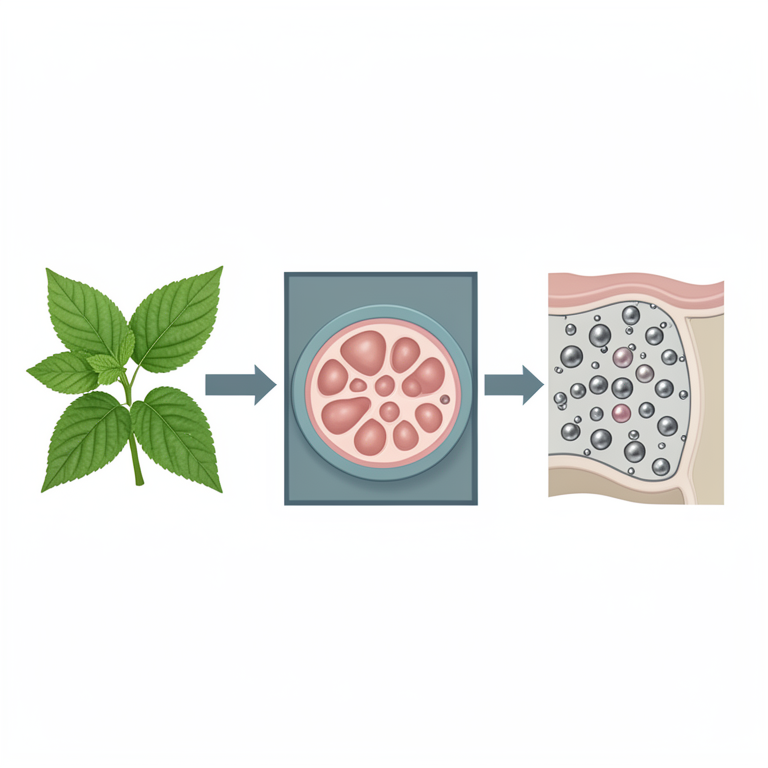
Bioavailability Curve
AI-generated conceptual illustration (Digera muricata leaves and Caco-2 intestinal cells). It explains the idea and does not show study data.
View source evidence ↗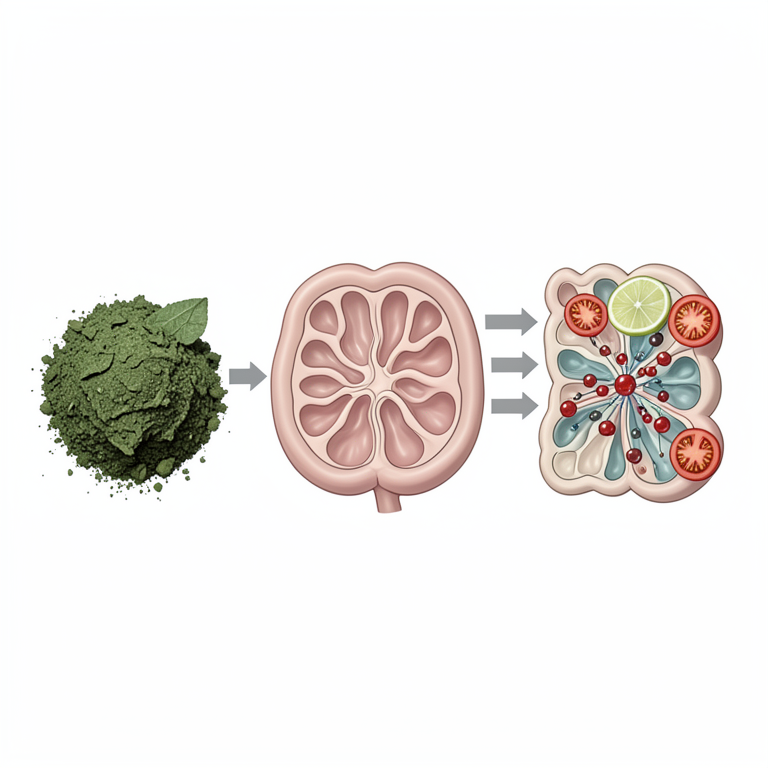
Iron Uptake Enhancers
AI-generated conceptual illustration (Digera muricata leaves and human intestinal epithelial cells). It explains the idea and does not show study data.
View source evidence ↗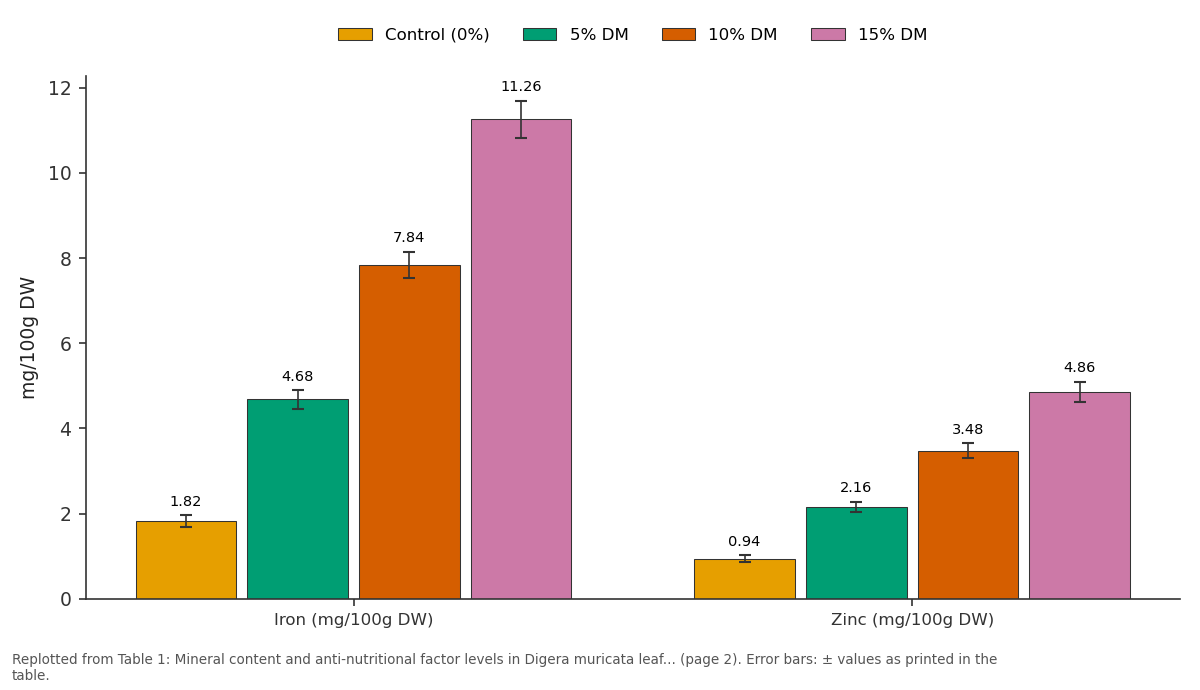
Control (0%) and 5% DM and more: Iron (mg/100g DW) vs Zinc (mg/100g DW)
Replotted from Table 1 (page 2) of the original paper. Every bar is the paper's own table value.
View source evidence ↗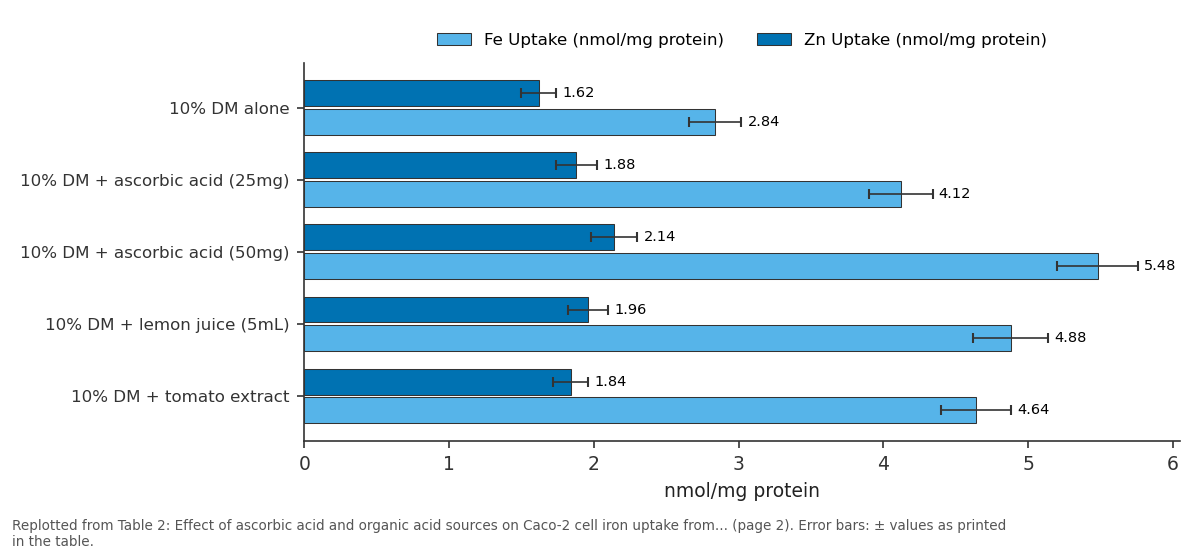
Fe Uptake (nmol/mg protein) and Zn Uptake (nmol/mg protein): 10% DM alone vs 10% DM + ascorbic acid... vs 10% DM + ascorbic acid... vs 10% DM + lemon juice... vs 10% DM + tomato extract
Replotted from Table 2 (page 2) of the original paper. Every bar is the paper's own table value.
View source evidence ↗Figures & tables
From the original paper Table 1
 Table 2
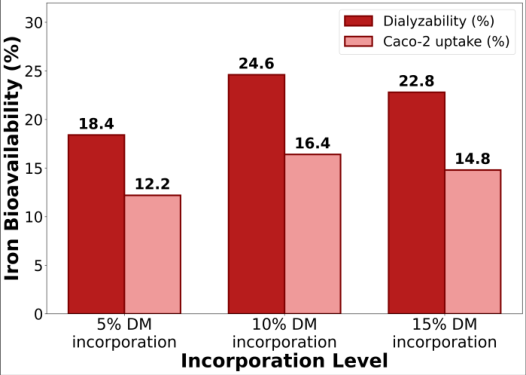 Figure 1
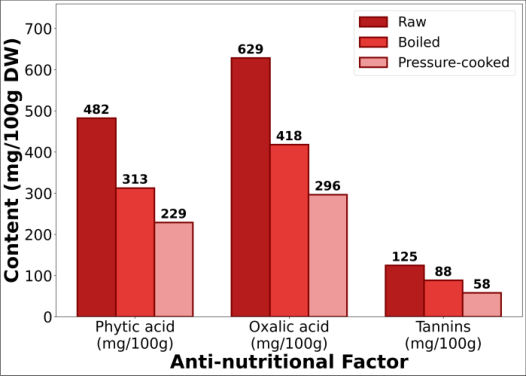 Figure 2
Introduction
The challenge of eradicating micronutrient malnutritionthe so-called hidden hungerdemands food-based solutions that are both nutritionally effective and practically implementable in low-resource settings. Wild leafy vegetables represent an underexplored reservoir of bioavailable iron and zinc in semi-arid food systems, yet the translation of their mineral content into actual nutritional benefit is contingent on the complex interplay between mineral load, anti-nutritional factors, and dietary enhancers that govern mineral bioaccessibility [1,2] . In vitro digestion-dialysis models and Caco-2 human intestinal cell systems have become established methodological standards for assessing mineral bioaccessibility, offering reproducible, ethically unconstrained alternatives to in vivo human feeding trials for initial bioavailability screening [5,6] . The Caco-2 model, in particular, replicates key features of duodenal epithelial iron absorption including DMT1-mediated uptake and ferritin synthesis as a functional marker, providing mechanistic insights beyond the dialyzability approach [7] . Dietary combinations known to enhance non-haem iron absorptionprimarily ascorbic acid and organic acids from citrus fruits and tomatoesoffer practical coconsumption strategies for maximizing the effective iron delivery from plant-based supplementation. Quantifying the enhancement effect of these combinations in the context of D. muricata-supplemented foods provides actionable guidance for formulating dietary recommendations and food product specifications targeting adolescent anaemia prevention [8,9] . This research aimed to: (i) quantify iron, zinc, and calcium content and anti-nutritional factor levels in D. muricata leaf powder-supplemented formulations at 5%, 10%, and 15% DM levels; (ii) evaluate iron and zinc dialyzability using simulated gastrointestinal digestion; (iii) assess Caco-2 iron uptake at the 10% DM incorporation level; and (iv) quantify the enhancement effect of ascorbic acid, lemon juice, and tomato extract on iron uptake in the Caco-2 model, relative to the 10% DM supplemented formulation without enhancement.
Materials and Methods
Materials and Methods
Materials
Materials
Methods
The simulated gastrointestinal digestion protocol followed a two-phase approach: gastric phase (pH 2.0, pepsin 1 mg/mL, 37°C, 2h) followed by intestinal phase (pH 7.0, pancreatin-bile extract mixture, 37°C, 2h). Iron and zinc dialyzability were determined using dialysis tubing (molecular weight cut-off 6000-8000 Da) after the intestinal phase, with dialysate analysed by AAS. For Caco-2 iron uptake, cells were seeded on 12-well permeable inserts (Transwell, Corning), grown to differentiation (21 days), and apically exposed to test formulations in serum-free medium for 24 hours after a 24-hour iron depletion period. Cellular iron uptake was quantified as ferritin formation per mg cell protein using an ELISA ferritin assay kit (Bioassay Technology Laboratory). Enhancement experiments tested ascorbic acid (25 and 50 mg equivalent), lemon juice (5 mL equivalent), and tomato extract (standardized to 40 mg ascorbate equivalent) co-added to the 10% DM formulation. All assays were performed in triplicate, and data are presented as mean±SD. One-way ANOVA with Tukey posthoc correction was applied for multiple comparisons; significance level p<0.05. [10] . Figure 1 illustrates the non-linear relationship between incorporation level and iron bioavailability. Maximum iron dialyzability (24.6%) was observed at the 10% DM level, with a marginal decline at 15% (22.8%), attributable to the proportionally greater accumulation of phytic acid and oxalic acid at higher incorporation levels. Caco-2 uptake followed a parallel trend (16.4% maximum at 10% DM versus 14.8% at 15% DM). The 5% DM level yielded substantially lower bioavailability estimates (dialyzability 18.4%, Caco-2 uptake 12.2%), consistent with the lower absolute mineral load at this incorporation level. Processing substantially reduced anti-nutritional factor levels (Figure 2). Boiling reduced phytic acid by 35.2%, oxalic acid by 33.5%, and condensed tannins by 29.2% compared to raw leaves. Pressure-cooking achieved greater reductions: phytic acid by 52.5%, oxalic acid by 52.9%, and condensed tannins by 53.4%. These processing-related reductions are expected to improve actual iron bioavailability in typical household preparation contexts, where boiling is the predominant method for D. muricata consumption, beyond the estimates obtained from the raw leaf powder dialysis experiments.
Results
Results
Mineral Content and Anti-nutritional Factor Profile
Mineral Content and Anti-nutritional Factor Profile
Discussion
The finding that 10% DM incorporation of D. muricata leaf powder yields optimal iron dialyzability and Caco-2 cell uptake, with a decline at 15% DM attributed to antinutritional factor accumulation, is consistent with the concept of a nutrient-antinutrient balance threshold documented for other iron-rich leafy vegetable fortification systems including Moringa oleifera and Amaranthus hybridus [11,12] . The non-linear bioavailability response to increasing incorporation level has practical implications for food product development: simply maximizing D. muricata inclusion does not proportionally increase bioavailable iron delivery, and optimal formulation targeting is required. The 92.9% enhancement of Caco-2 iron uptake by 50 mg ascorbic acid co-addition identifies a clear and actionable dietary combination strategy. This magnitude of enhancement is consistent with established literature on ascorbic acid-iron interaction in Caco-2 models, where enhancement ratios of 1.5-to 3-fold have been consistently reported across diverse non-haem iron sources [13] . The comparably effective performance of lemon juice (71.8% enhancement) and tomato extract (63.4% enhancement) confirms that practical whole-food sources of organic acids can substitute for pure ascorbic acid in enhancing D. muricata iron delivery, supporting the formulation of dietary guidance using locally available ingredients without requirement for pharmaceutical-grade ascorbic acid supplementation [14] . The processing effects documented in Figure 2 with pressure-cooking reducing phytic acid by over 52%have important implications for household-level preparation guidance. Traditional boiling, while less effective than pressure-cooking, still achieves meaningful anti-nutritional factor reduction (35% phytic acid reduction) and represents the most practically feasible processing method for rural households in semi-arid contexts. Recipes combining pressure-cooked D. muricata with tomato-based accompaniments would theoretically maximize bioavailable iron delivery, offering a practical dietary recommendation grounded in the mechanistic evidence generated by this research [15,16] .
Phytate-to-Iron Molar Ratio Analysis
The phytate-to-iron molar ratios calculated across all incorporation levels (2.82-3.82) remained below the WHO threshold of 6.0, suggesting that D. muricata leaf powder supplementation does not create a phytate-induced iron absorption barrier when incorporated up to 15% DM in otherwise low-phytate food matrices. Comparison with WHO thresholds for the phytate-to-zinc ratio (below 15 for adequate zinc absorption) confirmed similarly favourable predictions for zinc bioavailability across all formulations. These findings contrast with those reported for some legume-based iron fortification systems, where phytate accumulation at high fortification levels creates unacceptable molar ratios, and support the use of D. muricata as a relatively low-risk mineral fortification ingredient [17,18] .
Ascorbic Acid Enhancement: Mechanistic Considerations
The mechanistic basis for ascorbic acid enhancement of Caco-2 iron uptake involves two complementary pathways: (i) reduction of Fe3+ to the more readily transported Fe2+ form at the brush border, facilitating DMT1-mediated uptake; and (ii) chelation of iron in the form of a soluble iron-ascorbate complex that resists precipitation at the intestinal lumen pH, maintaining iron in a dialyzable and bioavailable form through the intestinal phase [19] . The doseresponse relationship observed between ascorbic acid concentration (25 mg: 45.1% enhancement; 50 mg: 92.9% enhancement) is consistent with these dual mechanisms operating in a partially concentration-dependent manner, and aligns with previously published Caco-2 dose-response data for ascorbic acid concentrations in the 0-100 mg range [20] .
Conclusion
This research contextualizes the iron and zinc bioavailability potential of D. muricata leaf powder supplementation against the background of anti-nutritional factor interactions and dietary enhancement strategies. Key findings highlight that 10% DM incorporation maximizes iron dialyzability (24.6%) and Caco-2 uptake (2.84 nmol/mg protein), and that concurrent ascorbic acid co-consumption enhances Caco-2 iron uptake by up to 92.9%. The recommendation emerging from these findings is the development of D. muricatasupplemented food products at the 10% DM level, paired with ascorbic acid-rich dietary accompaniments such as lemon juice or tomato, for deployment in adolescent anaemia prevention programmes. Future research should extend in vitro findings to in vivo human feeding trials in iron-deficient adolescent populations, with haemoglobin and serum ferritin as primary outcomes, to confirm the translational relevance of the bioavailability advantages identified in the current in vitro system.
Acknowledgement
AcknowledgementsThe authors thank the staff of the Nutritional Biochemistry Laboratory, Isfahan Institute of Technology, for technical support during in vitro digestion and Caco-2 assay procedures, and the Iranian Biological Resource Centre, Karaj, for providing the Caco-2 cell line. This research was conducted with institutional research funding from Isfahan Institute of Technology under the Internal Research Grant Scheme (Ref: IIT-IRG-2022-148). No external funding was received. The authors declare no conflicts of interest. Data availability: raw AAS and Caco-2 assay data are available on reasonable request from the corresponding author.
Figures and tables from the paper
| Parameter | Control (0%) | 5% DM | 10% DM | 15% DM |
|---|---|---|---|---|
| Iron (mg/100g DW) | 1.82±0.14 | 4.68±0.22 | 7.84±0.31 | 11.26±0.44 |
| Zinc (mg/100g DW) | 0.94±0.08 | 2.16±0.12 | 3.48±0.18 | 4.86±0.24 |
| Calcium (mg/100g DW) | 28.4±2.1 | 62.8±3.4 | 98.6±4.8 | 134.2±6.2 |
| Phytic acid (mg/100g DW) | 84.2±4.6 | 186.4±8.2 | 288.6±12.4 | 384.8±16.8 |
| Oxalic acid (mg/100g DW) | 96.4±5.2 | 248.6±11.4 | 396.8±16.2 | 538.4±22.6 |
| Phytate:Iron molar ratio | 3.82 | 3.29 | 3.03 | 2.82 |
Table text extracted from the original PDF; superscript letters are shown inline. The original table image is below.
View original table image
| Dietary Combination | Fe Uptake (nmol/mg protein) | Zn Uptake (nmol/mg protein) | Relative to Control (%) |
|---|---|---|---|
| 10% DM alone | 2.84±0.18 | 1.62±0.12 | 100 |
| 10% DM + ascorbic acid (25mg) | 4.12±0.22 | 1.88±0.14 | 145.1 |
| 10% DM + ascorbic acid (50mg) | 5.48±0.28 | 2.14±0.16 | 192.9 |
| 10% DM + lemon juice (5mL) | 4.88±0.26 | 1.96±0.14 | 171.8 |
| 10% DM + tomato extract | 4.64±0.24 | 1.84±0.12 | 163.4 |
Table text extracted from the original PDF; superscript letters are shown inline. The original table image is below.
View original table image
References
20 in the original paper- Petry N, Olofin I, Hurrell RF, Boy E, Wirth JP, Moursi M, et al. The proportion of anemia associated with iron deficiency in low, medium, and high human development index countries: A systematic analysis of national surveys. Nutrients. 2016;8(11):693. doi:10.3390/nu8110693
- Sonal, Nutan. Effect of Digera muricata (Kondhra) leaves on iron status of school going adolescent girls. J Curr Res Food Sci. 2022;3(2):01-04.
- Sandberg AS. Bioavailability of minerals in legumes. Br J Nutr. 2002;88(Suppl 3):S281-285. doi:10.1079/BJN/2002718
- Miller DD, Schricker BR, Rasmussen RR, Van Campen D. An in vitro method for estimation of iron availability from meals. Am J Clin Nutr. 1981;34(10):2248-2256. doi:10.1093/ajcn/34.10.2248
- Glahn RP, Lee OA, Yeung A, Goldman MI, Miller DD. Caco-2 cell ferritin formation predicts nonradiolabeled food iron availability in an in vitro digestion/Caco-2 cell culture model. J Nutr. 1998;128(9):1555-1561. doi:10.1093/jn/128.9.1555
- Gunshin H, Mackenzie B, Berger UV, Gunshin Y, Romero MF, Boron WF, et al. Cloning and characterization of a mammalian proton-coupled metalion transporter. Nature. 1997;388(6641):482-488. doi:10.1038/41343
- Siegenberg D, Baynes RD, Bothwell TH, Macfarlane BJ, Lamparelli RD, Car NG, et al. Ascorbic acid prevents the dose-dependent inhibitory effects of polyphenols and phytates on nonheme-iron absorption. Am J Clin Nutr. 1991;53(2):537-541. doi:10.1093/ajcn/53.2.537
- Hurrell R, Egli I. Iron bioavailability and dietary reference values. Am J Clin Nutr. 2010;91(5):1461S1467S. doi:10.3945/ajcn.2010.28674D
- World Health Organization; Food and Agriculture Organization of the United Nations. Vitamin and mineral requirements in human nutrition. 2nd ed. Geneva: WHO; 2004.
- Nambiar VS, Bhadalkar K, Daxini M. Drumstick leaves as source of vitamin A in ICDS-SFP. Indian J Pediatr. 2003;70(5):383-387. doi:10.1007/BF02723609
- Oboh G, Shodehinde SA, Akinyemi AJ. Inhibitory effect of phenolic extract of Amaranthus hybridus on Fe2+-induced lipid peroxidation in rat liver in vitro. Adv Food Sci. 2010;32(1):40-44.
- Teucher B, Olivares M, Cori H. Enhancers of iron absorption: Ascorbic acid and other organic acids. Int J Vitam Nutr Res. 2004;74(6):403-419. doi:10.1024/0300-9831.74.6.403
- Garcia-Casal MN, Layrisse M, Solano L, Baron MA, Arguello F, Llovera D, et al. Vitamin C in the fortification of food iron. J Nutr. 1998;128(4):646-650. doi:10.1093/jn/128.4.646
- Pandey R, Misra A, Gupta S. Phytochemical screening and mineral content analysis of Digera muricata leaves collected from arid zones of Rajasthan. Indian J Tradit Knowl. 2018;17(2):304-310.
- Garg S, Sharma V, Kumar A. Nutritional composition and iron content of Digera muricata at different growth stages: Implications for anaemia prevention. Int J Food Sci Nutr. 2021;72(3):312-320. doi:10.1080/09637486.2020.1809557
- Lestienne I, Besancon P, Caporiccio B, Lullien-Pellerin V, Treche S. Iron and zinc in vitro availability in pearl millet flours (Pennisetum glaucum) with varying International Journal of Agriculture and Nutrition https://www.agriculturejournal.net phytate, tannin, and fiber contents. J Agric Food Chem. 2005;53(8):3240-3247. doi:10.1021/jf048453i
- Hallberg L, Hulthén L. Prediction of dietary iron absorption: An algorithm for calculating absorption and bioavailability of dietary iron. Am J Clin Nutr. 2000;71(5):1147-1160. doi:10.1093/ajcn/71.5.1147
- Ballot D, Baynes RD, Bothwell TH, Gillooly M, MacFarlane BJ, MacPhail AP, et al. The effects of fruit juices and fruits on the absorption of iron from a rice meal. Br J Nutr. 1987;57(3):331-343. doi:10.1079/BJN19870041
- Yun S, Habicht JP, Miller DD, Glahn RP. An in vitro digestion/Caco-2 cell culture system accurately predicts the effects of ascorbic acid and polyphenolic compounds on iron bioavailability in humans. J Nutr. 2004;134(10):2717-2721. doi:10.1093/jn/134.10.2717
- Layrisse M, Garcia-Casal MN, Solano L, Baron MA, Arguello F, Llovera D, et al. New property of vitamin C and esters: Formation of this vitamin with site of absorption of non-heme iron. J Nutr Biochem. 1997;8(1):2-7. doi:10.1016/S0955-2863(96)00155-4