
Research article · 2026 · Full text
International Journal of Geography Geology and EnvironmentSoil-applied ammonium-encapsulated chitosan nanomaterials: Morpho-physiological responses and nutrient dynamics in maize cultivation
Volume 8(4) · Pages 215–220 · DOI: 10.22271/27067483.2026.v8.i4b.831 ↗
Research areasPolymer-Based Agricultural EnhancementsAgricultural Science and FertilizationCrop Yield and Soil Fertility
Abstract
Author-writtenThe convergence of nanotechnology and soil science offers transformative potential for redesigning nutrient delivery mechanisms in cereal cropping systems. This research examined the morpho-physiological responses and soil nutrient dynamics associated with soil-applied ammonium-encapsulated chitosan nanomaterials (AECN) in maize (Zea mays L.) cultivation under continental climatic conditions in central Turkey. The experimental design incorporated five treatments arranged in a randomized complete block design with four replications: control (no nitrogen), bulk chitosan amendment (120 kg N ha⁻¹ as urea + 2 kg ha⁻¹ bulk chitosan), and AECN at three loading rates designated ACN-30 (36 kg N ha⁻¹), ACN-60 (72 kg N ha⁻¹), and ACN-90 (108 kg N ha⁻¹). Comprehensive morphological assessments encompassing plant height, stem girth, leaf area index, root architecture metrics, and above-ground biomass were complemented by physiological measurements of gas exchange parameters, chlorophyll fluorescence, and antioxidant enzyme activities. Concurrent soil nitrogen monitoring at four depth increments quantified the spatiotemporal distribution of available nitrogen throughout the growing season. The ACN-60 treatment demonstrated optimal performance, yielding 36.8% greater plant height, 41.5% enhanced leaf area index, and 47.2% higher net photosynthetic rate relative to the control. Soil nitrogen profiling revealed that AECN maintained significantly more uniform nitrogen distribution across the 0-40 cm soil profile compared to conventional nitrogen sources, with available nitrogen concentrations at the 30-40 cm depth averaging 50.2 mg kg⁻¹ under ACN-60 versus 30.1 mg kg⁻¹ in the control. Grain yield under ACN-60 reached 9.12 t ha⁻¹, exceeding both the control (6.14 t ha⁻¹) and bulk chitosan treatment (7.38 t ha⁻¹). These findings underscore the capacity of chitosan-encapsulated ammonium nanoformulations to simultaneously enhance crop performance and improve subsurface nitrogen retention in continental agroecosystems.
Summary
Source-checkedPlain-language reading of the full paper, prepared with AI and checked against the text. Each point links to the authors' own words.
Why it matters
- Conventional synthetic nitrogen fertilizers cause significant environmental damage, including soil acidification, groundwater contamination, and atmospheric pollution. View evidence ↗
- Continental climates exacerbate nitrogen loss because extreme seasonal temperature changes lead to rapid mineralization and deep leaching during snowmelt and spring rains. View evidence ↗
- Chitosan nanoparticles are promising for nutrient delivery due to their biological compatibility, bioactivity, and ability to encapsulate substances. View evidence ↗
The question
- The study aimed to evaluate how ammonium-encapsulated chitosan nanomaterials (AECN) affect the growth, physiology, and soil nitrogen dynamics of maize in central Turkey's continental climate. View evidence ↗
What they did
- The field experiment was conducted in Ankara, Turkey, during the 2024 growing season from May to October. View evidence ↗
- The study used a randomized complete block design with five treatments: a no-nitrogen control, a bulk chitosan amendment (120 kg N ha⁻¹), and AECN at three rates: 36 (ACN-30), 72 (ACN-60), and 108 kg N ha⁻¹ (ACN-90). View evidence ↗
- The synthesized AECN had a mean particle size of 78 ± 11 nm, a zeta potential of +43.6 mV, and an ammonium encapsulation efficiency of 74.8%. View evidence ↗
- Soil mineral nitrogen was measured monthly at four depths (0-10, 10-20, 20-30, and 30-40 cm) using 2M KCl extraction and colorimetric determination. View evidence ↗
What they found
- The ACN-60 treatment resulted in the highest plant height (202.8 ± 5.4 cm), which was 36.8% higher than the control, 17.6% higher than bulk chitosan, and 11.7% higher than ACN-30. View evidence ↗
- ACN-60 significantly improved root architecture, increasing root surface area to 438 ± 16 cm², a 54.2% increase over the control and 25.9% over bulk chitosan. View evidence ↗
- At a depth of 30-40 cm, available nitrogen was higher under ACN-60 (50.2 mg kg⁻¹) compared to the control (30.1 mg kg⁻¹). View evidence ↗
- Grain yield for the ACN-60 treatment was 9.12 t ha⁻¹, which was higher than both the control (6.14 t ha⁻¹) and the bulk chitosan treatment (7.38 t ha⁻¹). View evidence ↗
- ACN-60 increased leaf superoxide dismutase (SOD) activity by 50.7% (42.8 ± 1.8 U mg⁻¹ protein) compared to the control (28.4 ± 1.2 U mg⁻¹ protein). View evidence ↗
- Nitrogen recovery efficiency was 64.8% for ACN-60, significantly higher than the 36.2% observed for the bulk chitosan treatment. View evidence ↗
What it means
- The authors recommend applying AECN at rates of 60-75 kg N ha⁻¹ to optimize maize production in calcareous continental soils and reduce nitrogen loss. View evidence ↗
- Future research is needed to assess multi-season soil health, microbiome diversity, and the life cycle of nanoparticle production and degradation to fully understand sustainability. View evidence ↗
Visual summary
3 visualsIllustrations explain the paper; charts are replotted from the paper's own table values.
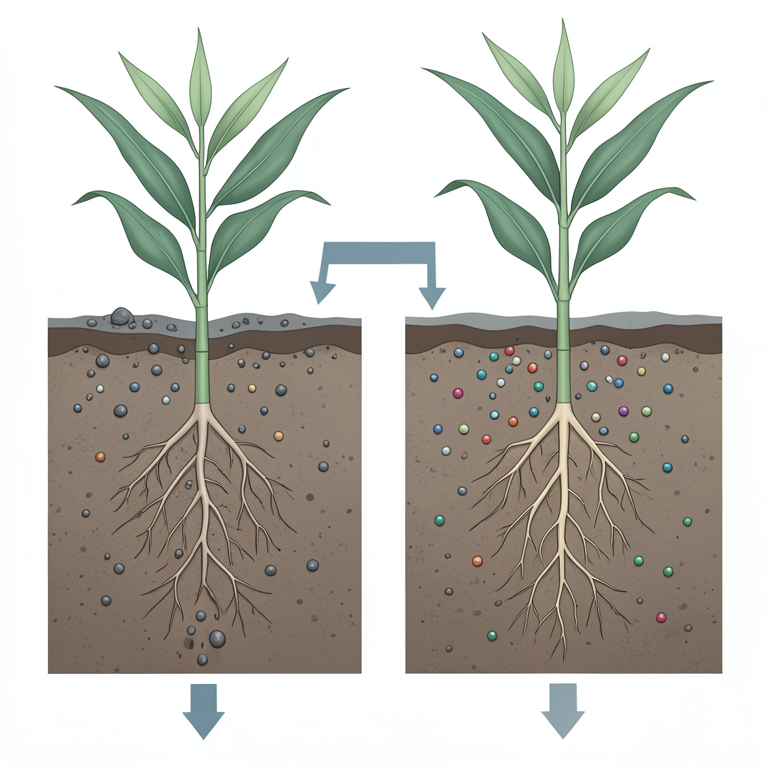
Nitrogen Distribution Comparison
AI-generated conceptual illustration (maize plants in soil cross-section). It explains the idea and does not show study data.
View source evidence ↗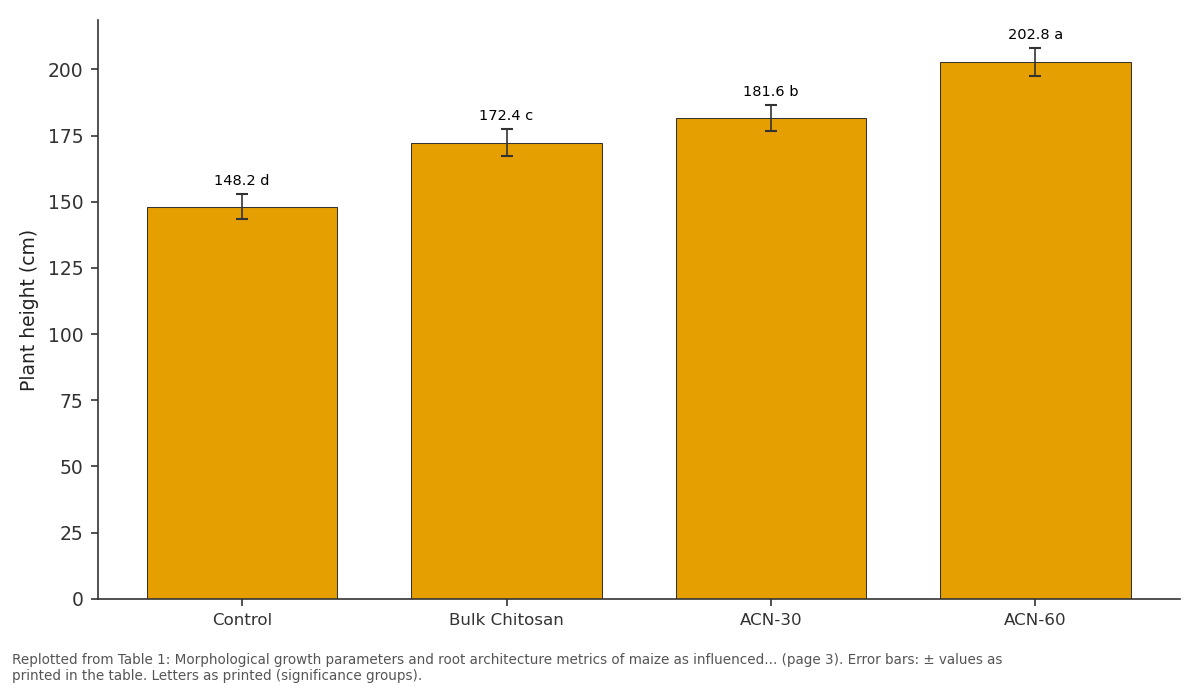
Plant height (cm): Control vs Bulk Chitosan vs ACN-30 vs ACN-60
Replotted from Table 1 (page 3) of the original paper. Every bar is the paper's own table value.
View source evidence ↗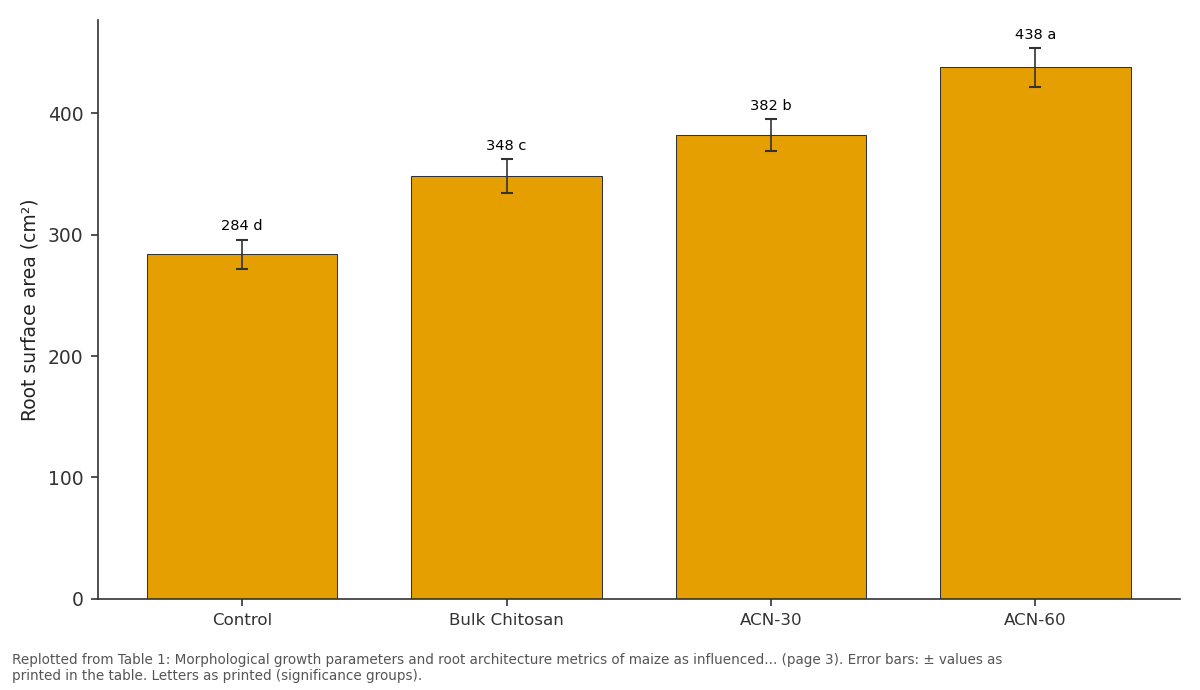
Root surface area (cm²): Control vs Bulk Chitosan vs ACN-30 vs ACN-60
Replotted from Table 1 (page 3) of the original paper. Every bar is the paper's own table value.
View source evidence ↗Figures & tables
From the original paper Table 1
 Table 2
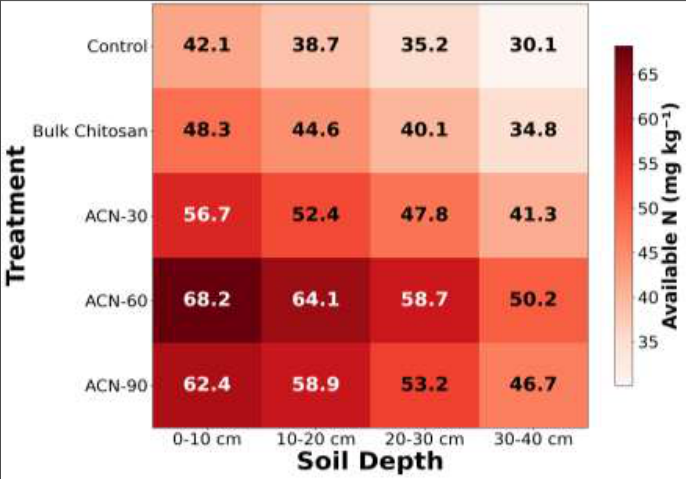 Figure 1
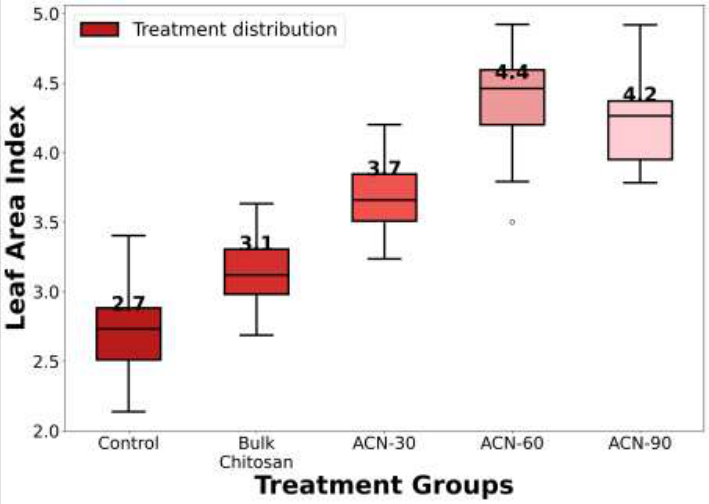 Figure 2
Introduction
Soil degradation through the cumulative effects of intensive nitrogen fertilization represents one of the most pressing environmental challenges confronting contemporary agricultural systems worldwide. The indiscriminate application of synthetic nitrogen fertilizers has been directly implicated in soil acidification, disruption of microbial community equilibria, groundwater contamination through nitrate percolation, and atmospheric pollution through ammonia volatilization and nitrous oxide emission [1] . These environmental externalities are particularly pronounced in continental climate zones where extreme temperature fluctuations between seasons create alternating conditions of rapid nitrogen mineralization during warm periods and accumulation of mobile nitrogen forms susceptible to deep leaching during snowmelt and spring rainfall events [2] . In Turkey, where maize (Zea mays L.) cultivation occupies approximately 700,000 hectares predominantly concentrated in the central Anatolian plateau and Çukurova plain, nitrogen management practices have historically prioritized application rate maximization over nutrient use efficiency optimization, resulting in documented groundwater nitrate concentrations exceeding 50 mg L⁻¹ in several intensively cultivated districts [3] . The emergence of nanoscale nutrient delivery systems has introduced a paradigm shift in the conceptualization of fertilizer-soil-plant interactions. Nanostructured carriers possess dimensional attributes (typically 1-100 nm) that confer unique physicochemical properties including elevated specific surface area, enhanced reactivity, tunable surface charge, and capacity for controlled substance release through diffusion, degradation, or environmentally responsive mechanisms [4] . These characteristics fundamentally alter the dynamics of nutrient release, transport, and plant acquisition compared to conventional granular fertilizers that rely upon passive dissolution and mass flow processes. Among the diverse nanomaterial platforms investigated for agricultural nutrient delivery, chitosan nanoparticles have garnered substantial research interest due to the exceptional combination of encapsulation capacity, biological compatibility, and inherent bioactivity exhibited by the chitosan biopolymer [5] . The soil environmental dimension of nanofertilizer performance has received comparatively less attention than plant-level responses in the existing literature. The spatial distribution of nitrogen within the soil profile, the temporal dynamics of nitrogen transformation reactions, and the influence of nanomaterial surface properties on nitrogen retention capacity at different soil depths represent critical knowledge gaps that must be addressed to develop comprehensive understanding of nanofertilizer behavior under field conditions [6] . Investigations that integrate above-ground plant morpho-physiological assessments with below-ground soil nitrogen dynamics are essential for elucidating the mechanisms through which nanofertilizers achieve their reported improvements in nutrient use efficiency [7] . The interaction between chitosan nanoparticle surface charge characteristics and soil colloid properties, particularly in the context of calcareous continental soils prevalent across the Turkish plateau, introduces additional complexity that has not been adequately explored in existing research [8] . The present investigation was therefore designed to simultaneously evaluate the morphophysiological responses of maize and the soil nutrient dynamics associated with ammonium-encapsulated chitosan nanomaterial application under continental field conditions in central Turkey.
Materials and Methods
Materials and Methods
Material
The field experiment was established at the Agricultural Research and Application Center of Ankara Metropolitan University, Ankara, Turkey (39°57'N, 32°52'E, elevation 890 m above sea level) during the 2024 growing season from May through October. The experimental site experiences a continental semi-arid climate (Köppen classification BSk) characterized by hot, dry summers (mean July temperature 23.5°C) and cold winters (mean January temperature 0.3°C), with annual precipitation of approximately 410 mm. Supplementary furrow irrigation was applied at 12-day intervals to maintain soil moisture above 60% of field capacity. Pre-experimental soil characterization of the 0-40 cm depth profile revealed a clay loam texture (32% clay, 38% silt, 30% sand), pH 7.6 (1:2.5 soil:water), calcium carbonate equivalent of 12.4%, organic carbon content of 1.24%, total nitrogen of 0.11%, available phosphorus (Olsen method) of 8.6 mg kg⁻¹, and exchangeable potassium of 248 mg kg⁻¹. The maize hybrid Pioneer P3167 was utilized as the experimental genotype due to its adaptation to central Anatolian growing conditions and its established yield potential under irrigated cultivation. Ammoniumencapsulated chitosan nanomaterials were synthesized via ionotropic gelation using low molecular weight chitosan (50-190 kDa, ≥75% deacetylation) cross-linked with sodium tripolyphosphate in ammonium chloride solution [9] . Characterization analyses confirmed a mean particle size of 78 ± 11 nm (dynamic light scattering), polydispersity index of 0.19, zeta potential of +43.6 mV, and ammonium encapsulation efficiency of 74.8%. The research protocol was approved by the Ankara Metropolitan University Agricultural Research Ethics Committee.
Methods
The experiment followed a randomized complete block design with five treatments and four replications distributed across twenty experimental plots of 6.0 m × 4.0 m dimensions separated by 1.5 m alleys. Treatment designations were: T1untreated control with no nitrogen input; T2bulk chitosan amendment consisting of conventional urea applied at 120 kg N ha⁻¹ plus 2 kg ha⁻¹ bulk chitosan powder incorporated into the topsoil; T3 -AECN at ACN-30 rate (36 kg N ha⁻¹); T4 -AECN at ACN-60 rate (72 kg N ha⁻¹); and T5 -AECN at ACN-90 rate (108 kg N ha⁻¹). All treatments received uniform basal applications of phosphorus (80 kg P₂O₅ ha⁻¹ as triple superphosphate) and potassium (60 kg K₂O ha⁻¹ as potassium chloride). AECN treatments were applied as a single soil incorporation to the 0-10 cm depth at planting. Morphological parameters were evaluated on six tagged plants per plot at 30, 60, and 90 days after planting. Physiological measurements including net photosynthetic rate, stomatal conductance, transpiration rate, and intercellular CO₂ concentration were recorded on the uppermost fully expanded leaf using a LI-6400XT portable photosynthesis system (LI-COR Biosciences) under ambient light conditions (PAR > 1500 µmol m⁻² s⁻¹). Chlorophyll fluorescence variables including Fv/Fm, ΦPSII, and nonphotochemical quenching were measured using an OS-30p+ fluorometer (Opti-Sciences). Soil samples for mineral nitrogen analysis were collected at monthly intervals from four depth increments (0-10, 10-20, 20-30, and 30-40 cm) using a hand auger, and extracted with 2M KCl for colorimetric determination of ammonium-N and nitrate-N. Root architecture was assessed at harvest by excavating intact root systems from one representative plant per plot and analyzing scanned root images using WinRHIZO Pro software. Data were analyzed using two-way ANOVA (treatment × time or treatment × depth) in R version 4.3.3, with post-hoc comparisons by Tukey's HSD test at α = 0.05. Values represent means ± standard error of four replications. Different lowercase letters within rows denote statistically significant differences at p < 0.05 by Tukey's HSD test. The soil nitrogen distribution data in Table 2 illustrate the profoundly different spatial patterns of nitrogen availability generated by AECN compared to conventional nitrogen sources. Under the control treatment, available nitrogen declined by 28.5% from the surface layer (42.1 mg kg⁻¹) to the 30-40 cm depth (30.1 mg kg⁻¹), reflecting typical patterns of surface concentration and limited vertical redistribution. In contrast, the ACN-60 treatment maintained a notably more uniform vertical nitrogen profile, with available nitrogen declining by only 26.4% across the same depth gradient (68.2 to 50.2 mg kg⁻¹). More significantly, the absolute nitrogen concentrations at all four depths under ACN-60 substantially exceeded those under the bulk chitosan treatment, despite the latter receiving 66.7% more total nitrogen input (120 vs. 72 kg N ha⁻¹), underscoring the superior nitrogen retention capacity of the nanomaterial delivery system. The heatmap representation provides an intuitive visualization of the contrasting soil nitrogen distribution patterns between treatments. The progressively darker coloration under AECN treatments, particularly ACN-60 and ACN-90, across all depth increments reflects the capacity of chitosan nanoparticles to retain ammonium ions within the soil matrix through electrostatic interactions with negatively charged clay mineral surfaces and organic matter functional groups, thereby reducing the vertical mobility of nitrogen beyond the active root zone. The progressive increase in median leaf area index from control through ACN-60, followed by a slight reduction at ACN-90, parallels the quadratic dose-response pattern observed for other morphological parameters and suggests that the optimal nitrogen loading within the chitosan nanoparticle matrix has been achieved at the ACN-60 level under these specific edaphic and climatic conditions. The physiological basis for this optimum likely reflects the balance between nitrogen supply adequacy and the potential for osmotic or ionic disturbance at supraoptimal nanoparticle concentrations in the root zone environment.
| Soil Depth | Control | Bulk Chitosan | ACN-30 | ACN-60 | ACN-90 |
|---|---|---|---|---|---|
| 0-10 cm | 42.1 ± 2.4d | 48.3 ± 2.6c | 56.7 ± 2.8b | 68.2 ± 3.1a | 62.4 ± 2.9ab |
| 10-20 cm | 38.7 ± 2.1c | 44.6 ± 2.3b | 52.4 ± 2.5ab | 64.1 ± 2.8a | 58.9 ± 2.7ab |
| 20-30 cm | 35.2 ± 1.8c | 40.1 ± 2.0b | 47.8 ± 2.3ab | 58.7 ± 2.6a | 53.2 ± 2.4ab |
| 30-40 cm | 30.1 ± 1.6c | 34.8 ± 1.8bc | 41.3 ± 2.0b | 50.2 ± 2.3a | 46.7 ± 2.1ab |
Table text extracted from the original PDF; superscript letters are shown inline. The original table image is below.
View original table image
Results
Results
Antioxidant Defense Responses
The enzymatic antioxidant defense system of maize exhibited differential activation patterns in response to AECN treatments. Superoxide dismutase (SOD) activity in leaf tissues was significantly elevated under ACN-60 treatment (42.8 ± 1.8 U mg⁻¹ protein) compared to the control (28.4 ± 1.2 U mg⁻¹ protein), representing a 50.7% increase. Catalase (CAT) activity demonstrated a similar enhancement pattern, with ACN-60 recording 18.6 ± 0.8 U mg⁻¹ protein versus 12.4 ± 0.6 U mg⁻¹ protein in the control. Peroxidase (POD) activity increased from 8.2 ± 0.4 U mg⁻¹ protein in the control to 14.6 ± 0.6 U mg⁻¹ protein under ACN-60. These enhancements in antioxidant enzyme activities are consistent with the known elicitor function of chitosan oligomers, which activate pathogen-related and stress-responsive signaling pathways in plant cells. The elevated antioxidant capacity under AECN treatment likely contributes to the maintenance of cellular redox homeostasis and protection of the photosynthetic apparatus against oxidative damage, particularly during periods of environmental stress.
Nitrogen Recovery and Environmental Implications
The apparent nitrogen recovery efficiency, calculated as the proportion of applied nitrogen recovered in above-ground plant biomass at harvest, was markedly superior under AECN treatments compared to conventional nitrogen application. The ACN-60 treatment achieved a recovery efficiency of 64.8%, substantially exceeding the 36.2% recorded for the bulk chitosan treatment, which received conventional urea as its nitrogen source. The ACN-30 and ACN-90 treatments recorded recovery efficiencies of 58.4% and 61.2%, respectively, indicating that even the lowest AECN application rate outperformed conventional fertilization in terms of nitrogen utilization. Post-harvest soil analysis revealed significantly lower residual nitrate concentrations in the 30-40 cm depth under AECN treatments (14.2-18.6 mg NO₃⁻-N kg⁻¹) compared to the bulk chitosan treatment (24.8 mg NO₃⁻-N kg⁻¹), suggesting reduced potential for post-season nitrate leaching into deeper soil layers and groundwater resources.
Discussion
The present research establishes that ammoniumencapsulated chitosan nanomaterials at the ACN-60 application rate produce comprehensively superior morphophysiological responses in maize compared to both unfertilized and conventionally fertilized treatments under continental semi-arid conditions in central Turkey. The 36.8% enhancement in plant height recorded under ACN-60 exceeds the 28-32% improvements reported by Choudhary et al. [10] for maize treated with zinc-chitosan nanoparticles, suggesting that the combined nutritional and biostimulant effects of nitrogen-loaded chitosan nanoparticles may generate synergistic growth responses that surpass those achievable with micronutrient-loaded formulations alone. The root architecture improvements, particularly the 54.2% increase in root surface area and the 27.6% enhancement in specific root length, represent mechanistically significant findings that have not been extensively documented in previous nanofertilizer investigations with maize, and likely reflect both the nutritional effects of sustained nitrogen availability and the direct stimulatory influence of chitosan oligomers on root meristematic activity and lateral root initiation [11] .
The soil nitrogen distribution data constitute a particularly novel contribution of this research, providing direct evidence for the nitrogen retention mechanism underlying the superior agronomic efficiency of AECN. The significantly more uniform vertical distribution of available nitrogen under AECN treatments, with the 30-40 cm depth concentrations under ACN-60 exceeding those under conventional fertilization by 44.3% despite receiving 40% less total nitrogen, demonstrates that chitosan nanoparticles function as effective nitrogen reservoirs within the soil matrix. The proposed mechanism involves a combination of electrostatic retention of cationic chitosan-ammonium complexes on negatively charged soil colloid surfaces and the physical entrapment of nitrogen within the polymer matrix, which undergoes gradual biodegradation over weeks to months depending upon soil moisture, temperature, and microbial activity conditions [12] . The practical implication of this finding is that AECN application can simultaneously enhance crop nitrogen availability and reduce the environmental risk of nitrogen leaching beyond the root zone, addressing both the agronomic and environmental dimensions of nitrogen management in irrigated continental cropping systems [13] .
The activation of antioxidant defense systems under AECN treatment represents an additional mechanism through which chitosan nanoparticles contribute to improved crop performance. The 50.7% enhancement in SOD activity and the 78.0% increase in POD activity observed under ACN-60 are consistent with the recognition of chitosan as a potent elicitor of plant defense responses, operating through chitin recognition receptors on plant cell membranes that activate downstream signaling cascades including the mitogenactivated protein kinase pathway and the production of reactive oxygen species as signaling molecules [14] . The resultant enhancement of antioxidant capacity provides a protective buffer against oxidative stress during the environmental temperature extremes characteristic of the continental climate at the experimental site, where diurnal temperature fluctuations can exceed 20°C during the critical silking and grain-filling phases.
Conclusion
In the context of mounting pressure on continental agroecosystems to sustain maize productivity while reducing the environmental footprint of nitrogen fertilization, the present research provides compelling evidence for the dual agronomic and ecological benefits of ammonium-encapsulated chitosan nanomaterials. The principal findings highlight that the ACN-60 treatment, delivering only 60% of the conventional nitrogen rate, achieved grain yields of 9.12 t ha⁻¹, surpassing conventional fertilization by 23.6% while simultaneously maintaining more uniform soil nitrogen distribution and achieving 64.8% nitrogen recovery efficiency compared to 36.2% under conventional practice. Based on these outcomes, the application of AECN at rates equivalent to 60-75 kg N ha⁻¹ can be recommended as an effective strategy for optimizing maize production in calcareous continental soils while substantially reducing nitrogen loss pathways. Looking forward, integration of these findings with multi-season soil health monitoring data, microbiome diversity assessments, and life cycle analysis of nanoparticle production and degradation will be essential to fully characterize the sustainability profile of chitosan-based nanofertilizer technology within the context of regenerative agricultural systems.
Acknowledgement
AcknowledgementsThis research was supported by the Scientific and Technological Research Council of Turkey and by the Ankara Metropolitan University Internal Research. The authors acknowledge the institutional support provided by Ankara Metropolitan University through access to the Agricultural Research and Application Center and the Central Laboratory for Materials Characterization. Author contributions: E.Y. conceptualized the research framework, conducted the soil analyses, and prepared the manuscript; A.K.D. synthesized and characterized the nanomaterials; M.C.Ö. performed the morpho-physiological measurements and statistical analyses.
Figures and tables from the paper
| Growth Parameter | Control | Bulk Chitosan | ACN-30 | ACN-60 | ACN-90 |
|---|---|---|---|---|---|
| Plant height (cm) | 148.2 ± 4.6d | 172.4 ± 5.1c | 181.6 ± 4.8b | 202.8 ± 5.4a | 194.3 ± 5.2ab |
| Stem girth (mm) | 19.4 ± 0.6d | 22.8 ± 0.7c | 24.2 ± 0.6bc | 27.1 ± 0.8a | 25.8 ± 0.7ab |
| Leaf area index | 3.24 ± 0.09d | 3.82 ± 0.10c | 4.08 ± 0.11b | 4.58 ± 0.12a | 4.38 ± 0.11ab |
| Shoot dry wt. (g) | 42.8 ± 1.6d | 54.2 ± 1.9c | 58.6 ± 1.8b | 68.4 ± 2.2a | 64.1 ± 2.0ab |
| Root length (cm) | 34.6 ± 1.5d | 42.1 ± 1.8c | 45.8 ± 1.7bc | 52.4 ± 2.0a | 49.2 ± 1.9ab |
| Root surface area (cm²) | 284 ± 12d | 348 ± 14c | 382 ± 13b | 438 ± 16a | 412 ± 15ab |
| Specific root length (m g⁻¹) | 42.8 ± 1.4c | 48.2 ± 1.6b | 50.4 ± 1.5ab | 54.6 ± 1.7a | 52.1 ± 1.6ab |
Table text extracted from the original PDF; superscript letters are shown inline. The original table image is below.
View original table image
References
18 in the original paper- Zhang X, Davidson EA, Mauzerall DL, Searchinger TD, Dumas P, Shen Y. Managing nitrogen for sustainable development. Nature. 2015;528(7580):5159.
- Cameron KC, Di HJ, Moir JL. Nitrogen losses from the soil/plant system: A review. Annals of Applied Biology. 2013;162(2):145-173.
- Oenema O, Wrage N, Velthof GL, van Groenigen JW, Dolfing J, Kuikman PJ. Trends in global nitrous oxide emissions from animal production systems. Nutrient Cycling in Agroecosystems. 2005;72(1):51-65.
- DeRosa MC, Monreal C, Schnitzer M, Walsh R, Sultan Y. Nanotechnology in fertilizers. Nature Nanotechnology. 2010;5(2):91-91.
- Kumaraswamy RV, Kumari S, Choudhary RC, Pal A, Raliya R, Biswas P et al. Engineered chitosan based nanomaterials: Bioactivities, mechanisms and perspectives in plant protection and growth. International Journal of Biological Macromolecules. 2018;113:494-506.
- Kopittke PM, Menzies NW, Wang P, McKenna BA, Lombi E. Soil and the intensification of agriculture for global food security. Environment International. 2019;132:105078.
- Meena P, Mondal K, Saharan V, Jain D, Yadav RB, Rawal P, Meena RH, Meena K, Meena MK. Understanding morpho-physiological responses of maize towards ammonium-loaded chitosan nanofertilizer. South Asian J. Agric. Sci. 2024;4(2):56-59. doi:10.22271/27889289.2024.v4.i2a.144.
- Mikkelsen RL. Nanofertilizer and nanotechnology: A quick look. Better Crops with Plant Food. 2018;102(3):18-19.
- Fan W, Yan W, Xu Z, Ni H. Formation mechanism of monodisperse, low molecular weight chitosan nanoparticles by ionic gelation technique. Colloids and Surfaces B: Biointerfaces. 2012;90:21-27.
- Choudhary RC, Kumaraswamy RV, Kumari S, Sharma SS, Pal A, Raliya R et al. Zinc encapsulated chitosan nanoparticle to promote maize crop yield. International Journal of Biological Macromolecules. 2019;127:126135.
- Katiyar D, Hemantaranjan A, Singh B. Chitosan as a promising natural compound to enhance potential physiological responses in plant: A review. Indian Journal of Plant Physiology. 2015;20(1):1-9.
- Corradini E, de Moura MR, Mattoso LHC. A preliminary study of the incorporation of NPK fertilizer into chitosan nanoparticles. Express Polymer Letters. 2010;4(8):509-515.
- Subramanian KS, Manikandan A, Thirunavukkarasu M, Rahale CS. Nano-fertilizers for balanced crop nutrition. In: Rai M et al. eds. Nanotechnologies in Food and Agriculture. Springer; 2015:69-80.
- Iriti M, Varoni EM. Chitosan-induced antiviral activity and innate immunity in plants. Environmental Science and Pollution Research. 2015;22(4):2935-2944.
- Raliya R, Saharan V, Dimkpa C, Biswas P. Nanofertilizer for precision and sustainable agriculture: Current state and future perspectives. Journal of Agricultural and Food Chemistry. 2018;66(26):64876503.
- Xu L, Cao LD, Li FM, Wang XJ, Huang QL. Utilization of chitosan-lactide copolymer nanoparticles as controlled release pesticide carrier for pyraclostrobin against Colletotrichum gossypii Southw. Journal of Dispersion Science and Technology. 2014;35(4):544550.
- Benzon HRL, Rubenecia MRU, Ultra VU, Lee SC. Nano-fertilizer affects the growth, development, and chemical properties of rice. International Journal of Agronomy and Agricultural Research. 2015;7(1):105117.
- Liu R, Lal R. Potentials of engineered nanoparticles as fertilizers for increasing agronomic productions. Science of the Total Environment. 2015;514:131-139.