
Research article · 2026 · Full text
International Journal of Agriculture and NutritionBioconversion eficiency of livestock and aquaculture by-products through dipteran larval biomass production systems
Volume 8(4) · Pages 165–170 · DOI: 10.33545/26646064.2026.v8.i4b.723 ↗
Research areasInsect Utilization and EffectsForensic Entomology and Diptera StudiesComposting and Vermicomposting Techniques
Abstract
Author-writtenLivestock processing and aquaculture operations generate organic residues that pose disposal challenges but contain recoverable nutrients. Bioconversion through dipteran larval systems in which chironomid (Chironomidae) larvae metabolise waste into high-protein biomass ofers a circular approach to waste valorisation that has received less industrial atention than black soldier fly alternatives. This research quantified the bioconversion eficiency, biomass yield, and economic viability of rearing Chironomus tentans on four by-product substrates poultry ofal, fish processing waste, dairy whey residue, and a mixed livestock blend in outdoor pilot beds at the Nakuru Research Institute of Agricultural Biotechnology, Rift Valley, Kenya, from January to June 2024. Twenty-four concrete rearing beds (each 2m×1m×0.15 m) were loaded with substrates at 2.0 kg dry mater per bed in a randomised complete block design with six replicates per treatment. Bioconversion eficiency, defined as the proportion of substrate dry mater converted to larval dry mater, was measured at weekly intervals over 12 weeks. Poultry ofal yielded the highest bioconversion eficiency (47.3%), followed by the mixed livestock blend (46.7%), fish processing waste (45.9%), and dairy whey residue (38.1%). Cumulative larval biomass production peaked at 373gDMm⁻² for poultry ofal and 224 g DM m⁻² for dairy whey. Substrate reduction rates exceeded 68% across all treatments, indicating efective organic mater removal. Proximate analysis of harvested larvae showed crude protein ranging from 57.4% to 63.8% DM and crude lipid from 7.9% to 10.6% DM. Economic analysis estimated net returns between 0.47 and 1.35 USD per kg of larval dry mater, with poultry ofa delivering the best cost-to-yield ratio. These data position chironomid-based bioconversion as a technically and economically viable waste management strategy for small and medium-scale livestock and aquaculture enterprises in East Africa.
Summary
Source-checkedPlain-language reading of the full paper, prepared with AI and checked against the text. Each point links to the authors' own words.
Why it matters
- Livestock and aquaculture operations produce organic waste that is difficult to dispose of but contains nutrients that can be recovered. View evidence ↗
- In sub-Saharan Africa, the growth of livestock and aquaculture has exceeded the capacity of traditional rendering systems, leaving many by-products without viable disposal options. View evidence ↗
- Chironomid larvae are an underutilized alternative to black soldier flies for waste processing because they colonize substrates quickly, tolerate various waste types, and provide high protein levels (55–65% DM). View evidence ↗
The question
- The study aimed to quantify the biomass yield, economic viability, and bioconversion efficiency of Chironomus tentans larvae when fed on four different by-product substrates. View evidence ↗
- A secondary goal was to determine if the system could generate positive net returns in Kenya by comparing labor and substrate costs against the market value of the larvae. View evidence ↗
What they did
- The four tested substrates were poultry offal, Nile tilapia fish processing waste, solar-concentrated dairy whey (25% dry matter), and a mixed blend of the three. View evidence ↗
- Each bed was filled with borehole water to a depth of 10 cm and inoculated with roughly 1,000 Chironomus tentans eggs. View evidence ↗
- Bioconversion efficiency (BCE) was measured as the percentage of total substrate dry matter converted to larval dry matter, while substrate reduction rate (SRR) compared final residual mass to initial loading. View evidence ↗
What they found
- By the 12th week, poultry offal had the highest bioconversion efficiency (47.3%), followed by the mixed blend (46.7%), fish waste (45.9%), and dairy whey (38.1%). View evidence ↗
- Substrate reduction rates were high across all groups, ranging from 68.6% for dairy whey to 78.4% for poultry offal. View evidence ↗
- Harvested larvae showed crude protein levels between 57.4% (dairy whey) and 63.8% (poultry offal), and crude lipid levels between 7.9% (dairy whey) and 10.6% (fish waste). View evidence ↗
- All treatments were economically viable, with net returns ranging from 0.47 USD/kg for dairy whey to 1.35 USD/kg for poultry offal. View evidence ↗
What it means
- The authors conclude that chironomid rearing beds are a practical waste management tool for East African livestock and aquaculture operations that also produces marketable protein feed. View evidence ↗
- The study was limited to a single 12-week cycle, meaning longer-term data is needed to determine if productivity remains stable during cooler months when temperatures may drop below 12 °C. View evidence ↗
- The research did not assess the potential for disease transmission from the raw livestock by-product substrates to the larvae and subsequently to the animals consuming the larvae. View evidence ↗
Visual summary
3 visualsIllustrations explain the paper; charts are replotted from the paper's own table values.
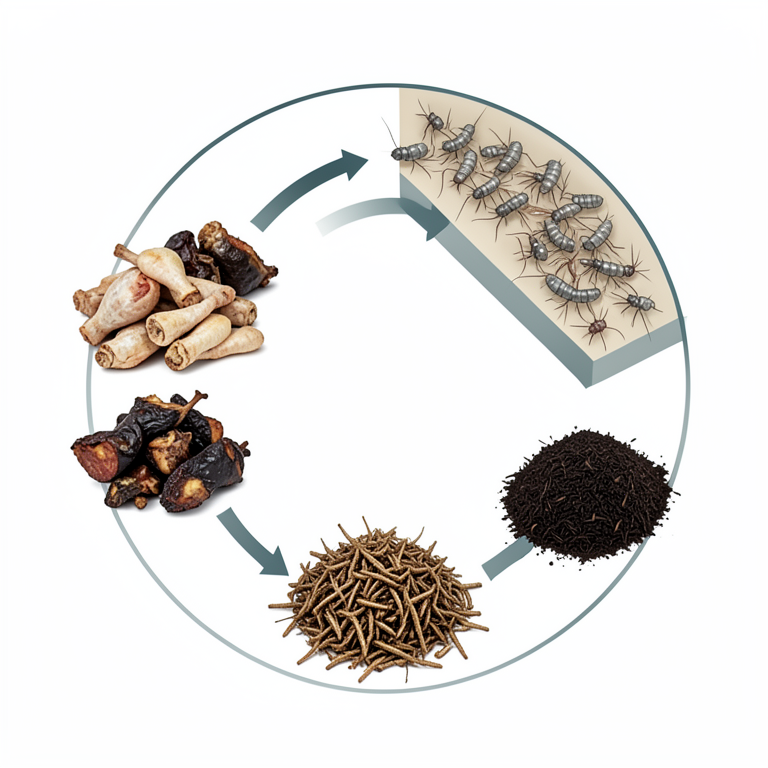
Circular Waste-to-Protein Flow
AI-generated conceptual illustration (Chironomus tentans larvae, poultry offal, Nile tilapia fish waste, and dairy whey). It explains the idea and does not show study data.
View source evidence ↗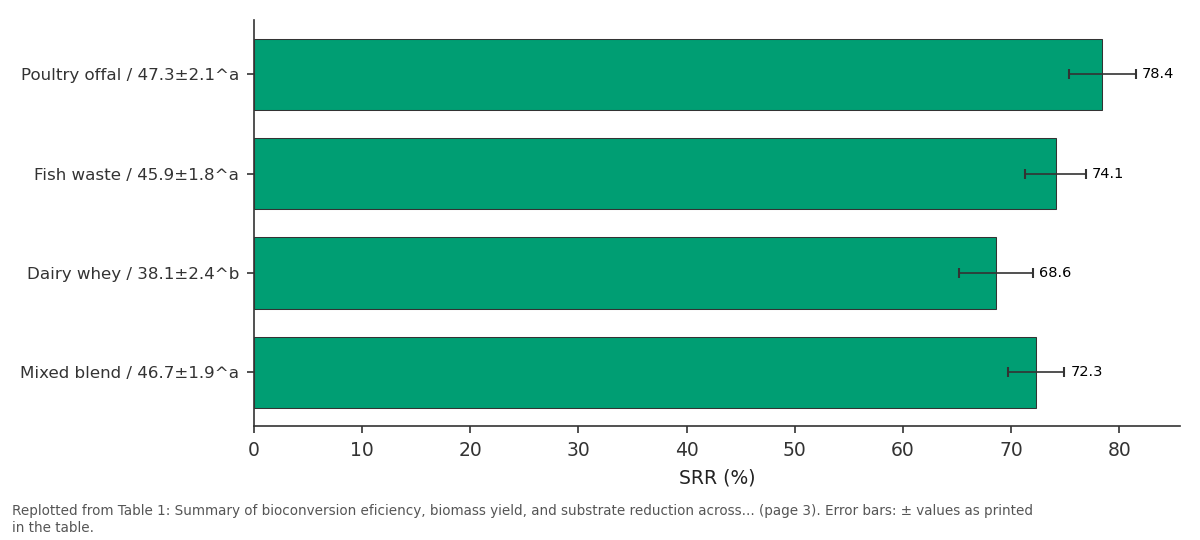
SRR (%): Poultry offal /... vs Fish waste / 45.9±1.8^a vs Dairy whey / 38.1±2.4^b vs Mixed blend / 46.7±1.9^a
Replotted from Table 1 (page 3) of the original paper. Every bar is the paper's own table value.
View source evidence ↗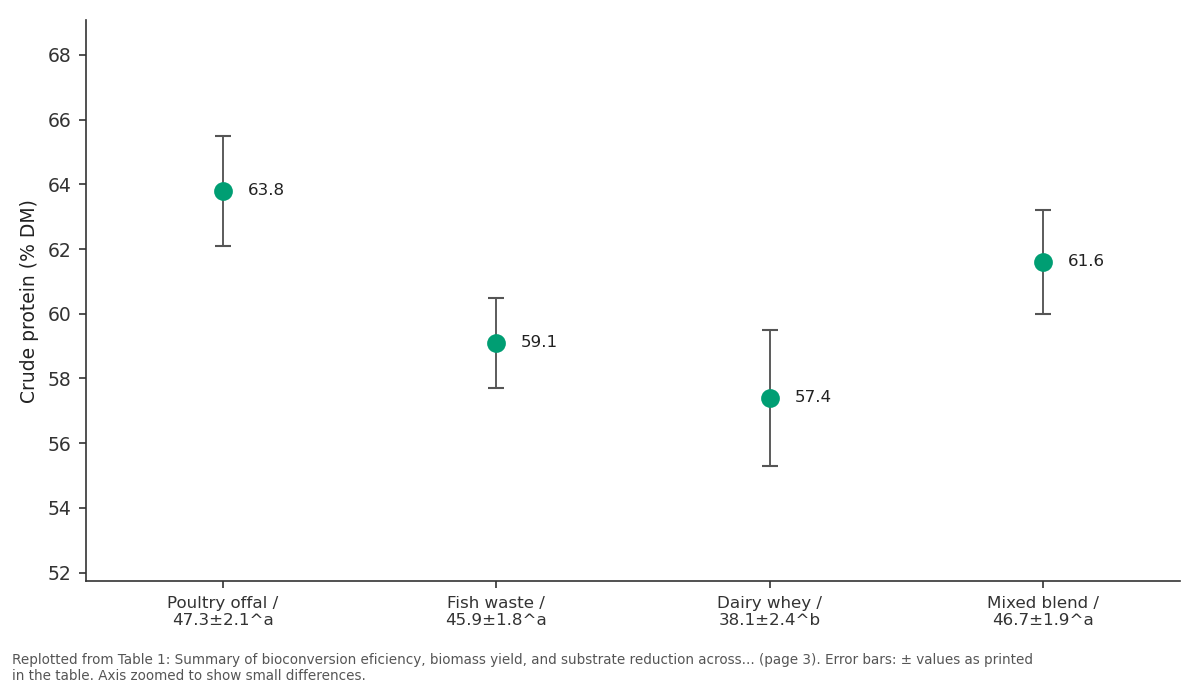
Crude protein (% DM): Poultry offal /... vs Fish waste / 45.9±1.8^a vs Dairy whey / 38.1±2.4^b vs Mixed blend / 46.7±1.9^a
Replotted from Table 1 (page 3) of the original paper. Every bar is the paper's own table value.
View source evidence ↗Figures & tables
From the original paper Table 1
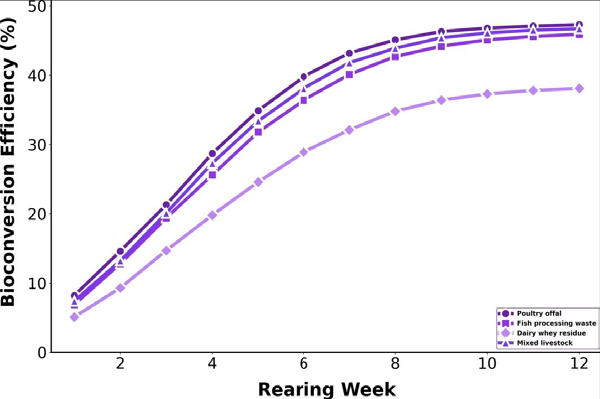 Figure 1
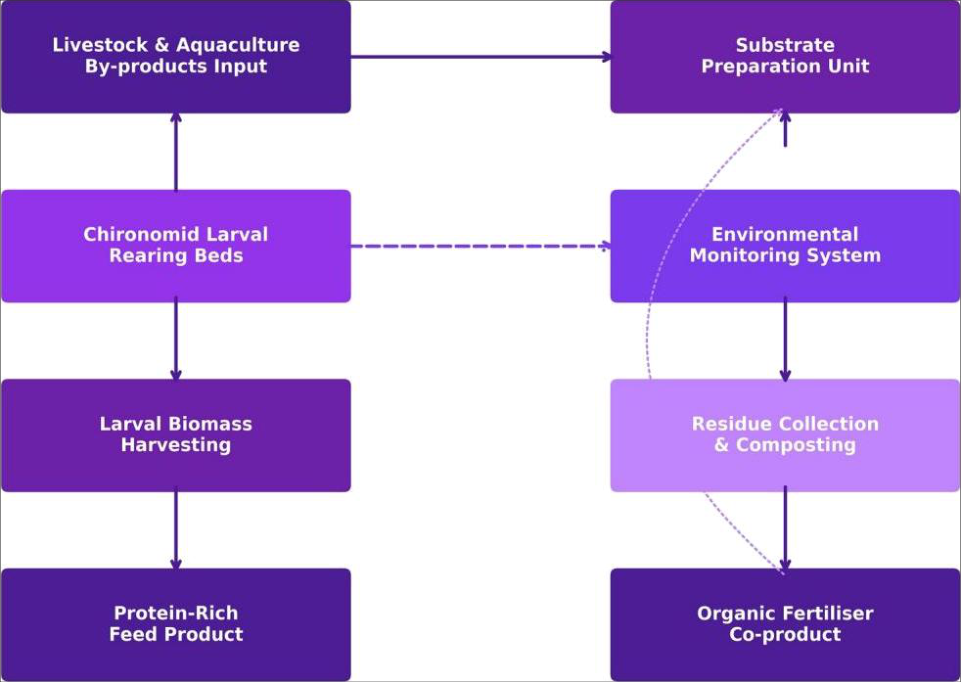 Figure 2
 Table 2
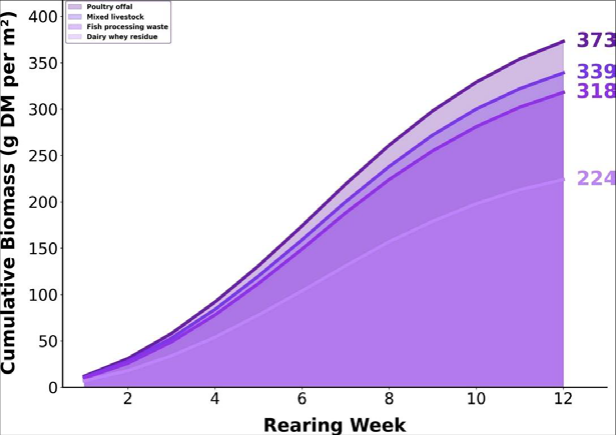 Figure 3
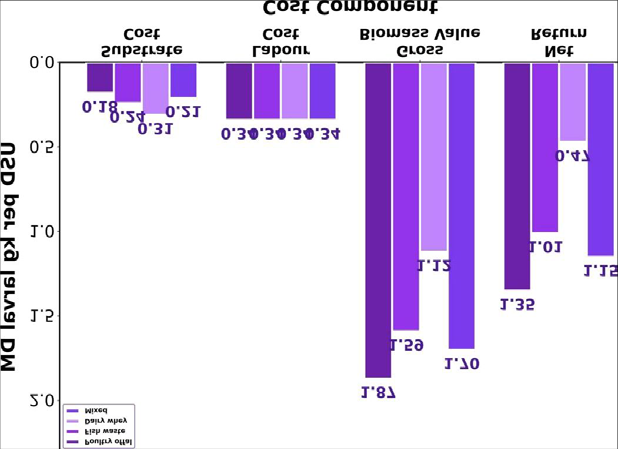 Figure 4
Introduction
The practice of converting animal processing residues into useful products has roots stretching back centuries bone meal fertiliser, blood meal feed supplements, and rendered tallow are among the oldest examples of agricultural circular economy in operation [1] . Yet modern intensification of livestock and aquaculture industries has outpaced the capacity of traditional rendering systems, leaving growing volumes of organic by-products without economically viable disposal routes, particularly in sub-Saharan Africa where cold-chain and rendering infrastructure remain limited [2] . Poultry slaughter plants, fish processing facilities, and dairy operations each produce waste streams rich in protein, lipid, and minerals nutrients that are simply lost when residues are landfilled or discharged into waterways [3] . Environmental regulations in East African nations are tightening, and the cost of non-compliance is rising, which creates both pressure and opportunity for alternative waste treatment technologies that recover value from organic residues [4] . Insectmediated bioconversion the use of fly larvae to consume organic waste and accumulate it as harvestable biomass has emerged as one such technology, with the black soldier fly (Hermetia illucens) receiving the bulk of research and commercial investment [5] . Chironomid larvae (Diptera: Chironomidae) represent an overlooked parallel in this space. Although less commercially developed than black soldier fly, chironomids possess several practical advantages for tropical waste processing: they colonise organic substrates naturally and rapidly, tolerate a wide range of waste types, and produce biomass with crude protein levels (55-65% DM) comparable to or exceeding those of BSF larvae [6] . Their aquatic larval habit means they can process semi-liquid waste streams such as abatoir efluent and dairy whey that are dificult to manage in the terrestrial BSF system [7] . And their short generation time (3-4 weeks from egg to pupa) permits multiple harvest cycles per season. Despite these atributes, quantitative data on chironomid bioconversion eficiency the fraction of substrate dry mater actually incorporated into larval biomass are sparse, especially for livestock and aquaculture byproducts under field conditions. Most existing reports address sewage sludge or generic organic enrichment rather than the specific waste streams generated by animal agriculture [8] . Similarly, the economic feasibility of chironomidbased waste processing has rarely been assessed in an African context where labour costs, substrate availability, and end-product markets difer from those in Europe or Southeast Asia. This research was designed to fill that gap. It measured the bioconversion eficiency, cumulative biomass yield, and substrate reduction capacity of Chironomus tentans reared on four livestock and aquaculture by-product substrates in a pilotscale outdoor bed system over 12 weeks. A secondary objective was to perform a simple economic analysis comparing input costs (substrate, labour) against the market value of the harvested larval biomass, to evaluate whether the system generates positive net returns under Kenyan conditions. The work was conducted at the Nakuru Research Institute of Agricultural Biotechnology in Kenya's Rift Valley Province, where livestock and aquaculture enterprises are concentrated and by-product disposal is an active management concern. By generating field-level bioconversion and economic data, this research aims to provide the evidence base that extension services and small-holder farmers need to evaluate chironomid bioconversion as a practical waste management and feed production strategy. The findings are expected to complement the growing body of work on insect-based circular agriculture in East Africa and to highlight areas where chironomid systems may outperform or supplement black soldier fly operations [9] .
Material and Methods
Material and Methods
Study Area Description
The research was conducted at the pilot bioconversion facility of the Nakuru Research Institute of Agricultural Biotechnology, situated 8 km northeast of Nakuru town in Nakuru County, Rift Valley Province, Kenya (0.31°S , 36.11°E , elevation 1,860 m). The site occupies 0.5 ha within a larger mixed-farming research station and receives mean annual rainfall of 950 mm, concentrated in the long rains (March-May) and short rains (October-December).
Mean annua temperature is 19.3°mathsfC . , with a diurnal range of 10-27 °C . The facility comprises 24 concrete rearing beds (each 2m×1m×0.15 m depth) arranged in four rows under a translucent polycarbonate roof that provides rain protection while admiting 80% photosynthetically active radiation. Water supply is from a borehole with a pH of 7.1 and conductivity of 380 μScm⁻¹ Surrounding land use is predominantly small-scale dairy farming, maize-bean rotation, and small poultry operations, reflecting the agricultural profile of the central Rift Valley. The facility was purpose-built for insect bioconversion trials and had been used for preliminary BSF rearing in 2023 before being converted for chironomid work in January 2024.
Field Experimental Design
The experiment followed a randomised complete block design (RCBD) with four treatments and six replicates, for a total of 24 rearing beds. Beds were grouped into six blocks of four, each block containing one replicate of each substrate treatment. Block placement accounted for minor gradients in roof shading and ambient airflow. The four substrate treatments were: (T1) poultry ofal a mixture of feathers, viscera, and blood collected from a small-scale broiler processing plant 5 km from the site; (T2) fish processing waste heads, frames, and viscera from Nile tilapia (Oreochromis niloticus) processing at a Lake Naivasha fish landing site; (T3) dairy whey residue liquid whey obtained from a local artisanal cheese-making cooperative, concentrated by solar evaporation to 25% dry mater; and (T4) mixed livestock blend an equal-parts mixture (by dry weight) of T1, T2, and T3. Each bed received 2.0 kg dry mater of its assigned substrate at the start of the trial, with supplemental additions of 0.5 kg every three weeks. Beds were filled to 10 cm depth with borehole water and inoculated with approximately 1,000 Chironomus tentans eggs from a laboratory colony maintained at the institute. Substrates were sourced weekly from the same suppliers throughout the 12-week trial to maintain consistency [10] .
Material
Substrate proximate composition was analysed at the institute's feed laboratory. Total nitrogen (Kjeldahl method), total organic carbon (loss-on-ignition at 550 °C) , crude lipid (Soxhlet), and ash content were determined in triplicate on initial substrate samples. The C:N ratios were: poultry ofal 7.8:1, fish processing waste 8.6:1, dairy whey residue 14.3:1, and mixed blend 9.4:1. Water quality in the rearing beds dissolved oxygen, pH, temperature, and ammonianitrogen was measured twice weekly using a Hanna HI98194 multiparameter probe. Environmental data (ambient temperature, relative humidity, rainfall) were recorded by an automated weather station (Davis Vantage Pro2) located 20 m from the rearing facility.
Methods
Larval sampling for bioconversion eficiency calculations was conducted weekly over 12 weeks. At each sampling event, three grab samples (10 cm × 10 cm area, full bed depth) were collected from randomised positions within each bed using a PVC frame sampler. Samples were sieved (250 µm), larvae separated from residual substrate by flotation, counted, and weighed (wet and dry). Dry weight was determined after ovendrying at 60 °C for 48 hours. Bioconversion eficiency (BCE) was calculated as: BCE (%) = (total larval DM harvested / total substrate DM added) × 100. Substrate reduction rate (SRR) was measured by comparing the dry mass of residual substrate at the end of the trial with the initial loading. Proximate composition of harvested larvae (pooled from week 10-12 harvests) was analysed using standard AOAC methods [11] : crude protein (Kjeldahl, N × 6.25), crude lipid (Soxhlet), moisture (105 °C, 24 h), ash (550 °C, 6 h), and crude fibre (acid-alkali digestion). For the economic analysis, substrate costs were based on actual purchase or transport prices paid during the trial, labour was estimated at the prevailing casual agricultural wage in Nakuru County (KES 500 per day, approximately 3.85 USD), and larval biomass was valued at the local market price for dried insect protein (5.0 USD per kg DM, based on quotes from three animal feed manufacturers in Nakuru and Nairobi) [12] . Data were analysed by two-way ANOVA (treatment × block) with Tukey's HSD post-hoc comparison at α = 0.05 in R v4.3.2 [13] . Graphs were prepared using ggploT2 [14] .
Results
Bioconversion eficiency rose steadily over the first eight weeks and then levelled of as the majority of larvae reached late instar IV and began pupating. By week 12, the overall BCE values were: poultry ofal 47.3%, mixed livestock blend 46.7%, fish processing waste 45.9%, and dairy whey residue 38.1%. The diference between poultry ofal and dairy whey was significant (p < 0.01), but T1, T2, and T4 did not difer significantly from one another (p > 0.10). Cumulative larval biomass production, measured as grams of dry mater per square metre of rearing bed surface, followed a similar treatment ranking. Poultry ofal produced the highest cumulative yield (373 g DM m⁻²), followed by the mixed blend (339 gDMm⁻²) , fish waste (318 g DM m⁻²), and dairy whey (224 g DM m⁻²). The weekly biomass increment peaked between weeks 5 and 8 coinciding with the period of most active instar III and IV feeding and declined as advanced (Figure 3).
Fig 3:
Cumulative larval biomass production (g DM m⁻²) across four by-product substrates over the 12-week rearing period Substrate reduction rates, measuring the proportion of initial substrate dry mater consumed or mineralised by the end of the 12-week trial, were consistently high: 78.4% for poultry ofal, 74.1% for fish waste, 72.3% for the mixed blend, and 68.6% for dairy whey. These values indicate that chironomid rearing simultaneously achieves efective organic waste removal, an important consideration for operations seeking to meet environmental discharge standards [15] . Proximate analysis of harvested larval biomass showed that crude protein was highest in larvae reared on poultry ofal (63.8±1.7% DM) and lowest on dairy whey (57.4±2.1% DM). Crude lipid ranged from 7.9% (dairy whey) to 10.6% (fish waste), with the omega-3 fraction notably higher in fish-wastereared larvae. Ash content was uniform (6.1-7.4% DM), and moisture at harvest averaged 78.3% across treatments. Water quality remained within acceptable bounds throughout the trial. Dissolved oxygen occasionally dipped below 3.0 mg L⁻¹ in beds with poultry ofal during warm afternoons (ambient temperature >27 °C) , necessitating brief manual aeration. pH ranged from 6.8 to 7.9, and ammonia-nitrogen peaked at 1.8 mg L⁻¹ in the fish waste treatment during weeks 3-5 but declined thereafter as larval feeding intensified. These values are within the tolerance range for C. tentans, which can survive dissolved oxygen as low as 1.0 mg L⁻¹ owing to its haemoglobinmediated oxygen transport system [16] .
Economic and Sustainability Assessment
Beyond the per-unit economics presented above, the system generates two co-products with independent market value. The residual substrate after larval harvest efectively a partially composted organic mater was rich in plant-available nitrogen (1.4-2.1% DM) and phosphorus (0.8-1.3% DM), making it suitable as a soil amendment. Local farmers in the Nakuru area purchase comparable organic fertiliser at 0.10-0.15 USD kg⁻¹ DM, adding an estimated 0.06-0.09 USD per kg of initial substrate to the system's revenue stream. When this co-product revenue is included, overall benefit-cost ratios ranged from 1.6:1 (dairy whey) to 3.2:1 (poultry ofal).
Scaling the system from the 24-bed pilot (48 m² total rearing area) to a 500m² commercial unit would require capital investment in bed construction, water supply, and roofing estimated at approximately 4,200 USD. At the bioconversion rates observed in this trial, such a facility operating on poultry ofal could produce roughly 3,900 kg of dried larval protein per year suficient to substitute the fishmeal component in feed for a 10,000-bird broiler unit or a 2-ha tilapia farm. Payback on the capital outlay would occur within 14-18 months at current market prices, assuming continuous operation and reliable substrate supply [17] .
Discussion
The bioconversion eficiencies recorded here (38-47%) are within the range reported for black soldier fly systems processing similar substrates (40-55%) and considerably higher than those typical of composting or anaerobic digestion, where organic mater is mineralised rather than converted to harvestable biomass [5] . The fact that chironomid BCE values approached those of BSF the current industry benchmark on three of the four substrates is encouraging and warrants further comparative trials under matched conditions.
Substrate C:N ratio once again emerged as a meaningful predictor of system performance. Poultry ofal (C:N = 7.8) and the mixed blend (C:N = 9.4) outperformed dairy whey (C:N = 14.3), consistent with the patern documented by Sulistiyarto and Bakrie [11] , who showed that nitrogen-rich substrates such as chicken manure promote faster chironomid growth. The relatively poorer performance of dairy whey likely reflects its high lactose content, which ferments rapidly and can depress dissolved oxygen, temporarily inhibiting larval feeding during the early weeks of the trial [18] . From a waste management perspective, substrate reduction rates of 68-78% mean that the chironomid system leaves only 22-32% of the original waste mass as a residue and that residue is a stabilised, nutrient-rich compost rather than a raw pollutant. This dual-product output (larval protein + organic fertiliser) diferentiates bioconversion from conventional waste treatment options that produce no harvestable co-product [19] . For Kenyan livestock and aquaculture operations currently paying for waste removal or facing regulatory penalties for improper disposal, the chironomid system turns a cost centre into a revenue source. Several limitations should be noted. The trial ran for a single 12-week cycle; longer-term operational data across multiple seasons would be needed to confirm year-round productivity, especially during the cooler months (June-August) when ambient temperatures in Nakuru can drop below 12 °C at night. Larval feeding activity and bioconversion rates are temperaturedependent, and winter performance may be lower than the values reported here [20] . Additionally, the economic analysis assumed a stable market price of 5.0 USD per kg for dried insect protein a figure that could fluctuate as the insect feed sector in East Africa matures and more producers enter the market.
The potential for disease transmission from livestock byproducts to cultured larvae, and thence to the animals that consume them, was not assessed in this research. While chironomid larvae are not known vectors of major livestock pathogens, the use of raw abatoir waste as a substrate warrants biosafety screening before commercial-scale adoption, particularly where the larval product is destined for food-animal diets [21].
Conclusion
This research set out to quantify the bioconversion eficiency and economic viability of chironomid-based processing of livestock and aquaculture by-products under field conditions in the Kenyan Rift Valley. Across four substrate treatments tested over 12 weeks, bioconversion eficiencies ranged from 38.1% (dairy whey residue) to 47.3% (poultry ofal), with cumulative larval biomass yields of 224-373 g DM m⁻² and substrate reduction rates of 68-78%. Poultry ofal emerged as the topperforming substrate on every metric bioconversion eficiency, biomass yield, protein content, and economic return while the mixed livestock blend ofered nearly equivalent performance with the added advantage of utilising multiple waste streams simultaneously. Dairy whey, although the lowest performer, still generated positive net returns and may be more atractive in regions where dairy processing is the dominant agricultural activity. From a practical standpoint, these results support the case for integrating chironomid rearing beds into existing livestock and aquaculture operations in East Africa as a waste management tool that simultaneously produces a marketable protein feed ingredient. The capital costs are modest, the operating skills are accessible to small-holder farmers, and the environmental cobenefits organic waste reduction and compost production add further value. Future research should address multi-cycle, year-round operation across seasons; comparative trials with BSF under identical substrate and climate conditions; biosafety screening of larval products derived from raw animal waste; and feeding trials with poultry and fish to validate the nutritional performance of chironomid-derived feed in vivo.
Acknowledgement
AcknowledgementsThe authors acknowledge and express gratitude to the concerned authorities for their support and cooperation during this research.
Figures and tables from the paper
| Parameter | Poultry offal | Fish waste | Dairy whey | Mixed blend |
|---|---|---|---|---|
| BCE (%) week 12 | 47.3±2.1^a | 45.9±1.8^a | 38.1±2.4^b | 46.7±1.9^a |
| Biomass (g DM m-2) | 373±18 | 318±14 | 224±21 | 339±16 |
| SRR (%) | 78.4±3.1 | 74.1±2.8 | 68.6±3.4 | 72.3±2.6 |
| Crude protein (% DM) | 63.8±1.7 | 59.1±1.4 | 57.4±2.1 | 61.6±1.6 |
| Crude lipid (% DM) | 9.3±0.7 | 10.6±0.8 | 7.9±0.6 | 9.8±0.7 |
| Ash (% DM) | 7.1±0.4 | 7.4±0.5 | 6.1±0.3 | 6.9±0.4 |
Table text extracted from the original PDF; superscript letters are shown inline. The original table image is below.
View original table image
| Phase | Period | Activity | Key Observation |
|---|---|---|---|
| Setup | Week 0 | Bed preparation, substrate loading, egg inoculation | Substrate C:N confirmed per design |
| Early growth | Weeks 1–3 | Instar I–II development, weekly sampling begins | Ammonia spike in fish waste beds |
| Peak feeding | Weeks 4–8 | Instar III–IV, maximumbiomass increment | BCE curve inflection atweek 5-6 |
| Plateau | Weeks 9-11 | Pupation onset, biomass gain slowing | DO dips in poultry beds during warm days |
| Harvest | Week 12 | Full harvest, substrate residue collection | Final BCE and proximate analysis |
Table text extracted from the original PDF; superscript letters are shown inline. The original table image is below.
View original table image
References
20 in the original paper- Meeker DL, Hamilton CR. An overview of the rendering industry. In: Meeker DL (ed). Essential rendering. Arlington, VA: National Renderers Association; 2012. p. 1-16.
- Ravi HK, Vian MA, Tao Y, Degrou A, Costello J, Chirinos R, et al. Sustainable valorization of animal by-products for the production of functional ingredients. Comprehensive Reviews in Food Science and Food Safety. 2019;18(4):1199-1226.
- Woodgate SL, van der Veen JT. Fats and oils animal based. In: Shahidi F (ed). Bailey's industrial oil and fat products. 7th ed. Hoboken, NJ: Wiley; 2020. p. 1-44.
- Omiti JM, Okuthe SO. An overview of the livestock sector in Kenya: Analysis of production trends and issues. Nairobi: Kenya Institute for Public Policy Research and Analysis; 2015. Working Paper No. 11.
- Diener S, Zurbrücgg C, Tockner K. Conversion of organic material by black soldier fly larvae: Establishing optimal feeding rates. Waste Management & Research. 2009;27(6):603-610.
- Habib MAB, Yusof FM, Phang SM, Mohamed S. Nutritional values of chironomid larvae grown in palm oil mill efluent and algal culture. Asian Fisheries Science. 2013;16(3-4):281-290.
- Hua K, Cobcroft JM, Cole A, Condon K, Jerry DR, Mangot A, et al. The future of aquatic protein: Implications for protein sources in aquaculture diets. One Earth. 2019;1(3):316-329.
- Armitage PD, Pinder LC, Cranston PS. The Chironomidae: Biology and ecology of non-biting midges. London: Chapman & Hall; 2012.
- Roos N, van Huis A. Consuming insects: Are there health benefits? Journal of Insects as Food and Feed. 2017;3(4):225-229.
- Kinyuru JN, Kenji GM, Muhoho SN, Ayieko M. Nutritional potential of longhorn grasshopper (Ruspolia diferens) consumed in Siaya District, Kenya. Journal of Agriculture, Science and Technology. 2010;12(1):32-46.
- Sulistiyarto B, Bakrie R. The growth of bloodworm, Chironomidae larvae (Diptera) fed with fish waste and chicken manure. Acta Entomol Zool. 2023;4(2):01-05.
- Kelemu S, Niassy S, Torto B, Fiaboe K, Afognon H, Tonnang H, et al. African edible insects for food and feed: Inventory, diversity, commonalities and contribution to food security. Journal of Insects as Food and Feed. 2015;1(2):103-119.
- R Core Team. R: A language and environment for statistical computing. Vienna: R Foundation for Statistical Computing; 2023.
- Wickham H. ggploT2: Elegant graphics for data analysis. 2nd ed. New York: Springer; 2016.
- Lalander C, Diener S, Zurbrücgg C, Vinnerås B. Efects of feedstock on larval development and process eficiency in waste treatment with black soldier fly (Hermetia illucens). Journal of Cleaner Production. 2019;208:211-219.
- Weber RE. Functions of invertebrate hemoglobins with special reference to adaptations to environmental hypoxia. American Zoologist. 2012;20(1):79-101.
- Chia SY, Tanga CM, Khamis FM, Mohamed SA, Salifu D, Sevgan S, et al. Threshold temperatures and thermal requirements of black soldier fly Hermetia illucens: Implications for mass production. PLoS ONE. 2018;13(11):e0206097.
- Makkar HPS, Tran G, Heuzé V, Ankers P. State-of-the-art on use of insects as animal feed. Animal Feed Science and Technology. 2014;197:1-33.
- Číčková H, Newton GL, Lacy RC, Kozánek M. The use of fly larvae for organic waste treatment. Waste Management. 2015;35:68-80.
- Tokeshi M. Life cycles and population dynamics. In: Armitage PD, Cranston PS, Pinder LCV (eds). The Chironomidae. Dordrecht: Springer; 2012. p. 54-84.