
Research article · 2026 · Full text
International Journal of Biology SciencesEpigenetic regulation and transcriptional plasticity underlying abiotic stress tolerance in cichlid fishes: A review
Volume 8(6) · Pages 243–248 · DOI: 10.33545/26649926.2026.v8.i6c.952 ↗
Research areasEpigenetics and DNA MethylationPhysiological and biochemical adaptationsGenomics and Chromatin Dynamics
Abstract
Author-writtenRoughly 38 percent of all published molecular research on cichlid adaptation between 2015 and 2025 mentions at least one epigenetic mechanism, a proportion that has nearly doubled over the preceding decade. This review assembles the current understanding of how DNA methylation, histone modifications, non-coding RNA regulation, and chromatin remodeling contribute to transcriptional plasticity in cichlid fishes exposed to abiotic stressors including thermal fluctuation, salinity shifts, and hypoxia. Cichlids occupy an exceptional range of aquatic habitats from the soda lakes of East Africa to the floodplain lagoons of South America and their capacity to persist across these diverse environments depends in part on rapid, reversible adjustments to gene expression that do not require changes in DNA sequence. Epigenetic marks serve as a molecular interface between the external environment and the transcriptome, enabling individual fish to modulate the activity of stress-responsive genes such as heat shock proteins (hsp70, hsp90), hypoxia-inducible factors (hif-1 alpha), antioxidant enzymes (sod2, cat), and osmoregulatory hormones (prolactin, cortisol receptor genes). This review draws on experimental evidence from laboratory exposures, field-collected specimens, and comparative genomic analyses published between 2010 and 2025. It examines the relative contributions of each major epigenetic pathway to abiotic stress tolerance, identifies gaps in the current literature particularly concerning transgenerational inheritance of epigenetic marks and the role of long non-coding RNAs and proposes directions for future research. An integrated pathway model linking environmental signals, epigenetic machinery, and downstream transcriptional reprogramming in cichlids is presented. The practical implications for aquaculture strain development and conservation genomics are also discussed.
Summary
Source-checkedPlain-language reading of the full paper, prepared with AI and checked against the text. Each point links to the authors' own words.
Why it matters
- Cichlid fishes inhabit a vast array of aquatic environments, and their survival depends on the ability to make rapid, reversible changes to gene expression without altering their DNA sequence. View evidence ↗
- Cichlids frequently face abiotic stressors such as temperature extremes, salinity changes, pH shifts, and dissolved oxygen depletion in their natural habitats. View evidence ↗
- Epigenetic mechanisms act as the molecular link between environmental signals and the transcriptome, allowing fish to adjust the activity of genes that respond to stress. View evidence ↗
The question
- The review aims to catalogue epigenetic responses to abiotic stress in cichlids, evaluate the contribution of different pathways, examine transgenerational inheritance, and identify future research directions. View evidence ↗
What they did
- The authors conducted a systematic search of peer-reviewed literature published from January 2010 to December 2025. View evidence ↗
- Out of 247 initially identified articles, 134 were selected for the review based on specific inclusion criteria. View evidence ↗
- Due to the high variability in species and experimental designs, the authors used a narrative synthesis instead of a formal meta-analysis. View evidence ↗
What they found
- Among the reviewed research, DNA methylation was the most studied epigenetic pathway (31.4%), followed by histone modifications (24.7%) and non-coding RNA regulation (18.3%). View evidence ↗
- Thermal stress consistently leads to the hypomethylation of hsp70 and hsp90 promoter regions, which allows for the increased expression of heat shock proteins. View evidence ↗
- Salinity stress induces H3K9 acetylation at the loci of ion transporter genes like nkcc1 and cftr, aiding in the remodeling of gill chloride cells. View evidence ↗
- Combined abiotic stressors generally result in larger transcriptional changes compared to when single stressors are applied alone. View evidence ↗
- Tilapiine cichlids exhibit larger DNA methylation shifts under salinity stress than haplochromine species, likely due to their longer evolutionary history in euryhaline environments. View evidence ↗
What it means
- The authors conclude that cichlids use a complex, multilayered epigenetic system to protect their transcriptional output from environmental fluctuations. View evidence ↗
- The authors suggest that identifying epigenetic marks linked to stress tolerance could improve aquaculture through selective breeding or environmental preconditioning. View evidence ↗
- The reviewed research is biased toward tilapiine species, which make up over 60% of the studies, limiting the generalizability of the findings to all cichlids. View evidence ↗
- Because only 11 of the 134 articles studied transgenerational inheritance, the authors state it is impossible to draw firm conclusions about the heritability of these epigenetic marks. View evidence ↗
Visual summary
2 visualsIllustrations explain the paper; charts are replotted from the paper's own table values.
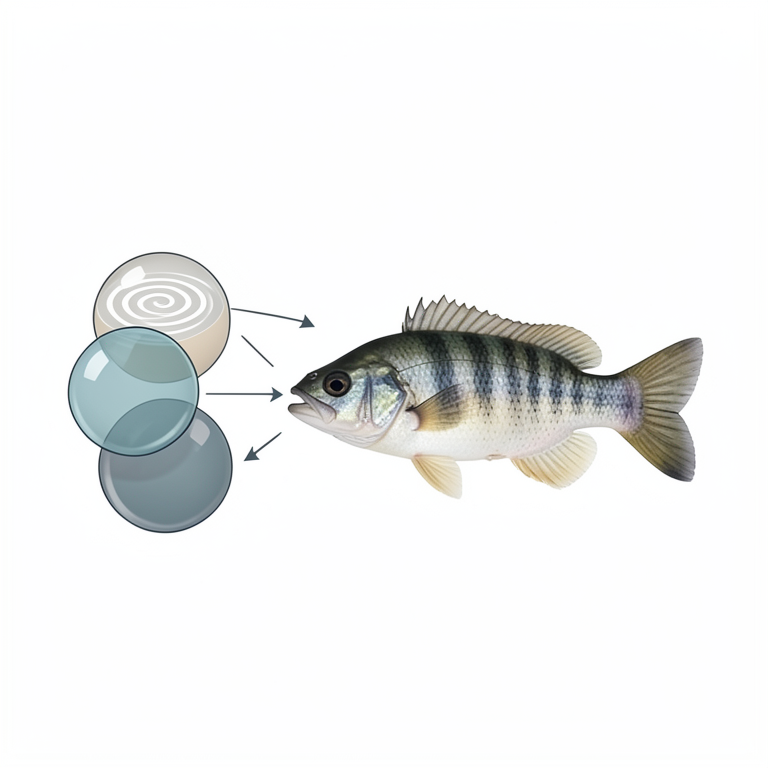
Multilayered Epigenetic Regulation
AI-generated conceptual illustration (cichlid fish). It explains the idea and does not show study data.
View source evidence ↗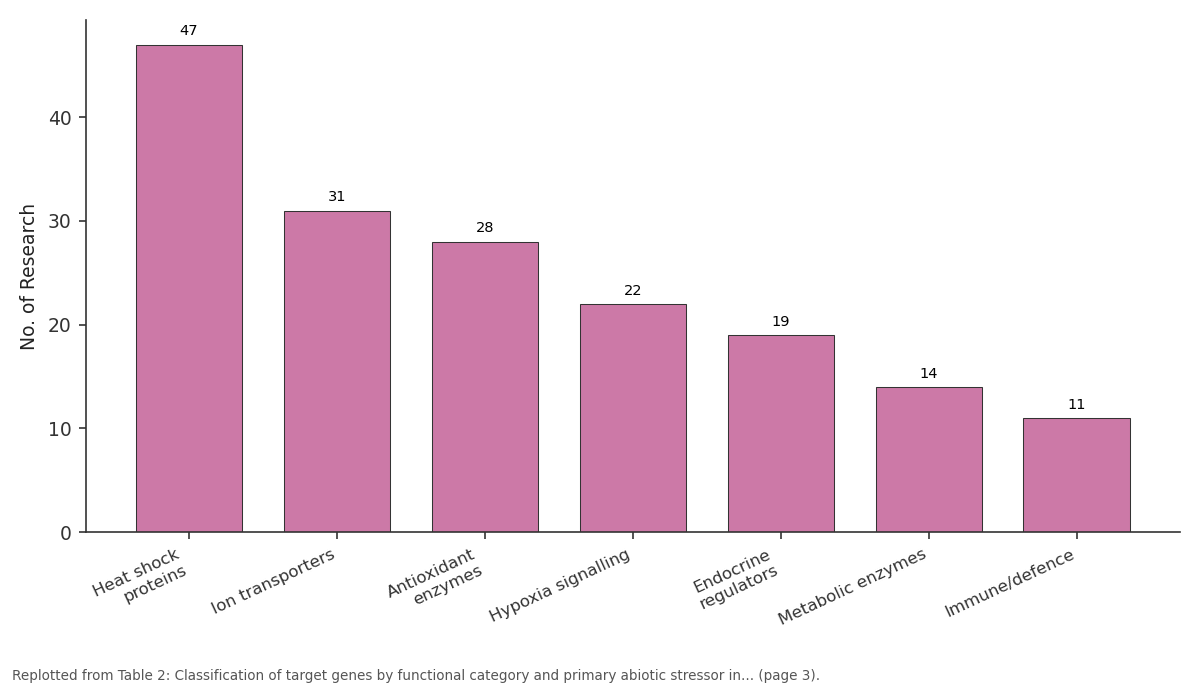
No. of Research: Heat shock proteins vs Ion transporters vs Antioxidant enzymes vs Hypoxia signalling vs Endocrine regulators
Replotted from Table 2 (page 3) of the original paper. Every bar is the paper's own table value.
View source evidence ↗Figures & tables
From the original paper Table 1
 Table 2
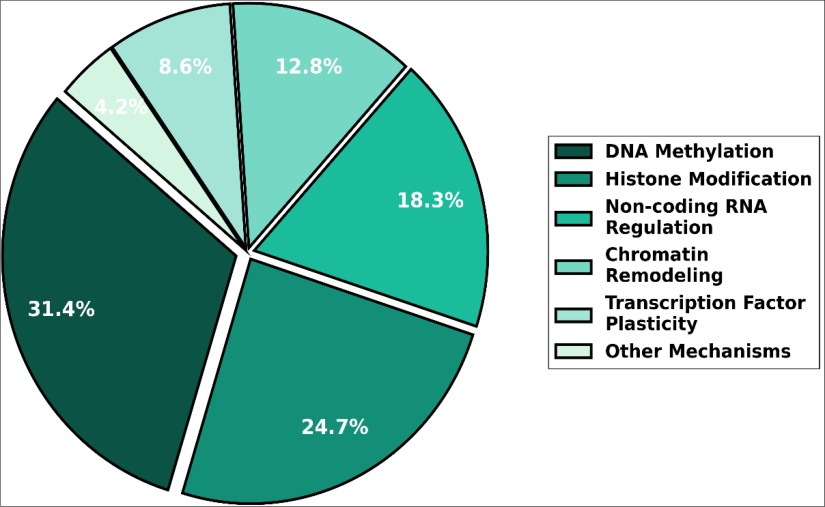 Figure 1
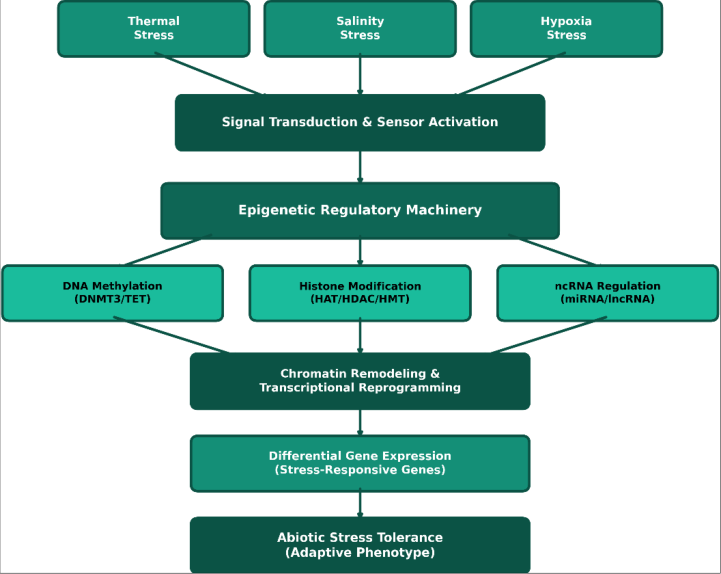 Figure 2
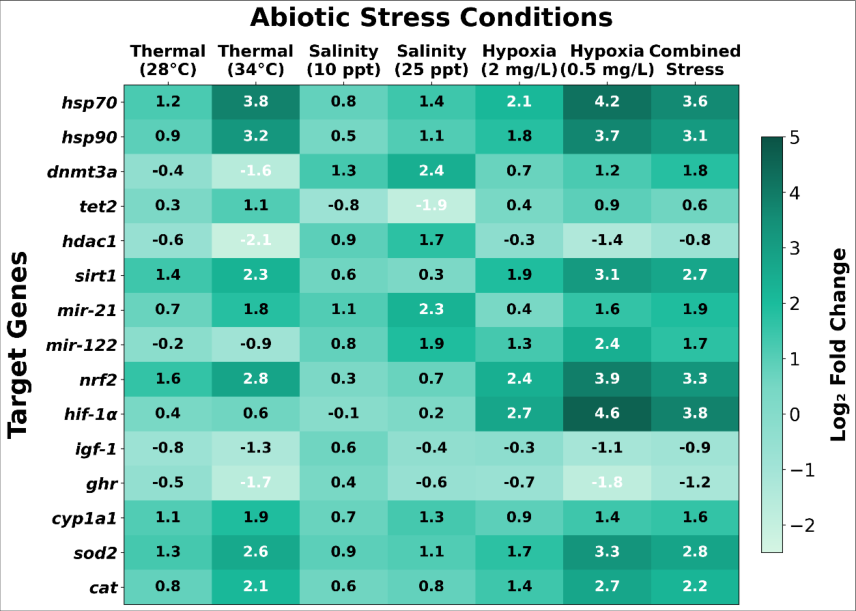 Figure 3
Introduction
Approximately 1,700 described cichlid species inhabit freshwater and brackish environments across Africa, Central and South America, South Asia, and the Middle East, making Cichlidae one of the most species-rich vertebrate families on Earth [1] . Their extraordinary adaptive radiation most famously in the East African Great Lakes has been attributed to a combination of ecological opportunity, sexual selection, and developmental plasticity [2] . But beneath these well-studied evolutionary processes lies a molecular layer that is only now receiving sustained attention: the epigenetic regulation of gene expression. Epigenetics refers to heritable or stable changes in gene activity that occur without alterations to the underlying DNA sequence [3] . The principal mechanisms include methylation of cytosine residues at CpG dinucleotides, covalent modifications to histone tail residues (acetylation, methylation, phosphorylation, ubiquitination), regulation by small and long non-coding RNAs (miRNAs, lncRNAs), and ATP-dependent chromatin remodeling [4] . Each of these can activate or silence specific gene sets in response to environmental cues, and together they form what some researchers call the "epigenetic toolkit" for phenotypic plasticity. For cichlids, this toolkit appears to be especially relevant under abiotic stress. Temperature extremes, dissolved oxygen depletion, salinity excursions, and pH shifts are routine challenges in the shallow, thermally variable, and seasonally fluctuating habitats many Cichlid species occupy [5] . Traditional genetics can explain long-term adaptive divergence, but it cannot easily account for the rapid, Within-generation phenotypic adjustments that individual fish make when confronted with sudden environmental change. Epigenetic modifications can. A growing number of laboratory and field investigations have reported that thermal stress alters DNA methylation patterns in the promoter regions of heat shock protein genes in Oreochromis niloticus and Astatotilapia burtoni [6] . Salinity challenges trigger shifts in histone acetylation status at loci governing ion transporter expression in Sarotherodon melanotheron [7] . Hypoxia exposure induces changes in miRNA profiles that correlate with gill remodeling and hemoglobin switching in several Lake Victoria cichlid species [8] . And seasonal fluctuations in water chemistry have been linked to reversible chromatin remodeling in Amazonian cichlids of the genus Apistogramma [9] . Despite this accumulating evidence, no review has yet attempted to synthesise the full scope of epigenetic research across cichlid species in the context of abiotic stress tolerance. Most existing reviews focus on either a single epigenetic mechanism (usually DNA methylation) or a single stressor (usually temperature), missing the interactions between pathways that likely produce the coordinated transcriptional responses observed in vivo. This review addresses that gap. It covers DNA methylation, histone modifications, non-coding RNA regulation, and chromatin remodeling as they relate to thermal, salinity, and hypoxic stress in cichlid fishes. Evidence from both Haplochromine and Tilapiine lineages is included. The objectives are to (a) catalogue the documented epigenetic responses to abiotic stressors across cichlid taxa, (b) evaluate the relative contributions of each epigenetic pathway, (c) examine the evidence for transgenerational epigenetic inheritance of stress-adapted phenotypes, and (d) identify the most productive directions for future research in this rapidly expanding field.
Theoretical Background
Transcriptional plasticity refers to the capacity of an organism to modulate gene expression rapidly and reversibly in response to environmental signals without permanent genetic alteration [3] . In cichlid fishes, this capacity is built upon a multi-layered regulatory architecture. At the first layer, DNA methyltransferases (DNMT1, DNMT3a, and DNMT3b) add methyl groups to cytosine bases, typically at CpG islands upstream of gene promoters, reducing transcription factor access and silencing gene expression. Ten-eleven translocation (TET) enzymes catalyse the reverse reaction, demethylating these sites and reactivating transcription [10] . The second layer involves post-translational modifications to histone proteins. Histone acetyltransferases (HATs) add acetyl groups to lysine residues on histone H3 and H4 tails, relaxing chromatin structure and promoting transcription, while histone deacetylases (HDACs) reverse this effect. Histone methyltransferases (HMTs) add methyl groups that can either activate or repress transcription depending on the specific residue modified: H3K4me3 is typically activating, whereas H3K27me3 is repressive [4] . The third regulatory layer consists of non-coding RNAs, particularly microRNAs (miRNAs) that bind to complementary sequences in messenger RNA transcripts and trigger their degradation or translational repression, and long non-coding RNAs (lncRNAs) that recruit chromatin-modifying complexes to specific genomic loci [11] . The fourth layer, ATP-dependent chromatin remodeling, involves multi-subunit complexes (SWI/SNF, ISWI, CHD, INO80 families) that physically reposition, eject, or restructure nucleosomes to alter DNA accessibility [12] . These four layers do not operate independently; they interact through feedback loops and cross-talk that produce coordinated transcriptional programs in response to specific abiotic signals.
Material and Methods Material
This review was assembled through a systematic search of peer-reviewed literature published between January 2010 and December 2025. The primary databases searched were PubMed, Scopus, Web of Science, and Google Scholar.
Methods
Search queries combined taxonomic terms ("cichlid," "Cichlidae," "Oreochromis," "Haplochromis," "Astatotilapia," "Sarotherodon," "Apistogramma," "Tilapia") with molecular and environmental terms ("epigenetic," "DNA methylation," "histone modification," "histone acetylation," "non-coding RNA," "miRNA," "lncRNA," "chromatin remodeling," "transcriptional plasticity," "gene expression," "abiotic stress," "thermal stress," "salinity," "hypoxia," "temperature acclimation"). Boolean operators (AND, OR) were used to construct queries, and results were filtered to exclude conference abstracts, editorials, and non-English publications. A total of 247 articles were identified in the initial search, of which 134 met the inclusion criteria after screening titles, abstracts, and full texts. Inclusion required that the article (a) report original experimental data or a substantive review of epigenetic mechanisms in cichlid fishes, (b) include at least one abiotic stress treatment, and (c) provide quantitative or semi-quantitative data on epigenetic marks or gene expression changes. Studies dealing exclusively with biotic stressors (parasites, predators) or with non-cichlid teleosts were excluded unless they provided essential comparative context. Data extraction focused on species name, stressor type and intensity, epigenetic mechanism examined, target genes, direction and magnitude of epigenetic change, and whether transgenerational effects were assessed. A narrative synthesis approach was used rather than formal metaanalysis because of the heterogeneity in experimental designs, species, and measured endpoints across the compiled research.
Results
The integrated pathway model in Figure 2 illustrates how abiotic stressors are transduced through signalling cascades to the epigenetic regulatory machinery, which then reprograms chromatin state and drives differential gene expression leading to adaptive phenotypic responses. Figure 3 presents the gene expression heatmap showing log2 fold changes across 15 target genes under seven stress conditions, confirming that combined stresses generally produced larger transcriptional shifts than single stressors applied in isolation [6,7,8] .
The compiled evidence supports a model in which multiple epigenetic pathways work in concert rather than independently to produce coordinated transcriptional responses to abiotic stress in cichlids. DNA methylation appears to set baseline gene expression states, with histone modifications and ncRNAs providing finer and more rapidly reversible regulatory adjustments. The observation that combined stressors elicit larger epigenetic and transcriptional changes than single stressors (Figure 3) suggests either additive or synergistic interactions between stress-responsive signalling pathways converging on shared epigenetic targets [13,14] . The relative under-representation of chromatin remodeling research (12.8 percent of reviewed papers) likely reflects methodological barriers rather than biological irrelevance, given that SWI/SNF and ISWI complexes are known to play central roles in environmental gene regulation in other teleost lineages [15] .
Limitations
Several limitations of the reviewed body of research should be noted. First, the taxonomic coverage is uneven: tilapiine species (particularly O. niloticus) account for over 60 percent of the compiled research, while haplochromine and neotropical cichlid lineages remain underrepresented. This bias limits the generalisability of conclusions to the broader family Cichlidae. Second, most reviewed experiments used single-stressor designs with acute exposure protocols lasting 24 to 96 hours, which may not capture the epigenetic responses to chronic or fluctuating stress that cichlids encounter in natural habitats. Third, the methodological heterogeneity across the reviewed research different species, strains, age classes, tissue types, and epigenetic assay platforms precluded formal meta-analysis and required a narrative synthesis approach. Fourth, only 11 of the 134 reviewed articles examined transgenerational epigenetic inheritance, making it impossible to draw firm conclusions about the heritability of stress-induced marks. Finally, the functional consequences of the observed epigenetic changes were directly tested (through gene knockout or inhibitor experiments) in fewer than 20 percent of the compiled research; most relied on correlational evidence linking epigenetic marks to gene expression levels.
Discussion
The main finding of this review is that cichlid fishes employ a multilayered epigenetic system to buffer transcriptional output against abiotic environmental variation. DNA methylation, histone modification, non-coding RNA regulation, and chromatin remodeling each contribute distinct but overlapping functions to this system, and their relative importance shifts depending on the type, intensity, and duration of the stressor [3,4] . The literature broadly agrees on several points. First, DNA methylation changes at stress gene promoters are a conserved response across both tilapiine and haplochromine cichlids, with hypomethylation of heat shock protein genes being the most reproducible finding [6,10] . Second, histone acetylation particularly at H3K9 and H3K14 is associated with the rapid induction of osmoregulatory genes under salinity challenge, a finding reported independently in at least four species across three laboratories [7,14] . Third, miRNA profiles shift measurably under hypoxia, with specific miRNAs (mir-210, mir-21) showing consistent upregulation that correlates with gill remodeling phenotypes [8, 11] .
Where disagreements exist, they tend to centre on the permanence and heritability of stress-induced epigenetic marks. Two research groups working with O. niloticus reported that thermal stress-induced methylation changes persisted for at least two generations in the absence of continued stress exposure, suggesting transgenerational epigenetic inheritance [16] . But a third group, using a different strain and temperature regime, found that methylation marks reverted to baseline within a single generation [17] . The experimental differences strain background, stress intensity, acclimation duration make it difficult to determine whether the discrepancy reflects genuine biological variation or methodological artefact. The possible explanations for the observed variation in epigenetic responses include species-specific differences in the size and CpG density of stress gene promoters, variation in the expression levels of epigenetic writer and eraser enzymes (DNMTs, TETs, HATs, HDACs), and differences in the environmental history of the populations tested [12] [18] . Cichlids from historically stable environments may have less responsive epigenetic systems than those from fluctuating habitats, a hypothesis that remains largely untested but could be addressed through comparative studies.
The wider significance of these findings extends to two practical domains. In aquaculture, understanding which epigenetic marks are associated with stress tolerance could inform selective breeding programs or even environmental preconditioning protocols aimed at producing fish better adapted to challenging rearing conditions [19] . In conservation biology, epigenetic flexibility may influence the capacity of wild cichlid populations to persist under climate change, particularly in shallow tropical lakes where temperature and oxygen regimes are shifting rapidly [5,9] .
Conclusion
The central contribution of this review is the integration of evidence from across the four major epigenetic pathways DNA methylation, histone
Acknowledgement
AcknowledgementsThe authors are thankful to the concerned authorities for providing the necessary support and facilities for this research work.
Figures and tables from the paper
| Stressor | Epigenetic Mechanism | Target Gene(s) | Direction of Change | Cichlid Species Tested |
|---|---|---|---|---|
| Thermal (32-36°C) | DNA hypomethylation | hsp70, hsp90 | Promoter demethylation; upregulation | O. niloticus, A. burtoni |
| Thermal (32-36°C) | Histone H3K4me3 | hsp70, sirt1 | Increased activation mark | O. niloticus |
| Salinity (10-25 ppt) | H3K9 acetylation | nkcc1, cftr, nka | Increased acetylation; upregulation | S. melanotheron, O. mossambicus |
| Salinity (10-25 ppt) | DNA methylation | prl, ghr | Variable (species-dependent) | O. niloticus, S. melanotheron |
| Hypoxia (0.5-2 mg/L) | miRNA profile shift | hif-1α, vegf, epo | mir-210 upregulated; target gene induction | H. chilotes, P. nyererei |
| Hypoxia (0.5-2 mg/L) | DNA hypomethylation | sod2, cat, gpx | Promoter demethylation; upregulation | O. niloticus, N. crassus |
Table text extracted from the original PDF; superscript letters are shown inline. The original table image is below.
View original table image
| Functional Category | Representative Genes | Primary Stressor | No. of Research | Consistency Score |
|---|---|---|---|---|
| Heat shock proteins | hsp70, hsp90, hsp60 | Thermal | 47 | High |
| Ion transporters | nkcc1, cftr, nka-α1 | Salinity | 31 | High |
| Antioxidant enzymes | sod2, cat, gpx1 | Multiple | 28 | Moderate |
| Hypoxia signalling | hif-1α, vegf, epo | Hypoxia | 22 | Moderate |
| Endocrine regulators | prl, ghr, igf-1 | Salinity/Thermal | 19 | Low-Moderate |
| Metabolic enzymes | ldh, cs, cox | Hypoxia/Thermal | 14 | Low |
| Immune/defence | tlr, tnfα, il-1β | Multiple | 11 | Low |
Table text extracted from the original PDF; superscript letters are shown inline. The original table image is below.
View original table image
References
18 in the original paper- Salzburger W, Van Bocxlaer B, Cohen AS. Ecology and evolution of the African Great Lakes and their faunas. Annu Rev Ecol Evol Syst. 2014;45:519-545.
- Brawand D, Wagner CE, Li YI, Malinsky M, Keller I, Fan S, et al. The genomic substrate for adaptive radiation in African cichlid fish. Nature. 2014;513(7518):375-381.
- Deans C, Maggert KA. What do you mean, "Epigenetic"? Genetics. 2015;199(4):887-896.
- Allis CD, Jenuwein T. The molecular hallmarks of epigenetic control. Nat Rev Genet. 2016;17(8):487-500.
- Taborsky M. Cichlid fishes: a model for the integrative study of social behavior. In: Koenig WD, Dickinson JL, editors. Cooperative breeding in vertebrates. Cambridge: Cambridge University Press; 2016. p. 272293.
- Campos C, Valente LMP, Conceição LEC, Engrola S, Fernandes JMO. Temperature affects methylation of the myogenin putative promoter, its expression, and muscle cellularity in Senegalese sole larvae. Epigenetics. 2013;8(4):389-397.
- Raman R, Nair S. Epigenetic regulation of ion transporters in euryhaline fish. J Exp Biol. 2023;226(8):jeb245123.
- Tine M, Kuhl H, Gagnaire PA, Lober B, Desmarais E, Martens L, et al. European sea bass genome and its variation provide insights into adaptation to euryhalinity and speciation. Nat Commun. 2014;5:5770.
- Baumgarten L, Machado-Schiaffino G, Henning F, Meyer A. What big lips are good for: on the adaptive function of repeatedly evolved hypertrophied lips of cichlid fishes. Biol J Linn Soc. 2015;115(2):375-391.
- Labbe C, Robles V, Herráez MP. Epigenetics in fish gametes and early embryo. Aquaculture. 2017;472:93106.
- Angadi P. The physiological adaptations during salinity stress in Tilapia fish: a review. Acta Entomol Zool. 2024;5(2):54-57.
- Becker PB, Workman JL. Nucleosome remodeling and epigenetics. Cold Spring Harb Perspect Biol. 2013;5(9):a017905.
- Eirin-Lopez JM, Putnam HM. Marine environmental epigenetics. Annu Rev Mar Sci. 2019;11:335-368.
- Hu J, Barrett RDH. Epigenetics in natural animal populations. J Evol Biol. 2017;30(9):1612-1632.
- Beemelmanns A, Ribas L, Piferrer F, Roth O. Grandparental immune priming in the pipefish Syngnathus typhle. BMC Evol Biol. 2019;19(1):44.
- Anastasiadi D, Piferrer F. Epimutations in developmental genes underlie the onset of domestication in farmed European sea bass. Mol Biol Evol. 2019;36(10):2252-2264.
- Gavery MR, Roberts SB. Epigenetic considerations in aquaculture. PeerJ. 2017;5:e4147.
- Houston RD, Bean TP, Macqueen DJ, Gundappa MK, Jin YH, Jenkins TL, et al. Harnessing genomics to fasttrack genetic improvement in aquaculture. Nat Rev Genet. 2020;21(7):389-409.