
Research article · 2026 · Full text
International Journal of Horticulture and Food ScienceProtected cultivation of cucurbit vegetables: Technologies, production strategies, and future prospects
Volume 8(7) · Pages 146–156 · DOI: 10.33545/26631067.2026.v8.i7b.821 ↗
Research areasGreenhouse Technology and Climate ControlPlant Growth and Agriculture TechniquesPlant Disease Management Techniques
Abstract
Author-writtenCucurbits (family Cucurbitaceae) constitute one of the most economically important groups of vegetable crops worldwide, including cucumber (Cucumis sativus L.), muskmelon (Cucumis melo L.), watermelon (Citrullus lanatus L.), bitter gourd (Momordica charantia L.), bottle gourd (Lagenaria siceraria), ridge gourd (Luffa acutangula), sponge gourd (Luffa cylindrica), pumpkin (Cucurbita spp.), and squash. These crops are valued for their high nutritional content, medicinal properties, and significant contribution to global food and nutritional security. However, conventional open-field cultivation of cucurbits is increasingly constrained by climate change, erratic weather patterns, water scarcity, emerging pests and diseases, and declining resource-use efficiency. Protected cultivation has emerged as a promising production system that provides a controlled growing environment for year-round cultivation, higher productivity, superior fruit quality, and efficient utilization of water, nutrients, and other agricultural inputs. Technologies such as naturally ventilated polyhouses, climate-controlled greenhouses, net houses, low tunnels, hydroponics, fertigation, and precision agriculture have significantly improved cucurbit production under protected environments. In addition, recent advances in sensor-based irrigation, Internet of Things (IoT), artificial intelligence (AI), automation, and climate-smart greenhouse management are revolutionizing protected vegetable cultivation by optimizing environmental parameters and minimizing production risks. Despite these advantages, challenges including high initial investment, skilled labor requirements, pollination management, disease outbreaks, and energy consumption continue to limit widespread adoption. This review summarizes the current status of protected cultivation technologies for cucurbits, discusses recent technological advancements, highlights major production constraints, and outlines future research priorities for sustainable and climate-resilient cucurbit production.
Summary
Source-checkedPlain-language reading of the full paper, prepared with AI and checked against the text. Each point links to the authors' own words.
Why it matters
- Cucurbits are a globally significant group of economic vegetable crops that include cucumber, muskmelon, watermelon, and various gourds. View evidence ↗
- Traditional open-field farming of these crops is becoming more difficult due to water scarcity, pests, and the effects of climate change. View evidence ↗
- Protected cultivation offers a controlled environment that enables year-round production, better fruit quality, and more efficient use of resources. View evidence ↗
The question
- The paper aims to review current protected cultivation technologies for cucurbits, recent advancements, production constraints, and future research priorities. View evidence ↗
What they did
- Naturally ventilated polyhouses are commonly used in tropical and subtropical regions as a low-cost method for environmental modification. View evidence ↗
- Climate-controlled greenhouses use automated systems like cooling pads and heating to precisely regulate CO2, humidity, and temperature in extreme climates. View evidence ↗
- Optimal growth for most cucurbits occurs at day temperatures between 22 and 30°C and night temperatures between 18 and 22°C. View evidence ↗
- Increasing CO2 levels from approximately 420 ppm to 800-1,000 ppm can increase fruit yield by 20-30% for muskmelon and cucumber. View evidence ↗
What they found
- Parthenocarpic cucumbers grown in polyhouses or greenhouses can see a yield advantage of 150-250% over open-field cultivation. View evidence ↗
- Protected cucumber cultivation can reach yields of 150-300 tonnes per hectare, significantly higher than the 30-50 tonnes per hectare seen in open fields. View evidence ↗
- Drip irrigation systems in protected cultivation reduce water use by 30-60% compared to flood irrigation. View evidence ↗
- Hydroponic systems can improve water-use efficiency by up to 90% compared to conventional agricultural methods. View evidence ↗
- Parthenocarpic cucumber hybrids are highly effective for greenhouses because they do not require pollination to produce fruit. View evidence ↗
- Overall, protected cultivation can result in yields that are 2 to 5 times higher than those of open-field cultivation. View evidence ↗
What it means
- The authors conclude that protected cultivation is a transformative method for achieving sustainable and climate-resilient production of cucurbits. View evidence ↗
- To increase adoption among smaller growers, the authors recommend developing low-cost structures, renewable energy systems, and cultivars specifically for greenhouses. View evidence ↗
- A major limitation to the adoption of this technology is the high initial investment cost for construction, which is especially difficult for small-scale farmers. View evidence ↗
- The generation of significant plastic residues from greenhouse structures and mulch is an emerging environmental concern. View evidence ↗
Visual summary
1 visualsIllustrations explain the paper; they do not show study data.
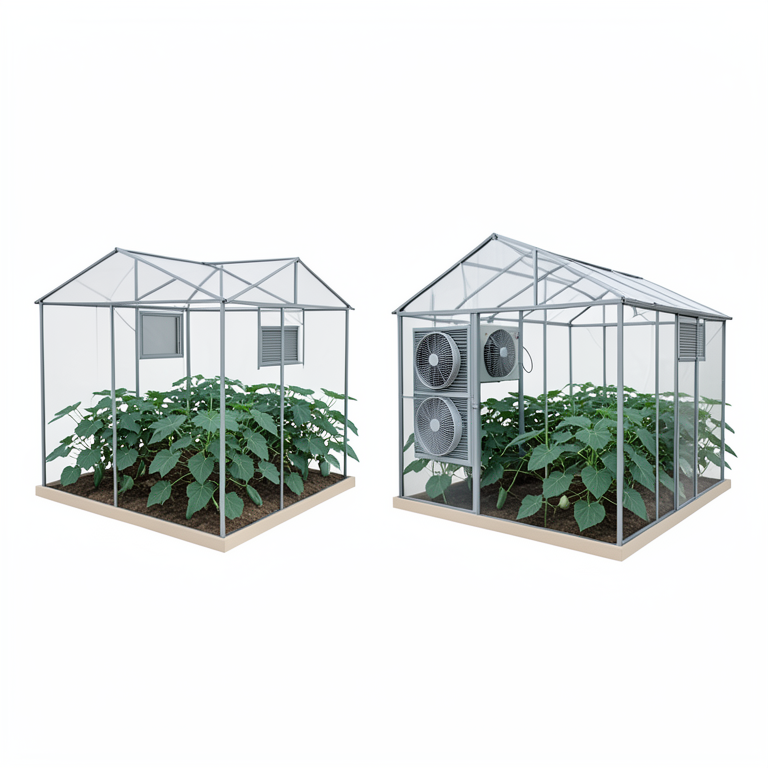
Types of Protected Structures
AI-generated conceptual illustration (cucurbit vegetables in protected cultivation structures). It explains the idea and does not show study data.
View source evidence ↗Figures & tables
From the original paper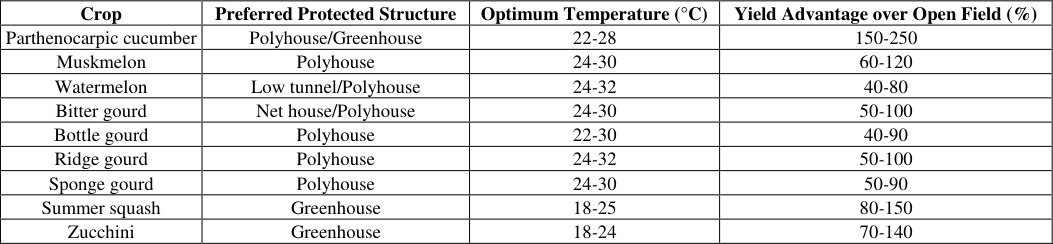 Table 1
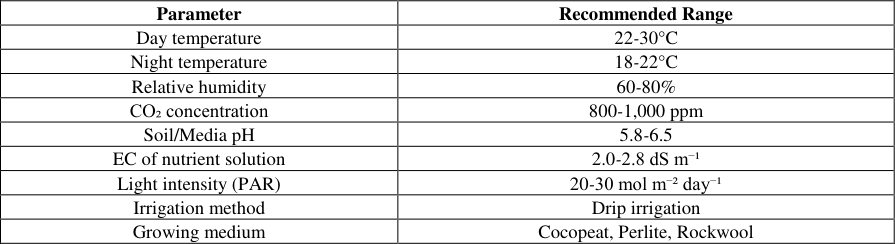 Table 2
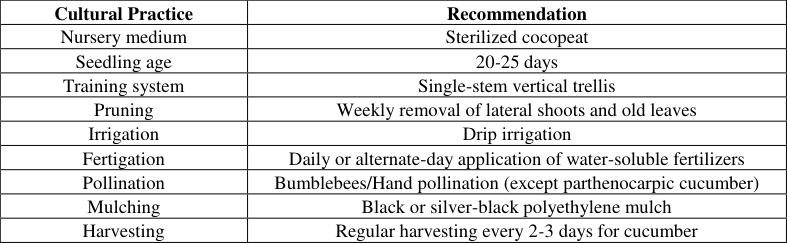 Table 3
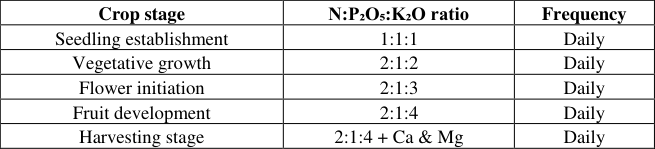 Table 4
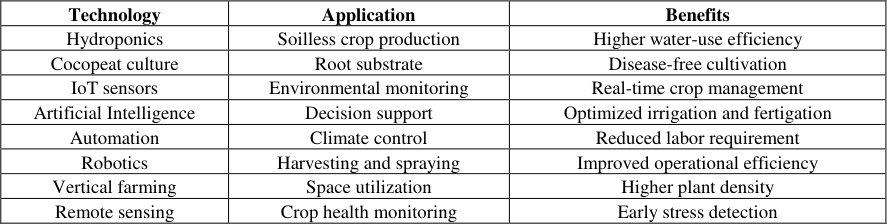 Table 5
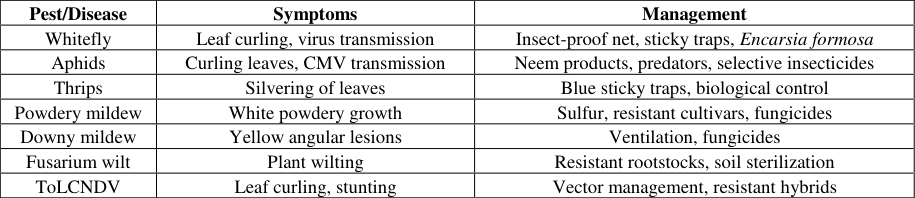 Table 6
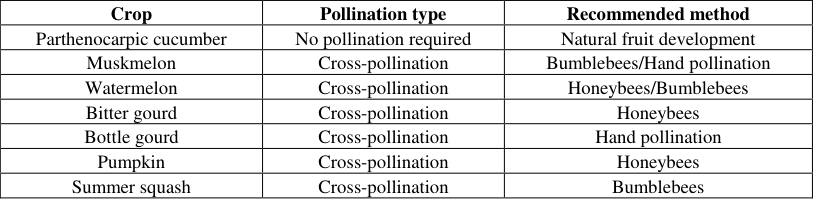 Table 7
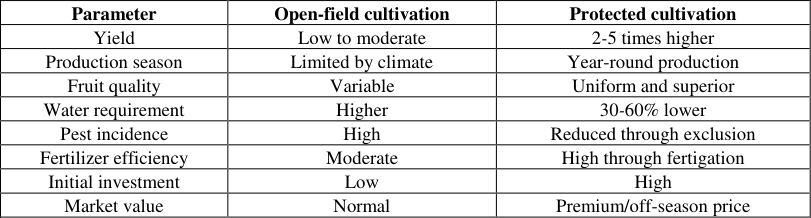 Table 8
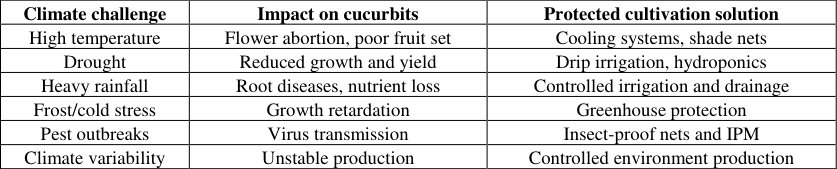 Table 9
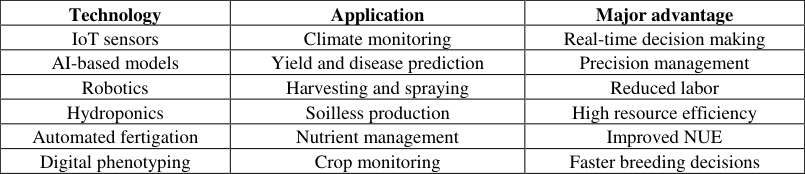 Table 10
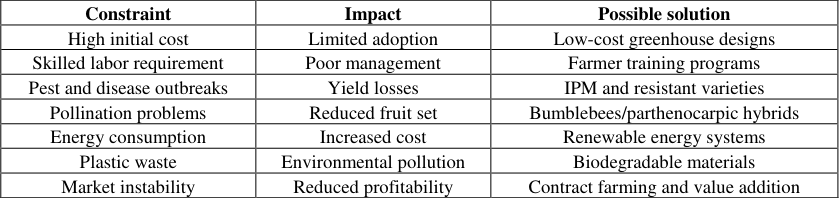 Table 11
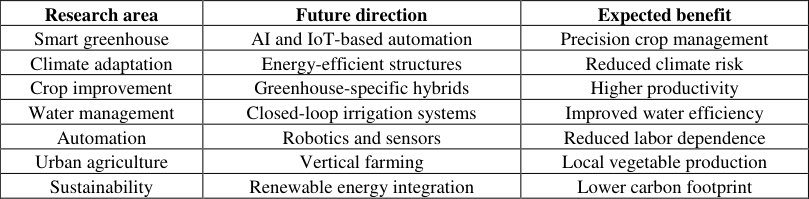 Table 12
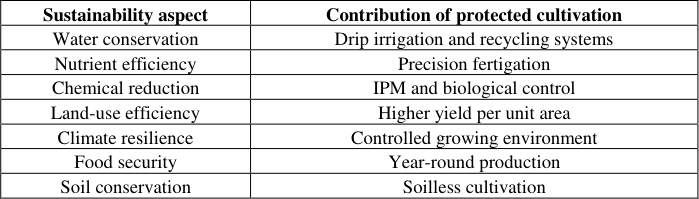 Table 13
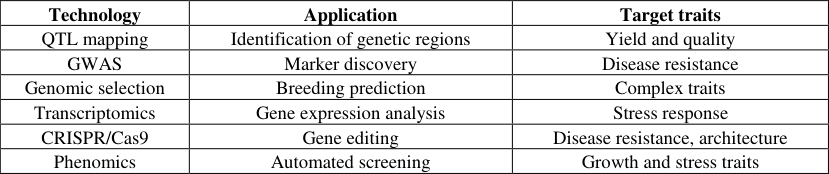 Table 14
Introduction
The family Cucurbitaceae comprises approximately 118 genera and over 960 species, making it one of the largest families of vegetable crops cultivated worldwide (Schaefer and Renner, 2011) [9] . Economically important cucurbits include cucumber, muskmelon, watermelon, bitter gourd, bottle gourd, pumpkin, squash, ridge gourd, sponge gourd, snake gourd, ash gourd, and pointed gourd, which are extensively grown in tropical, subtropical, and temperate regions. These crops contribute substantially to global vegetable production due to their high nutritional value, short crop duration, adaptability to diverse agro-climatic conditions, and significant commercial demand (Paris, 2016) [6] . Cucurbit vegetables are excellent sources of vitamins (A, C, and E), minerals, dietary fiber, antioxidants, carotenoids, flavonoids, and other bioactive compounds that contribute to human health. Several cucurbits, particularly bitter gourd, pumpkin, and cucumber, have also gained attention because of their medicinal properties, including antioxidant, antiinflammatory, antidiabetic, antimicrobial, and anticancer activities (Rolnik and Olas, 2020) [8] . Consequently, increasing consumer awareness regarding healthy diets and functional foods has substantially increased the demand for high-quality cucurbit vegetables throughout the year. Despite their economic importance, cucurbit production under open-field conditions is becoming increasingly difficult due to the adverse impacts of climate change. Rising
Importance of protected cultivation in cucurbits
Protected cultivation refers to the cultivation of crops under structures that provide partial or complete control over the crop-growing environment. Unlike conventional open-field agriculture, protected cultivation allows growers to regulate key environmental parameters such as temperature, relative humidity, light intensity, carbon dioxide concentration, irrigation, and nutrient supply according to crop requirements (Jensen and Malter, 1995) [4] . This technology has become increasingly important in cucurbit production because these crops are highly sensitive to environmental fluctuations, particularly during flowering and fruit development. Climate change has intensified abiotic stresses such as heat waves, cold injury, drought, heavy rainfall, hailstorms, and strong winds, all of which adversely affect cucurbit growth, pollination, fruit set, and yield. Protected structures mitigate these stresses by maintaining a stable microclimate, thereby reducing crop losses and improving productivity. Temperature regulation within protected structures is particularly beneficial because most cucurbit crops perform optimally between 22 and 30°C. Controlled environments also improve pollination efficiency, reduce flower abortion, and promote uniform fruit development. Protected cultivation significantly enhances water-use efficiency through drip irrigation and fertigation. Compared with flood irrigation, drip systems reduce water consumption by 30-60% while improving fertilizer-use efficiency and minimizing nutrient leaching. Furthermore, protected cultivation reduces weed infestation, lowers pesticide usage through insect-proof netting, and minimizes the incidence of soil-borne diseases by adopting soilless culture and substrate-based production systems. One of the greatest advantages of protected cultivation is off-season production, enabling farmers to supply fresh cucurbits when open-field production is limited. Such production windows often command premium market prices, substantially increasing farm profitability. Moreover, greenhouse-grown cucurbits generally exhibit superior fruit appearance, uniform size, better shelf life, and higher nutritional quality compared with open-field crops. Protected cultivation is therefore increasingly recognized as a climate-resilient production strategy capable of improving food security, resource-use efficiency, and economic sustainability while reducing the environmental footprint of vegetable production.
Types of Protected Structures
Protected cultivation employs various structures designed to modify the crop microenvironment according to local climatic conditions, available resources, and production objectives. The selection of an appropriate structure depends upon crop species, investment capacity, climatic conditions, and technological requirements. The naturally ventilated polyhouse is the most widely adopted protected structure for cucurbit cultivation in tropical and subtropical countries because it provides effective environmental modification at relatively low construction and operating costs. Ventilation occurs naturally through roof and side openings covered with insect-proof nets, reducing temperature buildup while maintaining adequate air circulation. These structures are highly suitable for cucumber, muskmelon, parthenocarpic cucumber hybrids, and colored capsicum. In regions with extreme climatic conditions, climatecontrolled greenhouses equipped with cooling pads, exhaust fans, heating systems, foggers, and automated environmental controls provide precise regulation of temperature, humidity, and carbon dioxide concentration. Although construction and maintenance costs are considerably higher, these systems produce maximum yields and premium-quality fruits throughout the year.
Net houses: are relatively inexpensive structures covered with insect-proof nets that primarily protect crops from insect pests, birds, and excessive solar radiation. They are widely used for nursery production and cultivation of bitter gourd, bottle gourd, cucumber, and ridge gourd in warm climates.
Shade houses: utilize shade nets of varying densities (30-75%) to reduce solar radiation and temperature during summer months. These structures protect young seedlings from heat stress and improve transplant establishment. Low tunnels and walk-in tunnels are temporary plasticcovered structures that create favorable conditions during early crop establishment or winter cultivation. These systems enable earlier planting, enhance seed germination, protect young plants from frost and wind, and facilitate early harvesting, thereby increasing economic returns. Modern protected cultivation increasingly incorporates smart greenhouse technologies, including automated climate control, wireless sensors, IoT-based monitoring, artificial intelligence, and robotic systems for irrigation, fertigation, and environmental management. These technologies represent the future of protected agriculture by enabling precise crop management, reducing labor requirements, and improving resource-use efficiency.
Suitable cucurbit crops for protected cultivation
Protected cultivation has revolutionized cucurbit production by enabling year-round cultivation of high-value crops with improved yield, fruit quality, and resource-use efficiency.
Although almost all commercially important cucurbits can be cultivated under protected structures, their performance depends on crop physiology, growth habit, pollination requirements, environmental conditions, and the type of protected structure used. Crops with indeterminate growth habits, high market demand, and good response to trellising and fertigation are particularly suitable for greenhouse and polyhouse cultivation (Singh et al., 2017) [12] . Among cucurbits, parthenocarpic cucumber (Cucumis sativus L.) is the most commercially important crop grown under protected cultivation worldwide. These hybrids develop fruits without pollination, ensuring uniform fruit set even under enclosed environments where insect pollinators are scarce. Greenhouse cucumbers generally produce two to three times higher yields than open-field crops due to continuous harvesting, efficient nutrient management, and reduced pest pressure (Hochmuth et al., 2018) [3] . Muskmelon (Cucumis melo L.) is another economically important greenhouse crop. Protected cultivation allows early planting, improved fruit sweetness, uniform fruit shape, and higher market prices during the off-season. Controlled irrigation and fertigation also improve total soluble solids (TSS) and fruit firmness, making greenhousegrown muskmelons highly preferred in premium markets. Watermelon (Citrullus lanatus) is increasingly cultivated under low tunnels, high tunnels, and polyhouses to facilitate early harvest and improve fruit quality. Protected cultivation protects the crop from excessive rainfall and fruit cracking while extending the harvesting season. Other cucurbits such as bitter gourd (Momordica charantia), bottle gourd (Lagenaria siceraria), ridge gourd (Luffa acutangula), sponge gourd (Luffa cylindrica), and snake gourd (Trichosanthes cucumerina) are widely cultivated in naturally ventilated polyhouses and net houses. These climbing vegetables respond well to vertical trellising systems that improve light interception, reduce disease incidence, and facilitate harvesting. Pumpkin (Cucurbita moschata), zucchini (Cucurbita pepo), and summer squash have also shown considerable potential under protected cultivation, particularly in temperate regions where low temperatures limit open-field production. These crops benefit from enhanced temperature regulation and protection against frost during early growth stages. Protected cultivation is particularly advantageous for producing off-season vegetables, enabling growers to supply fresh cucurbits during periods of limited field production. This significantly increases profitability because off-season vegetables command premium market prices. [4] . Temperature is the most critical environmental factor affecting seed germination, vegetative growth, flowering, pollination, fruit development, and yield. Most cucurbit crops perform optimally between 22 and 30°C during the day and 18-22°C at night. Temperatures above 35°C reduce pollen viability, increase flower abortion, and impair fruit development, whereas temperatures below 15°C retard plant growth and delay flowering (Gruda, 2005) [2] . Relative humidity (RH) also plays an important role in greenhouse crop performance. A relative humidity of 60-80% is generally considered optimum for cucurbit production. Excessive humidity favors fungal diseases such as powdery mildew, downy mildew, and Botrytis gray mold, while very low humidity increases transpiration and causes water stress. Light intensity directly influences photosynthesis and fruit quality. Most cucurbits require approximately 20-30 mol m⁻² day⁻¹ of photosynthetically active radiation (PAR) for maximum productivity. During winter months or cloudy conditions, supplemental lighting may be required in climate-controlled greenhouses.
Carbon dioxide enrichment has become an important practice in commercial greenhouse production. Increasing CO₂ concentration from the ambient level (~420 ppm) to 800-1,000 ppm enhances photosynthetic efficiency, biomass accumulation, and fruit yield by 20-30%, particularly in cucumber and muskmelon. Proper ventilation is essential for regulating temperature, humidity, and carbon dioxide concentration. Naturally ventilated polyhouses utilize roof and side vents, whereas modern greenhouses employ exhaust fans, evaporative cooling pads, fogging systems, and automated climate-control equipment to maintain optimum environmental conditions. Efficient irrigation and nutrient management are equally important. Drip irrigation combined with fertigation ensures precise delivery of water and nutrients directly to the root zone, thereby reducing water losses and improving fertilizer-use efficiency. Soilless media such as cocopeat, perlite, vermiculite, and rockwool are increasingly adopted because they provide excellent aeration, water-holding capacity, and reduced incidence of soil-borne diseases. [13] . Since greenhouse-grown cucurbits have a high nutrient demand due to rapid vegetative growth and continuous fruit production, maintaining an optimum rootzone environment is critical for achieving maximum yield. Drip irrigation is the most widely adopted irrigation method in protected cultivation because it delivers water directly to the root zone with minimal evaporation losses. [10,11] .
Hydroponics has emerged as one of the most promising production systems for greenhouse cucurbits. Plants are grown in nutrient solutions without soil, using substrates such as cocopeat, perlite, rockwool, or vermiculite. [1] . Most cucurbits are monoecious, producing separate male and female flowers on the same plant, and rely primarily on insects for pollen transfer. Honeybees (Apis mellifera), bumblebees (Bombus terrestris), and native bees are the principal pollinators. Their activity directly influences fruit set, fruit size, shape, and seed development.
Commercial greenhouses increasingly introduce bumblebee colonies because bumblebees remain active under low light intensity, cool temperatures, and enclosed environments where honeybees are less efficient. Bumblebee pollination improves fruit quality and reduces labor costs associated with manual pollination. Hand pollination remains common in muskmelon, watermelon, bitter gourd, pumpkin, and bottle gourd production, particularly in small-scale protected cultivation. Manual transfer of pollen from freshly opened male flowers to receptive female flowers during early morning hours significantly improves fruit set. Parthenocarpic cucumber hybrids have revolutionized greenhouse cucumber production because they develop fruits without pollination or fertilization. These hybrids produce seedless fruits with excellent uniformity, eliminating dependence on pollinating insects and reducing production risks. Future greenhouse systems are expected to employ robotic pollination technologies, artificial pollinators, and AIassisted pollinator management to overcome pollination constraints under controlled environments. [3] . Similar improvements have been observed in muskmelon and watermelon, where protected structures facilitate early harvesting, improved fruit uniformity, and higher market value.
Protected environments also improve fruit quality characteristics, including fruit size, shape, color, firmness, total soluble solids (TSS), vitamin content, and shelf life. Controlled nutrient supply enhances carbohydrate accumulation and improves sweetness in melon crops. Reduced mechanical damage and lower pest incidence result in visually attractive fruits with higher consumer acceptance. In addition, protected cultivation reduces pesticide residues, making produce more suitable for premium domestic and export markets. Economic analysis indicates that although protected cultivation requires higher initial investment for construction of greenhouse structures, irrigation systems, and environmental control equipment, the increased productivity, off-season production, and premium market prices often compensate for these costs. Profitability depends on crop selection, greenhouse technology, management skills, market access, and production scale.
Climate change adaptation through protected cultivation
Climate change has become one of the greatest challenges affecting global vegetable production. Rising temperatures, irregular rainfall, prolonged droughts, extreme weather events, and emerging pest and disease pressures negatively influence cucurbit productivity. Since cucurbits are sensitive to environmental fluctuations, protected cultivation provides an effective approach for climate adaptation by buffering crops against adverse conditions and maintaining favorable growth environments (Gruda, 2005) [2] . Temperature extremes significantly affect cucurbit physiology. High temperatures reduce pollen viability, increase flower abortion, decrease fruit set, and negatively influence fruit quality. Protected structures equipped with ventilation systems, evaporative cooling, shade nets, and automated climate control help maintain optimum temperature ranges and minimize heat stress. Similarly, during cold periods, greenhouse structures provide thermal insulation, enabling off-season production. Water scarcity is another major concern under changing climatic conditions. Protected cultivation systems integrated with drip irrigation, fertigation, rainwater harvesting, and recycling technologies significantly improve water-use efficiency. Closed hydroponic systems can recycle nutrient solutions, reducing water consumption and preventing nutrient losses. Protected cultivation also contributes to sustainable intensification by producing higher yields from smaller land areas while reducing pesticide and fertilizer inputs. The controlled environment enables biological pest management, precision nutrient application, and reduced chemical dependency, thereby decreasing environmental contamination. Furthermore, protected cultivation can reduce the vulnerability of farmers to climate-related production failures. Stable yields, extended production seasons, and improved market availability enhance income security and resilience among vegetable growers. However, greenhouse systems themselves require careful management because excessive energy use for cooling, heating, and ventilation can increase production costs and carbon emissions. Future research should focus on lowenergy greenhouse designs, renewable energy integration, passive cooling technologies, and climate-smart protected cultivation systems. [10,11] . Another important area is the development of low-cost protected structures suitable for small and marginal farmers. Although high-tech greenhouses provide excellent productivity, their high installation and operational costs limit adoption in developing countries. Protected cultivation also supports food security by enabling year-round production independent of seasonal climatic fluctuations. This is particularly important in regions experiencing climate instability, where open-field vegetable production is increasingly vulnerable. However, sustainability of greenhouse systems depends on addressing challenges such as plastic waste generation, energy consumption, and greenhouse gas emissions. Future approaches should emphasize biodegradable covering materials, renewable energy sources, and circular production systems.
Figures and tables from the paper
| Crop | Preferred Protected Structure | Optimum Temperature (°C) | Yield Advantage over Open Field (%) |
|---|---|---|---|
| Parthenocarpic cucumber | Polyhouse/Greenhouse | 22-28 | 150-250 |
| Muskmelon | Polyhouse | 24-30 | 60-120 |
| Watermelon | Low tunnel/Polyhouse | 24-32 | 40-80 |
| Bitter gourd | Net house/Polyhouse | 24-30 | 50-100 |
| Bottle gourd | Polyhouse | 22-30 | 40-90 |
| Ridge gourd | Polyhouse | 24-32 | 50-100 |
| Sponge gourd | Polyhouse | 24-30 | 50-90 |
| Summer squash | Greenhouse | 18-25 | 80-150 |
| Zucchini | Greenhouse | 18-24 | 70-140 |
Table text extracted from the original PDF; superscript letters are shown inline. The original table image is below.
View original table image
| Parameter | Recommended Range |
|---|---|
| Day temperature | 22-30°C |
| Night temperature | 18-22°C |
| Relative humidity | 60-80% |
| CO₂ concentration | 800-1,000 ppm |
| Soil/Media pH | 5.8-6.5 |
| EC of nutrient solution | 2.0-2.8 dS m⁻¹ |
| Light intensity (PAR) | 20-30 mol m⁻² day⁻¹ |
| Irrigation method | Drip irrigation |
| Growing medium | Cocopeat, Perlite, Rockwool |
Table text extracted from the original PDF; superscript letters are shown inline. The original table image is below.
View original table image
| Cultural Practice | Recommendation |
|---|---|
| Nursery medium | Sterilized cocopeat |
| Seedling age | 20-25 days |
| Training system | Single-stem vertical trellis |
| Pruning | Weekly removal of lateral shoots and old leaves |
| Irrigation | Drip irrigation |
| Fertigation | Daily or alternate-day application of water-soluble fertilizers |
| Pollination | Bumblebees/Hand pollination (except parthenocarpic cucumber) |
| Mulching | Black or silver-black polyethylene mulch |
| Harvesting | Regular harvesting every 2-3 days for cucumber |
Table text extracted from the original PDF; superscript letters are shown inline. The original table image is below.
View original table image
| Crop stage | N:P₂O₅:K₂O ratio | Frequency |
|---|---|---|
| Seedling establishment | 1:1:1 | Daily |
| Vegetative growth | 2:1:2 | Daily |
| Flower initiation | 2:1:3 | Daily |
| Fruit development | 2:1:4 | Daily |
| Harvesting stage | 2:1:4 + Ca & Mg | Daily |
Table text extracted from the original PDF; superscript letters are shown inline. The original table image is below.
View original table image
| Technology | Application | Benefits |
|---|---|---|
| Hydroponics | Soilless crop production | Higher water-use efficiency |
| Cocopeat culture | Root substrate | Disease-free cultivation |
| IoT sensors | Environmental monitoring | Real-time crop management |
| Artificial Intelligence | Decision support | Optimized irrigation and fertigation |
| Automation | Climate control | Reduced labor requirement |
| Robotics | Harvesting and spraying | Improved operational efficiency |
| Vertical farming | Space utilization | Higher plant density |
| Remote sensing | Crop health monitoring | Early stress detection |
Table text extracted from the original PDF; superscript letters are shown inline. The original table image is below.
View original table image
| Pest/Disease | Symptoms | Management |
|---|---|---|
| Whitefly | Leaf curling, virus transmission | Insect-proof net, sticky traps, Encarsia formosa |
| Aphids | Curling leaves, CMV transmission | Neem products, predators, selective insecticides |
| Thrips | Silvering of leaves | Blue sticky traps, biological control |
| Powdery mildew | White powdery growth | Sulfur, resistant cultivars, fungicides |
| Downy mildew | Yellow angular lesions | Ventilation, fungicides |
| Fusarium wilt | Plant wilting | Resistant rootstocks, soil sterilization |
| ToLCNDV | Leaf curling, stunting | Vector management, resistant hybrids |
Table text extracted from the original PDF; superscript letters are shown inline. The original table image is below.
View original table image
| Crop | Pollination type | Recommended method |
|---|---|---|
| Parthenocarpic cucumber | No pollination required | Natural fruit development |
| Muskmelon | Cross-pollination | Bumblebees/Hand pollination |
| Watermelon | Cross-pollination | Honeybees/Bumblebees |
| Bitter gourd | Cross-pollination | Honeybees |
| Bottle gourd | Cross-pollination | Hand pollination |
| Pumpkin | Cross-pollination | Honeybees |
| Summer squash | Cross-pollination | Bumblebees |
Table text extracted from the original PDF; superscript letters are shown inline. The original table image is below.
View original table image
| Parameter | Open-field cultivation | Protected cultivation |
|---|---|---|
| Yield | Low to moderate | 2-5 times higher |
| Production season | Limited by climate | Year-round production |
| Fruit quality | Variable | Uniform and superior |
| Water requirement | Higher | 30-60% lower |
| Pest incidence | High | Reduced through exclusion |
| Fertilizer efficiency | Moderate | High through fertigation |
| Initial investment | Low | High |
| Market value | Normal | Premium/off-season price |
Table text extracted from the original PDF; superscript letters are shown inline. The original table image is below.
View original table image
| Climate challenge | Impact on cucurbits | Protected cultivation solution |
|---|---|---|
| High temperature | Flower abortion, poor fruit set | Cooling systems, shade nets |
| Drought | Reduced growth and yield | Drip irrigation, hydroponics |
| Heavy rainfall | Root diseases, nutrient loss | Controlled irrigation and drainage |
| Frost/cold stress | Growth retardation | Greenhouse protection |
| Pest outbreaks | Virus transmission | Insect-proof nets and IPM |
| Climate variability | Unstable production | Controlled environment production |
Table text extracted from the original PDF; superscript letters are shown inline. The original table image is below.
View original table image
| Technology | Application | Major advantage |
|---|---|---|
| IoT sensors | Climate monitoring | Real-time decision making |
| AI-based models | Yield and disease prediction | Precision management |
| Robotics | Harvesting and spraying | Reduced labor |
| Hydroponics | Soilless production | High resource efficiency |
| Automated fertigation | Nutrient management | Improved NUE |
| Digital phenotyping | Crop monitoring | Faster breeding decisions |
Table text extracted from the original PDF; superscript letters are shown inline. The original table image is below.
View original table image
| Constraint | Impact | Possible solution |
|---|---|---|
| High initial cost | Limited adoption | Low-cost greenhouse designs |
| Skilled labor requirement | Poor management | Farmer training programs |
| Pest and disease outbreaks | Yield losses | IPM and resistant varieties |
| Pollination problems | Reduced fruit set | Bumblebees/parthenocarpic hybrids |
| Energy consumption | Increased cost | Renewable energy systems |
| Plastic waste | Environmental pollution | Biodegradable materials |
| Market instability | Reduced profitability | Contract farming and value addition |
Table text extracted from the original PDF; superscript letters are shown inline. The original table image is below.
View original table image
| Research area | Future direction | Expected benefit |
|---|---|---|
| Smart greenhouse | AI and IoT-based automation | Precision crop management |
| Climate adaptation | Energy-efficient structures | Reduced climate risk |
| Crop improvement | Greenhouse-specific hybrids | Higher productivity |
| Water management | Closed-loop irrigation systems | Improved water efficiency |
| Automation | Robotics and sensors | Reduced labor dependence |
| Urban agriculture | Vertical farming | Local vegetable production |
| Sustainability | Renewable energy integration | Lower carbon footprint |
Table text extracted from the original PDF; superscript letters are shown inline. The original table image is below.
View original table image
| Sustainability aspect | Contribution of protected cultivation |
|---|---|
| Water conservation | Drip irrigation and recycling systems |
| Nutrient efficiency | Precision fertigation |
| Chemical reduction | IPM and biological control |
| Land-use efficiency | Higher yield per unit area |
| Climate resilience | Controlled growing environment |
| Food security | Year-round production |
| Soil conservation | Soilless cultivation |
Table text extracted from the original PDF; superscript letters are shown inline. The original table image is below.
View original table image
| Technology | Application | Target traits |
|---|---|---|
| QTL mapping | Identification of genetic regions | Yield and quality |
| GWAS | Marker discovery | Disease resistance |
| Genomic selection | Breeding prediction | Complex traits |
| Transcriptomics | Gene expression analysis | Stress response |
| CRISPR/Cas9 | Gene editing | Disease resistance, architecture |
| Phenomics | Automated screening | Growth and stress traits |
Table text extracted from the original PDF; superscript letters are shown inline. The original table image is below.
View original table image
References
14 in the original paper- Delaplane KS, Mayer DF. Crop Pollination by Bees. Wallingford: CABI Publishing; 2000.
- Gruda N. Impact of environmental factors on product quality of greenhouse vegetables for fresh consumption. Crit Rev Plant Sci. 2005; 24:227-247.
- Hochmuth G, Hochmuth R, Cantliffe D. Greenhouse Cucumber Production. Gainesville (FL): University of Florida Extension Publication; 2018.
- Jensen MH, Malter AJ. Protected Agriculture: A Global Review. World Bank Technical Paper No. 253. Washington (DC): World Bank; 1995.
- McCreight JD, et al. Cucurbit breeding and production under changing climates. Hortic Rev. 2020; 47:1-52.
- Paris HS. Origin and emergence of the cultivated Cucurbitaceae. Hortic Rev. 2016; 44:1-78.
- Resh HM. Hydroponic Food Production. 8th ed. Boca Raton (FL): CRC Press; 2022.
- Rolnik A, Olas B. Vegetables from the Cucurbitaceae family and their products: Positive effects on human health. Molecules. 2020; 25:2946.
- Schaefer H, Renner SS. Phylogenetic relationships in the order Cucurbitales. Taxon. 2011; 60:122-138.
- Shamshiri RR, Kalantari F, Ting KC, Thorp KR, Hameed IA, Weltzien C, Ahmad D, Shad ZM. Advances in greenhouse automation and controlled environment agriculture: A transition to plant factories and urban agriculture. Comput Electron Agric. 2018; 162:109-125.
- Shamshiri RR, Kalantari F, Ting KC, Thorp KR, Hameed IA, Weltzien C, Ahmad D, Shad ZM. Advances in greenhouse automation and controlled environment agriculture: A transition to plant factories and urban agriculture. Comput Electron Agric. 2018; 162:109-125.
- Singh B, Kumar M, Singh G. Protected cultivation of vegetable crops in India: Status and future prospects. Indian J Agric Sci. 2017; 87:1235-1245.
- Sonneveld C, Voogt W. Plant Nutrition of Greenhouse Crops. Dordrecht: Springer; 2009.
- Tüzel Y, Gül A, Daşgan HY, Öztekin GB, Engindeniz S, Boyacı HF, Ersoy A. Protected cultivation in Turkey. Chron Hortic. 2015; 55:21-26.