
Research article · 2026 · Full text
International Journal of Agriculture and NutritionEnvironmental assessment of the impact of sodium-containing superabsorbent polymers on soil water dynamics: A review
Volume 8(7) · Pages 126–137 · DOI: 10.33545/26646064.2026.v8.i7b.724 ↗
Research areasPolymer-Based Agricultural EnhancementsSoil and Unsaturated FlowIrrigation Practices and Water Management
Abstract
Author-writtenAgriculture is facing acute water scarcity as a consequence of climate change, which necessitates a shift toward adopting sustainability‑oriented practices in crop production. One of the key pillars of such sustainability is reducing irrigation water use, which can be achieved by adopting soil amendments that enhance the soil’s ability to retain moisture (soil water). Sodium containing superabsorbent polymers (SAPs) have been found to influence soil water retention but their full range of effects on soil water movement and long term environmental impacts is not fully understood, and, hence, they are not widely employed on a large-scale scale. This research holds great significance as it offers a comprehensive overview of the mechanisms behind the impact of these polymers on permeability, water retention, infiltration, and evaporation, helping farmers and researchers choose the best polymer for their soil and environment, ultimately contributing to improved water use efficiency and agricultural productivity in arid and semi-arid areas. Selected studies demonstrated that adding SAPs at varying concentrations (0.05% - 2500 mg kg-1) achieved significant increases in maximum water holding capacity (WHCmax) ranging from 34.9% to 205%, and reduced erosion rates by up to 99.57%; however, effects varied based on polymer type (PAA loses effectiveness over time, whereas PAM remains stable, or composites provide better balance), application concentration, and soil properties, as sodium alginate hydrogel and composite polymers exhibited superior balance between water retention and permeability. The selection of the optimal polymer depends on soil type and environmental conditions, and the research emphasizes the necessity of long-term field studies to assess sustainability and environmental impacts, develop unified mathematical models, and evaluate the economic feasibility of local applications.
Summary
Source-checkedPlain-language reading of the full paper, prepared with AI and checked against the text. Each point links to the authors' own words.
Why it matters
- Climate change is causing severe water scarcity in agriculture, making it necessary to adopt sustainable crop production practices. View evidence ↗
- Reducing irrigation water use through soil amendments that improve moisture retention is a key part of agricultural sustainability. View evidence ↗
- Superabsorbent polymers (SAPs) are valuable agricultural tools in water-scarce regions because they significantly increase the soil's ability to retain water. View evidence ↗
The question
- The research aims to address the lack of understanding regarding the full range of effects sodium-containing SAPs have on soil water movement and their long-term environmental impacts. View evidence ↗
What they did
- This study is a review paper. View evidence ↗
- The review included laboratory and field studies published within the last five years focusing on the effect of sodium on SAPs in soil. View evidence ↗
What they found
- Adding SAPs at concentrations between 0.05% and 2500 mg kg-1 increased the maximum water holding capacity (WHCmax) by 34.9% to 205%. View evidence ↗
- The use of SAPs was found to reduce soil erosion rates by as much as 99.57%. View evidence ↗
- Polyglutamic acid (γ-PGA) polymers at 0.05-0.20% rates decreased cumulative transpiration by 32.4-52% in the first 90 minutes and increased field water content by 18.7-58.3% compared to controls. View evidence ↗
- Polyacrylamide (PAM) is more stable under drying and wetting cycles than polyacrylic acid (PAA), which loses reabsorption capacity over time. View evidence ↗
- Sodium alginate hydrogels provide a better balance between water retention and permeability compared to monomeric polymers. View evidence ↗
What it means
- Sodium-containing SAPs are promising for fighting water scarcity, but their effectiveness depends on the polymer type, concentration, soil, and environment, requiring scientifically guided selection. View evidence ↗
- There is a lack of long-term research (beyond 3-5 years) to evaluate how polymer effectiveness declines under repeated natural drying and wetting cycles. View evidence ↗
- Current knowledge is insufficient regarding the effects of sodium-containing polymers in strongly alkaline soils (pH > 8.5) or soils with high sodium concentrations. View evidence ↗
Visual summary
1 visualsIllustrations explain the paper; they do not show study data.
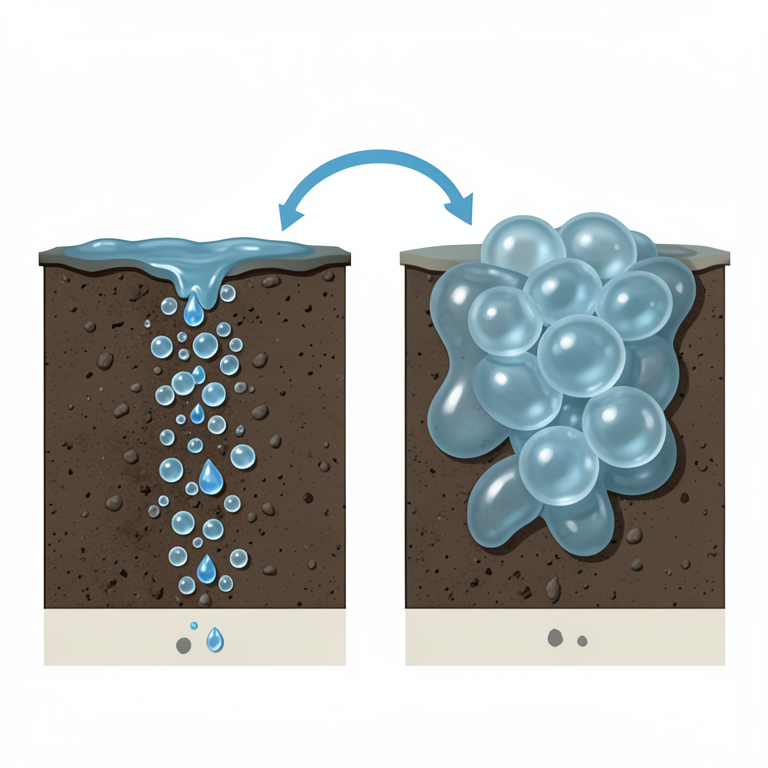
The Balance of SAPs in Soil
AI-generated conceptual illustration (soil profiles with superabsorbent polymers). It explains the idea and does not show study data.
View source evidence ↗Figures & tables
From the original paper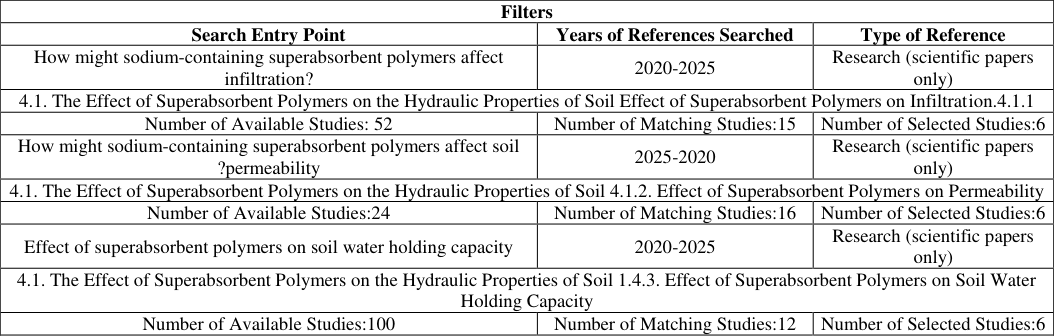 Table 1
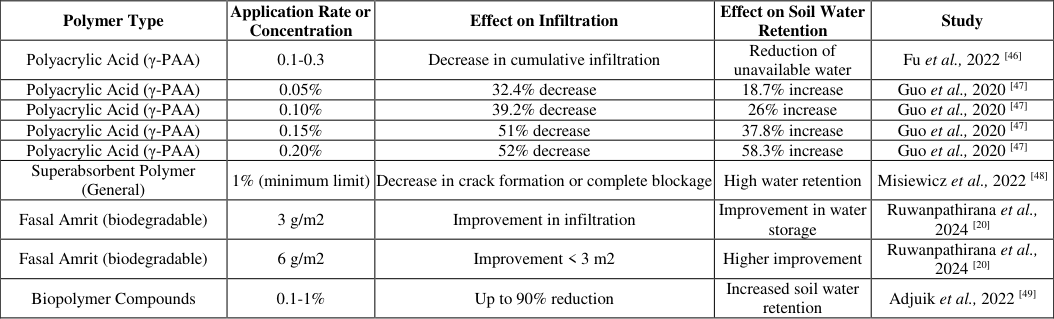 Table 2
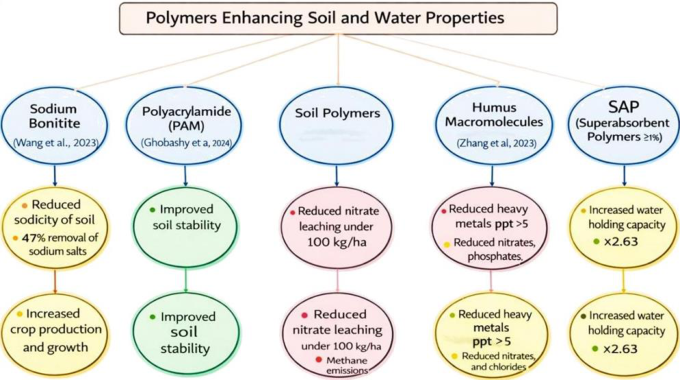 Figure 1
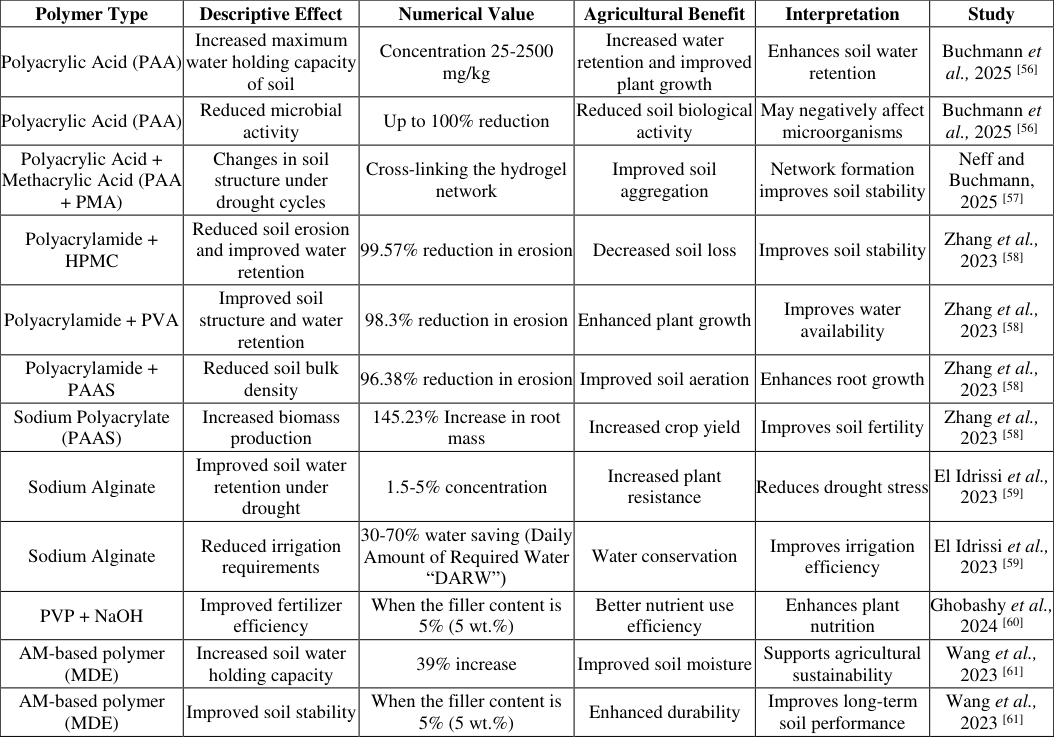 Table 3
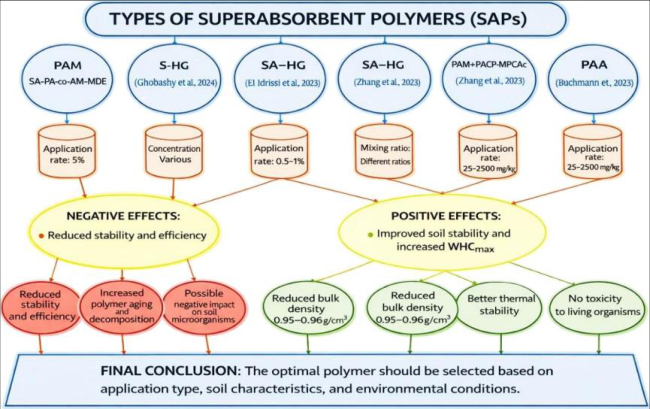 Figure 2
Text
associated with different phases like saturation, field capacity, and its dynamics are essential for sustainable use of water in agriculture (Jangir et al., 2024) [3] . Traditional irrigation systems like flood and surface irrigation can therefore result in water loss and soil erosion. Modern methods, for instance drip irrigation, are able to supply water to the root zone with greater precision, so that less water can be lost and water is more efficiently used; advanced irrigation systems such as automation and smart controls ensure efficient water distribution, resulting in minimal environmental impact. These technologies are critical to cope with climate variability and it is important to increase the scarcity of water (Choudhary, 2024) [4] . Irrigation plan optimisation with soil and crop characteristics by micro planning can be used to promote sustainable agriculture and optimise water use (Jangir et al., 2024) [3] . Organic mulch, deep plowing and leveling enhance moisture holding capacity, soil structure and reduce soil erosion. These practices are particularly beneficial in dryland and rain-fed areas (Ishfaq et al., 2024). Soil amendments and organic mulch also may change the hydraulic properties of the soil, improving soil water retention and soil water movement. This is essential to avoid soil salinization, enhance crop productivity (Kargas et al., 2023) [5] . Recognizing the importance of a wateruse-anddrainage management approach that incorporates groundwater resources components and environmenta concerns is essential for sustainable water use and soil health (El Gayar, 2024). Whilst there is a need to develop irrigation methods and ensure water storage ability in the soils (or water holding capacity), there are concerns on balancing water use efficiency with environmental protection. With greater competition for water resources, it is essential to have a holistic view of soil and water dynamics and the development of innovative water management strategies. To overcome these challenges, a cooperative approach between researchers, policy makers and farmers is necessary to promote sustainable agriculture practices and water conservation.
Definition of Superabsorbent Polymers and Their
Role in Improving Soil Water Retention Superabsorbent polymers (SAPs) are known for their ability to significantly enhance soil water retention, making them valuable tools in agriculture, especially in water-scarce regions. These polymers, which may be synthetic, natural, or semi-synthetic, are capable of absorbing large amounts of water and releasing it slowly, thereby improving soil moisture levels and reducing the need for frequent irrigation. They also improve soil structure and nutrient availability, contributing to sustainable agricultural practices. Superabsorbent polymers are used as soil conditioners in arid regions to improve water use efficiency, as they help slow nutrient loss and provide systems for their slow release, thereby boosting crop yields and contributing to the promotion of environmentally friendly agricultural practices (Krasnopeeva et al., 2022) [6] . Superabsorbent polymers can absorb up to 100,000% of their weight in water, significantly enhancing soil water-holding capacity (Singh et al., 2023) [7] . This property is particularly beneficial in arid regions where water scarcity is a major challenge (Singh et al., 2019) [8] . Studies have shown that superabsorbent polymers can increase soil porosity and reduce bulk density, thereby improving drainage and soil water retention (Muriithi et al., 2024) [9] . For example, superabsorbent polymers have been shown to increase soil water-holding capacity by up to 34.9% in some soil treatments, The application of superabsorbent polymers can also affect soil texture, increasing clay content and reducing sand and silt content, thereby further enhancing soil waterholding capacity (Reyes et al., 2025) [10] . Superabsorbent polymers have been shown to improve plant growth indicators such as plant height, number of leaves, and yield. For example, sweet pepper yield increased by 53.4% when soil was treated with superabsorbent polymers in a study conducted in Kenya (Muriithi et al., 2024) [9] . In experiments with radish seeds, soil amended with superabsorbent polymers demonstrated sustained plant growth and health under reduced irrigation conditions, unlike the control groups that were not treated with polymers (Nnadi and Brave, 2011) [11] . The use of superabsorbent polymers was associated with improved plant health, as treated plants exhibited better color, larger leaf size, and better overall growth compared to untreated plants (Gubat et al., 2025) [12] . The superabsorbent polymer is also non-toxic and eco-friendly, it is also suitable for sustainable agriculture, it can reduce the loss of nitrogen from leaching by as much as 45%, which helps to preserve soil fertility and eliminate pollution of the environment (Malik et al., 2022) [13] . As a result of the use of biodegradable superabsorbent polymers like those made from shrimp shell waste and potato straw, the problem of non-biodegradable polymers (Gubat et al., 2025) [12] can be solved. Superabsorbent polymers enhance the efficiency of the irrigation system and minimize water consumption, promoting responsible resource management, which falls under Sustainable Development Goals 6 and 12 to ensure sustainable consumption and land use (Reyes et al., 2025) [10] . While there are many advantages to using superabsorbent polymers, their success can depend on soil type, polymer composition, and application rate. However, using too much polymer does not necessarily lead to better soil water retention (Reyes et al., 2025) [10] . The price of superabsorbent polymers and their adoption by farmers may be a barrier particularly in developing areas. To this end, economic evaluations and region-specific studies have to be done to identify the best ways of their use (Malik et al., 2022) [13] . In addition, using superabsorbent polymers for a prolonged period has a negative impact on soil health, and their interaction with other soil amendments need to be studied to ensure sustainable agriculture (Muriithi et al., 2024) [9] . In conclusion, superabsorbent polymers (SAPs) offer a potentia solution for enhancing soil moisture retention and boosting agricultural production, especially in areas where water is scarce. Their use, however, needs to be carefully planned and managed so as to ensure that the benefits are maximized and the potential disadvantages are minimized. The development of low cost biodegradable superabsorbent polymers can be further developed to promote their use and benefits in sustainable agriculture.
How do sodium-containing polymers affect soil properties, including soil water movement?
Sodium-containing polymers significantly affect soil properties, particularly with regard to water movement and soil structure. These polymers can influence the rate of drainage and permeability, hydraulic conductivity, and the physical behavior of soil, especially under saline and alkaline conditions. The interaction of sodium ions with polymers can either reduce or exacerbate problems related to soil dispersion, drainage, and water retention, depending on the type of polymer and the concentrations used. Sodium ions in soil can increase swelling and reduce permeability, particularly in soils with high exchangeable sodium (ESP) content, due to the expansion and swelling of clay particles, which creates a surface film and reduces water movement into the soil (BenHur et al., 1992; So, 1993) [14,15] . Studies have shown that soil water retention capacity decreases with increasing sodium ion content, as illustrated by the decline in parameters in Philip's water retention model (Wang and Fan, 2009) [16] . Sodium carboxymethyl cellulose (CMC) has been found to improve water retention properties in saline soils. Prolongs the retention of the total water, improves the water-holding capacity of soil and salt flux (Zhang et al., 2022) [17] , and is beneficial for alkaline soils. Soils with low clay content are less affected by sodium than fine textured soils and therefore, the effect of sodium is more significant in fine textured soils (Obear and Soldat, 2014) [18] . Synthetic polymers like polyacrylamide can be used to stabilize soil aggregates and thus reduce soil dispersion and increase infiltration rates (Ben-Hur et al., 1992; Ben-Hur et al., 1989) [14,19] . They have also proven their effectiveness in enhancing the hydrological characteristics of soils with high infiltration rate, reduced surface runoff and soil loss, and improved water storage and aggregate stability (Ruwanpathirana et al., 2024) [20] . The polysaccharide polymers can affect the hydraulic conductivity of soil by enhancing the soil structure, playing important roles in various environmental and geotechnical applications (Taiba et al., 2024) [21] . Soil and subsoil management under the irrigation system requires utilization of polymers in the irrigation water to maintain infiltration rates and the prevention of crust formation (Ben-Hur et al., 1989) [19] . Moreover, modified chemicals and leaching strategies, based on the tools developed, e.g., HYDRUS, can be used to increase the permeability of the subsoil, as the chemical and physical changes induced by sodium can be counteracted. Sodium containing polymers can enhance the properties of soils and the flow of water through them, but the benefits will vary based on soil type, polymer concentration, and application technique. Whereas in some soils sodium can cause unwanted soil properties, such as poor drainage or lower yields, especially in soils with high clay and ESP content (So, 1993; Balks et al., 1998) [15,22] . Therefore, it is essential to carefully consider soil characteristics and polymer types to achieve best practices in soil management and enhance soil productivity.
Significance of the Research:
What is the motivation for conducting research in this field? What research gap will be addressed through this literature review? Many studies have investigated the effects of superabsorbent polymers in general on water retention in soil, but studies on the effects of sodium-containing polymers on water movement and soil structure in various soil texture and salinity conditions are limited. The impact of the use of sodium or the polymer separately has been studied, but the combined effect of adding sodium ions through superabsorbent polymers on soil hydraulic properties is not well known. Hence, more studies are required to examine the dual chemical and physical interactions between sodium ions and soil matrices in the application of superabsorbent polymers especially in alkaline and saline soils. Addressing this knowledge gap is essential to better formulate and utilize superabsorbent polymers to optimize soil water retention, while minimizing impacts on soil structure and fertility.
Theoretical Framework 2.1. Superabsorbent Polymers (SAPs): Definition, Structure, and Key Properties
Superabsorbent polymers (SAPs) are a group of functional macromolecules that have the property of absorbing and holding water in significant quantities, compared to their own weight. The high water absorbing capacity, biocompatibility and biodegradability are some of the unique properties of these polymers that makes them widely used in various applications. Superabsorbent polymers are usually made up of a network of loosely crosslinked threedimensional structures that contain a hydrophilic hydroxyl structure and which can absorb a large amount of water without dissolving. This text will discuss the definition, structure and important characteristics of superabsorbent polymers and the significance of these materials.
Definition and Structure
1. Definition: Superabsorbent polymers are hydrophilic, chemically cross-linked polymers capable of absorbing and retaining large amounts of water or aqueous solutions. They can absorb up to 1,500 times their weight in water, forming a gel-like substance upon swelling (Pradhan and Pradhan, 2023; Friedrich, 2012) [23, 24] . 2. Structure: Superabsorbent polymers have a threedimensional network structure that is created by chemical or physical cross-linking. This network is built up of hydrophilic groups that bind and hold water molecules. Avoidability of cross-linking means that the polymers do not dissolve in water, and therefore, keep their structure when absorbing water. (Lavlinskaya and Sorokin, 2023; Jagota et al., 2025) [25,26] .
Key Properties 1. Water Absorption and Retention:
Superabsorbent material has a high capacity to absorb water, absorbing hundreds of times its weight, and is effective in uses that involve moisture-holding properties. It is due to the hydrophilic backbone of the polymer and due to the cross-linked network. (Pu, 2010; Idrissi et al., 2024) [27] .
Biocompatibility and Biodegradability: Many
superabsorbent polymers, particularly those based on natural polymers, are environmentally friendly and biodegradable, making them suitable for applications in agriculture, medicine, and hygiene products (Santos, 2023; Barrera-Martínez et al., 2023) [28] . 3. Stimulus Responsiveness: Some superabsorbent polymers are smart polymers that react to changes in the environment, such as pH, temperature or ionic strength. This property is especially important in the field of drug delivery systems, where the delivery of encapsulated drugs is to be controlled. (Barrera-Martínez et al., 2023) [28] .
Mechanical Strength and Flexibility: Superabsorbent
polymers can vary in strength and flexibility depending on the degree of cross linking. In general, the higher the degree of cross linking, the more strength but less flexibility the material will have (Barrera-Martínez et al., 2023) [28] .
While superabsorbent polymers have numerous advantages, there are also some considerations and challenges to be addressed in their use. For instance, their positive effect on the environment, especially from petroleum based sources, is an issue of sustainability and biodegration. Attempts are being made to develop bio-based superabsorbent polymers using renewable resources to tackle these challenges (Jagota et al., 2025) [26] . Other variables like the extent and nature of cross-linking, nature of monomers used and process of synthesis may also affect the behavior of superabsorbent polymers, so that it should be optimized according to the applications. (Lavlinskaya and Sorokin, 2023) [25] .
Soil Water Movement: Definition of water movement in soil (infiltration, percolation, and evaporation) and its impact on agriculture
Water flow in soils is an integral part of the hydrological cycle and plays a direct role in the productivity of an agricultural system. Infiltration, permeability and evaporation are part of this movement, which is responsible for the way water enters the soil, circulates through it and leaves. A number of factors, such as soil texture, structure and management, which are fundamental to plant water availability, soil health and environmental sustainability, influence these processes. Hence, it is important to have a good understanding of these processes to develop irrigation strategies and promote agricultural sustainability.
Infiltration
Infiltration is the movement of water into the soil due to rainfall, irrigation or surface runoff. It is important for replenishment of soil moisture and groundwater, and has a direct impact on water availability to plants (Saha, 2024; Shukla and Lal, 2003) [29,30] . Soil texture, structure, and compaction are all factors which influence the rate of infiltration. Infiltrations are prone to decrease with poor management practices and surface runoff and erosion are likely to increase (Haghnazari et al., 2024; Shukla and Lal, 2003) [30] . Infiltrates slowly and diffusely, gradually, or more rapidly through root passages or holes made by earthworms in the soil. (Nimmo and Shillito, 2023) [31] .
Permeability
Permeability is a soil property of allowing water to flow through its layers and is referred to as deep percolation (Saha, 2024) [29] . The hydraulic properties of the soil, including hydraulic conductivity, are important to permeability. These properties are spatiotemporally variable and thus have an impact on water movement and solute transport in agricultural irrigation systems (Kargas et al., 2022) [1] . Practicing good soil management (preventing compaction and boosting organic matter) enhances soil permeability and water movement in soils. (Haghnazari et al., 2024).
Evaporation:
Evaporation refers to the loss of water from the soil surface into the atmosphere. It is influenced by climatic conditions, soil moisture content, and the type of surface cover. High evaporation rates reduce the soil moisture available to plants, necessitating the adoption of effective irrigation practices to maintain optimal soil moisture levels. Evaporation can be reduced using techniques such as organic mulching or growing cover crops, as these methods provide an insulating layer that conserves soil moisture (Jangir et al., 2024) [3] .
Impact on Agriculture
Soil water movement is very crucial for sustainable agriculture because it is required for the plants for water and it also prevents runoff and loss of soil nutrients (Jangir et al., 2024; Shukla and Lal, 2003) [3,30] . The deep understanding of soil water dynamics allows for the creation of water-balanced irrigation systems that conserve water and are able to efficiently meet crop water requirements, thereby optimizing agricultural productivity (Jangir et al., 2024) [3] . Another aspect of water movement that has implications for plant growth, survival, and soil health (Kargas et al., 2022) [1] is that it affects soil salinity and nutrient availability. While these processes are understood, challenges exist with predicting and managing these processes under field conditions where the variability of climate, soil properties, and changes in farming activities require ongoing research to find ways to adapt to water sustainability and agricultural production resilience.
The effect of sodium ions on soil properties such as dispersion, permeability, and cohesion, and how can they affect water movement in the soil?
Sodium ions have a significant effect on soil properties such as dispersion, permeability, and cohesion, which directly affects water movement within the soil. The presence of sodium, especially at high concentrations, leads to soil dispersion, reduced permeability, and changes in cohesion, which affect the soil's ability to transport water and support plant growth. These changes are fundamental to understanding soil management and agricultural productivity.
Soil Dispersion and Structure
Sodium ions tend to cause soil dispersion as they reduce the structural strength of soil particles and have larger hydration shell than divalent ions like calcium which causes greater repulsion between fine particles and causes their dispersion (Parameswaran and Sivapullaiah, 2017) [32] . One of the major factors that affects the hydraulic conductivity of soil is dispersion of the clay particles which fill the pores and cause a decrease in the movement of water through the soil layers. (Yousaf et al., 1987; So and Aylmore, 1993) [33,15] .
Permeability and Water Movement
High sodium concentrations reduce soil permeability due to the dispersion of fine particles and their blockage of pores, thereby limiting the soil's ability to transport water (Satar, 2021; Wang and Fan, 2009) [34,16] . This decrease in permeability leads to poor drainage and surface water accumulation, which negatively affects plant growth and may result in reduced agricultural productivity (So, 1993; Wagenet and Jury, 1984) [15,35] .
Soil Cohesion and Strength
Studies show that sodium ions increase soil cohesion and ultimate strength; it has been observed that sodiumtreated soils have higher compressive and shear strength than untreated soils (Melani et al., 2015) [36] . Although increased cohesion may seem beneficial in some respects, it can lead to soil hardening and difficulty in tillage, thereby limiting the ability of roots to penetrate and grow (Melani et al., 2015; So and Aylmore, 1993) [36,15] .
Treatment Strategies
To reduce the negative effects of sodium ions, soil amendments can be used, such as gypsum (calcium sulfate), which will replace sodium with calcium ions, which will improve the aggregate and soil structure and permeability (Satar, 2021) [34] . Also, by controlling the sodium absorption ratio (SAR), and maintaining suitable electrolyte concentrations, soil dispersion is reduced and hydraulic conductivity (Yousaf et al., 1987; He et al., 2013) [33,37] is retained. While sodium ions can have negative effects on soil properties, knowledge of these effects can help develop effective management strategies for sodic soils. Damage caused by sodium can be reduced and soil health and productivity can be significantly improved by using the right amendments and irrigation practices..
How can sodium improve or impair the properties of polymers in soil?
The interaction between sodium and the soil's superabsorbent polymers (SAPs) is one that clearly impacts the properties of the superabsorbent polymers and can either enhance or diminish their performance. Superabsorbent polymers can be influenced by the presence of sodium ions in soil solutions, in terms of their swelling properties, water holding capacity, and mechanical strength. In agriculture, superabsorbent polymers are used to modify soil properties for better water absorption and soil structure, which is crucial for maintaining soil health and productivity. The effect of sodium on these polymers has been complex and varied; changes in ionic strength, polymer structure and soil conditions all play a role..
Improving Polymer Properties 1. Water
Retention and Swelling: Common superabsorbent polymer is also called as sodium polyacrylate and can absorb a huge amount of water, which is utilized for enhancing the water holding capacity of the soil. Sodium ion can first promote the swelling of the polymer by increasing the osmotic pressure inside the polymer network, increasing the water absorption rate of the polymer in the deionized or low-salinity environment. (Lee and Lin, 2001; Zhao et al., 2019) [38,39] . 2. Soil Improvement: Studies have shown that adding sodium polyacrylate to sandy soils improves mechanical properties such as shear strength and reduces permeability, which helps prevent soil liquefaction and enhances soil stability under dynamic conditions (Özbakan and Evirgen, 2022) [40] .
Degradation of Polymer Properties 1. Decreased Absorbency in Saline Environments:
High concentrations of sodium ions in the soil make superabsorbent polymers less effective in absorbing water. This is because of the ionic screening effect which causes reduction in the electrostatic forces of repulsion between polymer chains, resulting in shrinkage of the gel. (Lee and Lin, 2001; Lee and Wu, 1997) [38,41] .
Leaching of Nutrients: Sodium polyacrylates can
cause increased leaching of nutrients such as nitrogen and phosphorus from certain types of substrates, leading to nutrient loss and environmental issues. Furthermore, the leaching of sodium itself may lead to soil alkalization, which negatively impacts soil health (Li et al., 2012) [42] . [43,44] .
Factors Affecting
Factors Affecting
Soil Texture and Polymer Concentration: Soil
texture and the amount of the superabsorbent polymer affects the effectiveness of both the superabsorbent polymer and soil water retention. The addition is more beneficial to coarser textured soils and higher polymer concentrations can result in improved soil water holding capacity (Yu et al., 2017) [45] . Sodium can have beneficial effects on the swelling capacity of superabsorbent polymers and on soil water holding capacity at low concentrations but at high concentrations, it can have negative effects on the absorption capacity and cause environmental problems, including nutrient leaching and soil alkalisation. The relationship between sodium and superabsorbent polymers is complex and is dependent on ionic strength, cross-link density and soil conditions. This knowledge is key to maximizing the potentials of these polymers in farming uses and in the management of the environment.
Research Methodology 3.1. Type: Review Paper 3.2. Study Selection Method:
The study included research addressing the effect of polymers, particularly superabsorbent polymers (SAPs), on water movement in soil, with a focus on those containing sodium ions.
Criteria:
The study included studies published in the last five [14] years that addressed the effect of sodium on superabsorbent polymers in a soil context (laboratory or field studies). 3.4. Screening: The search started with the studies identified in the research question and keywords, but not all of these were relevant, so only those that were relevant were selected. It was found that the relevant studies did not address the research gaps identified, so the relevant studies were screened again. On this basis, useful studies were identified that contribute to addressing the research gap of this study (Table 1). (2022) [46] found that the use of a superabsorbent polymer derived from polyglutamic acid (γ-PGA) in sandy loam soil affects drainage under the influence of several factors. Modeling using (HYDRUS-1D) showed that soil bulk density and polymer application depth have a greater effect on cumulative water retention compared to the application rate itself, with the potential to reduce the proportion of water unavailable to plants when selecting the optimal dose and application depth. As Guo et al. (2020) [47] demonstrated that the addition of a superabsorbent polymer derived from polyglutamic acid (γ-PGA) at rates ranging from 0.05 to 0.20% resulted in a significant decrease in cumulative transpiration during the first 90 minutes by 32.4-52% compared to the control treatment, while field water content increased by 18.7-58.3%, indicating slower vertical water movement and increased water storage in the root zone. Misiewicz et al. (2022) [48] showed that the addition of superabsorbent polymers at concentrations of 1% or higher causes a dramatic effect on soil permeability, with permeability coefficients decreasing by hundreds of times within a few minutes, and potentially leading to complete blockage of water flow after approximately 67 minutes when the volume and quantity of polymer particles fill the effective pores. Ruwanpathirana et al. (2024) [20] , however, reported different results for the biodegradable Fasal Amrit polymer at low concentrations (3 and 6 g m ²) under various rainfall simulations, which led to improved infiltration rates with delayed surface runoff,⁻ improved water storage, and reduced erosion, suggesting a better balance between soil water retention and water permeability to roots. In a comprehensive review, Adjuik et al. (2022) [49] that the application of biopolymers and synthetic polymers increases soil water retention while reducing saturated water conductivity and decreasing percolation by up to 90% due to the reduction of large pore space, while maintaining the long-term water availability to plants. Saha et al. (2020) [50] highlight the reduction in deep percolation rates and evaporation losses despite variations in soil texture and salinity (Table 2). [46] Polyacrylic Acid (γ-PAA) 0.05% 32.4% decrease 18.7% increase Guo et al., 2020 [47] Polyacrylic Acid (γ-PAA) 0.10% 39.2% decrease 26% increase Guo et al., 2020 [47] Polyacrylic Acid (γ-PAA) 0.15% 51% decrease 37.8% increase Guo et al., 2020 [47] Polyacrylic Acid (γ-PAA) 0.20% 52% decrease 58.3% increase Guo et al., 2020 [47] Superabsorbent Polymer (General) 1% (minimum limit) Decrease in crack formation or complete blockage High water retention Misiewicz et al., 2022 [48] Fasal Amrit (biodegradable) 3 g/m2 Improvement in infiltration Improvement in water storage Ruwanpathirana et al., 2024 [20] Fasal Amrit (biodegradable) 6 g/m2 Improvement < 3 m2 Higher improvement Ruwanpathirana et al., 2024 [20] Biopolymer Compounds 0.1-1% Up to 90% reduction Increased soil water retention Adjuik et al., 2022 [49] 4.1.2. The Effect of Superabsorbent Polymers on Permeability: Soil hydraulic conductivity is a fundamental problem in agricultural engineering where it is important in regulating the flow of water and nutrients in the root zone and subsoil. The effects of sodium-containing superabsorbent polymers (SAPs) on soil permeability are significant because they affect the water holding capacity and water movement in the soil. These polymers bind to the soil and take up a lot of water, reducing the volume of permeable soil by filling in spaces between soil particles, and slowing water drainage or leaching. The addition of high concentrations of SAs (1% or greater) has a rapid effect on the permeability coefficient of soil, as shown by Misiewicz et al. (2022) [48] , the permeability of the soil is reduced by hundreds of times in just a few minutes, which can cause a complete blockage of water flow. The permeability coefficient decreased to ~10 after 14 minutes, to a factor of 100 after 36 minutes, to a factor of 1000 after 63 minutes, and became fully blocked after about 67 minutes, as the size and number of the polymer particles were enough to fill the effective pores and turn the soil column into a nearly impermeable barrier. In a similar context, Yan et al. (2022) investigated the permeability of transparent hydrogel gels (Aquabeads) in different aqueous solutions and concluded that as the concentration of the solutes increased, the effective pore diameter of the gels decreased as did the permeability, with the critical salt concentration identified between 5-7 parts per thousand, indicating that ions like sodium might worsen the reduction in permeability due to a decrease in voids between the polymer particles. However, Kwon et al. (2021) [51] presented a different perspective by enhancing the permeability of the superabsorbent polymers themselves through the introduction of polycationic salts and the addition of surfacemodified silica, suggesting that engineering modifications to the polymer may improve its hydraulic properties. On the other hand, Ng et al. (2020) demonstrated that natural biopolymers reduce gas permeability in compacted or densified clay soils by up to 100-fold by reducing large pores and their adhesion due to the viscous nature of the hydrated polymers, and this effect increases with higher soil water content because it provides more water to hydrate the biopolymers and facilitate their clogging of the pores. Biju and Arnepalli (2020) [52] , however, observed a relative improvement in the permeability of biopolymer-modified sand-bentonite mixtures due to the aggregation of clay platelets, leading to positive soil restructuring and improved hydraulic behavior. Finally, Chai and Prongmanee (2020) [53] demonstrated that polymerized sodium bentonite exhibits particularly low permeability when exposed to concentrated cationic solutions (especially CaCl at a concentration of 0.6 M),₂ with a high ability to self-heal cracks, where the healing rate reached 76% for a 20 mm puncture, compared to 0% for unpolymerized bentonite (see Figure 1).
| Polymer Type | Application Rate or Concentration | Effect on Infiltration | Effect on Soil Water Retention | Study |
|---|---|---|---|---|
| Polyacrylic Acid (γ-PAA) | 0.1-0.3 | Decrease in cumulative infiltration | Reduction of unavailable water | Fu et al., 2022 [46] |
| Polyacrylic Acid (γ-PAA) | 0.05% | 32.4% decrease | 18.7% increase | Guo et al., 2020 [47] |
| Polyacrylic Acid (γ-PAA) | 0.10% | 39.2% decrease | 26% increase | Guo et al., 2020 [47] |
| Polyacrylic Acid (γ-PAA) | 0.15% | 51% decrease | 37.8% increase | Guo et al., 2020 [47] |
| Polyacrylic Acid (γ-PAA) | 0.20% | 52% decrease | 58.3% increase | Guo et al., 2020 [47] |
| Superabsorbent Polymer (General) | 1% (minimum limit) | Decrease in crack formation or complete blockage | High water retention | Misiewicz et al., 2022 [48] |
| Fasal Amrit (biodegradable) | 3 g/m2 | Improvement in infiltration | Improvement in water storage | Ruwanpathirana et al., 2024 [20] |
| Fasal Amrit (biodegradable) | 6 g/m2 | Improvement < 3 m2 | Higher improvement | Ruwanpathirana et al., 2024 [20] |
| Biopolymer Compounds | 0.1-1% | Up to 90% reduction | Increased soil water retention | Adjuik et al., 2022 [49] |
Table text extracted from the original PDF; superscript letters are shown inline. The original table image is below.
View original table image
| Filters | — | — |
|---|---|---|
| Search Entry Point | Years of References Searched | Type of Reference |
| How might sodium-containing superabsorbent polymers affect infiltration? | 2020-2025 | Research (scientific papers only) |
| 4.1. The Effect of Superabsorbent Polymers on the Hydraulic Properties of Soil Effect of Superabsorbent Polymers on Infiltration.4.1.1 | ||
| Number of Available Studies: 52 | Number of Matching Studies:15 | Number of Selected Studies:6 |
| How might sodium-containing superabsorbent polymers affect soil ?permeability | 2025-2020 | Research (scientific papers only) |
| 4.1. The Effect of Superabsorbent Polymers on the Hydraulic Properties of Soil 4.1.2. Effect of Superabsorbent Polymers on Permeability | ||
| Number of Available Studies:24 | Number of Matching Studies:16 | Number of Selected Studies:6 |
| Effect of superabsorbent polymers on soil water holding capacity | 2020-2025 | Research (scientific papers only) |
| 4.1. The Effect of Superabsorbent Polymers on the Hydraulic Properties of Soil 1.4.3. Effect of Superabsorbent Polymers on Soil Water Holding Capacity | ||
| Number of Available Studies:100 | Number of Matching Studies:12 | Number of Selected Studies:6 |
Table text extracted from the original PDF; superscript letters are shown inline. The original table image is below.
View original table image
Fig 1:
Comparison of the various mechanisms by which substances affect soil permeability (researcher's design).
The effect of superabsorbent polymers on soil water holding capacity (WHC)
Superabsorbent polymers (SAPs) have been shown to significantly enhance soil water holding capacity, which is critical for improving agricultural productivity, especially in water-scarce regions. These polymers can absorb and retain large amounts of water relative to their mass, making them effective soil amendments for increasing soil water retention and reducing the need for irrigation. The application of these polymers can improve soil physical properties, increase plant growth, and enhance water use efficiency. The following is a breakdown of the effects of superabsorbent polymers on soil water-holding capacity based on various studies. It has been shown that polymers significantly increase soil water retention. For example, a study showed that treating soil with 10 grams of polymer mixed with 200 mL of water per 500 grams of soil increased soil waterholding capacity by 34.9% compared to the control plot, with maximum soil water-holding capacity reaching 82.74 (Reyes et al., 2025) [10] . In sandy soils, superabsorbent polymers can enhance soil water retention by increasing the available water capacity (AWC). The highly absorbent natural hydrogel increased the available water capacity by 26% in sandy soil compared to a commercial polymer, and there was a greater improvement as the hydrogel concentration increased (Palma et al., 2024) [54] . The application of polymers in coarse-textured soils also led to a significant increase in soil water retention, as lignin-based hydrogel improved soil water retention under both high and low water potentials (Adjuik et al., 2023) [55] . Superabsorbent polymers, particularly polyacrylic acid (PAA), are synthetic materials that enhance the soil's maximum water-holding capacity (WHCmax) and improve soil stability and aeration. In a study examining the effect of PAA on soil microbial activity in sandy and loamy soils, it was found that the use of PAA increases soil water-holding capacity in both soil types, but its effect on microbial activity varies depending on soil type, polymer concentration, and moisture conditions. A suppression of microbial respiration was observed in sandy soils at high PAA concentrations, while the effect in loamy soils varied with moisture fluctuations. This highlights the dual role of SAPs in improving soil water retention alongside potential effects on microbial activity and nutrient cycling depending on environmental conditions and polymer concentration (Buchmann et al., 2025) [56] .
Other studies show that polyacrylic acid and polyacrylamide (PAA + PMA) form three-dimensional gels that enhance soil water retention and structural stability, but PAA is affected by cycles of drying and wetting and by chemical and structural changes that reduce its reabsorption capacity, suggesting the formation of stable solid residues over time, whereas PAM exhibits greater stability under these conditions (Neff and Buchmann, 2025) [57] .
A mixture of polymers such as polyacrylamide and sodium polyacrylate (PMA + PAAS), as well as hydroxypropyl methylcellulose and polyvinyl alcohol (PVA + HPMC), has varying effects on improving soil properties; in particular, PAAS contributes to increasing soil porosity and improving water retention. The polymer mixture also enhances erosion resistance and increases root mass, reflecting the importance of the polymer's chemical composition and its impact on soil properties (Zhang et al., 2023) [58] . The use of sodium alginate-derived hydrogel in sandy loam soils demonstrates the ability to improve tomato plant growth unde drought conditions by increasing soil water and nutrient retention, while acknowledging the absence of phytotoxicity of this polymer, which proves its feasibility in agricultural water management (El Idrissi et al., 2023) [59] .
A superabsorbent hydrogel based on polyvinylpyrrolidone (PVP) treated with sodium hydroxide was also developed; this hydrogel demonstrates a high capacity to increase soil water retention and release fertilizers gradually, thereby promoting the growth of pea plants under water stress (Ghobashy et al., 2024) [60] . Finally, a polymeric composite of sodium alginate (SA) and modified dimethyl ether (MDE) with acrylic acid and acrylamide exhibits superior water absorption and soil water retention capabilities, as well as high therma stability, making it a promising material for various agricultural and industrial applications (Wang et al., 2023) [61] . These studies (Table 3 and Figure 2) confirm the significant importance of sodium polyacrylates and sodiumcontaining polymers as effective agents for enhancing soil waterholding capacity, while taking into account their impact on soil microbial activity and surrounding environmental conditions (Buchmann et [56][57][58][59][60][61] . 2025 [57] Polyacrylamide + HPMC Reduced soil erosion and improved water retention 99.57% reduction in erosion Decreased soil loss Improves soil stability Zhang et al., 2023 [58] Polyacrylamide + PVA Improved soil structure and water retention 98.3% reduction in erosion Enhanced plant growth Improves water
Discussion
Main findings from previous studies and critical analysis of these findings is highlighted in this section. Although superabsorbent polymers containing sodium have been shown to increase soil water holding capacity by up to 205% (Reyes et al., 2025) [10] , inconsistencies regarding their impact on soil hydraulic properties are still apparent. The basic effect of the type and concentration of the polymer is illustrated by the results of studies by (Buchmann et al., 2025) [56] which found a very sharp reduction in the permeability of soil (up to 100%) when a polyacrylic acid (PAA) was applied, while a study by (Wang et al., 2023) [61] showed only a slight increase in the water-holding capacity of soil (39%) on the use of composite mixture (SA-g-PAAco-AMMDE). Research has also shown that Na+ ions are important in flocculating soil particles in neutral to alkaline soils, but may cause soil structure degradation and particle dispersion in highly alkaline soils or soils with high sodium ion concentration (Melani et al., 2015; Satar, 2021) [36,34] . Therefore, the polymer mix might be a more environmentally friendly option as sodium alginate hydrogels were found to have a more favorable combination of soil water holding capacity and permeability than the monomeric polymers (El Idrissi et al., 2023) [59] . The majority of these studies have only taken place over short periods of time (usually less than 1 year) and there is a lack of data on the real-life long-term sustainability of the technology in terms of polymer ageing and the decline of the polymer's effectiveness after repeated cycles of drying and wetting (Neff and Buchmann, 2025) [57] ..
Long-term effects on the hydraulic properties of soil
Although sodium-containing polymers help reduce permeability and increase soil water retention, their use must be carefully considered to avoid negative effects on soil structure and plant health, especially since high sodium concentrations can lead to soil salinization, which harms crops and soil fertility. Research must continue to identify mechanisms for managing these polymers in a way that ensures agricultural sustainability and the balance of soil ion concentrations.
Research Gaps and Recommendations 6.1. Key Research Gaps
Despite significant progress in understanding the effects of superabsorbent polymers on soil water movement, several key research gaps remain:
1. Studies on saline and alkaline soils: Most current studies have been conducted on neutral or slightly alkaline soils, while scientific knowledge lacks a comprehensive understanding of the effect of sodiumcontaining polymers in soils with high sodium concentrations or strongly alkaline soils (pH > 8.5), particularly in arid and semi-arid regions (Satar, 2021) [34] .
Long-term studies on polymer aging:
There is a clear lack of studies extending beyond 3-5 years to assess the gradual decline in polymer effectiveness under repeated natural conditions of drying and wetting, particularly the effects of thermal and chemical degradation on the polymer (Neff and Buchmann, 2025) [57] . 3. Unified mathematical models: Studies lack a unified, predictive mathematical model linking polymer concentration, soil type, and environmental conditions to effects on permeability and soil water retention (Ruwanpathirana et al., 2024) [20] .
Potential Environmental Impacts:
There is a lack of comprehensive studies on the long-term effects of polymers on soil biodiversity, microbial activity, and potential impacts on groundwater (Buchmann et al., 2025) [56] . 5. Widespread field applications: A significant lack of studies at the actual farm level -rather than just in laboratories-to assess the economic and practical feasibility of application at production scales (Zhang et al., 2023) [58] . 4. Assess the economic and environmental feasibility of large-scale application, including production and application costs and expected agricultural returns. 5. Optimize polymer formulations to minimize the negative effects of sodium in soil and increase longterm stability, particularly in harsh environments.
Recommendations for
Recommendations for
Conclusion
Sodium-containing superabsorbent polymers represent a promising tool for addressing water scarcity challenges in agriculture, as they have demonstrated the ability to increase soil water-holding capacity by up to 205% (Reyes et al., 2025) [10] and reduce erosion rates by up to 99.57% (Zhang et al., 2023) [58] . However, their effectiveness varies significantly depending on the type of polymer used, its concentration, specific soil characteristics, and environmental conditions, necessitating a careful and scientifically guided selection. This review underscores the urgent and pressing need for systematic, interdisciplinary research that combines laboratory studies with longterm field studies, alongside the development of unified mathematical models and a comprehensive assessment of environmental and economic impacts. Only through this integrated approach can safe, sustainable, and effective applications of this promising technology be ensured in sustainable agriculture, particularly in arid and semi-arid regions suffering from severe water scarcity.
References
65 in the original paper- Kargas G, Kerkides P, Londra PA. Study of the Soil Water Movement in Irrigated Agriculture. Water. 2022;15(1):127.
- Hillel D. Redistribution and Retention of Soil Moisture. 2003:297-313.
- Jangir R, Yadav M, Yadav SL. Soil Water Dynamics: Balancing Irrigation and Water Conservation. 2024:109-120.
- Choudhary K. Advancements in Water Management for Agriculture: Innovative Strategies for Efficient Irrigation Systems -with Reference to Sirohi District. Research Review International Journal of Multidisciplinary. 2024;9(11):62-70.
- Kargas G, Kerkides P, Londra PA. Study of the Soil Water Movement in Irrigated Agriculture ⅡⅡ. Water. 2023;15(11):2033.
- Krasnopeeva EL, Panova GG, Yakimansky AV. Agricultural Applications of Superabsorbent Polymer Hydrogels. International Journal of Molecular Sciences. 2022;23(23):15134.
- Singh J, Kumar A, Dhaliwal AS. Superabsorbent Polymers Application in Agriculture Sector. Properties and Applications of Superabsorbent Polymers: Smart Applications with Smart Polymers. Springer, Singapore. 2023:83-117.
- Singh H, Das A, Singh S. Superabsorbent Polymers -A Potential Solution for Irrigation in Agriculture. Research Journal of Pharmacy and Technology. 2019;12(5):2566-2570.
- Muriithi F, Onyando J, Okwany R. Effect of Mixing Ratio of Super Absorbent Materials on the Growth and Yield of Bell Pepper in the Ferric Luvisols of Mogotio, Kenya. East African Journal of Agriculture and Biotechnology. 2024;7(1):204-215.
- Reyes ODT, Omambac IA, Lumapas T, Baguio IA, Mondejar JP. Enhancing Water Retention and Efficiency in Irrigation Systems: Identifying the Effectiveness of Superabsorbent Polymers on Soil Physical Characteristics. PrePrints. 2025.
- Nnadi FN, Brave C. Environmentally friendly superabsorbent polymers for water conservation in agricultural lands. Journal of Soil Science and Environmental Management. 2011;2(7):206-211.
- Gubat MT, Sali NS, Balita MJR, Oriondo PCS, Laspobres AAM, Salonga MDCA, et al. Comparative Efficacy of Various Superabsorbent Polymers (SAPs) in Enhancing Soil Moisture Retention and Plant Growth. International Journal of Advanced Research. 2025;13(04):949-967.
- Malik S, Chaudhary K, Malik AR, Punia H, Sewhag M, Berkesia N, et al. Superabsorbent Polymers as a Soil Amendment for Increasing Agriculture Production with Reducing Water Losses under Water Stress Condition. Polymers. 2022;15.
- Ben Hur M, Clark P, Letey J. Exchangeable Na, polymer, and water quality effects on water infiltration and soil loss. Arid Land Research and Management. 1992;6(4):311-317.
- So HB, Aylmore LAG. How do sodic soils behave-the effects of sodicity on soil physical behavior. Soil Research. 1993;31(6):761-777.
- Wang X, Fan GS. Experimental study on the influence of sodium ion content on infiltration capability of soils. Journal of Taiyuan University of Technology. 2009;40(4):391-394.
- Zhang J, Wang Q, Shan Y, Guo Y, Mu W, Wei K, et al. Effect of Sodium Carboxymethyl Cellulose on Water and Salt Transport Characteristics of Saline-Alkali Soil in Xinjiang, China. Polymers. 2022;14(14):2884.
- Obear GR, Soldat DJ. Saturated Hydraulic Conductivity of Sand-Based Golf Putting Green Root Zones Affected by Sodium. Soil Science. 2014;179(8):376-382.
- Ben-Hur M, Faris J, Malik M, Letey J. Polymers as Soil Conditioners Under Consecutive Irrigations and Rainfall. Soil Science Society of America Journal. 1989;53(4):1173-1177.
- Ruwanpathirana PP, Sakai K, Nakandakari T, Yuge K. Evaluating the Effectiveness of the Biodegradable Superabsorbent Polymer (Fasal Amrit) on Soil Hydrological Properties: A Laboratory Rainfal Simulation Study. Agronomy. 2024;14(11):2467.
- Taiba AC, Mahmoudi Y, Azaiez H, Belkhatir M. Examining the crucial role of polysaccharide polymers in influencing soil hydraulic conductivity: A comprehensive review. Science of The Total Environment. 2024;953:176122.
- Balks MR, Bond WJ, Smith CJ. Effects of sodium accumulation on soil physical properties under an effluent-irrigated plantation. Soil Research. 1998;36(5):821-830.
- Pradhan S, Pradhan S. Theory of Superabsorbent Polymers. In: Pradhan S, Mohanty S, editors. Bio-based Superabsorbents. Engineering Materials. Singapore: Springer; 2023:67-75.
- Friedrich S. Superabsorbent Polymers (SAP). In: Mechtcherine V, Reinhardt HW, editors. Application of Super Absorbent Polymers (SAP) in Concrete Construction. RILEM State of the Art Reports, vol 2. Dordrecht: Springer; 2012:13-19.
- Lavlinskaya MS, Sorokin AV. Synthesis Methods of Superabsorbent Polymers and Factors Affecting Their Preparation. In: Arpit S, Jaya T, editors. Properties and Applications of Superabsorbent Polymers. Singapore: Springer; 2023:19-39.
- Pu S. The development of super absorbent polymers, structure and water status of theoretical studies. Journal of Yulin College. 2010;20(2):53-55.
- Barrera-Martínez CL, Guerrero-Hernández LA, Sánchez-Orozco JL, Cortez-Mazatan GY, Meléndez Ortiz HI, Peralta-Rodríguez RD. Recent Advancements in Superabsorbent Polymers for Drug. 2023.
- Saha A. USDA LTAR Common Experiment measurement: Infiltration and percolation v1. 2024.
- Shukla MK, Lal R, Unkefer P. Experimental evaluation of infiltration models for different land use and soil management systems. Soil Science. 2003;168(3):178191.
- Nimmo JR, Shillito R. Infiltration of Water into Soil. Oxford Research Encyclopedia of Environmental Science. 2023.
- Parameswaran TG, Sivapullaiah PV. Influence of Sodium and Lithium Monovalent Cations on Dispersivity of Clay Soil. Journal of Materials in Civil Engineering. 2017;29(7):04017042.
- Yousaf M, Ali OM, Rhoades JD. Clay Dispersion and Hydraulic Conductivity of Some Salt Affected Arid-Land Soils. Soil Science Society of America Journal. 1987;51(4):905-907.
- Satar JA. The Sodium Role on Soil Penetration, Its Impact in North Kabul, Afghanistan. International Journal of Science and Research. 2021;10(2):12481253.
- Wagenet RJ, Jury WA. Movement and Accumulation of Salts in Soils. In: Shainberg I, Shalhevet J, editors. Soil Salinity under Irrigation. Ecological Studies. Springer, Berlin, Heidelberg. 1984;51:100-129.
- Melani E, Draghi L, Jorajuría Collazo D, Palancar T. Alteración de las propiedades mecánicas de un Ustochrept Udértico tratado con agua enriquecida en sodio. RIA. Revista de investigaciones agropecuarias. 2015;41(1):64-69.
- He Y, DeSutter TM, Clay DE. Dispersion of Pure Clay Minerals as Influenced by Calcium/Magnesium Ratios, Sodium Adsorption Ratio, and Electrical Conductivity. Soil Science Society of America Journal. 2013;77(6):2014-2019.
- Lee WF, Lin GH. Superabsorbent polymeric materials VIII: Swelling behavior of crosslinked poly [sodium acrylate-co-trimethyl methacryloyloxyethyl ammonium iodide] in aqueous salt solutions. Journal of Applied Polymer Science. 2001;79(9):1665-1674.
- Zhao C, Zhang M, Liu Z, Guo Y, Zhang Q. Salt-tolerant superabsorbent polymer with high capacity of waternutrient retention derived from sulfamic acid-modified starch. ACS omega. 2019;4(3):5923-5930.
- Özbakan N, Evirgen B. An Effect of Sodium Polyacrylate on Sandy Soil Parameters and Its Use in Soil Improvement. In Proceedings of the 7th World Congress on Civil, Structural, and Environmental Engineering. 2022.
- Lee WF, Wu RJ. Superabsorbent polymeric materials. II. Swelling behavior of crosslinked poly[sodium acrylate-co-3-dimethyl (methacryloyloxyethyl) ammonium propane sulfonate] in aqueous salt solution. Journal of Applied Polymer Science. 1997;64(9):17011712.
- Li Y, Yang L, Li H, Ouyang J. The effects of sodium polyacrylate (SP) on the leaking of N, P, K and Na in different substrates. Acta Scientiae Circumstantiae. 2012;32(6):1445-1453.
- Sohn O, Kim D. Theoretical and experimental investigation of the swelling behavior of sodium polyacrylate superabsorbent particles. Journal of Applied Polymer Science. 2003;87(2):252-257.
- Sakohara S, Muramoto F, Asaeda M. Swelling and Shrinking Processes of Sodium Polyacrylate-Type Super-Absorbent Gel in Electrolyte Solutions. Journal of Chemical Engineering of Japan. 1990;23(2):119-124.
- Yu J, Shi J, Ma X, Dang PF, Yan YL, Mamedov AI, et al. Superabsorbent Polymer Properties and Concentration Effects on Water Retention under Drying Conditions. Soil Science Society of America Journal. 2017;81(4):889-901.
- Fu Y, Wang S, Gao S, Wang S, Gao Z, He Z. Effect of a Superabsorbent Polymer (Poly-Gamma-Glutamic Acid) on Water and Salt Transport in Saline Soils under the Influence of Multiple Factors. Polymers. 2022;14(19):4056.
- Guo J, Shi W, Wen L, Shi X, Li J. Effects of a superabsorbent polymer derived from poly-γ-glutamic acid on water infiltration, field water capacity, soil evaporation, and soil water-stable aggregates. Archives of Agronomy and Soil Science. 2020;66(12):1627-1638.
- Misiewicz J, Datta SS, Lejcuś K, Marczak D. The Characteristics of Time-Dependent Changes of Coefficient of Permeability for Superabsorbent Polymer-Soil Mixtures. Materials. 2022;15(13):4465.
- Adjuik TA, Nokes SE, Montross MD, Wendroth O. The Impacts of Bio-Based and Synthetic Hydrogels on Soil Hydraulic Properties: A Review. Polymers. 2022;14(21):4721.https://doi.org/10.3390/polym142147 21
- Saha A, Sekharan S, Manna U. Superabsorbent hydrogel (SAH) as a soil amendment for drought management: A review. Soil & Tillage Research. 2020;204:104736.
- Kwon YR, Hong SJ, Lim SH, Kim JS, Chang YW, Choi J, et al. Ionic-bonded superabsorbent polymers and their surface-crosslinking using modified silica. PolymerPlastics Technology and Materials. 2021;60(7):724-733.
- Biju MS, Arnepalli DN. Effect of biopolymers on permeability of sand-bentonite mixtures. Journal of Rock Mechanics and Geotechnical Engineering. 2020;12(5):1093-1102.
- Chai J, Prongmanee N. Barrier properties of a geosynthetic clay liner using polymerized sodium bentonite. Geotextiles and Geomembranes. 2020;48(3):392-399.
- Palma D, Lagos O, Souto C, Pérez A, Quezada L, Hirzel J, et al. Evaluation of a Natural Superabsorbent Polymer on Water Retention Capacity in CoarseTextured Soils. Water. 2024;16(22):3186.
- Adjuik T, Nokes SE, Montross MD, Wendroth O, Walton RJ. Alkali Lignin-Based Hydrogel: Synthesis, Characterization, and Impact on Soil Water Retention from Near Saturation to Dryness. Journal of the ASABE. 2023;66(1):85-98.
- Buchmann C, Rudolph S, Neff J, Steinmetz Z. Impact of polyacrylic acid as soil amendment on soil microbial activity under different moisture regimes. Scientific Reports. 2025;15(1):19422.
- Neff J, Buchmann C. The contribution of soil extract composition and cyclic moisture dynamics to the physicochemical aging of superabsorbent polyacrylic acid and polyacrylamide hydrogels. researchsquare. 2025.
- Zhang H, Wang G, Du J, Pei X, Du P, Zhou L. Effects of several polymeric materials on the improvement of the sandy soil under rainfall simulation. Journal of Environmental Management. 2023;345:118847.
- El Idrissi A, Dardari O, Metomo FNNN, Essamlali Y, Akil A, Amadine O, et al. Effect of sodium alginatebased superabsorbent hydrogel on tomato growth under different water deficit conditions. International Journal of Biological Macromolecules. 2023;253:127229.
- Ghobashy MM, Amin MA, Mustafa AE, El-diehy MA, El Damhougy BK, Nady N. Synthesis and application of a multifunctional poly (vinyl pyrrolidone)-based superabsorbent hydrogel for controlled fertilizer release and enhanced water retention in drought-stressed Pisum sativum plants. Scientific Reports. 2024;14(1):27734.
- Wang Y, Fu E, Saghir S, Xiao Z. Novel superabsorbent polymer composite embedded with sodium alginate and diatomite for excellent water absorbency, water retention capacity, and high thermal stability. Journal of Molecular Structure. 2023;1300:137244.
- El Gayar A. A study on improvement needs for the soil water balance. International Journal of Agricultural Invention. 2020;5(2):181-193.
- Haghnazari F, Shahgholi H, Feizi M. Factors affecting the infiltration of agricultural soils: review. International Journal of Agronomy and Agricultural Research. 2015;6(5):21-35.
- Ishfaq F, Javaid MM, Ali B, Balal RM, Haq I ul, Awais M. Revitalizing Irrigation, Soil Moisture Management in Dryland Agriculture. 2025:141-160.
- Reading LP, Baumgartl T, Bristow KL, Lockington DA. Applying HYDRUS to flow in a sodic clay soil with solution composition-dependent hydraulic conductivity. Vadose Zone Journal. 2012;11(2):vzj2011-0137.
- Yang M, Olson VA, Dong W, Ruirui C, Wang H, Zhao Z, et al. Effect of highly efficient substrate modifier, super-absorbent polymer, on the performance of the green roof. Science of the Total Environment. 2022;806:150638.