
Research article · 2026 · Full text
International Journal of Geography Geology and EnvironmentAssessment of mutagenic efficiency of varying gamma radiation intensities on agronomic traits of tomato varieties under field conditions
Volume 8(5) · Pages 172–176 · DOI: 10.22271/27067483.2026.v8.i5b.830 ↗
Research areasPlant Genetic and Mutation StudiesGenetics and Plant BreedingSunflower and Safflower Cultivation
Abstract
Author-writtenGamma radiation stands as the most extensively employed physical mutagen in contemporary crop improvement programmes, yet its mutagenic efficiency across different dose intensities in tomato remains insufficiently characterized for arid and semi-arid production environments. This research was conducted to assess the mutagenic efficiency of five gamma radiation intensities (0, 100, 200, 300, and 400 Gy) on agronomic traits of three tomato varieties (EG-03, EG-11, and EG-18) under open field conditions at Cairo Institute of Agricultural Sciences, Egypt, during the 2023-2024 cropping cycle. A split-plot design with dose as the main plot and variety as the subplot was employed with three replications. Morphological parameters including plant height, stem girth, branching pattern, leaf characteristics, and root development were evaluated alongside reproductive traits such as flowering initiation, fruit set efficiency, fruit dimensions, and marketable yield. The correlation analysis among growth parameters revealed strong positive associations between plant height and yield per plant (r = 0.91), while a negative correlation was established between irradiation dose and all measured agronomic traits beyond the 100 Gy threshold. Variety EG-11 demonstrated the highest mutagenic efficiency at 200 Gy, producing the maximum frequency of observable morphological variants without catastrophic yield reduction. The lethal dose fifty (LD50) was estimated at 328 Gy for EG-03, 356 Gy for EG-11, and 312 Gy for EG-18, providing essential baseline data for designing effective mutation breeding protocols for tomato under Egyptian growing conditions. The fruit weight distribution analysis showed significantly wider variance at 200 and 300 Gy treatments compared to control populations, confirming enhanced phenotypic diversity at intermediate dose levels.
Summary
Source-checkedPlain-language reading of the full paper, prepared with AI and checked against the text. Each point links to the authors' own words.
Why it matters
- Gamma radiation is widely used as a physical mutagen in modern crop improvement programs. View evidence ↗
- Tomato cultivation in Egypt is hindered by limited genetic diversity, pathogens, soil salinity, and the need for heat-tolerant varieties. View evidence ↗
- Mutagenic efficiency is a quantitative measure defined as the ratio of induced mutation frequency to the biological damage caused by the mutagen. View evidence ↗
The question
- The study aimed to assess how five different gamma radiation intensities affect the agronomic traits and mutagenic efficiency of three commercial tomato varieties in Egypt. View evidence ↗
- Specific goals included determining the lethal dose fifty (LD50) for each variety and identifying the dose that provides the highest mutagenic efficiency. View evidence ↗
What they did
- The experiment used three tomato varieties: EG-03, EG-11, and EG-18. View evidence ↗
- Seeds were treated with five gamma radiation doses: 0, 100, 200, 300, and 400 Gy. View evidence ↗
- The study employed a split-plot design with three replications, using dose as the main plot and variety as the subplot. View evidence ↗
- Researchers measured morphological parameters (e.g., plant height, stem girth) and reproductive traits (e.g., fruit dimensions, yield). View evidence ↗
What they found
- The LD50 values were estimated at 328 Gy for EG-03, 356 Gy for EG-11, and 312 Gy for EG-18. View evidence ↗
- Variety EG-11 showed the highest mutagenic efficiency, peaking at 1.72 at a dose of 200 Gy. View evidence ↗
- For varieties EG-03 and EG-18, the maximum mutagenic efficiency also occurred at 200 Gy, with values of 1.42 and 1.28 respectively. View evidence ↗
- A very strong positive correlation (r = 0.91) was found between plant height and yield per plant. View evidence ↗
- Irradiation doses above 100 Gy were negatively correlated with all measured agronomic traits. View evidence ↗
- Median fruit weight declined as radiation dose increased, but phenotypic variability (wider interquartile ranges) increased at intermediate doses of 200 and 300 Gy. View evidence ↗
What it means
- The authors concluded that 200 Gy is the optimal dose for maximizing mutagenic efficiency, particularly for variety EG-11. View evidence ↗
- The authors recommend an initial screening dose range of 150-250 Gy, calibrated specifically for each variety based on its LD50. View evidence ↗
Visual summary
2 visualsIllustrations explain the paper; charts are replotted from the paper's own table values.
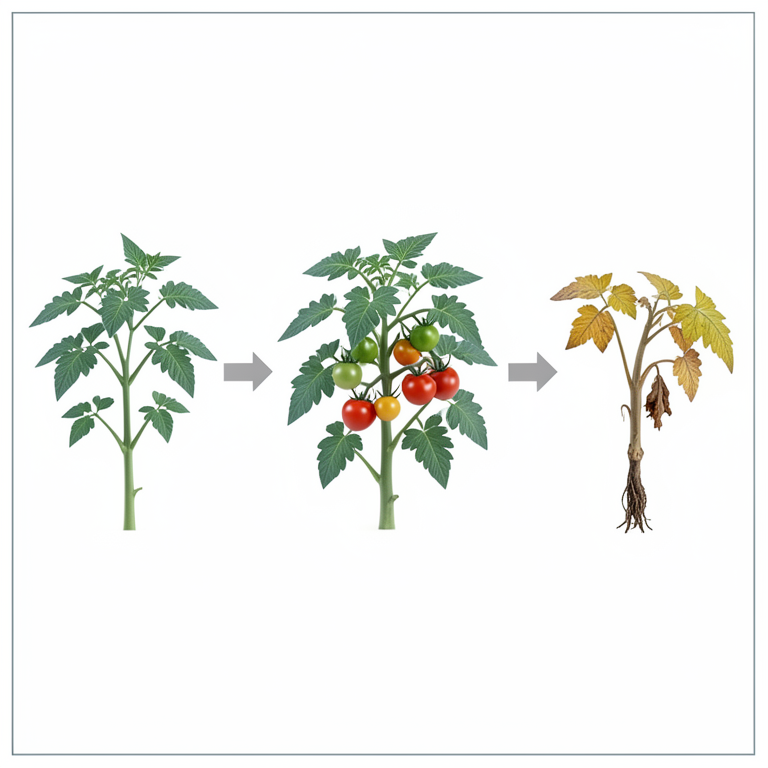
The Mutagenic Window
AI-generated conceptual illustration (tomato plants). It explains the idea and does not show study data.
View source evidence ↗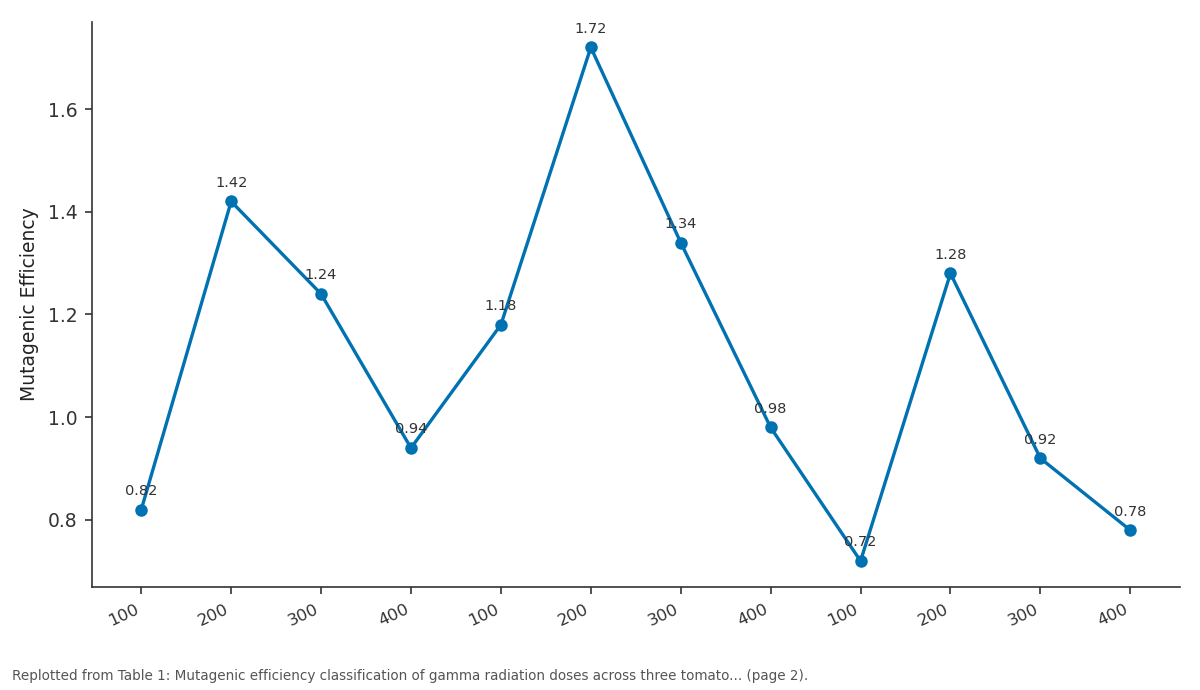
Mutagenic Efficiency: 100 vs 200 vs 300 vs 400 vs 100
Replotted from Table 1 (page 2) of the original paper. Every bar is the paper's own table value.
View source evidence ↗Figures & tables
From the original paper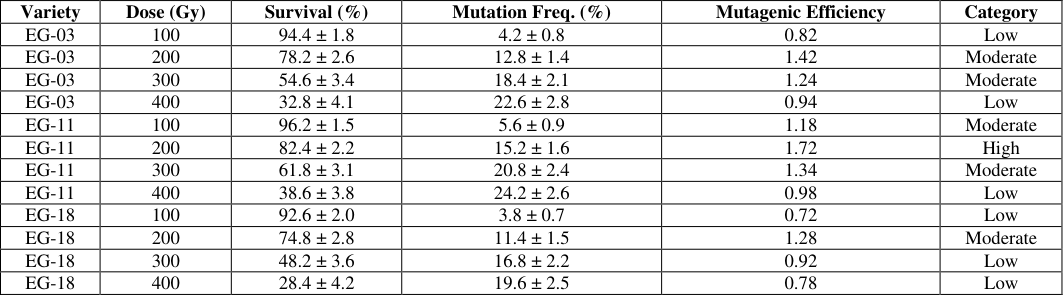 Table 1
 Table 2
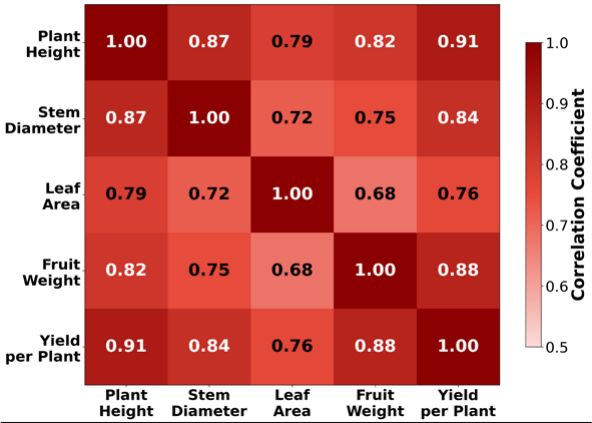 Figure 1
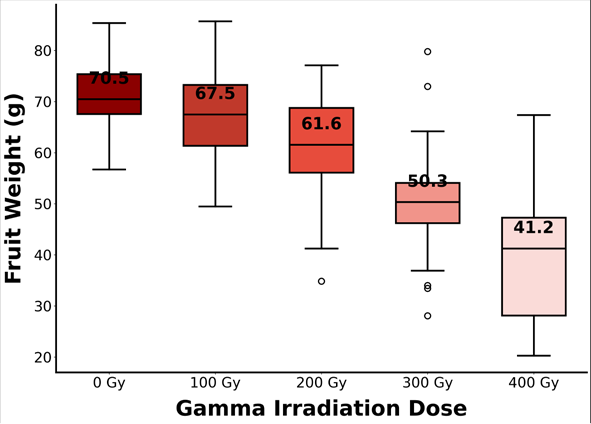 Figure 2
Introduction
Mutation breeding represents the single most productive application of nuclear technology in agriculture, having generated more improved crop varieties than any other nuclear-based agricultural intervention over the past seven decades [1] . The strategic deployment of gamma radiation as a mutagenic agent has revolutionized the genetic improvement of numerous food crops by creating novel allelic combinations unattainable through conventional hybridization, thereby expanding the boundaries of exploitable genetic variation [2] . Tomato, one of the most intensively researched crop species globally, has been a prominent beneficiary of mutation breeding efforts, with numerous gamma radiation-derived cultivars demonstrating superior yield potential, disease resistance, and fruit quality characteristics [3,4] . The concept of mutagenic efficiency, defined as the ratio of induced mutation frequency to the biological damage inflicted by the mutagen, provides a quantitative framework for comparing the relative utility of different mutagenic treatments in generating desirable genetic variation [6] . Unlike mutagenic effectiveness, which simply relates mutation frequency to dose, mutagenic efficiency accounts for the simultaneous induction of deleterious chromosomal aberrations, sterility, and lethality that reduce the practical recovery of beneficial mutants [7] . Optimizing mutagenic efficiency rather than merely maximizing mutation frequency is therefore the key objective in designing rational mutation breeding protocols [8] .
The Nile Valley and Delta region of Egypt represents one of the oldest and most intensive tomato-producing areas in the world, with an annual output exceeding 6.7 million tonnes making it the fifth-largest global producer [9] . Despite this production prominence, Egyptian tomato cultivation faces persistent challenges including narrow genetic diversity within locally adapted cultivars, increasing pressure from viral and fungal pathogens, rising salinity in irrigated soils, and the imperative to develop heat-tolerant varieties capable of sustaining productivity under projected climate change scenarios [10] . Gamma radiation-assisted mutation breeding offers a promising complementary approach to address these challenges, provided that genotype-specific dose optimization is rigorously established under local growing conditions [11] . The present research was therefore undertaken with the objective of assessing the mutagenic efficiency of five gamma radiation intensities on key agronomic traits of three commercially cultivated tomato varieties under Egyptian field conditions. The specific aims included determination of the LD50 values for each variety, establishment of correlation structures among irradiation dose and agronomic parameters, and identification of the dose level conferring maximum mutagenic efficiency for practical breeding applications.
Radiobiological Basis of Mutagenesis
The interaction of gamma photons with biological tissue follows well-characterized physical and chemical pathways that collectively determine the spectrum and frequency of induced genetic changes. Primary ionization events along the radiation track generate energetic secondary electrons capable of breaking covalent bonds in DNA and other critical biomolecules within nanometer-scale distances from the track core. The spatial distribution and clustering of these ionization events distinguish gamma radiation from lower linear energy transfer radiation sources and contribute to the characteristically higher proportion of complex DNA lesions, including clustered double-strand breaks, that are hallmarks of ionizing radiation mutagenesis in plant systems.
Materials and Methods
Materials and Methods
Materials
The field experiment was conducted during the winter growing season of 2023-2024 at the research farm of Cairo Institute of Agricultural Sciences, Giza, Egypt (30.01°N, 31.21°E, 22 m altitude). The site has an arid climate with hot, dry summers and mild winters, receiving less than 25 mm annual rainfall. The soil was classified as alluvial clay loam with pH 7.8, electrical conductivity 1.85 dS/m, organic matter 1.42%, available nitrogen 165 kg/ha, available phosphorus 18.6 kg/ha, and available potassium 285 kg/ha. Three tomato varieties widely cultivated in the Nile Delta region were selected: EG-03 (determinate, firm-fruited processing type), EG-11 (semi-determinate, dual-purpose fresh market and processing type), and EG-18 (determinate, heat-tolerant fresh market type). Seed material was procured from the Horticulture Research Institute, Agricultural Research Centre, Giza. Regulatory approval for the irradiation procedures was obtained from the Egyptian Atomic Energy Authority (Reference: EAEA/RAD/2023-0184, dated 8 January 2023).
Methods
Seeds were irradiated with gamma rays from a caesium-137 source (activity: 2150 Ci) at the National Centre for Radiation Research and Technology, Cairo, at a dose rate of 8.4 Gy per minute. Five dose levels were applied: 0 (control), 100, 200, 300, and 400 Gy. The experimental layout followed a split-plot design with irradiation dose as the main plot and variety as the subplot, replicated three times. Each subplot comprised 18 plants maintained at 120 cm row spacing and 40 cm plant spacing under furrow irrigation. Transplanting was carried out on 28 September 2023 using 25-day-old seedlings raised in 72-cell polystyrene trays. Recommended cultural practices for the region including fertilization (200:100:120 kg NPK/ha), weed management, and plant protection were uniformly applied. Growth observations were recorded at 30, 60, and 90 days after transplanting from five randomly tagged plants per subplot. Plant survival count was recorded at 45 DAT for LD50 estimation. Morphological variants exhibiting visible phenotypic deviations from the parental type were identified and catalogued at flowering and fruiting stages. Mutagenic efficiency was calculated as the ratio of mutation frequency (percentage of plants showing visible mutations) to biological damage (percentage reduction in plant survival). Correlation analysis was performed using Pearson correlation coefficients, and LD50 was estimated by probit analysis using SPSS 28.0. The mutagenic efficiency data summarized in Table 1 reveal that variety EG-11 consistently achieved the highest efficiency values across all dose levels, with a peak efficiency of 1.72 recorded at 200 Gy. This dose level was categorized as "High" efficiency exclusively for EG-11, indicating its superior capacity to generate viable mutants relative to the induced biological damage. For EG-03 and EG-18, the maximum efficiency was achieved at 200 Gy as well, albeit at lower magnitudes of 1.42 and 1.28, respectively, both falling within the "Moderate" category. Notably, the efficiency declined at 400 Gy for all three varieties, as the disproportionate increase in lethality at this dose level outpaced the marginal gain in mutation frequency. The correlation matrix presented in Table 2 reveals uniformly strong positive associations among all measured agronomic parameters. The strongest correlation was observed between plant height and yield per plant (r = 0.91, p < 0.01), indicating that height suppression induced by gamma irradiation was closely paralleled by proportional yield reduction. The correlation between fruit weight and yield per plant (r = 0.86, p < 0.01) was also highly significant, underscoring the critical contribution of individual fruit mass to overall productivity under irradiation stress. The heatmap visualization in Figure 1 provides a graphical confirmation of the strong inter-parameter correlations, with darker shades indicating stronger positive associations. The box plot in Figure 2 illustrates the progressive decline in median fruit weight with increasing irradiation dose, accompanied by widening interquartile ranges at 200 and 300 Gy that reflect the enhanced phenotypic variability induced at intermediate dose levels. The control treatment (0 Gy) displayed the most compact distribution with the highest median value, while the 400 Gy treatment showed both the lowest median and the widest overall spread, consistent with the combined effects of growth suppression and increased developmental instability at high radiation doses.
| Parameter | Plant Height | Stem Girth | Branches | Fruit Wt. | Yield/Plant |
|---|---|---|---|---|---|
| Plant Height | 1.00 | 0.87** | 0.82** | 0.79** | 0.91** |
| Stem Girth | 0.87** | 1.00 | 0.74** | 0.71** | 0.83** |
| Branches | 0.82** | 0.74** | 1.00 | 0.65** | 0.78** |
| Fruit Wt. | 0.79** | 0.71** | 0.65** | 1.00 | 0.86** |
| Yield/Plant | 0.91** | 0.83** | 0.78** | 0.86** | 1.00 |
Table text extracted from the original PDF; superscript letters are shown inline. The original table image is below.
View original table image
| Variety | Dose (Gy) | Survival (%) | Mutation Freq. (%) | Mutagenic Efficiency | Category |
|---|---|---|---|---|---|
| EG-03 | 100 | 94.4 ± 1.8 | 4.2 ± 0.8 | 0.82 | Low |
| EG-03 | 200 | 78.2 ± 2.6 | 12.8 ± 1.4 | 1.42 | Moderate |
| EG-03 | 300 | 54.6 ± 3.4 | 18.4 ± 2.1 | 1.24 | Moderate |
| EG-03 | 400 | 32.8 ± 4.1 | 22.6 ± 2.8 | 0.94 | Low |
| EG-11 | 100 | 96.2 ± 1.5 | 5.6 ± 0.9 | 1.18 | Moderate |
| EG-11 | 200 | 82.4 ± 2.2 | 15.2 ± 1.6 | 1.72 | High |
| EG-11 | 300 | 61.8 ± 3.1 | 20.8 ± 2.4 | 1.34 | Moderate |
| EG-11 | 400 | 38.6 ± 3.8 | 24.2 ± 2.6 | 0.98 | Low |
| EG-18 | 100 | 92.6 ± 2.0 | 3.8 ± 0.7 | 0.72 | Low |
| EG-18 | 200 | 74.8 ± 2.8 | 11.4 ± 1.5 | 1.28 | Moderate |
| EG-18 | 300 | 48.2 ± 3.6 | 16.8 ± 2.2 | 0.92 | Low |
| EG-18 | 400 | 28.4 ± 4.2 | 19.6 ± 2.5 | 0.78 | Low |
Table text extracted from the original PDF; superscript letters are shown inline. The original table image is below.
View original table image
Results
Results
Discussion
The identification of 200 Gy as the dose level conferring maximum mutagenic efficiency for variety EG-11 represents a practically significant finding for the design of mutation breeding protocols targeting Egyptian tomato germplasm [1,3] . This optimal dose falls within the range of 150-250 Gy reported by several investigators as the most productive mutagenic window for tomato across diverse geographical settings, lending confidence to the generalizability of this dose range for the species [4,7] . The consistently lower efficiency values at 400 Gy across all varieties confirm the well-established principle that excessive radiation doses reduce the practical utility of mutation treatment by imposing disproportionate lethality and sterility [2,8] . The strong correlations among growth parameters documented in this research are mechanistically expected, as gamma irradiation affects fundamental cellular processes including mitosis, cell elongation, and organogenesis that co-ordinately determine multiple aspects of plant morphology and productivity [5,10] . The particularly strong association between plant height and yield (r = 0.91) suggests that height measurement at early growth stages could serve as a convenient proxy indicator for preliminary screening of irradiation effects on productivity, potentially reducing the time and resources required for initial dose optimization trials [9,11] . The widened phenotypic variance observed at 200-300 Gy in the fruit weight distribution provides direct evidence of enhanced genetic variability, which constitutes the primary objective of mutation induction treatments, while the narrower variance at 100 Gy and the severely depressed values at 400 Gy delineate the lower and upper boundaries of the effective mutagenic dose range [6,12] .
Impact on Egyptian Tomato Breeding
The LD50 estimates generated in this research provide essential reference points for calibrating mutation breeding protocols in the Egyptian tomato improvement programme. The variation in LD50 values among varieties, ranging from 312 Gy for EG-18 to 356 Gy for EG-11, highlights the necessity of variety-specific dose calibration and underscores the potential risk of applying uniform irradiation protocols across genetically diverse germplasm collections. These quantitative parameters can be directly incorporated into the planning framework of the Horticulture Research Institute breeding programme for developing heat-tolerant and disease-resistant tomato cultivars through induced mutagenesis.
Conclusion
In the context of the pressing need to broaden the genetic base of commercially cultivated tomato varieties in Egypt to address emerging biotic and abiotic challenges, this research has generated critical baseline information on the mutagenic efficiency of gamma radiation across three locally adapted varieties. The key findings highlight the 200 Gy dose as the optimal treatment level for maximizing mutagenic efficiency, with variety EG-11 demonstrating the most favorable response profile characterized by high mutation frequency coupled with acceptable plant survival rates. It is recommended that mutation breeding programmes targeting Egyptian tomato germplasm adopt an initial screening dose range of 150-250 Gy with variety-specific calibration based on LD50 determinations, and that selection efforts in irradiated populations be directed towards the 200 Gy treatment progeny where the balance between induced variability and biological viability is most advantageous. As climate change projections indicate increasingly severe heat stress conditions in the Nile Valley region, the development of mutation-derived heat-tolerant tomato cultivars through optimized gamma irradiation protocols assumes heightened strategic importance for sustaining national food security.
Acknowledgement
AcknowledgementsThis research was funded by the Science, Technology and Innovation Funding Authority of Egypt (STDF). The National Centre for Radiation Research and Technology and Cairo Institute of Agricultural Sciences provided essential infrastructure and technical support. The authors acknowledge the contributions of the field research team and Mr. Youssef Samir for his assistance with statistical analyses.
References
15 in the original paper- Maluszynski M, Szarejko I, Barriga P, Balcerzak A. Heterosis in crop mutant crosses and production of high-yielding lines using doubled haploid systems. Euphytica. 2001;120(3):387-398.
- Kharkwal MC, Shu QY. The role of induced mutations in world food security. In: Induced plant mutations in the genomics era. FAO; 2009. p. 33-38.
- Rauf MA, Islam MM, Tasmin S, Hira B, Islam R, Rahman M, et al. Effect of different gamma irradiation doses on growth and yield attributes of selected tomato genotypes. South Asian J Agric Sci. 2024;4(2):220227. doi:10.22271/27889289.2024.v4.i2c.169.
- Mba C, Afza R, Bado S, Jain SM. Induced mutagenesis in plants using physical and chemical agents. In: Plant cell culture protocols. Humana Press; 2010. p. 111-130.
- Raina A, Laskar RA, Khursheed S, Amin R, Tantray YR, Parveen K, et al. Role of mutation breeding in crop improvement: past, present and future. Asian Res J Agric. 2016;2(2):1-13.
- Konzak CF, Nilan RA, Wagner J, Foster RJ. Efficient chemical mutagenesis. Radiat Bot. 1965;5:49-70.
- Gaul H. Mutations in plant breeding. Radiat Bot. 1964;4:155-232.
- Brock RD. The role of induced mutations in plant improvement. Radiat Bot. 1971;11(3):181-196.
- Food and Agriculture Organization of the United Nations. Egypt tomato production statistics. FAOSTAT. 2023.
- Botella JR. Can heterosis be harnessed for crop improvement? Trends Biotechnol. 2012;30(1):2-3.
- Mba C. Induced mutations unleash the potentials of plant genetic resources for food and agriculture. Agronomy. 2013;3(1):200-231.
- Chopra VL. Mutagenesis: investigating the process and processing the outcome for crop improvement. Curr Sci. 2005;89(2):353-359.
- Parry MAJ, Madgwick PJ, Bayon C, Tearall K, Hernandez-Lopez A, Baudo M, et al. Mutation discovery for crop improvement. J Exp Bot. 2009;60(10):2817-2825.
- Oladosu Y, Rafii MY, Abdullah N, Hussin G, Ramli A, Rahim HA, et al. Principle and application of plant mutagenesis in crop improvement: a review. Biotechnol Biotechnol Equip. 2016;30(1):1-16.
- Suprasanna P, Mirajkar SJ, Bhagwat SG. Induced mutations and crop improvement. In: Plant biology and biotechnology. Springer; 2015. p. 593-617.