
Research article · 2026 · Full text
International Journal of Biology SciencesInsect microbiome as a novel frontier in sustainable pest management: Current advances, mechanistic insights, biotechnological applications, and future opportunities
Volume 8(7) · Pages 219–235 · DOI: 10.33545/26649926.2026.v8.i7c.948 ↗
Research areasInsect symbiosis and bacterial influencesEntomopathogenic Microorganisms in Pest ControlInvertebrate Immune Response Mechanisms
Abstract
Author-writtenAgricultural insect pests represent one of the major biological constraints to global food security, causing substantial losses in crop productivity through direct feeding damage and indirect transmission of plant pathogens. The extensive reliance on synthetic insecticides has resulted in widespread resistance evolution, disruption of beneficial organisms, environmental contamination, and reduced long-term sustainability of conventional pest management systems. In this context, the insect microbiome has emerged as a critical determinant of pest ecology and a promising target for next-generation pest control strategies. Insects exist as complex holobionts in which microbial communities, including bacteria, fungi, archaea, viruses, and protists, contribute fundamentally to host nutrition, development, immunity, detoxification, reproduction, and ecological adaptation. Recent advances have demonstrated that microbial symbionts can enhance insect survival by supplementing nutrient-deficient diets, degrading plant defensive compounds, and increasing tolerance to synthetic insecticides. Conversely, these microbial dependencies create exploitable vulnerabilities that can be targeted for sustainable pest suppression. This review provides a comprehensive overview of the functional ecology of insect-associated microbiomes and evaluates their applications in modern pest management. Particular emphasis is placed on microbiome-mediated detoxification, symbiont manipulation, paratransgenesis, symbiont-assisted RNA interference (RNAi), microbial disruption approaches, and the integration of microbiome strategies with biologica control programs. Advances in multi-omics technologies, metagenomics, metabolomics, culturomics, synthetic biology, and gnotobiotic insect systems have enabled researchers to move beyond microbial community description toward mechanistic understanding of host– microbe interactions. However, challenges associated with microbiome variability, ecological safety, engineered microorganism release, regulatory frameworks, and non-target effects remain significant barriers to field implementation. Future pest management approaches wil likely depend on integrating microbiome-based interventions within holistic integrated pest management (IPM) frameworks, considering the insect holobiont as the fundamental ecological unit for sustainable agricultural innovation.
Summary
Source-checkedPlain-language reading of the full paper, prepared with AI and checked against the text. Each point links to the authors' own words.
Why it matters
- Agricultural insect pests significantly threaten global food security by damaging crops directly and spreading plant pathogens. View evidence ↗
- Heavy use of synthetic insecticides has led to environmental pollution, harm to beneficial species, and the evolution of pesticide resistance. View evidence ↗
- Insects are viewed as 'holobionts,' meaning they are integrated systems where diverse microbes are essential for their survival, growth, and immunity. View evidence ↗
The question
- The paper aims to review how the functional ecology of insect microbiomes can be applied to develop sustainable pest management strategies. View evidence ↗
What they did
- The review synthesizes data from advanced tools including multi-omics, metagenomics, culturomics, and gnotobiotic (controlled microbial) insect models. View evidence ↗
What they found
- Certain microbes, such as Buchnera aphidicola in aphids, provide essential nutrients that allow pests to survive on nutrient-poor plant sap. View evidence ↗
- Microbes in the gut of coffee berry borers degrade caffeine, enabling the insect to feed on toxic coffee plants. View evidence ↗
- Metagenomic data shows that pest microbiomes contain genes that can degrade organophosphates, pyrethroids, and neonicotinoids, contributing to insecticide resistance. View evidence ↗
- Some gut bacteria protect pests from biological control agents, such as entomopathogenic fungi, by producing antifungal metabolites. View evidence ↗
- Paratransgenesis, using engineered bacteria like Rhodococcus rhodnii to express antimicrobial peptides, can reduce pathogen development in insects. View evidence ↗
- Symbiont-mediated RNAi uses engineered bacteria (e.g., E. coli or Serratia) to deliver gene-silencing molecules that target essential pest genes. View evidence ↗
- Removing bacterial communities with antibiotics has been shown to decrease the tolerance of some insect pests to insecticides. View evidence ↗
What it means
- The authors conclude that microbiome-based strategies should be integrated into broader Integrated Pest Management (IPM) frameworks rather than replacing them. View evidence ↗
- A major barrier to implementation is the high variability of insect microbiomes across different species, locations, and environments. View evidence ↗
- The use of engineered microbes poses ecological risks, specifically the potential for horizontal gene transfer to native microbial populations. View evidence ↗
Figures & tables
From the original paper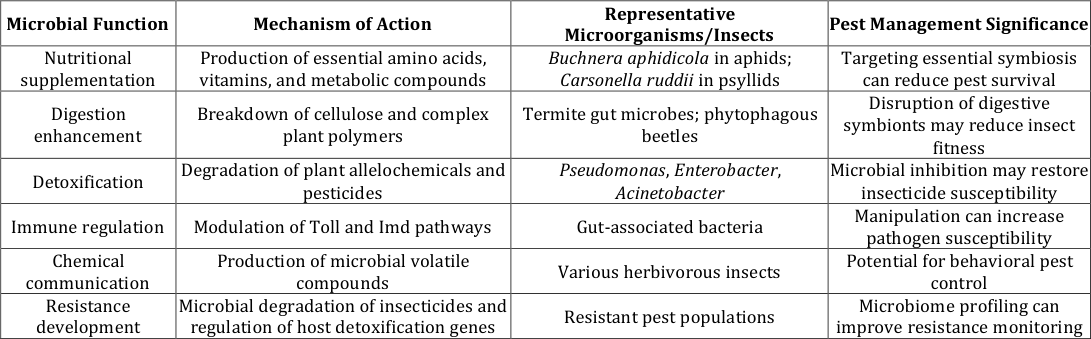 Table 1
Introduction
Agricultural insect pests remain among the most significant biological threats to global crop production, affecting agricultural productivity, economic stability, and food security worldwide. It has been estimated that insect pests contribute substantially to annual crop losses, with damage occurring through direct consumption of plant tissues, destruction of harvested products, and transmission of economically important plant pathogens. Historically, chemica insecticides have been the primary approach for controlling pest populations because of their rapid effectiveness and broad-spectrum activity. However, decades of intensive insecticide application have resulted in the emergence of resistant pest populations, contamination of agricultural ecosystems, reduction of natural enemy populations, and unintended impacts on biodiversity (Goulson, 2022) [1] . These limitations have highlighted the urgent requirement for innovative pest management approaches that provide effective suppression while minimizing ecological disruption. The development of sustainable pest management strategies has traditionally focused on approaches such as biological control, host plant resistance, pheromone-based manipulation, and genetically engineered crops. Although these methods have significantly contributed to reducing pesticide dependency, their effectiveness is often constrained by pest adaptation, environmental variability, and evolutionary responses. For example, the widespread deployment of Bacillus thuringiensis (Bt)-based technologies has resulted in the evolution of resistance in several economically important insect pests, emphasizing the need for alternative control mechanisms that target fundamental biological processes rather than relying solely on external toxic compounds. Within this emerging framework, the insect microbiome has gained considerable attention as a previously underexploited component of pest biology. The insect microbiome refers to the diverse assemblage of microorganisms associated with insects, including bacteria, archaea, fungi, viruses, and protists, which collectively influence host physiology and ecological performance. Modern ecological perspectives recognize insects not as independent organisms but as integrated biological systems, or holobionts, consisting of the host and its associated microbial partners. This concept suggests that microbial genomes contribute significantly to host adaptation, metabolism, and evolutionary potential (Douglas, 2023) [2] . The hologenome theory further proposes that natural selection can act upon the combined genetic information of the host and its microbiota, providing a framework for understanding rapid ecological adaptation in insect populations. Microbial symbionts play essential roles in many insect groups, particularly those feeding on nutritionally restricted diets. Sapfeeding insects such as aphids and psyllids rely on intracellular bacterial symbionts that provide essential amino acids and nutrients absent from plant phloem. The aphid endosymbiont Buchnera aphidicola, for example, supplies essential metabolic compounds required for host survival and reproduction, enabling aphids to exploit nutritionally poor plant resources (Douglas, 2023) [2] . Similarly, Carsonella ruddii in psyllids contributes to nutritional complementation in hosts dependent on plant vascular tissues. These examples demonstrate that microbial partners have become functionally integrated into insect physiology over evolutionary timescales. Beyond nutritional support, insect-associated microbiota influence host adaptation through detoxification of plant secondary metabolites and synthetic insecticides. Herbivorous insects encounter a complex chemical environment containing defensive compounds produced by plants, including alkaloids, terpenoids, phenolics, and other secondary metabolites. Gutassociated bacteria possess enzymatic capabilities that allow them to transform or neutralize these compounds, thereby increasing host tolerance to chemically defended plants (Engel and Moran, 2013) [3] . For example, gut microbes associated with coffee berry borers have been shown to participate in caffeine degradation, allowing these insects to exploit coffee plants containing naturally toxic alkaloids (Ceja-Navarro et al., 2015) [4] . Similar microbial-mediated detoxification mechanisms have been identified in agricultural pests exposed to synthetic insecticides, suggesting that microbiomes may contribute directly to resistance evolution (Xia et al., 2023) [5][6][7] . The interaction between insect microbiomes and chemical resistance represents a major emerging concern in modern pest management. Traditional resistance monitoring has primarily focused on insect genetic mechanisms, including mutations in target-site genes and increased expression of detoxification enzymes such as cytochrome P450 monooxygenases, esterases, and glutathione S-transferases. However, increasing evidence indicates that microbial communities may complement or enhance these host-mediated resistance mechanisms by metabolizing xenobiotics or modifying host detoxification pathways (Jing et al., 2020) [8] . Consequently, insecticide resistance should increasingly be viewed as a property of the insect-microbe system rather than solely an attribute of the insect genome. Microbiomes also influence interactions between insect pests and their host plants by modifying plant defense responses, insect feeding behavior, and ecological communication. Certain microbial associates produce effector molecules that interfere with plant immune signaling pathways, including jasmonic acid-and salicylic acid-mediated defense mechanisms, thereby improving insect feeding success (Mason et al., 2019) [9][10][11][12] . In addition, microbial metabolites and volatile compounds can influence insect attraction, aggregation, and oviposition behavior, creating new opportunities for behavioral pest management approaches. The recognition of microbiomes as essential regulators of insect biology has stimulated the development of microbiome-based pest management technologies. Unlike conventional insecticides that directly target insect physiology, microbiomebased approaches aim to manipulate the biological partnerships that sustain pest fitness. Emerging strategies include paratransgenesis, where engineered microbial symbionts deliver anti-pest molecules; symbiont-mediated RNA interference (RNAi), where microorganisms produce genesilencing molecules against essential pest genes; and microbiome disruption approaches designed to destabilize beneficial microbial associations (Whitten et al., 2023; Rajagopal, 2022) [13,14] . These strategies offer the possibility of highly specific pest suppression with reduced impacts on nontarget organisms. Recent advances in sequencing technologies and functional genomics have accelerated understanding of insect microbiome complexity.
High-throughput metagenomics, metatranscriptomics, metabolomics, culturomics, and synthetic microbial community approaches have enabled researchers to investigate not only which microorganisms are present but also how they influence host biology. Gnotobiotic insect models, in which insects are raised under controlled microbial conditions, have further allowed experimental validation of microbial functions and causal relationships. These technological developments are transforming insect microbiome research from a descriptive field into a mechanistic and applicationoriented discipline. Despite significant progress, several challenges must be addressed before microbiome-based pest management can become a practical agricultural tool. Microbial communities are highly dynamic and influenced by insect species, developmental stage, geographic location, diet, environmental conditions, and agricultural practices (Vásquez-Rifo et al., 2022) [15] . Furthermore, the ecological consequences of releasing engineered microorganisms remain uncertain, particularly regarding horizontal gene transfer, persistence in natural environments, and impacts on beneficial insects and microbial communities. Regulatory uncertainty surrounding genetically modified symbionts and microbial biocontrol agents also represents a major barrier to commercialization. Therefore, a comprehensive understanding of insect microbiome function is essential for developing safe, effective, and environmentally compatible pest management systems. This review discusses the current advances in insect microbiome research, emphasizing microbial contributions to pest biology, emerging microbiome-based control technologies, methodological innovations, limitations, and future opportunities. By incorporating the insect holobiont concept into integrated pest management frameworks, microbiomebased strategies may provide a transformative pathway toward sustainable agricultural production.
Composition and Functional Ecology of the Insect Microbiome
The insect microbiome represents a highly complex and dynamic microbial ecosystem consisting of bacteria, fungi, archaea, viruses, and protists that occupy diverse anatomical niches within the insect body. These microorganisms may exist as obligate intracellular symbionts, facultative extracellular associates, gut inhabitants, or transient environmental microorganisms acquired through feeding and habitat interactions. The functional importance of these microbial communities extends far beyond simple coexistence, as they actively regulate insect nutrition, development, immunity, reproduction, ecological adaptation, and interactions with host plants and pathogens (Engel and Moran, 2013; Douglas, 2023) [3, 2] . The composition and activity of insect-associated microbiomes are shaped by multiple factors, including host evolutionary history, diet, developmental stage, environmental conditions, and geographic variation. Consequently, understanding microbiome structure and function is essential for developing targeted microbiome-based pest management strategies.
Taxonomic Diversity, Structural Organization, and Evolutionary Association of Insect Microbiomes
The insect microbiome exhibits remarkable taxonomic diversity, with bacteria representing the most extensively studied and functionally dominant microbial group. Across agricultural insect pests, bacterial communities are commonly dominated by members of the phyla Proteobacteria, Firmicutes, Actinobacteria, and Bacteroidetes, although the relative abundance of individual taxa varies considerably among insect species and ecological niches (Engel and Moran, 2013) [3] . Genera such as Enterobacter, Pseudomonas, Serratia, Acinetobacter, Stenotrophomonas, and Wolbachia frequently occur in insect-associated microbial communities and contribute diverse metabolic and ecological functions.
The spatial organization of insect microbiota can be broadly classified into three major categories: intracellular symbionts, host-associated surface microbiota, and gut-associated microbial communities. Intracellular symbionts represent some of the most evolutionarily integrated insect-microbe relationships. These microorganisms reside within specialized host cells called bacteriocytes and are typically transmitted vertically from mothers to offspring. The best-characterized example is the aphid endosymbiont Buchnera aphidicola, which has co-evolved with aphids for millions of years and provides essential amino acids lacking in phloem sap (Douglas, 2023) [2] . Similarly, Carsonella ruddii associated with psyllids contributes to nutritional supplementation in insects feeding on nutrient-poor plant fluids. In contrast to obligate intracellular symbionts, gut microbiomes are generally more diverse, flexible, and environmentally influenced. Gut-associated microbial communities are acquired through feeding behavior, plant interactions, soil exposure, and contact with conspecific individuals. This ecological flexibility allows gut microorganisms to rapidly respond to dietary changes and environmental pressures, including exposure to plant defensive chemicals and insecticides (Jing et al., 2020) [8] . Unlike obligate symbionts, many gut microorganisms are not essential for host survival but provide adaptive advantages under specific ecological conditions. Fungal and viral members of the insect microbiome also contribute important biological functions. Yeast-associated communities are particularly significant in insects feeding on plant tissues rich in complex carbohydrates, including sapfeeding Hemiptera and wood-associated beetles. Some fungal symbionts contribute digestive enzymes, detoxification pathways, and nutrient acquisition capabilities. Viral components, including bacteriophages and insectassociated viruses, influence microbial community structure by regulating bacterial populations and modifying host immune responses. Together, these diverse microbial members form an integrated ecological network that influences insect fitness and adaptation.
Recent evolutionary perspectives suggest that microbial partners can contribute directly to insect diversification and ecological success. The holobiont concept proposes that host and microbial genomes collectively influence evolutionary outcomes, allowing insects to acquire novel traits through microbial association rather than genetic mutation alone (Douglas, 2023) [2] . Such relationships have enabled many insect pests to exploit challenging ecological niches, including nutritionally restricted plant resources and chemically defended crops.
Nutritional Symbiosis and Metabolic Complementation
One of the most fundamental functions of insect-associated microorganisms is the enhancement of host nutritional capacity. Many herbivorous insects exploit nutritionally incomplete plant resources, containing insufficient levels of essential amino acids, vitamins, sterols, or nitrogen compounds required for growth and reproduction. Microbial symbionts compensate for these deficiencies by providing metabolic products that the host cannot synthesize independently. Phloem-feeding insects represent one of the most striking examples of nutritional dependence on microbial partners. Plant phloem contains abundant carbohydrates but limited essentia amino acids, creating a nutritional challenge for specialized sapfeeders such as aphids, whiteflies, and psyllids. Primary endosymbionts overcome this limitation by synthesizing essential amino acids and recycling nitrogen-containing compounds. In aphids, Buchnera aphidicola converts hostderived metabolic intermediates into essential amino acids, thereby supporting rapid population growth and reproduction (Douglas, 2023) [2] . Similarly, psyllids maintain highly specialized bacterial associations that provide nutritional metabolites required for survival on plant vascular tissues. These long-term evolutionary associations demonstrate that microbial partners can become functionally integrated into insect physiology, effectively acting as additional metabolic organs. Gut microbiota also contribute significantly to digestion and energy acquisition, particularly in insects consuming complex plant materials. Wood-feeding termites provide one of the most extensively studied examples of microbial-assisted digestion. Their gut microbial communities contain bacteria, archaea, and protists capable of degrading cellulose and lignocellulose, allowing termites to utilize otherwise inaccessible plant biomass (Brune, 2014) [16] . These microbial fermentation processes produce short-chain fatty acids and other metabolites that serve as important energy sources for the host. In phytophagous agricultural pests, gut bacteria facilitate the breakdown of plant cell wall components, improve nutrient extraction efficiency, and influence developmental performance. Removal of these microbial communities through antibiotic treatment or environmental manipulation frequently results in reduced growth, delayed development, decreased fecundity, or increased mortality, demonstrating their functional importance (Dillon and Dillon, 2004) [17] . The nutritional contributions of insect microbiomes have significant implications for pest management. Because many economically important pests depend on specific microbial partners for survival, disrupting these associations may provide an opportunity for selective pest suppression. Targeting essential metabolic pathways within microbial symbionts could potentially reduce pest fitness without affecting non-target organisms that lack similar dependencies.
Microbial Contributions to Detoxification and Xenobiotic Metabolism
Insect herbivores encounter a chemically challenging environment consisting of both naturally occurring plant defense compounds and synthetic pesticides. Plants produce diverse secondary metabolites, including alkaloids, terpenoids, phenolics, and glucosinolates, which function as chemical barriers against herbivory. Similarly, agricultural pest populations are increasingly exposed to insecticides during crop protection programs. The ability of insects to tolerate these compounds depends not only on host-encoded detoxification mechanisms but also on microbial metabolic capabilities. The insect gut microbiome functions as an external metabolic system capable of transforming toxic compounds before they reach host tissues. Microbial enzymes, including esterases, oxidoreductases, hydrolases, and transferases, participate in the degradation or modification of xenobiotic molecules. Several bacterial genera, including Pseudomonas, Enterobacter, Acinetobacter, and Stenotrophomonas, possess metabolic pathways associated with degradation of plant allelochemicals and synthetic pesticides (Jing et al., 2020) [8] . A well-characterized example of microbial-mediated detoxification occurs in the coffee berry borer (Hypothenemus hampei), where gut-associated bacteria contribute to caffeine degradation. The ability of these microorganisms to metabolize caffeine allows the insect to exploit coffee berries, a resource containing naturally toxic alkaloids (Ceja-Navarro et al., 2015) [4] . This example demonstrates how microbial partners can expand insect ecological niches by overcoming chemical barriers imposed by host plants. Microbiome-mediated pesticide detoxification has become increasingly important in understanding insecticide resistance evolution. Recent metagenomic analyses have revealed that agricultural pest-associated microbial communities contain genes capable of degrading multiple pesticide classes, including organophosphates, pyrethroids, and neonicotinoids (Xia et al., 2023) [5][6][7] . These microbial capabilities may reduce pesticide effectiveness by lowering the toxic exposure experienced by insects, thereby increasing survival during chemical control programs. Furthermore, microbial detoxification may accelerate evolutionary resistance by allowing insect populations to persist under pesticide selection pressure. Individuals carrying beneficial detoxifying microbes may survive treatments and subsequently pass associated microbial communities to offspring or acquire them horizontally from the environment. Therefore, insecticide resistance should be considered a combined outcome of host genetic adaptation and microbial ecological adaptation.
Immune Regulation, Pathogen Protection, and Colonization Resistance
The insect microbiome plays a central role in regulating host immune responses and protecting insects from microbial pathogens. Although insects lack adaptive immunity comparable to vertebrates, they possess sophisticated innate immune systems involving conserved pathways such as Toll and immune deficiency (Imd) signalling pathways. Microbial communities influence these pathways by stimulating immune development, producing antimicrobial compounds, and maintaining microbial balance within host tissues. Commensal microorganisms protect a phenomenon known as colonization resistance, where beneficial microbes prevent invasion by harmful pathogens through competition for nutrients, occupation of ecological niches, and production of antimicrobial compounds. This protective function has been widely observed in insect systems, where resident microbiota can reduce susceptibility to bacterial pathogens, fungi, and viruses. However, this microbial protection can negatively influence biological control strategies. Entomopathogenic fungi such as Beauveria bassiana and Metarhizium anisopliae are widely used as microbial control agents against insect pests. Certain gut bacteria can inhibit fungal infection by producing antifungal metabolites or enhancing host immune responses, thereby reducing pathogen effectiveness (Raymond and Federici, 2017) [18] . Conversely, disruption of microbial communities can increase pest susceptibility to biological control agents. Sublethal exposure to insecticides, environmental stress, or antimicrobial compounds may disturb microbial equilibrium, resulting in dysbiosis and weakened host defences. This creates opportunities for integrated strategies where microbiome disruption is combined with entomopathogens to enhance pest mortality.
The immune-modulatory role of microbiomes also influences interactions between pests and parasitoids. Microbial communities may affect host suitability for parasitoid development by altering immune responses, nutritional status, and physiological conditions (Douglas et al., 2021) [19] . Therefore, microbiome-mediated immune regulation represents an important ecological factor influencing the success of biological control programs. The insect microbiome represents a highly integrated biological system that contributes fundamentally to pest survival, adaptation, and ecological dominance. Through nutritional supplementation, detoxification, immune regulation, and metabolic adaptation, microbial partners enhance the ability of insects to exploit agricultural environments. However, these same dependencies create vulnerabilities that can be targeted through microbiome-based pest management strategies. Understanding the structure and functional ecology of insect microbiomes provides the foundation for developing precision interventions that manipulate microbial communities rather than relying exclusively on conventional chemical control.
Microbiome-Mediated Plant-Insect Interactions and Translational Strategies for Microbiome-Based Pest Management
The ecological interactions between insects, plants, and microorganisms represent one of the most complex networks in terrestrial ecosystems. Herbivorous insects do not interact with plants as independent organisms; instead, their microbial partners frequently influence the outcome of these interactions by modifying insect physiology, altering plant defence responses, and affecting multitrophic relationships involving predators, parasitoids, and pathogens. Recent evidence indicates that insect-associated microbiota act as an intermediate biological interface connecting insect pests with their plant hosts, thereby shaping host specialization, feeding efficiency, ecological adaptation, and pest population dynamics (Mason et al., 2019; Zhang et al., 2023) [9,20] . Understanding these microbial-mediated interactions provides new opportunities for pest management because many insectassociated microbes represent essential components of pest fitness. Manipulating these microbial partnerships may allow researchers to develop highly specific control approaches that target the ecological dependencies of pests rather than relying exclusively on broad-spectrum chemical insecticides.
Microbiome-Mediated Modulation of Plant Defence Responses
Plants have evolved sophisticated defence mechanisms to protect themselves against herbivorous insects. These defences include physical barriers, the production of secondary metabolites, the activation of immune signalling pathways, and the emission of volatile organic compounds that attract natural enemies of herbivores. However, many successful insect pests have evolved mechanisms to overcome or suppress these plant defences, and microbial symbionts increasingly appear to contribute to this adaptive capacity. During feeding, herbivorous insects introduce oral secretions containing both insect-derived molecules and microbial components into plant tissues. These microbial-derived molecules can influence plant immune recognition and alter defence signalling pathways. In particular, microbial associates have been implicated in regulating jasmonic acid (JA)-and salicylic acid (SA)-mediated defence pathways, which are central regulators of plant responses against herbivory and pathogens (Mason et al., 2019) [9][10][11][12] . For example, bacteria associated with phloem-feeding insects such as whiteflies (Bemisia tabaci) may influence plant transcriptional responses during feeding, reducing the effectiveness of plant defence activation. These interactions enable prolonged feeding periods and increase insect reproductive success. The microbial contribution to host manipulation therefore represents an extended phenotype of the insect, where microbial genes indirectly enhance pest performance. The role of microbial communities in modifying plant-insect interactions is not limited to suppression of plant defences. Some microorganisms can increase insect tolerance to plant toxins by degrading defensive compounds before they reach insect tissues. Thus, microbial partners provide a biochemical shield that allows insects to colonize plant species that would otherwise be unsuitable. Recent reviews emphasize that insect gut microbiota regulate multiple aspects of plant-insect interactions, including insect adaptation, plant physiological responses, and higher trophic-level ecological interactions (Zhang et al., 2023) [20] .
Microbial Regulation of Insect Host Plant Adaptation and Specialization
Host plant specialization is a major evolutionary driver in herbivorous insects. Many agricultural pests are capable of exploiting specific crop plants because of physiological adaptations that enable them to tolerate plant nutritional limitations and chemical defences. Microbial symbionts contribute significantly to this process by expanding the metabolic capabilities of insects. Microbial partners may facilitate host range expansion by enabling insects to overcome novel plant chemical barriers. When insects encounter new host plants, microbial communities can rapidly change through environmental acquisition or population shifts, allowing adaptation to different chemical environments. This microbial flexibility provides insects with an adaptive advantage under changing agricultural conditions. The relationship between microbial adaptation and insect specialization is particularly important in invasive pest species. Invasive insects often encounter unfamiliar plant species and environmental conditions after geographic expansion. Microbiome plasticity may contribute to successful establishment by providing metabolic pathways necessary for survival in new habitats (Vásquez-Rifo et al., 2022) [15] . The exchange of microorganisms between plants and insects further complicates these interactions. Plants harbour diverse microbial communities on their surfaces and within tissues, and feeding insects continuously acquire and modify microbial populations through their diet. This exchange creates a dynamic microbial network connecting plant and insect microbiomes (Pirttilä et al., 2023) [21] .
Microbial Influence on Insect Behavior and Chemical Communication
In addition to physiological functions, insect-associated microorganisms influence insect behaviour through the production of microbial metabolites and volatile organic compounds (mVOCs). Chemical communication plays a critical role in insect host selection, aggregation, mating, and oviposition decisions. Gut bacteria can modify plant volatile profiles by altering plant metabolism or producing compounds that influence insect sensory perception. Certain microorganisms generate attractive chemical signals that enhance insect localization of suitable hosts, while others produce metabolites that repel competitors or natural enemies. Microbial regulation of insect behaviour has important implications for pest management. If microbial-derived chemical signals responsible for host attraction can be identified, they may be incorporated into behavioural control approaches such as:
• microbial-based attract-and-kill systems,
• push-pull strategies, • pheromone enhancement approaches,
• and ecological manipulation of pest movement.
Such strategies could reduce dependence on insecticides by targeting pest decision-making processes rather than directly eliminating insects.
Translational Strategies for Microbiome-Based Pest Management
The increasing recognition of microbial contributions to insect survival has shifted microbiome research from descriptive ecology toward practical pest management applications. Unlike conventional insecticides that target physiological pathways within insects, microbiome-based approaches exploit microbial dependencies, modify microbial functions, or use microorganisms as biological delivery systems. Several innovative approaches are currently being developed, including paratransgenesis, symbiont-mediated RNA interference, microbiome disruption, probiotic interference, and microbiome-assisted biological control enhancement.
Paratransgenesis: Engineering Symbiotic Microbes for Pest Suppression
Paratransgenesis is an emerging biotechnology approach in which insect-associated microorganisms are genetically modified to express molecules capable of reducing pest survival, reproduction, or pathogen transmission. Unlike traditional genetic modification approaches that directly alter the insect genome, paratransgenesis modifies the microbial partners associated with the host. The concept was initially developed for disease-vector insects, particularly the Chagas disease vector Rhodnius prolixus. Engineered strains of the symbiotic bacterium Rhodococcus rhodnii expressing antimicrobial peptides demonstrated the ability to reduce pathogen development within the insect host (Caljon et al., 2022) [22] . In agricultural systems, paratransgenesis has potential applications against crop pests through microbial delivery of:
• and metabolic disruptors.
The major advantage of this strategy is that microbial symbionts naturally colonize insect hosts, potentially providing continuous delivery of active molecules. Furthermore, engineering microbes may overcome some limitations associated with direct insect genome editing. However, environmental safety remains a major concern. Engineered microorganisms may persist in ecosystems, exchange genetic material with native microbes, or affect non-target organisms. Therefore, stable chromosomal integration systems, biological containment mechanisms, and rigorous ecological risk assessments are required before field application.
Symbiont-Mediated RNA Interference (RNAi)
RNA interference technology has emerged as a powerful tool for insect pest management because it enables sequence-specific suppression of essential insect genes. However, practical implementation of RNAi-based pest control faces challenges related to dsRNA stability, degradation by gut enzymes, delivery efficiency, and production costs. Symbiont-mediated RNA interference addresses these limitations by using microorganisms as biological factories for continuous dsRNA production. Engineered bacteria such as Escherichia coli and Serratia species can produce doublestranded RNA molecules targeting essential pest genes, allowing insects to acquire gene-silencing molecules through feeding. This approach provides several advantages: 1. Protection of dsRNA from environmental degradation. 2. Continuous production within insect-associated microbial communities. 3. Reduced application frequency compared with external dsRNA sprays. 4. Potential host specificity through carefully designed RNA sequences.
Recent studies have demonstrated the potential of symbiontmediated RNAi against multiple insect groups, including coleopteran, hemipteran, and lepidopteran pests (Whitten et al., 2023; Rajagopal, 2022) [13,14] . Nevertheless, challenges remain regarding microbial colonization specificity, stability of engineered strains, horizontal transmission, and unintended gene silencing effects on non-target organisms.
Microbiome Disruption and Probiotic Interference Approaches
Many insect pests rely on microbial partners for essential physiological functions; therefore, disrupting these microbial relationships represents a promising control strategy. Microbiome disruption aims to induce ecological imbalance within insect-associated microbial communities, resulting in reduced growth, impaired reproduction, weakened immunity, or increased susceptibility to pathogens. Several approaches are being investigated:
Antibiotic-Based Symbiont Elimination
Experimental removal of essential bacterial symbionts has demonstrated severe fitness consequences in several insects. For example, elimination of nutritional symbionts in sapfeeding insects can reduce survival and reproductive capacity.
Bacteriophage-Based Microbial Targeting
Bacteriophages provide a potential precision tool for targeting specific bacterial members of insect microbiomes. Unlike broad-spectrum antibiotics, phage-based approaches may selectively remove beneficial microbial taxa while minimizing ecological disturbance.
Competitive Microbial Replacement
Another strategy involves introducing non-beneficial or antagonistic microorganisms that compete with essential symbionts. Such microbial replacement could reduce pest fitness without requiring chemical insecticides. These approaches represent a transition from killing insects directly toward manipulating the microbial ecosystems that sustain pest populations.
Exploiting Microbiome-Entomopathogen Interactions for Biological Control Enhancement
The effectiveness of biological control agents is strongly influenced by insect microbiome composition. Entomopathogenic fungi such as Beauveria bassiana and Metarhizium anisopliae infect insects through cuticular penetration and internal colonization. However, insectassociated microbes may either enhance or inhibit pathogen success. Certain gut bacteria produce antifungal metabolites that protect insects against fungal infection, reducing biological control efficiency. Conversely, microbiome disturbance caused by environmental stress or chemical exposure may weaken insect defenses and increase susceptibility to pathogens. Therefore, combining microbiome manipulation with biological control agents represents a promising integrated strategy. For example:
• microbiome-disrupting compounds + fungal pathogens, • selective insecticides + microbial pathogens, • engineered symbionts + biological control agents.
Such combinations may enhance pest mortality while reducing chemical pesticide dependence. Microbiome-mediated plantinsect interactions reveal that insect pests are not independent organisms but complex ecological systems dependent on microbial partnerships. These microbial associations influence host adaptation, plant defense suppression, chemical communication, and resistance development. Exploiting these relationships through paratransgenesis, RNAi delivery systems, microbial disruption, and enhanced biological control represents a promising direction for sustainable pest management. However, successful translation from laboratory research to agricultural application requires deeper understanding of microbial ecology, host specificity, environmental stability, and biosafety considerations.
The Microbiome-Insecticide Resistance Nexus: Implications for Resistance Evolution and Management
The rapid evolution of insecticide resistance represents one of the greatest challenges confronting modern agricultural pest management. Traditionally, resistance development has been attributed primarily to genetic changes within insect populations, including target-site mutations, enhanced detoxification enzyme activity, reduced insecticide penetration, and behavioral avoidance mechanisms. However, increasing evidence indicates that insecticide resistance is not exclusively a property of the insect genome but also involves interactions between insects and their associated microbial communities. The insect microbiome functions as an additional adaptive system that can influence pesticide metabolism, host detoxification pathways, physiological stress responses, and survival under chemical exposure (Goulson, 2022; Xia et al., 2023) [1,[5][6][7] . The recognition of microbiome-mediated resistance has introduced a broader ecological perspective in which the insect and its microbial partners collectively determine the outcome of pesticide exposure. This concept suggests that resistance management strategies should move beyond monitoring insect genetic mutations alone and incorporate microbial composition and functional capacity as important predictive indicators.
Microbial Detoxification as a Driver of Insecticide Resistance
The insect gut microbiome represents a metabolically active environment containing microorganisms capable of degrading diverse chemical compounds. Many bacteria possess genes encoding enzymes involved in xenobiotic transformation, including esterases, oxidoreductases, hydrolases, glutathione-S-transferases, and cytochrome P450-associated pathways. These enzymes can modify insecticides before they interact with their molecular targets, thereby reducing toxic effects on the host insect. Members of bacterial genera such as Pseudomonas, Enterobacter, Acinetobacter, and Stenotrophomonas have demonstrated the ability to metabolize insecticidal compounds, including organophosphates, pyrethroids, and neonicotinoids (Jing et al., 2020) [8] . Through enzymatic degradation, microbial communities may decrease the effective concentration of insecticides within the insect body and increase host survival following chemical exposure. Metagenomic investigations have revealed that insectassociated microbial communities contain diverse pesticideresistance genes, suggesting that microbial populations within agricultural pests represent an overlooked reservoir of detoxification potential (Xia et al., 2023) [5][6][7] . These microbial genes may originate from environmental microbial communities exposed to agricultural chemicals and can subsequently be acquired by insects through feeding, habitat interaction, or horizontal microbial transfer. This microbial contribution is particularly important because microorganisms can evolve rapidly compared with their insect hosts. Short generation times, high mutation rates, and horizontal gene exchange allow microbial communities to rapidly acquire and distribute new metabolic capabilities. Therefore, insect-associated microbiomes may act as rapidly adaptable biochemical systems that enhance pest survival under chemical selection pressure.
Interaction Between Microbiome and Host Detoxification Pathways
Microbial influence on insecticide resistance extends beyond direct pesticide degradation. Gut microorganisms can regulate host physiological pathways involved in detoxification and stress responses. Microbial metabolites and signaling molecules can modify the expression of insect genes associated with chemical tolerance, including cytochrome P450 monooxygenases, esterases, and antioxidant enzymes. The interaction between microbial signals and host metabolism creates a cooperative defense system in which both insect and microbial genomes contribute to chemical adaptation. For example, microbial colonization may stimulate increased expression of detoxification genes in the insect midgut, allowing enhanced processing of toxic compounds. This host-microbe cooperation has significant implications for resistance evolution. Insect populations carrying beneficial microbial communities may survive pesticide treatments even when their genetic resistance mechanisms are weak. These surviving individuals can subsequently maintain resistant microbial populations within the insect population, accelerating resistance development. Consequently, insecticide resistance should increasingly be viewed as a holobiont-level adaptive trait, where resistance phenotype emerges from interactions between insect genetic factors and microbial functional capacity (Douglas, 2023) [2] .
Microbiome Manipulation as a Resistance Management Strategy
The increasing recognition of microbial contributions to insecticide resistance has opened new avenues for developing innovative resistance management strategies. Conventional resistance management approaches primarily focus on altering insect physiological mechanisms, such as modifying target-site sensitivity, enhancing detoxification enzyme activity, or reducing insecticide penetration. However, emerging evidence indicates that associated microbial communities can also contribute significantly to pesticide tolerance by providing additional metabolic capabilities to insect hosts. Therefore, manipulating insect-associated microbiomes represents a promising strategy to restore pesticide susceptibility and improve the effectiveness of existing insecticidal compounds. One of the earliest approaches explored for microbiome-based resistance management involves antibiotic-mediated suppression of insect-associated microorganisms. Experimental removal of bacterial communities through antibiotic exposure has demonstrated reduced insecticide tolerance in several insect pest species, suggesting that microbial symbionts may act as important contributors to resistance development. By eliminating bacteria capable of degrading or modifying insecticide molecules, antibiotic treatment can increase insect vulnerability to chemical control agents. For example, disruption of specific bacterial populations involved in xenobiotic metabolism may reduce the overall detoxification capacity of resistant insect populations. However, large-scale application of antibiotics in agricultural systems is not considered a sustainable strategy because of several ecological and public health concerns. Continuous antibiotic use may accelerate the development of antibiotic-resistant microorganisms, disrupt beneficial microbial communities associated with plants and insects, and create unintended changes in ecosystem microbial networks. Therefore, antibiotic-based approaches are primarily considered experimental tools for understanding microbiome functions rather than practical field-level solutions.
To overcome the limitations associated with non-specific microbial suppression, targeted microbial inhibition strategies are being developed to selectively eliminate resistanceassociated microorganisms while maintaining beneficial microbial interactions. These approaches aim to achieve precision manipulation of insect microbiomes through advanced biological technologies, including bacteriophages, antimicrobial peptides, microbial metabolic inhibitors, and CRISPR-based antimicrobial systems. Bacteriophages, which specifically infect bacterial hosts, offer a potential method for selectively reducing bacterial taxa responsible for insecticide degradation without broadly affecting the surrounding microbial community. Similarly, antimicrobial peptides and microbial inhibitors can be designed to suppress particular microbial functions associated with resistance mechanisms. Emerging CRISPRbased antimicrobial technologies provide additional opportunities by enabling sequencespecific targeting of bacterial genomes, allowing researchers to selectively disrupt resistanceconferring microbial populations. Although these approaches remain in early developmental stages, they represent a future direction toward precision microbiome engineering for sustainable pest management. Another promising application involves microbiome-informed insecticide selection, where microbial diagnostic information is integrated into pest management decision-making. Current insecticide recommendations are generally based on pest species identification, resistance monitoring, and environmental considerations. However, future integrated pest management (IPM) systems may incorporate microbiome profiling as an additional predictive tool. Rapid sequencing technologies could enable identification of microbial communities present within pest populations and determine whether specific microorganisms possess genes associated with insecticide degradation or detoxification. Such microbiome-based diagnostics could assist farmers and pest management professionals in selecting insecticides that remain effective against local pest populations while avoiding unnecessary chemical applications. This approach could contribute to more precise pesticide usage, delay resistance evolution, and support environmentally sustainable pest control programs.
Advanced Methodological Approaches in Insect Microbiome Research
The advancement of insect microbiome research from basic microbial identification studies toward functional and applied applications has been strongly influenced by developments in molecular biology, next-generation sequencing technologies, bioinformatics, and systems biology approaches. Earlier investigations of insect-associated microorganisms mainly relied on culture-dependent techniques, which provided limited information because many microbial species cannot be cultivated under conventional laboratory conditions. Modern microbiome research has overcome these limitations through high-throughput sequencing and multi-omics technologies, enabling comprehensive analysis of microbial diversity, functional capabilities, metabolic activities, spatial distribution, and interactions between microorganisms and their insect hosts. These advanced approaches have transformed insect microbiome studies from descriptive community profiling into mechanistic investigations that explain how microbial communities influence insect adaptation, development, immunity, and resistance evolution. Integration of genomic, transcriptomic, metabolomic, and ecological data now allows researchers to identify specific microbial functions involved in pest survival and develop targeted microbiome-based management strategies.
Metagenomics and Functional Microbiome Profiling
Metagenomic approaches have revolutionized insect microbiome research by enabling culture independent characterization of microbial communities directly from insect samples. Highthroughput sequencing of conserved microbial markers, particularly bacterial 16S ribosomal RNA (16S rRNA) genes, has been widely used to determine microbial diversity, abundance patterns, and community composition across different insect species. These studies have revealed that insects harbor complex microbial assemblages consisting of primary and secondary symbionts, environmental microorganisms, and transient microbial populations acquired through feeding and habitat interactions.
Although amplicon sequencing provides valuable information regarding microbial composition, it does not provide direct information about microbial functions. The presence of a microbial species does not necessarily indicate its active contribution to host biology. Therefore, shotgun metagenomic sequencing has become increasingly important because it enables direct analysis of microbial genomes and functional genes present within insectassociated microbial communities. Metagenomic approaches provide insights into the metabolic potential of microbiomes by identifying genes associated with pesticide degradation, nutrient acquisition, stress tolerance, host interaction, and environmental adaptation. Recent metagenomic investigations have demonstrated that insect microbiomes contain diverse functional genes capable of influencing host survival and ecological adaptation. Microbial genes involved in xenobiotic degradation pathways may contribute to insecticide resistance by enabling microorganisms to metabolize toxic compounds before they reach insect physiological targets. Similarly, microbial pathways associated with nutrient biosynthesis can supplement insect nutritional requirements, particularly in insects feeding on nutrientdeficient diets. Functional microbiome analyses have therefore provided important evidence that microbial communities represent an additional adaptive mechanism supporting insect pest persistence under environmental and chemical stress conditions (Xia et al., 2023) [5][6][7] .
Metatranscriptomics and Metabolomics
While metagenomic analysis reveals the genetic potential of microbial communities, it does not determine whether identified genes are actively expressed under specific environmental conditions. Metatranscriptomics overcomes this limitation by analysing microbial RNA expression patterns and identifying actively functioning microbial pathways. This approach provides a dynamic understanding of microbiome activity and enables researchers to determine how microbial communities respond to environmental challenges, including chemical exposure, dietary changes, and host physiological stress (Douglas, 2015; Engel & Moran, 2013) [23,3] . Metatranscriptomic studies are particularly valuable for investigating microbiome responses during insecticide exposure, plant feeding, pathogen infection, and environmental stress conditions. Microbial genes associated with xenobiotic degradation may remain transcriptionally inactive under normal conditions but become strongly expressed after exposure to toxic compounds, indicating their role in insect adaptation and pesticide tolerance (Kikuchi et al., 2012; Xia et al., 2023) [24, 57] . Such functional analyses provide stronger evidence than taxonomic surveys alone because they identify active microbial pathways responsible for host phenotypic changes. Metabolomics provides an additional functional layer by directly measuring microbial-and host-derived chemical products. Advanced analytical approaches such as liquid chromatography-mass spectrometry (LC-MS), gas chromatography-mass spectrometry (GC-MS), and nuclear magnetic resonance (NMR) spectroscopy allow detection of microbial metabolites, including amino acids, volatile compounds, secondary metabolites, and signalling molecules. These metabolites can influence insect nutrition, immunity, behaviour, development, and interactions with host plants (Pangallo et al., 2021; Zheng et al., 2020) [25] . The integration of metagenomics, metatranscriptomics, and metabolomics provides a comprehensive framework for understanding insect-microbe interactions. Metagenomics identifies microbial functional potential, transcriptomics determines actively expressed pathways, and metabolomics reveals biochemical outcomes of microbial activity. Such multiomics approaches are increasingly important for establishing mechanistic relationships between microbial functions and insect phenotypes (Moran et al., 2019; Douglas, 2022) [26,27] .
Culturomics and Synthetic Microbial Ecology
A major limitation in traditional insect microbiome research has been the inability to isolate and experimentally study a large proportion of insect-associated microorganisms under laboratory conditions. Although culture-independent sequencing approaches have revealed extensive microbial diversity, many microorganisms remain poorly characterized because they require specific nutritional requirements, hostderived factors, or environmental conditions for growth. This phenomenon, commonly referred to as the "great plate count anomaly," highlights the gap between microbial diversity detected through sequencing and microorganisms available for functional experimentation (Staley & Konopka, 1985) [28] . Recent advances in culturomics, which combines highthroughput cultivation strategies with genome sequencing and biochemical characterization, have provided new opportunities to recover previously uncultured microorganisms and investigate their ecological and functional roles within insect hosts (Lagier et al., 2016; Alain & Querellou, 2009) [29,30] . Culturomics approaches involve the application of diverse cultivation conditions, including variations in nutrient composition, temperature, oxygen availability, pH, and incubation periods, to maximize recovery from complex biological samples. When combined with wholegenome sequencing and functional characterization, these approaches enable researchers to link specific microbial taxa with metabolic capabilities and ecological functions (Lagier et al., 2018) [31] . In insect microbiome research, culturomics provides an essential platform for validating the functions predicted through metagenomic analyses by allowing direct experimental testing of isolated microorganisms. For example, cultured insect-associated bacteria can be evaluated for their ability to degrade insecticides, synthesize essential nutrients, influence host immunity, or modify insect developmental processes (Engel & Moran, 2013; Douglas, 2015) [3,23] . The isolation and characterization of insect-associated microorganisms also provide opportunities for developing novel microbial-based pest management tools. Specific bacterial symbionts may serve as candidates for biological control applications because of their ability to interfere with pathogen transmission, alter insect fitness, or increase pest susceptibility to chemical and biological control agents. For instance, microbial symbionts associated with insects have been shown to influence host adaptation, environmental tolerance, and resistancerelated traits, demonstrating the importance of experimentally validating microbial functions rather than relying solely on community composition analyses (Moran et al., 2008; Ferrari & Vavre, 2011) [32,33] . Furthermore, cultured microorganisms provide a foundation for genetic engineering approaches, allowing modification of microbial traits for controlled delivery of insecticidal molecules, RNA interference (RNAi) triggers, or other biologically active compounds (Whitten et al., 2016) [34] . Synthetic microbial ecology represents a further advancement beyond traditional microbiome analysis by enabling the construction of defined microbial communities containing selected microbial members. Unlike naturally occurring microbiomes, which contain highly complex and variable microbial assemblages, synthetic communities (SynComs) allow researchers to experimentally manipulate individual microbial components and evaluate their specific contributions to host biology. This reductionist approach provides valuable insights into microbial interactions, cooperation, competition, and functional redundancy within insectassociated microbial ecosystems (Großkopf & Soyer, 2014; Lawson et al., 2019) [35,36] . In insect pest management, synthetic microbial communities have significant potential as precision biological tools. Engineered microbial consortia may be designed to perform specific functions, including production of insecticidal compounds, suppression of resistanceassociated pathways, modulation of insect immunity, or delivery of gene-silencing molecules. Such approaches could overcome several limitations associated with conventional biological control methods by improving specificity, stability, and predictability under field conditions (Douglas, 2018; Zheng et al., 2020) [37,25] . For example, synthetic communities containing microorganisms with complementary metabolic functions could be developed to interfere with pest development or enhance the effectiveness of existing control strategies. However, successful application of culturomics-derived microorganisms and synthetic microbial communities requires careful consideration of ecological stability, host compatibility, microbial interactions, and biosafety. Introduced microbial communities must be capable of establishing stable associations with target insects while minimizing unintended effects on nontarget organisms and environmental microbial networks. Future research combining culturomics, synthetic biology, genome engineering, and ecological modelling will be essential for developing safe and effective microbiome-based pest management technologies (Douglas, 2022; Mueller & Sachs, 2015) [27,38] .
Gnotobiotic Insect Models and Experimental Validation
Gnotobiotic insect models represent one of the most powerful experimental approaches for establishing causal relationships between microorganisms and insect phenotypes. Conventional microbiome studies based on sequencing approaches primarily identify correlations between microbial composition and host traits; however, they often cannot determine whether specific microorganisms directly contribute to observed biological outcomes. Gnotobiotic systems overcome this limitation by allowing insects to be maintained under experimentally controlled microbial conditions, including complete microbial elimination (axenic conditions), colonization with single microbial species (mono-associated systems), or introduction of defined microbial communities (synthetic microbiota systems) (Douglas, 2015; Engel & Moran, 2013) [23,3] . The use of germ-free or microbiologically controlled insects enables researchers to experimentally separate host-derived effects from microbiome-mediated effects. By comparing insects lacking microorganisms with insects colonized by specific microbial strains, researchers can determine the contribution of individual microbial partners to important biological processes, including development, reproduction, immunity, nutrient acquisition, stress tolerance, and chemical resistance (Dillon & Dillon, 2004; Douglas, 2018) [17,37] . These approaches have been particularly valuable in demonstrating that insect-associated microorganisms are not merely passive passengers but active regulators of host physiology and ecological adaptation. Insect gnotobiotic models have provided important insights into the functional role of symbiotic microorganisms in pest adaptation. For example, experiments involving defined microbial colonization have demonstrated that specific bacterial symbionts can enhance host survival under nutritional stress, improve utilization of plant-derived compounds, and contribute to tolerance against environmental toxins (Moran et al., 2008; Kikuchi et al., 2012) [32,24] . In the context of insecticide resistance, gnotobiotic approaches allow direct testing of whether resistance-associated microorganisms enhance pesticide tolerance. Removal of candidate microbial symbionts followed by reintroduction experiments can determine whether specific bacterial taxa are responsible for insecticide degradation or modification of host detoxification pathways (Kikuchi et al., 2012; Xia et al., 2023) [24,[5][6][7] . Furthermore, gnotobiotic systems provide essential platforms for evaluating beneficial microorganisms as biological control agents. Candidate microbes identified through metagenomic or culturomic studies can be introduced into controlled insect populations to assess their effects on pest fitness, pathogen susceptibility, or insecticide sensitivity. Such experimental validation is critical because microbial associations observed under natural conditions may represent indirect relationships rather than direct functional interactions (Douglas, 2022) [27] . Despite their advantages, establishing gnotobiotic insect models remains technically challenging because many insect species require complex environmental conditions and microbial interactions for normal development. Maintaining sterility, achieving stable microbial colonization, and reproducing natural ecological conditions require specialized methodologies. Future improvements in gnotobiotic technologies, combined with multi-omics approaches, will provide stronger mechanistic understanding of insect-microbe interactions and accelerate development of microbiome-based pest management strategies (Douglas, 2018; Mueller & Sachs, 2015) [37,38] .
Challenges, Biosafety Issues, and Regulatory Considerations
Although microbiome-based pest management represents a promising alternative approach for sustainable agriculture, several biological, ecological, technological, and regulatory challenges must be addressed before these technologies can be widely implemented. Unlike conventional chemical pesticides, microbiome-based approaches involve complex living systems capable of reproduction, evolution, environmental interaction, and adaptation. Therefore, their development requires careful evaluation of microbial stability, ecological consequences, host specificity, and long-term environmental safety (Douglas, 2015; Mueller & Sachs, 2015) [23,38] . A major challenge is translating laboratory-based microbiome discoveries into reliable field applications. Microbial communities within insects are highly dynamic and influenced by multiple interacting factors, including host genetics, environmental conditions, agricultural practices, diet composition, geographic location, and seasonal variation. Consequently, microbial interventions that perform effectively under controlled laboratory conditions may show reduced effectiveness under natural agricultural environments (Engel & Moran, 2013; Douglas, 2022) [3,27] . The development of microbiome-based products also requires optimization of microbial formulation, delivery methods, persistence, and host colonization efficiency. Unlike chemical compounds with predictable physical and chemical properties, living microorganisms may behave differently depending on ecological conditions. Therefore, understanding microbial ecology and environmental interactions will be essential for designing stable and reproducible microbiome-based pest management systems.
7.1
Microbiome Variability and Environmental Dependence One of the most significant limitations associated with microbiome-based pest management is the considerable variability of insect-associated microbial communities. Insect microbiomes are not fixed structures but dynamic ecosystems that continuously change in response to biological and environmental factors. Microbial composition may differ among insect species, developmental stages, populations, geographic regions, host plants, and environmental conditions (Engel & Moran, 2013; Colman et al., 2012) [3,39] . Host diet represents one of the strongest factors influencing insect microbiome structure. Plantderived compounds, nutritional availability, and defensive metabolites can shape microbial community composition by selectively promoting microorganisms capable of utilizing specific resources or detoxifying harmful compounds. For herbivorous insects, microbial adaptation to plant secondary metabolites may contribute significantly to host range expansion and ecological success (Mason et al., 2019) [9][10][11][12] . Geographical variation further complicates microbiome-based pest management because insect populations from different regions may harbor distinct microbial communities with different functional capabilities. A microbial strain that enhances pesticide susceptibility or suppresses pest fitness in one location may not produce equivalent effects elsewhere due to differences in native microbiota, climate, soil conditions, or agricultural practices (Blow & Douglas, 2019) [40] . This ecological variability creates challenges for developing standardized microbiome-based products with consistent performance. Future strategies will require large-scale microbiome surveys combined with environmental metadata and predictive modelling approaches to identify microbial patterns associated with specific pest populations and agricultural ecosystems (Douglas, 2022) [27] .
Ecological Risks Associated with Engineered Microorganisms
The development of genetically engineered microbial symbionts introduces new opportunities for precision pest management but also raises important biosafety concerns. Unlike conventional pesticides, engineered microorganisms are living entities capable of reproduction, evolution, dispersal, and interaction with native microbial communities. These characteristics create unique ecological risks that must be carefully evaluated before environmental release (Mueller & Sachs, 2015; Ronda et al., 2019) [38,41,42] . One major concern associated with engineered microorganisms is horizontal gene transfer, where introduced genetic elements may move from modified microorganisms into naturally occurring microbial populations. Transfer of engineered genes could potentially alter environmental microbial communities or introduce unexpected traits into non-target microorganisms. This risk is particularly relevant when engineered traits provide ecological advantages, such as enhanced survival, metabolic capabilities, or resistance characteristics (Soucy et al., 2015) [43] . To minimize these risks, future microbial engineering approaches must incorporate robust biological containment strategies. These may include stable chromosomal integration of engineered genes, removal of unnecessary mobile genetic elements, inducible expression systems, dependency mechanisms, and genetic safeguards that limit survival outside the intended host environment (Ronda et al., 2019) [41,42] . Such "safe-by-design" approaches are increasingly recognized as essential components of responsible synthetic biology applications. Environmental persistence represents another important consideration. Engineered microorganisms introduced into insect populations may interact with native microbial communities, predators, parasitoids, pollinators, and soil ecosystems. Therefore, comprehensive ecological assessments must evaluate microbial survival, dispersal patterns, evolutionary stability, and potential impacts on non-target organisms before field deployment (Douglas, 2018) [37] . Future development of engineered microbial pest control systems will require collaboration among microbiologists, entomologists, ecologists, biotechnology experts, and regulatory authorities. Establishing effective containment strategies and environmental monitoring frameworks will be critical for ensuring that microbiome-based technologies provide agricultural benefits without creating unintended ecological consequences.
Non-Target Effects and Ecosystem Interactions
Agricultural ecosystems represent highly interconnected biological networks in which insect pests, beneficial insects, microorganisms, plants, and environmental factors interact continuously. Therefore, manipulation of insect-associated microbiomes for pest management must consider potential impacts beyond the target pest species. Unlike conventional chemical pesticides, which are generally evaluated based on toxicity profiles, microbiome-based technologies involve living organisms capable of establishing interactions with multiple components of ecological communities. Consequently, understanding non-target effects is a critical requirement for the safe development and deployment of microbiome-based pest management strategies (Douglas, 2015; Mueller & Sachs, 2015) [23, 38] . One major concern is the potential impact of microbiome manipulation on beneficial insects, including pollinators, predators, and parasitoids. Many beneficial arthropods also depend on microbial partners for essential biological functions such as nutrition, immune regulation, reproduction, and environmental adaptation. Alteration of microbial communities in non-target organisms could potentially influence their fitness, ecological roles, and population dynamics (Engel & Moran, 2013) [3] . For example, disruption of microbial associations in pollinators may affect nutritional acquisition and immune competence, potentially influencing colony health and ecosystem services provided by these organisms (Moran et al., 2012). Predatory and parasitoid insects represent important natural control agents within agricultural ecosystems. Microbiomebased pest management strategies that alter pest-associated microorganisms may indirectly influence natural enemy populations through changes in prey quality, pathogen susceptibility, or ecological interactions. Therefore, assessment of trophiclevel consequences will be necessary to determine whether microbiome interventions enhance or disrupt biological control processes (Dicke et al., 2020) [44] . Soil microbial communities and plant-associated microorganisms must also be considered during environmental risk assessment. Engineered or introduced microorganisms associated with insect hosts may interact with soil microbial networks through insect excreta, cadavers, or environmental dispersal. These interactions could potentially influence nutrient cycling, microbial diversity, and ecosystem functioning (Soucy et al., 2015) [43] . Therefore, future microbiome-based pest control programs should incorporate comprehensive ecological monitoring approaches, including analysis of microbial community changes in target and nontarget environments. The development of safe microbiome-based technologies will require a shift from targetspecific evaluation toward ecosystemlevel assessment. Advances in environmental DNA (eDNA) monitoring, metagenomic surveillance, and ecological modelling provide valuable tools for predicting and evaluating unintended consequences before large-scale agricultural implementation (Tabashnik & Carrière, 2017) [45] . Such approaches will be essential for ensuring that microbiome manipulation contributes to sustainable pest management without compromising biodiversity and ecosystem stability.
Regulatory Challenges
The transition of microbiome-based pest management technologies from laboratory research to agricultural application presents significant regulatory challenges. Existing pesticide regulations were primarily developed for chemical compounds or conventional biological control agents and may not adequately address technologies involving engineered microorganisms, synthetic microbial communities, or modified insect symbionts. Because microbiome-based approaches combine elements of biotechnology, microbial ecology, and biological control, regulatory frameworks must evolve to accommodate their unique characteristics (Marris, 2019) [46] . One important regulatory question concerns the classification of engineered microbial symbionts. Depending on their genetic modifications, ecological behaviour, and intended application, these organisms may fall under different regulatory categories, including genetically modified organisms (GMOs), microbial pesticides, or biological control agents. The absence of internationally harmonized definitions creates uncertainty regarding approval procedures, environmental risk assessment requirements, and monitoring obligations (NASEM, 2017) [47] . Risk assessment of microbiome-based technologies requires evaluation of several factors, including microbial identity, genetic stability, host specificity, environmental persistence, horizontal gene transfer potential, and effects on non-target organisms. Unlike conventional pesticides, where toxicity can often be measured through standardized laboratory assays, living microbial systems require evaluation of ecological interactions over longer time periods (Douglas, 2018) [37] . Another regulatory challenge involves post-release monitoring. Engineered microorganisms may evolve after environmental introduction, potentially acquiring new traits or adapting to local ecological conditions. Therefore, regulatory frameworks must incorporate long-term surveillance strategies capable of detecting ecological changes, microbial spread, or unexpected evolutionary outcomes (Ronda et al., 2019) [41,42] . International cooperation will be essential for establishing consistent regulatory guidelines. Harmonized approaches integrating principles from synthetic biology, environmental microbiology, biotechnology regulation, and agricultural safety will facilitate responsible commercialization while ensuring environmental protection. Development of transparent regulatory pathways will ultimately determine the successful adoption of microbiome-based pest management technologies.
Future Perspectives and Research Opportunities
The future development of insect microbiome-based pest management will depend on integrating microbial ecology with emerging technologies including synthetic biology, artificial intelligence (AI), precision agriculture, and advanced integrated pest management frameworks. Although recent studies have demonstrated that insect-associated microorganisms influence host nutrition, immunity, metabolism, stress tolerance, and insecticide resistance, translating these discoveries into practical agricultural applications requires movement beyond descriptive microbiome studies toward predictive and engineered microbial solutions (Douglas, 2022; Xia et al., 2023) [27,[5][6][7] . Future research will increasingly focus on understanding insect microbiomes as dynamic biological systems rather than simple collections of microbial species. Integration of multiomics approaches, including metagenomics, metatranscriptomics, metabolomics, and proteomics, will allow researchers to identify microbial pathways responsible for specific insect traits. These approaches can reveal functional microbial markers associated with pest adaptation, pesticide resistance, and environmental stress tolerance (Moran et al., 2019) [26] . Large-scale microbiome databases combined with computational modelling and machinelearning approaches may enable prediction of microbial community behaviour under different agricultural conditions. Such predictive systems could assist in identifying optimal microbial candidates, designing targeted interventions, and evaluating ecological risks before field application (Zhang et al., 2021) [48] . The development of stable, safe, and environmentally compatible microbiome-based technologies will require collaboration between microbiologists, entomologists, molecular biologists, computational scientists, and agricultural practitioners. Future pest management strategies will likely involve customized microbiome interventions designed according to specific pest species, environmental conditions, and crop systems rather than universal microbial solutions.
Synthetic Microbial Communities and Precision Pest Control
Synthetic microbial communities (SynComs) represent one of the most promising future approaches for microbiome-based pest management. Unlike naturally occurring microbial communities, which are highly complex and variable, SynComs consist of carefully selected microbial strains assembled under controlled conditions to perform defined biological functions. This approach allows researchers to overcome limitations associated with unpredictable microbial variation and develop more reliable microbiome-based interventions (Großkopf & Soyer, 2014; Lawson et al., 2019) [35,36] . Synthetic communities provide an experimental framework for identifying specific microbial contributions to insect physiology by allowing individual microbial members to be added, removed, or modified. Through this reductionist approach, researchers can determine how microbial interactions influence insect development, immunity, behaviour, nutrient acquisition, and resistance traits (Vorholt et al., 2017) [49] . Such knowledge is essential for designing microbial communities with predictable biological effects. Future SynCom-based pest management strategies may involve engineering microbial communities capable of delivering biologically active compounds, including insecticidal proteins, RNA interference molecules, metabolic inhibitors, or immunemodulating factors. Engineered microbial systems may provide continuous production of active molecules within insect hosts, potentially overcoming limitations associated with external application of biological control agents (Whitten et al., 2016) [34] . For example, symbiotic microorganisms could potentially be modified to produce doublestranded RNA molecules capable of silencing essential insect genes. This approach, known as symbiont-mediated RNA interference, offers advantages over conventional RNAi delivery because microorganisms may provide sustained production of gene-silencing molecules within the insect host environment (Whitten et al., 2016; Bonning & Smagghe, 2014) [34,50] . Similarly, microbial communities may be designed to interfere with insecticide resistance mechanisms by reducing detoxification capacity or modifying microbial pathways involved in pesticide degradation. Such strategies could restore insect susceptibility and improve the effectiveness of existing insecticides while reducing chemical application rates (Kikuchi et al., 2012) [24] . Compared with broad-spectrum chemical pesticides, synthetic microbial communities offer the possibility of highly specific pest control with reduced environmental impacts. However, successful implementation requires optimization of microbial stability, host colonization ability, ecological compatibility, and biosafety. Understanding interactions between introduced microbial communities, native microbiota, and environmental microbial networks will remain a major research priority (Mueller & Sachs, 2015) [38] . Future advances in synthetic biology, genome engineering, and microbial ecology are expected to transform SynComs from experimental systems into practical agricultural tools. By combining precision microbial design with ecological knowledge, synthetic microbial communities may provide a new generation of targeted, sustainable, and evolutionarily durable pest management technologies.
CRISPR-Based Engineering of Symbiotic Microorganisms
Recent advances in genome editing technologies, particularly CRISPR-based systems, have created new opportunities for engineering insect-associated microorganisms with improved biological functions, enhanced stability, and greater application potential in sustainable pest management. Traditional microbial engineering approaches frequently rely on plasmid-based expression systems; however, plasmid instability, metabolic burden on microbial hosts, and the possibility of horizontal gene transfer represent important limitations. CRISPR-mediated genome editing provides a more precise alternative by enabling targeted modification of microbial genomes, including insertion, deletion, and replacement of specific genetic sequences (Jiang et al., 2013; Barrangou & Doudna, 2016) [51,52] . The application of CRISPR technologies in insect-associated microorganisms may allow the development of engineered symbionts capable of producing biologically active molecules directly within insect hosts. Such engineered microorganisms could function as internal delivery platforms for insecticidal proteins, RNA interference (RNAi) molecules, antimicrobial compounds, or metabolic regulators. Unlike conventional pesticide applications, where active molecules are externally applied and rapidly degraded, symbiont-mediated delivery systems may provide continuous production of target molecules within the insect environment, potentially improving efficiency and reducing chemical inputs (Whitten et al., 2016; Douglas, 2018) [34,37] .
One promising application of engineered symbionts is the development of microbial platforms for RNA interferencebased pest control. RNAi technology relies on sequencespecific gene silencing through double-stranded RNA (dsRNA), which interferes with essential insect genes involved in development, reproduction, or survival. However, external application of dsRNA often faces challenges related to environmental instability, degradation, and limited uptake by target insects. Engineered symbiotic microorganisms may overcome these limitations by continuously producing RNA molecules inside insect hosts, thereby improving persistence and biological effectiveness (Whitten et al., 2016; Christiaens et al., 2020) [34,53] . CRISPR engineering may also enable modification of microbial pathways involved in insecticide resistance. Microorganisms associated with resistant insect populations frequently possess genes involved in xenobiotic degradation and detoxification processes. Targeted modification or removal of these microbial pathways may reduce resistance-associated microbial functions and increase pest susceptibility to conventional insecticides. Such approaches could provide a novel method for resistance management by targeting microbial contributions rather than relying exclusively on insect physiological mechanisms (Kikuchi et al., 2012; Xia et al., 2023) [24,[5][6][7] . Stable chromosomal integration of engineered traits represents an important advantage of CRISPR-based microbial engineering. Compared with plasmid-based systems, chromosomal integration generally provides improved genetic stability and reduces the likelihood of unintended gene transfer. Furthermore, future engineered symbionts may incorporate advanced biological containment strategies, including genetic dependency systems, kill switches, and environmentally responsive regulatory circuits to prevent uncontrolled environmental persistence (Ronda et al., 2019; Wright et al., 2015) [41,54] . Despite these opportunities, CRISPR-engineered microbial systems require careful evaluation before agricultural deployment. Important considerations include microbial host selection, genetic stability, ecological interactions, evolutionary changes after release, and effects on nontarget organisms. The development of safe and effective engineered symbionts will require integration of synthetic biology principles with ecological risk assessment and regulatory frameworks. Future advances in microbial genome engineering are expected to expand the potential of engineered symbiotic microorganisms as precision tools for insect pest management.
Integration with Precision Agriculture and Artificial Intelligence
The integration of microbiome science with precision agriculture and artificial intelligence (AI) represents a major advancement toward next-generation pest management systems. Modern agriculture increasingly relies on digital technologies, including remote sensing, automated pest monitoring, environmental sensors, and data-driven decisionsupport platforms. Incorporating microbiome information into these systems may provide additional biological indicators for predicting pest population dynamics, resistance development, and treatment responses (Liakos et al., 2018; Zhang et al., 2021) [55, 48] . Artificial intelligence and machine learning approaches can analyse large-scale datasets generated from microbiome sequencing, environmental monitoring, insect population surveys, and agricultural management practices. These computational approaches can identify complex relationships between microbial community composition and insect traits, including pesticide tolerance, host adaptation, and ecological performance. Machine learning models may therefore enable prediction of resistance risk before widespread control failure occurs (Kamilaris & Prenafeta-Boldú, 2018) [56] . Microbiome-based predictive models could significantly improve insecticide selection strategies. Current pesticide recommendations are generally based on pest identification, historical resistance data, and environmental conditions. However, microbiome-informed systems could incorporate microbial biomarkers associated with pesticide degradation or detoxification capacity. For example, detection of resistanceassociated microbial genes within pest populations could indicate reduced effectiveness of specific insecticides and guide alternative management decisions (Kikuchi et al., 2012; Xia et al., 2023) [24,[5][6][7] . Portable sequencing technologies represent another important development for field-level microbiome diagnostics. Nanoporebased sequencing platforms allow rapid microbial community analysis with minimal laboratory infrastructure. In the future, these technologies may enable farmers and pest management specialists to characterize insect microbiomes directly in agricultural fields and receive real-time recommendations regarding microbial interventions or chemical control strategies (Kilianski et al., 2015) [57] . Artificial intelligence may also support the design of microbiome-based interventions by predicting microbial compatibility, community stability, and ecological outcomes. Computational models can assist in identifying microbial combinations suitable for synthetic communities, predicting host-microbe interactions, and optimizing microbial formulations for specific agricultural environments (Lawson et al., 2019) [36] . However, successful integration of AI-driven microbiome management requires large, standardized datasets representing diverse insect species, geographic regions, environmental conditions, and agricultural systems. Data quality, model interpretability, and validation under field conditions remain important challenges. Future development of AI-powered pest management platforms will depend on combining biological knowledge with computational innovation to create reliable and practical decision-support systems.
Integration into Sustainable Integrated Pest Management
Microbiome-based pest management should not be considered a replacement for existing pest control approaches but rather as an advanced component of integrated pest management (IPM) systems. IPM relies on combining multiple complementary strategies, including biological control, host plant resistance, cultural practices, semiochemicals, and selective chemical inputs, to achieve effective pest suppression while minimizing environmental impacts (Kogan, 1998; Pretty, 2018) [58,59] . The integration of microbiome technologies into IPM frameworks provides an opportunity to improve pest management specificity and sustainability. Microbiome manipulation could enhance biological control by increasing pest susceptibility to predators, parasitoids, or pathogens. Additionally, engineered or naturally occurring microbial communities may reduce pest fitness through interference with nutrition, development, reproduction, or stress tolerance mechanisms (Douglas, 2015) [23] .
Combining microbiome diagnostics with selective insecticide application may also contribute to resistance management. Conventional insecticide-based programs often impose strong selection pressure, accelerating evolution of resistance. However, incorporating microbial information into pest management decisions could allow more targeted insecticide use, reducing unnecessary chemical exposure and delaying resistance development (Gould et al., 2018) [60] . Microbiome-based approaches may also complement crop improvement strategies. Resistant crop varieties often rely on plant defensive compounds that influence insect physiology and associated microbial communities. Understanding interactions between plant genotype, insect microbiome, and pest performance may provide opportunities for developing crops that naturally promote unfavorable microbial conditions within pest populations (Mason et al., 2019) [9][10][11][12] . Future IPM systems may therefore involve a combination of microbiome engineering, biological control agents, resistant crop varieties, precision agriculture technologies, and environmentally selective pesticides. Such integrated approaches are expected to provide greater durability because pest populations must overcome multiple ecological and physiological barriers simultaneously. The successful incorporation of microbiome technologies into IPM will require interdisciplinary collaboration among microbiologists, entomologists, agronomists, computational scientists, and farmers. combining microbial ecology with established pest management principles, future agricultural systems can move toward precision-based strategies that maximize pest suppression while minimizing ecological disruption.
Conclusion and Future Outlook
The insect microbiome has emerged as a fundamental component of insect biology, transforming the traditional understanding of insects from independent organisms into complex ecological units composed of host-microbe interactions. Microbial communities associated with insects influence essential biological processes, including nutrient acquisition, metabolism, immunity, reproduction, development, environmental adaptation, and chemica tolerance (Douglas, 2015; Engel & Moran, 2013) [23,3] . In agricultural pests, these microbial interactions frequently determine the ability of insects to exploit plant resources, overcome plant defensive mechanisms, and survive exposure to chemical and biological control agents. The recognition that insect microbiomes contribute directly to pest adaptation has created new opportunities for sustainable pest management. Unlike conventional insecticides that primarily target insect physiological pathways, microbiomebased strategies exploit biological dependencies between insects and their microbial partners. Approaches including microbiome disruption, paratransgenesis, symbiont-mediated RNA interference, engineered microbial delivery systems, and synthetic microbial communities represent promising alternatives for reducing dependence on broad-spectrum chemical pesticides (Whitten et al., 2016; Zheng et al., 2020) [34, 25] . Paratransgenesis represents one of the most innovative microbiome-based approaches, where naturally associated microorganisms are genetically modified to deliver biologically active molecules within insect hosts. This strategy has demonstrated potential for producing insecticidal compounds, interfering with pathogen transmission, and modifying insect physiological processes. Similarly, symbiont-mediated RNA interference provides a promising method for overcoming limitations associated with external dsRNA application by enabling continuous production of gene-silencing molecules inside insect-associated microbial systems (Whitten et al., 2016; Christiaens et al., 2020) [34,53] . The role of microbiomes in insecticide resistance represents another major advancement in pest biology. Evidence demonstrating microbial-mediated pesticide degradation suggests that resistance evolution is not solely determined by insect genetic changes but may involve complex interactions between insects and their associated microorganisms (Kikuchi et al., 2012; Xia et al., 2023) [24,[5][6][7] . Incorporating microbiome analysis into resistance monitoring programs may therefore improve prediction of pesticide effectiveness and support more rational insecticide management strategies. Despite significant progress, several challenges remain before microbiome-based pest management can achieve widespread agricultural application. Microbiome variability among insect populations, environmental dependence, ecological uncertainty, and regulatory concerns represent major barriers. Engineered microorganisms require careful evaluation because of potential risks associated with persistence, horizontal gene transfer, and unintended effects on non-target organisms (Mueller & Sachs, 2015; Soucy et al., 2015) [38,43] . Future progress will depend on integrating microbiome research with synthetic biology, CRISPR-based engineering, artificial intelligence, precision agriculture, and ecological modelling. Development of stable synthetic microbial communities, engineered symbiotic microorganisms, portable microbiome diagnostics, and predictive computational platforms may enable highly specific and environmentally compatible pest management systems. Ultimately, microbiomebased pest management should function as a complementary component of integrated pest management rather than a complete replacement for existing strategies. Combining microbial interventions with biological control, resistant crop varieties, semiochemical approaches, and selective insecticides will provide more resilient and sustainable solutions for agricultural protection. Recognizing the insect holobiont as the fundamental biological unit represents a major conceptual advancement that may transform future pest management from conventional chemical-based approaches toward precision ecological engineering. Xia, X., Gurr, G. M., Vasseur, L., et al. (2023) [7,5] . Metagenomic sequencing reveals microbial biome-wide pesticide resistance in herbivorous crop pests. The ISME Journal, 17, 1658-1670.
Figures and tables from the paper
References
64 in the original paper- Goulson D. Pesticides, the arms race, and the bulls-eye conundrum: Can the insect microbiome inform resistance management? Journal of Pest Science. 2022;95:13511364.
- Douglas AE. How insects helped determine the structure of the biosphere. Annual Review of Entomology. 2023;68:183-199.
- Engel P, Moran NA. The gut microbiota of insects - Diversity in structure and function. FEMS Microbiology Reviews. 2013;37(5):699-735.
- Ceja-Navarro JA, Vega FE, Karaoz U, Hao Z, Jenkins S, Lim HC, et al. Gut microbiota mediate caffeine detoxification in the primary insect pest of coffee. Nature Communications. 2015;6:7618.
- Xia X, Gurr GM, Vasseur L, et al. Insect-associated microbiota and their roles in host adaptation, stress tolerance, and pesticide resistance. Trends in Microbiology. 2023.
- Xia X, Yu X, Xie B, Wang Y. Functional metagenomics reveals microbial detoxification pathways associated with insecticide exposure. Environmental Microbiology. 2023;25:3120-3135.
- Xia X, Zheng D, Zhong H, Qin B, Gurr GM, Vasseur L, et al. Insect microbiomes and their role in pesticide resistance evolution. Pest Management Science. 2023;79:2450-2463.
- Jing TZ, Qi FH, Wang ZY. Most dominant roles of insect gut bacteria: Digestion, detoxification, or essential nutrient provision? Microbiome. 2020;8:38.
- Mason CJ, Couture JJ, Raffa KF, Felton GW. Multi-trophic interactions involving insect-associated microbes and plant defence responses. Annual Review of Entomology. 2019;64:345-362.
- Mason CJ, Jones AG, Felton GW. Co-option of microbial associates by insects and their impact on plant-folivore interactions. Plant, Cell & Environment. 2019;42:10781086.
- Mason CJ, Jones AG, Raffa KF. Microbial influences on herbivore adaptation and plant-insect interactions. Trends in Ecology & Evolution. 2019;34:1-12.
- Mason CJ, Ray S, Shikano I, Peiffer M. Plant-microbeinsect interactions and the role of microbial communities in insect adaptation. Annual Review of Entomology. 2019;64:379-398.
- Whitten MMA, Dyson PM, Fernández-Álvarez LV, et al. Symbiont-mediated RNA interference in insects. Proceedings of the Royal Society B. 2023;290:20230832.
- Rajagopal R. RNA interference-based approaches for insect pest management: Current progress and future prospects. Pest Management Science. 2022;78(8):31453158.
- Vásquez-Rifo A, Javidpour P, Deutschbauer AM, et al. Temperature and host genotype drive the bacterial microbiome of a globally invasive agricultural pest. Molecular Ecology. 2022;31:5123-5139.
- Brune A. Symbiotic digestion of lignocellulose in termite guts. Nature Reviews Microbiology. 2014;12:168-180.
- Dillon RJ, Dillon VM. The gut bacteria of insects: Nonpathogenic interactions. Annual Review of Entomology. 2004;49:71-92.
- Raymond B, Federici BA. Insect pathogens and their symbionts: A resource for the future of biological control? Journal of Invertebrate Pathology. 2017;142:1-4.
- Douglas EM, Bonte D, van den Berg F, et al. Holobiont perspectives on tripartite interactions among microbiota, parasitoids, and herbivores. Trends in Ecology & Evolution. 2021;36:33-45.
- Zhang Y, Zhang S, Xu L. The pivotal roles of gut microbiota in insect plant interactions for sustainable pest management. npj Biofilms and Microbiomes. 2023;9(1).https://doi.org/10.1038/s41522-023-00435-y
- Pirttilä AM, Mohammadkhani N, Häggman H. Plantassociated microbiomes and their role in plant-microbe interactions: Current perspectives and future directions. Frontiers in Microbiology. 2023;14:1185742.
- Caljon G, Broeders S, De Vooght L, et al. The kissing bug Rhodnius prolixus and its symbionts: Paratransgenic approaches towards Chagas disease control. Trends in Parasitology. 2022;38:935-948.
- Douglas AE. Multiorganismal insects: Diversity and function of resident microorganisms. Annual Review of Entomology. 2015;60:17-34.
- Kikuchi Y, Hayatsu M, Hosokawa T, Nagayama A, Tago K, Fukatsu T. Symbiont-mediated insecticide resistance. Proceedings of the National Academy of Sciences. 2012;109(22):8618-8622.
- Zheng H, Perreau J, Powell JE, Han B, Zhang Z, Kwong WK, et al. Division of labor in honey bee gut microbiota for plant polysaccharide digestion. Proceedings of the National Academy of Sciences. 2020;117:2590-2599.
- Moran NA, Ochman H, Hammer TJ. Evolutionary and ecological consequences of gut microbial communities. Annual Review of Ecology, Evolution, and Systematics. 2019;50:451-472.
- Douglas AE. The insect microbiome in an ecological and evolutionary context. Current Opinion in Insect Science. 2022;49:1-7.
- Staley JT, Konopka A. Measurement of in situ activities of nonphotosynthetic microorganisms in aquatic and terrestrial habitats. Annual Review of Microbiology. 1985;39:321-346.
- Lagier JC, Khelaifia S, Alou MT, et al. Culture of previously uncultured members of the human microbiota by culturomics. Nature Microbiology. 2016;1:16203.
- Alain K, Querellou J. Cultivating the uncultured: Limits, advances and future challenges. Extremophiles. 2009;13:583-594.
- Lagier JC, Dubourg G, Million M, et al. Culturing the human microbiota and culturomics. Nature Reviews Microbiology. 2018;16:540-550.
- Moran NA, McCutcheon JP, Nakabachi A. Genomics and evolution of heritable bacterial symbionts. Annual Review of Genetics. 2008;42:165-190.
- Ferrari J, Vavre F. Bacterial symbionts in insects or the story of communities affecting communities. Philosophical Transactions of the Royal Society B: Biological Sciences. 2011;366:1389-1400.
- Whitten MMA, Facey PD, Del Sol R, et al. Symbiontmediated RNA interference in insects. Proceedings of the Royal Society B: Biological Sciences. 2016;283:20160050.
- Großkopf T, Soyer OS. Synthetic microbial communities. Current Opinion in Microbiology. 2014;18:72-77.
- Lawson CE, Harcombe WR, Hatzenpichler R, et al. Common principles and best practices for engineering microbiomes. Nature Reviews Microbiology. 2019;17:725-741.
- Douglas AE. The Drosophila model for microbiome research. Nature Reviews Microbiology. 2018;16:1-10.
- Mueller UG, Sachs JL. Engineering microbiomes to improve plant and animal health. Trends in Microbiology. 2015;23(10):606-617.
- Colman DR, Toolson EC, Takacs-Vesbach CD. Do diet and taxonomy influence insect gut bacterial communities? Molecular Ecology. 2012;21:5124-5137.
- Blow F, Douglas AE. Microbiota recruitment and selection in the insect gut. Current Opinion in Insect Science. 2019;32:41-45.
- Ronda C, Chen SP, Cabral V, et al. Metabolic burden and genetic containment strategies in engineered microorganisms. Nature Biotechnology. 2019;37:9991004.
- Ronda C, Pedersen M, Sommer MOA, Nielsen AT. CRMAGE: CRISPR optimized MAGE recombineering. Scientific Reports. 2019;9:5557.
- Soucy SM, Huang J, Gogarten JP. Horizontal gene transfer: Building the web of life. Nature Reviews Genetics. 2015;16:472-482.
- Dicke M, Cusumano A, Poelman EH. Microbial symbionts of parasitoids and their role in insect interactions. Annual Review of Entomology. 2020;65:455-474.
- Tabashnik BE, Carrière Y. Surge in insect resistance to transgenic crops and prospects for sustainability. Nature Biotechnology. 2017;35:926-935.
- Marris C. Regulatory challenges and societal implications of synthetic biology and engineered organisms. Annual Review of Environment and Resources. 2019;44:467-491.
- National Academies of Sciences, Engineering, and Medicine (NASEM). Genetically Engineered Crops: Experiences and Prospects. National Academies Press; 2017.
- Zhang Y, Wang X, Chen J. Artificial intelligence applications in precision agriculture and pest management. Computers and Electronics in Agriculture. 2021;187:106276.
- Vorholt JA, Vogel C, Carlström CI, Müller DB. Establishing causality: Opportunities of synthetic communities for plant microbiome research. Cell Host & Microbe. 2017;22:142-155.
- Bonning BC, Smagghe G. Insect viruses and RNA interference. Journal of Invertebrate Pathology. 2014;117:1-7.
- Jiang W, Bikard D, Cox D, Zhang F, Marraffini LA. RNAguided editing of bacterial genomes using CRISPR-Cas systems. Nature Biotechnology. 2013;31:233-239.
- Barrangou R, Doudna JA. Applications of CRISPR technologies in research and biotechnology. Nature Biotechnology. 2016;34:933-941.
- Christiaens O, Whyard S, Vélez AM, Smagghe G. Doublestranded RNA technology to control insect pests: Current status and challenges. Frontiers in Plant Science. 2020;11:451.
- Wright O, Stan GB, Ellis T. Building-in biosafety for synthetic biology. Microbiology. 2015;161:1491-1501.
- Liakos KG, Busato P, Moshou D, Pearson S, Bochtis D. Machine learning in agriculture: A review. Sensors. 2018;18:2674.
- Kamilaris A, Prenafeta-Boldú FX. Deep learning in agriculture: A survey. Computers and Electronics in Agriculture. 2018;147:70-90.
- Kilianski A, Haas JL, Corriveau EJ, Liem AT, Willis KL, Kadavy DR, et al. Bacterial identification and characterization using nanopore sequencing. BMC Genomics. 2015;16:103.
- Kogan M. Integrated pest management: Historical perspectives and contemporary developments. Annual Review of Entomology. 1998;43:243-270.
- Pretty J. Intensification for redesigned sustainable agricultural systems. Science. 2018;362:eaav0294.
- Gould F, Brown ZS, Kuzma J. Wicked evolution: Can we address the sociobiological dilemma of pesticide resistance? Science. 2018;360(6390):728-732.
- Berasategui A, Shukla S, Salem H, et al. Potential applications of insect symbionts in biotechnology. Applied Microbiology and Biotechnology. 2022;106:35-49.
- Feyereisen R. Insect P450 enzymes and plant allelochemicals: A paradigm for xenobiotic metabolism and tolerance. Archives of Insect Biochemistry and Physiology. 2022;111:e21988.
- Kwong WK, Moran NA. Gut microbial communities of social bees. Nature Reviews Microbiology. 2016;14:374384.
- Whitten MMA, Tew IF, McFarlane SA. Symbiontmediated RNA interference for insect pest management: Opportunities and challenges. Current Opinion in Insect Science. 2023;56:101021.