
Research article · 2026 · Full text
International Journal of Biology SciencesCRISPR-Cas genome editing in agricultural entomology: innovations, applications, challenges, and future directions for sustainable insect pest management
Volume 8(7) · Pages 152–165 · DOI: 10.33545/26649926.2026.v8.i7b.945 ↗
Research areasCRISPR and Genetic EngineeringInsect Resistance and GeneticsInsect behavior and control techniques
Abstract
Author-writtenAgricultural insect pests represent one of the major biological constraints affecting global food security, responsible for substantial reductions in crop productivity through direct feeding damage, plant injury, and transmission of economically important pathogens. Although synthetic insecticides remain the dominant approach for pest suppression, their intensive application has accelerated insecticide resistance evolution, disrupted beneficial arthropod communities, and generated increasing environmental concerns. Consequently, the development of precise, sustainable, and ecologically compatible pest management technologies has become a global priority. Clustered Regularly Interspaced Short Palindromic Repeats (CRISPR)-associated (Cas) genome editing has emerged as a revolutionary biotechnology platform enabling targeted genetic modifications with unprecedented accuracy and flexibility. In agricultural entomology, CRISPR-based approaches have expanded from functional genomics applications to advanced pest control strategies, including population suppression, population replacement, gene drive technologies, insecticide resistance characterization, and development of insect-resistant crops. This technology allows researchers to investigate gene function, validate essential biological pathways, and engineer insect populations with desirable traits for sustainable management. Recent studies have demonstrated successful CRISPR applications in economically important insect species, including Aedes aegypti, Spodoptera frugiperda, Nilaparvata lugens, Ceratitis capitata, and Bombyx mori. Furthermore, advances in ribonucleoprotein (RNP)-based delivery, direct parental injection systems, multiplex genome editing, and epigenome engineering have expanded the potential applications of CRISPR technology beyond conventional genetic modification approaches. Despite these advances, several challenges limit field implementation, including variable editing efficiency among insect taxa, off-target mutations, resistance evolution, ecological risks associated with gene drives, regulatory uncertainty, and public acceptance issues. Future progress will depend on integrating CRISPR technologies with integrated pest management (IPM), improving delivery systems, developing safer gene drive architectures, and establishing globally coordinated biosafety frameworks. CRISPR-Cas genome editing represents a transformative tool for precision insect management and may contribute significantly toward reducing chemical pesticide dependency and improving sustainable agricultural production.
Summary
Source-checkedPlain-language reading of the full paper, prepared with AI and checked against the text. Each point links to the authors' own words.
Why it matters
- Agricultural insect pests significantly threaten global food security by damaging crops directly and transmitting pathogens. View evidence ↗
- Pests and pathogens are estimated to cause between 20% and 40% of losses in agricultural productivity. View evidence ↗
- While synthetic insecticides are the primary tool for pest control, their heavy use has led to environmental damage and the evolution of insecticide resistance. View evidence ↗
The question
- The authors aim to provide a comprehensive analysis of how CRISPR-Cas technology can be applied to agricultural entomology for sustainable pest management. View evidence ↗
What they did
- The core CRISPR-Cas9 mechanism uses a guide RNA to direct the Cas9 nuclease to create a targeted double-strand break in the DNA. View evidence ↗
- Non-homologous end joining (NHEJ) is the primary DNA repair pathway in most insect cells, often leading to gene disruption. View evidence ↗
- Ribonucleoprotein (RNP) delivery involves injecting preassembled Cas protein and sgRNA complexes directly into the organism. View evidence ↗
- Direct Parental Injection (DIPA-CRISPR) delivers editing components into adult females to avoid the need for fragile embryo manipulation. View evidence ↗
What they found
- In the brown planthopper, CRISPR/Cas9 was used to disrupt pigmentation genes (white and cinnabar), resulting in visible mutant phenotypes. View evidence ↗
- CRISPR-enhanced Sterile Insect Technique (SIT) can produce sterile males with better physiological fitness than those produced via traditional radiation. View evidence ↗
- CRISPR gene drives targeting the doublesex and fertility genes achieved population suppression in laboratory cages of Anopheles gambiae. View evidence ↗
- CRISPR has been used to investigate the role of specific genes, such as cytochrome P450 enzymes and GABA receptors, in the development of insecticide resistance. View evidence ↗
- Editing plant genomes to enhance natural defenses can create resistant crops that reduce the need for chemical pesticides. View evidence ↗
- DNA-free genome modification was successfully achieved in the Mediterranean fruit fly using RNP-based delivery. View evidence ↗
What it means
- The authors conclude that CRISPR should be integrated into broader Integrated Pest Management (IPM) frameworks rather than used as a standalone solution. View evidence ↗
- A major limitation is the variable editing efficiency across different insect species due to biological differences in egg structure and germline accessibility. View evidence ↗
- Challenges to field implementation include off-target mutations, ecological risks of gene drives, regulatory hurdles, and public acceptance. View evidence ↗
Visual summary
1 visualsIllustrations explain the paper; they do not show study data.
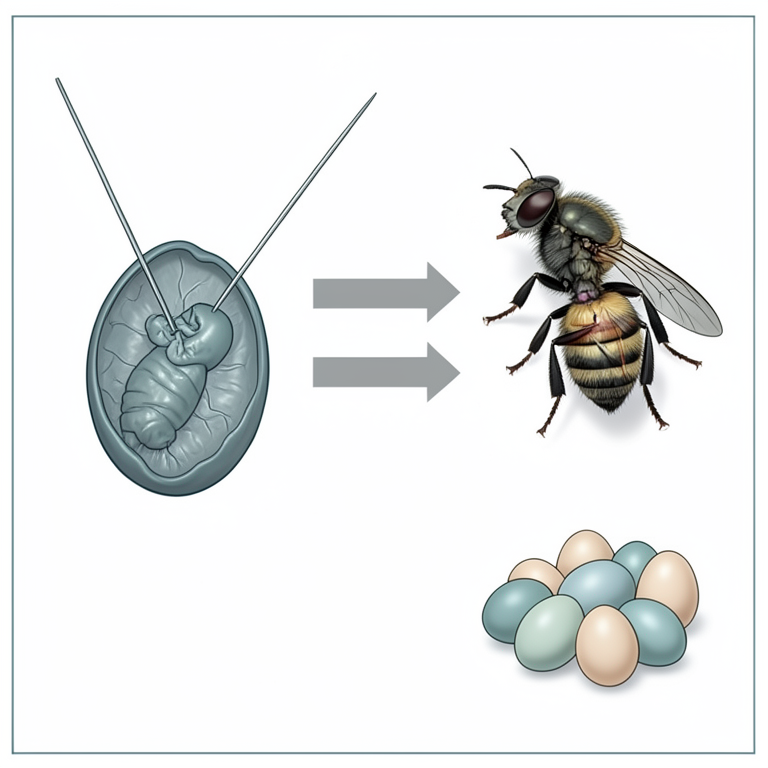
CRISPR Delivery Methods
AI-generated conceptual illustration (Drosophila melanogaster (fruit flies)). It explains the idea and does not show study data.
View source evidence ↗Figures & tables
From the original paper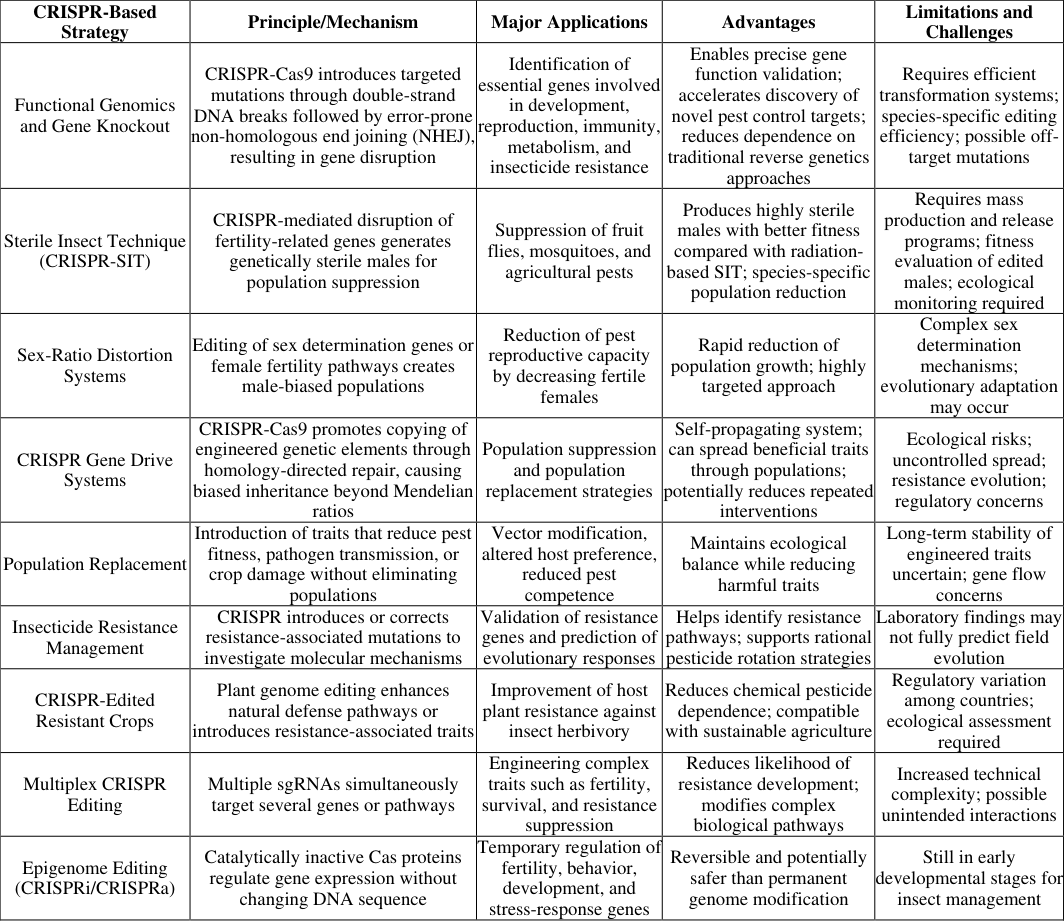 Table 1
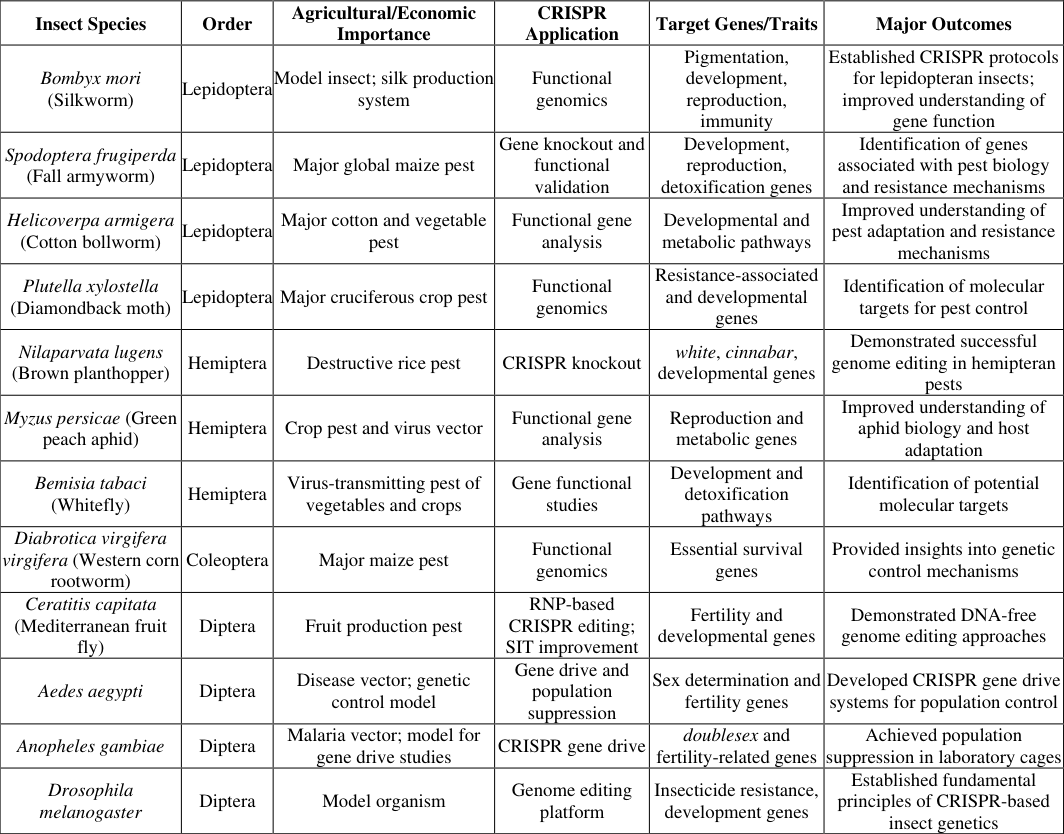 Table 2
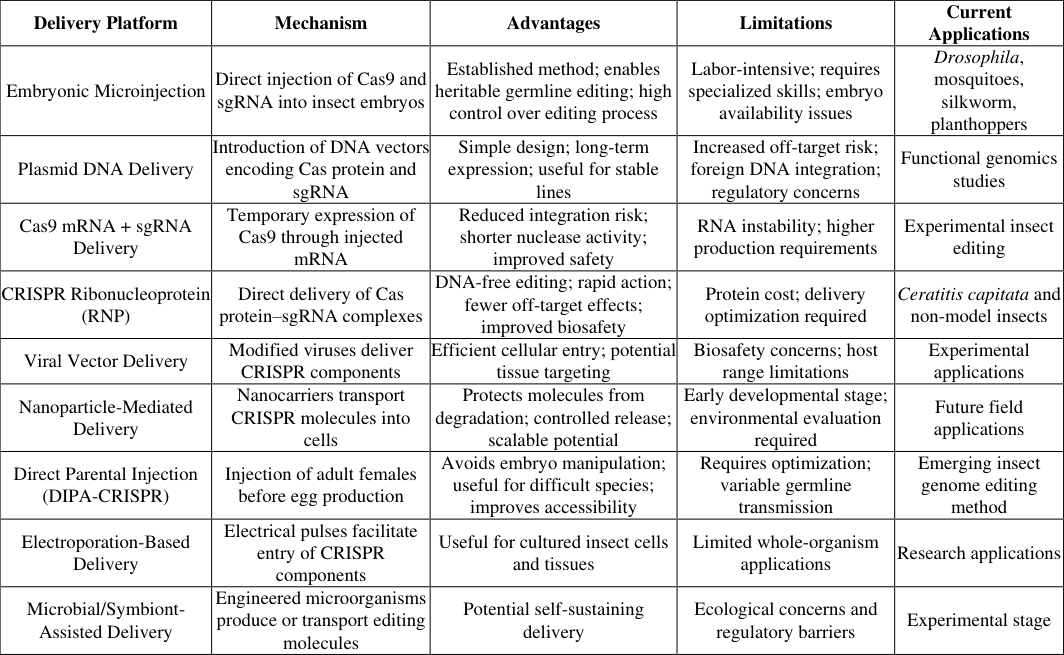 Table 3
Text
Although these compounds have played an important role in increasing crop productivity, their intensive and repeated application has resulted in multiple ecological and evolutionary consequences. These include rapid development of insecticide resistance, contamination of terrestrial and aquatic environments, reduction of beneficial insect populations, and disruption of ecosystem services (Sparks & Nauen, 2015; Bass et al., 2015) [2] . The evolution of resistance in destructive pests such as Helicoverpa armigera, Plutella xylostella, Bemisia tabaci, and Spodoptera frugiperda has further reduced the effectiveness of many conventional insecticides and highlighted the necessity for alternative pest management approaches. Modern agricultural biotechnology has increasingly focused on developing precise genetic strategies capable of modifying pest biology while minimizing unintended ecological effects. Among these approaches, CRISPR-Cas genome editing has emerged as one of the most powerful technologies for manipulating insect genomes. Originally discovered as an adaptive immune mechanism in bacteria and archaea, CRISPR systems have been repurposed as programmable genome engineering tools capable of introducing targeted modifications at specific genomic locations (Jinek et al., 2012) [12] . The CRISPR-Cas9 system primarily relies on a guide RNA molecule that directs the Cas9 nuclease toward a complementary DNA sequence, where it generates a targeted double-strand break (DSB). Cellular repair through non-homologous end joining (NHEJ) frequently introduces mutations resulting in gene disruption, whereas homologydirected repair (HDR) enables precise insertion or replacement of genetic sequences (Komor et al., 2017) [16] . Compared with earlier transgenic approaches, CRISPR technology provides higher precision, reduced cost, rapid design flexibility, and the ability to simultaneously modify multiple genes. In agricultural entomology, CRISPR has transformed insect functional genomics by allowing researchers to investigate gene functions associated with development, reproduction, immunity, behavior, host adaptation, and insecticide resistance. Genome editing has been successfully applied in several insect species, including the silkworm Bombyx mori, brown planthopper Nilaparvata lugens, fruit fly Ceratitis capitata, and disease-vector mosquitoes (Singh et al., 2022; Amin & Rahman, 2026) [1,24] . Beyond functional studies, CRISPR technology has created new possibilities for insect pest suppression and population management. Genome editing can enhance sterile insect technique (SIT) programs by generating genetically sterile males, enable sex-ratio distortion strategies, and facilitate gene drive systems designed for population replacement or suppression (Zhao et al., 2024) [31] . Unlike conventional control methods, these approaches aim to exploit pest genetics to achieve long-term and species-specific management outcomes. CRISPR technology also provides indirect pest management opportunities through crop improvement. Editing plant genomes to enhance defense pathways, increase resistance traits, or modify interactions with herbivorous insects offers a complementary approach that reduces reliance on chemical insecticides (Moon et al., 2022) [20] .
However, despite remarkable progress, significant barriers remain before CRISPR-based pest management can be widely implemented. These include challenges associated with efficient delivery into insect germ cells, off-target mutations, ecological uncertainty of gene drives, evolutionary responses of pest populations, regulatory limitations, and societal acceptance concerns (Komal et al., 2023; Geerthana et al., 2026) [9,15] . This review provides a comprehensive analysis of CRISPR-Cas applications in agricultural entomology, focusing on molecular mechanisms, functional genomics, pest population management strategies, delivery innovations, insecticide resistance research, biosafety considerations, and future prospects for sustainable insect pest management.
CRISPR-Cas mechanisms and molecular platforms in insect genome editing
The successful application of CRISPR-Cas technology in agricultural entomology is fundamentally dependent on understanding the molecular mechanisms that enable precise genome modification. The CRISPR system provides programmable genetic manipulation by combining a sequence-specific guide RNA with Cas nucleases capable of recognizing and modifying targeted DNA regions. Since its adaptation as a genome engineering tool, CRISPR has rapidly replaced earlier gene-editing approaches such as zinc finger nucleases (ZFNs) and transcription activator-like effector nucleases (TALENs) because of its simplicity, flexibility, cost-effectiveness, and ability to simultaneously modify multiple genomic loci (Jinek et al., 2012; Doudna & Charpentier, 2014) [7,12] . In insects, CRISPR technology has become an essential platform for functional genomics, allowing researchers to investigate genes associated with development, reproduction, immunity, behavior, host adaptation, and pesticide resistance. The availability of genome sequences for economically important insect species has further accelerated the adoption of CRISPR-based approaches in agricultural pest research (Singh et al., 2022; Komal et al., 2023) [15,24] .
Molecular basis of CRISPR-Cas9 genome editing
The canonical CRISPR-Cas9 system consists of three major components 1. Cas9 endonuclease 2. Single-guide RNA (sgRNA) 3. Target DNA sequence containing a protospacer adjacent motif (PAM)
The sgRNA functions as a programmable recognition molecule that directs Cas9 to a specific genomic region through complementary base pairing. Once the sgRNA binds to the target sequence adjacent to an appropriate PAM motif, Cas9 undergoes conformational activation and generates a site-specific double-stranded DNA break (DSB) (Jinek et al., 2012) [12] . The resulting DNA break activates endogenous DNA repair mechanisms, primarily: Non-homologous end joining (NHEJ) Homology-directed repair (HDR)
These repair pathways determine the final genetic outcome of CRISPR-mediated editing. [24,28] . Similarly, knockout of genes involved in development, reproduction, and immunity has enabled researchers to identify essential biological pathways in economically important insects.
Homology-Directed Repair (HDR)
Homology-directed repair enables precise genetic modification by using an externally supplied DNA template containing homologous sequences surrounding the target site. Unlike NHEJ, HDR allows: Gene insertion Gene replacement Reporter gene integration Precise nucleotide modification
In insect systems, HDR is particularly important for developing gene drive technologies. CRISPR-based homing drives exploit HDR to copy the drive cassette from one chromosome to the homologous chromosome, resulting in inheritance rates exceeding normal Mendelian expectations (Esvelt et al., 2014) [8] . However, HDR efficiency in insects is generally lower than NHEJ because it is highly dependent on developmental stage, cell cycle status, and species-specific repair mechanisms. Improving HDR efficiency remains an important research priority for advanced insect engineering applications (Amin & Rahman, 2026) [1] .
Evolution of CRISPR editing platforms beyond Cas9
Although Cas9 remains the most widely used CRISPR nuclease, recent innovations have expanded the technological possibilities of genome editing.
Cas12-based genome editing
Cas12 nucleases represent an alternative CRISPR platform with distinct molecular properties. Unlike Cas9, which requires a guanine-rich PAM sequence, Cas12 enzymes recognize different PAM motifs, expanding the range of genomic sites accessible for editing. Cas12 systems also generate staggered DNA breaks, which may provide advantages for certain insertion strategies and multiplex editing applications (Zetsche et al., 2015) [29] .
In agricultural entomology, Cas12-based systems may improve editing flexibility in insect species where suitable Cas9 target sites are limited.
Base editing technology
Base editing represents an advanced CRISPR approach that enables nucleotide conversion without creating doublestranded DNA breaks. [16] .
Prime editing technology
Prime editing represents a further advancement that enables precise genetic modifications without requiring doublestrand DNA breaks or donor DNA templates.
The system combines Modified Cas9 nickase Reverse transcriptase enzyme Prime editing guide RNA (pegRNA)
Prime editing allows Small insertions Small deletions Point mutation correction
Although prime editing has mainly been developed in mammalian systems, its future adaptation to insect pests may provide unprecedented control over specific genetic traits associated with pest behaviour, reproduction, and resistance mechanisms.
CRISPR-based epigenome editing
Traditional genome editing permanently changes DNA sequences. However, emerging CRISPR epigenetic editing systems allow researchers to regulate gene expression without altering the underlying nucleotide sequence.
Catalytically inactive Cas proteins (dCas9) can be fused with regulatory domains capable of Activating gene expression (CRISPRa) Repressing gene expression (CRISPRi) Modifying chromatin states
Epigenetic editing offers several advantages Reversible genetic regulation Reduced ecological concerns Potential control of complex traits In insect management, CRISPR epigenome editing could potentially regulate genes involved in fertility, diapause, behavior, and host preference without creating permanent genomic alterations (Komal et al., 2023) [15] .
Delivery platforms for CRISPR components in insects
The efficiency of CRISPR-mediated editing depends strongly on successful delivery of editing components into insect germline cells. Unlike microbial or plant systems, insect genome editing presents unique challenges because of differences in egg structure, embryonic development, and reproductive biology. The major delivery methods include: This approach has been successfully applied in several insect species, including mosquitoes and agricultural pests (Amin & Rahman, 2026) [1] .
Ribonucleoprotein (RNP) delivery
CRISPR RNP delivery involves direct injection of preassembled Cas protein-sgRNA complexes. The major advantages include: Rapid genome editing Reduced off-target activity No foreign DNA integration Improved biosafety profile In Ceratitis capitata, DNA-free RNP-based editing achieved efficient gene disruption and demonstrated the potential of this method for non-model agricultural pests (Amin & Rahman, 2026) [1] . Because RNP systems degrade rapidly after genome modification, they are increasingly considered one of the most promising approaches for environmentally acceptable insect genome editing.
Direct Parental Injection (DIPA-CRISPR)
A major breakthrough in insect genome editing is the development of Direct Parental Injection CRISPR (DIPA-CRISPR).
Unlike conventional embryo injection, which requires manipulation of fragile insect embryos, DIPA-CRISPR introduces CRISPR components directly into adult females before egg production. Advantages Eliminates embryo handling Reduces technical barriers Enables editing in difficult insect species Increases accessibility for non-model pests This technology may significantly expand CRISPR applications beyond laboratory insects toward economically important agricultural pests (Amin & Rahman, 2026) [1] .
Multiplex CRISPR Editing for Complex Pest Traits
A major advantage of CRISPR technology is its ability to simultaneously target multiple genes. Multiplex editing enables Modification of several resistance pathways Disruption of redundant genes Engineering of complex traits Reduced probability of resistance evolution For insect pest management, multiplex CRISPR approaches may allow simultaneous targeting of genes involved in:
This strategy is particularly valuable because insect populations rapidly adapt to single-target control methods.
Current Limitations of CRISPR Editing Platforms
Despite technological advances, several limitations remain: Species-specific editing efficiency CRISPR performance varies greatly among insect orders due to differences in: Egg structure Germline accessibility DNA repair pathways Embryonic development
Off-target mutations
Unintended genomic modifications may occur when sgRNAs recognize similar DNA sequences. High-fidelity Cas variants and improved computational prediction tools are being developed to reduce this risk.
Mosaicism
Incomplete editing during early embryonic development can generate individuals containing both edited and unedited cells, complicating downstream applications.
Limited transformation protocols
Many agricultural pests still lack efficient genetic transformation systems, restricting practical CRISPR application. CRISPR-Cas genome editing has transformed agricultural entomology by providing unprecedented ability to manipulate insect genomes with high precision. Advances from conventional Cas9 knockout systems toward RNP editing, base editing, prime editing, and epigenetic regulation have expanded the technological landscape. However, successful deployment in pest management requires overcoming delivery limitations, improving editing efficiency, and ensuring ecological safety.
Applications of CRISPR-Cas genome editing in agricultural entomology
The application of CRISPR-Cas genome editing has significantly transformed agricultural entomology by providing unprecedented opportunities to understand insect biology, manipulate pest populations, and develop sustainable pest management strategies. Unlike conventional pest control approaches that primarily rely on external chemical intervention, CRISPR-based technologies enable direct modification of insect genomes to alter traits associated with survival, reproduction, host adaptation, and insecticide resistance. [1,15,24,31]
Current applications of CRISPR in insect pest management can broadly be classified into five
Current applications of CRISPR in insect pest management can broadly be classified into five
Functional Genomics and Validation of Essential Insect Genes
One of the earliest and most successful applications of CRISPR-Cas technology in entomology has been functional genomics. Understanding gene function is fundamental for identifying suitable molecular targets for pest control.
Before developing genome-based management strategies, researchers must determine which genes regulate critical biological processes such as development, reproduction, metabolism, immunity, and host interaction.
Traditional approaches such as RNA interference (RNAi), chemical inhibition, and transposon mutagenesis provided valuable insights; however, these methods often lacked the precision required for establishing direct gene-phenotype relationships. CRISPR-mediated knockout technology has overcome many of these limitations by enabling targeted disruption of specific genes and direct evaluation of resulting phenotypic changes (Singh et al., 2022) [24] . [12,14,18,24,31]
CRISPR applications in model and non-model insects
The application of CRISPR-Cas genome editing technology has significantly advanced insect molecular biology by enabling precise functional characterization of genes involved in development, reproduction, immunity, metabolism, and behavior. Both model and economically important non-model insect species have benefited from CRISPR-based approaches, providing valuable insights into insect physiology and generating potential targets for sustainable pest management strategies. The silkworm (Bombyx mori) represents one of the earliest and most successful examples of CRISPR implementation in insects. Due to its economic importance in silk production, well-annotated genome, and extensive molecular resources, B. mori has become an important model organism for studying insect development, reproduction, immunity, and metabolic regulation. CRISPR/Cas9-mediated genome editing has enabled researchers to investigate the functional roles of numerous genes associated with pigmentation pathways, hormonal regulation, sex determination, silk gland development, silk protein synthesis, and immune responses. These studies have not only enhanced the understanding of fundamental insect biology but have also established experimental methodologies that can be transferred to agriculturally important pest species. The successful application of genome editing in B. mori demonstrates the feasibility of manipulating insect genomes with high precision and provides a foundation for developing genetic approaches for pest control (Komal et al., 2023) [15] . Beyond model insects, CRISPR technology has been increasingly applied to non-model agricultural pests, including the brown planthopper (Nilaparvata lugens), one of the most destructive rice pests in Asia. This insect causes substantial crop losses through direct phloem feeding and by transmitting plant pathogens, particularly viruses that affect rice production. Prior to the development of CRISPR-based techniques, functional genomic studies in N. lugens were limited because of difficulties associated with genetic manipulation. CRISPR/Cas9 technology has overcome these limitations by allowing targeted disruption of genes involved in pigmentation, development, reproduction, hormone signaling, and detoxification pathways. For example, knockout studies targeting pigmentation-related genes such as white and cinnabar resulted in clearly identifiable mutant phenotypes, confirming the effectiveness of CRISPR-mediated gene disruption in hemipteran insects (Xu et al., 2015; Singh et al., 2022) [24,28] . These studies have expanded the understanding of planthopper biology and provided potential molecular targets for future genetic pest management strategies. A major focus of CRISPR-based insect research involves the functional analysis of genes associated with development and reproduction. Genes regulating juvenile hormone signaling, ecdysteroid biosynthesis, oogenesis, spermatogenesis, and embryonic development are considered highly attractive targets because their disruption can result in severe physiological defects and reduced population fitness. Genome editing approaches have enabled researchers to identify essential genes required for insect survival and reproduction, thereby improving the selection of candidate targets for pest suppression. The identification of such genes is particularly valuable because ideal pestcontrol targets should demonstrate high species specificity, limited potential for resistance development, and minimal impact on beneficial organisms. CRISPR-based functional genomics therefore provides an efficient platform for discovering biologically important genes and translating this knowledge into environmentally sustainable pest management strategies (Amin & Rahman, 2026) [1] .
CRISPR-based population suppression strategies
Population suppression represents one of the most promising applications of CRISPR technology in agricultural entomology. Unlike conventional pest management methods that primarily rely on chemical insecticides, genetic suppression strategies aim to reduce pest abundance by directly interfering with survival, fertility, or reproductive capacity. CRISPR-based approaches have expanded traditional methods such as the sterile insect technique (SIT) by enabling precise genetic modifications that can improve the efficiency and biological performance of pest suppression programs.
CRISPR-enhanced Sterile Insect Technique (SIT)
The sterile insect technique is an environmentally friendly pest management approach that involves the mass release of sterile males into natural populations. These sterile males compete with wild males for mating opportunities, and when they successfully mate with females, no viable offspring are produced, resulting in gradual population decline. Traditionally, SIT has relied on radiation-induced sterilization; however, irradiation can negatively affect male fitness by damaging somatic tissues, reducing mating competitiveness, longevity, and field performance. CRISPR technology provides an alternative strategy by enabling the generation of genetically sterile insects through targeted disruption of genes essential for male fertility. By precisely editing genes involved in spermatogenesis, sperm maturation, male reproductive development, and embryonic viability, researchers can produce sterile males while maintaining improved physiological fitness compared with radiation-based sterilization methods. CRISPR-enhanced SIT therefore represents a next-generation genetic control approach that may improve the effectiveness, scalability, and sustainability of insect suppression programs (Zhao et al., 2024) [31] .
CRISPR-mediated sterility in mosquitoes and agricultural insects
The potential of CRISPR-mediated sterility was demonstrated through studies in mosquito species, particularly Anopheles gambiae, where genome editing was used to disrupt reproductive genes and generate highly effective sterile males. These studies provided important proof-of-concept evidence that genetic sterilization could complement existing SIT programs and improve population suppression efficiency (Kyrou et al., 2018) [18] . Similar approaches have been explored in economically important agricultural pests, including the Mediterranean fruit fly (Ceratitis capitata), fall armyworm (Spodoptera frugiperda), and diamondback moth (Plutella xylostella). These insects cause extensive agricultural damage worldwide, and CRISPR-mediated reproductive disruption could provide additional tools for reducing pest populations while minimizing dependence on chemical insecticides. The integration of CRISPR-based sterility systems with existing integrated pest management programs may provide a more sustainable approach for controlling invasive and resistant pest species (Amin & Rahman, 2026) [1] .
Sex-ratio distortion strategies
Sex-ratio distortion represents another genetic strategy for reducing insect populations by manipulating the balance between male and female offspring. Since females are generally responsible for reproduction and population expansion, reducing female numbers can significantly decrease population growth rates. CRISPR technology enables the modification of genes involved in sex determination pathways, female development, and malebiased inheritance mechanisms. Genome editing-based sex-ratio distortion strategies have been extensively investigated in mosquito populations, where selective elimination of females or increased production of males can substantially reduce reproductive capacity. Similar approaches may have applications in agricultural pests where females contribute significantly to crop damage through feeding behavior or reproduction. Although promising, successful implementation requires detailed understanding of species-specific reproductive biology and careful evaluation of ecological consequences (Zhao et al., 2024) [31] .
CRISPR-based gene drive systems for population replacement and suppression
CRISPR-based gene drive systems represent one of the most advanced applications of genome editing technology because they can overcome traditional Mendelian inheritance patterns and promote the rapid spread of specific genetic traits through insect populations. In conventional inheritance, an allele is transmitted to approximately 50% of offspring; however, gene drives bias inheritance toward the engineered allele, allowing it to increase in frequency across generations. A CRISPR homing gene drive generally consists of a Cas9 nuclease component, a guide RNA sequence, and a genetic trait designed to modify population characteristics. When an organism carrying the gene drive mates with a wild-type individual, Cas9 creates a targeted DNA break in the homologous chromosome containing the normal allele. During repair through homology-directed repair (HDR), the gene drive cassette is copied into the chromosome, resulting in inheritance rates significantly higher than the expected Mendelian frequency (Esvelt et al., 2014) [8] . This unique property enables rapid propagation of engineered traits within natural populations. Population replacement strategies aim not necessarily to eliminate insect populations but to modify them genetically so that their harmful effects are reduced. Potential applications include reducing pathogen transmission, altering host preference, decreasing reproductive ability, or increasing susceptibility to biological control agents. Although most gene drive research has focused on diseasevector mosquitoes, similar concepts may eventually be applied to agricultural insects by introducing traits that reduce crop damage or limit population growth (Zhao et al., 2024) [31] . In agricultural pests such as fall armyworm (Spodoptera frugiperda), diamondback moth (Plutella xylostella), and fruit flies (Ceratitis spp.), gene drive systems have theoretical potential for population suppression through targeting genes associated with fertility, development, and host adaptation. However, unlike controlled laboratory experiments, environmental release of gene drives requires extensive ecological risk assessment because these systems are self-propagating and may spread beyond intended target populations.
CRISPR-edited crops for indirect insect pest management
Although CRISPR research has primarily focused on directly modifying insect genomes, genome editing also provides significant opportunities for improving crop resistance against insect pests. Plant genome editing can enhance natural defense mechanisms by modifying genes involved in structural barriers, secondary metabolite production, defense signaling pathways, and herbivore recognition systems. CRISPR-mediated modification of plant defense pathways can increase resistance against insect herbivores by improving the production of insect-deterring compounds, strengthening physical barriers, and enhancing immune responses. Unlike conventional genetically modified crops that often involve insertion of foreign genes, CRISPR-edited crops can contain precise modifications similar to naturally occurring mutations. These characteristics make genomeedited crops attractive for sustainable agriculture by potentially reducing chemical pesticide dependency while maintaining crop productivity (Moon et al., 2022) [20] . The major advantages of CRISPR-edited pest-resistant crops include reduced insecticide application, improved crop resilience, decreased environmental contamination, and better compatibility with integrated pest management programs. However, comprehensive evaluation is required to assess unintended genetic effects, ecological interactions, and long-term impacts on plant-associated organisms.
CRISPR applications in insecticide resistance research
The rapid evolution of insecticide resistance among pest populations represents a major challenge for modern agriculture. Continuous exposure to chemical insecticides has resulted in the selection of resistant insect populations, reducing the effectiveness of available control measures. CRISPR technology provides a powerful platform for investigating resistance mechanisms by allowing precise modification and validation of candidate resistanceassociated genes. Insecticide resistance commonly develops through several mechanisms, including target-site mutations, enhanced metabolic detoxification, behavioral adaptation, and reduced insecticide penetration. CRISPR-mediated genome editing enables researchers to introduce specific mutations associated with resistance and directly evaluate their biological consequences. Genes encoding acetylcholinesterase, voltage-gated sodium channels, GABA receptors, and cytochrome P450 enzymes have been experimentally investigated using CRISPR approaches to understand their contribution to resistance development (Singh et al., 2022) [24] . Furthermore, CRISPR-based reconstruction of resistance mutations allows researchers to investigate evolutionary processes associated with resistance development. These studies provide information regarding fitness costs, probability of resistance emergence, and potential crossresistance patterns. Such knowledge can improve insecticide rotation strategies, guide combination treatments, and support the development of alternative pest management approaches. Overall, CRISPR-Cas genome editing has transformed agricultural entomology by extending pest management beyond conventional chemical approaches toward precise genetic interventions. Applications ranging from functional genomics and reproductive manipulation to gene drives, crop improvement, and resistance research demonstrate the enormous potential of CRISPR-based technologies. Nevertheless, responsible deployment requires careful consideration of ecological risks, evolutionary responses, biosafety concerns, and regulatory frameworks to ensure sustainable and safe implementation of genome editing approaches in agriculture.
Delivery methods and technical innovations in crisprbased insect genome editing
Although CRISPR-Cas systems have revolutionized insect molecular genetics, the practical implementation of genome editing for agricultural pest management remains strongly dependent on efficient delivery of editing components. Unlike microbial and plant systems, insects present unique biological barriers, including rigid chorion structures, limited embryonic accessibility, species-specific reproductive biology, and variation in germline development. Therefore, improving CRISPR delivery technologies is considered one of the most critical requirements for expanding genome editing applications beyond laboratory model organisms toward economically important insect pests (Singh et al., 2022; Amin & Rahman, 2026) [1,24] . Current delivery strategies include embryo microinjection, plasmid-based systems, messenger RNA (mRNA) delivery, ribonucleoprotein (RNP) complexes, viral vectors, nanoparticle-assisted delivery, and emerging parental injection approaches. These platforms differ in efficiency, persistence, biosafety profile, and suitability for field-oriented pest management applications. [1,9,15,24] 4.1 Embryonic microinjection: the conventional standard for insect genome editing Embryonic microinjection remains the most widely adopted and experimentally established method for delivering CRISPR components into insects. Therefore, although embryonic microinjection remains the standard method for insect genome editing, its scalability and broader application in pest management remain limited (Singh et al., 2022) [24] . This approach has been successfully applied in several insect species and is particularly useful for generating knockout mutations in non-model pests where stable transformation systems are unavailable. However, challenges associated with RNA instability, higher production costs, and strict storage requirements limit widespread adoption. Improvements in RNA stabilization technologies and delivery optimization will be necessary to enhance the practical application of mRNA-based genome editing in agricultural entomology (Amin & Rahman, 2026) [1] .
Plasmid-based crispr delivery systems
Plasmid-based crispr delivery systems
Ribonucleoprotein (RNP)-based genome editing
CRISPR ribonucleoprotein (RNP)-based delivery has emerged as one of the most promising approaches for environmentally responsible insect genome engineering. In this system, purified Cas proteins are preassembled with synthetic sgRNAs before being introduced into insect embryos or cells. Unlike DNA-based approaches, RNP complexes directly provide the active genome-editing machinery without requiring transcription or translation within the target organism.
A major advantage of RNP-based editing is its rapid action because Cas protein is immediately available to initiate DNA cleavage after delivery. The transient presence of Cas protein also minimizes unnecessary genome interactions, reducing off-target modification risks. Furthermore, because RNP systems do not introduce foreign genetic material, they provide a DNA-free editing approach that may receive greater regulatory acceptance compared with traditional transgenic methods. Successful application of RNP-mediated CRISPR editing has been demonstrated in agricultural pests, including the Mediterranean fruit fly (Ceratitis capitata), where DNAfree genome modification was achieved using Cas protein-sgRNA complexes. These findings highlight the potential of RNP systems for sustainable pest management applications (Amin & Rahman, 2026) [1] . Despite these advantages, several challenges remain, including large-scale production of RNP components, efficient delivery across diverse insect species, reduction of production costs, and improvement of long-term storage stability. Addressing these limitations will be essential for translating RNP-based editing from laboratory research into practical pest management programs.
Nanotechnology-assisted CRISPR delivery
Nanotechnology-based delivery systems have recently gained attention as innovative approaches for overcoming limitations associated with conventional CRISPR delivery methods. Nanocarriers can protect sensitive CRISPR components from degradation, improve cellular uptake, and facilitate controlled transport into target tissues. Several nanomaterials, including lipid nanoparticles, polymer-based nanoparticles, gold nanoparticles, chitosanderived carriers, and carbon-based materials, have been investigated for their potential applications in biological delivery systems. These platforms offer advantages such as protection of RNA and protein molecules, controlled release characteristics, reduced degradation, and potential tissuespecific targeting.
Although nanoparticle-mediated CRISPR delivery has been extensively studied in biomedical applications, its application in insect pest management remains at an early developmental stage. Future research focused on insectspecific nanoparticle formulations may provide alternatives to embryo microinjection by enabling more efficient and less invasive genome editing approaches.
Direct parental injection CRISPR (DIPA-CRISPR)
Direct Injection of Parental Animals for CRISPR (DIPA-CRISPR) represents a novel advancement that addresses several limitations associated with conventional embryo injection methods. Unlike traditional approaches where genome-editing reagents are introduced directly into embryos, DIPA-CRISPR involves injecting CRISPR components into adult females before egg production. The editing process occurs within developing germ cells, allowing offspring to inherit the resulting genetic modifications.
This strategy provides several important advantages, including elimination of embryo handling, reduced technical complexity, improved accessibility for non-model insects, and enhanced applicability to species with difficult or fragile embryos. These characteristics make DIPA-CRISPR particularly valuable for agricultural pests where conventional embryo manipulation has remained inefficient. The technology has significant potential for accelerating genome-editing applications in diverse insect groups, including invasive pests and quarantine species. However, further investigations are required to evaluate germline editing consistency, reduction of mosaicism, speciesspecific performance, and long-term inheritance stability (Amin & Rahman, 2026) [1] .
Multiplex CRISPR editing for complex pest management
One of the most powerful features of CRISPR technology is its ability to simultaneously modify multiple genomic regions through multiplex editing. This approach involves the use of multiple sgRNAs targeting different genes within the same organism, allowing researchers to manipulate complex biological traits controlled by multiple genetic pathways.
In insect pest management, multiplex editing provides opportunities for targeting traits such as fertility, development, host preference, detoxification ability, and insecticide resistance. Simultaneous disruption of multiple pathways may improve population suppression efficiency and reduce the likelihood of evolutionary adaptation because insects would need to overcome several genetic barriers simultaneously. For example, targeting both reproductive genes and survival-related genes could create stronger suppression strategies by reducing population recovery and limiting resistance development. Therefore, multiplex CRISPR systems represent an important advancement toward more durable and effective genetic pest management approaches.
CRISPR epigenetic editing and reversible genetic regulation
Conventional CRISPR genome editing generally produces permanent changes in DNA sequences. However, emerging CRISPR-based epigenetic editing technologies provide the ability to regulate gene expression without modifying the underlying genomic sequence. These systems utilize catalytically inactive Cas9 (dCas9) fused with regulatory domains to achieve targeted activation or repression of gene expression. CRISPR activation (CRISPRa) enables enhanced expression of selected genes, whereas CRISPR interference (CRISPRi) suppresses gene activity without introducing permanent mutations. These approaches also allow targeted chromatin modification and reversible regulation of biological pathways.
In insect pest management, epigenetic editing may provide opportunities for temporary suppression of fertility genes, regulation of diapause mechanisms, modification of insect behavior, and controlled expression of resistance-associated genes. Because these modifications can potentially be reversible, epigenetic approaches may provide safer alternatives to permanent genetic alterations and reduce ecological concerns associated with genetically modified insects (Komal et al., 2023) [15] .
Critical challenges in CRISPR-based insect pest management
Despite substantial progress in CRISPR-based insect genome engineering, several scientific, ecological, and regulatory challenges must be addressed before widespread implementation in agricultural pest management. These challenges include variable editing efficiency, unintended genetic modifications, evolutionary resistance, ecological risks, and regulatory acceptance.
Technical and biological challenges 5.1.1 Variable editing efficiency
The efficiency of CRISPR-based genome editing varies considerably among insect species due to differences in egg structure, embryonic development, DNA repair mechanisms, and accessibility of germline tissues. Although genome editing is highly effective in established laboratory models, many agricultural pests remain difficult to manipulate genetically. Lepidopteran insects present particular challenges because of their large and fragile eggs, limited transformation protocols, and complex reproductive biology. Therefore, development of species-specific delivery systems and optimization strategies remains essential for expanding CRISPR applications across economically important pest species.
Off-target mutations
Although CRISPR technology provides high targeting precision, unintended modifications can occur when sgRNAs interact with partially complementary genomic regions. Such off-target mutations may alter gene function, influence ecological traits, or reduce biological fitness. Several strategies have been developed to minimize these effects, including improved sgRNA design algorithms, development of high-fidelity Cas variants, transient RNPbased delivery, and whole-genome sequencing-based validation approaches. These improvements are essential for ensuring accuracy and biosafety in insect genome-editing applications (Singh et al., 2022) [24] .
6. Future perspectives and emerging directions in CRISPR-based insect pest management CRISPR-Cas genome editing has fundamentally changed the landscape of agricultural entomology by enabling precise manipulation of insect genomes, providing new opportunities for sustainable pest management. However, successful translation of CRISPR technologies from laboratory research to field-scale applications requires advances beyond gene editing itself. Future progress will depend on improving delivery technologies, developing safer genetic control systems, integrating CRISPR with existing integrated pest management (IPM) frameworks, and establishing scientifically robust regulatory pathways. The next generation of CRISPR-based insect management is expected to move from single-gene disruption approaches toward sophisticated genetic engineering strategies involving multiplex editing, gene regulation, artificial intelligence-assisted target prediction, and environmentally responsive control systems.
Development of advanced CRISPR editing platforms
The next phase of insect genome engineering will likely involve the development and application of advanced CRISPR platforms that provide greater precision and flexibility compared with conventional Cas9-based editing systems. While Cas9-mediated knockout approaches have successfully enabled functional characterization of numerous insect genes, emerging technologies such as Cas12 nucleases, base editors, prime editors, and CRISPRbased epigenetic regulators offer new opportunities for targeted genetic modifications with reduced unintended effects. These advanced editing systems may overcome several limitations associated with traditional double-stranded DNA break-based approaches by allowing researchers to introduce precise nucleotide changes, regulate gene expression, or modify complex genetic traits without extensive genomic disruption. Such technologies are expected to play an important role in improving the accuracy, safety, and applicability of CRISPR-based pest management strategies.
Base editing and prime editing applications
Base editing represents a significant advancement in genome engineering because it enables direct conversion of individual nucleotide bases without generating doublestranded DNA breaks. Unlike conventional CRISPR-Cas9 systems that rely on DNA cleavage followed by repair mechanisms, base editors allow precise modification of specific genetic variants while reducing the risk of unwanted mutations. In insect pest management, base editing provides valuable opportunities for investigating naturally occurring mutations associated with economically important traits, including insecticide resistance, developmental regulation, reproductive characteristics, and physiological adaptation. For example, introducing specific resistance-associated mutations into susceptible insect populations enables researchers to experimentally determine the contribution of individual genetic variants to pesticide resistance evolution. This approach provides deeper understanding of resistance mechanisms and may assist in designing improved resistance management strategies (Komor et al., 2016) [16] . Prime editing represents a further advancement by enabling targeted insertion, deletion, and replacement of DNA sequences without requiring donor DNA templates. This technology provides greater flexibility than conventional editing methods because it can introduce complex genetic modifications while minimizing genome-wide disruption. Although prime editing applications in insects are currently limited due to challenges related to delivery efficiency and optimization, future improvements may allow precise engineering of complex pest traits, including fertility regulation, host adaptation, and resistance-associated characteristics.
Artificial intelligence and computational design in CRISPR pest management
The integration of artificial intelligence (AI), machine learning, and computational biology is expected to significantly accelerate the development and optimization of CRISPR-based pest management strategies. Modern insect genomics generates enormous amounts of genetic information, and computational approaches provide powerful tools for identifying suitable editing targets, improving guide RNA design, and predicting potential biological outcomes. AI-driven platforms can assist researchers by optimizing sgRNA selection, predicting off-target interactions, identifying essential pest-specific genes, modelling evolutionary responses, and simulating gene drive behaviour within populations. Machine learning algorithms trained on large-scale genomic datasets can identify conserved genetic vulnerabilities that are unique to pest species while minimizing potential risks to beneficial insects and other non-target organisms. Future computational frameworks may allow researchers to predict editing efficiency, estimate the probability of resistance development, and evaluate ecological consequences before experimental or field-level implementation. Such predictive approaches will improve decision-making, reduce experimental limitations, and enhance the safety assessment of CRISPR-based pest management technologies (Komal et al., 2023) [15] .
Integration of CRISPR with Integrated Pest Management (IPM)
CRISPR technology is unlikely to function as a standalone replacement for existing pest control strategies. Instead, its maximum potential will be achieved through integration with established integrated pest management (IPM) frameworks. IPM relies on combining multiple control approaches, including biological control, host plant resistance, cultural practices, chemical management, and behavioural manipulation, to achieve sustainable pest suppression. CRISPR-based technologies can complement these approaches by providing highly specific genetic interventions that enhance the effectiveness and sustainability of existing management systems. For example, integration of CRISPR with the sterile insect technique (SIT) could improve population suppression by generating genetically sterile males with higher fitness and competitive ability compared with radiation-induced sterile insects. Such improvements could increase mating success and enhance the efficiency of SIT programs. Similarly, combining CRISPR-based functional genomics with RNA interference (RNAi) approaches may accelerate the identification of essential pest genes and improve the development of targeted suppression strategies. CRISPR can be used to validate candidate genes involved in pest survival, while RNAi can subsequently be applied as a practical control method. Another potential application involves combining CRISPR technologies with biological control programs. Genetically modified insects with altered susceptibility to natural enemies could potentially enhance biological suppression by increasing vulnerability to predators, parasitoids, or pathogens. Therefore, integration of CRISPR within IPM systems may reduce dependence on chemical insecticides and contribute to long-term agricultural sustainability.
Sustainable gene drive development
Gene drive technology represents one of the most powerful and transformative applications of CRISPR-based insect management. Unlike conventional genetic inheritance, gene drives promote the preferential transmission of specific genetic traits, allowing engineered characteristics to spread rapidly through insect populations. Despite their enormous potential, gene drives remain highly controversial because of concerns regarding ecological effects, uncontrolled spread, and difficulties associated with reversing released traits. Future research will focus on developing safer and more controllable gene drive systems that maintain the advantages of population modification while reducing ecological risks. Major challenges include geographic spread beyond intended areas, evolution of drive-resistant populations, uncertainty regarding ecosystem-level effects, and limited ability to recover released genetic traits. To overcome these challenges, researchers are developing several nextgeneration gene drive approaches.
Split gene drives
Split gene drives represent a safer alternative to conventional gene drives by separating essential components, such as Cas9 and guide RNA sequences, into different genetic elements. Because the complete drive system cannot continuously function without both components, uncontrolled inheritance and long-term persistence are reduced. This approach provides greater control over genetic spread and may improve regulatory acceptance by reducing concerns associated with permanent environmental establishment.
Daisy-chain drives
Daisy-chain drives are designed as self-limiting systems consisting of multiple linked genetic components that gradually disappear across generations. Unlike traditional gene drives that can spread indefinitely, daisy drives provide temporary population modification with reduced long-term ecological impact. Such systems may allow researchers to achieve targeted pest suppression while maintaining greater control over genetic inheritance patterns.
Reversal drives
Reversal drives represent another safety mechanism designed to restore populations to their original genetic state after a previous gene drive release. These systems function by overwriting previously introduced genetic modifications and reversing engineered traits. The development of split drives, daisy-chain drives, and reversal systems represents an important step toward improving the safety, controllability, and regulatory acceptance of CRISPR-based gene drive applications (Esvelt et al., 2014; Zhao et al., 2024) [8,31] .
Expanding CRISPR applications to major agricultural pests
Although CRISPR technology has demonstrated significant success in model insects and selected pest species, many economically important agricultural pests remain genetically unexplored. Expanding genome-editing capabilities across diverse insect groups will require improved genome resources, optimized transformation methods, and speciesspecific delivery technologies. Among Lepidopteran pests, species such as fall armyworm (Spodoptera frugiperda), cotton bollworm (Helicoverpa armigera), and diamondback moth (Plutella xylostella) represent major targets due to their severe agricultural impact and increasing resistance to conventional insecticides. However, efficient CRISPR application in these species requires improvements in embryo manipulation, genetic transformation, and delivery systems. Hemipteran pests, including brown planthopper (Nilaparvata lugens), whitefly (Bemisia tabaci), and green peach aphid (Myzus persicae), also represent important targets because of their ability to transmit plant viruses and rapidly develop pesticide resistance. Developing efficient genome-editing tools for these sap-feeding insects may provide new opportunities for sustainable crop protection. Similarly, fruit fly species such as Mediterranean fruit fly (Ceratitis capitata) and oriental fruit fly (Bactrocera dorsalis) may benefit from CRISPR-enhanced sterile insect programs designed to improve population suppression efficiency. The expansion of CRISPR technology across diverse pest taxa will depend on improved genomic information, standardized protocols, and customized approaches adapted to species-specific biological characteristics.
Regulatory framework and biosafety considerations
The successful adoption of CRISPR-based insect pest management will depend heavily on the establishment of clear regulatory frameworks and international cooperation. Unlike conventional agricultural technologies, the environmental release of genome-edited insects introduces unique considerations related to genetic persistence, population-level effects, ecological interactions, and movement across geographical boundaries. Regulatory assessment should include detailed molecular characterization to evaluate editing accuracy, potential offtarget modifications, and genetic stability of engineered organisms. Ecological evaluation should examine possible effects on non-target species, food-web interactions, biodiversity, and population dynamics. Long-term monitoring programs will also be essential following environmental release to detect resistance development, unexpected ecological effects, and genetic changes within target populations. Transparent and sciencebased regulatory frameworks will be necessary to balance technological innovation with environmental protection and biosafety considerations (Geerthana et al., 2026) [9] .
Public acceptance and scientific communication
Public perception and social acceptance will play a crucial role in determining the future adoption of CRISPR-based insect pest management technologies. Although genome editing offers significant potential benefits, concerns remain regarding genetic modification of wild populations, ecosystem manipulation, and uncertainty surrounding longterm consequences. Effective scientific communication will therefore be essential to improve public understanding and build confidence among stakeholders. Communication strategies should emphasize scientific evidence, rigorous risk assessment procedures, environmental benefits, and the potential reduction in chemical pesticide dependency. Successful implementation will require active engagement among scientists, farmers, policymakers, regulatory authorities, and local communities. Transparent communication and inclusive decision-making processes will help ensure that CRISPR-based pest management technologies are developed and applied responsibly, supporting sustainable agricultural production while minimizing ecological risks.
Conclusion
CRISPR-Cas genome editing represents a paradigm shift in agricultural entomology by enabling precise manipulation of insect genomes and introducing innovative strategies for sustainable pest management. Unlike traditional approaches that rely primarily on chemical suppression, CRISPR technologies allow researchers to directly modify biological processes responsible for insect survival, reproduction, adaptation, and resistance. Applications ranging from functional genomics and essential gene discovery to sterile insect technology, sex-ratio distortion, gene drives, insecticide resistance analysis, and crop improvement demonstrate the broad potential of CRISPR-based approaches. Recent advances in ribonucleoprotein delivery, direct parental injection, multiplex editing, base editing, and epigenetic regulation have expanded the technological possibilities while improving precision and safety. However, significant challenges remain, including variable editing efficiency among insect species, off-target effects, ecological uncertainties associated with gene drives, regulatory complexity, and public acceptance. Future success will depend on integrating CRISPR technologies with broader integrated pest management frameworks rather than treating genome editing as a standalone solution. Combining CRISPR with biological control, RNA interference, precision agriculture, and ecological monitoring can create more sustainable pest management systems. Ultimately, CRISPR-Cas genome editing has the potential to become a cornerstone technology for nextgeneration agricultural protection. Achieving this goal will require interdisciplinary collaboration among molecular biologists, entomologists, ecologists, policymakers, and stakeholders to ensure that innovation proceeds alongside environmental responsibility and biosafety.
Figures and tables from the paper
References
31 in the original paper- Amin MR, Rahman MM. CRISPR/Cas9 mediated genome editing in insects: Application in functional genomics and pest management. Discover Agriculture. 2026;4:Article number pending.
- Bass C, Denholm I, Williamson MS, Nauen R. The global status of insect resistance to neonicotinoid insecticides. Pesticide Biochemistry and Physiology. 2015;121:78-87.
- Bier E. Gene drives and other engineering approaches to insect population control. Current Opinion in Insect Science. 2022;52:100925.
- Bortesi L, Fischer R. The CRISPR/Cas9 system for plant genome editing and beyond. Biotechnology Advances. 2015;33(1):41-52.
- Buchman A, Marshall JM, Ostrovski D, Yang T, Akbari OS. Synthetically engineered Medea gene drive system in the worldwide crop pest Drosophila suzukii. Scientific Reports. 2018;8:12511.
- Carballar-Lejarazú R, Ogaugwu C, Tushar T, Kelsey A, Pham TB, Murphy J, et al. Next-generation gene drive for population suppression of the malaria mosquito Anopheles gambiae. Proceedings of the National Academy of Sciences of the United States of America. 2020;117(37):22805-22814.
- Doudna JA, Charpentier E. The new frontier of genome engineering with CRISPR-Cas9. Science. 2014;346(6213):1258096.
- Esvelt KM, Smidler AL, Catteruccia F, Church GM. Concerning RNA-guided gene drives for the alteration of wild populations. eLife. 2014;3:e03401.
- Geerthana S, Suresh K, Prabhakar N, Rani BU, Thangaraj K, Paramasivam M, et al. Harnessing CRISPR-Cas technology for insect pest control: Current advances and future perspectives. Molecular Biology Reports. 2026;53:856.
- Gantz VM, Bier E. The mutagenic chain reaction: A method for converting heterozygous to homozygous mutations. Science. 2015;348(6233):442-444.
- Gao C. Genome engineering for crop improvement and future agriculture. Cell. 2021;184(6):1621-1635.
- Jinek M, Chylinski K, Fonfara I, Hauer M, Doudna JA, Charpentier E. A programmable dual-RNA-guided DNA endonuclease in adaptive bacterial immunity. Science. 2012;337(6096):816-821.
- Joung JK, Sander JD. TALENs: A widely applicable technology for targeted genome editing. Nature Reviews Molecular Cell Biology. 2013;14(1):49-55.
- Kistler KE, Vosshall LB, Matthews BJ. Genome engineering with CRISPR-Cas9 in the mosquito Aedes aegypti. Cell Reports. 2015;11(1):51-60.
- Komal J, Desai HR, Samal I, Mastinu A, Patel RD, Kumar PVD, et al. Unveiling the genetic symphony: Harnessing CRISPR-Cas genome editing for effective insect pest management. Plants. 2023;12(23):3961.
- Komor AC, Kim YB, Packer MS, Zuris JA, Liu DR. Programmable editing of a target base in genomic DNA without double-stranded DNA cleavage. Nature. 2016;533(7603):420-424.
- Kono T, Nakamura H, Takasu Y. Genome editing in insects using CRISPR/Cas9 technology. Insect Molecular Biology. 2017;26(1):1-11.
- Kyrou K, Hammond AM, Galizi R, Kranjc N, Burt A, Beaghton AK, et al. A CRISPR-Cas9 gene drive targeting doublesex causes complete population suppression in caged mosquitoes. Nature Biotechnology. 2018;36(11):1062-1066.
- Ma Y, Zhang L, Huang X. Genome modification by CRISPR/Cas9. FEBS Journal. 2014;281(23):51865193.
- Moon TT, Maliha IJ, Khan AAM, Chakraborty M, Uddin MS, Amin MR, et al. CRISPR-Cas genome editing for insect pest stress management in crop plants. Preprints. 2022.
- Oerke EC. Crop losses to pests. Journal of Agricultural Science. 2006;144(1):31-43.
- Perry T, Batterham P, Daborn PJ. The biology of insecticidal activity and resistance. Insect Biochemistry and Molecular Biology. 2011;41(7):411-422.
- Savary S, Willocquet L, Pethybridge SJ, Esker P, McRoberts N, Nelson A. The global burden of pathogens and pests on major food crops. Nature Ecology & Evolution. 2019;3(3):430-439.
- Singh S, Rahangdale S, Pandita S, Saxena G, Upadhyay SK, Mishra G, et al. CRISPR/Cas9 for insect pests management: A comprehensive review of advances and applications. Agriculture. 2022;12(11):1896.
- Sternberg SH, Doudna JA. Expanding the biologist's toolkit with CRISPR-Cas9. Molecular Cell. 2015;58(4):568-574.
- Taning CNT, Van Eynde B, Yu N, Ma S, Smagghe G. RNAi-based biocontrol strategies for insects. Trends in Biotechnology. 2017;35(8):733-744.
- Wang Y, Qi Y. Overview of CRISPR/Cas technology and its applications in agriculture. Plant Biotechnology Journal. 2016;14(5):1096-1107.
- Xu J, Chen H, Chen Y, et al. CRISPR/Cas9-mediated genome editing in the brown planthopper Nilaparvata lugens. Insect Biochemistry and Molecular Biology. 2015.
- Zetsche B, Gootenberg JS, Abudayyeh OO, Slaymaker IM, Makarova KS, Essletzbichler P, et al. Cpf1 is a single RNA-guided endonuclease of a class 2 CRISPRCas system. Cell. 2015;163(3):759-771.
- Zhang Y, Malzahn AA, Sretenovic S, Qi Y. The emerging and uncultivated potential of CRISPR technology in agriculture. Nature Plants. 2019;5(8):778794.
- Zhao Y, Li L, Wei L, Wang Y, Han Z. Advancements and future prospects of CRISPR-Cas-based population replacement strategies in insect pest management. Insects. 2024;15(9):653.