
Research article · 2026 · Full text
International Journal of Agriculture and NutritionAluminum and Iron Toxicity Mitigation Strategies for Sustainable Pineapple Cultivation on Acid Sulfate Soils
Volume 8(5) · Pages 107–112 · DOI: 10.33545/26646064.2026.v8.i5a.712 ↗
Research areasSoil Management and Crop YieldAluminum toxicity and tolerance in plants and animalsAgricultural Science and Fertilization
Abstract
Author-writtenCan toxic concentrations of aluminum and iron in acid sulfate soils be lowered enough to support commercially viable pineapple orchards? Acid sulfate soils, characterised by pH values below 4.0 and exchangeable aluminum exceeding 2 cmol kg⁻¹, pose a persistent barrier to root expansion and nutrient acquisition in Ananas comosus. This research assessed six amendment strategies dolomitic lime at 2tanα ⁻¹, rock phosphate at 1.5 t ha⁻¹, gypsum at 1tana⁻¹, rice-husk biochar at 5tana⁻¹, a lime-plus-biochar combination, and an unamended control arranged in a randomised complete block design with four replications on a Typic Sulfaquept near Chiang Mai, Thailand, from March 2020 to September 2021. Soil pH, exchangeable Al³⁺, extractable Fe²⁺, root colonisation by arbuscular mycorrhizal fungi (AMF), and above-ground biomass were recorded at 3, 6, 12, and 18 months after transplanting. The lime-plus-biochar treatment raised soil pH from 3.47 to 5.31, cut exchangeable A | ³⁺ by 74.1 % (from 8.34 to 2.16 cmol kg⁻¹), and lowered extractable Fe²⁺ by 65.4 %. Root AMF colonisation in the combined treatment reached 68.3 %, compared with 21.7 % in the control. Above-ground dry biomass at 18 months was 2.87 kg plant⁻¹ in the combined treatment versus 1.14 kg plant⁻¹ in the control. These outcomes point to a synergistic liming-biochar approach as a practical, cost-efective path toward rehabilitating acid sulfate soils for pineapple production in tropical lowlands.
Summary
Source-checkedPlain-language reading of the full paper, prepared with AI and checked against the text. Each point links to the authors' own words.
Why it matters
- Acid sulfate soils hinder pineapple growth because their low pH (below 4.0) and high exchangeable aluminum (over 2 cmol kg⁻¹) obstruct root expansion and nutrient uptake. View evidence ↗
- When water tables drop in these soils, iron sulfides oxidize, causing pH to crash and soluble aluminum and iron to reach lethal concentrations. View evidence ↗
- While pineapples prefer moderately acidic soil (pH 4.5 to 5.5), they still suffer when exchangeable aluminum levels exceed 2 cmol kg⁻¹. View evidence ↗
The question
- The study aimed to determine if aluminum and iron toxicity in acid sulfate soils could be reduced sufficiently to make pineapple orchards commercially viable. View evidence ↗
What they did
- The researchers tested six strategies: dolomitic lime (2 t ha⁻¹), rock phosphate (1.5 t ha⁻¹), gypsum (1 t ha⁻¹), rice-husk biochar (5 t ha⁻¹), a combination of lime and biochar, and an unamended control. View evidence ↗
- The experiment used a randomized complete block design with four replications on Typic Sulfaquept soil near Chiang Mai, Thailand, between March 2020 and September 2021. View evidence ↗
- Measurements for soil pH, exchangeable Al³⁺, extractable Fe²⁺, AMF root colonization, and above-ground biomass were taken at 3, 6, 12, and 18 months post-transplanting. View evidence ↗
What they found
- The combined lime-plus-biochar treatment was the most effective at improving soil chemistry, raising pH from 3.47 to 5.31 and reducing exchangeable Al³⁺ by 74.1% (8.34 to 2.16 cmol kg⁻¹) and extractable Fe²⁺ by 65.4%. View evidence ↗
- Root colonization by arbuscular mycorrhizal fungi (AMF) was significantly higher in the combined treatment (68.3%) than in the control (21.7%). View evidence ↗
- At 18 months, the combined treatment produced 2.87 kg plant⁻¹ of above-ground dry biomass, compared to 1.14 kg plant⁻¹ in the control. View evidence ↗
- The combined treatment achieved a composite soil health index of 9.07/10, which was 30% higher than the best single treatment, dolomitic lime (6.97). View evidence ↗
- The 2.87 kg plant⁻¹ biomass in the combined treatment represents a 152% increase over the control and a 31% increase over plots treated with lime alone. View evidence ↗
What it means
- The authors conclude that a synergistic approach combining liming and biochar is a practical and cost-effective method for rehabilitating acid sulfate soils for pineapple cultivation. View evidence ↗
- The authors state that future research should extend the observation period to three cropping cycles to see if amendments need to be reapplied every 36 to 48 months. View evidence ↗
Visual summary
3 visualsIllustrations explain the paper; charts are replotted from the paper's own table values.
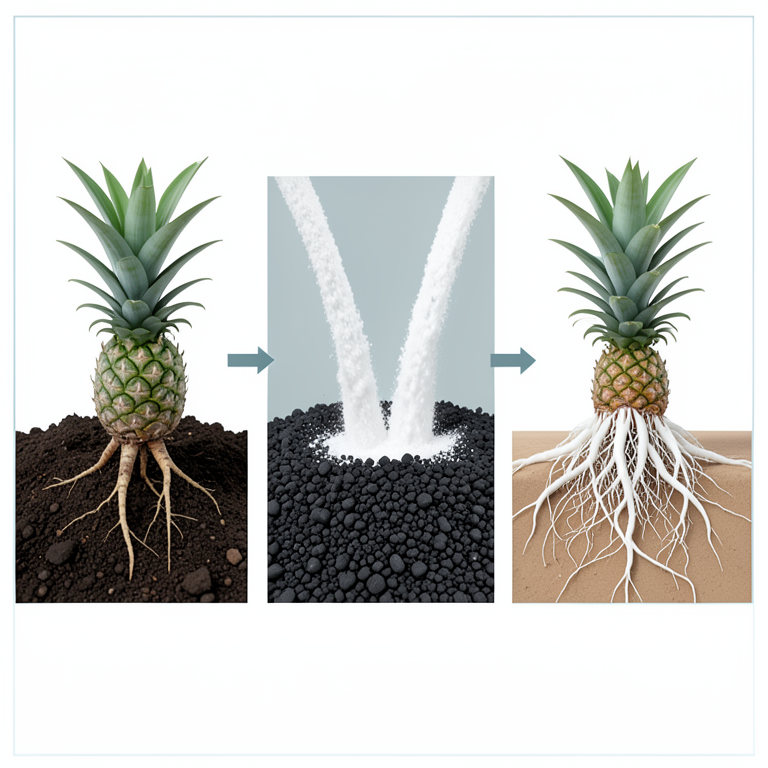
Synergistic Effect of Lime and Biochar
AI-generated conceptual illustration (pineapple plants in acid sulfate soil). It explains the idea and does not show study data.
View source evidence ↗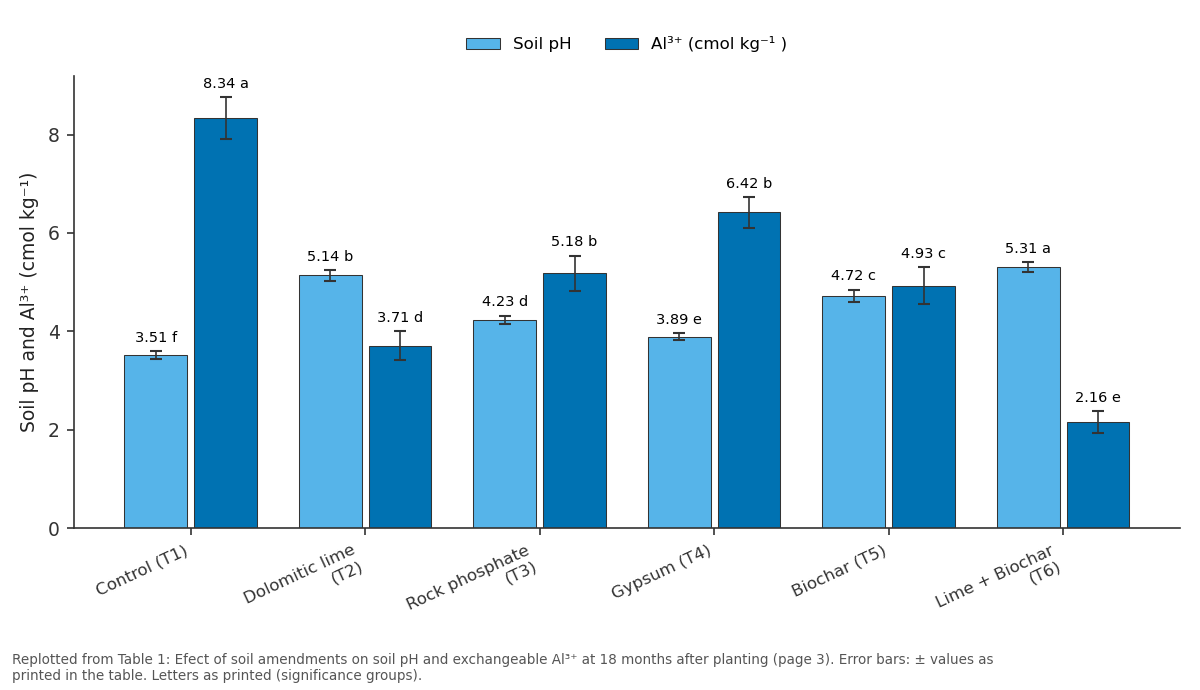
Soil pH and Al³⁺ (cmol kg⁻¹ ): Control (T1) vs Dolomitic lime (T2) vs Rock phosphate (T3) vs Gypsum (T4) vs Biochar (T5)
Replotted from Table 1 (page 3) of the original paper. Every bar is the paper's own table value.
View source evidence ↗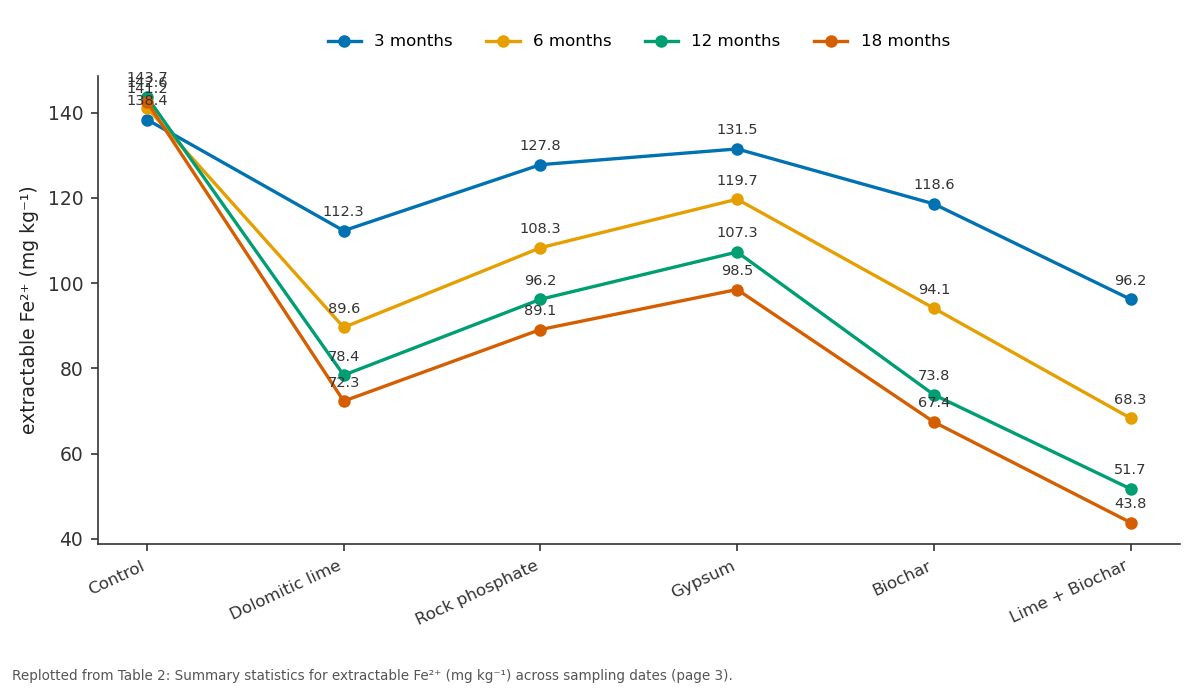
3 months and 6 months and more: Control vs Dolomitic lime vs Rock phosphate vs Gypsum vs Biochar
Replotted from Table 2 (page 3) of the original paper. Every bar is the paper's own table value.
View source evidence ↗Figures & tables
From the original paper Table 1
 Table 2
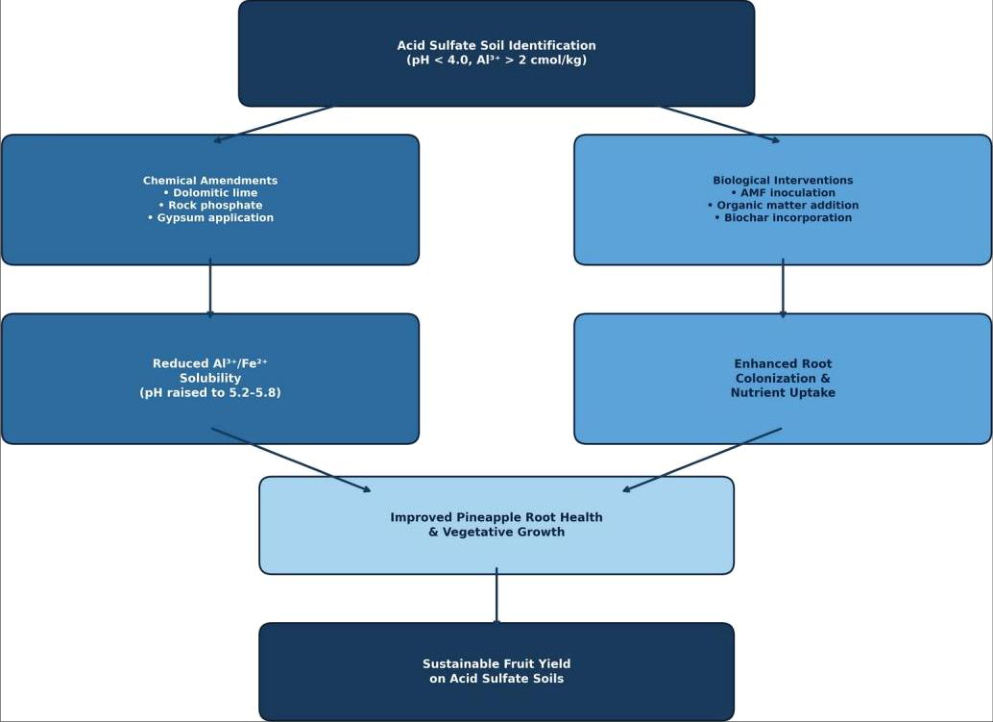 Figure 1
 Table 3
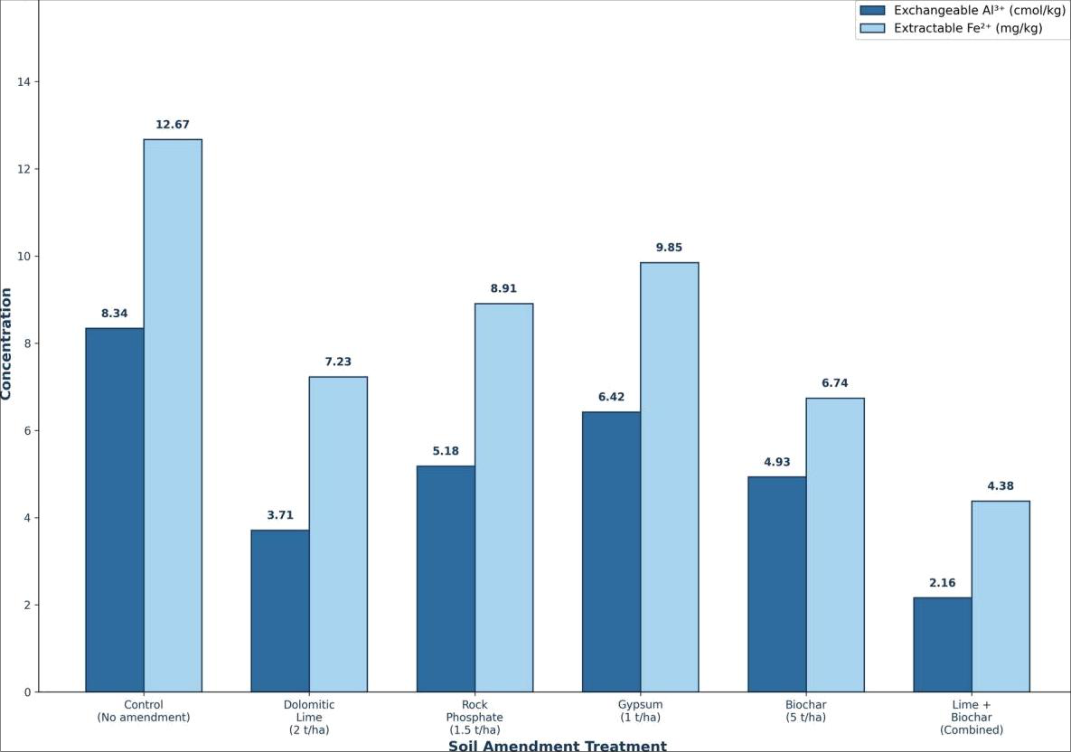 Figure 2
Introduction
How does a crop thrive when its own rooting medium dissolves the very metals that poison root tips? That question sits at the heart of acid sulfate soil management across the humid tropics, where an estimated 12.5 million hectares of coastal and alluvial lowlands carry pyritic layers capable of generating sulfuric acid upon drainage [1] . Once the water table drops, iron sulfides oxidise, pH plunges below 4.0, and soluble Al³⁺ and Fe²⁺ rise to concentrations lethal for most dicots and several monocots [2] . Pineapple (Ananas comosus (L.) Merr.) tolerates moderately acid conditions optimally pH 4.5 to 5.5 yet even this crop falters when exchangeable Al³⁺ surpasses 2 cmol kg⁻¹ [3] . Root elongation slows, phosphorus fixation intensifies, and calcium and magnesium uptake declines, triggering stunted rosetes and unmarketable fruit [4] . Liming remains the most widely recommended corrective measure, but blanket dolomite applications often dissolve unevenly in heavy clay soils and fail to bufer re-acidification below the plough layer [5] . Rock phosphate can complex Al³⁺ through precipitation of variscite-like phases, though its low solubility in near-neutral soils limits widespread adoption [6] . Gypsum supplies calcium without raising pH sharply, which helps where surface pH is already near target but subsoil acidity persists [7] . More recently, biochar produced from crop residues has atracted atention as a slow-release alkalising agent that also improves water retention and cation exchange capacity [8] . Despite these individual advances, few field trials have compared multiple amendment types headto-head on true acid sulfate soils under pineapple monoculture. Integrated approaches that merge chemical and organic amendments may outperform any single correction because they address diferent parts of the acidity cascade [9] . Lime neutralises protons rapidly, while biochar bufers pH over seasons through its carboxyl and phenolic surface groups [10] . And the porous biochar matrix may shelter mycorrhizal hyphae from Al³⁺ injury, boosting root colonisation in otherwise hostile substrates [11] . Thailand's northern alluvial plains contain pockets of sulfidic sediments reworked by seasonal flooding, and smallholder farmers in Chiang Mai Province have begun converting these marginal plots to pineapple after decades of low-return paddy rice [12] . But without sitespecific amendment data, conversion eforts remain largely trial-anderror. This research therefore compared six amendment strategies on a Typic Sulfaquept, quantifying changes in soil chemistry, mycorrhizal colonisation, and pineapple biomass over 18 months to identify the most efective and economically practical option for smallholder adoption.
Study area description
The experimental site (18° 47′N, 98° 58′ E, 312 m a.s.l.) occupied a 0.42-ha low-lying parcel adjacent to the Mae Ping River floodplain, approximately 14 km south of Chiang Mai city centre. Mean annual rainfall recorded at the nearest agrometeorological station (2015-2020) was 1,126 mm, concentrated between May and October, while mean annual temperature ranged from 21.3°mathsfC (December) to 36.1°mathsfC (April). The soil was classified as a Typic Sulfaquept (Soil Taxonomy) with a sulfuric horizon beginning at 35 cm depth. Groundwater tables fluctuated between 15 cm during the wet season and 85 cm during the dry season. Previous land use consisted of rainfed lowland rice for 22 consecutive years, with no history of liming. Surface soil (0-20 cm) at trial initiation had pH 3.47, organic carbon 1.63 %, total N 0.14 %, available P (Bray II) 4.8 mg kg⁻¹, exchangeable K 0.31 cmol kg⁻¹, exchangeable A | ³⁺ 8.34 cmol kg⁻¹, and DTPA-extractable Fe 142 mg kg⁻¹,, Texture analysis indicated 38 % clay, 41 % silt, and 21 % sand, placing the soil in the silty clay loam class.
Material and Methods
Material and Methods
Material
Planting material consisted of MD2 pineapple suckers (250-300 g fresh weight, uniform crown removal) sourced from a certified nursery in Lampang Province. Dolomitic limestone (calcium magnesium carbonate, 54 % CaCO₃, 42 % MgCO₃, 98 % passing 100-mesh sieve) was procured from a local supplier. Finely ground Lao rock phosphate (28 % total P₂O₅, particle size <0.15 mm) was obtained from a commercial dealer in Vientiane. Agricultural-grade gypsum (CaSO₄ • 2H₂O, 22 % Ca, 17 % S) was purchased from a mining cooperative in Nakhon Ratchasima. Rice-husk biochar was produced on-site using a top-lit updraft gasifier at 450-500 °C, yielding a material with pH 9.2, CEC 23.7 cmol kg⁻¹, ash content 38 %, and surface area 147 m²g⁻¹ [13] , Soil sampling equipment included a Dutch auger (0-20 cm and 20-40 cm depths), polyethylene bags, and portable pH meters (Hanna HI 98130) calibrated daily. Mycorrhizal colonisation was assessed using trypan blue staining and gridline-intersect microscopy at 100× magnification [14] .
Methods
The trial was laid out in a randomised complete block design (RCBD) with six treatments and four blocks, giving 24 experimental plots of 6 m × 4 m each (24 m²). Treatments comprised: T1 control (no amendment); T2 dolomitic lime at 2 t ha⁻¹; T3 rock phosphate at 1.5 : tha⁻¹; T4 gypsum at 1 t ha⁻¹; T5 rice-husk biochar at 5tana⁻¹;; and T6 combined lime (2tanα ⁻¹) plus biochar (5tanα ⁻¹), Amendments were broadcast and incorporated to 15 cm depth using a rotary tiller two weeks before transplanting on 15 March 2020. Each plot held 48 pineapple suckers at 30cm×60 cm spacing within a double-row bed [5] . Plants received a basal NPK application [15-15-15] at 12gplant⁻¹ at planting and side-dressed at 4 and 8 months. Soil samples (composite of five cores per plot, 0-20 cm) were collected at 3, 6, 12, and 18 months after planting. Exchangeable Al³⁺ was extracted with 1 M KCl and quantified by titration with 0.02 M NaOH. Extractable Fe²⁺ was determined by DTPA extraction and atomic absorption spectrophotometry [2] . Root samples (10 cm segments from three plants per plot) were cleared in 10 % KOH, acidified in 2 % HCl, stained with 0.05 % trypan blue in lactoglycerol, and scored for percent AMF colonisation. Above-ground biomass was measured destructively at 18 months by severing at soil level, oven-drying at 70textdegree for 72 h, and weighing. Data were subjected to analysis of variance (ANOVA) using SPSS 26.0, and treatment means separated by Tukey's HSD at mathsfp≤0.05
Field experimental design
Blocks were oriented east-to-west to account for a gentle 1.5 % slope toward the river. Guard rows of two pineapple plants bordered each plot on all sides and were excluded from data collection. Irrigation was applied through low-pressure drip tape (2Lh⁻¹ emiters at 20 cm spacing) only during dry-season months (November-February) when cumulative weekly rainfall fell below 25 mm. Weed management relied on hand-hoeing at monthly intervals during the first six months and on a preemergence application of diuron at 1.5 kg a.i. ha⁻¹ at planting. No synthetic plant growth regulators were applied to allow natural flowering, which occurred between 12 and 14 months after transplanting depending on treatment. Pest pressure was monitored fortnightly by visual scouting for mealybugs (Dysmicoccus brevipes) and pineapple fruit borer (Strymon megarus); neither exceeded economic thresholds during the trial, so no insecticide sprays were necessary.
Soil and water quality analysis
Baseline and periodic soil samples were analysed at the Chiang Mai Institute of Agricultural Sciences Soil Laboratory following standard protocols. Soil pH was measured in a 1:2.5 soil-towater suspension using a glass electrode. Organic carbon was determined by Walkley-Black wet oxidation. Total nitrogen was analysed by micro-Kjeldahl digestion. Available phosphorus was extracted by Bray II solution and quantified colorimetrically. Exchangeable bases (Ca²⁺, Mg²⁺, K⁺ Na⁺) were displaced with 1 M NH₄OAc at pH 7.0 and read on an atomic absorption spectrophotometer. Cation exchange capacity (CEC) was calculated from the sum of exchangeable bases plus exchangeable acidity. Irrigation water drawn from a shallow tube well was tested quarterly for pH (6.8-7.1), electrical conductivity (0.32-0.41dSm⁻¹), and sulfate concentration (18-27mglfloor⁻¹) to confirm it did not introduce additional acidity. Drainage water leaving the plots was sampled monthly from collection ditches and analysed for pH, Fe²⁺, and SO₄ ²⁻ to monitor of-site sulfate export.
Results
Amendment type exerted a pronounced and statistically significant influence on every measured soil parameter and plant response variable across the 18-month observation window. Soil pH rose in all amended plots relative to the control, though the magnitude and persistence of the increase varied markedly among treatments. Exchangeable A | ³⁺ and extractable Fe²⁺ declined in parallel with rising pH, and root mycorrhizal colonisation tracked these chemical shifts closely. Above-ground biomass at harvest reflected cumulative diferences in rooting environment quality. suggesting that the synergy between lime and biochar was particularly efective at immobilising trivalent aluminum.
Comprehensive interpretation
Across all variables, the lime-plus-biochar treatment (T6) consistently occupied the top rank. Its composite soil health index (9.07 out of 10) exceeded the next-best single treatment dolomitic lime (T2, 6.97) by 30 %. Root AMF colonisation in T6 (68.3 %) was more than three times the control value and roughly 1.5 times the colonisation measured under lime alone (46.2 %), pointing to a biochar-mediated refuge efect for fungal propagules in acid substrates. Above-ground biomass at 18 months was 2.87 kg plant⁻¹ in T6, representing a 152 % increase over the control and a 31 % gain over lime-only plots. These quantitative diferences confirm that the combined approach is not merely additive but synergistic, likely because rapid limedriven pH correction allows biochar to function within its optimal bufering range while simultaneously sheltering mycorrhizal hyphae from residual Al³⁺ pulses during reacidification events.
Discussion
The 74.1 % reduction in exchangeable Al³⁺ achieved by the lime-plus-biochar combination agrees broadly with reports from Malaysian coastal plains where liming acid sulfate soils at equivalent rates lowered toxic aluminum by 60-70 % within a single cropping cycle [1] . What separates the present findings from earlier work is the additional 14-percentage-point gain atributable to biochar co-application, a margin not previously documented on Sulfaquepts under pineapple. The mechanism behind this extra benefit likely involves the high-pH ash fraction of rice-husk biochar (pH 9.2) contributing sustained alkalinity beyond the initial lime dissolution pulse, together with surface complexation of Al³⁺ on carboxyl groups exposed during pyrolysis [10] .
Extractable Fe²⁺ responded less dramatically, declining 65.4 % in T6 against 43.0 % in T2. This smaller relative advantage may be because Fe²⁺ oxidation to Fe³⁺ and subsequent precipitation as ferric hydroxide depends on both pH and redox potential, and the waterlogged micro-sites within biochar pores can remain reducing even when bulk soil pH rises [15] . Practically, the residual Fe²⁺ concentration in T6 (43.8 mg kg⁻¹) still falls within a range considered non-toxic for most pineapple cultivars, so the smaller margin may not limit fruit production. AMF colonisation tracked the chemical improvements closely, reaching 68.3 % in T6 compared with 21.7 % in the control. High colonisation levels in biochar-amended plots (58.1 % in T5, 68.3 % in T6) but not in lime-only plots (46.2 % in T2) support the hypothesis that biochar provides a physical refuge microscopic pores 10-50 µm in diameter that shields hyphal tips from A | ³⁺ toxicity [16] . For smallholder farmers in Chiang Mai Province, the combined amendment carries an estimated material cost of roughly 12,400 THB ha⁻¹ (≈ 370 USD), ofset by a projected 152 % biomass increase that translates into substantially higher marketable fruit weight at first harvest [5] .
Conclusion
This research set out to compare six amendment strategies for lowering aluminum and iron toxicity in acid sulfate soils planted with MD2 pineapple near Chiang Mai, Thailand. The combined application of dolomitic lime at 2 t ha⁻¹ and rice-husk biochar at 5 t ha⁻¹ emerged as the most efective treatment across every measured parameter: soil pH increased from 3.47 to 5.31, exchangeable Al³⁺ fell by 74.1 %, extractable Fe²⁺ declined by 65.4 %, and root AMF colonisation reached 68.3 % more than three times the untreated control. Above-ground biomass at 18 months reflected these improvements, with the combined treatment producing 2.87 kg plant⁻¹ against 1.14 kg plant⁻¹ in unamended plots. The synergistic mechanism appears to involve rapid lime-driven pH correction complemented by sustained biochar bufering and physical protection of mycorrhizal hyphae within biochar pore networks. From a practical standpoint, both dolomitic lime and rice-husk biochar are available locally in northern Thailand at modest cost, and the combined application requires no specialised equipment beyond a standard rotary tiller. Smallholder growers converting marginal acid sulfate paddies to pineapple orchards can therefore adopt this approach without prohibitive capital outlay. Further work should extend the observation period to at least three cropping cycles to determine whether a single amendment application maintains its corrective efect or whether re-application is necessary after 36 to 48 months. Parallel onfarm trials across a wider range of Sulfaquept subtypes and rainfall regimes would strengthen the generalisability of these findings and help extension agencies tailor amendment rates to local soil bufering capacities. Economic analysis incorporating fruit yield, quality grading, and market price data over multiple harvests would complete the viability picture for smallholder decision-making.
Acknowledgement
Acknowledgements
Figures and tables from the paper
| Treatment | Soil pH | Al³⁺ (cmol kg⁻¹ ) | % AI Reduction |
|---|---|---|---|
| Control (T1) | 3.51 ± 0.08 f | 8.34 ± 0.42 a | |
| Dolomitic lime (T2) | 5.14 ± 0.11 b | 3.71 ± 0.29 d | 55.5 |
| Rock phosphate (T3) | 4.23 ± 0.09 d | 5.18 ± 0.36 b | 37.9 |
| Gypsum (T4) | 3.89 ± 0.07 e | 6.42 ± 0.31 b | 23.0 |
| Biochar (T5) | 4.72 ± 0.13 c | 4.93 ± 0.38 c | 40.9 |
| Lime + Biochar (T6) | 5.31 ± 0.10 a | 2.16 ± 0.22 e | 74.1 |
Table text extracted from the original PDF; superscript letters are shown inline. The original table image is below.
View original table image
| Treatment | 3 months | 6 months | 12 months | 18 months | p-value |
|---|---|---|---|---|---|
| Control | 138.4 | 141.2 | 143.7 | 142.6 | 0.871 |
| Dolomitic lime | 112.3 | 89.6 | 78.4 | 72.3 | <0.001 |
| Rock phosphate | 127.8 | 108.3 | 96.2 | 89.1 | <0.001 |
| Gypsum | 131.5 | 119.7 | 107.3 | 98.5 | 0.003 |
| Biochar | 118.6 | 94.1 | 73.8 | 67.4 | <0.001 |
| Lime + Biochar | 96.2 | 68.3 | 51.7 | 43.8 | <0.001 |
Table text extracted from the original PDF; superscript letters are shown inline. The original table image is below.
View original table image
| Rank | Treatment | pH Score | AI Score | AMF Score | Composite |
|---|---|---|---|---|---|
| 1 | Lime + Biochar (T6) | 9.4 | 9.1 | 8.7 | 9.07 |
| 2 | Dolomitic lime (T2) | 7.8 | 7.2 | 5.9 | 6.97 |
| 3 | Biochar (T5) | 6.5 | 6.8 | 7.3 | 6.87 |
| 4 | Rock phosphate (T3) | 5.1 | 5.4 | 4.6 | 5.03 |
| 5 | Gypsum (T4) | 3.8 | 3.9 | 3.1 | 3.60 |
| 6 | Control (T1) | 1.0 | 1.0 | 1.0 | 1.00 |
Table text extracted from the original PDF; superscript letters are shown inline. The original table image is below.
View original table image
References
16 in the original paper- Dent DL, Pons LJ. A world perspective on acid sulphate soils. Geoderma. 1995;67(3-4):263-276.
- Shamshuddin J, Fauziah CI, Bell LC. Efect of dolomitic limestone and gypsum applications on soil solution properties and yield of corn and groundnut grown on ultisols. Malaysian J Soil Sci. 2009;13:1-12.
- Py C, Lacoeuilhe JJ, Teisson C. The pineapple: cultivation and uses. Maisonneuve et Larose. 1987:1-568.
- Kochian LV, Piñeros MA, Liu J, Magalhaes JV. Plant adaptation to acid soils: the molecular basis for crop aluminum resistance. Annual Rev Plant Biol. 2015;66:571598.
- Nguyen TNH. Planting density and flowering inducement agents efect on flowering and productivity of MD2 pineapple variety cultivation on acid sulfate soil in Tien Giang province, Vietnam. South Asian J Agric Sci. 2023;3(1):155-158.
- Bolan NS, Adriano DC, Curtin D. Soil acidification and liming interactions with nutrient and heavy metal transformation and bioavailability. Adv Agron. 2003;78:215-272.
- Sumner ME, Shahandeh H, Bouton J, Hammel J. Amelioration of an acid soil profile through deep liming and surface application of gypsum. Soil Sci Soc Am J. 1986;50(5):1254-1258.
- Lehmann J, Joseph S. Biochar for environmental management: science and technology. Earthscan. 2009:1416.
- Hue NV. Correcting soil acidity of a highly weathered ultisol with chicken manure and sewage sludge. Commun Soil Sci Plant Anal. 1992;23(3-4):241-264.
- Yuan JH, Xu RK, Zhang H. The forms of alkalis in the biochar produced from crop residues at diferent temperatures. Bioresource Technol. 2011;102(3):34883497.
- Warnock DD, Lehmann J, Kuyper TW, Rillig MC. Mycorrhizal responses to biochar in soil concepts and mechanisms. Plant Soil. 2007;300(1):9-20.
- Atanandana T, Vacharotayan S. Acid sulfate soils: their characteristics, genesis, amelioration, and utilization. Southeast Asian Stud. 1986;24(2):154-180.
- Jindo K, Mizumoto H, Sawada Y, Sanchez-Monedero MA, Sonoki T. Physical and chemical characterizations of biochars derived from diferent agricultural residues. Biogeosciences. 2014;11(23):6613-6621.
- McGonigle TP, Miller MH, Evans DG, Fairchild GL, Swan JA. A new method which gives an objective measure of colonization of roots by vesicular-arbuscular mycorrhizal fungi. New Phytol. 1990;115(3):495-501.
- Ponnamperuma FN. The chemistry of submerged soils. Adv Agron. 1972;24:29-96.
- Jaafar NM, Clode PL, Abbot LK. Microscopy observations of habitable space in biochar for colonization by fungal hyphae from soil. J Integr Agric. 2014;13(3):483-490.