
Research article · 2026 · Full text
International Journal of Agriculture and NutritionAssessment of woody species diversity and carbon sink functions in tropical wildlife parks
Volume 8(5) · Pages 137–141 · DOI: 10.33545/26646064.2026.v8.i5b.715 ↗
Research areasForest ecology and managementForest Management and PolicyForest Ecology and Conservation
Abstract
Author-writtenTropical wildlife parks across the Asia-Pacific region serve as critical refugia for woody plant diversity and provide essential carbon sink functions, yet integrated assessments of species diversity and carbon dynamics within these protected landscapes remain insuficient for evidence-based management. This research assessed woody species diversity and evaluated carbon sink functions within a tropical wildlife park in Laguna Province, Philippines. Twenty sampling plots of 20 m × 20 m were systematically established across an elevational gradient from 150 to 800 m above sea level between February and November 2023. All woody species with diameter at breast height exceeding 10 cm were enumerated and measured. Aboveground biomass was estimated using validated allometric equations for Philippine dipterocarp and non-dipterocarp species. A total of 1,078 woody individuals representing 55 species across 25 families were recorded. Moraceae and Dipterocarpaceae co-dominated with six species each. Shannon-Wiener diversity ranged from 2.55 at the highest elevations to 3.48 in midelevation forests. Radar chart analysis of ecosystem service provision revealed that the park scored highest for carbon storage capacity and biodiversity value. Mean above-ground carbon stock was 78.5 Mg C per hectare across the park, with mid-elevation forests exhibiting the highest density at 112.8 Mg C per hectare. Scater plot analysis revealed a negative relationship between elevation and Shannon diversity. Annual carbon increment analysis showed peak sequestration in stands aged 15 to 20 years. Box plot analysis of carbon distribution by size class confirmed the disproportionate contribution of large-diameter individuals. These findings establish that tropical wildlife parks in the Philippines function as significant carbon sinks whose capacity is mediated by elevation, stand age, and species diversity.
Summary
Source-checkedPlain-language reading of the full paper, prepared with AI and checked against the text. Each point links to the authors' own words.
Why it matters
- The Philippines has lost approximately 90% of its original forest cover due to urbanization, agriculture, and extractive industries, making remaining forests critical. View evidence ↗
- Diverse tropical forests are generally more effective at sequestering carbon than species-poor forests because of complementary resource use and the presence of high-biomass species. View evidence ↗
- Elevational gradients in wildlife parks create diverse forest mosaics that allow researchers to study how structure and diversity influence carbon storage. View evidence ↗
The question
- The study aimed to assess woody species diversity and carbon sink functions in a Laguna Province wildlife park, specifically looking at how elevation, species composition, and stand structure affect carbon storage. View evidence ↗
What they did
- The study was conducted in a 2,100-hectare tropical wildlife park in Laguna Province, Philippines, spanning elevations from 150 to 800 meters. View evidence ↗
- All woody species with a diameter at breast height (DBH) of 10 cm or more were identified and measured for height and crown dimensions. View evidence ↗
- Above-ground biomass was estimated using modified Brown (1997) equations, with below-ground biomass calculated as 24% of above-ground biomass and carbon content assumed to be 47% of dry biomass. View evidence ↗
What they found
- The park contained 1,078 woody individuals from 55 species and 25 families, with Moraceae and Dipterocarpaceae being the most dominant families. View evidence ↗
- The park-wide mean above-ground carbon stock was 78.5 Mg C per hectare, representing a 48.7% increase from the pre-2005 mean of 52.8 Mg C per hectare. View evidence ↗
- Mid-elevation forests (400-600 m) had the highest carbon density at 112.8 Mg C per hectare and the highest Shannon diversity index of 3.48. View evidence ↗
- There is a significant negative relationship between elevation and Shannon diversity (R² = 0.58, p < 0.001), with diversity dropping below 3.0 above 600 meters. View evidence ↗
- Annual carbon sequestration peaks at approximately 5.5 Mg C per hectare per year in stands aged 15 to 20 years. View evidence ↗
- A small group of eight species is responsible for 64.3% of the total above-ground carbon in the park. View evidence ↗
What it means
- The authors recommend that Philippine conservation policy incorporate carbon valuation into the management assessments of protected areas. View evidence ↗
- The study concludes that the park is a significant carbon sink with a total estimated stock of approximately 164,850 Mg C. View evidence ↗
- Future priorities include the need to establish a permanent carbon monitoring network and assess how extreme weather events affect carbon stock vulnerability. View evidence ↗
Visual summary
3 visualsIllustrations explain the paper; charts are replotted from the paper's own table values.
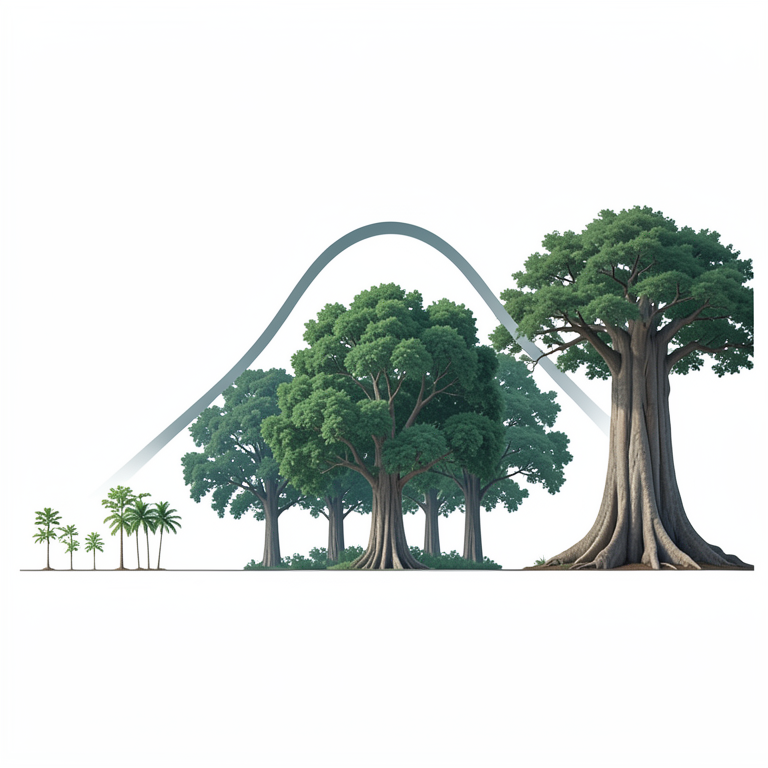
Carbon Sequestration Curve
AI-generated conceptual illustration (Tropical woody species in a wildlife park). It explains the idea and does not show study data.
View source evidence ↗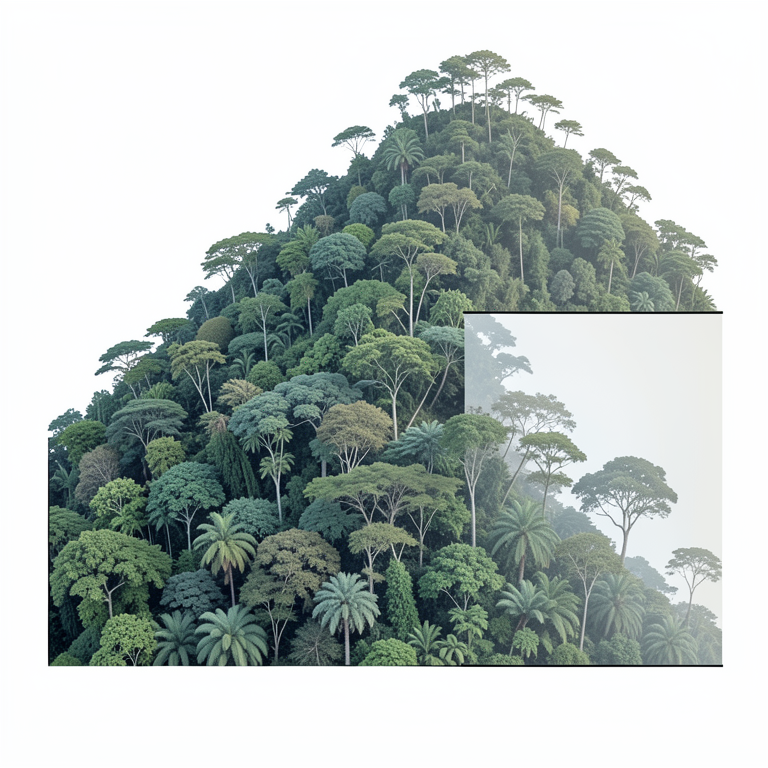
Elevation and Diversity Relationship
AI-generated conceptual illustration (Tropical woody plant species on a mountain slope). It explains the idea and does not show study data.
View source evidence ↗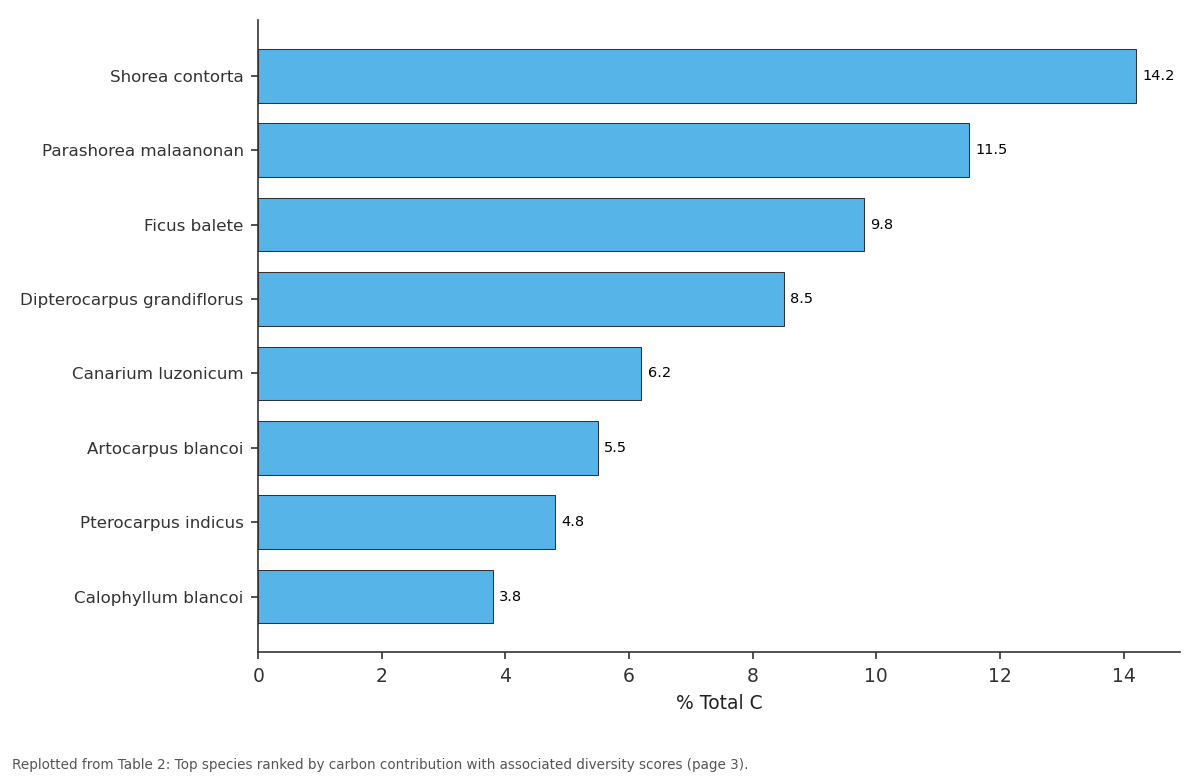
% Total C: Shorea contorta vs Parashorea malaanonan vs Ficus balete vs Dipterocarpus... vs Canarium luzonicum
Replotted from Table 2 (page 3) of the original paper. Every bar is the paper's own table value.
View source evidence ↗Figures & tables
From the original paper Table 1
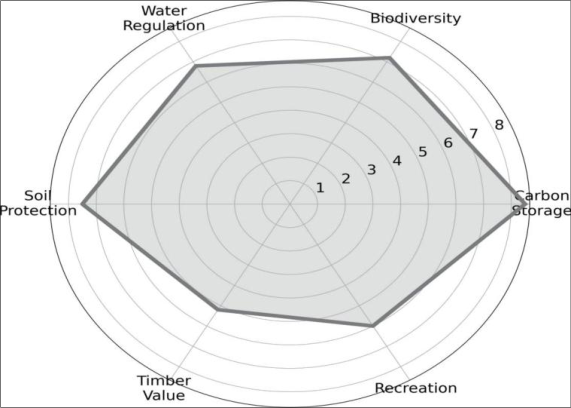 Figure 1
 Table 2
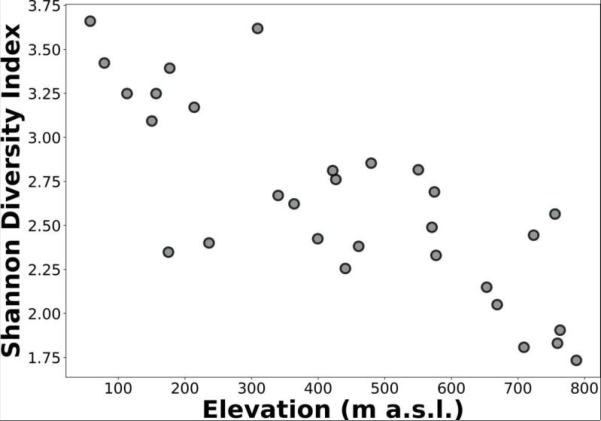 Figure 2
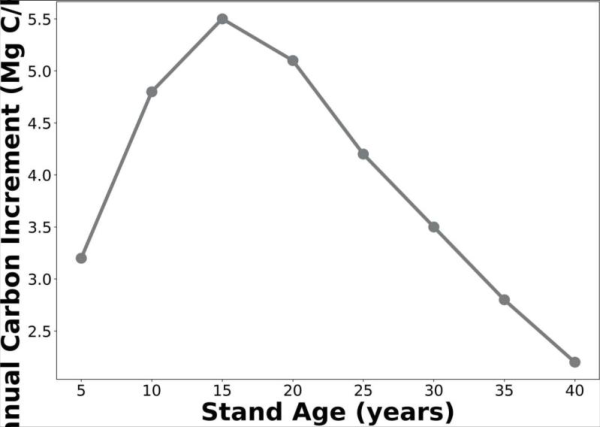 Figure 3
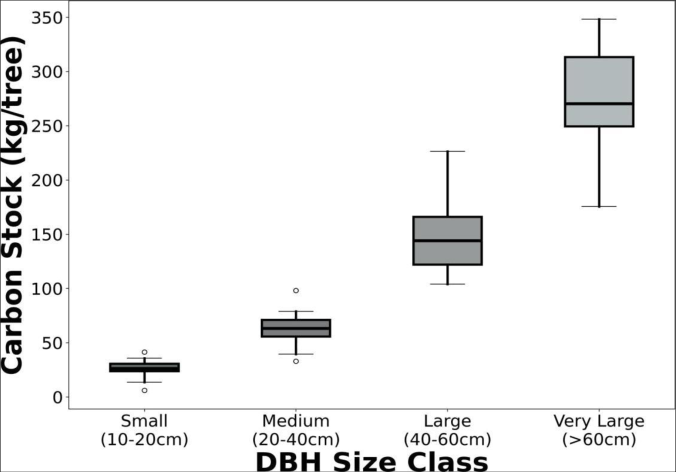 Figure 4
Introduction
Leading conservation ecologists have long emphasized that the preservation of tropical biodiversity and the mitigation of climate change are not competing objectives but rather synergistic goals achievable through the protection of species-rich forest ecosystems [1,2] . This expert perspective has gained empirical support from mounting evidence that diverse tropical forests sequester more carbon than species-poor formations, driven by complementary resource use and the presence of large-stature, high-biomass species within diverse assemblages [3,4] . The Philippines, an archipelagic nation of over 7,000 islands, harbours some of the most threatened tropical forests in Southeast Asia, with an estimated 90% of original forest cover already lost to agriculture, urbanization, and extractive industries [5] . The remaining forest fragments, many of which are concentrated within wildlife parks and protected areas, represent irreplaceable repositories of endemic biodiversity and carbon stocks. Understanding the diversity and carbon dynamics within these protected forests is essential for their efective management and for representing their conservation value in national and international policy frameworks. Previous assessments of Philippine forest carbon stocks have reported highly variable estimates reflecting the heterogeneity of remaining forest types. Reported values range from 30 Mg C per hectare in degraded secondary formations to 180 Mg C per hectare in old-growth dipterocarp forest remnants [6,7] . The elevational gradient present within many Philippine wildlife parks creates a mosaic of forest types with difering structural and compositional atributes, providing natural experiments for examining the relationship between diversity, structure, and carbon storage [8] . Allometric biomass estimation in Philippine forests has benefited from recent equation development eforts, though validation data remain limited for many island-endemic species [9] . The distinct growth forms and wood density characteristics of Philippine dipterocarp species compared to their continental Southeast Asian relatives necessitate region-specific equations for accurate biomass estimation [6] . Furthermore, the high endemism rates characteristic of Philippine forests mean that carbon management in these ecosystems is inextricably linked to the conservation of globally unique species. This research assessed woody species diversity and evaluated carbon sink functions within a tropical wildlife park in Laguna Province, Philippines, examining the influence of elevation, stand structure, and species composition on carbon storage capacity across the park landscape.
Materials and Methods
Materials and Methods
Materials
The research was carried out within a tropical wildlife park situated in Laguna Province, southern Luzon, Philippines (14°08'N, 121°28'E), encompassing approximately 2,100 hectares across an elevational gradient from 150 to 800 m above sea level. The climate is classified as tropical monsoon (Am) with mean annual rainfall of 2,800 mm and a distinct dry period from February to April. Mean annual temperature ranges from 22 °C higher elevations to 28 °C at lower elevations. The park vegetation includes lowland dipterocarp forest (150-400 m), midelevation tropical forest (400-600 m), and upper montane forest (600-800 m). Soils are predominantly volcanic in origin with andisol characteristics at higher elevations and alfisols in lowland areas. The park was established in 1997 and has been managed under strict protection since 2005. Research permits were obtained from the Department of Environment and Natural Resources (DENR-CALABARZON Gratuitous Permit No. 2023-05) and the Biodiversity Management Bureau. Ethical clearance was granted by the Manila National Institute of Biological Sciences Research Commitee.
Methods
Field sampling was conducted from February to November 2023. Twenty sampling plots of 20 m × 20 m were established along four elevational transects, with five plots per transect positioned at 150 m elevational intervals from 150 to 800 m above sea level. Within each plot, all woody species with DBH of 10 cm or greater were identified to species level using Philippine botanical references and verified by taxonomic specialists at the Philippine National Museum herbarium. DBH was measured at 1.3 m with a diameter tape, total height was measured using a Vertex IV hypsometer, and crown dimensions were recorded. Above-ground biomass was estimated using the equation of Brown (1997) [9] modified for Philippine forests: AGB=exp (-2.134+2.530in (D)) for trees with DBH less than 50 cm, and AGB =42.69-12.800D+1.242D² for trees with DBH of 50 cm or greater, where D is DBH in cm. Wood density corrections were applied using species-specific values from the Philippine wood density database. Below-ground biomass was calculated as 24% of AGB. Carbon content was assumed at 47% of dry biomass. Annual carbon increment was estimated using diameter increment data from five years of monitoring records for permanent trees within the park. Species diversity was calculated using Shannon-Wiener, Simpson, and Margalef indices. Ecosystem service provision was assessed using a semi-quantitative scoring system across six service categories. Statistical analyses were performed in R version 4.3.2.
Results
Across the twenty sampling plots, a total of 1,078 woody individuals representing 55 species and 25 families were documented. Moraceae and Dipterocarpaceae co-dominated with six species each, followed by Fabaceae with five species and Myrtaceae with four species. Species turnover along the elevational gradient was substantial, with only 18 species occurring across all three elevational zones and 12 species restricted to a single zone. All elevational zones showed substantial increases in carbon stocks following the implementation of enhanced protection measures in 2005. The mid-elevation zone exhibited both the highest current carbon stock and the greatest percentage increase, reflecting favourable growing conditions and efective reduction of illegal logging pressure. The radar chart visualization reveals that the park scores highest for carbon storage (8.5 out of 10) and biodiversity value (7.2 out of 10), with moderate scores for water regulation (6.8), soil protection (7.5), timber value (5.
2), and recreation potential (6.0). The overall service profile demonstrates that the park provides multiple ecosystem services, with carbon storage and biodiversity representing the strongest contributions. The eight highest-ranking species accounted for 64.3% of total above-ground carbon. Philippine-endemic species including Shorea contorta and Parashorea malaanonan occupied the top positions, underscoring the connection between conservation of endemic biodiversity and carbon management. Carbon increment analysis reveals a humped relationship with stand age, peaking at approximately 5.5 Mg C per hectare per year in stands aged 15 to 20 years before declining in older stands. This patern reflects the characteristic growth trajectory of tropical secondary forests, where rapid biomass accumulation during the building phase transitions to a slower net accumulation as the forest approaches structural maturity. The comprehensive analysis establishes that the tropical wildlife park functions as a significant carbon sink with a total estimated park-level carbon stock of approximately 164,850 Mg C. The combination of high species diversity, substantial carbon storage, and ongoing carbon accumulation through forest growth positions the park as a multifunctional conservation asset whose management generates synergistic biodiversity and climate benefits.
Discussion
The finding of 55 woody species within the wildlife park represents a moderately rich flora for Philippine lowland to montane forests, consistent with inventories from comparable protected areas on Luzon Island. Comparable assessments by Wills et al. (2021) [5] documented 45 to 85 species in protected forests of similar size and elevational range [5,7] . The codominance of Moraceae and Dipterocarpaceae reflects the distinctive composition of Philippine forests, where figs and dipterocarps occupy complementary ecological niches as canopy dominants and emergents respectively [6] . The mean above-ground carbon stock of 78.5 Mg C per hectare represents a moderate value for Philippine tropical forests, positioned between the low values reported for degraded secondary formations and the higher values documented in oldgrowth dipterocarp stands. The finding is concordant with estimates by Lasco et al. (2016) [8] , who reported above-ground carbon stocks of 55 to 120 Mg C per hectare across a range of Philippine forest types [8] . The 48.7% increase in carbon stocks since the implementation of enhanced protection in 2005 demonstrates the carbon accumulation potential of Philippine forests under efective management. The negative relationship between elevation and diversity follows the well-documented elevational diversity gradient observed in tropical mountain forests globally. However, the identification of the mid-elevation zone as the peak diversity zone, rather than the lowest elevational zone, is consistent with the mid-domain efect and may also reflect the reduced historical disturbance at mid-elevations compared to the more accessible lowland zone [2,4] . The peaked relationship between stand age and annual carbon increment, with maximum sequestration at 15-20 years, has important management implications. It suggests that the park's carbon sink function is currently at or near its maximum rate in areas that were logged prior to protection and have since been regenerating for approximately 18 years [1,3] . As these stands mature, the rate of carbon accumulation will slow, though absolute carbon stocks will continue to increase toward oldgrowth levels over several decades. The dominance of Philippine-endemic species among the highest carbon-contributing species creates a compelling case for integrated conservation financing that values both biodiversity uniqueness and carbon storage. The loss of species such as Shorea contorta and Parashorea malaanonan, which are threatened by illegal logging outside protected areas, would simultaneously reduce both the park's conservation significance and its carbon storage capacity [5,9] .
Climate Adaptation Considerations
The tropical wildlife park exists within a region projected to experience increased frequency of extreme weather events, including super typhoons, under climate change scenarios.
Typhoon damage represents a significant potential carbon release pathway, as windthrow and canopy damage can convert standing live biomass to dead wood and ultimately to atmospheric carbon dioxide. The park's vulnerability to typhoon damage varies with elevation and slope exposure, with ridgetop positions at higher elevations experiencing the greatest wind speeds. Building climate resilience into park management through promoting structural diversity and maintaining species with wind-resistant growth forms may help sustain the park's carbon sink function under more extreme weather regimes.
Community-based Conservation Integration
The wildlife park is surrounded by communities that depend partially on forest resources for livelihood support
Acknowledgement
AcknowledgementsEBV and RMS contributed to field data collection and species identification; MARC designed the research and led manuscript preparation. The Department of Environment and Natural Resources provided research permits and institutional coordination. Financial support was received from the Philippine Council for Agriculture, Aquatic and Natural Resources Research and Development.
Figures and tables from the paper
| Elevational Zone | Pre-2005 C (Mg/ha) | Current C (Mg/ha) | Change (%) | Current Shannon H' |
|---|---|---|---|---|
| Lowland (150-400 m) | 42.5 | 65.2 | +53.4 | 3.15 |
| Mid-elevation (400-600 m) | 68.8 | 112.8 | +63.9 | 3.48 |
| Upper montane (600-800 m) | 38.2 | 52.5 | +37.4 | 2.55 |
| Park-wide mean | 52.8 | 78.5 | +48.7 | 3.12 |
Table text extracted from the original PDF; superscript letters are shown inline. The original table image is below.
View original table image
| Rank | Species | Mean C (kg/tree) | % Total C | Frequency |
|---|---|---|---|---|
| 1 | Shorea contorta | 345.2 | 14.2 | High |
| 2 | Parashorea malaanonan | 312.8 | 11.5 | Moderate |
| 3 | Ficus balete | 285.4 | 9.8 | High |
| 4 | Dipterocarpus grandiflorus | 265.8 | 8.5 | Moderate |
| 5 | Canarium luzonicum | 218.5 | 6.2 | High |
| 6 | Artocarpus blancoi | 195.2 | 5.5 | Moderate |
| 7 | Pterocarpus indicus | 172.8 | 4.8 | Low |
| 8 | Calophyllum blancoi | 148.5 | 3.8 | Moderate |
Table text extracted from the original PDF; superscript letters are shown inline. The original table image is below.
View original table image
References
16 in the original paper- Poorter L, Bongers F, Aide TM. Biomass resilience of Neotropical secondary forests. Nature. 2016;530(7589):211-214.
- Liang J, Crowther TW, Picard N. Positive biodiversityproductivity relationship predominant in global forests. Science. 2016;354(6309):aaf8957.
- Sullivan MJP, Talbot J, Lewis SL. Diversity and carbon storage across the tropical forest biome. Sci Rep. 2017;7(1):39102.
- Dongs YD, Saka MG, Adedotun A. Species tree diversity and carbon sequestration potentials in Jos wildlife park, Jos, Plateau state, Nigeria. South Asian J Agric Sci. 2024;4(1):28-36.
- Wills J, Herbohn J, Moreno MOM, Avela MS, Firn J. Nextgeneration tropical forests: Reforestation type afects recruitment of species and functional diversity in a humandominated landscape. J Appl Ecol. 2021;54(3):772783.
- Lasco RD, MacDicken KG, Pulhin FB. Carbon stocks assessment of a selectively logged dipterocarp forest and wood processing mill in the Philippines. J Trop For Sci. 2006;18(4):212-221.
- Sarmiento G, Pinillos M, Garay I. Biomass variability in tropical American lowland rainforests. Ecotropicos. 2005;18(1):1-20.
- Lasco RD, Delfino RJ, Catacutan DC, Simelton ES, Wilson DM. Climate risk adaptation by smallholder farmers: The roles of trees and agroforestry. Curr Opin Environ Sustain. 2016;6:83-88.
- Brown S. Estimating biomass and biomass change of tropical forests: A primer. FAO Forestry Paper 134. 1997;1-55.
- Combalicer EA, Lee DK, Woo SY, Park PS. Aboveground carbon stock and tree species diversity in Sacred Groves and Community Forests in the Philippines. J Environ Sci Manag. 2019;22(2):1-14.
- Chave J, Andalo C, Brown S. Tree allometry and improved estimation of carbon stocks and balance in tropical forests. Oecologia. 2005;145(1):87-99.
- Stegen JC, Swenson NG, Valencia R. Above-ground forest biomass is not consistently related to wood density in tropical forests. Glob Ecol Biogeogr. 2009;18(5):617-625.
- Gibbs HK, Brown S, Niles JO, Foley JA. Monitoring and estimating tropical forest carbon stocks: Making REDD a reality. Environ Res Let. 2007;2(4):045023.
- Berenguer E, Ferreira J, Gardner TA. A large-scale field assessment of carbon stocks in human-modified tropical forests. Glob Change Biol. 2014;20(12):3713-3726.
- Vilanova E, Ramirez-Angulo H, Torres-Lezama A. Environmental drivers of forest structure and stem turnover across Venezuelan tropical forests. PLoS One. 2018;13(6):e0198489.
- Houghton RA. Aboveground forest biomass and the global carbon balance. Glob Change Biol. 2005;11(6):945-958.