
Research article · 2026 · Full text
International Journal of Biology SciencesThe relationship between infectious diseases and COVID-19: Co-infections, immune dysregulation, antimicrobial resistance, and clinical outcomes
Volume 8(7) · Pages 126–131 · DOI: 10.33545/26649926.2026.v8.i7b.941 ↗
Research areasCOVID-19 Clinical Research StudiesSARS-CoV-2 and COVID-19 ResearchAntifungal resistance and susceptibility
Abstract
Author-writtenSARS-CoV-2 has brought about an unprecedented change in the global landscape of infectious diseases. In addition to its own respiratory pathology, COVID-19 patients are vulnerable to a wide variety of secondary bacterial, fungal, and viral co-infections, with multiple mechanisms of convergence: massive lymphopenia; defect in macrophage and neutrophil function; disruption of the mucosal barrier; corticosteroid therapy; and use of invasive supportive therapies. This review comprehensively examines the bidirectional relationship between COVID-19 and infectious diseases, analyzing the epidemiology and microbiology of bacterial co-infections caused by Staphylococcus aureus, Pseudomonas aeruginosa, Klebsiella pneumoniae, and Acinetobacter baumannii; fungal infections including COVID-19-associated pulmonary aspergillosis (CAPA), Candida spp., and the unprecedented mucormycosis epidemic; and viral co-infections including influenza and herpesvirus reactivation. Host immune dysregulation—the central facilitating mechanism—is examined at molecular and cellular levels. The review further addresses the antimicrobial resistance crisis catalyzed by the pandemic through empirical antibiotic overuse, disrupted stewardship, and nosocomial multidrug-resistant organism outbreaks. Diagnostic advances, therapeutic strategies, and public health implications are discussed with emphasis on low- and middle-income settings.
Summary
Source-checkedPlain-language reading of the full paper, prepared with AI and checked against the text. Each point links to the authors' own words.
Why it matters
- Patients with COVID-19 are susceptible to various secondary bacterial, fungal, and viral co-infections beyond the primary respiratory pathology of SARS-CoV-2. View evidence ↗
- The pattern of secondary infections in COVID-19 mirrors the 1918 Spanish flu pandemic, where secondary bacterial pneumonia was the primary cause of most deaths. View evidence ↗
- The pandemic exacerbated the global antimicrobial resistance (AMR) crisis through factors such as overwhelmed healthcare systems, extended hospital stays, and unprecedented empirical antibiotic use. View evidence ↗
The question
- The review aims to summarize evidence on COVID-19 co-infections, focusing on their immune basis, clinical outcomes, diagnostics, therapeutics, and public health impacts, particularly in Iraq and the Middle East. View evidence ↗
What they did
- The authors conducted a comprehensive review analyzing the epidemiology and microbiology of bacterial, fungal, and viral co-infections in the context of COVID-19. View evidence ↗
- The review examines host immune dysregulation at both cellular and molecular levels as the primary mechanism facilitating these co-infections. View evidence ↗
What they found
- Among reported co-infections, approximately 72% were bacterial, 19% were fungal, and 9% were viral. View evidence ↗
- Staphylococcus aureus/MRSA was found in 12-21% of severe COVID-19 cases. View evidence ↗
- COVID-19-associated pulmonary aspergillosis (CAPA) occurred in 3-33% of ICU patients receiving steroids, with a mortality rate of approximately 47%. View evidence ↗
- An epidemic of COVID-19-associated mucormycosis (CAM) in India (April-June 2021) saw over 47,000 cases, a 100-fold increase over baseline, with fatality rates between 35-54%. View evidence ↗
- Latent herpesviruses (EBV, CMV, and HSV) reactivated in 20-30% of COVID-19 patients in the ICU. View evidence ↗
- Lymphopenia (count <1.0 × 10⁹/L) was present in 83% of hospitalized patients and served as the strongest independent predictor of mortality and severity. View evidence ↗
- A systematic review indicated that 71.9% of COVID-19 patients were given antibiotics, even though the confirmed bacterial co-infection rate was only 6.9%. View evidence ↗
What it means
- The authors recommend that pandemic preparedness must include strengthening AMR surveillance, sustaining antimicrobial stewardship (ASP) and infection prevention and control (IPC), and investing in rapid diagnostics. View evidence ↗
- An integrated response to COVID-19 and infectious diseases requires microbiological sampling before empirical therapy, pathogen-driven de-escalation, and equitable global access to therapeutics. View evidence ↗
Visual summary
1 visualsIllustrations explain the paper; they do not show study data.
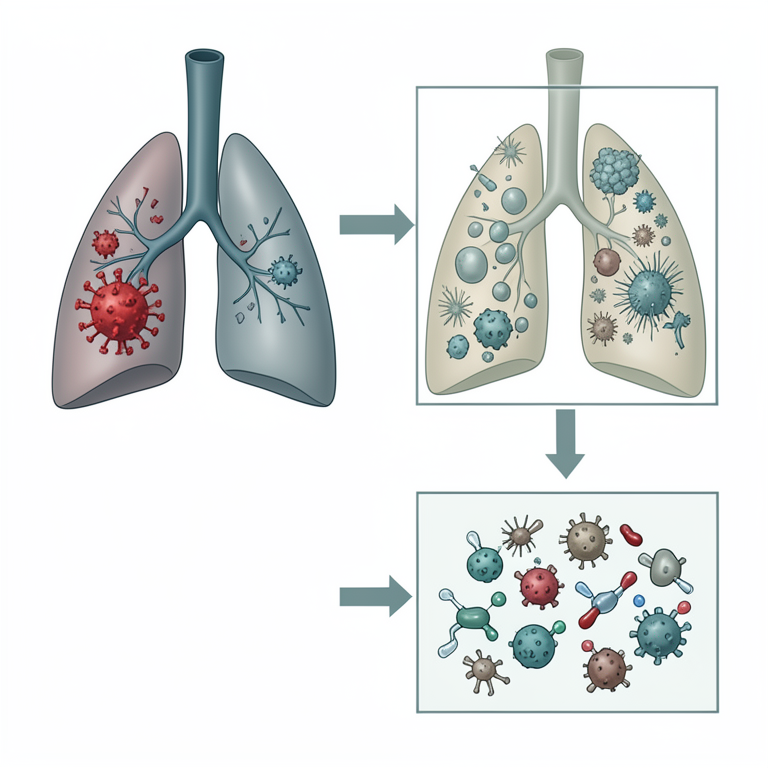
The Cycle of COVID-19 Co-infections
AI-generated conceptual illustration (human lungs and immune cells). It explains the idea and does not show study data.
View source evidence ↗Figures & tables
From the original paper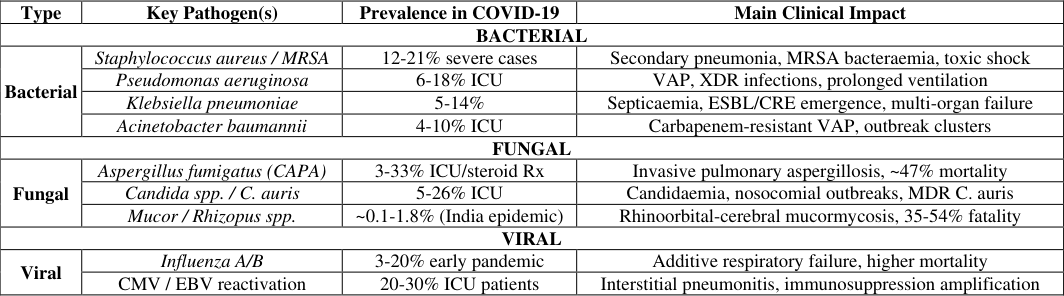 Table 1
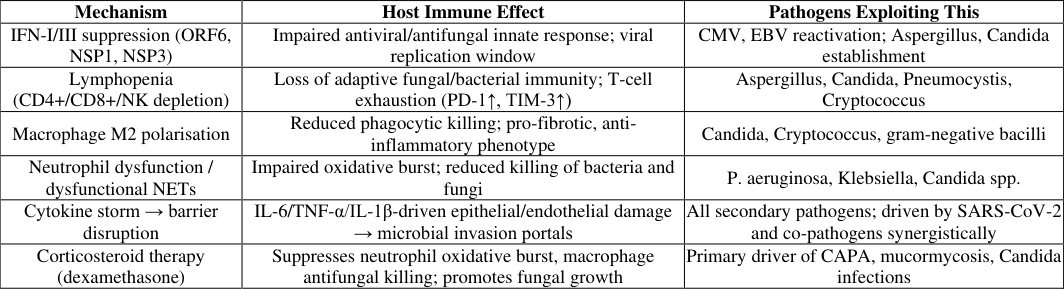 Table 2
 Table 3
Introduction
The COVID-19 pandemic, declared by the WHO in March 2020, resulted in over 700 million confirmed infections and more than 7 million deaths globally by 2024. While SARS-CoV-2 itself causes a spectrum of disease from asymptomatic infection to fatal acute respiratory distress syndrome (ARDS), the clinical course of severe COVID-19 is substantially shaped by secondary infections. This pattern was set by history during the 1918 Spanish flu pandemic when most deaths were due to secondary bacterial pneumonia, not the influenza virus. COVID-19 is a recapitulation and extension of it with further complexity. [1,2] The link between COVID-19 and infectious diseases is two way and multi-dimensional. The mechanisms by which SARS-CoV-2 actively undermines innate and adaptive immune defenses include interferon antagonism, induction of lymphopenia and neutrophil dysfunction, which result in a permissive immunological environment for co-pathogens. At the same time, the global pandemic has led to unprecedented empirical antibiotic prescriptions, disturbed antimicrobial stewardship, extended hospitalizations and a healthcare system overwhelmed, all of which have had a significant impact on the global antimicrobial resistance (AMR) crisis. [3,4] This review aims to provide a summary of the existing evidence on all aspects of coinfections associated with COVID-19 infection, including the immune basis, clinical consequences, diagnostic and therapeutic approaches, as well as public health implications, with special emphasis on the accompanying infections in Iraq and the Middle East region. [5] unit. In a ground-breaking systematic review, Lansbury et al (2020) combined 30 studies that included 3,834 patients, and found that the prevalence of co-infection was 6.9% at the time of admission and 14.3% in patients admitted to the ICU. About 72% of the reported co-infections are bacterial, 19% fungal, and 9% viral, but these figures may be significantly under-estimates because of antibiotic pretreatment and inter-variant differences in testing practice. [6,7] There is a high degree of geographical variation. Iraq, Iran, and India were among the low-and middle-income countries that had significantly higher rates of fungal coinfections, especially mucormycosis, due to high prevalence of diabetes, overuse of steroids, and poor health care systems that control infections. Factors associated with risk of co-infections are mechanical ventilation, central venous catheterization, broad-spectrum antibiotics, diabetes mellitus (which causes a decrease in chemotaxis, phagocytosis and oxidative burst of neutrophils, and supplies the glucose for fungal growth), and corticosteroid administration. [8,9] Table 1: Summary of major co-infections in COVID-19: pathogen, prevalence, and clinical impact. [10][11][12] Type Key Pathogen(s) [15,16]
| Type | Key Pathogen(s) | Prevalence in COVID-19 | Main Clinical Impact |
|---|---|---|---|
| BACTERIAL | |||
| Bacterial | Staphylococcus aureus / MRSA | 12-21% severe cases | Secondary pneumonia, MRSA bacteraemia, toxic shock |
| Pseudomonas aeruginosa | 6-18% ICU | VAP, XDR infections, prolonged ventilation | |
| Klebsiella pneumoniae | 5-14% | Septicaemia, ESBL/CRE emergence, multi-organ failure | |
| Acinetobacter baumannii | 4-10% ICU | Carbapenem-resistant VAP, outbreak clusters | |
| FUNGAL | |||
| Fungal | Aspergillus fumigatus (CAPA) | 3-33% ICU/steroid Rx | Invasive pulmonary aspergillosis, ~47% mortality |
| Candida spp. / C. auris | 5-26% ICU | Candidaemia, nosocomial outbreaks, MDR C. auris | |
| Mucor / Rhizopus spp. | ~0.1-1.8% (India epidemic) | Rhinoorbital-cerebral mucormycosis, 35-54% fatality | |
| VIRAL | |||
| Viral | Influenza A/B | 3-20% early pandemic | Additive respiratory failure, higher mortality |
| CMV / EBV reactivation | 20-30% ICU patients | Interstitial pneumonitis, immunosuppression amplification |
Table text extracted from the original PDF; superscript letters are shown inline. The original table image is below.
View original table image
Klebsiella pneumoniae and Other Gram-Negatives
Klebsiella pneumoniae is the second most common gramnegative co-pathogen, responsible for pneumonia, bacteraemia, and urinary tract infections in Echinocandins are first-line for candidaemia; C. auris infections require susceptibility-guided therapy. [23,24]
COVID-19-Associated Mucormycosis (CAM)
The CAM epidemic in India during April-June 2021 produced over 47,000 cases-a 100-fold increase above baseline-with rhinoorbital-cerebral mucormycosis (ROCM) predominating and case fatality rates of 35-54%. The pathobiological convergence of multiple COVID-19specific factors drives CAM: hyperglycaemia (both preexisting and steroid-induced) creates an iron-rich, acidotic environment optimal for Mucor and Rhizopus germination; corticosteroid therapy suppresses macrophage conidial killing; COVID-19-induced sinonasal epithelial disruption provides a portal of entry; and COVID-19-associated hyperferritinaemia supplies fungal iron acquisition. Treatment requires urgent surgical debridement combined with liposomal amphotericin B, with isavuconazole as an alternative. [25,26]
Cytokine Storm and the Therapeutic Paradox
Massive IL-6, IL-1β, TNF-α, and IL-8 release in the COVID-19 cytokine storm damages respiratory epithelium and intestinal mucosa, creating microbial invasion portals, while driving the compensatory anti-inflammatory response that produces profound subsequent immunosuppression. Therapies designed to suppress cytokine stormdexamethasone (WHO-recommended standard of care for severe COVID-19 requiring oxygen), tocilizumab (anti-IL-6R), baricitinib (JAK inhibitor)-while reducing COVID-19 mortality, simultaneously suppress immune effectors required to resist secondary pathogens. This therapeutic paradox demands individualized immunosuppression balancing cytokine storm prevention against infection susceptibility, with antifungal prophylaxis warranted in high-risk patients receiving prolonged corticosteroids. [34,35] Table 2. Key immune dysregulation mechanisms in COVID-19 facilitating secondary bacterial, fungal, and viral infections. [36,37] Broad-spectrum empirical carbapenem, cephalosporin, and fluoroquinolone use in COVID-19 ICUs selected ESBL, carbapenemase-producing, and MDR phenotypes at unprecedented speed. [2,38]
Mechanism
Mechanism
Disruption of Antimicrobial Stewardship
Antimicrobial stewardship programs (ASPs) that had achieved significant pre-pandemic AMR reductions were severely disrupted during surge periods: ASP personnel were redeployed; audit/feedback activities ceased; and preauthorization requirements were relaxed. European and American centres documented 20-40% increases in ESBL, MRSA bloodstream infections, and Clostridioides difficile infection in the first pandemic year. Candida auris outbreaks confirmed by whole-genome sequencing-in COVID-19 ICUs, alongside XDR K. pneumoniae, A. baumannii, and VRE outbreaks, represent the AMR consequences of overwhelmed infection control infrastructure. [39] Table 3: Impact of the COVID-19 pandemic on antimicrobial resistance: mechanisms, documented consequences, and evidence. [40,41] [41,42]
AMR
AMR
Antibacterial and Antifungal Management
Empirical antibiotic therapy should be based on local resistance patterns and severity of the infection, and should aim to cover S. pneumoniae and S. aureus in communityacquired pneumonia and gram-negative organisms, such as P. aeruginosa, in ICU-onset infections, and then be deescalated upon culture data. Novel beta-lactam/inhibitor combinations (ceftolozane-tazobactam, ceftazidimeavibactam) provide extended MDR gram-negative coverage; MRSA VAP should be treated with vancomycin, using AUC monitoring, or linezolid. Voriconazole or isavuconazole are being used as first-line antifungals in COVID-19 patients with high-risk features in ICUs who are on prolonged corticosteroid use, where antifungal prophylaxis may be indicated; echinocandins are being used in candidaemia; and liposomal amphotericin B is indicated in mucormycosis, where surgical debridement is urgently required. [43] 9. Conclusions and Public Health Implications COVID-19 and infectious diseases have a complicated relationship that is bi-directional and clinically relevant. SARS-CoV-2 generates a complex immune deficiency: interferon suppression, lymphopenia, barrier damage by cytokine storm, and iatrogenic immunosuppression (allergic and autoimmune deficiencies), leading to an incredible spectrum of secondary bacterial, fungal, and viral infections. The pandemic led to an exponential increase in the global AMR crisis, with huge numbers of empirical antibiotic prescriptions given, disruption to stewardship, and nosocomial outbreaks of MDR in overcrowded ICUs. [44] These challenges are especially significant for LMCs such as Iraq, where baseline AMR is high, and the prevalence of fungal disease and diabetes is high; as well as in which access to novel antifungals (isavuconazole, liposomal amphotericin B), advanced diagnostics, and second-line antibiotics is limited. AMR surveillance strengthening, ASP and IPC sustaining during public health emergencies, essential antimicrobial supply chains, and investing in infrastructure for swift diagnostics must be part of pandemic preparedness planning. [45] Lessons from pandemic co-infection should guide future preparedness for health emergencies: Microbiological sampling before starting empirical therapy, pathogen-driven de-escalation, ongoing ASP activity, strong IPC even during a surge, and equitable global access to diagnostics and therapeutics are non-negotiables of an integrated response to the intersection of COVID-19 and the global burden of infectious diseases. [46]
References
45 in the original paper- World Health Organization. WHO coronavirus (COVID-19) dashboard. 2023.
- Sarangi AK, et al. Advanced biomaterials for regenerative medicine and their possible therapeutic significance in treating COVID-19: A critical overview. International Journal of Surgery. 2024;110(12):75087527.
- Rawson TM, Wilson RC, Holmes A. Understanding the role of bacterial and fungal infection in COVID-19. Clinical Microbiology and Infection. 2021;27(1):9-11.
- Younus MD, Mansur MA, Hakeem M. Coronavirus disease (COVID-19) pandemic: The emerging of the variant (B.1.617.2) globally: A comprehensive review. IJPS. 2025;7(1):19-25.
- Bassetti M, Kollef MH, Timsit JF. Bacterial and fungal superinfections in critically ill patients with COVID-19. Intensive Care Medicine. 2020;46(11):2071-2074.
- Lansbury L, Lim B, Baskaran V, Lim WS. Coinfections in people with COVID-19: A systematic review and meta-analysis. Journal of Infection. 2020;81(2):266-275.
- Shehade SM, Juma AS, Ubeid MH, Younus MD. Perceptions and mindset toward infection control and prevention among medical microbiology students. Cihan University-Erbil Scientific Journal. 2025;9(1):2428.
- Garcia-Vidal C, et al. Incidence of co-infections and superinfections in hospitalized patients with COVID19: A retrospective cohort study. Clinical Microbiology and Infection. 2021;27(1):83-88.
- Younus MD, Abdulrahman ZFA, Bahjat OF, Ali NL, Rashid SA, Alkhouri AS. Plasmid profiling and genetic site determination of antibiotic resistance genes of Pseudomonas aeruginosa isolated from burned patients. 2022.
- Juma AS, et al. Cytokine profile as a prognostic parameter in burn patients. 2022.
- Karami Z, et al. Few bacterial co-infections but frequent empiric antibiotic use in the early phase of hospitalized patients with COVID-19: Results from a multicentre retrospective cohort study in The Netherlands. Infectious Diseases. 2021;53(2):102-110.
- Homady MH, Salih TS, Al-Jubori MM, Younus MD. Immunohistochemical and molecular studies of p53 and KRAS protein and their relations to colorectal carcinoma. Cihan University-Erbil Scientific Journal. 2021;5(1):28-33.
- Younus MD, Qasim YA, Muhammad AQT, Mansur MA, Khalaf MH. Identification and antibiotic sensitivity of Staphylococcus aureus isolated from burned-wounded patients. Central Asian Journal of Medical and Natural Science. 2025;6(4):1707-1715.
- Feldstein LR, et al. Multisystem inflammatory syndrome in US children and adolescents. New England Journal of Medicine. 2020;383(4):334-346.
- Botelho J, Grosso F, Peixe L. Antibiotic resistance in Pseudomonas aeruginosa: Mechanisms, epidemiology and evolution. Drug Resistance Updates. 2019;44:100640.
- Mamand BA, Ubeid MH, Al-Bader SM, Zefenkey Z, Younus MD. Proteolytic activity of fungi isolated from nuts: A focus on health risks of Aspergillus niger, Penicillium sp., and Alternaria alternata. Microbial Biosystems. 2026;11(2):1-7.
- Tiri B, et al. Antimicrobial stewardship program, COVID-19, and infection control: Spread of carbapenem-resistant Klebsiella pneumoniae colonization in ICU COVID-19 patients. What did not work? Journal of Clinical Medicine. 2020;9(9):2744. 18. Younus MD, Mansur MA, Hakeem M. Wound infections in critically burned patients: Microbiology, cytokine response, and clinical outcomes. IJBS. 2026;8(6):57-64.
- Koehler P, et al. COVID-19-associated pulmonary aspergillosis. Mycoses. 2020;63(6):528-534.
- Mansur MA, Khalaf MH. Phenotypic and molecular characterization of antimicrobial resistance and virulence determinants in Pseudomonas aeruginosa isolated from burn patients. Al-Mustansiriyah Journal of Science. 2026;37(2):12-28.
- Koehler P, et al. Defining and managing COVID-19associated pulmonary aspergillosis: The 2020 ECMM/ISHAM consensus criteria for research and clinical guidance. The Lancet Infectious Diseases. 2021;21(6):e149-e162.
- Alrawi MHK, Al-Bayati MA, Oubeid WS. Chronotherapeutic analgesic effect of Urtica dioica and indomethacin in mice. Tikrit Journal of Veterinary Science. 2023;2(2):10-18.
- Muhammad AQT, Mansur MA, Qasim YA, Younus MD. Identification of Candida species in patients with type 2 diabetes mellitus in Kirkuk City, Iraq. Identification of Candida Species in Patients with Type 2 Diabetes Mellitus in Kirkuk City-Iraq. 2025;6(4):1750-1762.
- Nucci M, Barreiros G, Guimarães LF, Deriquehem VA, Castiñeiras AC, Nouér SA. Increased incidence of candidemia in a tertiary care hospital with the COVID19 pandemic. Mycoses. 2021;64(2):152-156.
- Singh AK, Singh R, Joshi SR, Misra A. Mucormycosis in COVID-19: A systematic review of cases reported worldwide and in India. Diabetes & Metabolic Syndrome: Clinical Research & Reviews. 2021;15(4):102146.
- Homady MH, Mustafa M, Alnuaimy SL, Younus MD. Assessing the effects of Mentha longifolia on liver structure in castrated rats. Cihan University-Erbil Scientific Journal. 2026;10(1):33-39.
- Kim D, Quinn J, Pinsky B, Shah NH, Brown I. Rates of co-infection between SARS-CoV-2 and other respiratory pathogens. JAMA. 2020;323(20):20852086.
- Li W, Shu S, Nooraei A, Abadifard E, Younus MD, Gao H. Application of biological composite materials in the regeneration of subchondral defects and articular cartilage in a synovial joint: An experimental model. Journal of Biomedical Nanotechnology. 2022;18(2):504-511.
- Gold JE, Okyay RA, Licht WE, Hurley DJ. Investigation of long COVID prevalence and its relationship to Epstein-Barr virus reactivation. Pathogens. 2021;10(6):763.
- Alnuaimy SL, Homady MH, Younus MD, Zebari AJ. The impact of grape juice extract on liver structure of castrated rats. 2024.
- Tay MZ, Poh CM, Rénia L, MacAry PA, Ng LFP. The trinity of COVID-19: Immunity, inflammation and intervention. Nature Reviews Immunology. 2020;20(6):363-374.
- Homady MH, Majeed AA, Al-Haideri MT, Younis MT. The essential pheromonal elements of preputial glands of castrated and testosterone-treated mice. Cihan University-Erbil Scientific Journal. 2022;6(2).
- Hu B, Guo H, Zhou P, Shi ZL. Characteristics of SARS-CoV-2 and COVID-19. Nature Reviews Microbiology. 2021;19(3):141-154.
- RECOVERY Collaborative Group, et al. Dexamethasone in hospitalized patients with Covid-19. New England Journal of Medicine. 2021;384(8):693704.
- Huang C, et al. Clinical features of patients infected with 2019 novel coronavirus in Wuhan, China. The Lancet. 2020;395(10223):497-506.
- Shehade SM, Tawfeeq SN, Jindal HM, Younus MD, Ibrahim NA. Awareness and commitment to infection control principles among students of the College of Dentistry at Tikrit University, Iraq. Cihan UniversityErbil Scientific Journal. 2025;9(2):125-128.
- Younus MD, Bahjat OF, Rashid SA. Antibiotic susceptibility pattern and molecular characterization of virulence genes among Pseudomonas aeruginosa isolated from burn patients. Cihan University-Erbil Scientific Journal. 2021;5(1):36-41.
- Ali MDY, Abdulrahman Z. Molecular identification, susceptibility pattern, and detection of some virulence genes in Pseudomonas aeruginosa isolated from burn patients. Plant Archives. 2020;20(1):2573-2580.
- World Health Organization. Global antimicrobial resistance and use surveillance system (GLASS) report 2022. Geneva: World Health Organization; 2022.
- Rashid SA, Sorchee SM, Younus MD, Bahjat OF. Identification of biofilm-producing Staphylococcus aureus isolates and detection of their biofilm genes from gingivitis cases. 2022.
- Lippi G, Plebani M. Procalcitonin in patients with severe coronavirus disease 2019 (COVID-19): A metaanalysis. Clinica Chimica Acta. 2020;505:190-191.
- Khalaf MH, Younus MD, Mansur MA. Investigation of hydatid cyst in animals in Erbil City. Al-Qadisiyah Journal of Veterinary Medicine Sciences. 2025;24(2):194-200.
- Ali NL, et al. Identification of pharyngitis bacteria in patients with sore throat features in Rizgary Teaching Hospital and overuse of antibiotics. 2022.
- Morens DM, Taubenberger JK, Fauci AS. Predominant role of bacterial pneumonia as a cause of death in pandemic influenza: Implications for pandemic influenza preparedness. The Journal of Infectious Diseases. 2008;198(7):962-970.
- Rawson TM, et al. Bacterial and fungal coinfection in individuals with coronavirus: A rapid review to support COVID-19 antimicrobial prescribing. Clinical Infectious Diseases. 2020;71(9):2459-2468.
- World Health Organization. WHO coronavirus (COVID-19) dashboard. 2022.